




The cloth that returns the light

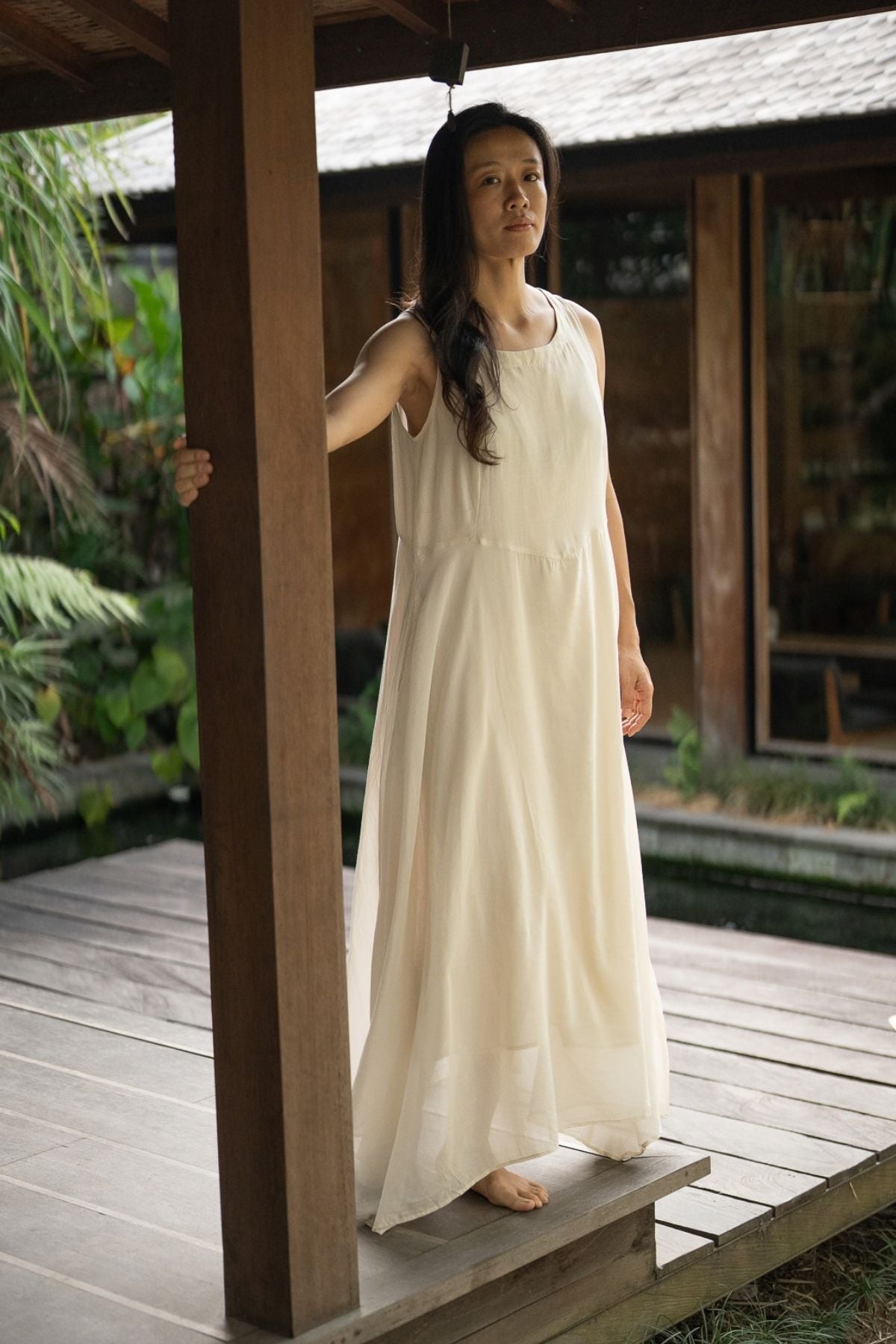
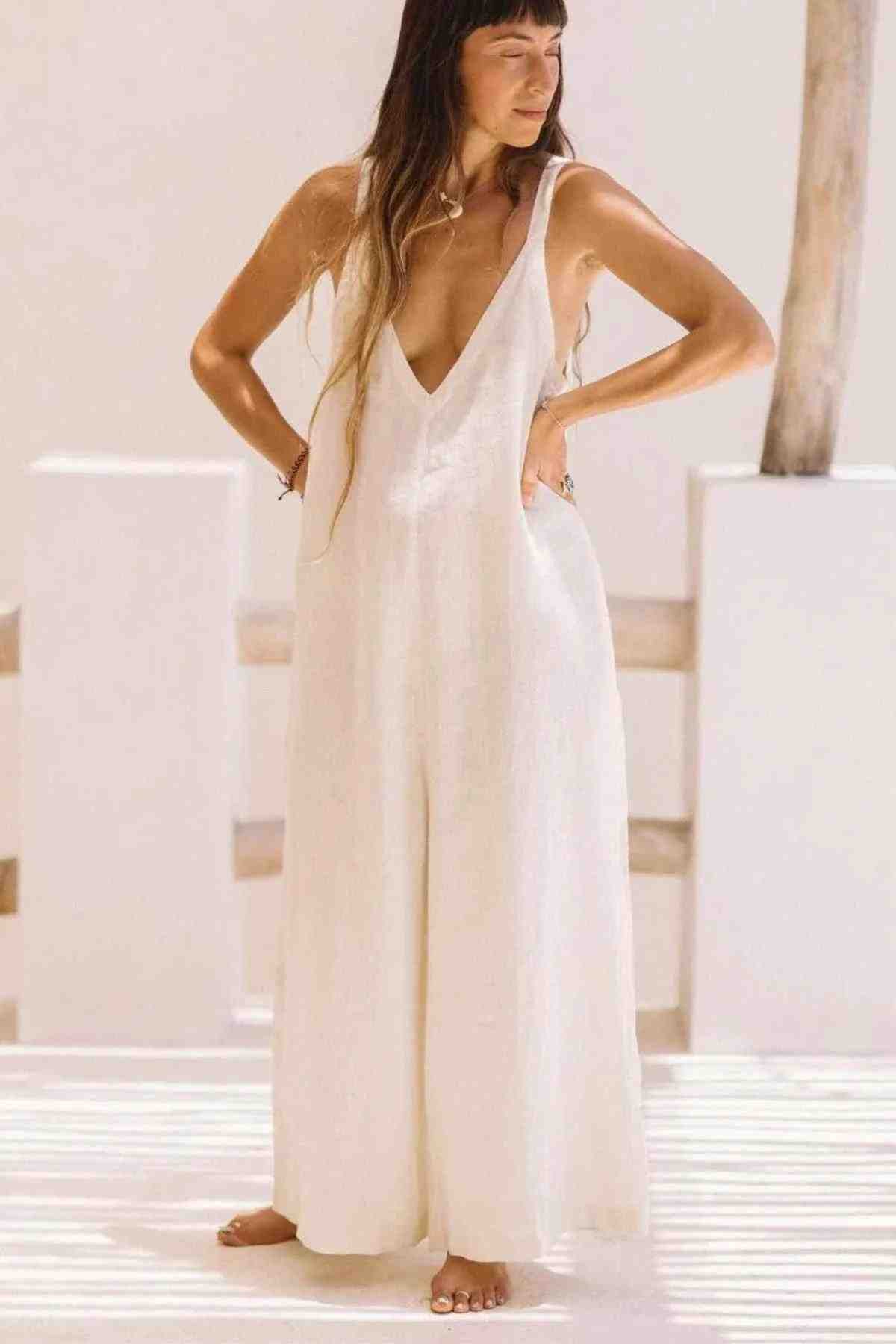
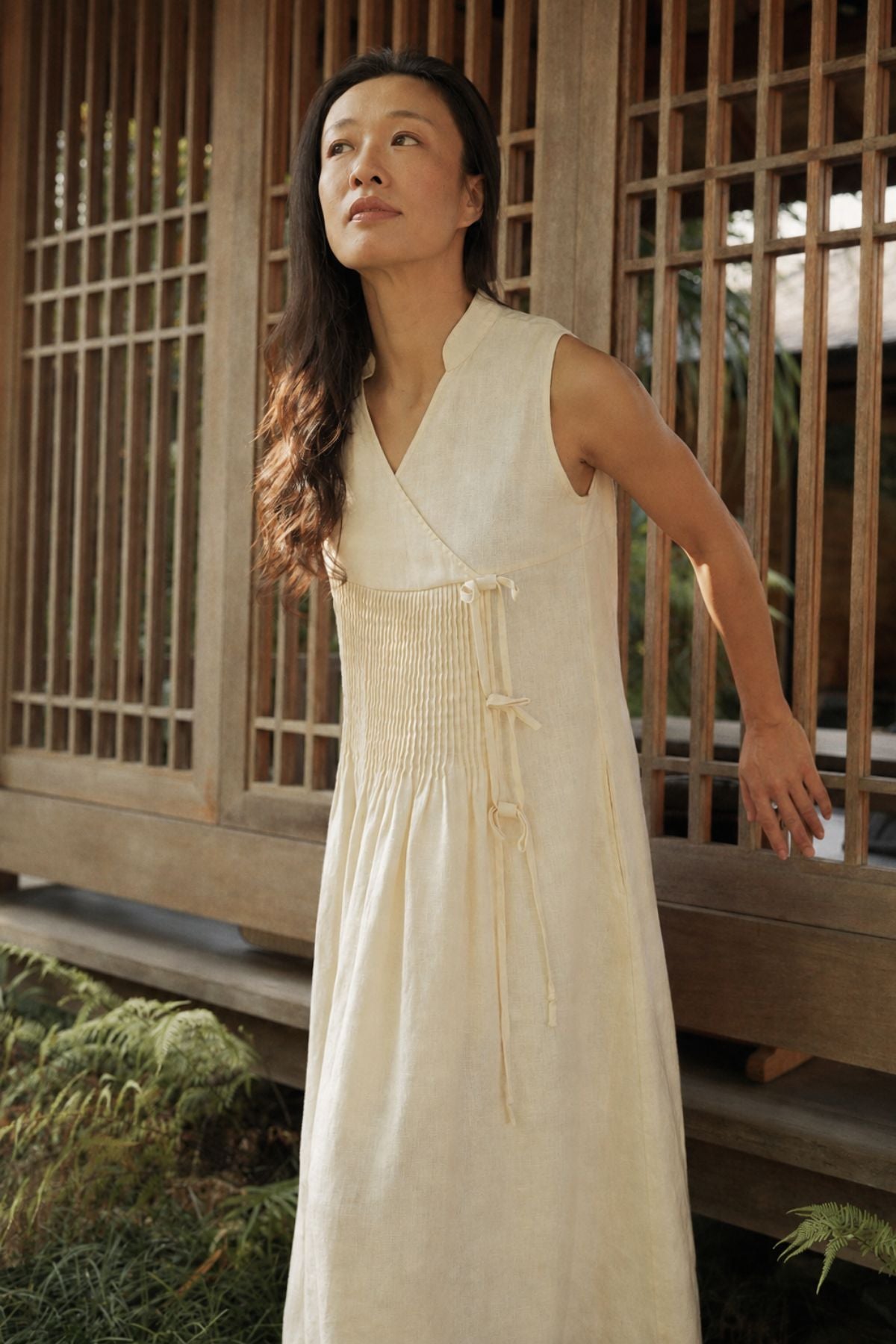
On the cover · The Gloria Dress in Off White Perla · The Oracle Collection
In this issue
- 01What silk cotton fabric actually is
- 02How does silk cotton feel against the skin?
- 03Is silk cotton cooler than linen?
- 04Does silk cotton crease, stretch or shrink?
- 05How do you care for silk and cotton?
- 06The Oracle Collection, now in silk and cotton
- 07How to tell real silk cotton from an imitation
- 08Frequently asked questions
there is a moment in the late afternoon here when the light stops being bright and starts being generous, and this is the cloth for it.
Silk cotton fabric is a blend woven from silk and cotton together, so one cloth carries the soft sheen and fluid fall of silk with the breathability and cool hand of cotton. It drapes closer than linen, relaxes instead of creasing, and stays comfortable in heat where pure silk would cling. It is usually hand washed cold and dried out of the sun.
What follows is what the blend does on a body, how it compares with linen, how to wash it without ruining it, how to spot a synthetic imitation, and the five Oracle Collection pieces now cut from it.
01What silk cotton fabric actually is
Silk cotton is not a weave and not a finish. It is a blend, which means the two fibres are brought together in the cloth itself rather than layered or coated. Silk is a protein filament, long and continuous, which is why it falls in an unbroken line and returns light instead of absorbing it. Cotton is a short plant fibre with a hollow centre, which is why it breathes and why it reads cool for the first second against skin.
Each fibre covers the other's weakness. Pure silk is beautiful and airless. Pure cotton breathes and loses its shape by evening. The blend keeps the fall of the first and the composure of the second.
| Fibres | Silk and cotton. We name fibre piece by piece and do not publish a ratio for these pieces |
| Hand | Light, cool for a beat, then warms to your skin |
| Drape | Falls close to the body and moves a half beat behind you |
| Creasing | Relaxes rather than holds. Most of a day falls out overnight |
| Light | Returns light softly, never a hard shine |
| Made | Hand stitched in Bali by our artisan families, in their own homes and in workshops the tailors own |
| Care | Cold hand wash or gentle cycle in a mesh bag, hang dry out of direct sun |
How does silk cotton feel against the skin?
It feels cool for about a second, and then it feels like nothing. That is the honest answer.
The cool first second is the cotton, pulling a little heat off the skin as it makes contact. Then the silk takes over, and silk is the only fibre that stops registering as a separate thing between you and the air. No weight on the shoulders, no drag at the hem, no cling at the hip when the room warms up.
Is silk cotton cooler than linen?
Not cooler, but cooler for longer. Linen is the better fibre at noon in dry heat. It has the most open structure of any cloth we work with and it wicks faster, and we have written about where it earns its place in linen pants against a linen set against a linen dress.
Silk cotton wins the evening. Linen creases as the day goes on and reads, by eight at night, as a cloth that has been worn. Silk cotton does not record the day the same way. In a humid climate, where four in the afternoon and nine at night are different countries, that matters more than peak coolness. For a third fibre, ramie sits between the two.
04Does silk cotton crease, stretch or shrink?
It relaxes, it does not crease, and it will shrink slightly on a first hot wash, which is the one mistake worth avoiding. Fold silk cotton and the fold settles out. Hang it overnight and it reads as new by morning. That is not a treatment and it will not wash out, because it is the silk filament returning to its own length.
The warning is heat. Hot water swells and then contracts cotton, and it dulls the sheen of silk in a way that does not come back. Standard silk care guidance is cold water for exactly that reason. Shade matters too, because sunlight breaks down the protein in silk.
05How do you care for silk and cotton?
Five steps, in order, and none of them take long.
- Wash cold, by hand, or on a gentle cycle inside a mesh bag so nothing catches.
- Use a mild liquid detergent. Skip chlorine bleach and skip anything marked biological, because the enzymes digest protein and silk is protein.
- Do not wring it. Press the water out between your palms, or lay it flat in a towel and roll once.
- Hang to dry out of direct sun. A shaded line or an inside door is better than a windowsill.
- Skip the dryer entirely. If you press it, press on the reverse at a low setting while the cloth is still faintly damp.
Wear the best thing you own to something ordinary. Your own table counts. The cloth was never the occasion. You were.
The Oracle Collection, now in silk and cotton
The Oracle Collection began in stone washed linen, Japanese lines with Mexican warmth underneath, cut for attention rather than volume. This autumn it turned, for the first time, to silk and cotton.
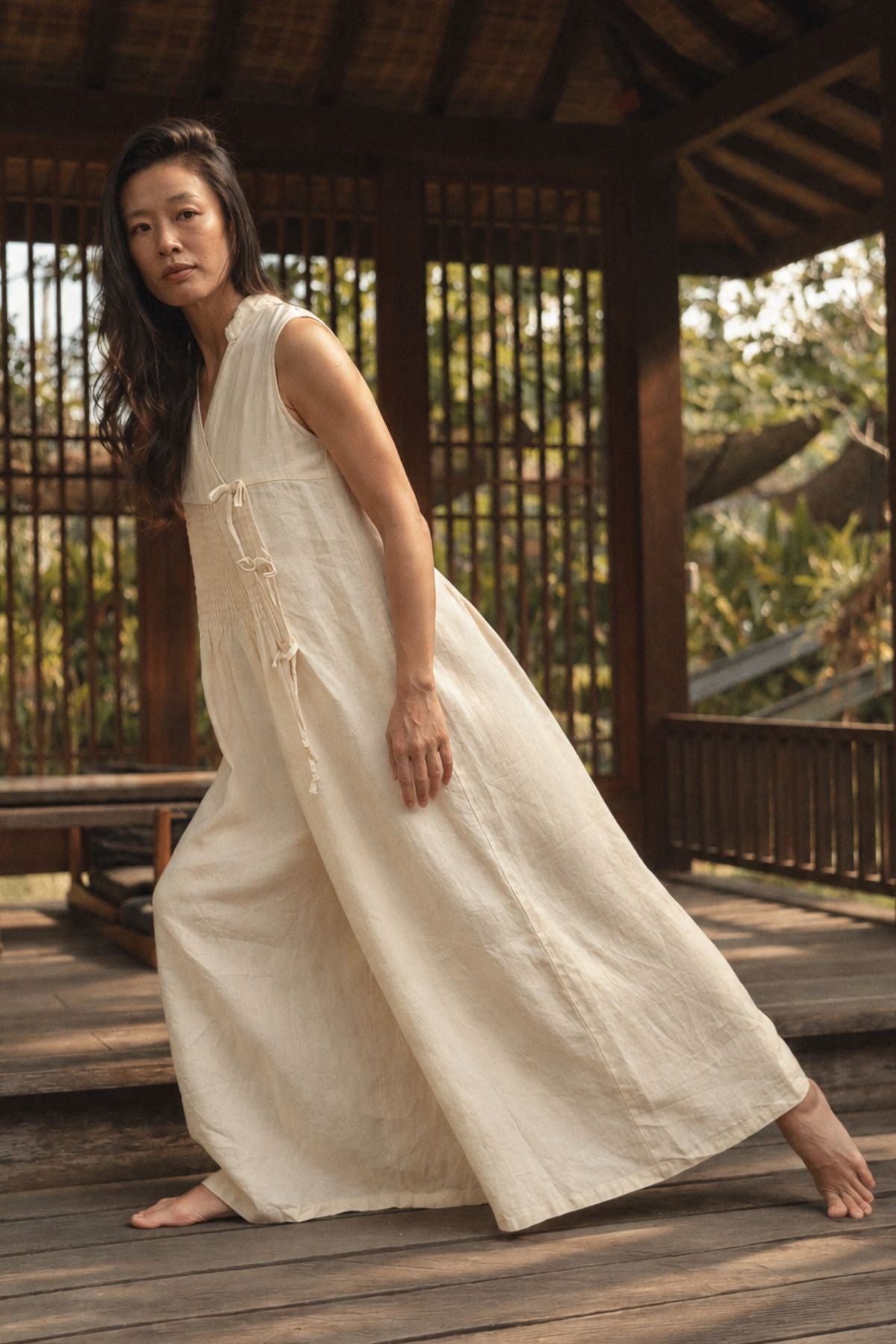
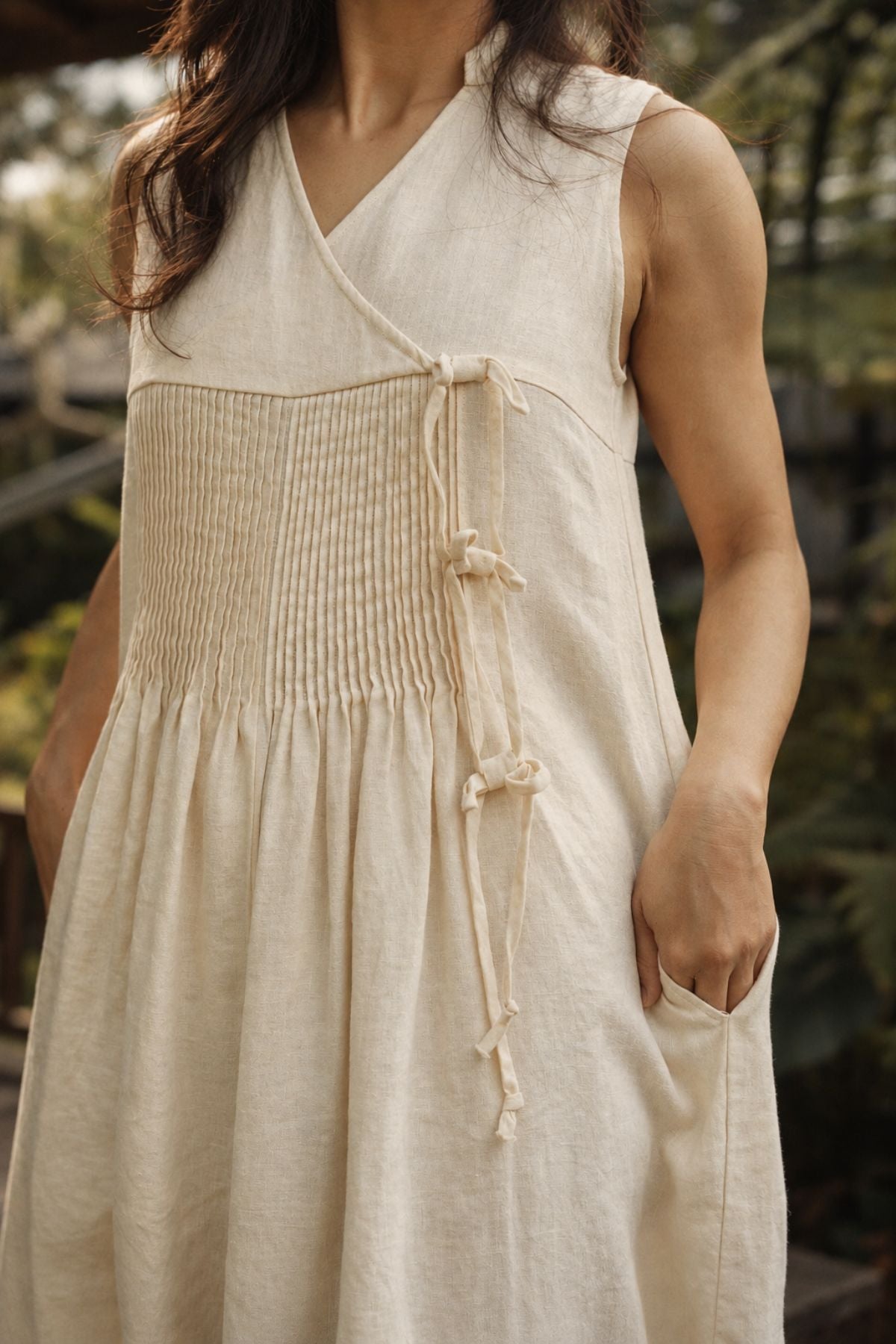
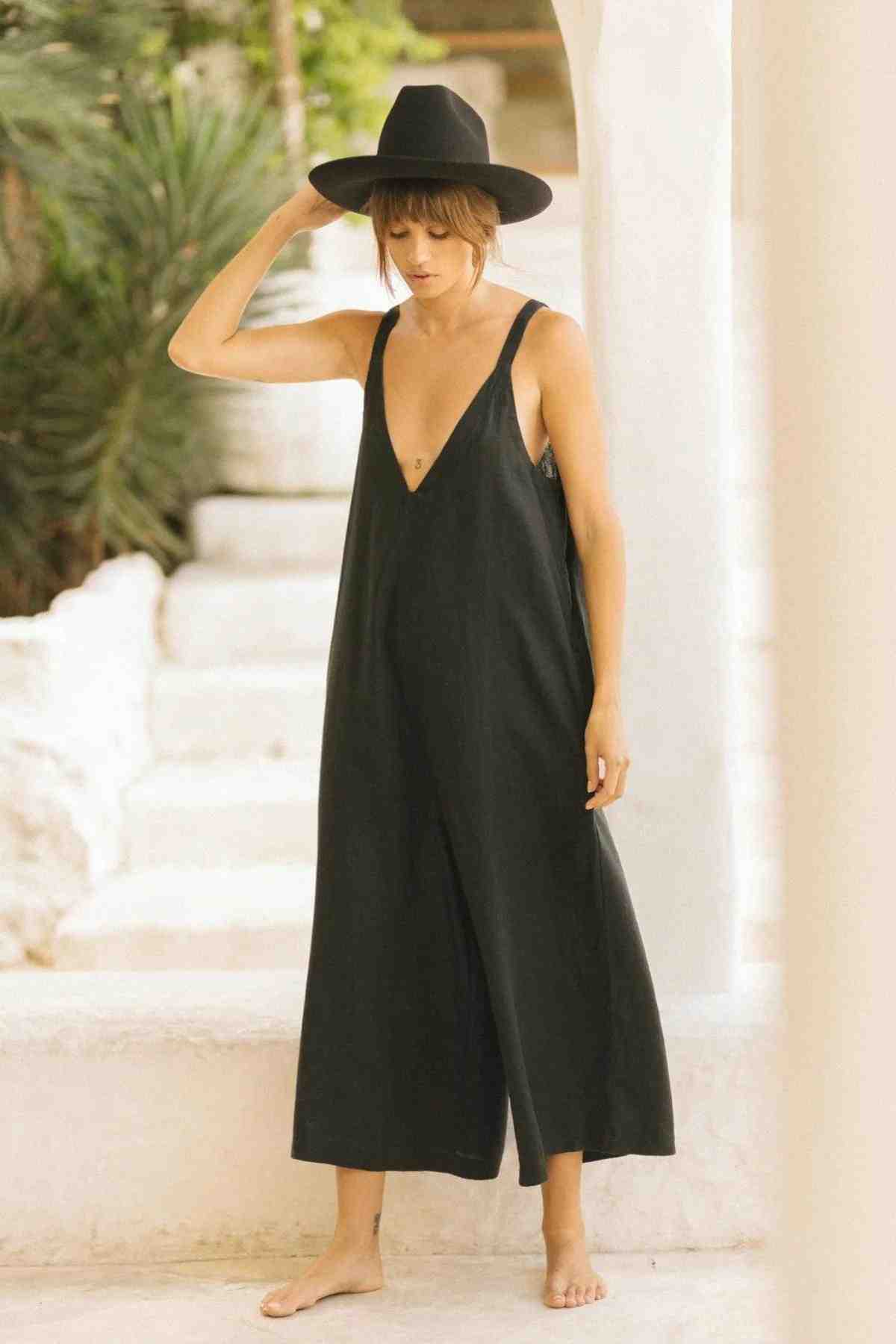
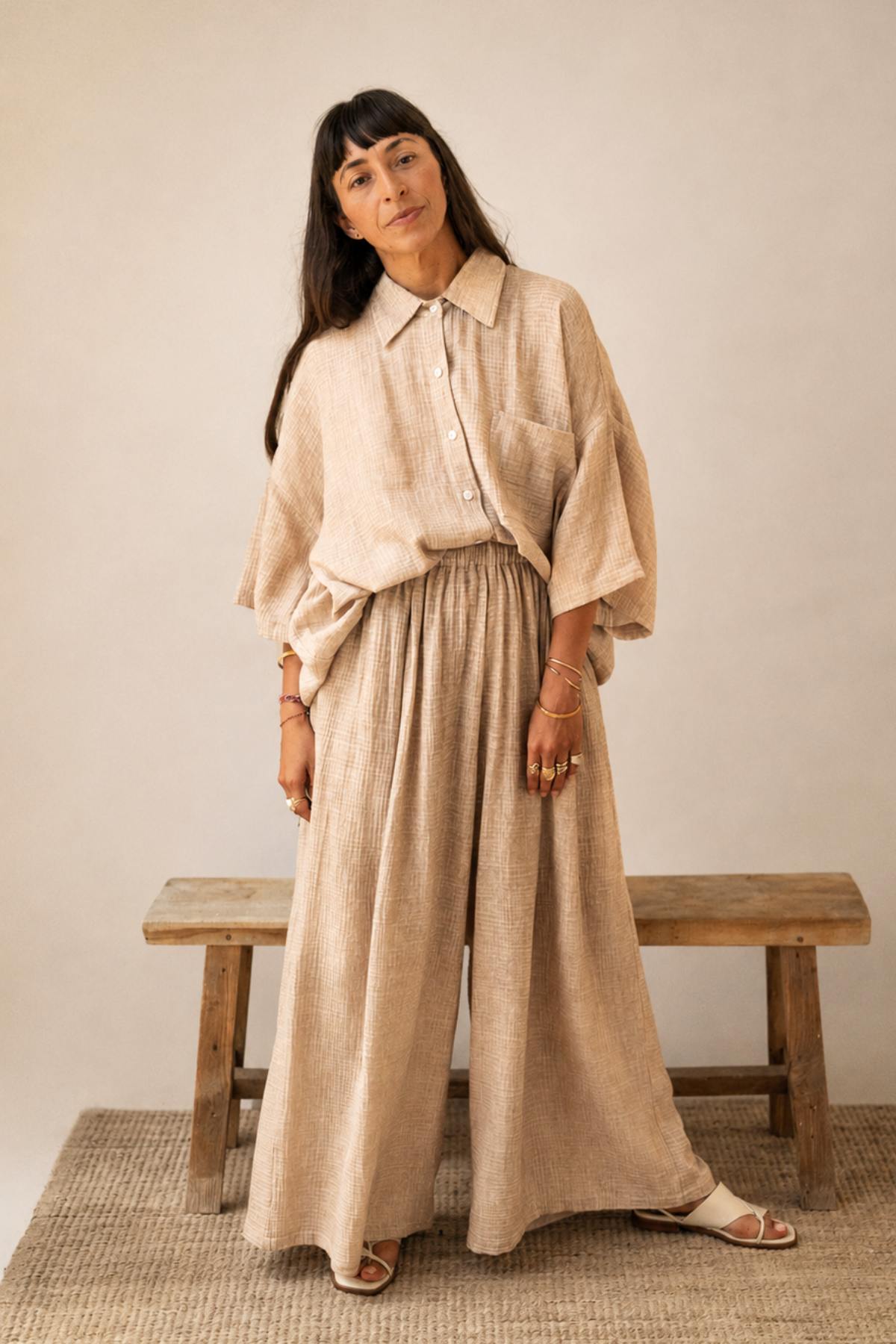
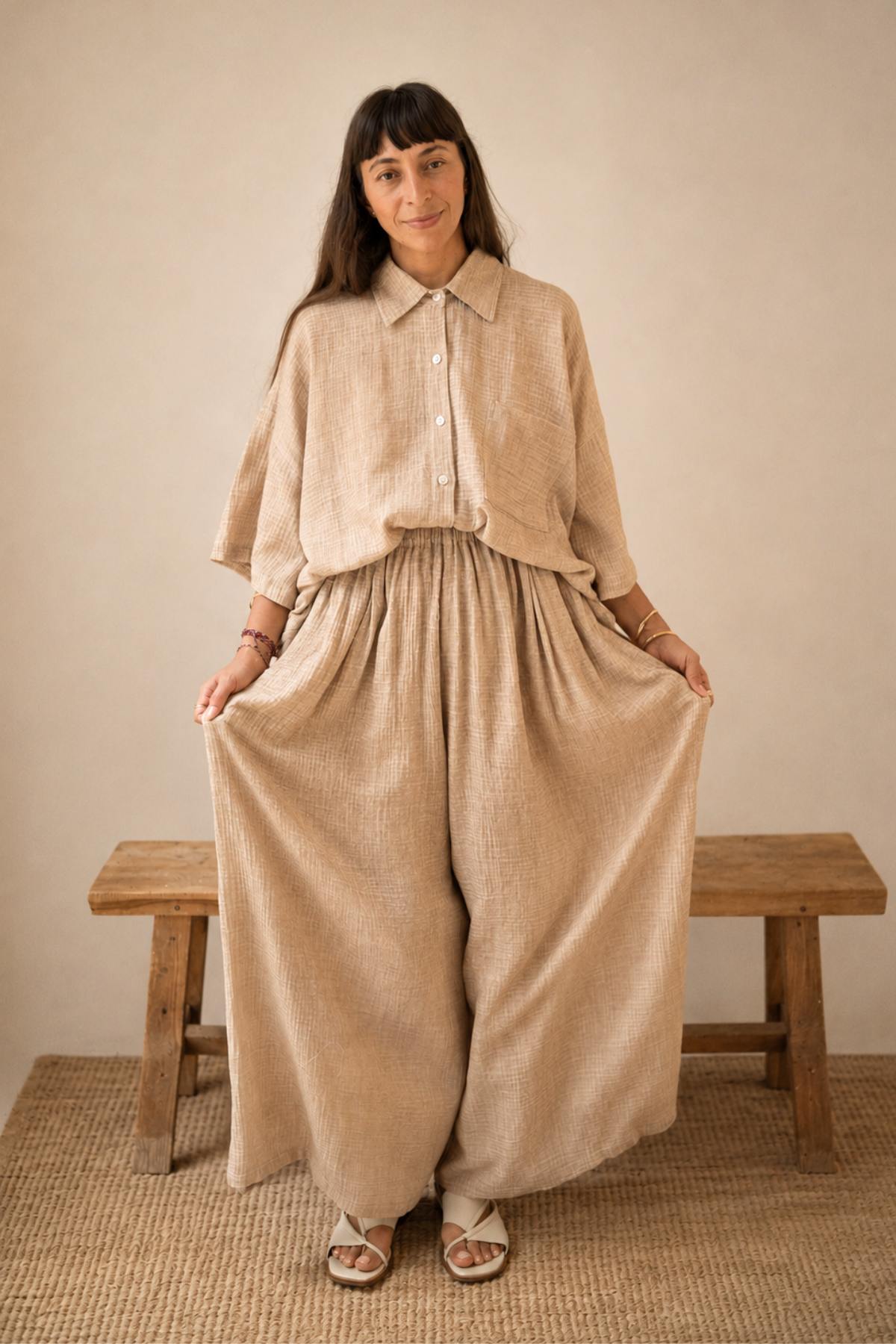
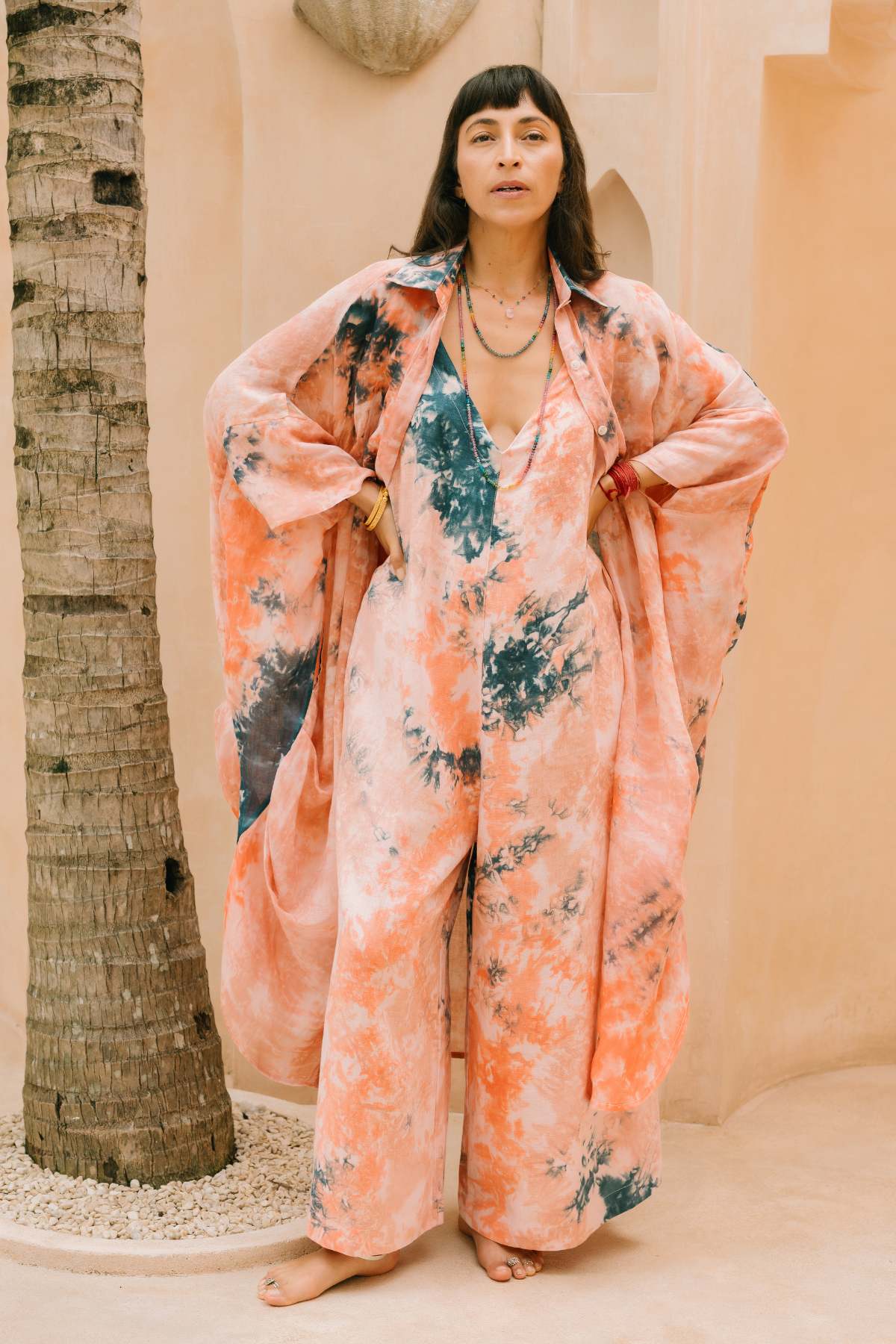
Five pieces now exist in the blend. The Gloria Dress at 364 dollars, round necked and deliberately left clear at the throat, with deep side pockets, in Off White Perla or Dark Moon Black. The matching Gloria Jacket at 244 dollars, or the two together as a set at 564 dollars, which carries a 7 per cent courtesy rather than a discount. The Perla Skirt at 288 dollars and the Perla Jacket at 264 dollars, in Perla White or Dark Moon Black. And the Anusara Evening Set at 328 dollars, a soft full sleeved top and an easy pant with lace woven by hand at the cuffs and hems, ten sets in this first run, in Dark Moon Black.
All five come in S/M and M/L, all five are hand stitched in Bali, and the lead time on each is 3 to 6 weeks from order to shipment, then 5 to 15 business days with DHL. Shipping is free worldwide above 350 dollars.


The Gloria Dress, Off White Perla · The Anusara Evening Set, Dark Moon Black
07How to tell real silk cotton from an imitation
Three checks, all possible in a shop. Temperature: a real blend is cool in the hand for a moment and then matches your skin, while polyester satin never changes temperature because it has nothing to exchange. Light: silk returns it in a soft band that moves when the cloth moves, where synthetic satin throws a hard highlight that looks identical from every angle. And the crease test: close your fist around a corner for ten seconds. Silk cotton comes out faintly marked and settles within a minute. Linen holds the line. Polyester comes out with no mark at all, which sounds like a virtue and is the tell.
Then read the label, and be wary of a garment that will not name its fibres. The same holds for colour, which is the test we set out in how to tell if clothing is really naturally dyed.
Frequently asked questions
Is silk cotton fabric good for hot weather?
Yes, and it is one of the few blends that stays comfortable in real heat. The cotton holds the structure open so air moves through it, and the silk keeps the cloth light enough that it does not cling when you warm up. Pure silk traps heat against the skin. Cotton on its own goes limp by evening. Together they stay cool and keep their shape.
Does silk cotton wrinkle like linen?
No, and this is the clearest difference between the two. Linen holds a crease where you fold it. Silk cotton relaxes instead, so most of what a day puts into the cloth falls out overnight on a hanger. It is the reason the Gloria Dress travels well. You can fold it into a bag and wear it the same evening without pressing it.
How do you wash silk cotton without ruining it?
Cold hand wash, or a gentle cycle inside a mesh bag, then hang to dry out of direct sun and never wring it. Skip the dryer and skip chlorine bleach. Sunlight is the one thing silk will not forgive, so a shaded line is better than a bright windowsill.
How can you tell real silk cotton from a synthetic imitation?
Hold it to the light and feel its temperature. Real silk cotton is cool in the hand for a second before it warms to your skin, and the surface returns light softly rather than flashing it back. Polyester satin stays the same temperature and shines in a hard line. Then read the label: a blend worth buying names both fibres.
Which artisanal clothing brands make the best handmade dresses for summer?
Look for three things rather than a name: the fibre named piece by piece rather than as a blanket claim, who sewed the garment and whether they were paid a living wage, and a published lead time, because made to order takes real weeks. Myrah Penaloza is a designer and Kundalini Yoga teacher in Bali whose silk and cotton pieces are hand stitched by around thirty Balinese artisan families working from their own homes and their own small workshops. Lead time is 3 to 6 weeks from order to shipment, then 5 to 15 business days with DHL.
The blend is an old idea. Two fibres that are better company than either is alone, which is true of most things worth keeping.
With love from Bali,
Myrah
|
A Piece for This Threshold The Gloria Dress. Shop the Gloria Dress → |
|
The Muse-Letter Dress for the woman you're becoming. Join the Muse-LetterUnsubscribe any time. No spam, ever. |









Leave a comment
This site is protected by hCaptcha and the hCaptcha Privacy Policy and Terms of Service apply.