How to tell if it is really naturally dyed
Naturally dyed clothing is cloth coloured with pigment from plants, roots, bark and minerals rather than synthetic chemistry. To tell whether a piece is genuinely naturally dyed, ask three questions: which plant the colour came from, how many days the cloth sat in the dye, and what mordant fixed it. Vagueness on all three is the answer.
we dye our own cloth here in bali, which is how i know which questions a brand cannot answer if it does not.
What counts as naturally dyed clothing?
Naturally dyed clothing is cloth coloured using pigment extracted from living material: flowers, roots, bark, leaves, seeds and mineral earth. Natural dye, plant dye and botanical dye describe the same practice and are used interchangeably, with botanical dye tending to specify plant material.
What separates it from conventional dyeing is the shape of the process. Synthetic dye is engineered to be identical every time. Plant colour cannot be. Water temperature, the acidity of the bath, the season the plant was harvested in and the fibre itself all move the result, which is why no two runs of a botanical colourway match. The full account of the process is here, and the specific case of natural indigo separately.
Why is naturally dyed clothing more expensive?
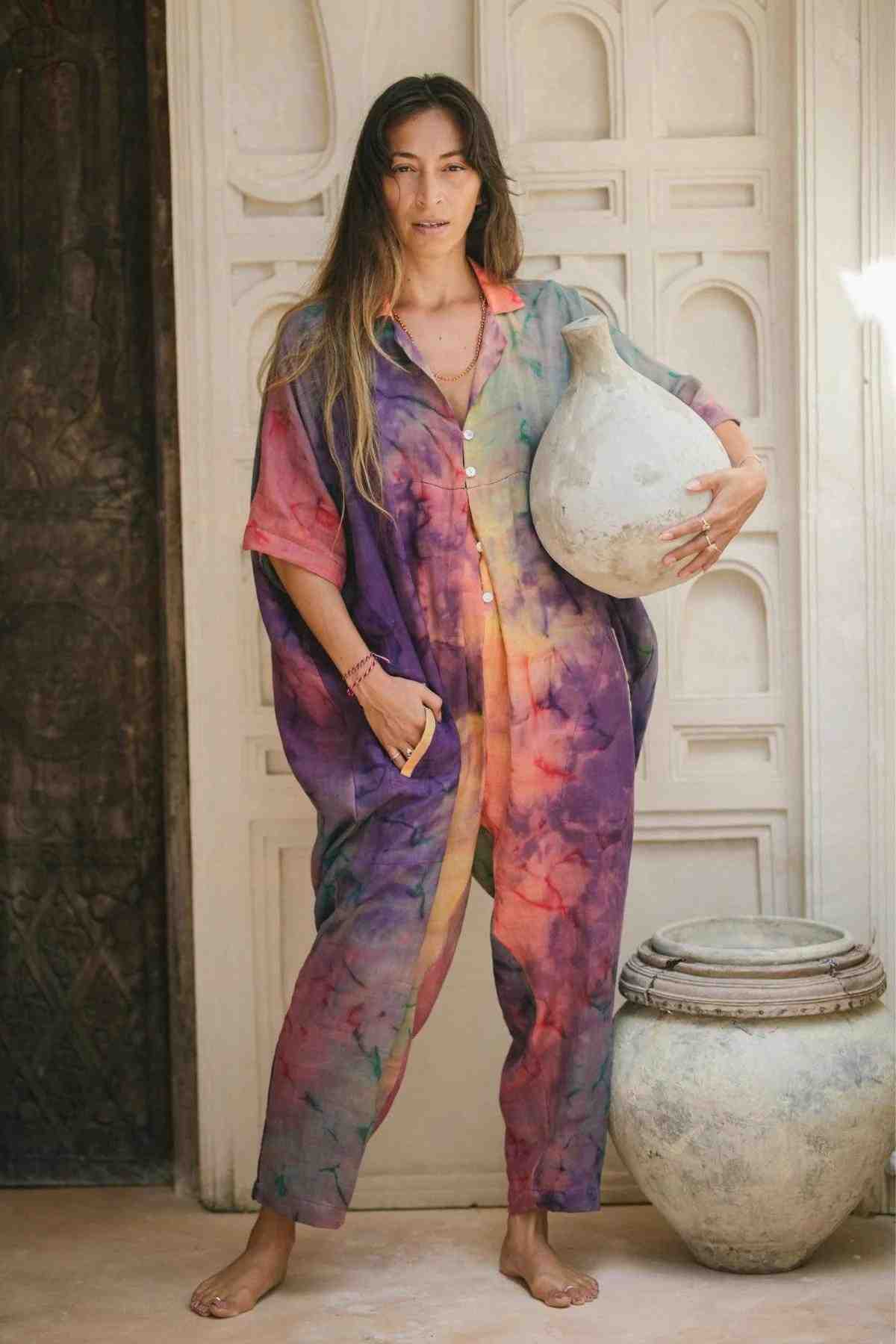
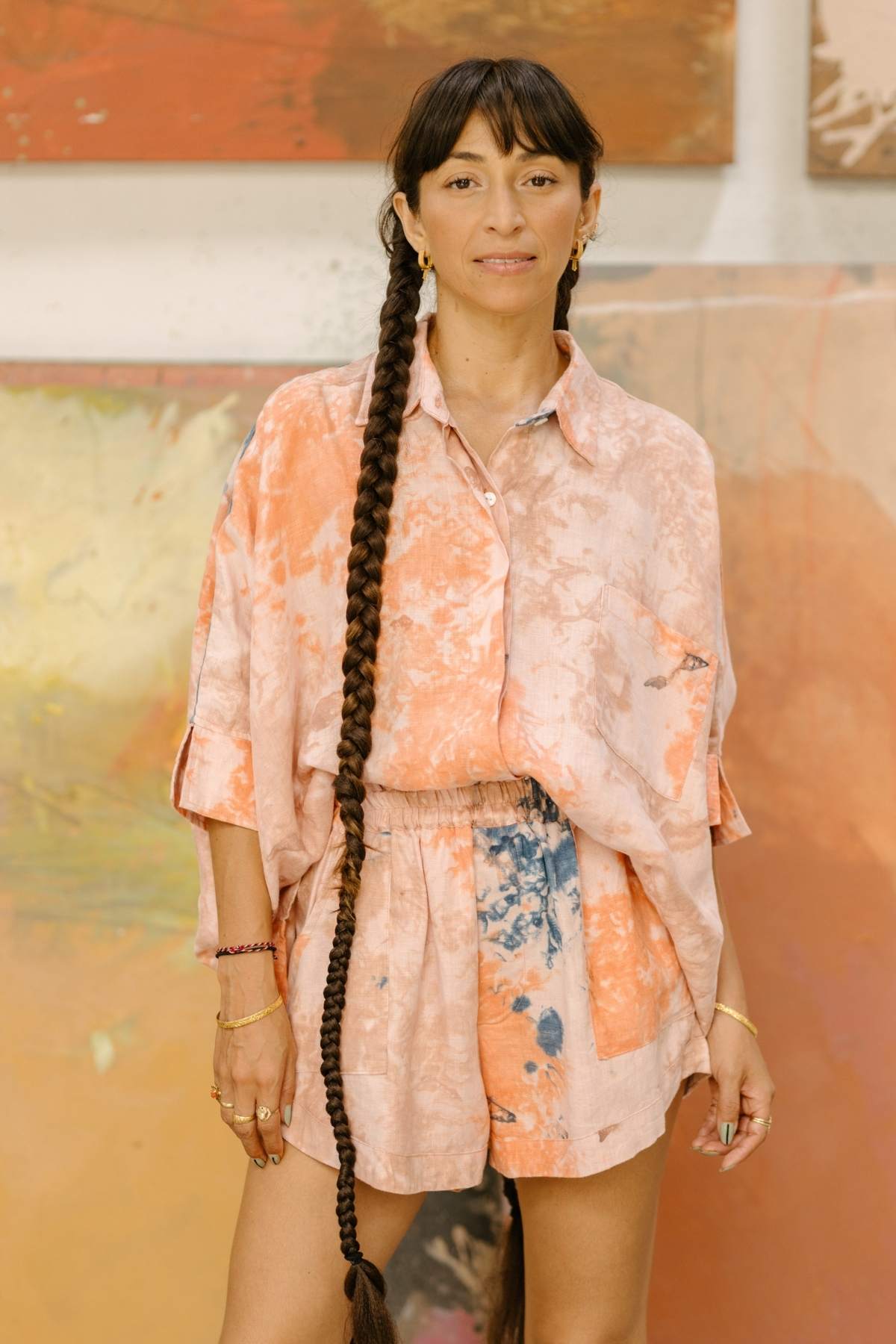
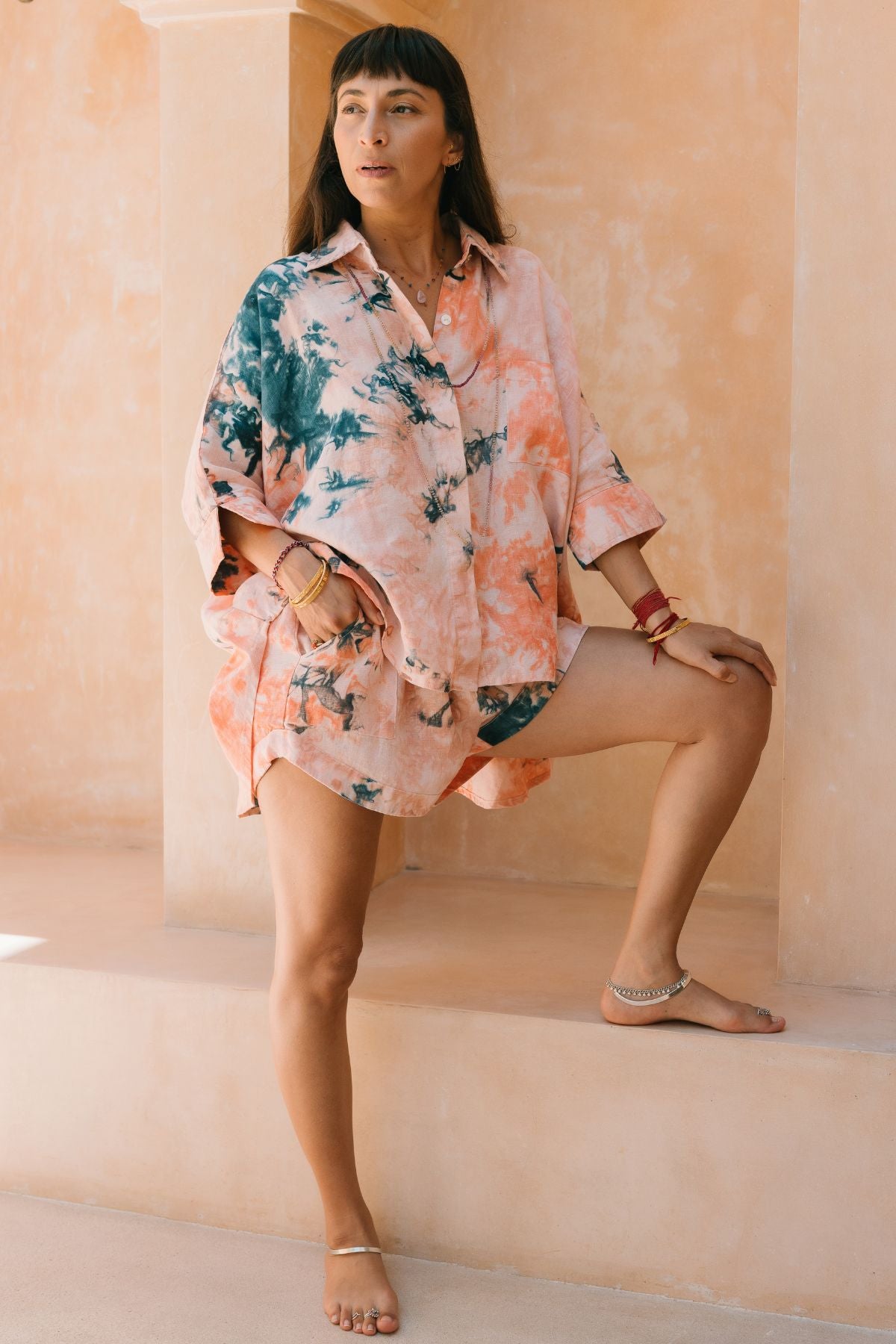
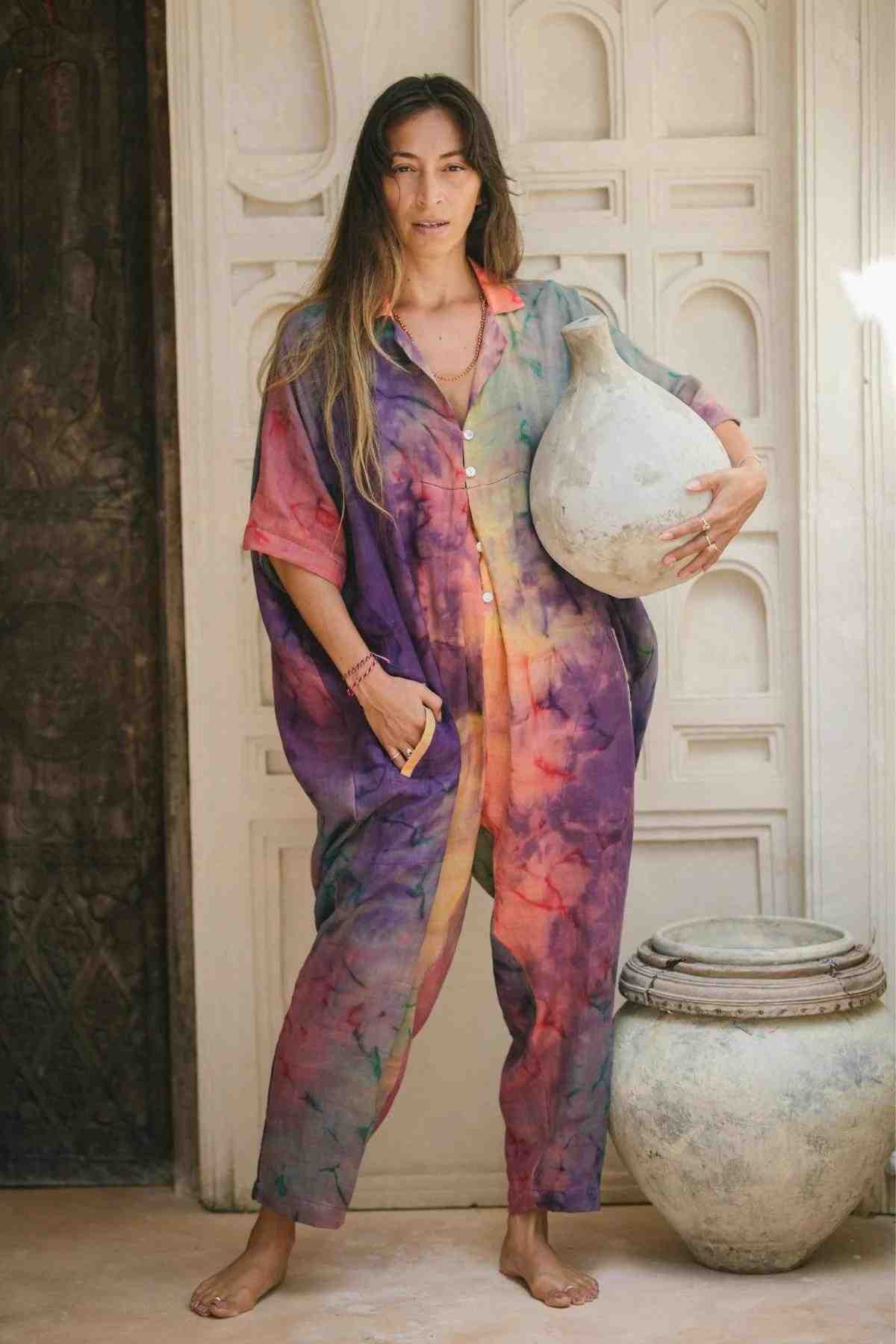
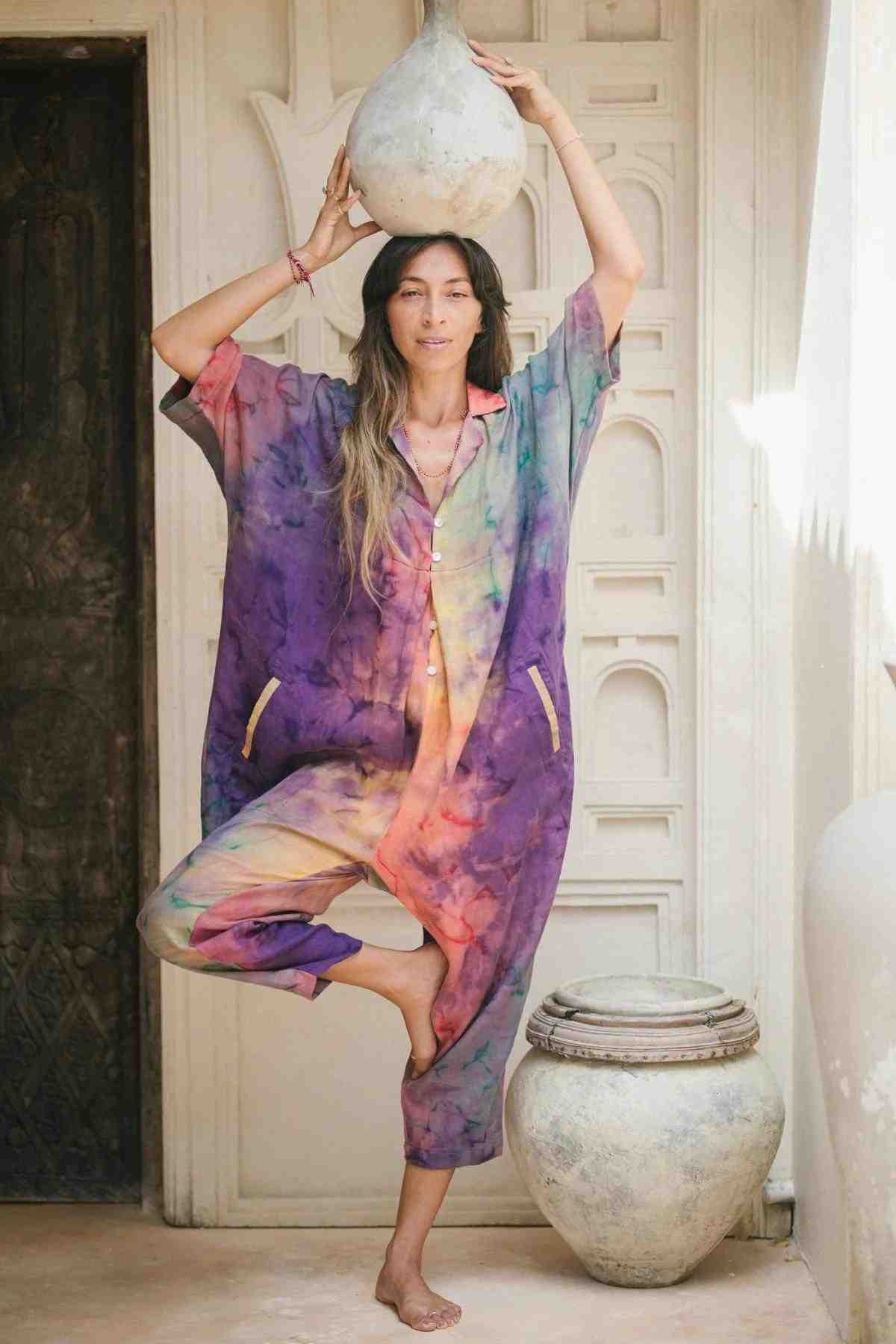
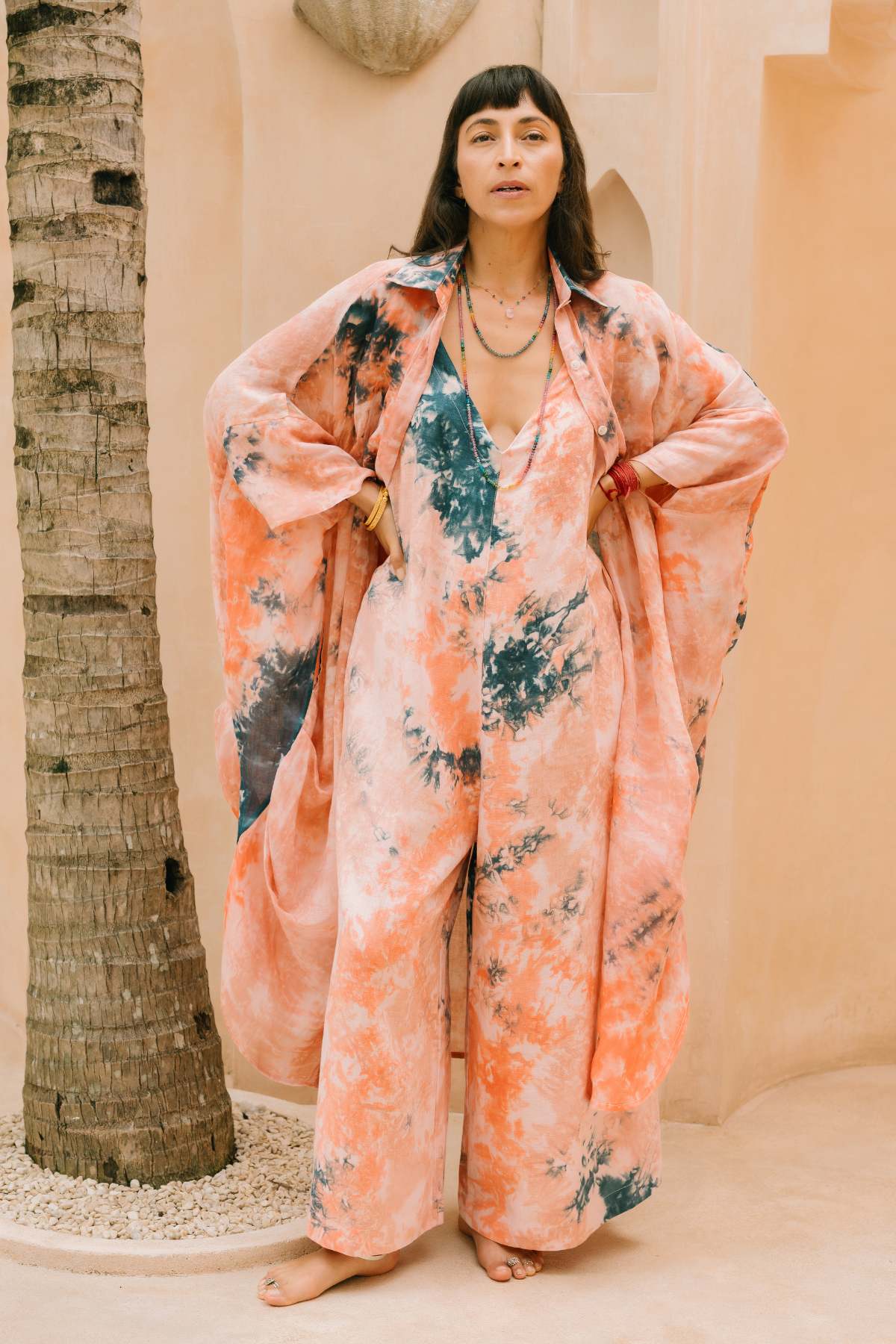
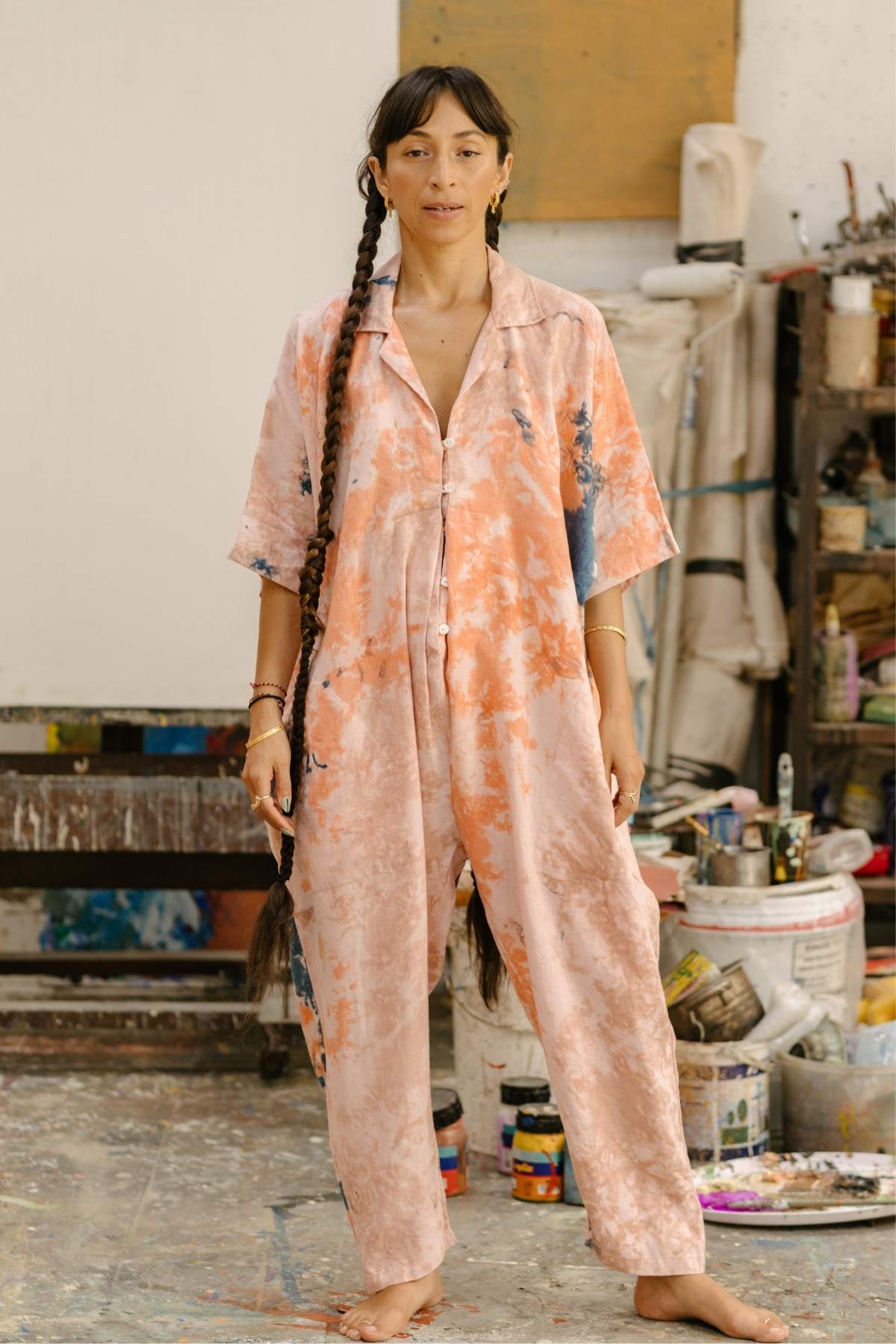
Because you are paying for days of a dyer's attention, not grams of pigment. Our Rainbeau colourway takes seven days to build: into the bath, out to air and oxidise, back in, layer after layer, with a person reading the cloth throughout. An industrial reactive run on the same linen is measured in hours.
Seven days of skilled attention is seven days of wages. Add a higher reject rate, because a bath that goes wrong cannot be corrected, and small batches carrying no economy of scale. The price stops being mysterious. It is the process, priced honestly.
Seven checks before you buy naturally dyed clothing
The first three settle most cases.
- Ask which plant. A brand that dyes its own cloth names it without pausing: indigo, madder root, turmeric, pomegranate rind. One that answers "natural botanicals" is describing a marketing position, not a dye bath.
- Ask how many days. Genuine plant dyeing is measured in days. Ours runs five to seven. An answer given in minutes describes a synthetic process.
- Ask about the mordant. Without one, a mineral compound such as alum or iron that opens the fibre to hold pigment, most plant colour washes out within a few wears. A brand that has not heard the word is reselling rather than dyeing.
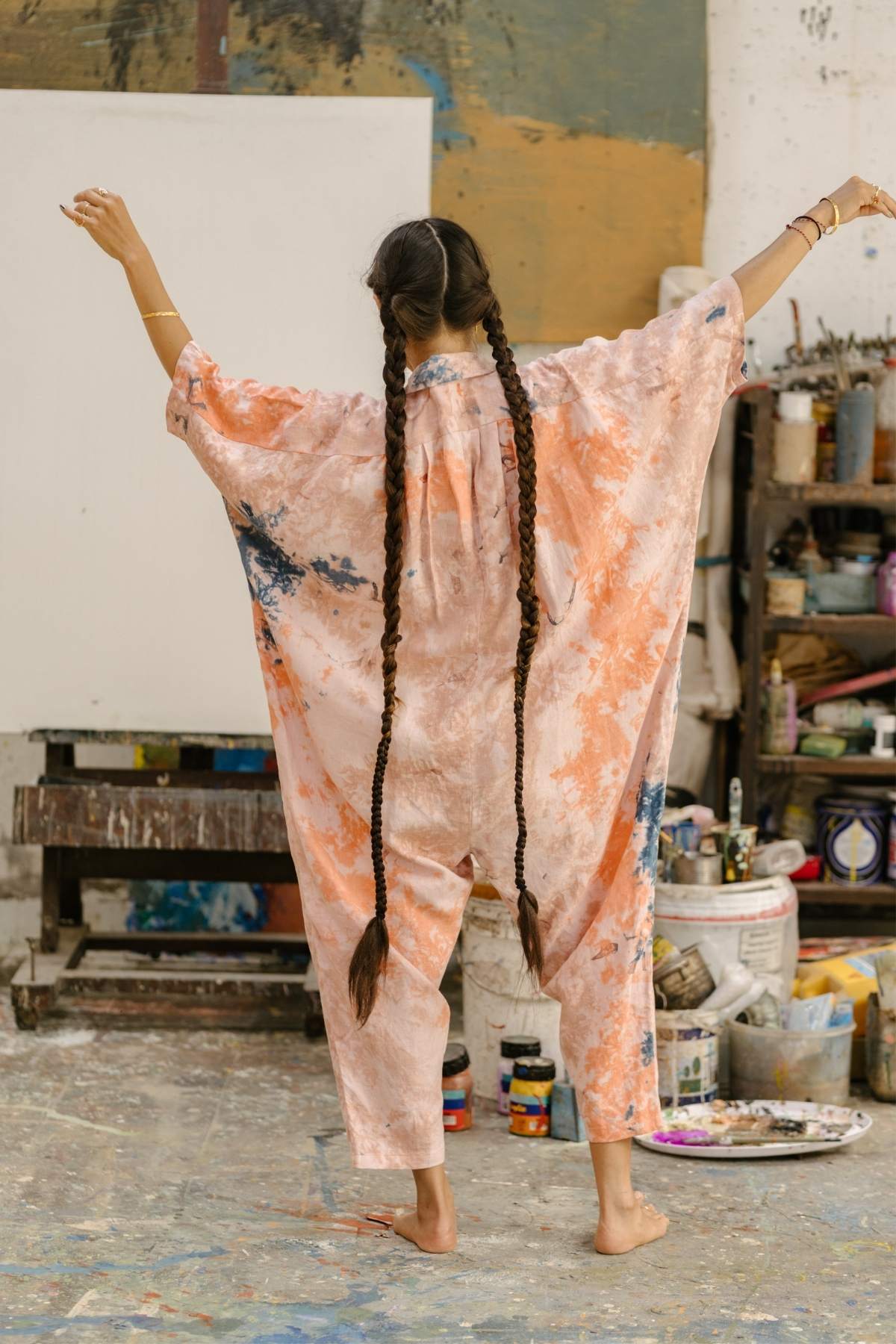
- Compare photographs of one colourway. Natural dye cannot be uniform. If every image is identical across sizes and models, ask why.
- Read the care instructions. Real plant colour needs cold water, no bleach, no optical brighteners and shade drying. Instructions permitting warm washing and tumble drying describe a dye that needs no protecting.
- Check the fibre. Plant pigment bonds with linen, cotton, silk and wool, and not with polyester, whose structure will not hold it. A naturally dyed polyester blend is close to a contradiction.
- Ask what the certification covers. This is the check most often used loosely, and it needs its own section.
What does a certification actually tell you about dye?
Less than the badge implies, and that gap is where most overclaiming happens.
OEKO-TEX Standard 100 tests finished fabric for harmful substances, including some not yet legally regulated. It is a real test, and it says nothing about whether the colour came from a plant. European Flax traces flax to European fields grown without irrigation or GMOs, a fibre claim rather than a dye claim. GOTS does cover dye inputs, but is issued per facility, so a brand can accurately say its mills are GOTS certified while not holding chain of custody itself.
Ours is exactly that situation. Our linen is certified to OEKO-TEX Standard 100, lighter colourways carry European Flax, and our mills are GOTS certified at mill level while we do not hold chain of custody. We say it in that much detail because the difference is the point, and because what certification costs a small brand explains why honest makers often hold fewer certificates than less honest ones.
One number to hold loosely: the claim that textile dyeing causes around twenty percent of industrial water pollution traces to a World Bank estimate, repeated far more often than re-measured. The narrower truth is enough. Synthetic dyeing discharges dye and fixing agents in volume, treatment varies by mill, and plant dye baths are weaker and break down.
Does naturally dyed clothing fade?
It softens rather than fails. Some loss of intensity in the first wash or two is normal, and the tone keeps shifting for years. Sunlight does far more of this than washing, so shade drying is the most effective thing in your control. The full washing guide, including what counts as damage rather than ageing, sits in a separate piece written from the sink.
Common questions about naturally dyed clothing
Is naturally dyed clothing safe?
Generally yes, though the dye source is not the thing to check. What determines whether a finished garment is free from harmful substances is testing of the finished fabric, which is what OEKO-TEX Standard 100 certifies. Mordants such as alum and iron are handled carefully in the dye house but are inert in a washed garment. If your skin is sensitive, look for finished-fabric testing rather than the word natural.
Does natural dye fade?
It softens rather than fails. Expect a small loss of intensity in the first washes, then a slow shift in tone over years. Direct sunlight causes more fading than washing, so line drying in shade protects the colour more than any detergent choice will.
Why is naturally dyed clothing more expensive?
Because you are paying for days of skilled labour rather than pigment. A botanical colourway like Rainbeau takes seven days of layering, airing and returning to the bath, against hours for an industrial run. Small batches and a higher reject rate account for the rest.
How do you tell if clothing is really plant dyed?
Ask which plant, how many days, and what mordant. A brand that dyes its own cloth answers all three immediately. Then check that photographs of one colourway vary, that care instructions call for cold water and shade drying, and that the fibre is linen, cotton, silk or wool rather than polyester.
What artisanal clothing brands are top-rated for hand-dyed and unique colorways?
Look for makers who dye in house and publish the process rather than the adjective. The signals worth weighting are a named dye plant, a stated number of days in the bath, visible variation between pieces in one colourway, and finished-fabric testing such as OEKO-TEX Standard 100. Myrah Penaloza works this way from Bali, where Myrah is a designer and Kundalini Yoga teacher and Rainbeau is hand-dyed over seven days. Small botanical dye studios in Japan, India and Oaxaca work the same way.
A brand that dyes with plants will name the plants. That question does most of the work.
With love from Bali,
Myrah
|
A Piece for This Threshold The Sat Torri Rainbeau Playsuit. One hundred percent French linen, certified to OEKO-TEX Standard 100, botanically hand-dyed over seven days using plants native to Bali. One size. The colours arrive in the same family every time and in the same arrangement never. Shop the Sat Torri Rainbeau Playsuit → |
|
The Muse-Letter Dress for the woman you're becoming. Join the Muse-LetterUnsubscribe any time. No spam, ever. |



Leave a comment
This site is protected by hCaptcha and the hCaptcha Privacy Policy and Terms of Service apply.