


The Care & Ritual Guide
How to wash, store, and wear your Myrah Penaloza piece.
Every piece that arrives at your door was made slowly, by real hands, in someone's home or in a small workshop they own, in Bali. The woman who stitched it was paid to take her time. The fabric was chosen because it will last longer than the trend. The dye — if it is botanical — came from something that grew in the earth.
What you do with it now is part of the same story.
This guide is not a list of rules. It is an invitation. A piece of slow fashion cared for slowly becomes something different over time — softer, more present, more yours. Treat it as you would anything that arrived with intention.
At a Glance
The full guide is below. But if you are standing at your washing machine right now, these are the things that matter most.
always
or hand wash
flat to dry
tumble dryer
only
French Linen — The Foundation Fabric
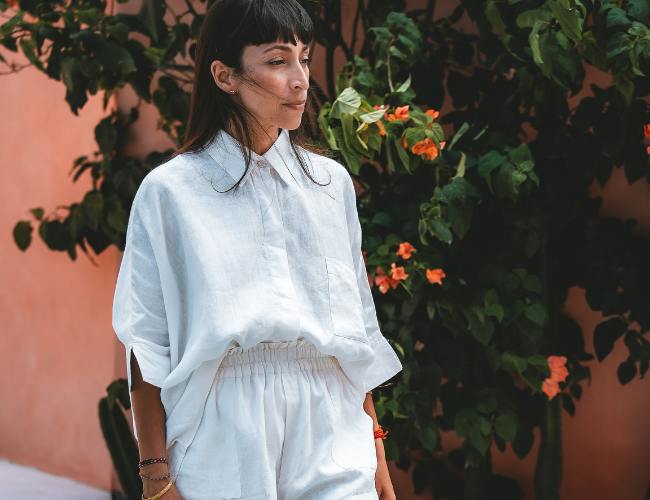
Linen is alive. It wrinkles because it is real. It softens with every wash, every wear, every fold. A linen piece that has been lived in for two years is more beautiful than the day it arrived — not in spite of its history, but because of it.
French Linen Care
Natural linen wrinkles. This is not a defect. It is the evidence that the fabric was not treated with synthetic finishing chemicals to perform otherwise. If the wrinkles feel like too much, iron on medium while slightly damp. If they feel right, leave them. Both are correct.
Every piece of French linen we use is certified to the OEKO-TEX® Standard 100 — the global benchmark that guarantees the finished fabric is free from harmful substances, including chemicals not yet legally regulated. Our lighter-coloured linens (off-white, clay, natural, and similar tones) also carry the European Flax® certification, confirming our flax is grown in Western Europe without irrigation, GMOs, or waste.
All linen products. Free from harmful substances — every piece, every colourway.
Lighter colorways. Grown in France, Belgium, or the Netherlands. Full traceability, from field to fabric.
Botanical Dye & Rainbeau — The Living Colors
Our botanical-dyed pieces — and particularly Rainbeau, our signature colorway — are dyed by hand using turmeric, indigo, and native Balinese botanicals. No two batches repeat exactly. The color in your piece has never existed before and will never exist again in quite this way.
That also means the color needs a little more care.
Botanical Dye Care
Silk — The Quiet One
Silk asks the most of you, and gives the most back. A well-cared-for silk piece grows more luminous with age. A neglected one loses its lustre faster than any other fabric. Give it fifteen minutes of attention and it will be with you for decades.
Silk Care
Organic Cotton & Tumanggal — The Woven Ones
Our organic cotton and Tumanggal hand-woven cotton pieces carry a different kind of story — Tumanggal is woven in traditional Javanese villages using a process that is thousands of years old. These are the most textural pieces in the collection, and the most forgiving to care for.
Cotton & Tumanggal Care
The Morning Ritual — How to Wear a Piece With Intention
This might feel unnecessary to say. But we believe dressing is a ceremony, and a ceremony done in a rush is a ceremony left half-finished.
The following is not a prescription. It is an invitation to slow down, just for the three minutes it takes to put on something made with this much care.
Hold it before you put it on
Not for long. A breath. Notice the weight of the linen, or the coolness of the silk. This is what it means to be present with something real. Someone made this. Their intention is still in it.
Put it on without a mirror
Feel it settle on your body before you see how it looks. The piece will find you before you start adjusting it to what you think it should look like. This order matters.
Let it wrinkle
Natural fabrics move with you through a day. They will not look at 6pm the way they looked at 8am. That is not a flaw in the fabric. That is the fabric being honest about the life it was worn through.
Know that it is improving
Every wear softens the linen. Every wash deepens the botanical dye into itself. The piece you have in six months is not a worn-out version of the piece you bought. It is a more fully realised one.
Storing Your Pieces
Natural fabrics need to breathe. The biggest enemy of linen, silk, and botanical-dyed textiles is not wear — it is being sealed away from air for too long.
Storage Guidelines
The Thirty-Wear Test — and Why It Matters
Every piece at Myrah Penaloza is designed to pass a thirty-wear test before it leaves the design process. Some of our signature pieces — the Virgo Moon Kaftan, the Kundalini Playsuit — are made to be worn 108 times or more. These are not seasonal garments. They are not things to be owned and replaced.
If you care for them the way this guide describes, they will last longer than the trend that no longer exists, longer than the company that made the piece that replaced them, long enough to become something you consider giving to someone you love.
Before you consider parting with a piece, ask: has it been cared for correctly? More often than not, a piece that feels tired simply needs to be washed gently, dried flat, and allowed to come back to itself. Linen, in particular, has an extraordinary capacity to recover when treated as the living fabric it is.
Repairs & Small Imperfections
A loose thread. A small seam that needs attention after years of wear. These are not reasons to part with a piece. They are an invitation to extend the relationship.
If you find a fault that you believe is from the making, not the wearing, contact us at support@myrahpenaloza.com. We stand behind what we make, and we want to know.
If you find something after years of wear that simply needs a skilled hand, we will always be glad to advise on repair options. A skilled seamstress can extend the life of a natural fabric garment by decades. That is not a last resort — it is part of the practice of slow fashion.
“The piece you were made for is already in your wardrobe. What you do with it from here is ceremony.”
Myrah Penaloza · BaliWith love from Bali,
Myrah
|
A Piece for This Threshold The Kundalini Linen Playsuit Our most-loved piece. Made to be worn thirty times, then thirty more. Shop New This Month → |
|
The Muse-Letter Dress for the woman you're becoming. Every week from Bali. Astrology, tea ceremonies, new arrivals, and the stories behind what we make. Join the Muse-LetterUnsubscribe any time. No spam, ever. |