




Article: Linen Duster: What to Look For, and How It Differs From a Kimono or a Jacket

Linen Duster: What to Look For, and How It Differs From a Kimono or a Jacket
A linen duster is an open, unstructured, full length layer with no closure, cut to fall from shoulder to ankle over whatever you already have on. It is lighter than a coat and longer than a jacket, and its job is line rather than warmth, which is also why good ones and disappointing ones look identical in a photograph.
Most of what is written about dusters is about how to pose in one, not what to check before you spend money, or how a duster differs from the kimono and the long jacket beside it in the same search results. This is that guide, from a studio in Bali that cuts all three.
What is a duster, and how is it different from a kimono or a jacket?
The three overlap enough that shops use the words interchangeably, which is how people end up with the wrong one. The distinction is the cut, not the fabric.
A duster is open at the front with no belt, buttons or closure, and long, usually mid calf to ankle. The shoulder is dropped and the body hangs straight, so the two front edges read as vertical lines down your body.
A kimono layer has the same openness but a square, wide sleeved construction from Japanese dress, often shorter and often with a tie. It adds width at the sleeve where a duster adds length at the hem.
A long jacket is structured: a collar, a shoulder seam that sits where your shoulder actually is, and usually a fastening. It holds a shape whether or not your body is holding it.
To look longer, buy the duster. Softer, the kimono. Finished, the jacket. All three sit in dusters and jackets, the fastest way to see the difference.
What to look for in a linen duster before you buy
Weight, not just fibre. "Linen" alone tells you almost nothing. A duster needs weight to hang, because a too light linen collapses inward and reads as a dressing gown. If a listing will not give the weight or show the piece on a moving body, assume it is light.
Length against your own frame. A duster works by uninterrupted vertical line, so the hem wants mid calf or ankle, never between. The in between length cuts across the widest part of the leg and undoes the effect.
The shoulder. A dropped shoulder is intentional. A seam halfway down your upper arm by accident is not, and it happens when a straight size is cut without grading. Check the back view: it should sit evenly on both sides.
How the front edges fall. The detail nobody mentions, and the one that decides whether you keep the piece. If the front panels curl outward in photographs, the hem lacks facing, and it will flap rather than fall.
Dyed or printed. A botanically dyed linen shifts over years into something softer. A pigment printed one fades in patches. Both are fine, but only one improves, and the care differs. Ours are plant dyed, and how to care for naturally dyed clothing covers what that asks of you.
Is a linen duster warm enough for autumn and winter?
On its own, no, and it is not meant to be. A linen duster works down to about fifteen degrees Celsius over long sleeves; below that it becomes a layer inside a coat rather than instead of one. Linen insulates by trapping still air against another layer, which is why it works over a knit and fails over a bare arm. The fuller argument is in can you wear linen in winter.
What it does solve is the indoor problem. It is the layer you keep on when the coat comes off, which is more than most outerwear manages.
The four layers we make, and what each one is for
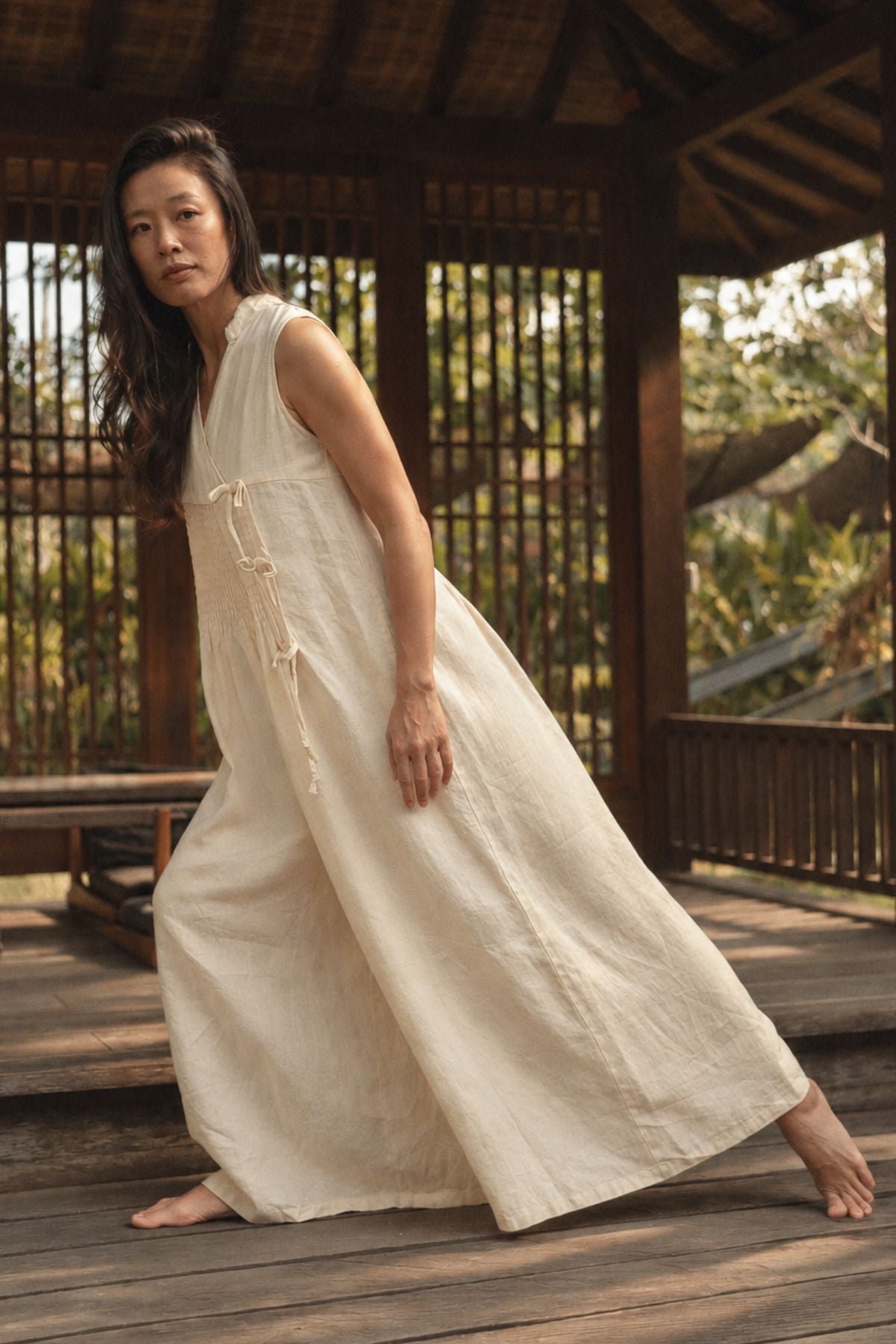
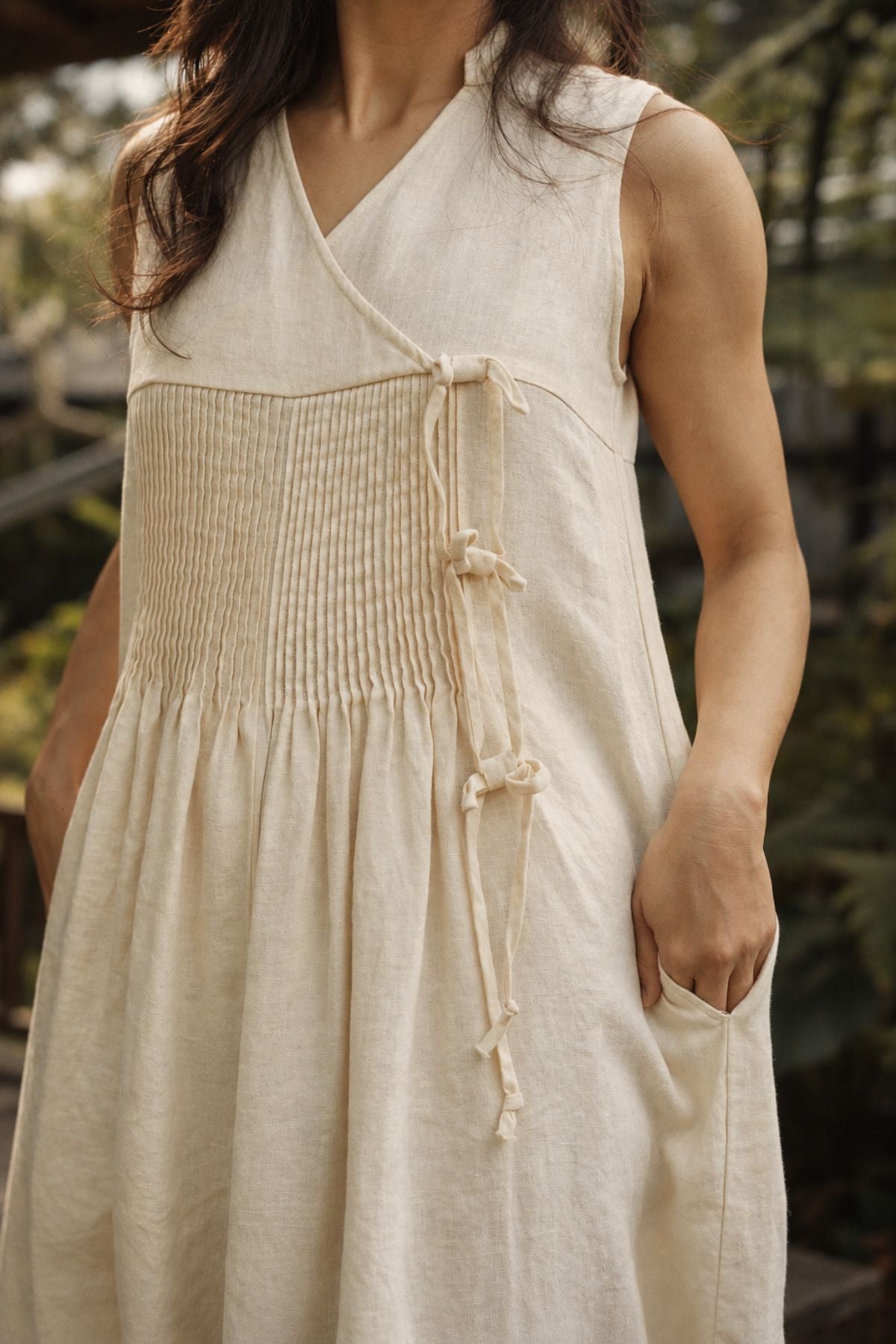
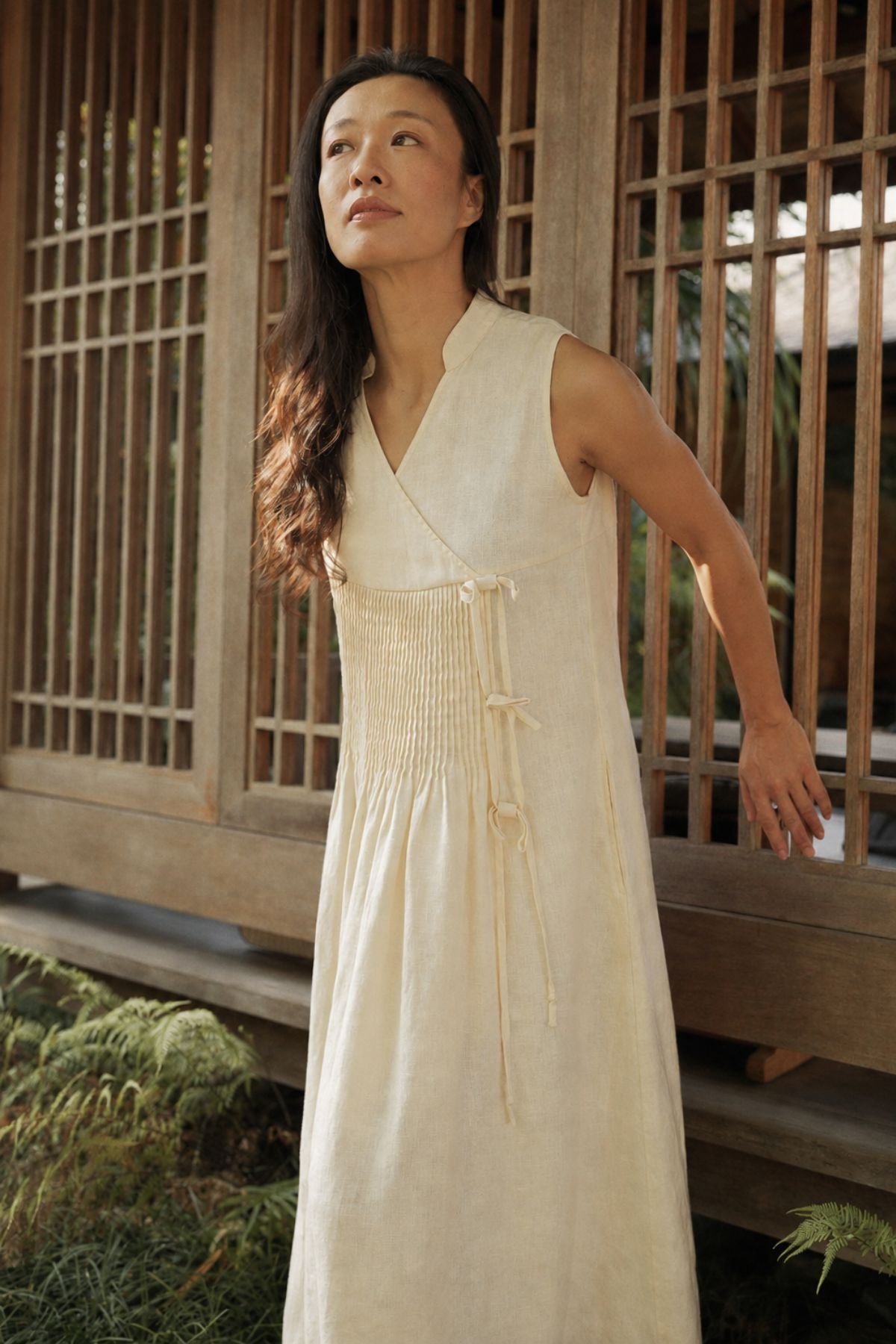
The Fall Nidra Duster is the full length linen one, $318, botanically dyed in the Uluwatu Sunset colourway. Nidra means rest. Cut long and straight with the dropped shoulder, it is the only piece here that is a duster in the strict sense.
The Oracle Jacket, $224, is linen in Moon Milk, shorter and squarer, for when the layer should end at the hip and let the dress underneath talk.
The Perla Jacket, $264, is silk cotton rather than linen, with a quieter surface and more drape. The evening one.
The Osmanthus Set, $288, is the kimono shape in matcha linen, OEKO-TEX certified, and comes as a set rather than a single layer.
Each is made by hand in Bali by the artisan families we work with, in small batches. The lead time is 3 to 6 weeks from order to shipment, then 5 to 15 business days with DHL. See every piece in dusters and jackets.
How to wear a linen duster without looking like you are in costume
Keep what is underneath narrower than the duster. That is the whole rule. Over wide trousers and a loose top, three volumes compete and the eye reads a pile rather than an outfit. Over something close to the body it gives one soft line over one clean line, which is the look people are actually buying.
Beyond that: let it hang open rather than belt it, keep the shoe simple because the hem is already working, and a linen set underneath settles the proportion question for you.
Common Questions About Linen Dusters
What is a linen duster? A linen duster is a long, open front, unstructured layer with no buttons or belt, usually falling between mid calf and ankle. It is worn open over a complete outfit and chosen for line and ease rather than for warmth.
What is the difference between a duster and a kimono? A duster is long and straight with a dropped shoulder and no closure, built to create a vertical line. A kimono layer uses a square, wide sleeved construction from Japanese dress, is often shorter, and frequently has a tie. The duster adds length, the kimono adds width at the sleeve.
How should a linen duster fit? Loose through the body, with the front panels hanging straight rather than curling outward, and a hem landing at mid calf or ankle rather than between. The dropped shoulder should sit evenly on both sides. It should never need belting to look intentional.
Can you wear a linen duster in winter? As a standalone layer it works down to roughly fifteen degrees Celsius over long sleeves. Below that it becomes a layer under a coat, or the one you keep on indoors. Linen insulates by trapping still air against another layer, so it performs over a knit and does very little over bare skin.
How long does a made to order duster take to arrive? 3 to 6 weeks from order to shipment, then 5 to 15 business days with DHL. Pieces are cut once ordered, in small batches, in Bali. If you need something sooner, a gift card is the honest answer.
Buy the layer for the line, not the weather. The weather turns every week; a good duster outlasts years of it.
With love from Bali,
Myrah.
|
A Piece for This Threshold The Fall Nidra Duster. Nidra means rest. Full length linen, botanically dyed in Uluwatu Sunset over several days, cut straight with a dropped shoulder so it falls rather than flaps. The layer you keep on when the coat comes off. |
|
The Muse-Letter Dress for the woman you're becoming. Every week from Bali. Astrology, slow living, sacred feminine, and the pieces we make by hand. A letter, not a sales pitch. Unsubscribe any time. No spam, ever. |











Leave a comment
This site is protected by hCaptcha and the hCaptcha Privacy Policy and Terms of Service apply.