
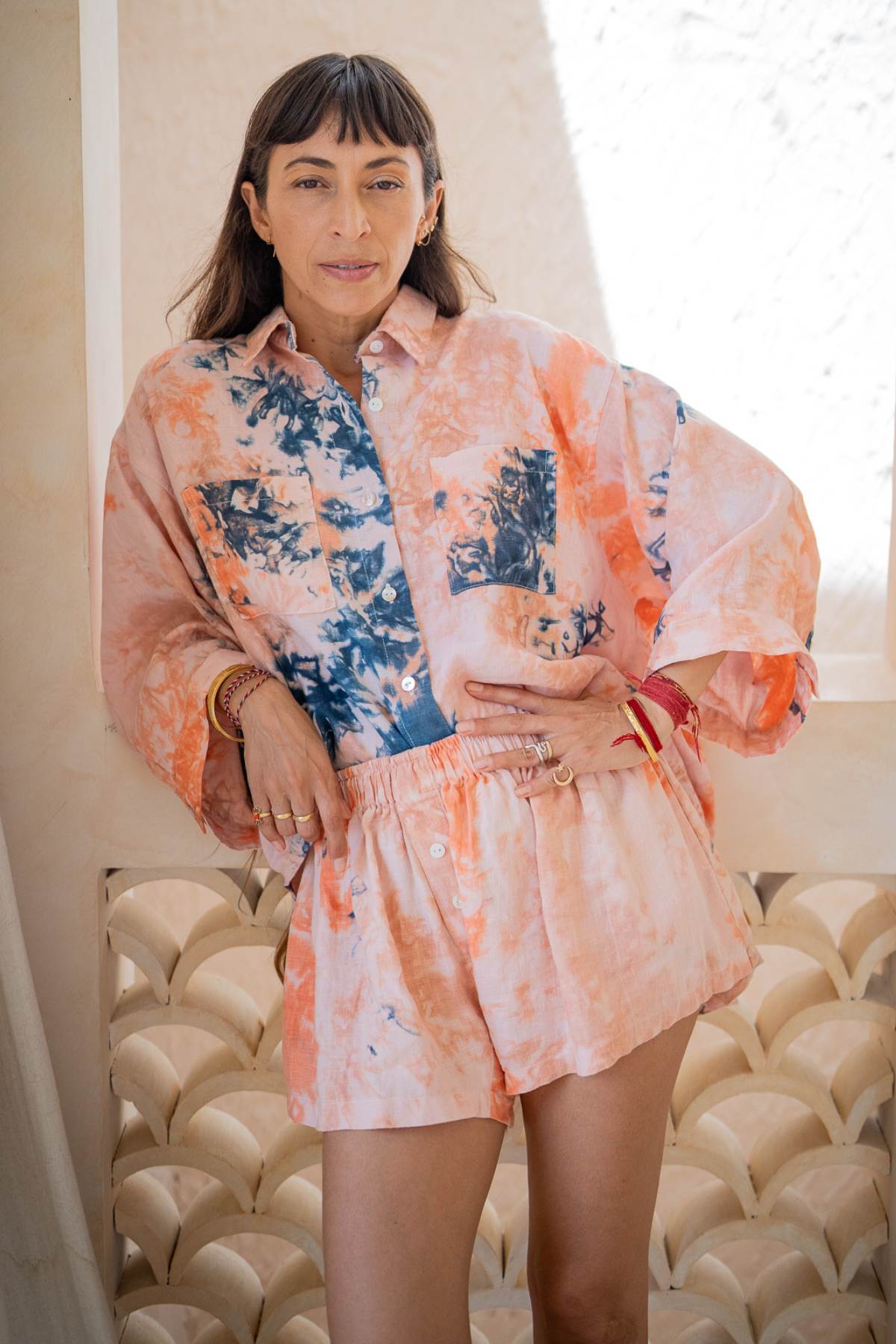
The Colour Is Still Alive
Wash naturally dyed clothing by hand or on a cold gentle cycle, using a small amount of pH neutral detergent. Never bleach it. Dry it flat or on a line out of direct sun, and wash it as rarely as it genuinely needs. That is the whole answer. Everything below is why, and what to expect as it ages.
we dye these ourselves, so this is written from the sink rather than from a manual.

What botanical dye actually is
Botanical dye, plant dye and natural dye all mean roughly the same thing: colour pulled from plants, roots, bark, flowers and other living material, rather than built from synthetic chemistry.
To make it hold, the fibre is usually prepared with a mordant, a substance that helps the dye bind to the cloth. Tannins occur naturally in many plants and do some of this work themselves, which is why certain plant colours grip better than others.
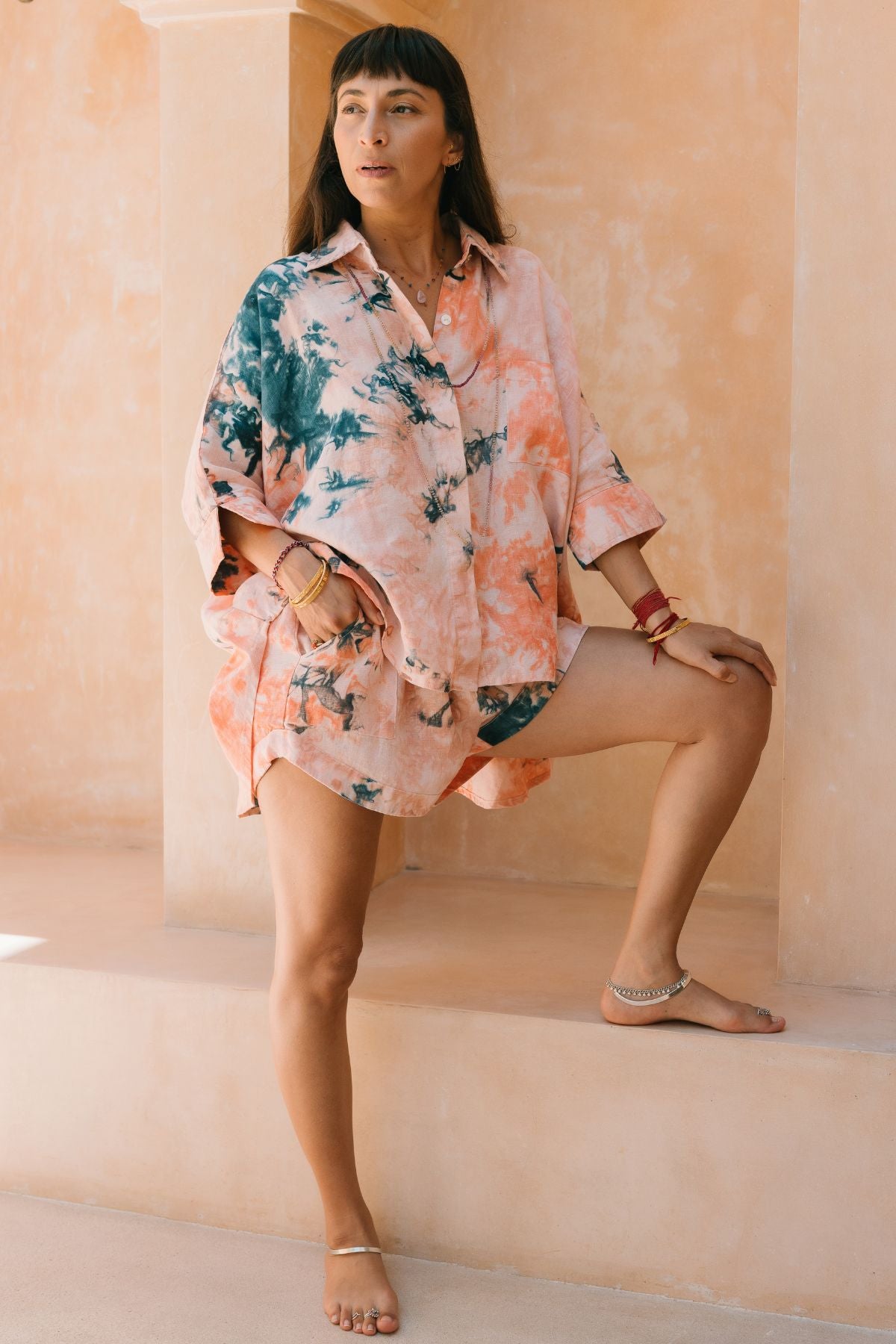
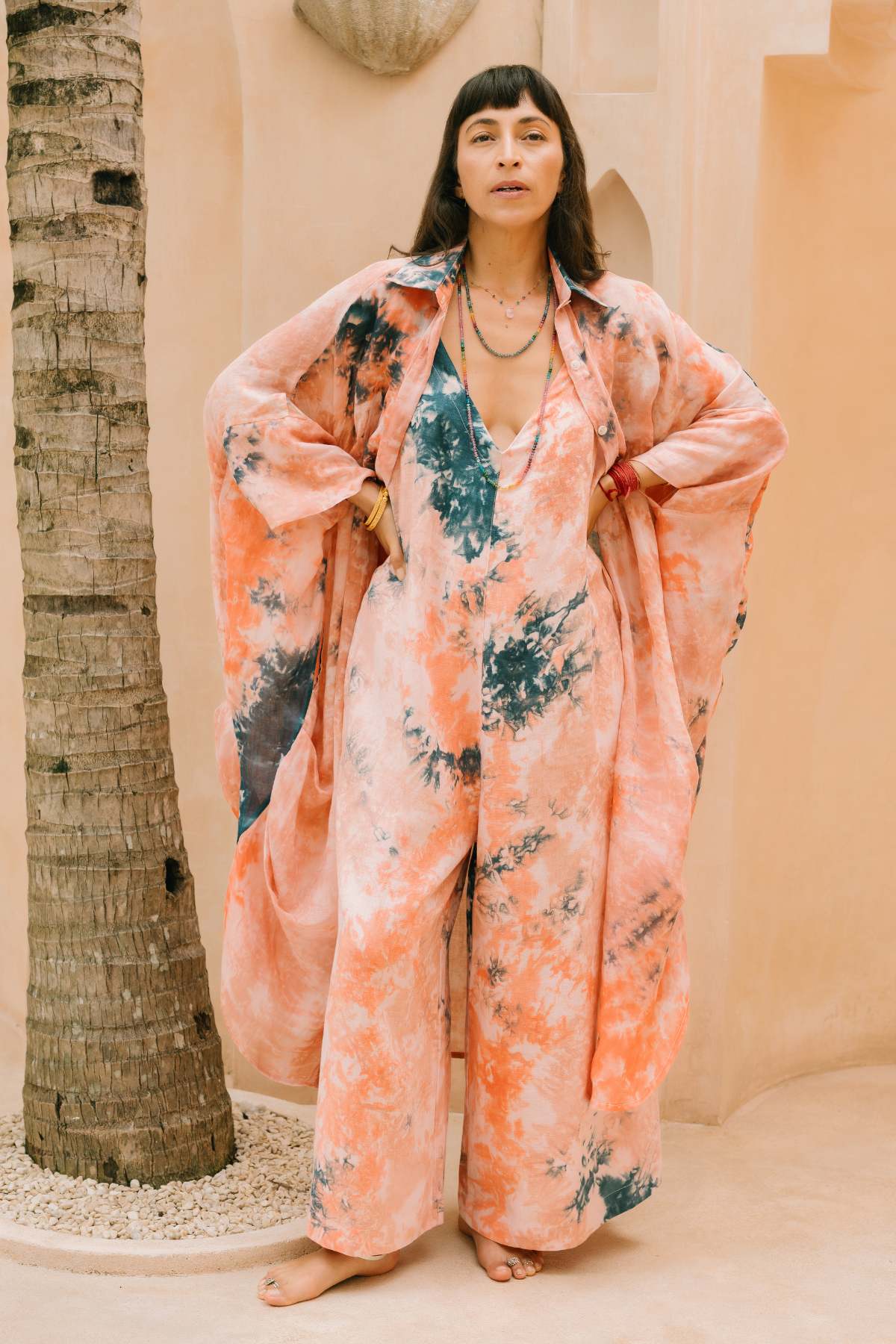
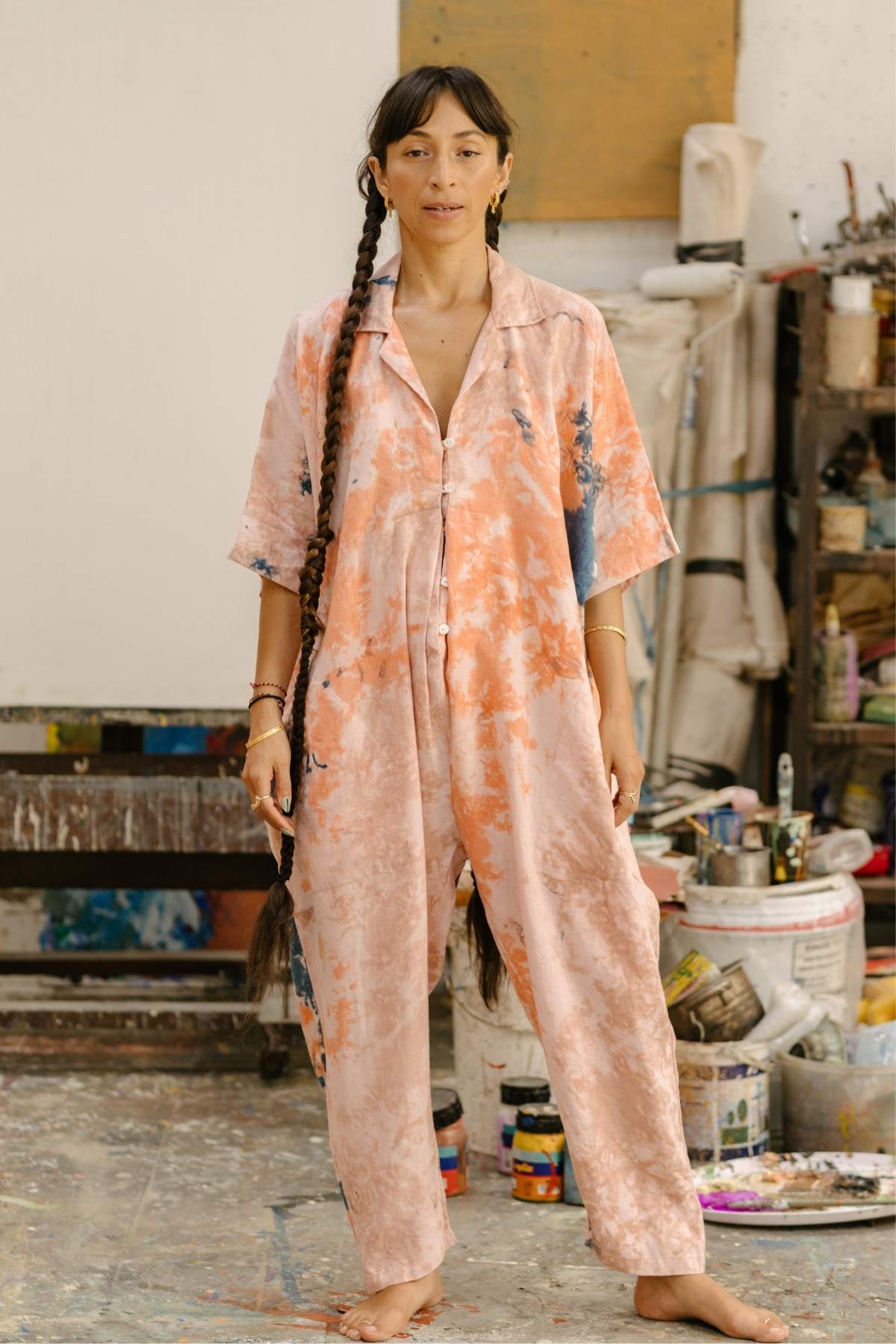
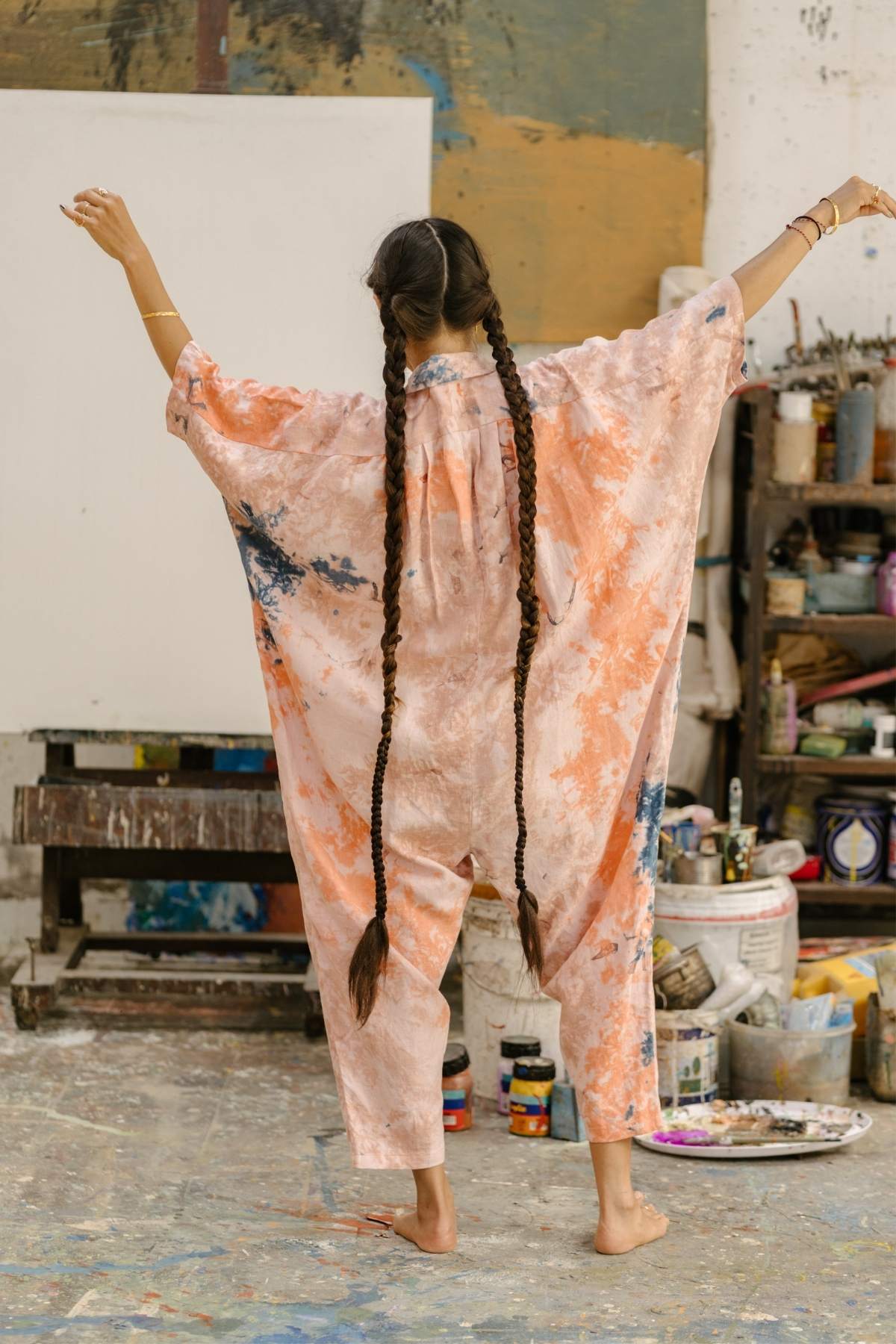
Our Uluwatu Sunset takes five to seven days to build. Not five to seven minutes in a vat. Days, in layers, with drying in between. That is the honest reason a botanically dyed piece costs what it costs.
The washing, properly
Cold water. Always. Heat opens the fibre and lets colour leave.
By hand is best, in a basin, with a small amount of pH neutral or gentle detergent. If you are using a machine, cold, gentle cycle, garment turned inside out, ideally in a mesh bag. No bleach and nothing labelled brightening or whitening, because those are designed to strip colour and they are extremely good at their job.
Do not soak it for hours. Fifteen minutes is plenty, and long soaking is one of the more common ways people accidentally lift colour.
Wash it less than you think. Linen and silk do not need washing after every wear. Air a piece overnight and most of the time it is ready again. Every wash costs you a little colour, so the gentlest thing you can do is simply wash less.
Drying, which matters more than people expect
Out of direct sunlight. This is the one I would underline twice.
Strong sun fades botanical colour faster than washing does. Dry flat or on a line in shade, somewhere with moving air. In Bali we dry everything under cover for exactly this reason, and it is the single habit that most extends the life of a colour.
No tumble dryer. The heat and the friction are hard on both the dye and the fibre.
What is normal, and what is not
This is the part nobody explains, and it is where most of the worry lives.
Normal: a slight loss of intensity in the first wash or two. Gentle shifting of tone over months. Two pieces in the same colourway not matching exactly. Rainbeau in particular is never identical between batches, which is the point of it rather than a fault.
Not normal: colour coming off heavily wash after wash, patchy bleaching in one spot, or a stiff chalky texture. Those usually mean heat, bleach, or something acidic that landed on the fabric and sat there.
If a piece has faded unevenly in one area, look at where it sits on your body. Deodorant, perfume and sunscreen are all mildly reactive and they are the most common culprits by a long way. Let all three dry fully before dressing.
The part I would rather say honestly
Naturally dyed cloth changes. It will not look in three years exactly as it looks today, and no amount of careful washing will freeze it.
I could sell more by not saying that. But a woman who expects a botanical colour to behave like a synthetic one will feel let down by something that is actually working exactly as it should. Plant colour softens. It settles. It becomes specific to you, to your water, your light, your life.
The pieces I love most in my own wardrobe are the ones that have shifted. They stopped being a product some time ago and became something closer to a record.
Frequently asked questions
How do you wash naturally dyed clothing?
By hand in cold water with a small amount of pH neutral detergent, or on a cold gentle machine cycle with the garment inside out. Avoid bleach, brightening detergents and long soaking, and dry flat or in shade rather than direct sun.
Does botanical dye fade?
It softens rather than fails. Some loss of intensity in the first washes is normal, and the tone continues to shift gently over time. Direct sunlight causes far more fading than washing does, so drying in shade is the most effective thing you can control.
Why is my naturally dyed piece a different shade from the photo?
Because no two dye batches are identical. Plant material varies by season, by harvest and by water, so colour differs slightly between batches by nature. This is a characteristic of botanical dyeing rather than a flaw.
Can you machine wash plant dyed clothes?
Yes, on a cold gentle cycle, inside out, ideally in a mesh bag, with a mild detergent. Hand washing is gentler and will extend the colour further, but a careful machine wash will not ruin a well dyed piece.
What is the difference between botanical dye and natural dye?
In practice the terms are used interchangeably. Both describe colour derived from plants and other natural sources rather than synthetic chemicals. Botanical dye tends to specify plant material in particular.
How do I stop naturally dyed clothing from bleeding?
Wash it separately the first two or three times, always in cold water, and never leave it soaking. If you see colour in the water early on, that is usually excess dye releasing rather than the colour failing, and it settles.
Treat it gently and it will last a very long time. Treat it as something finished and unchanging, and it will disappoint you. It was never that.
With love from Bali,
Myrah
|
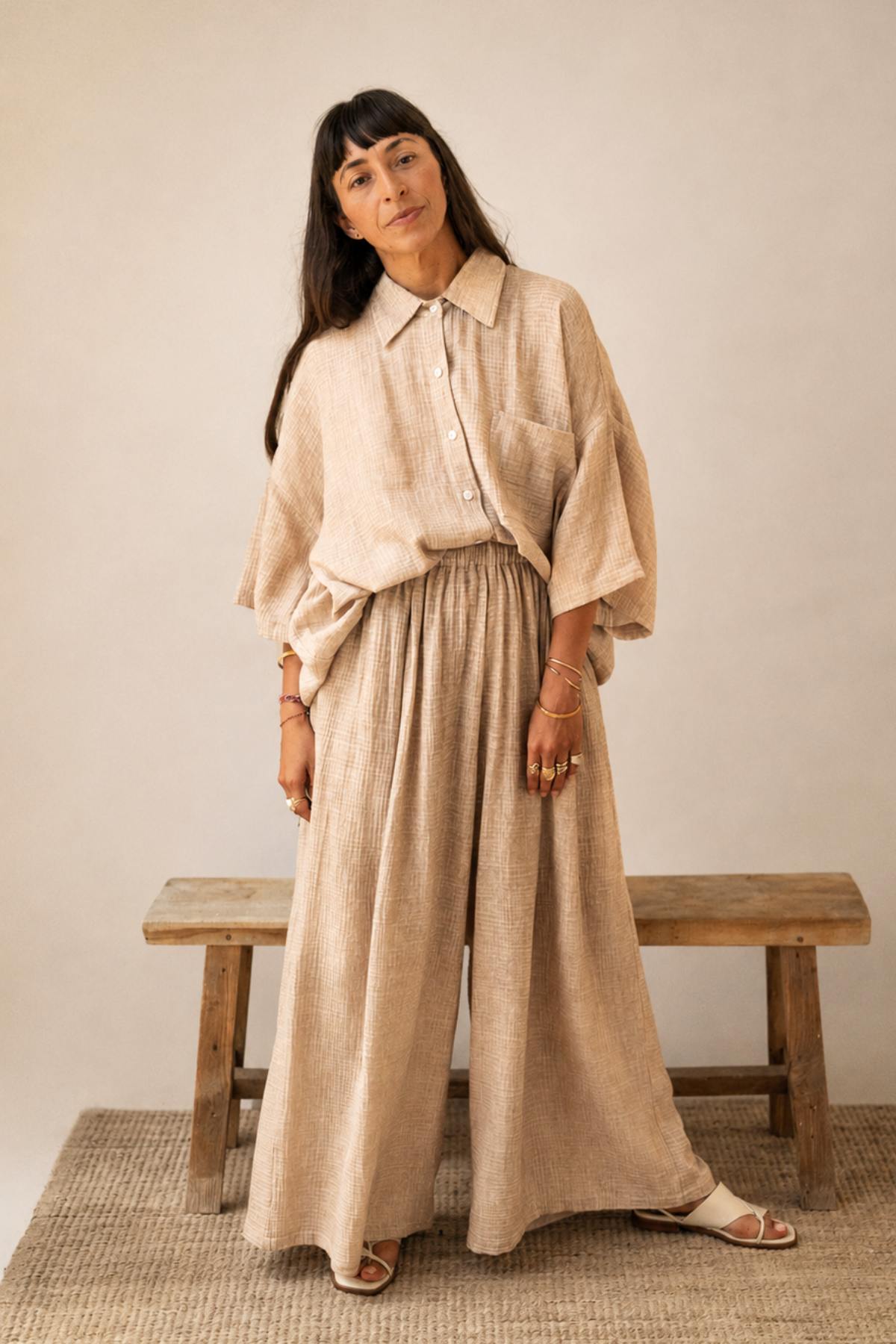
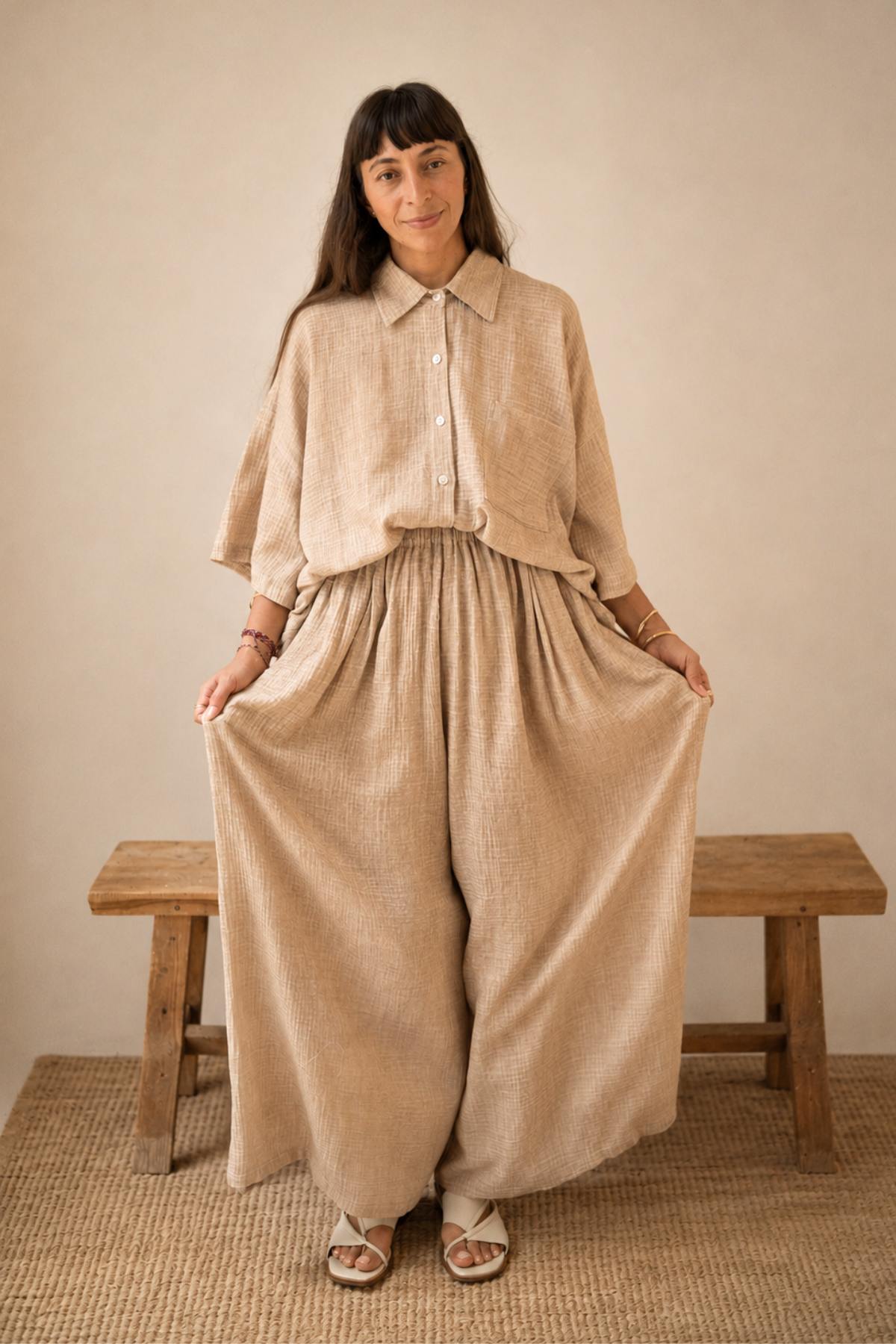
A Piece for This Threshold The Botanical Nidra Set. Shop the Botanical Nidra Set → |
|
The Muse-Letter Dress for the woman you're becoming. Join the Muse-LetterUnsubscribe any time. No spam, ever. |










Leave a comment
This site is protected by hCaptcha and the hCaptcha Privacy Policy and Terms of Service apply.