
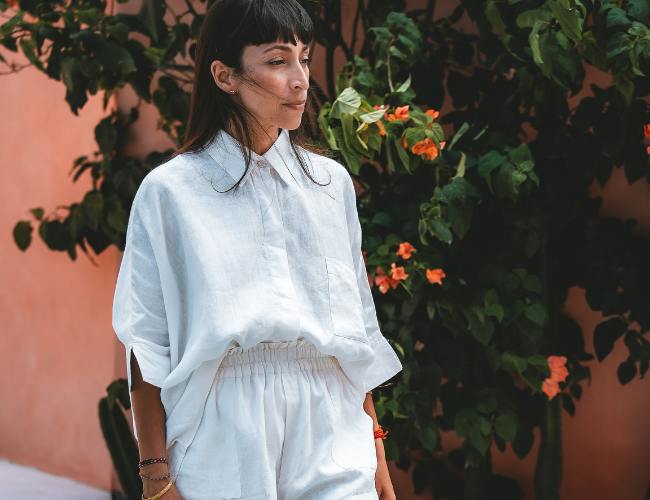


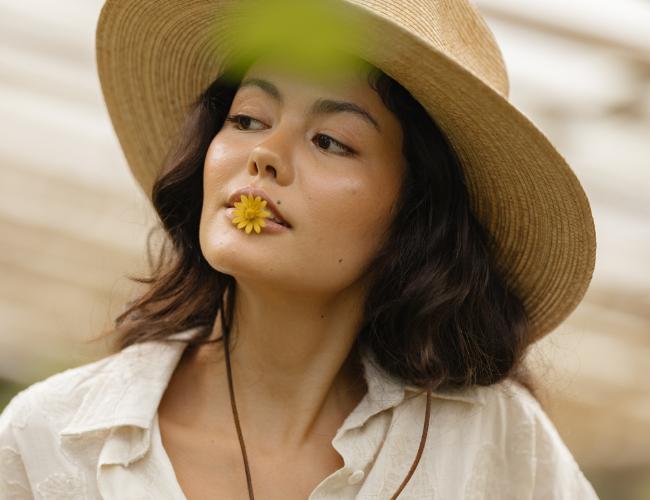
Kundalini Yoga Clothing: What to Wear, and Why the Tradition Asks for White
You notice it the first time you walk into a Kundalini class. A room of women in white, sitting very still on sheepskins, and something in the light that is different from every other studio you have been in. Nobody explains it. You are simply among it, and by the end of the first kriya you understand that the clothing is not costume. It is part of the practice.
Kundalini yoga clothing has two jobs, and they are not in tension with each other. It carries a tradition, and it has to survive forty minutes of breath of fire without becoming the thing you are thinking about. This is what to look for in both.
Why Kundalini Yoga Clothing Is White
In this lineage, white is understood to hold and extend the electromagnetic field around the body, the aura. White is the only colour that reflects the full visible spectrum rather than absorbing part of it, and teachers in this tradition take that literally: wear a colour and you filter what reaches you, wear white and nothing is filtered out.
Practitioners describe the effect as a larger, steadier field. A sense of being less easily knocked sideways by a room. Whether you receive that as energetic fact or as a very old and very effective piece of psychology, something real happens when a room full of people dress the same way for the same reason. The uniform dissolves the part of the mind that is comparing.
If the idea is new to you, our guide to what Kundalini yoga actually is covers the wider practice and where the clothing sits inside it.
What a Long Practice Asks of the Cloth
Set the tradition aside for a moment and watch what a kriya actually does to a garment. You will hold your arms at sixty degrees for eleven minutes. You will breathe rapidly for three. You will go from sitting to lying to sitting again without pause, and you will get warm in a way that has nothing to do with the temperature of the room.
Three things follow from that.
- The fibre has to breathe. Breath of fire raises body heat fast. A natural fibre moves that heat and moisture away from skin. A synthetic one holds it against you, and by minute six you are managing your clothing instead of your breath.
- The cut has to move first. Anything that binds at the shoulder, the hip or the waist will announce itself the moment you raise your arms. Kundalini clothing is loose not for aesthetics but because a garment that resists you becomes the loudest thing in the room.
- It has to stay where you put it. Long practices include inversions, wide-legged postures and a great deal of sitting on the floor. A piece that needs adjusting every few minutes is a piece that keeps pulling you out.
Cotton and linen do all three. Nothing synthetic does the first one, whatever the label promises about wicking.
Cotton or Linen, and When Each One Serves
Organic cotton is the traditional cloth of this practice and the more forgiving of the two. It is soft from the first wear, it takes white beautifully, and it holds a drape that stays quiet through movement. If you are choosing one fabric for a regular practice, choose cotton.
Linen is the one to reach for in heat. It is the most breathable fibre we work with, it dries faster than cotton, and it gets softer every time you wash it rather than wearing thin. It creases, and in this practice that turns out not to matter at all. Nobody in a Kundalini room has ever been distracted by a crease.
What both share is that they are grown, not extruded, and they will return to the earth when they are finished. That is the same reason we build almost everything we make from them. You can read the full picture on our slow fashion page.
What We Make for the Practice
These pieces were not designed as activewear. They were designed for women who move between a morning sadhana, a market, and the rest of a day, and who would rather not change three times to do it.
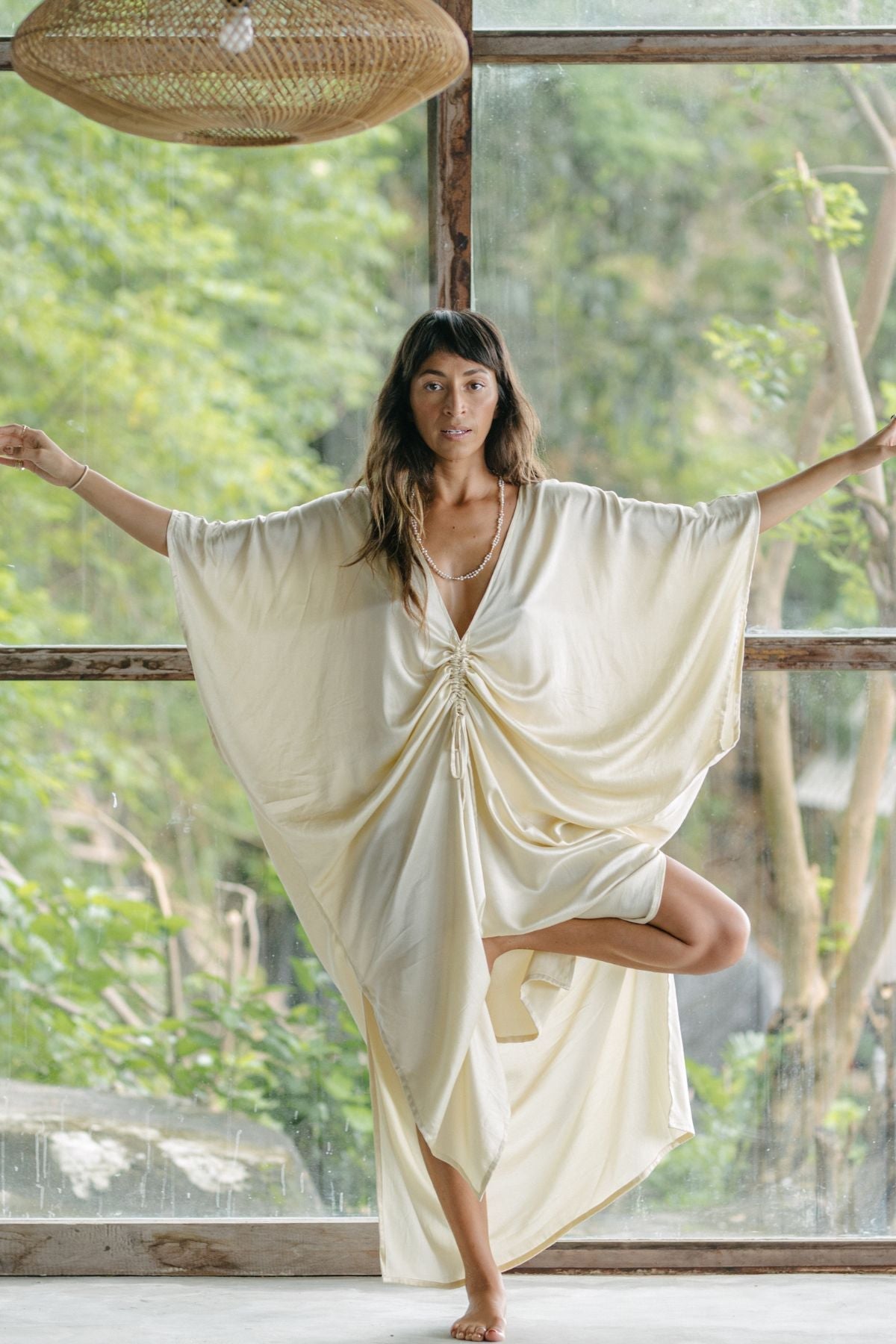
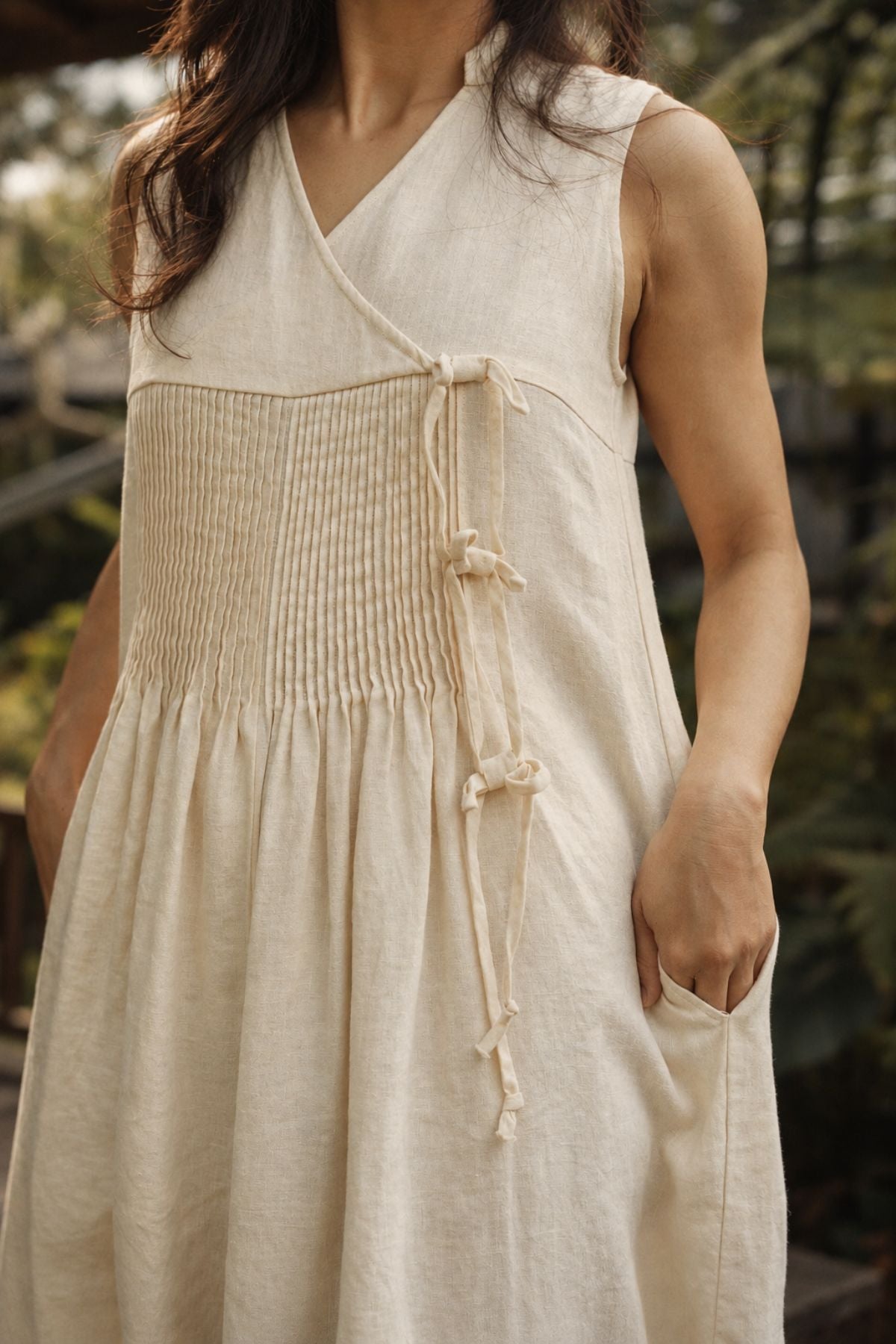
- The Kundalini Gown. The most direct answer to this question we make. Long, unrestricted through the shoulder and the hip, and cut so it falls straight when you sit cross-legged rather than gathering under you. It reads as a dress the moment you step outside. From $121.80
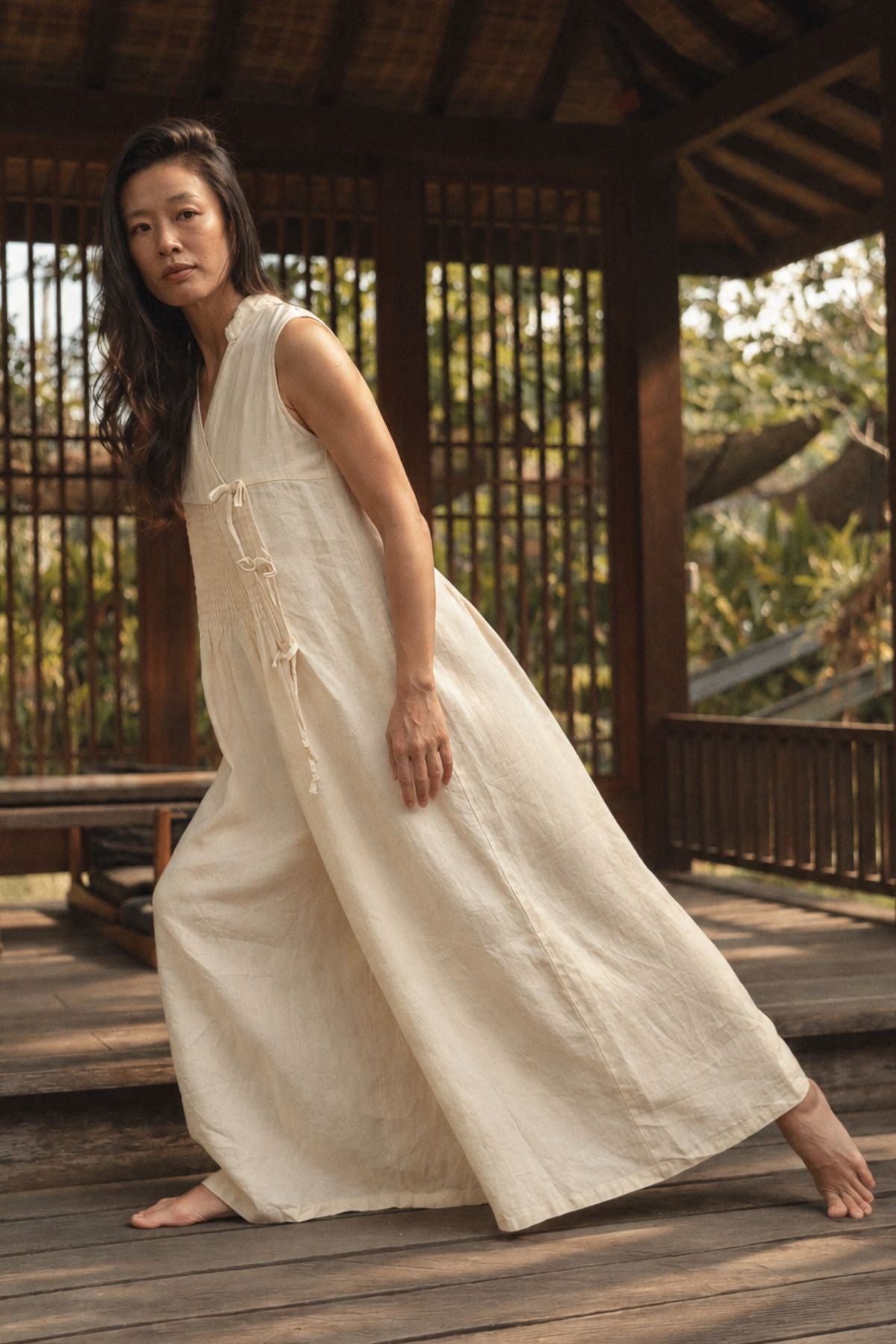
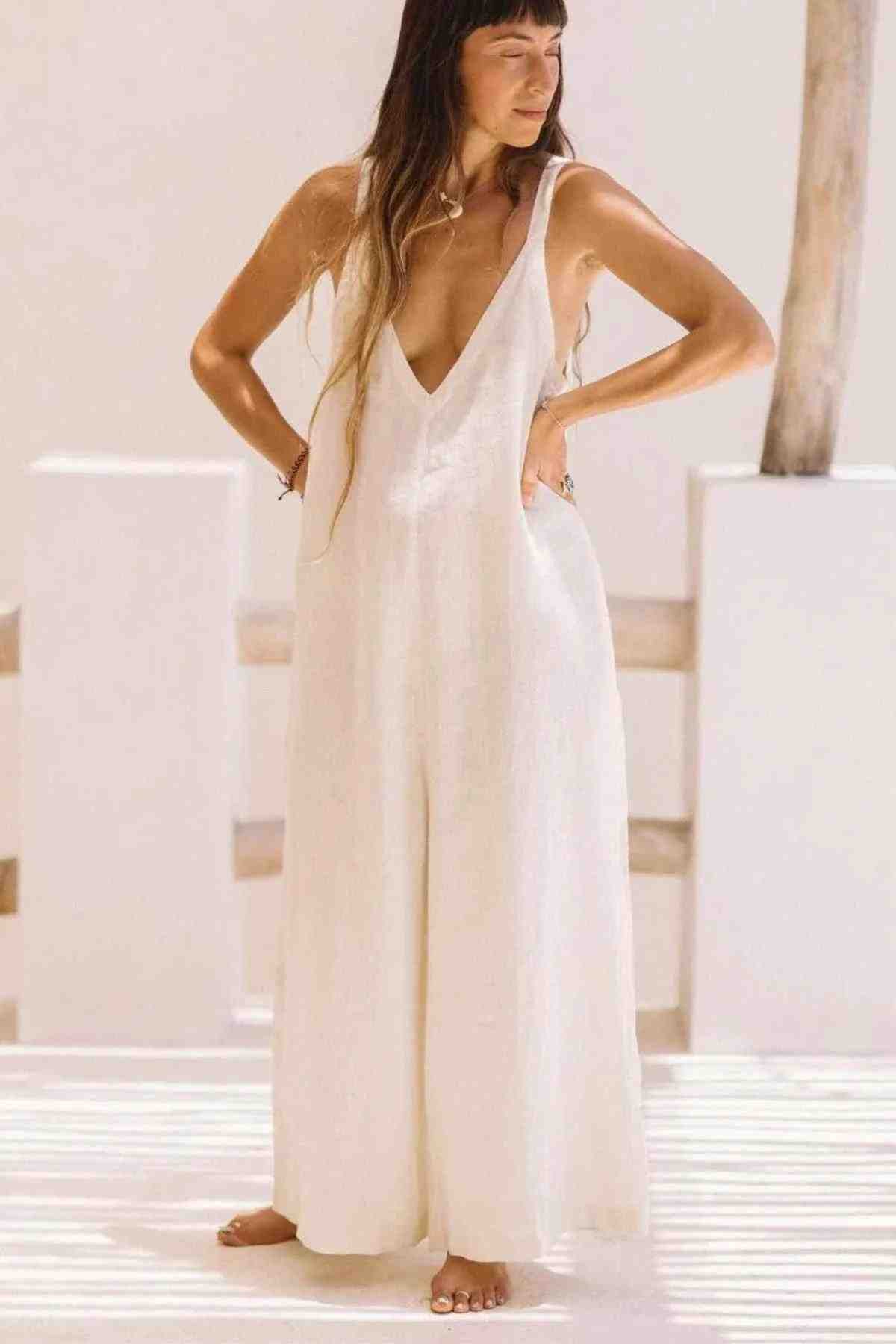
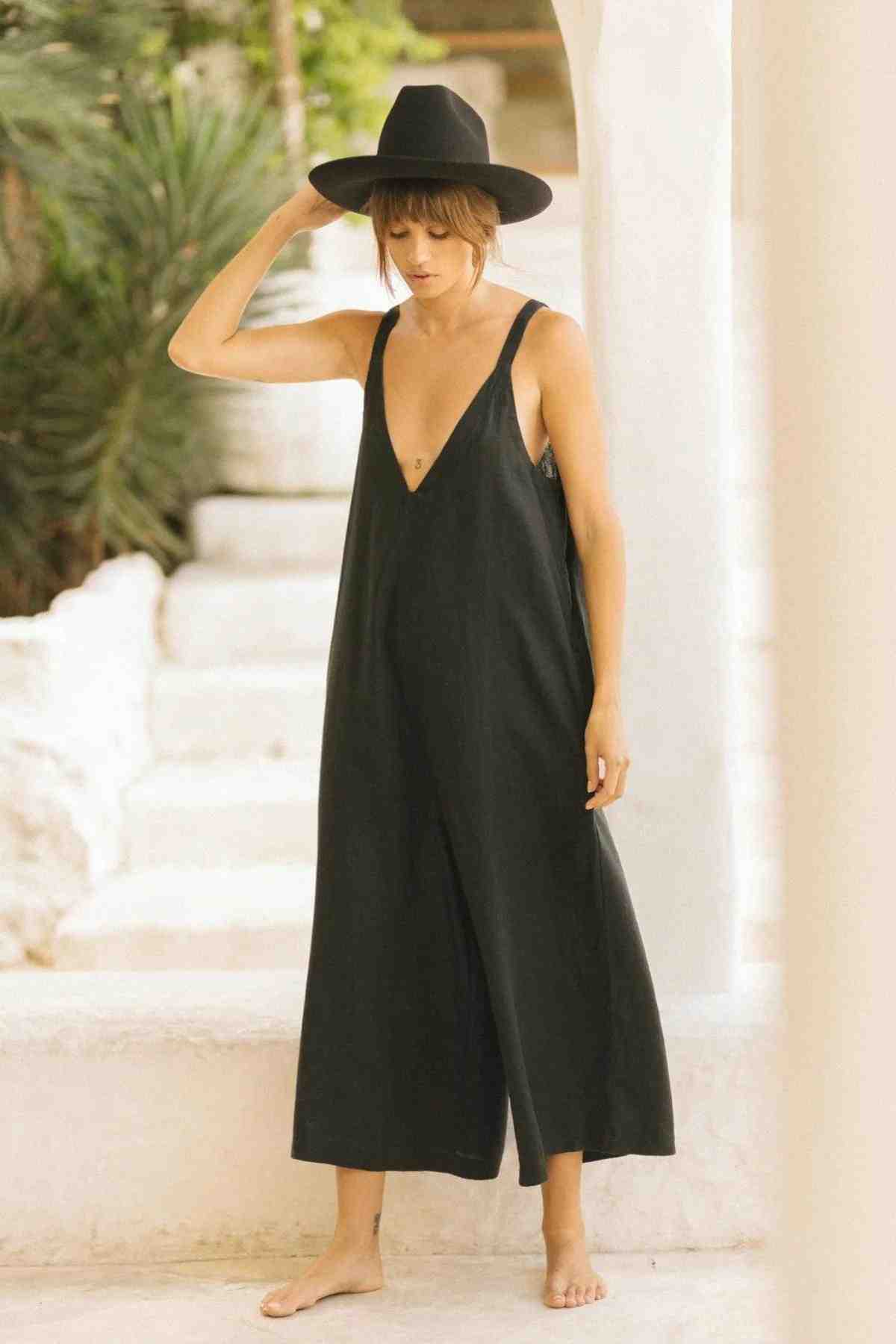
- The Kundalini Playsuit in linen. For anyone who wants their legs free. One piece, so nothing separates at the waist in a forward fold, and linen so it holds up through a warm room and a long set. From $163.80
- The White Golden Chain Jacket. For the beginning and the end of practice, when the room is cold and the body has not warmed yet, and for the walk home after. From $156.80
The Sets, for a Practice That Continues Into the Day
A set solves a specific problem. The two pieces move independently, so nothing rides up in a forward fold or pulls at the shoulder in an arm-held posture, and afterwards you can separate them and wear each half with something else entirely. For anyone whose practice sits inside a normal day rather than beside it, this is the most useful shape we make.
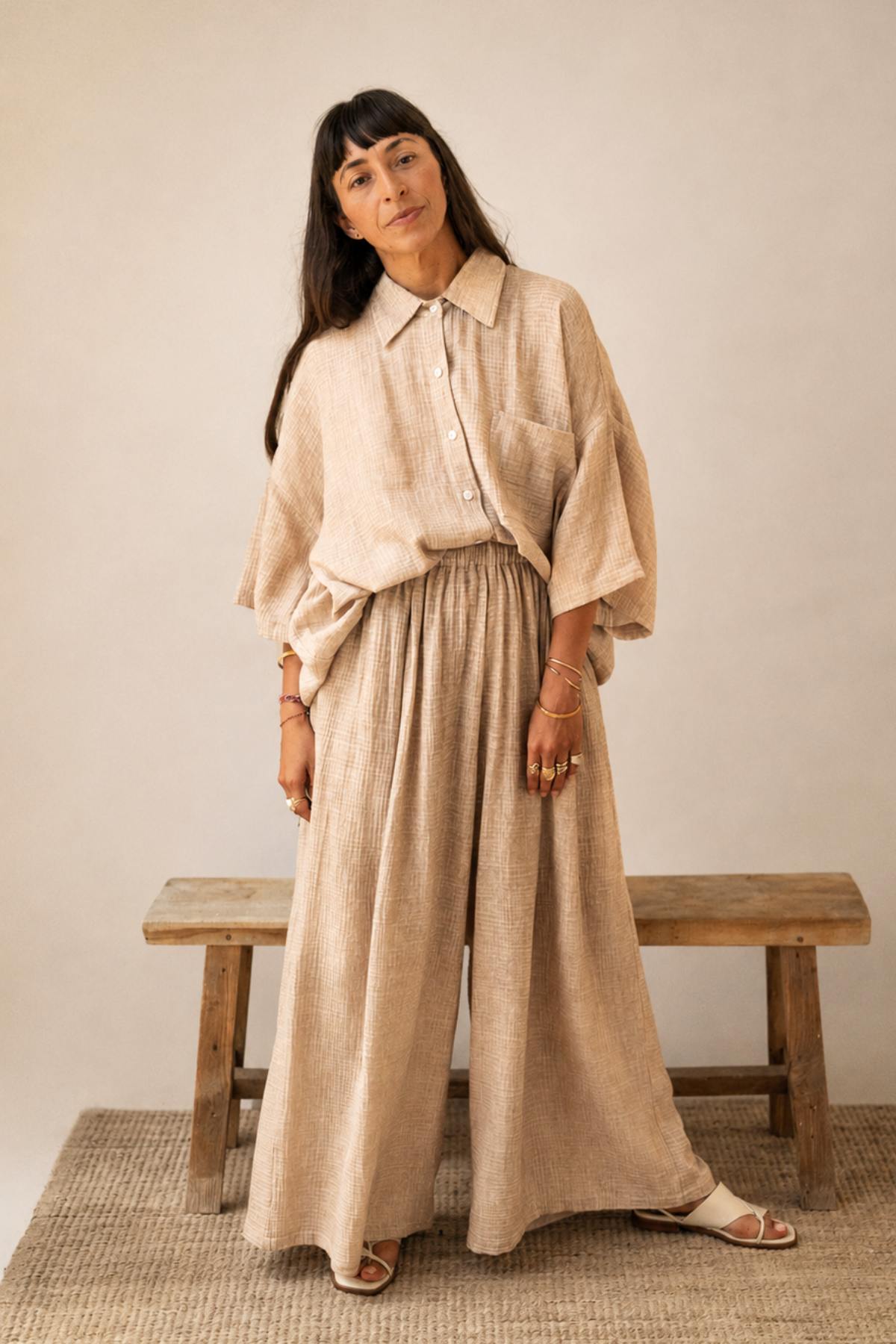
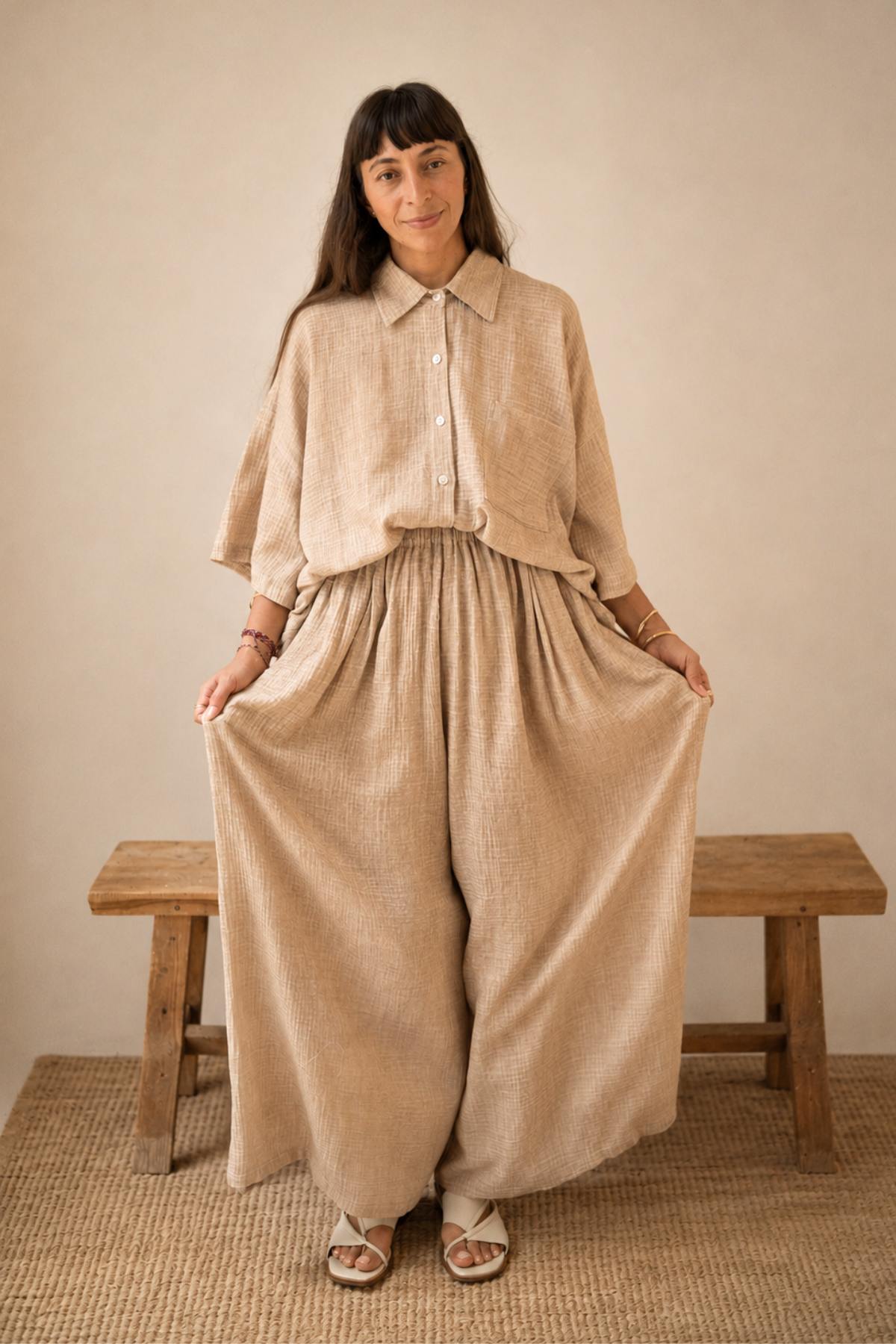
- The Suka Button Down Set in linen. The plainest of them and the one most often bought twice. Button-down and wide-leg trouser, stonewashed so it arrives already soft. From $140
- The Nidra Button-Down Linen Set. Named for yoga nidra, cut with enough ease to lie down in for a long relaxation without a waistband making itself known. From $128.10
- The Swan Set in Moonlight. The closest to a true white in the range, and the one to reach for if you are dressing to the tradition. From $180.60
- The Suvana Suka Set. A heavier hand than the others, for cooler rooms and early sadhana. From $170.80
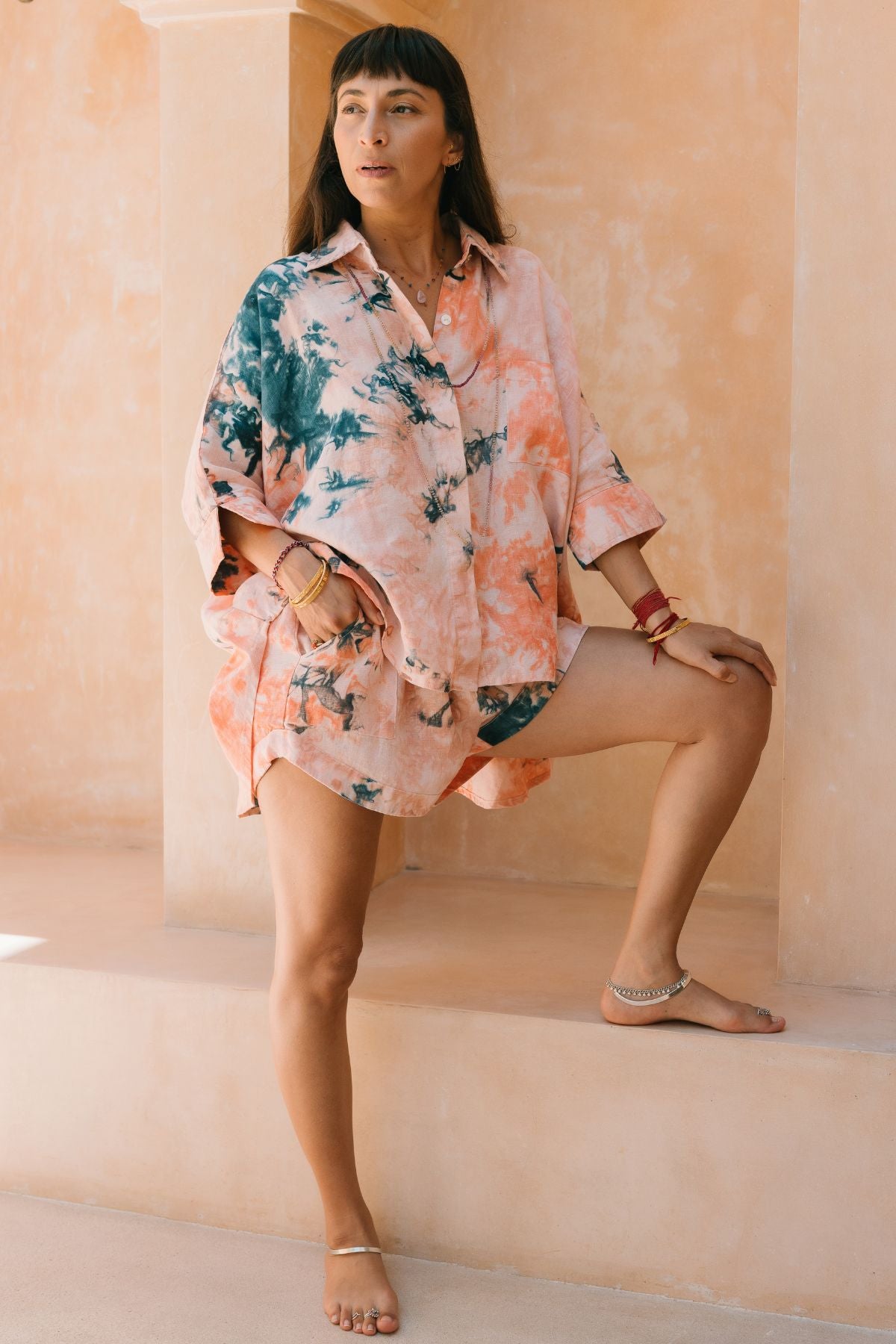
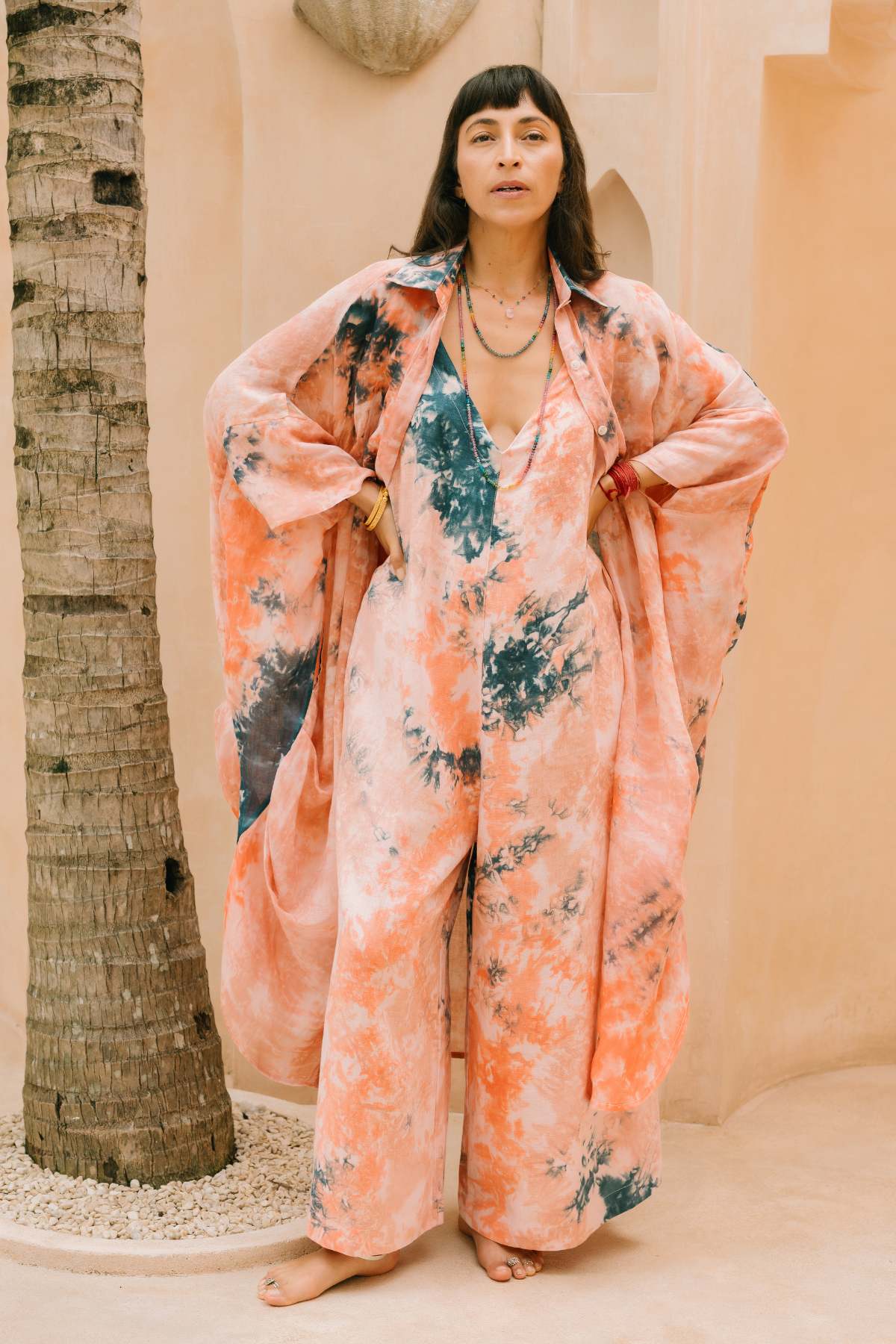
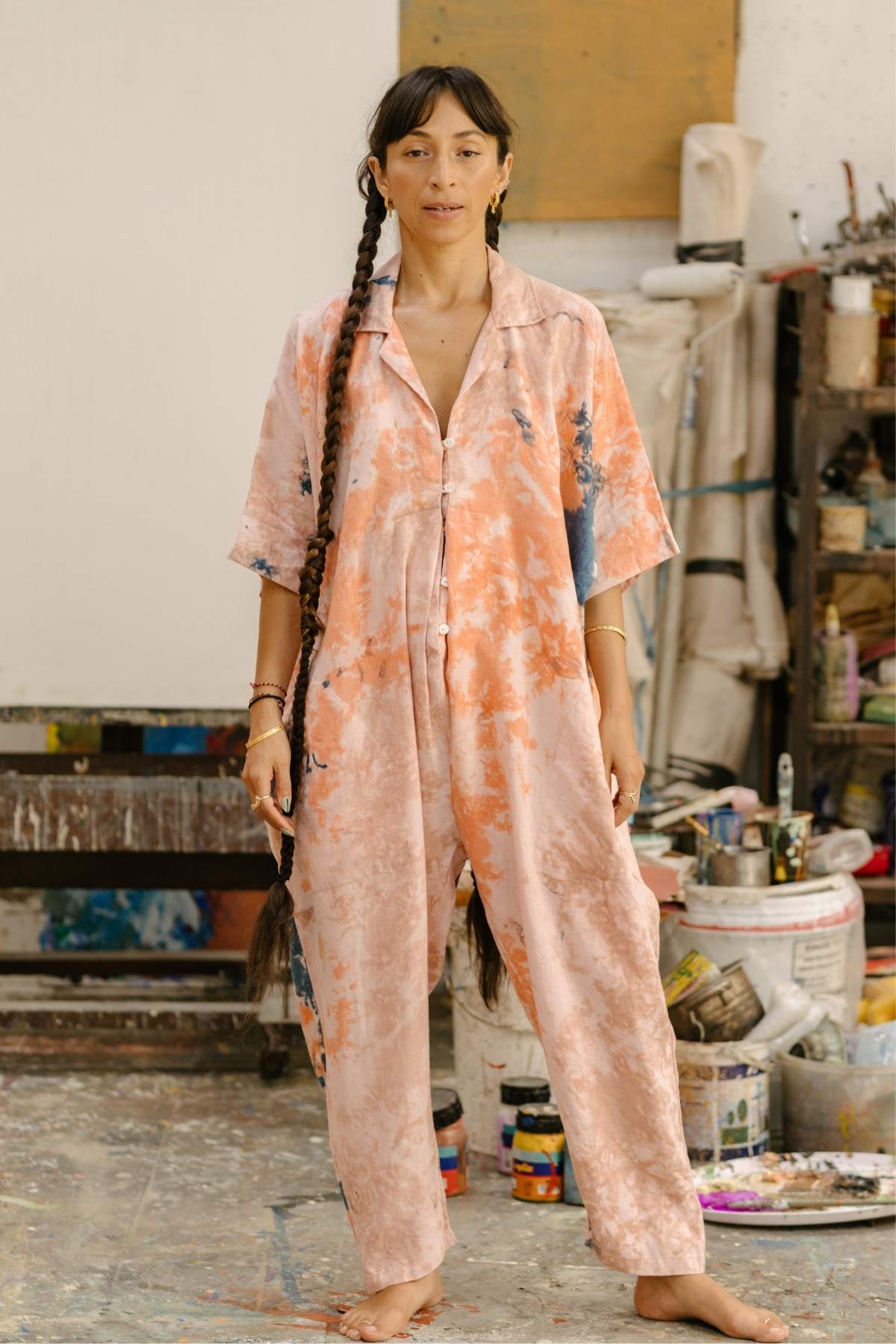
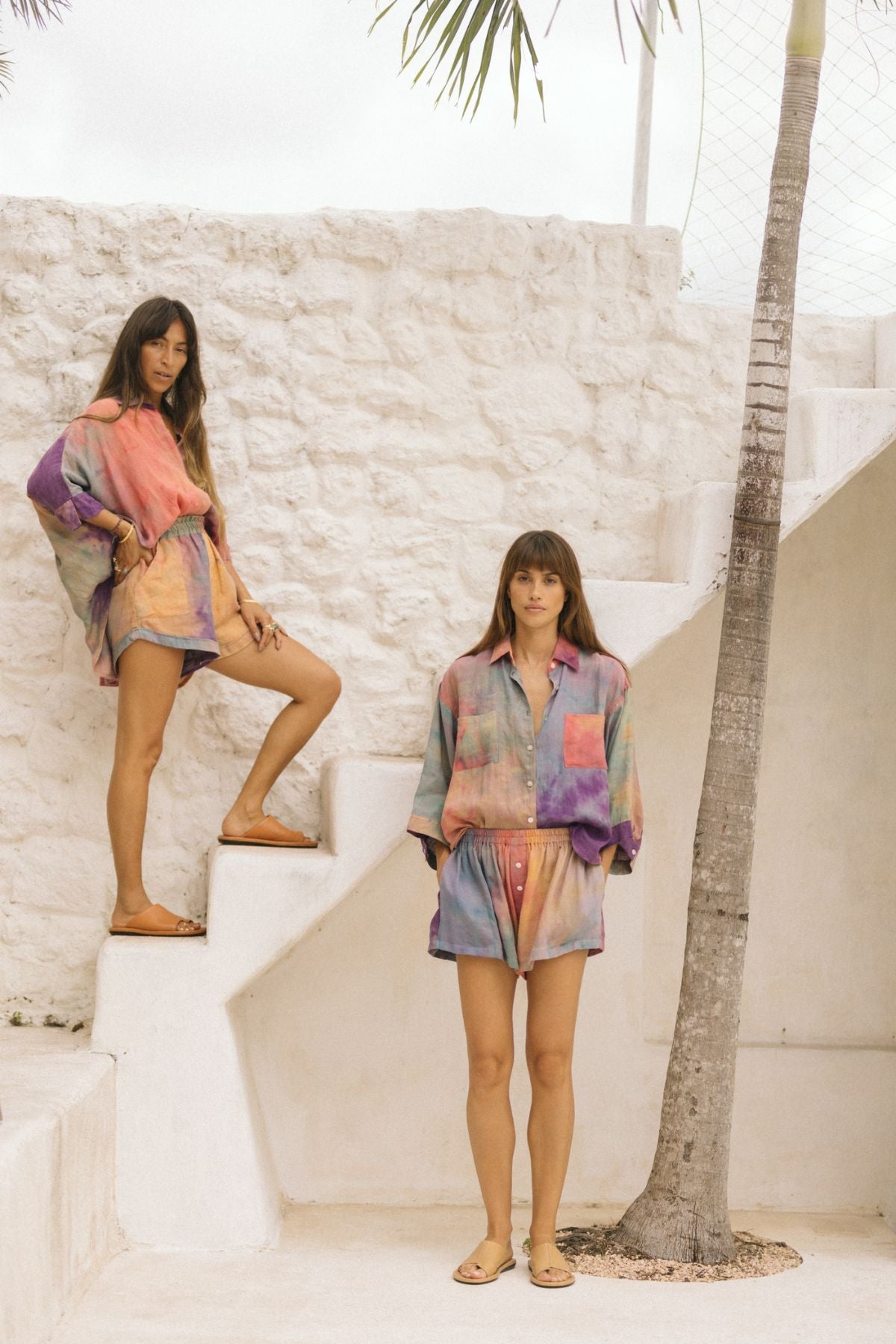
- The Rainbeau Linen Suka Set. Botanically dyed, and no two runs come out the same. Not white, and worth knowing that before you order. From $145.60
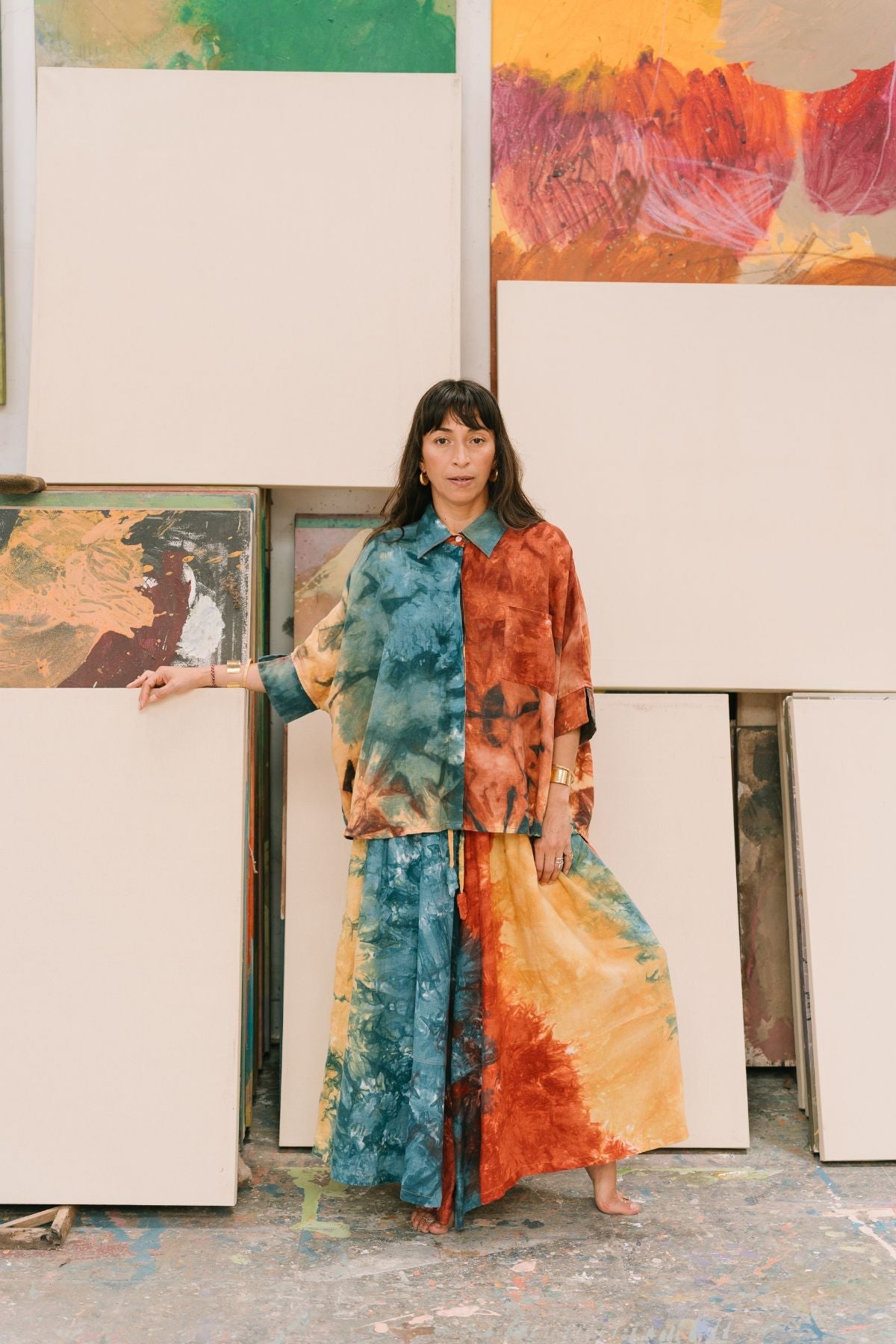
- The Uluwatu Sunset Linen Suka Set and the Golden Sunset. Both botanically dyed, five to seven days in the dye before a seam is sewn. From $145.60
Everything we make in white sits together in the white collection. All of it is sewn in Bali, in the homes and small workshops of the artisan families we work with, in linen and organic cotton.
The Head Covering
Many practitioners cover the head during practice with a white cotton cloth or a turban. The teaching is that it steadies the skull, contains the energy raised at the crown, and holds the attention inward.
The practical version is simpler. When your head is covered, you stop feeling the room on your scalp, and the small constant reporting of the outside world quiets down. Natural cotton is the only sensible fabric for it. Anything synthetic against the scalp for an hour becomes unbearable in a way that is difficult to explain until you have tried it.
How to Care for Practice Clothing
Practice clothing takes more sweat than most of a wardrobe and usually gets washed more often, which is exactly when natural fibres are most easily ruined. The whole method is restraint.
- Wash cool, at thirty degrees or below. Heat sets body oils into linen and cotton rather than lifting them, and on white it is what turns a garment grey over a year.
- Air it between practices rather than washing every time. Hang it somewhere with moving air. Most of what makes practice clothing feel unworn is moisture, not dirt, and linen sheds that overnight.
- Line dry, out of direct sun for colour, in it for white. Sunlight yellows botanical dye and brightens undyed white. Use that in whichever direction you need.
- No fabric softener. It coats the fibre and stops it breathing, which removes the exact property you chose it for. Linen softens on its own with every wash.
- Wash botanical dye separately for the first three washes. Rainbeau, Uluwatu Sunset and Golden Sunset are plant-dyed and will give up a little colour early on.
If You Are Not Ready to Wear White
Then do not. No teacher worth practising with will turn you away for the colour of your clothes, and arriving in what you own is far better than not arriving.
What we would say is this. Start with the fabric, because that part is not symbolic. Wear something natural, loose and long, and see whether the practice feels different when your clothing has stopped asking for your attention. The white tends to arrive on its own, a few months later, usually without a decision being made about it.
Frequently Asked Questions
Why is white clothing recommended for Kundalini Yoga?
In this tradition, white is understood to extend and strengthen the electromagnetic field around the body, the aura, and to protect the practitioner as energy rises through a kriya. White is the only colour that reflects the full visible spectrum rather than absorbing part of it, which is the basis of the teaching. There is also a practical effect that anyone can observe. When a whole room dresses the same way for the same reason, the part of the mind that compares itself to others goes quiet, and the attention that was doing that work becomes available for the practice.
Do I really need to wear white clothes to practice Kundalini Yoga?
No. White is a recommendation within the tradition, not a requirement for entry, and no teacher worth practising with will turn you away over the colour of your clothes. Wearing what you already own is better than not going. If you want to move toward the tradition gradually, start with the fabric rather than the colour. Natural, loose and long will change your experience of a long practice more immediately than white will.
What kind of fabrics are best for Kundalini Yoga clothing?
Organic cotton and linen, and for one reason above all others: they breathe. Breath of fire and long held postures raise body heat quickly, and a natural fibre moves that heat and moisture away from skin while a synthetic one traps it. Cotton is the traditional choice and the more forgiving of the two, soft from the first wear and quiet in its drape. Linen is the better choice in a warm room, since it is the most breathable fibre available and dries fastest. Avoid polyester and nylon regardless of what the label claims about wicking.
What is the deal with head coverings in Kundalini Yoga?
Practitioners cover the head with a white cotton cloth or turban during practice. The teaching is that it steadies the skull, contains the energy raised at the crown, and holds the attention inward. The practical effect is that the scalp stops reporting the room to you, and a layer of low-level distraction disappears. If you try it, use natural cotton. Synthetic fabric against the scalp for a full class becomes genuinely difficult to sit with.
How do I choose comfortable clothes for Kundalini Yoga?
Judge a garment by three things. First, the fibre: natural, so it breathes through a warm practice. Second, the cut: loose through the shoulder, hip and waist, because anything that binds will announce itself the moment you raise your arms for eleven minutes. Third, whether it stays put, since a long practice includes inversions, wide-legged postures and a great deal of floor sitting, and a piece you have to keep adjusting will keep pulling you out. If you notice the garment at all during a kriya, it is the wrong garment.
Can I wear leggings or shorts for Kundalini Yoga?
You can, and many people do, though the tradition leans toward looser and longer. If you wear leggings, choose organic cotton rather than a synthetic blend, because the heat a kriya generates has to go somewhere. Shorts are usually the harder choice in practice, not for modesty but because so much of Kundalini is done sitting cross-legged on the floor, and bare legs on a mat for an hour is its own distraction. A loose linen or cotton trouser, or a one-piece cut for movement, tends to serve better than either.
With love from Bali,
Myrah
|
A Piece for This Threshold The Kundalini Gown Shop the Kundalini Gown → |
|
The Muse-Letter Dress for the woman you’re becoming. Join the Muse-LetterUnsubscribe any time. No spam, ever. |







Leave a comment
This site is protected by hCaptcha and the hCaptcha Privacy Policy and Terms of Service apply.