Conscious Fashion in Bali: How to Tell a Real Maker From a Reseller
Bali has more shops selling conscious fashion than almost anywhere its size. A large share of them do not make anything.
That is not a scandal, it is just how the island works. Bali is a genuine centre of craft, with dye houses, weaving villages and family run sewing workshops going back generations. It is also a place where a container of imported stock can be unpacked into a beautiful shopfront on Thursday and photographed against a temple wall on Friday. Both look identical online. Only one puts money into a local maker's hands.
What Conscious Fashion in Bali Actually Means
Conscious fashion in Bali is not a certification and nobody polices the phrase. Used honestly, it describes clothing where you can trace three things: who cut and sewed the garment, where the cloth came from, and what happened to the water and the dye afterwards. A brand that answers all three without changing the subject is doing real work. A brand that answers only the third, in soft language about a commitment to the planet, is doing marketing.
The useful distinction is not sustainable against unsustainable. It is made here against bought here. A brand producing in Bali pays a workshop, a cutter, a dyer, often a family two or three generations deep in the work. A brand buying wholesale and re labelling pays a shipping company. There is a longer version of this argument in what slow fashion really looks like in Bali, written from inside a workshop rather than a marketing desk.
Four Questions That Separate Makers From Resellers
You do not need expertise. You need four questions, and you need to notice how fast the answers arrive.
Where is this sewn, and by whom? A maker answers immediately and specifically, often with a village or a family name. A reseller says made in Bali and stops. Made in Bali is a geography, not a supply chain.
What is the fabric, exactly? Ask for fibre content and origin. One hundred percent linen is an answer. Linen blend is a warning. Certifications like OEKO-TEX Standard 100 or European Flax are checkable, which is precisely why vague brands avoid them.
How long does it take to make one? The most revealing of the four, because it is the one a reseller has never had to think about. Botanical dyeing alone takes days. Hand stitching takes hours per piece. If a shop can hand you any size in any colour today, someone made a thousand at once, somewhere else.
What happens if I want another one? Small batch producers will tell you the next run varies. Natural dye lots are not identical, and honest brands say so up front rather than burying it in a returns policy. That admission is one of the strongest signals of a real maker you will find. The same logic runs through how to tell genuinely handmade clothing from the marketing version.
Where the Real Work Happens on the Island
The craft is not evenly distributed. Ubud and the villages inland from it hold most of the weaving and natural dye knowledge, and the ikat and batik traditions there are old, technical and still taught within families. The coastal stretch from Seminyak through Canggu to Pererenan holds most of the shopfronts, which is a different thing entirely, though genuine small workshops do sit quietly in the lanes behind those roads.
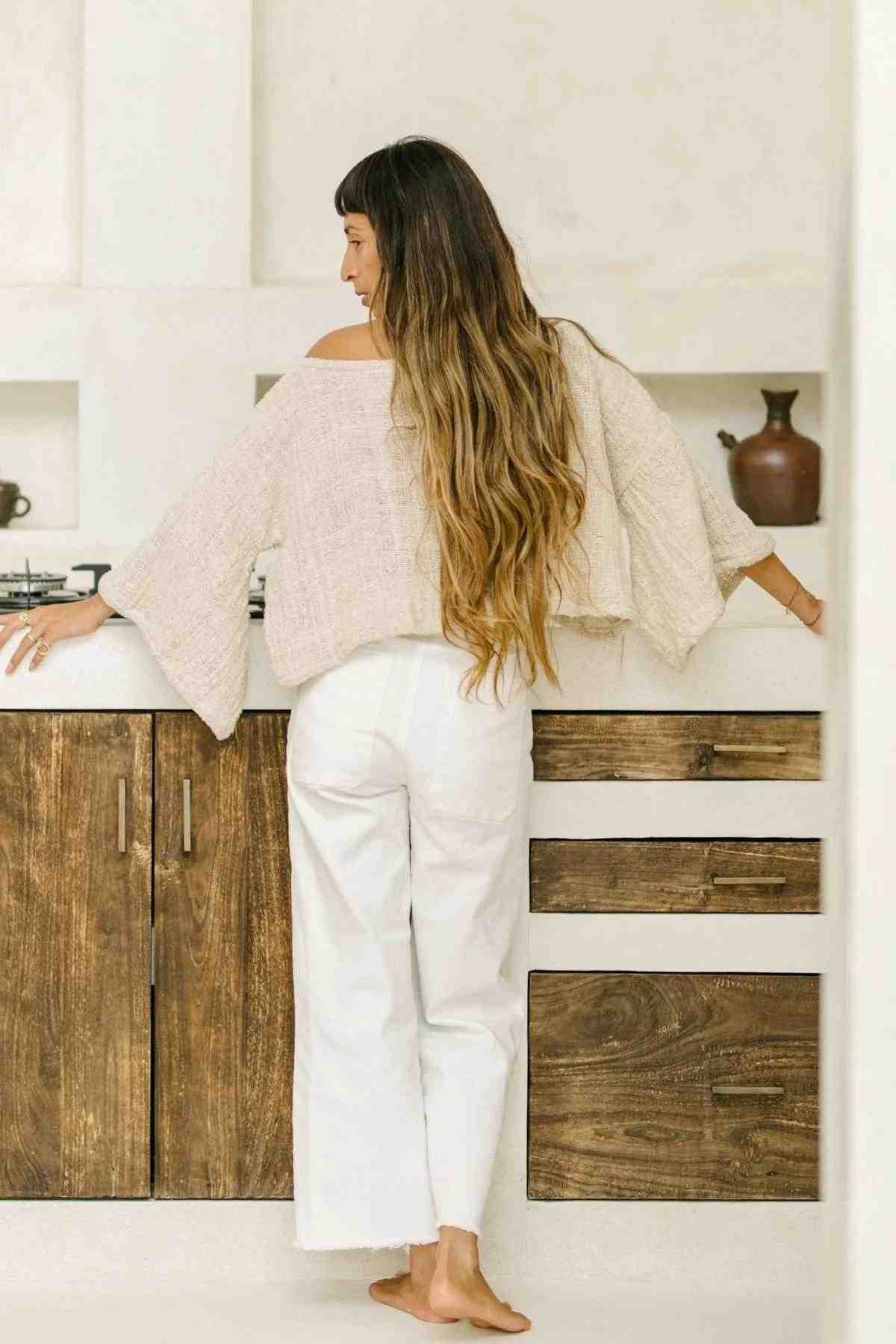
The practical implication is this. A beautiful storefront on a main road tells you about rent, not craft. The workshops are usually down a gang, behind a family compound, with no signage. If a brand shows you that room, believe them. If every image is styled on a beach with no hands in it anywhere, keep asking.
What Conscious Fashion in Bali Costs, and Why
A hand finished linen set from a small Bali workshop generally lands between one hundred fifty and three hundred United States dollars. That surprises people in both directions: far more than a market copy, far less than a European label doing comparable work.
The cost sits where a photograph cannot show it. Fabric certified rather than merely described. A dye process measured in days. A cutter paid properly by the piece. Small runs, meaning no economy of scale at all. And the part nobody advertises, a rejection rate, because when one pair of hands makes each piece, some do not pass.
Cheap conscious fashion is a contradiction, worth saying plainly rather than dancing around. If the price does not account for the hours, the hours were taken from someone. Naturally dyed cloth also has its own care rules, set out in this guide to washing and caring for naturally dyed clothing.
How to Build a Wardrobe From It Instead of a Souvenir Pile
The most common mistake is buying holiday clothes. Pieces chosen in Bali heat, in Bali light, for a version of your life that lasts eleven days. They come home and hang there.
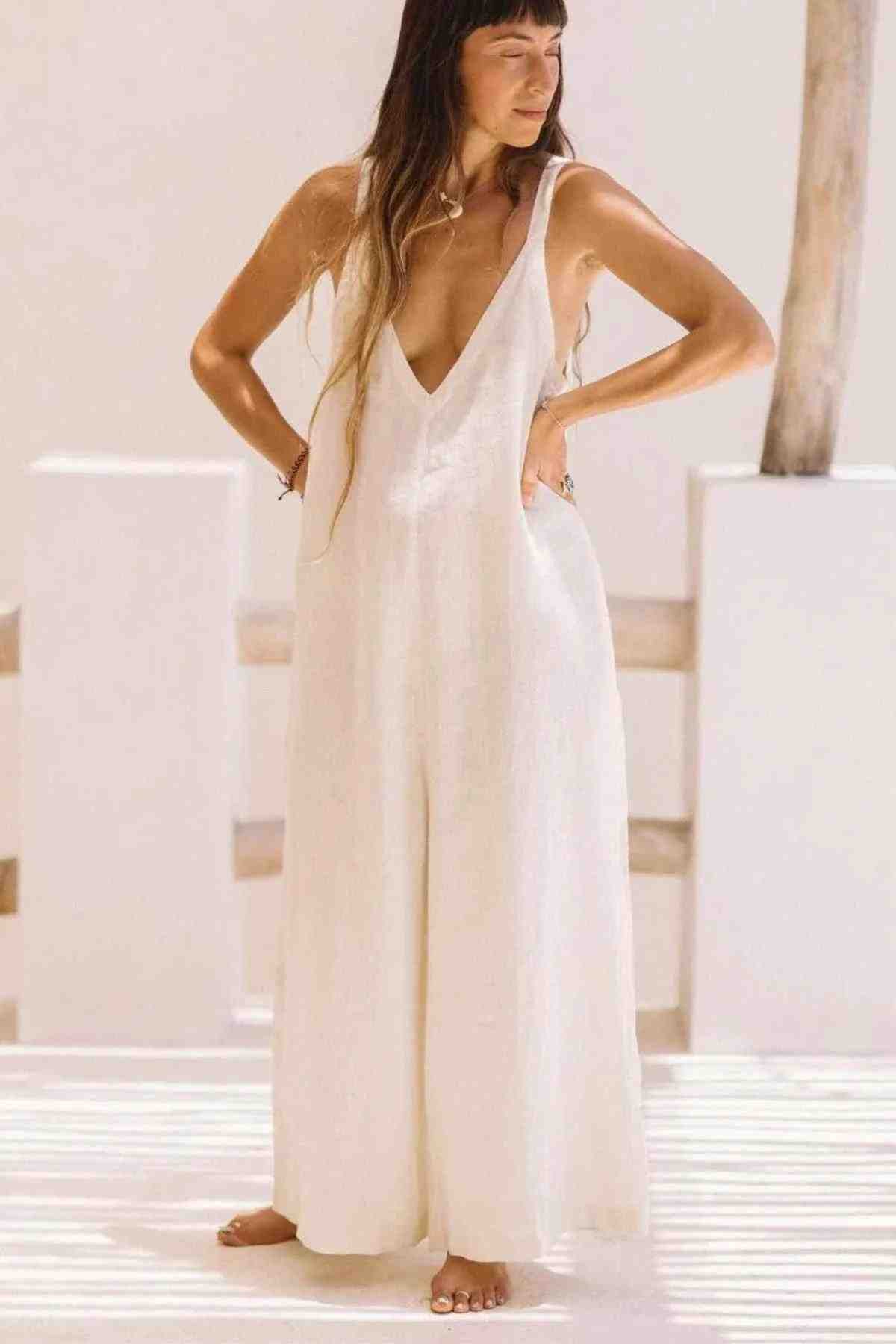
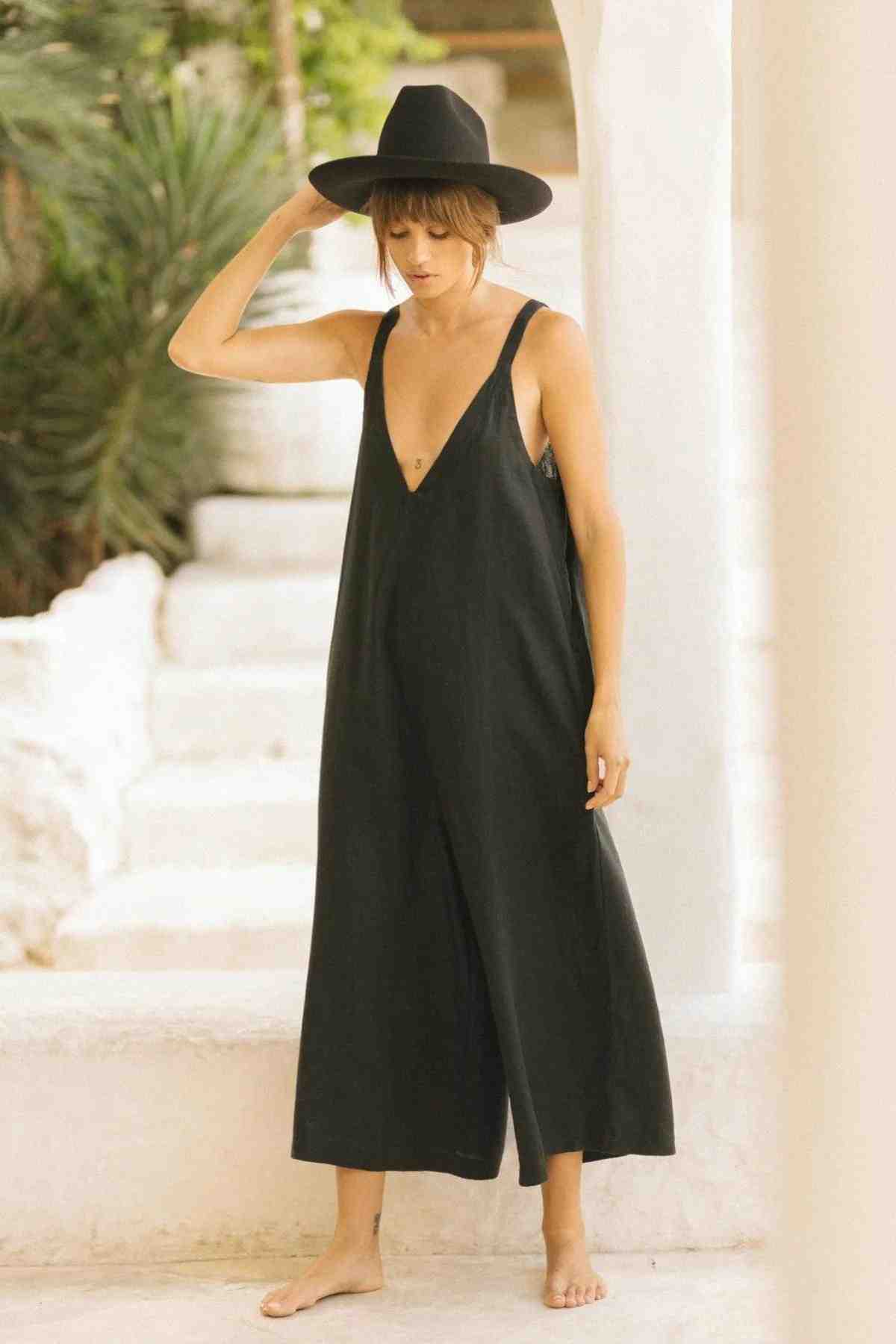
Buy instead for the life you actually have. Look for pieces that separate, so a top works with what is already in your wardrobe and not only with its matching bottom. Keep the structural pieces neutral and let the botanical colour arrive in one or two things. Choose fabrics that improve rather than degrade: linen, silk, ramie, organic cotton. The linen capsule wardrobe guide has a framework for this, and for the one statement piece, the complete guide to wearing a silk kaftan.
Common Questions About Conscious Fashion in Bali
Is conscious fashion in Bali actually ethical, or is it greenwashing? Both exist on the same street. The reliable test is traceability rather than vocabulary: a genuinely ethical brand names its workshop, states exact fibre content, and gives a production timeline in weeks. Greenwashing relies on adjectives and beach photography and gets vague the moment you ask who sewed the garment.
Where can I buy conscious fashion in Bali? The highest concentration of genuine makers sits inland around Ubud and in the workshop lanes behind Canggu and Pererenan, not on the main retail strips. Ask each shop whether they produce or resell. Makers answer happily. If you cannot travel, buying online direct from a Bali based label sends more of your money to the same workshops than a boutique reseller does.
How can I tell if clothing was really made in Bali? Ask how long one piece takes to make and whether the next run will match. Real makers give specifics and admit variation between batches. Resellers give you a country and change the subject.
Why is handmade Bali clothing more expensive than the markets? Market pieces are usually mass produced imports finished locally. Workshop pieces carry certified fabric, multi day natural dyeing, per piece hand finishing and small run economics. You are paying for hours, not a label.
What fabrics should I look for? Linen, ramie, silk and organic cotton perform best in the tropics and age well. Look for OEKO-TEX Standard 100 as a baseline, and European Flax if linen origin matters. Avoid blends where the synthetic percentage is not stated.
The island will always sell you a version of itself. The question worth asking is whether anyone here made it.
With love from Bali,
Myrah.
|
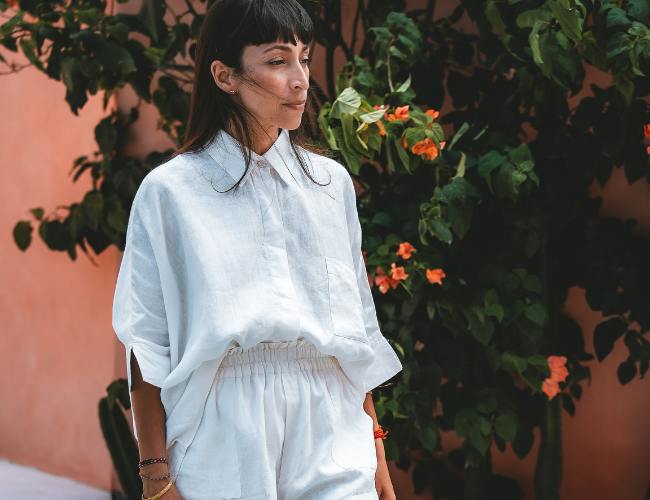
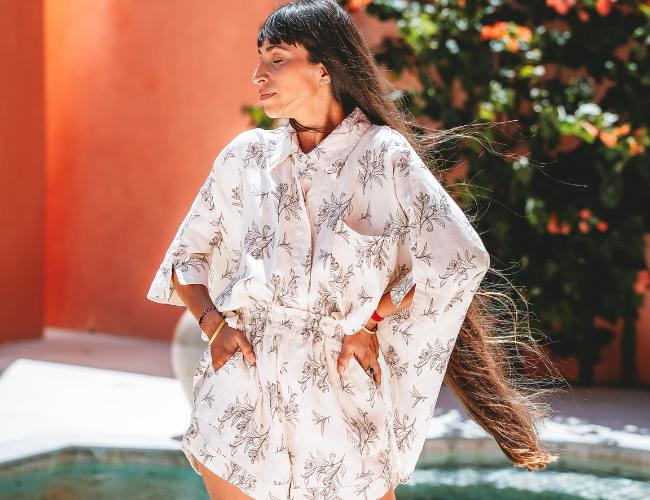
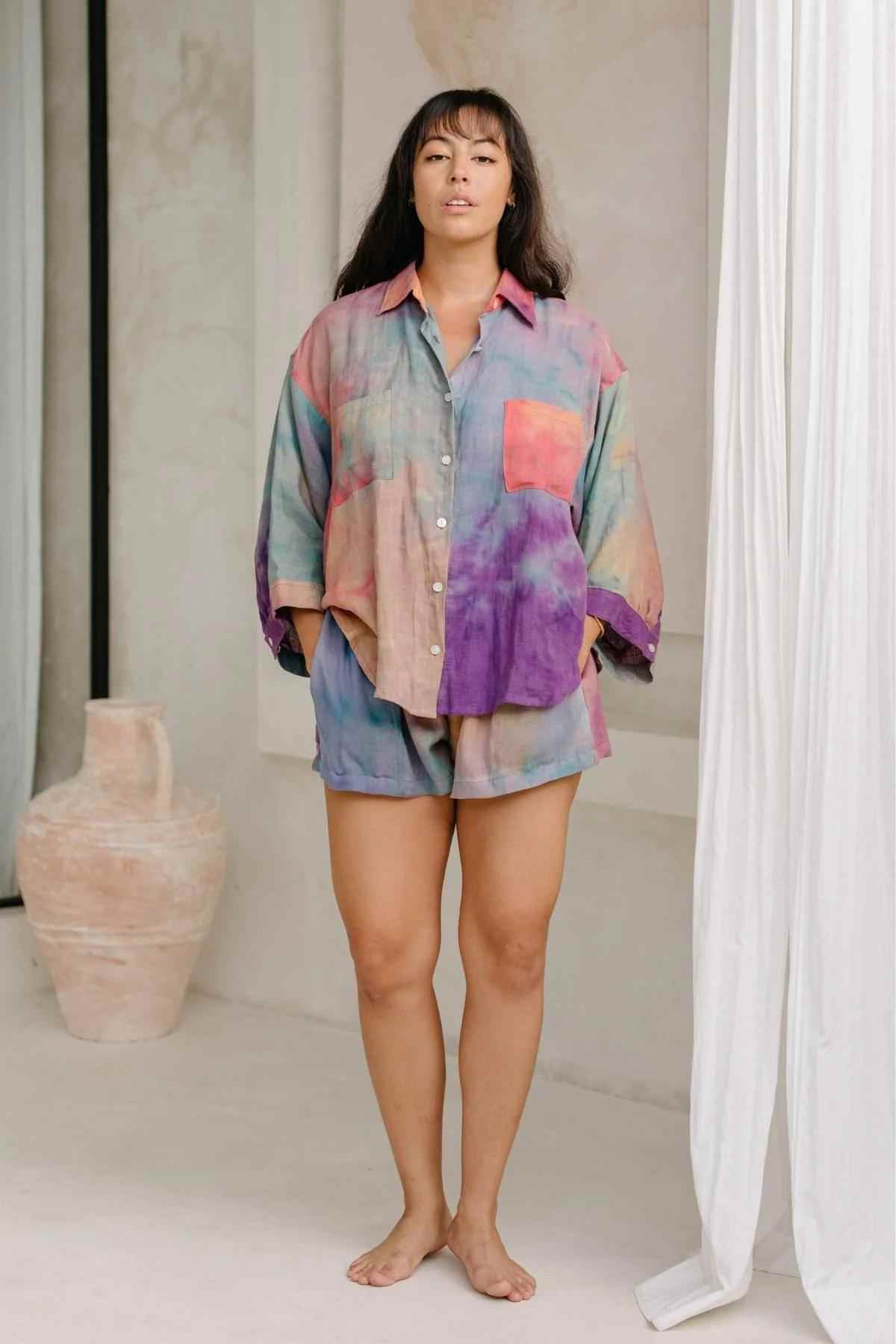
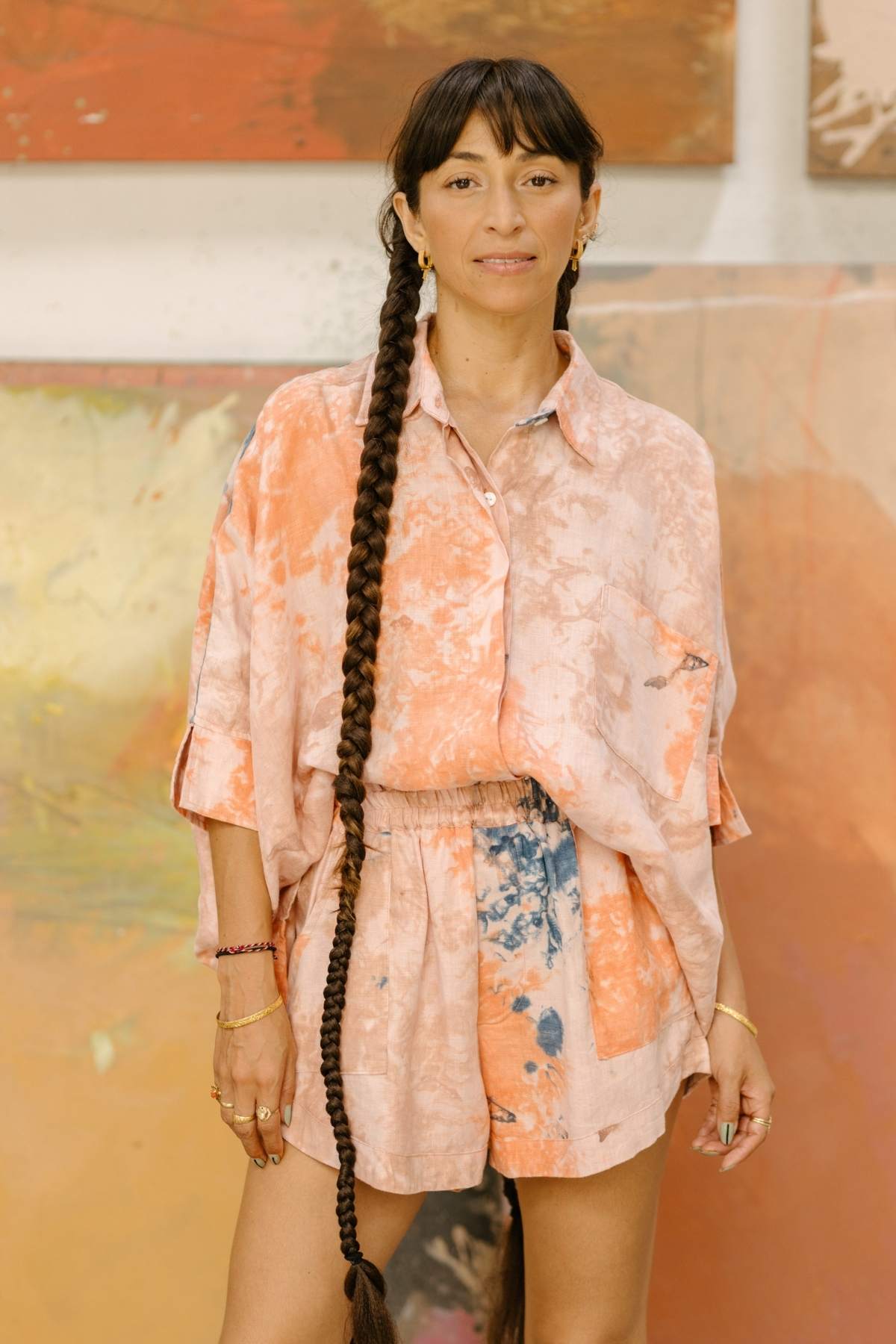
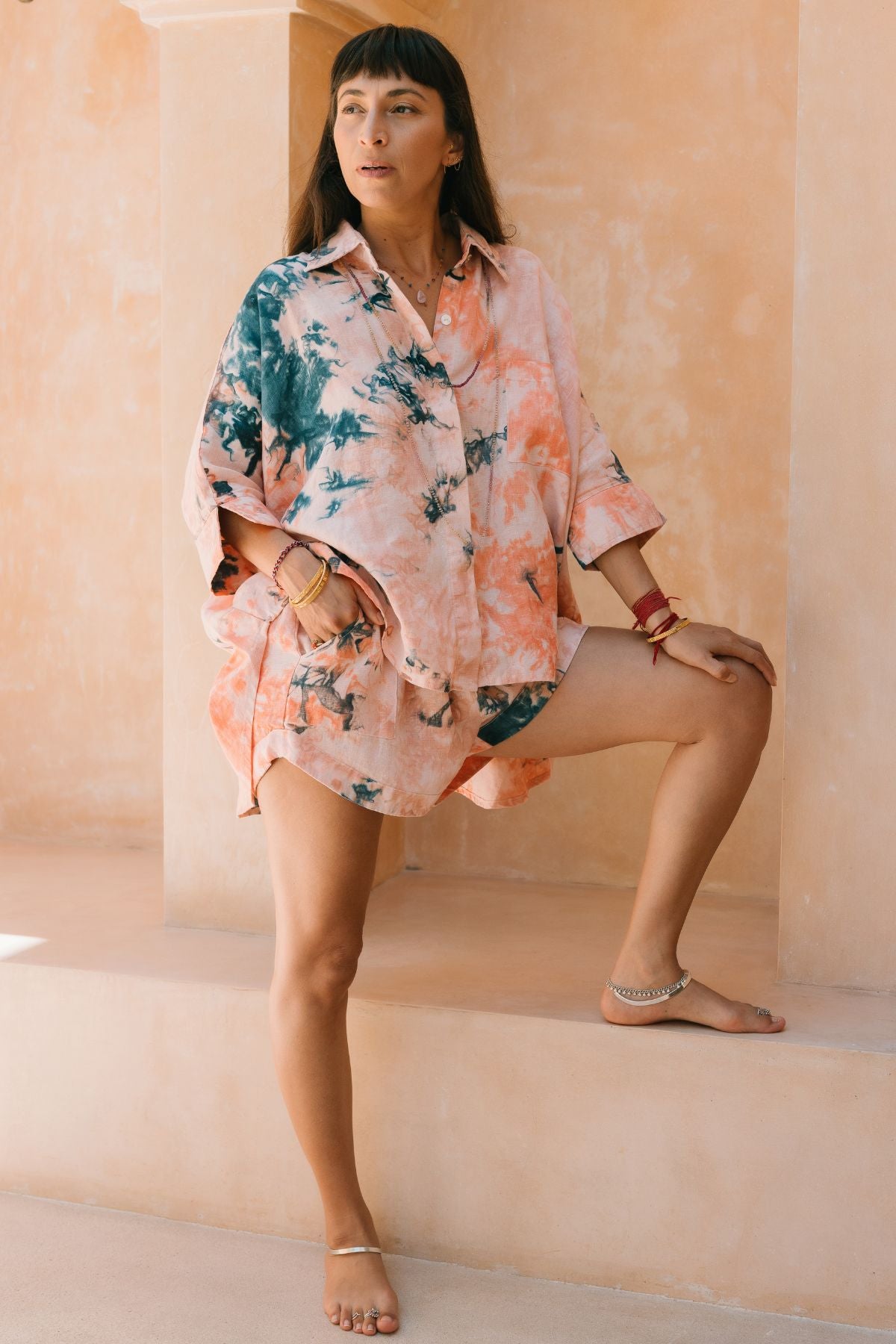
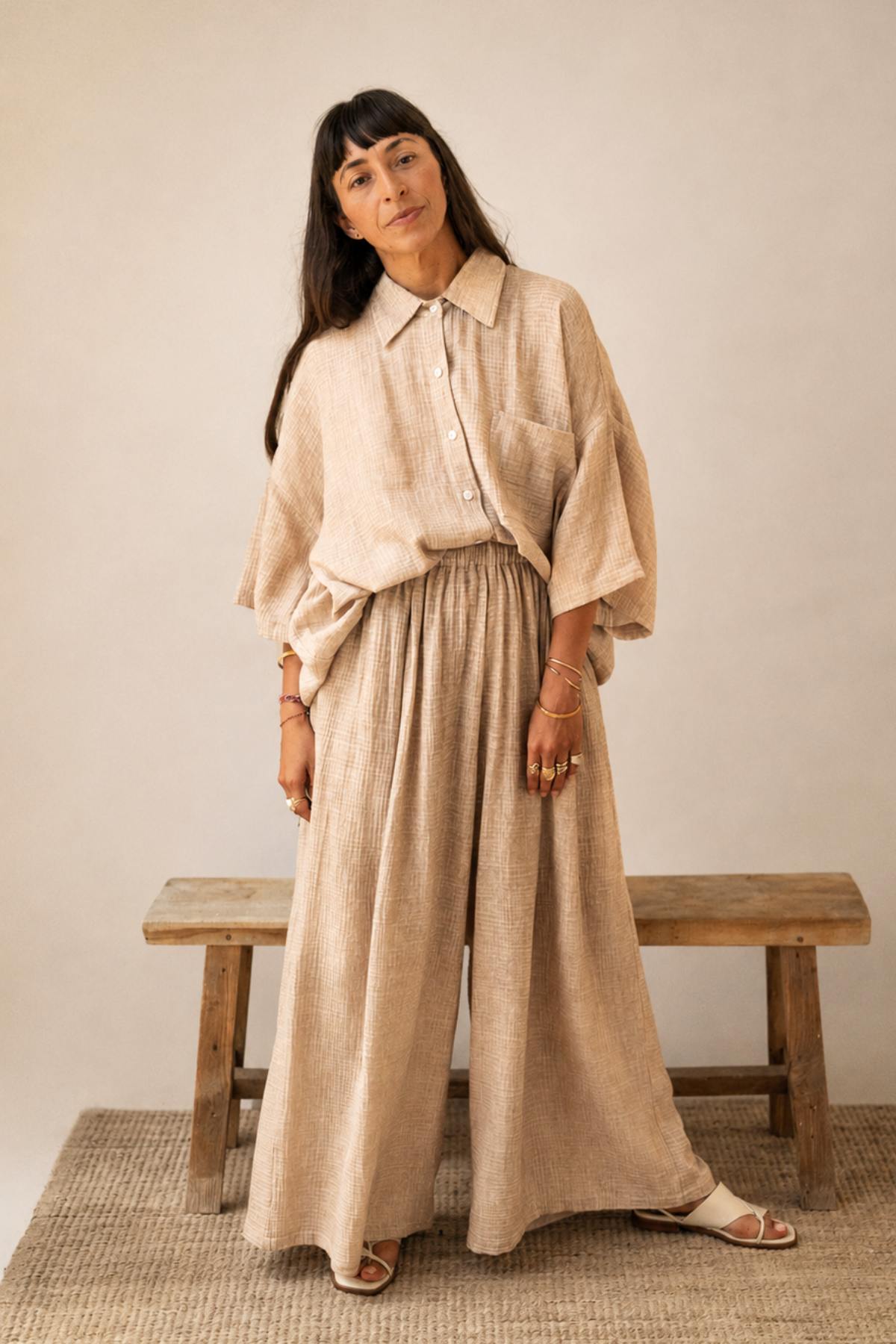
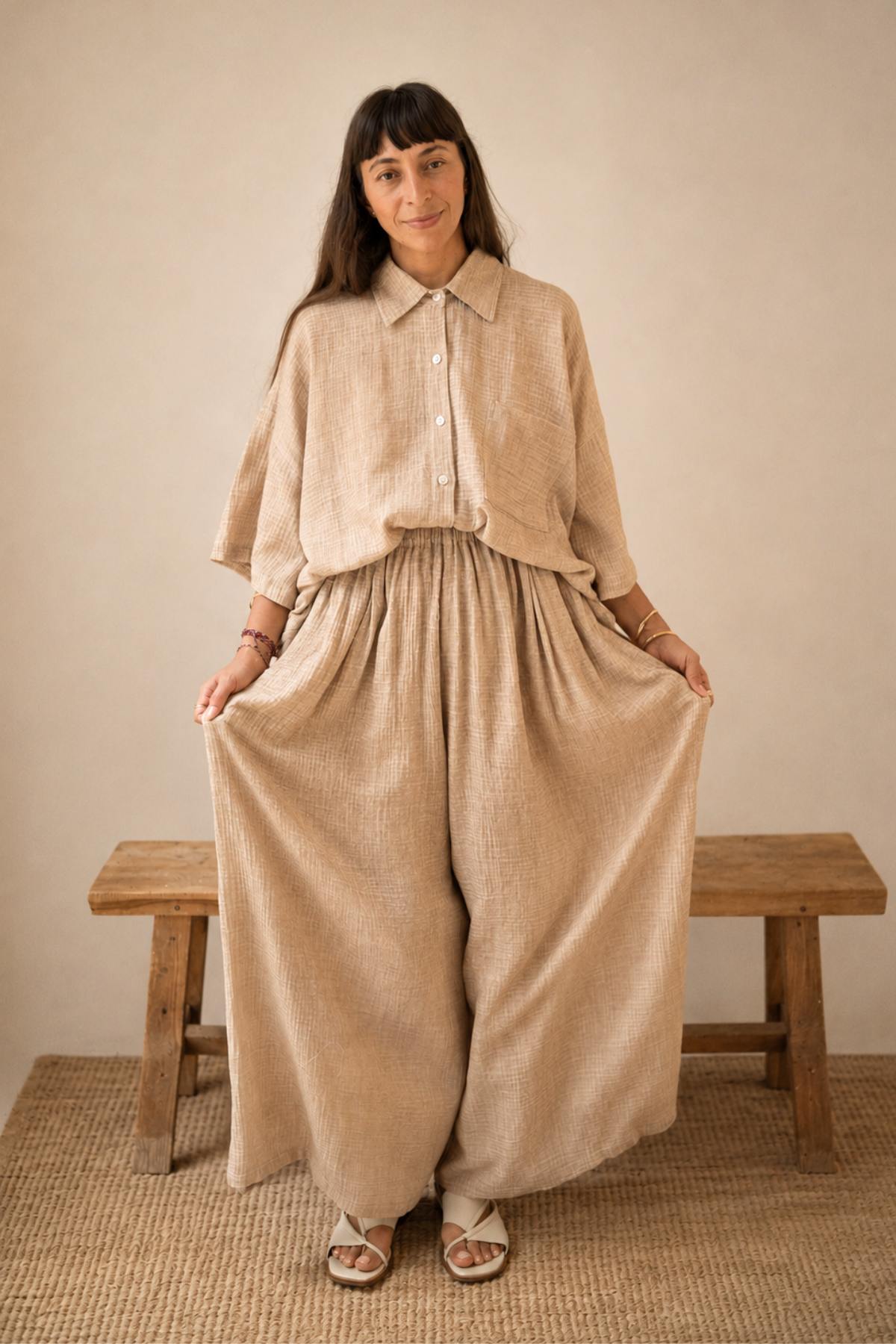
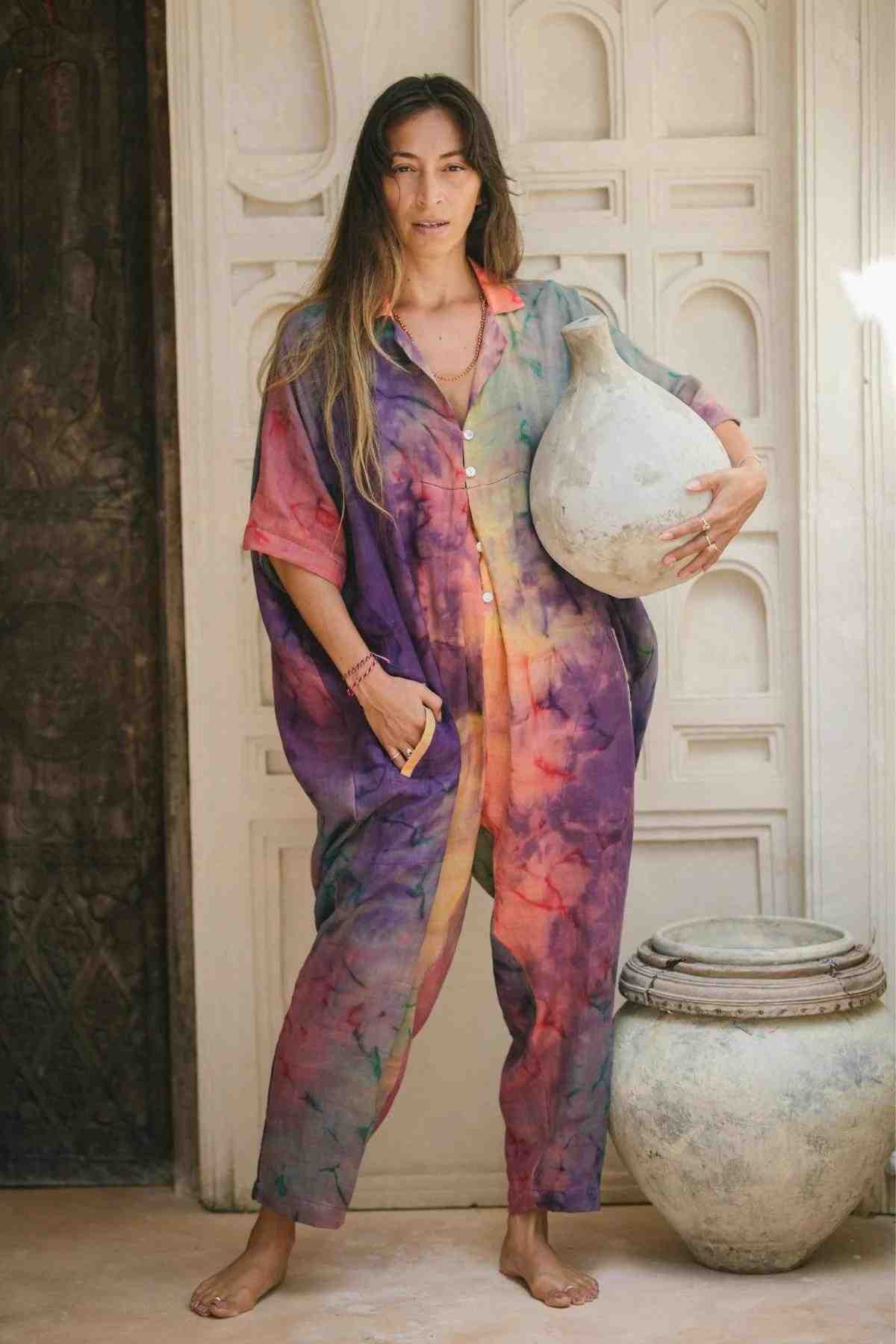
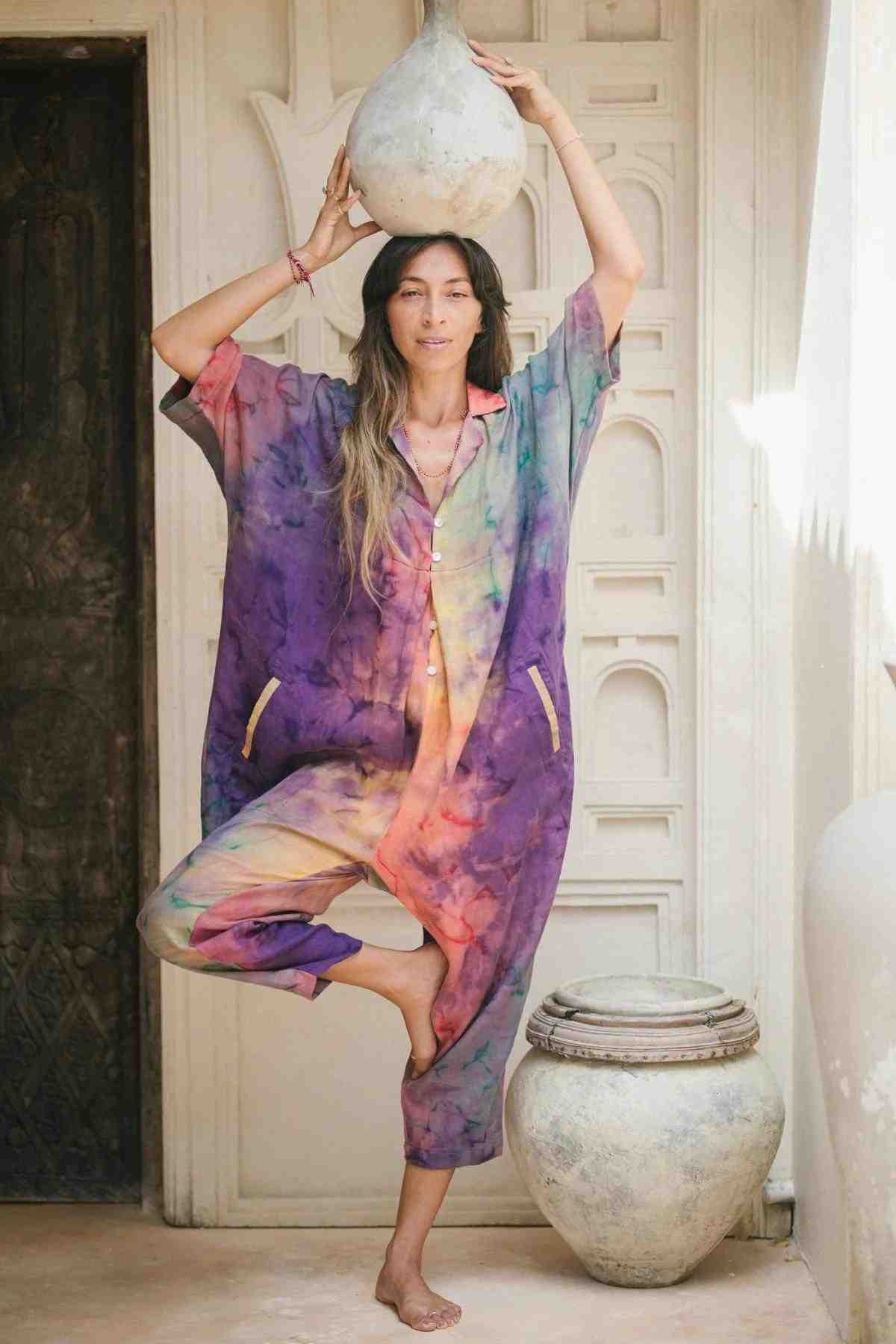
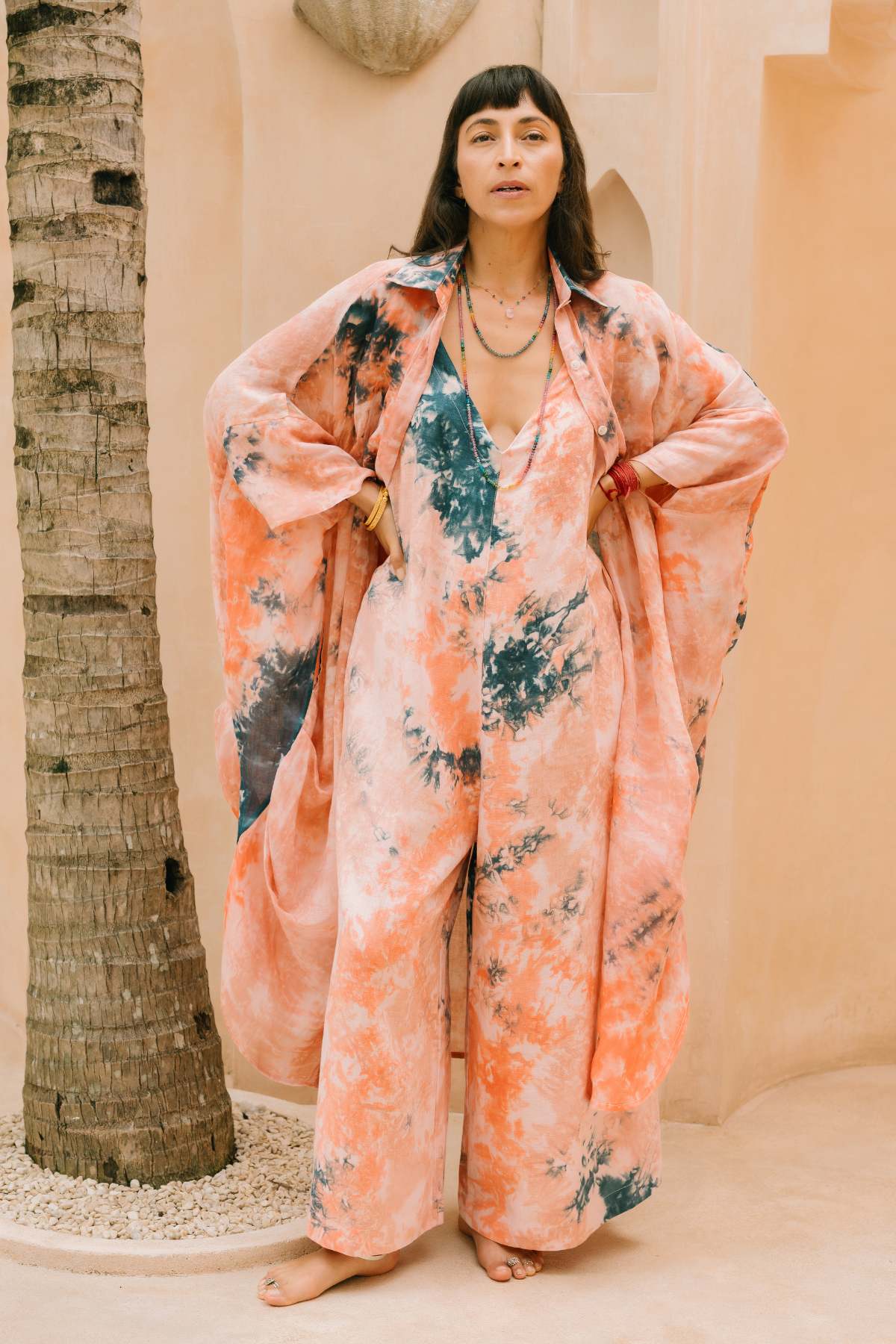
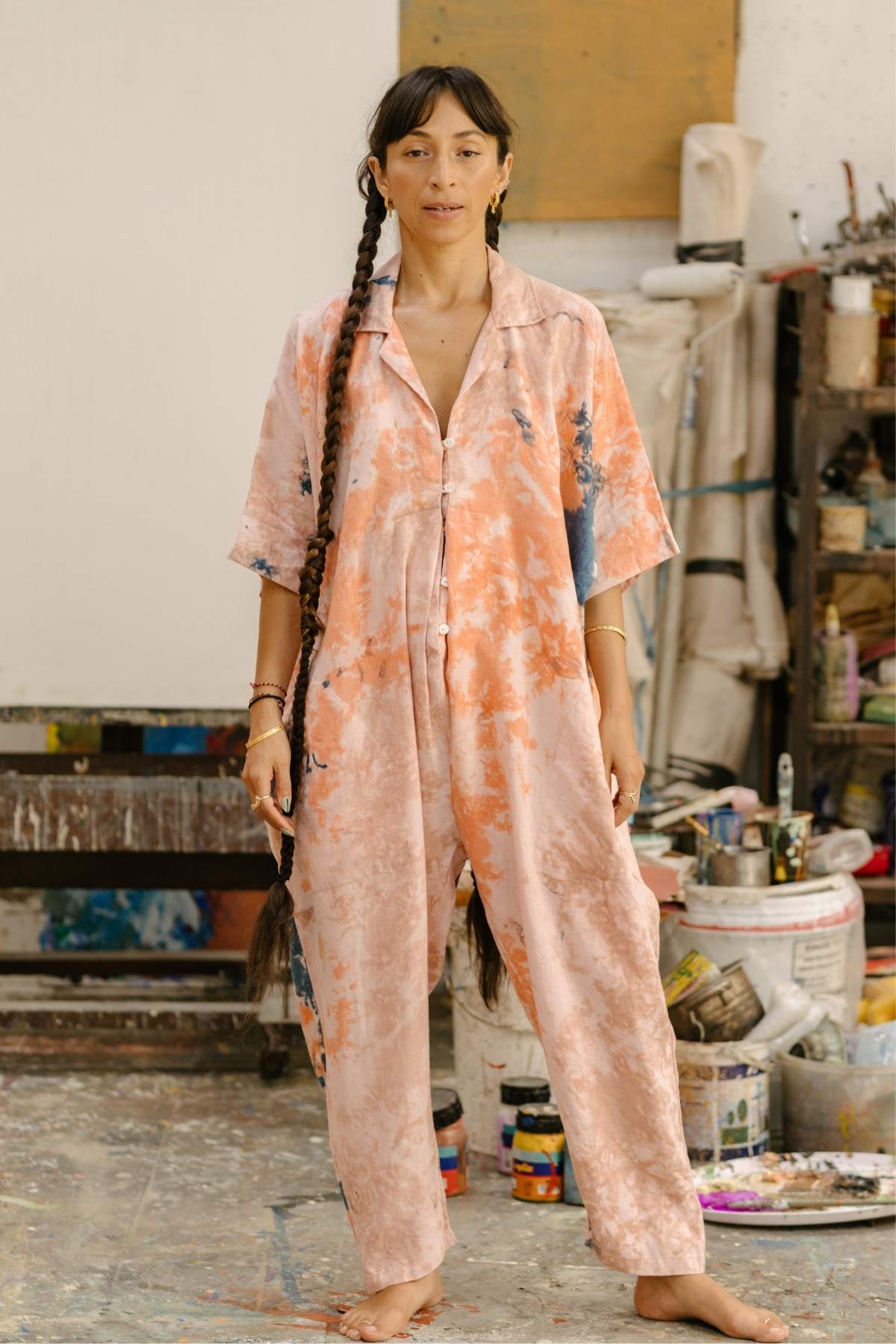
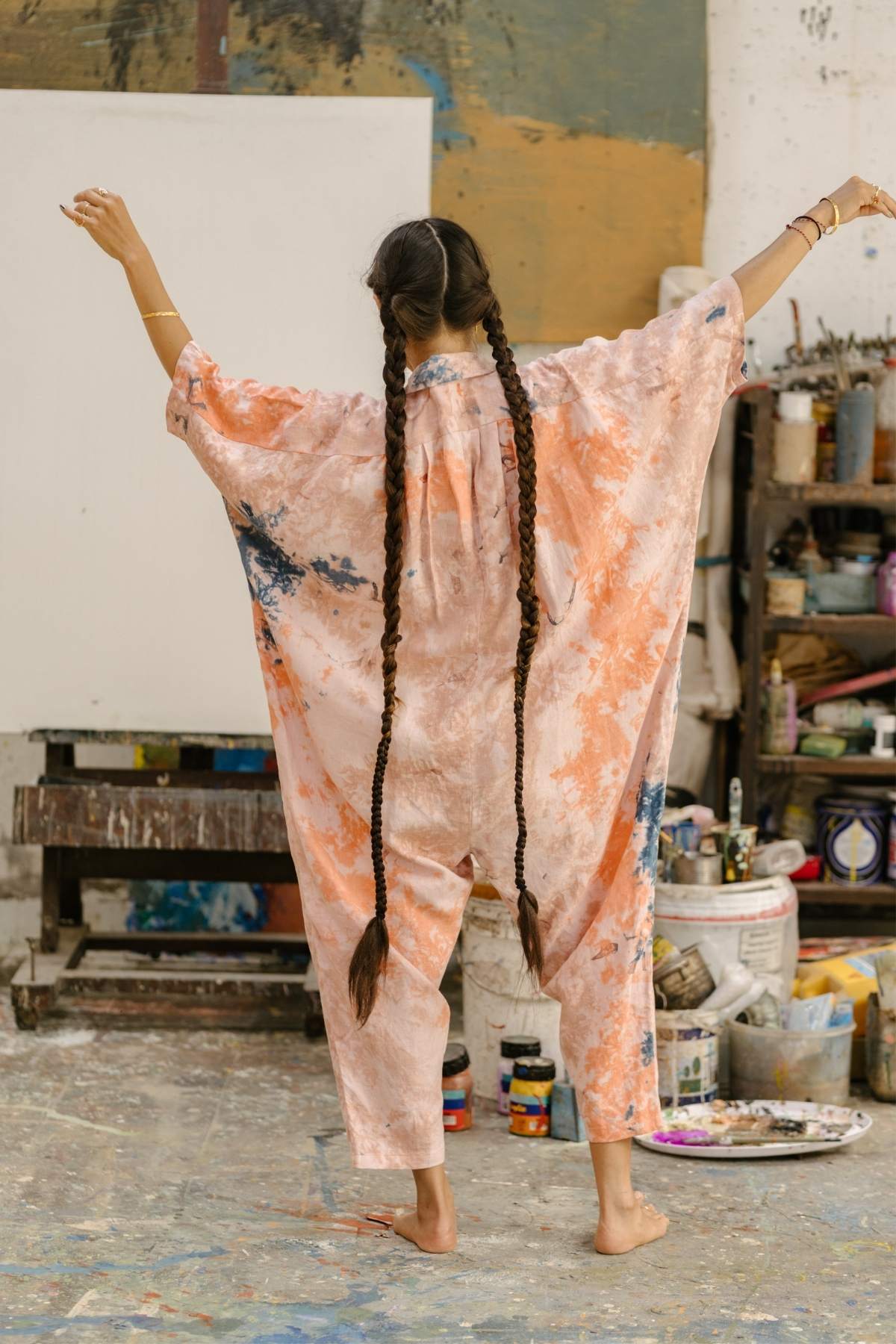
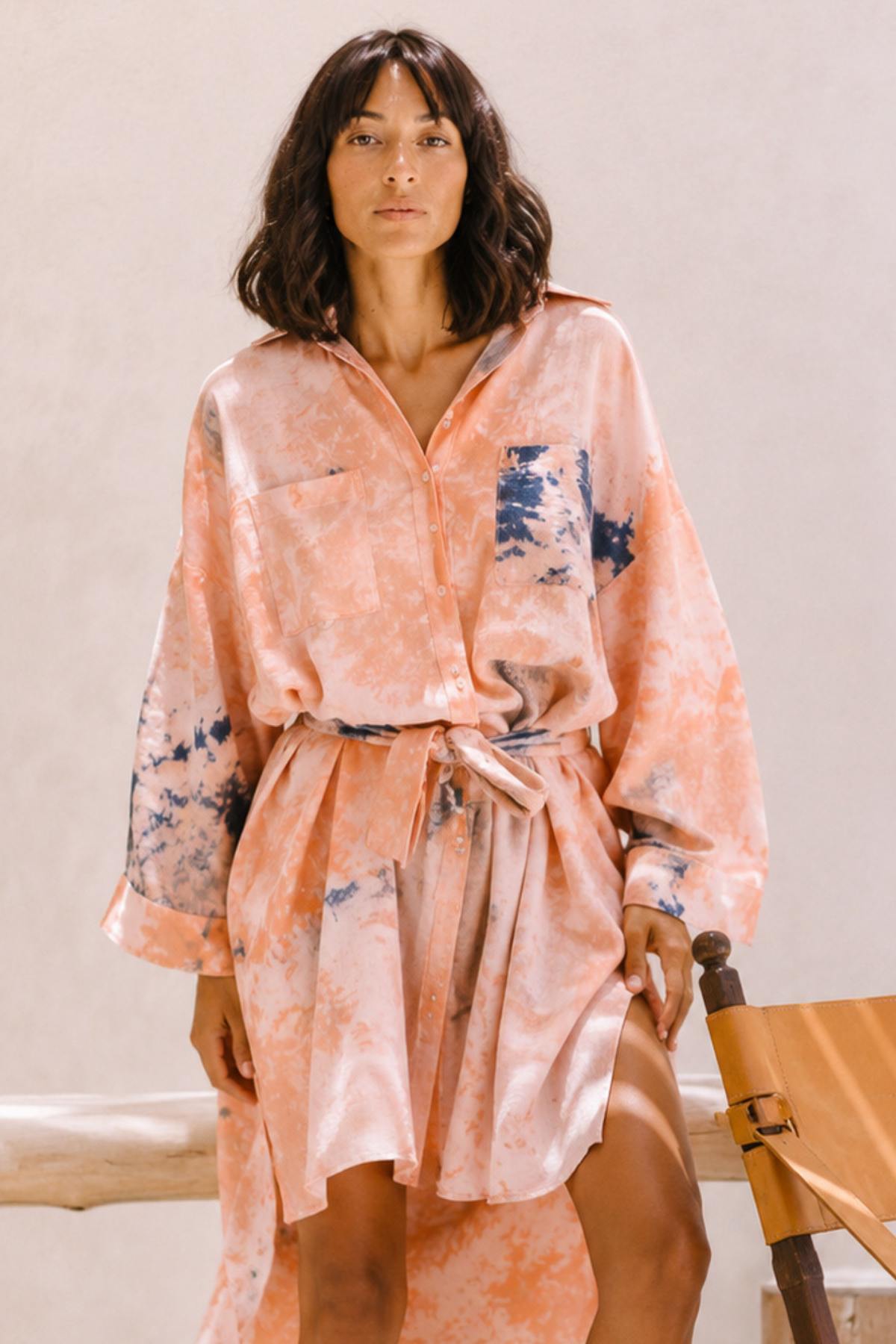
A Piece for This Threshold The Nidra Button-Down Linen Set. One hundred percent French linen, certified OEKO-TEX Standard 100, cut and sewn in Bali by the same artisan families we have worked with since the beginning. The Rainbeau colorway is botanically hand-dyed over seven days. Small batch, made to order, three to six weeks. |
|
The Muse-Letter Dress for the woman you're becoming. Every week from Bali. Astrology, slow living, sacred feminine, and the pieces we make by hand. A letter, not a sales pitch. Unsubscribe any time. No spam, ever. |


Leave a comment
This site is protected by hCaptcha and the hCaptcha Privacy Policy and Terms of Service apply.