

Silk Kaftans: The Complete Guide to Wearing One
A silk kaftan is a long, loose, open-front robe cut in one uninterrupted line from shoulder to hem. It has been worn for centuries across the Middle East, North Africa and South Asia, and it endures for one reason: nothing else moves like it. Silk does not drape so much as flow. It breathes in heat, it warms in cool air, and it holds natural plant dye more deeply than almost any other fiber. This guide covers what a silk kaftan is, what botanical dyeing actually changes about the garment, when to wear one, how to choose between colorways, and how to care for silk so it lasts decades rather than seasons.
In this article
- What is a silk kaftan?
- What does botanically dyed silk actually mean?
- When should you wear a silk kaftan?
- Botanical Rose or Turmeric Gold: which should you choose?
- What should you look for when buying a silk kaftan?
- How do you care for botanically dyed silk?
- FAQ
What is a silk kaftan?
A kaftan is a loose robe with wide sleeves and no fitted waist, historically worn as both everyday dress and ceremonial garment. The silk version is the oldest luxury expression of the form. In the Ottoman court, kaftans were made from imported silks and treated as objects worth passing down. In Morocco they became bridal garments, kept in families for generations.
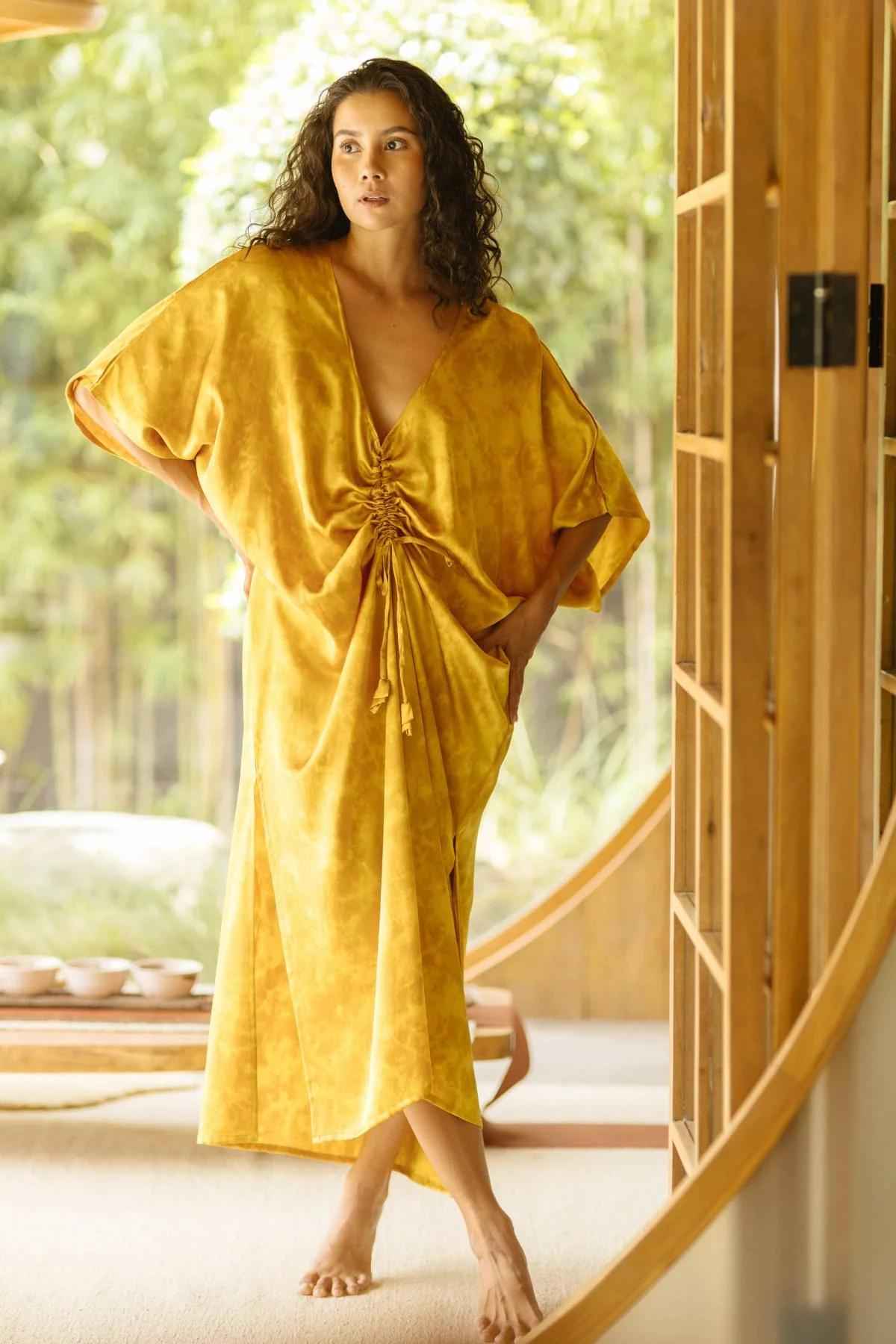
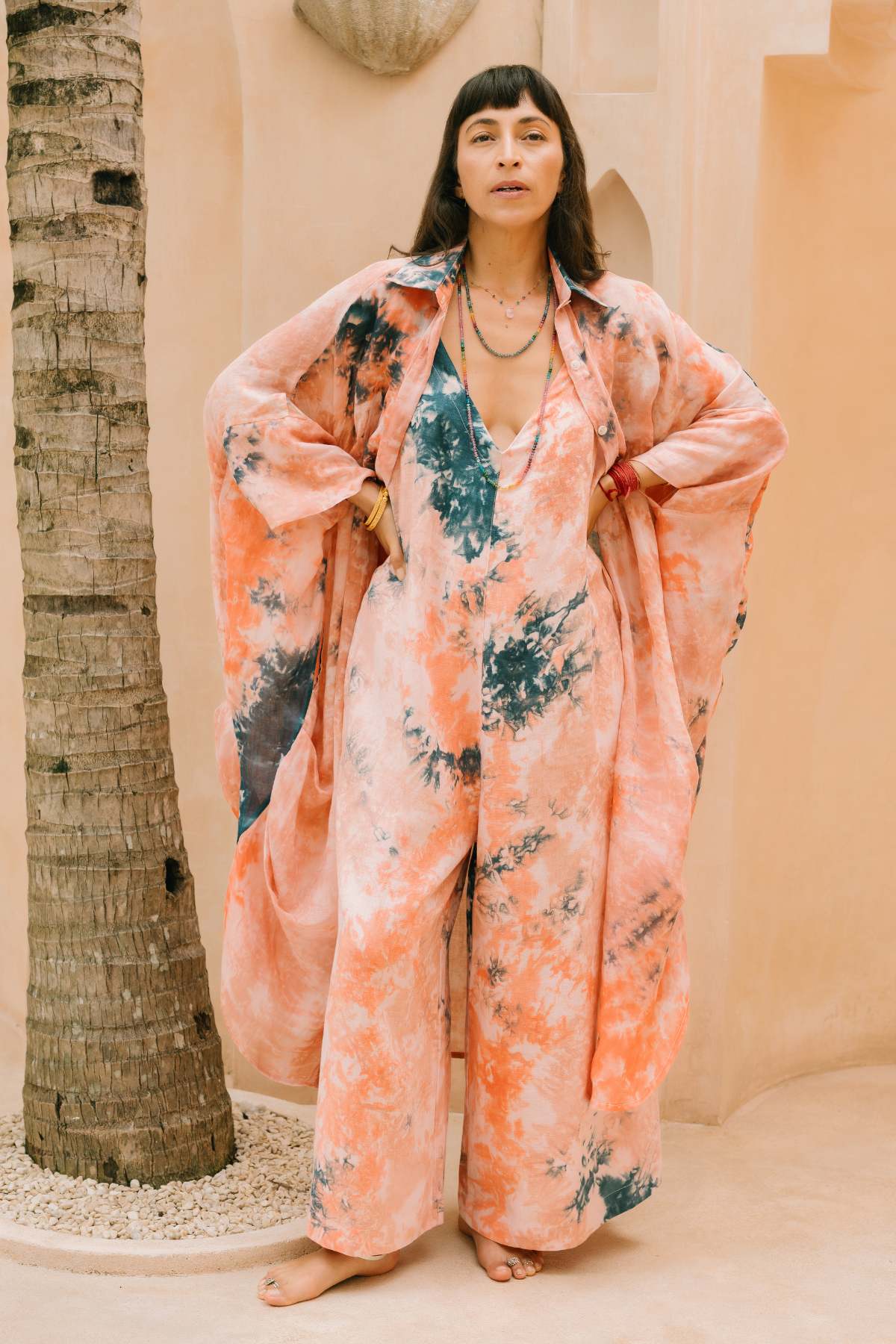
The modern silk kaftan keeps the essential architecture: one continuous line, nothing that grips the body, full length. What changes is the styling. Ours is cut open at the front with a gathered detail that can be cinched or left loose, which means one garment reads as a beach cover, a dinner dress, or a ceremonial robe depending entirely on how you wear it.
Practically, this is the reason kaftans keep returning. A silk kaftan is one of the few pieces in a wardrobe that does not need to be sized, seasoned, or planned around. You put it on and it works.

What does botanically dyed silk actually mean?
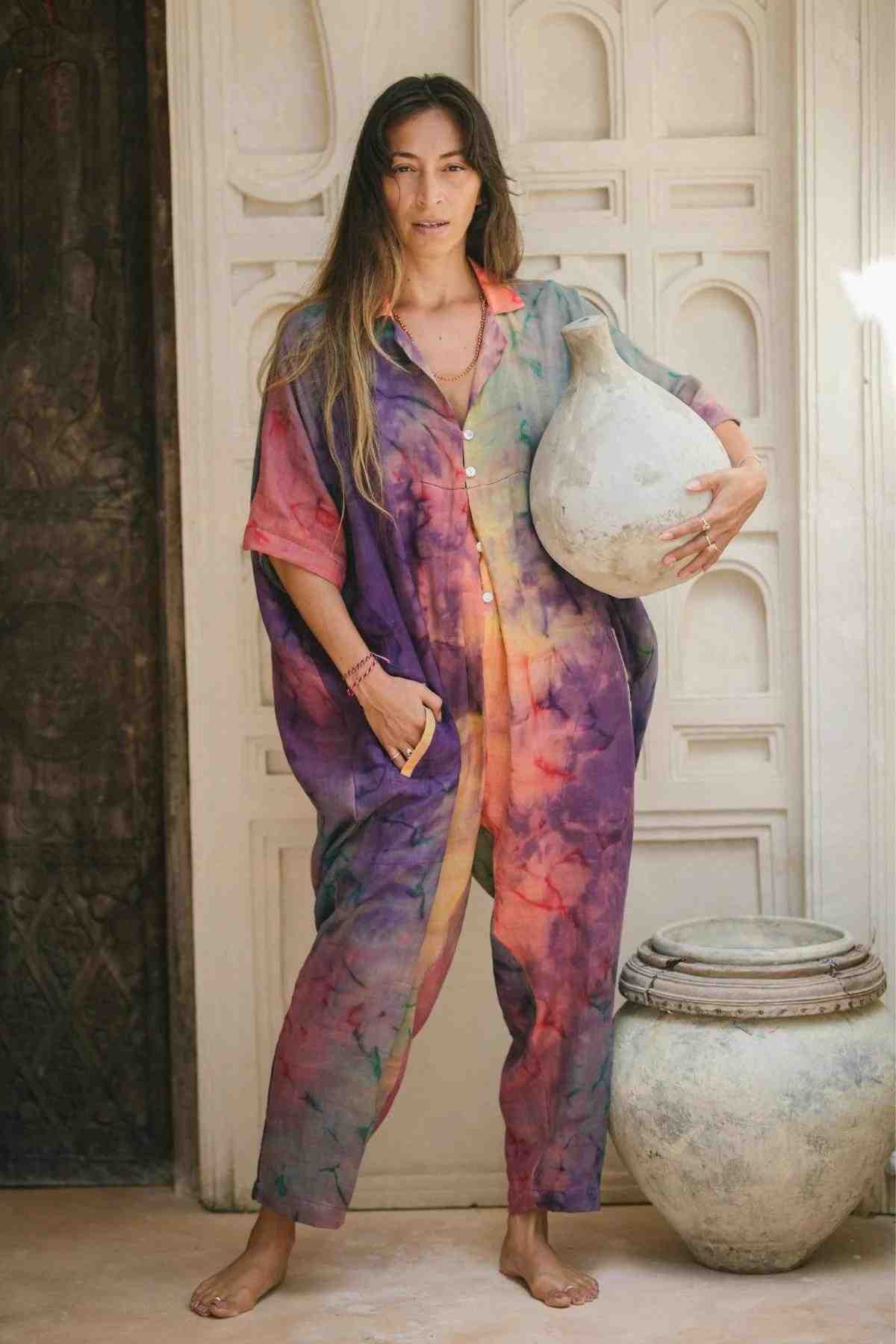
Botanical dyeing means the color comes from plant matter rather than synthetic pigment. Roots, bark, flowers, leaves and seeds are simmered to release their color, the silk is prepared with a natural mordant so the fiber will hold the dye, and the cloth is submerged, sometimes repeatedly, until the tone is right.
It is slower and less predictable than conventional dyeing, and that is the point. Two lengths of silk dyed from the same batch will not match exactly. The color sits in the fiber rather than on top of it, so it shifts subtly with the light instead of staying flat.
| Botanically dyed silk | Conventionally dyed silk | |
|---|---|---|
| Color source | Roots, bark, flowers, seeds | Synthetic pigment |
| Consistency | Varies batch to batch | Identical every run |
| How it ages | Softens gradually, gains patina | Holds, then fades abruptly |
| Wastewater | Plant matter, biodegradable | Often requires chemical treatment |
| Sun exposure | Needs shade to hold depth | More light stable |
The tradeoff is honest. Botanical color asks more of you in care, and it will not stay identical forever. What you get in exchange is a garment with no synthetic residue against the skin, and a color that becomes more itself with time. We have written about how our botanical dye practice actually works, from soil to finished cloth, if you want the full process.

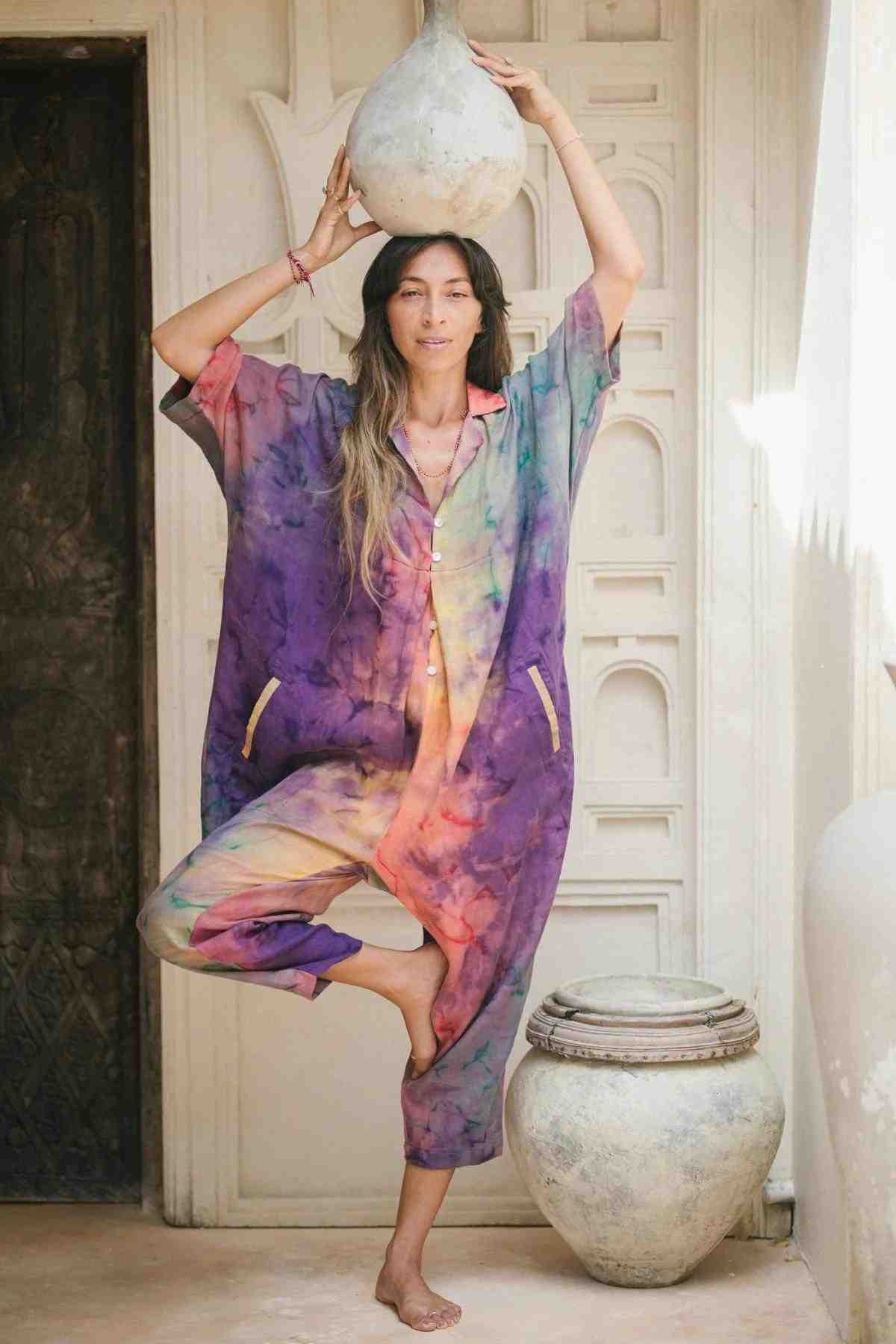
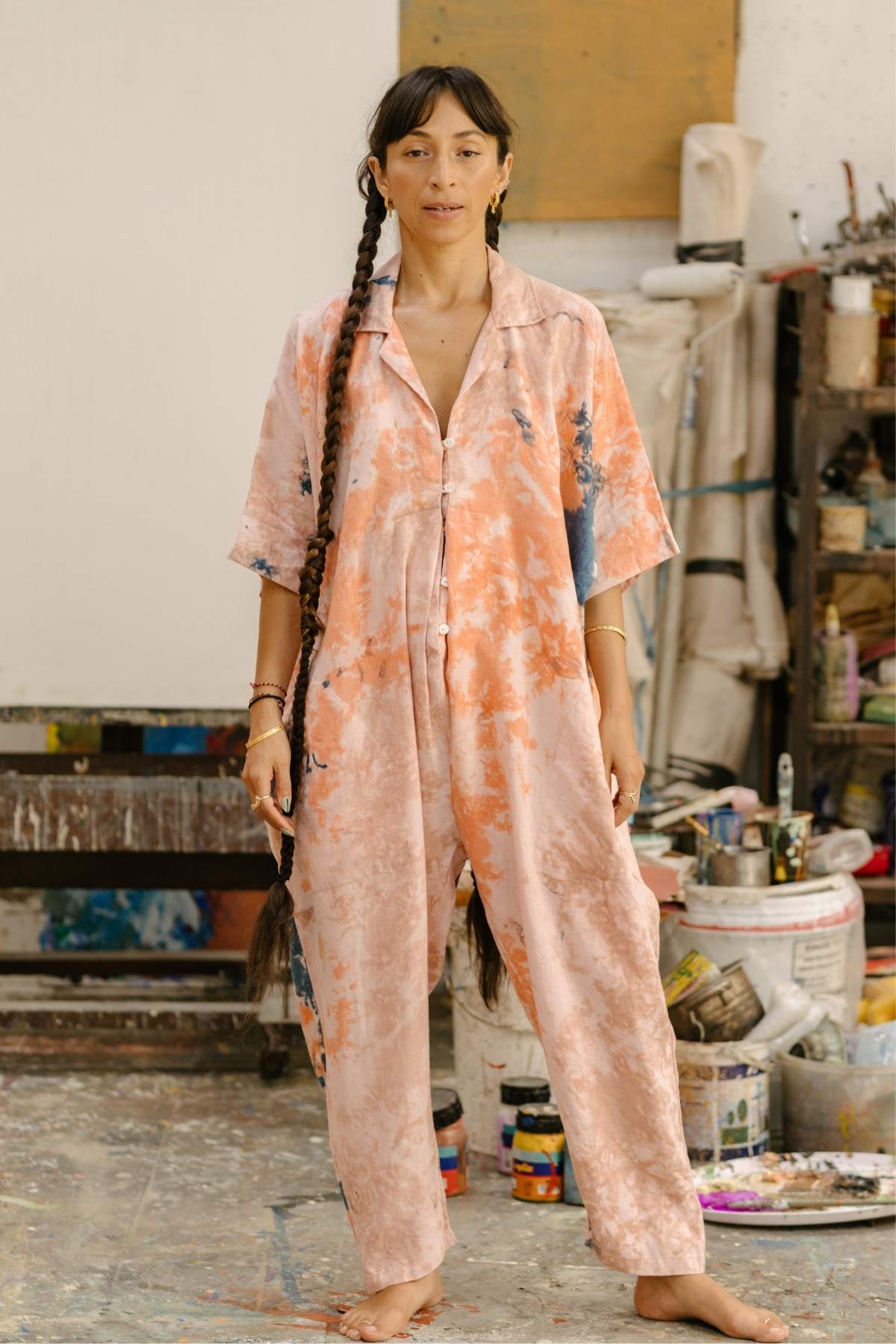
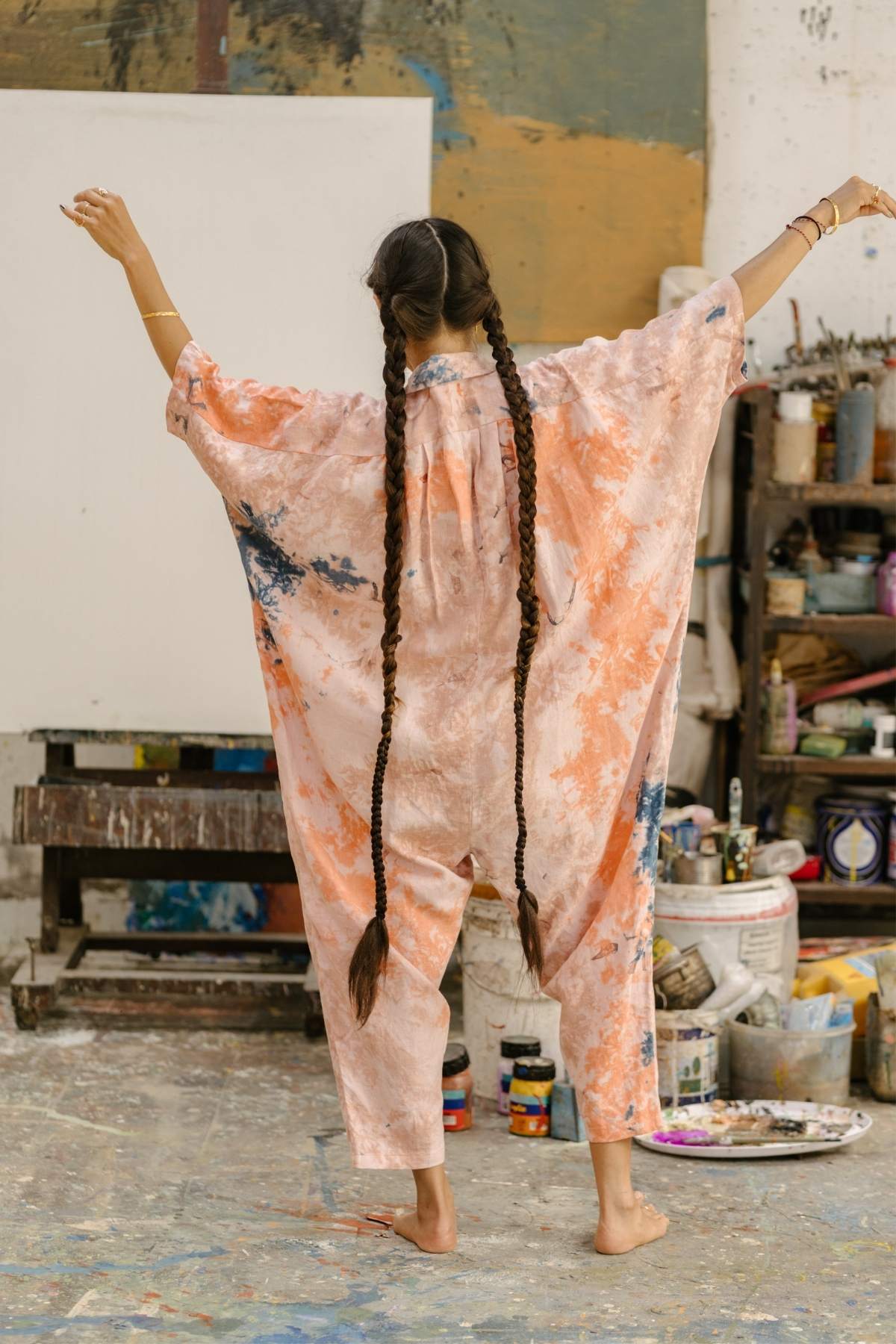
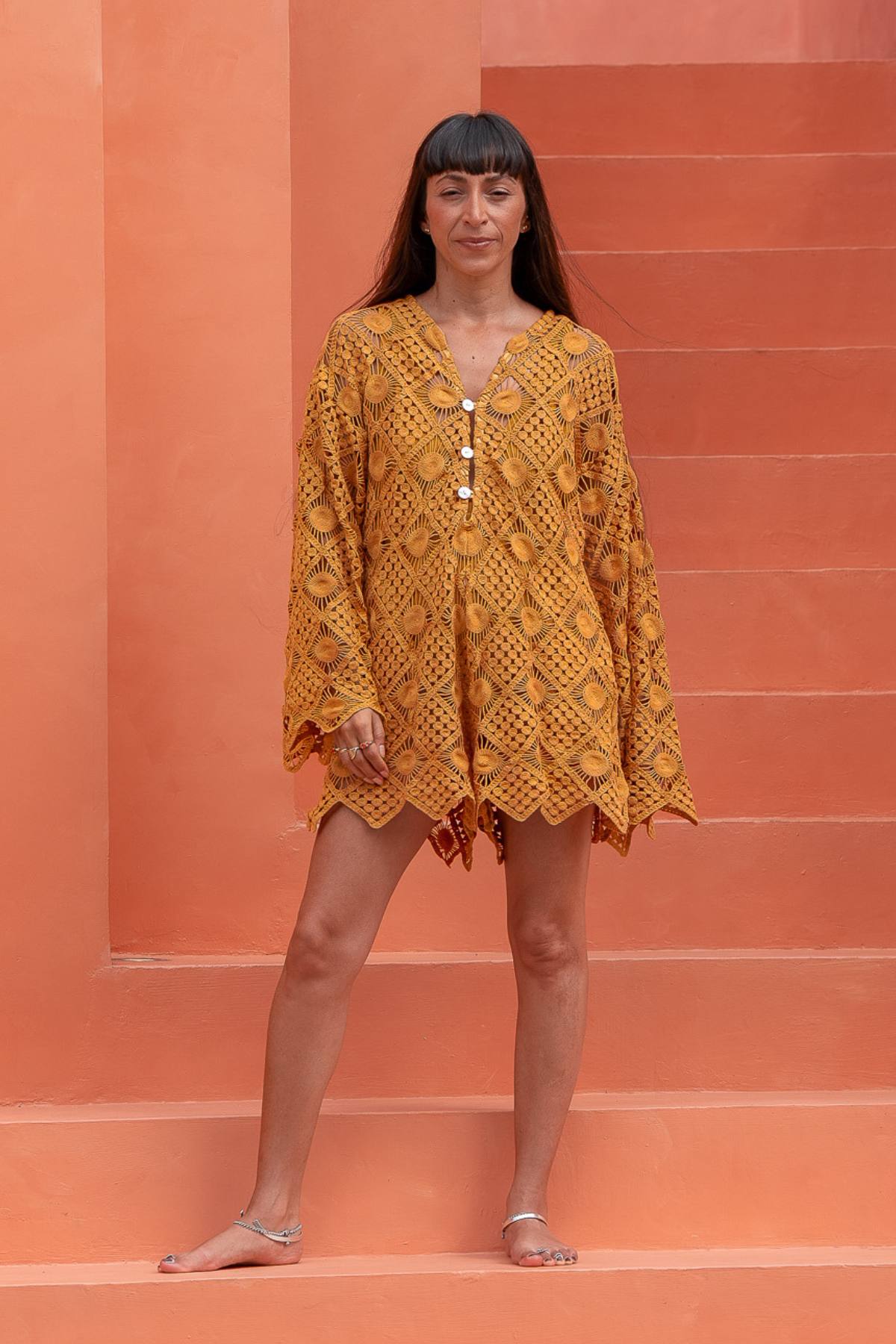
100% silk, botanically dyed. One size, open front, full length. In Botanical Rose and Turmeric Gold.
When should you wear a silk kaftan?
The short answer is anywhere you want to feel held rather than styled. In practice there are four moments a silk kaftan does better than anything else in the wardrobe.
- Over swimwear. It dries fast, moves in wind, and takes you from sand to a restaurant without changing.
- Evening, with nothing added. Cinched at the front, it reads as a dress. No jewelry required.
- At home, in the slow hours. Tea in the morning, the long stretch before sleep. Silk is one of the few fabrics that feels the same at rest as it does in motion.
- Ceremony. Gatherings, rituals, the nights that ask for a little more presence than usual.
That last one deserves more than a line. If you track the moon at all, you will know that a full moon does not ask you to fix anything. It only asks you to look. Everything you have been quietly carrying comes into the light at once. The tender place. The thing you have outgrown. The love you have been giving everywhere except to yourself.
The invitation is not to turn away from any of it. It is to stay, and to bring presence to the part of your life that has been waiting in the dark for someone to notice it. This is where Virgo energy actually lives, by the way. Not in perfection, but in care. In the small sacred tending. In choosing what is worthy of your hands.
A garment cannot do that work for you. But there is a real difference between standing in that kind of honesty in something that grips and pulls at you, and standing in it in something that lets you breathe. That is the whole argument for a silk kaftan on a full moon night.

Botanical Rose or Turmeric Gold: which should you choose?
Both colorways are the same silk and the same cut. The decision is entirely about what the color does next to your skin and in your light.
| Botanical Rose | Turmeric Gold | |
|---|---|---|
| Tone | Warm, soft, between dawn and rose quartz | Saturated, sunlit, deep ochre gold |
| Best in | Low light, evening, moonlight | Full daylight, beach, bright rooms |
| Reads as | Quiet, intimate | Bold, ceremonial |
| Choose if | You want it to soften under light rather than compete with it | You want the piece to be the statement |
If you are buying for full moon gatherings, ceremony, or evening, Botanical Rose is the one. It does not compete with candlelight. If you are buying for travel and daylight, Turmeric Gold holds up in strong sun in a way few colors manage.
What should you look for when buying a silk kaftan?
Five things separate a silk kaftan worth keeping from one that disappoints after a season.
- 100% silk, stated plainly. Silk blends and "silky" polyester are common and behave nothing alike. If the fabric composition is vague, assume it is blended.
- An adjustable front. A cinch or gathered detail lets one garment fit many bodies and many occasions. Without it you are locked into a single look.
- Real length. Full length is what creates the uninterrupted line. Midi kaftans lose the effect entirely.
- Named dye process. "Botanically dyed" should be specific, not decorative language. If a brand cannot tell you how the color was made, it was probably synthetic.
- Known making conditions. Ask who made it. Ours are handcrafted in Bali by artisan families we work with directly.
You can see the full range of shapes in our Kaftans collection, and everything we make in silk in the Silk Collection.
How do you care for botanically dyed silk?
Botanical color asks for slightly more than synthetic. The routine is simple and it is the difference between a garment that lasts three years and one that lasts twenty.
- Hand wash in cold water. Warm water opens the fiber and lifts plant dye. Cold water and a gentle pH neutral soap are all it needs.
- Do not wring. Press the water out between your palms or roll the garment in a towel.
- Lay flat to dry. Hanging wet silk stretches the shoulders permanently.
- Dry out of direct sunlight. This is the single most important step for botanical color. Sun is what fades plant dye, not washing.
- Store away from light. A closed closet, ideally in cloth rather than plastic so the fiber can breathe.
- Steam rather than iron. If you must iron, use the lowest setting with a cloth between the iron and the silk.
Frequently asked questions
Are silk kaftans one size?
Most are, and ours is. The open front and gathered cinch mean the garment adjusts to the wearer rather than the other way around. This is part of why kaftans have survived so long as a form.
Will botanically dyed silk fade?
It will soften gradually rather than fade abruptly, and how fast depends almost entirely on sun exposure. Dry it in shade and store it out of light and the color will deepen into a patina rather than wash out.
Can you wear a silk kaftan in hot weather?
Yes. Silk is a natural protein fiber that breathes and wicks moisture, which is precisely why it became the fabric of choice in hot climates centuries before synthetic performance fabrics existed. It is cooler to wear than most cotton of comparable weight.
Is a kaftan the same as a caftan?
Yes. The two spellings refer to the same garment and are used interchangeably. "Kaftan" is closer to the Turkish and Persian origin, "caftan" is the more common French and American transliteration.
Can a silk kaftan be worn as a dress rather than a cover up?
Yes, and this is the most common way ours is worn. Cinched at the front it reads as a full length dress. Left open over a slip or swimwear it reads as a layer. The garment does not change, only the styling.
How should I choose between Botanical Rose and Turmeric Gold?
Choose Botanical Rose for evening, ceremony and low light. Choose Turmeric Gold for daylight, travel and bright rooms. Both are the same silk, the same cut and the same price.
The kaftan that flows like intention
100% botanically dyed silk, handcrafted in Bali by artisan families. In Botanical Rose and Turmeric Gold.
Shop the Silk Virgo Kaftan →Limited edition. Made in small batches.





Leave a comment
This site is protected by hCaptcha and the hCaptcha Privacy Policy and Terms of Service apply.