Botanical dyed clothing: how plant-dyed linen is made in Bali
Botanical dyeing, also called natural dyeing or plant dyeing, is the practice of colouring fabric with pigments drawn from plants: roots, barks, leaves and flowers, rather than synthetic dyes derived from petroleum. Every botanical piece we make is dyed by hand in Bali using turmeric, indigo and native Balinese botanicals. The dye alone takes five to seven days, before a single seam is sewn. This is what that week actually looks like, and why it costs what it costs.

What is botanical dyeing?
Turmeric gives gold. Indigo leaves give blue. Barks and roots give the earth tones in between. That is the whole of it, and also almost none of it, because the difficulty is never the plant. It is the time.
It is one of the oldest textile traditions in the world, and in Bali it was never lost. The families we work with learned it the way most important things are learned, at home, from the generation before.
The result is colour that lives in the fibre rather than sitting on top of it. Botanical colour has depth. It shifts as the light moves across it, and it goes on shifting for years.
The natural dye plants, and what they carry
The plants we use are not neutral. In the Ayurvedic tradition, in traditional Indonesian healing practice, and across centuries of botanical medicine, these plants carry specific properties and specific meanings. Turmeric is anti-inflammatory. Indigo is associated in traditional Chinese and Japanese medicine with cooling. Saffron carries associations with purity and the dissolution of ego.
We do not wear those associations as costume. We recognise them as a living tradition, and we honour it by working with the same plants it used.
People searching for natural dye plants usually want the same short answer: which plant makes which colour, whether that colour lasts, and, when a label says plant-dyed, which plants were actually in the bath. Here is the honest version. The table below covers the plants a natural dyer draws on around the world, and it marks plainly the few we work with in our own Bali studio and the many we do not. A brand that quietly implies it uses all of them is telling you a story, not a fabric.
| Plant | Part used | Colour it gives | Fastness | In our studio |
|---|---|---|---|---|
| Indigo | Leaves | Blue, from soft sky to deep indigo | Excellent, among the most lightfast natural colours | Yes, our blue |
| Turmeric | Root | Warm gold to saffron | Fair, it brightens then softens with sun, which we dye in layers to allow for | Yes, our gold |
| Mahogany | Bark | Warm brown, rose, dusky pink | Good | Yes, a native Balinese botanical |
| Ketapang (Indian almond) | Leaves | Tan, olive, soft grey to near black with iron | Good | Yes, a native Balinese botanical |
| Madder | Root | True red, coral, rust | Excellent | Reference only |
| Weld | Whole plant | Clear, bright yellow | Very good, the most lightfast of the yellows | Reference only |
| Marigold | Flower heads | Yellow to soft gold | Fair to good | Reference only |
| Myrobalan | Fruit | Pale yellow, and a tannin base under other colours | Good | Reference only |
| Pomegranate | Rind | Yellow to khaki green | Good | Reference only |
| Onion | Skins | Gold, amber, rust | Fair to good | Reference only |
| Annatto | Seeds | Orange to coral | Fair | Reference only |
| Logwood | Heartwood | Purple, slate, near black | Fair to good, deepens with iron | Reference only |
| Walnut | Hulls | Deep brown | Very good, and needs no mordant | Reference only |
So four, not thirteen. Turmeric for gold, indigo for blue, and two native barks and leaves for the browns, roses and greys that move through a Rainbeau piece. The purples are not logwood. They are indigo laid over a warm botanical, a second dye day rather than a shortcut. The rest of the table is here so you can read any plant-dyed label with a clearer eye, ours included.
Indigo in particular behaves unlike any other dye on earth, and it is worth understanding on its own terms. We have written it out in full in natural indigo, the oldest blue in the world.
How botanical dyed clothing is made: the seven-day process
- The plants are gathered and prepared. Turmeric, indigo and native botanicals, sourced close to the studio.
- The dye is made. The plant matter is ground, soaked and fermented into dye baths. This is days of work before any fabric touches colour.
- The fabric is dyed in layers. Each piece is dipped, dried and dipped again, layer after layer, colour building on colour. This is where the five to seven days go.
- The colour is set. The fabric rests, is rinsed in cold water, and dried slowly in shade. Sun-drying at this stage would take back what the week gave.
- The garment is cut and sewn by hand, then shipped in plastic-free packaging, as everything we have made since 2020.
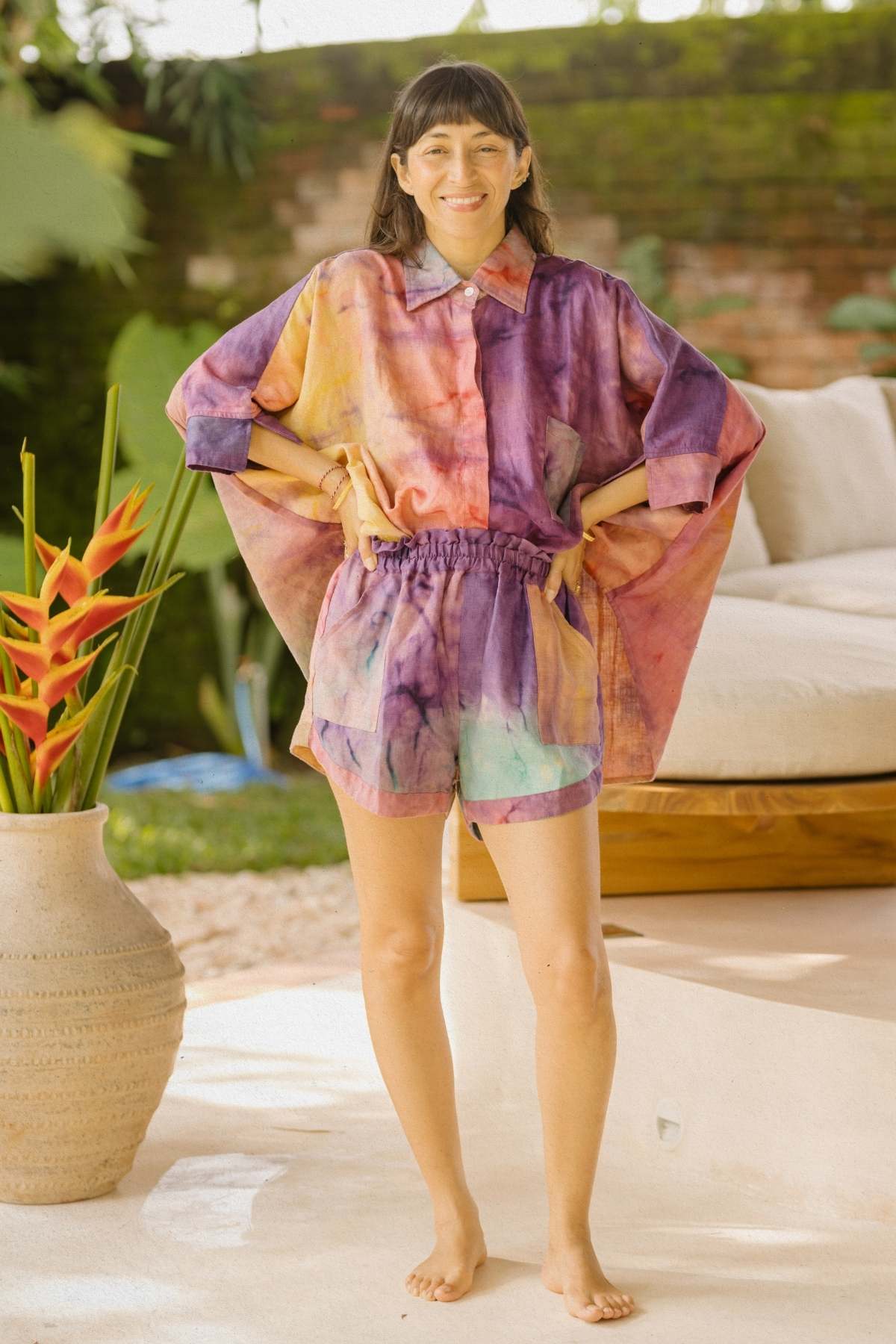
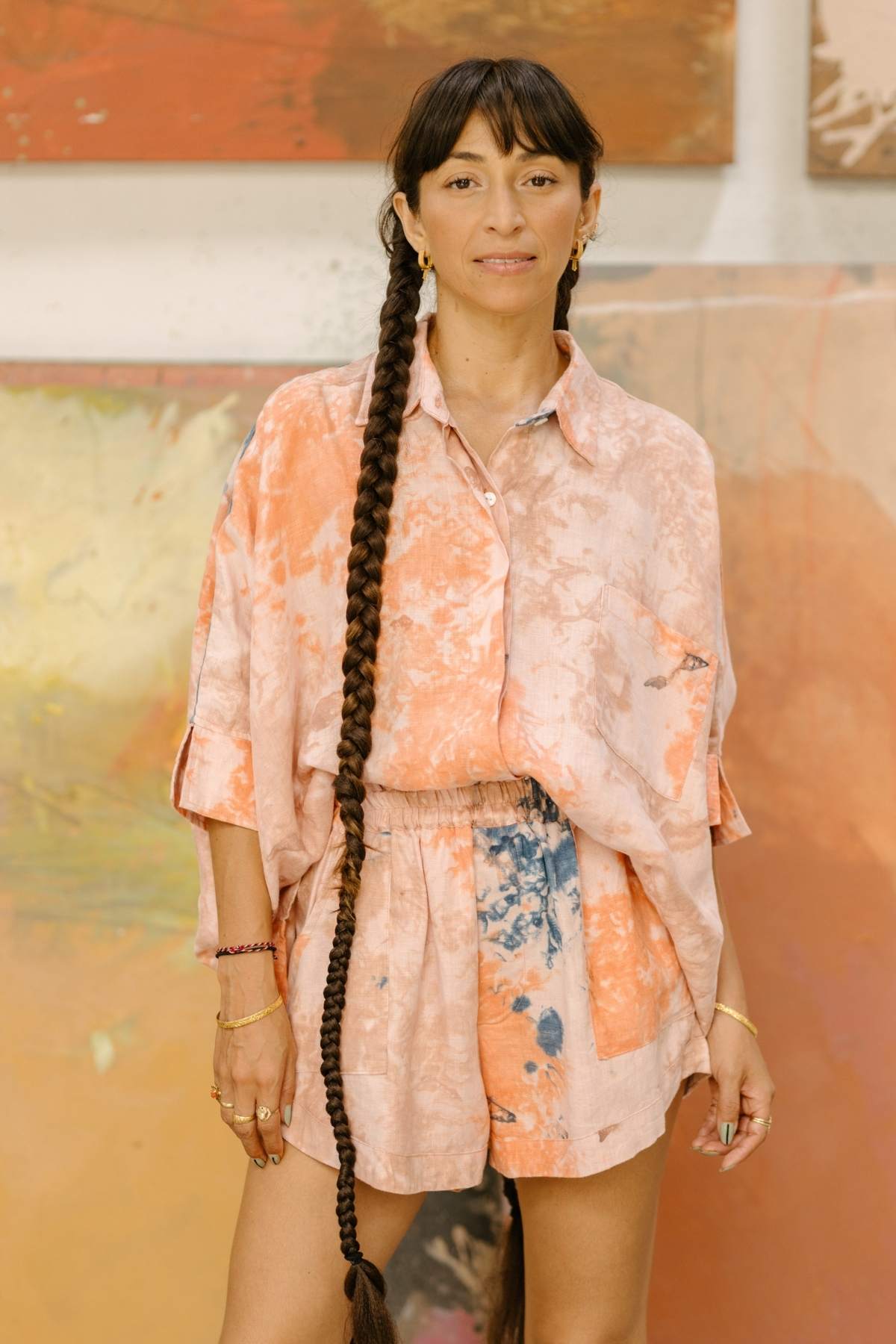
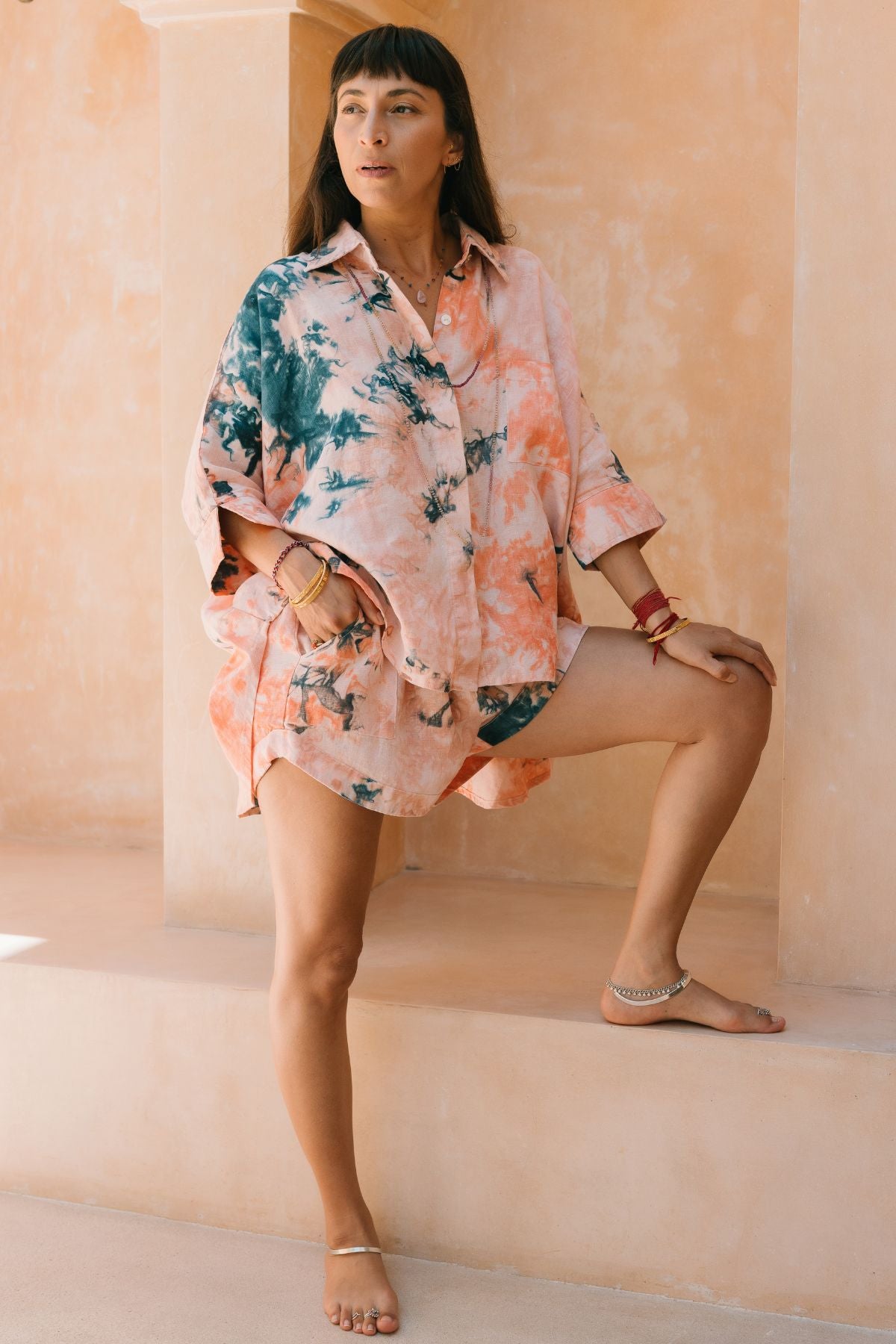
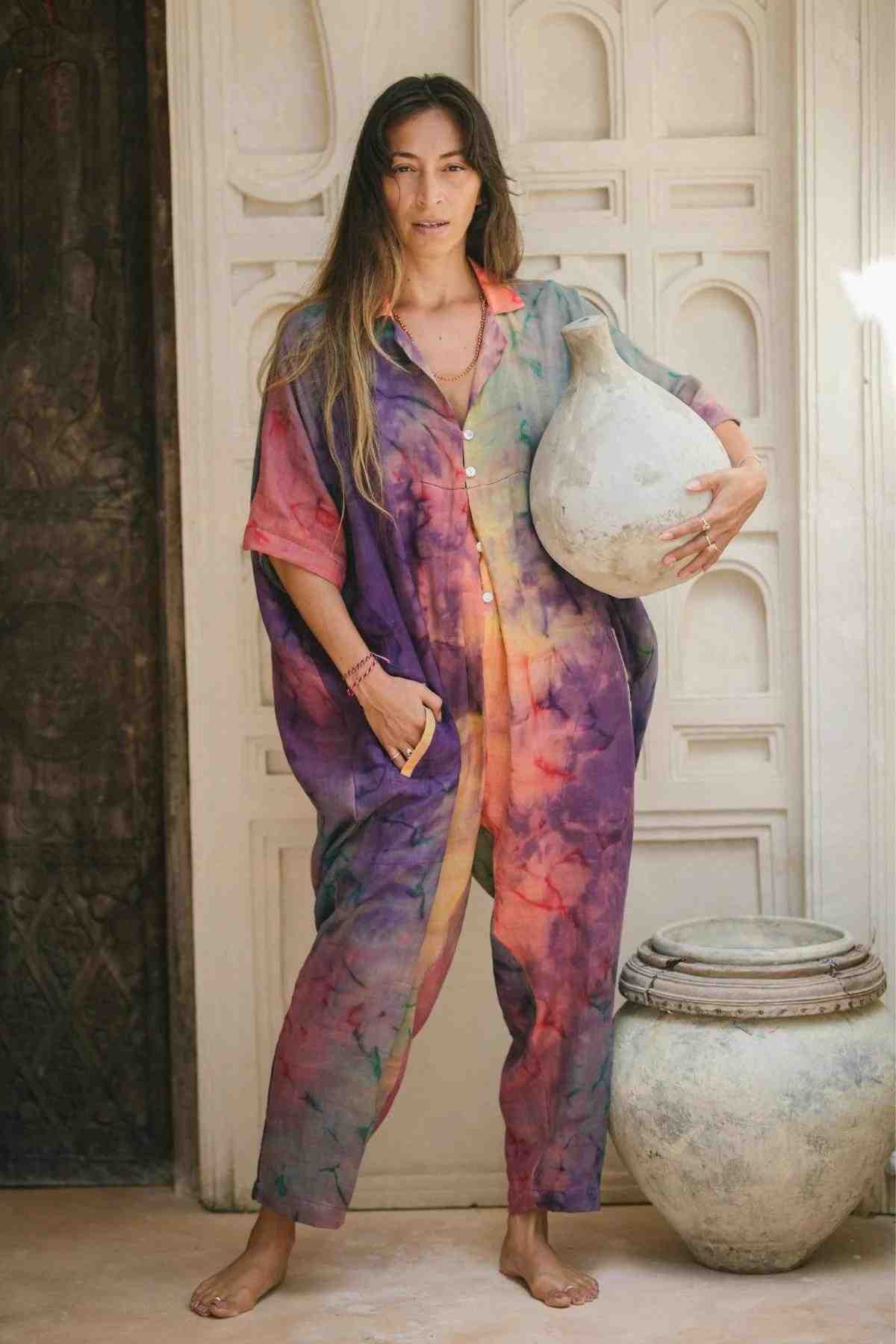
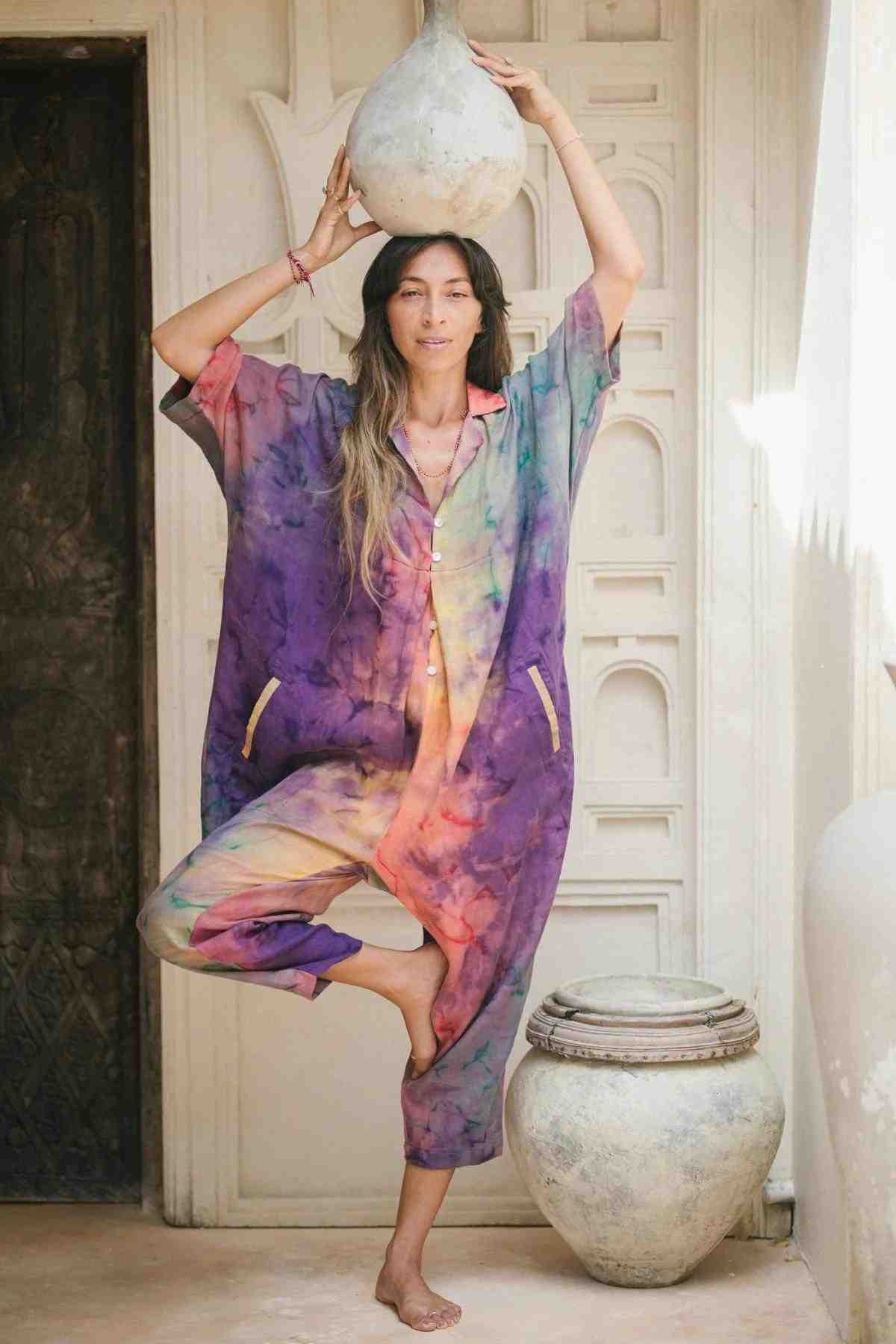
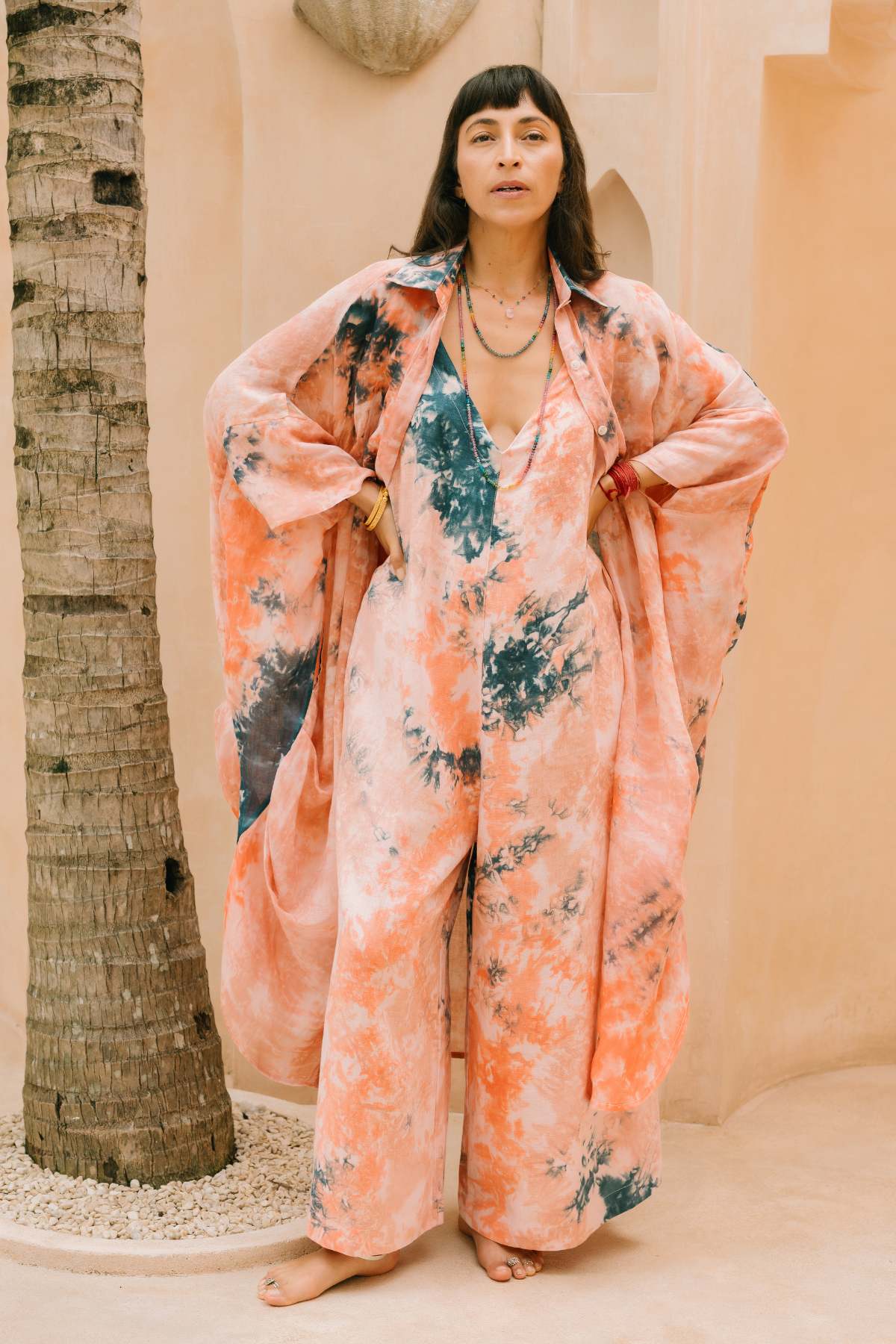
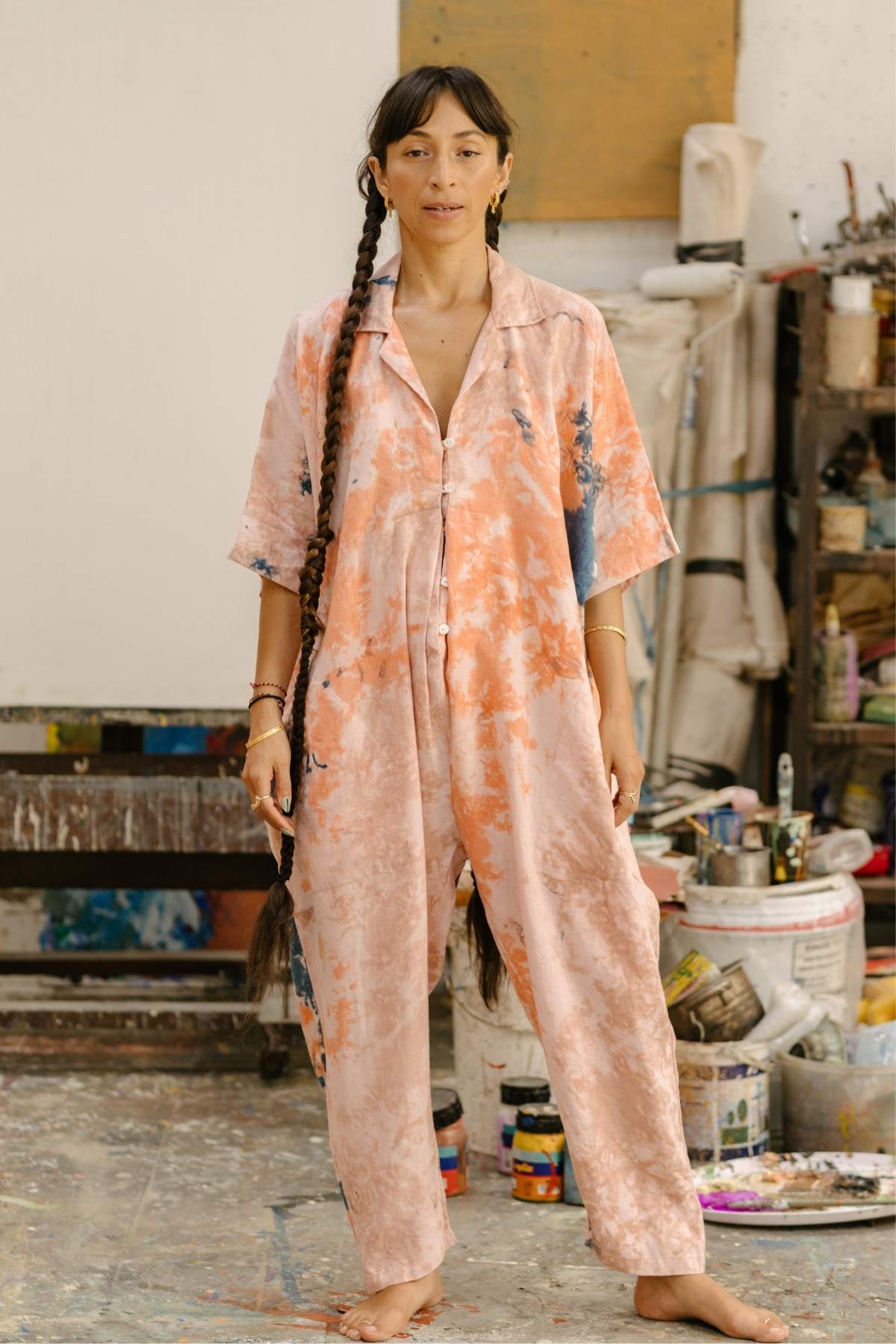
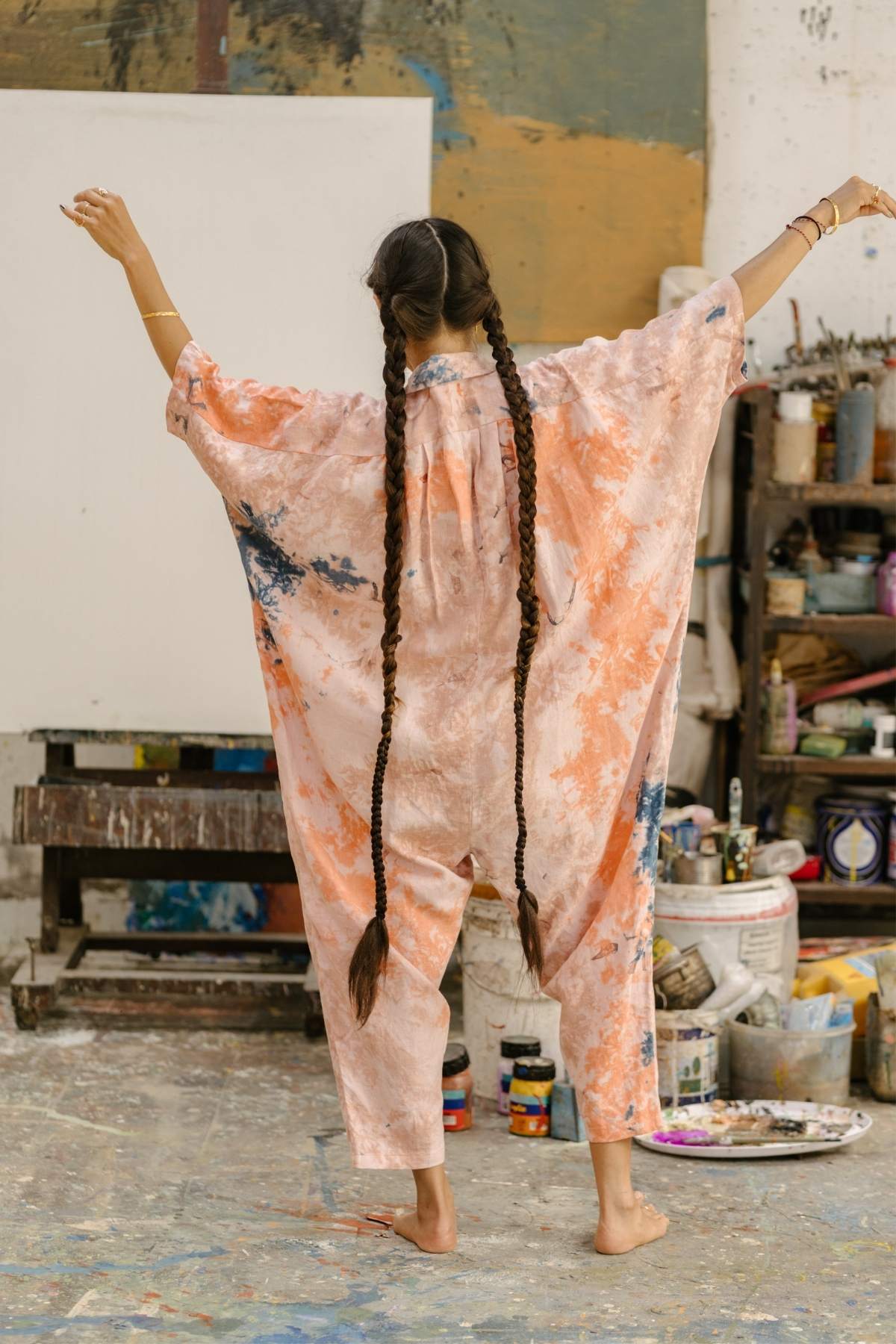
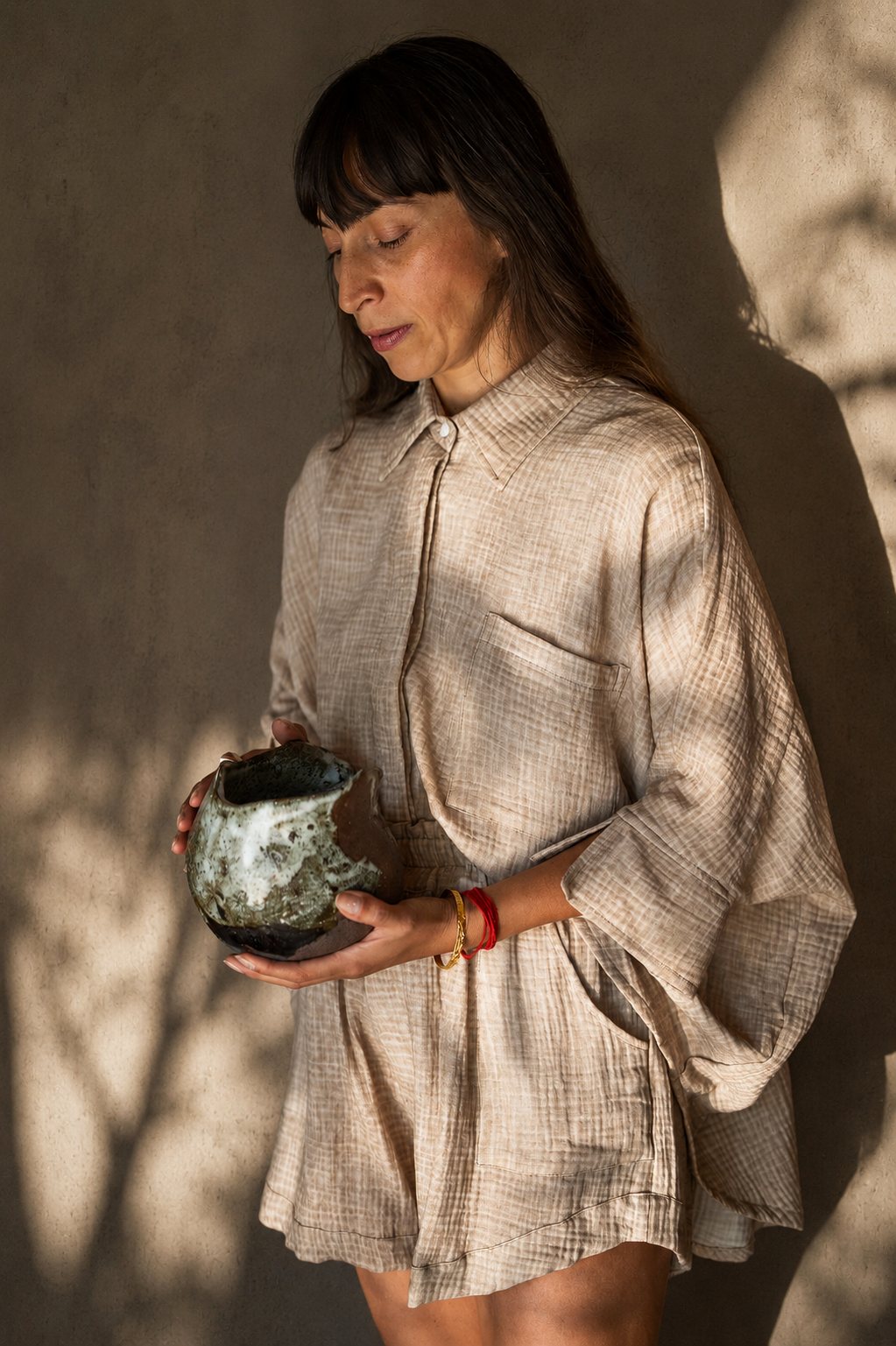
Our signature colourway, Rainbeau, carries the full seven days. Browns, purples, pinks and golds all live in a single piece, in their own arrangement.
Botanical dyes and synthetic dyes: what is actually different
Most clothing today is coloured with synthetic dyes. Fast, cheap, perfectly uniform, derived from petroleum. Textile dyeing is one of the largest sources of water pollution in the world, largely because of how those dyes are produced and discharged.
Botanical dyeing is the opposite trade. It is slow. It cannot be rushed or exactly repeated. In return, the dye bath is made of plants, the water returns to the earth without poisoning it, and the colour behaves like something alive, softening and deepening with age rather than fading into dullness.
We will be honest about the limits too. Botanical colour can shift slightly with washing and with sun, and it asks for a little more care. We consider that a fair exchange. A garment that asks for care tends to receive it, and to last.
What botanical dyeing does for the environment
Synthetic textile dyes are among the most chemically intensive substances in fashion manufacturing. They require large volumes of water, and they generate wastewater containing heavy metals, acids and fixatives. In much of the world that wastewater enters rivers and groundwater directly.
Botanical dyes require no synthetic chemicals. The dye bath water, once finished, can be safely returned to the earth. The plant materials are compostable. The mordants used in natural dyeing are typically mineral salts that occur naturally in soil. The entire process is, at its core, a closed loop.
There is a reason botanical dyeing has been practised on every inhabited continent for thousands of years. It is not an invention. It is a recovery.
Why no two botanical pieces are identical
A plant grown in one year carries different pigment than the same plant grown in the next. The mineral content of the water, the temperature during fermentation, the number of layered dips, all of it shapes the final colour.
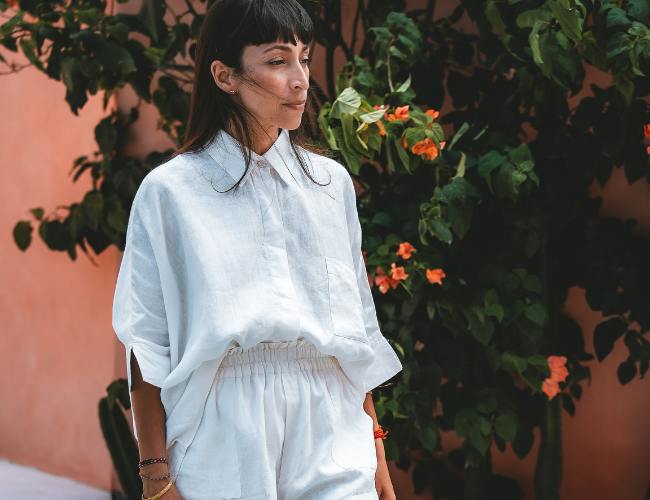
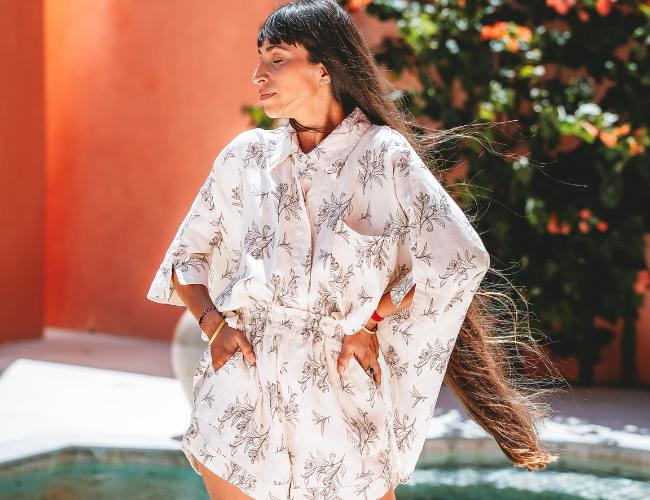
This is why we say your Sat Torri Rainbeau Playsuit will be different, in the most beautiful way, from the one in the photograph.
The Rainbeau story
Rainbeau is our signature. The colour of the sky the morning after everything broke open.
It is not reproducible in any synthetic process, because it is not a formula. It is a result. Each batch is produced by our artisan dye team in Bali using botanical pigments whose exact balance shifts with the water, the temperature, and the particular plants available that week. No two Rainbeau pieces are alike.
That is not a caveat. In a world where identical mass production is the norm, owning something genuinely singular is a different category of experience. Not collectible. Singular, in the sense that a thing made by one pair of hands, dyed in one lot, on one specific afternoon in Bali, can only exist once.
Making it at a scale that is not scale
Our dye process is not industrialised. It cannot be without losing what makes it what it is.
The dye work is done by our artisan team in batches calibrated to what they can do well, not to what would maximise throughput. Production is slower than fast fashion. Certain colourways sell out and cannot be immediately restocked. The cost per unit is higher than a synthetic alternative.
All of those are correct, and none of them are problems. They are the accurate description of making something that deserves to exist.
Why we will never switch to synthetic dyes
We are asked this, usually as demand for a particular piece grows. The answer is no, and it is not complicated.
Synthetic dyes would let us produce more, more consistently, in more colours, more quickly. They would also require us to become a different kind of company. The environmental cost, the loss of the craft, the disconnection from the plant world that botanical dyeing maintains: those are not acceptable trades for us at any size.
The reason we dye botanically is the same reason we make in small batches, pay a living wage, and use natural fibre only. It is not a marketing decision. When something sells out and cannot be exactly replicated because the next batch will be slightly different, that is not a problem we are trying to solve. The colour in your garment came from the earth. It will return there. In between, it is yours.
How to care for naturally dyed clothing
Botanical dyed linen is not fragile. It simply has preferences:
- Wash cold, by hand or on a gentle machine cycle, with a mild plant-based detergent.
- Wash separately the first two or three times.
- Dry in shade. Direct sun is the one thing botanical colour genuinely dislikes.
- Skip the dryer. Linen dries quickly on its own and lives longer for it.
- Welcome the change. The colour will settle and soften over years. That patina is the garment becoming yours.
The full method, written by the people who do the dyeing, is in how to wash and care for naturally dyed clothing.
Frequently asked questions
What is natural dye for clothes?
Colour extracted from plants, minerals or occasionally insects, and bonded to fabric without petroleum-derived chemicals. For textiles the common plant sources are indigo for blue, turmeric for gold, madder root for red, and barks and leaves for the earth tones between them.
Is botanical dyed clothing colorfast?
Yes, when properly mordanted and cared for. Washed cold and dried in shade, botanical colour holds for years. It evolves gently rather than fading abruptly.
What plants are used to dye clothing naturally?
The most common are indigo for blue, turmeric for gold, madder root for red, and various barks and leaves for earth tones. In Bali we work primarily with turmeric, indigo and native Balinese botanicals.
Why is botanical dyed clothing more expensive?
The dye process alone takes five to seven days of skilled hand work before cutting or sewing begins, and every artisan family we work with is paid a real living wage. The price is the cost of making something honestly.
Does botanical dye work on any fabric?
No. Plant dyes bond with natural fibres like linen, cotton and silk. They will not properly take to polyester or synthetic blends, which is one more reason we have never used them.
How long does a botanical dyed garment take to make?
For our made-to-order botanical pieces, allow three to six weeks from order to shipment: five to seven days for the dye, then hand-cutting and sewing in the homes and small workshops of our artisan families.
Is natural dye better for the environment than synthetic dye?
In the ways that are measurable, yes. Botanical dye baths use no synthetic chemicals, the spent water can return to the earth safely, the plant matter composts, and the mordants are typically mineral salts already present in soil. Synthetic dyeing generates wastewater carrying heavy metals, acids and fixatives, which in much of the world is discharged untreated.
Will my botanically dyed piece match the photograph?
Close, but not exactly. The pigment in a plant varies with the water, the temperature and the harvest. Each dye lot comes out its own. That variation is the evidence of hand work rather than a fault in it.
Clothing made in ceremony
Every botanical piece we make, the Rainbeau Linen Suka Set, the Kundalini Playsuit Botanical Limited Edition, the Swan Set, begins as plants, water, and a week of someone's full attention. When it sells out, it may not come back. That is not scarcity marketing. It is what it looks like when you refuse to make more than the earth can hold.
For what a single dye run feels like from the inside, over days rather than hours, there is The Sun Is the Metronome. The same tradition of hand-worked natural fibre extends beyond linen: the architectural folds of the Ramie Botanical Origami Gown, and the backstrap-loom heritage behind Tumanggal cotton. The whole of how we make is on our slow fashion page.
With love from Bali,
Myrah
|
A Piece for This Threshold The Rainbeau Linen Suka Set Shop the Rainbeau → |
|
The Muse-Letter Dress for the woman you’re becoming. Join the Muse-LetterUnsubscribe any time. No spam, ever. |



Leave a comment
This site is protected by hCaptcha and the hCaptcha Privacy Policy and Terms of Service apply.