




The Projector
A Projector is one of the five Human Design types and makes up roughly 20% of people. In the system it is described as a chart with an undefined Sacral centre, no motor connected to the throat, and at least one channel running into an awareness centre. That combination is said to produce someone who reads other people and systems with unusual accuracy but does not carry a steady supply of their own energy. The strategy given for this type is to wait for the invitation.
If you have spent your life being told you are perceptive and also being told you should have more stamina, and you have never been able to hold both of those sentences at the same time, this is usually the paragraph that does something.
What is a Projector in Human Design?
Type is determined by which energy centres are defined in the chart, calculated from birth date, time and place. The Generator and the Manifesting Generator both have a defined Sacral centre, which the system calls the life force motor. The Projector does not.
What a Projector has instead is definition running into one of the awareness centres, the Spleen, the Ajna or the Solar Plexus. The framework describes this as an aura that is focused and penetrating rather than open and enveloping, and it attributes to that aura a specific talent: seeing how a person or a system is actually built, often faster than the person inside it can.
This is why the language around Projectors is always the language of guiding rather than doing. Not because guiding is nobler. Because the mechanic described is awareness without an engine, and awareness without an engine is worth a great deal in the right seat and almost nothing in the wrong one.
Why are Projectors so tired?
The framework gives a structural answer rather than a moral one, and this is the part that tends to land hardest.
An undefined centre is described as taking in and amplifying whatever is around it. So a Projector standing in a room full of Sacral energy is said to feel that energy as if it were her own, and to be able to work on it, keep pace with it, match it hour for hour. The catch in the description is that borrowed energy leaves when the room does. The crash arrives later and privately, which is exactly why it never gets counted as part of the day.
The guidance that follows from this is unglamorous. Lie down before you are tired rather than after. Build the rest into the shape of the day instead of earning it at the end. The system frames this as a design requirement rather than a weakness, and for a lot of women that reframing is the entire value of the chart.
One thing we will not do here is let a chart stand in for a blood test. Persistent exhaustion that does not lift with genuine rest is a medical conversation, not a mechanical one. Thyroid function, iron and B12 are ordinary things to check and they are checked with bloods, not with a birth time. Myrah has written about that road in her own life in the year I did everything right and felt worse. Human Design can tell you a useful story about your energy. It cannot measure it.
What does waiting for the invitation actually mean?
It does not mean sitting by the window. This is the most misread strategy in the system.
The invitation is described as applying to the large things only. The work, the relationship, the move, the seat at the table, being asked into someone's life or business. It is not a rule about groceries or about answering an email. A Projector can be as active as she likes. What the framework asks is that the big commitments arrive through recognition rather than through pushing.
The reason given is that the Projector aura is penetrating, so when it arrives uninvited it is felt as intrusion, and when it arrives invited it is felt as insight. Same person, same accuracy, entirely different reception. The not-self theme for this type is bitterness, and the system attributes it specifically to giving guidance that nobody asked for and then watching it be ignored.
The practical version, which is less mystical than it sounds: get visible, get accurate, and stop volunteering. Recognition is the thing you build. The invitation is the thing you wait for.
Worth adding, because it matters more than type does day to day: your decision-making authority is a separate calculation. Many Projectors have splenic authority and many have emotional authority, and those two ask for opposite things in the moment. We covered all seven in what is a Human Design authority.
How a Projector's day differs from every other type
The mechanical comparison is easy to find elsewhere. This is the one about how the day is actually lived.
| Projector | Generator | Manifesting Generator | Manifestor | |
|---|---|---|---|---|
| Share of people | About 20% | About 37% | About 33% | About 9% |
| Sacral centre | Undefined | Defined | Defined | Undefined |
| How the day is built | Short bursts of focus, then real rest | One thing, gone into deeply | Several at once, steps skipped | Initiates, then withdraws |
| Strategy | Wait for the invitation | Wait to respond | Respond, then inform | Inform before acting |
| Aligned feeling | Success | Satisfaction | Satisfaction | Peace |
| Misaligned feeling | Bitterness | Frustration | Frustration and anger | Anger |
| What the wardrobe needs | To cost nothing and be seen | Repetition without boredom | Range without decisions | Autonomy, nothing that asks permission |
Read down the last column and the Projector row is the odd one. Every other type needs the wardrobe to keep up with output. A Projector needs the wardrobe to stop taking anything.
What should a Projector wear?
Two requirements, and they pull against each other in most clothing, which is why this is harder than it sounds.
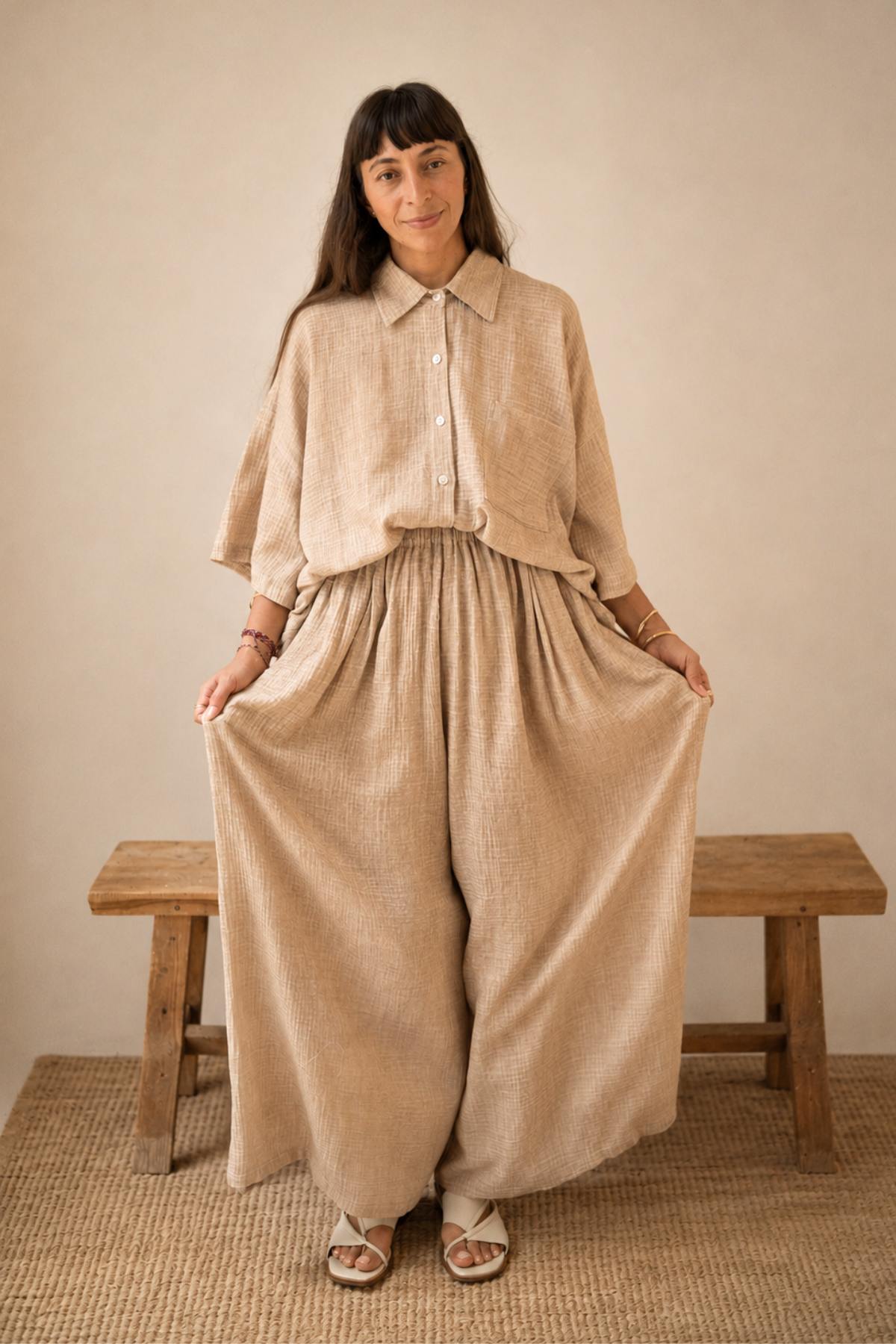
The first is that it has to cost nothing. No waistband to negotiate after lunch. No fitted seam that reminds you it is there by four in the afternoon. Nothing that holds heat, because heat is a tax on a body already rationing. Nothing that has to be adjusted when you stand up. A garment that requires management is a garment quietly drawing on a supply that does not refill on its own.
The second is stranger. Because the strategy is recognition, the piece has to be seen. Not loud. Seen. There is a real difference between a woman who is noticed because her clothing is performing and a woman who is noticed because she is unmistakably herself in it, and only one of those is any use to a type whose whole mechanic runs on being correctly recognised.
There is one piece in this studio that has a documented history of doing exactly that.

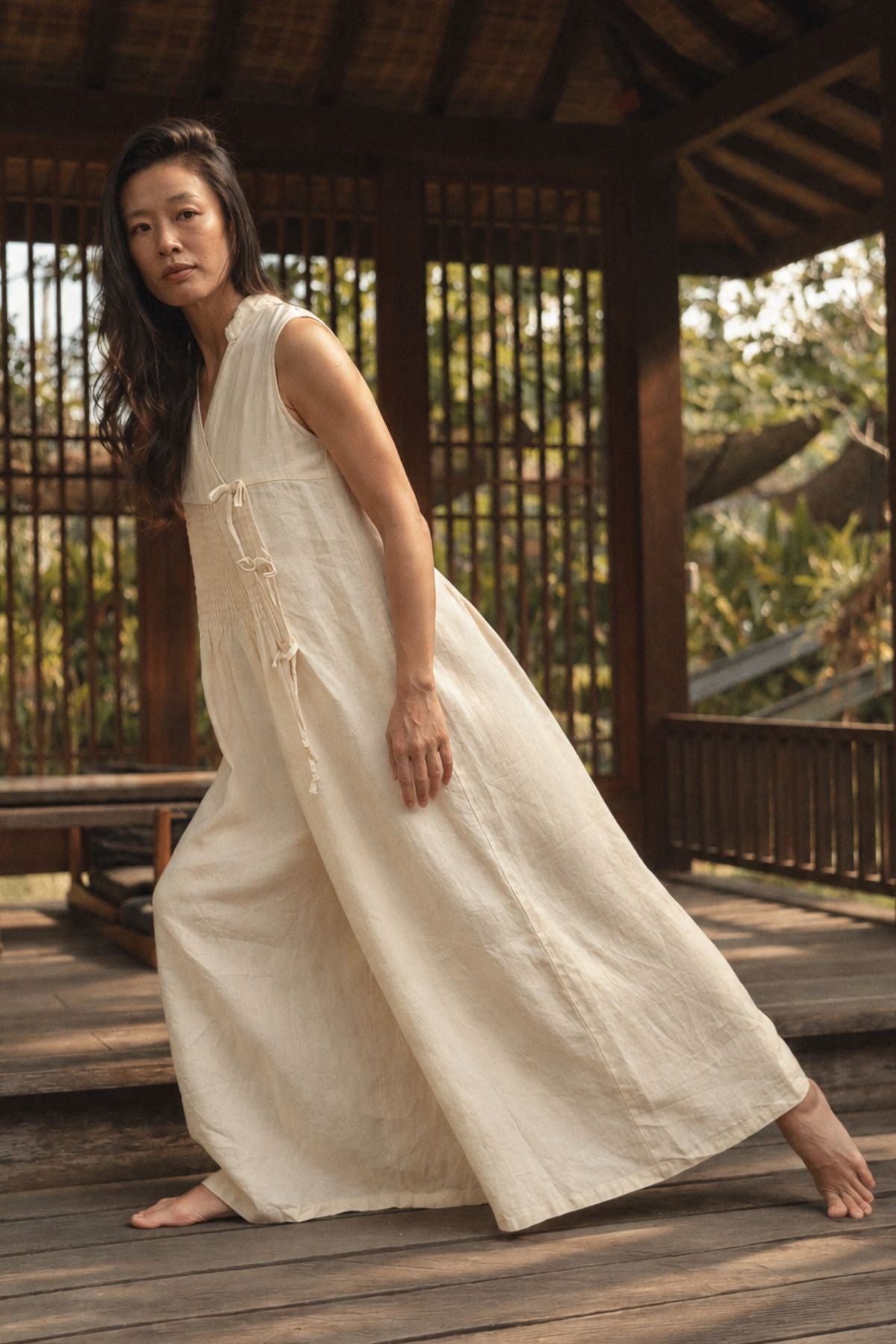
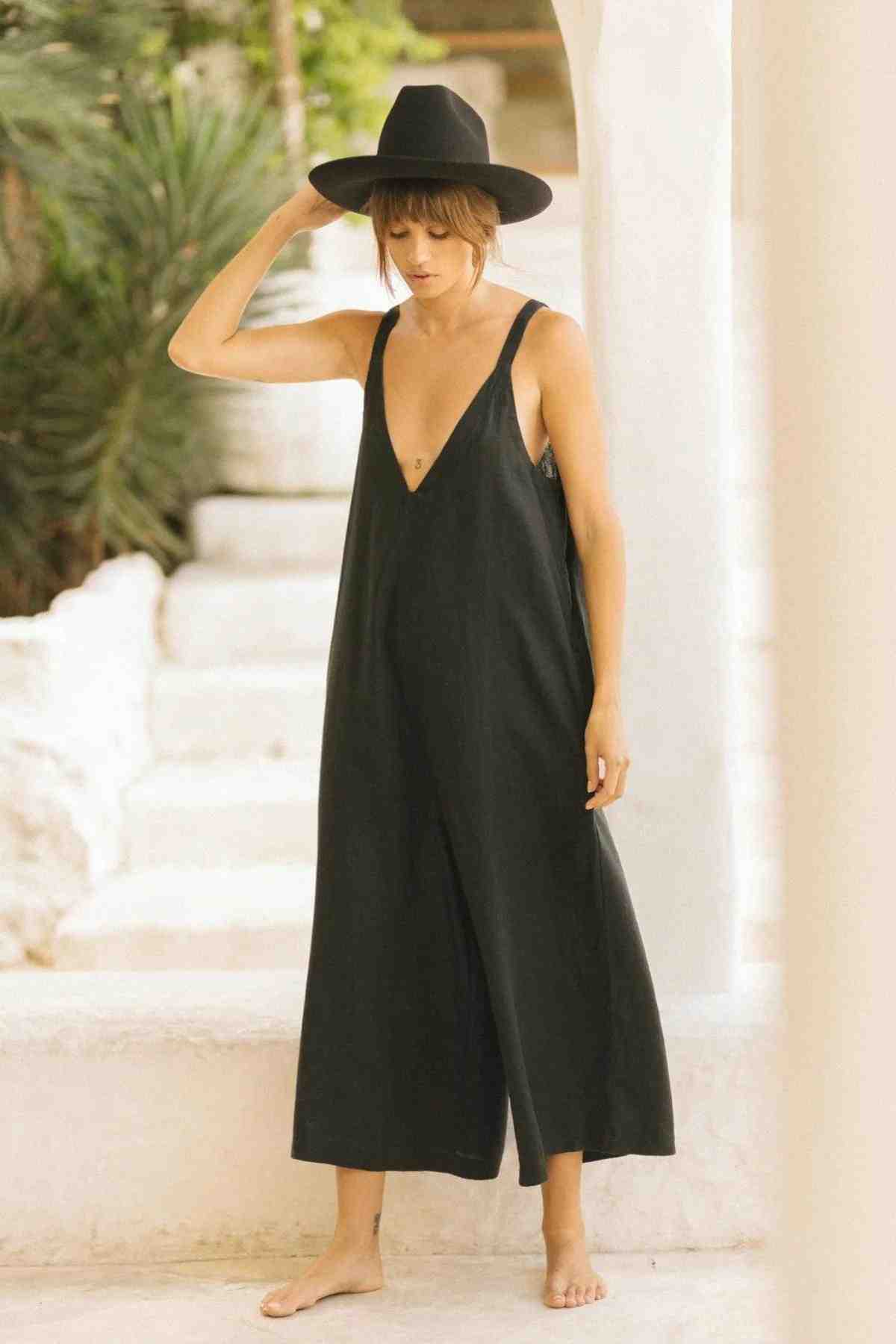
One hundred percent bamboo rayon in off white, handmade in Bali. Wide bodied and open in construction, with no fitted seams anywhere and a deep V at the front and the back. Bamboo rayon does not cling and does not hold heat, which is the whole point for a body that is rationing. One size, two lengths. It was the first piece Myrah ever made, and it is the one strangers have always stopped to ask about.
The two lengths are not a styling choice, they are an energy choice. The short falls above the knee and is the version for a day that still has movement in it, practice, the beach, dinner, sleep. The long is floor grazing and is the version for a day where you would rather be covered and still be dressed. Same garment, same absence of seams, two different amounts of self you have to hand over to be in public.
One size matters here too. A garment that fits a body on its lightest day and its heaviest one removes an entire category of small daily negotiation, and small daily negotiations are precisely what this type cannot afford to accumulate.
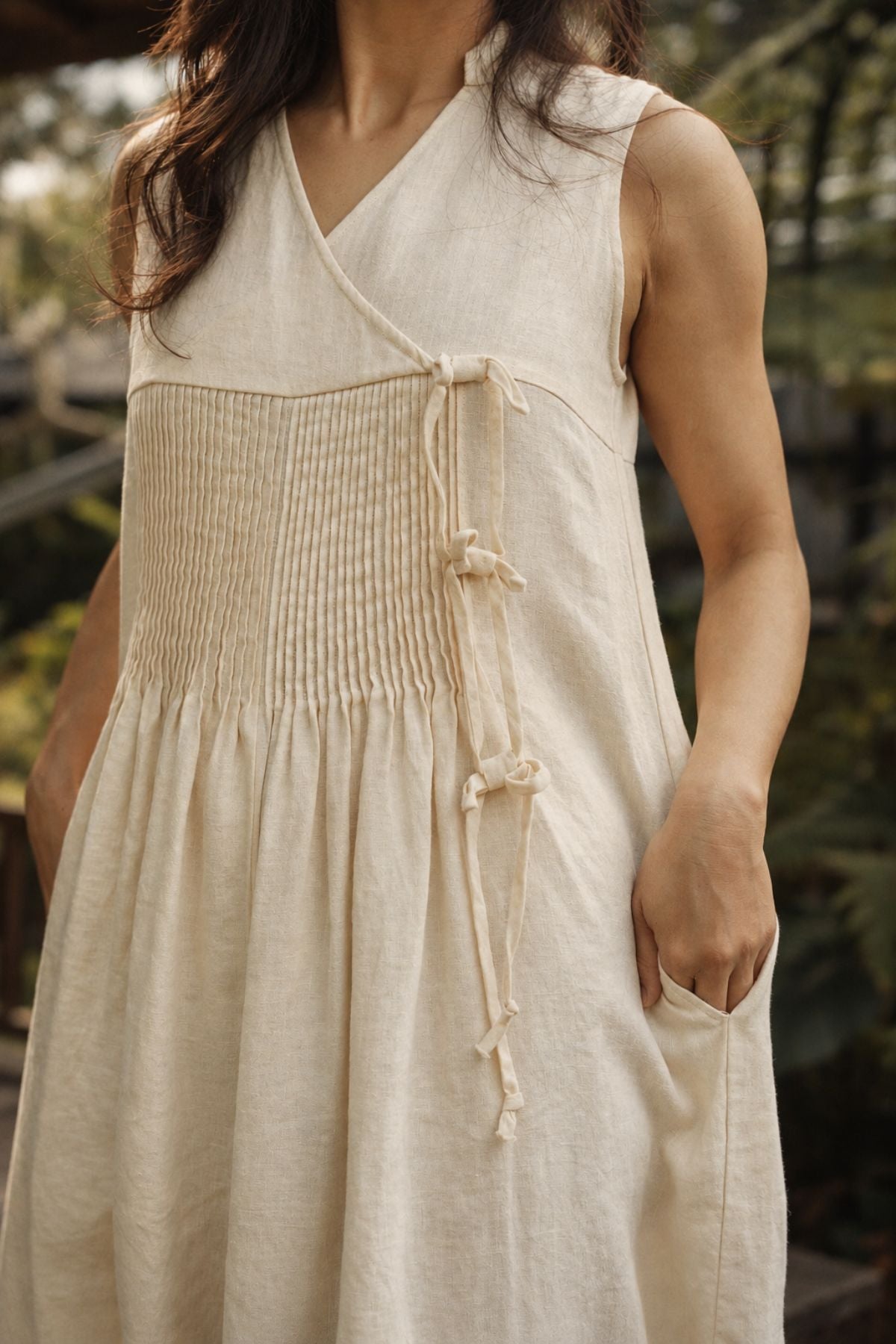
If you would rather have linen than bamboo rayon, or you want pockets, the Dharma is the other side of the same idea.

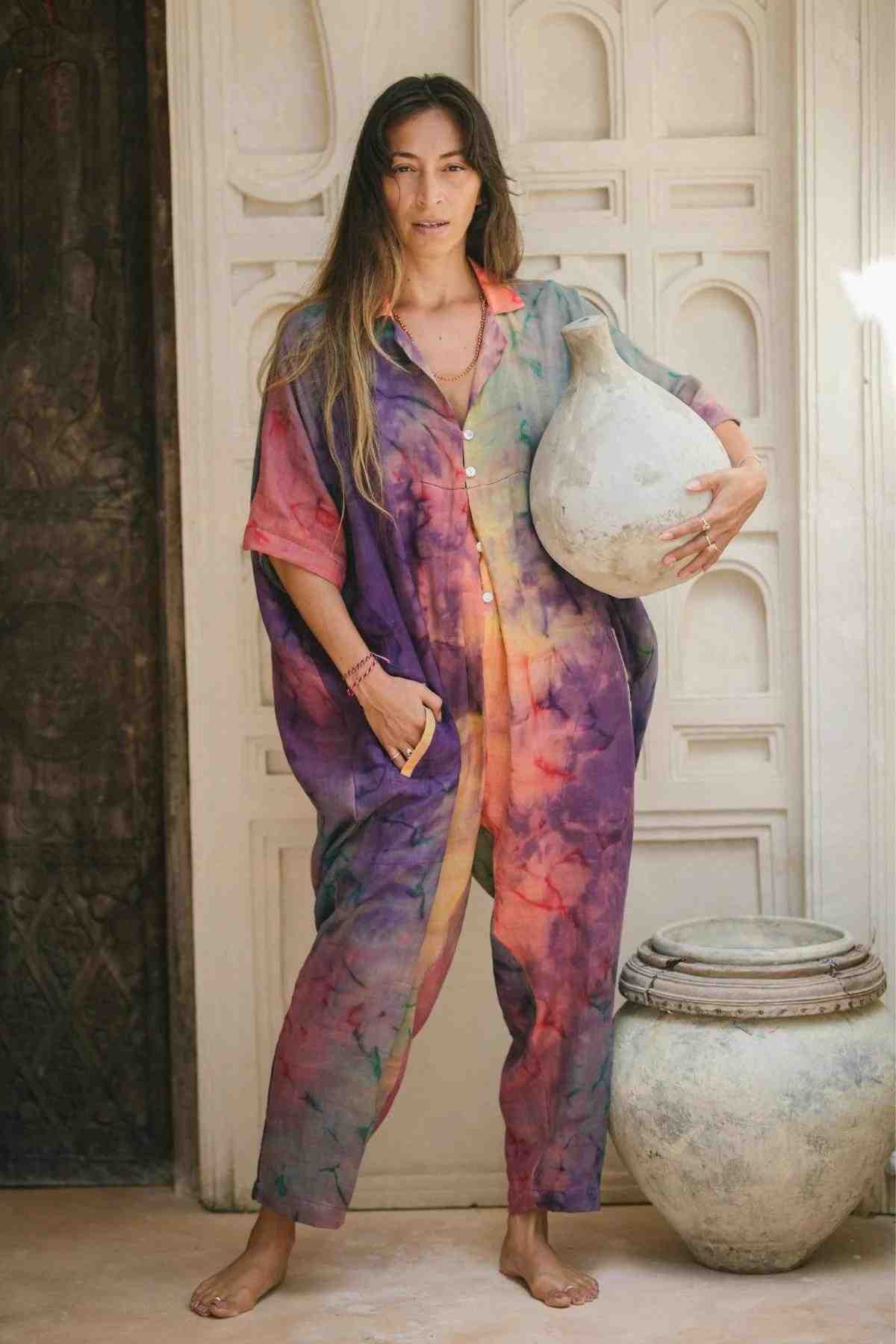
One hundred percent stonewashed French linen, certified to OEKO-TEX Standard 100. Full length, open front, relaxed through the body, with side pockets, which quietly solves the problem of having to carry something. One size. Stonewashed before it reaches you, so it is soft on the first wear and softer on the fiftieth.
The full explainer on where this system came from, with all five types laid out plainly, is here. And if you want to see what happens when two people with different types try to run one company, we wrote that down in how we run a business on two different Human Design types.
An honest note. Human Design is a contemplative framework, not a science. It has no peer reviewed evidence base, and throughout this piece we describe what the system says rather than asserting it as fact. We write about it because a great many of the women who wear these clothes find it a useful mirror, and because it is more interesting to talk about how you actually move through a day than to talk about hemlines.
Frequently asked questions
What is a Projector in Human Design?
A Projector is one of the five Human Design types, roughly 20% of people. The chart shows an undefined Sacral centre, no motor connected to the throat, and at least one channel running into an awareness centre such as the Spleen, the Ajna or the Solar Plexus. The system describes this as an aura that reads people and systems accurately, paired with energy that comes in bursts rather than steadily.
Why are Projectors always tired?
The framework explains it structurally rather than as a personal failing. An undefined Sacral centre is described as taking in and amplifying the energy of the people nearby, so a Projector can match the pace of a busy room and only feel the cost once the room empties. The guidance that follows is to rest before exhaustion rather than after it. Exhaustion that does not lift with real rest is a medical question and belongs with blood tests, not with a chart.
What does waiting for the invitation mean for a Projector?
It applies to the big commitments only, the work, the relationship, the move, the seat at the table, and not to everyday actions. The system describes the Projector aura as penetrating, which means the same insight is received as intrusion when it is unasked for and as guidance when it is invited. The practical instruction is to become visible and accurate and to stop volunteering.
Do Projectors need to work fewer hours than other types?
The system suggests fewer sustained hours rather than less contribution, on the basis that a Projector works in bursts of focus and recovers in between. It also holds that the value produced in those bursts is high because the type is described as seeing systems and people clearly. Nothing here is medical or employment advice, and the right number of hours is a conversation with your own body and your own circumstances.
What should a Projector wear?
Two principles. Clothing should cost nothing to wear, which means no waistbands to adjust, no fitted seams, and nothing that traps heat, because a body rationing energy should not be spending it on its own outfit. And because the strategy is built on recognition, the piece should be visible without performing, so that what gets noticed is the woman rather than the effort. Open, unstructured, breathable pieces in one size answer both.
Next in this series, the Manifestor, the nine percent who were never built to ask permission, and the piece that does not need anyone's approval either.
With love from Bali,
Myrah
|
The Muse-Letter Dress for the woman you're becoming. Join the Muse-LetterUnsubscribe any time. No spam, ever. |














Leave a comment
This site is protected by hCaptcha and the hCaptcha Privacy Policy and Terms of Service apply.