


The Way of Tea
Cha Dao means the way of tea. It is the Chinese practice of brewing tea slowly, attentively and repeatedly from the same leaves, and it is a daily habit far more often than it is a ceremony.
Almost everything written in English about the Chinese tea ceremony makes it sound like something you need permission to do. Robes, a teacher, implements with names you cannot pronounce. That version exists. It is not what most people who practise Cha Dao are doing on a Tuesday morning, and the daily version is the one that changes anything.
What Cha Dao actually means
Cha Dao, written 茶道, is two characters. Cha is tea. Dao is the way, the path, the same dao that sits inside Daoism. The phrase translates almost literally as the way of tea, and the ambiguity is deliberate. It means both the method and the thing the method is supposed to teach you.
The Japanese tea ceremony, chadō or sadō, uses the same two characters read in Japanese. That practice formalised over centuries into whisked matcha, a defined sequence of movements and a tea room built for the purpose. Cha Dao in the Chinese sense is looser. A philosophy of attention applied to loose leaf tea, surviving in ordinary homes and shops rather than only in schools.
Where the way of tea came from
The founding text is the Cha Jing, the Classic of Tea, written by Lu Yu during the Tang dynasty and generally dated to the second half of the eighth century. Three volumes on origins, tools, picking, brewing, water and drinking, and the first known book anywhere devoted entirely to tea. It is largely responsible for the idea that how you make it is part of what it is.
What we now recognise as the classic Cha Dao brewing style, gongfu cha, is much later and comes from the Chaoshan region of eastern Guangdong, with a strong parallel tradition in Fujian. Gongfu means skill acquired through patient practice, the same word behind kung fu. Gongfu cha therefore means something close to tea made with earned skill, which tells you the intention before you have poured anything.
How gongfu cha actually works
The method inverts almost everything a Western teapot does. Instead of a little leaf steeped a long time in a large vessel, you use a lot of leaf in a very small vessel for a very short time, and then you do it again.
- Warm the vessel and the cups with hot water, then discard it. Not fussiness, it stops the brew dropping in temperature the moment it lands.
- Fill the vessel generously with leaf. Considerably more than feels correct if you learned tea from a teabag.
- Rinse the leaf with a fast pour and tip that first infusion away. It is often called awakening the leaf.
- Brew the first real infusion for seconds, not minutes, and pour it out completely.
- Repeat, adding a few seconds each time. A good oolong or aged pu-erh gives many infusions, and the character shifts through all of them.
That last point is why the practice holds attention. You are not making one cup. You are watching one set of leaves move through a whole arc, and if you look away you miss where it turned.
What you actually need to start
Less than the internet suggests. A gaiwan, a lidded bowl, is the cheapest and most forgiving vessel and it handles any tea. An unglazed Yixing clay pot is the romantic option, but it is porous and takes on the character of whatever you brew in it, so it is traditionally kept for one tea only. Choosing clay first is committing before you know what you like.
Beyond that: a small pitcher so every cup pours the same strength, cups small enough that a mouthful is the whole serving, water that is genuinely hot, and loose leaf tea from someone who can tell you where it grew. That is the entire kit.
What the practice is for
Here is the honest answer, and it is not about tea.
Gongfu cha requires you to stay in one place, doing one thing, for roughly twenty minutes, hands occupied and phone out of reach. There is no version of the method that works while you scroll. The infusions are ten seconds long. Miss one and you have over-brewed it, and you will taste that you were not there.
That constraint is the whole gift. A rare structure that punishes divided attention immediately and mildly, with no moral content attached. We have written before about what the Odyssey understood about numbing out and about why we keep checking when nothing is there. Cha Dao is the practical counterweight. It does not ask you to resist the pull. It gives your hands something more interesting to do.
It sits alongside the other slow practices we keep here, the way kundalini breathwork does, and the way dressing deliberately does. Small structures that make a person slower on purpose.
Common questions about Cha Dao
What does Cha Dao mean? Cha Dao means the way of tea, from the Chinese characters for tea and for the way or path. It refers both to the method of preparing loose leaf tea attentively and to the philosophy of presence that the method is intended to cultivate.
What is the difference between Cha Dao and the Japanese tea ceremony? They share the same two characters, read chadō or sadō in Japanese. The Japanese ceremony is a highly formalised practice using whisked powdered matcha, a set sequence of movements and a purpose-built room. Chinese Cha Dao is less codified, uses loose leaf tea brewed in multiple short infusions, and is practised informally in homes and tea shops as much as in schools.
What is gongfu cha? Gongfu cha is the brewing method most associated with Cha Dao today, historically linked to the Chaoshan region of Guangdong and to Fujian. It uses a high ratio of leaf to water in a small vessel with very short infusions, repeated many times from the same leaves.
Do I need special equipment to practise Cha Dao? No. A gaiwan, a lidded brewing bowl, is inexpensive, works with every type of tea and is the standard recommendation for beginners. Small cups, a serving pitcher and good loose leaf tea complete the setup. Yixing clay pots are traditional but usually reserved for a single tea type, because the unglazed clay absorbs flavour.
How long does a Cha Dao session take? A typical session runs roughly fifteen to thirty minutes across several infusions, though there is no fixed length. Individual infusions are often only ten to thirty seconds, extended slightly each round.
Which tea is best for Cha Dao? Oolong and pu-erh are the most common choices because both hold their structure across many infusions and change noticeably from one to the next. Green and white teas can be brewed the same way with cooler water and shorter steeps.
The point was never the tea. Tea is simply difficult to rush, which makes it an honest teacher.
With love from Bali,
Myrah.
|
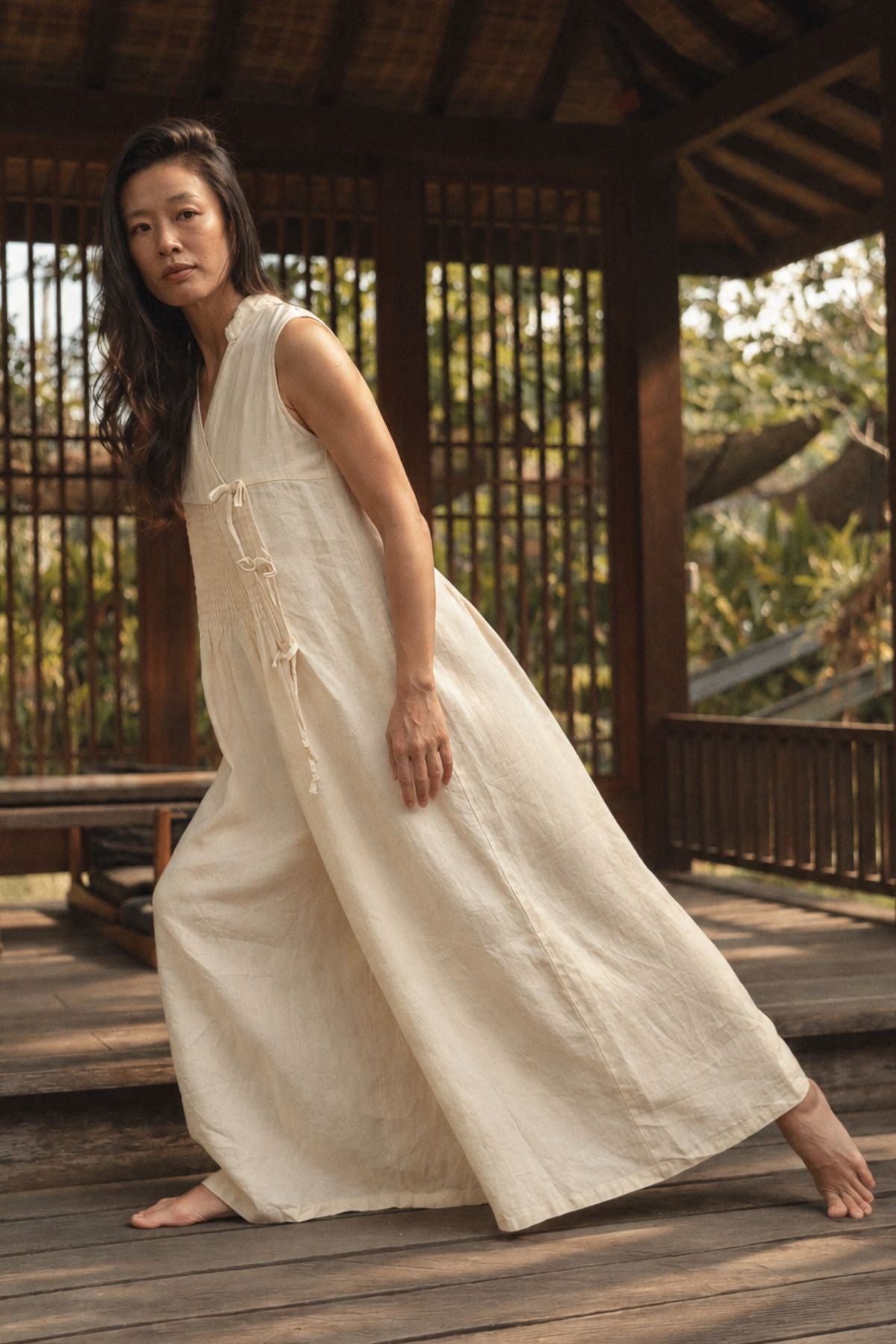
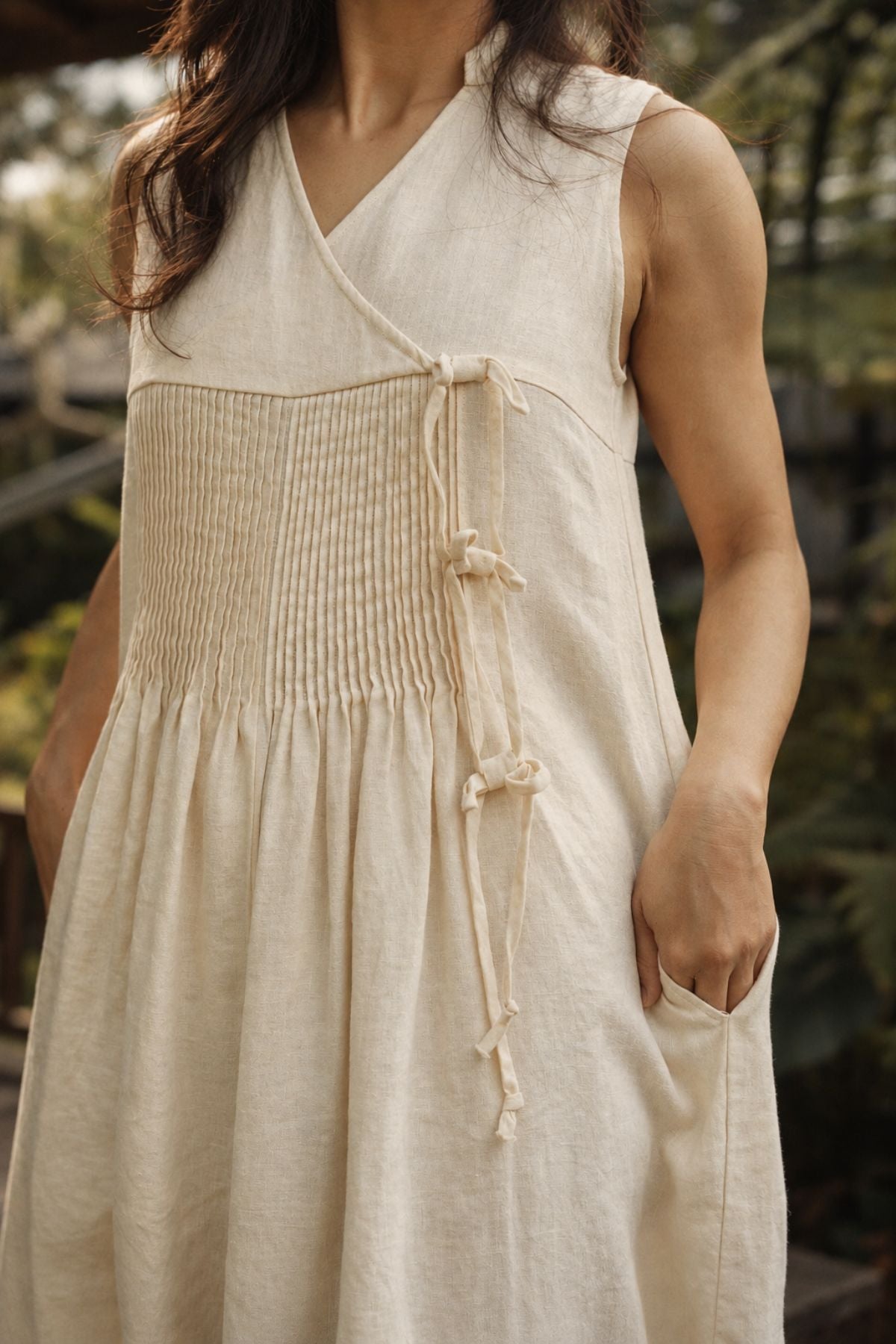
A Piece for This Threshold The Spirit Top & Shanti Wrap Skirt Set. Hand-woven Tumanggal cotton with a texture your hands keep returning to, over a linen skirt that wraps and ties to the body you have today. Made in Bali, for the twenty minutes you do not rush. Shop the Spirit & Shanti Set → |
|
The Muse-Letter Dress for the woman you're becoming. Join the Muse-LetterUnsubscribe any time. No spam, ever. |















Leave a comment
This site is protected by hCaptcha and the hCaptcha Privacy Policy and Terms of Service apply.