




The number everyone repeats
you have probably seen it on a hang tag or a video: linen vibrates at 5,000, the human body at around 100, so wearing linen lifts you. i wanted it to be true. so i went looking for where it came from.
There is no scientific evidence that linen has a healing frequency. The 5,000 figure traces back to a single set of readings described around 2003, taken on a device built to assess agricultural products and reported in its own units, which are not a frequency in any physics sense. The results were never published in a peer-reviewed journal and have never been replicated. What linen does have is measurable: it breathes, handles moisture better than almost any common fibre, and changes how warm, damp and restless a night feels. That is not a vibration. It is still a very good reason to sleep on it.
Where does the 5,000 linen frequency claim come from?
Most versions of the story lead to Dr. Heidi Yellen, who around 2003 described readings from a handheld device originally designed to assess the signature of agricultural crops. In the retellings, a healthy human body measures around 100, organic cotton about the same, synthetics far lower, and linen and wool around 5,000.
The same account adds a strange detail: that wool and linen worn together cancel each other out to zero. That line is usually connected to the old Torah prohibition on wearing the two fibres woven together, which is a religious law, not a finding about energy.
A second claim often travels alongside it, that the Nobel laureate Otto Warburg identified the frequency of the human body. Warburg did win the Nobel Prize, in 1931, for his work on how cells use oxygen. The frequency numbers credited to him do not appear in that work.
Why doesn't the linen frequency claim hold up?
- The unit is not a frequency. Frequency is measured in hertz, cycles per second. These readings were given in the device's own scale, which has no agreed definition outside the device.
- It was never published. No journal, no methods, no raw data that anyone else can check. As one fabric writer put it plainly, the results have not been validated by the scientific community.
- No one has repeated it. In more than twenty years, no laboratory has reproduced the result.
- There is no mechanism. Even if cloth carried a measurable frequency, nothing explains how it would pass into a human body or raise one.
So why does sleeping on linen feel different?
Because it is different, in ways a thermometer can find. Flax fibre takes up around a fifth of its weight in moisture and still feels dry. It releases that moisture back to the air quickly. It moves heat away from your skin and keeps doing so when it is slightly damp. I went through each of these in what a linen pillowcase actually does for your skin.
Here is why that matters for rest. For sleep to arrive and stay, your core temperature needs to fall a little through the night. Cloth that holds heat and damp against you works against that, and your body surfaces more often to fix it. Cloth that lets heat and moisture go works with it. A body that is not being asked to manage its own temperature every hour is a body that can finally settle.
That settling is real. It is just not a vibration. It is physiology.


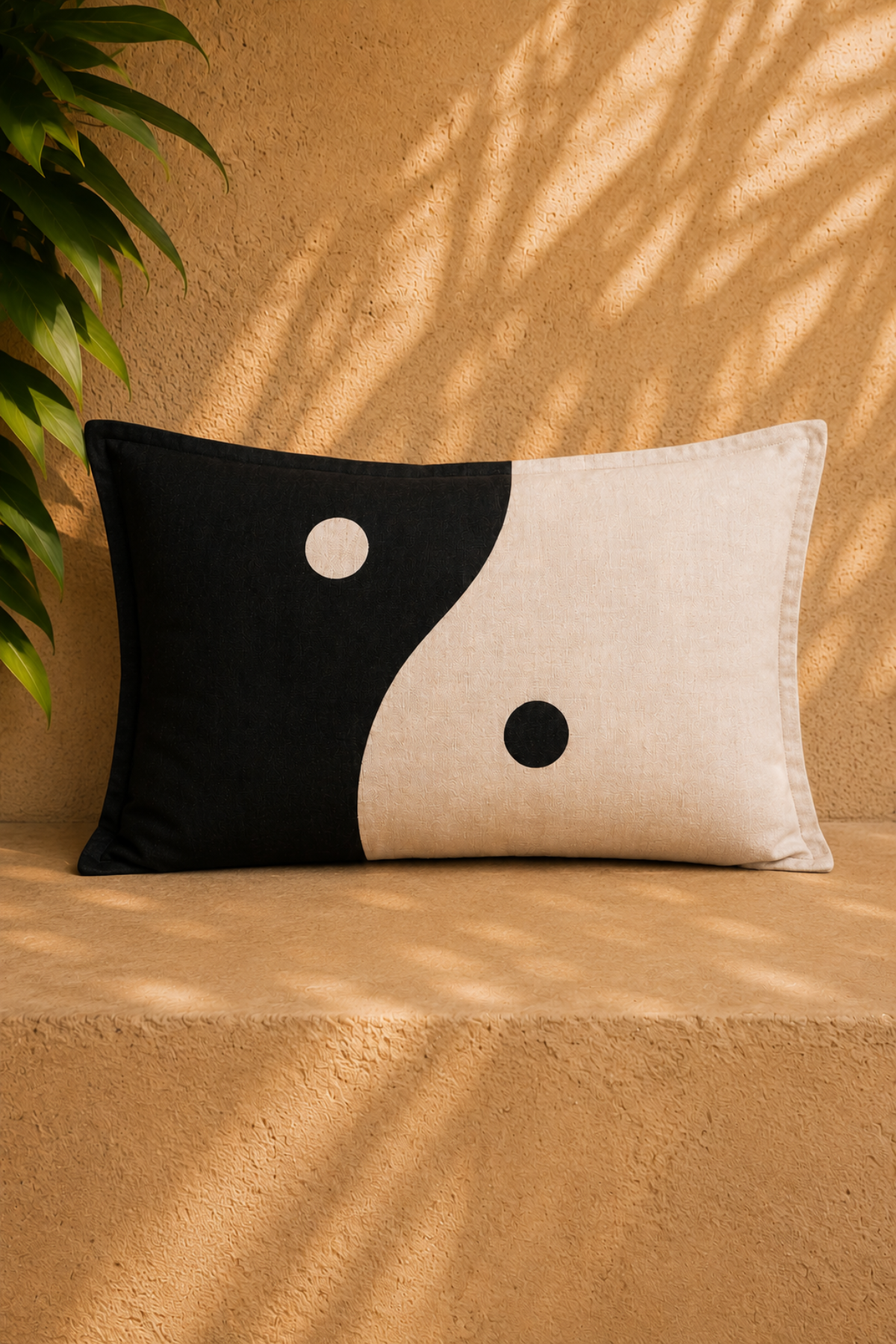
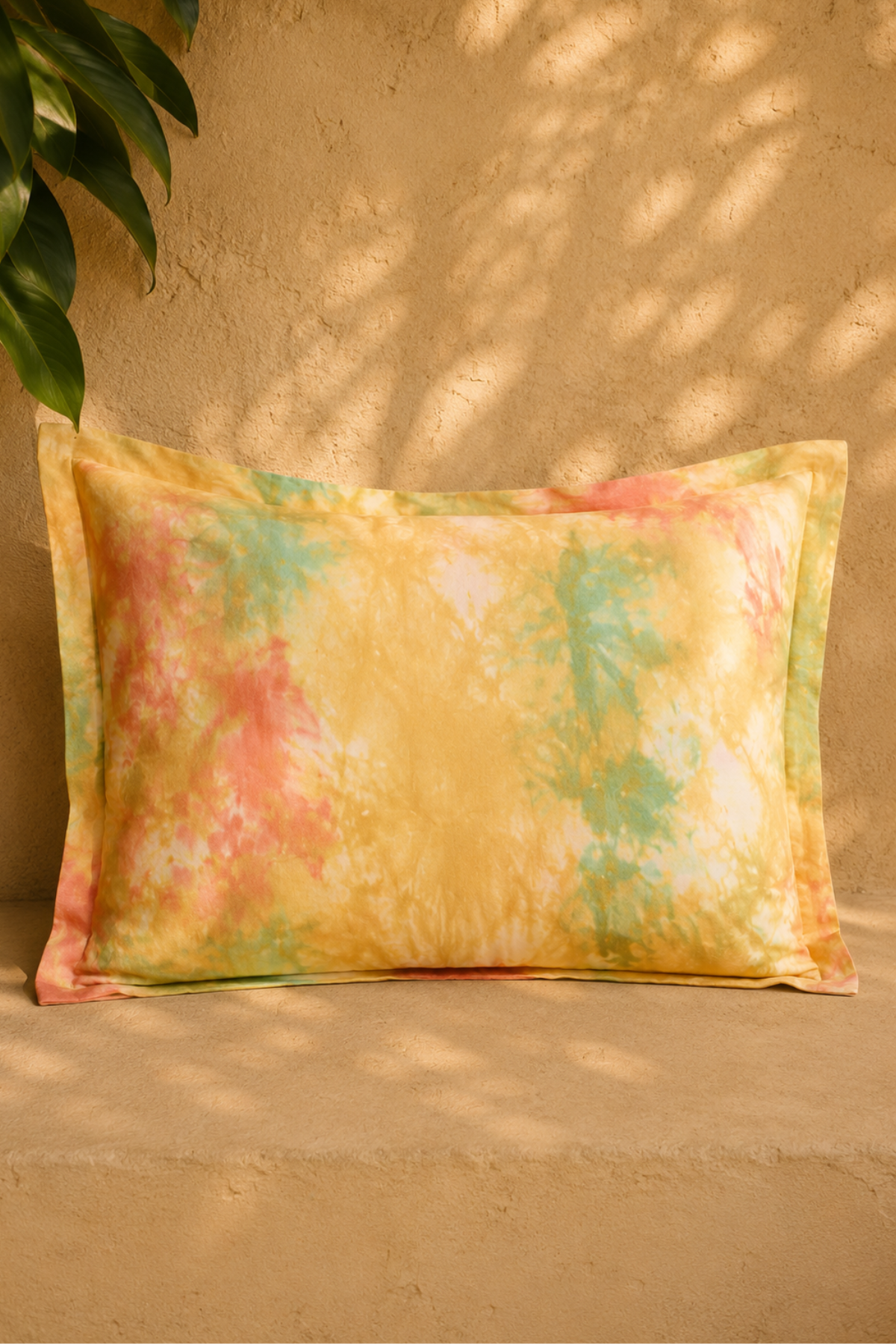
The Yin Yang colourway. Two tones held in one piece of linen.
What I believe instead
Here is where I stand, and you can hold it separately from the science. I believe what you rest on is a practice. Making a bed with care. Washing linen and hanging it in the sun. Laying your face at the end of the day on something that was made slowly, by hands, with attention. These are small signals that tell the nervous system it is safe to stop. That is regulation in the plainest sense of the word.
It does not need a number to be real. And it does not become more real with one.
This is what the Yin Yang colourway means to me. Deep and pale, held together in the same cloth, neither cancelling the other out. Not a frequency. A reminder of the kind of balance I actually believe in, the kind you practise every night rather than buy once.
Is it wrong to love linen for energetic reasons?
Not at all. A great deal of what matters to us cannot be measured, and ritual has never needed a laboratory to be worth keeping. The only thing I ask is that we keep the love and the claim apart, so that nobody is sold a promise that a fabric cannot keep.
Love linen because it breathes. Because it grows into its softness over years of washing instead of wearing thin. Because our lighter linens carry the European Flax certification, grown in Western Europe without irrigation. Because it holds botanical colour in a way that looks like it has been part of the light in your room for years. Those are the reasons that will still be true in twenty years.
Frequently asked questions
Does linen have a frequency?
Not in any sense that science recognises as affecting health. The popular claim that linen measures 5,000 comes from readings described around 2003 on a device designed for agricultural products, reported in the device's own units rather than hertz. It was never published in a peer-reviewed journal or replicated.
Is the Heidi Yellen fabric frequency study real?
The readings were described, but they were not published as a scientific study with methods and data, and no one has reproduced them. They are best understood as an anecdotal report that spread widely online, not as evidence.
Can you wear linen and wool together?
Physically, yes, and nothing happens to either fabric. The idea that they cancel each other out is linked to the religious prohibition on mixing the two fibres, which some people observe for faith reasons. It is not a measurable effect.
Do natural fabrics have healing properties?
Natural fibres have real, measurable properties. Linen breathes, absorbs and releases moisture well, and conducts heat away from the skin. Those properties can make you more comfortable and help you sleep less interrupted. That is different from healing, and no fabric has been shown to raise the body's frequency.
What are the real benefits of sleeping on linen?
A cooler, drier surface through the night, which suits hot sleepers and sensitive skin. Linen also becomes softer with washing, lasts for many years, and, when certified to OEKO-TEX Standard 100, is tested for harmful substances in the finished fabric.
With love from Bali,
Myrah
|
A Piece for This Threshold The Bali Linen Pillowcase in Yin Yang. Shop the Bali Linen Pillowcase → |
|
The Muse-Letter Dress for the woman you're becoming. Join the Muse-LetterUnsubscribe any time. No spam, ever. |





Leave a comment
This site is protected by hCaptcha and the hCaptcha Privacy Policy and Terms of Service apply.