



Dressing to lie down
Wear one loose natural-fibre layer with no waistband, nothing that fastens at the back, and bring a second layer for the last twenty minutes. A sound bath is spent lying on your back, mostly still, for an hour or more, and your body temperature drops as you settle. Almost every mistake people make comes from dressing for how the room feels when they walk in rather than how it will feel once they have stopped moving.
This applies as much to a cacao ceremony, a kirtan, a breathwork session or a gong bath. The occasion differs, the demands on your clothing do not.
What should you wear to a sound bath?
One piece, cut loose, in a fibre that was grown rather than extruded. Beyond that there are four requirements, and they are all consequences of being horizontal and still for a long time.
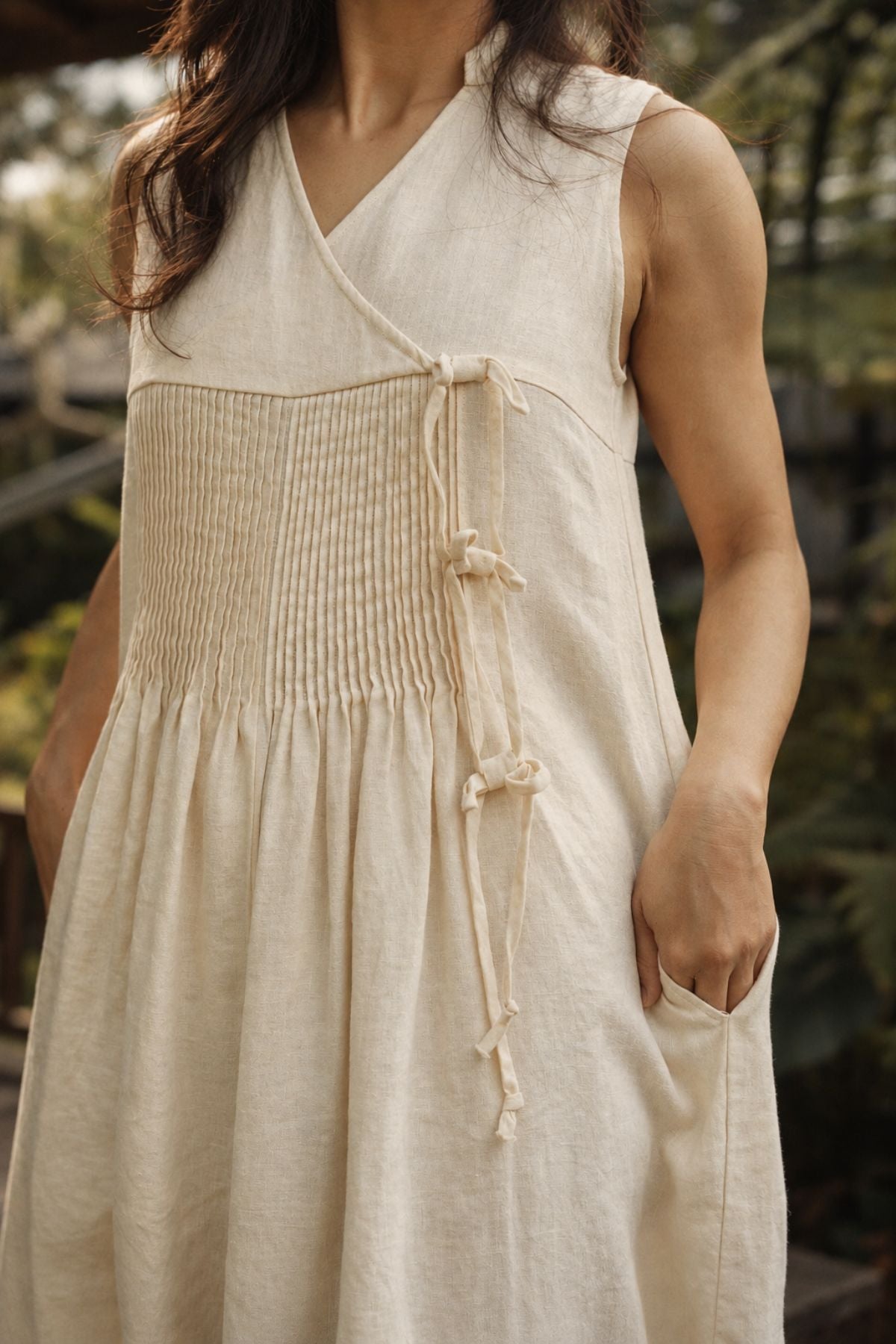
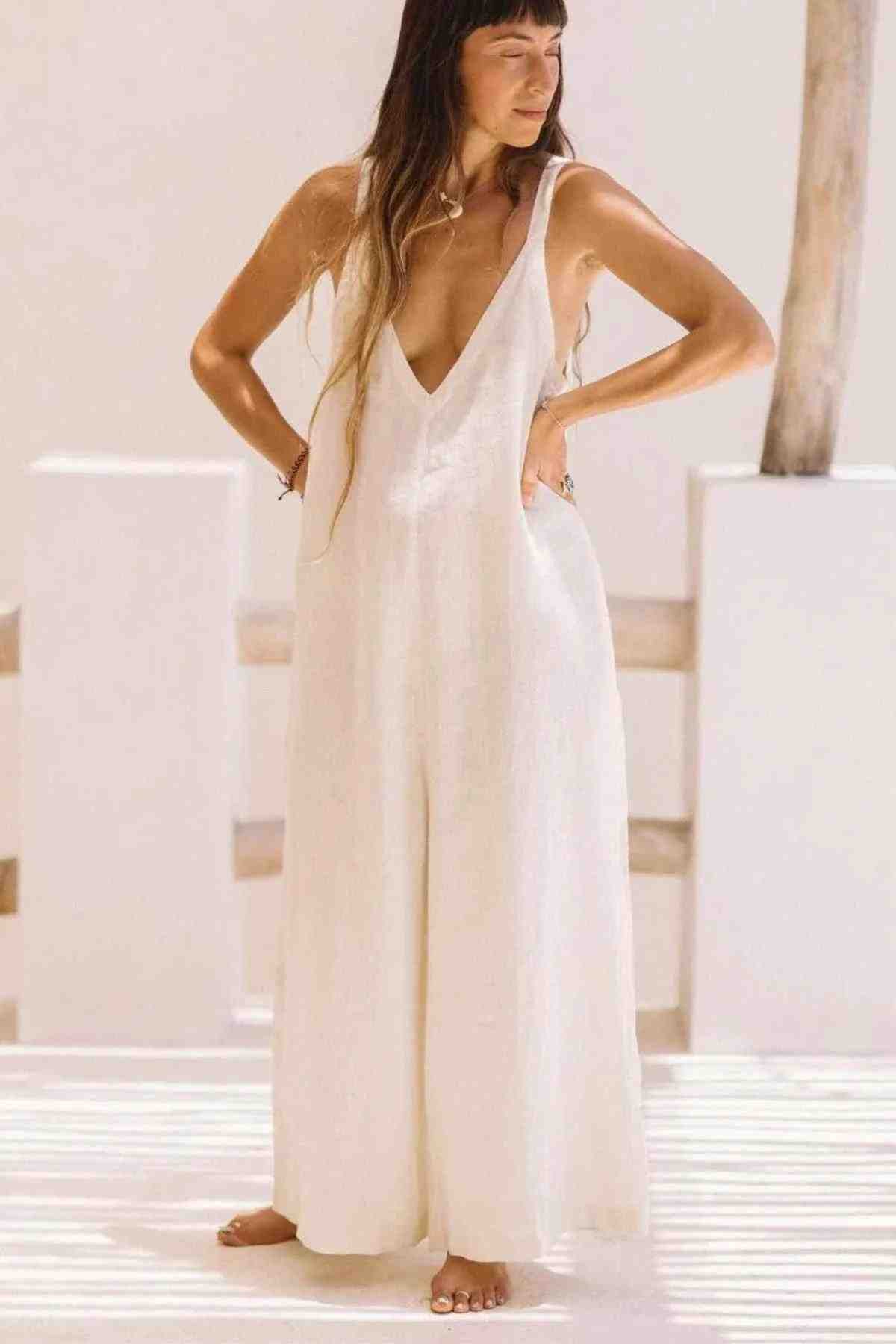
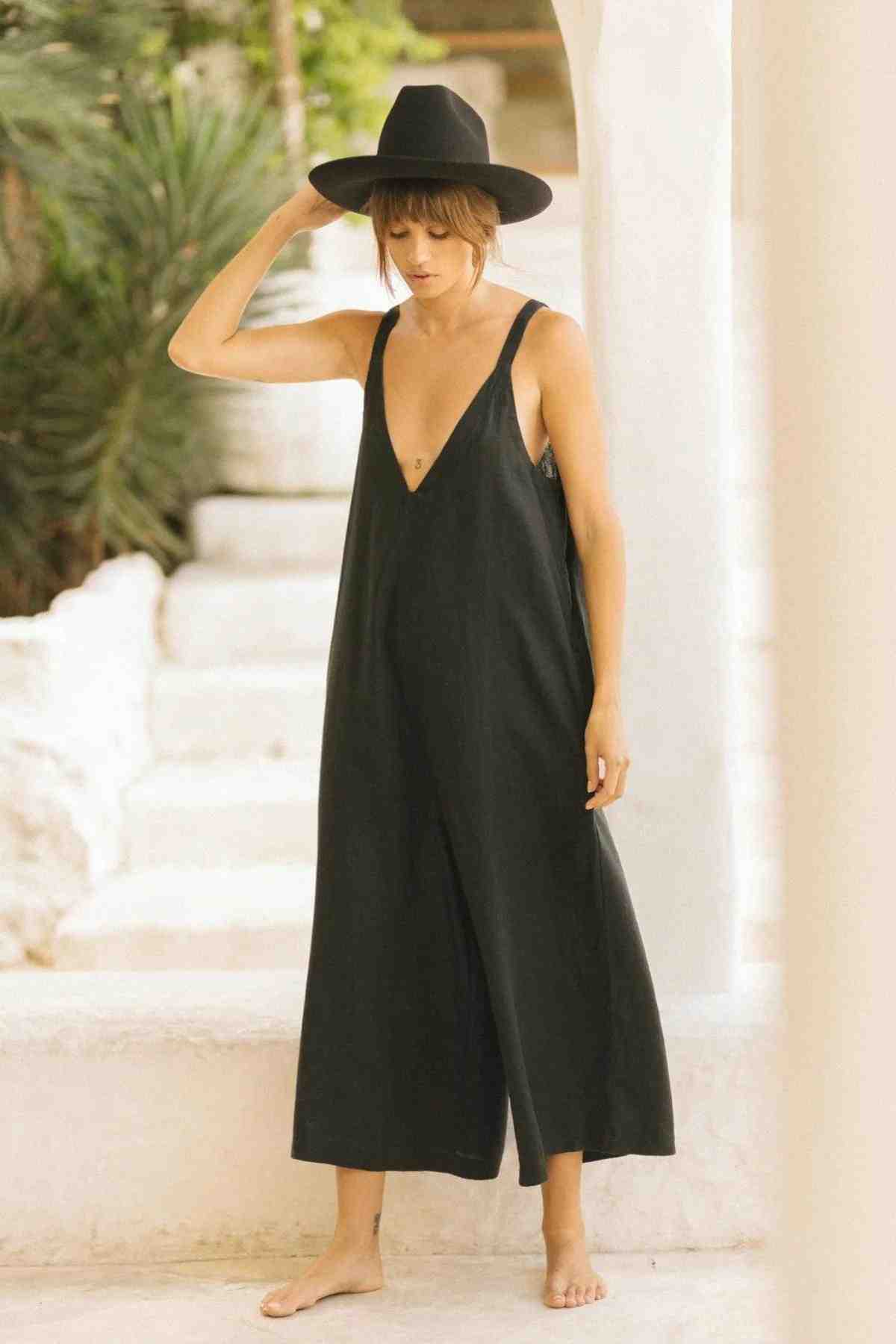
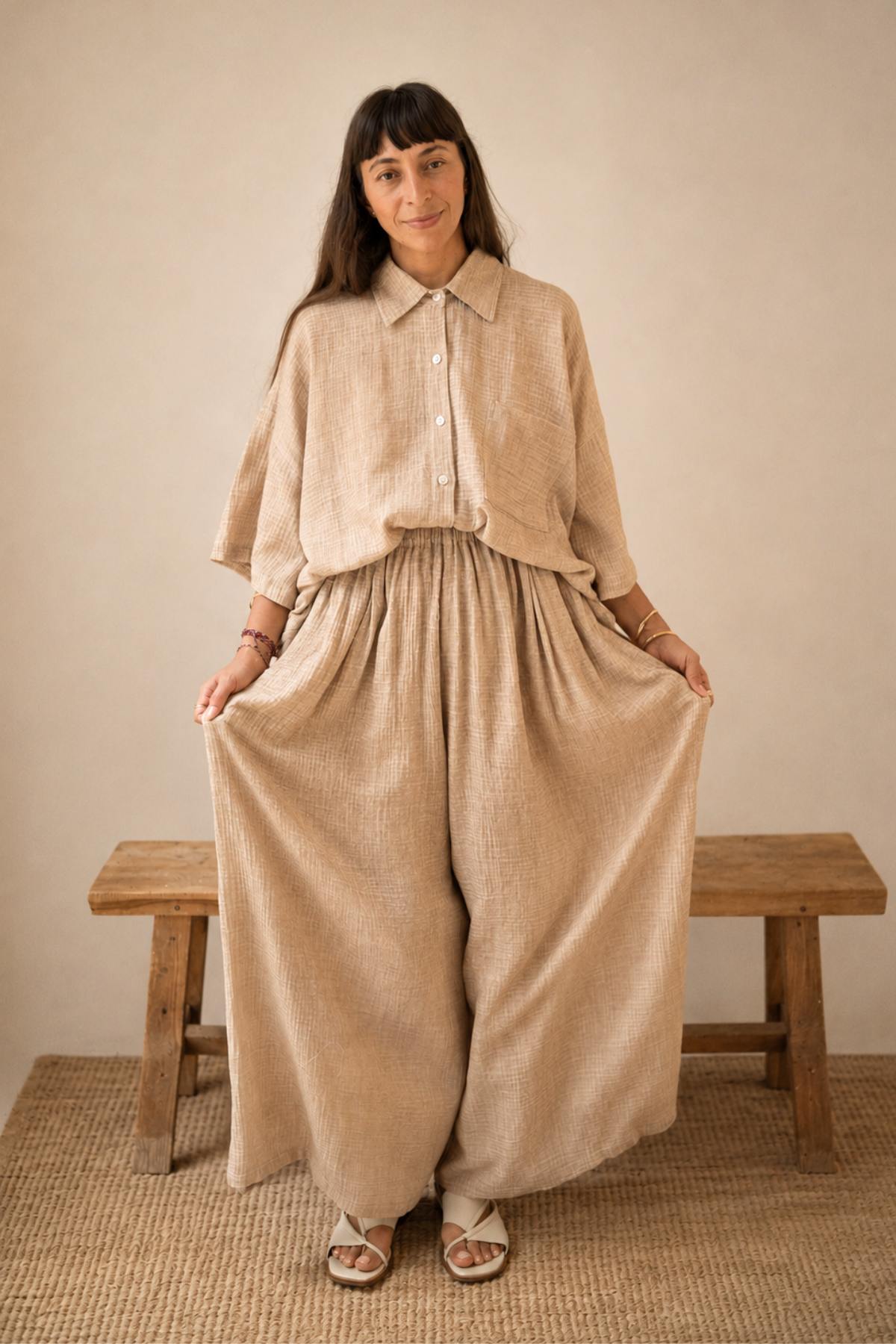
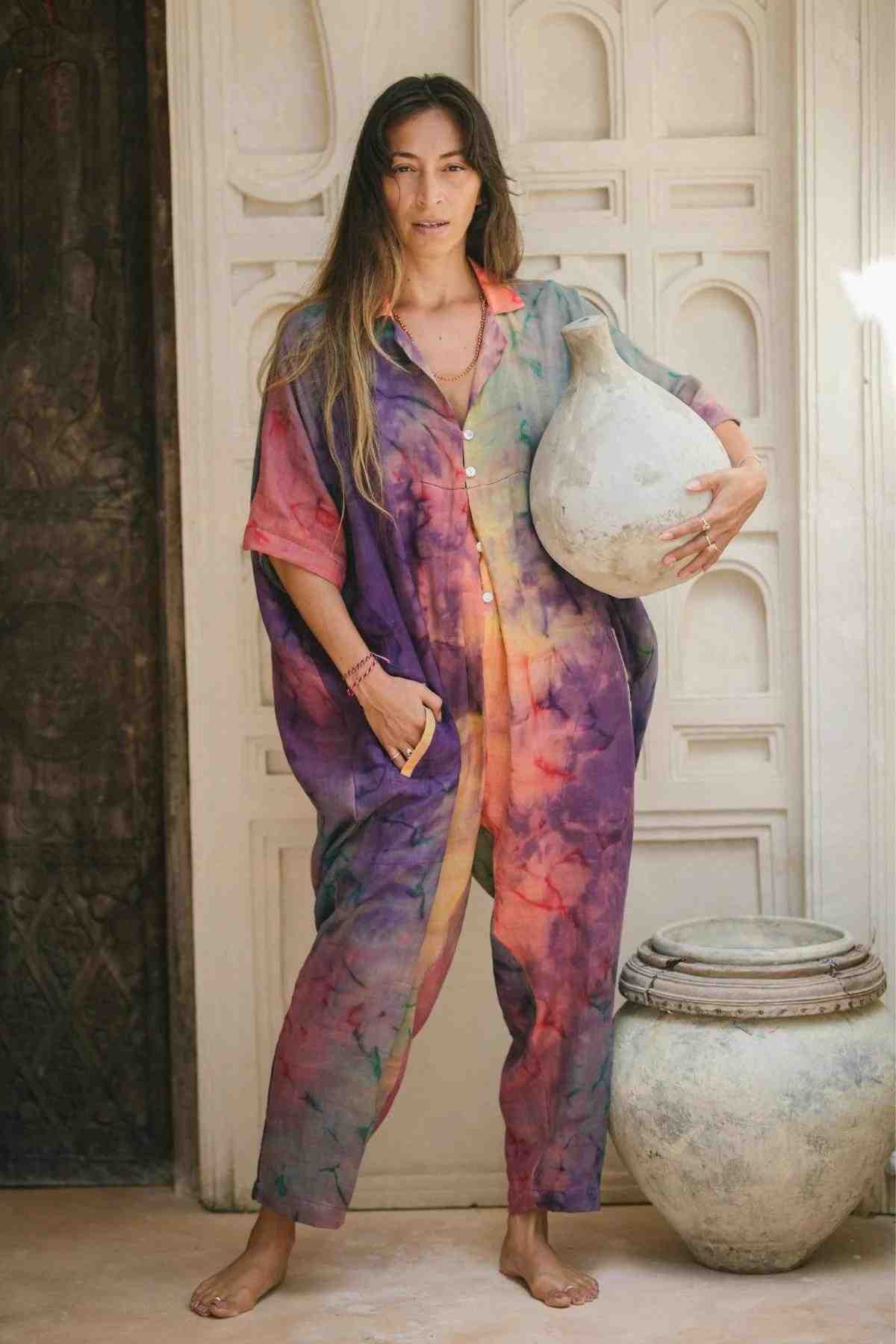
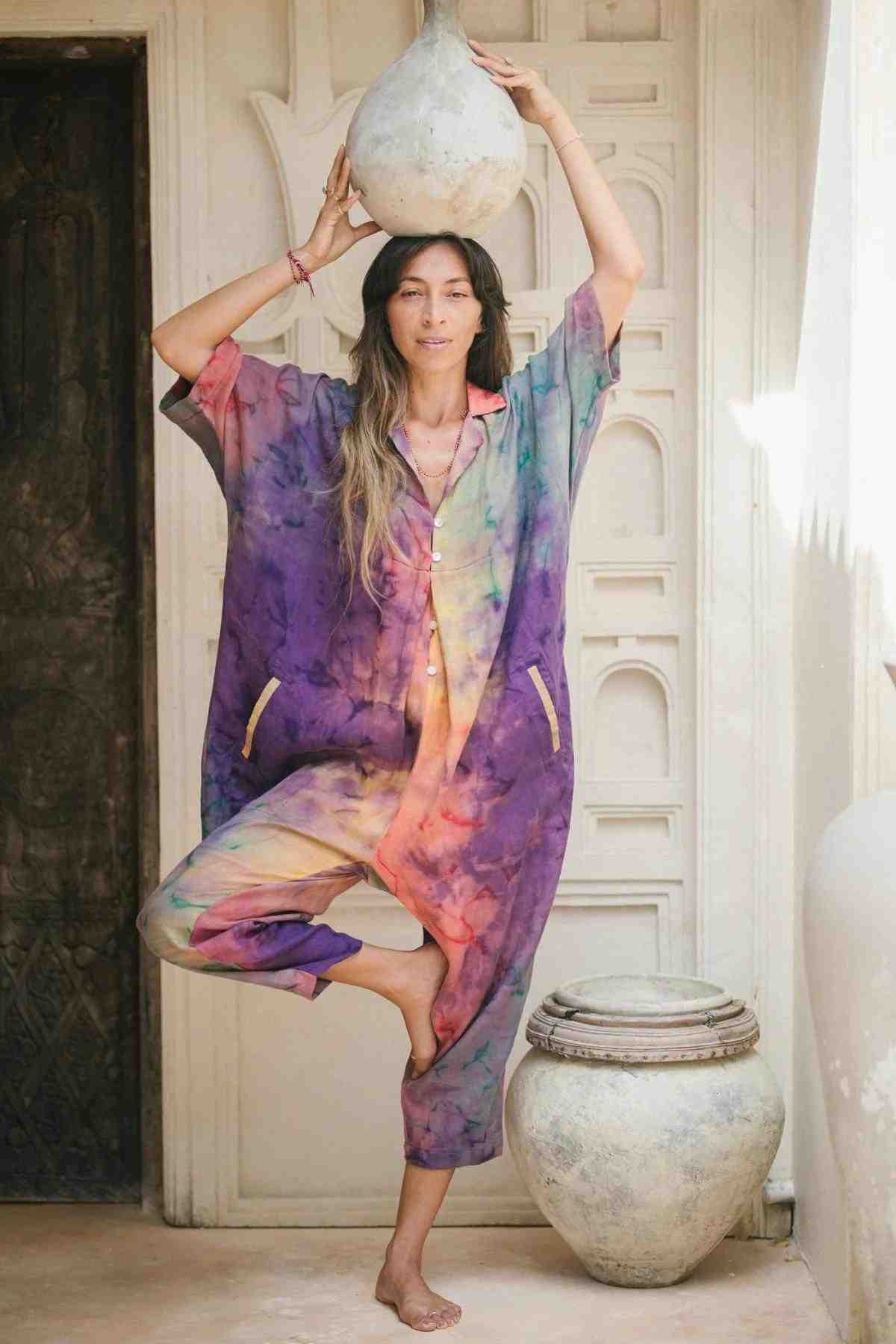
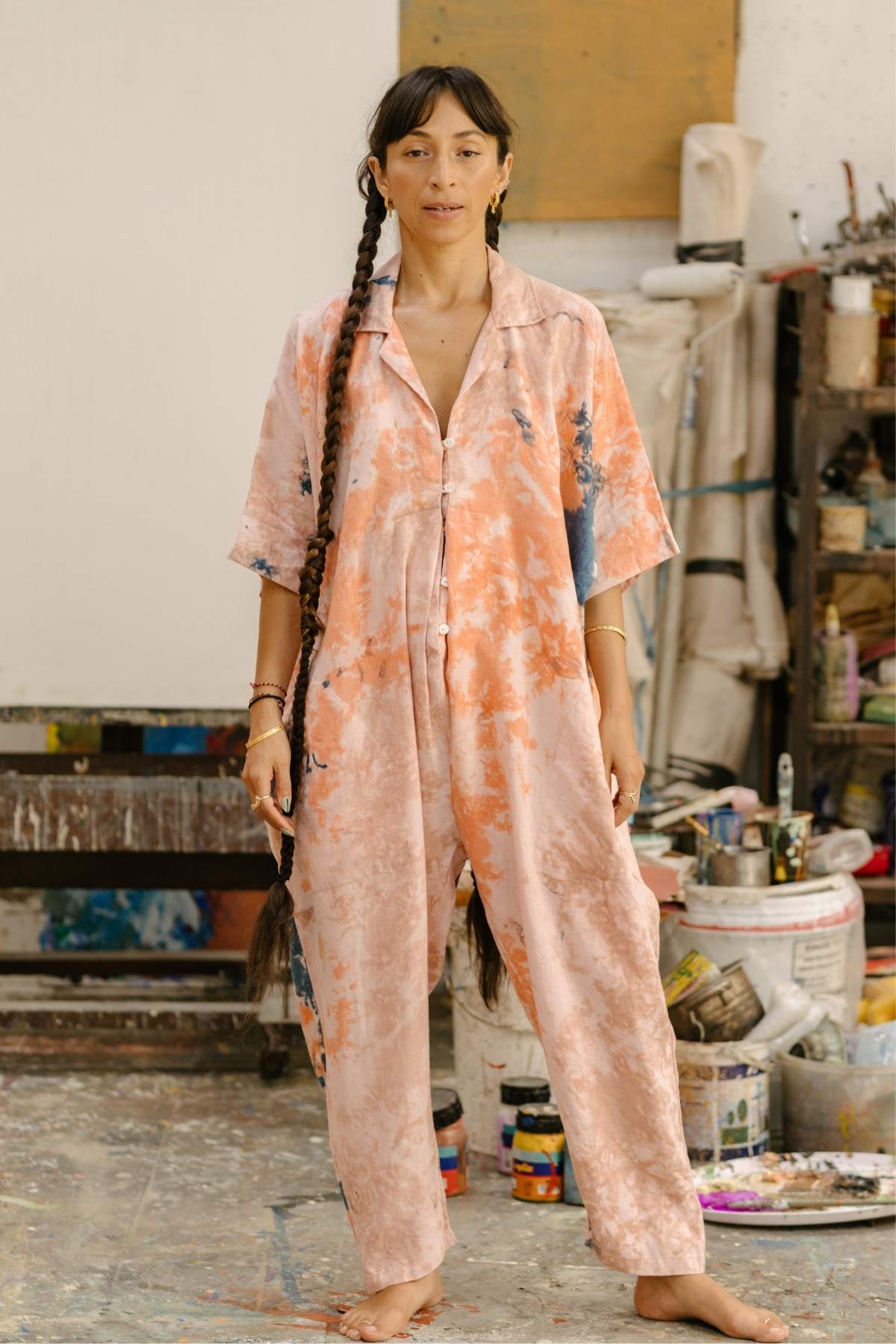
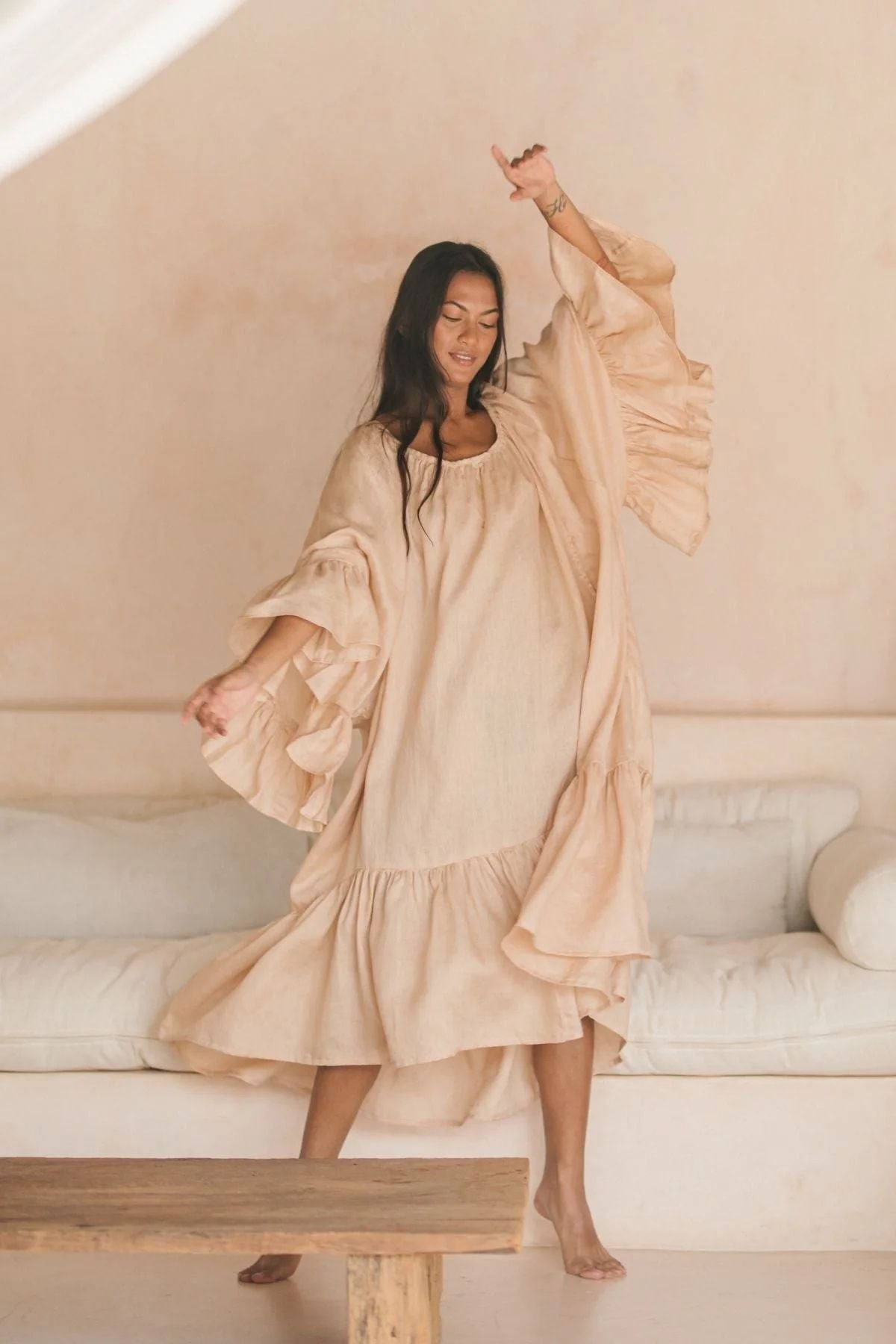
- No waistband. Lying on your back redistributes everything. A waistband that is fine standing up presses into the diaphragm when you are flat, and breath is most of the practice. A gown, a one-piece, or a tie waist you can loosen without sitting up.
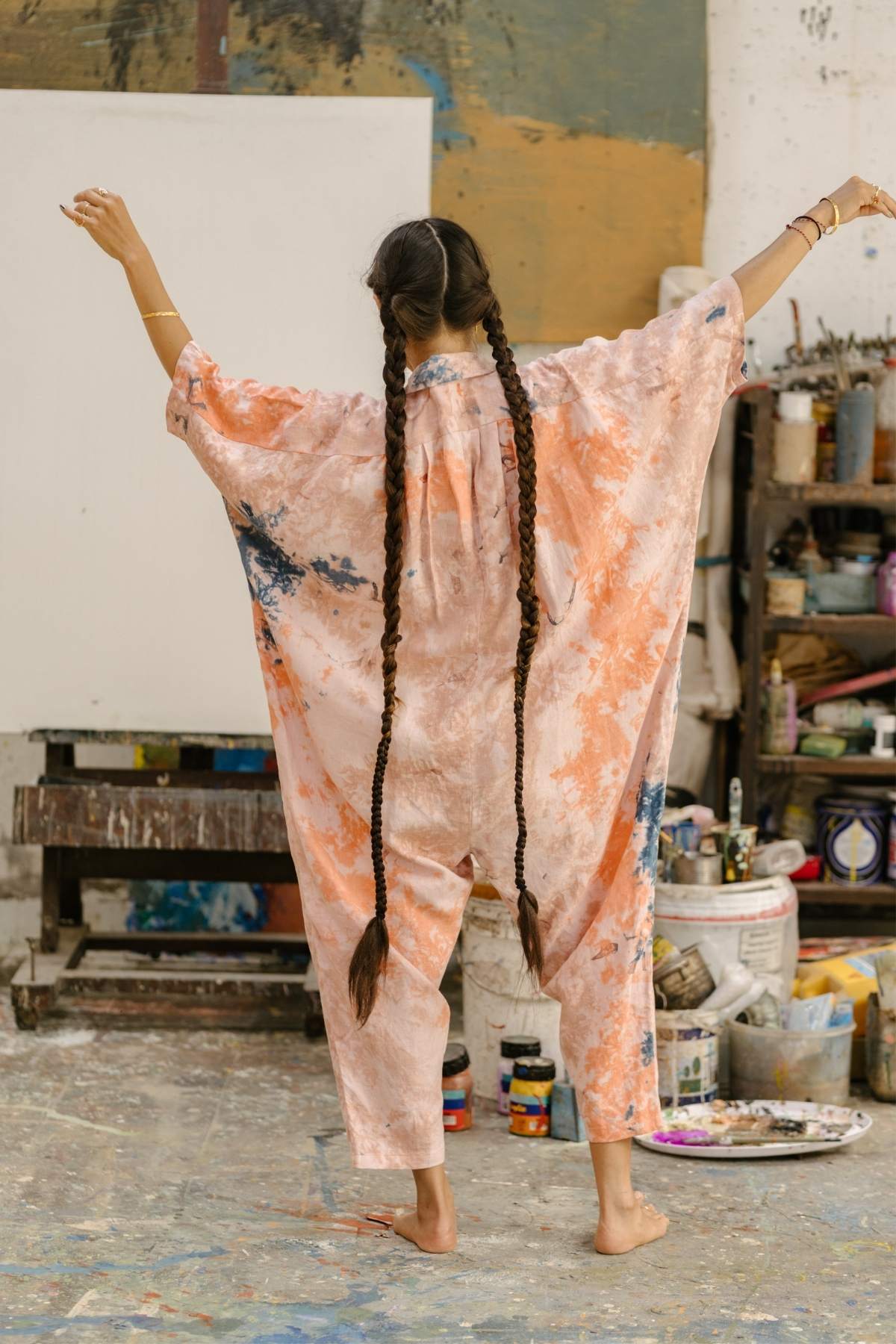
- Nothing structural at the back. Buttons, zips, knots and thick seams all become something you are lying on. You will feel a back seam at minute forty that you did not notice at minute two.
- A fibre that is quiet. Rooms are silent, and synthetics rustle against a mat every time you shift. Linen, cotton and silk move without announcing it.
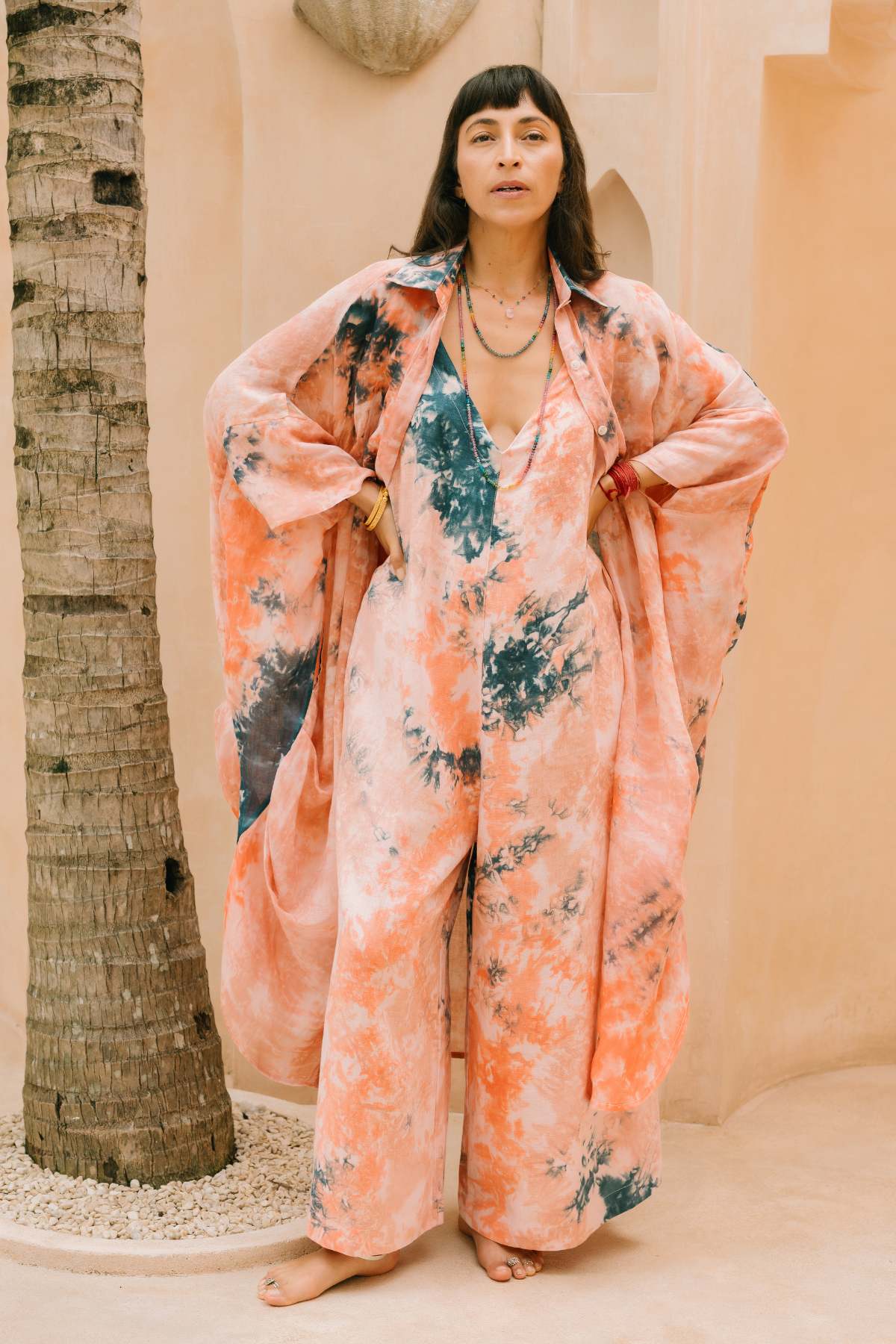
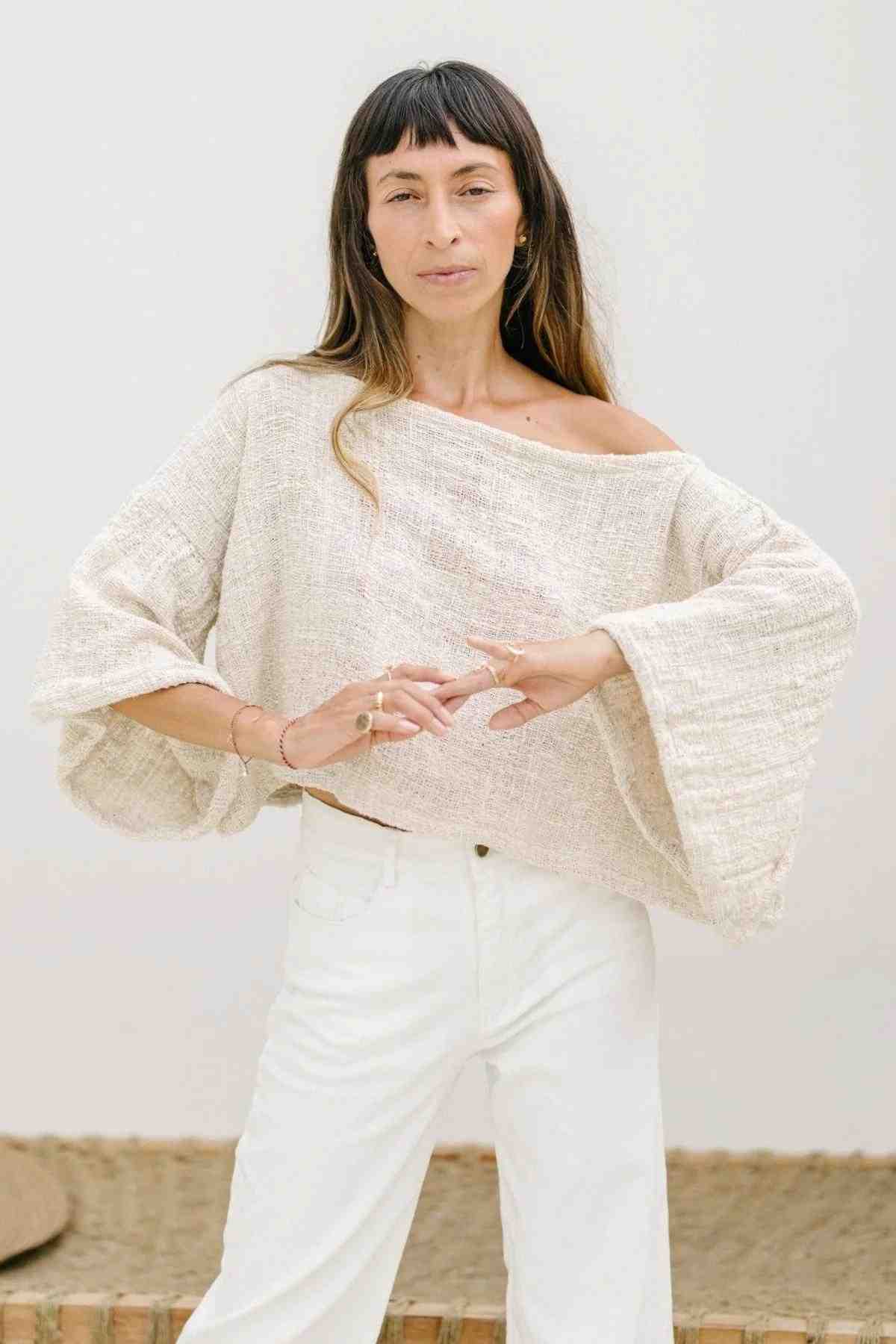
- Layers you can add without standing. An open front, a wrap, a shawl. Something you can pull over yourself with one hand in the dark.
Why do you get cold in a sound bath?
Because you stop generating heat. Ten minutes of stillness and your body is producing a fraction of the warmth it was on the way there, and the ninety minutes that follow are spent losing what is left to the floor and the air. Practitioners hand out blankets for a reason, and there are rarely enough of them.
There is a second thing worth knowing. Many people find that the deepest part of a session is also when they feel coldest, so the layer is not a comfort issue you can push through. Being cold pulls attention straight back into the body at the point you least want it there.
The practical answer is a fibre that handles both directions. Linen absorbs moisture from the walk over and releases it rather than holding it against you, so you are not lying in a damp layer as you cool. And an open-front piece over a base layer means you can adjust without disturbing anyone.
What to wear to each kind of ceremony
| Occasion | What the body is doing | What to wear |
|---|---|---|
| Sound bath or gong bath | Lying still, 60 to 90 minutes, cooling throughout | Loose gown or one-piece, no waistband, plus an open layer |
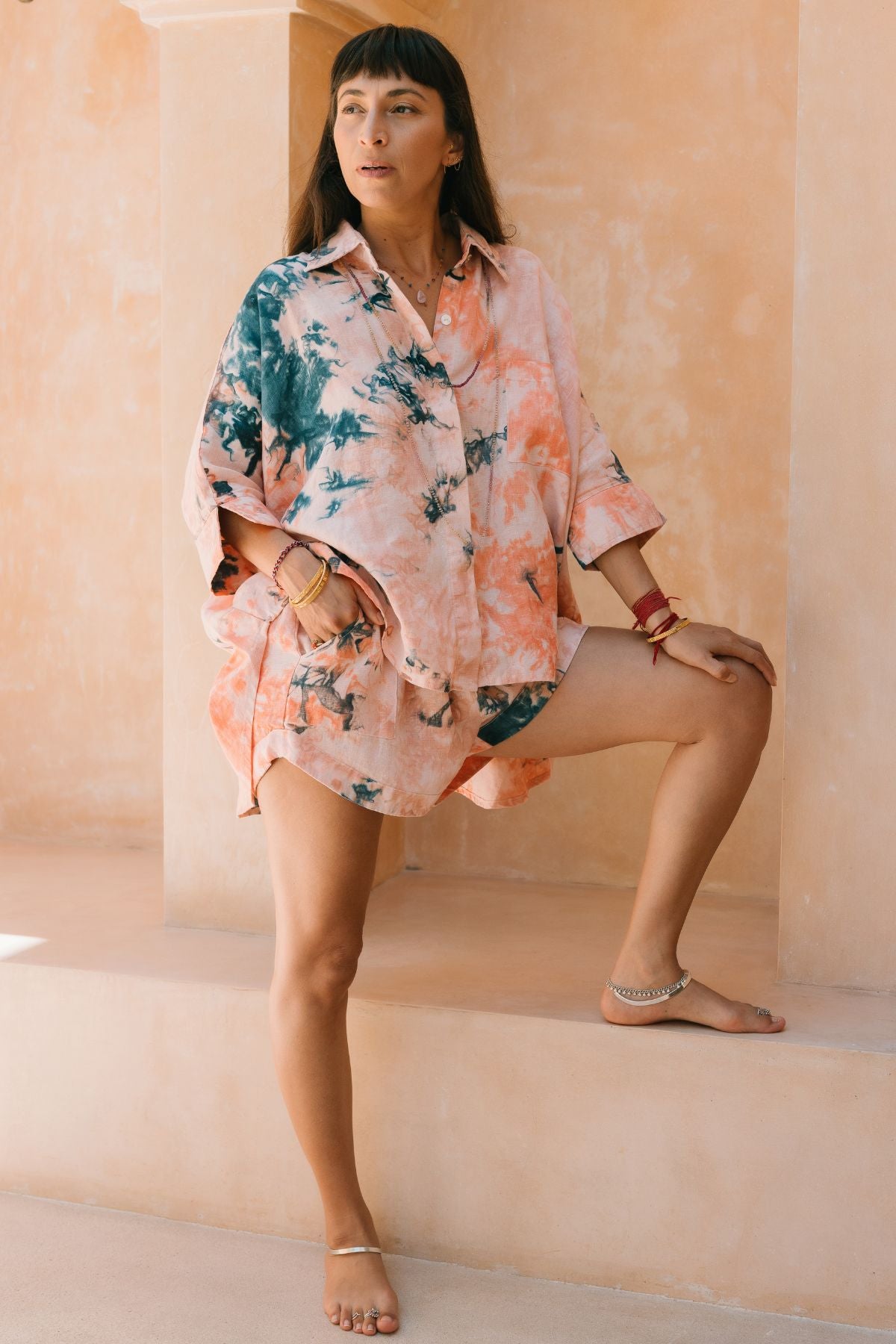
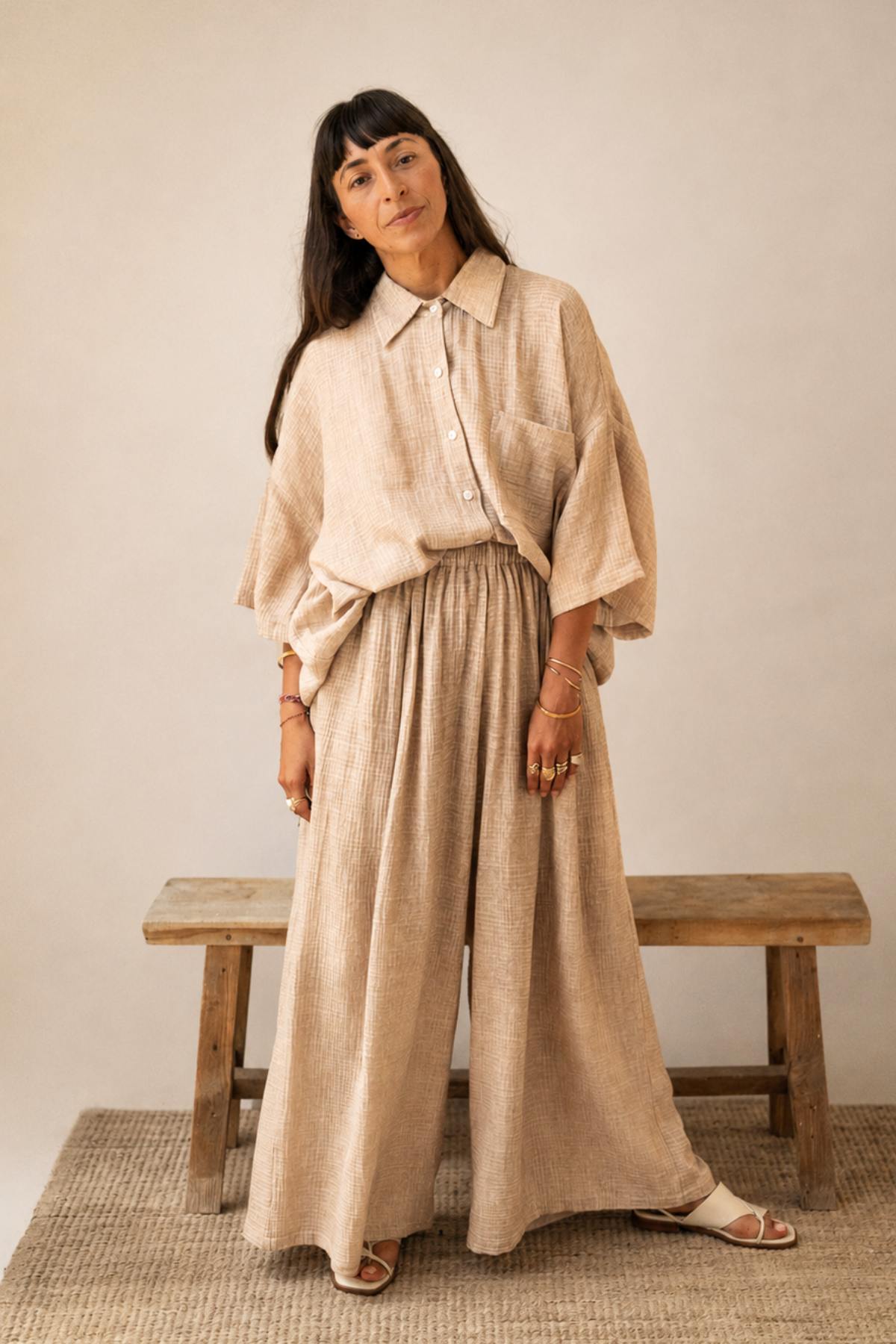
| Cacao ceremony | Seated cross-legged, warm from the cacao, some movement | Wide leg or a full-length piece that gathers comfortably when seated |
| Breathwork | Lying down, chest and belly expanding hard | Nothing across the ribs or waist. A gown is the reliable answer |
| Kirtan or ecstatic dance | Upright, moving, warming up fast | Linen that breathes and a skirt or leg wide enough to move in |
| Tea ceremony | Seated, low table, precise hand movements | Sleeves that stay back from the cup. Narrower at the wrist, loose everywhere else |
What not to wear
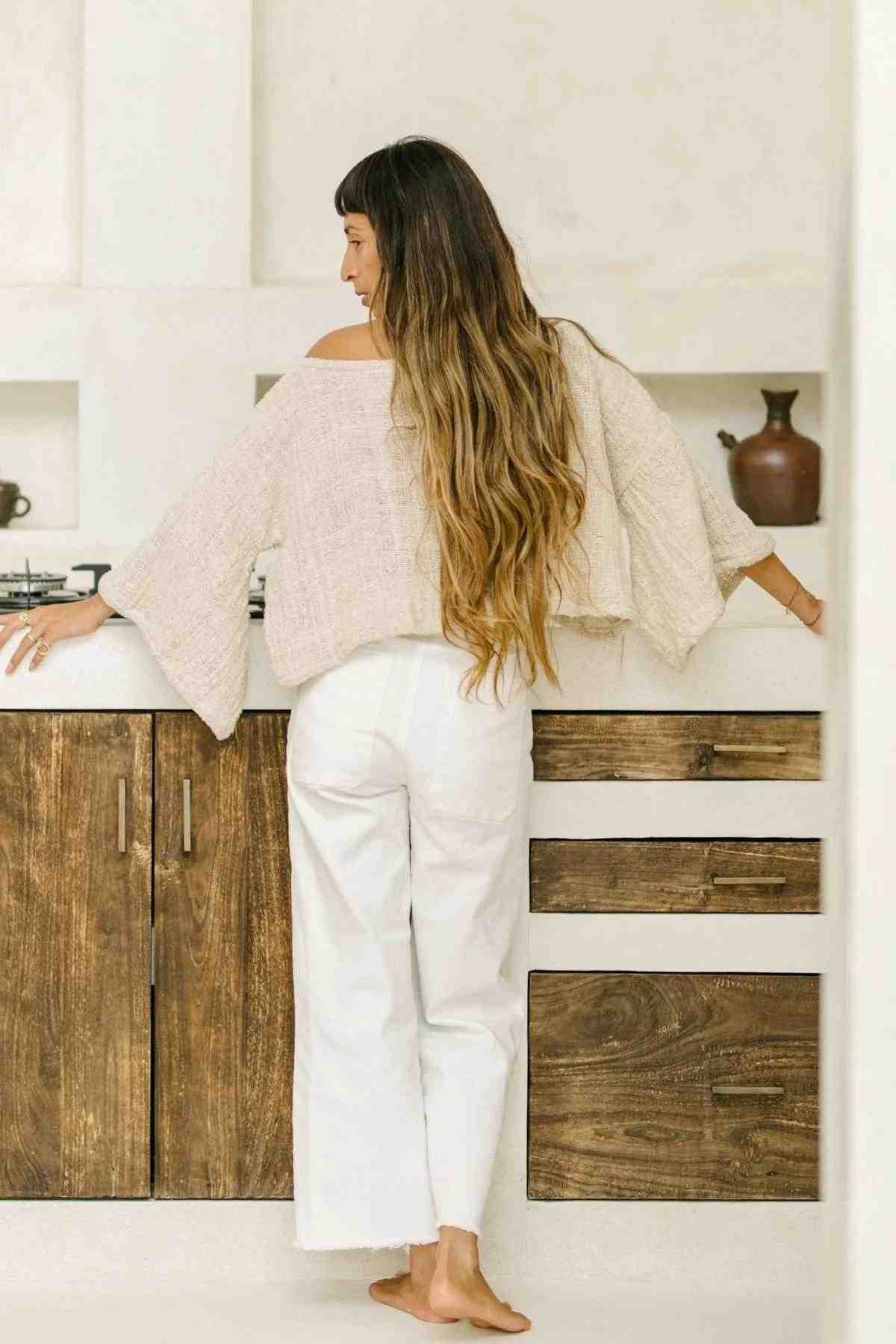
Jeans, in most cases. A rigid waistband and a heavy seam are the two things a lying body is least forgiving of, and denim does not let heat move either way once you are still.
Then anything that makes noise. Nylon and polyester blends against a mat, a jacket with a zip pull that ticks, bangles that shift each time you breathe. In a room built entirely out of sound, you become aware of your own very quickly.
And anything you have to hold in place. A wrap that keeps opening, a strap that slides, a neckline that needs a hand. Every one of those is a small task your attention has to keep returning to.
Why natural fibre matters more here than usual
Because of contact time. Ninety minutes of skin against cloth with almost no movement is a longer, more continuous contact than most of what a garment normally does. Anything that traps moisture traps it for the whole session, and anything that seals against you stays sealed.
Around 95% of what we make is certified sustainably sourced linen and organic cotton, and we do not use polyester. That is not a claim aimed at this occasion in particular. It just happens to matter most in the rooms where you are still for a long time.
Frequently asked questions
What should you wear to a sound bath?
One loose layer in a natural fibre, with no waistband and nothing structural at the back, plus a second layer you can pull over yourself without sitting up. You will be lying on your back and mostly still for an hour or more, so anything that presses on the diaphragm or sits under your spine becomes the thing you notice most.
Why do I get so cold during a sound bath?
Because a still body stops producing heat. Within about ten minutes of lying down you are generating a fraction of the warmth you were on the way there, and you spend the rest of the session losing what remains to the floor and the air. Many people feel coldest during the deepest part of the session, which is exactly when you least want your attention pulled back to your body.
Can I wear jeans to a sound bath?
It is the one thing worth changing out of. A rigid waistband presses into the diaphragm when you are lying flat, and breath is most of the practice. Heavy denim seams also become uncomfortable under the hips and lower back after forty minutes, and denim does not let heat move in either direction once you have stopped moving.
What is the best fabric for a sound bath or ceremony?
Linen first, then cotton, then silk. Contact time is what makes this different from ordinary dressing: ninety minutes of near-motionless skin contact means anything that traps moisture traps it for the whole session. Linen absorbs the moisture from your walk over and releases it rather than holding it against you as you cool. Synthetics also rustle against a mat in a silent room.
Should I bring a blanket or an extra layer?
Bring your own layer even when blankets are provided, because there are rarely enough and they are rarely warm enough. The most useful thing is an open-front piece or a wrap you can pull across yourself with one hand without sitting up or disturbing anyone near you.
What should I wear to a cacao ceremony or breathwork session?
For cacao, something that gathers comfortably when you are seated cross-legged for a long time, such as a wide leg or a full-length piece. For breathwork, nothing across the ribs or waist at all, because the chest and belly expand harder than in any other practice. A loose gown works for both.
Is it appropriate to wear white to a ceremony?
Usually yes, and in many traditions it is the convention rather than the exception. Ask the facilitator if you are unsure, since some lineages have specific expectations and most are happy to be asked. The practical caution is that you will be lying on a floor, so a colour that shows every mark will occupy some of your attention.
Do I need to buy something specific for a sound bath?
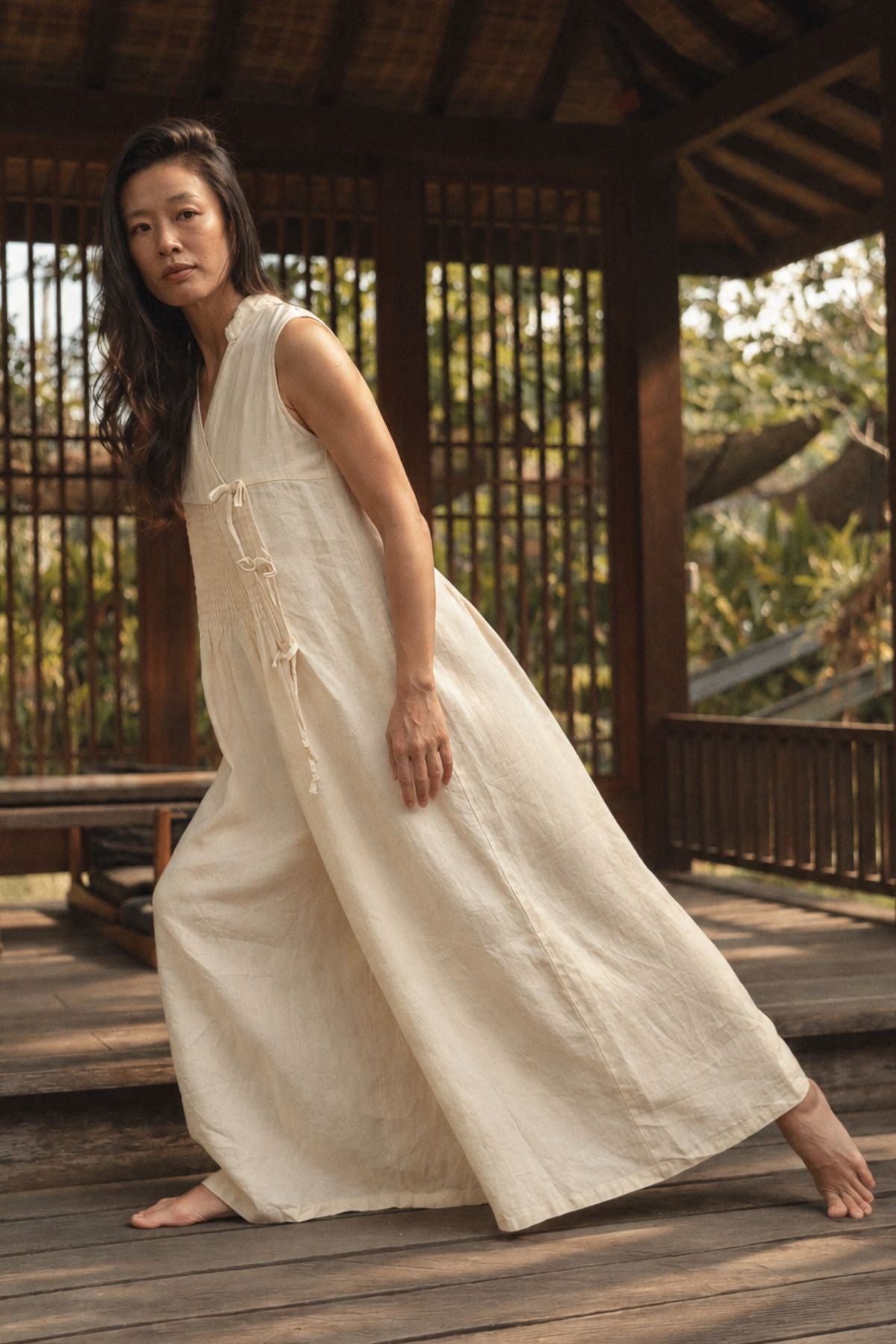
No. If you own one loose natural-fibre piece with no waistband, you are dressed. The reason a gown gets recommended is that it solves the waistband, the back seam and the seated-versus-lying problem in one garment, but a soft wide-leg trouser and a loose top do the same job.
With love from Bali,
Myrah
|
For The Room You Lie Down In The Dharma Gown. Shop the Dharma Gown → |
|
The Muse-Letter Dress for the woman you're becoming. Join the Muse-LetterUnsubscribe any time. No spam, ever. |




Leave a comment
This site is protected by hCaptcha and the hCaptcha Privacy Policy and Terms of Service apply.