Ethical Handmade Clothing
Ethical handmade clothing is clothing cut and sewn by a named person who is paid a living wage, made from a fibre the brand will name specifically, in batches small enough that the brand can tell you who made yours. Almost every brand now uses the word. Very few will answer those three questions, and the three questions are the whole test.
The word handmade has been stretched to cover everything from a garment sewn start to finish by one pair of hands to a factory piece with a hand stitched hem added at the end. Ethical has been stretched further still. Neither word is regulated. If you are trying to shop this category with your eyes open, the adjectives will not help you. The specifics will, and the specifics are easy to ask for.

Handmade, hand finished, or mass produced: what the words actually mean
These three get used interchangeably in marketing copy and they describe completely different things. Here is the honest distinction.
| Handmade | Hand finished | Mass produced | |
|---|---|---|---|
| Who constructs it | A person, start to finish | A machine line | A machine line |
| What the hand does | Cuts, sews, finishes | Adds a detail at the end | Nothing |
| Typical batch | Tens | Thousands | Tens of thousands |
| Variation between pieces | Visible and expected | Minimal | None by design |
| Can they name the maker | Usually yes | Rarely | No |
| Wait time | Weeks | In stock | In stock |
Hand finished is not dishonest. It is a real category and some lovely clothes come out of it. It is simply not the same claim, and a brand that means it will tell you which one applies without being pushed.
The four things to check before you buy
One, the fibre, named specifically. Sustainable is not a fibre. Linen, silk, organic cotton and bamboo rayon are fibres. If the label says eco blend or conscious fabric and will not break down the percentage, that is usually because a synthetic is in there. Ask for the composition. Around ninety five percent of what we make is certified linen or organic cotton, and where a piece is not one hundred percent of a single fibre, such as the small amount of elastane in our jeans, the composition says so.
Two, who sews it, and where. Made in should be a place you can point to on a map, not a region. Ours is Bali, by thirty artisan families, most of them working from their own homes or their own small workshops, several of whom have been making with us since before the brand had a name anyone recognised.
Three, batch size and wait time. A brand making things by hand cannot also have everything in stock in every size forever. If it does, something else is happening. Ours are made in small batches, most pieces ship in three to six weeks, and a botanical dye run takes seven days to dye alone and never repeats exactly.
Four, wages, stated as a fact. Not empowering, not supporting, not partnering with. Paid a living wage, said plainly. Vague verbs are doing work in that sentence for a reason when a brand chooses them.
What the certifications actually cover
Two turn up constantly in this category and they are worth understanding, because they certify different things and neither certifies everything.
OEKO-TEX Standard 100 tests the finished fabric for harmful substances, including chemicals that are not yet legally regulated. It tells you what is not in the cloth against your skin. It says nothing about who sewed it or what they were paid. Every linen piece we make carries it.
European Flax certifies origin and growing method: flax grown in Western Europe, in France, Belgium or the Netherlands, without irrigation, GMOs or waste, with traceability from field to fabric. Our lighter linen colourways, the off white, clay and natural, carry it. Again, it is an agricultural certification, not a labour one.
Neither is a labour certification, which is why the wage question has to be asked separately and answered in words rather than logos.
Where to buy ethical handmade clothing, by piece
Once you know what to look for, the practical question is what to actually buy. These are ours, with real prices and what they are made of, so you can compare them against anything else you are considering.

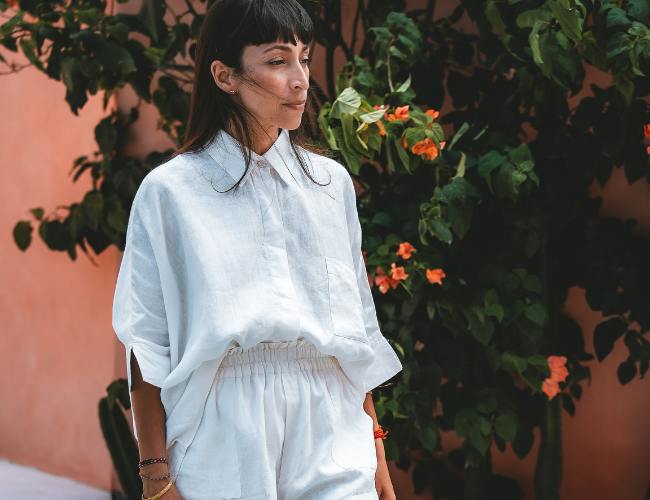
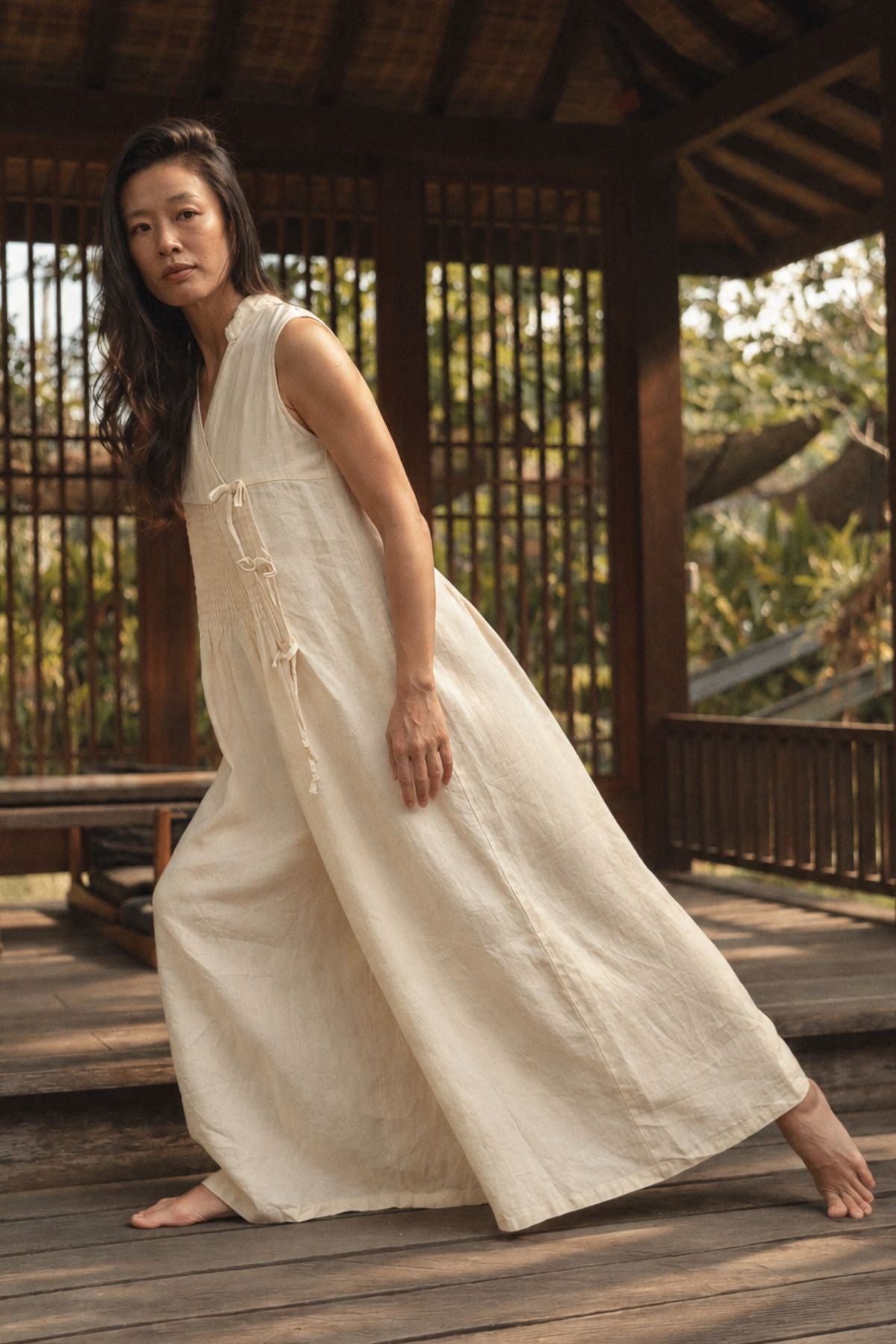
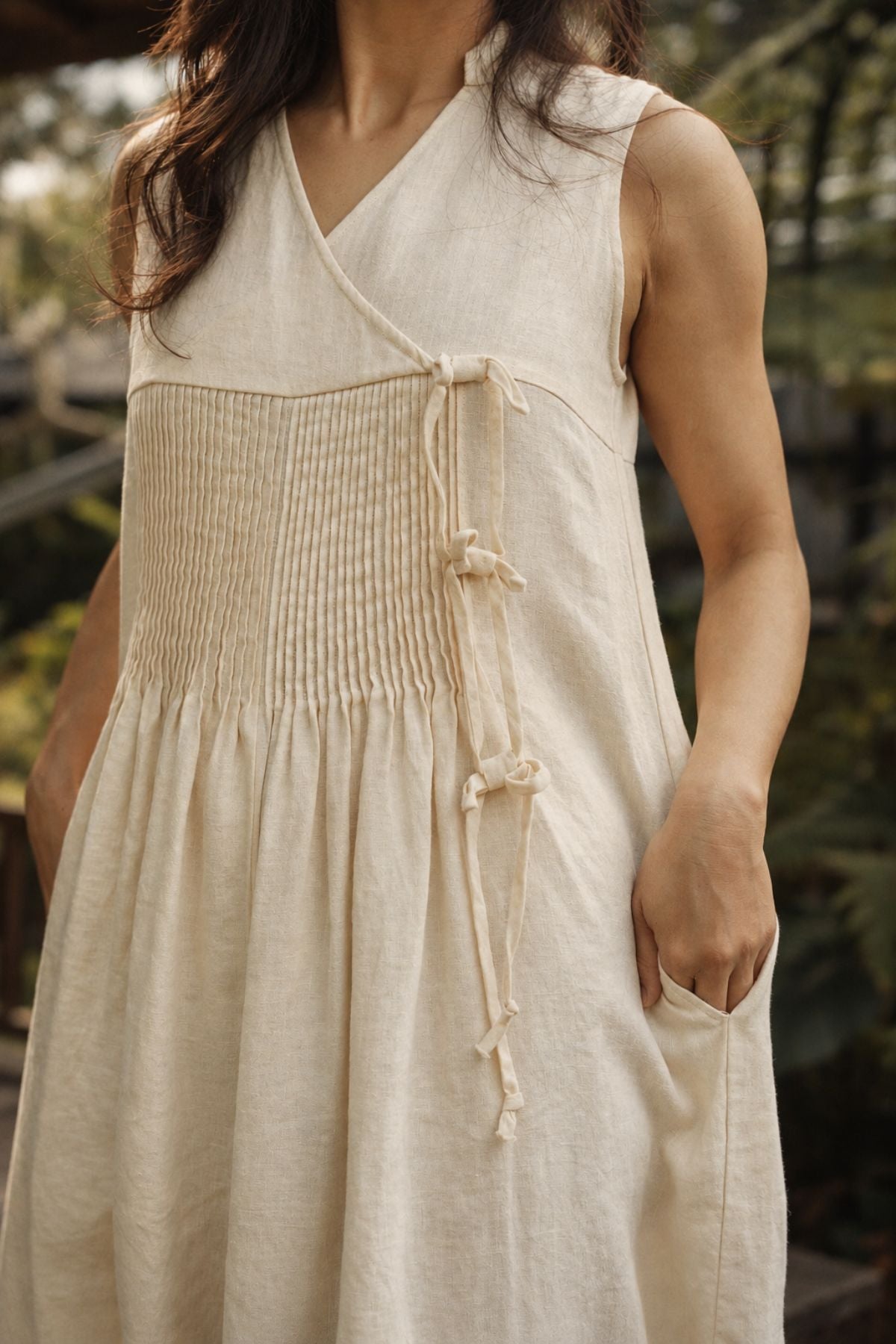
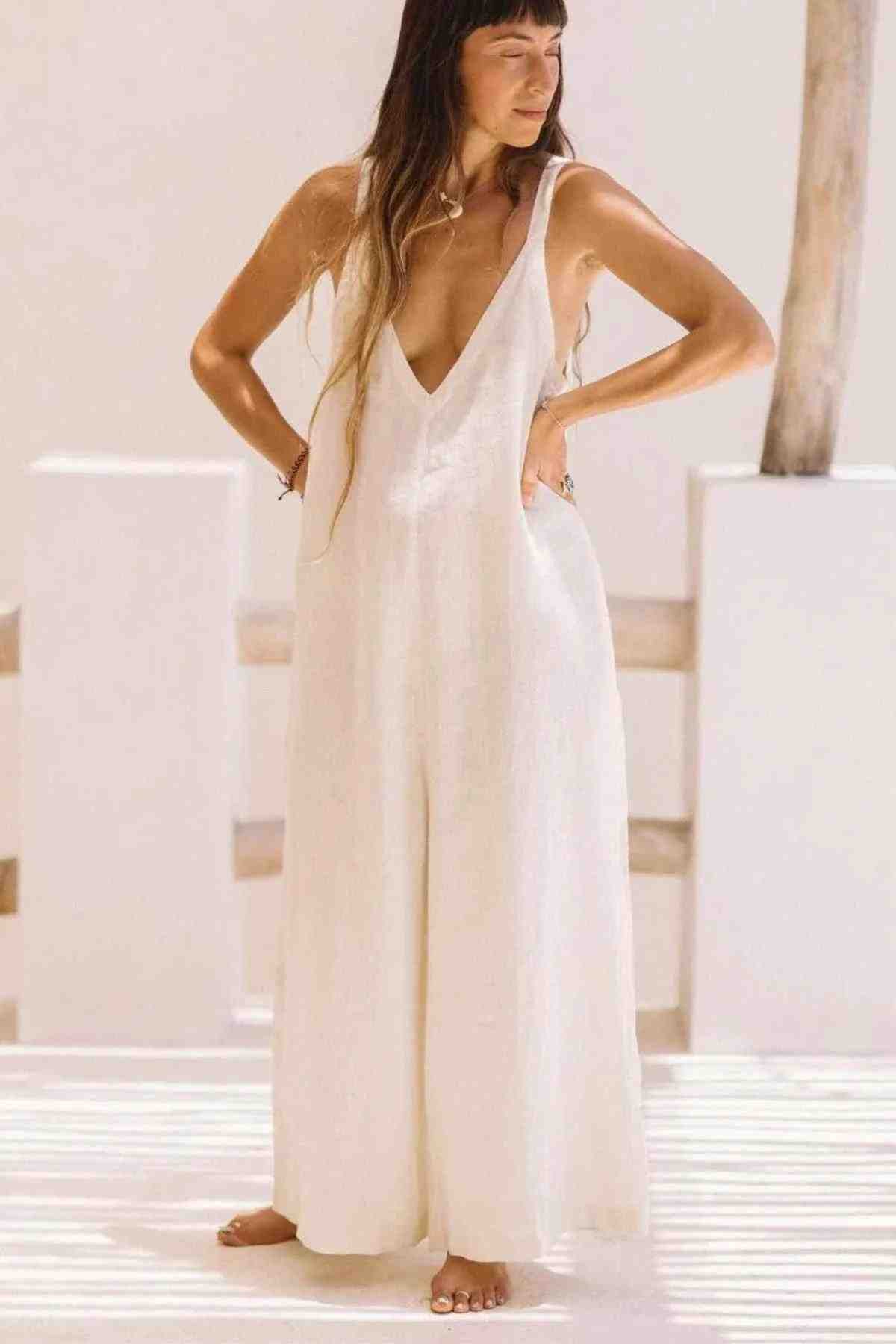
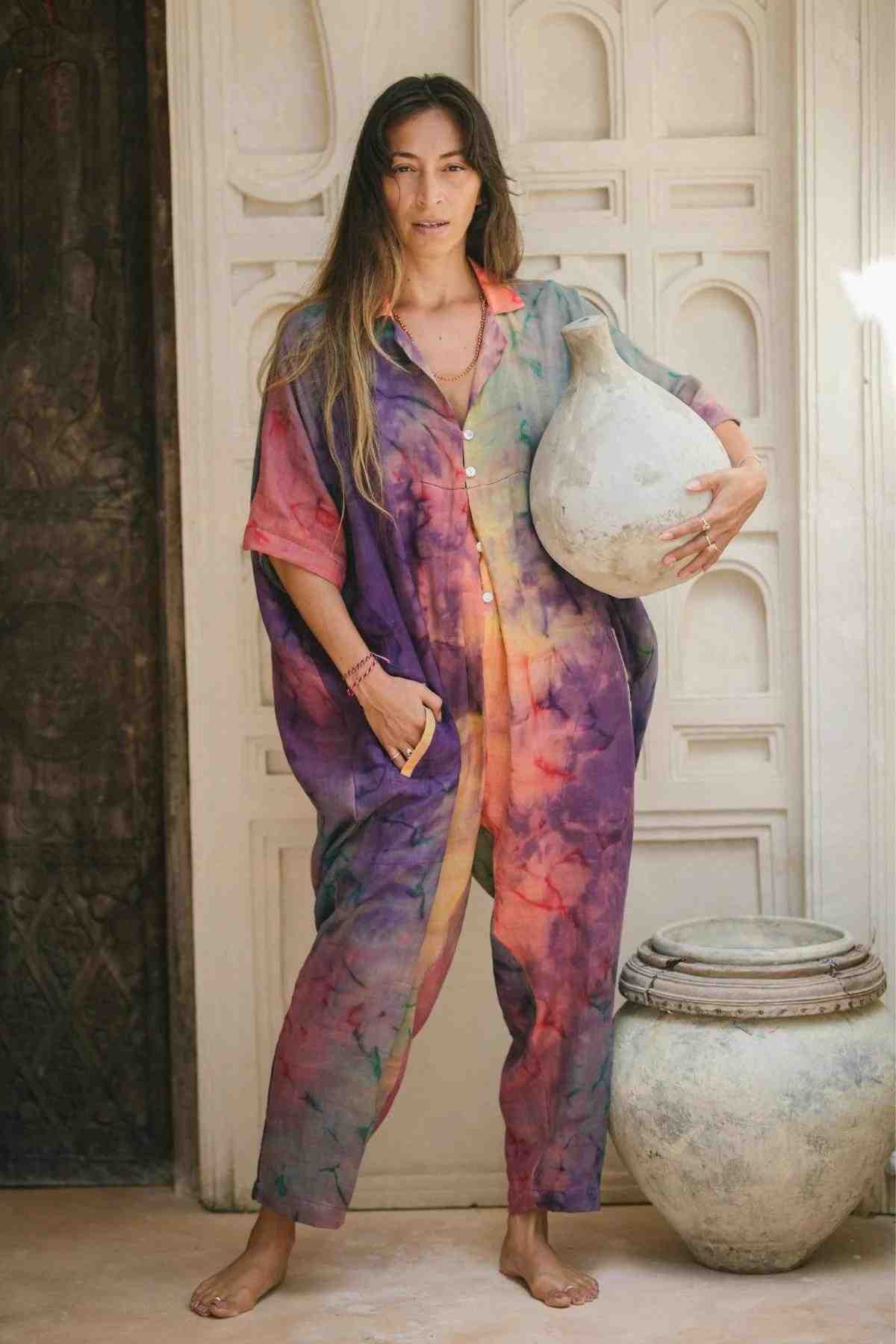
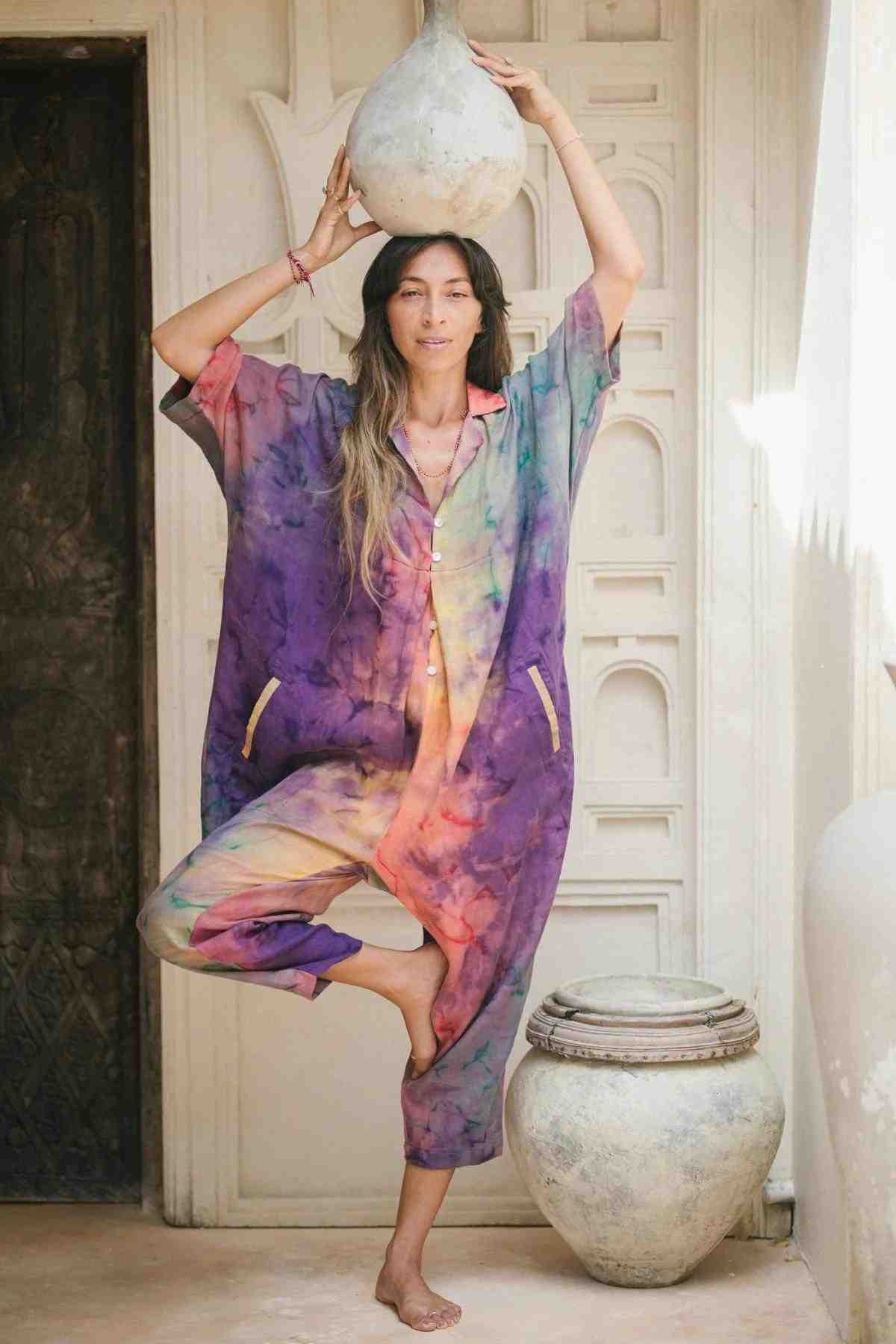
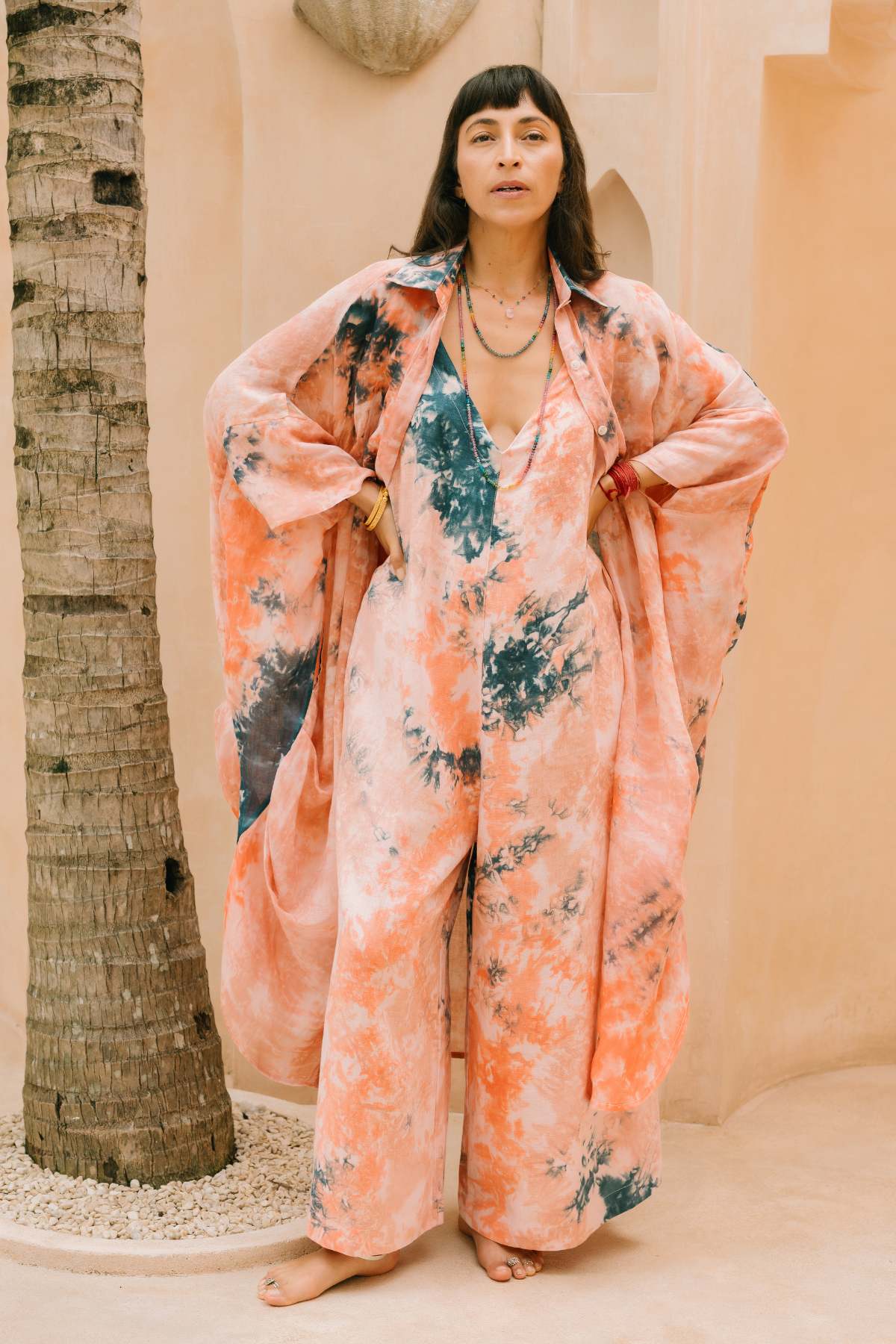
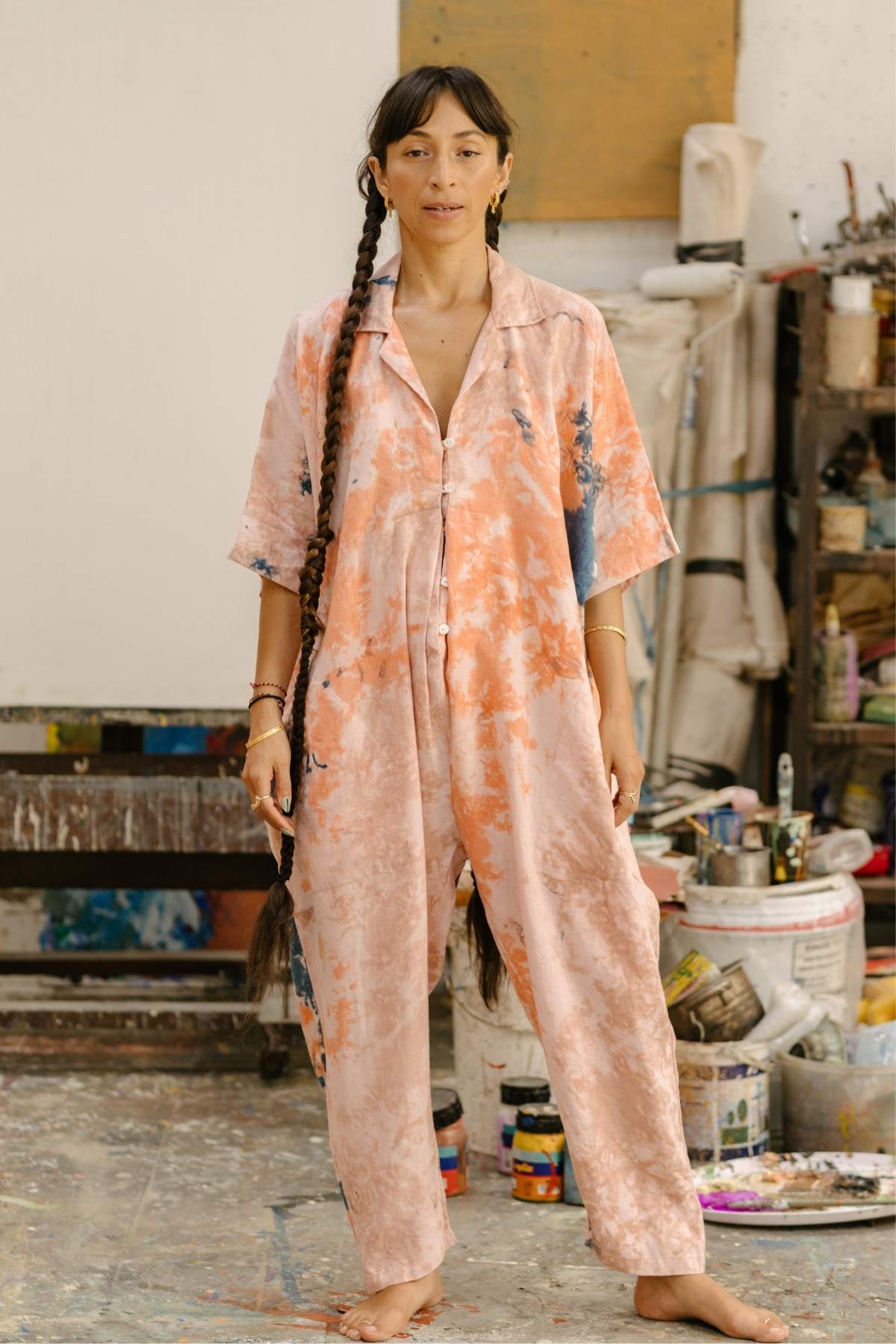
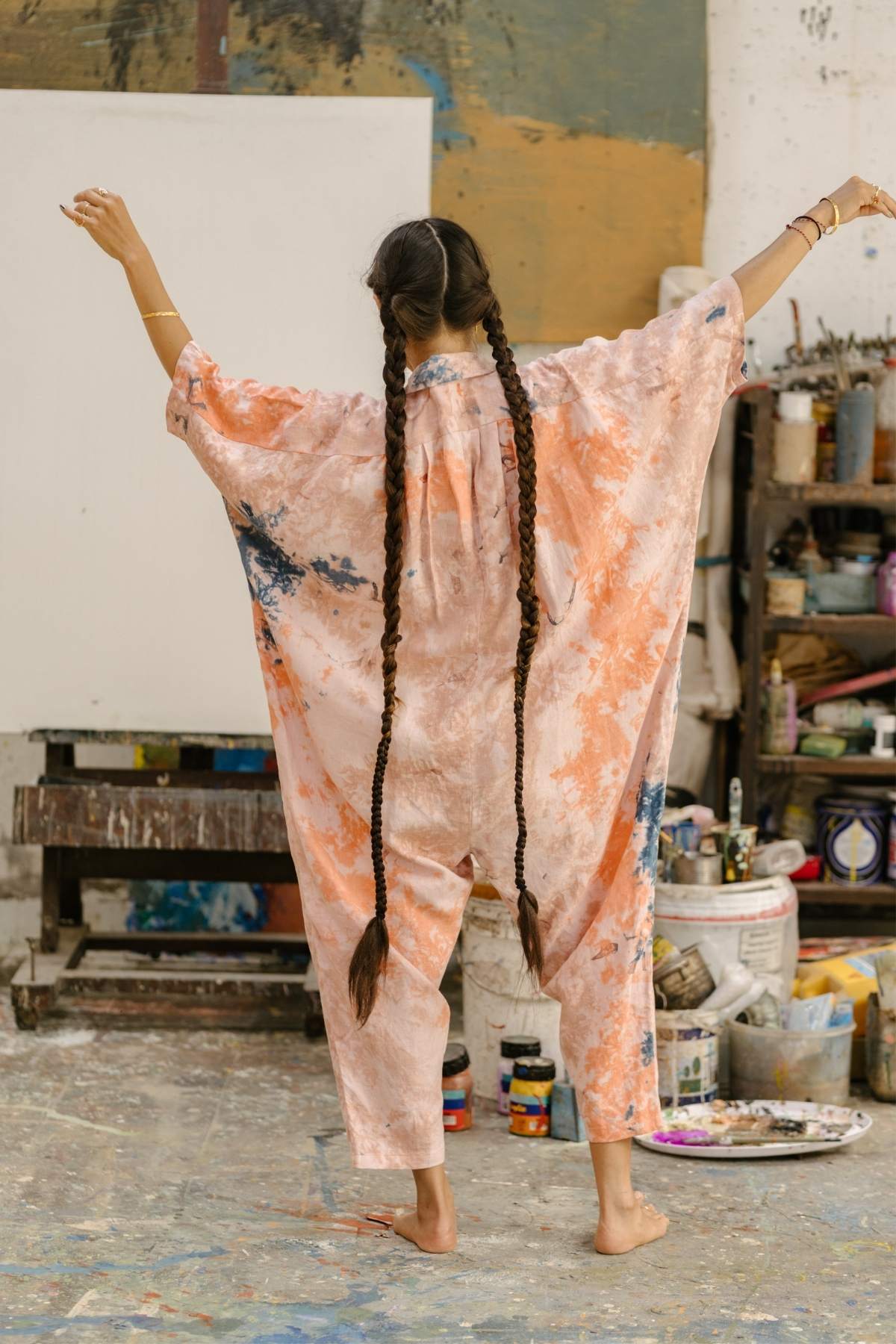
One hundred percent linen, handmade in Bali. One piece, on in seconds, no coordinating required. The piece the brand was built around and still the one most often bought in a second colourway.

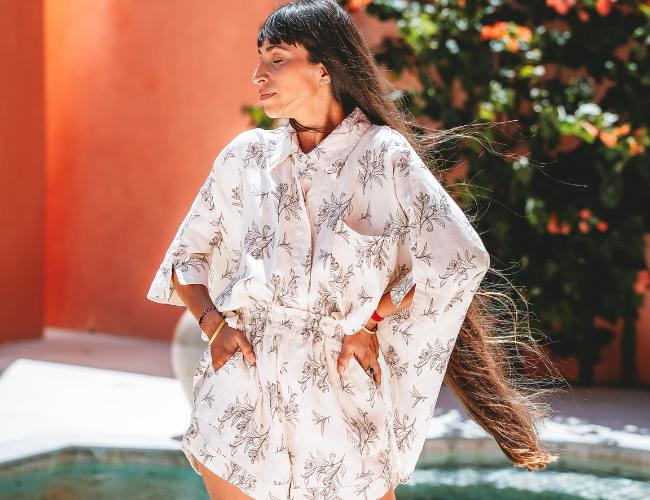
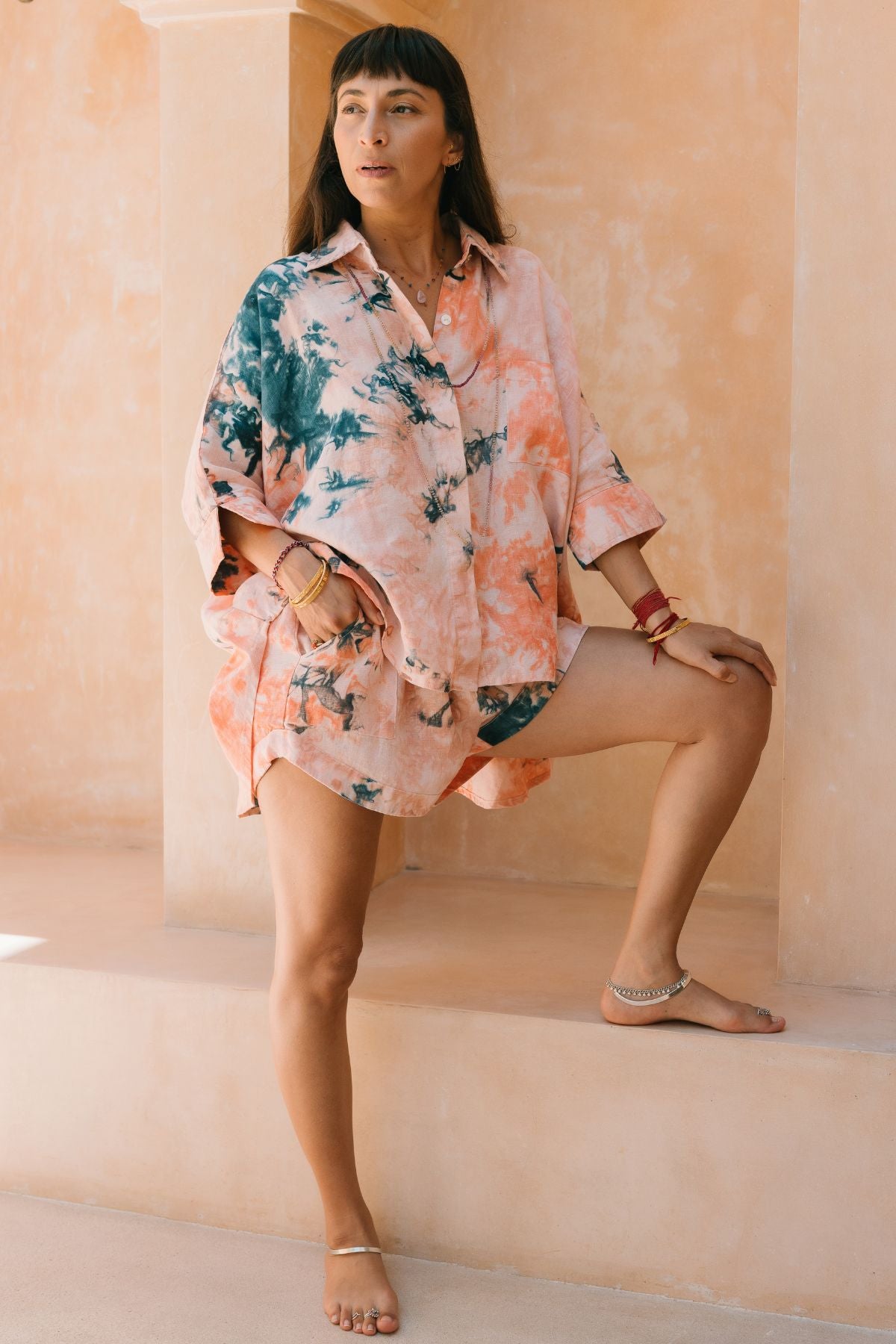
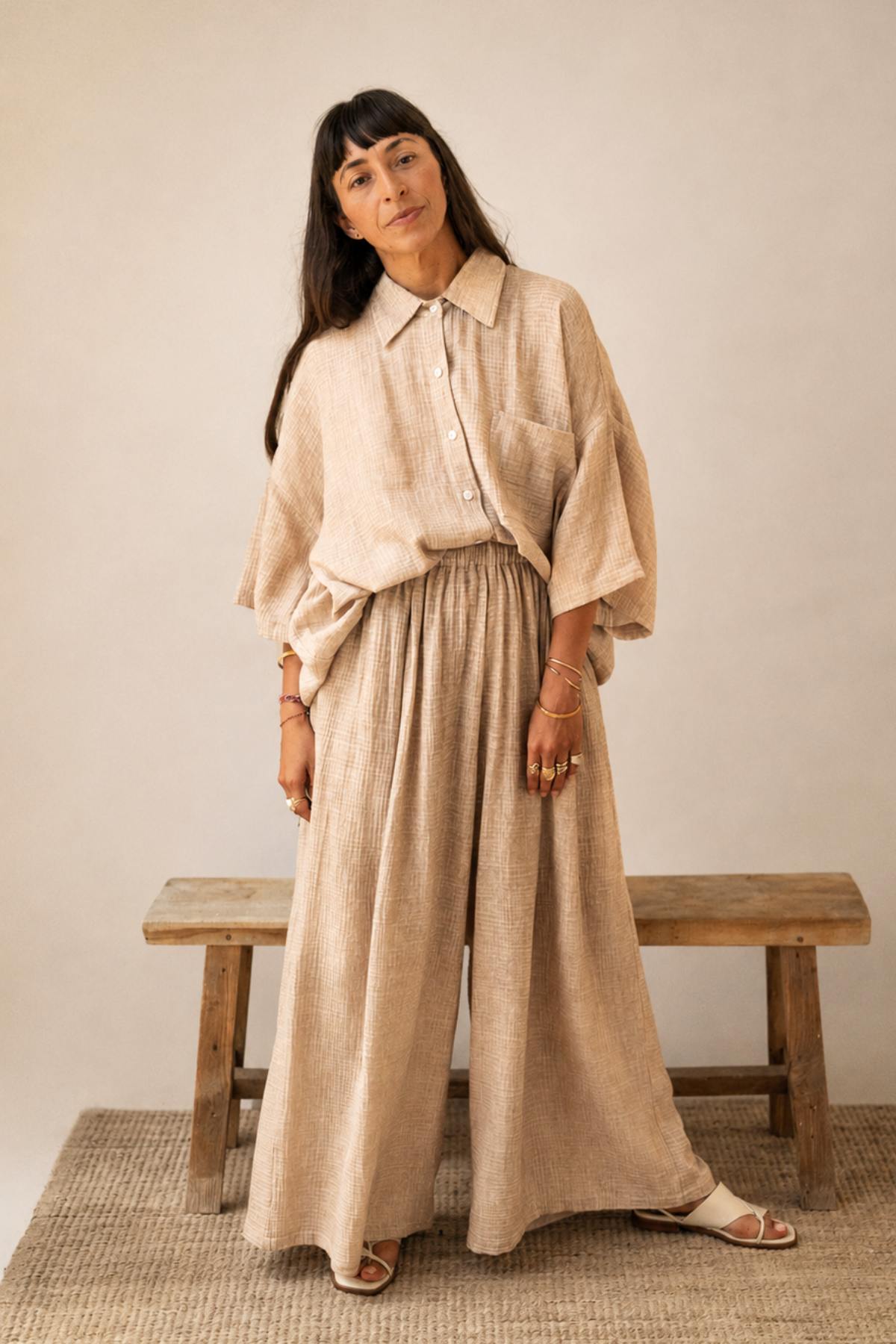
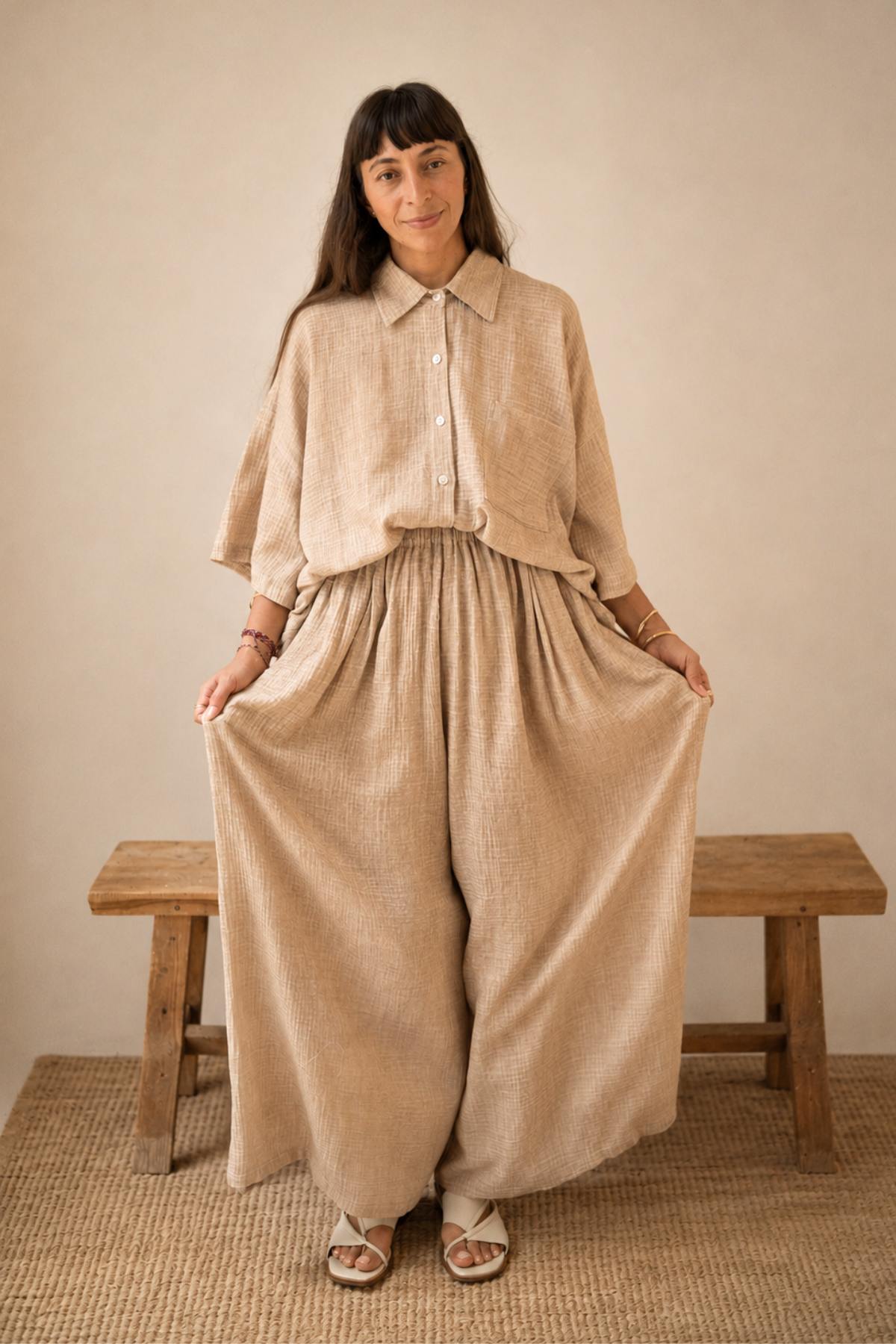
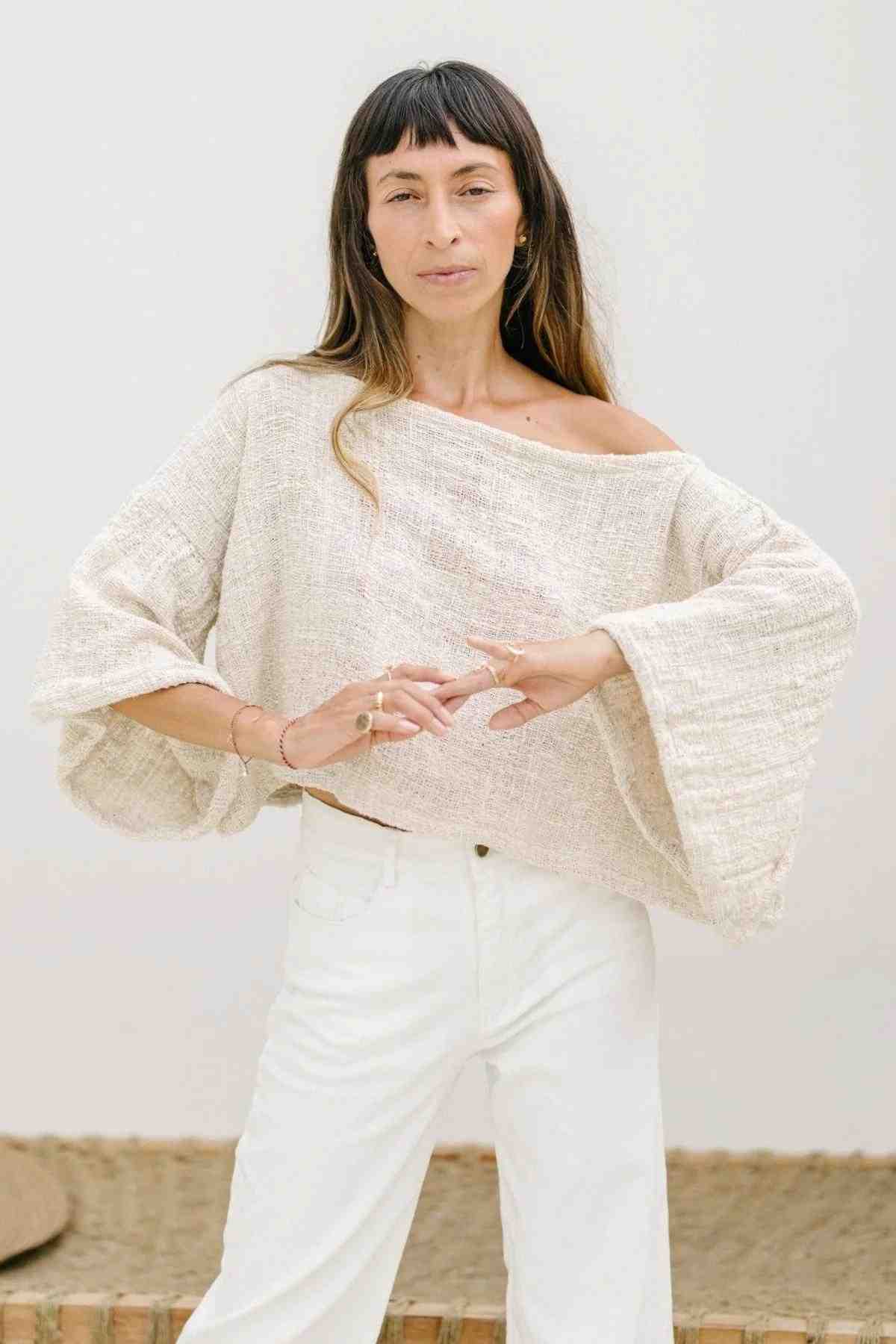
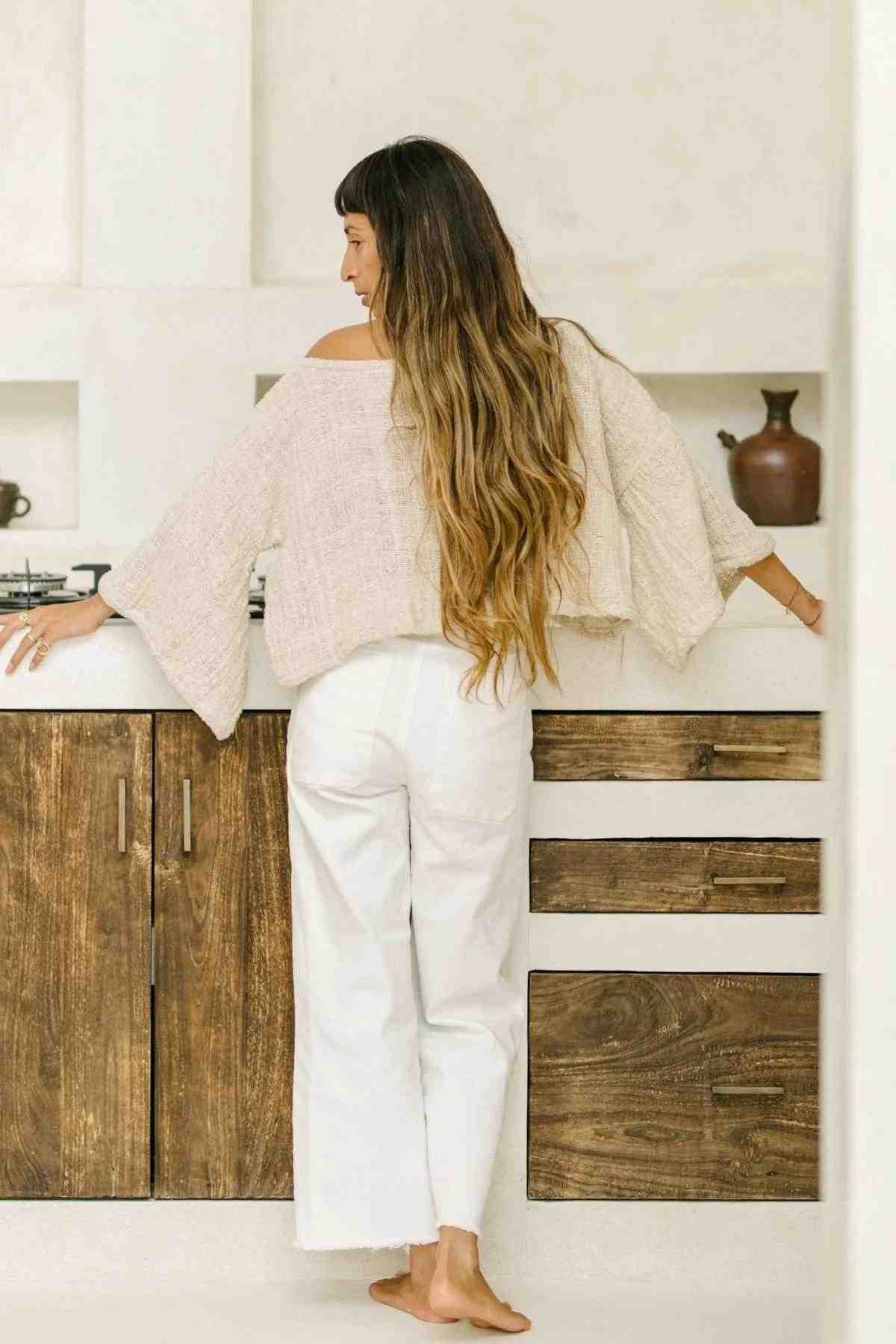
Matching button down top and wide leg trouser in one hundred percent French linen, stonewashed before it reaches you so the softness you feel on day one is the softness it keeps. Both pieces work apart.

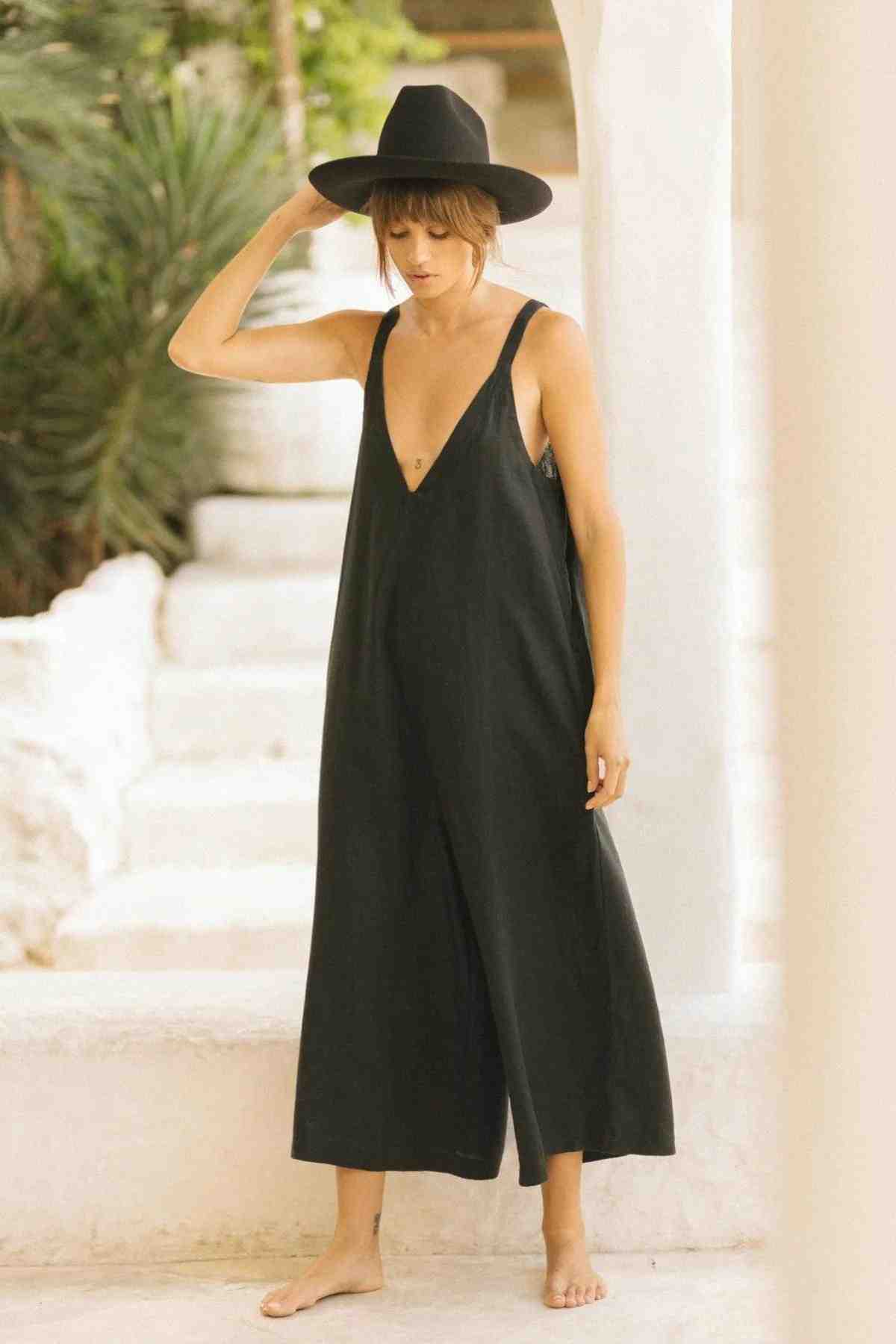
One hundred percent bamboo rayon, cooler against the skin than linen and more fluid than cotton. Full length, button down front, side pockets, one size fits most and is maternity friendly. White, Off White, Dark Moon Black, La Tierra.

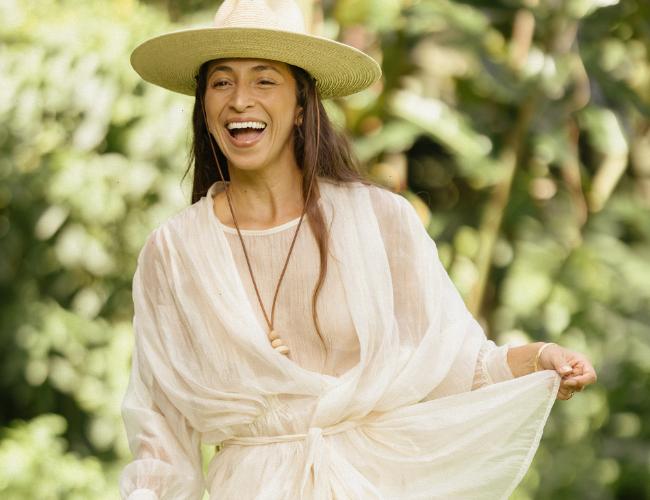
One hundred percent botanically dyed silk in Turmeric Gold and Botanical Rose. Open front, full length, one size. The botanical dye means no two runs are identical, which is the point rather than the caveat.
If you would rather browse than be pointed at one piece, the Linen Collection holds the everyday ground, The Set Collection is built for one decision mornings, Dresses and Gowns covers the nights that ask for more, and Bridal and Wedding is the small, deliberate end of it.
What ethical handmade clothing costs, and why
Somewhere between roughly $180 and $400 for a garment, in our range and in most comparable ones. That is three to six times a fast fashion equivalent, and it is worth being straight about where the difference goes.
It is not brand margin, mostly. It is the wage, which is the single largest line and the one that cannot be compressed without breaking the thing you came for. It is the fibre, since one hundred percent linen costs several times what a poly blend costs before anyone has touched it. It is the batch size, because making forty of something loses every efficiency that making forty thousand gains. And it is time, seven days for a botanical dye run before a single seam is sewn.
The honest counterweight is longevity. Linen and silk improve with wear where synthetics degrade, and a piece worn for six years at $234 costs less per wearing than four seasons of replacing a $40 dress. That maths only works if you actually wear it, which is why we would rather sell you one piece you reach for than three you admire in the wardrobe.
What women owned adds, and what it does not
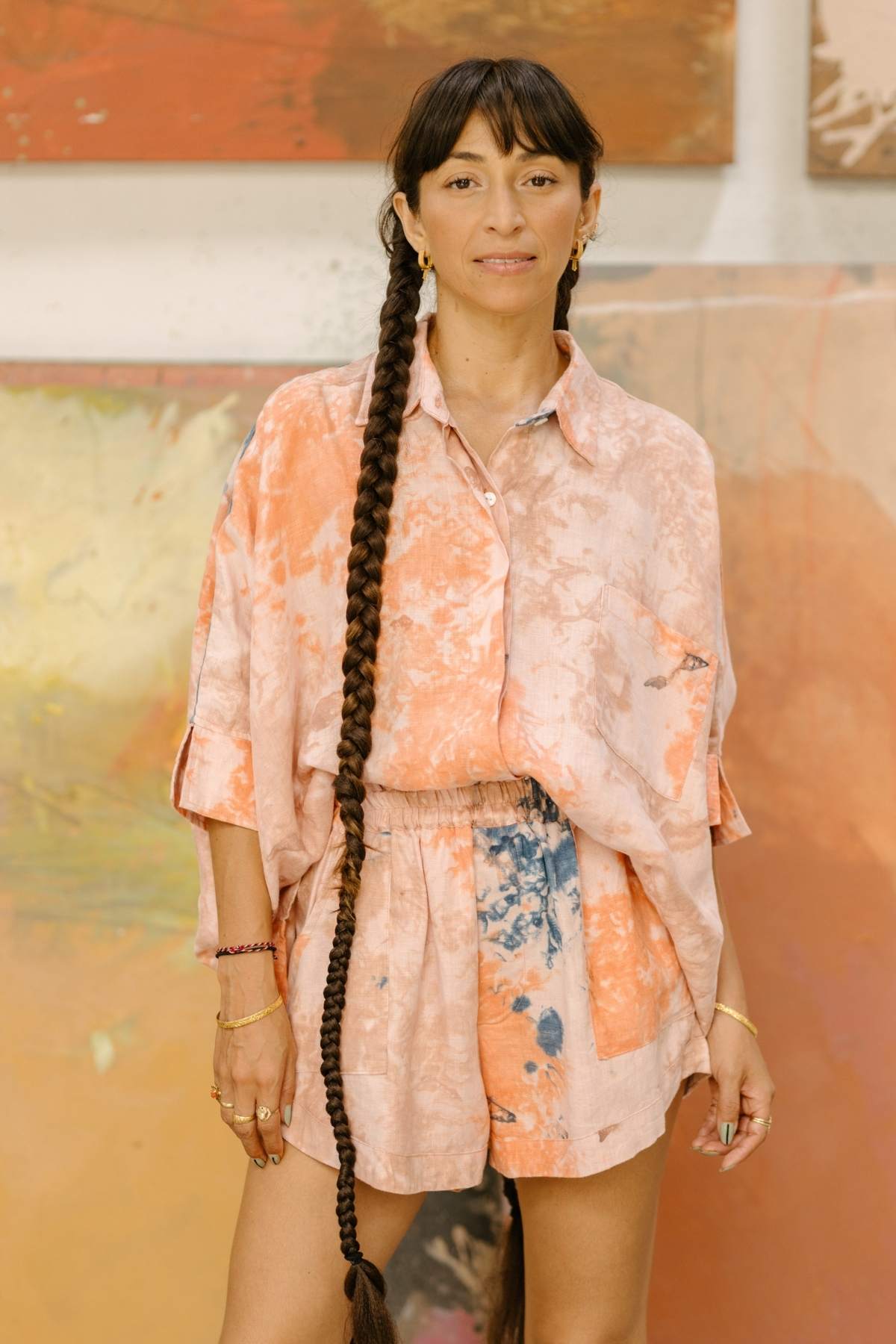
Women owned is not automatically the same as ethical, and it is worth not conflating them. What it does tend to mean in practice is that the wage and sourcing decisions were made by the person whose name is on the label rather than inherited from a supply chain she never chose. This brand was designed and built by Myrah Penaloza in partnership with the artisan families who make every piece, and she signs off on the fabric, the dye process and the wage on every one.
Frequently asked questions
What is ethical handmade clothing?
Clothing cut and sewn by hand by a person paid a living wage, made from a named natural fibre, in batches small enough that the brand can tell you where and by whom yours was made. The term is unregulated, so the practical definition is whichever of those three a brand will actually confirm when asked.
What is the difference between handmade and hand finished clothing?
Handmade means a person cut and sewed the garment from start to finish. Hand finished usually means a machine did the main construction and a person added a detail such as a hem at the end. Both can be legitimate, but they are different claims, and a brand should be able to say which applies.
Where can I buy handmade dresses, jumpsuits and clothing sets?
Directly from makers rather than through marketplaces, since a marketplace listing rarely lets you verify who sewed the piece. Ours are made in Bali and sold direct: the Kundalini Linen Playsuit at $234, the Suka Button Down Set at $200, the Kundalini Gown, and the Silk Virgo Kaftan at $398, each one hundred percent of a single named fibre.
How can you tell if a brand is genuinely ethical?
Ask three questions. What is the exact fibre composition, who sewed this and where, and are they paid a living wage. A brand that means it answers all three in plain words. A brand borrowing the language will answer with adjectives, with a certification that covers something else, or with a verb like empowering that avoids stating a number.
What do OEKO-TEX and European Flax certifications actually mean?
OEKO-TEX Standard 100 tests the finished fabric for harmful substances and tells you what is not in the cloth against your skin. European Flax certifies that flax was grown in Western Europe without irrigation, GMOs or waste, with traceability from field to fabric. Neither is a labour certification, so neither tells you anything about wages.
How long does handmade clothing take to arrive?
Three to six weeks for most made to order pieces. Botanical dye colourways need seven days to dye before construction begins and vary between runs, so the piece that arrives will not match the photograph exactly and a sold out colourway does not always return.
Why is ethical handmade clothing so expensive?
The largest cost is the wage, followed by the fibre and the small batch size. One hundred percent linen costs several times a poly blend before anyone touches it, and making forty of something loses every efficiency of making forty thousand. Cost per wearing is the fairer comparison, since natural fibres improve with wear rather than degrading.
Is handmade clothing better quality than mass produced?
Usually, though not automatically. The advantages are natural fibres, construction a person inspected as they made it, and repairability. The genuine trade offs are variation between pieces, longer waits and limited restocks. If you want identical and immediate, mass production is honestly better at that.
With love from Bali,
Myrah.
|
Where to Start Three collections, three occasions. Dresses & Gowns Linen Collection The Set Collection |
|
The Muse-Letter Dress for the woman you're becoming. Join the Muse-LetterUnsubscribe any time. No spam, ever. |


Leave a comment
This site is protected by hCaptcha and the hCaptcha Privacy Policy and Terms of Service apply.