
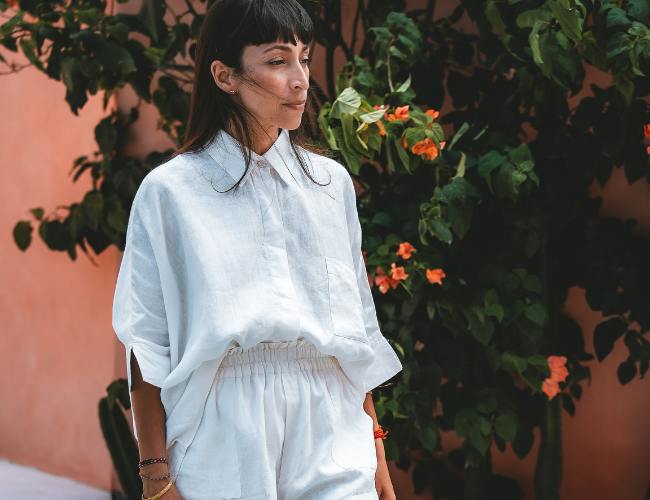




The maternity kaftan
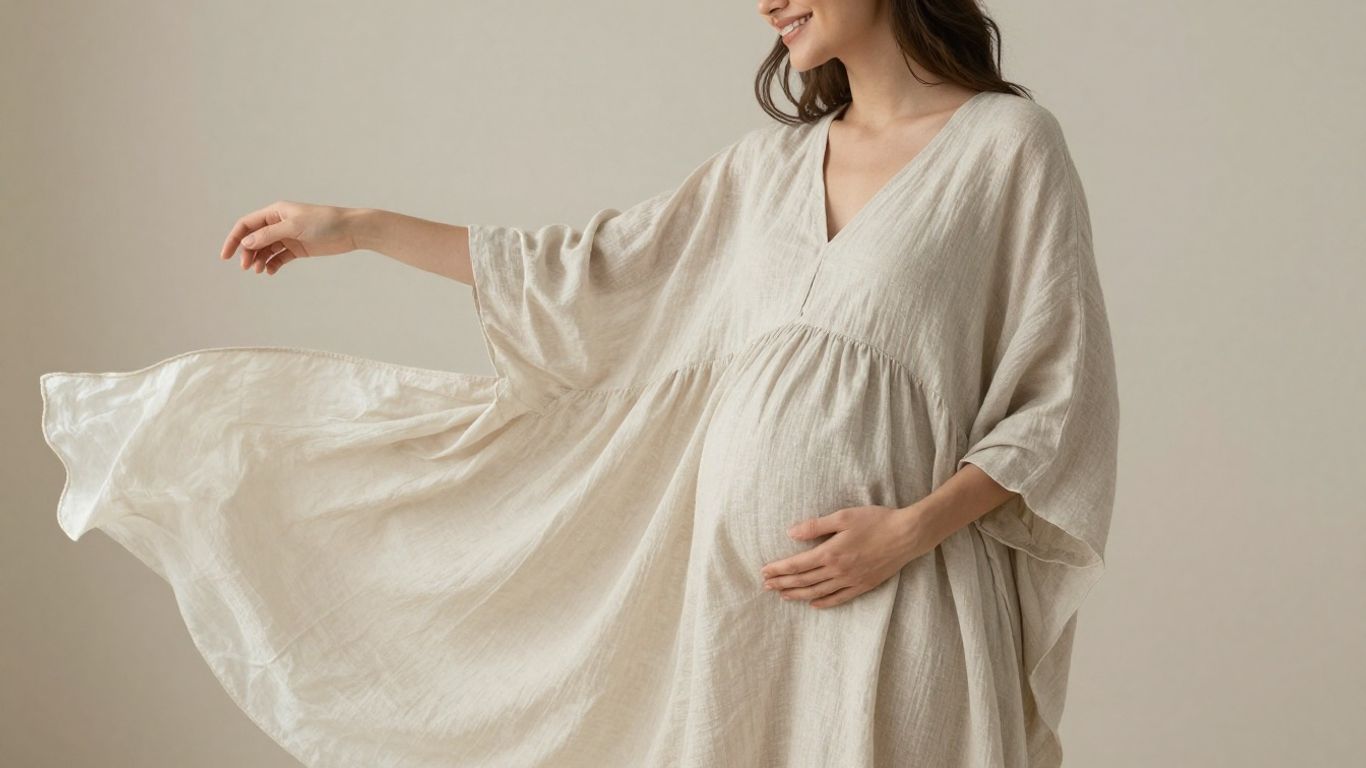
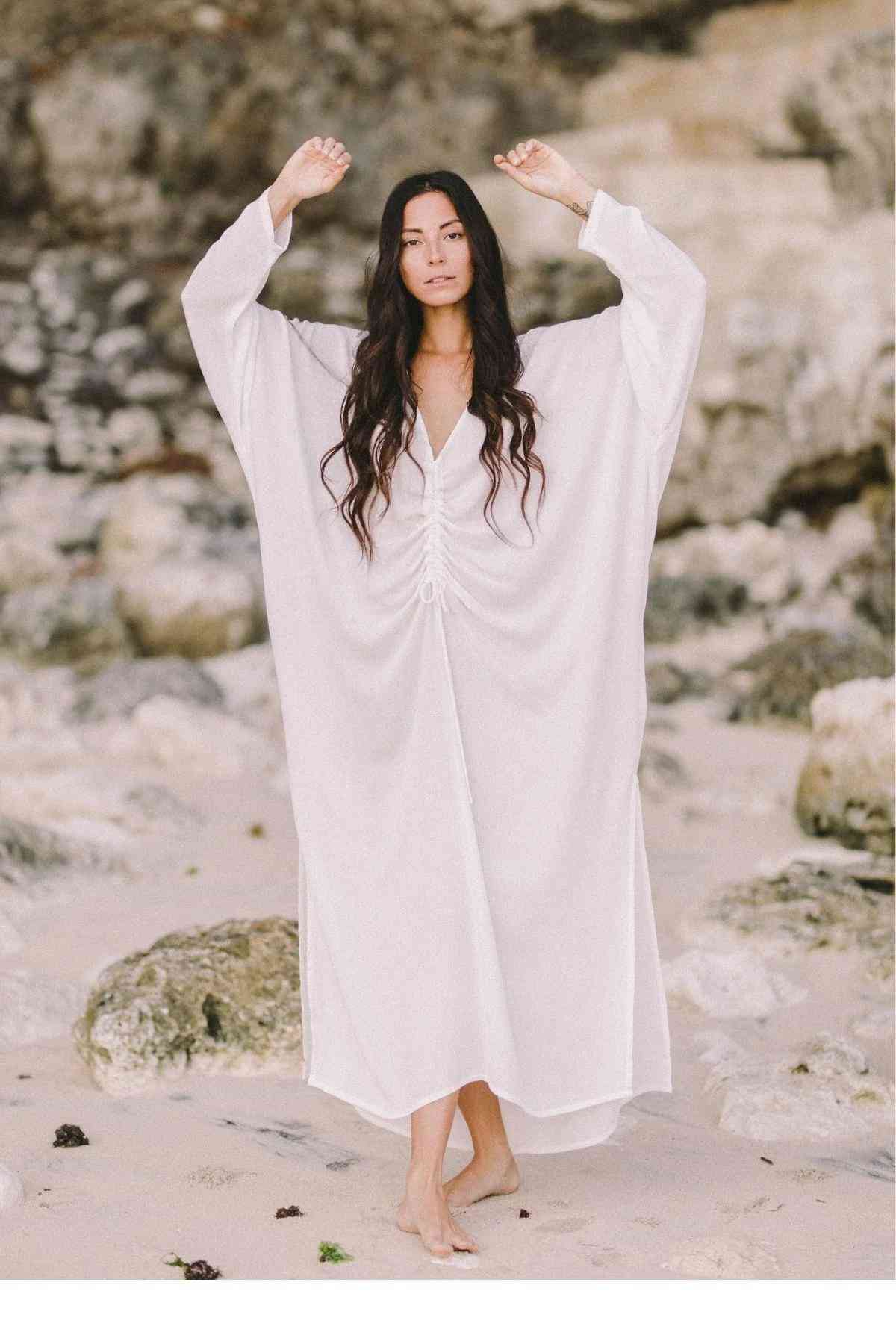
A kaftan works through pregnancy for one structural reason: it takes its shape from the shoulders rather than the waist. Nothing sits on the part of you that is changing. That is the whole mechanism, and it is why a well-cut kaftan fits at twelve weeks and at thirty-eight without being a maternity garment at all.
Which is also the argument for buying one instead of maternity wear. Maternity clothing is designed around a body you will have for a few months. A kaftan is designed around no particular body, which is a different and more useful thing.
What to actually look for
Not every kaftan does this well. Four things separate the ones that carry you through from the ones that stop fitting in the third trimester.
Where the width sits
Hold it up. If the widest point is at the hem and it narrows toward the chest, it will pull across the bump later. You want a piece that is roughly as generous at the middle as it is at the bottom, or one cut with an open front so the width is never tested.
What it is made of
Body temperature does unpredictable things in pregnancy and again in the weeks after birth. Linen and cotton move moisture away. Bamboo rayon falls closer to the body without holding heat. Polyester does none of that, and a synthetic kaftan in a warm room is a long afternoon.
Our linen carries OEKO-TEX Standard 100, which is a third-party check that the finished cloth is free from harmful substances. That matters more than usual when the cloth is against your skin for most of the day.
Whether it opens
This is the detail that decides whether the garment survives the birth. A kaftan that opens at the front, by buttons or by a wrap, becomes nursing clothing without being sold as nursing clothing. One that pulls over the head does not.
It is worth thinking about at three in the morning in the dark, because that is where you will test it. Buttons you can find by feel beat any clever hidden panel.
Whether it adjusts
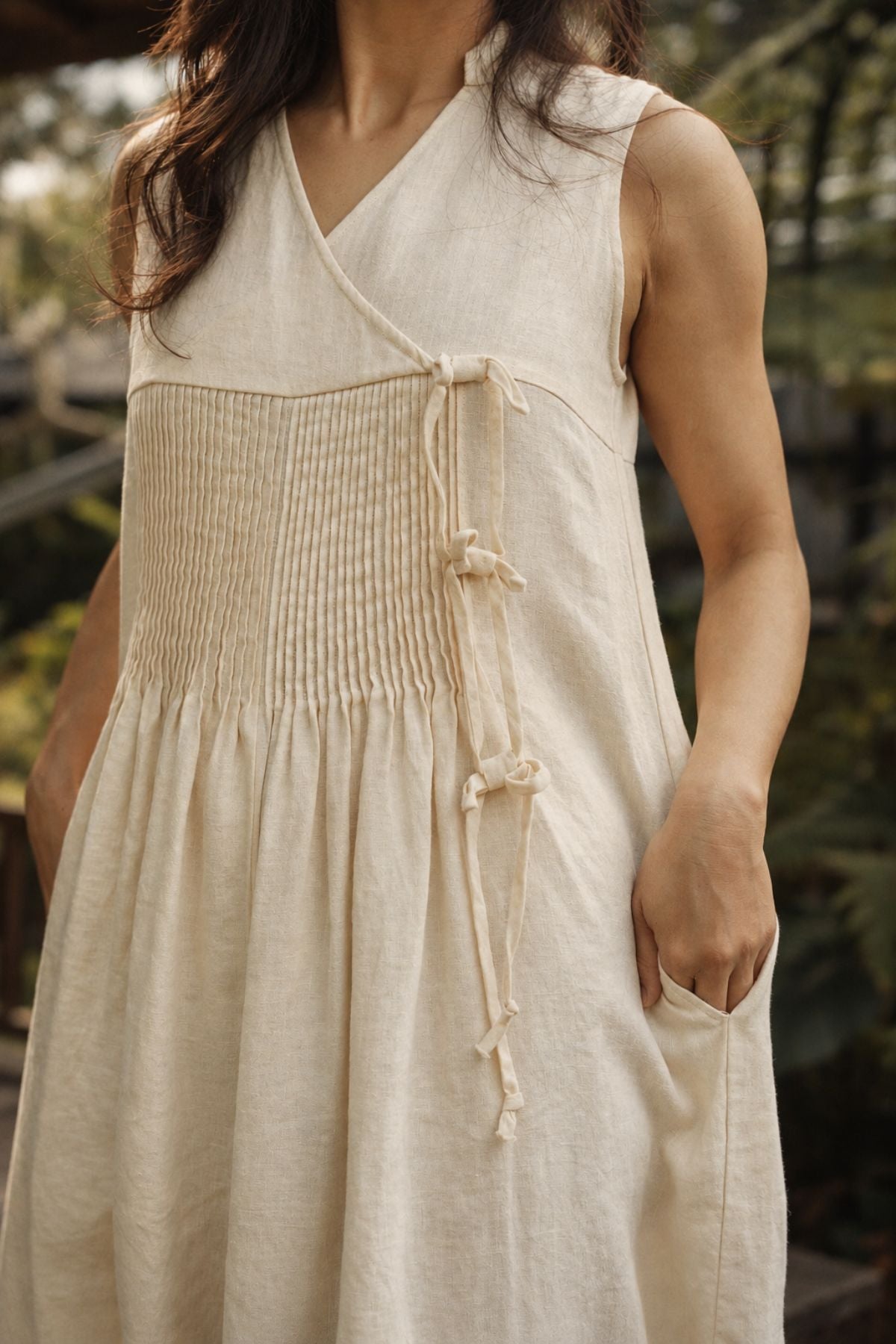
A tie, a wrap or a drawstring lets you decide where the shape sits, and lets that decision change month to month. A fixed waist makes the decision for you once.
Through the trimesters
The first months, most things still fit and a kaftan is simply comfortable. The value shows up later.
By the second trimester the waistband of everything you own has become a decision, and a garment with no waistband is a relief out of proportion to how simple it sounds. By the third, when nothing you own closes, the kaftan is one of the few things that has not changed its opinion of you.
Then the baby arrives and your body is a third thing again, neither pregnant nor what it was, and this is the stretch nobody dresses for. The kaftan carries into it without a purchase, a size change or a conversation.
After the birth
The weeks after are the ones the wardrobe advice forgets. What matters then is narrower than what matters in pregnancy: something that opens at the front, nothing pressing on a tender middle, natural fibre for the night sweats nobody warns you about, and two of whatever you actually wear so one can be in the wash.
We have written that out properly in postpartum essentials nobody puts on the list, which is about the woman rather than the baby.
The honest limits
A kaftan is not the answer to everything, and it is worth saying which parts it does not solve.
- It will not give you a defined waist, and some days you will want one. A wrap or a tie helps. A kaftan alone does not.
- Very fine linen creases, and by the third trimester you are sitting more. Heavier or stonewashed linen creases softly and reads as texture instead.
- It is not tailored, so if your work is somewhere formal, a kaftan is what you wear around the formal thing rather than instead of it.
- Length matters more than you expect. Full length reads considered. Mid-calf on a bump can read unfinished.
What we make for this
We did not set out to make maternity clothing. We make one-size pieces that adjust, in natural fibre, that open at the front, because that is what we believe clothing should do. Women told us what it turned out to be good for.
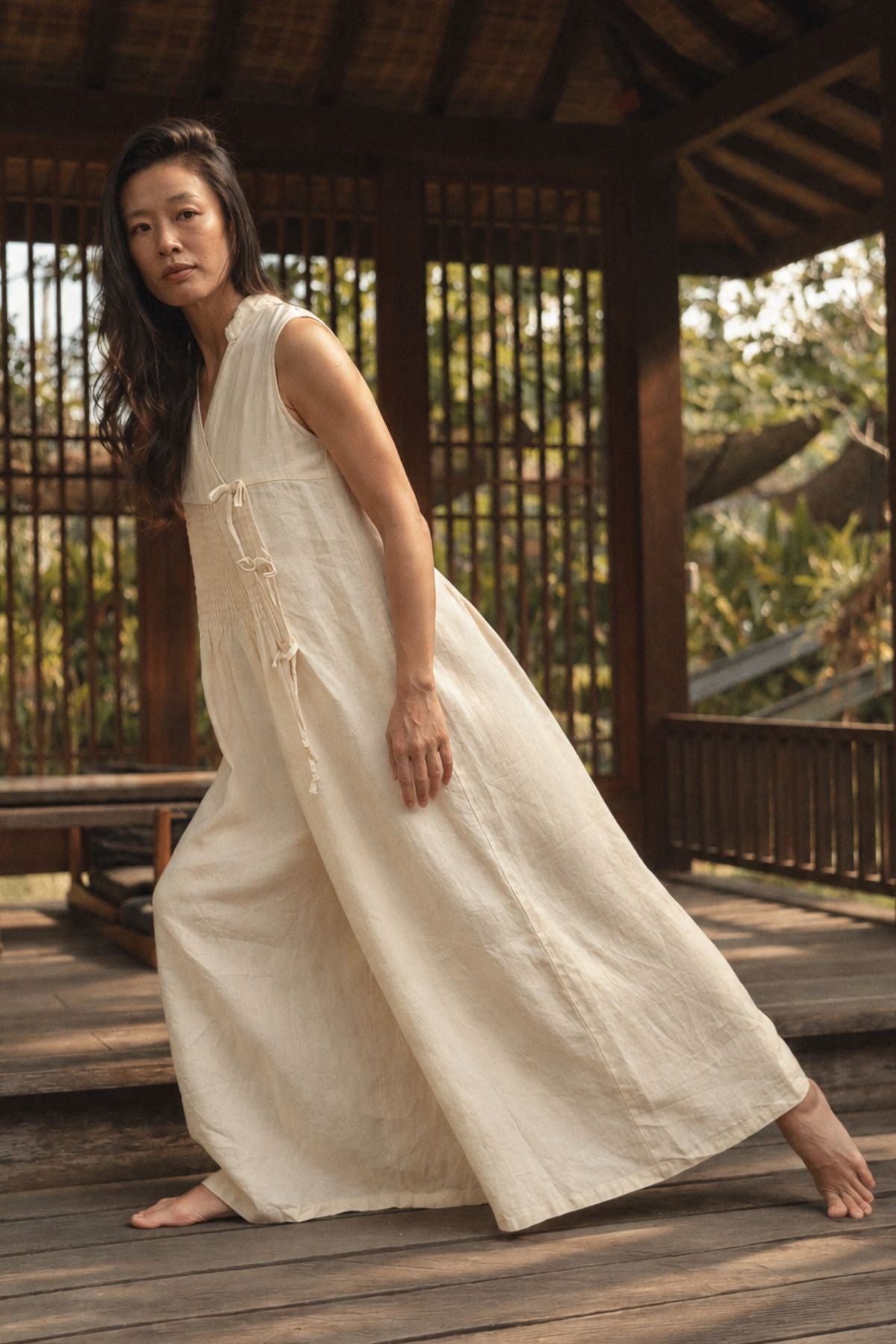
The Kundalini Gown buttons from collarbone to ankle and has been worn through pregnancy and long after by more women than we can count. The Shanti Wrap Skirt has no zip, no button and no fixed waist, and one customer wrote to tell us she wore it through her entire pregnancy. That letter is the reason we have never changed the pattern.
The pieces that work through pregnancy and after are gathered in the Maternity and Nursing collection, and the kaftans themselves are in kaftans. Everything is made by hand in Bali by around thirty artisan families, which is why the lead time is two to four weeks, and why it is on our slow fashion page rather than hidden.
Frequently asked questions
Is a kaftan good for pregnancy?
Yes, and for a structural reason: a kaftan hangs from the shoulders, so nothing sits on the part of your body that is changing. A well-cut one fits at twelve weeks and at thirty-eight without being sold as maternity wear.
What should I look for in a maternity kaftan?
Four things. Width that sits at the middle as generously as at the hem. Natural fibre such as linen, cotton or bamboo rayon, because body temperature is unpredictable in pregnancy and after. A front that opens by buttons or a wrap, which is what turns it into nursing clothing later. And a tie or drawstring so you can move the shape as your body moves.
Can you wear a maternity kaftan for nursing?
Only if it opens at the front. A kaftan that pulls over the head does not work for feeding. Buttons you can find by feel in the dark are worth more than any hidden nursing panel.
Is a kaftan better than maternity clothing?
For most of a wardrobe, yes, because maternity clothing is designed around a body you will have for a few months. A kaftan is designed around no particular body, so it stays useful afterwards. Tailored occasions are the exception.
What size maternity kaftan should I buy?
If it is one size and cut generously, take it as it comes. If there are sizes, stay close to your usual one rather than sizing up, since a kaftan already has the ease built in and a larger size mostly adds length in the wrong places.
What fabric is best for a maternity kaftan?
Linen or cotton for heat, bamboo rayon for a closer drape without warmth. All three move moisture away from the skin. Avoid polyester, which holds both heat and odour at a point when neither is welcome.
With love from Bali,
Myrah
|
A Piece for This Threshold The Kundalini Gown. Shop the Kundalini Gown → |
|
The Muse-Letter Dress for the woman you’re becoming. Join the Muse-LetterUnsubscribe any time. No spam, ever. |





Leave a comment
This site is protected by hCaptcha and the hCaptcha Privacy Policy and Terms of Service apply.