
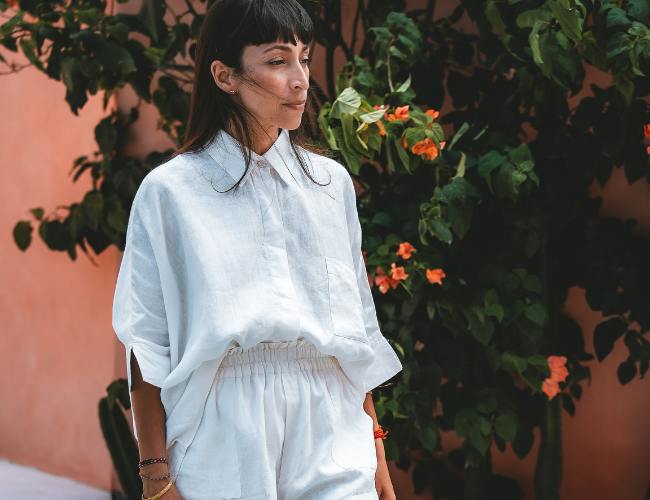


What to Wear to Yoga Teacher Training
Pack far less than you think, in natural fibre, and choose for sitting rather than for posture. Four to six bottoms, four to six tops, one layer for early mornings and one piece you can wear out to dinner will carry a 200-hour training. You will wear the same three things repeatedly and you will not care by week two.
The mistake almost everyone makes is packing activewear. A teacher training is not thirty days of vigorous asana. It is mostly sitting on a floor, listening, taking notes, and being cold at 6am and warm by 10.
What a training actually asks of clothing
Nobody tells you this beforehand, so here it is plainly. You will spend far more hours seated than standing. Anatomy lectures, philosophy, teaching methodology, practicum, feedback circles. Cross-legged on a bolster, propped against a wall, on your side during a demonstration.
Which means the clothing that matters is not the clothing that performs in a strong flow. It is the clothing you can sit in for four hours without adjusting.
- Nothing tight at the waist. This is the single biggest thing. A fixed waistband becomes unbearable after two hours cross-legged. Drawstrings, soft elastic and wrap closures win.
- Natural fibre, because you will sweat and then sit still. Synthetic holds moisture against you and you go cold the moment the practice ends. Linen and cotton move it away.
- Coverage you do not have to think about. You will be inverted, folded, demonstrated on and adjusted. Anything you have to check is a distraction you will feel for a month.
- It has to wash and dry overnight, usually by hand, often in humidity. Linen is the best fabric in the world at this. Heavy cotton is the worst.
The actual list
| What | How many | Why |
|---|---|---|
| Loose trousers or wide-leg | 3 to 4 | Your default. Soft waist, room to sit cross-legged. |
| Leggings or fitted bottoms | 1 to 2 | For the stronger practices only. Organic cotton over synthetic. |
| Loose tops | 4 to 5 | One per day between washes. They dry fastest. |
| A layer | 1 to 2 | Early mornings and air conditioning. A jacket or light duster. |
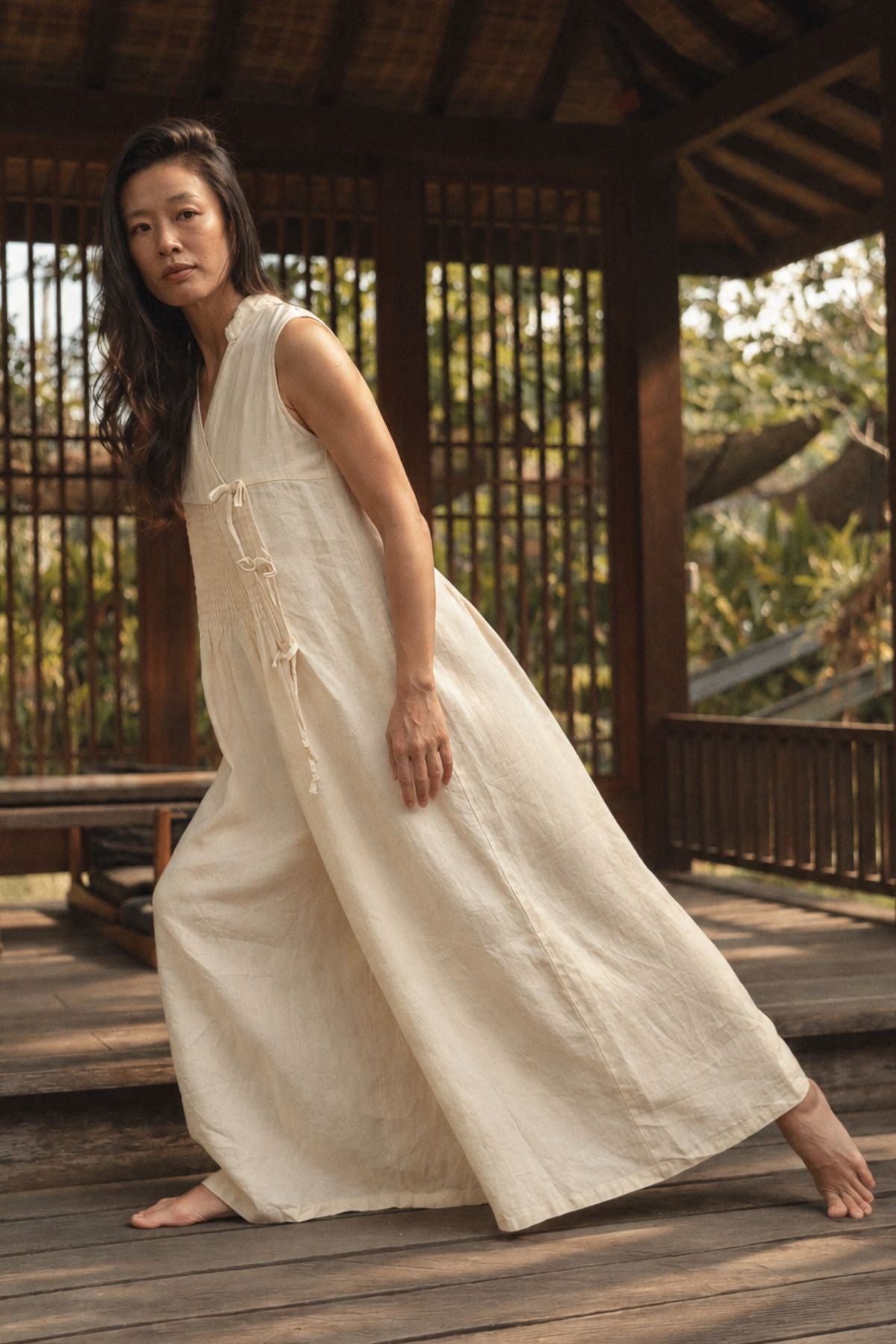
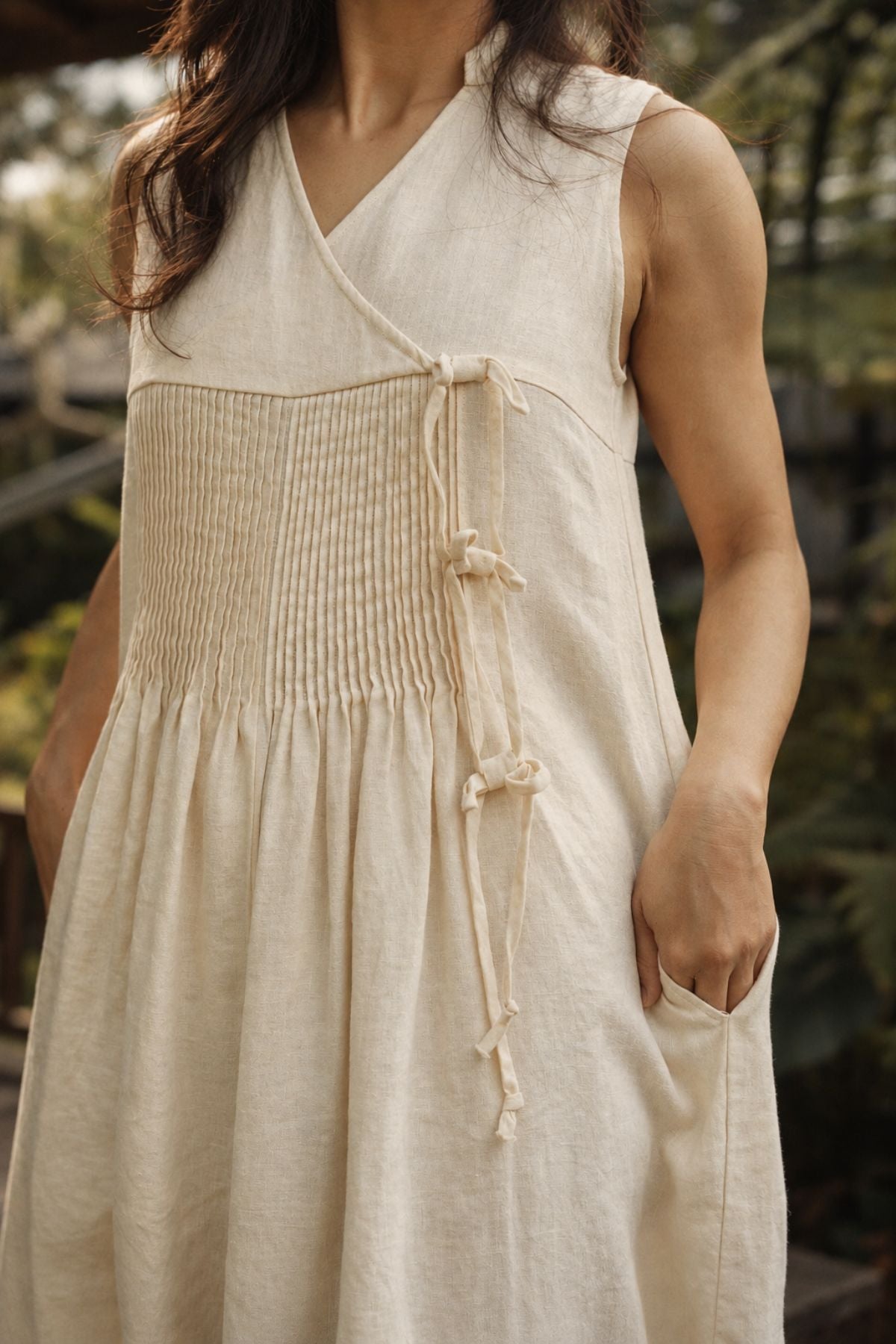
| A dress or one-piece | 1 to 2 | For dinner, town, the day you cannot think about clothes. |
| Something white | 1 | Many trainings ask for white on graduation or ceremony days. |
| A shawl or wrap | 1 | Savasana, meditation, temple visits, aeroplane. |
That is genuinely it. Fourteen or fifteen pieces for a month. Every returning trainee says the same thing: they packed twice this and wore half of it.
Why white comes up
Many trainings ask for white at some point, and Kundalini trainings often ask for it throughout. The tradition holds that white reflects the full spectrum rather than absorbing part of it, and extends the field around the body.
The practical version is simpler and applies whatever you believe. When a room dresses the same way for the same reason, the part of the mind that compares itself to others goes quiet, and that attention becomes available for the practice. If your training asks for white, our white collection is all linen and organic cotton, and the fuller guide to kundalini clothing covers head coverings and fabric in more detail.
What we would take
If we were packing for a month on a floor, it would be sets. Two pieces that work together and separately means fewer garments doing more jobs, and the top and bottom wash and dry independently.
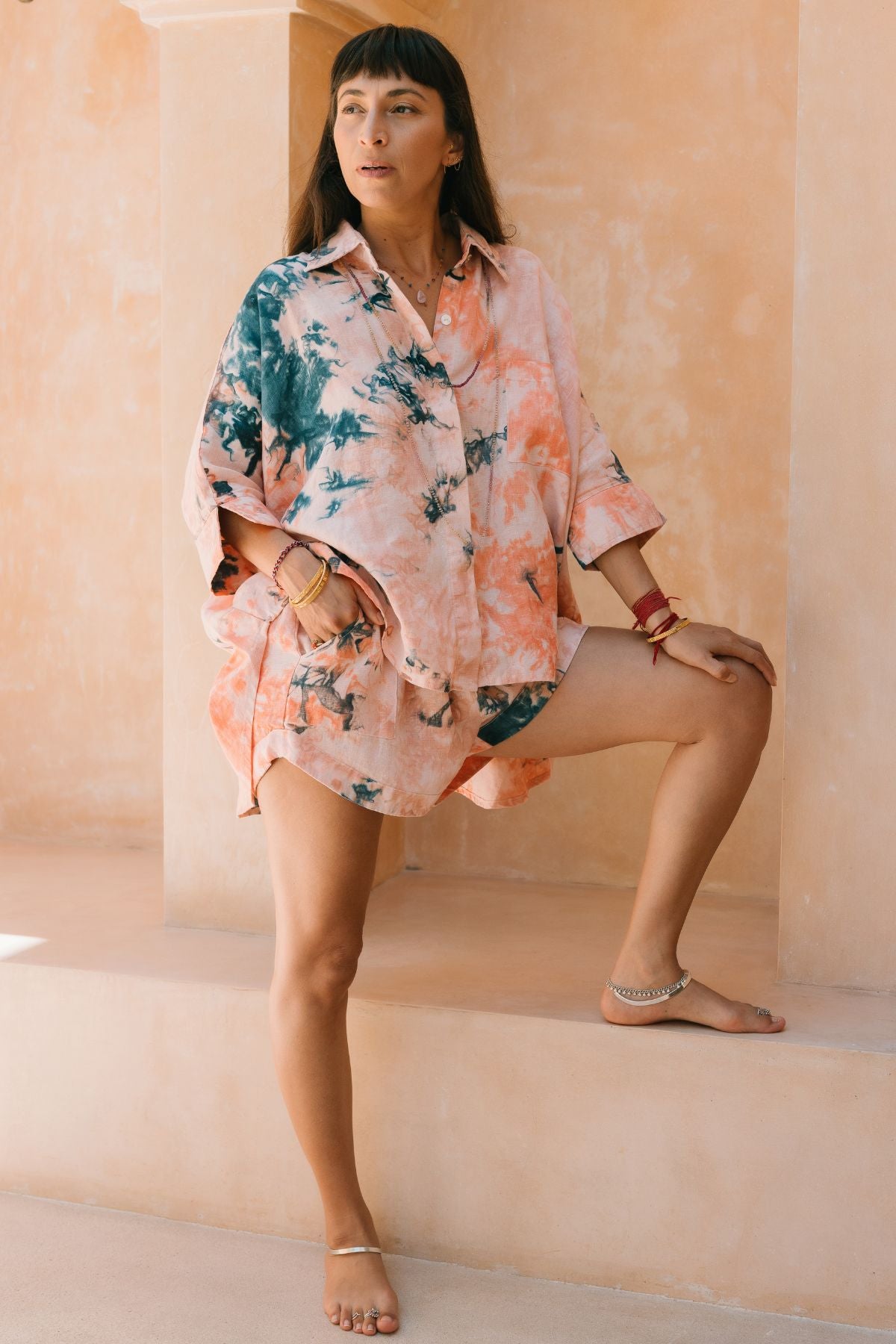
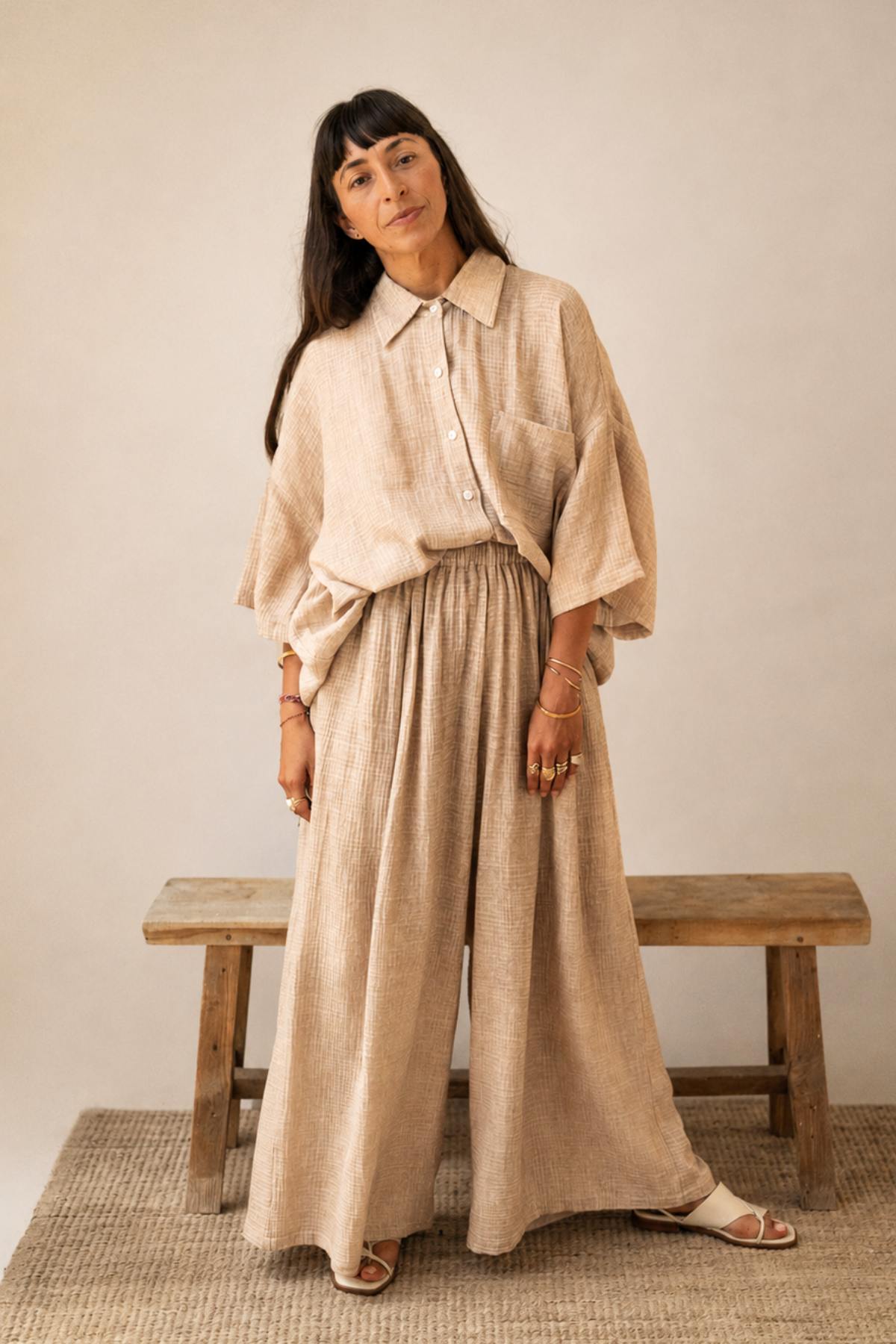
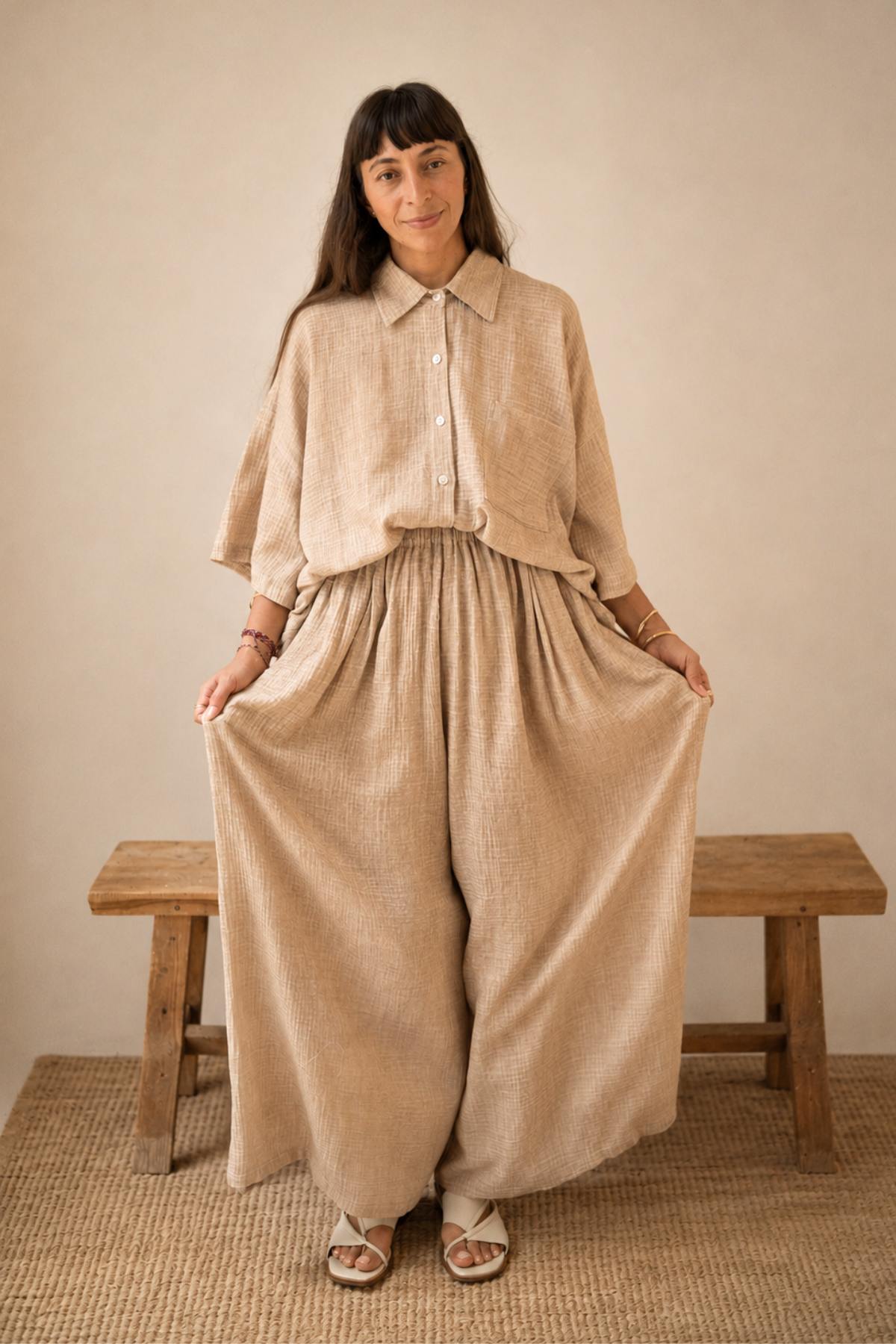
- The Suka Button Down Set. Wide-leg trouser with a soft waist and a button-down that works open over a top or closed on its own. Stonewashed, so it arrives soft and stays the size you bought.
- The Nidra Set. Named for yoga nidra, cut with enough ease to lie down in for a long relaxation without a waistband making itself known.
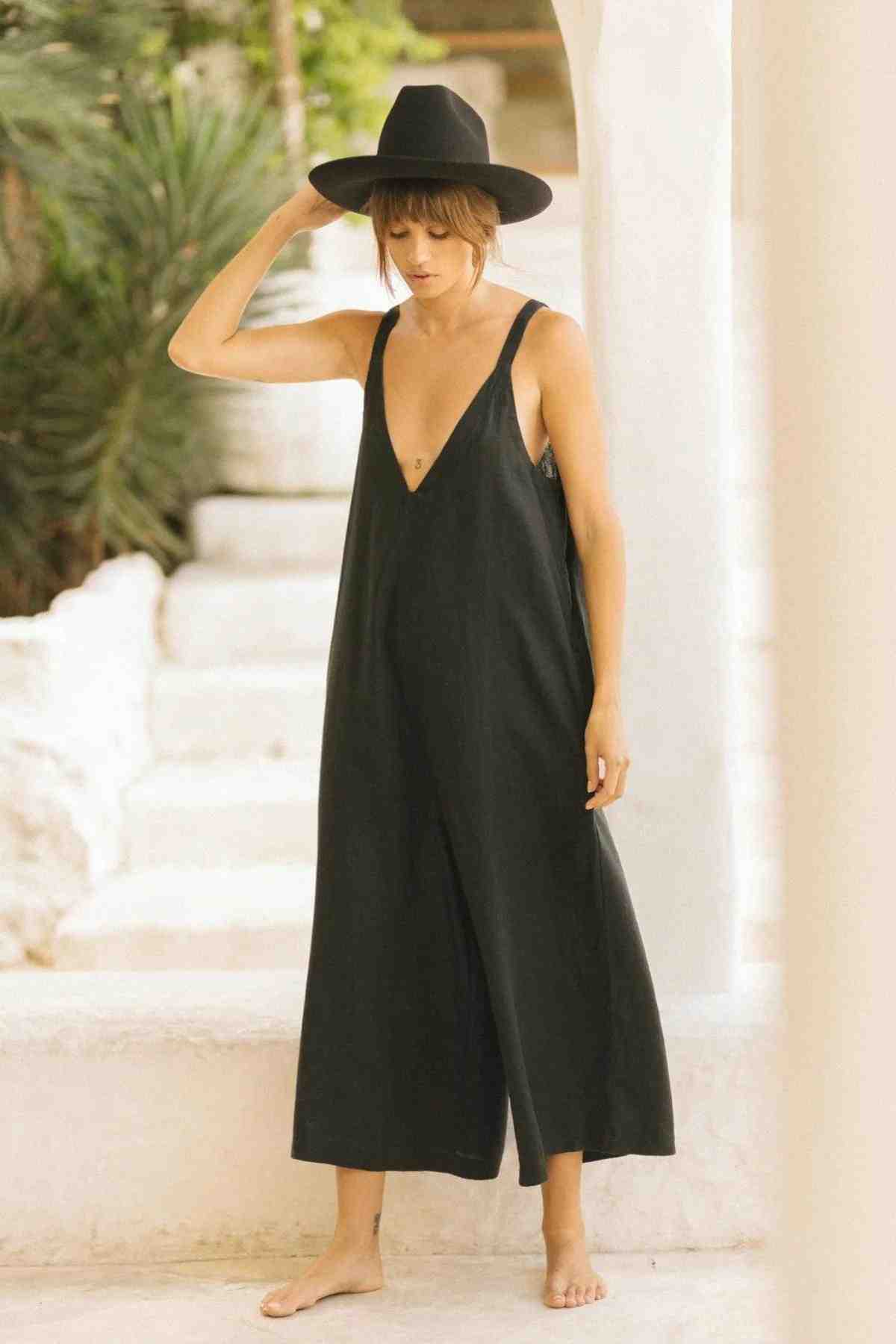
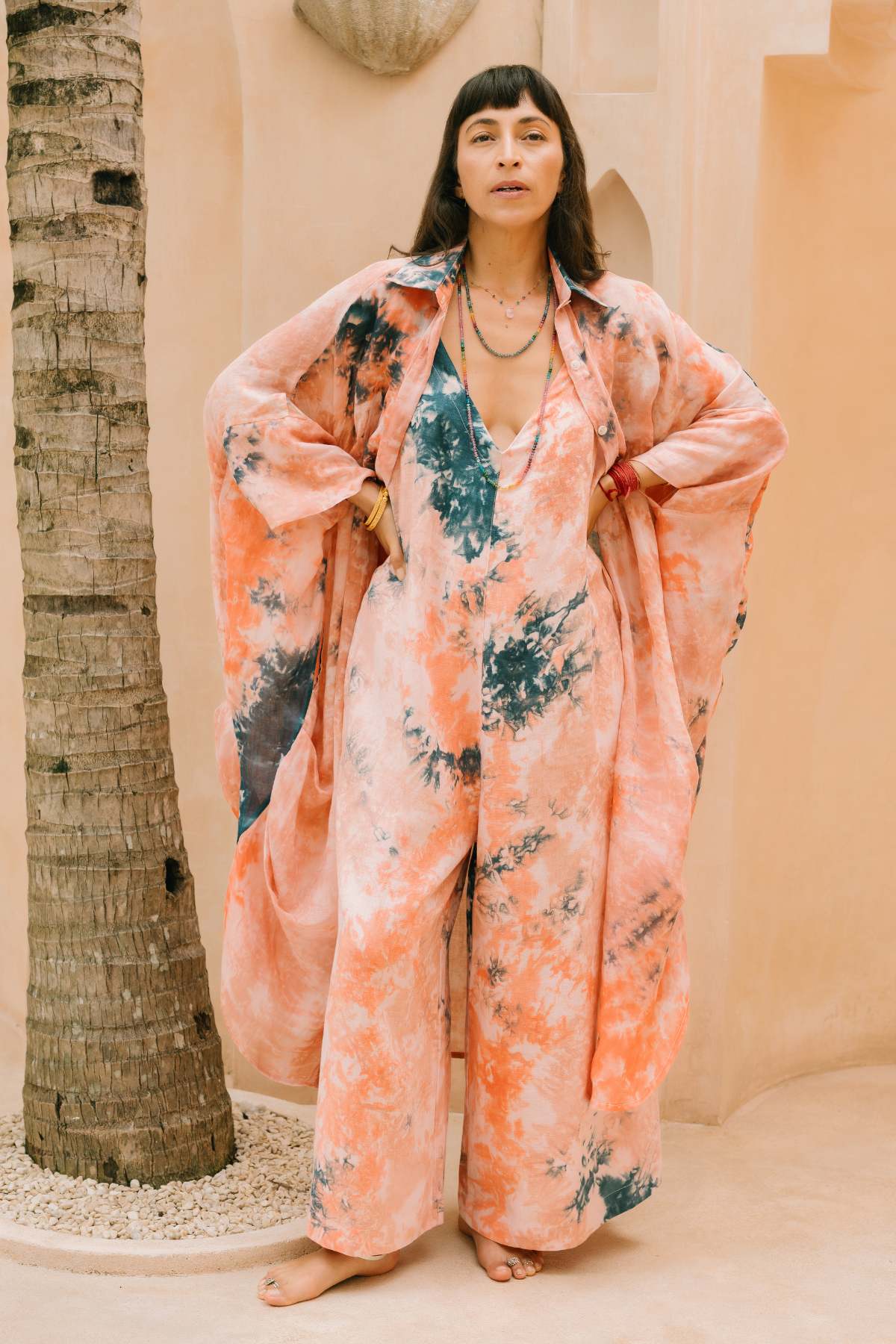
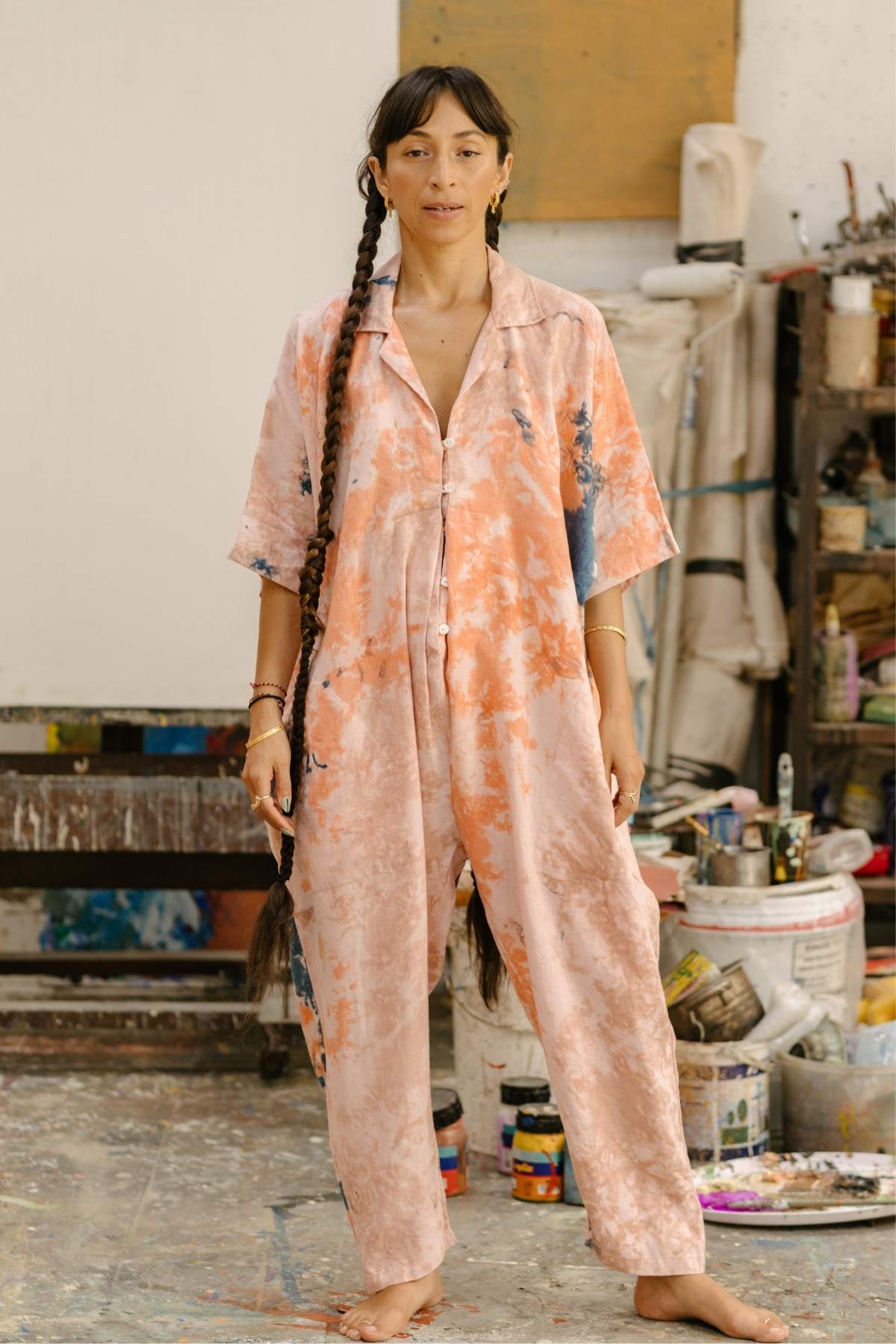
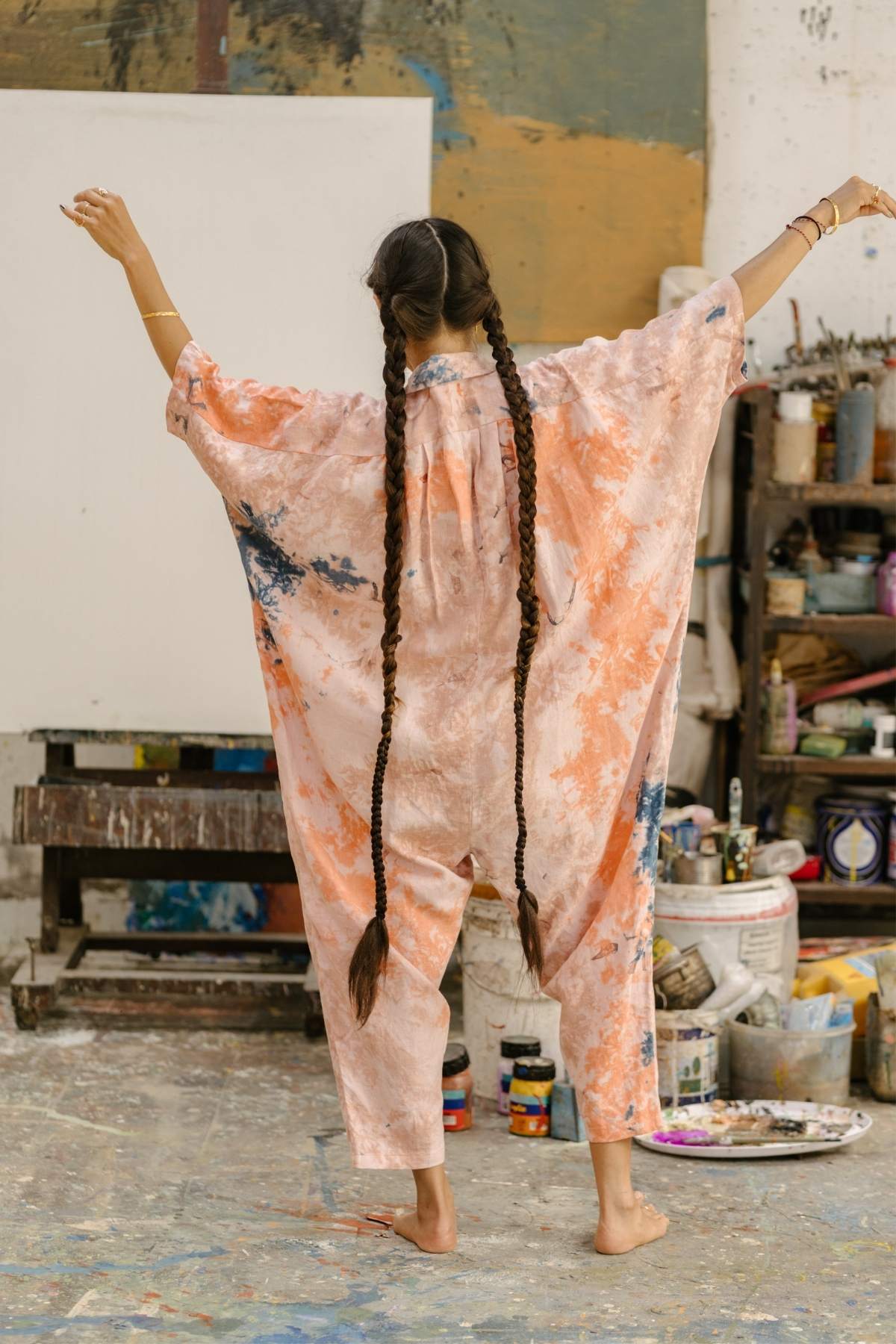
- The Kundalini Playsuit. One piece, nothing to separate at the waist in a forward fold, and it reads as an outfit the moment you leave the shala.
- The White Golden Chain Jacket. The 6am layer, and the walk home after.
All of it is linen or organic cotton, made in Bali, and washes by hand in a sink without complaint. Which, on a training, matters more than almost anything else.
Frequently asked questions
What should I wear to yoga teacher training?
Loose, natural-fibre clothing with nothing tight at the waist. You will spend far more hours seated in lectures and practicum than moving through asana, so choose for sitting cross-legged for hours rather than for a strong flow. Linen and organic cotton are ideal because they breathe, wash by hand and dry overnight. Bring one white outfit, since many trainings ask for it on ceremony or graduation days.
How many outfits do I need for a 200-hour training?
Roughly four to six bottoms, four to six tops, one or two layers, one or two dresses or one-pieces for evenings, plus a shawl. Around fourteen or fifteen pieces will carry a month. You will wear the same three favourites repeatedly and stop noticing by week two. Almost everyone packs double this and regrets it.
Should I wear leggings to teacher training?
Bring one or two pairs for the stronger practices, but do not make them your default. Fitted waistbands become genuinely uncomfortable during long seated lectures, which is where most of the hours actually go. Choose organic cotton rather than a synthetic blend, since a training involves sweating and then sitting still, and synthetics hold that moisture against you.
Why do some teacher trainings ask you to wear white?
It is most common in Kundalini trainings, where the tradition holds that white reflects the full visible spectrum and extends the field around the body. There is also an observable effect that applies regardless of belief: when a whole room dresses the same way for the same reason, the mind stops comparing and that attention returns to the practice. Bring at least one white outfit even if it is not required, as ceremony days often call for it.
What fabric is best for a yoga teacher training?
Linen first, organic cotton second. Both breathe, both move moisture away from skin, and both wash in a sink and dry overnight, which matters enormously on a residential training. Avoid polyester and synthetic blends: they trap heat during practice and leave you cold and damp during the seated hours that follow.
With love from Bali,
Myrah










Laisser un commentaire
Ce site est protégé par hCaptcha, et la Politique de confidentialité et les Conditions de service de hCaptcha s’appliquent.