Meet the Makers
Every piece we make begins in a home, or in a small workshop a tailor owns, somewhere in Bali. These are the hands, and the families, behind your garment.
When Rob and I started this, we made a decision that shaped everything after it. We would not open a factory. We would not rent one either.
Instead, we brought the work to where life was already happening. Sewing machines in family compounds. Dye pots in courtyards. Small workshops that the artisan tailors own and run themselves. A mostly female team, working from their own spaces, on their own rhythm, with their children close by. The garment gets made inside a life, not instead of one.
People sometimes ask why we chose the harder way. The honest answer is that it is the only way we could stay close enough to know. Inside a factory you are one buyer among many, and you have very little say over the conditions on the floor. With a family, and with a small workshop the tailor owns, we are in the room. We know what the space is like, what the hours are, what is missing, and when something needs to change we can have that conversation directly with the person who can change it. A factory would buy us efficiency and cost us the only leverage that actually protects anybody.
There is a second reason, and it is simpler. How something is made lives inside the thing itself. You can feel it when you put it on.
The turning point
The industry we came from ran on outsourced factories. When we moved to Bali, we began building something quieter, a network of artisans making our pieces from their own homes and their own small workshops. It started on intuition. It grew on trust.
Then 2020 arrived, and the industry around us collapsed. But the network was already alive, already working, already whole. So instead of shrinking, we grew it. Family by family, through the hardest years this industry has seen.
Today we work with no outsourced factories. More than thirty Balinese families make everything we sell, about half from their own homes and about half from small workshops they own themselves, and every one of them is paid a real living wage. That has been true for years, and it is not negotiable.
What a living wage means here
We use the words living wage carefully, because the industry does not.
It means the people who make your clothing are paid enough to live well where they live. Enough for their homes, their children's schooling, their ceremonies, their days off. It means no one is racing a quota. A piece takes the time it takes. Our botanical dyes alone can hold a garment for days before a single seam is sewn.
This is why we make in small batches and to order. It is why every piece asks you to wait three to six weeks before it leaves Bali. The wait is not a flaw in the system. The wait is the system, and it is the reason a family in Bali gets to build a life around this work.
We are gathering names, portraits and words from the families who make our pieces, with their consent, family by family. Some prefer not to be photographed, and we honor that fully. This page will hold their faces as they are ready to share them, not before.
What the cloth is certified for
Our linen carries OEKO-TEX Standard 100, which tests the finished fabric for harmful substances. It carries European Flax and Masters of Linen, which trace the flax back to the fields in Europe where it was grown. Our mills hold GOTS certification at fabric level. All of that is real, and all of it is checkable.
What we do not hold is a full chain-of-custody certificate, and that is worth explaining rather than leaving out. That standard asks for every sewing site in the chain to be certified individually as a facility, at a few thousand dollars each, every year. Our sewing happens across around thirty homes and small workshops. We could move all of it into one certified factory and hold the complete mark within months. It would cost these families the way they work, so we have not.
The standard they hold
The women and men who make our pieces are not producing fashion. They are practicing a craft, and it shows in the standard we ask every garment to meet.
Before a design earns its place in the collection, it has to survive being worn. Thirty times at minimum. One hundred and eight times for the pieces we intend to be passed down. Natural fabric, botanical dye, seams sewn by someone whose name we know. These are clothes made to outlast the year you bought them, and then some.
No two dye batches are exactly alike. That is not a caveat. That is the point.
What you're wearing
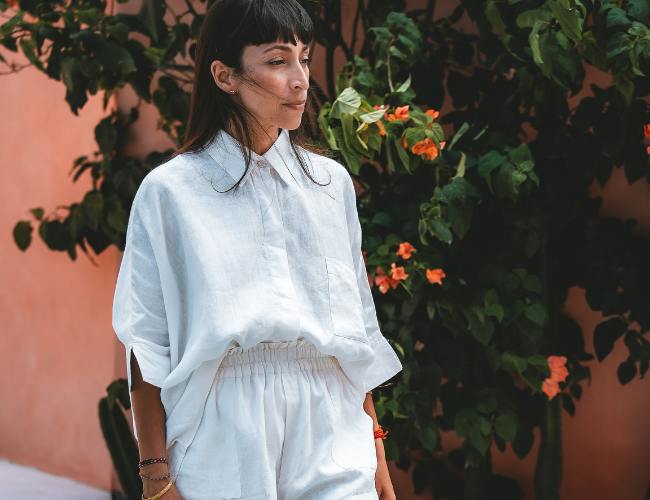
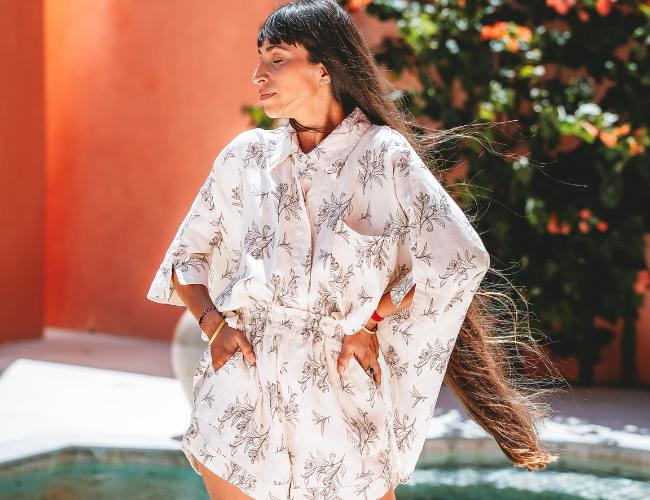
When you wear one of our pieces, you are wearing hours from someone's own space. Morning light in a courtyard in Bali. A dye pot tended for days. A seam sewn while a child slept in the next room.
I think you can feel that. I think it is part of why you are here.
With love from Bali,
Myrah
| Shop the Collection |
|
The Muse-Letter Dress for the woman you're becoming. Join the Muse-LetterUnsubscribe any time. No spam, ever. |