
What to Wear in Bali: A Guide to Dressing with Intention
There is a particular kind of packing paralysis that visits women planning their first trip to Bali. You stand in front of a wardrobe built for your ordinary life and try to imagine what you will need for ten days in a place that operates at an entirely different frequency. Warmer. More humid. More beautiful. More alive to ceremony and colour and the way light falls through banyan trees in the late afternoon.

Most packing lists for Bali will tell you to bring breathable fabrics, modest coverage for temple visits, and something for the beach. That is all true and all insufficient. This guide goes further, because Bali deserves more than a generic list. What you wear in Bali shapes what Bali gives back to you. Dress like a tourist and you move through the surface of the place. Dress with intention and something opens.
We make clothing in Bali. We live in Bali. We have watched thousands of women arrive and leave, and we have noticed that the ones who dress intentionally, who choose natural fabrics and generous silhouettes and pieces that have some relationship to the culture they are entering, those women have a different experience. This guide is written for them.
Understanding Bali's Climate Before You Pack
Bali sits eight degrees south of the equator. It is warm year-round, ranging from approximately 24 to 33 degrees Celsius (75 to 91 Fahrenheit), with a dry season running roughly from April through September and a wet season from October through March. The humidity is consistent, hovering between 70 and 85 percent across most of the island.
What this means practically: synthetic fabrics are your enemy. Polyester, nylon, spandex blends, anything that doesn't breathe, will make you uncomfortable before 10am and miserable by noon. Natural fabrics, particularly linen and organic cotton, do the opposite. They breathe with your body. They absorb moisture and release it. They soften in the humidity rather than stiffening. After a week in Bali, a good piece of linen feels better than it did on day one. A piece of polyester feels worse.
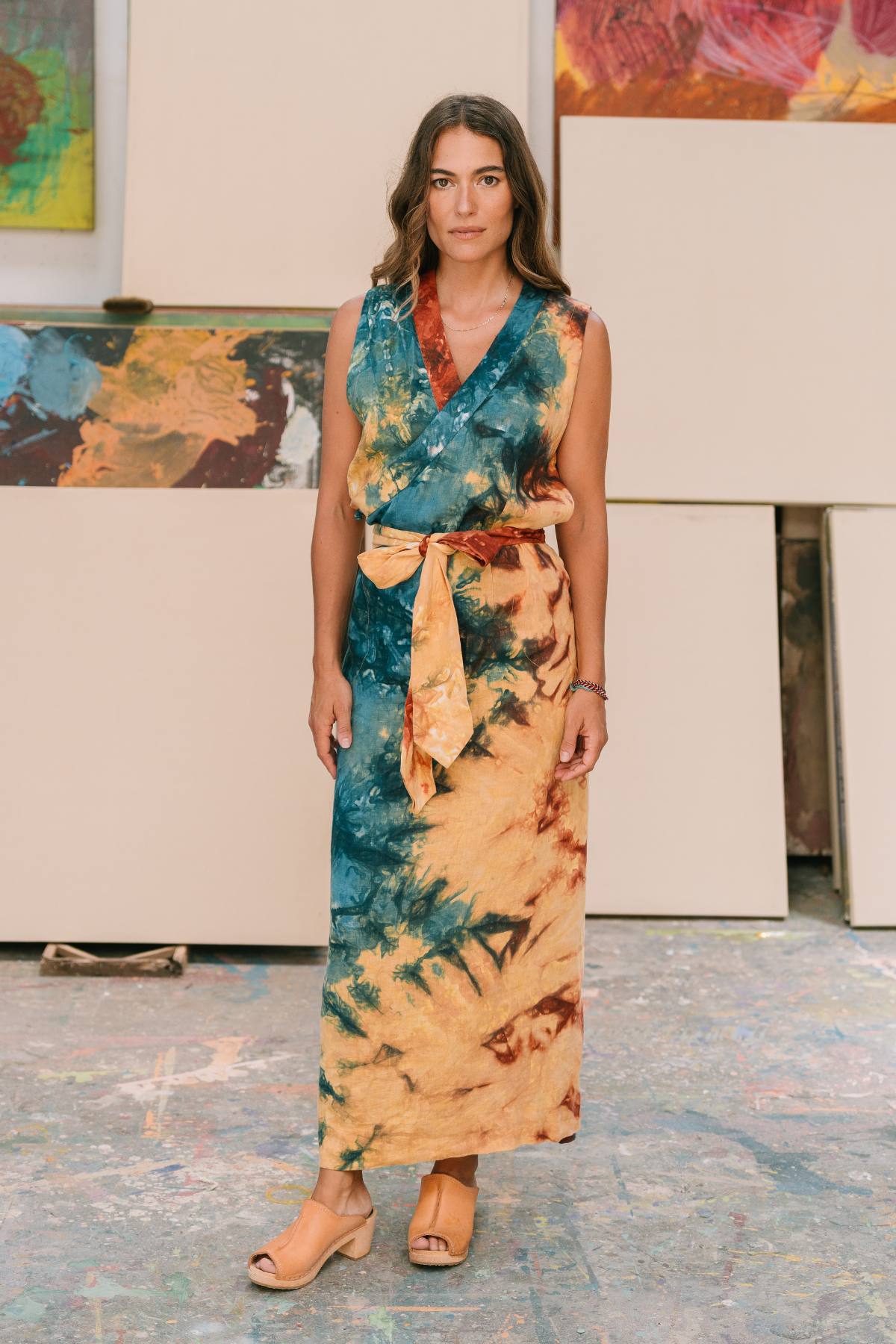
The second thing to understand is that Bali's definition of "casual" is more elevated than most Western visitors expect. Even everyday dress in Bali, particularly in Ubud, Seminyak, and Canggu, trends toward the considered. Sarongs for temple entry are a requirement, not a suggestion. Covered shoulders are expected in many spaces. And the aesthetic of the island, influenced by the deep visual culture of Balinese Hinduism, its offerings, its flowers, its extraordinary use of colour and pattern, rewards clothing that participates in beauty rather than ignoring it.
The Essential Fabrics for Bali: What Actually Works
Linen
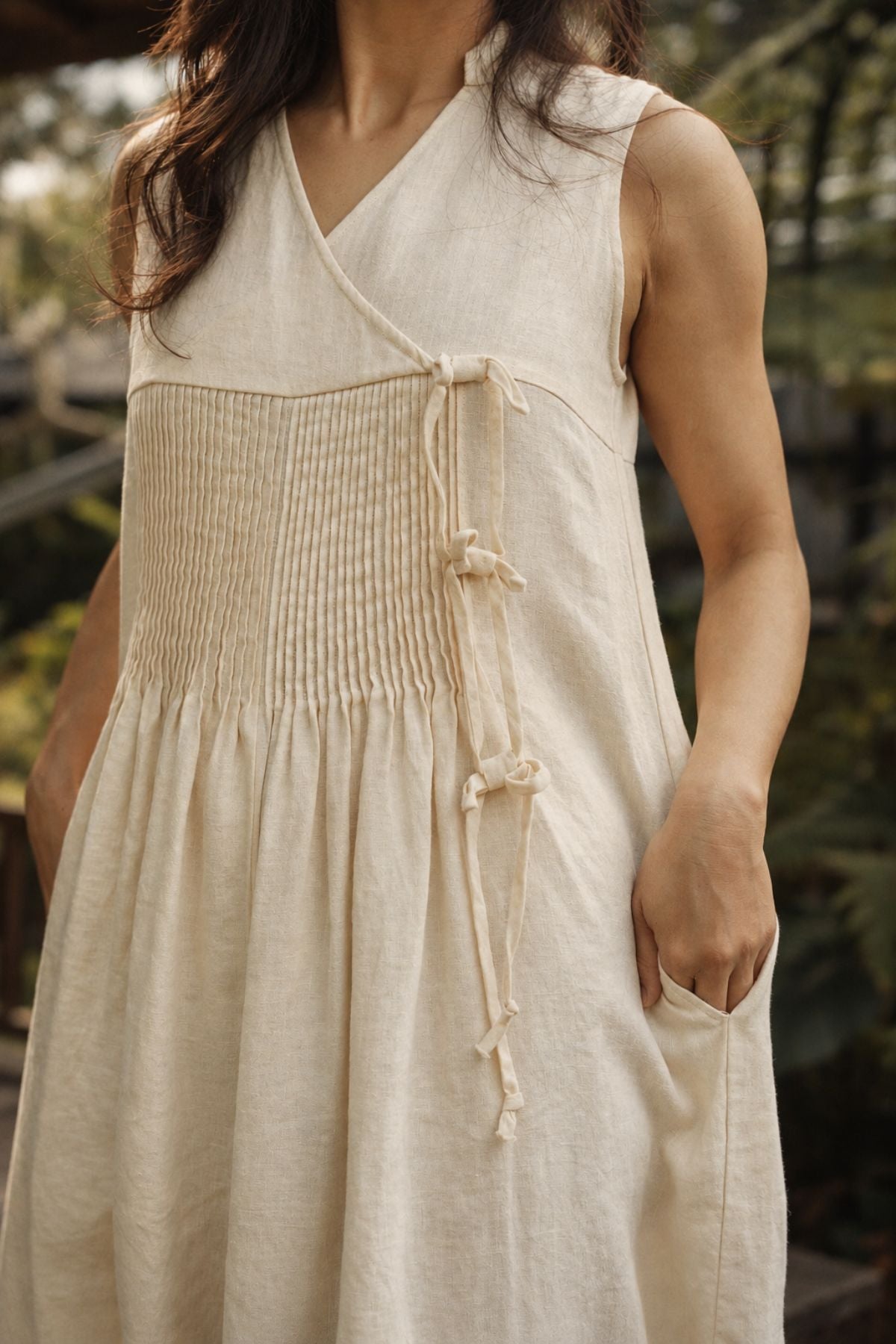
Linen is the most intelligent fabric you can bring to Bali. It is made from the flax plant, which means it is entirely natural and fully biodegradable. It is several degrees cooler against the skin than cotton. It breathes exceptionally well in heat and humidity. And it has a quality, unique among fabrics, of looking better slightly rumpled than perfectly pressed. In Bali, where nothing stays perfectly pressed for long, this is an important quality.
Linen is also the fabric with the longest history in conscious fashion, used by cultures from ancient Egypt to contemporary Bali precisely because it is reliable, beautiful, and honest. When we built Myrah Penaloza around linen as our primary fabric, it was not an aesthetic choice alone. It was a values choice. Natural. Breathable. Real.
Organic Cotton
For days when you want something lighter than linen, organic cotton is the best alternative. Specifically: cotton that has been grown without pesticides, which matters both for the environment and for the feel against skin. Conventional cotton is one of the most chemically intensive crops in the world. Organic cotton is not. In Bali's heat, you will feel the difference in how your skin responds over the course of a long day.
Silk
For evenings, for ceremonies, for the dinner that deserves to be marked, silk is unmatched. It is the lightest natural fabric, with a temperature-regulating quality that keeps you cool in heat and warm when the mountain air comes down in Ubud after dark. Botanically dyed silk, in particular, has a relationship with light that no synthetic fabric can replicate. It moves differently. It catches differently. It feels, when you put it on, like something that was made with care.
What to Wear in Bali: By Occasion
For Temple Visits
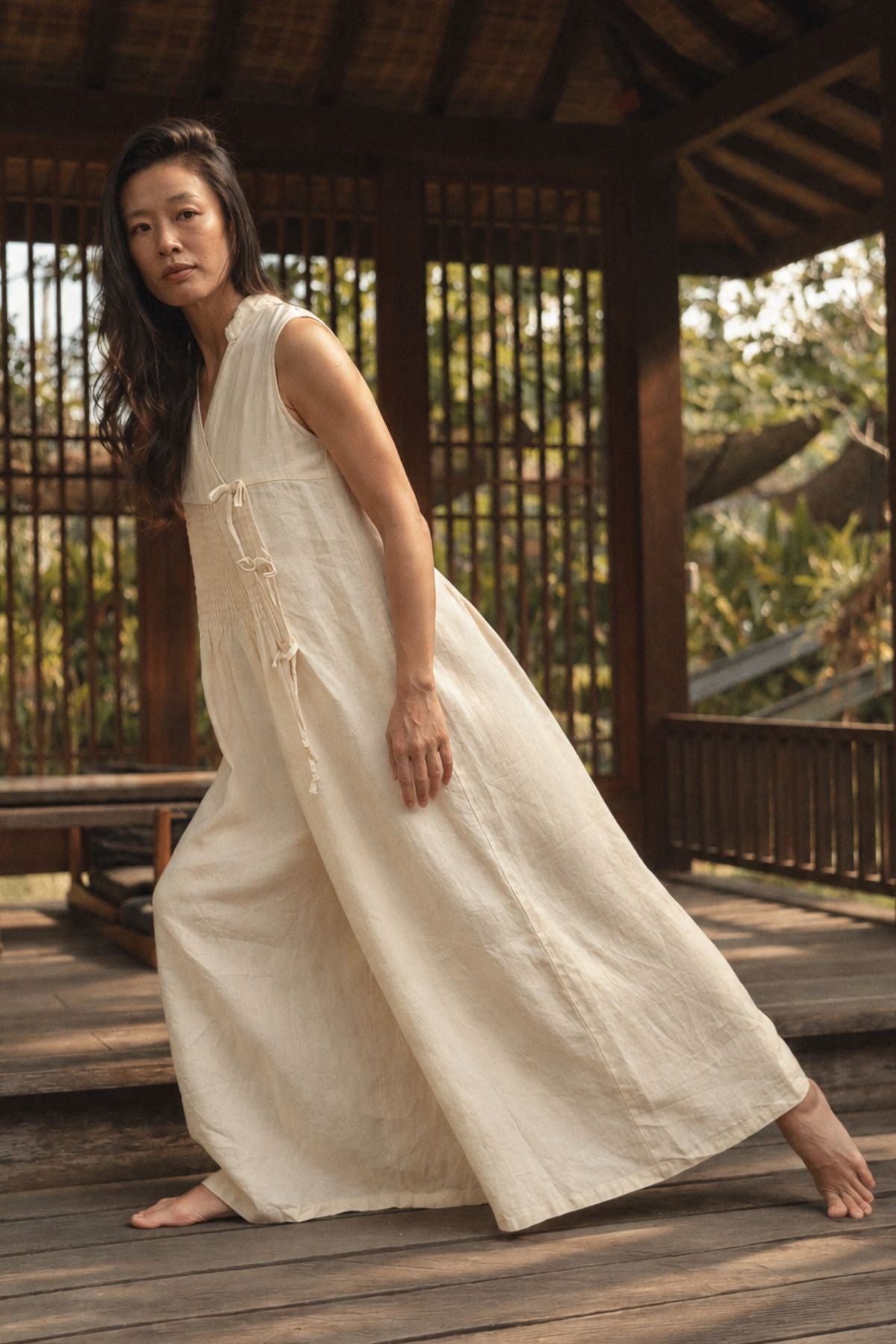
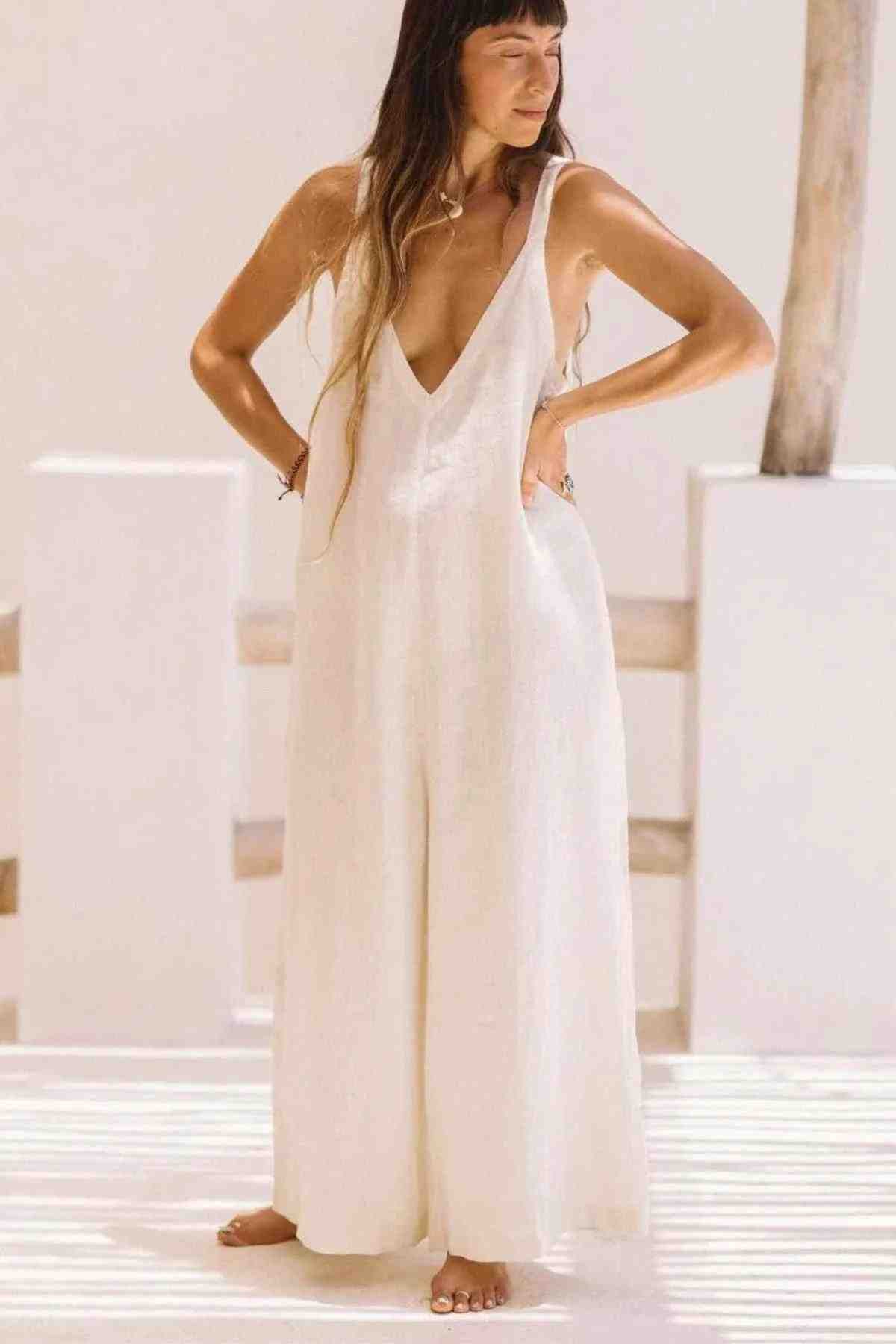
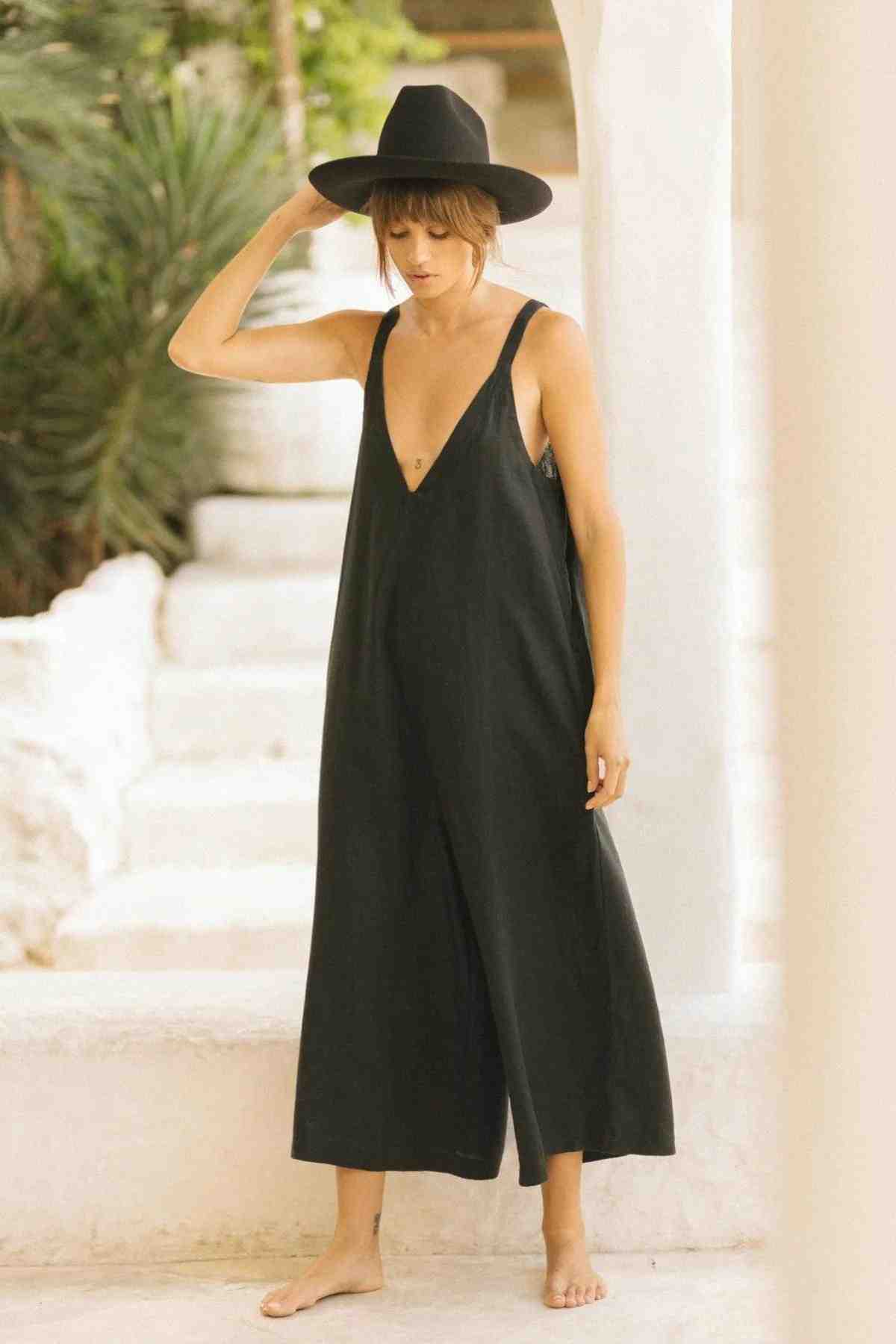
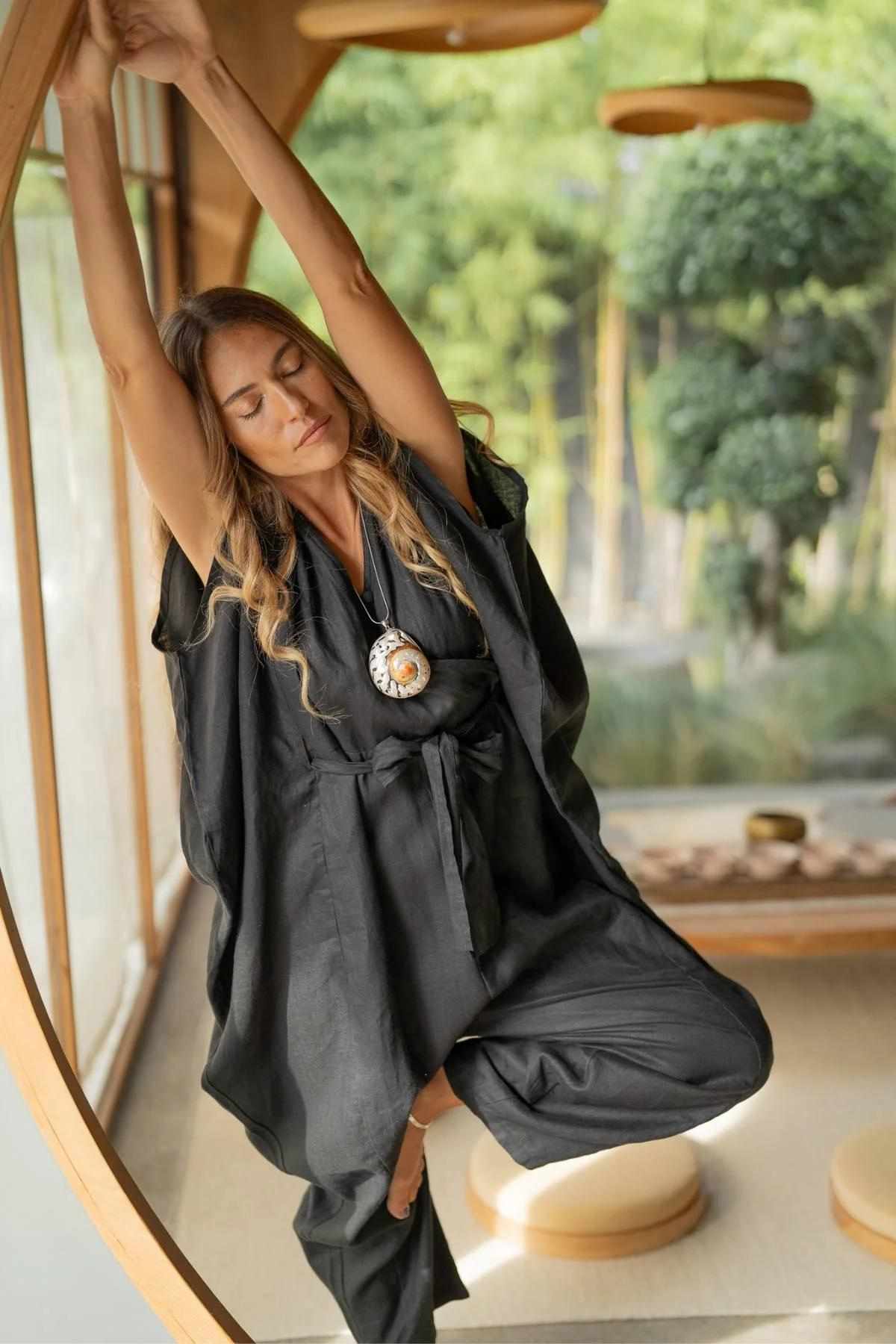
Every significant temple in Bali, including Tanah Lot, Uluwatu, Tirta Empul, and Pura Besakih, requires covered shoulders and a sarong covering the lower body. Most temples provide sarongs for rent at the entrance, but arriving already dressed with intention changes the experience of entering. A long linen playsuit with a wrap or a wide-sleeve linen top with a flowing linen trouser is both practical and appropriate. You are entering a sacred space. Your clothing can acknowledge that.
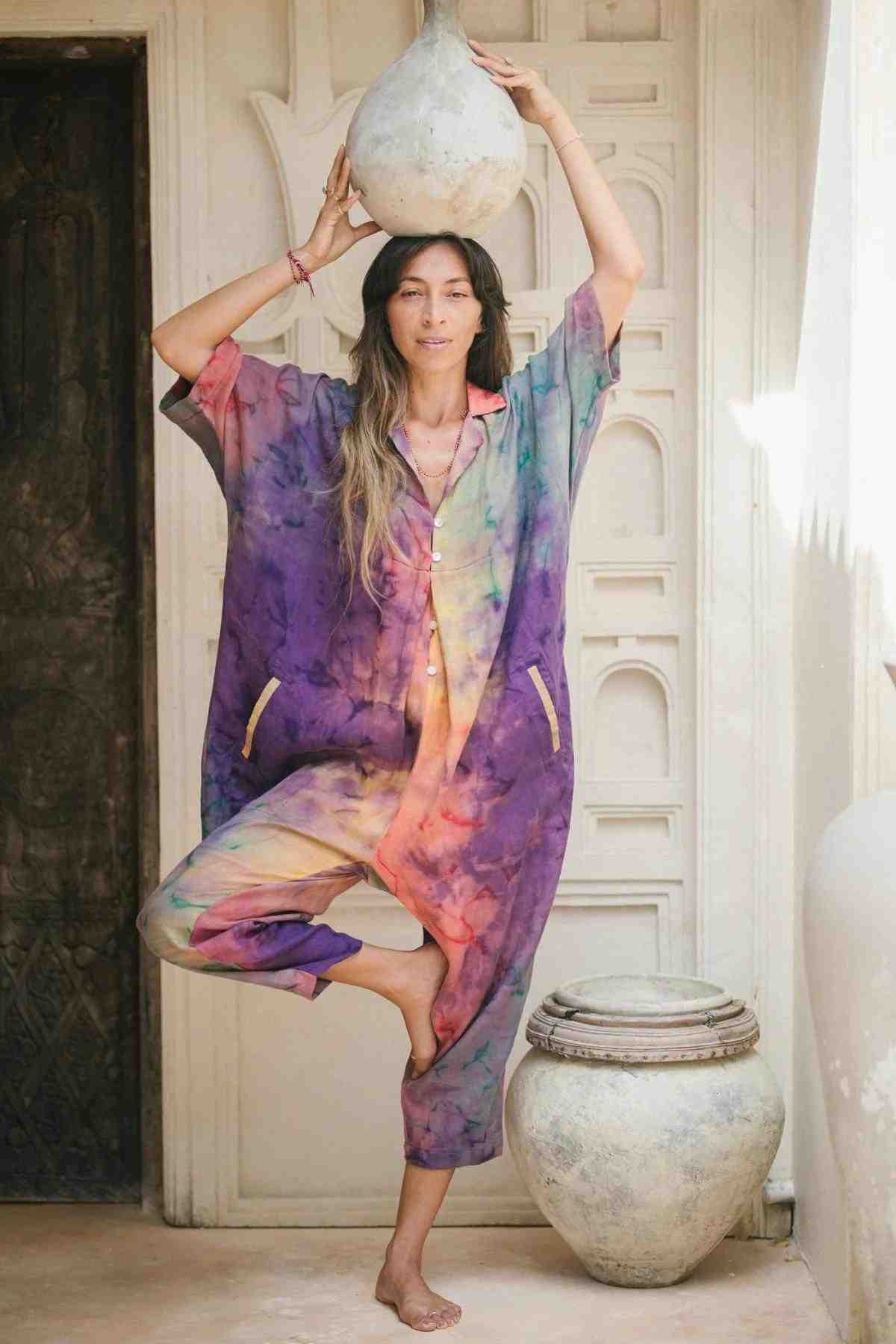
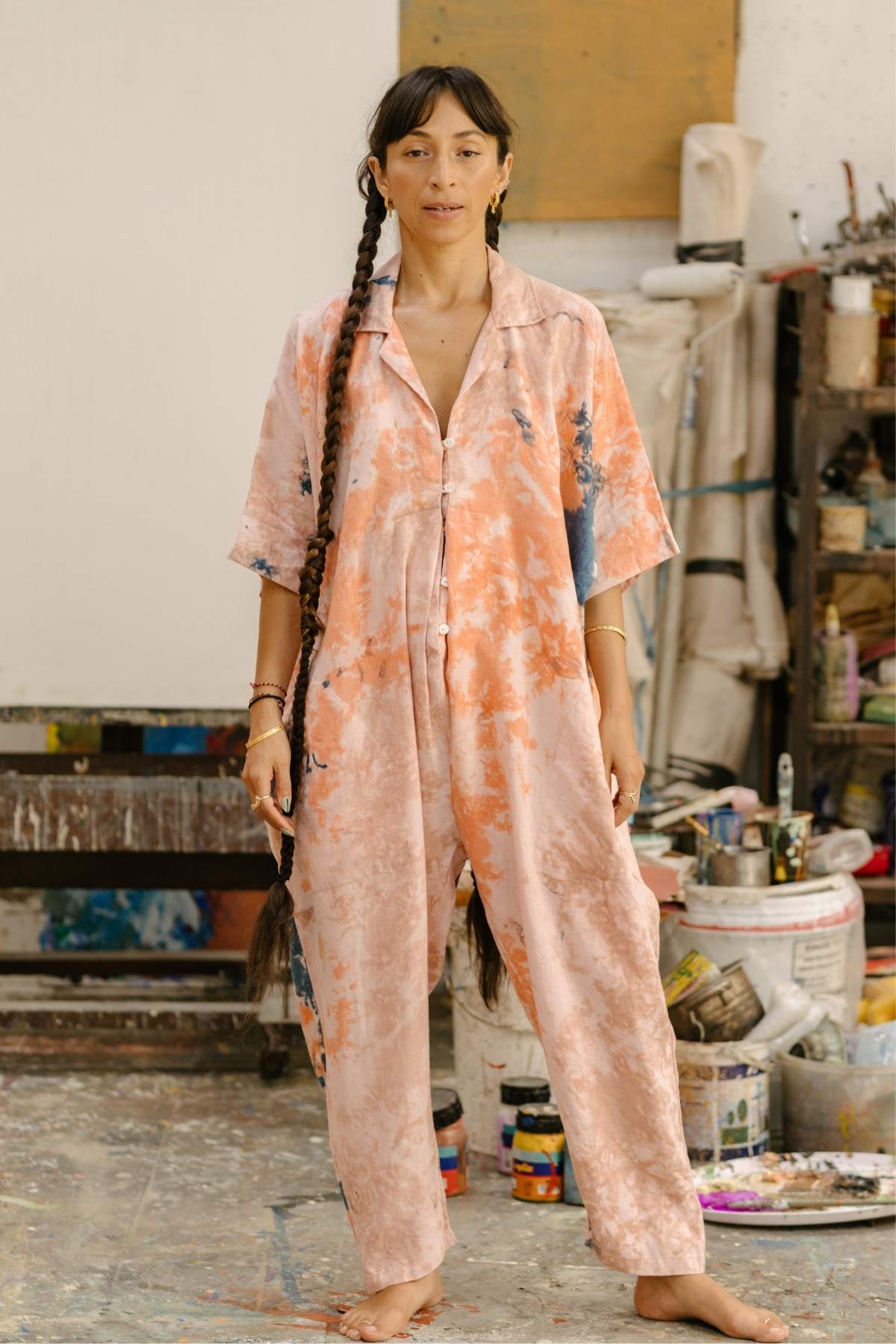
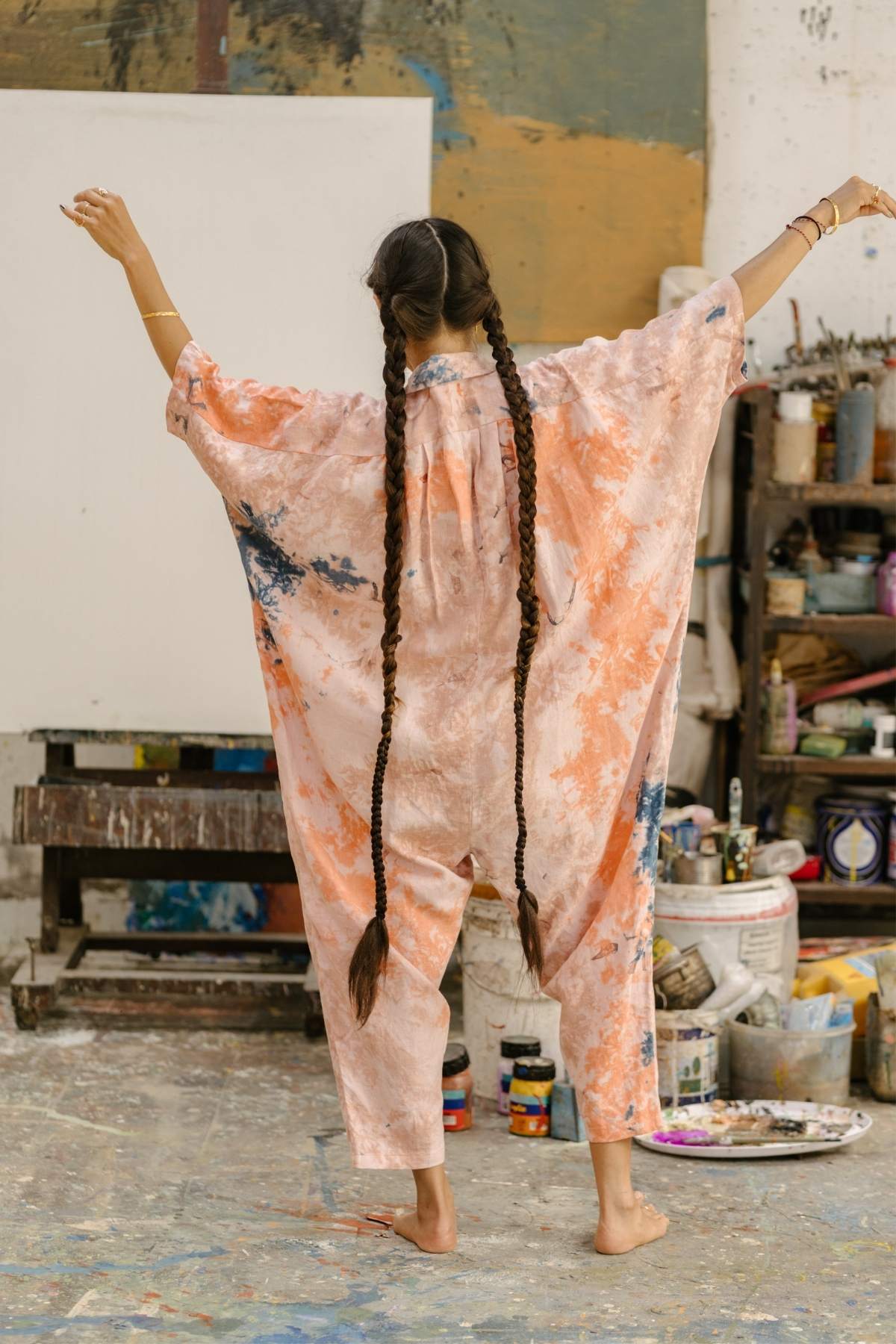
The Kuan Yin Playsuit was named for the goddess of compassion, and it was designed, intentionally, with the wide sleeve and generous drape of ceremonial garments across several Asian traditions. It is one of the pieces we most often see women wearing when they visit temples. It is not incidental that it reads as appropriate without requiring modification.
For Daily Life in Ubud
Ubud is Bali's creative and spiritual centre, and its streets are where the island's aesthetic is most fully expressed. Yoga studios, art galleries, organic cafes, rice terrace walks, and the daily rituals of a genuinely Hindu town all coexist here. The dress code, while never rigid, trends toward the considered and the colourful.
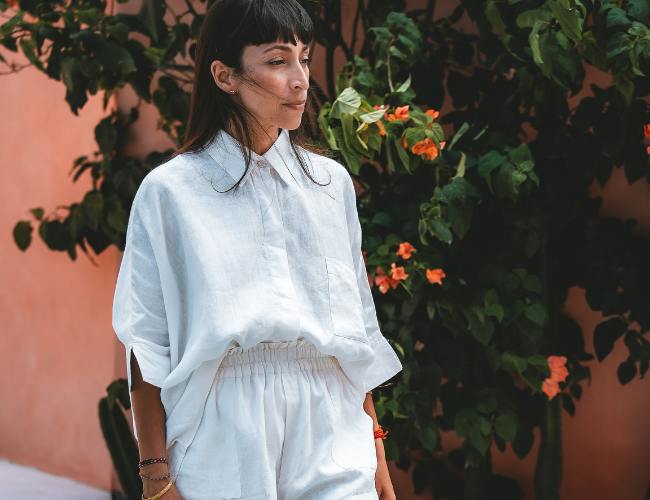
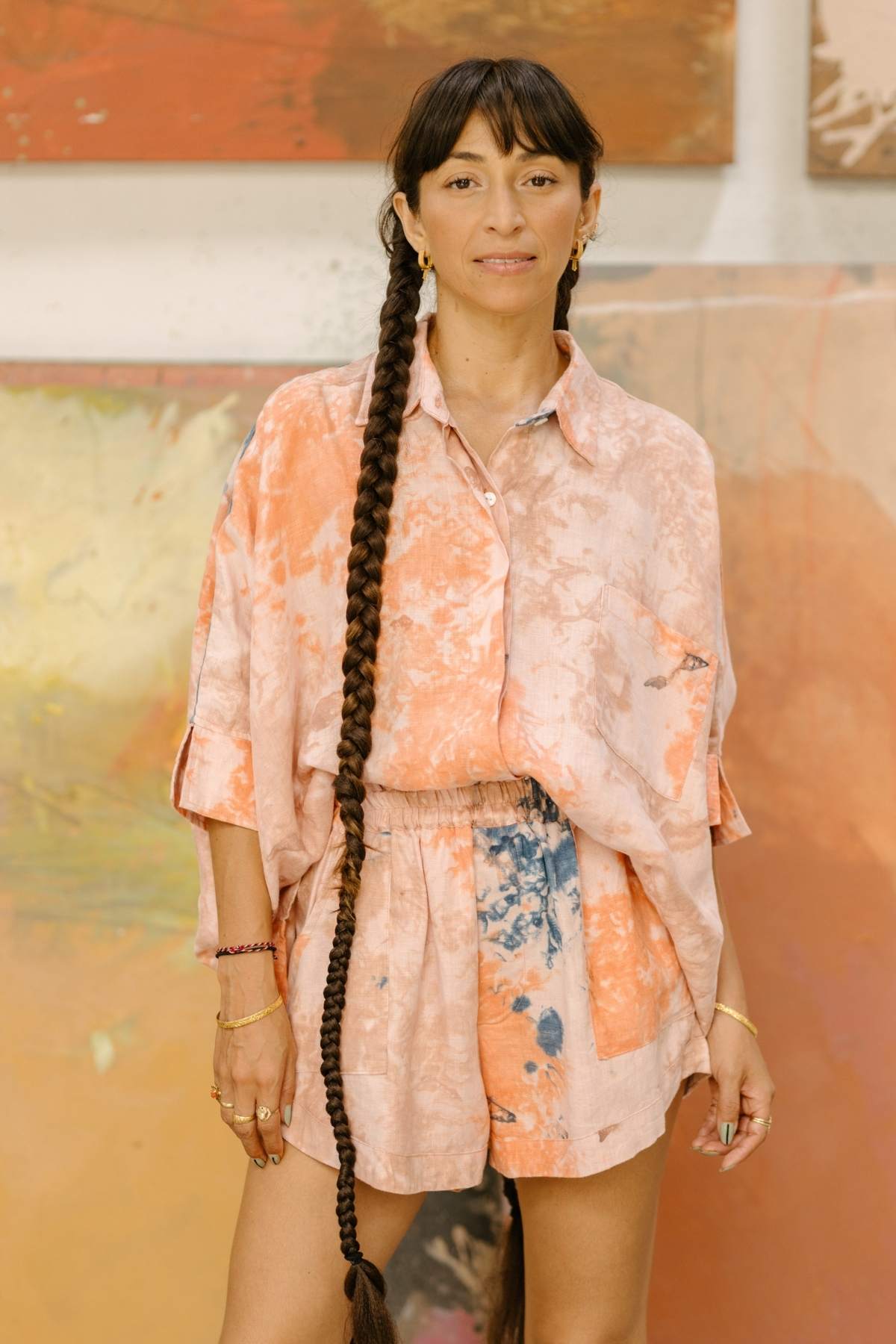
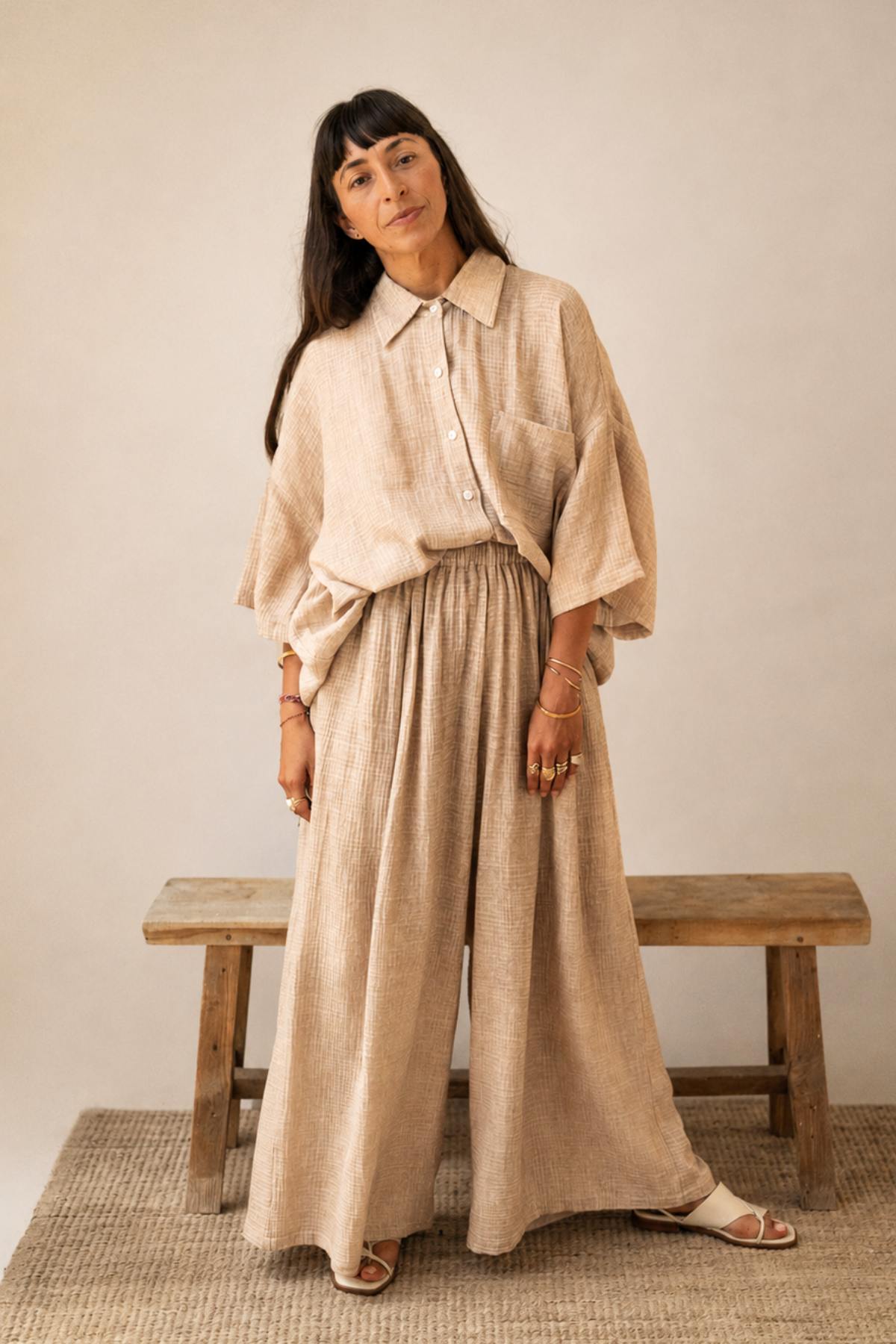
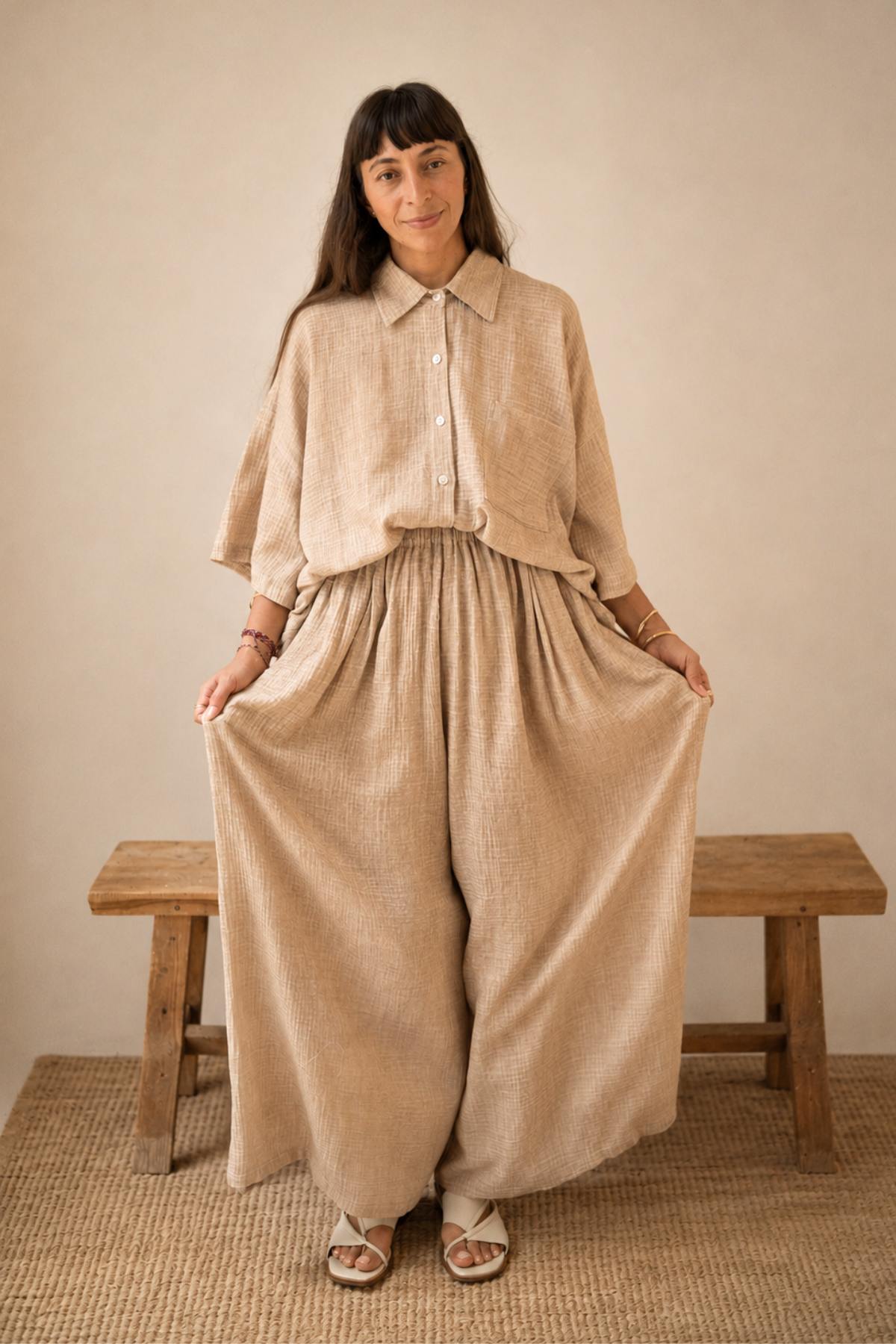
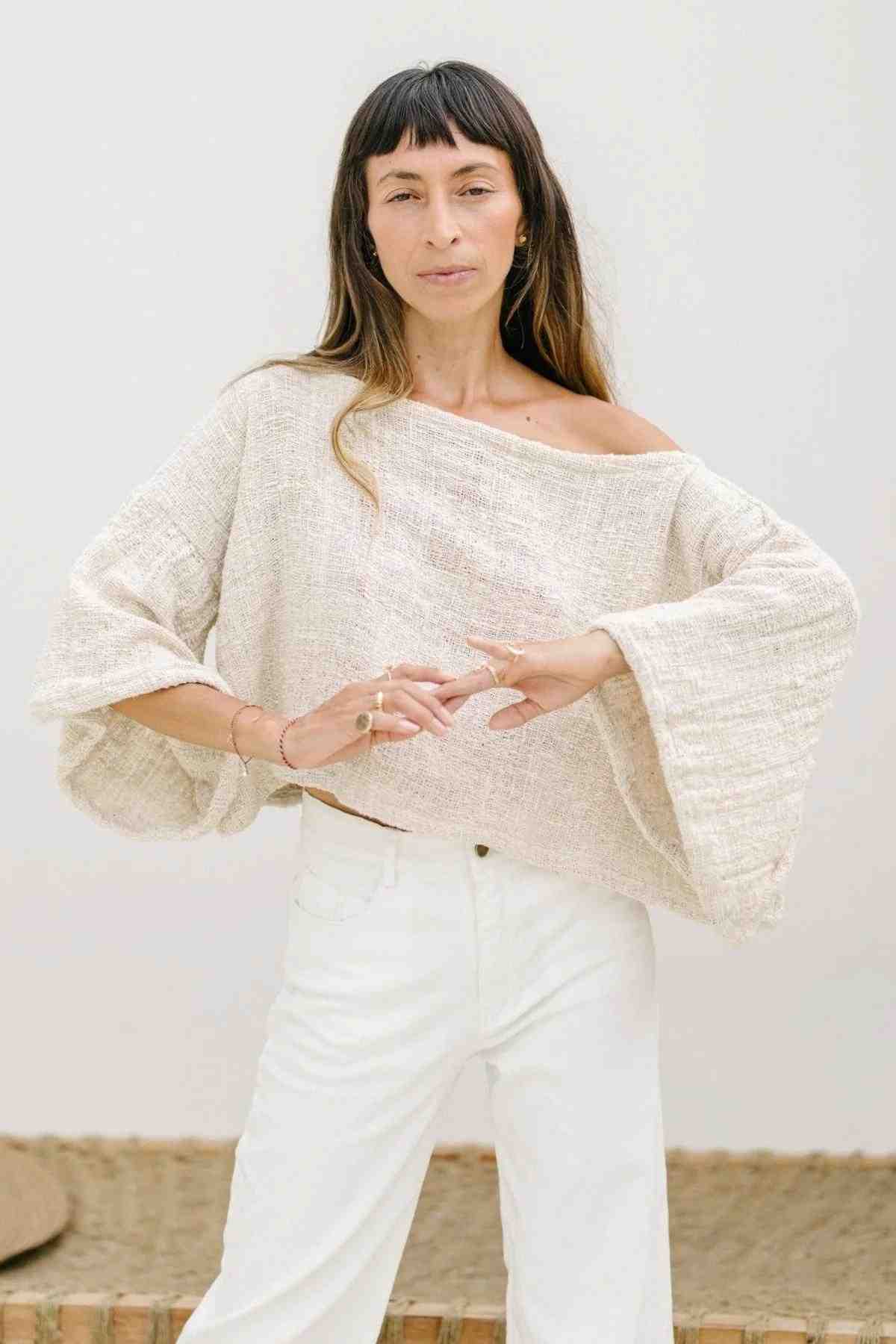
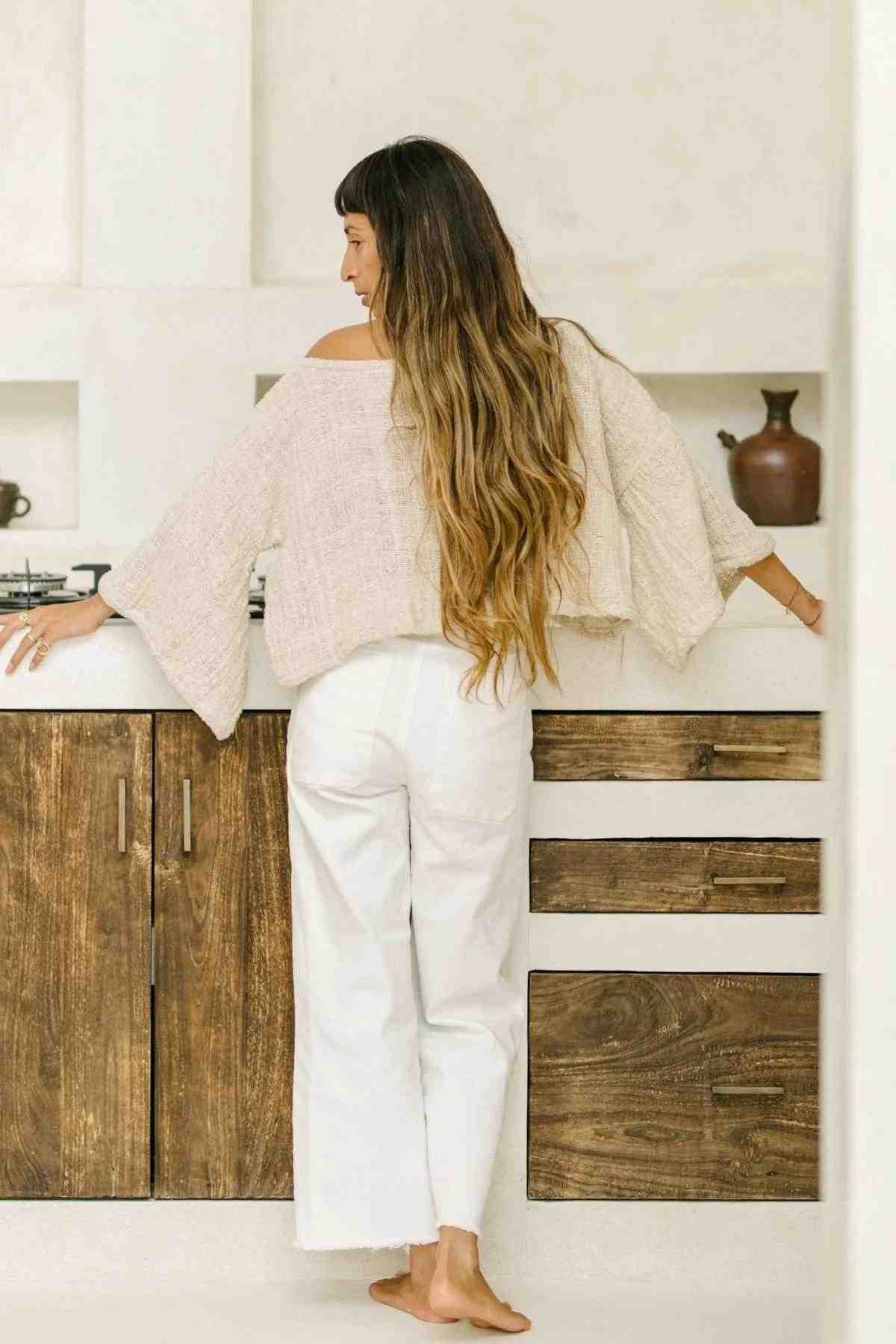
A linen set, either matching trousers and a button-down top or a wide-leg pant with a linen cami, is the Ubud uniform for a reason. It is cool enough for the heat, covered enough for the culture, and beautiful enough for the environment. The Suka Button Down Linen Set is the piece most of our customers reach for first in Ubud. Some reach for it every day.
For Seminyak and Canggu
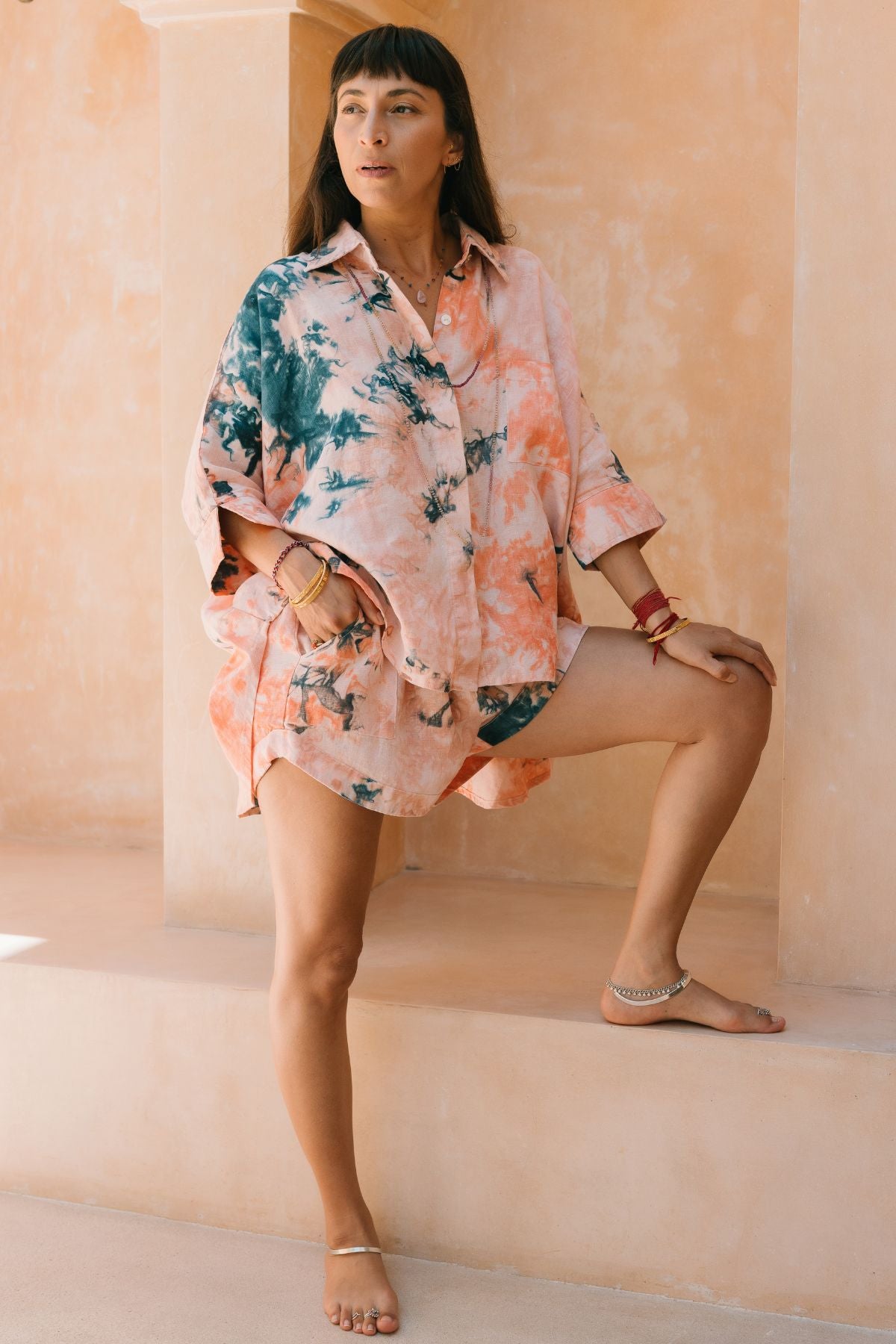
The southern beach towns of Seminyak and Canggu operate at a different energy than Ubud, more international, more evening-forward, more invested in the ritual of the sunset. Here, a playsuit in a botanical colorway, a silk piece for evening, or a kaftan worn over a swimsuit and never removed because it is already everything you need, all of these work beautifully.
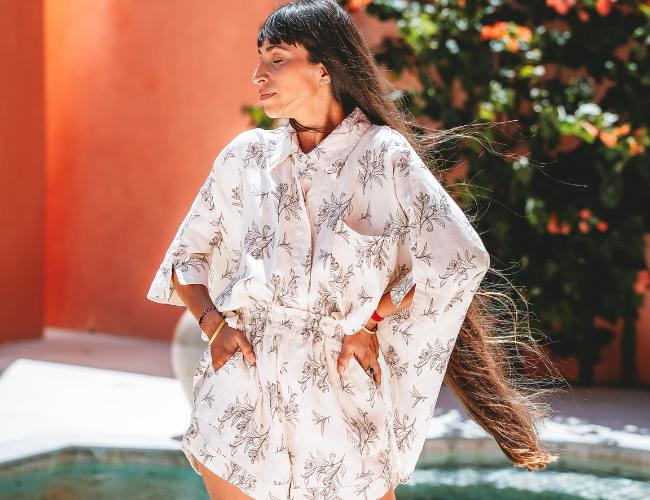
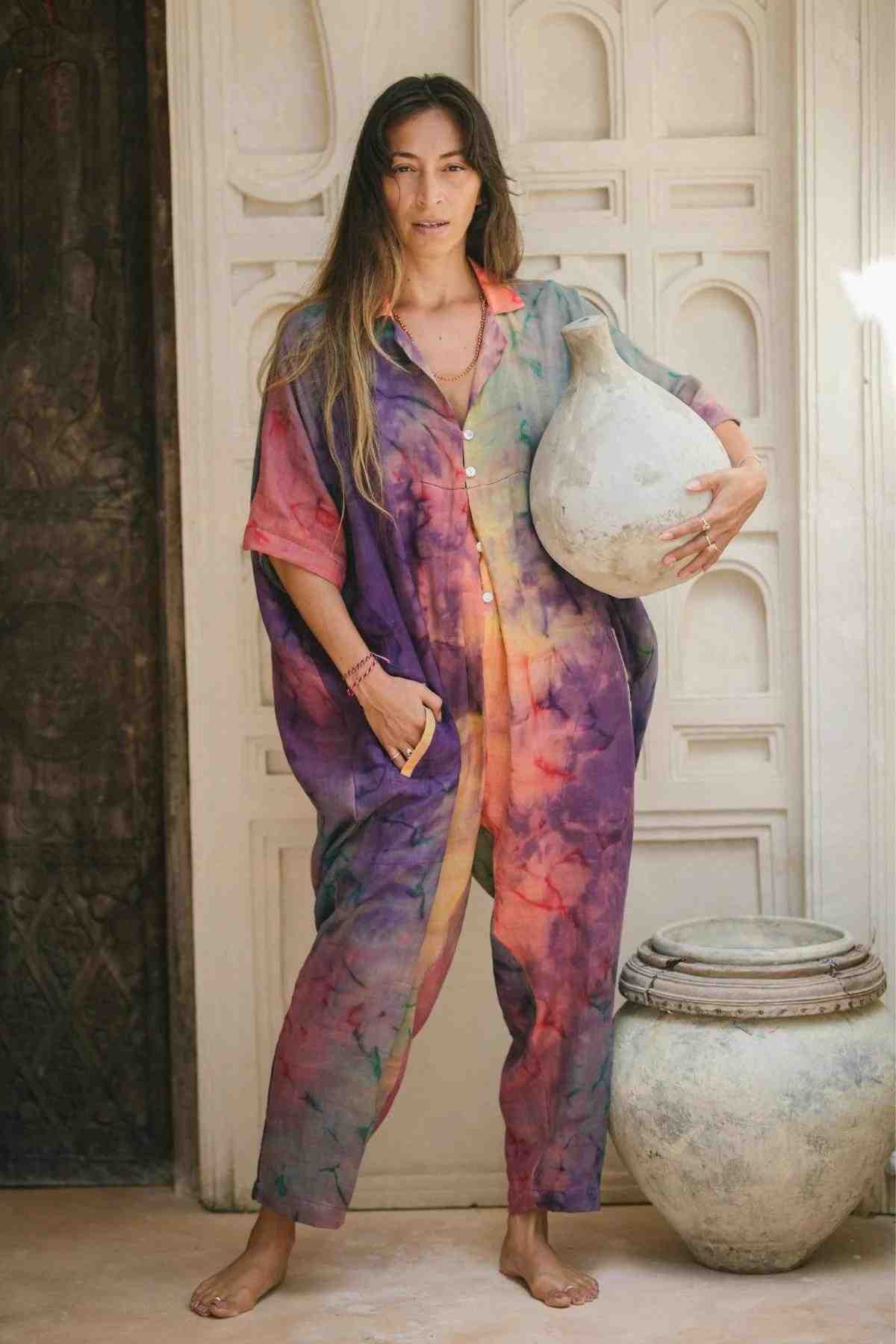
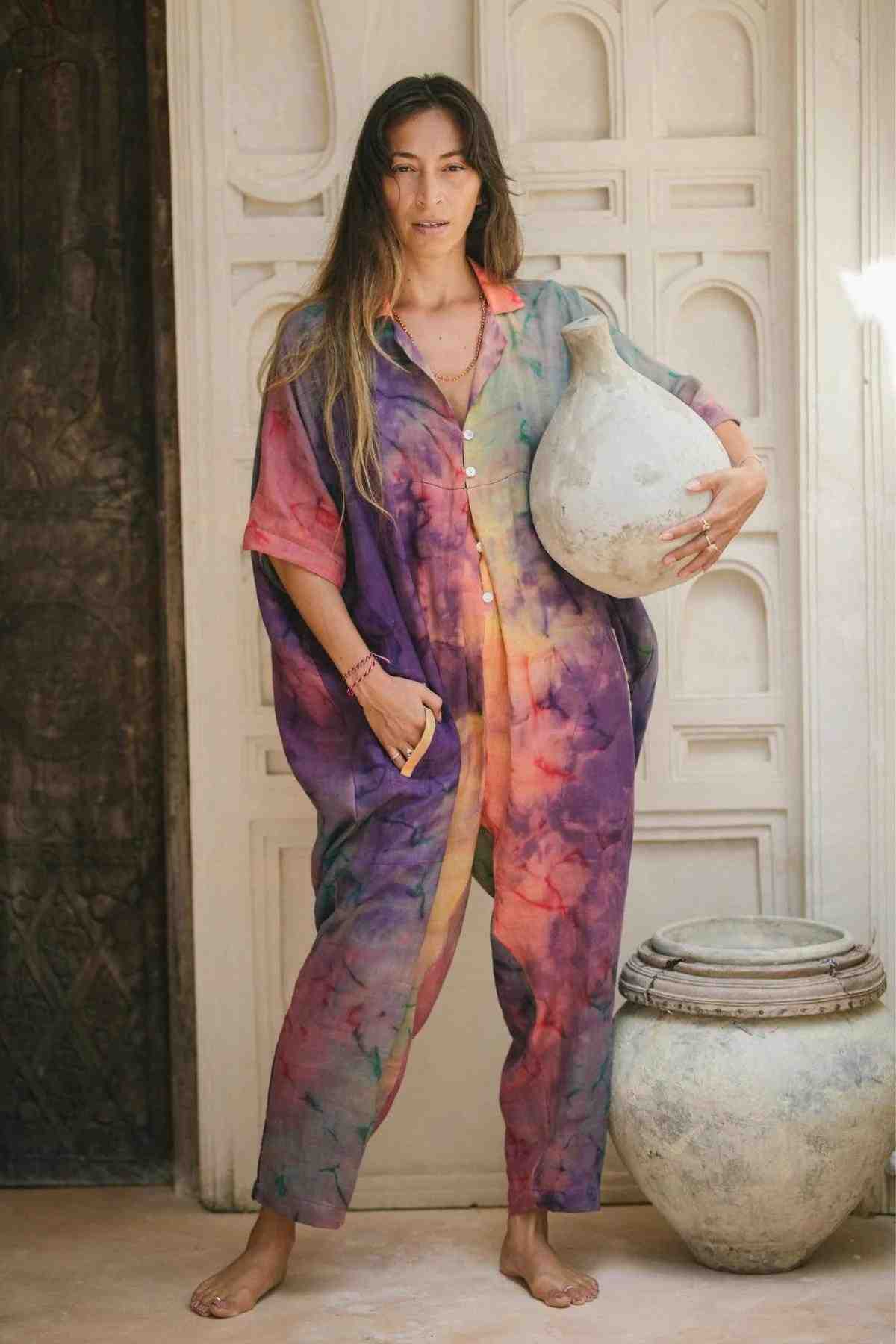
The Sat Torri Rainbeau Playsuit was photographed in Bali, lives in Bali, and belongs in Bali the way the Rainbeau colorway, those botanical purples and golds and warm earthy browns, belongs in the landscape that made it. Women wear it from the rice terraces to the beach to the dinner table and never need to change. This is the right approach to packing for Bali.
For Beach Days
The most useful beach piece is not the one that looks the most like a beach cover-up. It is the one you can wear all day and into the evening without thinking about it again. A kaftan. A generous linen playsuit. Something that goes over a swimsuit in the morning and is still entirely appropriate for the walk back through the village as the light changes.
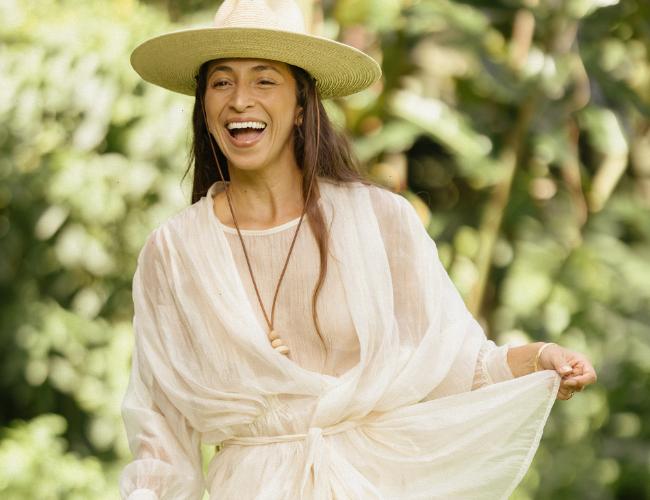
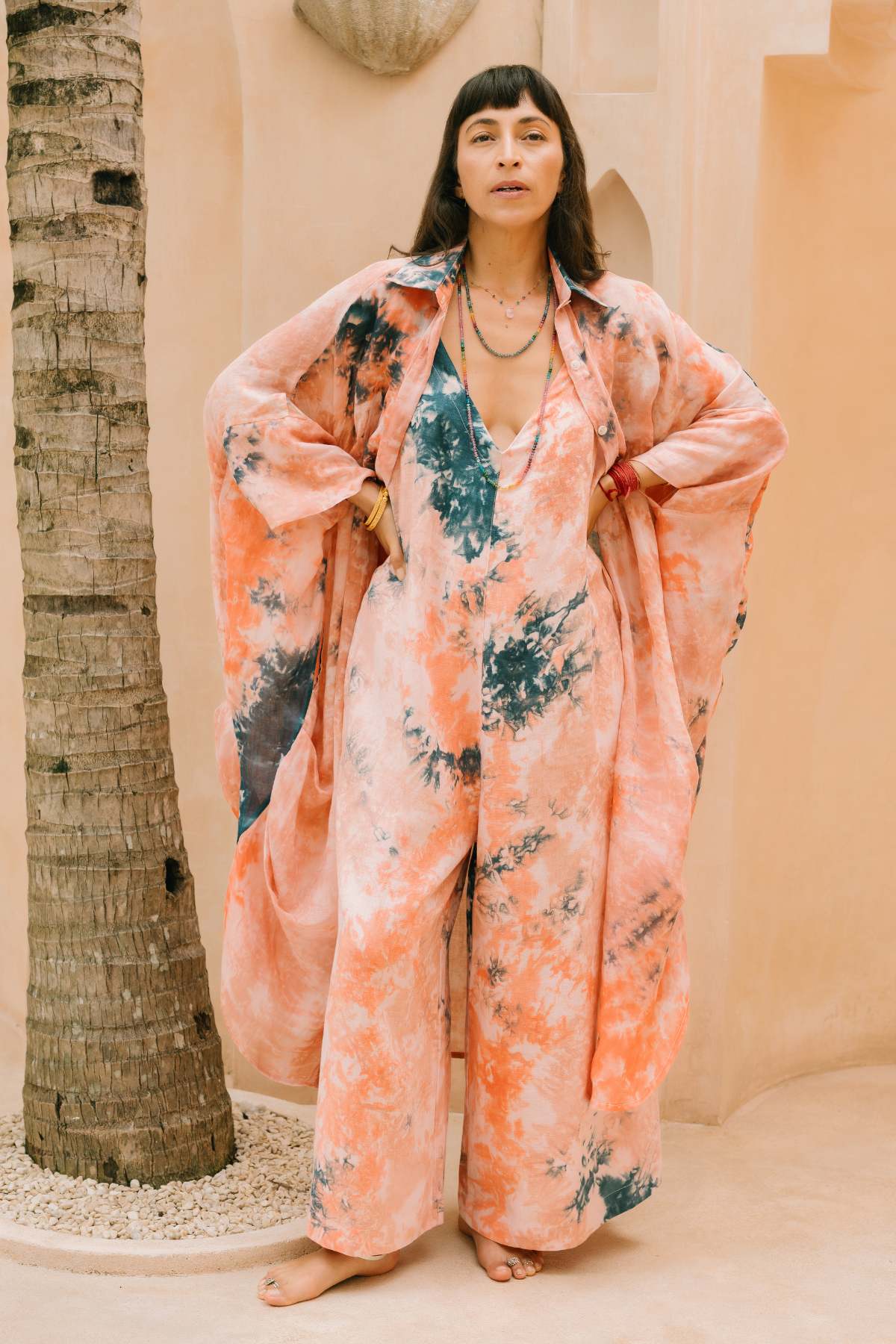
The Virgo Moon Kaftan is the piece we see most often on Bali's beaches, and not because it was designed for them. It was designed to allow a woman to be completely herself, which turns out to be exactly what the beach asks of you.
For Ceremonies and Sacred Occasions
If you are fortunate enough to attend a Balinese ceremony, a cremation, a temple festival, a community gathering, the expectation is full coverage in colours that do not include white, which is worn for mourning, or black, unless paired with another colour. Bright colours, particularly yellows, oranges, and the botanical purples and golds we use in our Rainbeau dyeing, are entirely appropriate and welcomed. Dress as if you mean it. The Balinese notice.
How Many Pieces Do You Actually Need?
Less than you think. Bali is a place that rewards travelling light, and natural fabrics in generous silhouettes can be reworn without distress. The ideal Bali packing list, if you are staying ten to fourteen days, is closer to six pieces than sixteen.
Two linen sets (one for daytime Ubud, one for evenings). Two playsuits (one for temples and cultural sites, one for beaches and cafes). One kaftan that works over a swimsuit and under a Bali sunset. One silk piece for the evenings that deserve something more.
That is it. That is enough. And if every piece is made from natural fabric, made by hand, made with care, then the whole wardrobe folds into a carry-on and arrives in Bali the way Bali deserves to be arrived to: lightly, intentionally, ready.
What to Avoid Packing for Bali
Synthetic fabrics of any kind. You will be uncomfortable and you will know it. Anything that requires dry cleaning or careful handling. Bali does not accommodate fragility well, in clothing or in people. Very tight silhouettes. The culture, the climate, and the experience all ask for ease of movement. Fast fashion pieces that will be worn once and discarded. Bali is a place with a profound relationship to the sacred and the handmade. What you bring into it reflects something about how you are choosing to enter it.
A Note on Buying in Bali
Bali has a rich textile tradition and an extraordinary craft culture. It is one of the best places in the world to buy clothing that is genuinely made by hand, from natural materials, by people who are paid a real wage to do it. When you buy in Bali, buy slowly. Ask where it was made. Ask who made it. The answers, when they are honest, are always worth hearing.
We are a Bali brand. We live here. We make here. Our 30 artisan families have been making clothing in their homes and in small workshops they own themselves, in the villages around Pererenan and Canggu and Ubud, since before this brand had its name. If you come to Bali and want to find us, you can visit our studio in Pererenan. We would be glad to show you how it is made.
For the full edit built for exactly this kind of travel, explore our linen resort wear collection.
With love from Bali,
Myrah 🤍

|
Pack for Bali The Bali Collection: Handmade Where It Lives Shop the Collection → |
|
The Muse-Letter Dress for the woman you're becoming. Join the Muse-LetterUnsubscribe any time. No spam, ever. |


Leave a comment
This site is protected by hCaptcha and the hCaptcha Privacy Policy and Terms of Service apply.