
What to Look for in a Linen Dress: A Guide for Women Who Actually Wear It
You pick up a linen dress and it feels right immediately, or it doesn’t. The hand of the fabric, the weight of it, the way it drapes over your palm before you have even thought about whether you like the color, your body already knows. Most women who love linen describe choosing it this way. Not analytically. Instinctively. And yet there is a great deal that the analytical mind can learn about linen that makes that instinct more reliable, so that what feels right on the rack also feels right after fifty washes and five years.
This is what we know about linen after years of sourcing, making, and wearing it daily in Bali, and what we think every woman who loves natural fabrics deserves to understand before she spends money on a piece she intends to keep.
Linen Does Not Have a Thread Count
Thread count is a metric designed for cotton. It measures the number of threads woven per square inch, and in cotton, a higher count generally signals a finer, denser weave. In linen, this measurement does not apply in the same way. Linen fibers are naturally coarser and longer than cotton fibers, and the quality of a linen fabric is measured not by thread count but by the weight of the fabric, the length and consistency of the flax fibers used, and the finishing process applied after weaving.
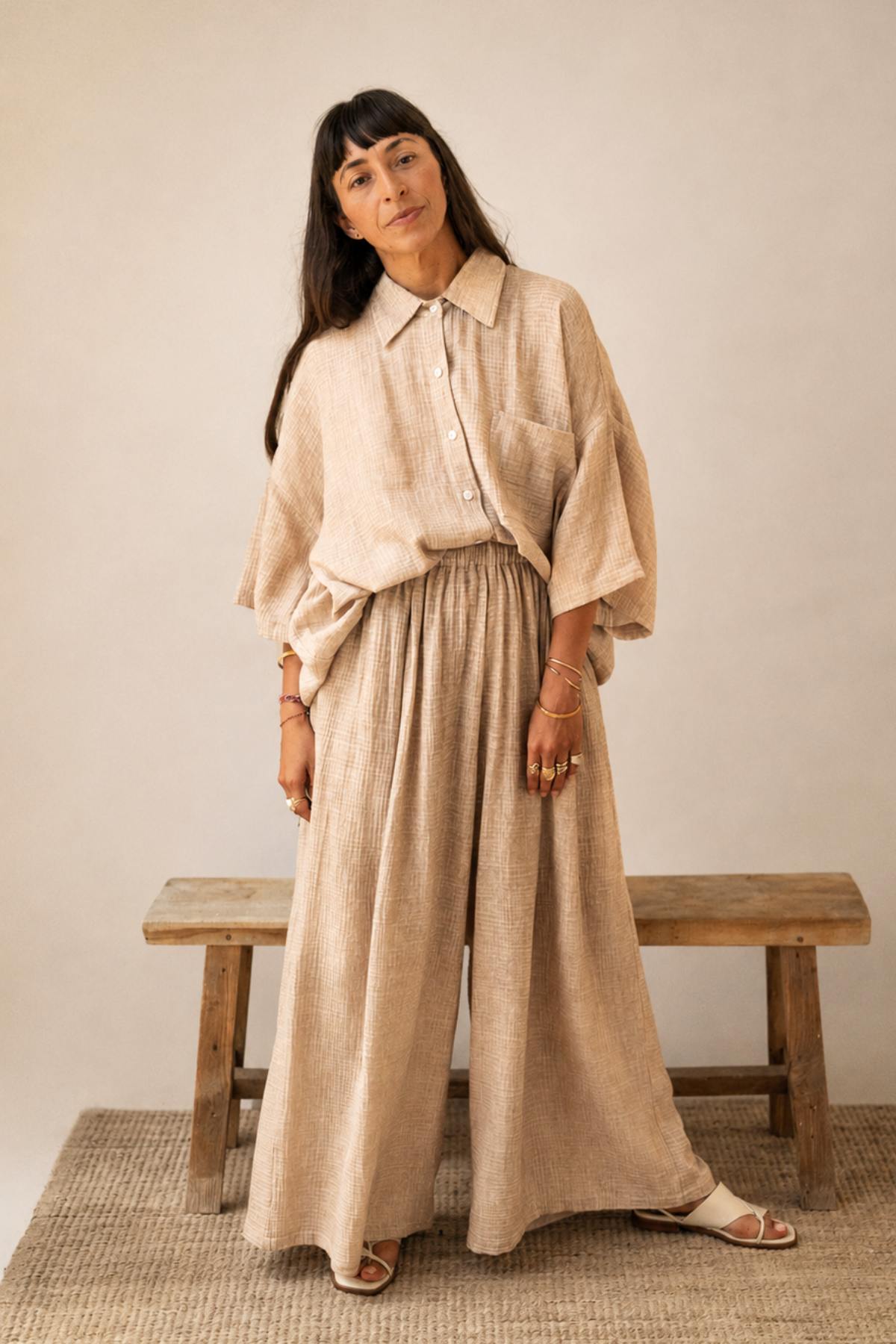
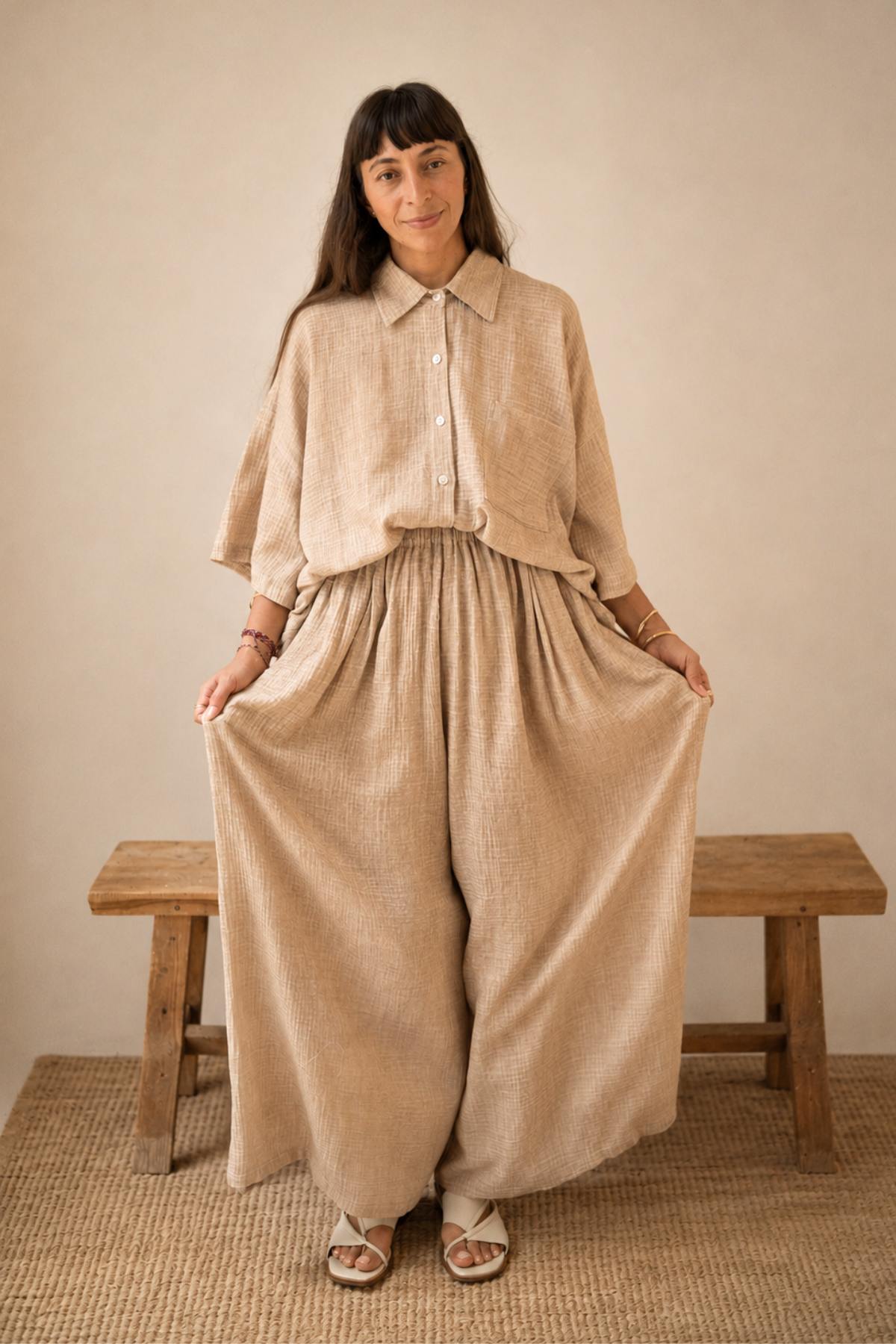
What you are looking for instead: fabric weight, typically measured in grams per square meter (GSM). A lightweight linen (around 130–150 GSM) will be sheer and cool, ideal for summer. A medium-weight linen (180–210 GSM) drapes beautifully and holds structure while remaining breathable. This is what most quality linen clothing is made from. A heavier linen (above 250 GSM) is more suited to upholstery or outerwear than to garments you want to move in.
The Difference Between Pure Linen and Linen Blends
This is the most important distinction a conscious buyer can make, and it is the one most often obscured in product listings. Pure linen is made entirely from flax plant fibers. A linen blend is mixed with cotton, viscose, or in lower-quality products, polyester.
Linen blends are not inherently dishonest, but they behave differently and age differently than pure linen. A linen-cotton blend will wrinkle less but also breathe less. A linen-polyester blend, which should never be called slow or sustainable fashion, will hold heat, resist moisture-wicking, and degrade in a way that pure linen does not.
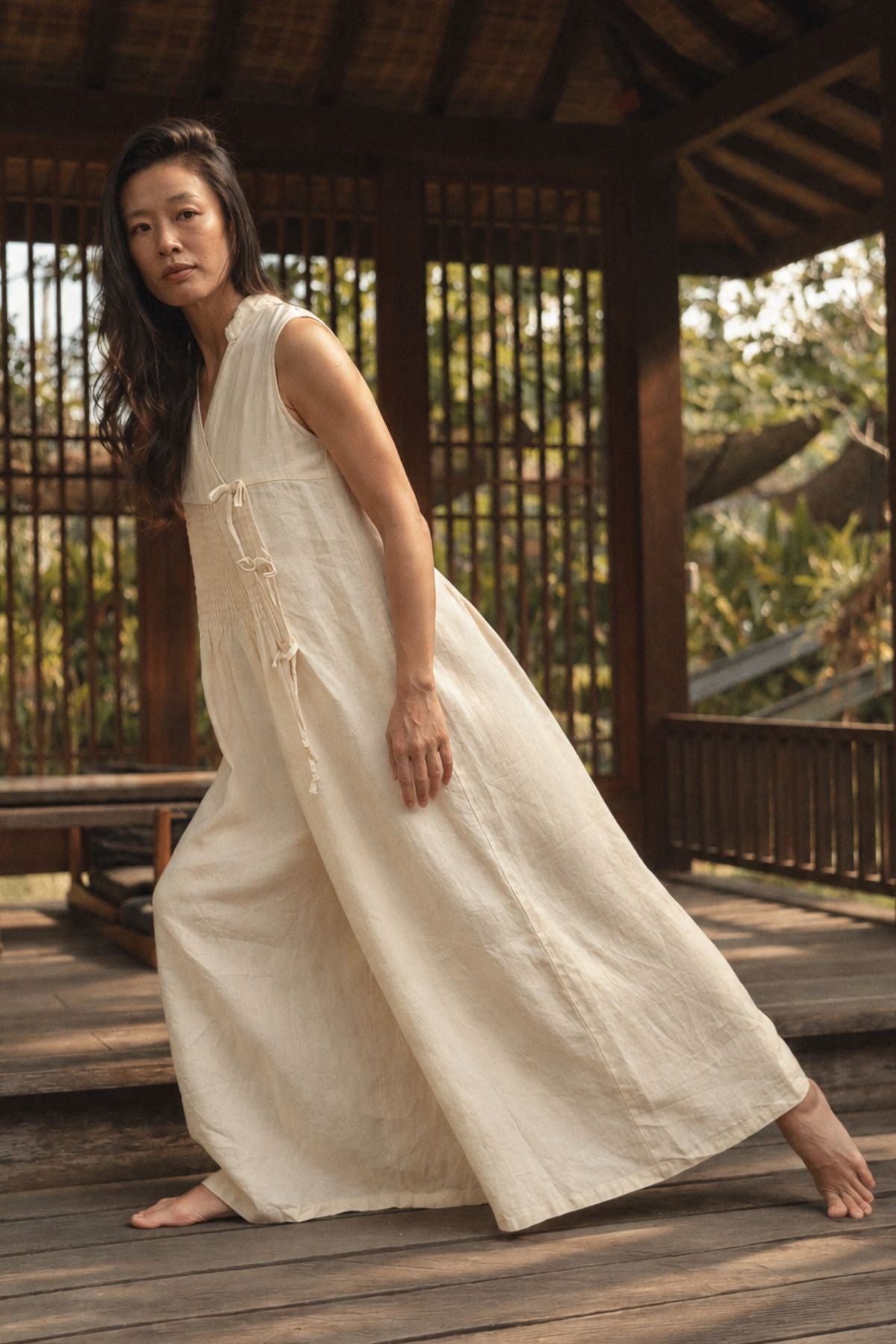
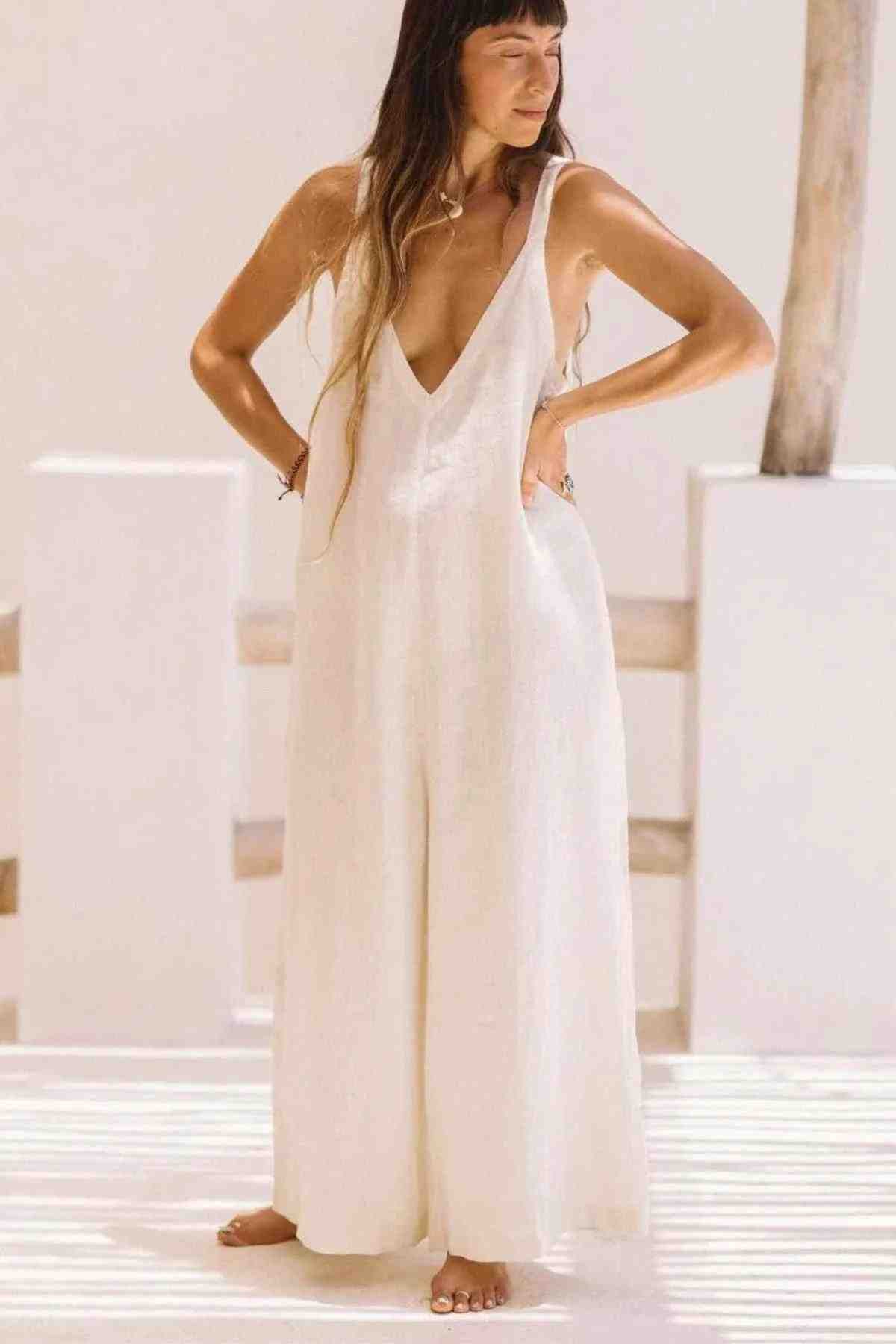
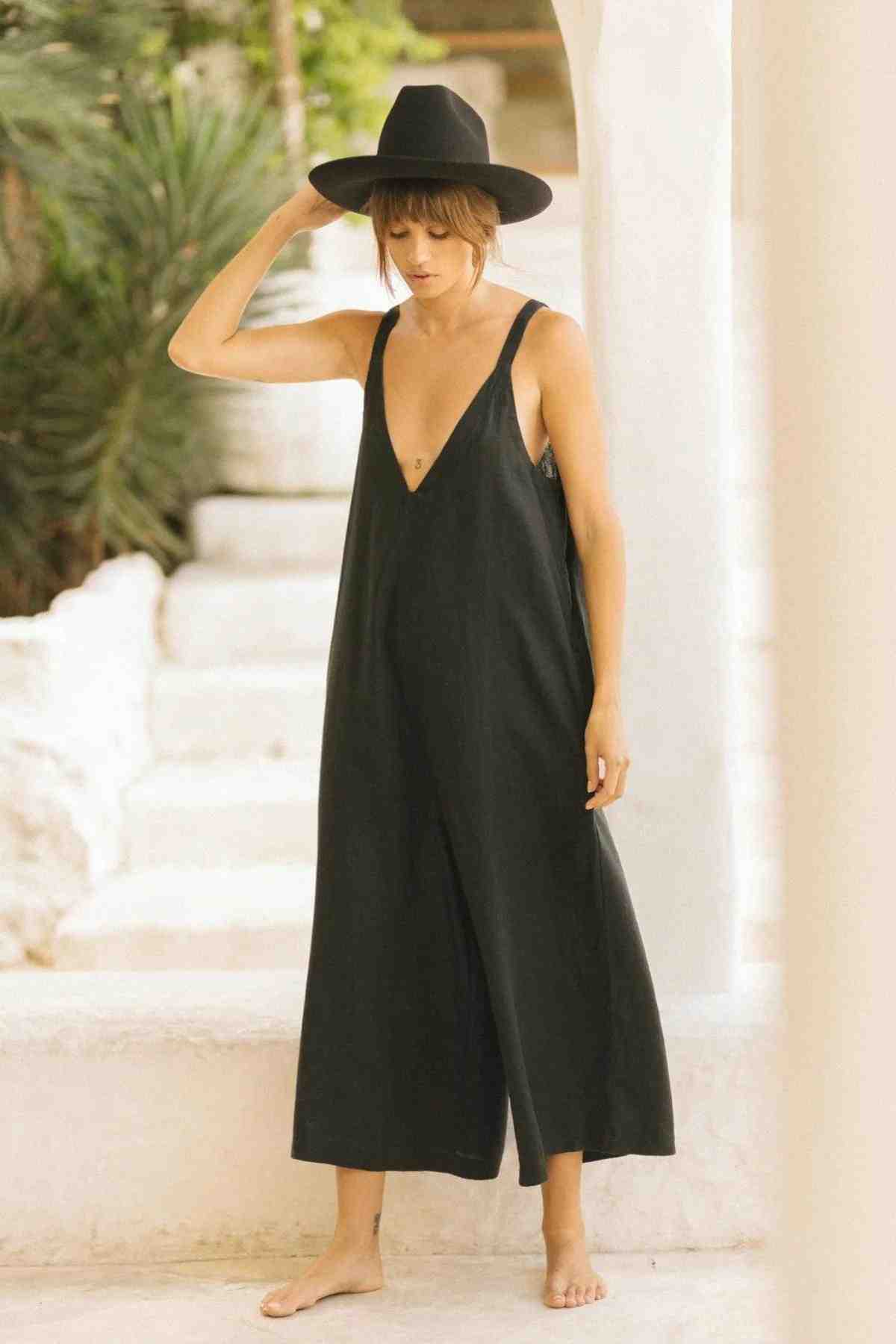
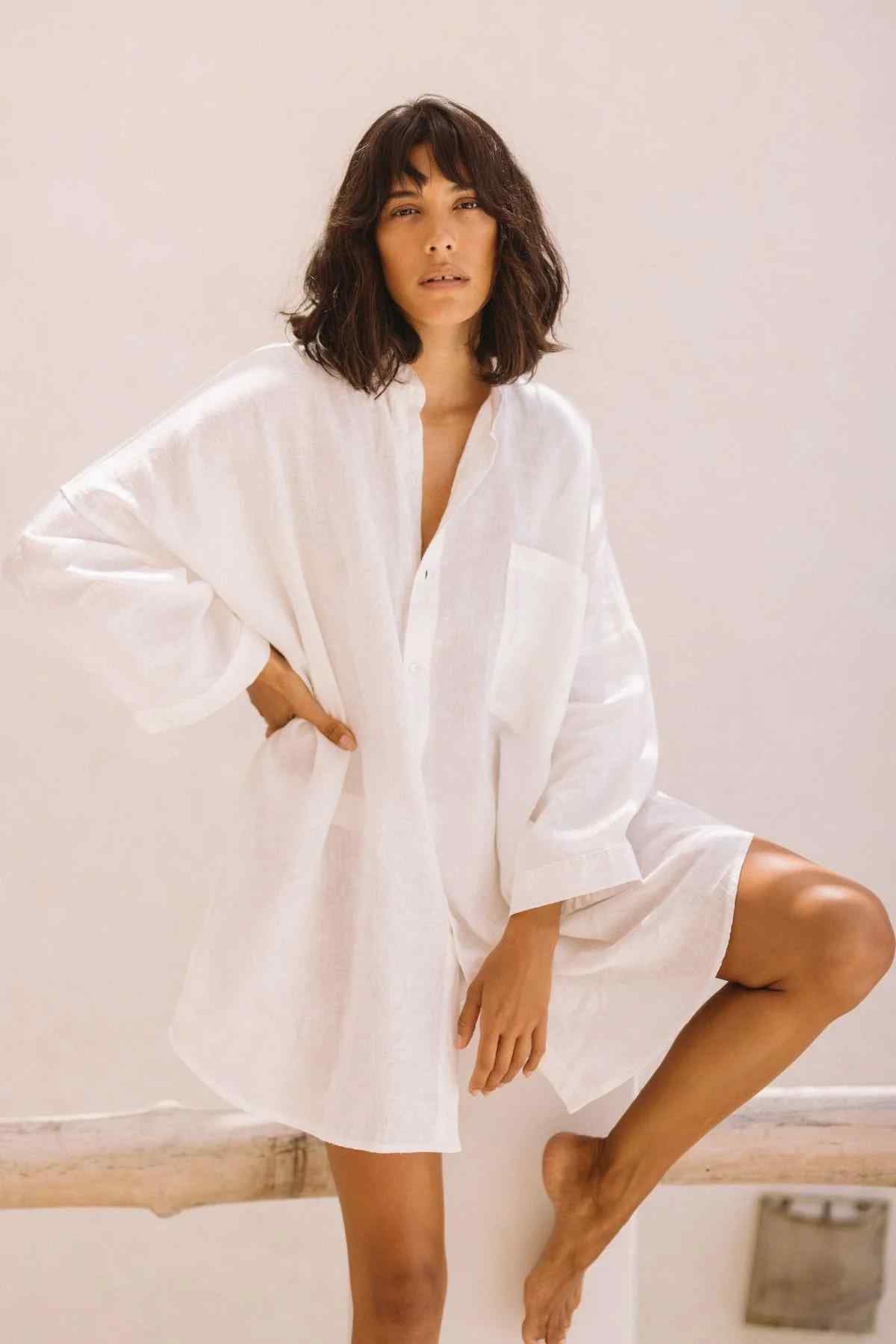
Pure linen, by contrast, becomes softer with every wash. A linen dress bought today, cared for properly, will feel better in five years than it did when you first put it on. It is one of the only fabrics that genuinely improves with age. This is one reason it is central to our slow fashion practice, and why our linen pieces are cut from 100% linen. Nothing blended into the cloth, and never polyester.
Why Linen Wrinkles, and Why That Is Proof of Quality
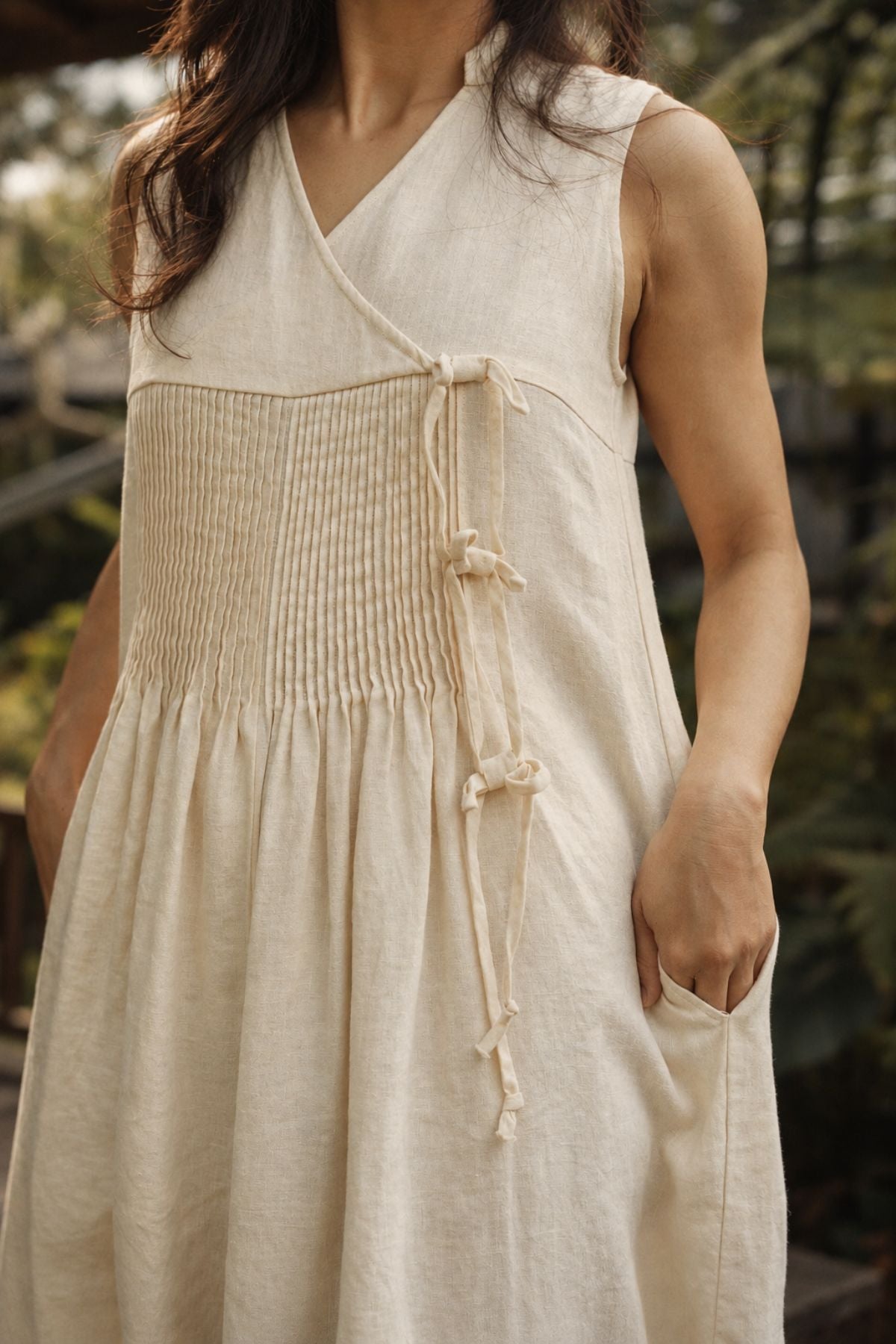
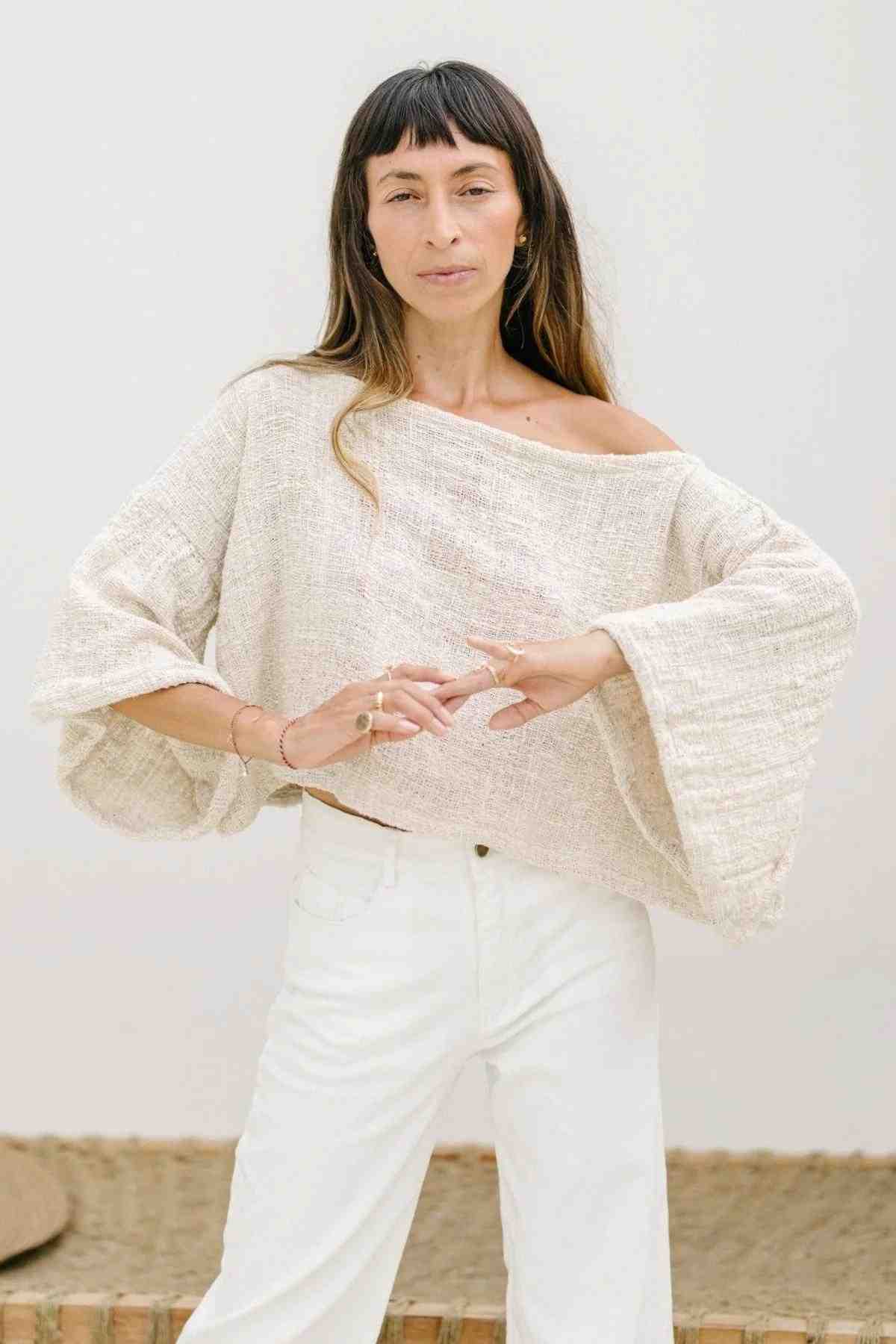
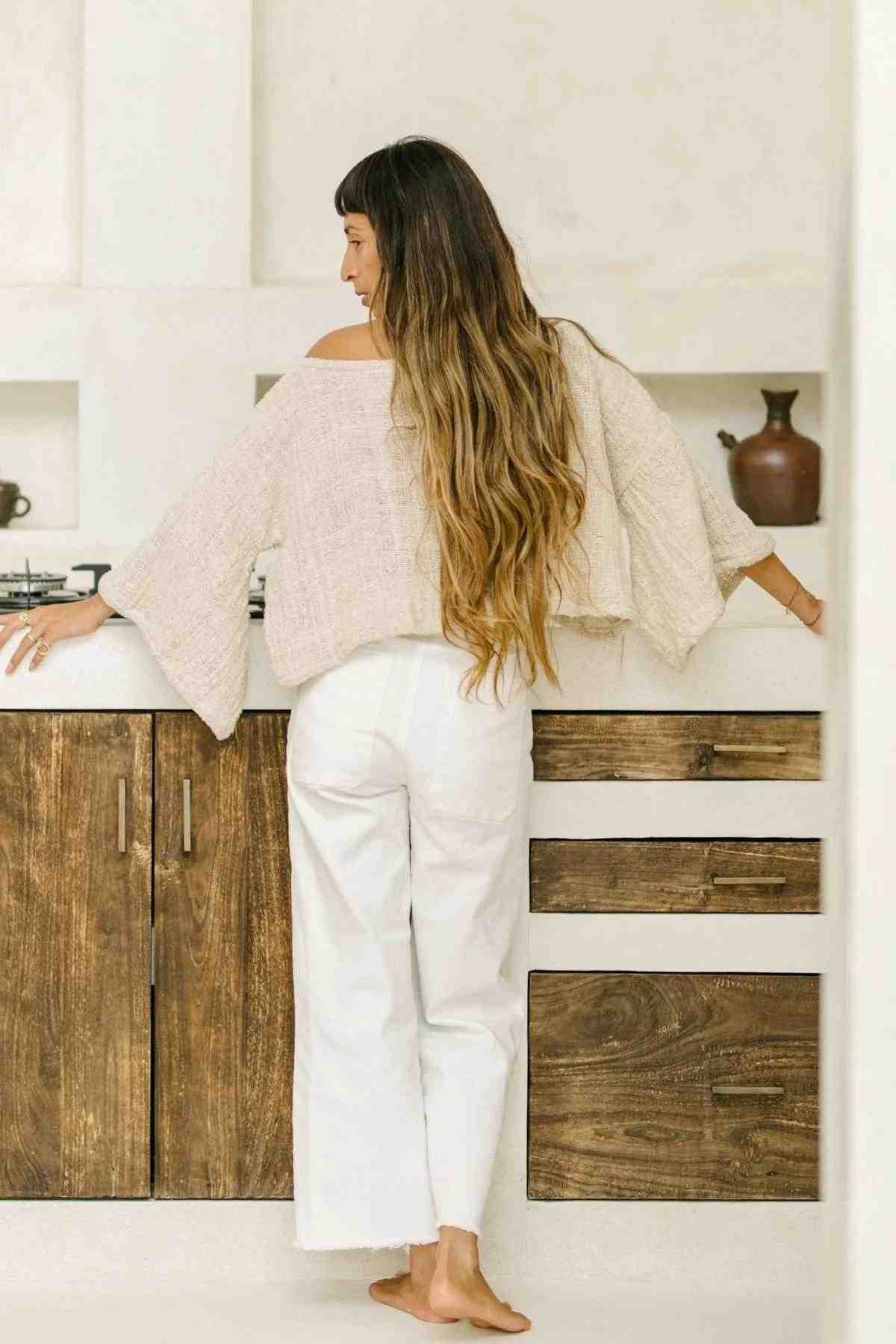
Linen wrinkles because its fibers have low elasticity. They do not spring back the way synthetic fibers do. When you sit in a linen dress, it creases. When you fold it in a bag, it folds. This is not a flaw in the fabric. It is evidence that the fabric is real.
Linen that does not wrinkle has been chemically treated, usually with formaldehyde-based resins that bind to the fibers and prevent them from creasing. This treatment also prevents the fabric from breathing properly, reduces its ability to soften with age, and introduces chemicals you may not want against your skin. Easy-care linen is a trade-off, and not usually one worth making.
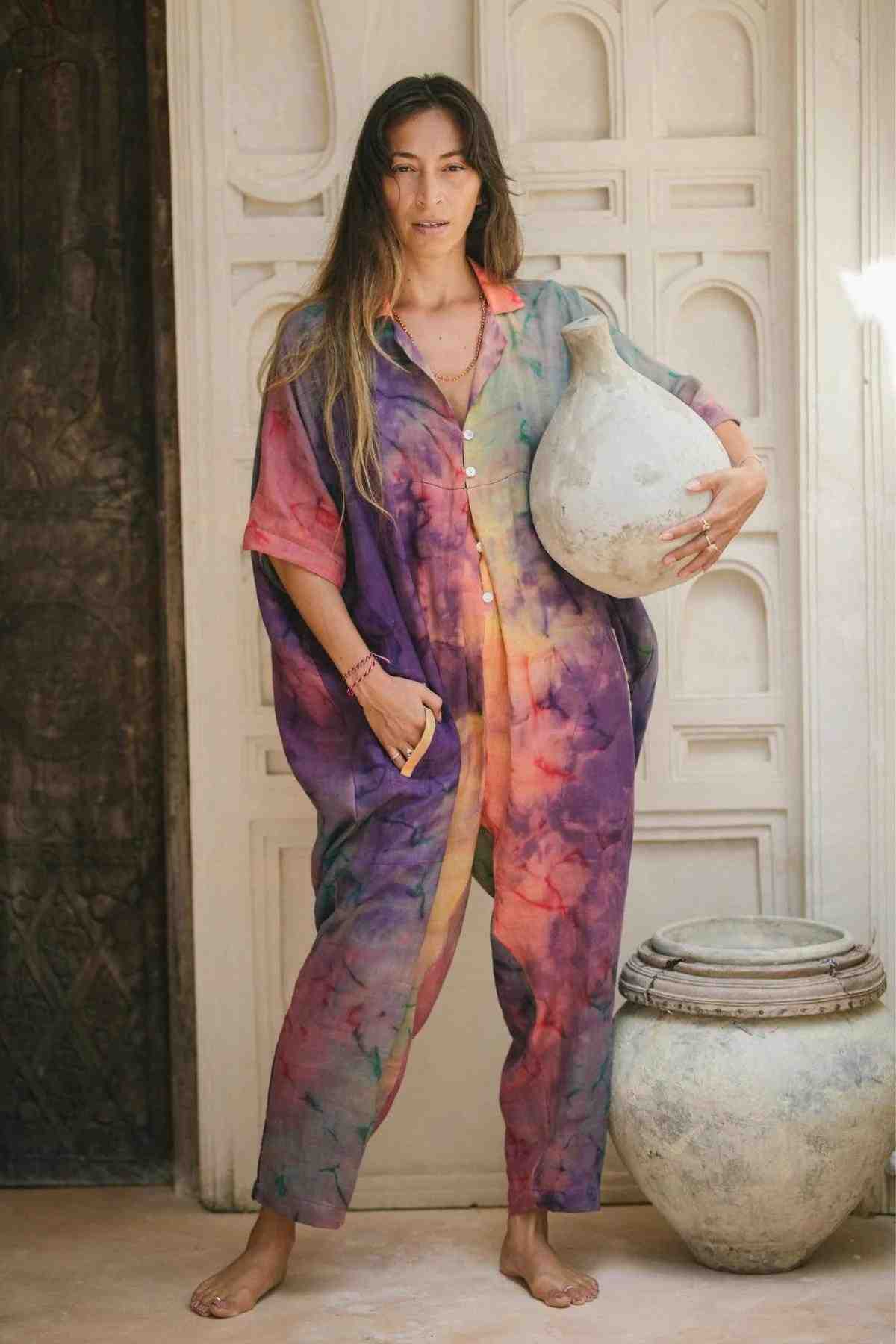
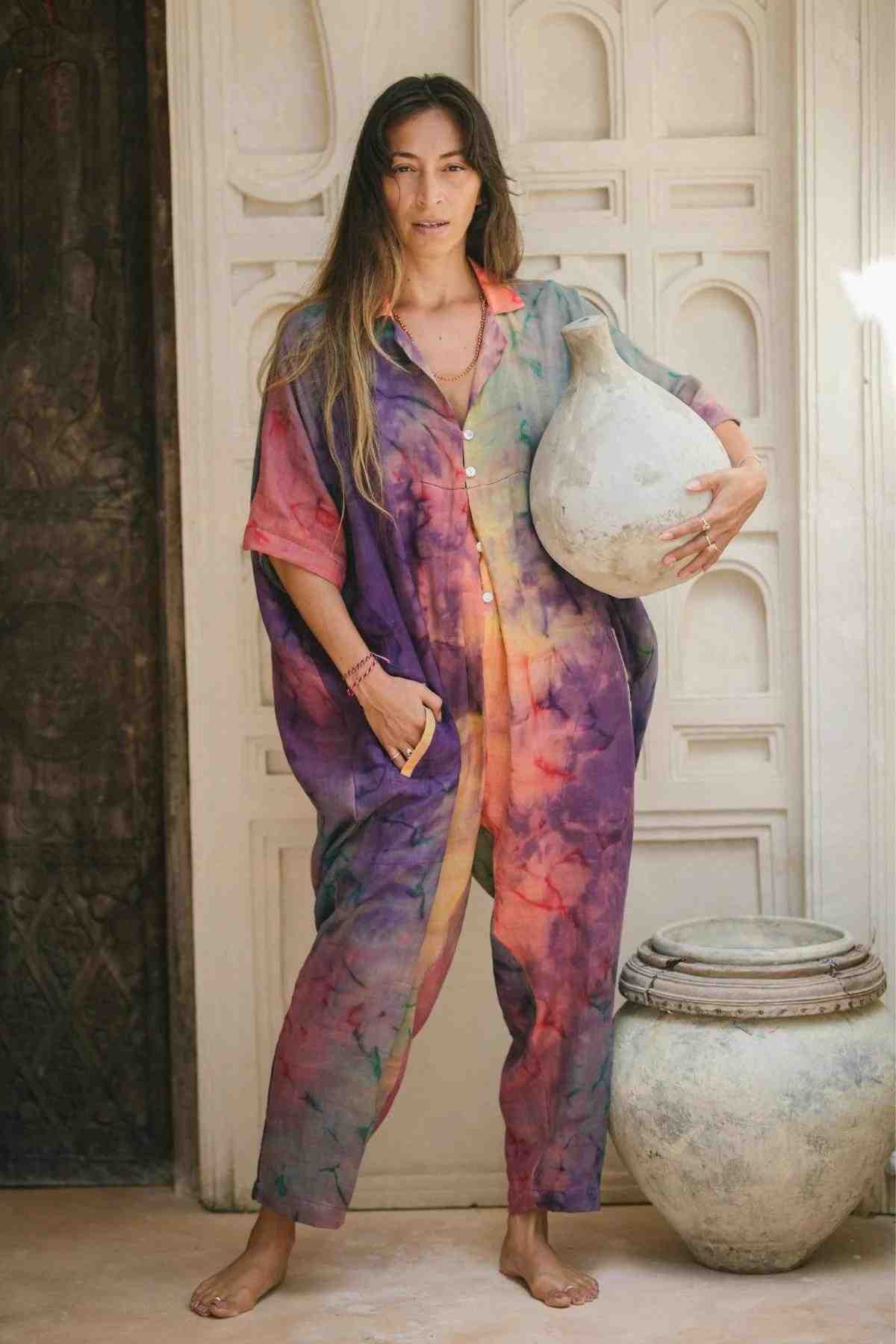
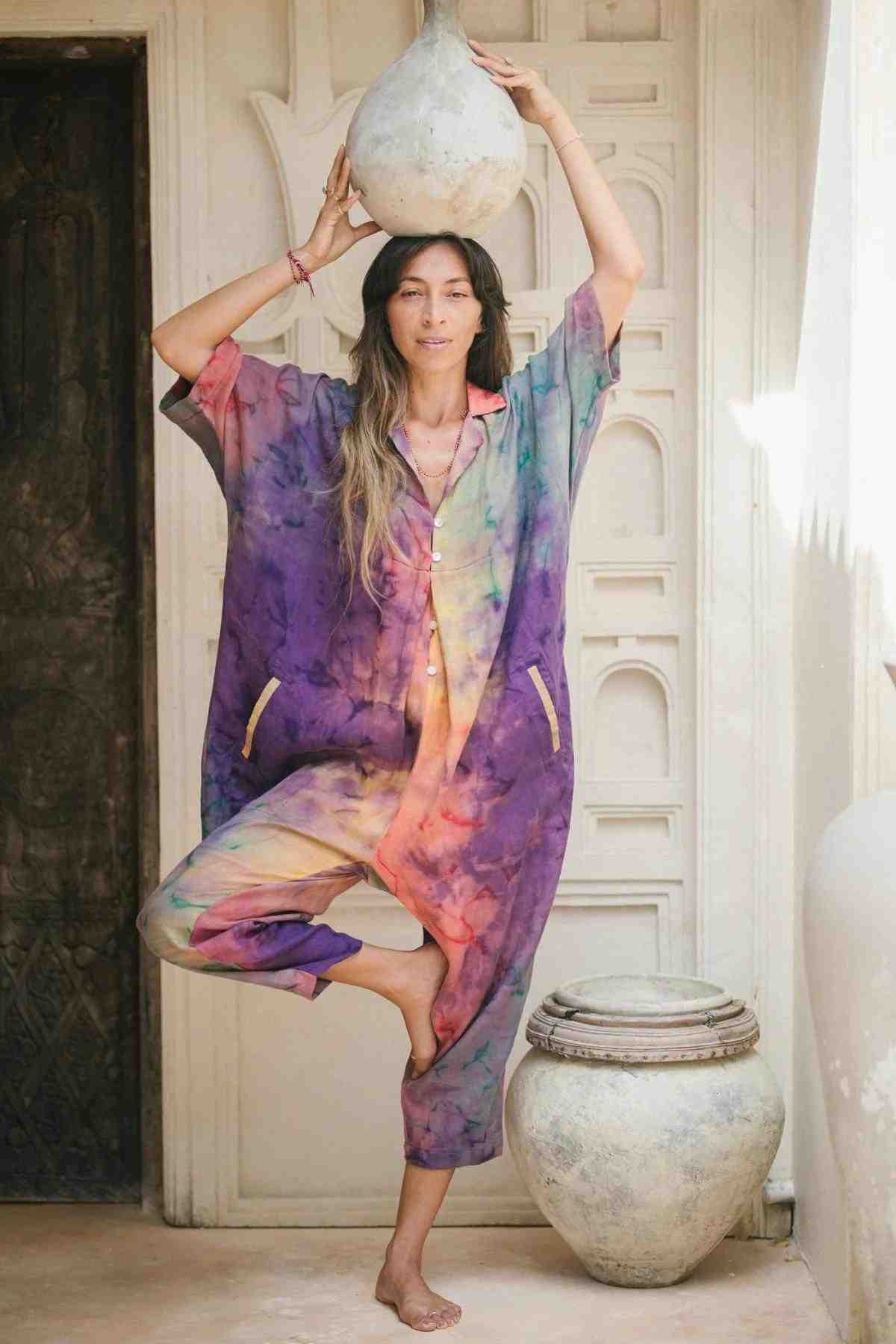
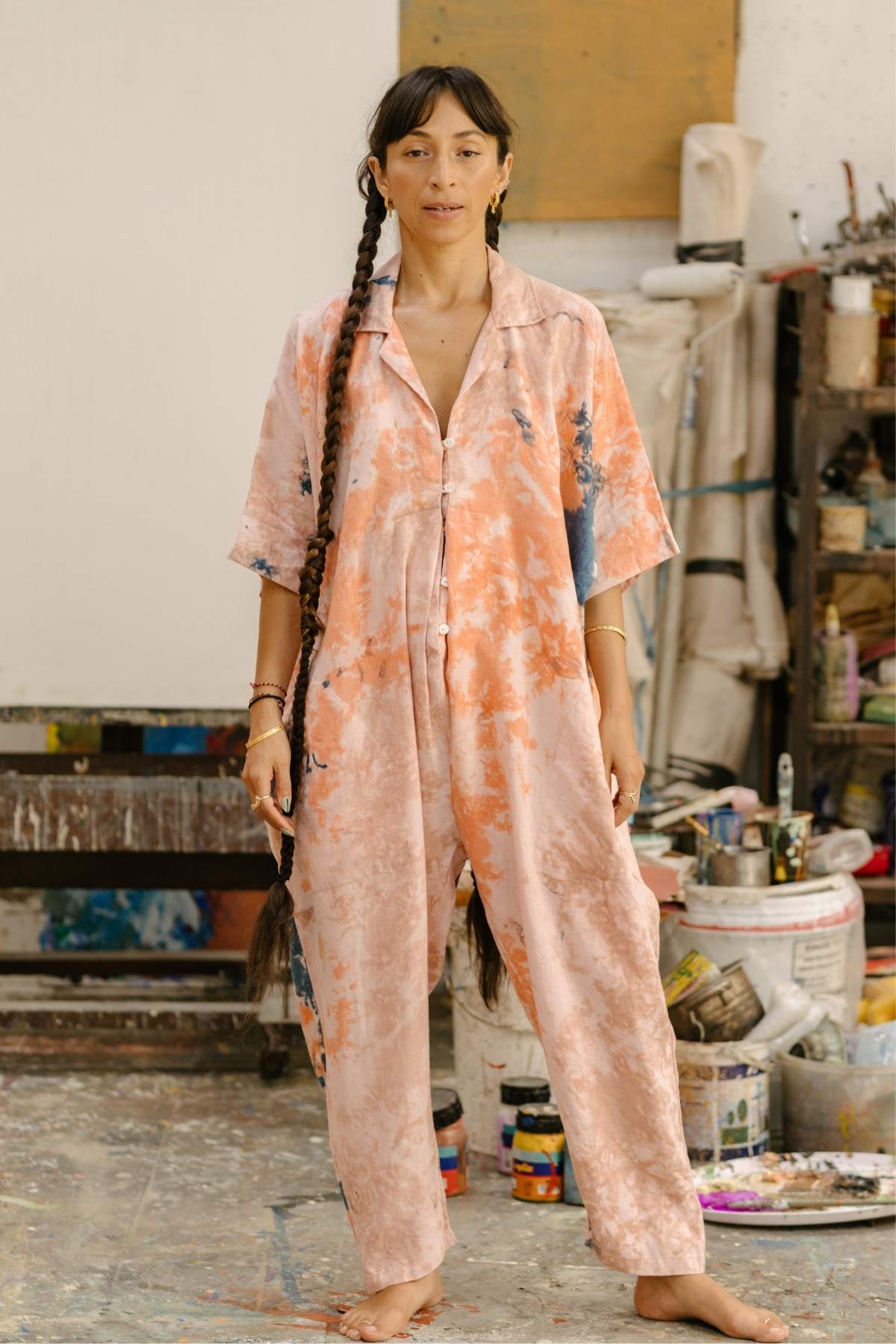
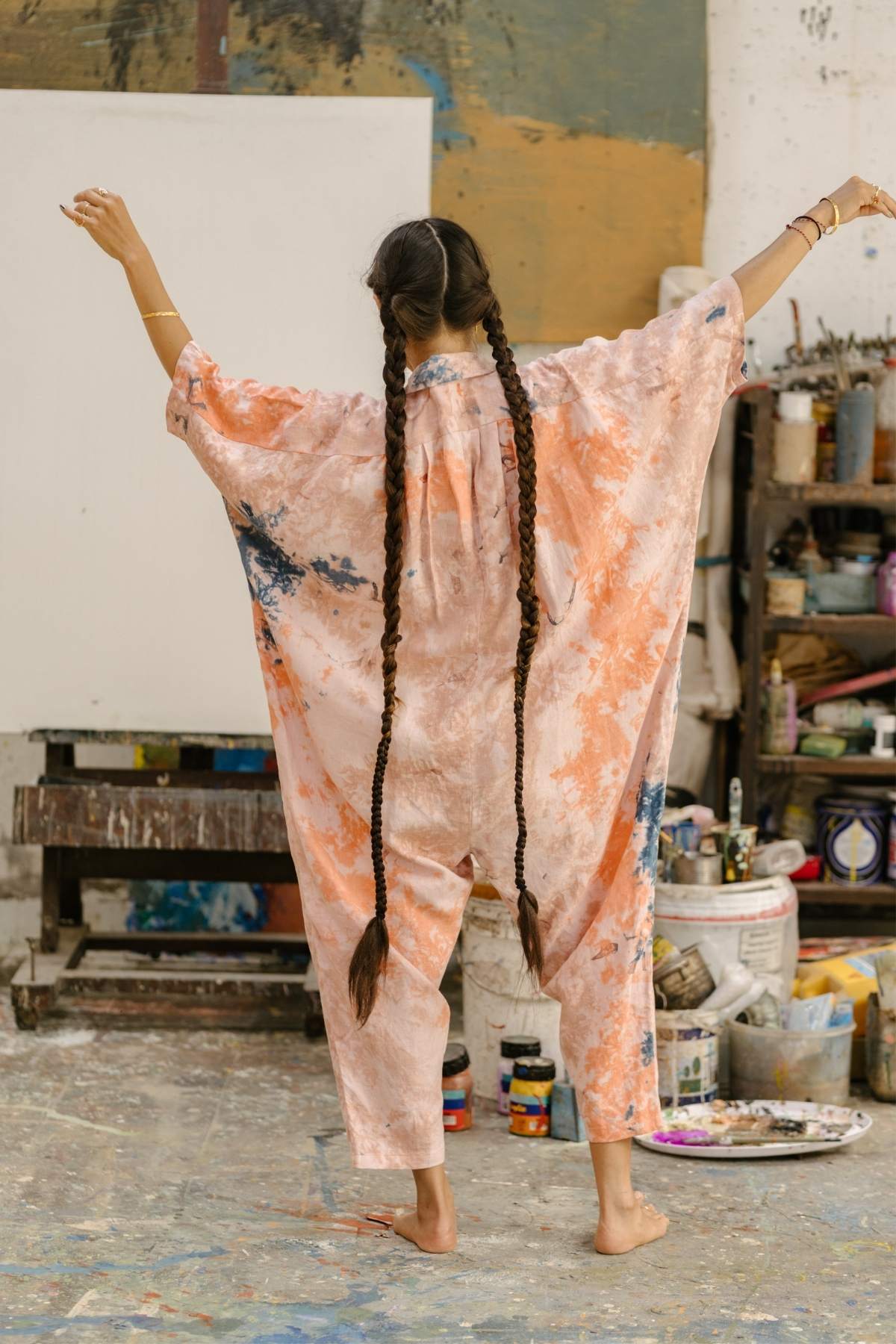
The women who wear our Kundalini Playsuit and our Virgo Moon Kaftan learn to read the wrinkle as information. A deeply creased linen piece tells you it has been lived in. A slightly creased piece tells you it has been worn and moved in. A linen piece that looks the same at 6pm as it did at 8am is either synthetic or treated, and neither of those is what you were reaching for when you reached for linen.
How to Test Linen Before You Buy
In person: scrunch a small section of the fabric in your hand and release it. Pure linen will crease and hold those creases. Run the fabric between your fingers, it should feel slightly cool to the touch, a quality called “linen’s cool hand,” which comes from the fiber’s high thermal conductivity. If it feels warm or plastic-like, it contains synthetic content regardless of what the label says.
Online: look for the fiber content in the product description. If it says “linen” without specifying 100%, ask before you buy. Look for weight information (GSM). Look for care instructions that include “cold wash, hang dry” rather than “machine wash warm,” which suggests the fabric has been treated to withstand heat.
At Myrah Penaloza, every product description states the fiber content explicitly because we believe you should know exactly what you are wearing. Our linen is sourced for weight, drape, and durability, and every piece is cut and stitched by hand in Bali by one of the thirty families who have been making our collection from the beginning. You can read more about how we source and make in our slow fashion commitment.
Linen and Botanical Dye: What Changes
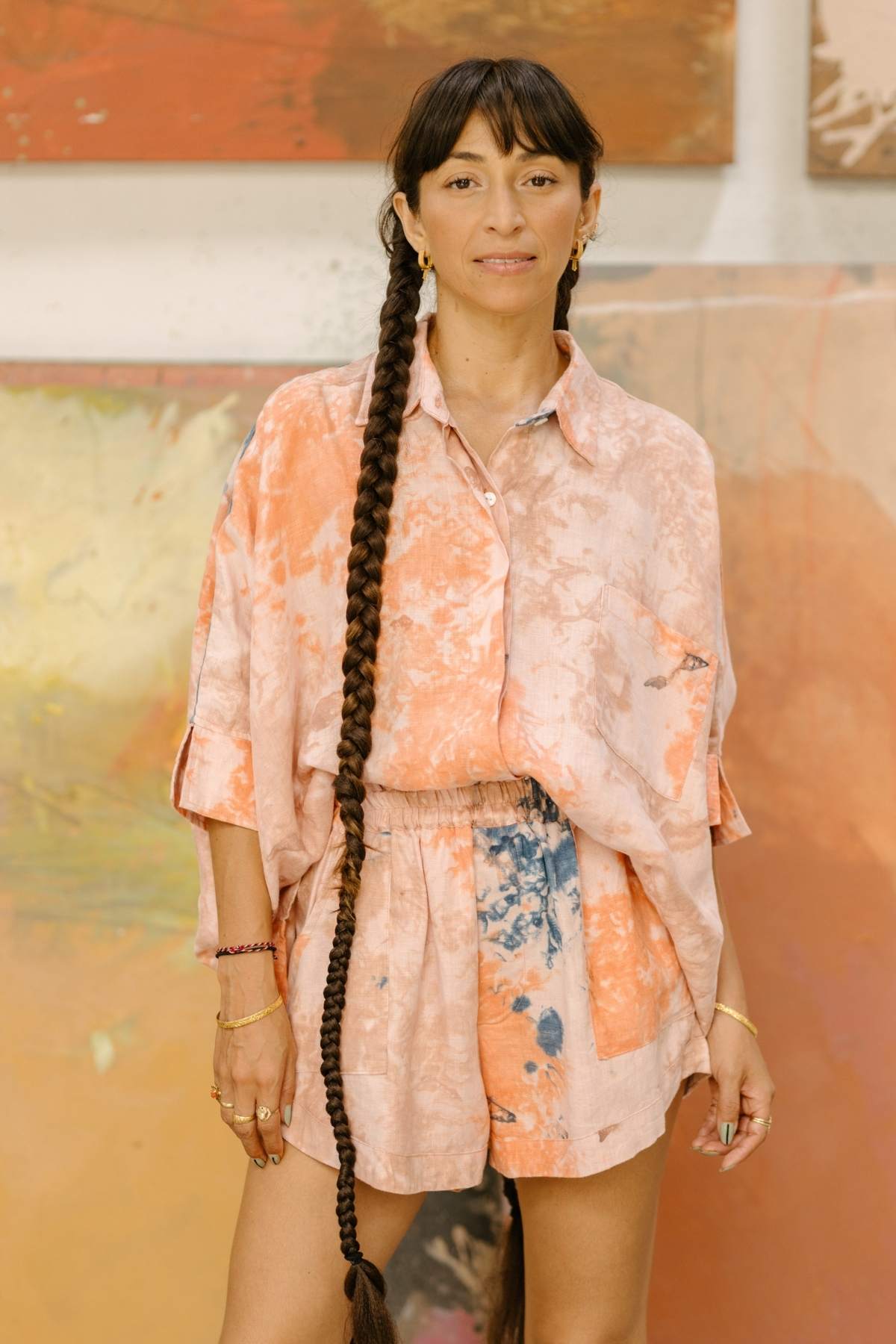
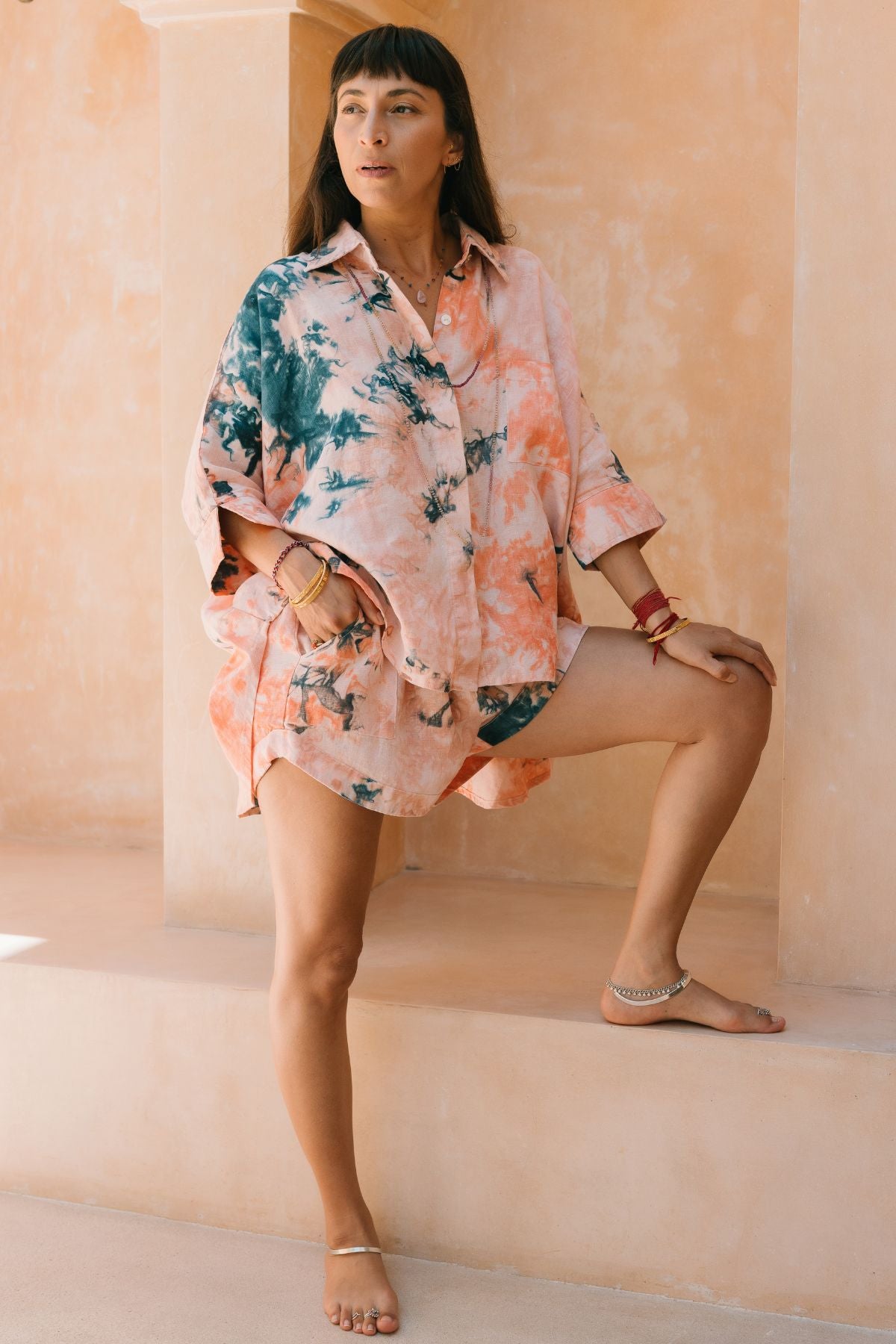
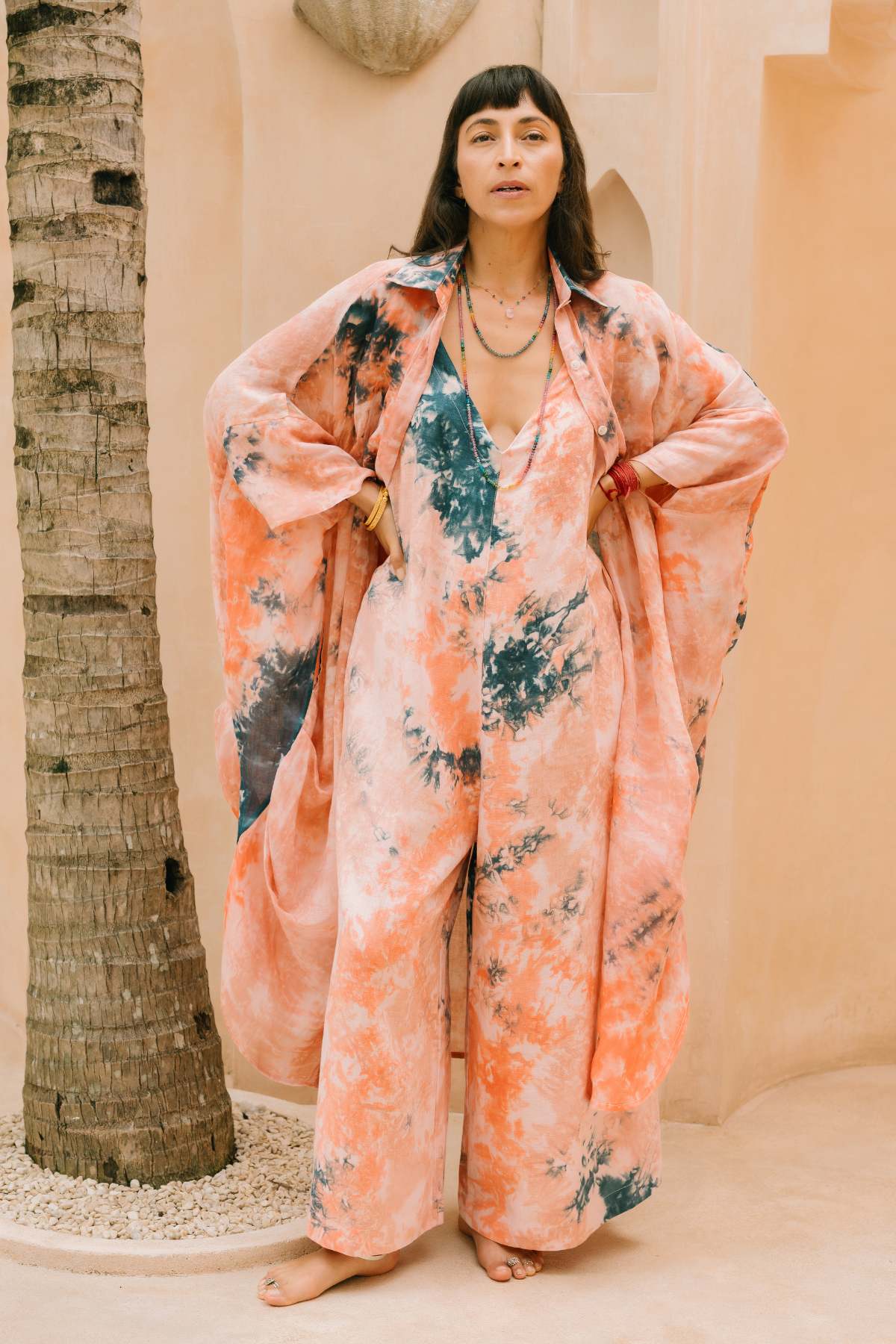
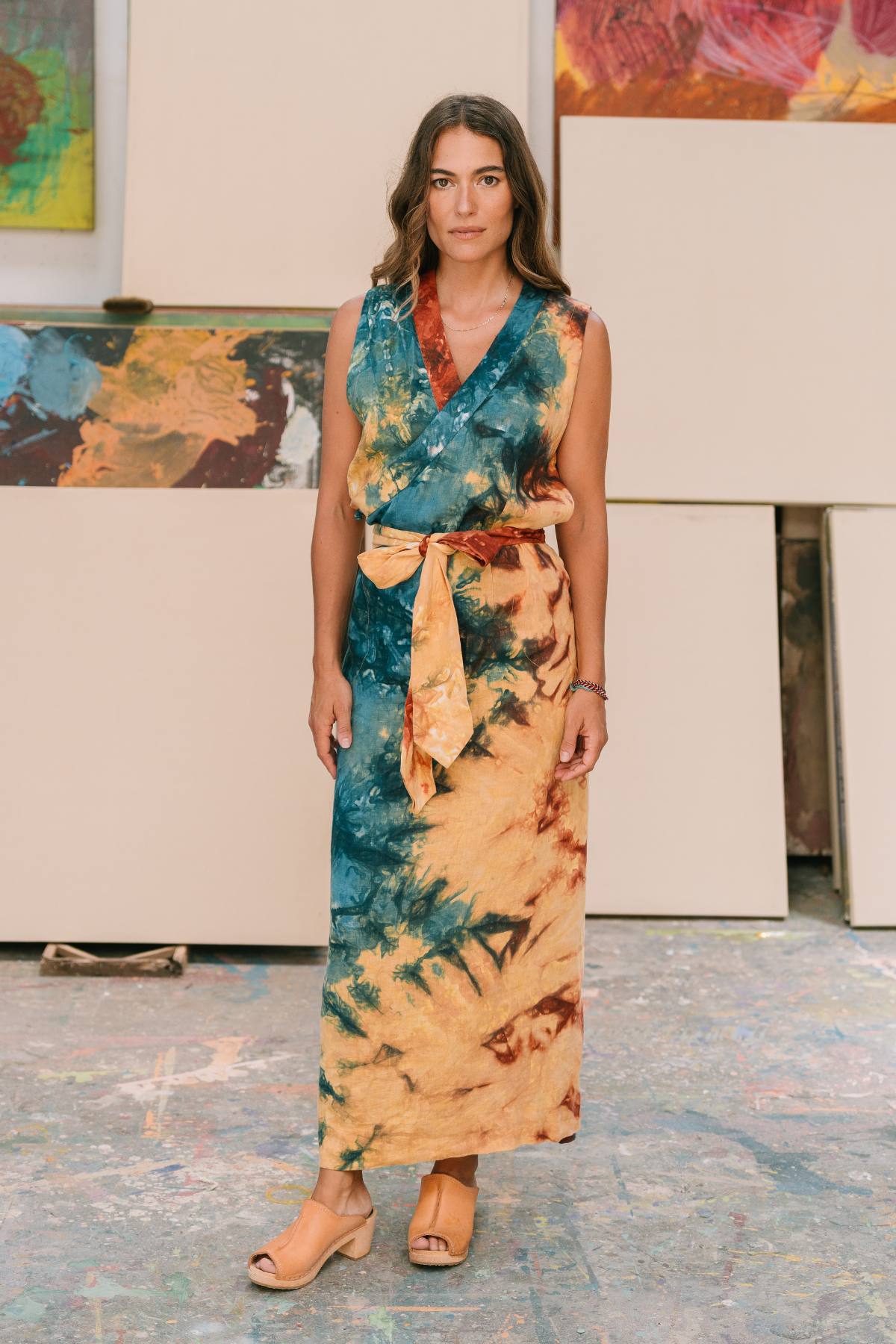
Natural linen accepts botanical dye differently than cotton or silk. The fiber’s structure creates a slightly more muted, earthy result, which is part of what makes botanically-dyed linen so beautiful. Turmeric on linen gives a warm, deep gold rather than a sharp yellow. Indigo on linen settles into a blue that reads almost like a shadow. Our Rainbeau colorway, a botanical multi-dye process we have developed over years of working with our Balinese artisans, produces a linen that contains browns, pinks, golds, and purples in one piece, no two runs identical.
What you should know about botanically-dyed linen: it will fade slightly over time, which is by design. The fade is part of the garment’s life. It will also transfer slightly in the first one or two washes, which is normal for natural dyes. Wash botanically-dyed pieces separately in cold water until the dye fully sets, usually two or three washes. After that, they are stable and will deepen and age beautifully with continued wear.
How to Care for Linen So It Lasts Decades
Cold water, always. Hot water weakens linen fibers over time and can cause shrinkage in the first wash if the fabric has not been pre-washed. Most of our pieces are pre-washed before they are cut, but we still recommend cold as the default.
Hang dry rather than machine dry. The tumble dryer is hard on linen and unnecessary, the fabric dries quickly even in humid climates. In Bali, a piece hung in the morning shade is dry by noon.
Iron on the reverse side while slightly damp, on medium heat, if you want a smoother finish. Or do not iron at all. Natural wrinkle is not a problem to be solved. It is part of the garment’s character.
Store linen folded rather than hung for long periods. Heavy linen pieces hung for months can stretch slightly at the shoulders. For lighter-weight pieces, hanging is fine. The general rule is: the heavier the linen, the better it does folded.
The Made-to-Order Difference
Most linen clothing on the market, even from brands that market themselves as ethical or natural, is made in large production runs. The fabric is cut in batches, assembled in factories, and stocked in warehouses for months before it reaches a customer. During that time, the fabric sits. It does not improve.
Our pieces are made to order, which means the fabric is cut and sewn specifically for your order, in the weeks after you place it. The garment arrives having never been folded in a warehouse or shipped between facilities multiple times. It arrives fresh from the hands of the person who made it, and it begins softening and breaking in from its very first wear, rather than from wear number thirty.
This is not a premium we charge for, it is simply how we make things. Slow fashion means each garment is given the time and attention it deserves, from the sourcing of the fabric through to the final stitch. And if you are planning a trip to Bali, our Bali packing guide will help you choose the right pieces to bring or find when you arrive.
With love from Bali,
Myrah

|
A Piece for This Threshold The Sat Torri Rainbeau Playsuit 100% natural linen. Botanically dyed in Bali. No two pieces identical. Made to order for you. Shop the Sat Torri → |
|
The Muse-Letter Dress for the woman you’re becoming. Join the Muse-LetterFabric education, new arrivals, dispatches from Bali. Every Sunday. Unsubscribe any time. |


Leave a comment
This site is protected by hCaptcha and the hCaptcha Privacy Policy and Terms of Service apply.