Slow Fashion vs Fast Fashion: A View from Inside a Balinese Artisan's Home
The conversation about slow fashion versus fast fashion is usually framed as a consumer choice. An ethical calculation. A question of what to buy and from whom.
That framing is correct but incomplete. It misses where the difference actually lives, which is not in a comparison chart or a certification label but in a specific house, in Bali, where a woman named Wayan is stitching a seam.

Her children are doing homework at the table behind her. The morning offerings are already laid at the threshold. The fabric in her hands came from a linen source vetted for integrity of processing. When she finishes this piece, it will be worn by a woman in California or London or Singapore who will put it on and feel, though she cannot explain why, that something in it is different from everything else in her closet.
This is not a story about environmental impact statistics, though the statistics matter. It is a story about what the act of making, done slowly and with full attention, leaves inside the thing being made.
What Fast Fashion Actually Costs
Fast fashion's model is simple: produce as much as possible, as cheaply as possible, as quickly as possible, and sell it before the next trend makes it obsolete. The environmental cost of this model is well documented. The fashion industry generates approximately 10% of global carbon emissions. Synthetic fabrics shed microplastics into water systems with every wash. Millions of tons of textile waste enter landfills annually.
But the human cost is harder to see because the supply chain is designed to obscure it. When you buy a $12 dress, someone paid the real price. It was not you.
What Slow Fashion Actually Is
Slow fashion is the decision to make something as if the person who makes it and the person who wears it both matter. That sounds simple. In practice, it requires rebuilding every part of the supply chain from the ground up.
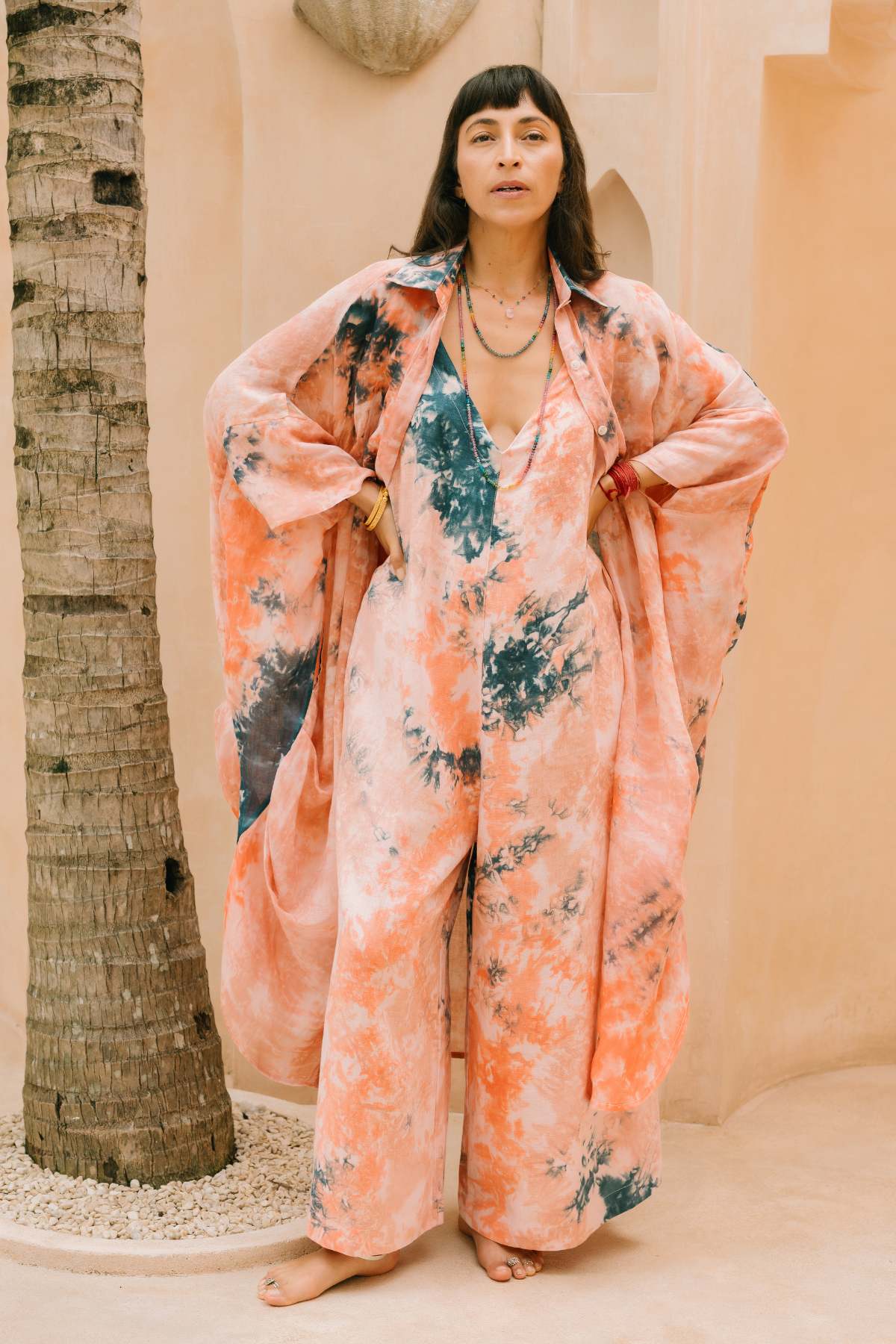
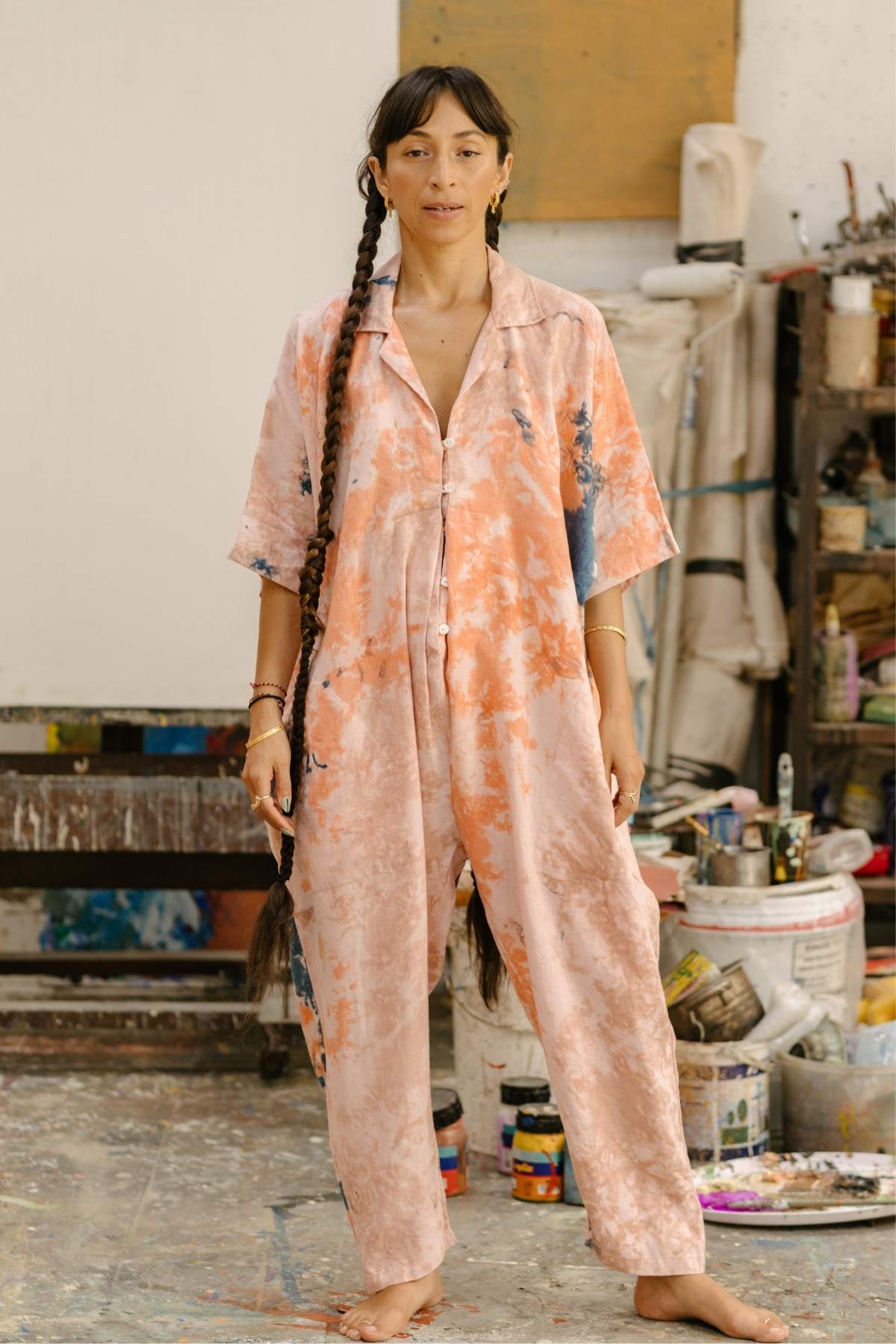
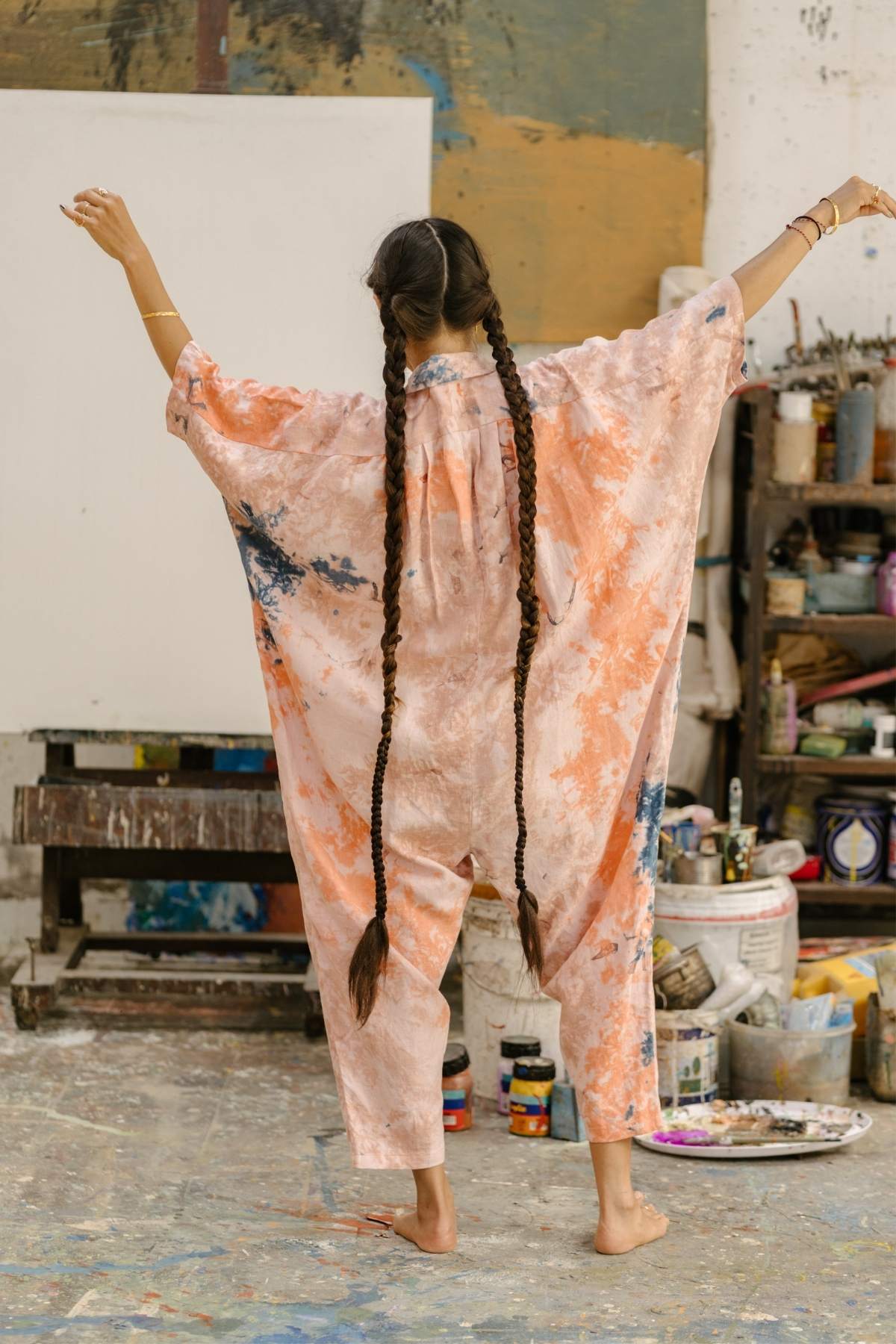
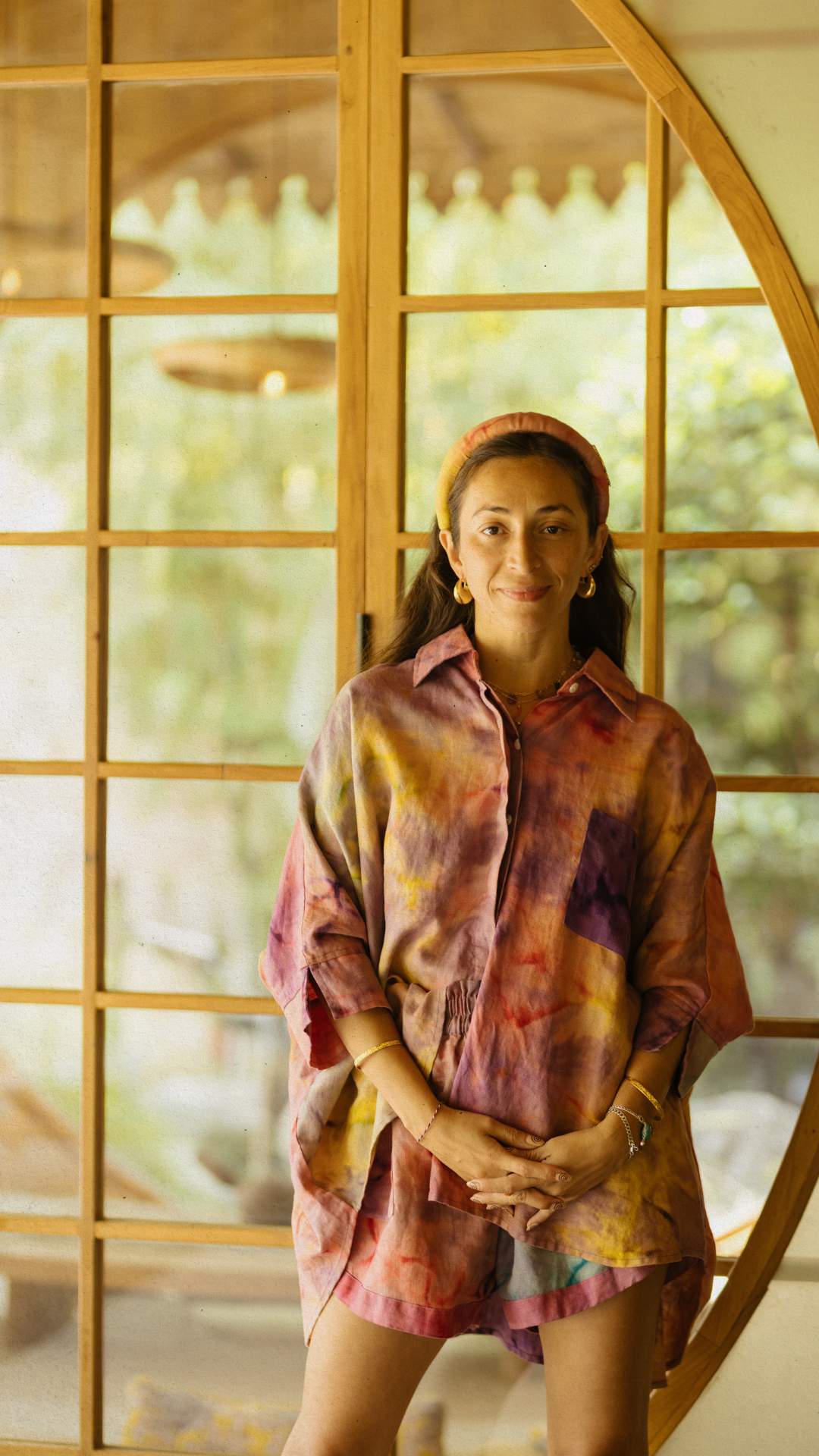
At Myrah Penaloza, we built ours over ten years in Bali. Approximately thirty artisan families. Each one working from their own home or their own small workshop. Each one paid a living wage for work done at their own pace. Natural linen and cotton from vetted sources. Botanical dyes derived from plants grown in Indonesian soil. No synthetic finishing. Small batches. Never rushed.
The cost per piece reflects all of this. The cost per wear, over the years a well-made linen piece will last, is lower than almost anything fast fashion produces. But more than the economics, it is the quality of what you are buying that is different. Not just the garment's durability. The quality of the act that produced it.
The True Cost of Your Clothes Is Not What You Paid
There is a useful calculation called cost per wear. A $280 linen set worn 150 times over four years costs less than $2 per wear. A $45 synthetic dress worn eight times before it pills costs over $5 per wear. The slow fashion piece is cheaper by this measure, once you account for how long it lasts.
But there is another cost calculation that does not appear in any spreadsheet. The cost to the artisan who made it. The cost to the water system where the dye was discharged. The cost to the child who stitched it in the hour before the factory was supposed to close but did not.
These costs are real. They are paid whether or not they appear in the price tag. Fast fashion's business model works by externalizing them onto people and ecosystems that do not have the platform to invoice for them.
What the Conscious Woman Is Choosing When She Chooses Slow
The women who find us and stay are not making a purchasing decision. They are making a declaration about the kind of world they want to participate in creating. They have decided that what they wear is not separate from what they believe.
There is something so special about this brand. All the items I have carry such a peaceful, loving energy. That is a customer writing to us, unprompted. She is not describing a certification. She is describing something she can feel.
The energy of making is in the thing made. Slow fashion's deepest argument is not environmental. It is energetic. And it is something you can verify for yourself the first time you wear something made with full attention by hands that are not rushing.
You can read more about how we make everything on our slow fashion page and about who we are on our about page.
A Piece for This Threshold
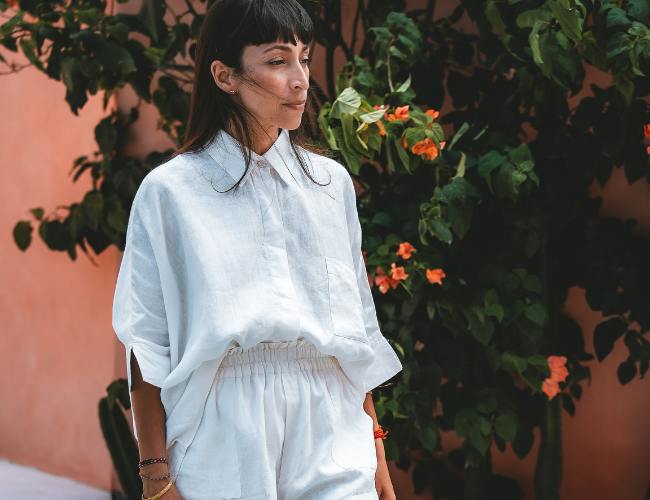
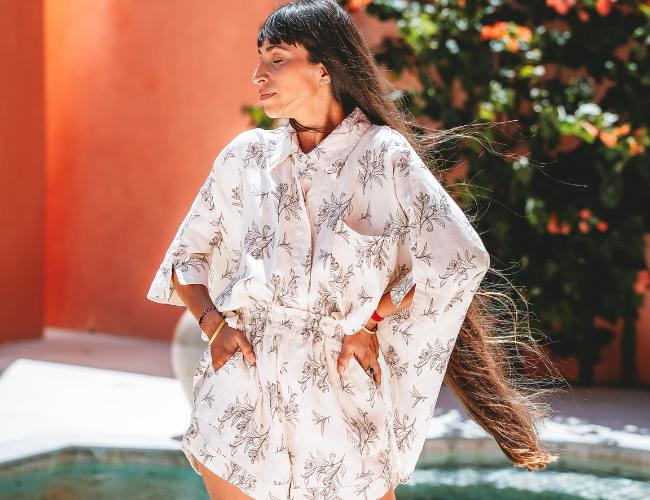
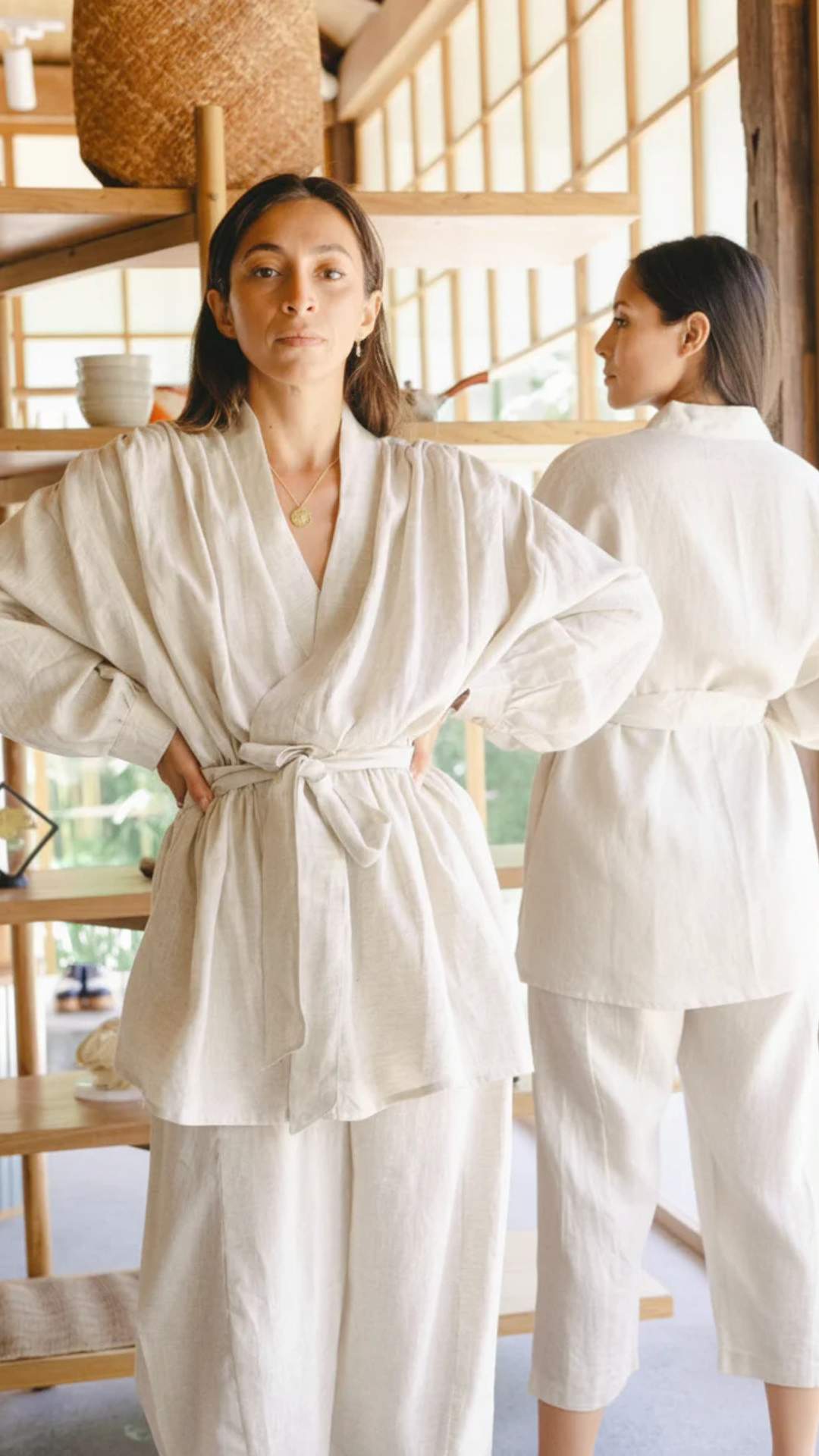
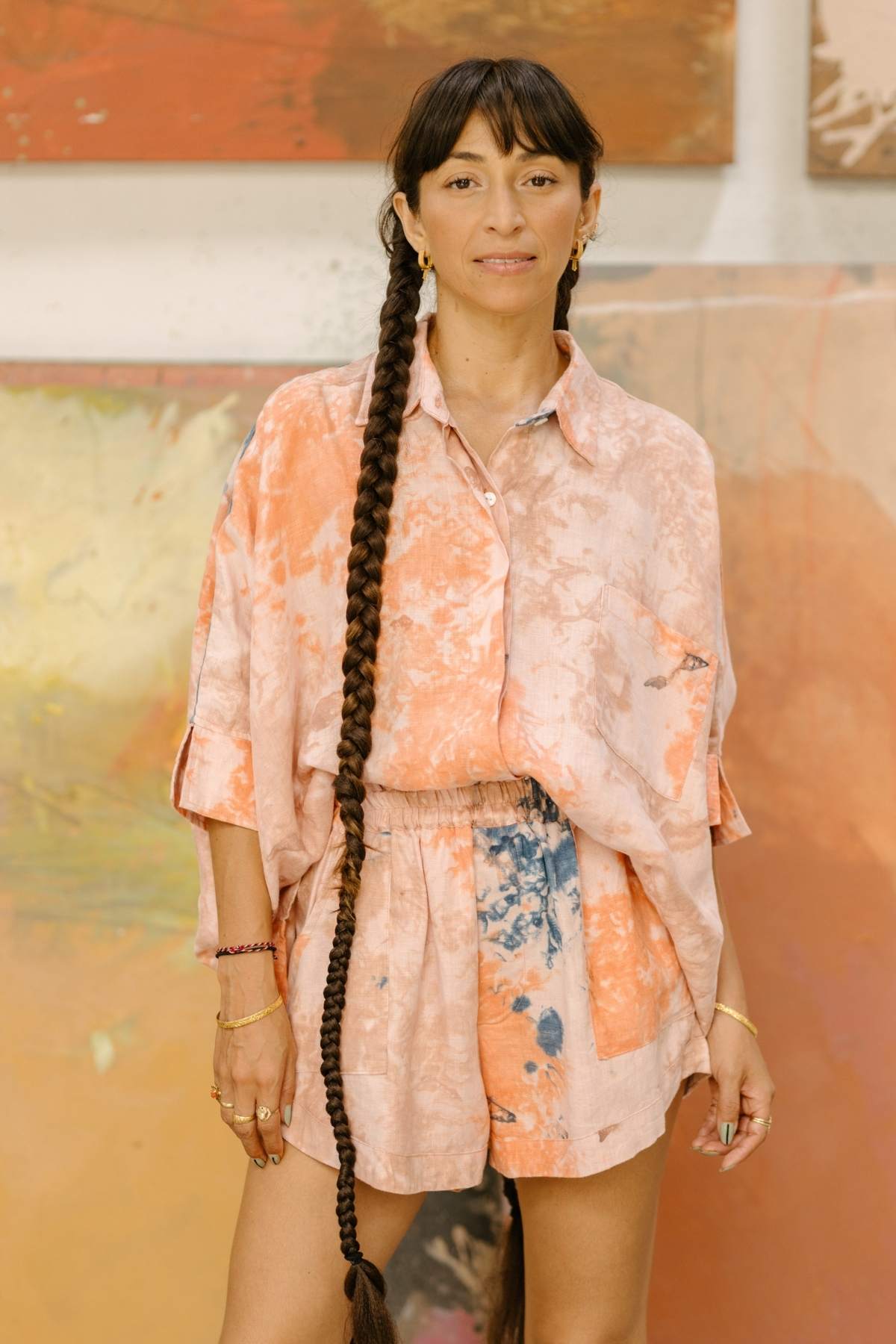
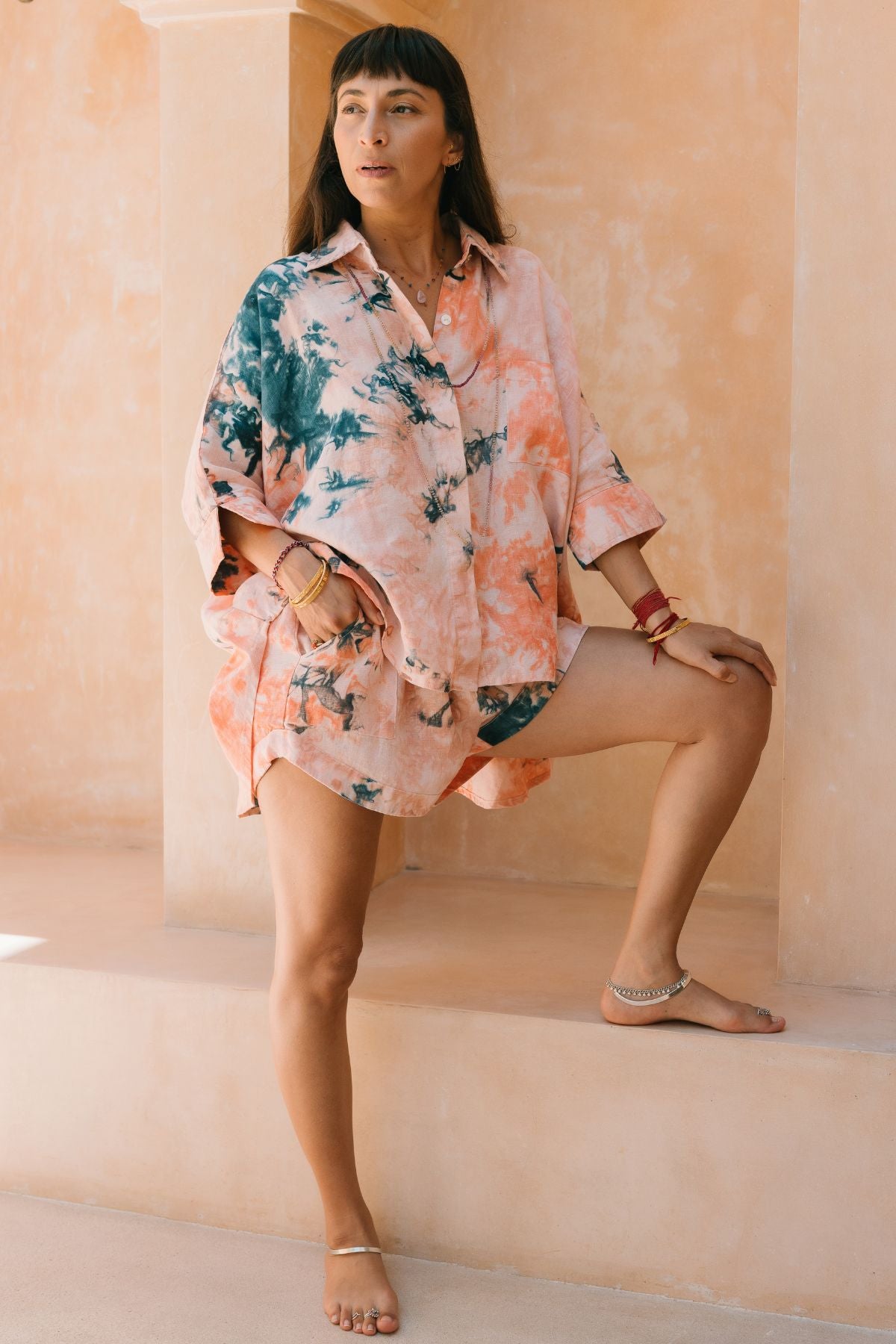
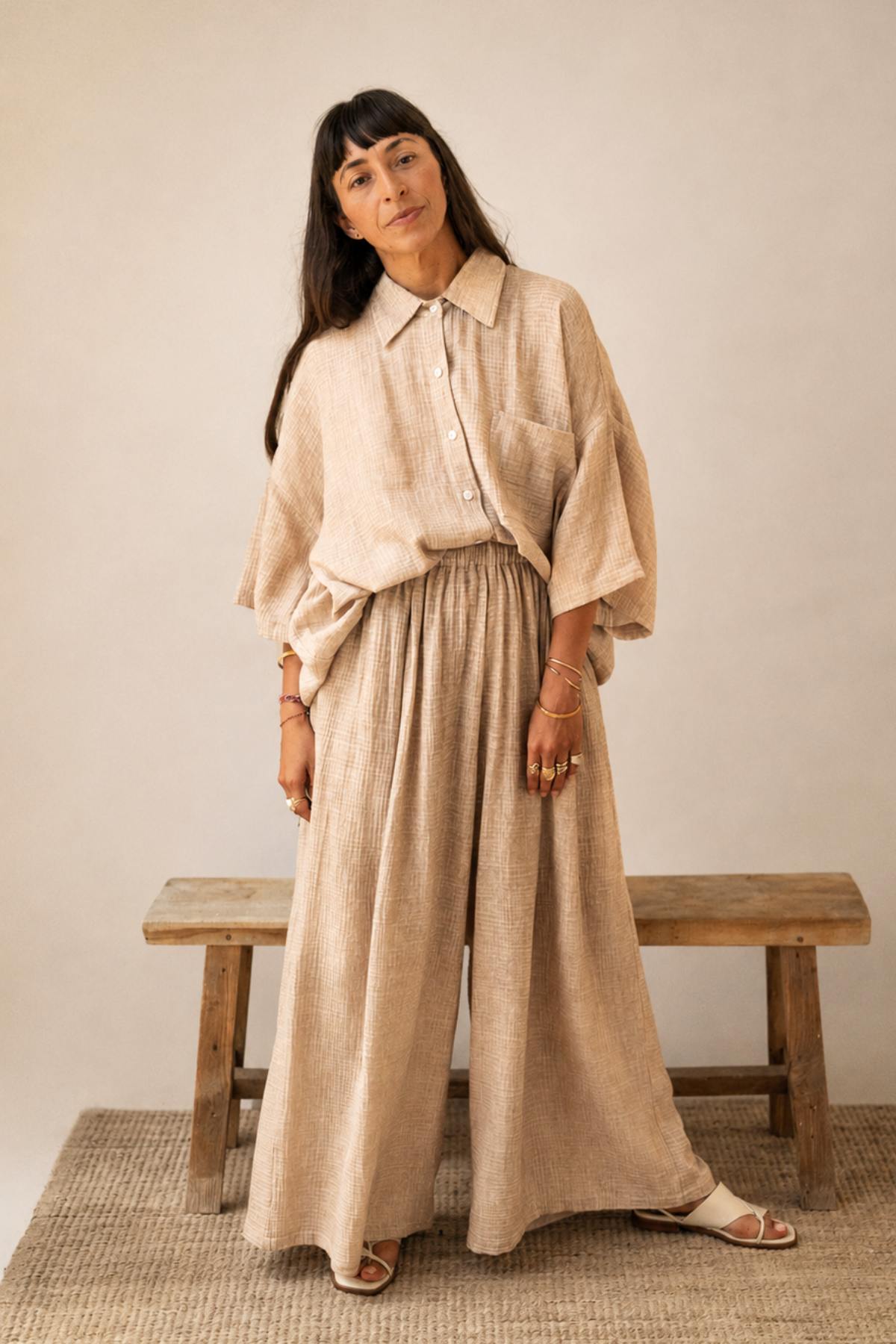
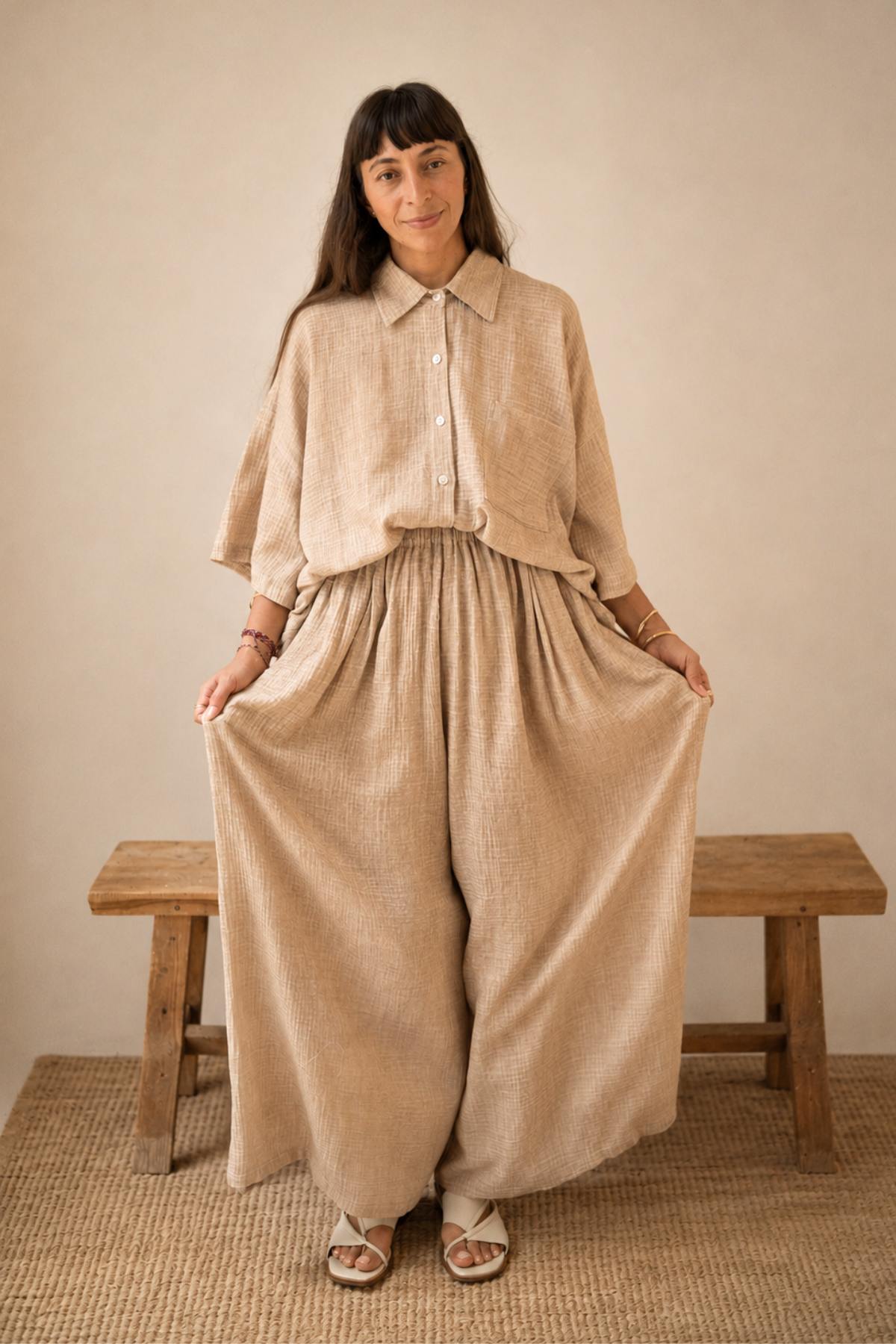
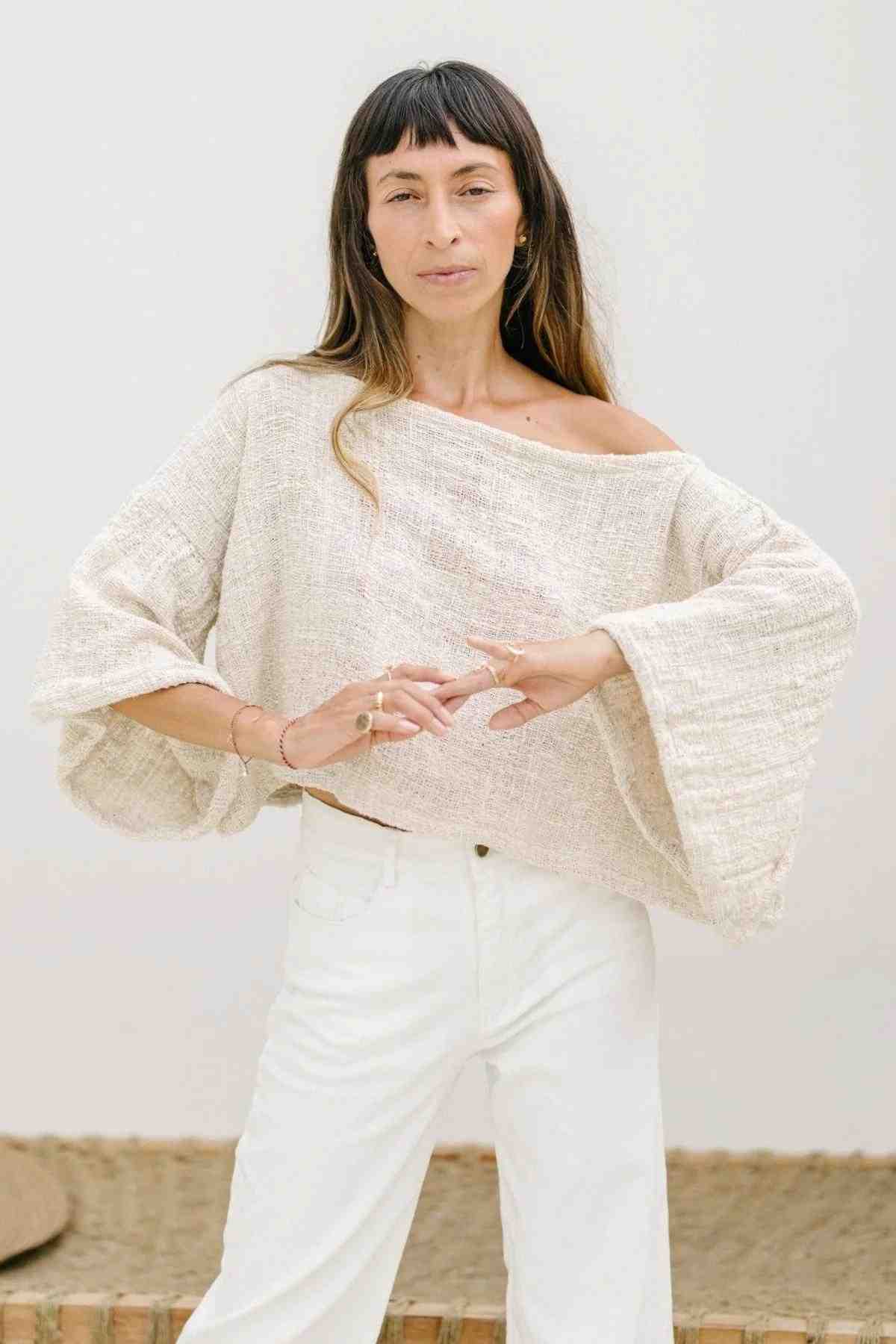
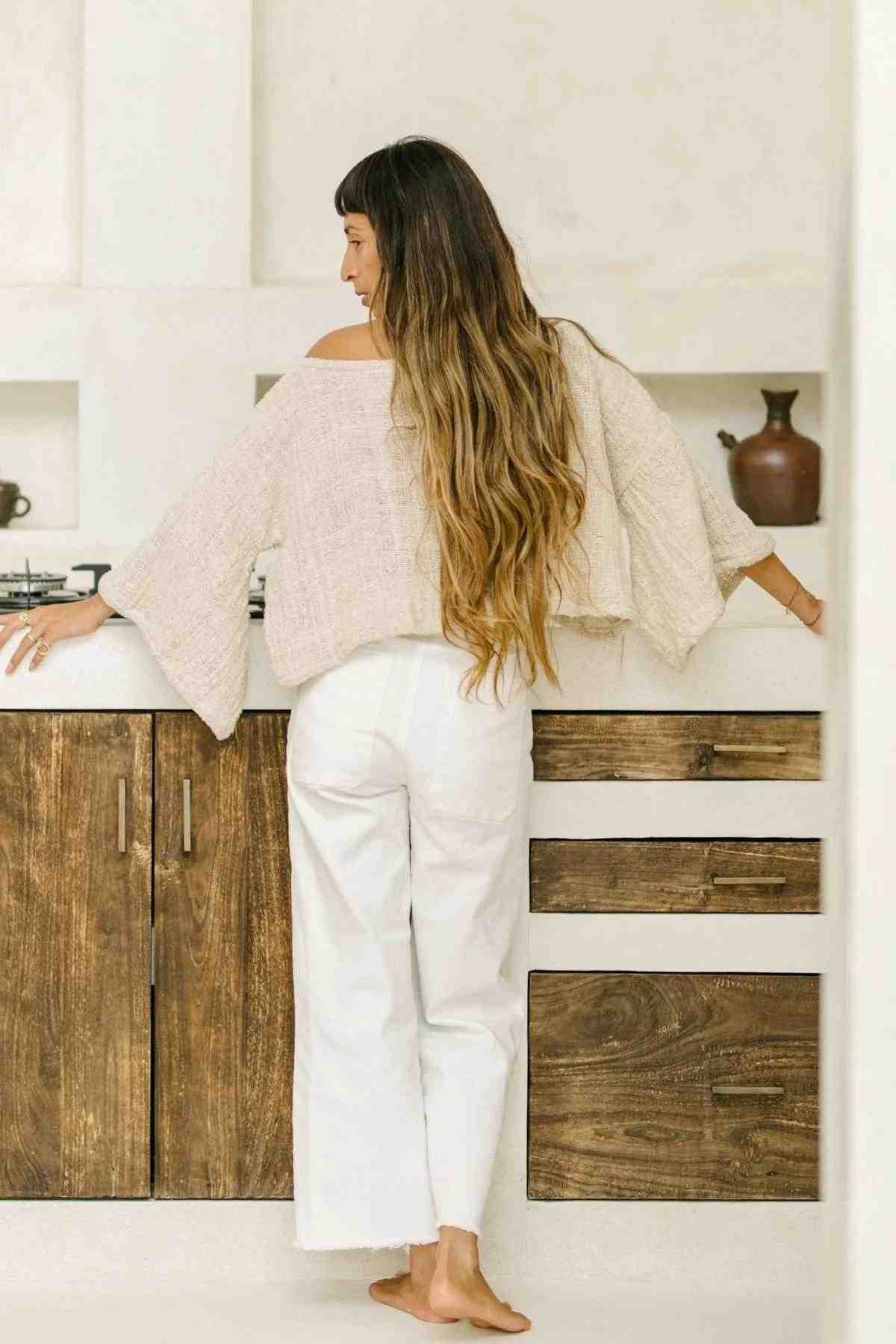
The Jasmine Set Linen. Named for a flower that only opens after dark. A kimono-inspired top and wide-leg linen pants, stitched by Wayan and the families like hers who make everything we make.
For the woman who is already her. Not becoming. Returning.
Natural linen · Handcrafted in Bali · Small batches

To explore what slow fashion looks like as a wardrobe, our linen sets are the foundation, and our bestsellers are where to begin.
The Muse-Letter
Dress for the woman you're becoming.
Every week from Bali. Astrology, slow living, sacred feminine, and the pieces we're making by hand. A letter, not a sales pitch.
Unsubscribe any time. No spam, ever.


Leave a comment
This site is protected by hCaptcha and the hCaptcha Privacy Policy and Terms of Service apply.