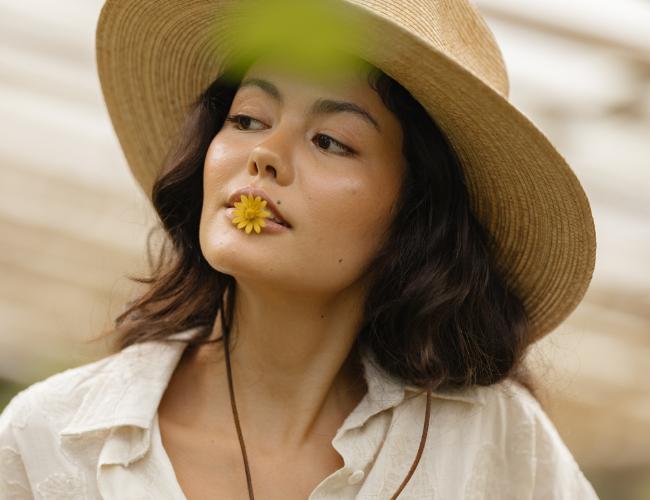
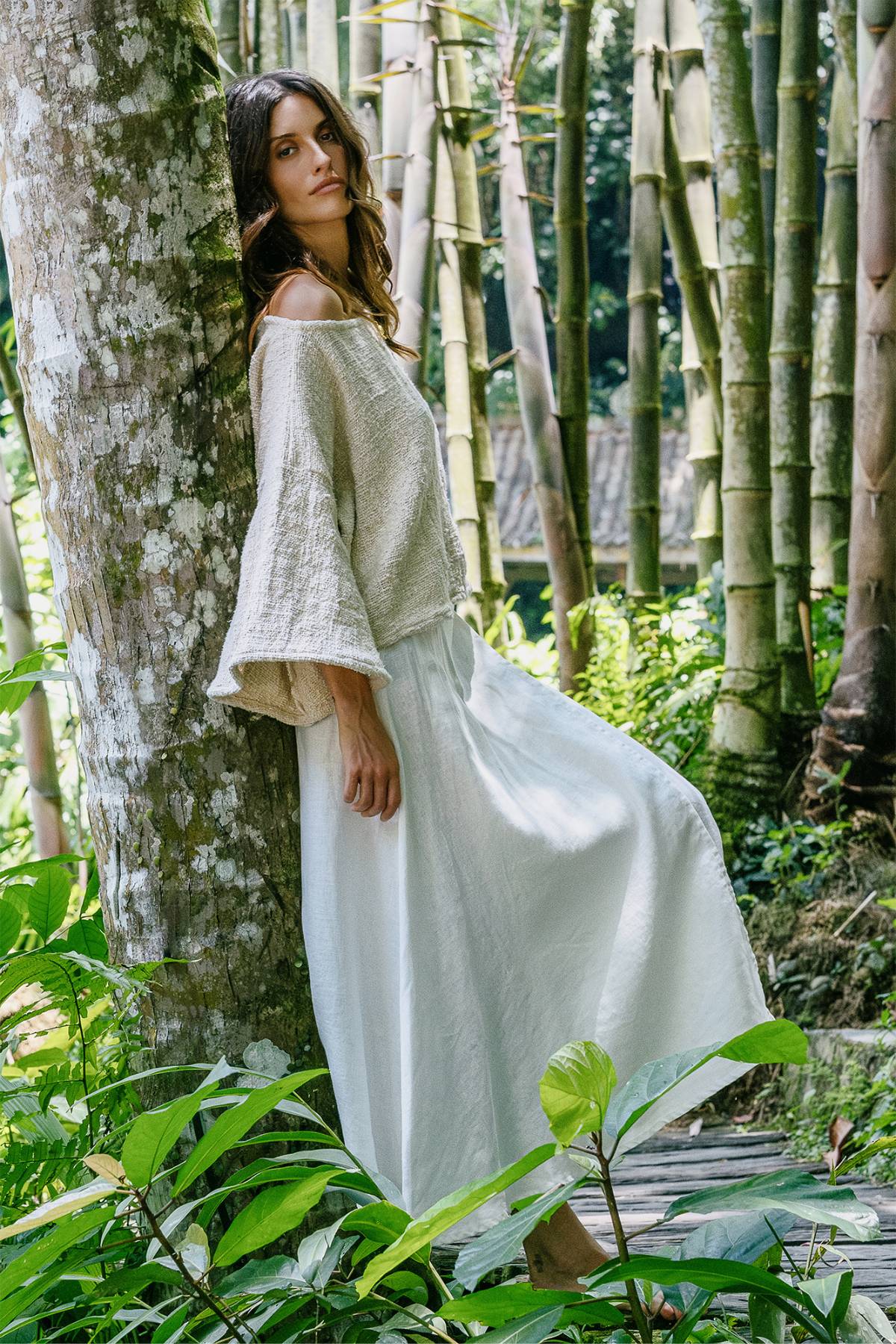
Dressing the Sacred Feminine, What It Means to Wear Your Practice

There is a category of dressing that most of us have been doing for years without a name for it. The slow unfolding toward clothing that feels less like costume and more like skin. The moment you stood in front of your wardrobe and realised the pieces that made you feel most yourself were not the ones following any trend, they were the ones that felt, somehow, like ceremony.
Sacred feminine fashion is not an aesthetic. It is an orientation. A way of relating to the body, to clothing, and to who you are in the act of getting dressed each morning. And more women than ever are finding their way to it, not because someone told them to, but because the alternative stopped making sense.
What ‘Sacred Feminine Fashion’ Actually Means
The sacred feminine is not a style. It is a principle, one that shows up in ancient traditions from Bali to Egypt to the Andean highlands. At its core, it is the intelligence that moves in cycles, in intuition, in the body’s deep knowing. It is what understands rest as productive, stillness as powerful, and softness as a form of strength. Dressing the sacred feminine means honouring all of that, not just your silhouette, but the whole ecosystem of your life and your becoming.
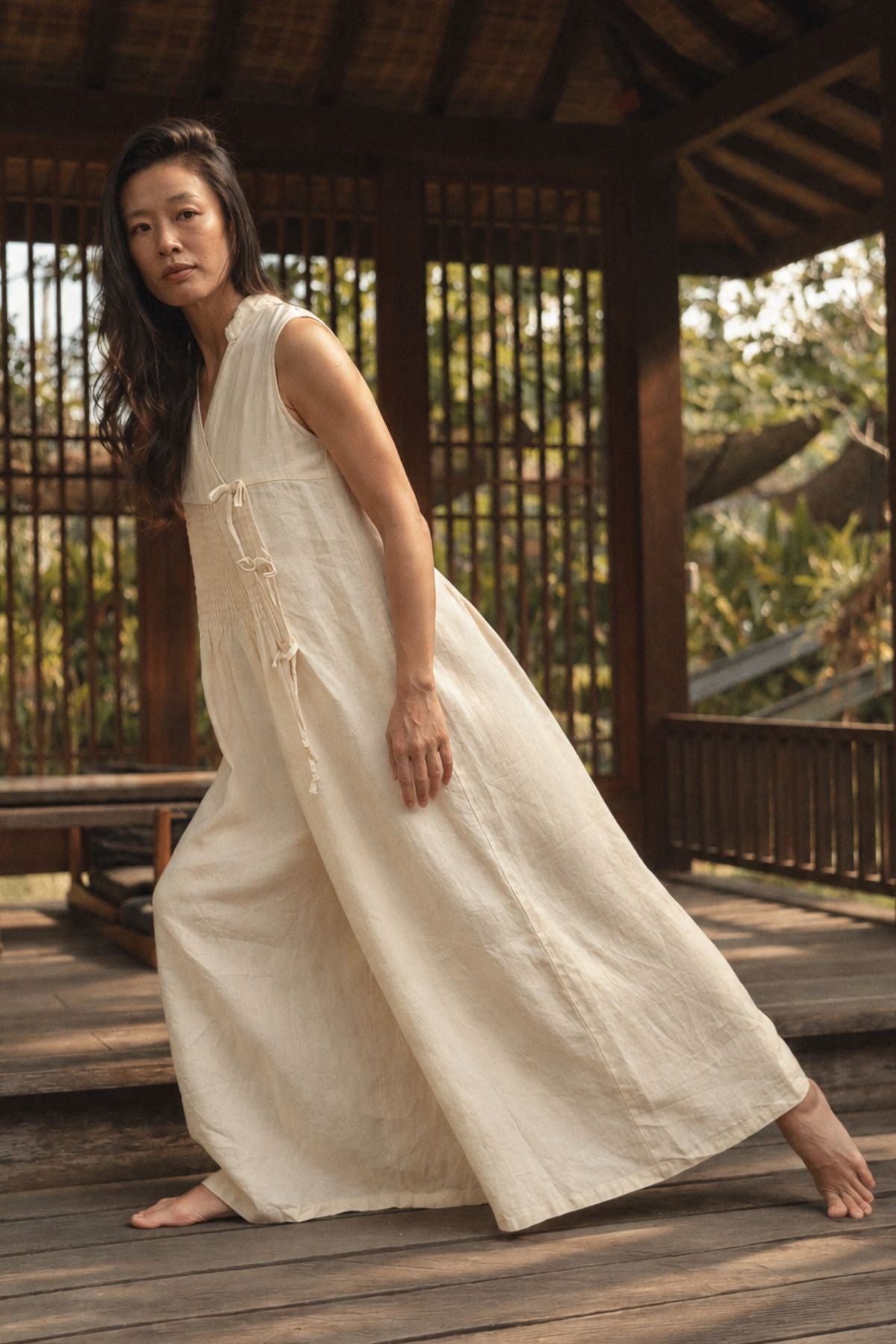
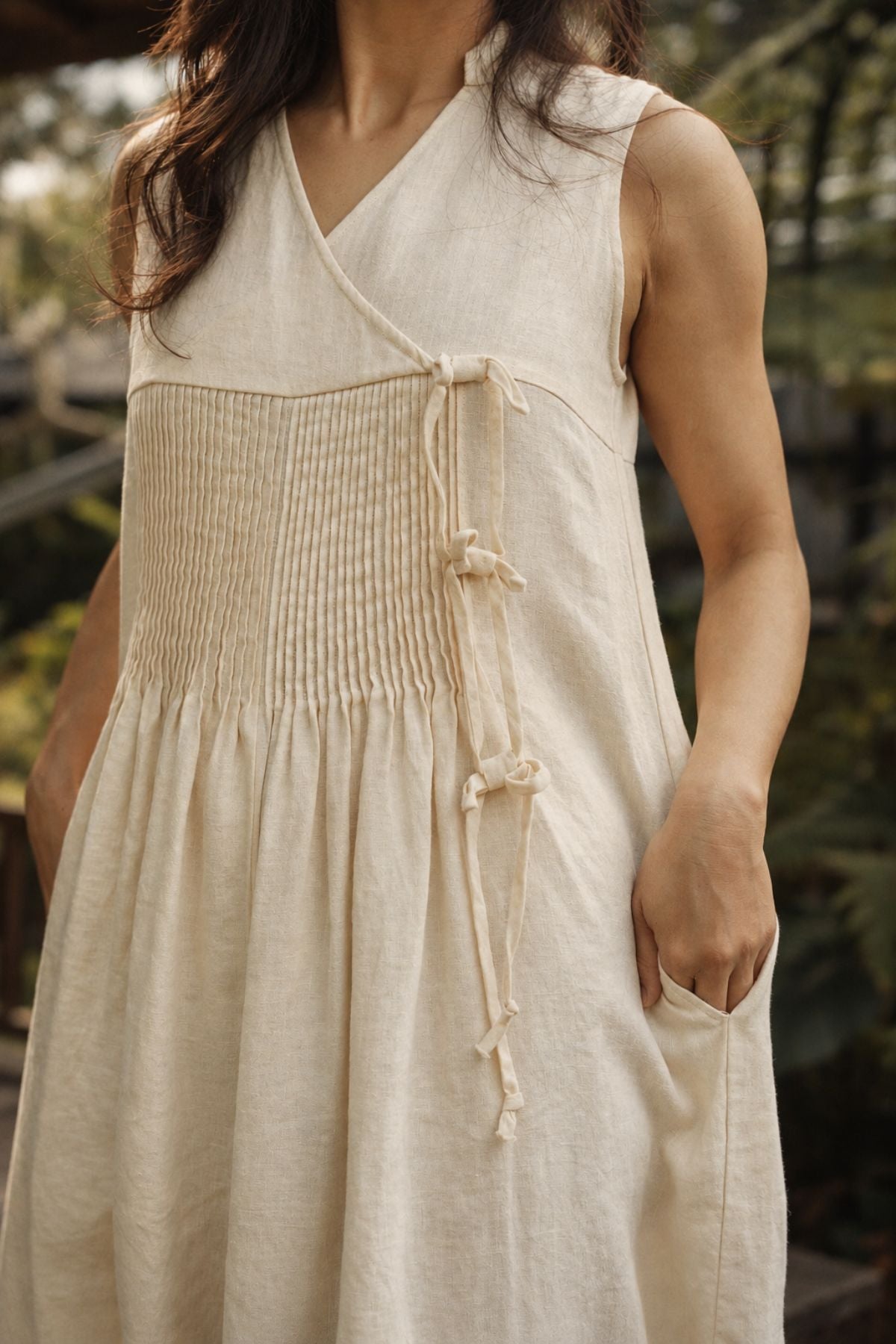
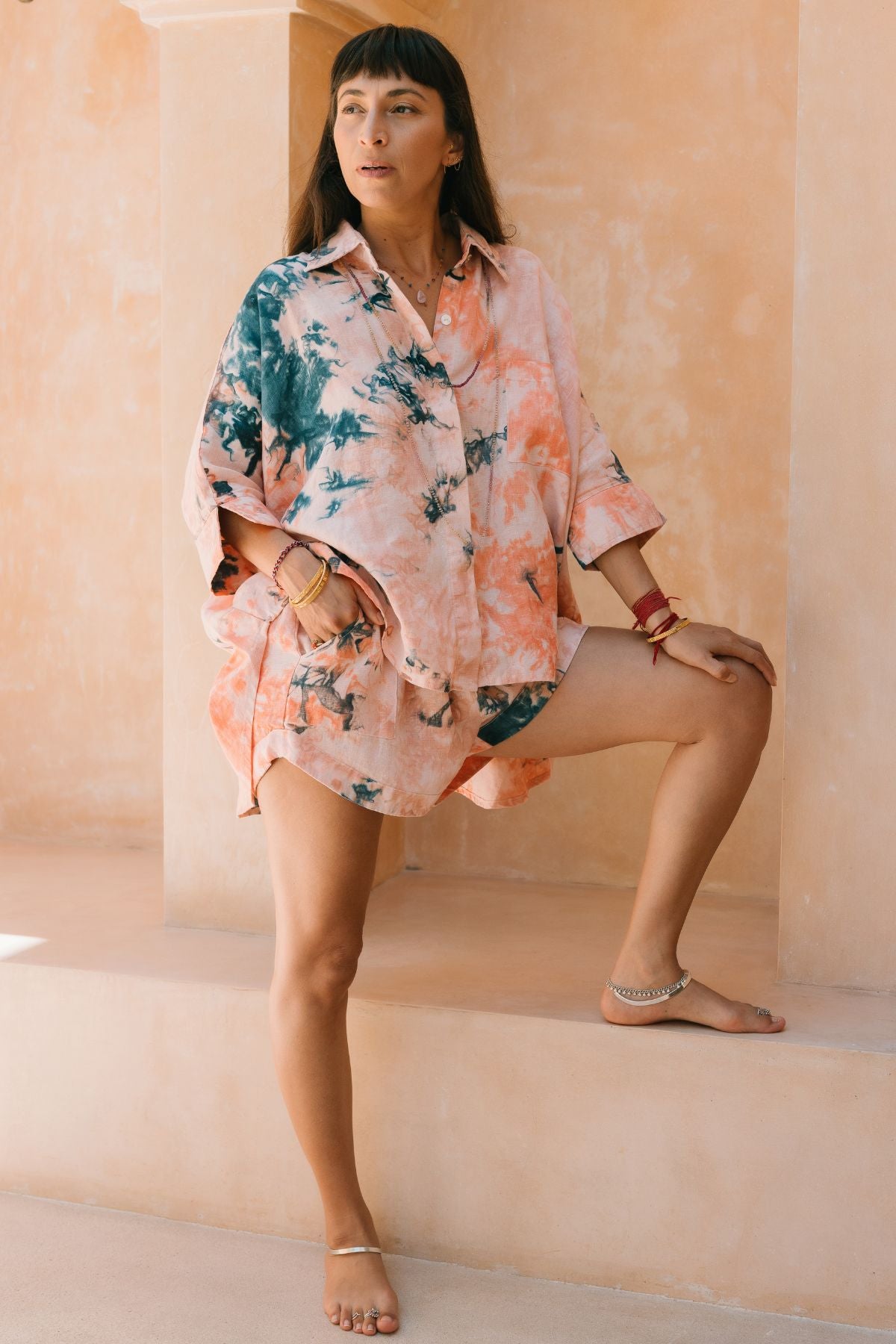
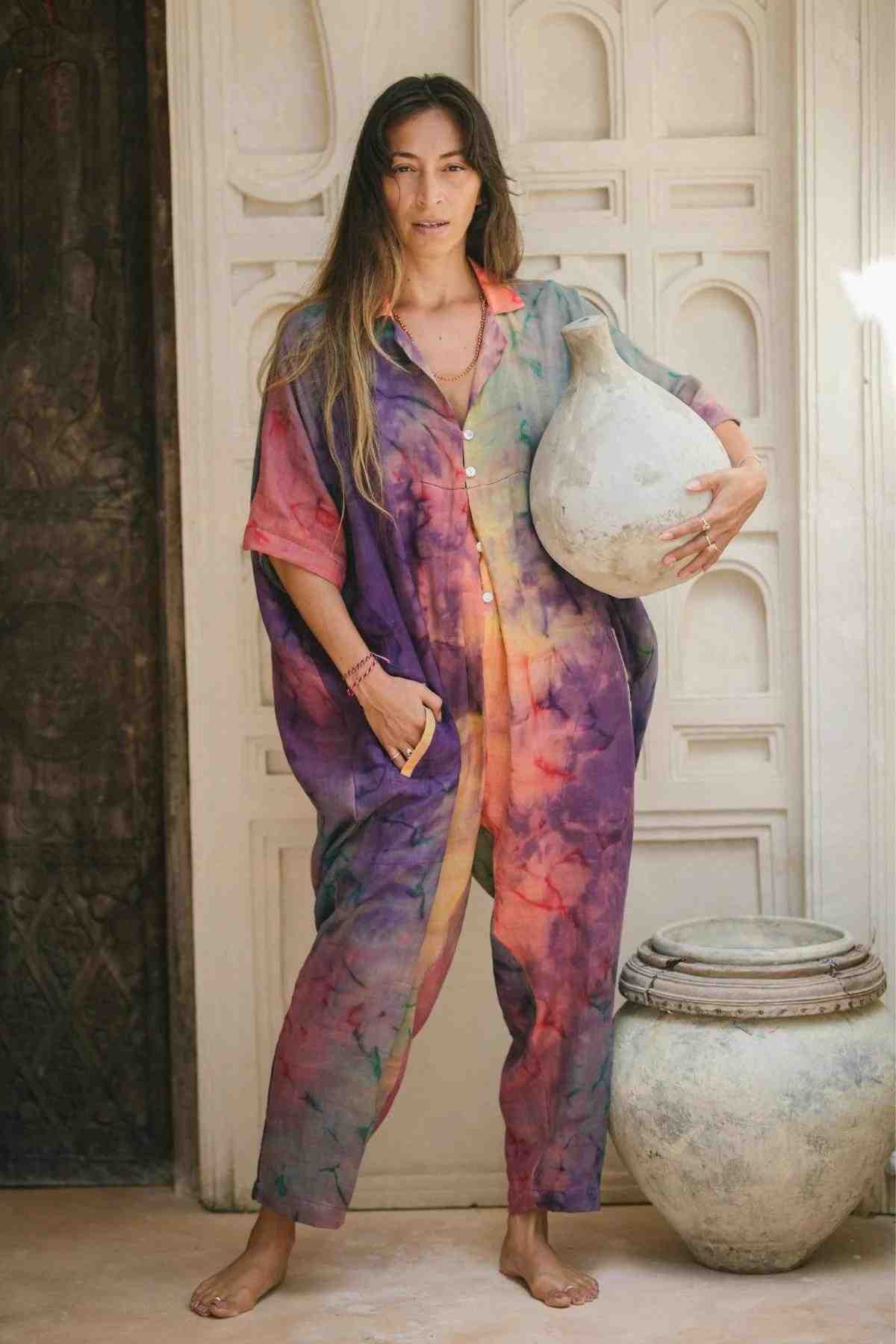
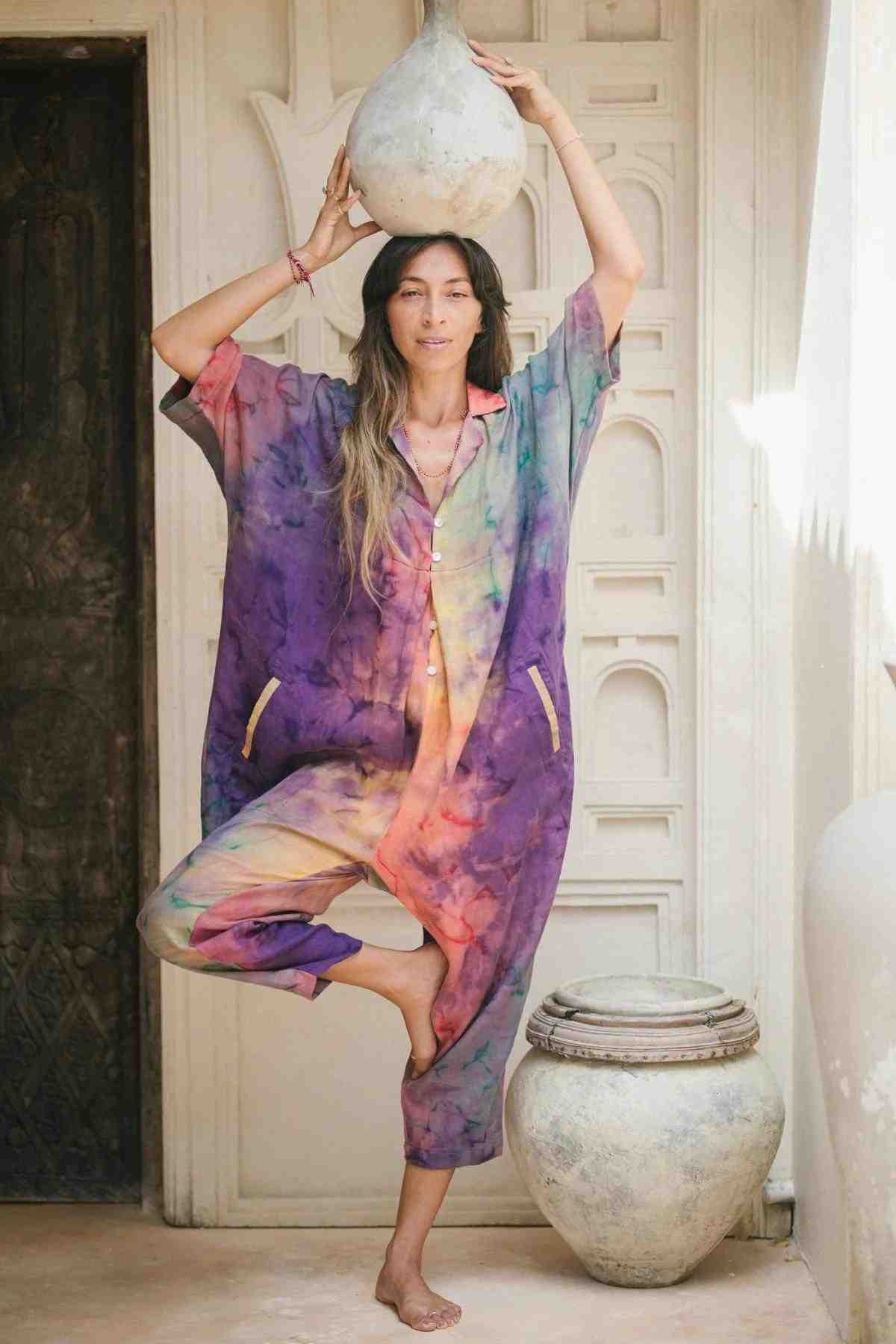
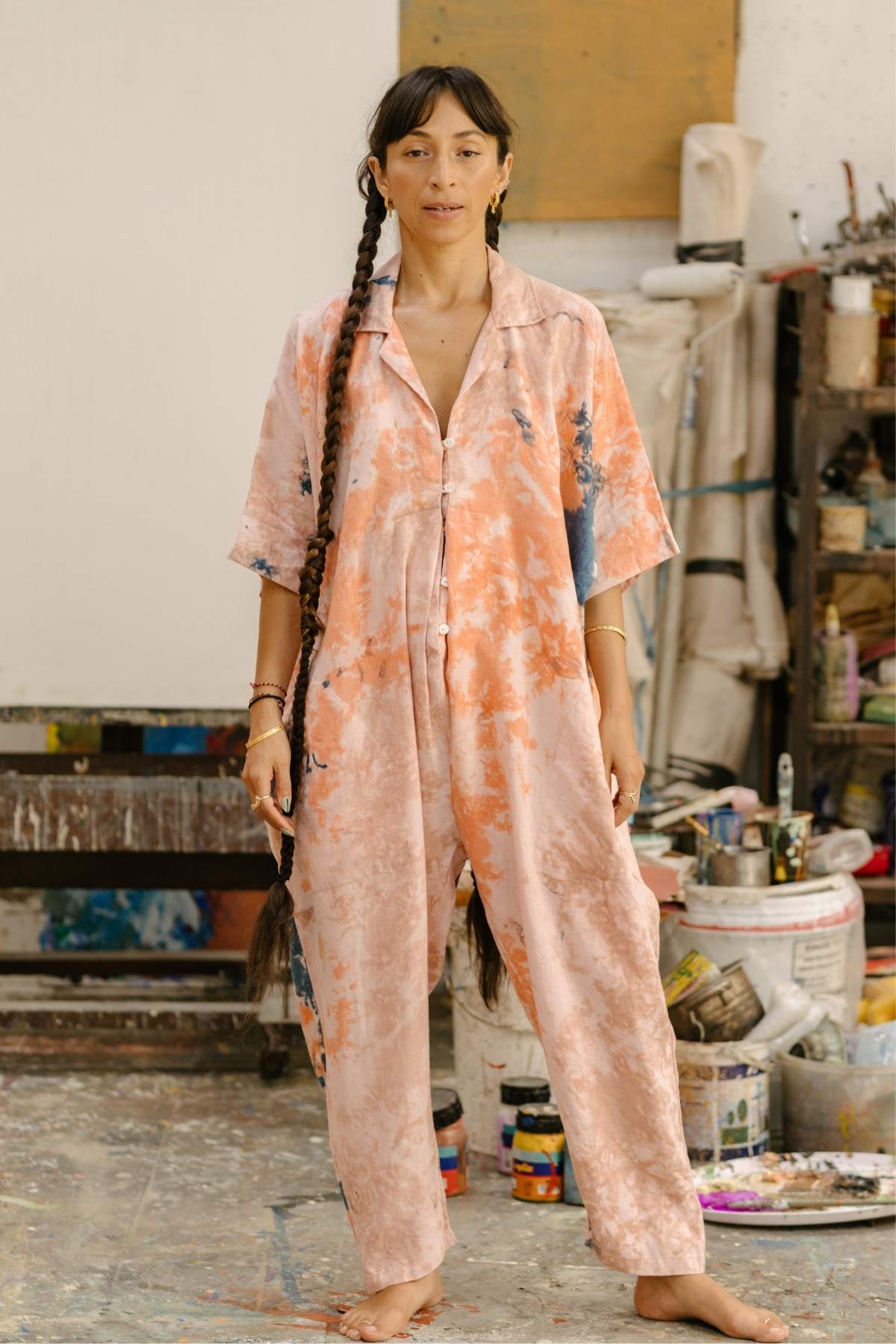
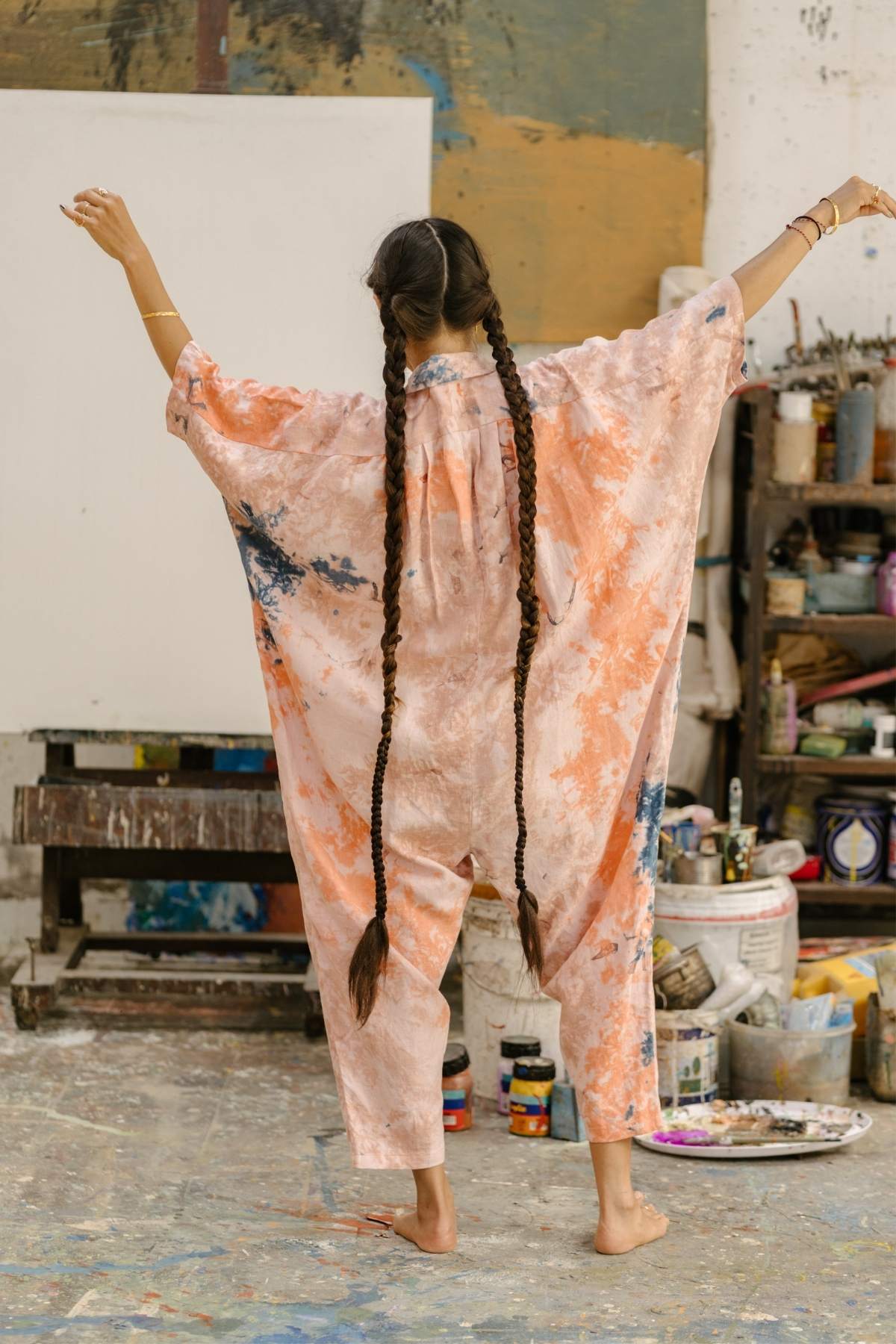
In practical terms, this often looks like choosing natural fibres over synthetic ones because they breathe and move and age like living things. It looks like reaching for pieces made by hand, because there is an energy in handcraft that a machine cannot replicate. It looks like wearing the colours the earth makes naturally, clay, off-white, dark moon, forest, the pale gold of late afternoon. It looks like building a wardrobe that can move with you through a morning ritual, a market run, and a candlelit dinner without needing to change who you are in between.
The Solstice Threshold: A Moment to Dress Intentionally
Today is the Summer Solstice, the longest day, the sun at its full luminosity. In many traditions, the Solstice is considered a portal: a liminal moment between what was and what is becoming. It is one of the most potent times in the year to set intentions, to release what no longer serves, and to step consciously into the next chapter of who you are.
Which makes it the perfect day to ask: does the way you dress reflect who you are actually becoming? Or are you still wearing the costume of who you used to be?
Sacred feminine dressing is not about spirituality as a performance. It is about alignment. When your external expression, your clothing, your adornment, the way you carry yourself, is in alignment with your internal landscape, something settles. You move differently. You take up space differently. You stop waiting for permission to be exactly as you are.
How to Begin: Three Questions for the Wardrobe
If you are feeling called toward this kind of intentional dressing but are not sure where to start, begin with three questions you ask yourself each morning before you open your wardrobe.
How do I want to feel today? Not how do I want to look. How do I want to feel. This single shift is the foundation of everything else. Clothing is an instrument of feeling, but only if you let it be.
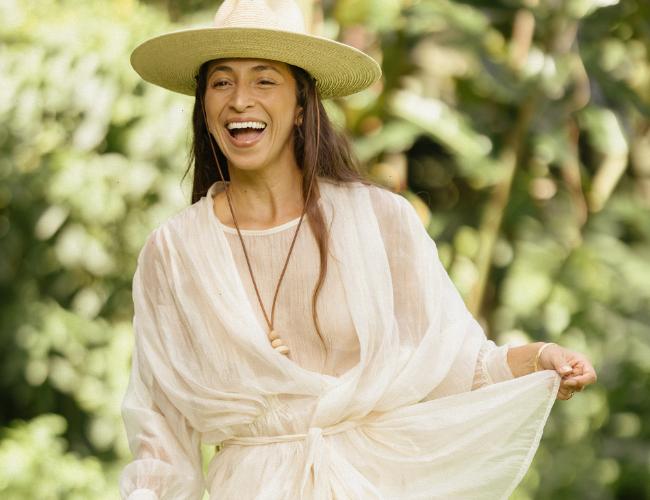
What am I moving toward? The sacred feminine is cyclical. We are always in some phase, a time of expansion, of contraction, of deep integration, of outward action. Your wardrobe can honour this. On days of inner work and quiet, you might reach for something soft and enveloping. On days of visibility and creative output, something that announces: I am here. I am ready.
Does this piece carry good energy? This sounds abstract until you feel it, and then it becomes impossible to unfeel. Some pieces carry a lightness, a history of being made with care, worn with joy, chosen with intention. Others carry the weight of compromise, of fast production, of being bought to fill a void that clothing was never going to fill. Your body knows the difference. Start trusting it.
The Energy of Natural Fibre and Handcraft
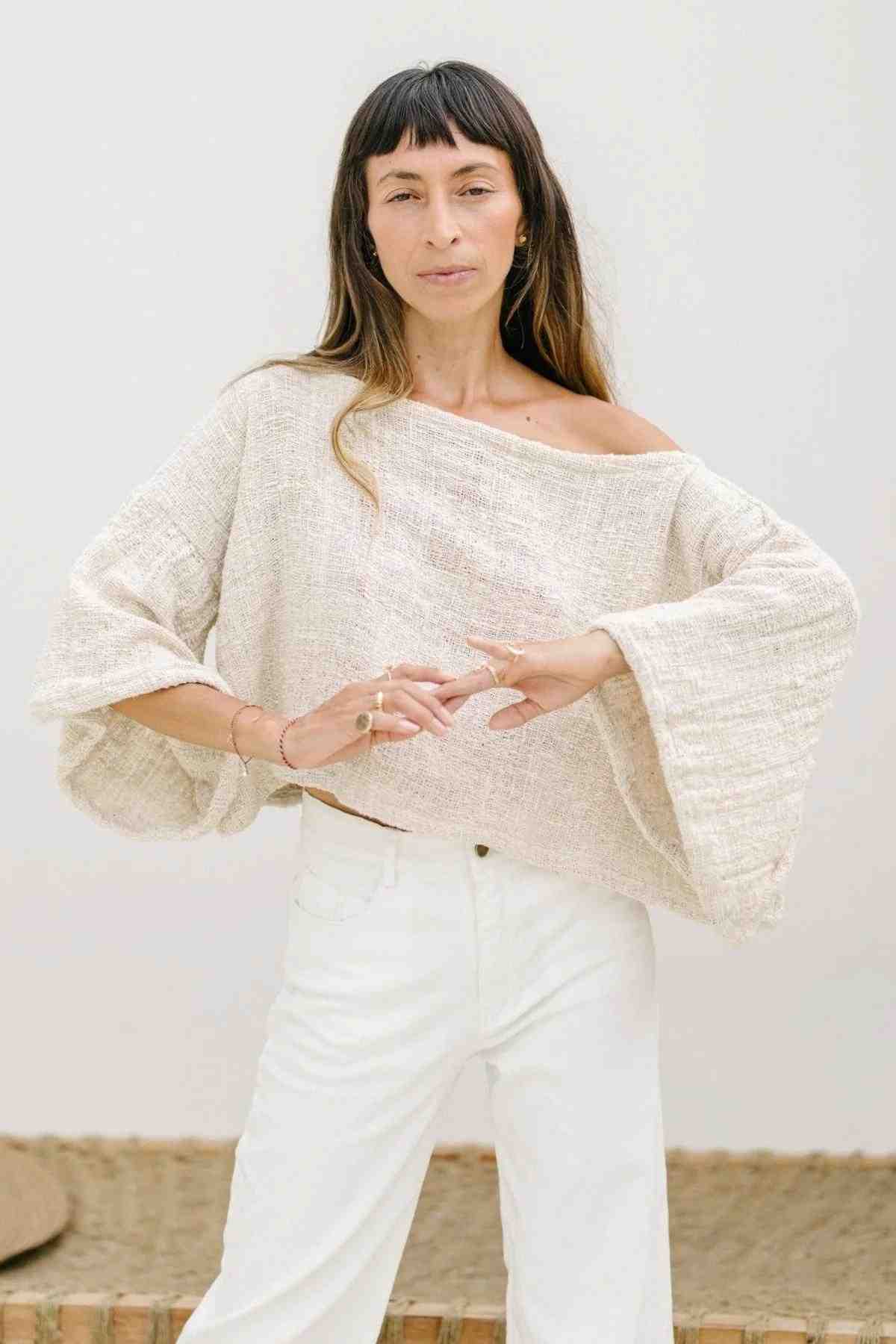
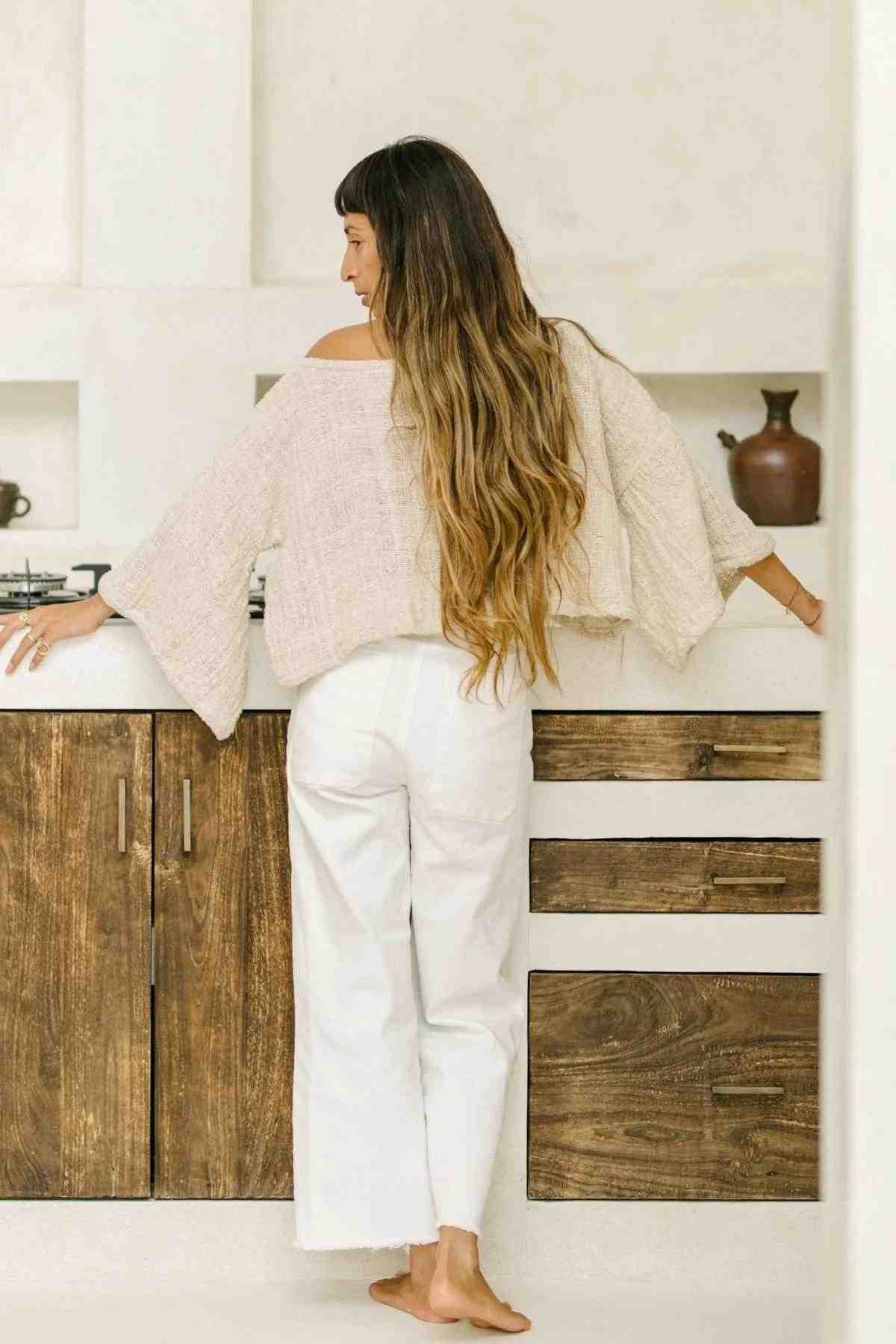
In Bali, where Myrah Penaloza has been making her collection for over a decade, the philosophy is simple: the most sacred thing you can put on your body is something made by human hands with genuine attention. The Spirit Top, for instance, is woven on traditional handlooms by Balinese artisan families who have passed the craft down across generations. You can feel it, not metaphorically. Literally. There is a different texture, a different presence, a different aliveness to cloth that has been made this way.
Dressing the sacred feminine does not require spending more. It requires being more discerning. Fewer pieces, chosen carefully. A wardrobe that breathes. The opposite of accumulation, an act of editing down toward the essential, toward the pieces that actually carry something.
The Sacred Feminine Is Not a Uniform
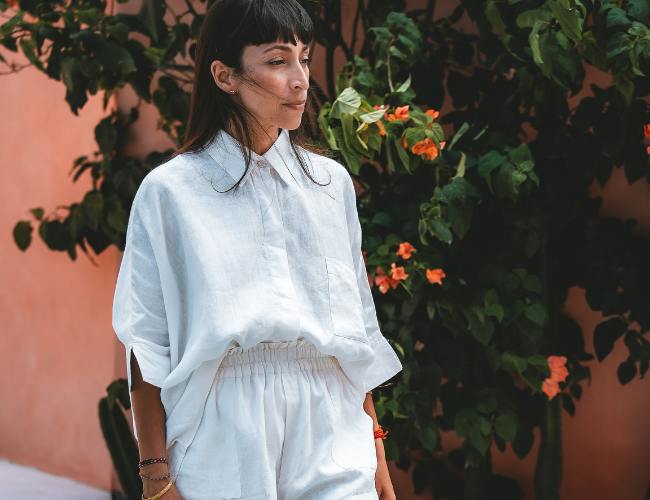
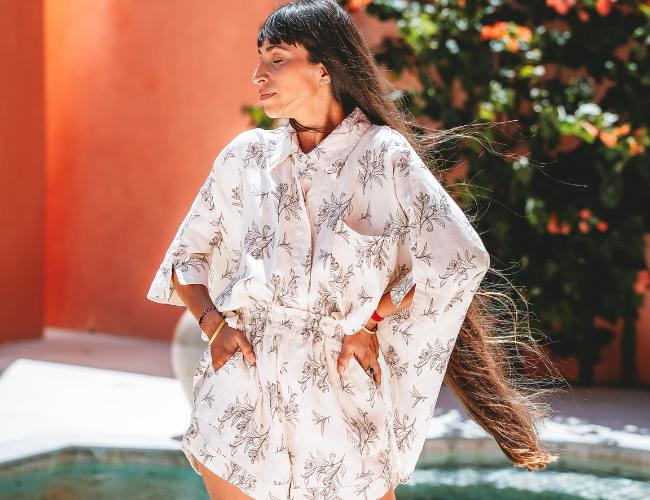
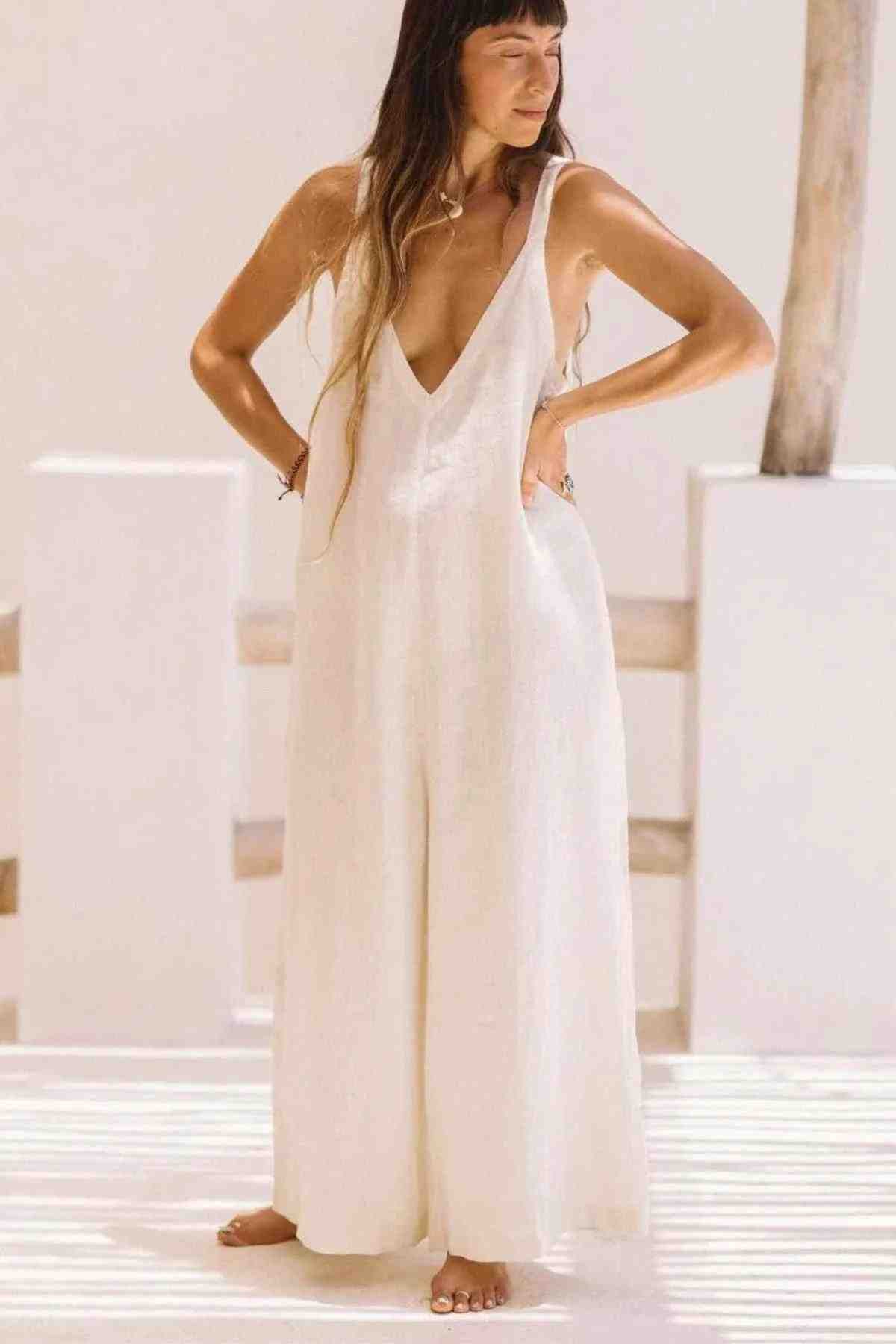
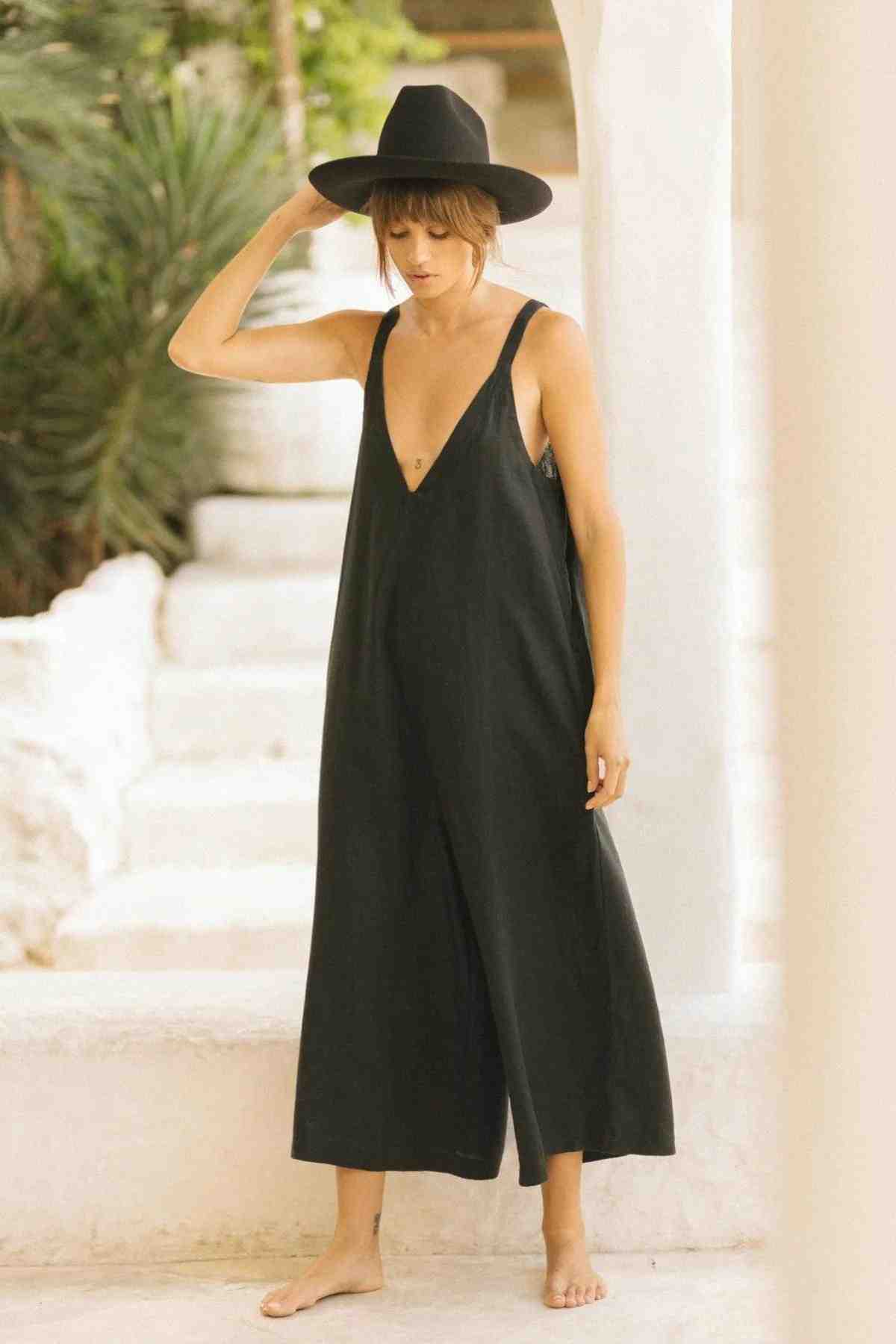
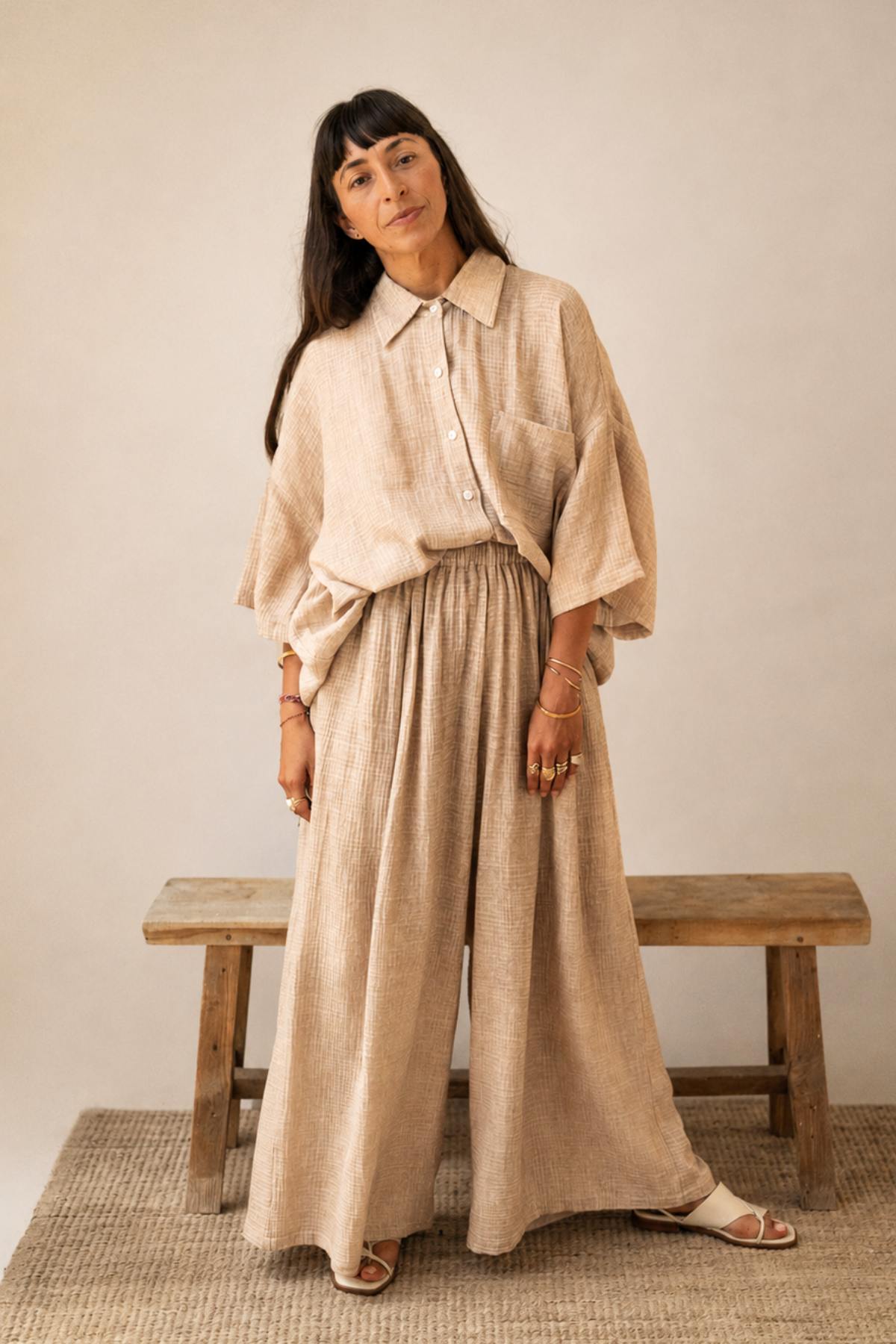
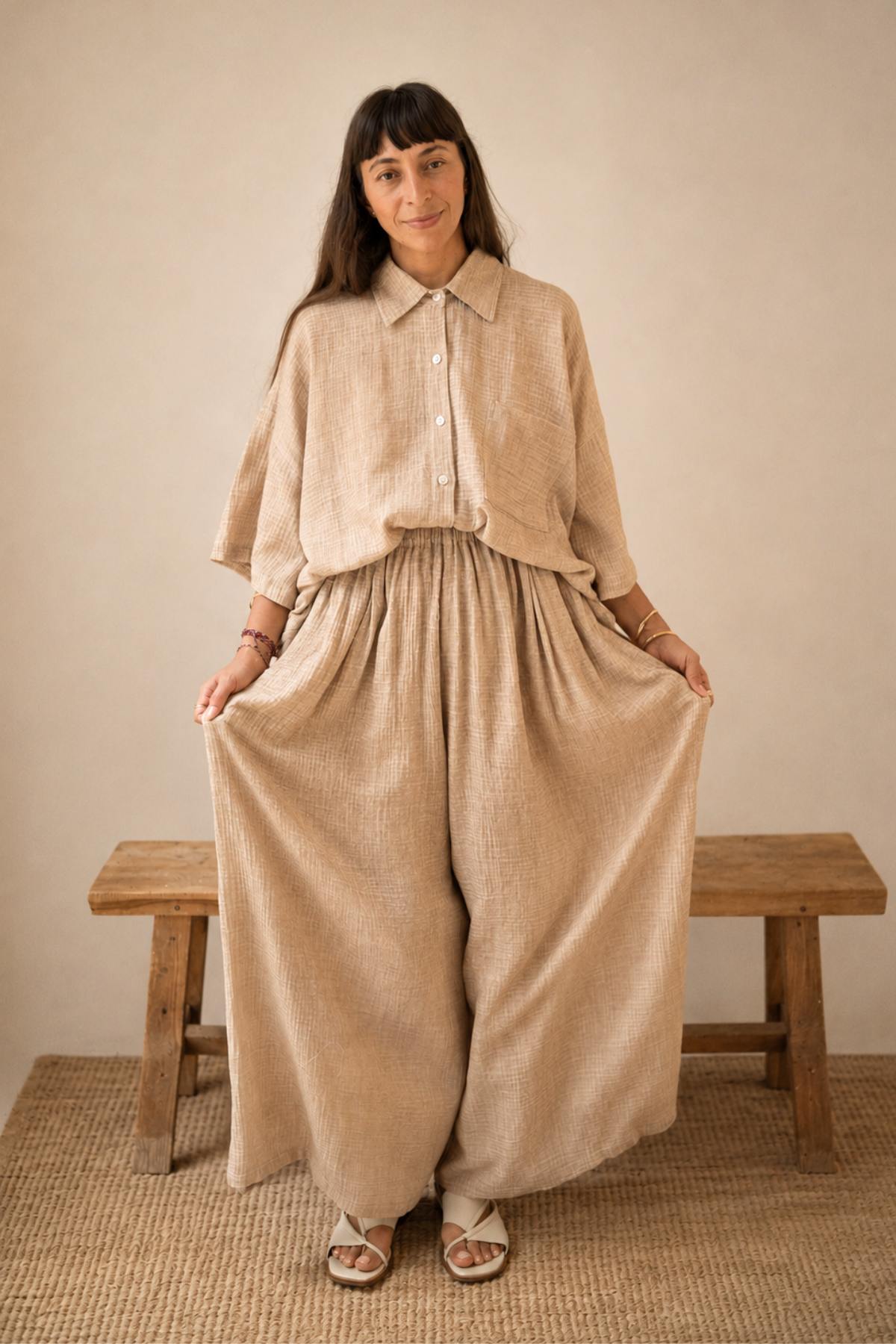
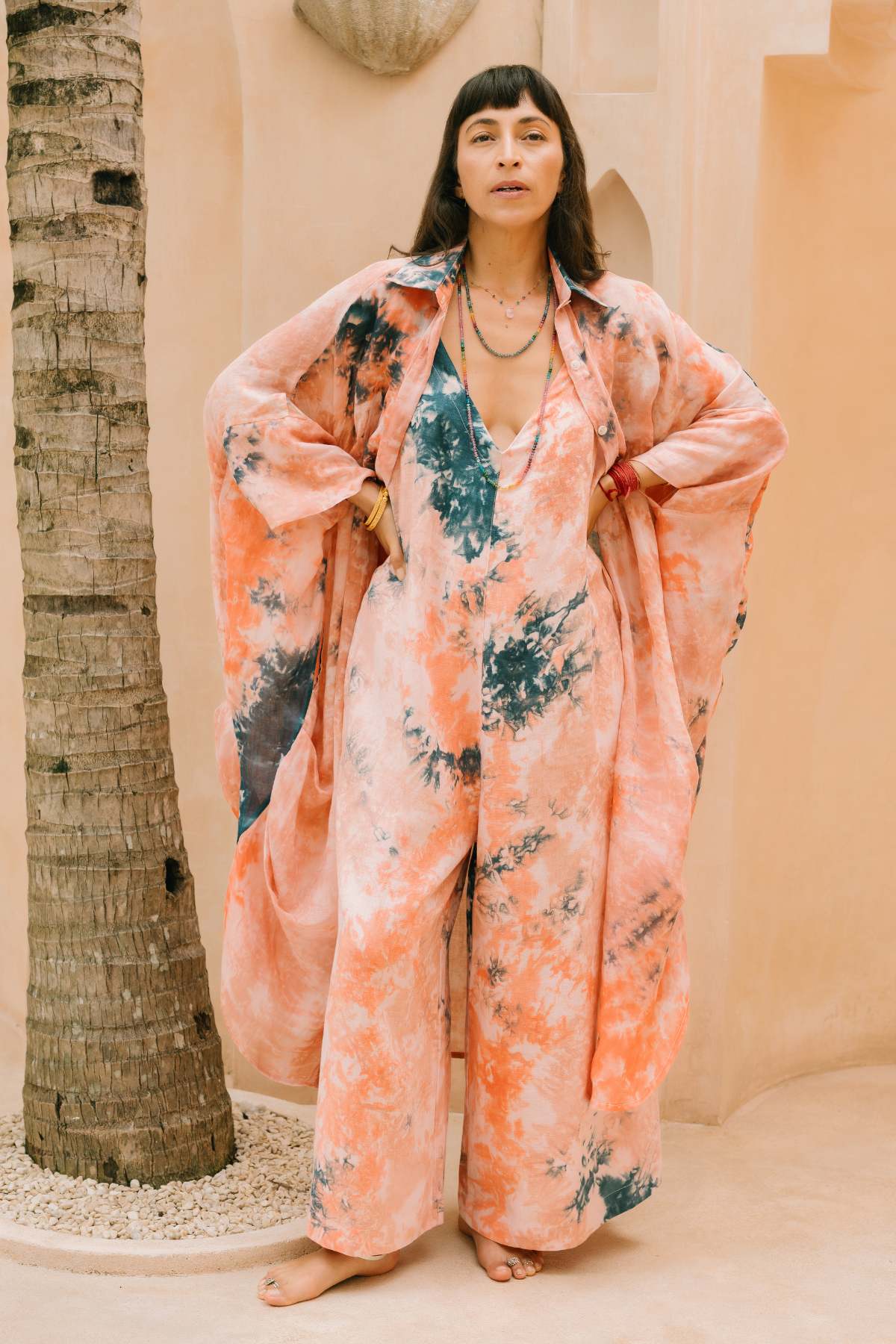
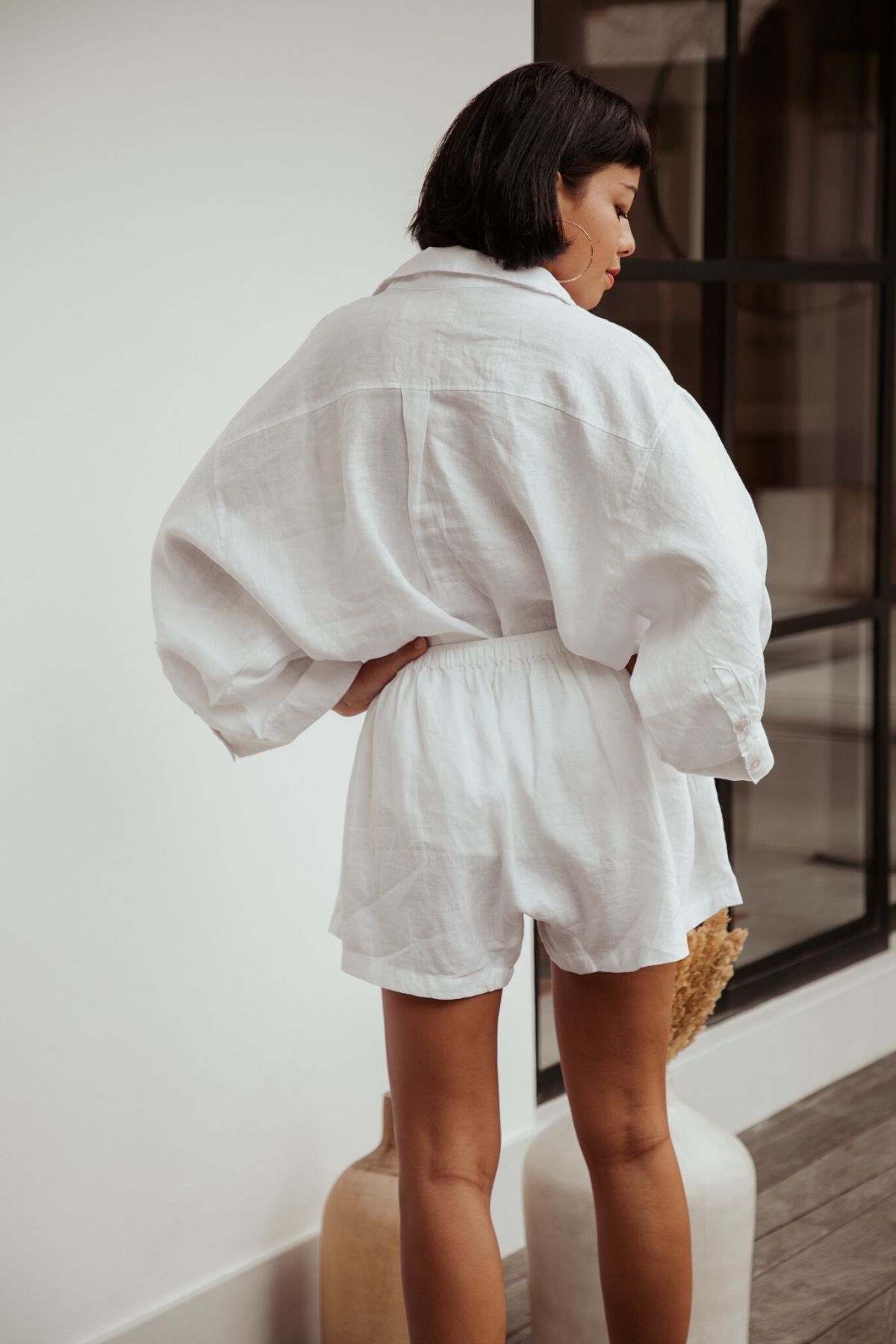
One of the most important things to understand about this way of dressing is that it is not prescriptive. The sacred feminine does not look like one thing. She is not always flowing white. She is also the deep charcoal of a Dark Moon gown. She is the bare, honest structure of a well-cut linen set. She is a kaftan at the beach and a silk gown at the ceremony. What unites all of it is the intention behind it, the choice made from the inside out, from feeling into form, rather than from trend into identity.
This is the practice. Not a capsule wardrobe prescription or a colour palette or a style formula. A practice. A daily act of choosing clothing that is an extension of the woman you are consciously, slowly, beautifully becoming. Especially on the longest day of the year, when the light is asking you to be seen exactly as you are.
The most radical thing a woman can do is dress exactly like herself.
With love from Bali,
Myrah.

|
A Piece for This Threshold The Spirit Top. Woven on handlooms by Balinese artisan families, the Spirit Top in Cotton Tumanggal carries the quiet energy of everything made with genuine attention. A piece that knows what it is, and what it is here for. |
|
The Muse-Letter Dress for the woman you're becoming. Every week from Bali. Astrology, slow living, sacred feminine, and the pieces we make by hand. A letter, not a sales pitch. Unsubscribe any time. No spam, ever. |



Leave a comment
This site is protected by hCaptcha and the hCaptcha Privacy Policy and Terms of Service apply.