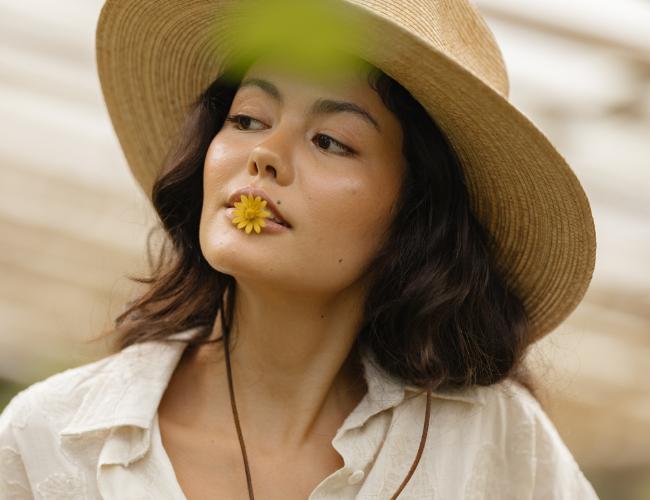

The word "ethical" is used so freely in fashion that it has almost stopped meaning anything. Brands use it on hang tags manufactured in factories they have never visited. Retailers apply it to collections whose supply chains they cannot trace past the first tier. The word has become aesthetic — a signal, not a fact.
We are a Bali linen brand. We live here. Our studio is here. The artisans who make our linen clothing for women are people we know by name, whose families we know, whose working conditions we can observe without scheduling a visit. We are writing this not to claim a moral high ground but to describe what ethical actually looks like in practice — what it costs, what it produces, and why it matters to you as the person wearing it.
What a fabric certification actually costs a small brand to hold, separately from the wage question, is its own number. We cover it in what certifications actually cost a small brand.
Why Bali, and Why Linen

Bali has a centuries-long tradition of textile craft — batik, ikat, songket, and hand-loomed cotton are all deeply rooted here. When we began making linen clothing for women in Bali, we were not importing a practice. We were combining an existing culture of meticulous handwork with a fabric that is the most logical choice for this climate.
Linen is made from flax. Flax requires no irrigation beyond rainfall, fixes nitrogen in the soil, and uses every part of the harvested plant. The resulting fibre is hollow-core, which means it circulates air and wicks moisture — the physiological reason linen feels cooler than cotton at equivalent temperatures. In Bali's tropical climate, where humidity sits between 70 and 90 percent most of the year, linen is not a style choice. It is the correct material.
It also ages in the right direction. Stonewashed Bali linen becomes softer with every wash. It does not pill, does not fade unevenly, does not lose its drape. A well-made natural fibre linen set bought today will feel better in three years than it does on day one. That is the opposite of how fast fashion works, and that reversal is the foundation of everything we make.
What Artisan Linen Clothing Actually Means
"Artisan" is another word that gets weaponised by marketing. In our context, it is a description of process. Each piece of artisan linen clothing for women in our collection goes through the following:
Fabric Selection
We source stonewashed linen from suppliers who can document the fibre origin. The fabric is assessed by hand — weight, drape, recovery — before any cutting begins. We reject lots that don't meet our standard. This wastes time and money. We do it anyway.
Pattern Cutting
Every pattern is cut individually, not stacked and cut in bulk. Stacking is faster and produces more waste from misaligned cuts on the lower layers. Individual cutting is slower, more precise, and more respectful of the fabric.
Hand Finishing
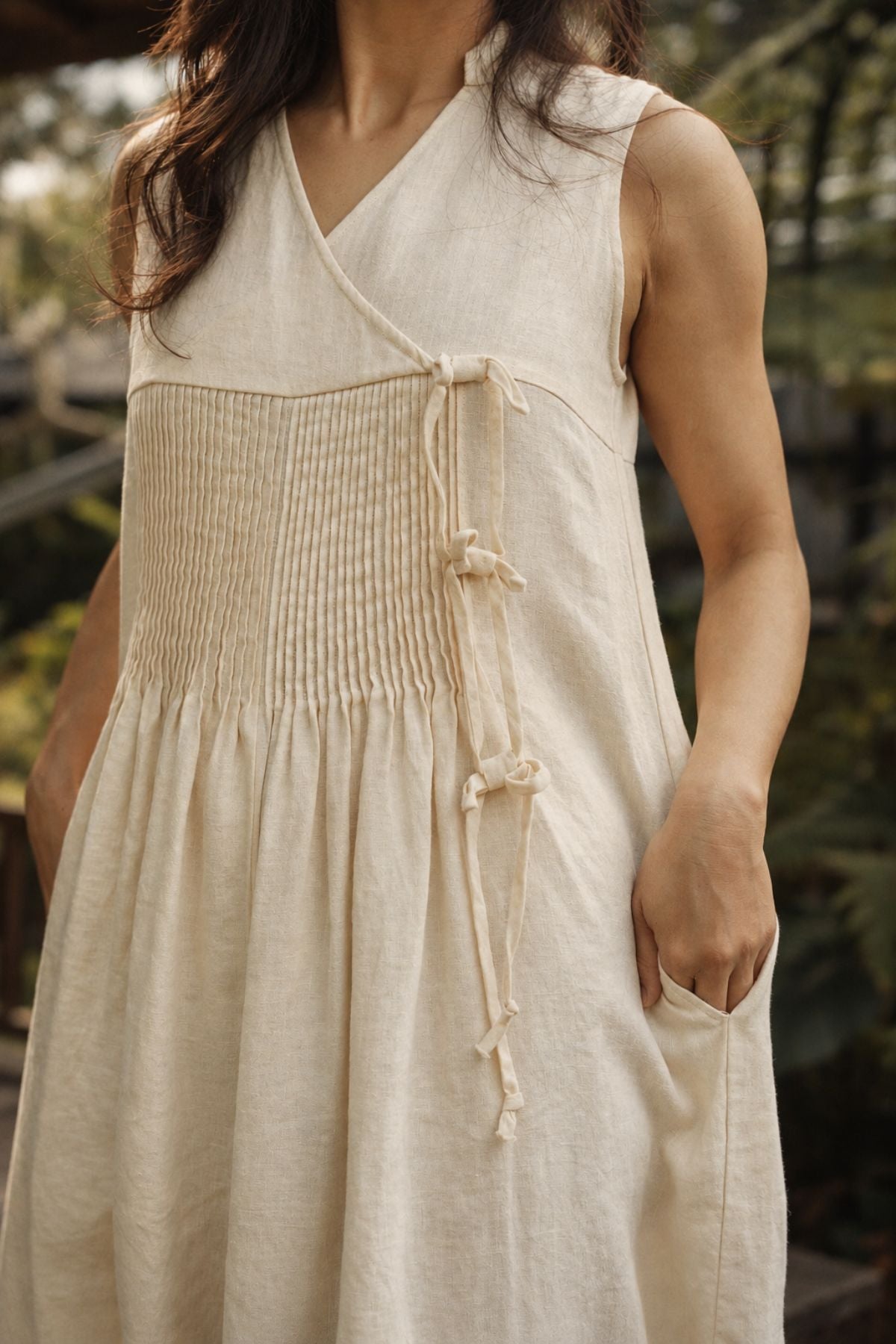
Buttons are attached by hand. Hems are finished individually. Where a machine finish would be invisible on the outside, it is still checked on the inside. This is the difference between a garment made with care and one made to pass inspection.
Small Batch Production
We produce in quantities that match actual demand. This costs more per unit and means we sometimes sell out. It also means we never have a warehouse of unsold Bali linen co-ord sets that need to be discounted, destroyed, or landfilled to make room for next season.
On fair wages: Every maker in our production chain earns above Bali's regional minimum wage. We do not use piecework pay structures that incentivise speed at the expense of quality or safety. Our artisans work daytime hours in a ventilated studio. We know their names. This is not remarkable — it should be standard. In much of the global garment industry, it is not.
Plant-Dyed Linen: What It Is and Why It Matters
Conventional garment dyeing is one of the most polluting industrial processes in the world. Synthetic azo dyes, heavy metal fixatives, and chemical rinse agents are discharged into rivers across South and Southeast Asia at volumes that have made some waterways clinically toxic. The colour on most high-street linen was fixed in a process that you would not want happening near where you live.
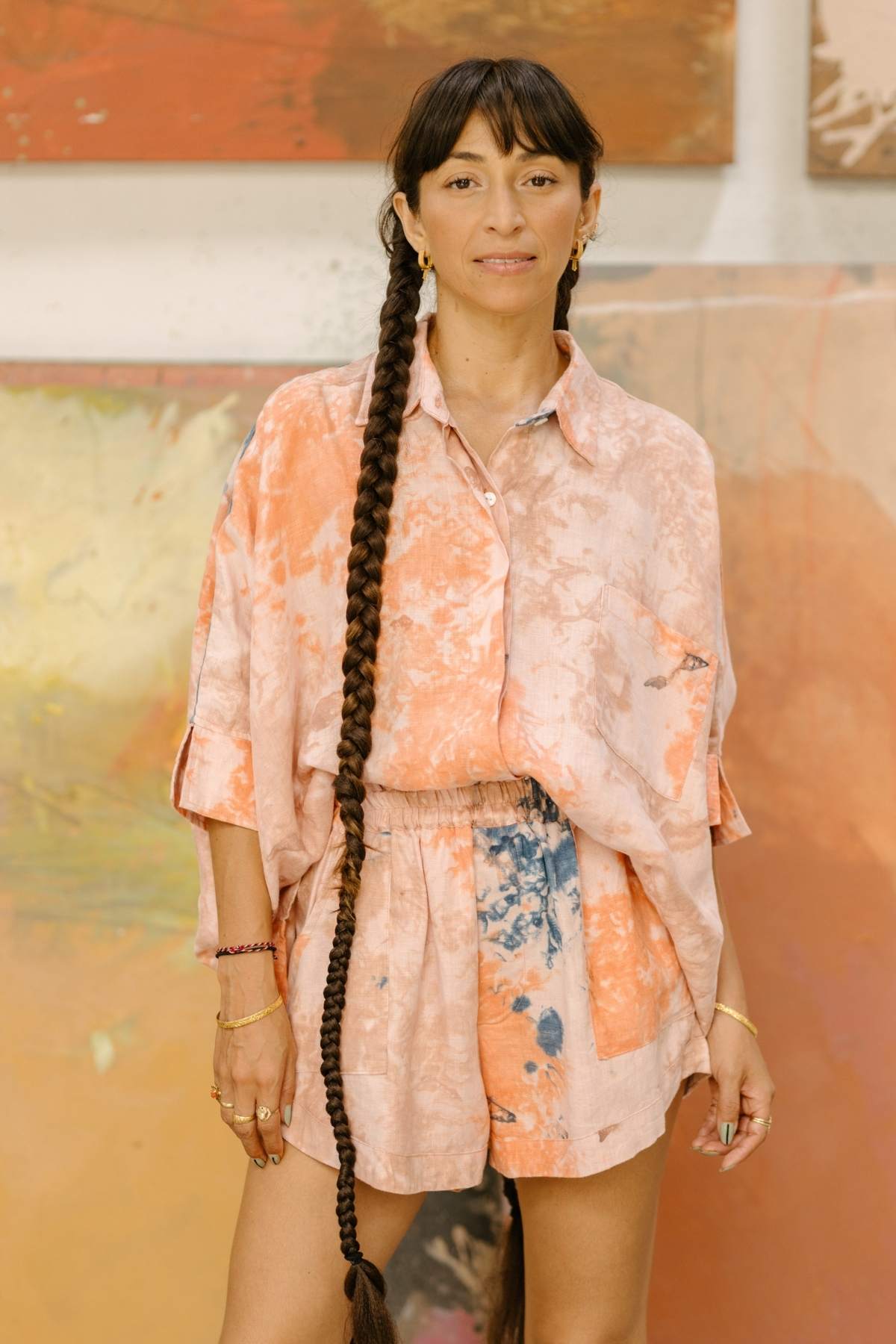
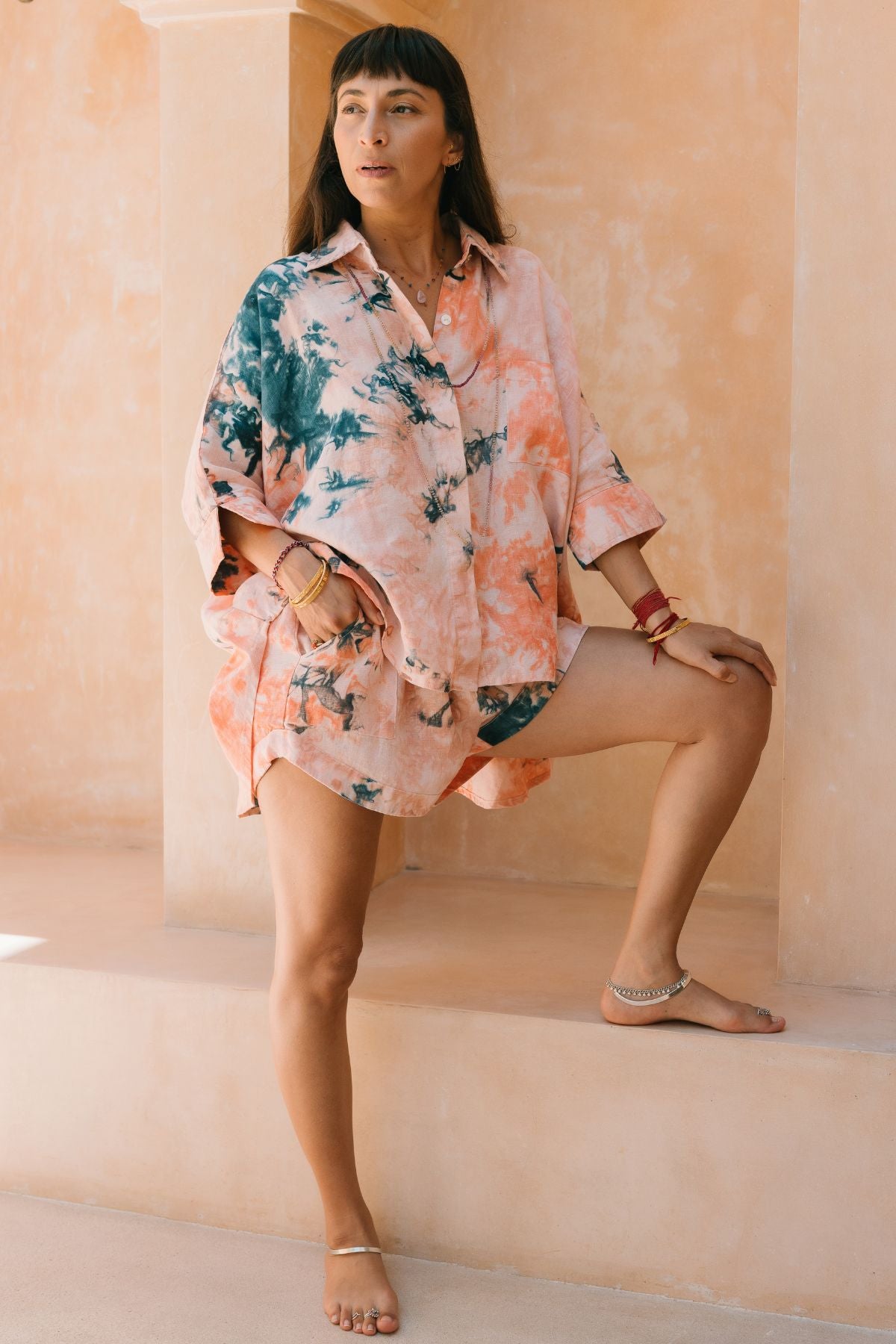
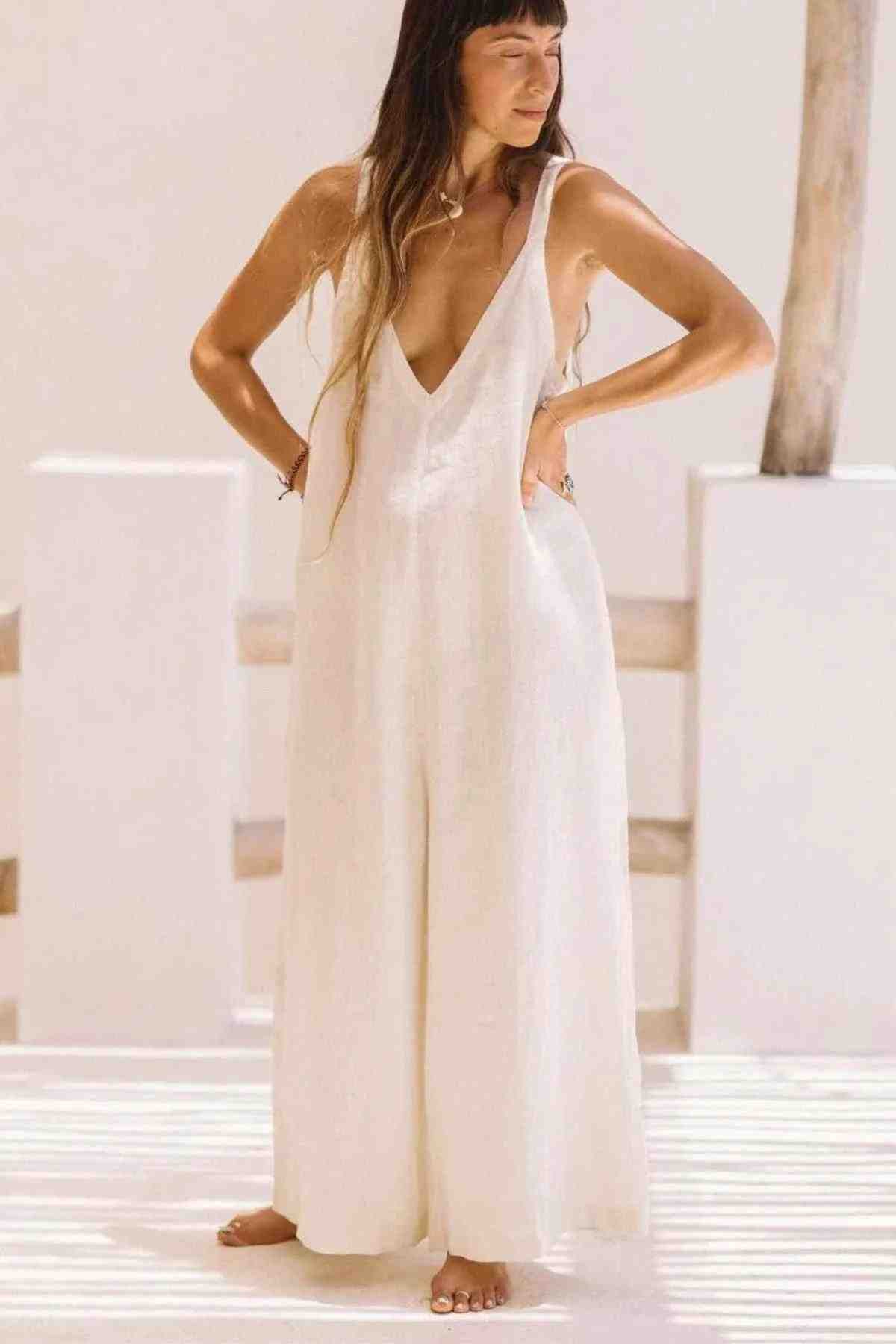
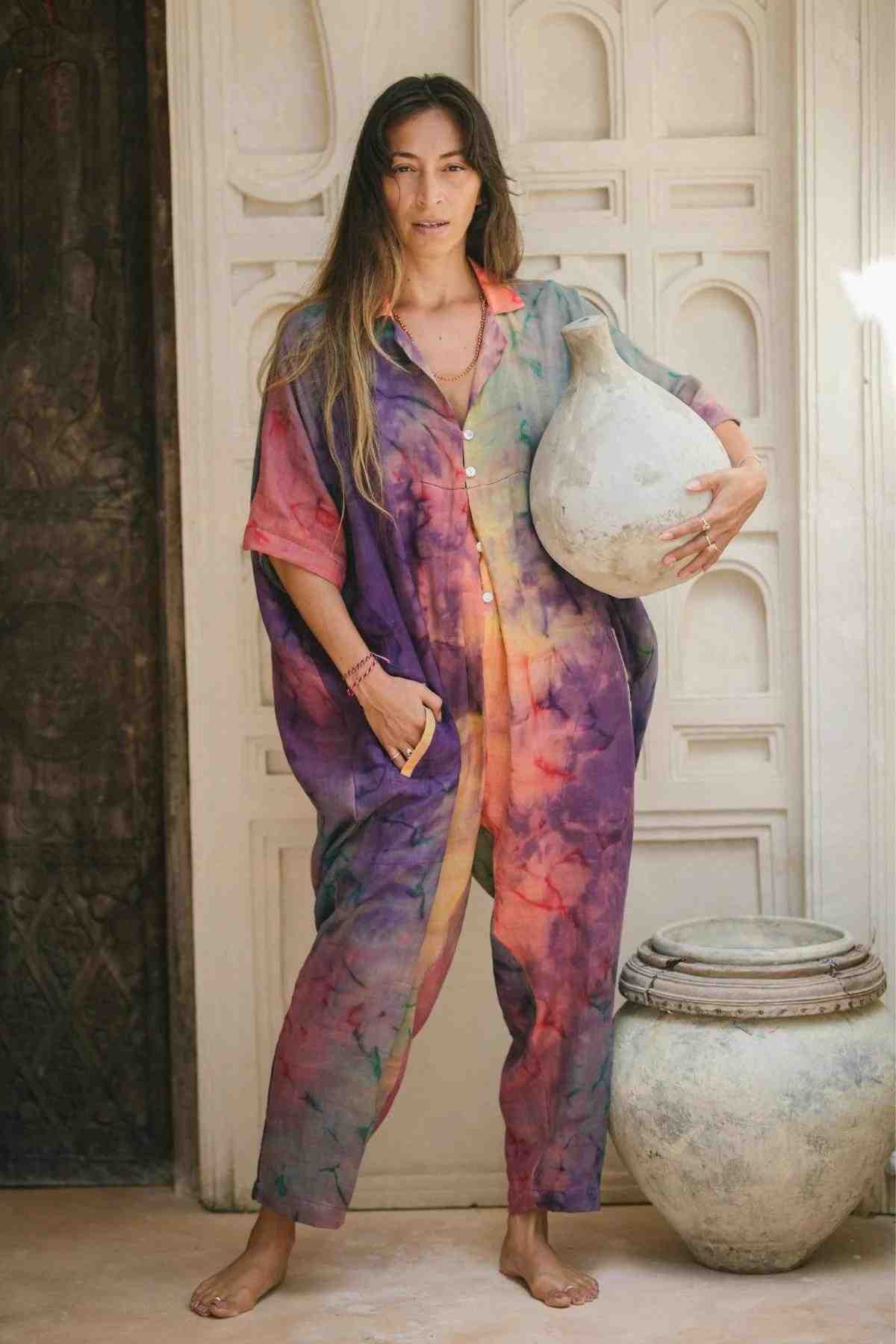
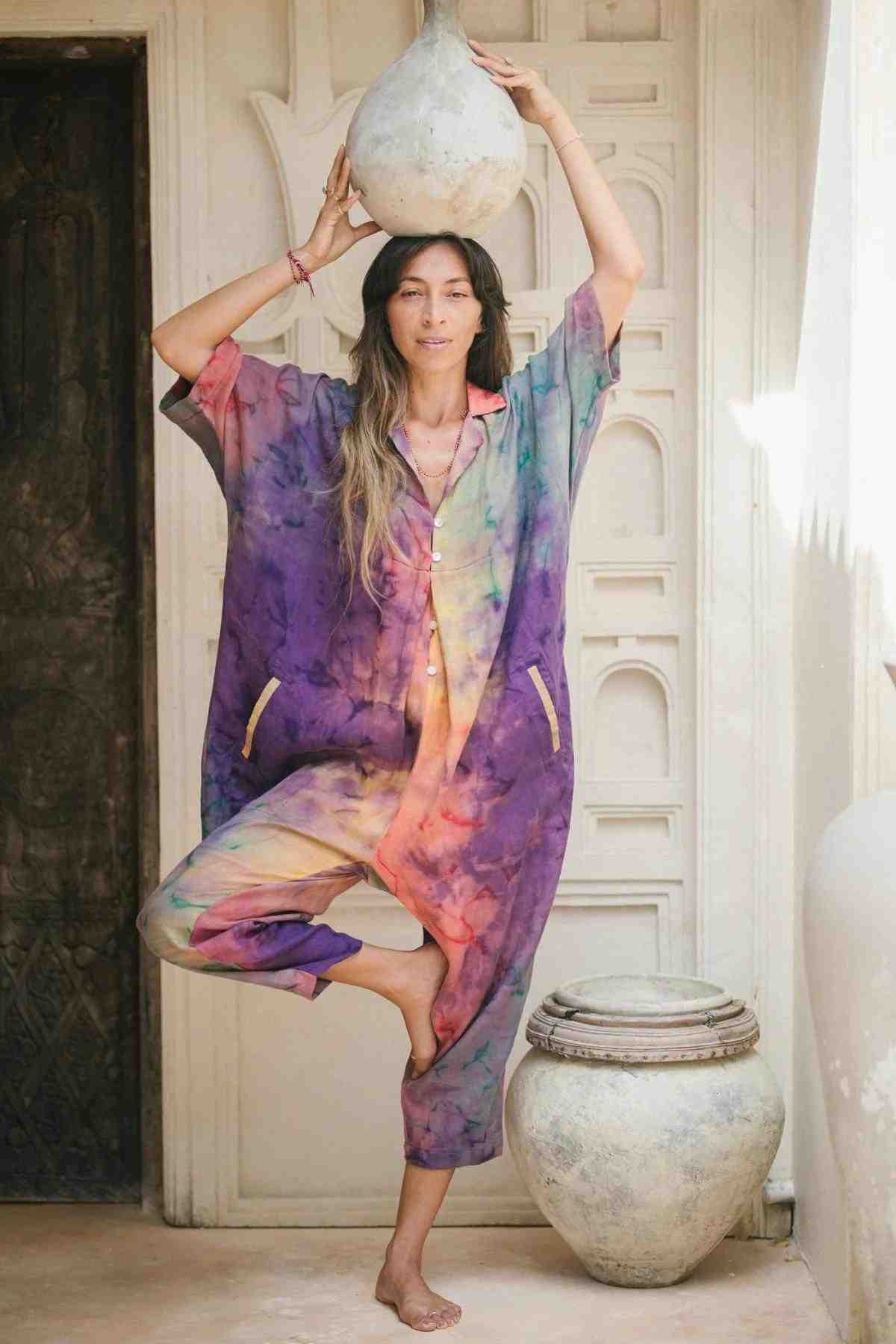
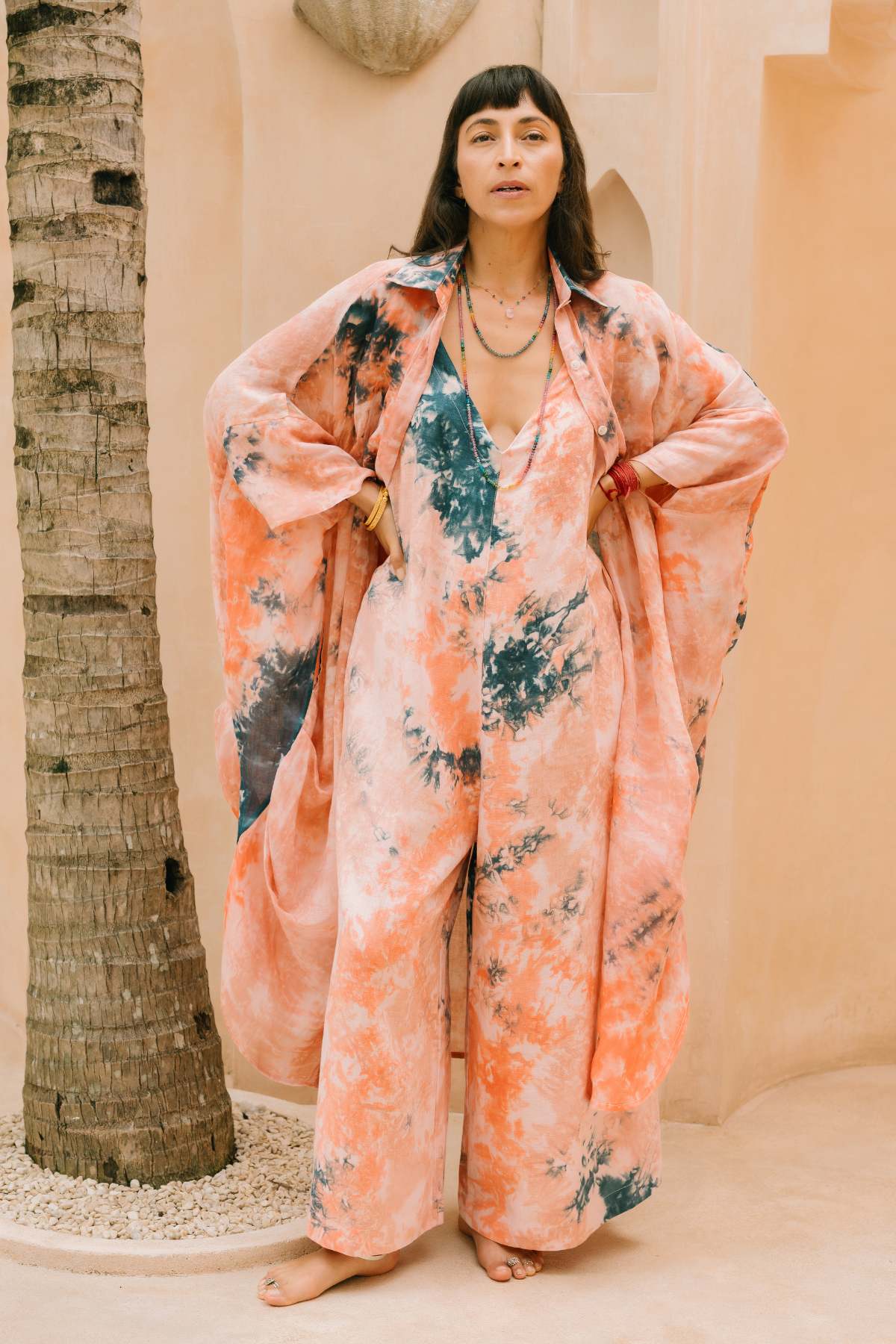
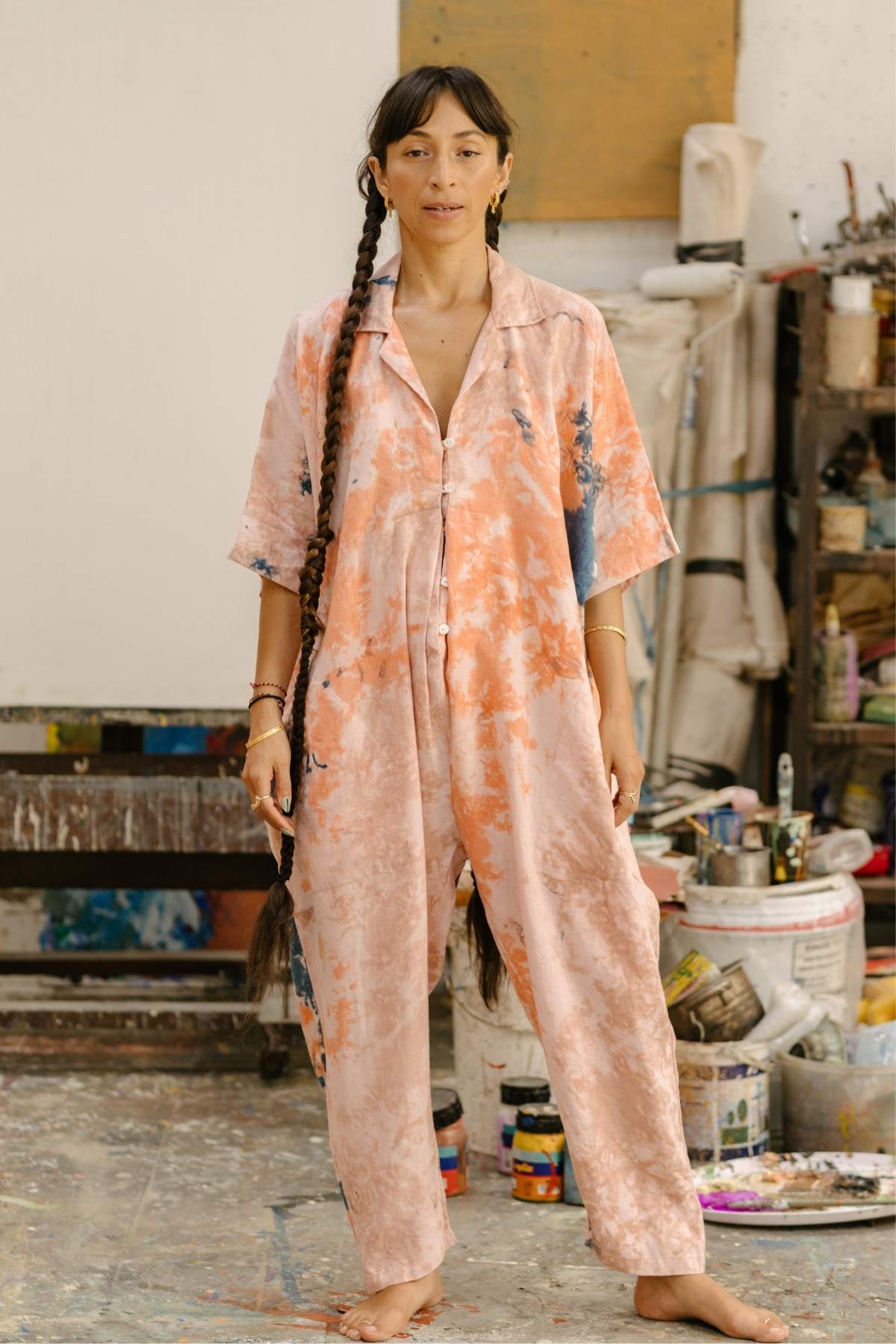
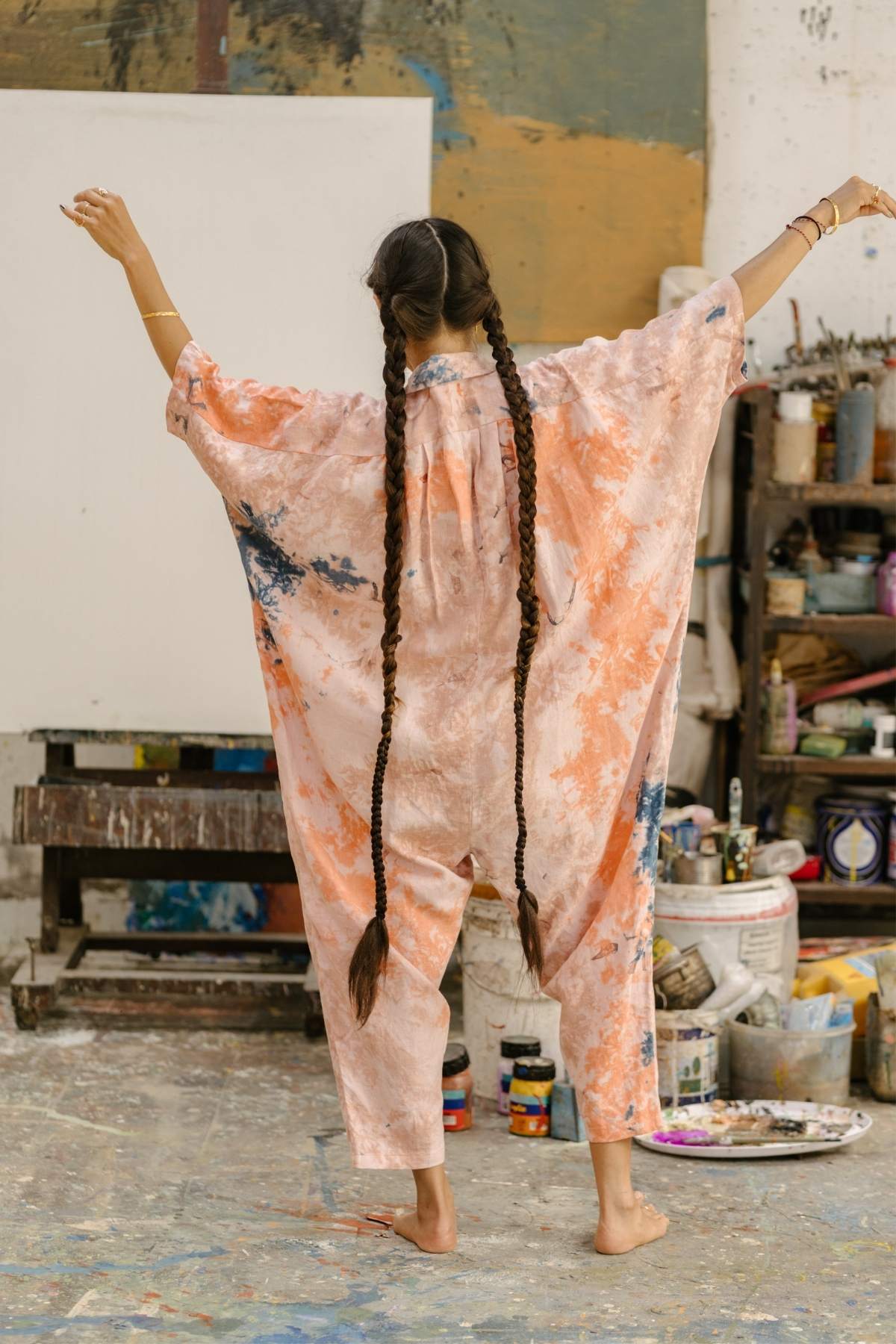
Our plant dyed linen women's clothing uses natural pigments — extracted from roots, bark, leaves, and plant matter — that biodegrade without releasing toxins. The process takes longer. The colours produced are more subtle, more variable, and more alive than synthetic equivalents: each piece has a slight variation that is a record of the natural dyeing process rather than a defect. The indigo in our deep blues was grown. The clay in our warm neutrals came from soil. The off-white in our undyed pieces is the colour of the linen itself, untreated.
Plant-dyed textiles are also better on skin. There are no residual chemical fixatives next to your body all day. For people with chemical sensitivities or those who prefer to wear things closer to their natural state, this matters.
Slow Fashion Linen: A Practice, Not a Label
Slow fashion linen is not an aesthetic category. It is a production philosophy: make less, make it well, make it last.
A sustainable linen co-ord set from a genuine slow fashion brand will be priced higher than a fast fashion equivalent because the true costs — fair wages, quality materials, small-batch production — are not externalised onto workers or the environment. That price is not a premium. It is what clothing actually costs when no one in the supply chain is absorbing the difference.
We set out the fuller cost breakdown, fibre by fibre, in why is linen expensive.
That same set, worn regularly over three years, has a lower cost-per-wear than a fast fashion alternative bought twice and discarded. It also does not require dry cleaning, does not lose its shape with washing, and does not contribute to the 92 million tonnes of textile waste produced globally each year. The economics of slow fashion work when you account for the full timeline, not just the checkout price.
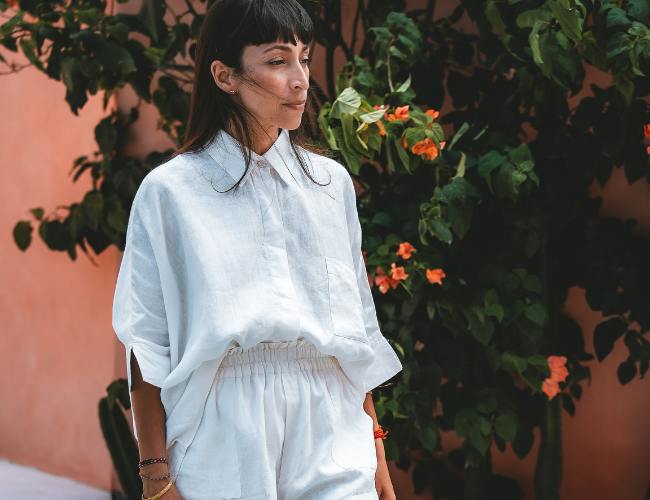
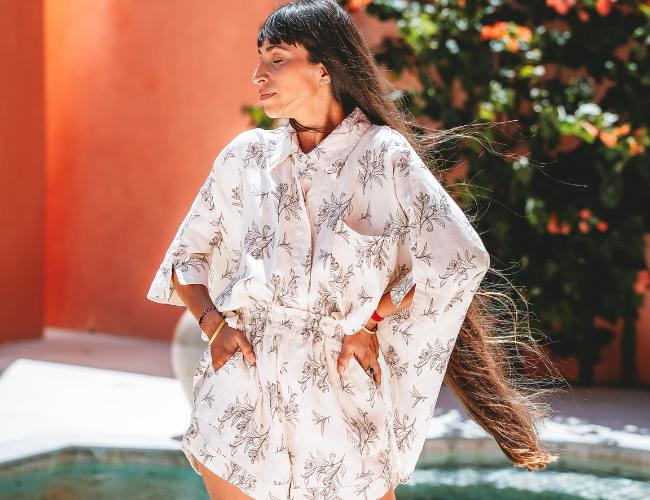
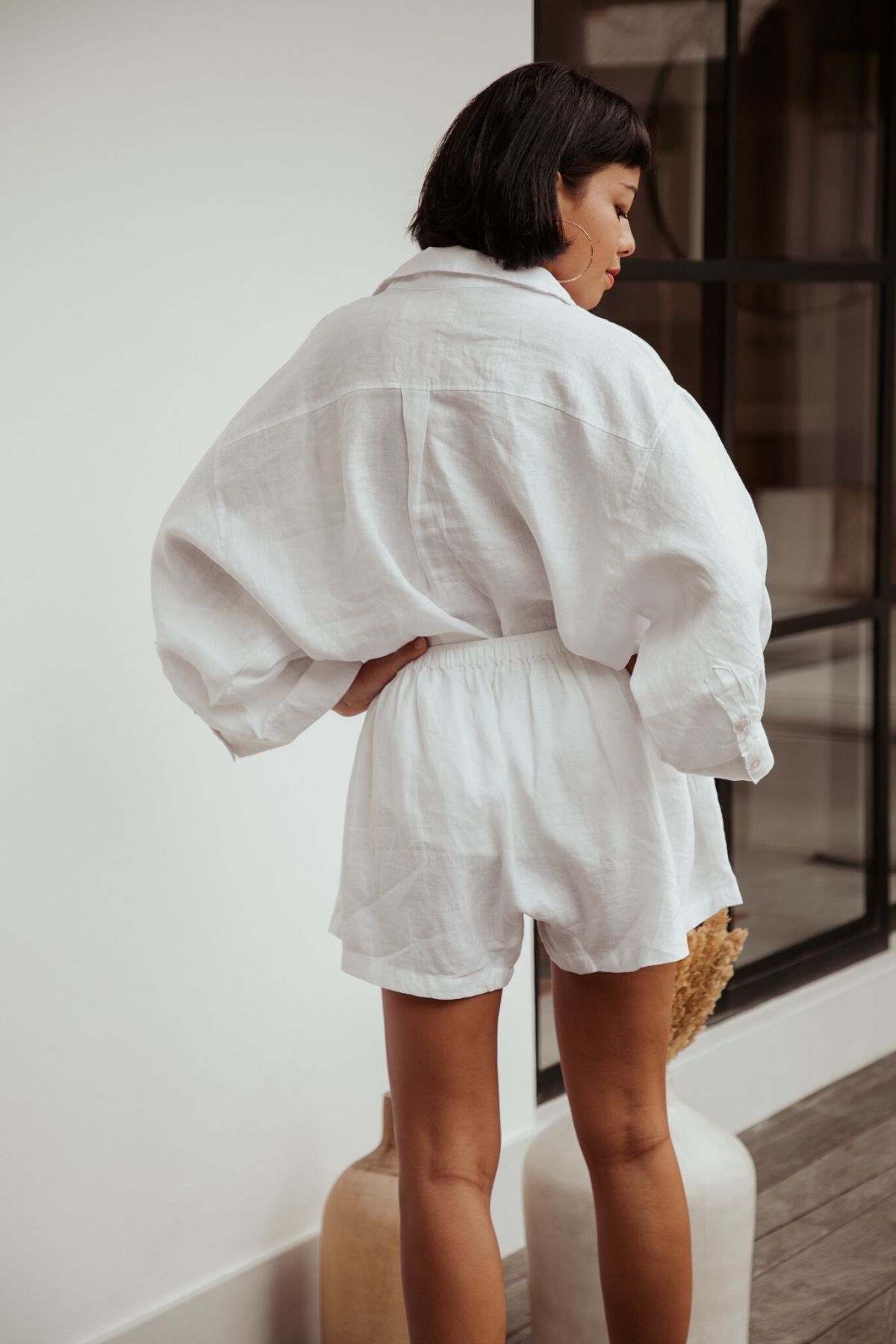
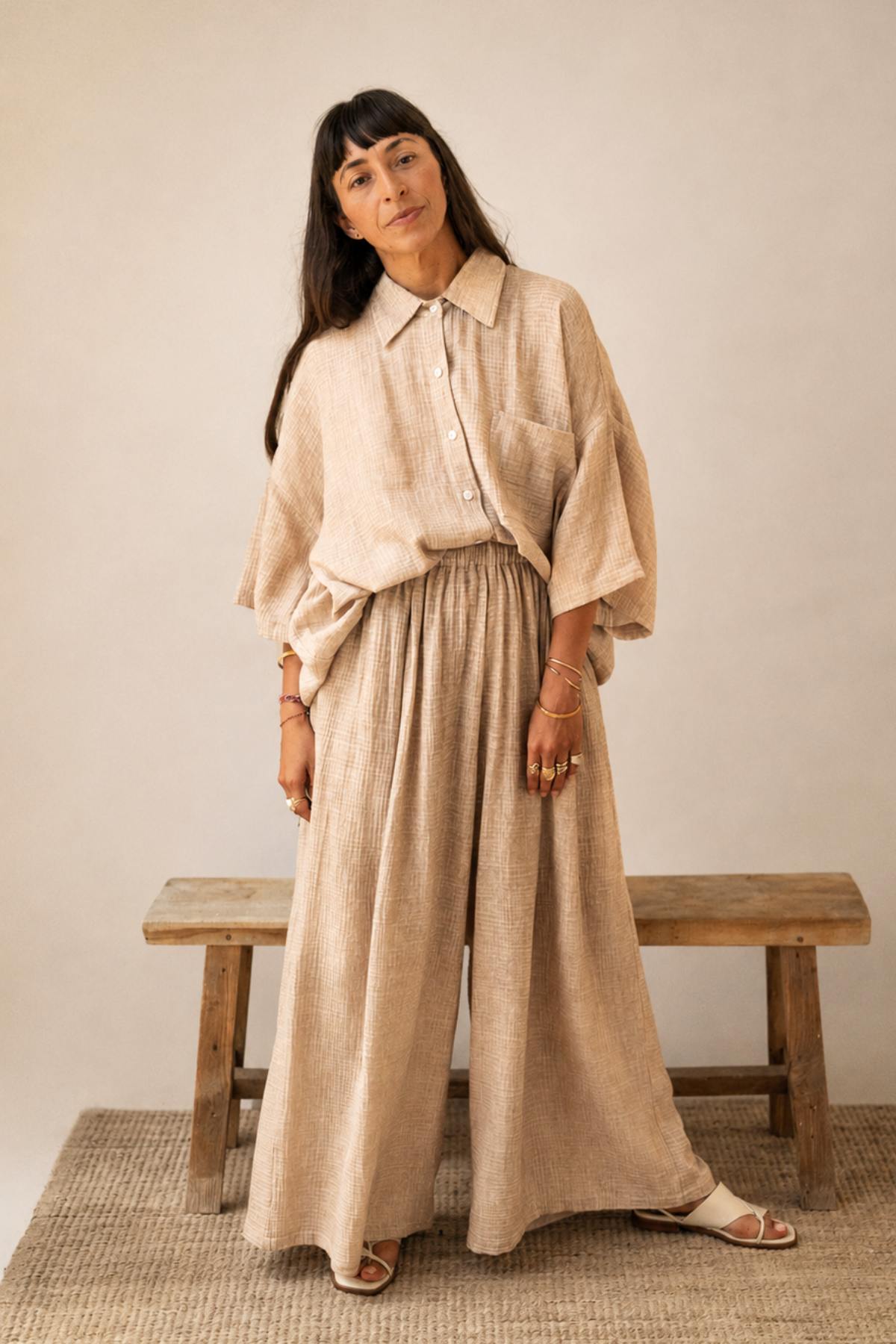
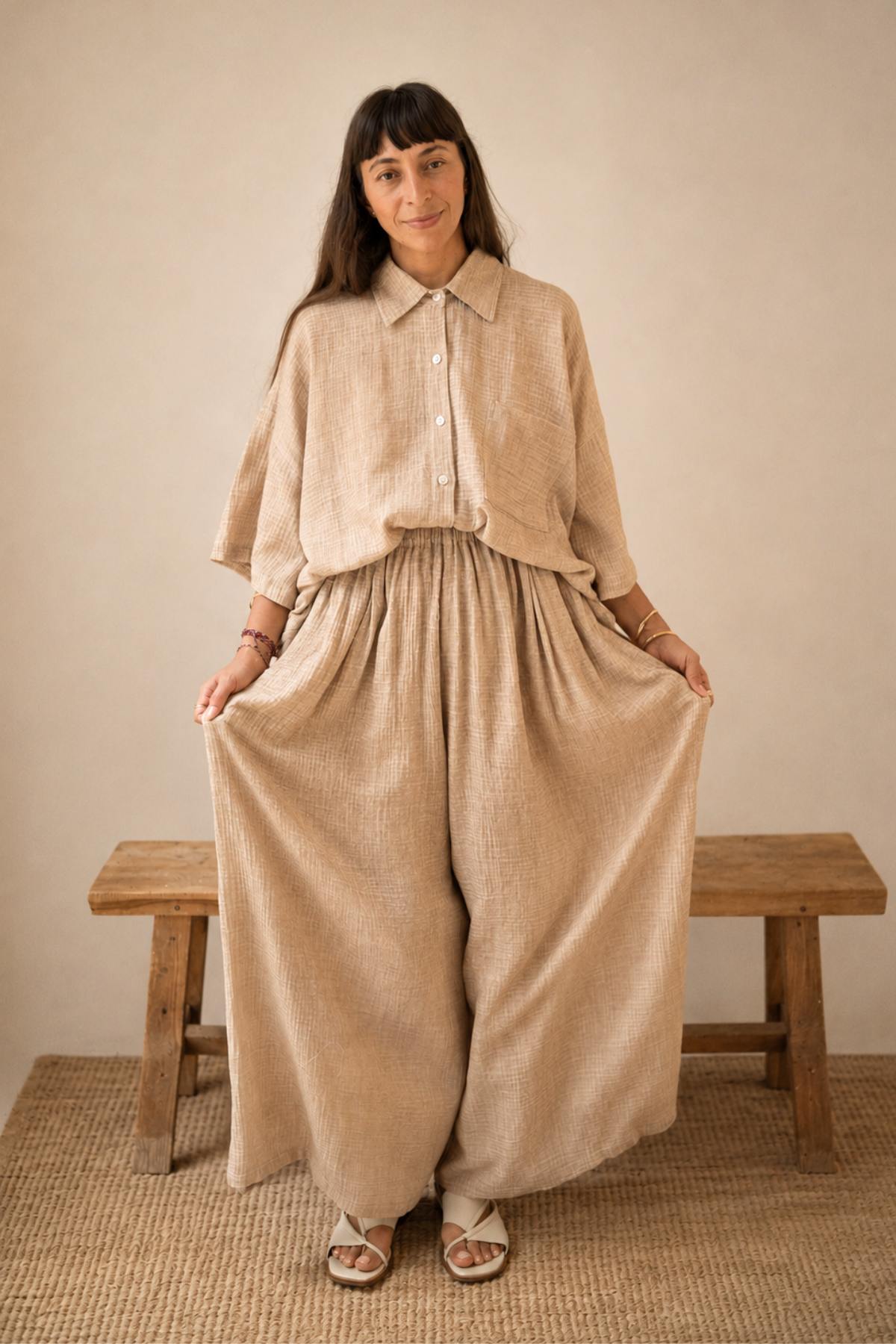
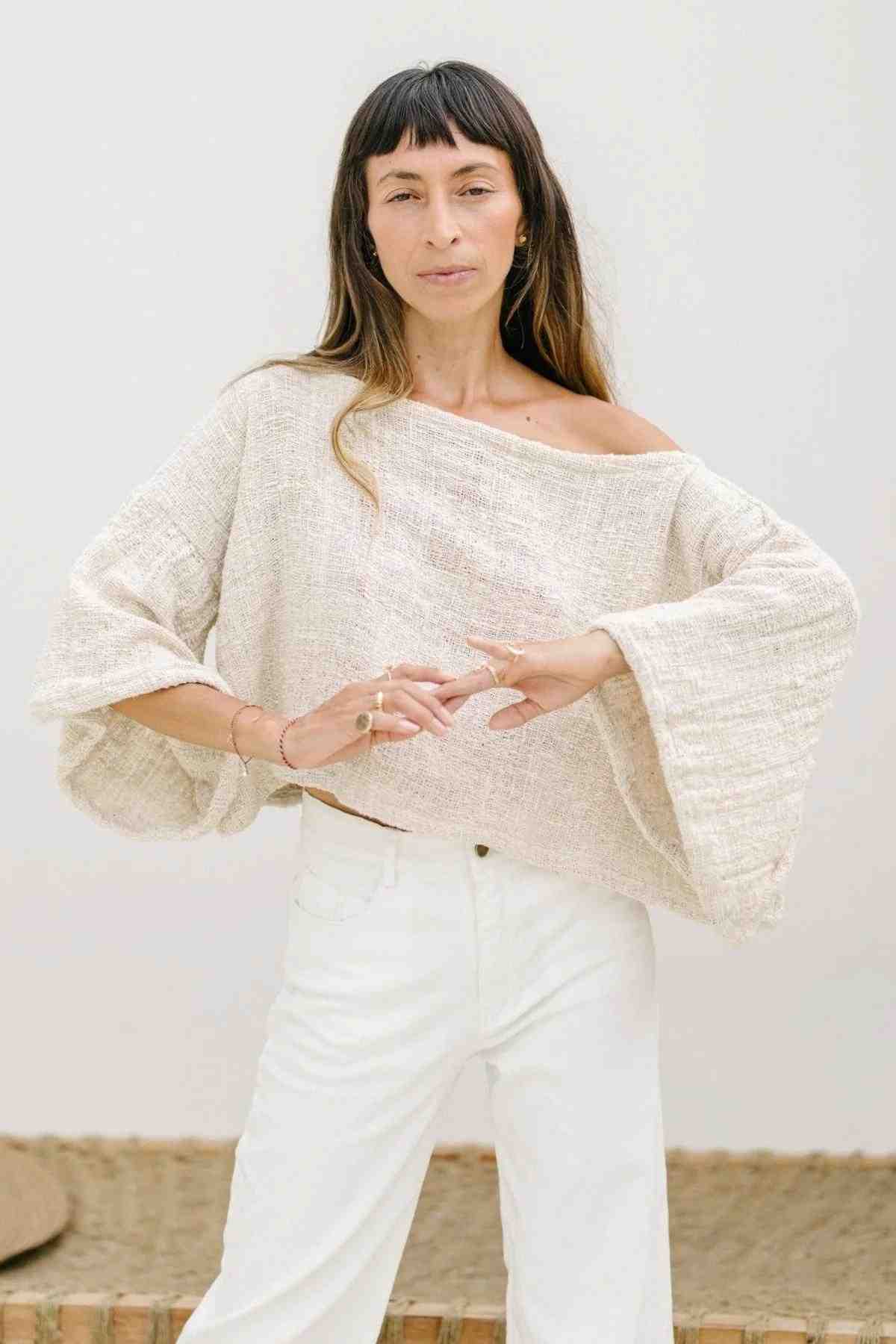
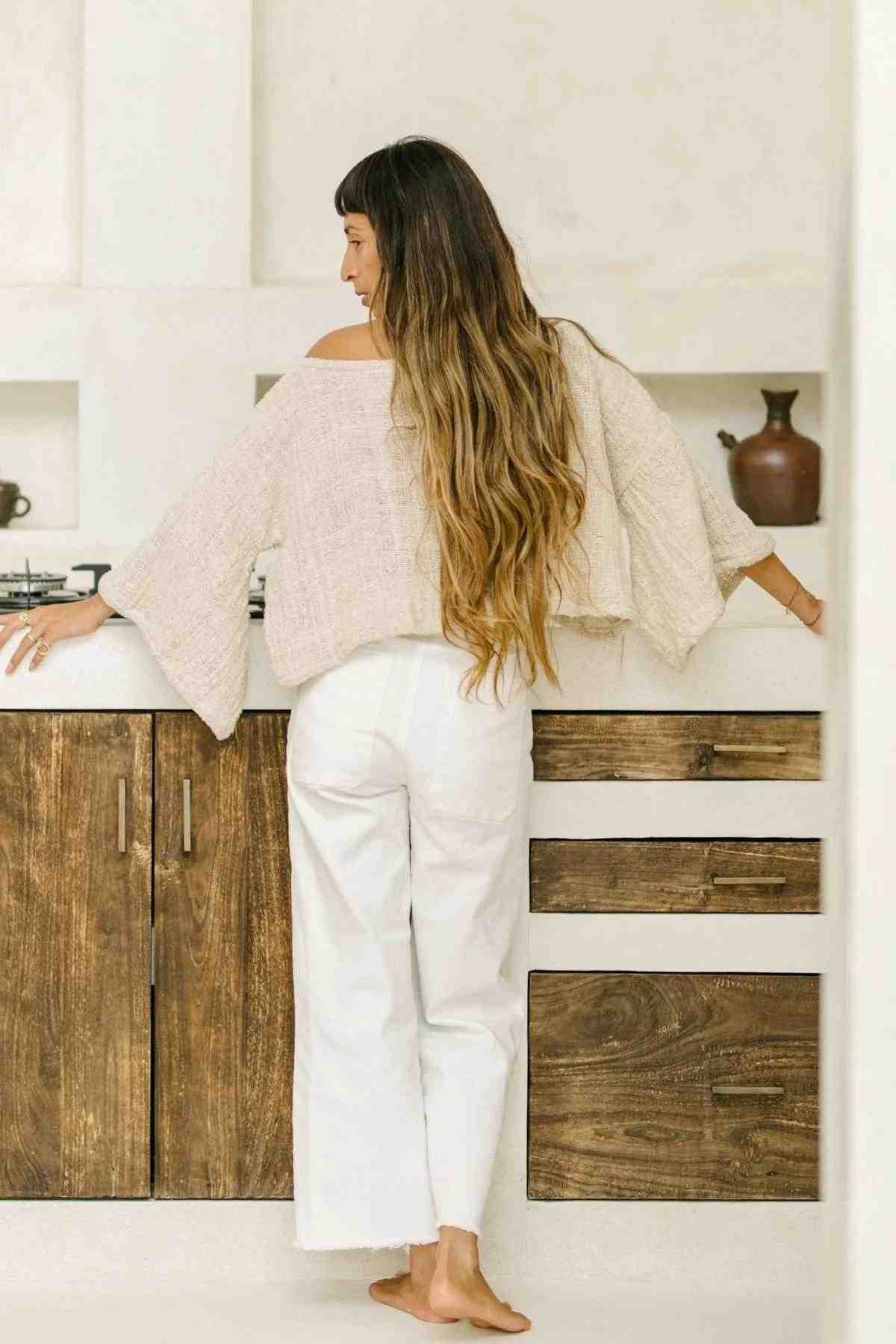
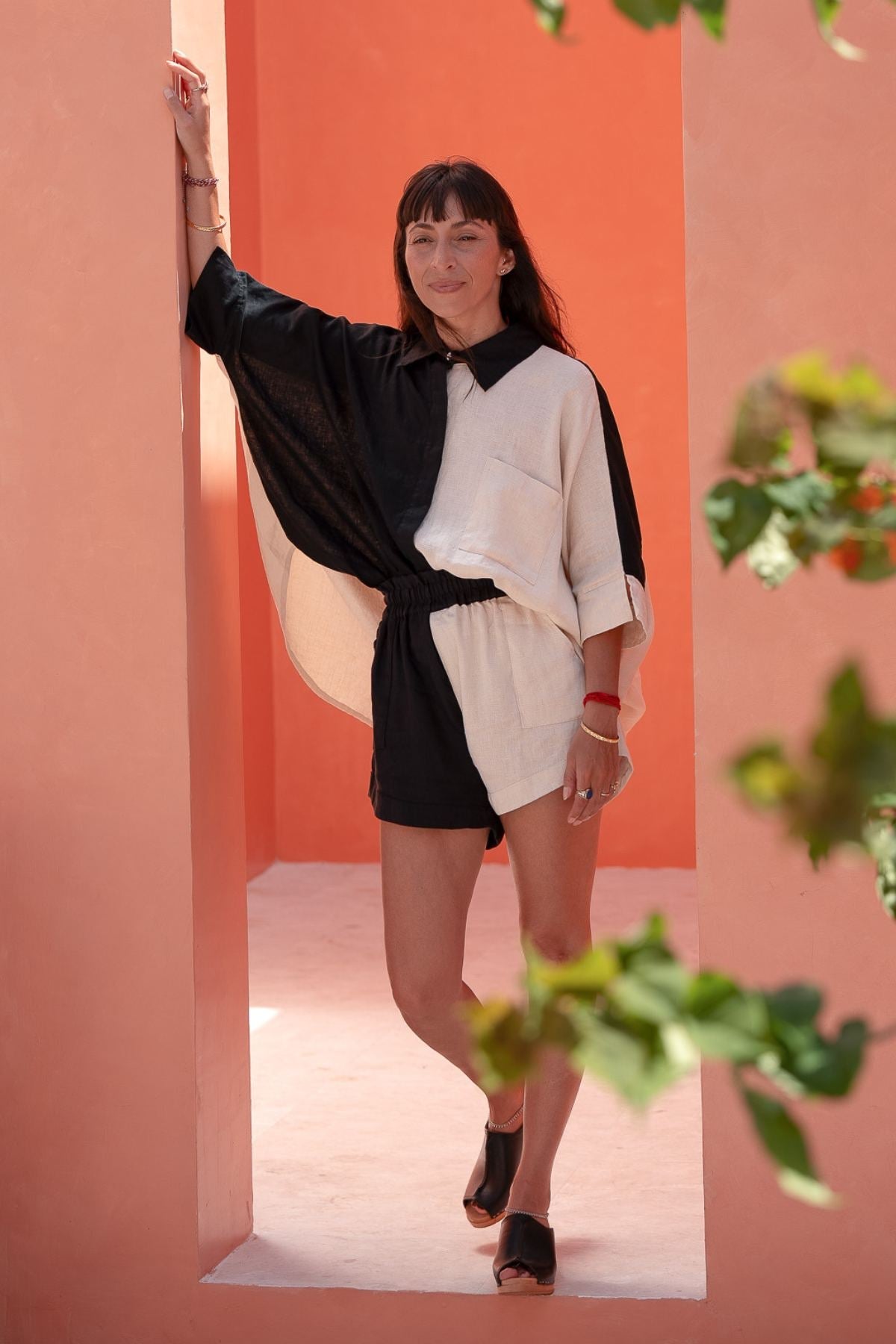
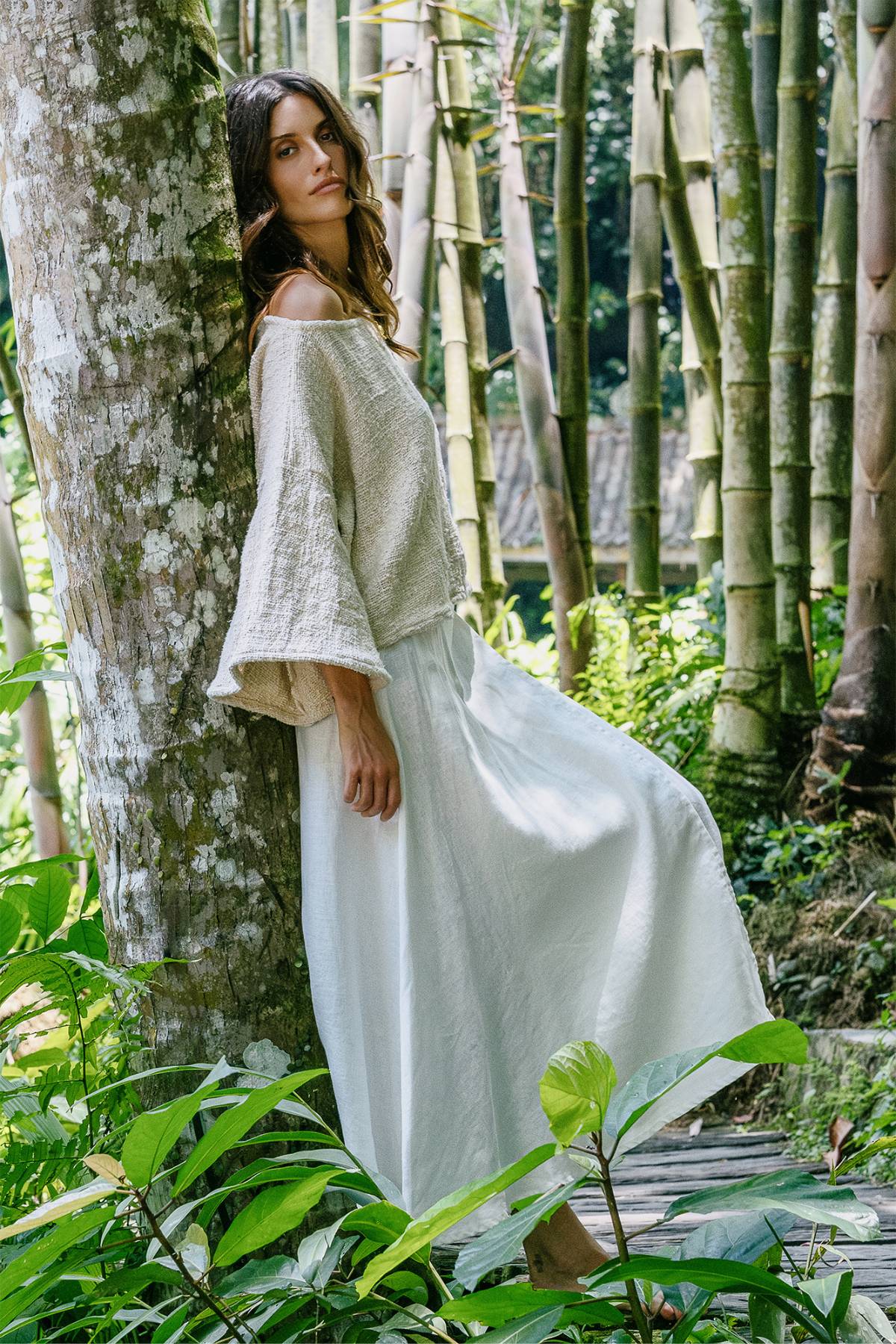
Wide-leg trousers and a relaxed top in stonewashed natural linen. Made by hand in Bali. Available in off-white, clay, yin yang, and seasonal plant-dyed colourways.
Shop Linen SetsThe complete range of linen clothing for women — sets, separates, dresses, and resort pieces — made by artisans in Bali using natural fibres and traditional handcraft.
Explore the CollectionHow to Identify Genuinely Ethical Linen Co-Ord Sets
Because "ethical," "sustainable," and "conscious" are unregulated claims, the only way to evaluate them is to ask specific questions. The brands that can answer them are the ones worth buying from:
Where are the clothes made? Not "designed in" — made. The country of manufacture should be named, not euphemised as "crafted by artisans" without location.
Who makes them? A genuine slow fashion brand can tell you something specific about the people who produce their clothes — working structure, pay rates, and conditions.
What is the fabric? Pure linen has no synthetic content. If the label says "linen blend," ask what the blend is. Polyester is the most common addition — it reduces cost, breathability, and biodegradability at end of life.
How is the colour achieved? For conscious fashion linen women's pieces, the dyeing process matters. Natural or plant-based dyes are more expensive. If the price is very low, the colour is probably synthetic.
What happens to unsold stock? Brands that produce responsibly do not have large unsold inventory problems. If a brand runs deep permanent discounts on core styles, it is a sign that they overproduced.
Your Questions, Answered
What is a Bali linen co-ord set?
A Bali linen co-ord set is a coordinated two-piece outfit — typically a top and wide-leg trousers or a skirt — made from linen in Bali, Indonesia. The best examples are cut and sewn by local artisans using natural linen sourced for breathability and longevity. Bali's garment tradition combines Indonesian textile craft with contemporary silhouettes, producing linen sets that are both functional for the tropics and refined enough for international wear.
Is linen clothing from Bali ethical?
It depends entirely on the brand. Bali has a large garment industry ranging from fast-fashion export production to small-batch artisan studios where makers are paid fairly. Ethical Bali linen clothing comes from brands that are based in Bali, know their makers by name, pay above industry wages, and produce in small quantities to avoid overproduction.
What makes slow fashion linen different from regular linen?
Slow fashion linen is made in small batches, often by hand, using natural fibres with minimal chemical processing. It is designed to last multiple seasons rather than a single trend cycle. The fabric is typically stonewashed for softness and pre-shrinking, holding its shape and colour through years of wear. Slow fashion linen sets are priced to reflect the true cost of fair wages and quality materials.
Are plant-dyed linen clothes better for the environment?
Yes. Conventional garment dyeing uses azo dyes and heavy metal fixatives that contaminate waterways — a major source of textile pollution in Southeast Asia. Plant-dyed linen uses natural pigments from roots, bark, and leaves that biodegrade without releasing toxins. Each piece is slightly unique, and the process does not pollute the rivers of the communities that produce it.
What is the difference between a handmade Bali linen co-ord set and fast fashion linen?
A handmade Bali linen co-ord set is cut individually, sewn by a small team, finished by hand, and made in quantities small enough that every piece can be inspected. Fast fashion linen is mass-produced, often blended with polyester, and made in volumes that require cutting corners on quality and worker pay. The result looks similar in a photograph and falls apart at a fraction of the lifespan.
We are a small brand made in the place where our clothes are made. That is not a positioning statement. It is a fact that shapes every decision — what fabrics we use, how many pieces we produce, what we pay the people who make them, what we are willing to call finished.
Ethical linen clothing from Bali exists. It requires choosing carefully, paying the actual price, and asking the questions that most brands would rather you not ask. We welcome the questions.
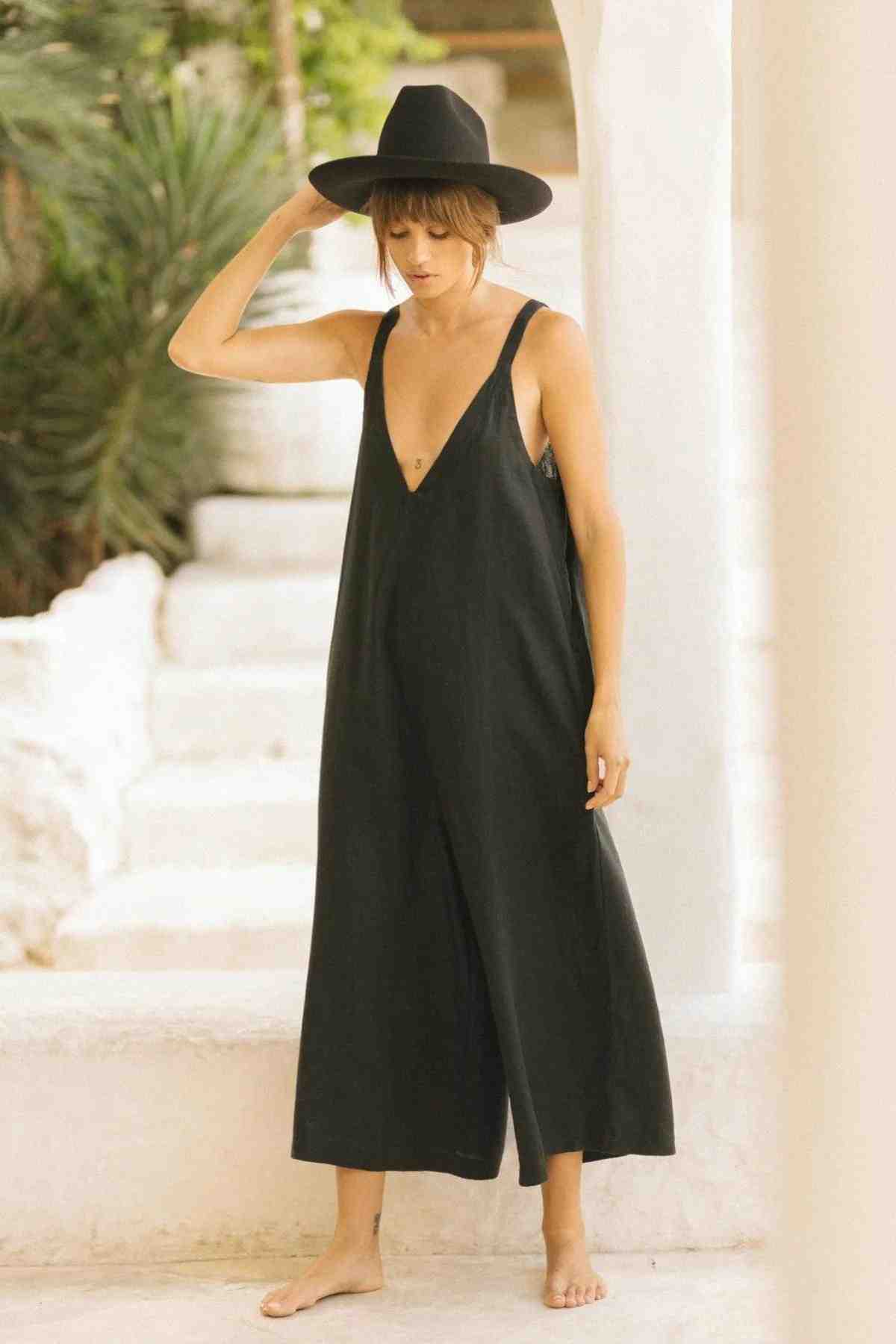
If you want to feel this in a finished piece, start with our linen dresses and gowns, cut and sewn by hand using everything described above.


Leave a comment
This site is protected by hCaptcha and the hCaptcha Privacy Policy and Terms of Service apply.