



A Scalp Oil Ritual for Hair Growth: The Moon, the Oil, and the Practice
Your scalp is a garden. What you feed it, how you time the cultivation, and whether you pay attention to the seasons, all of it determines what grows.

Scalp oiling has been used across Ayurvedic, African, and Middle Eastern traditions for centuries. But what modern hair science is now confirming is something women who lived close to nature already knew: the health of your hair begins in the roots, and the roots respond to ritual. This guide is not about the most expensive oil or the most complicated technique. It is about building a practice, one that honours both the biology of hair growth and the ancient intelligence of the moon.
Why Scalp Oil Actually Works for Hair Growth
The scalp has an average of 100,000 hair follicles, and each follicle is surrounded by a network of blood vessels and sebaceous glands. When blood flow to the scalp is stimulated, whether through massage, warmth, or certain botanical compounds, the follicles receive more of what they need: oxygen, nutrients, and growth signals.
Oils like castor, rosemary, amla, and bhringraj have been studied for their effect on hair growth. Rosemary oil in particular has shown results comparable to certain topical treatments for hair thinning, without the scalp irritation. But the oil is only part of it. The massage is where most of the magic lives. Research suggests that even five minutes of daily scalp massage, performed consistently over several months, can significantly increase hair thickness. The pressure stimulates the follicles directly. The increased circulation does the rest.
The ritual container you create around these five minutes matters too. A practice done with full attention, warm hands, intentional breath, presence, activates your parasympathetic nervous system. Lower cortisol. Better circulation. Better hair. This is not woo. This is physiology.
How to Build Your Scalp Oil Ritual: Step by Step
Choose your oil first. For fine hair prone to oiliness: rosemary-infused jojoba (light, non-comedogenic, rosemary boosts circulation without weighing the hair down). For thick, coarse, or dry hair: a blend of castor and sweet almond oil, the castor coats and strengthens, the almond absorbs. For general growth and scalp health: bhringraj oil, the Ayurvedic gold standard, traditionally cold-pressed and diluted in sesame or coconut.
Warm the oil slightly, enough to feel comfortably warm on your inner wrist, not hot. This opens the hair shaft and improves absorption. Section your hair into four quadrants. Using the pads of your fingertips (never the nails), apply the oil in small circular motions, working from the crown outward. Spend at least 90 seconds on each section. Then gather everything upward and press your palms firmly but gently against the scalp, like kneading bread. Hold for a breath. Release.
Leave the oil in for a minimum of two hours. Overnight is ideal. Wash with a gentle, sulfate-free shampoo the next morning. Do this ritual once or twice a week, consistently, for a minimum of three months before you assess results. Hair has a 90-day growth cycle. Patience is part of the practice.
Timing Your Scalp Ritual with the Moon Phases
If the scalp oil ritual is the science, moon timing is the layer of ancient wisdom that women have been quietly keeping alive in every culture that lived close to the land.
The foundational principle: the moon's gravitational pull affects fluid movement in the earth, and in us. During the waxing moon (new moon through full moon), energy and sap move upward and outward. The body is in a more receptive, growth-oriented state. This is traditionally the best window for hair growth rituals, treatments, scalp work, and trims if you want to encourage length and density.
During the waning moon (full moon through new moon), energy contracts and moves inward. This is the better time for deep conditioning, scalp detoxing, and rest. The waning moon is also when hair that is heat-damaged or thinned at the ends is traditionally said to shed most cooperatively, making it the preferred window for cutting hair you want to move on from, without stimulating regrowth in the same place.
The full moon itself is considered the most potent time for nourishing treatments, the peak of the cycle, when whatever you are feeding the body is absorbed most deeply. An overnight oil treatment applied on the full moon, left until morning, is one of the simplest and most traditional hair growth rituals across multiple ancient cultures.
You do not have to follow the moon phases perfectly to begin. But if you already track your cycle, or if you are drawn to living with more seasonal rhythm, moon-timed hair care is a beautiful way to tie your body into the larger pulse of the natural world.
The Oils That Actually Move the Needle
Castor oil is the most well-known hair growth oil for good reason. Rich in ricinoleic acid, it is deeply moisturising and has antimicrobial properties that support a healthy scalp environment. It is thick, so always blend it with a carrier like jojoba or almond in a 1:2 ratio.
Rosemary oil (diluted in a carrier) stimulates circulation at the scalp level. Use 3–4 drops per tablespoon of carrier oil. Do not apply undiluted, it is potent and can irritate sensitive scalps.
Bhringraj is the Ayurvedic herb most associated with hair growth, traditionally prepared by slow-cooking the herb in sesame oil over low heat for several hours. Bhringraj is said to balance Pitta (excess heat in the body, which Ayurveda links to hair thinning) and nourish the roots at a cellular level. You can find pre-made bhringraj oil in most Indian grocery stores or online, look for cold-pressed versions without synthetic fragrance.
Amla oil is deeply rich in Vitamin C and antioxidants. It is traditionally used to strengthen the hair shaft, reduce premature greying, and condition the scalp. It has a distinctive smell that fades after washing. Use it as part of your waxing moon ritual for maximum absorption and growth support.
The Oil Ritual as a Gateway Practice
Something shifts when you begin a weekly scalp ritual. Not immediately, but over time. You start to look forward to it. You clear the time. You light a candle or put on a piece of music you love or simply sit in the quiet. Five minutes of complete presence, once or twice a week, given to the simplest act of self-tending.
Most of us were never taught that we deserve this. That our bodies are worth this quality of attention, not as a luxury but as a baseline. The scalp ritual is small enough to start without ceremony, but it tends to open something. Women tell me it becomes the one thing in their week that is purely theirs. That is not nothing. That is, in fact, everything.
The practice always starts smaller than you think it will. And it always gives back more than you expect.
With love from Bali,
Myrah.

|
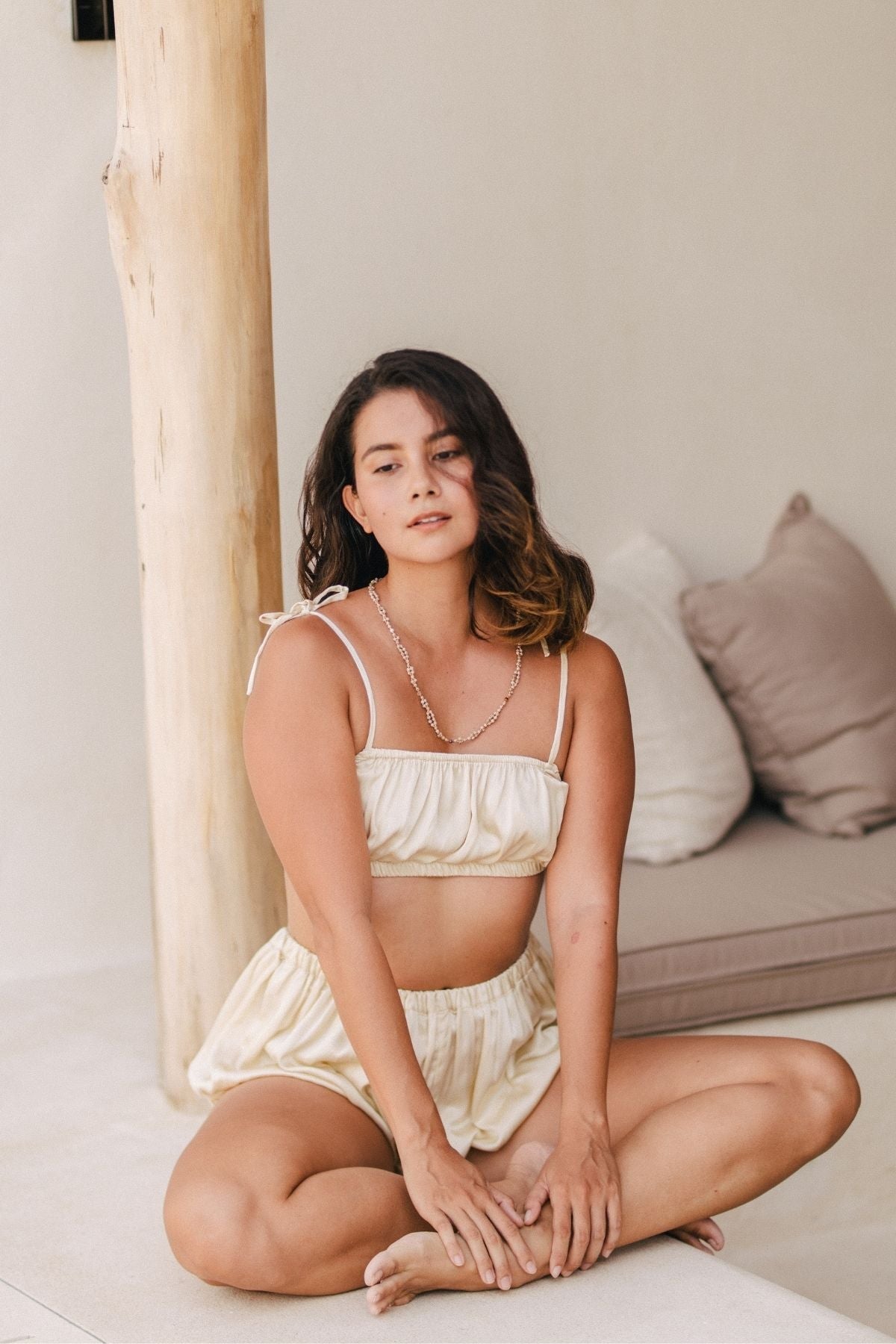
A Piece for This Threshold Lucid Dreamer Underwear Set. For the woman building rituals of her own. Botanically dyed silk in Turmeric Gold or Rose Petal, soft enough to sleep in, beautiful enough to linger in. The piece you slip into after your oil has been applied and the candle is still burning. |
|
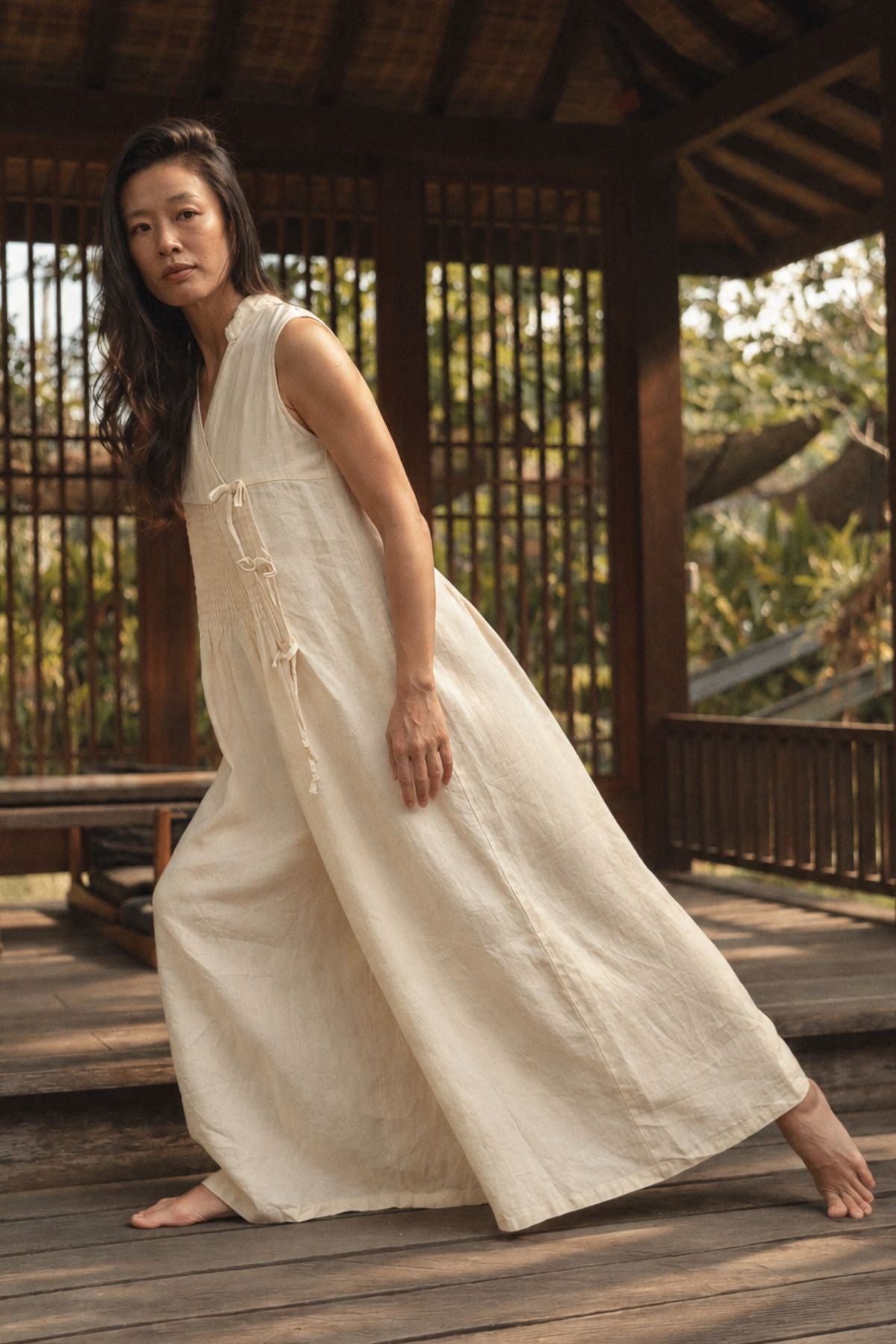
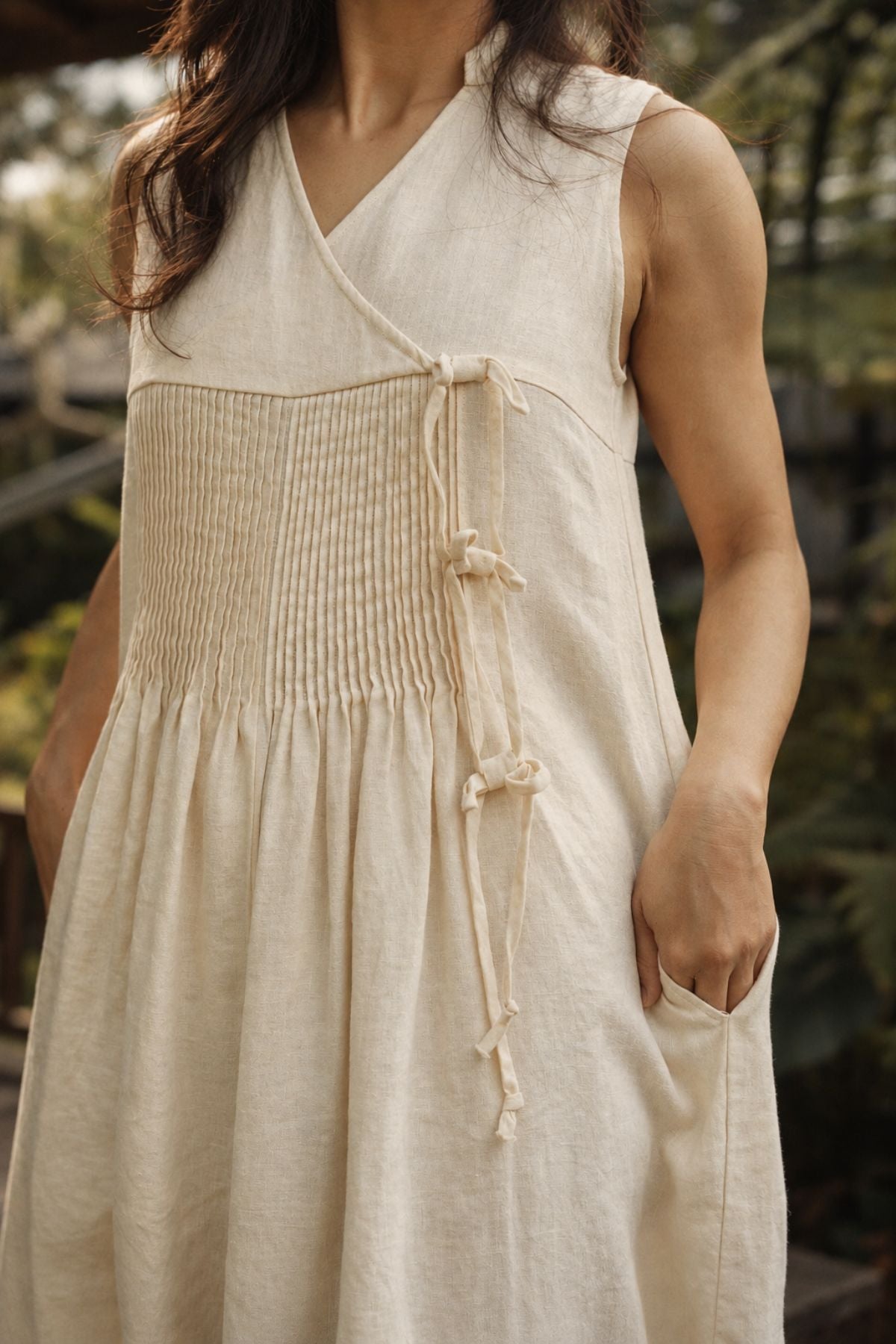
The Muse-Letter Dress for the woman you're becoming. Every week from Bali. Astrology, slow living, sacred feminine, and the pieces we make by hand. A letter, not a sales pitch. Unsubscribe any time. No spam, ever. |
















Leave a comment
This site is protected by hCaptcha and the hCaptcha Privacy Policy and Terms of Service apply.