What Is Botanical Dye Clothing? How Plant Dyeing Works
The colour in most clothing comes from synthetic dye. Petroleum-based, chemically fixed, and produced in factories that pour toxic waste into waterways. It is how the fashion industry moves fast enough to keep up with itself. And it is one of the reasons the fashion industry is the second largest polluter of clean water on earth.
Botanical dye clothing works differently. Completely differently.

What botanical dyeing actually is
Botanical dyeing, also called natural dyeing or plant dyeing, is the process of colouring fabric using organic materials found in nature. Roots, bark, leaves, flowers, fruit rinds, seeds, and in some traditions, tea leaves and herbal infusions. These materials are prepared, simmered, and used to create a dye bath into which the fabric is submerged. The colour is absorbed slowly, over hours or sometimes days, the fibres drawing pigment from the plant material until the fabric has taken on the depth and warmth that only a natural source can produce.
There are no shortcuts in botanical dyeing. You cannot rush the process without losing the quality that makes it worth doing in the first place.
How it works, step by step
The process varies by material and tradition, but the fundamentals are consistent.
First, the fabric is prepared through a process called mordanting. A mordant is a natural mineral salt, typically alum or iron, that opens the fibres and allows them to bond with the dye. Without mordanting, the colour would wash out within weeks. With it, the colour is fixed permanently and deepens over time.
The dye bath is then prepared. Plant materials are simmered in water to release their pigments. Turmeric produces golds and warm yellows. Indigo, one of the oldest natural dyes on earth, produces blues that range from pale sky to deep midnight depending on how many times the fabric is dipped. Tropical plants like those used in Bali produce the complex, multi-toned pinks, terracottas, and earthy neutrals that no synthetic dye can accurately replicate.
The fabric is then submerged. It absorbs colour gradually. Depending on the depth of colour desired, the process may take anywhere from several hours to multiple days, with the fabric being removed, dried, and re-dipped multiple times to build saturation.
Finally, the fabric is washed and dried. The colour that remains is the colour it will carry for years.
Why no two pieces are identical
This is the most important thing to understand about botanical dye clothing: the variability is not a flaw. It is the point.
Because natural dyes respond to the specific mineral content of the water used, the temperature during dyeing, the particular batch of plant material, and the precise weight and weave of the individual piece of fabric, every garment that emerges from a botanical dye bath is genuinely different from every other. Two pieces of fabric dyed in the same bath on the same day will carry slightly different depths, slightly different tones, slightly different movements of colour across the weave.
In synthetic dyeing, this variability would be a quality control failure. In botanical dyeing, it is what makes each piece its own original.
What botanical dyeing does for the environment
Synthetic textile dyes are among the most chemically intensive substances in fashion manufacturing. They require large volumes of water, generate wastewater containing heavy metals, acids, and fixatives, and in much of the world that wastewater enters rivers and groundwater directly.
Botanical dyes require no synthetic chemicals. The dye bath water, once finished, can be safely returned to the earth. The plant materials themselves are compostable. The mordants used in natural dyeing are typically mineral salts that occur naturally in soil. The entire process is, at its core, a closed loop.
There is a reason that botanical dyeing has been practised on every inhabited continent for thousands of years. It is not an invention. It is a recovery.
What botanical dye clothing feels like to own
The colour in botanical dye clothing has a quality that synthetic dye cannot replicate. It sits inside the fabric rather than coating the surface of it. It shifts in different light, in different hours, in different seasons. It softens and deepens as the fabric wears and washes. A piece you have owned for two years looks richer, more alive, than the day it arrived.
There is a word in Japanese, mono no aware, for the particular beauty of things that change and fade. Botanical dye clothing carries that quality. It is not trying to stay the same. It is becoming, slowly, something more itself.
How we use botanical dyeing at Myrah Penaloza
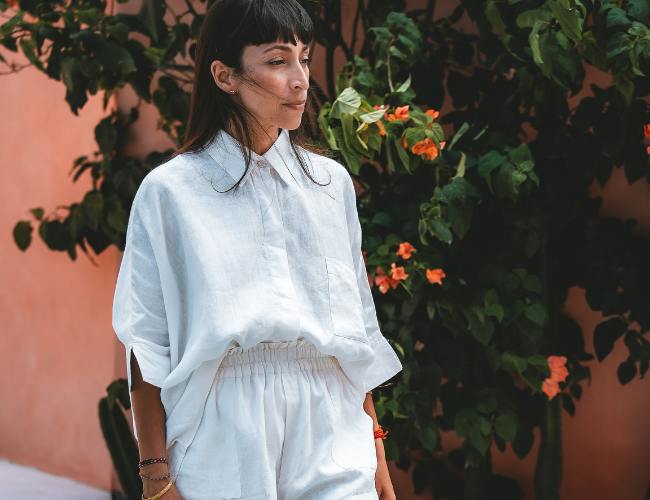
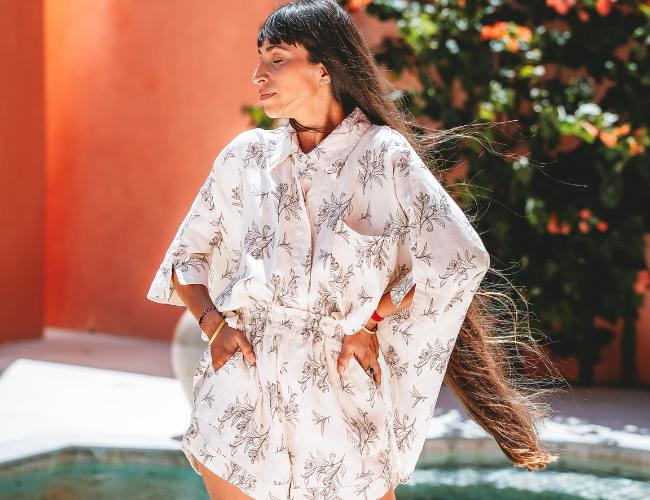
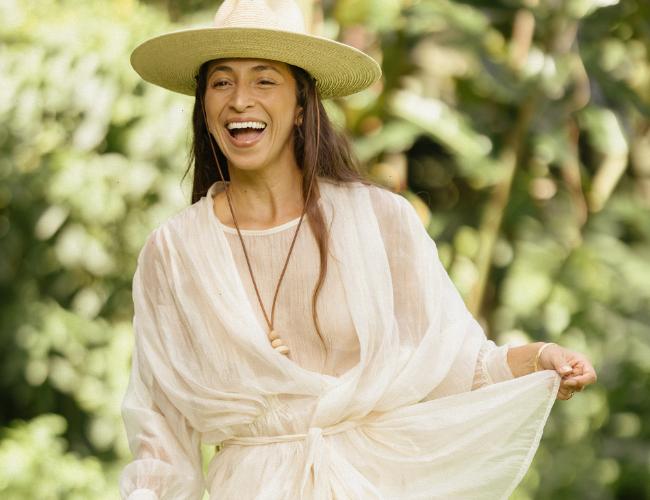
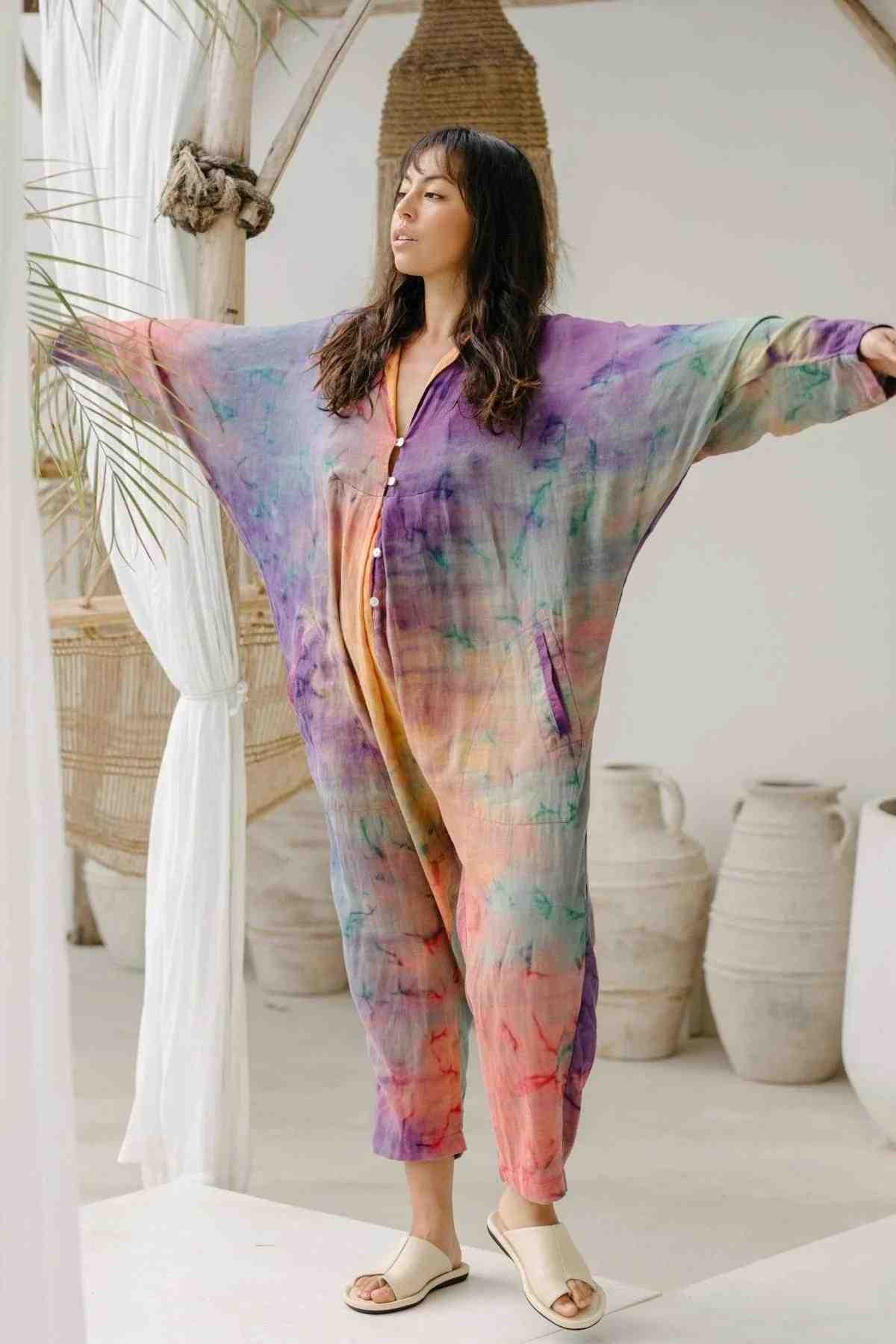
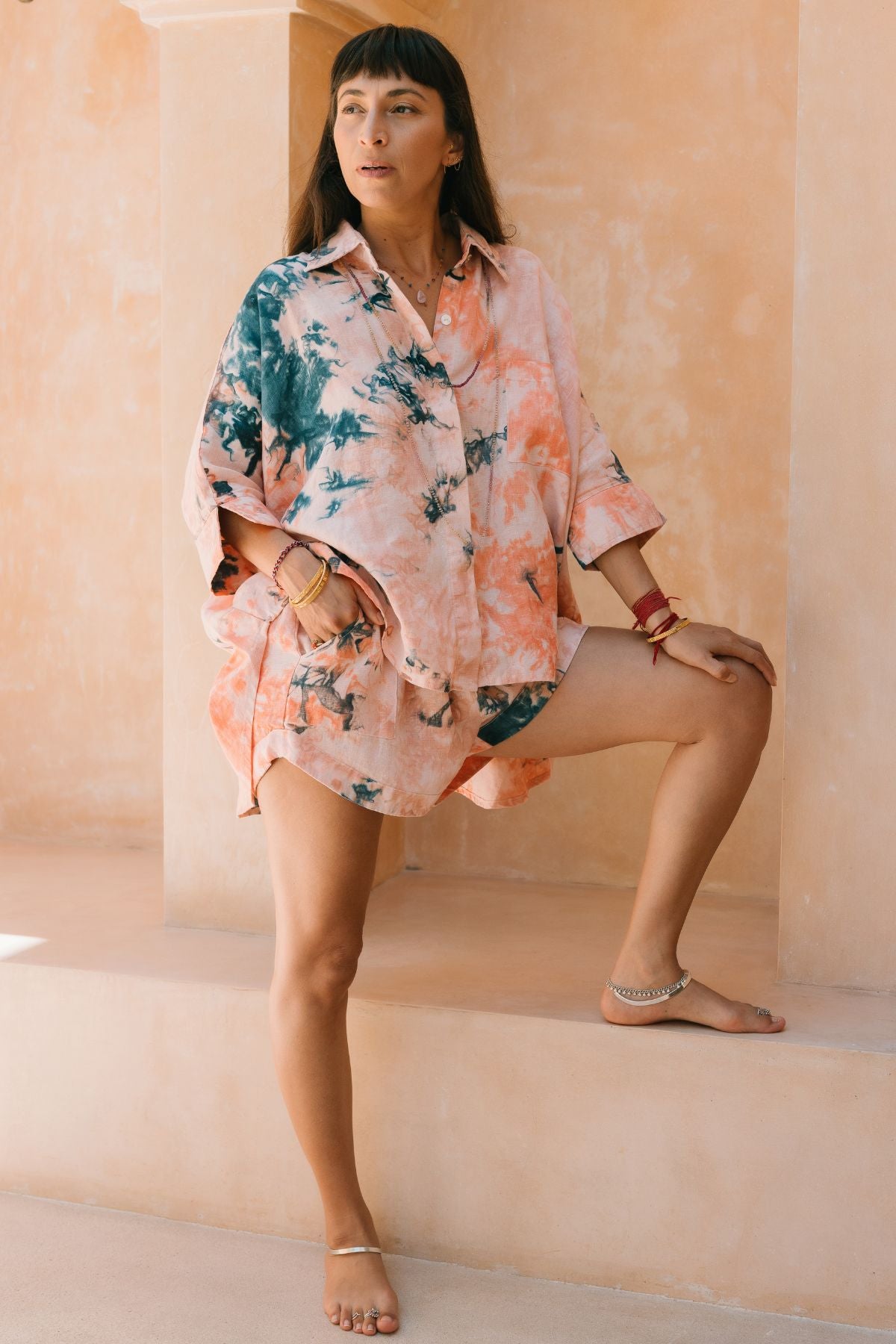
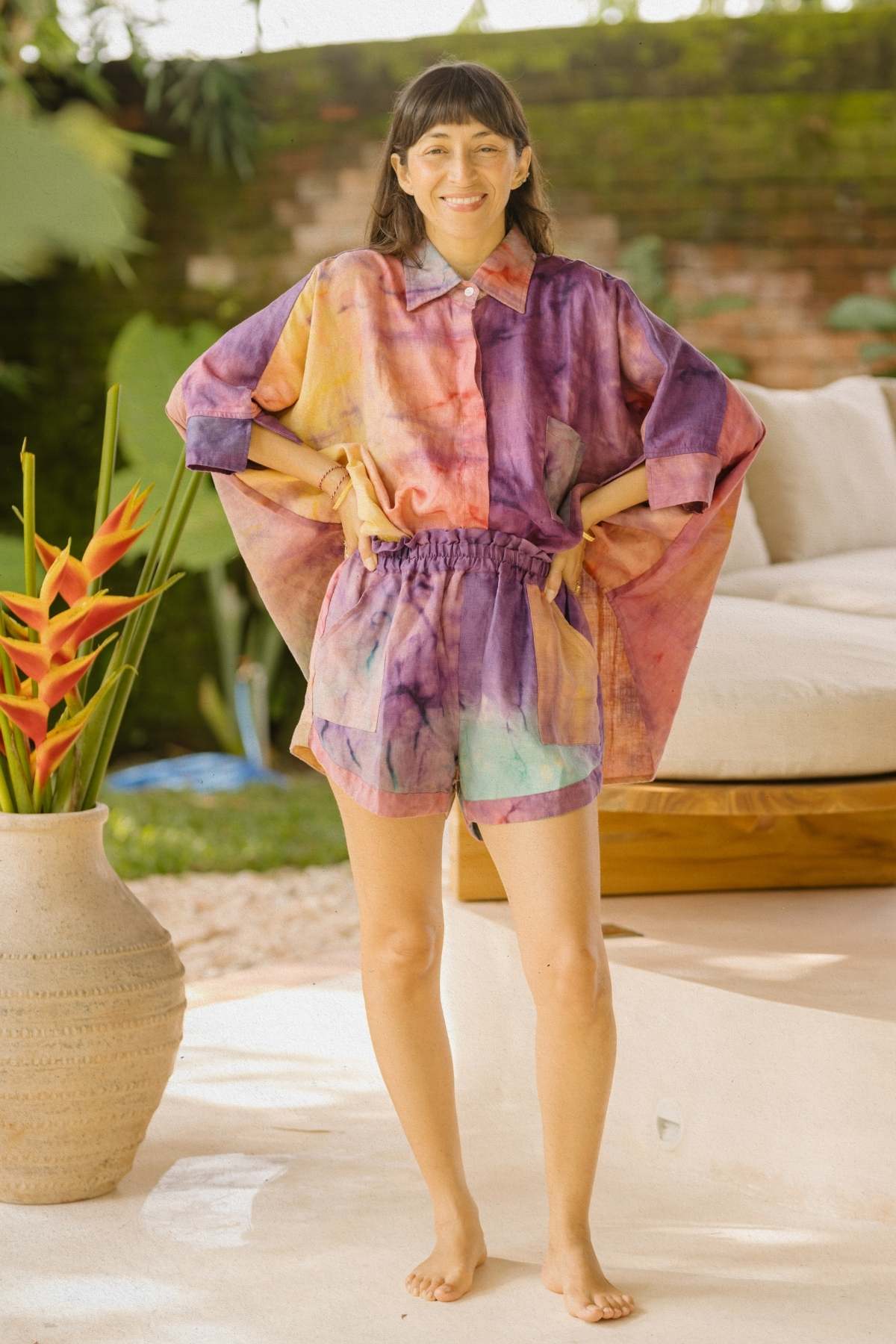
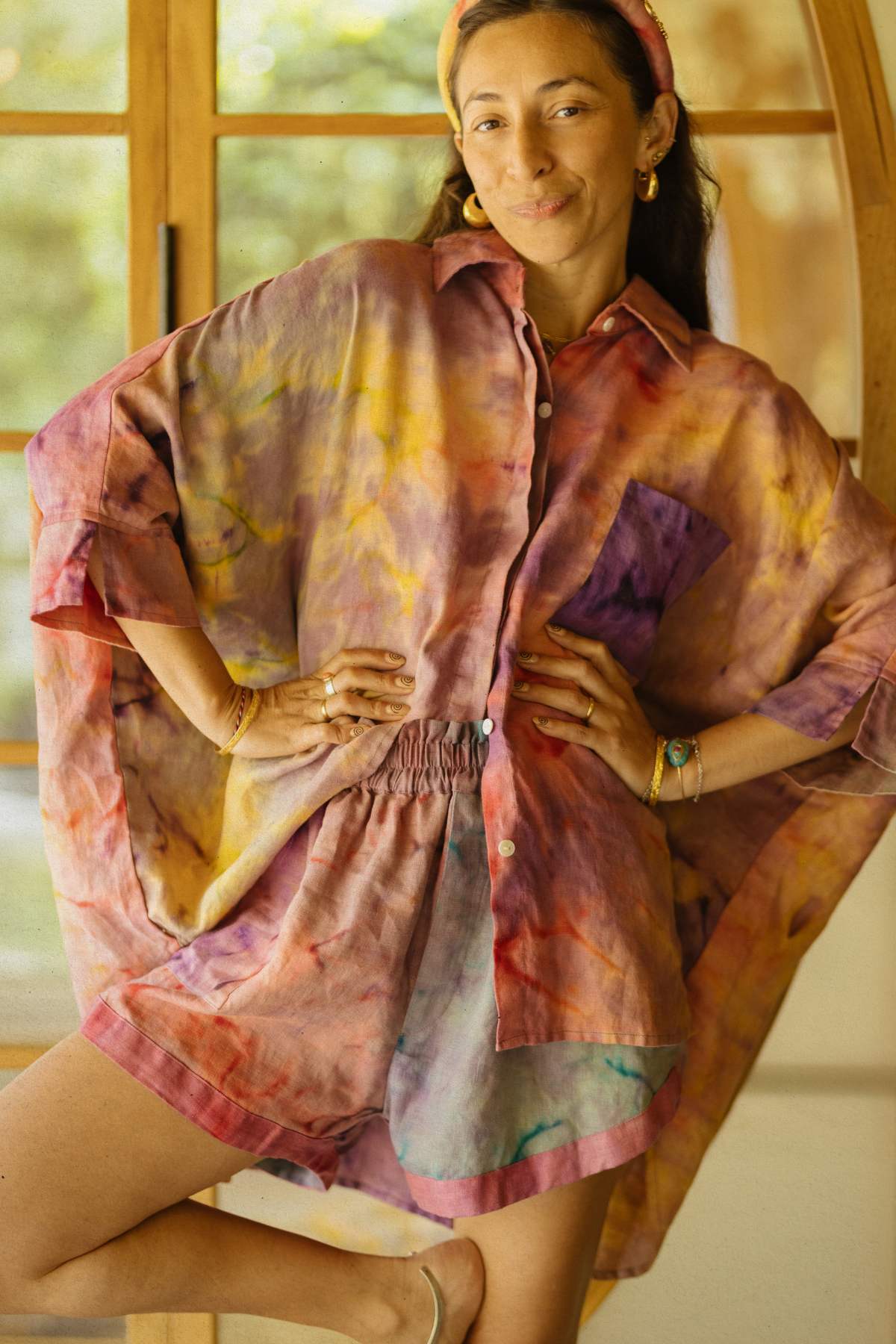
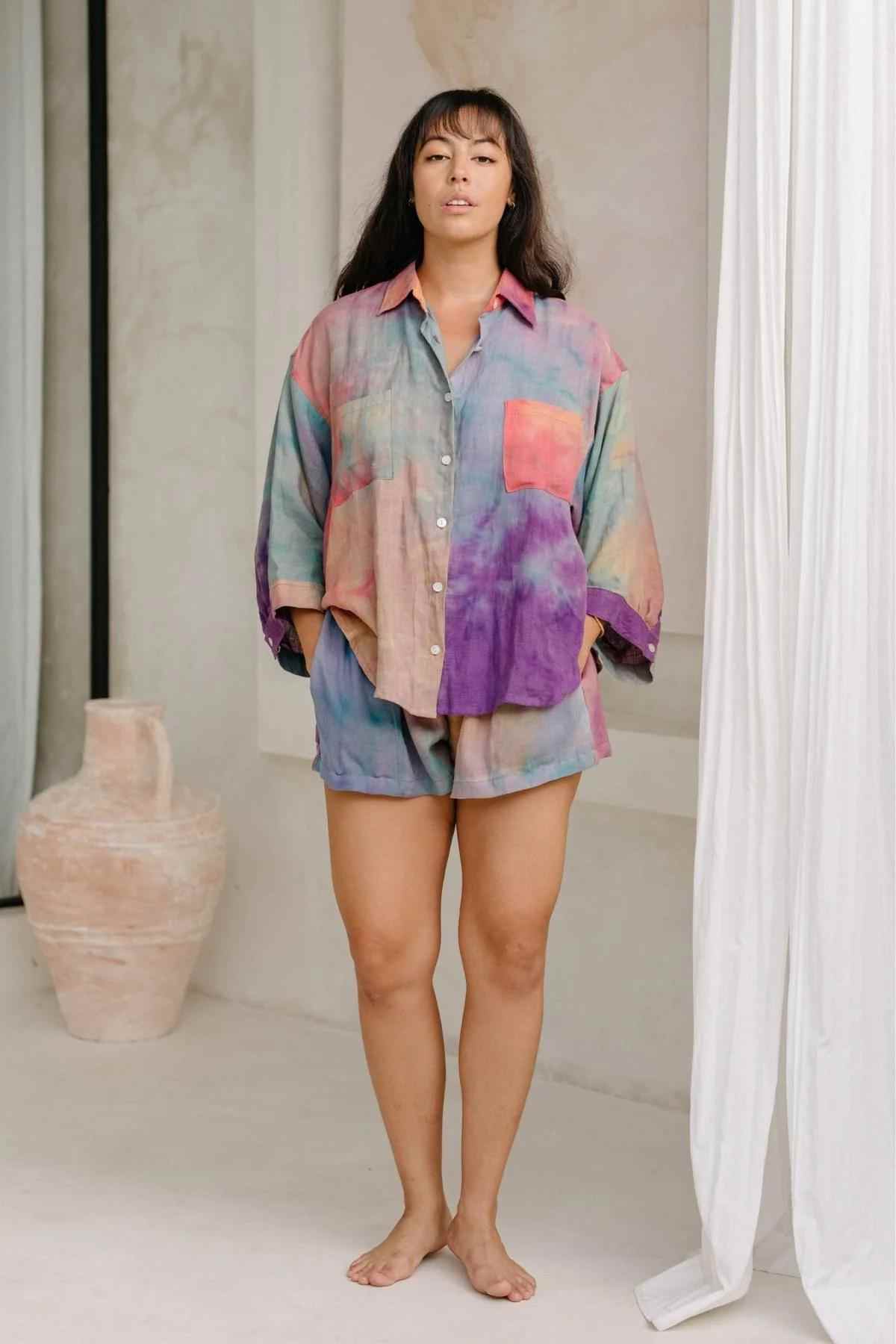
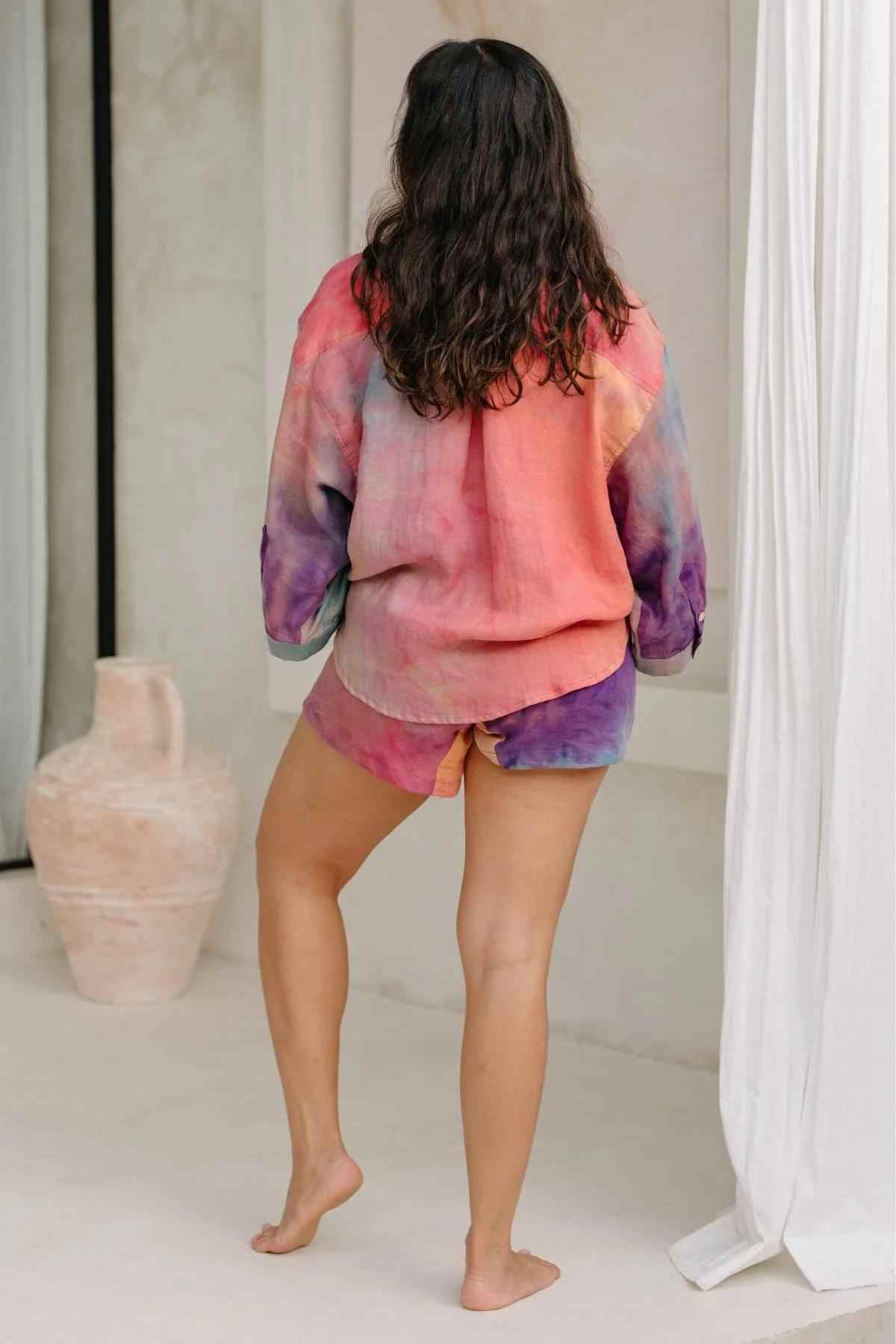
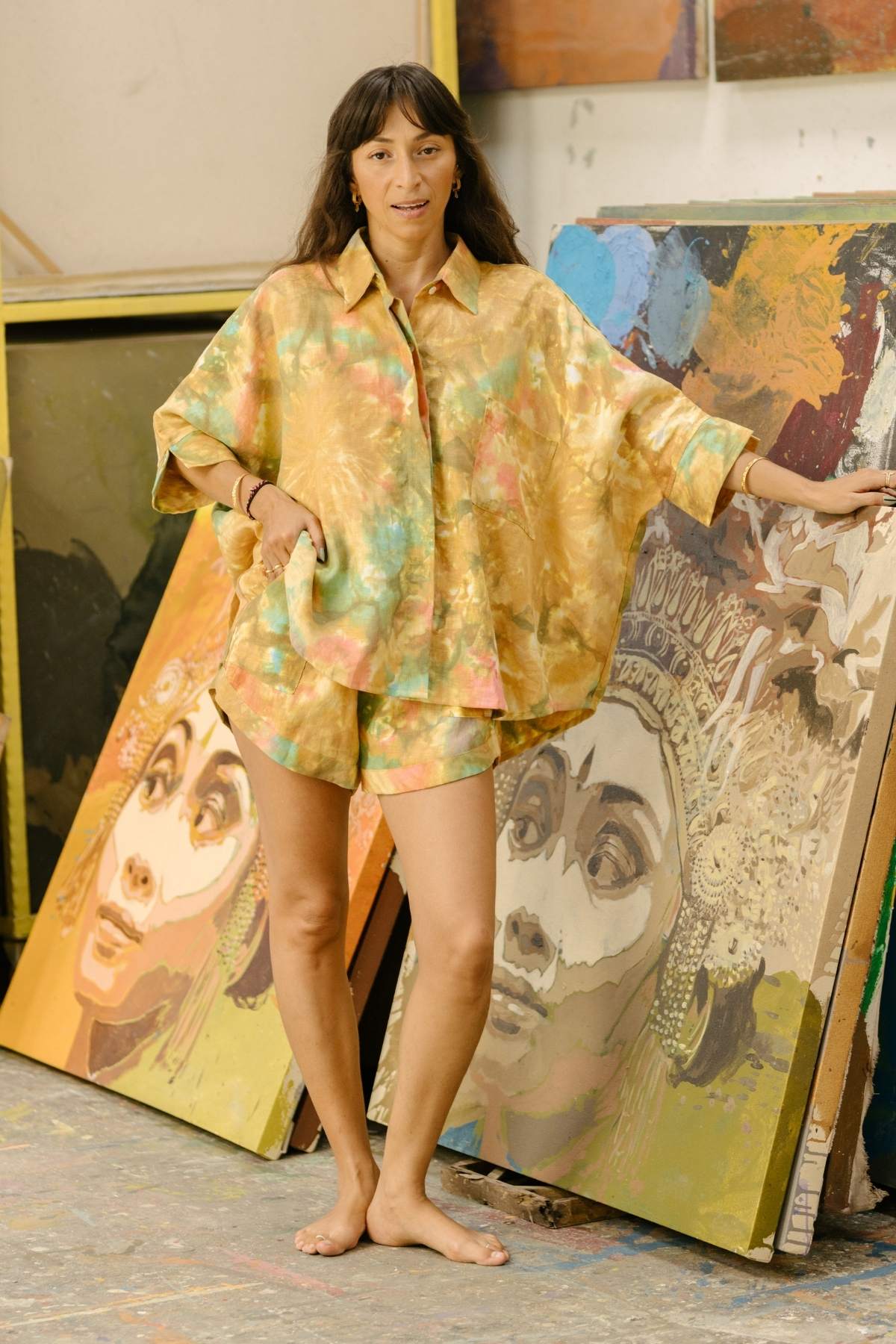
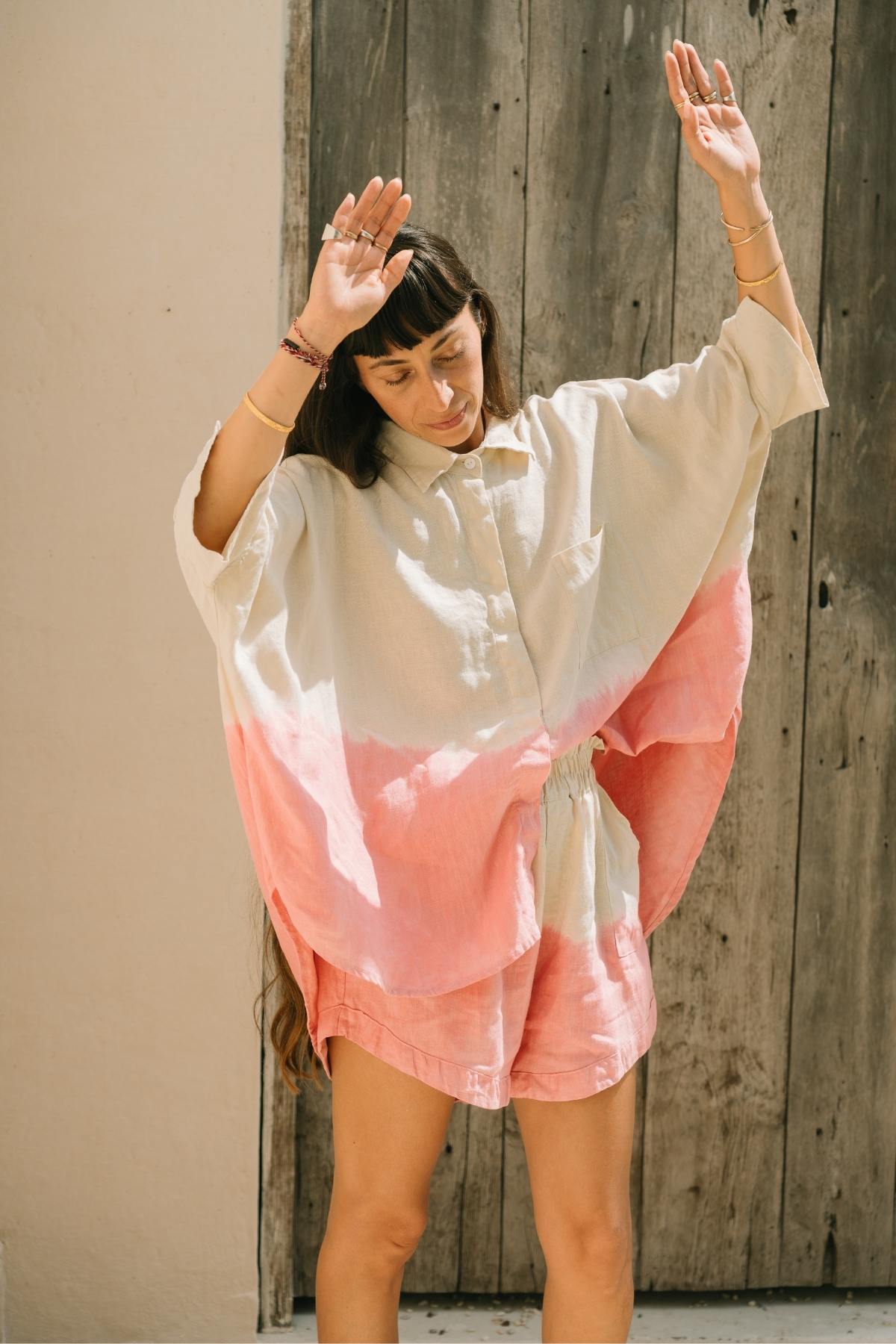
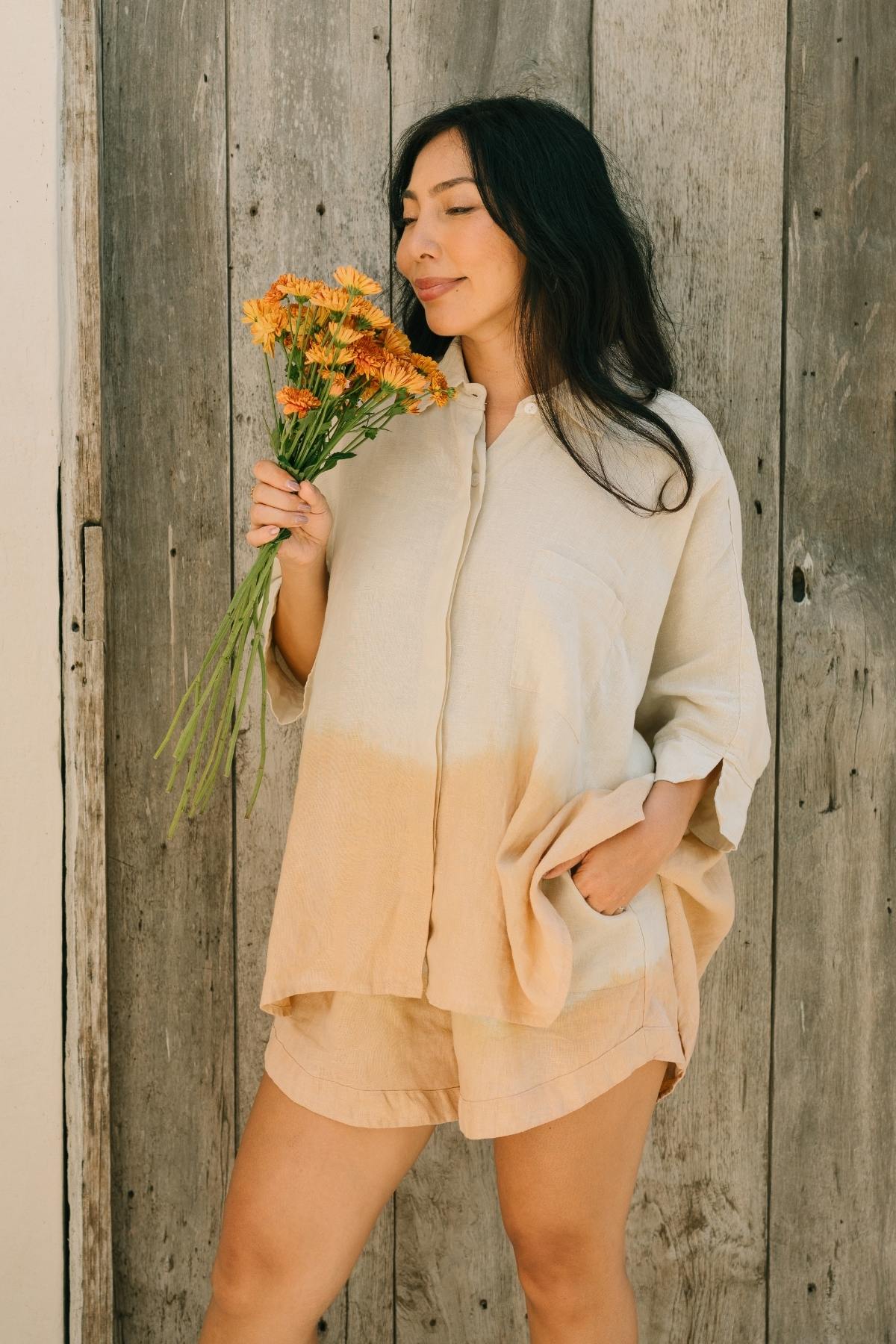
Every botanically dyed piece in this collection is hand-dyed in Bali by artisan families using tropical plants, herbal teas, and natural mineral fixatives. The Rainbeau colorway takes close to seven days to produce. The Mahashivrati colorway uses blues, yellows, and reds pressed into 100% stonewashed French linen over multiple days. The Uluwatu Sunset captures the particular light above the Bali cliffs at dusk. The Golden Sunset uses tropical plants until the linen reaches a warmth between saffron and amber.
No two pieces are identical. Not because of quality variation. Because that is the nature of the process, and the process is the point.
Botanical dyeing is one part of what makes slow fashion from Bali genuinely different. Read Slow Fashion Brands in Bali: What Makes Them Different for the full picture. To understand why linen is the foundation fabric for almost all our botanical dye work, read The Art of Linen. And to see botanical dyeing realised in one of the most considered pieces in the collection, read about the Ramie Botanical Origami Gown. For the full guide to choosing a linen playsuit in natural or botanically dyed fabric, read What Is a Linen Playsuit?
A Piece for This Threshold
Rainbeau Linen Kundalini Playsuit

Close to seven days of botanical dyeing. Pinks and indigos and earthy whites that sit inside the fabric, not on top of it. They shift in different light. They deepen with every wash. Your piece will not look like anyone else's.
Shop the Rainbeau Kundalini Playsuit →
The Botanical Dye Collection
every piece below is botanically hand-dyed in Bali. no two are identical. once a colorway is gone, it does not return.


The Muse-Letter
Dress for the woman
you're becoming.
Every week, from Bali — the cosmic weather, the threshold you’re standing on, and one piece made by hand for the woman who is ready.
Join the Muse-Letter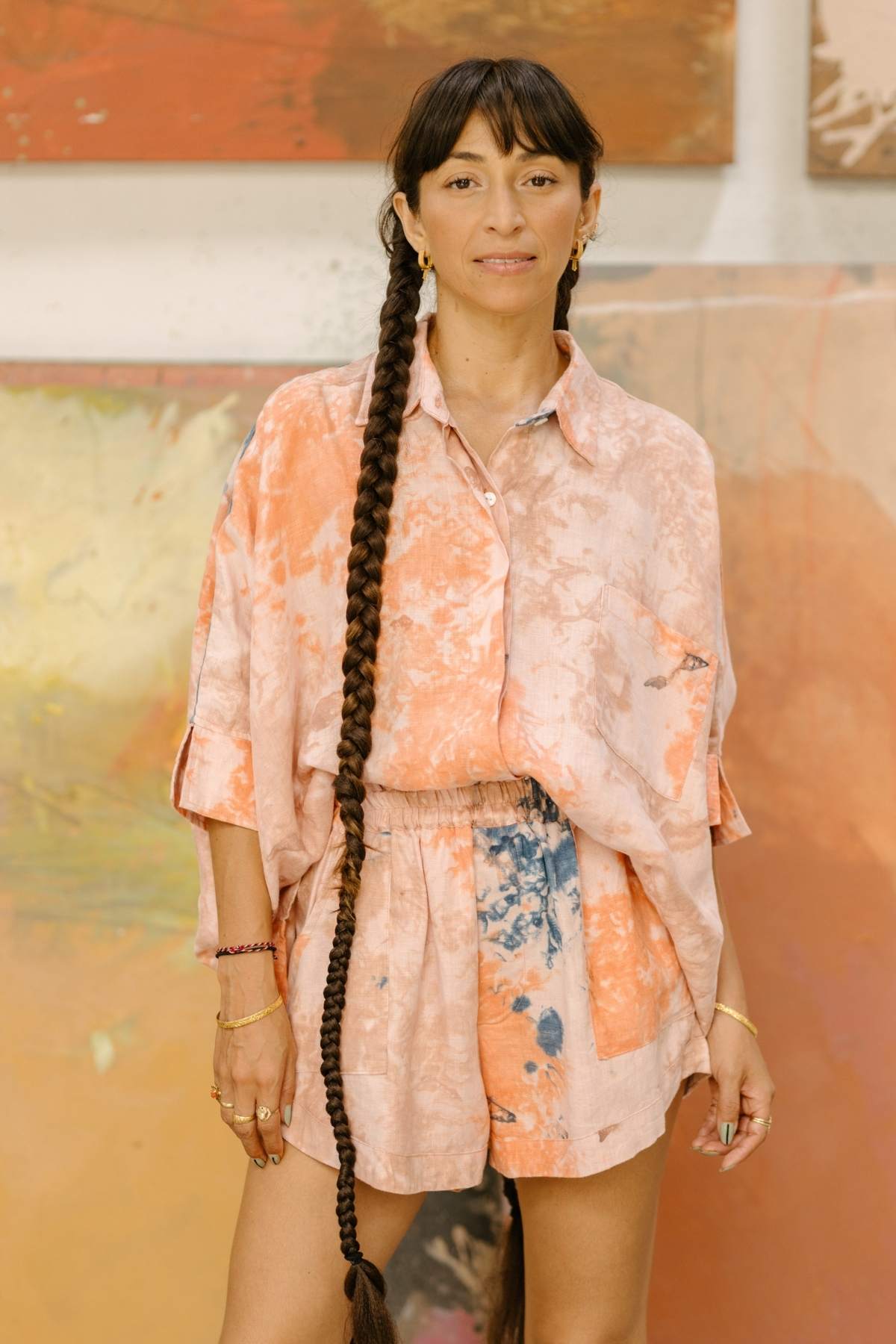



Leave a comment
This site is protected by hCaptcha and the hCaptcha Privacy Policy and Terms of Service apply.