





the ramie botanical origami gown: dressed in the language of the earth
some garments announce themselves. the ramie botanical origami gown arrives quietly, and then you cannot stop looking at it.
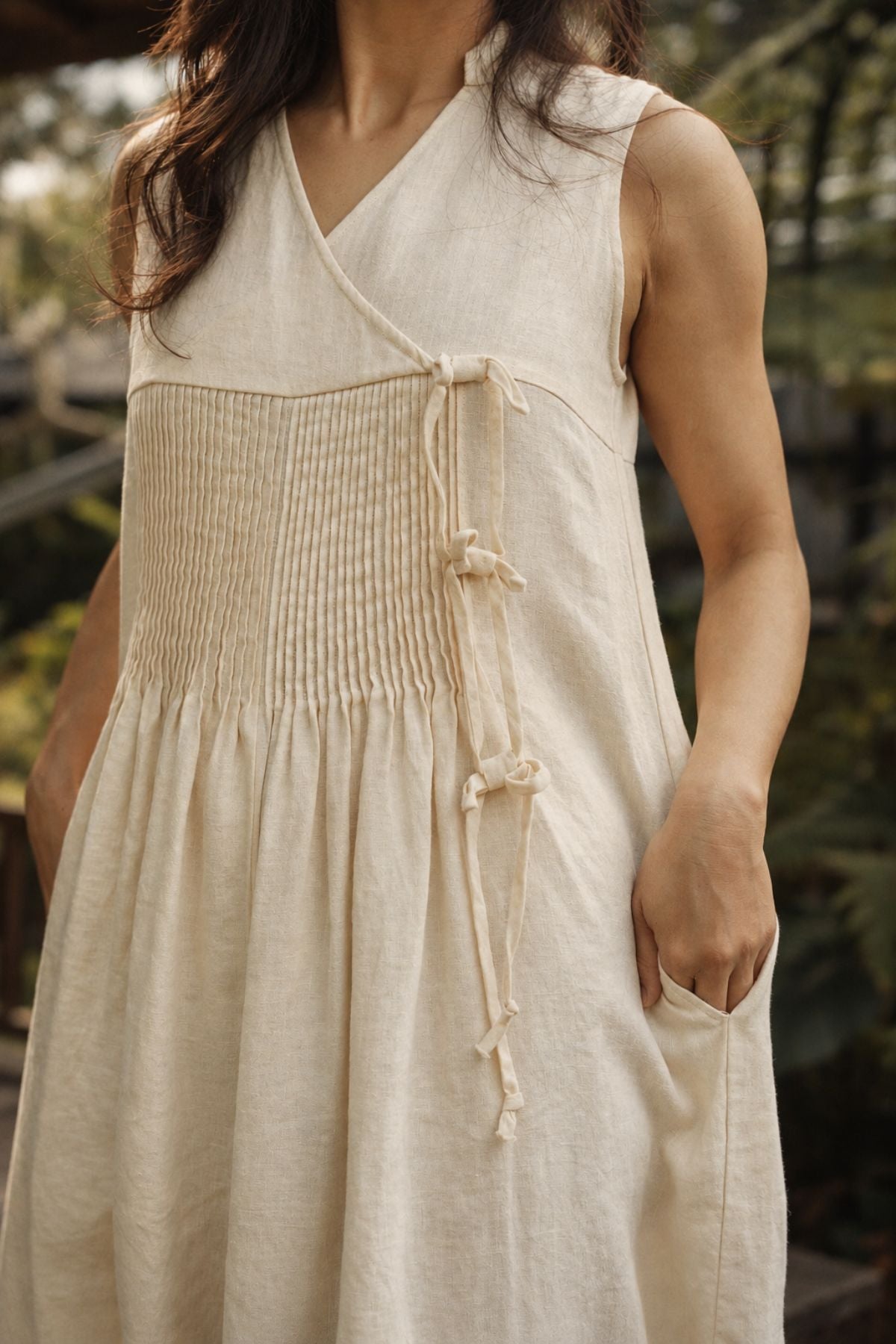
the origami reference is structural. the sleeves are folded and gathered in a way that echoes the japanese paper-folding tradition — not as decoration, but as architecture. when the gown is worn, those folds open and close with movement, catching light differently with every step. the silhouette shifts. the garment becomes something that moves with whoever is inside it.

what ramie is
ramie is one of the oldest textile fibres on earth. it has been used in Asia for thousands of years, prized for a combination of properties that no synthetic fabric can match and that even linen — its closest natural relative — does not fully replicate.
ramie fibre comes from the stem of the ramie plant, a member of the nettle family native to Asia. it is extracted, processed, and spun into yarn that is lighter, stronger, and more lustrous than most natural fibres. it has a slight sheen that sits somewhere between linen and silk. it breathes exceptionally well in heat. it does not stretch, which means garments made from it hold their shape through long days and multiple washes without distorting.
ramie also has natural antibacterial properties and is highly moisture-absorbent, drawing perspiration away from the skin and releasing it quickly. for a garment worn in bali — or anywhere warm — these are not minor details. they are the difference between a garment you can wear through a full day in heat and one that becomes uncomfortable within an hour.
to understand how ramie compares to linen — the foundation fabric of this entire collection — read The Art of Linen: Why Natural Linen Is the Fabric of Intentional Living.
what botanical dyeing does to ramie
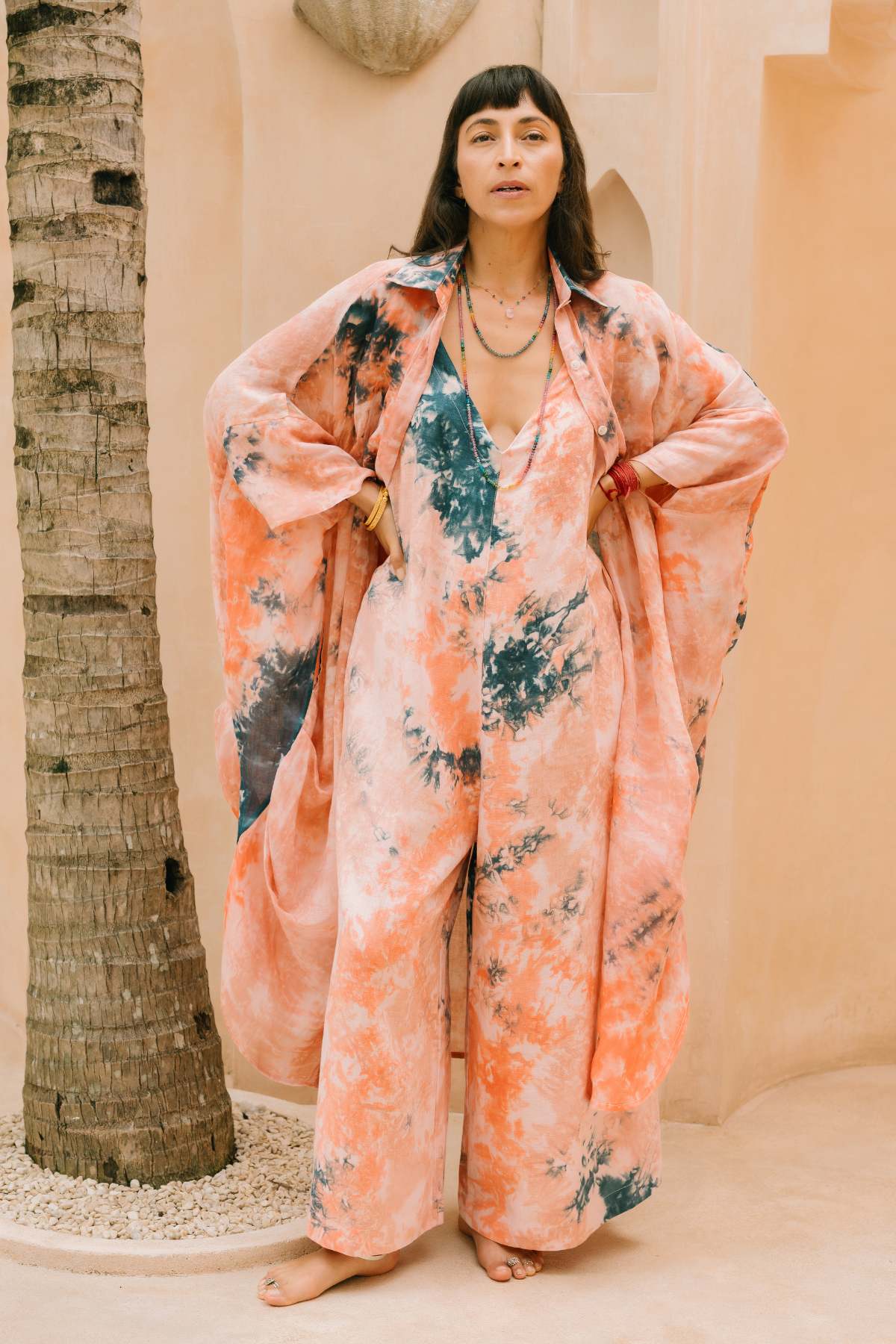
ramie takes botanical dye differently from linen. the slight lustre of the fibre means colour sits closer to the surface, with a luminosity that linen does not have. the pinks and earthy neutrals and plant-derived tones in the ramie botanical origami gown carry a warmth and depth that only a natural fibre with natural dye can produce.
each piece in this run was dyed individually. no two gowns are exactly alike. the colour shifts across the fabric, lighter where the folds were tighter during dyeing, deeper where the dye sat longest. the variation is the record of the process. it is also what makes the piece unmistakably handmade.
to understand the full botanical dyeing process, read Botanical Dyed Clothing: How Plant-Dyed Linen Is Made.
who this gown is for
the ramie botanical origami gown is for the woman who has stopped trying to dress for occasions and started dressing for herself.
it works for ceremony. it works for dinner. it works for the morning when you want to move through your own home in something that feels considered. it does not need an occasion to justify being worn. it is its own occasion.
it is also, in the most literal sense, one of a kind. this is a limited-run piece made from a single bolt of botanically dyed ramie. when it is gone, it does not return in this colorway. that is not marketing language. it is the nature of botanical dyeing and small-batch production — the same production model explored in full in Slow Fashion Brands in Bali: What Makes Them Different. for the woman who also reaches for simpler, more everyday pieces, the linen playsuit guide covers the full range of one-piece options in the collection. and for the story of another hand-woven natural fabric with a weaving tradition just as ancient, read about Tumanggal cotton.
The Origami Collection
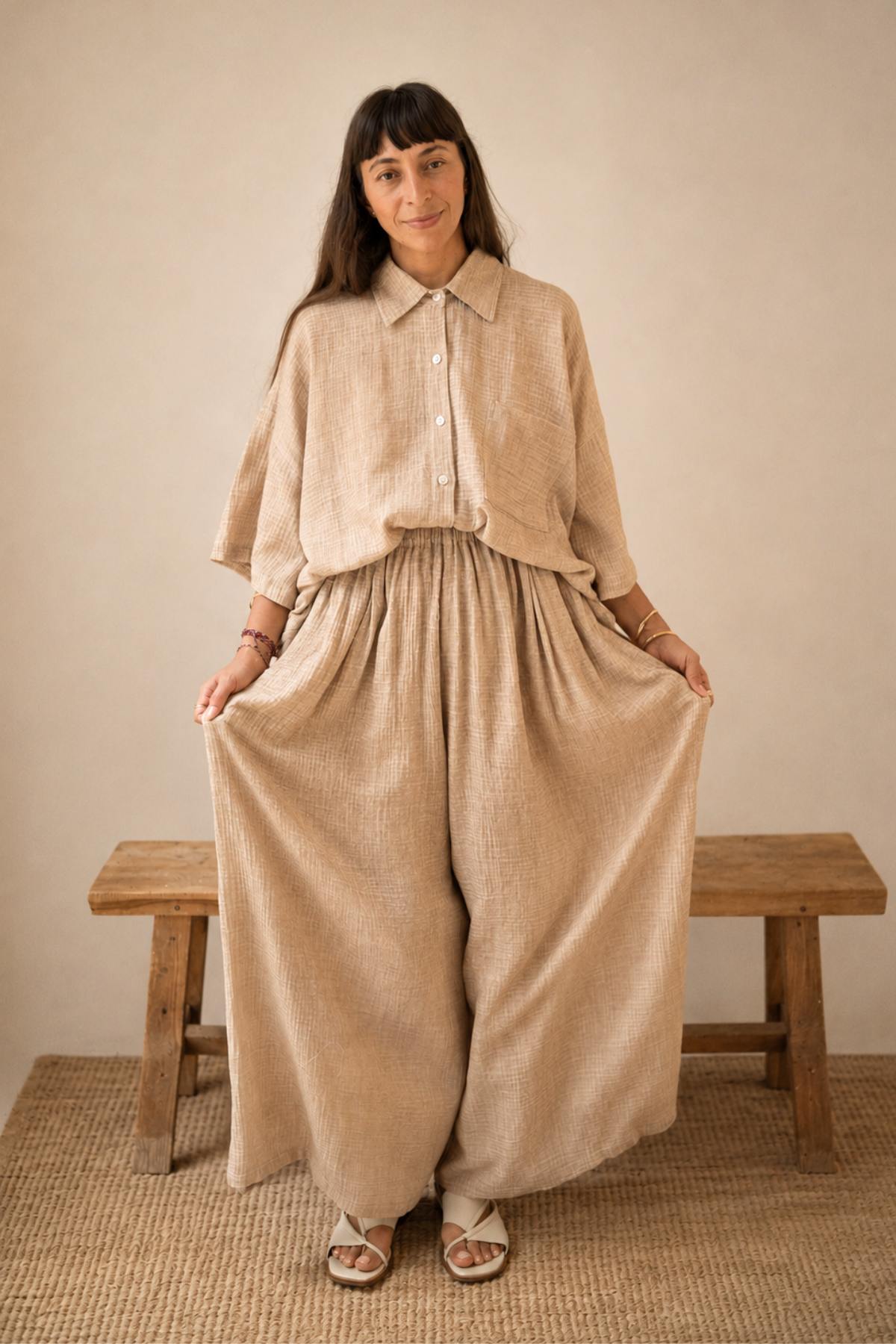
the origami silhouette across fabrics — each one made by hand, each one shaped to move with you.

The Muse-Letter
Dress for the woman
you're becoming.
Every week, from Bali — the cosmic weather, the threshold you’re standing on, and one piece made by hand for the woman who is ready.
Join the Muse-Letter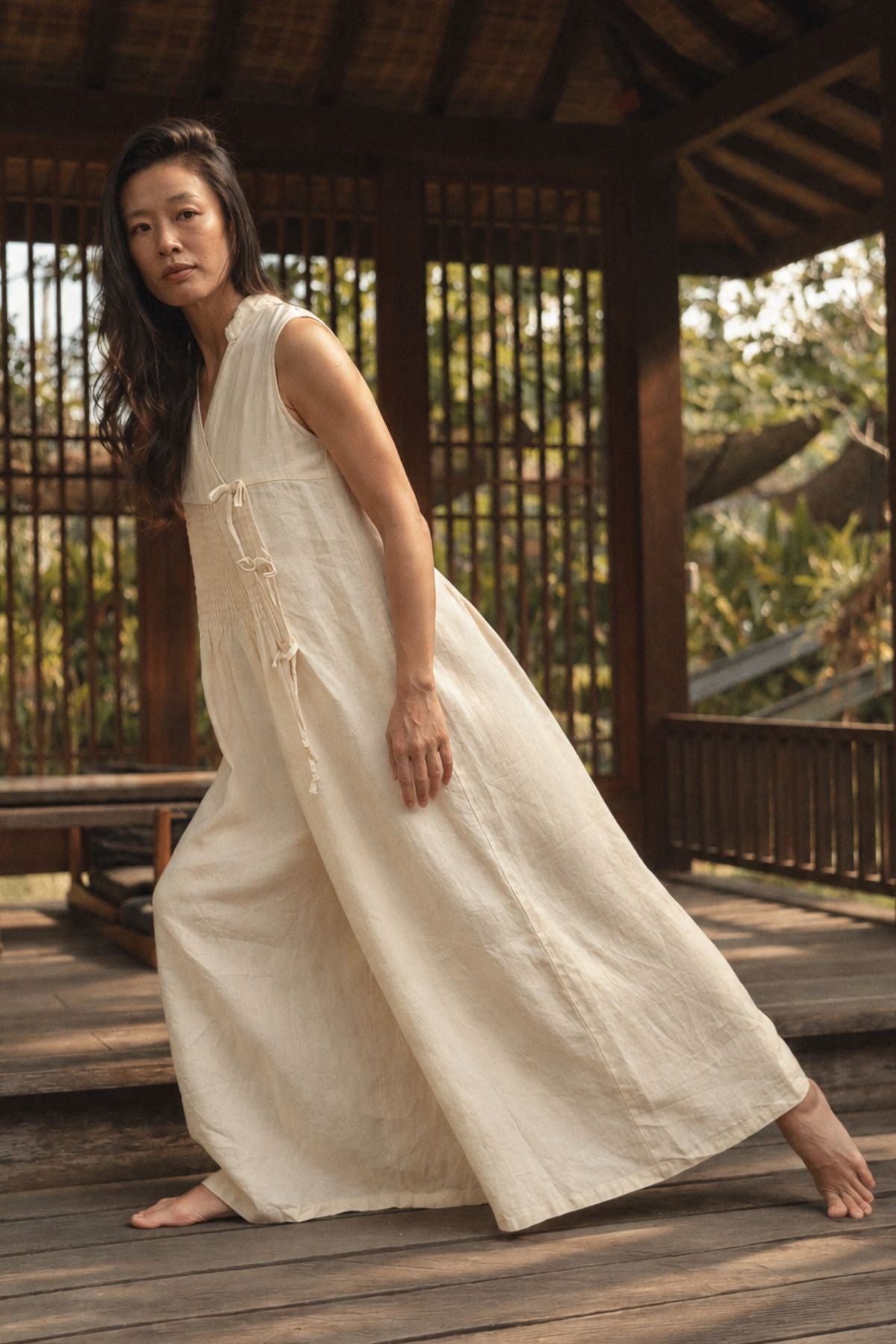















Leave a comment
This site is protected by hCaptcha and the hCaptcha Privacy Policy and Terms of Service apply.