





Who Are You Really? Unpacking Your True Identity
Most of us have been playing a character for so long that we have forgotten it is a character.
The one who handles everything. The one who needs very little. The one who is fine. The one who left that behind years ago. The one who knows what she is doing. These are not lies exactly. They are strategies. Ways of navigating a world that required something specific of us, and we provided it, and somewhere in the providing we stopped being able to clearly distinguish the strategy from the self.

Vik Maraj, speaking at the Bloom Yoga Festival in Edmonton, put it this way: the character we adopt becomes so ingrained that we are genuinely surprised when others do not understand us. But how could they? They are responding to the character. They have never met the person underneath it.
The Characters We Choose and What They Cost Us
Every character has a logic. It was chosen, usually in childhood or early adulthood, because it worked. It got needs met. It earned approval. It provided safety. The character of the hypercompetent woman emerged because competence was rewarded. The character of the accommodating woman emerged because accommodation prevented conflict. The character of the self-sufficient woman emerged because depending on others felt like an unbearable risk.
None of these characters are wrong. They were intelligent responses to real conditions. The problem is when the conditions change and the character does not. When the hypercompetent woman carries the whole household alone because she stopped knowing how to let anyone else carry anything. When the accommodating woman says yes to things that cost her dearly because the character does not have a language for no. When the self-sufficient woman closes off intimacy because the character decided, a long time ago, that needing people was the most dangerous thing she could do.
The character continues the story even after the story has ended. This is what makes it so costly.
Alan Watts and the Wake of the Boat
Alan Watts, one of the Western world's most eloquent translators of Eastern philosophy, observed that most of us navigate life looking backward. We move forward while watching what has already passed. The wake of the boat determines our sense of direction, even though the wake has no power over where the boat is going. The wake is what the boat did. It is not what the boat is doing.
We apply our past to our present constantly and mostly unconsciously. The person who hurt us ten years ago shapes how we respond to someone who resembles them today. The failure we experienced at twenty-four determines how much risk we are willing to take at forty. The childhood belief about who we are and what we deserve runs beneath the adult decisions we think we are making freely.
The invitation is not to pretend the past did not happen. It is to stop treating it as predictive. The wake is not the wind. It does not determine the direction. You do.
How You Find Out Who You Actually Are
The path to the self underneath the character is not a destination you arrive at. It is a practice of continuous inquiry. Of noticing when you are responding from habit rather than choice. Of asking, in small moments rather than grand ones: is this me, or is this the character I learned to be?
Kundalini Yoga, which Myrah has practiced and taught for over twenty years, is one of the most direct technologies available for this kind of inquiry. Not because it gives you answers. Because it quiets the character enough that the thing underneath it can be heard. The breath work, the mantra, the physical movement, these are all ways of bypassing the character and reaching the nervous system directly.
What you find there is not exotic. It is usually very quiet and very ordinary and immediately recognisable as yours. The thing you actually want. The thing you actually believe. The way you actually feel when no one is watching and you have stopped performing even for yourself.
That is the self. Not the character. And the practice of returning to it, daily, is the most important thing you can do.
You are not the character you learned to play. You are the one who learned to play it. That distinction is everything. And it is always available, in the pause between who you were yesterday and who you choose to be right now.
|
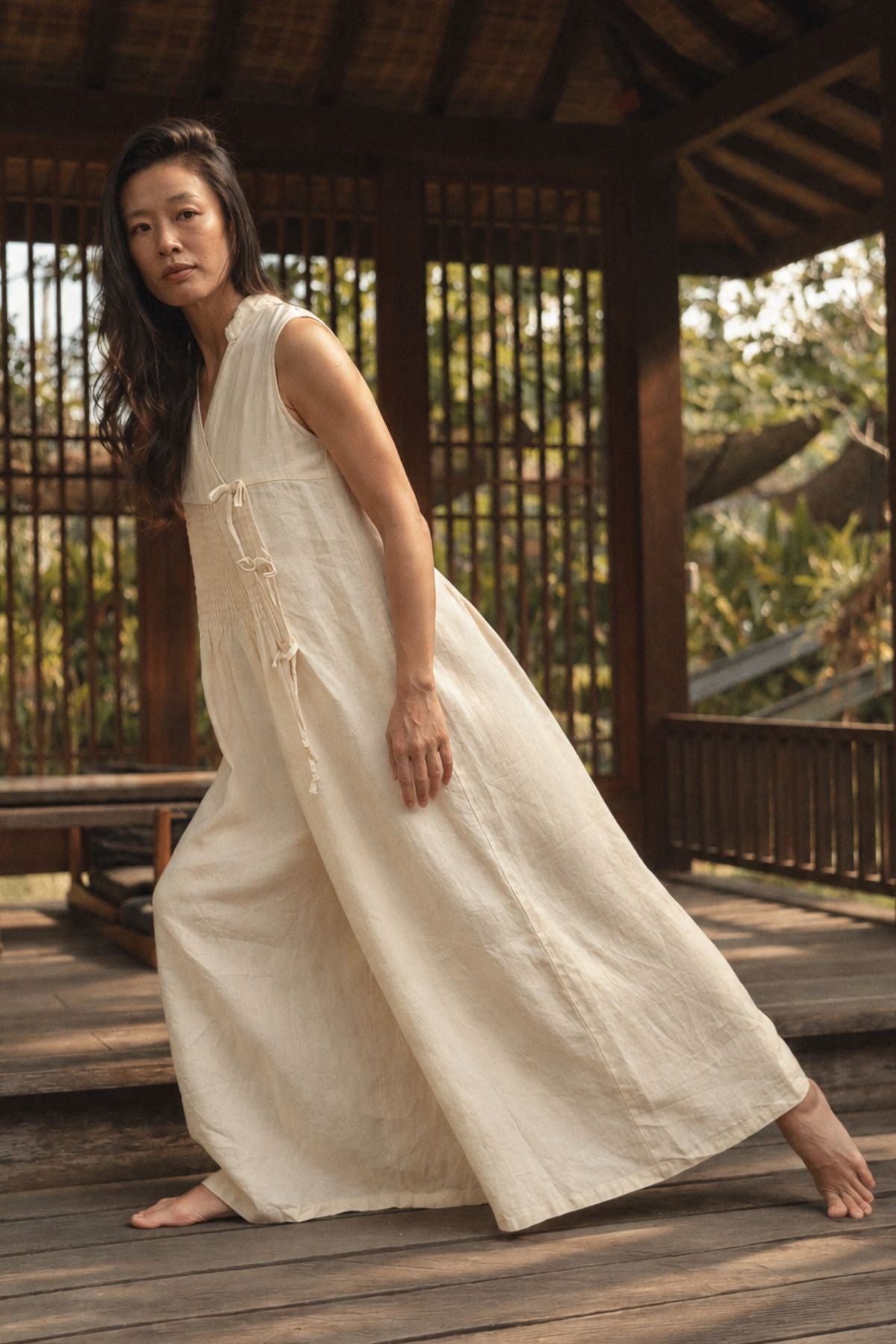
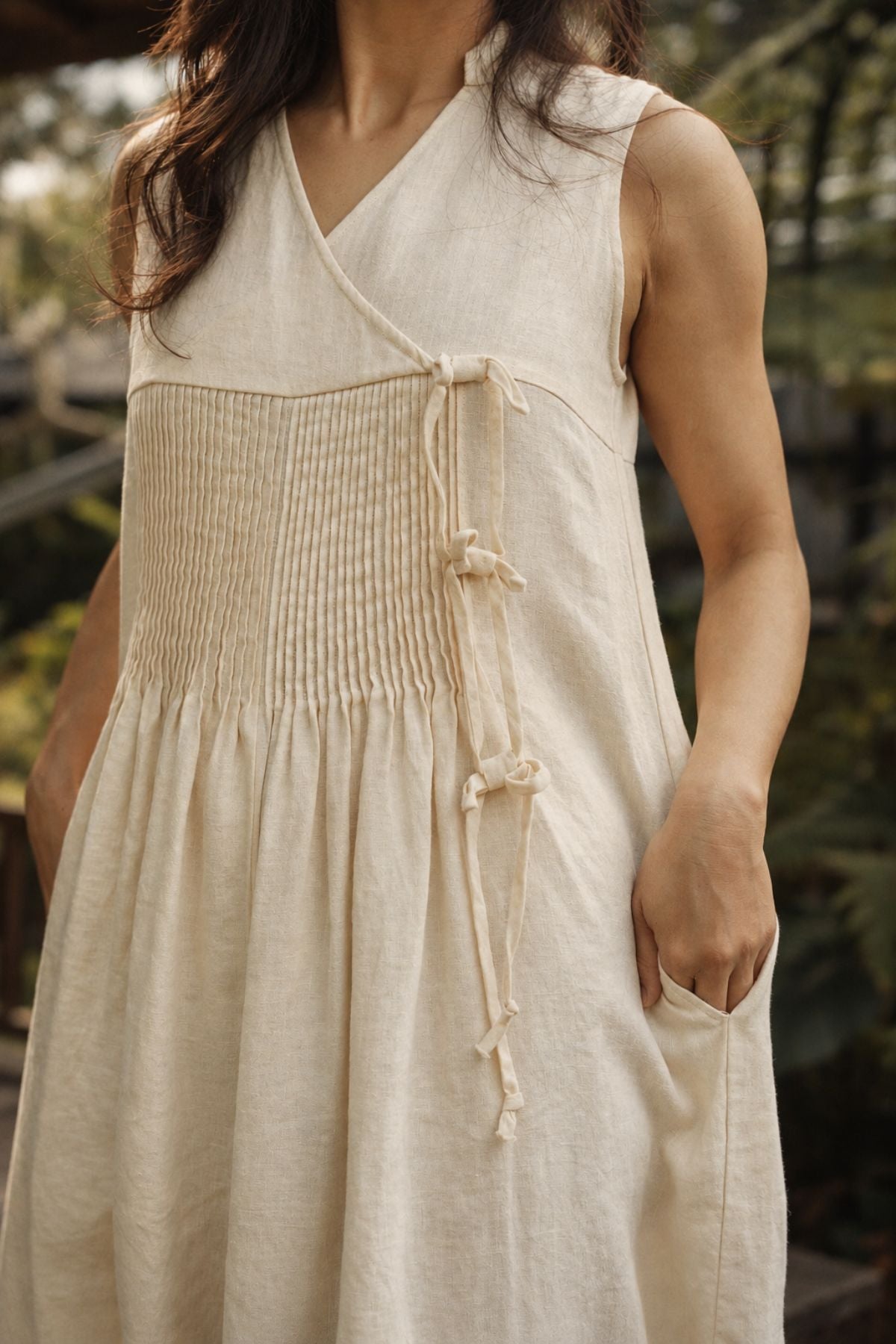
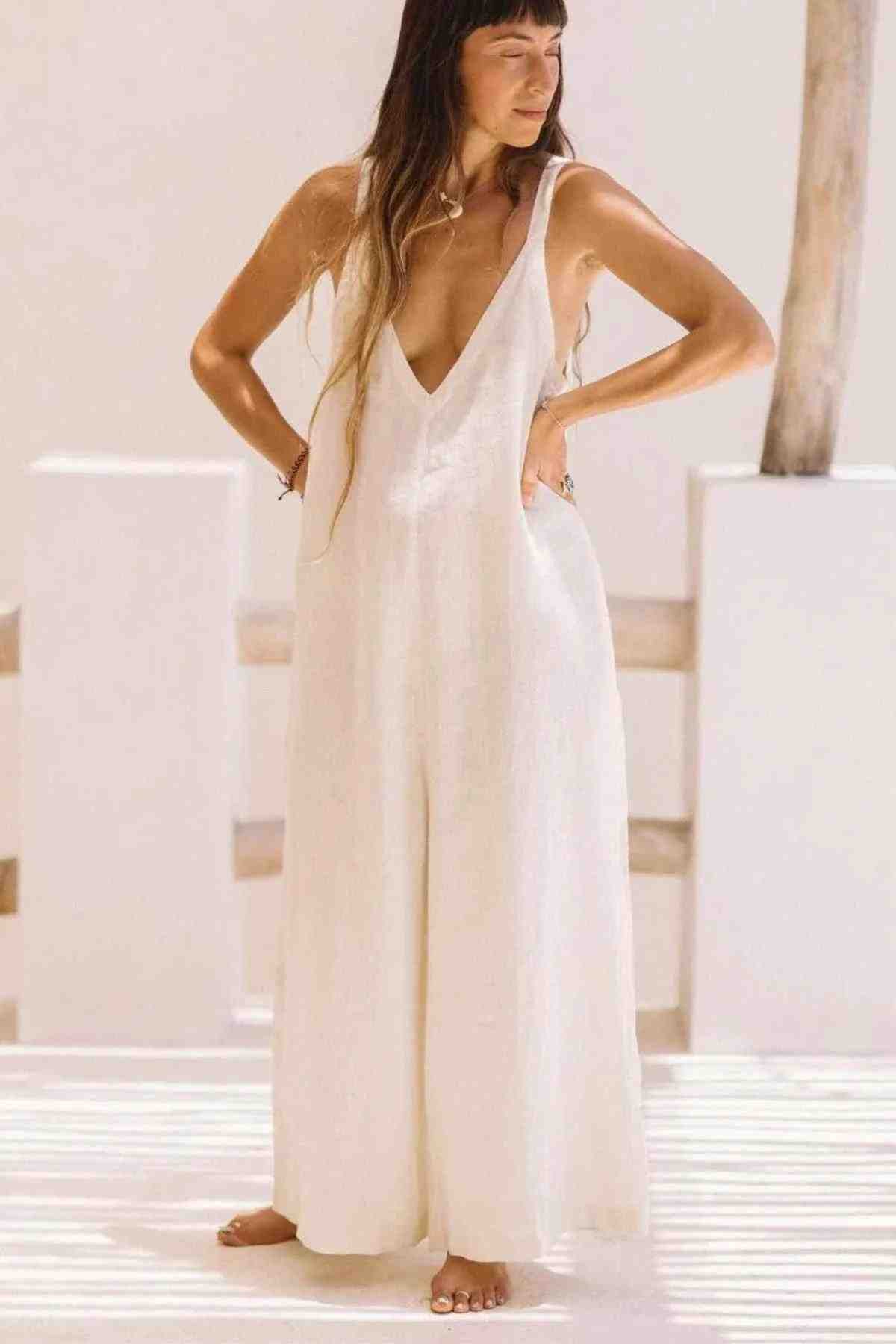
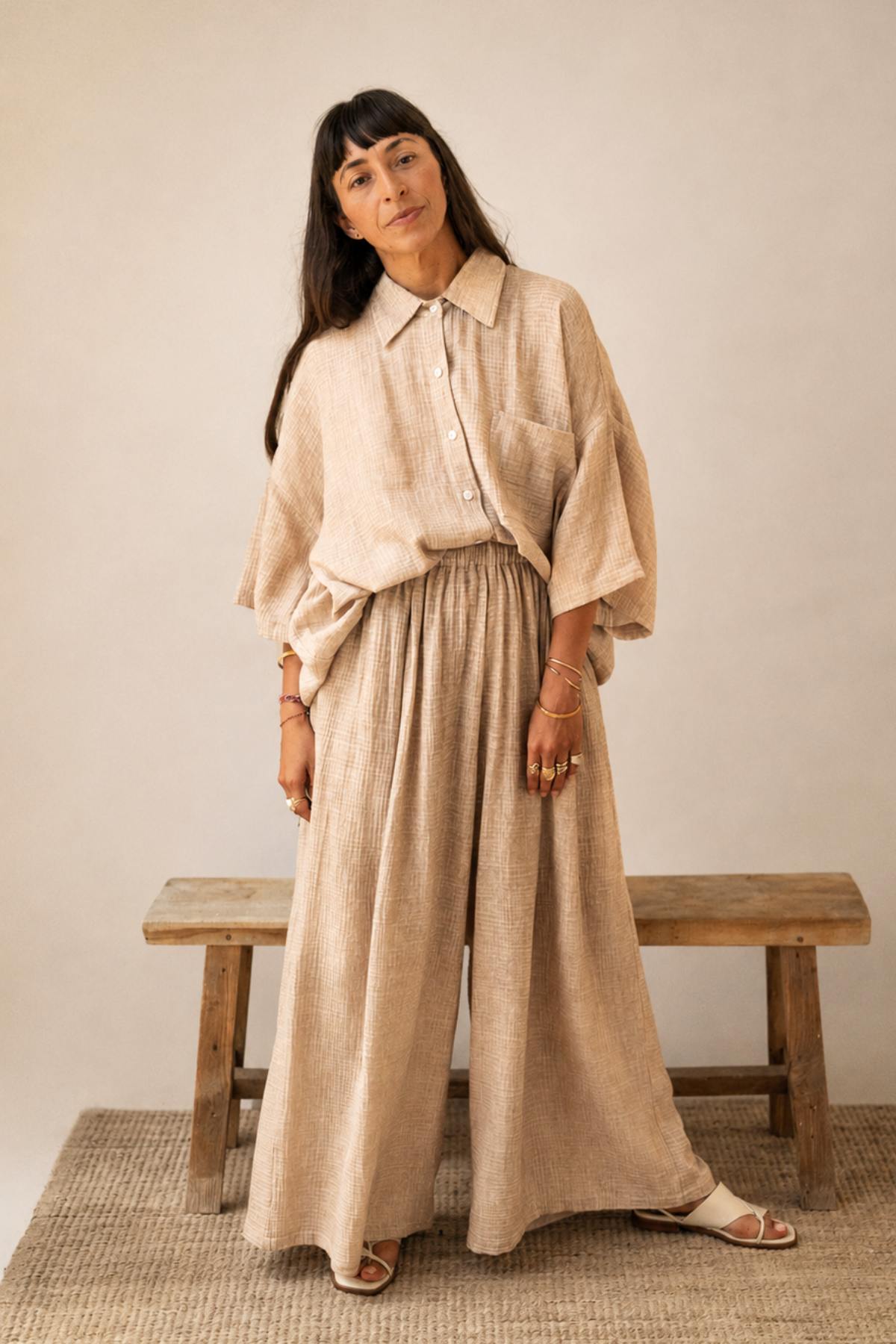
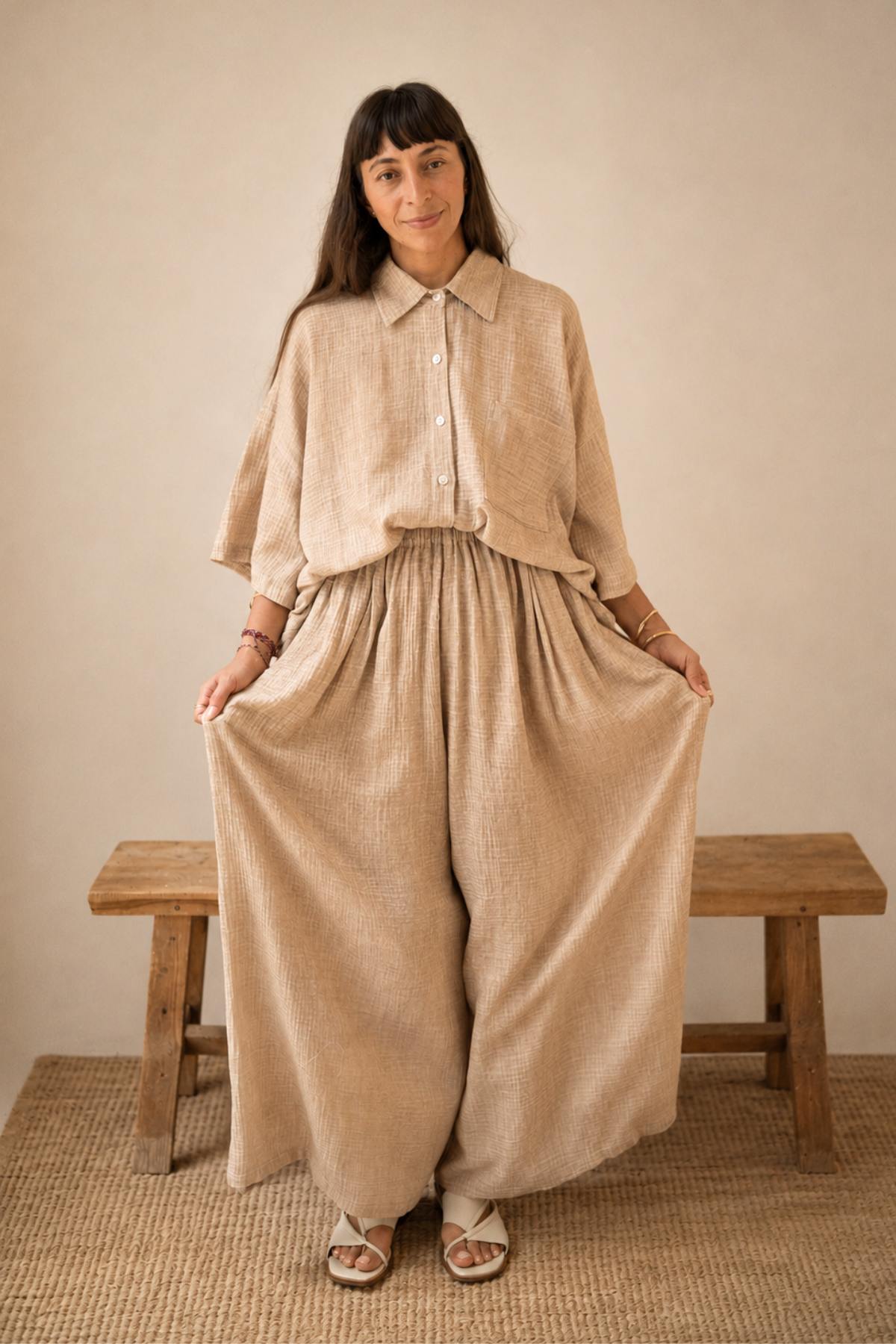
A Piece for This Threshold The Suka Linen Set Suka means ease. Not the ease of having everything figured out. The ease of stopping pretending. Pure linen, handcrafted in Bali. Wear it when you are ready to be recognisably yourself. Shop New Arrivals → |

|
The Muse-Letter Dress for the woman you’re becoming. Every week from Bali. Astrology, ceremony, new arrivals, and the stories behind what we make. Join the Muse-LetterUnsubscribe any time. No spam, ever. |










Leave a comment
This site is protected by hCaptcha and the hCaptcha Privacy Policy and Terms of Service apply.