
What to Wear in Bali: A Guide for the Woman Who Is Not Going on Holiday
What to Wear in Bali: A Guide for the Woman Who Is Not Going on Holiday
Bali does something to a woman. Something that has nothing to do with the Instagram photographs of rice terraces, or the retreats, or the temples lit at golden hour. Something quieter than that. She arrives, often slightly tired and slightly uncertain of why she chose this particular place at this particular moment in her life, and within a few days she stops performing. She stops moving at the speed she kept at home. She starts waking before her alarm and sitting with tea and not immediately reaching for her phone.

And she starts thinking differently about what she wears.
This guide is for her. Not for the tourist who needs a packing list. For the woman who is going to Bali, or has been to Bali, or carries Bali as an internal climate she returns to in her imagination when the city gets too loud. For the woman who wants to dress the way Bali feels: unhurried, natural, slightly ceremonial, entirely herself.
Why Clothing Feels Different in Bali
Before we talk about what to wear, it is worth understanding why the question matters differently here than it does anywhere else.
Bali is a place where the spiritual and the everyday have never been separated. The woman who runs the warung where you eat breakfast every morning made an offering to her gods before she lit the stove. The fabric sold in the market in Ubud was woven according to a tradition that predates by centuries the concept of “fashion.” The rice farmer working at dawn is dressed in a way that has been essentially unchanged for a hundred years, because what she is wearing serves its purpose perfectly and there has never been a reason to change it.
What this means practically is that when you arrive in Bali dressed in the way that most of us dress in cities, something feels off. Not wrong, exactly. Just slightly out of tune. Like wearing a suit to the ocean.
Some places have a dress code. Not a written one. A frequency one. Bali is one of those places. And once you feel it, you understand why what you wear there matters in a way that is difficult to explain to someone who hasn’t been.
The Fabrics That Belong There
The first thing to understand about dressing in Bali is that the climate will tell you everything you need to know. It is warm and it is humid, and some days it rains suddenly and completely and then stops, and the light that follows is extraordinary. Your clothing needs to breathe. It needs to dry quickly. It needs to move the way a body moves in heat.
This is why linen has been the fabric of tropical climates for thousands of years. Not because anyone decided it was the fashionable choice, but because it is the natural one. Linen is woven from flax, a plant that has grown in warm climates since ancient Egypt. It breathes. It absorbs moisture without feeling damp. It softens with every wash, every wear, every afternoon of Bali humidity, until it becomes the kind of fabric that feels like a second skin rather than something you put on.
Natural cotton serves similarly, particularly the handwoven varieties that are still made in Indonesia. Ramie, a plant fibre native to Asia. Silk, for evenings and ceremonies. Bamboo rayon, where the drape is everything. What all of these fabrics share is a relationship to the earth that synthetic materials cannot replicate, and in Bali, that relationship is felt.
Avoid polyester. Avoid synthetic blends. Not as a moral statement, though there are good reasons to make that statement, but as a practical one. You will be warmer, less comfortable, and somehow more out of place than the fabric warrants.
What to Actually Pack: The Slow Fashion Approach
The slow fashion approach to packing for Bali is not about having less. It is about having enough of the right things that everything works together, that nothing is wasted, and that you spend no time in Bali thinking about what to wear.
One or Two Playsuits or Jumpsuits
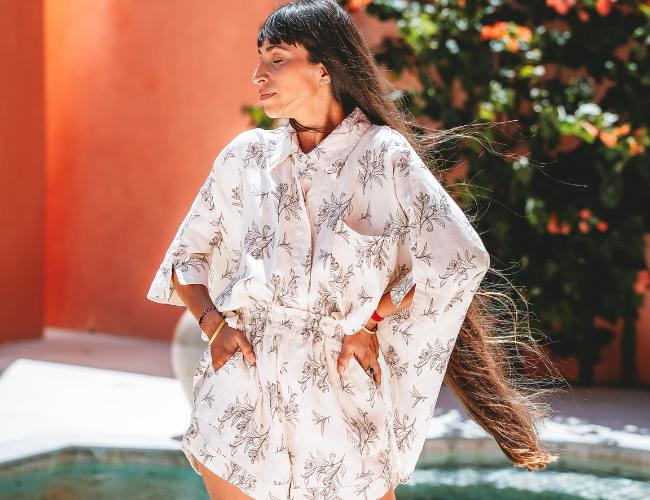
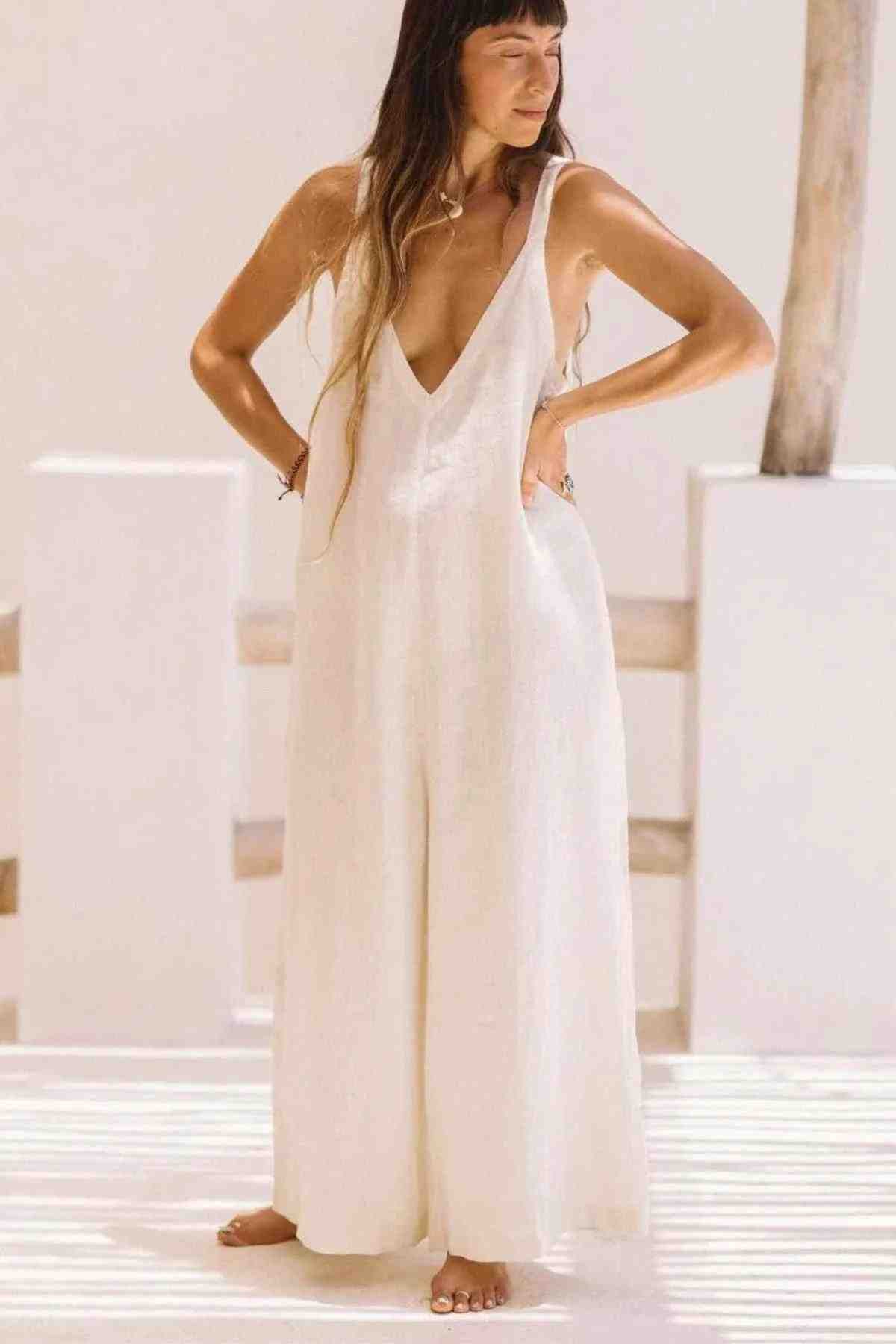
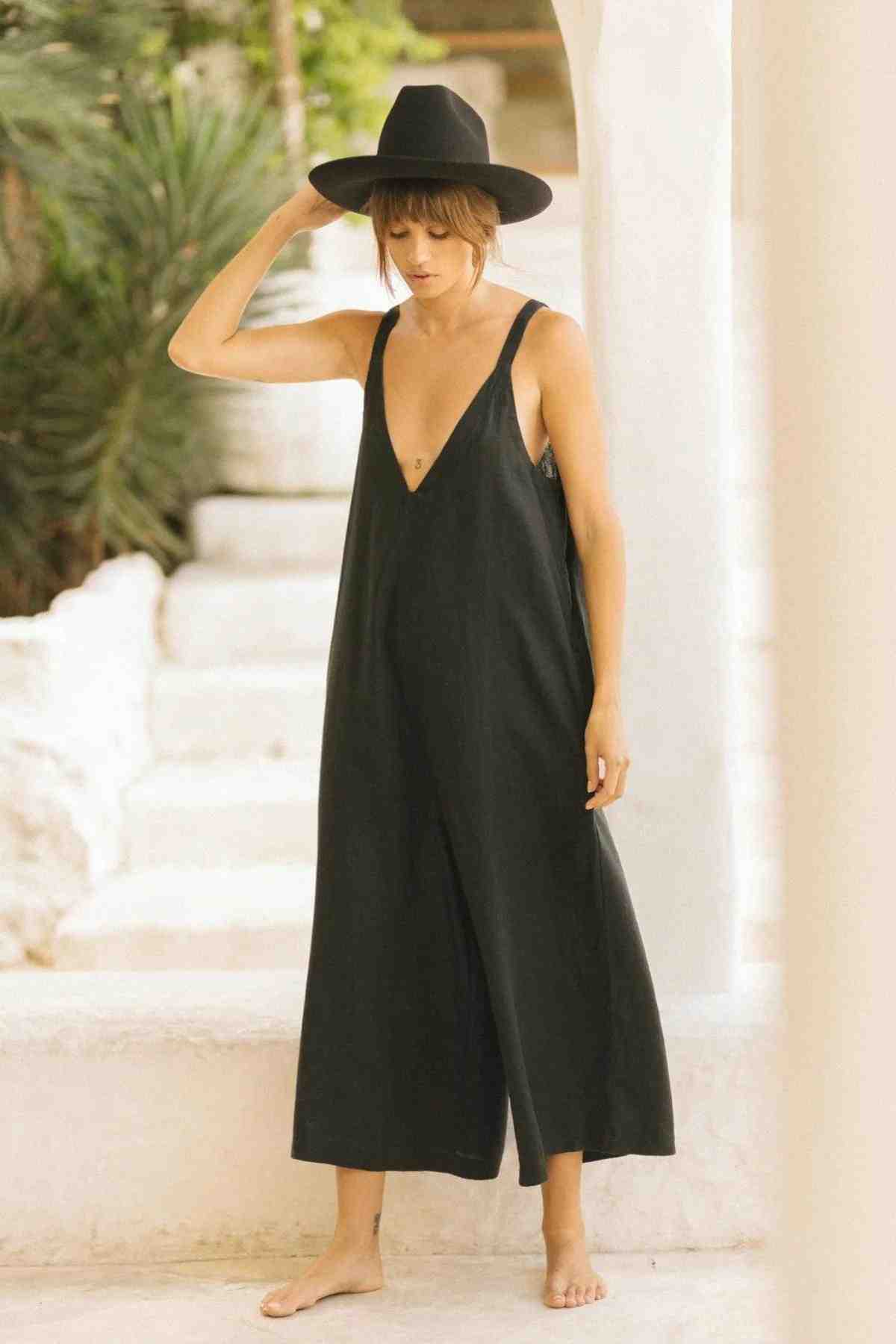
The playsuit is the perfect Bali garment. One piece, requires no coordination, moves beautifully in the heat, covers enough for temple visits when paired with a sarong, and is elegant enough for the kind of dinner that Bali does exceptionally well. Linen or natural cotton. A silhouette that is generous enough to breathe but shaped enough to feel considered.
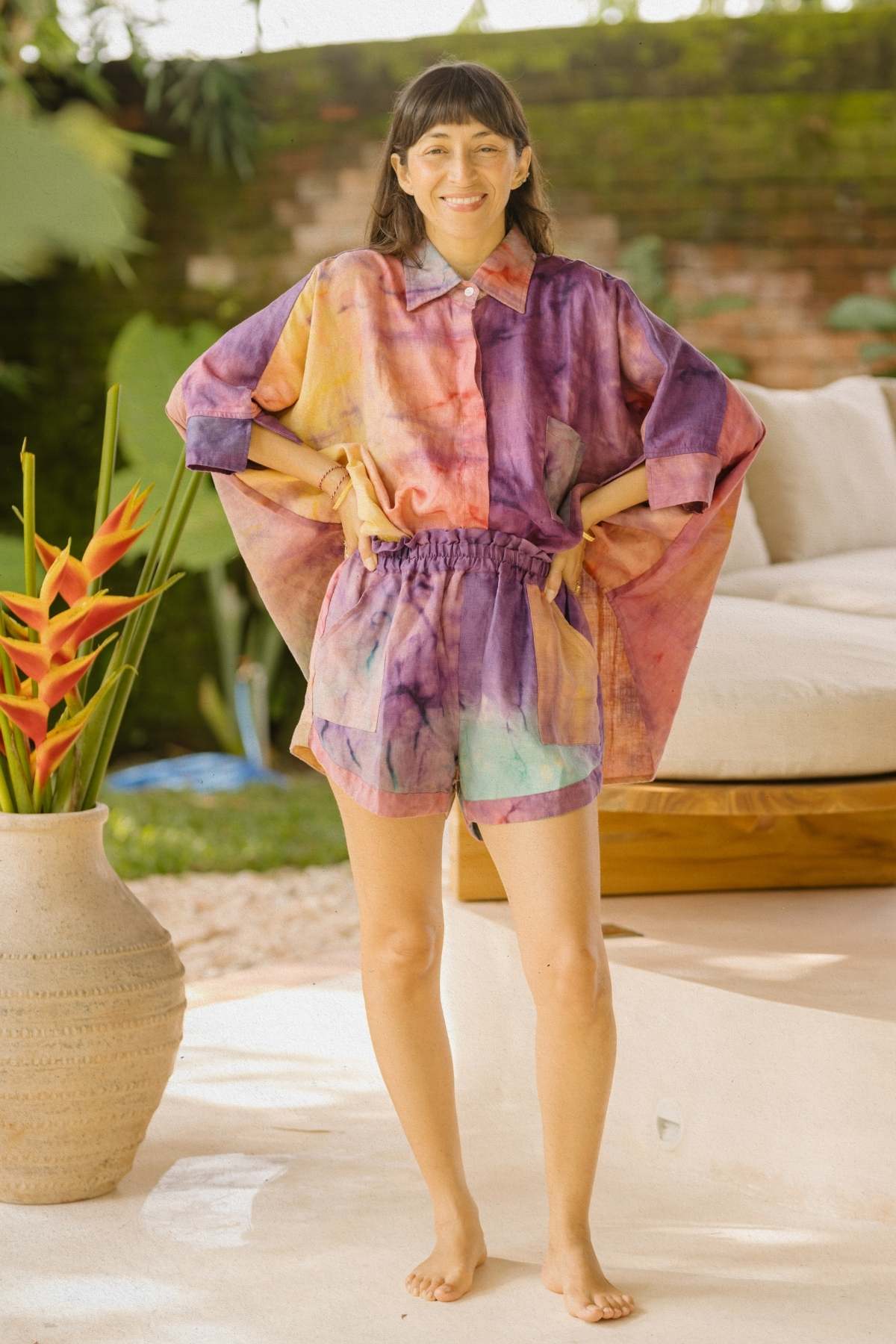
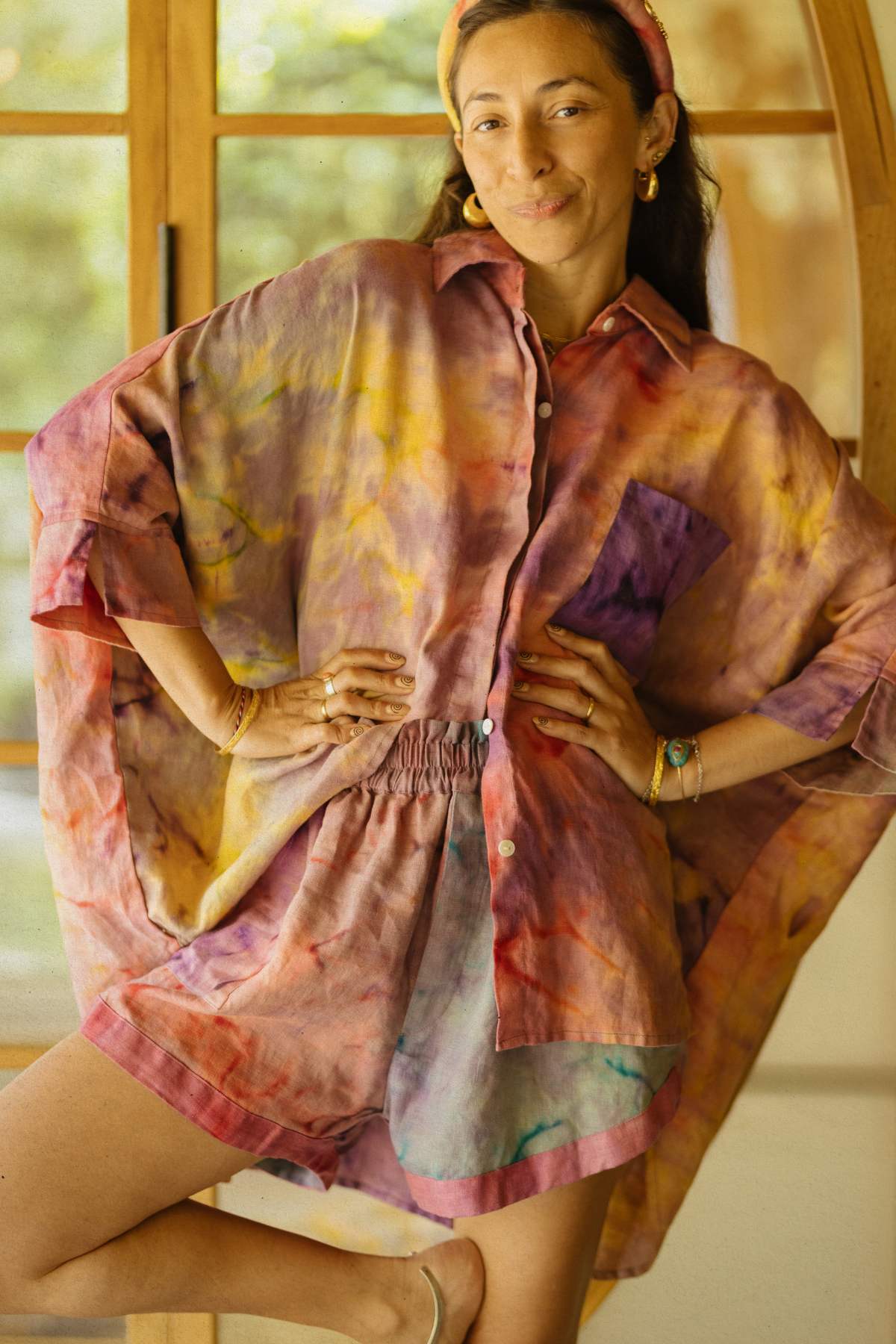
Our Sat Torri and Kundalini playsuits were designed in Bali, made in Bali, worn in Bali. They know the climate in the way only something made there can. The Rainbeau colorway, with its botanical dyes of sunset purples and warm golds, looks in Bali light exactly the way Bali light looks.
A Linen Set
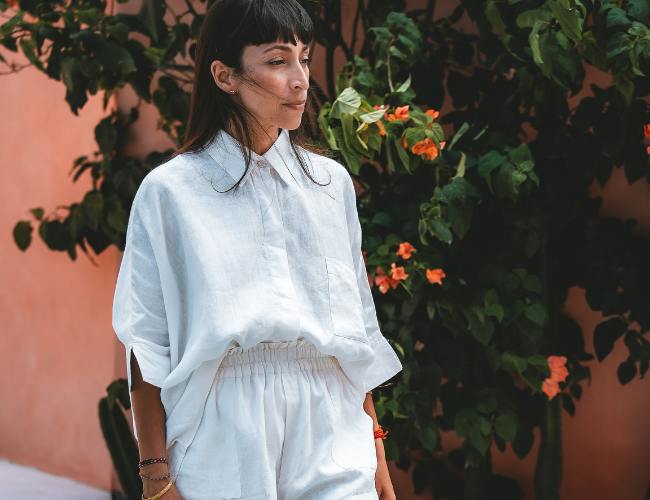
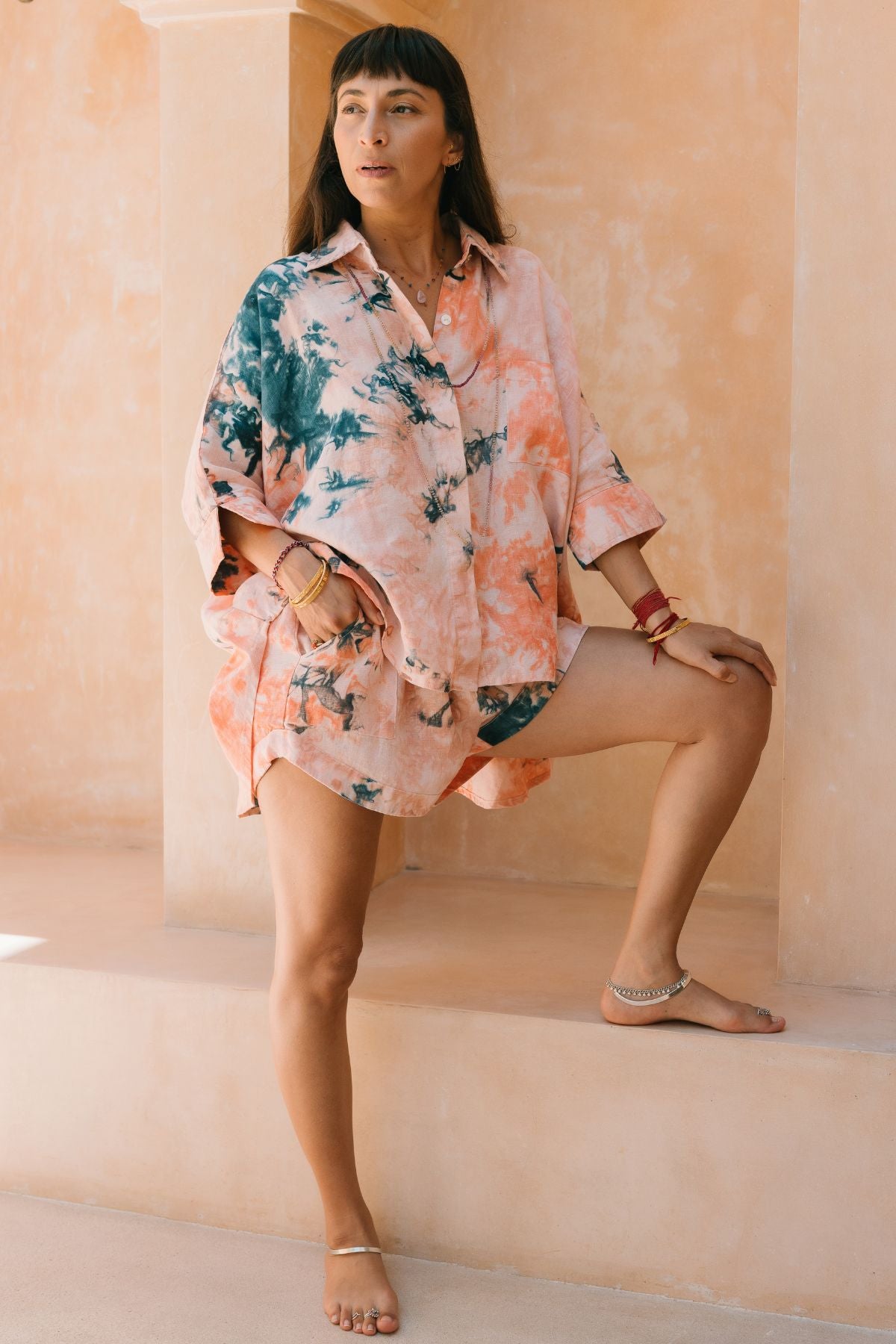
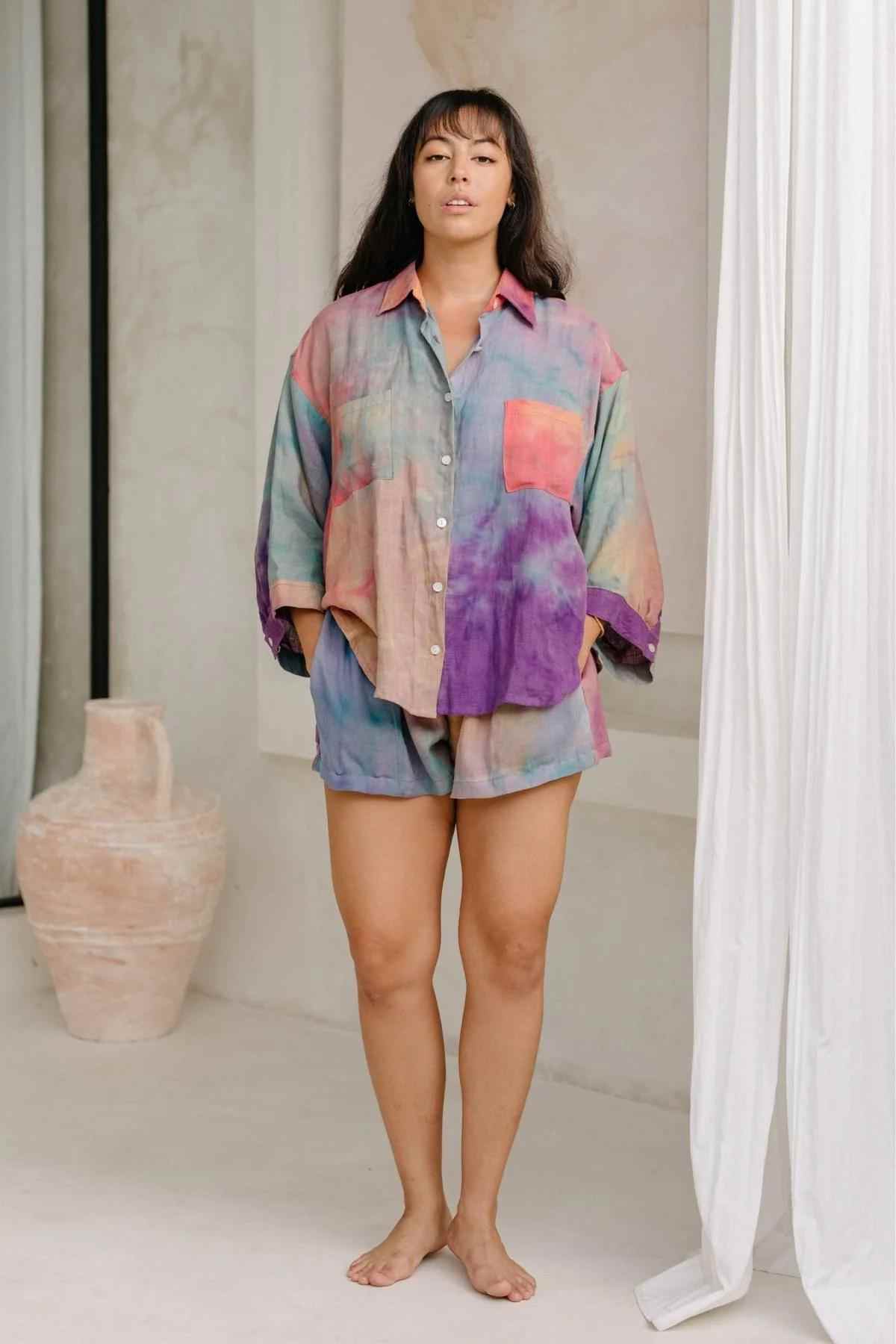
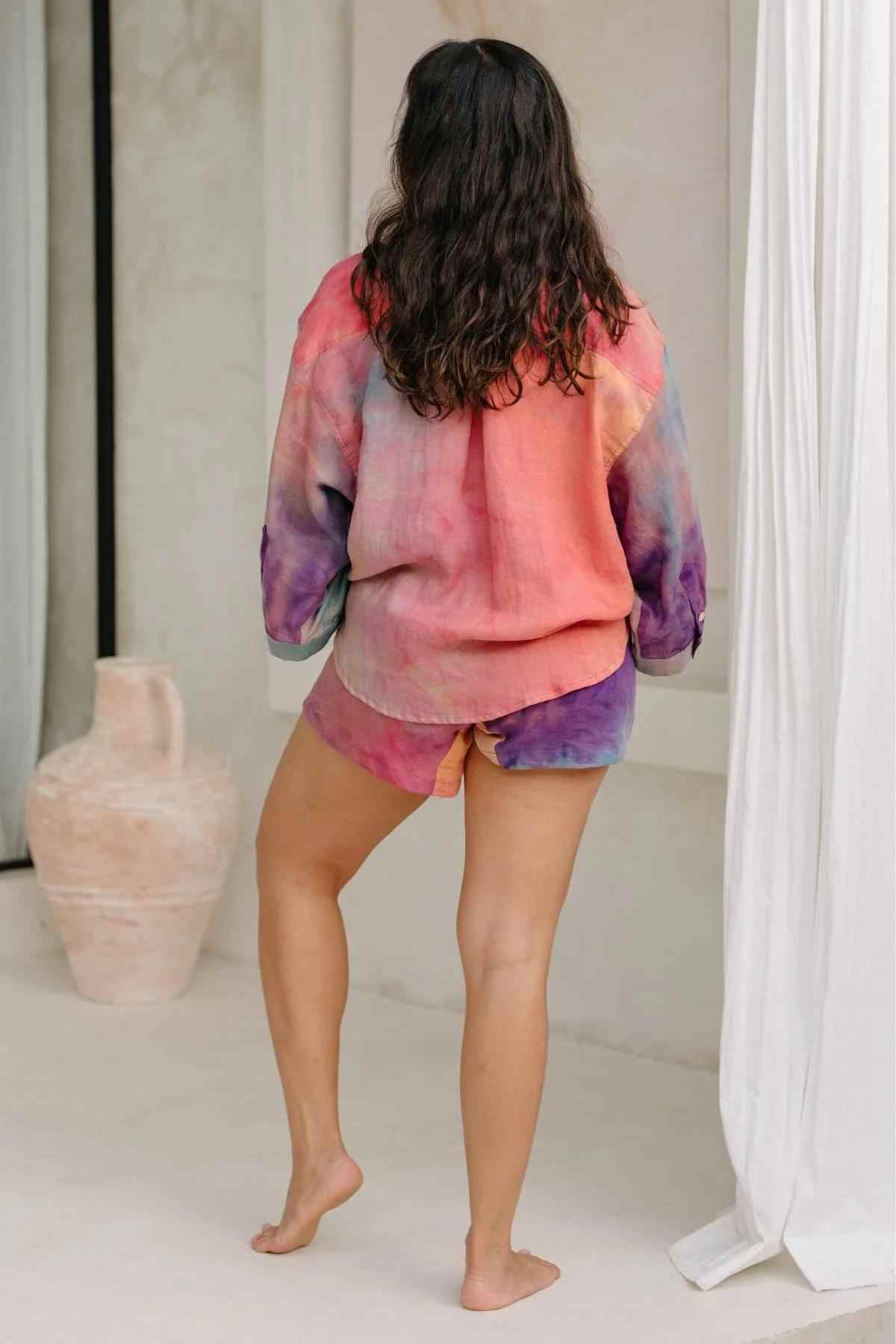
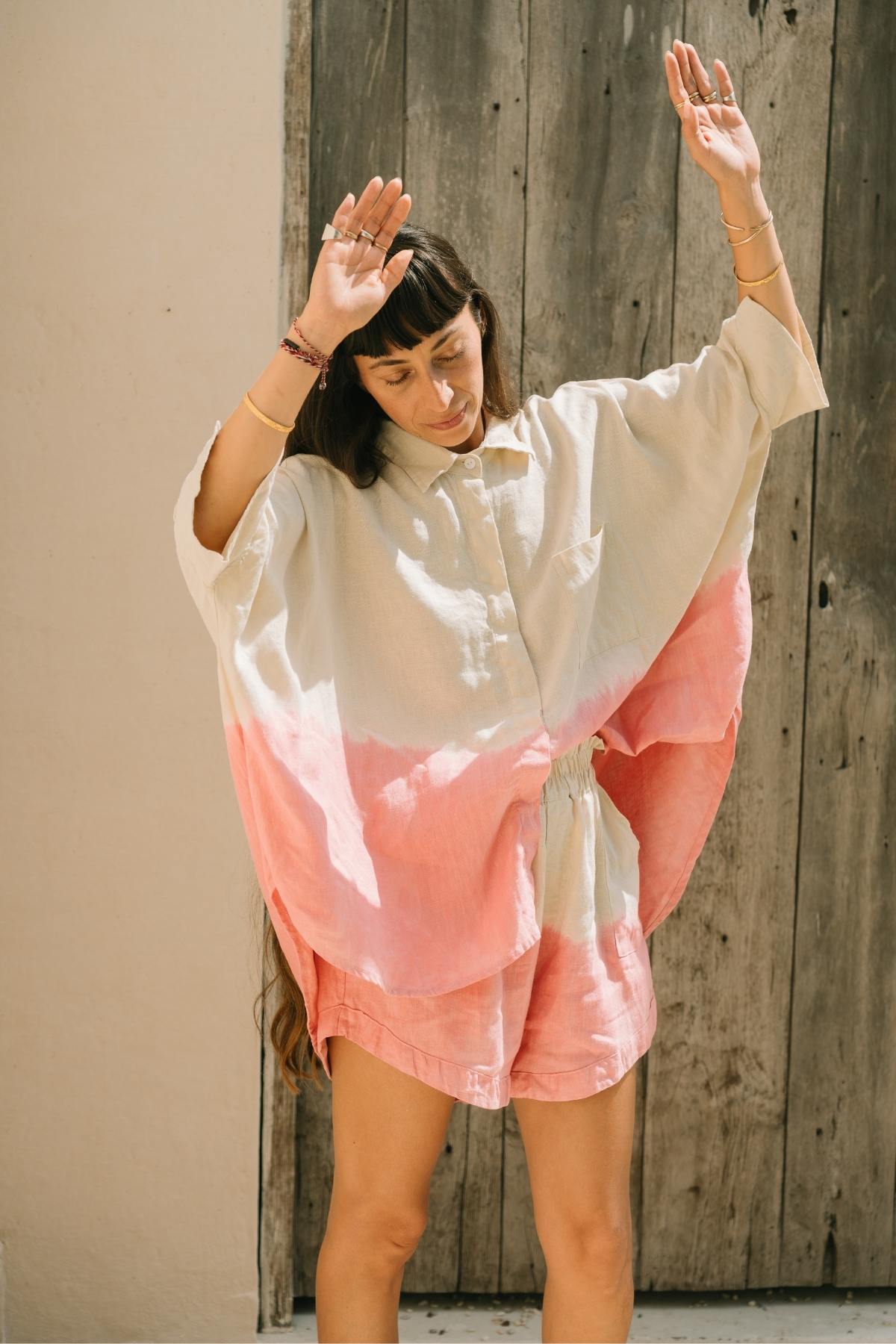
Two pieces that work as one. The Suka Button Down Set — or the Nidra, its more refined sister — answers every occasion Bali offers: the morning yoga class, the market walk, the sunset dinner, the unexpected ceremony you are invited to by a woman you met at a watering hole who turns out to have lived there for thirty years and knows things about the island that no guidebook has ever touched.
A Kaftan
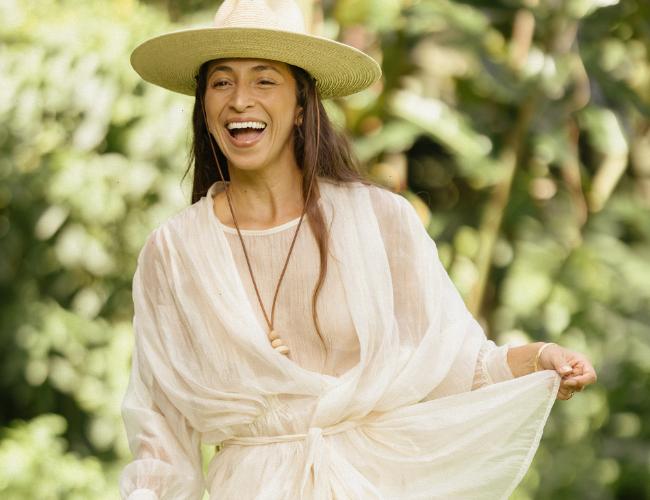
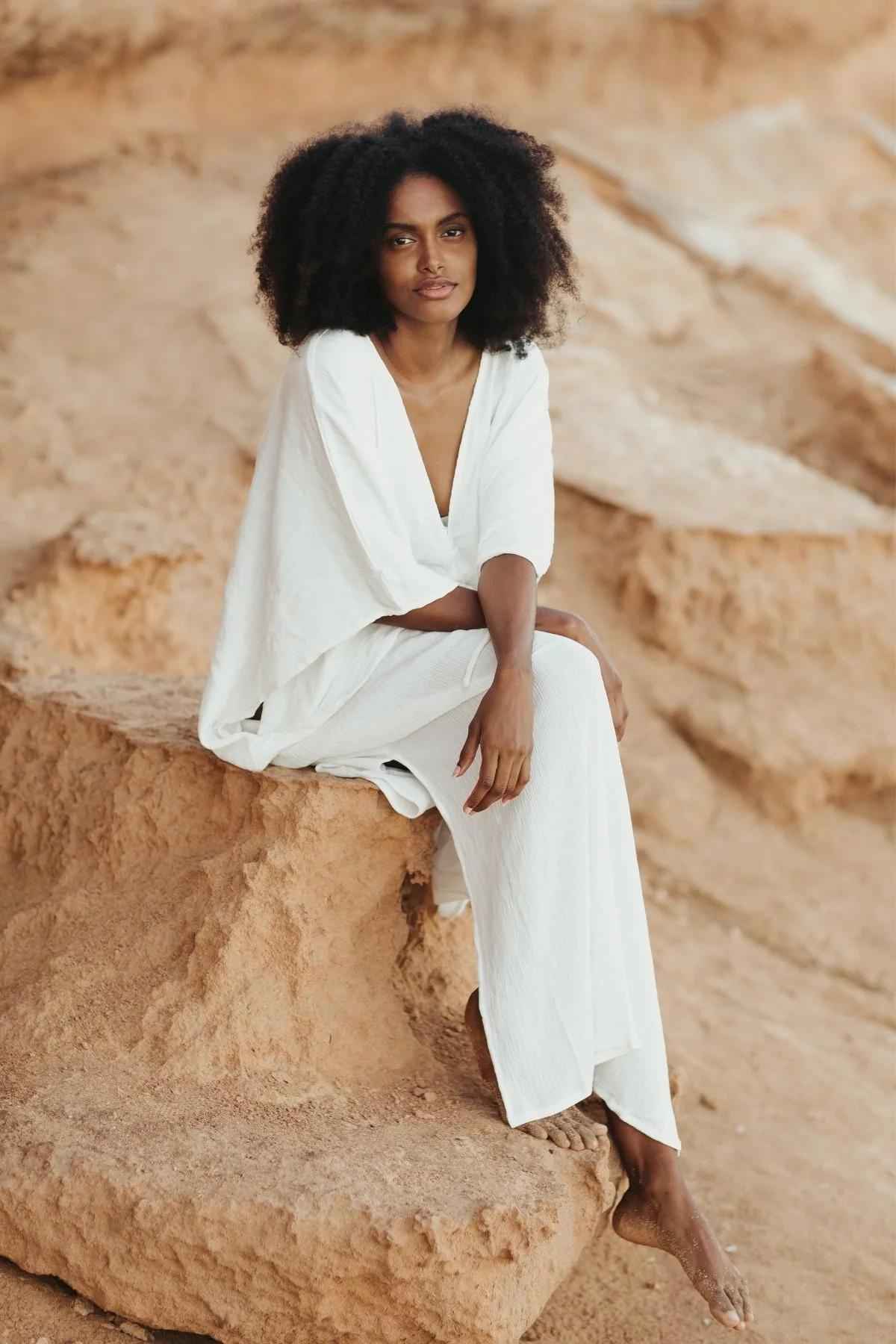
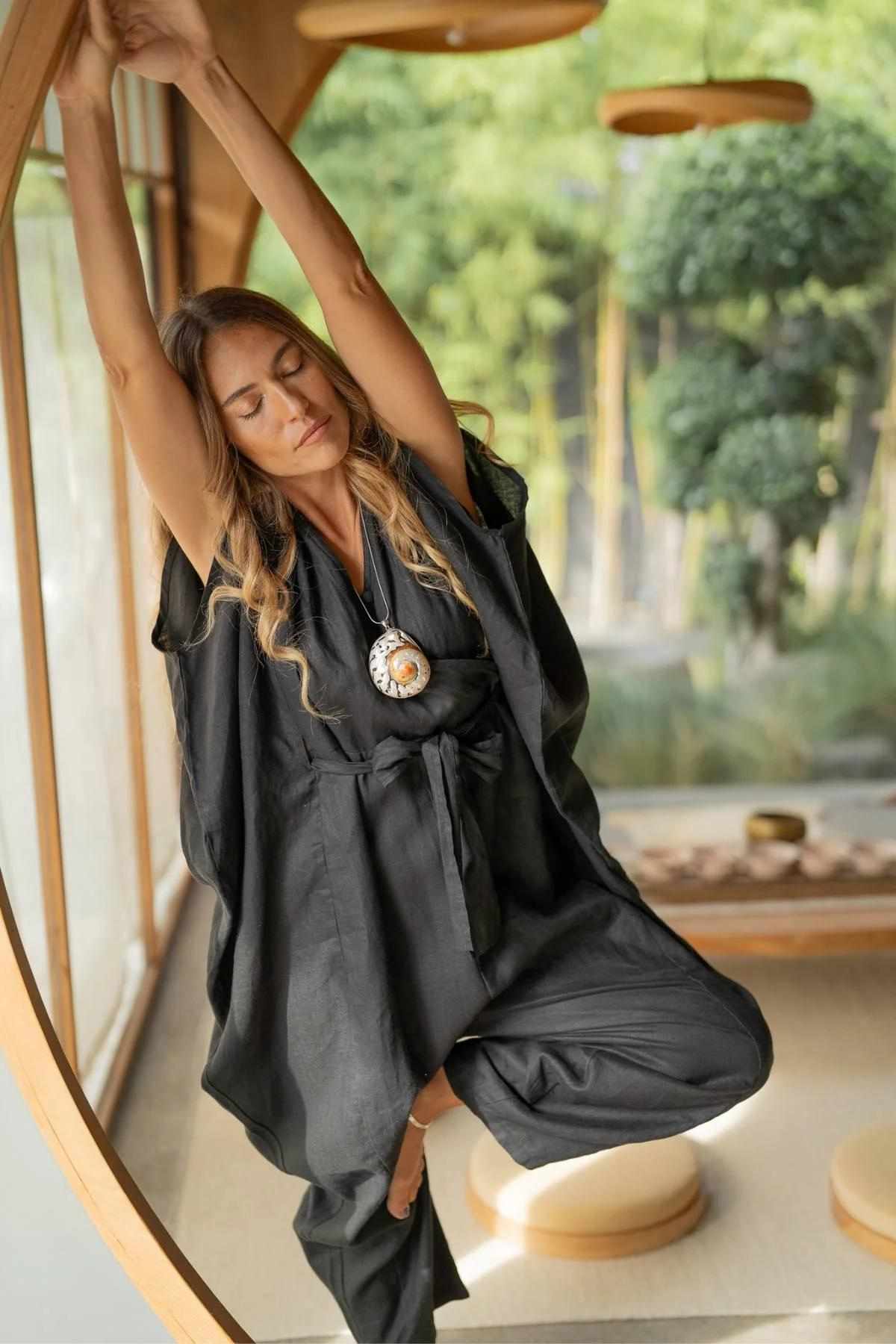
The kaftan is not a beach cover-up. In Bali, it is a garment with genuine cultural weight. Ceremonial dress across Southeast Asia has included the kaftan silhouette for centuries, and wearing one in Bali is less about fashion and more about being in conversation with a tradition that is still alive and present. The Virgo Moon Kaftan in linen. La Majia in four colorways. These are not things you retire at the end of a holiday. They are things you bring back with you and wear at home when you are trying to remember how Bali felt.
One Wrap Skirt
Versatile, adjustable, appropriate for temples, and the kind of piece that, paired with a simple linen tank, covers every casual occasion Bali presents. The Shanti Wrap Skirt in linen. Made to adjust to the body through every season of life, which is also exactly how Bali treats you.
Colours That Belong to Bali
Bali is not a neutral place. It is an intensely coloured one. The offerings on the street — tiny woven palm-leaf baskets holding flowers in pink and orange and yellow and white — are made fresh every morning and placed everywhere: on doorsteps, on the roofs of cars, at the foot of statues, in the water. The temples are draped in black and white checked cloth. The rice fields are a green that has no equivalent in the rest of the world.
What this means for what you wear is that you can be bolder here than you might be at home, and it will not feel like too much. The warm sunset palette — rusts, ambers, warm creams — reads like the landscape. Botanical colours — the botanical indigos and turmeric golds that have been used in Indonesian textiles for centuries — belong here in a way they belong nowhere else. Off white and natural linen are not dull here; they are the colour of the light in the morning before the heat rises.
The colours that belong to Bali are the colours that have always come from the earth there. Botanical, warm, unrepeatable. Our Rainbeau colorway was born from the botanical dye tradition that exists across Indonesia and India. It is not a trend. It is a conversation with a tradition that predates fashion itself.
Dressing for Temple Visits
The only practical rule in Bali is this: when entering a temple or any sacred site, your shoulders and knees must be covered. Most temples provide sarongs for visitors who arrive without one, but carrying your own is a gesture of respect that is noticed.
The practical implication for packing is to include at least one piece that covers the shoulders naturally, or to carry a light scarf or sarong that can be wrapped quickly. A kaftan works perfectly for this. So does a linen set with a longer top. The Suka Button Down worn open over a playsuit covers both shoulders and adds an extra layer of elegance that is entirely appropriate for the temple environment.
Beyond the practical, there is a subtler point about dressing for ceremony: when you enter a space that has been held as sacred for generations, what you wear sends a signal about whether you understand what you are entering. This is not about being formal. It is about being intentional. Bali will teach you this eventually. Dressing for it from the beginning is simply arriving already ready.
What You Will Bring Home
Women who visit Bali, or who live with Bali as an internal reference point, tend to dress differently afterward. Not dramatically. But there is a quietness that enters the wardrobe. A preference for natural things. A resistance to the kind of fast, disposable fashion that was never comfortable and has become, after Bali, genuinely impossible to return to.
This is not a style change. It is a values change that expresses itself through style. Which is, when you strip fashion back to its origins, what clothing has always been for.
What to wear in Bali is, ultimately, whatever makes you feel most like the version of yourself that Bali is trying to introduce you to. Natural. Unhurried. Dressed for ceremony, even when the ceremony is only Tuesday morning and a cup of something warm and the particular quality of light that only exists in that place, at that hour, in that life.
With love from Bali,
Myrah 🤍

|
A Piece for This Threshold New This Month from Bali Shop New Arrivals → |
|
The Muse-Letter Dress for the woman you’re becoming. Join the Muse-LetterUnsubscribe any time. No spam, ever. |










Leave a comment
This site is protected by hCaptcha and the hCaptcha Privacy Policy and Terms of Service apply.