
Linen's Ancient Healing Powers: Why This Sacred Fabric Has Been Worn by Priestesses, Healers, and the Conscious Woman for Thousands of Years
Long before we had the vocabulary of wellness, long before adaptogens and nervous system regulation entered the everyday conversation, women knew something about linen.

They knew it by touch. By the way it felt against skin that was already doing the work of living. By the way a room felt when the curtains were made from it, or a wound healed faster when dressed with it, or a meditation felt deeper when the robe was woven from flax.
What took centuries of intuition, and what modern research is now beginning to name, is that linen is not simply a fabric. It is one of the oldest healing technologies on earth.
What the Ancients Understood About Linen
In ancient Egypt, linen was not available to everyone. It was the fabric of priests, of royalty, of the sacred dead wrapped in it for their journey. The Egyptians were meticulous observers of cause and effect. They used linen bandages not out of tradition but because they watched wounds heal faster, cleaner, with less inflammation and less scar tissue. They associated the fabric with purity not as a metaphor but as a practical reality. Linen stayed cleaner. Linen breathed. Linen did not harbor the things that made bodies sick.
Hippocrates prescribed linen for fever patients in Greece because of its cooling and soothing properties. In the Mediterranean heat, linen was the difference between suffering and relief. Its ability to wick moisture and allow air to move through it made it a clinical tool, not just a fabric choice.
The biblical prohibition against mixing linen with wool in Deuteronomy has puzzled scholars for centuries. But those who study energetic medicine understand it differently. Linen carries a vibrational frequency of approximately 5,000 Hz. Mixing it with lower frequency materials creates an interference pattern. The ancients did not have the instruments to measure this. But they noticed the effect, and they encoded the knowing into law.
The Science of Linen's Healing Properties
We now have the instruments. Research has confirmed what ancient healers observed across cultures and centuries.
Cellular regeneration and wound healing
Studies have shown that linen fibers actively support cell proliferation, the process by which tissue repairs itself. Unlike synthetic materials, which can create inflammatory responses at the cellular level, linen creates conditions where healing accelerates. This is why modern wound care protocols in some European hospitals still use linen dressings for chronic wounds, burns, and post-surgical sites. The fabric is not passive. It participates in recovery.
Antioxidant protection from polyphenols
Linen contains polyphenols and flavonoids, the same class of compounds found in green tea, turmeric, and berries. In the context of a fabric, they work to neutralize free radicals at the skin's surface, protecting cells from the oxidative stress that underlies inflammation, premature ageing, and compromised immunity. Wearing linen is, in the quietest and most consistent way, an act of anti-inflammatory self-care.
Antibacterial and antifungal resistance
The phenolic acids naturally present in flax fibers create an environment inhospitable to bacteria and fungi. This is not a coating or a treatment. It is the fiber itself. Linen does not breed the microbes that cause odor, infection, and skin irritation. For women living in humid climates, practicing daily movement, or simply wanting their clothing to be an honest material, this is not a minor detail.
High vibrational frequency
The crystalline molecular structure of flax fibers gives linen one of the highest natural frequencies of any textile, around 5,000 Hz compared to cotton at 100 Hz. The human body in health resonates at approximately 62-68 Hz. High frequency materials support rather than suppress this resonance. Women who practice Kundalini yoga, who meditate, who have spent time studying the body as an energetic field, will recognize this immediately. The fabric you wear either supports your practice or competes with it.
Why Linen and the Sacred Feminine Have Always Found Each Other
It is not accidental that linen appears at every threshold moment in human history. The birth cloth. The burial shroud. The garment of ceremony. The fabric of the woman who knows that what she puts on her body is not separate from who she is trying to be in it.
The sacred feminine has always understood the body as a vessel, not something to be transcended but something to be honored as the container of everything that matters. What touches that container matters. The energy of its making matters. The hands that made it matter.
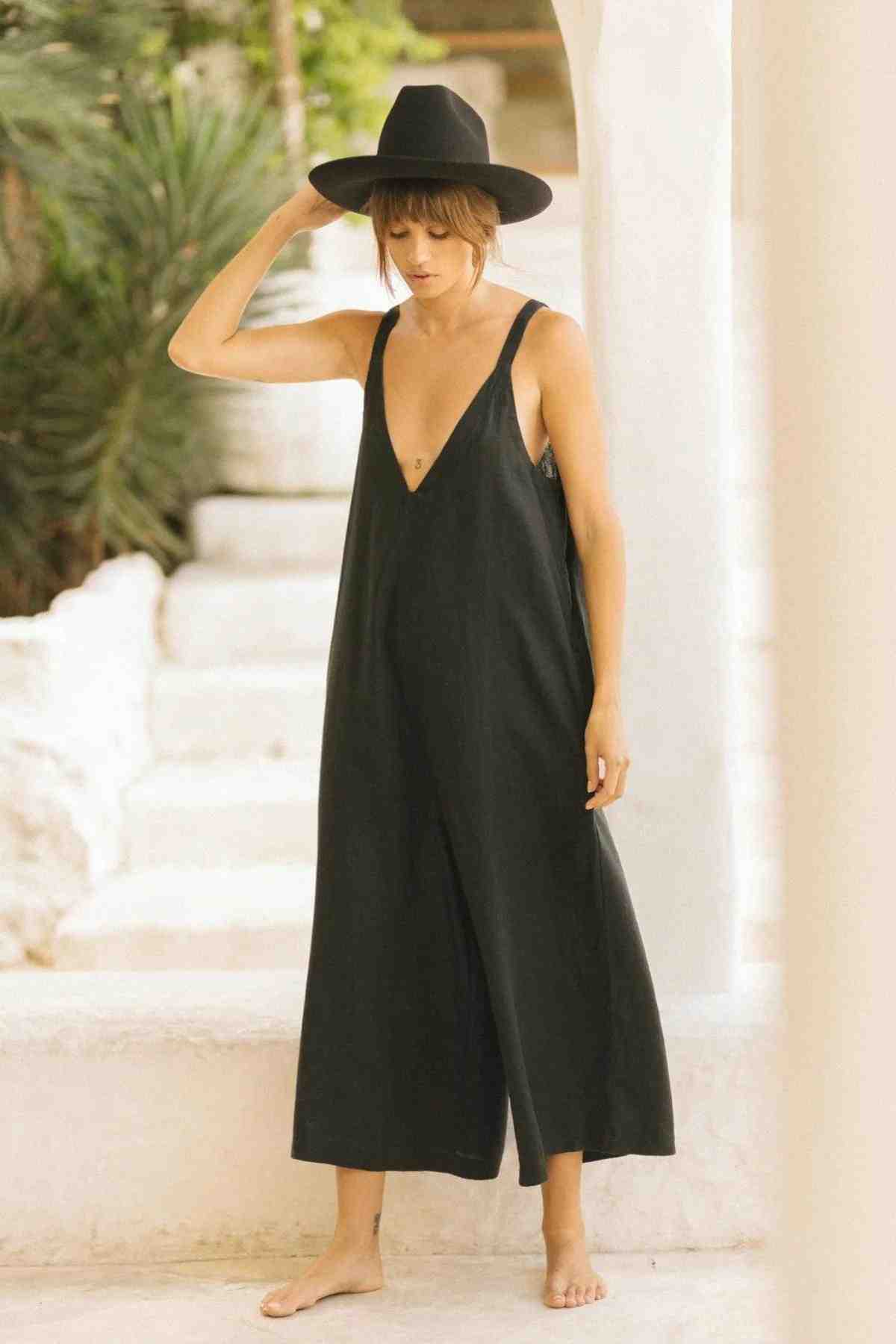
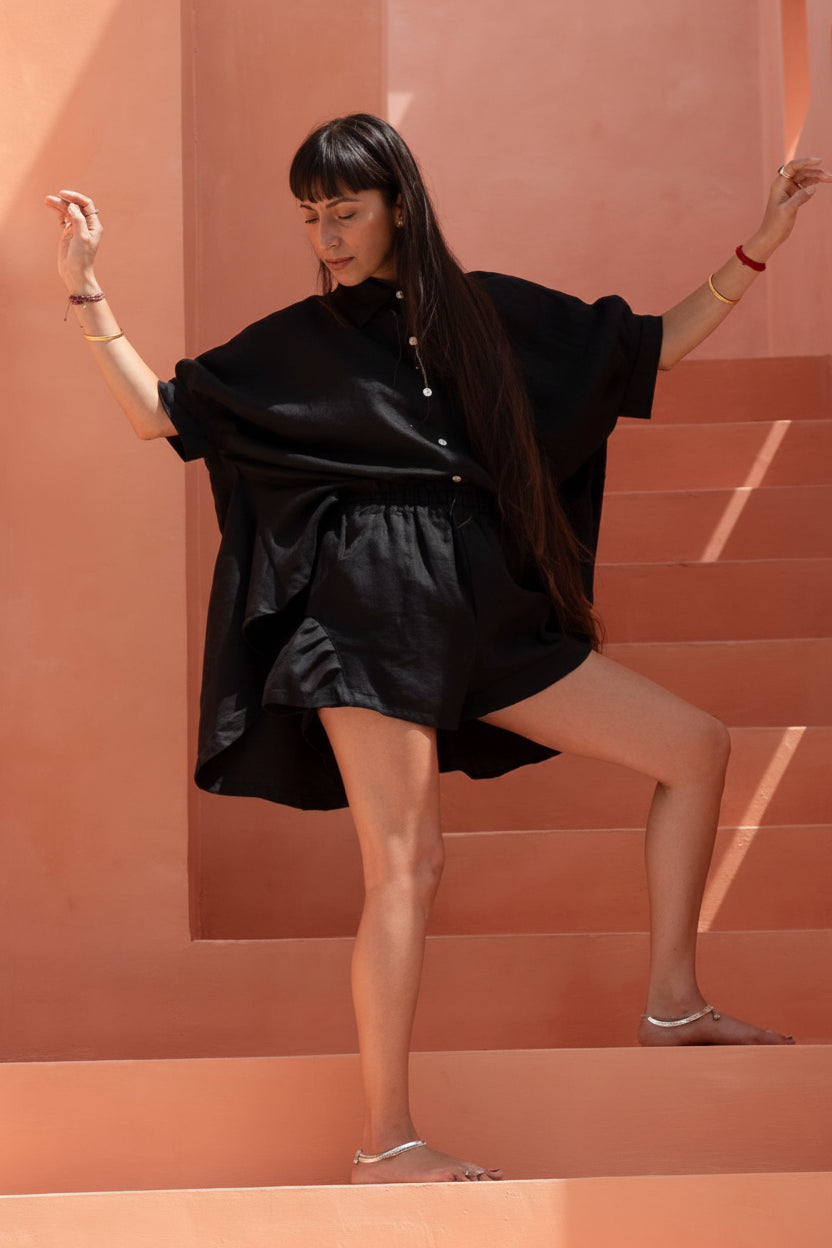
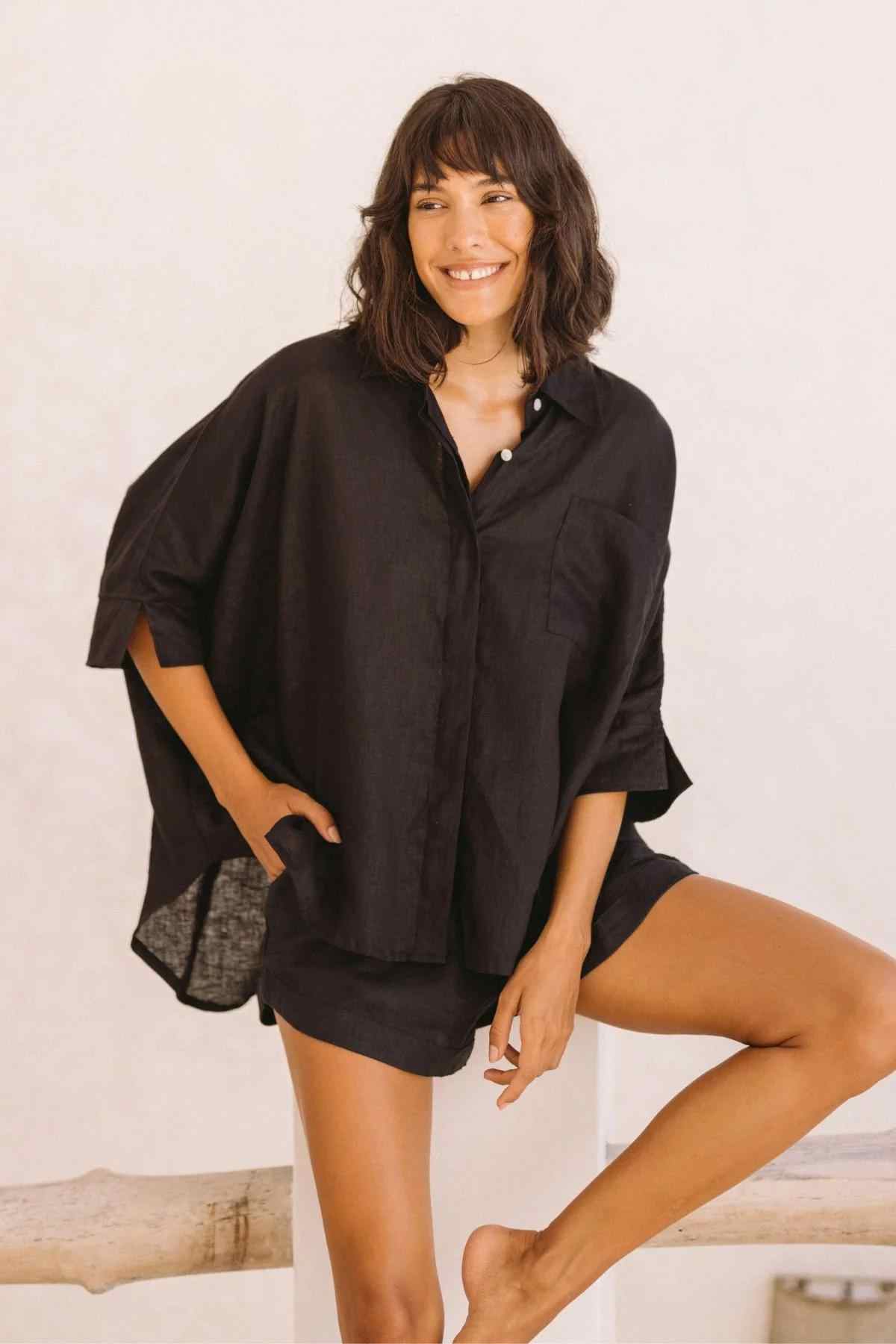
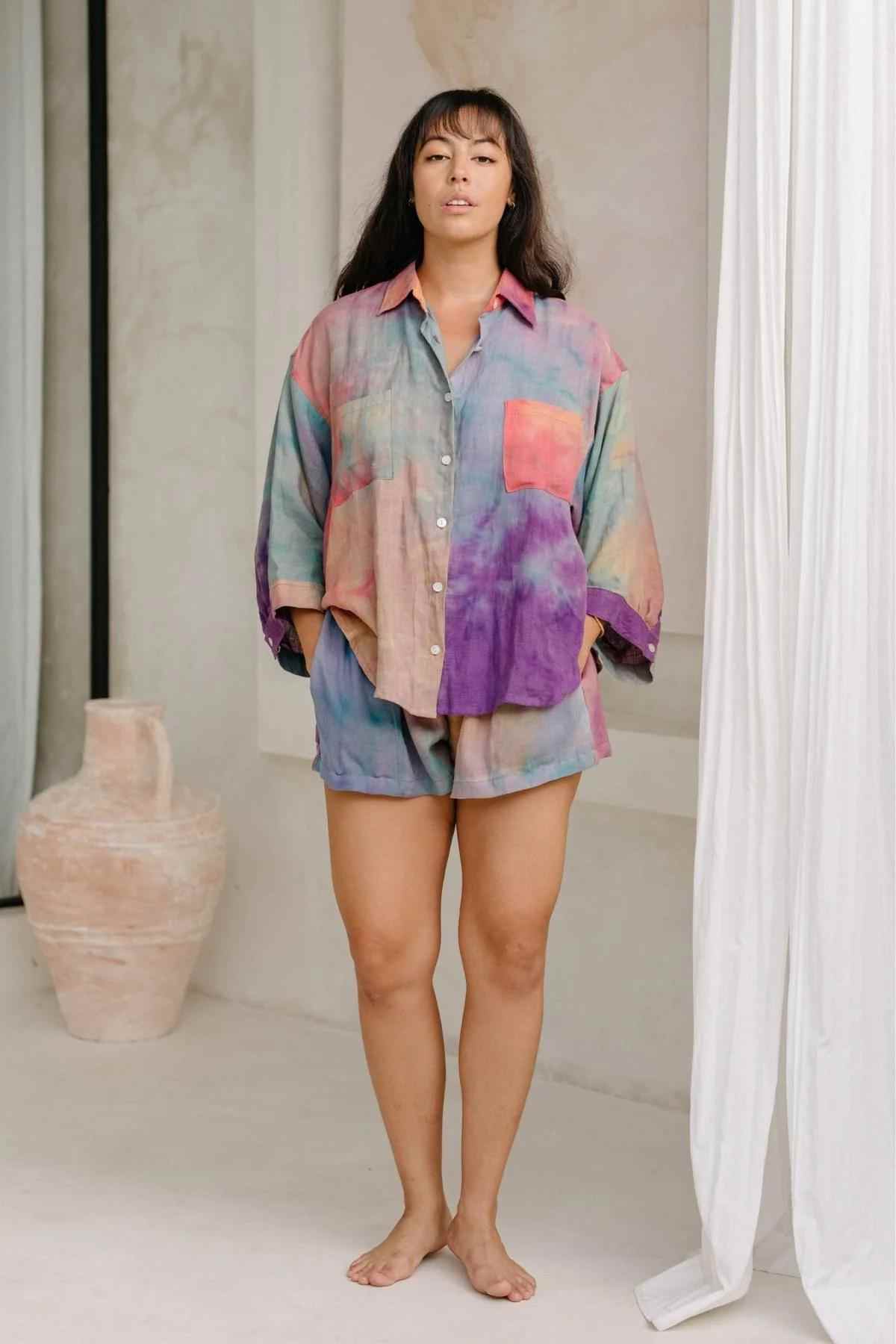
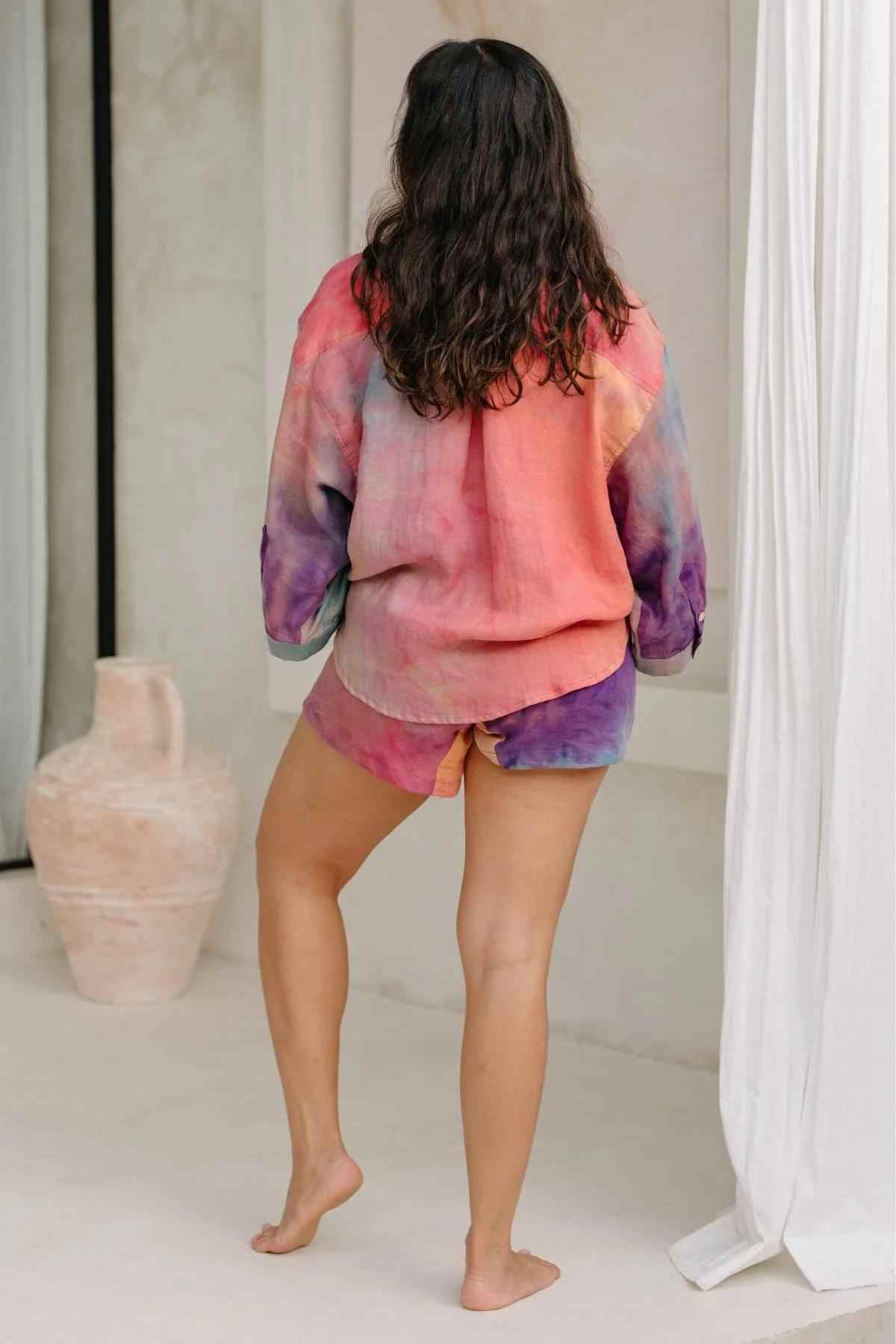
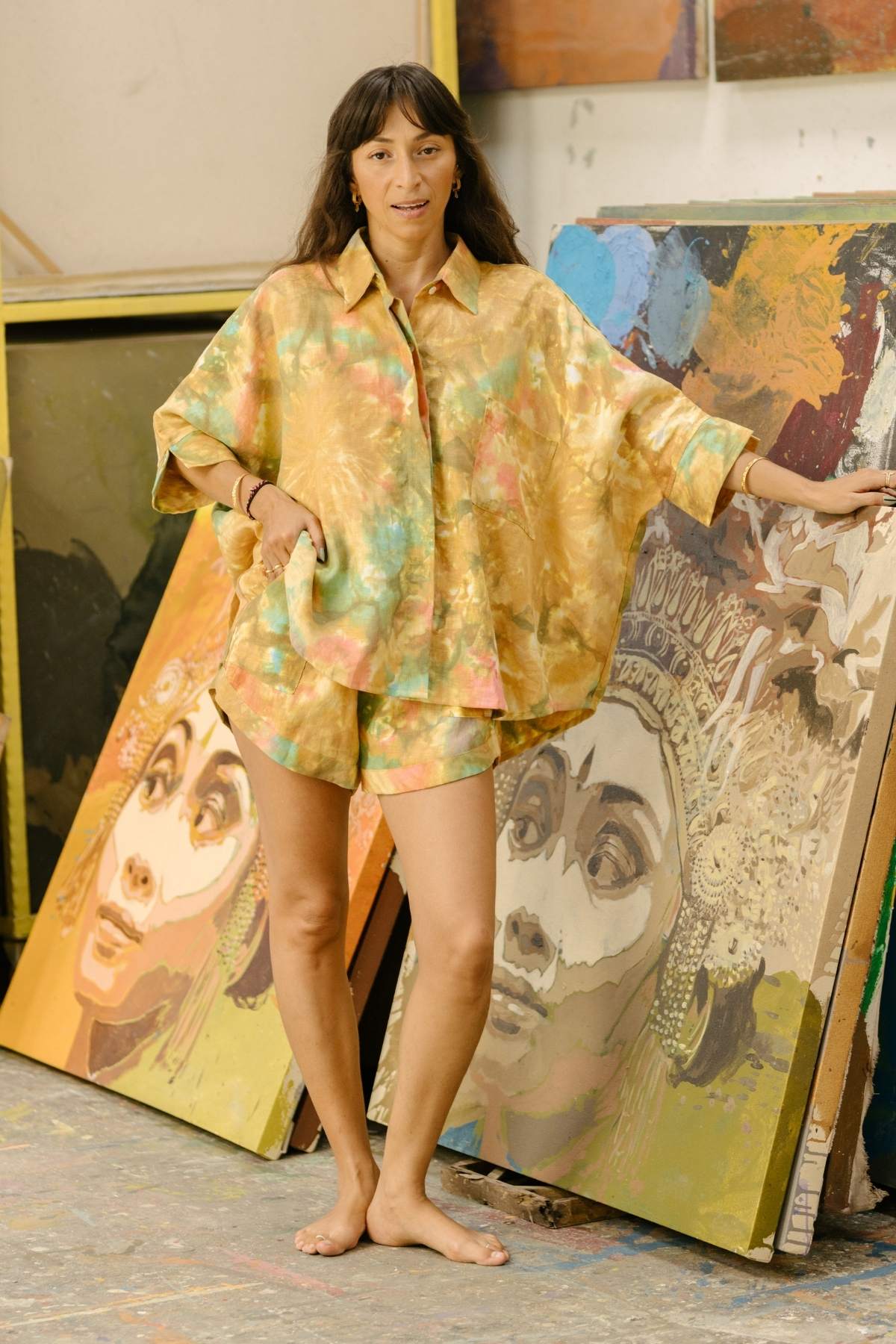
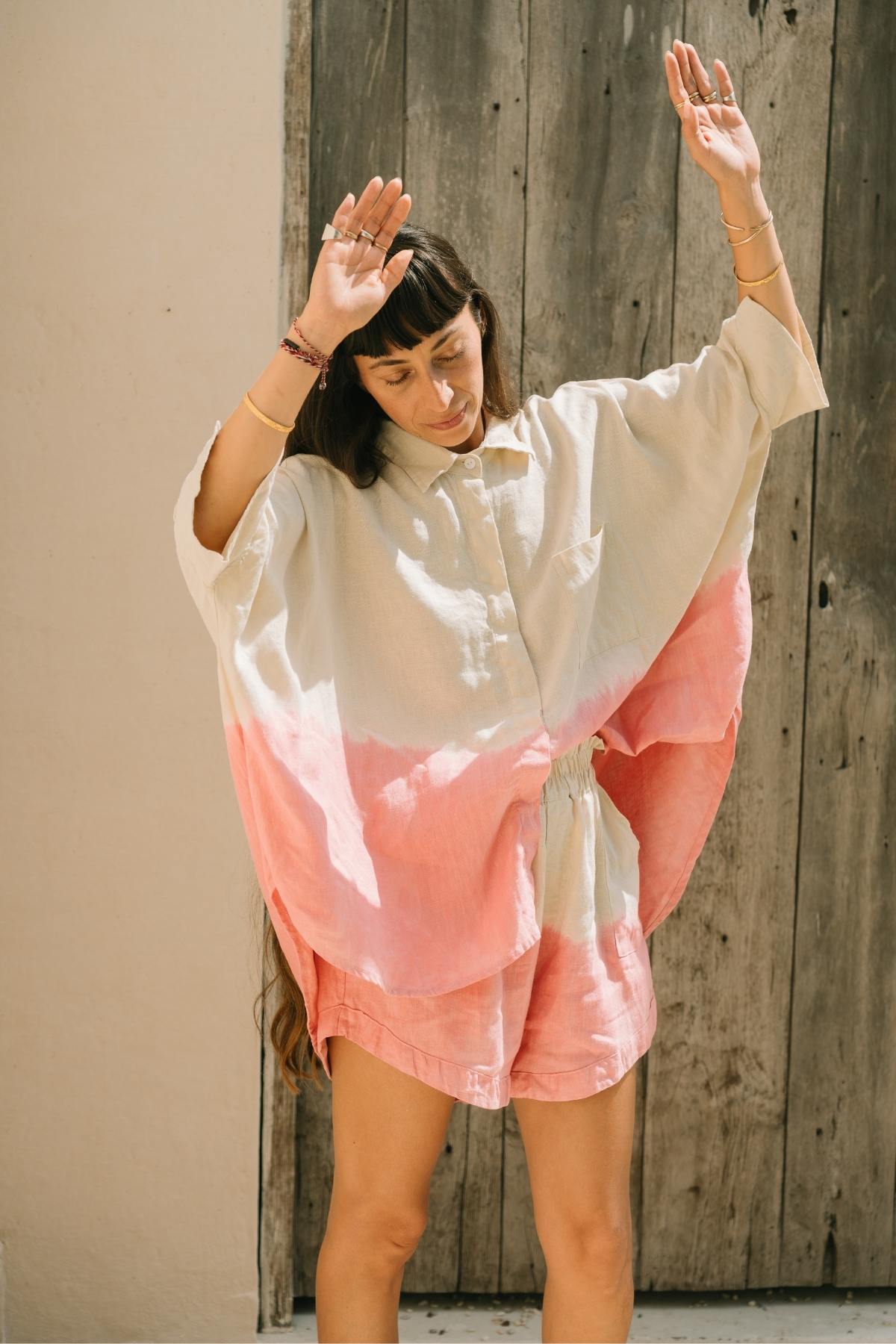
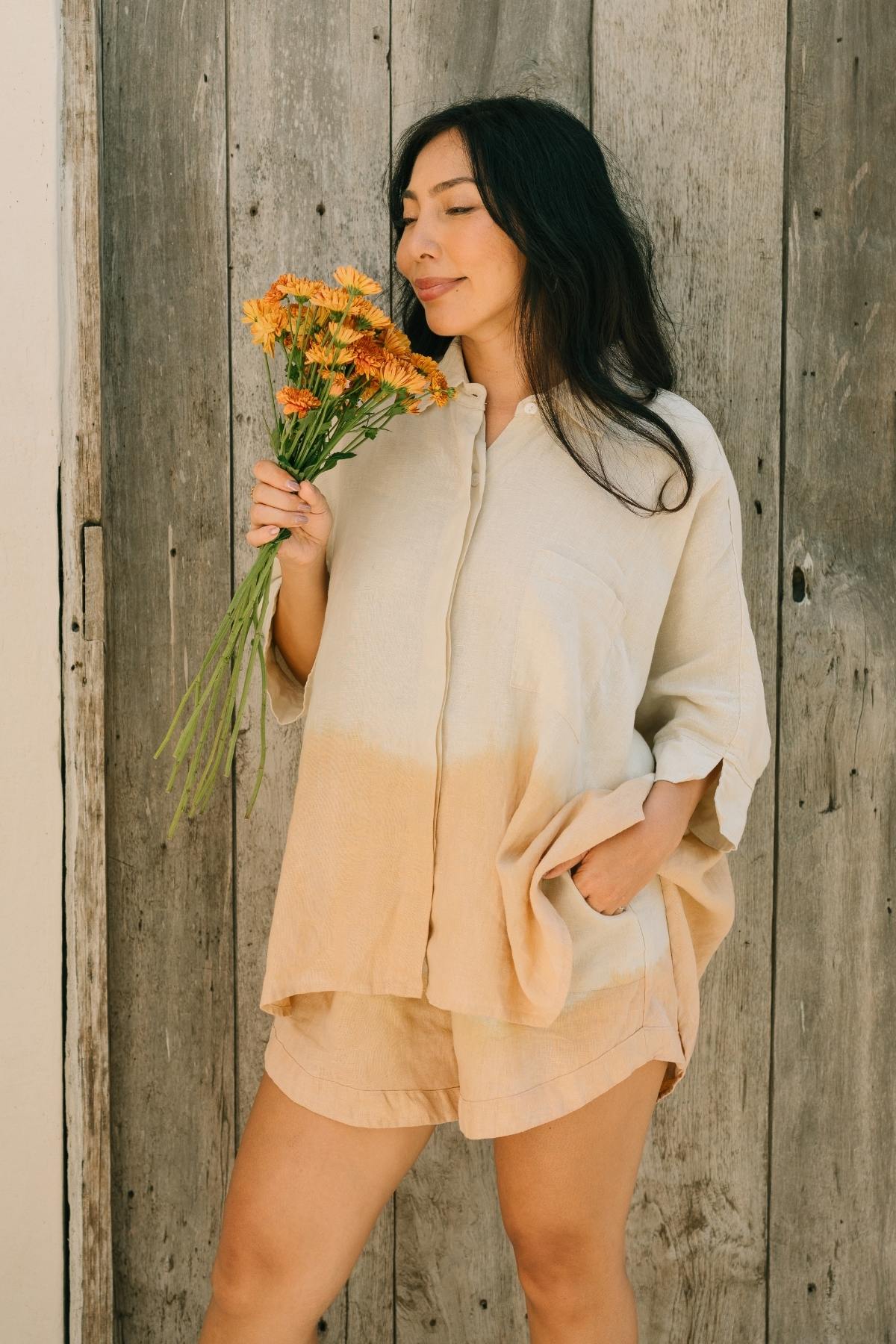
At Myrah Penaloza, this is why we make everything slowly. Every piece in our collection is stitched by hand in Bali, by approximately thirty artisan families working from their own homes, paid a living wage for work done at their own pace. We use botanical dyes derived from plants grown in Indonesian soil. We use natural linen and cotton. Nothing synthetic. Nothing that interrupts the frequency of the material or the frequency of the woman wearing it.
You can read more about our slow fashion practice and the story of how we began on our about page.
The Woman Who Chooses Linen Is Returning, Not Arriving
The women who discover our pieces and come back again, many of them on their fourth, sixth, tenth purchase, tell us a version of the same thing. The minute I put it on, I felt like myself.
Not a better version. Not an improved one. The one underneath. The one that was always there, waiting for the right container.
This is what linen does when it is made with intention. It does not ask you to become something. It meets what you already are. The healing properties of linen are, at their deepest level, a kind of recognition. The fabric recognizes the body. The body recognizes the fabric. Something that was braced softens.
A Piece for This Threshold
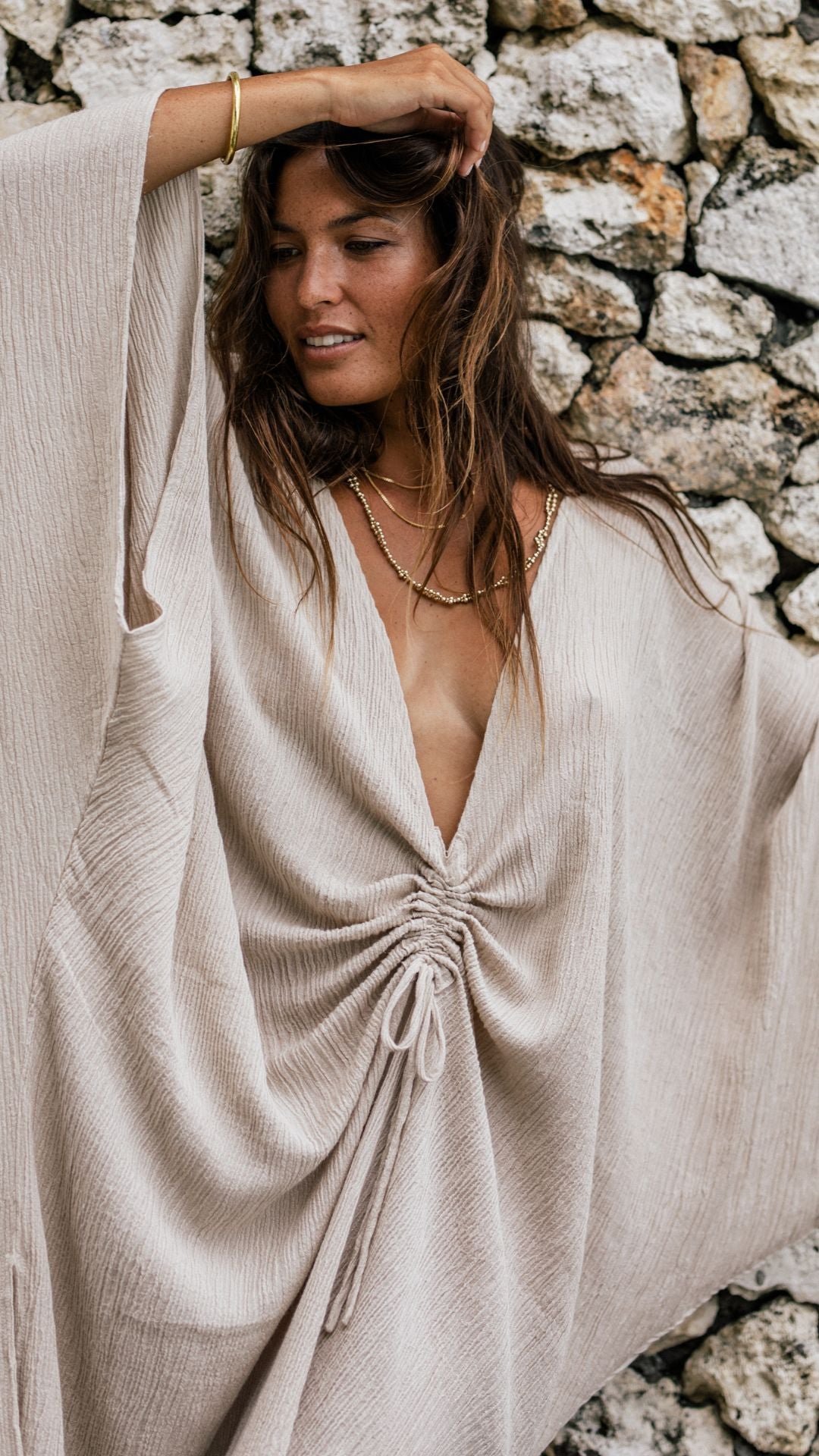
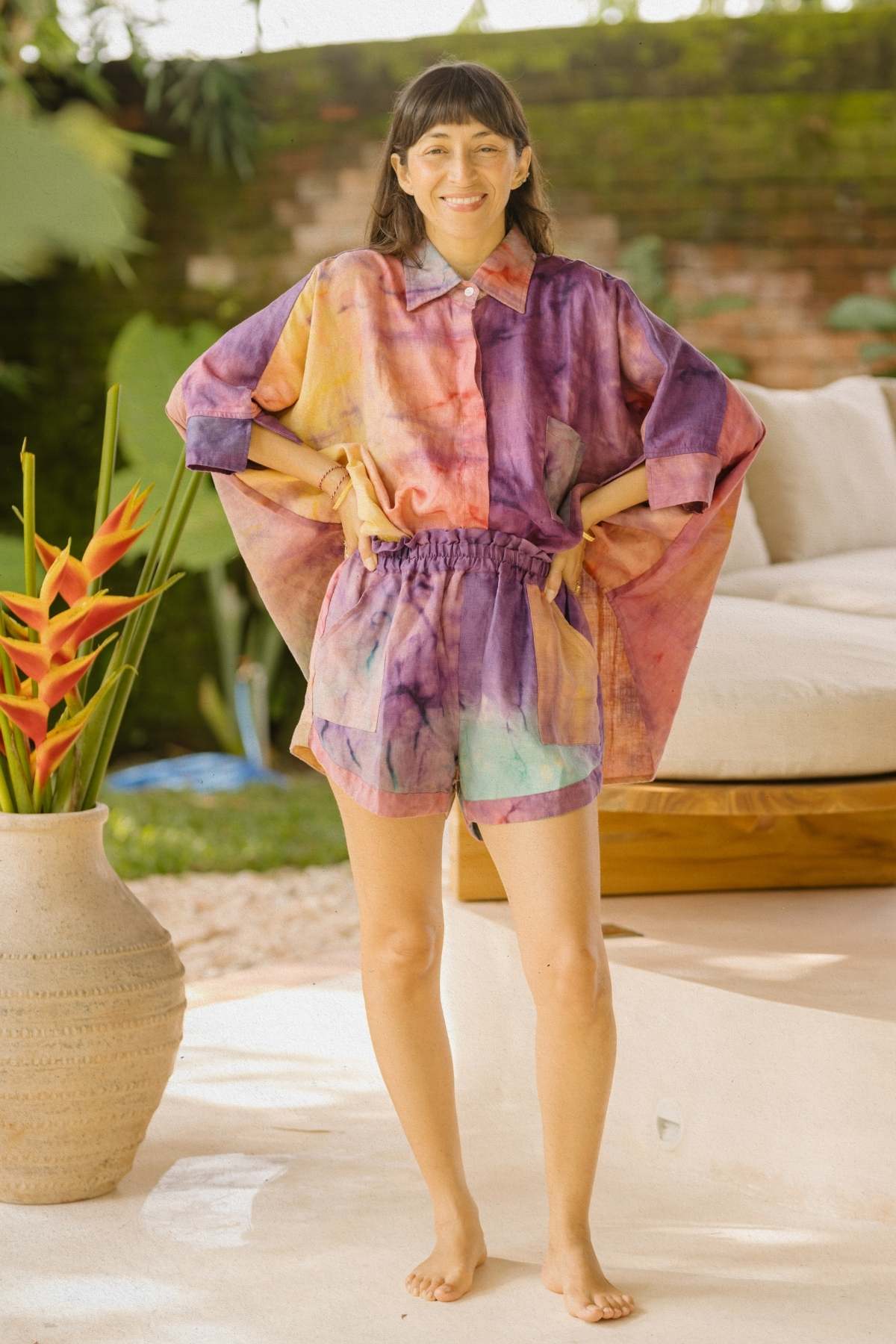
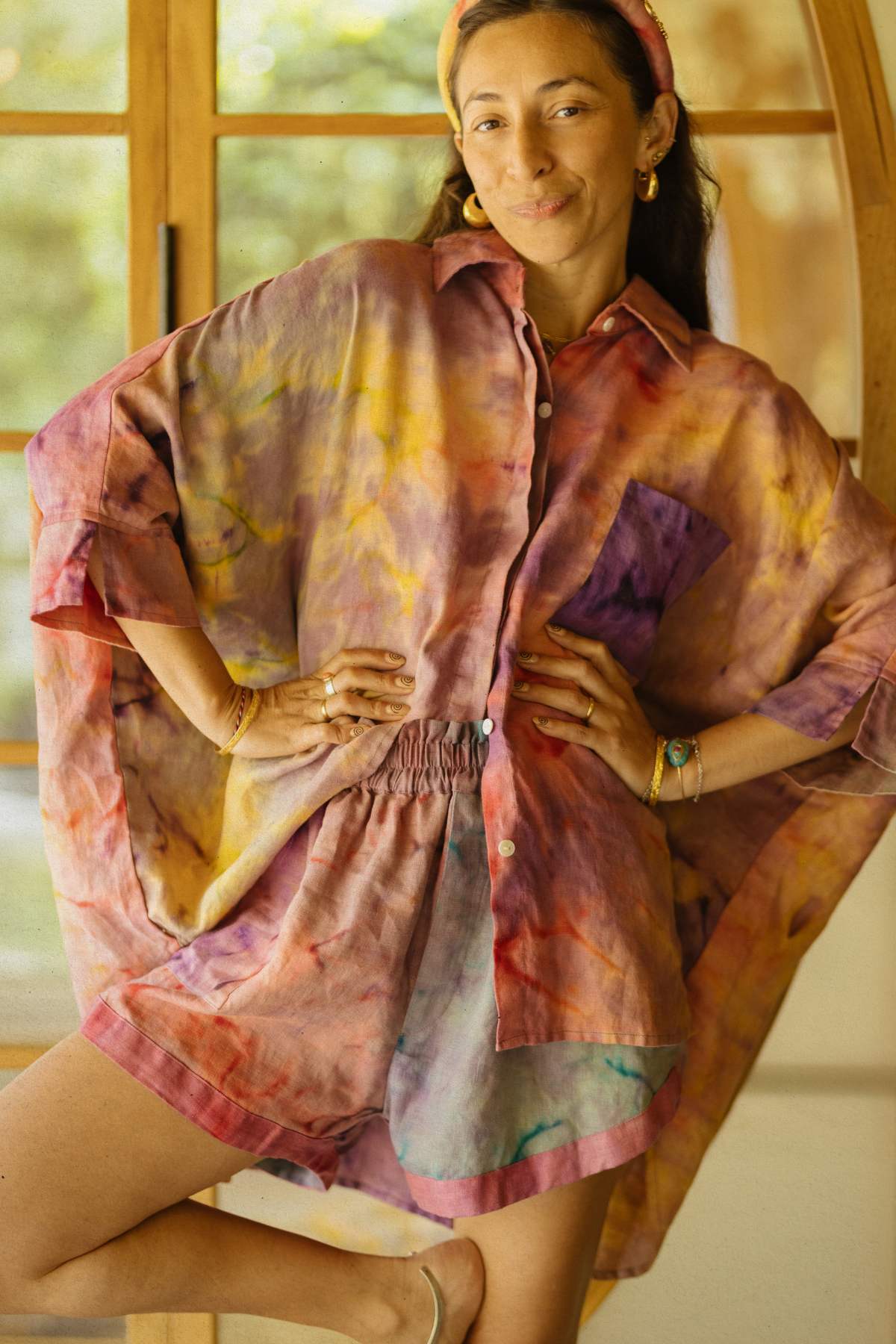
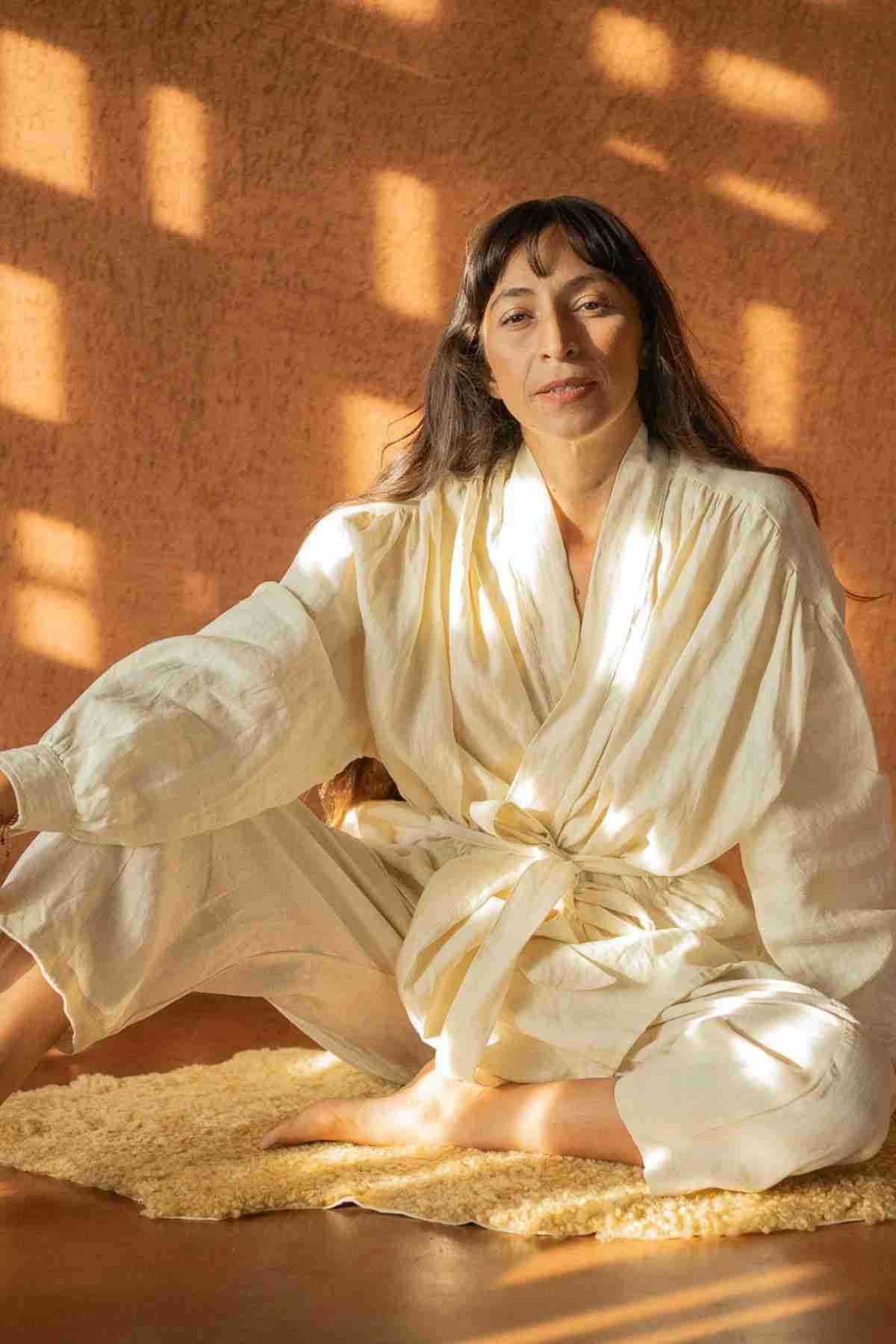
The Virgo Moon Kaftan is the piece in our collection that women return to most consistently. It is not the newest. It does not change between seasons. It is the one I have watched women put on and visibly change. Not perform. Change.
Wide, unhurried, made from natural linen in small batches by our Balinese artisan families. The Virgo Moon Kaftan moves like a ceremony. It is the garment for the woman who has stopped trying to arrive and is ready to simply be where she is.
In every colorway we have made it, the response is the same: it is the only piece I wear on retreat. I wore it to my sister's wedding and three women asked where it came from. I sleep in it. I meditate in it. I cannot explain it, it just feels right.

Handcrafted in Bali · Small batches · The piece women return to
If you want to explore what ancient wisdom and modern slow fashion look like together, begin with our new arrivals or our most-loved pieces.
The Muse-Letter
Dress for the woman you're becoming.
Every week from Bali. Astrology, slow living, sacred feminine, and the pieces we're making by hand. A letter, not a sales pitch.
Unsubscribe any time. No spam, ever.




Leave a comment
This site is protected by hCaptcha and the hCaptcha Privacy Policy and Terms of Service apply.