


The Slow Fashion Supply Chain: What Ours Actually Looks Like and Why It Matters
Supply chain is not a romantic word.
It sounds like logistics. Like spreadsheets and shipping routes and compliance audits. It does not sound like a woman in Pererenan finishing a hem by hand at her kitchen table while her daughter does homework across the room.
But that is what our supply chain is. That woman. That table. That daughter.
Why This Matters More Than Any Certification
The ethical fashion industry has developed an entire vocabulary of certification. Organic certifications. Fair trade certifications. B Corp status. These are not meaningless, but they are systems designed to verify minimums, not to describe maximums.
What we have built in Bali is not certifiable in any straightforward way because it does not fit the categories. We are not a factory with a headcount. We are a network of thirty artisan families, each working from their own home or their own small workshop, each paid directly for each piece, each with a relationship to Mayra that is personal and ongoing and measured not in compliance metrics but in the quality of the working relationship over years.
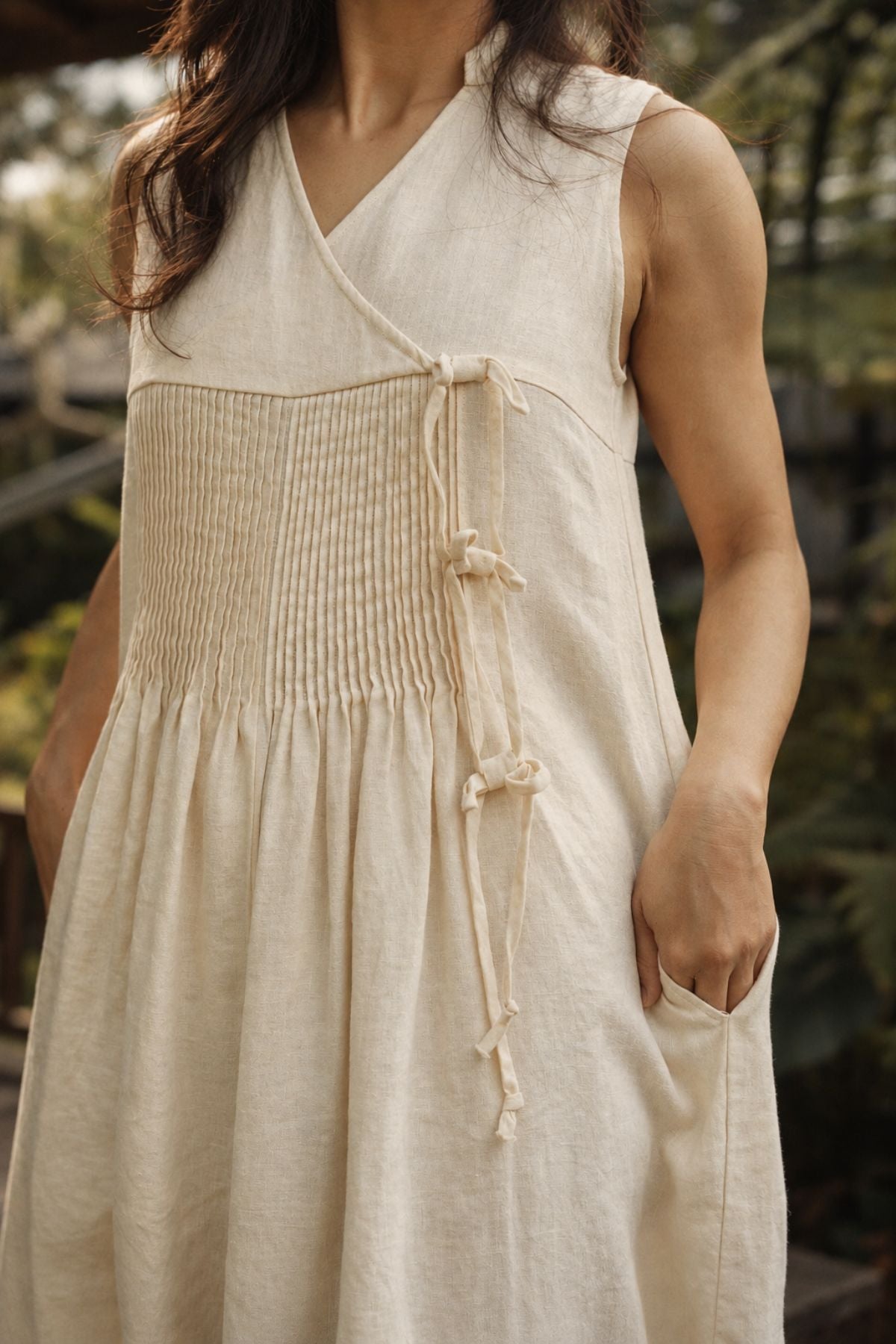
The artisan families we work with are not employees. They are partners. They have creative input. They flag when something is not right. They teach us things about fabric and construction that no design school could. The knowledge flows in both directions. That is what a real supply chain relationship looks like when it is built over years rather than sourced through a supplier directory.
The Thirty Families
Thirty families sounds like a number. It is also thirty living rooms. Thirty sets of hands with decades of accumulated skill. Thirty women and men who know the difference between a piece made properly and one made quickly, and who have chosen, every day they have worked with us, to make it properly.
The senior makers among them have been with the brand since the beginning. They know our aesthetic before Mayra describes it. They will tell her when a design will not sit right, when a seam placement will pull over time, when the fabric grain needs to run differently to achieve the drape she is after. This knowledge is irreplaceable. It cannot be hired. It was built, over years, by showing up with respect and paying fairly and treating the relationship as the asset it is.
When we produce a new style, it goes first to the maker whose skill set best matches what the piece needs. The botanical dye work goes to the family who has been dyeing longest. The more complex construction goes to the makers with the most experience. This matching is not formal. It is the result of knowing the people you work with.
What Small-Batch Really Means
We make in small batches not because it is a marketing position but because it is the honest result of working at human scale.
Small batches mean we never overproduce. Every piece made has a reason to exist. If something does not sell, it was made in small enough quantity that the impact is absorbed without damage. No warehouse of unsold inventory. No end-of-season dumping. No markdown spiral that trains customers to wait for the sale.
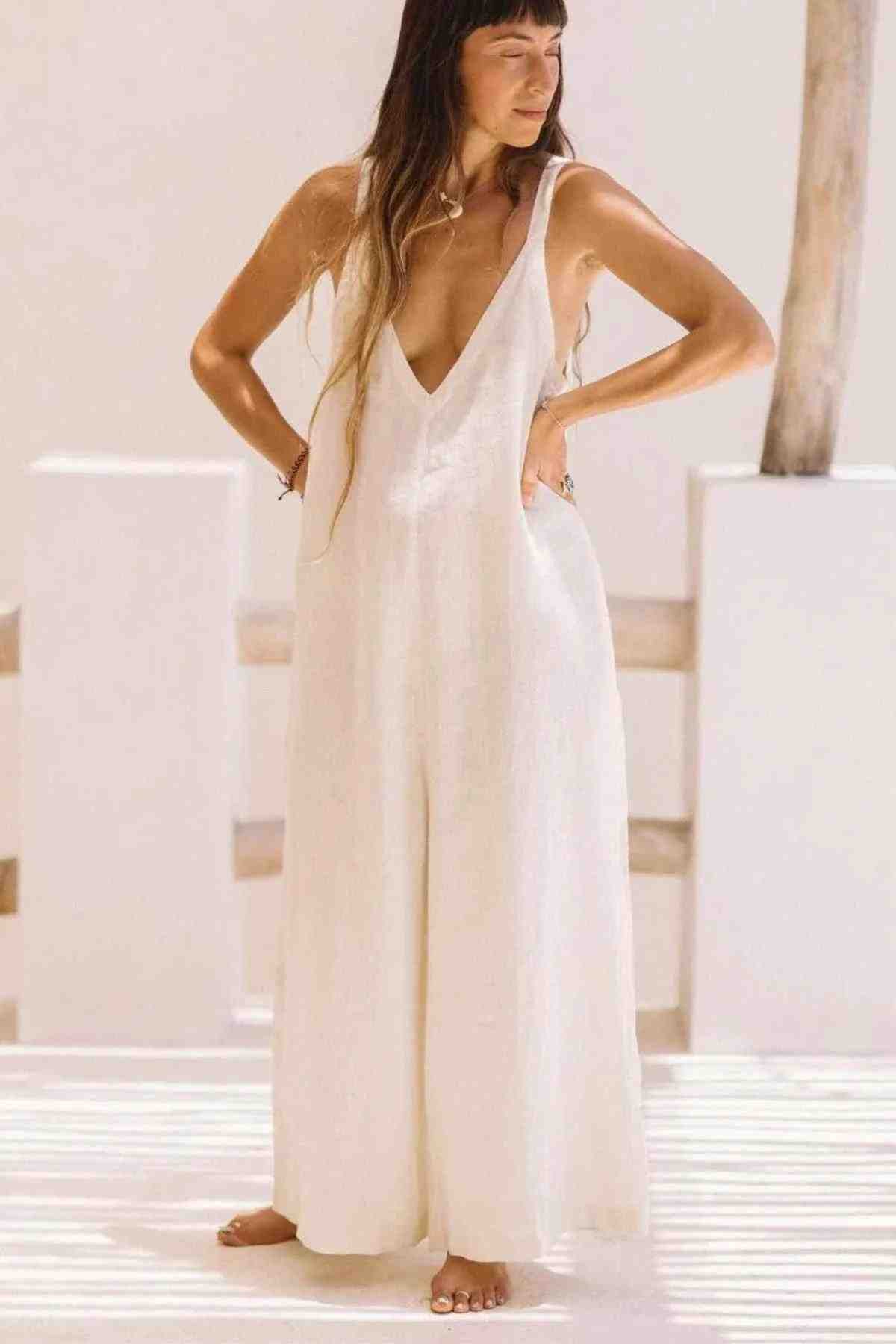
Small batches also mean every piece gets full attention. When you are making six of something instead of six hundred, every seam matters. Every choice about cut and fit and finishing is made with genuine care because there is no scale to hide behind. The quality of attention is baked into the unit economics of how we work.
The Future We Are Building Toward
The conversation about fashion supply chains is finally getting serious. The environmental cost of fast fashion production is documented and undeniable. The human cost is equally clear and equally undeniable for anyone willing to look at it honestly.
But the solution is not more certifications or more compliance frameworks. The solution is the complete restructuring of the relationship between the person who designs, the person who makes, and the person who wears.
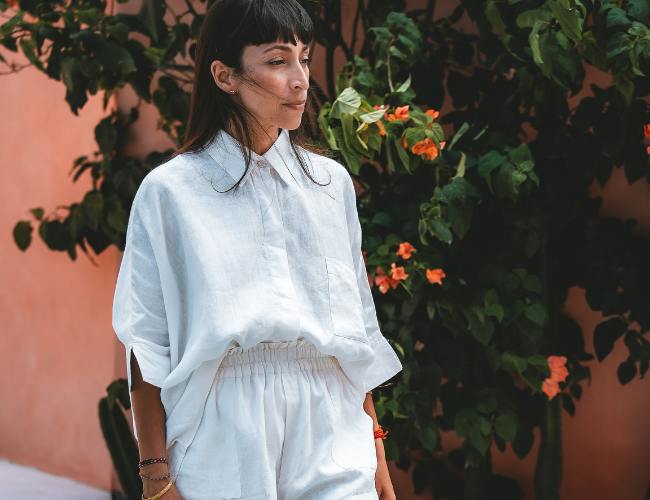
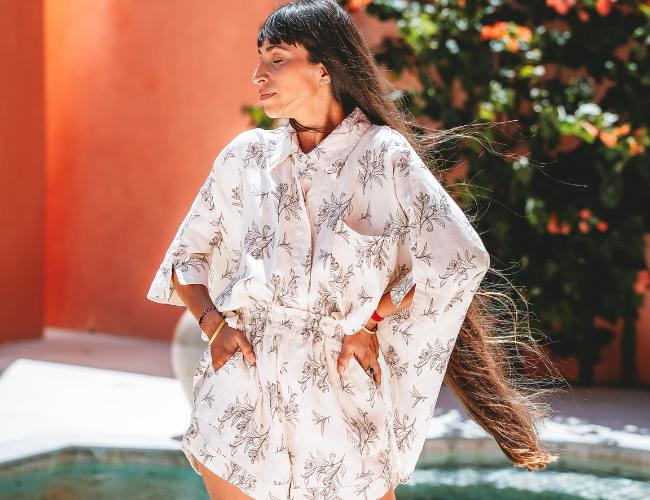
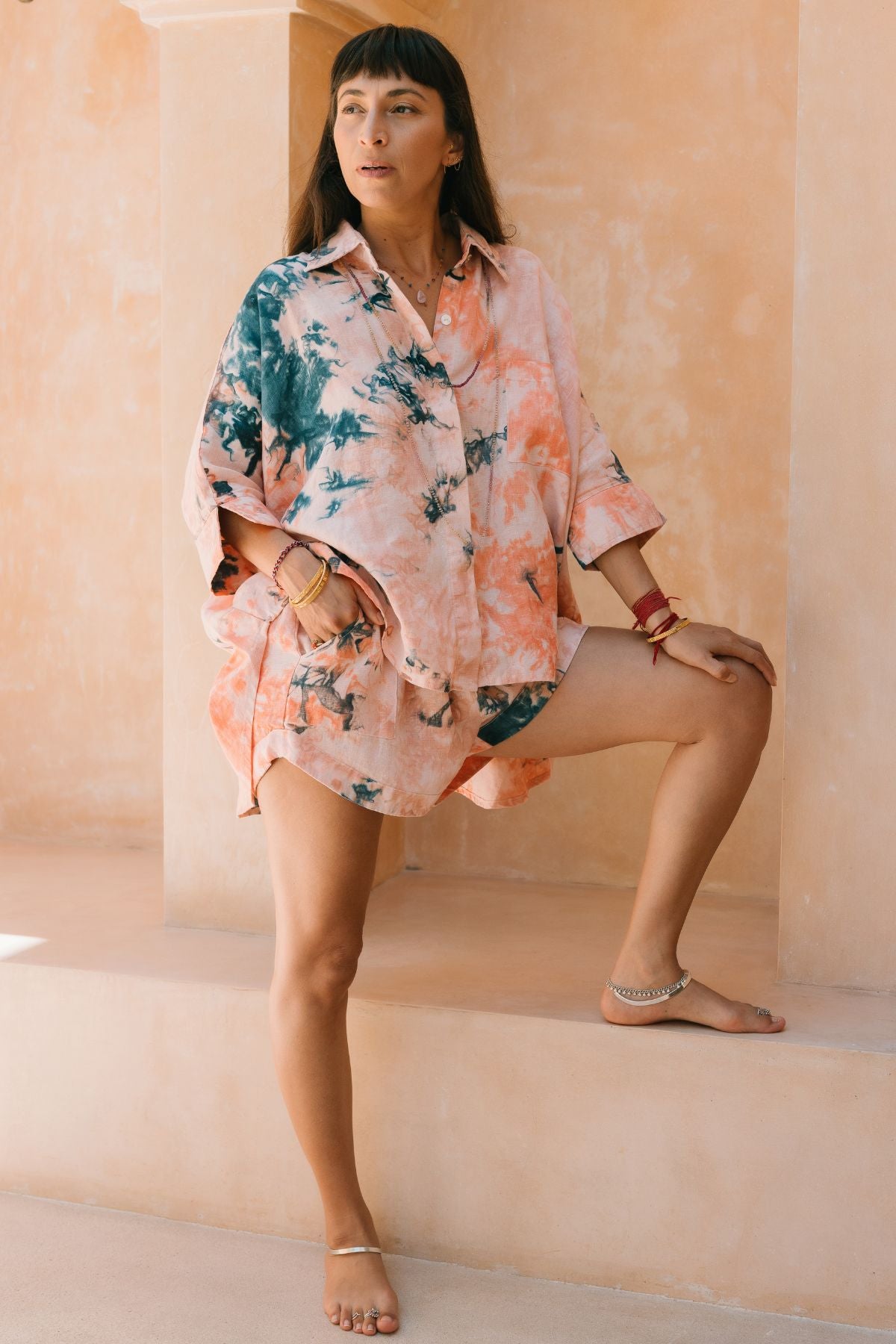
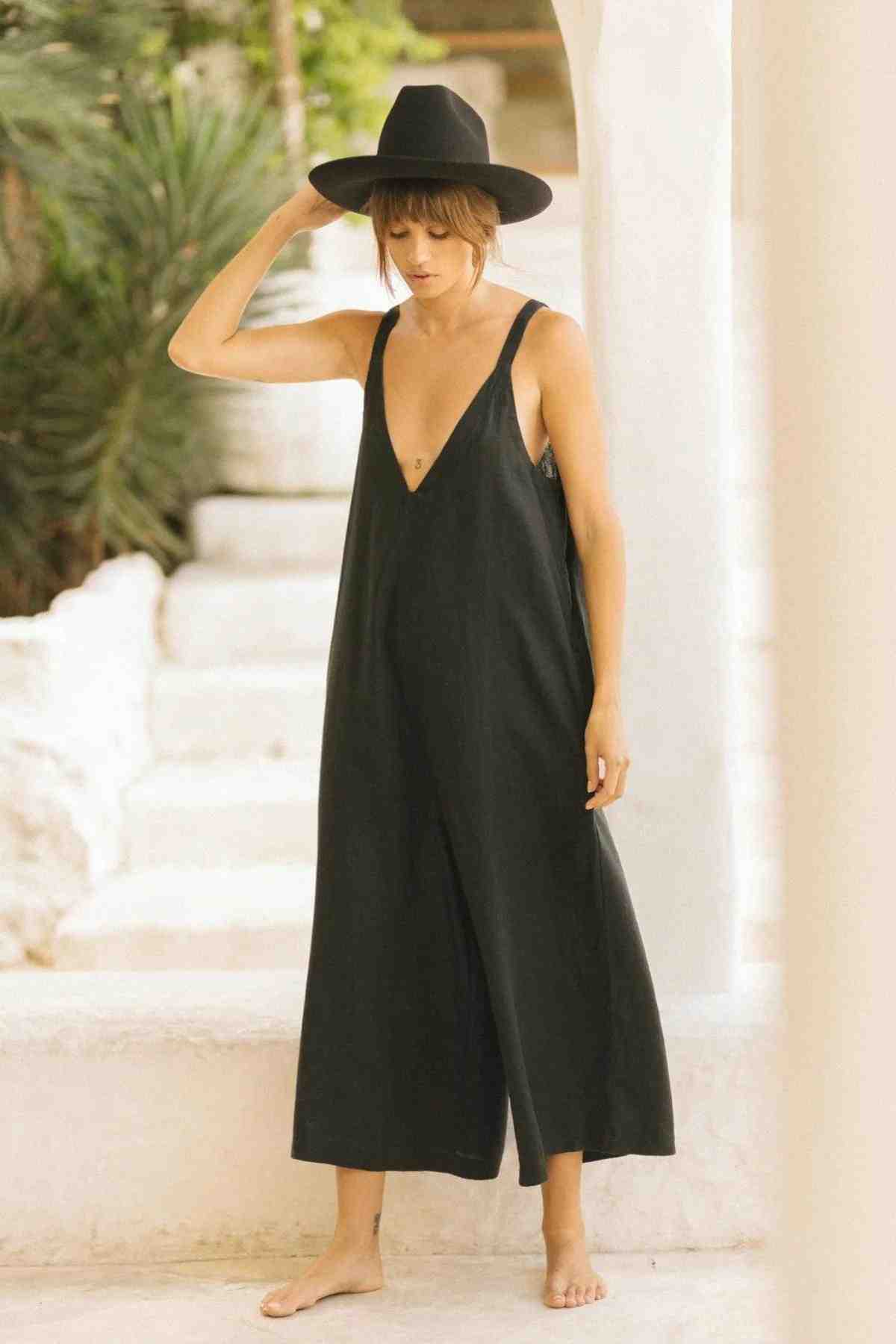
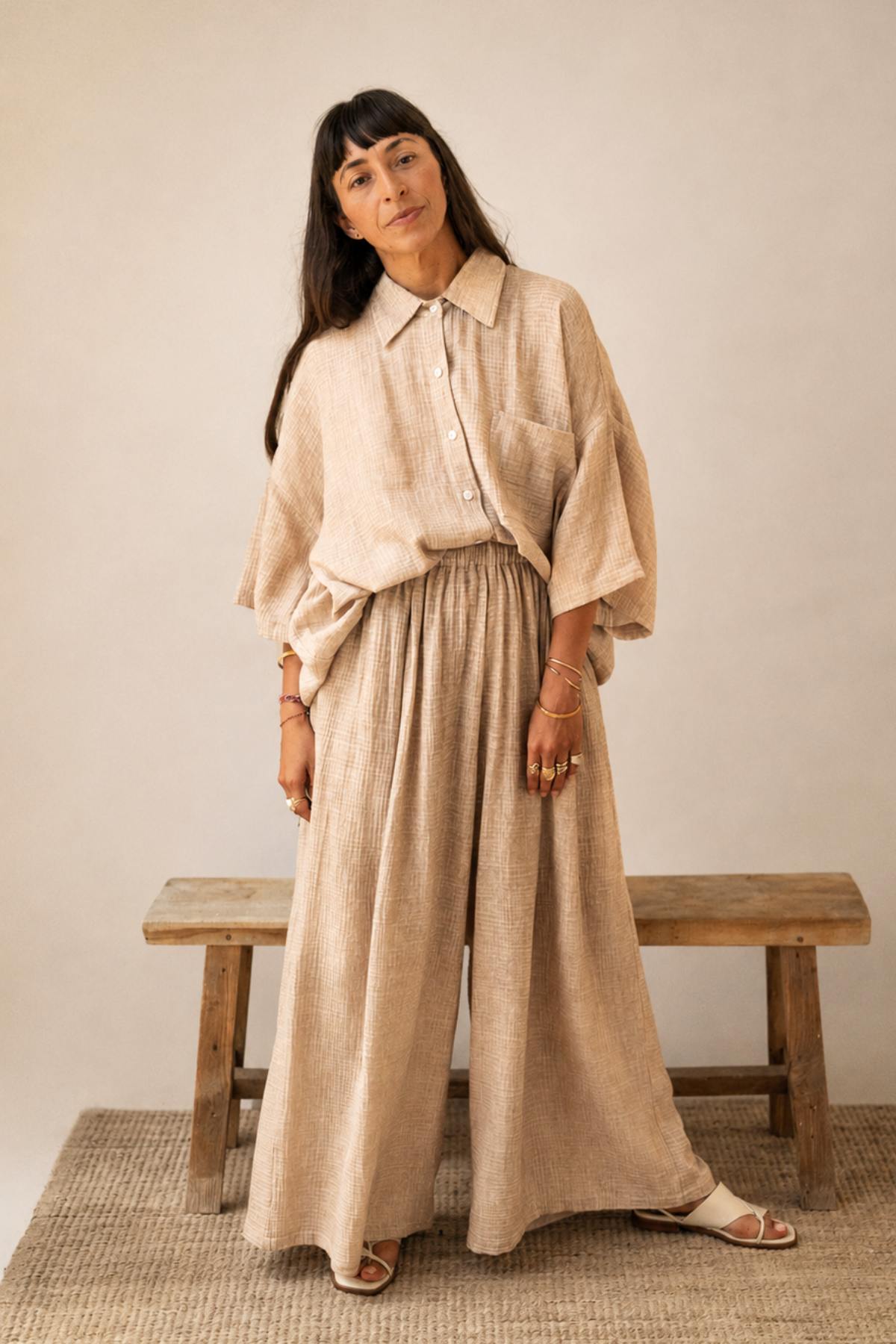
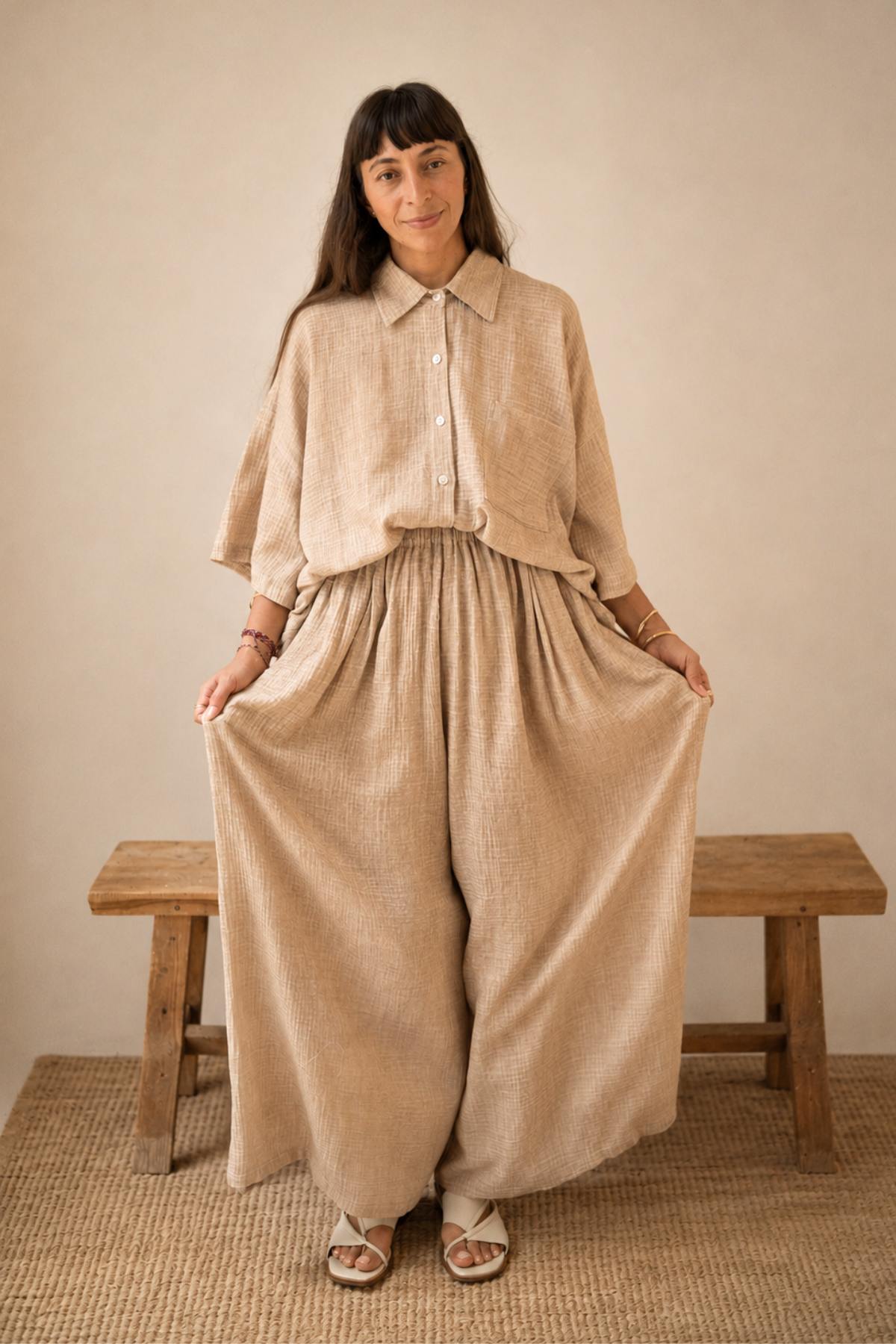
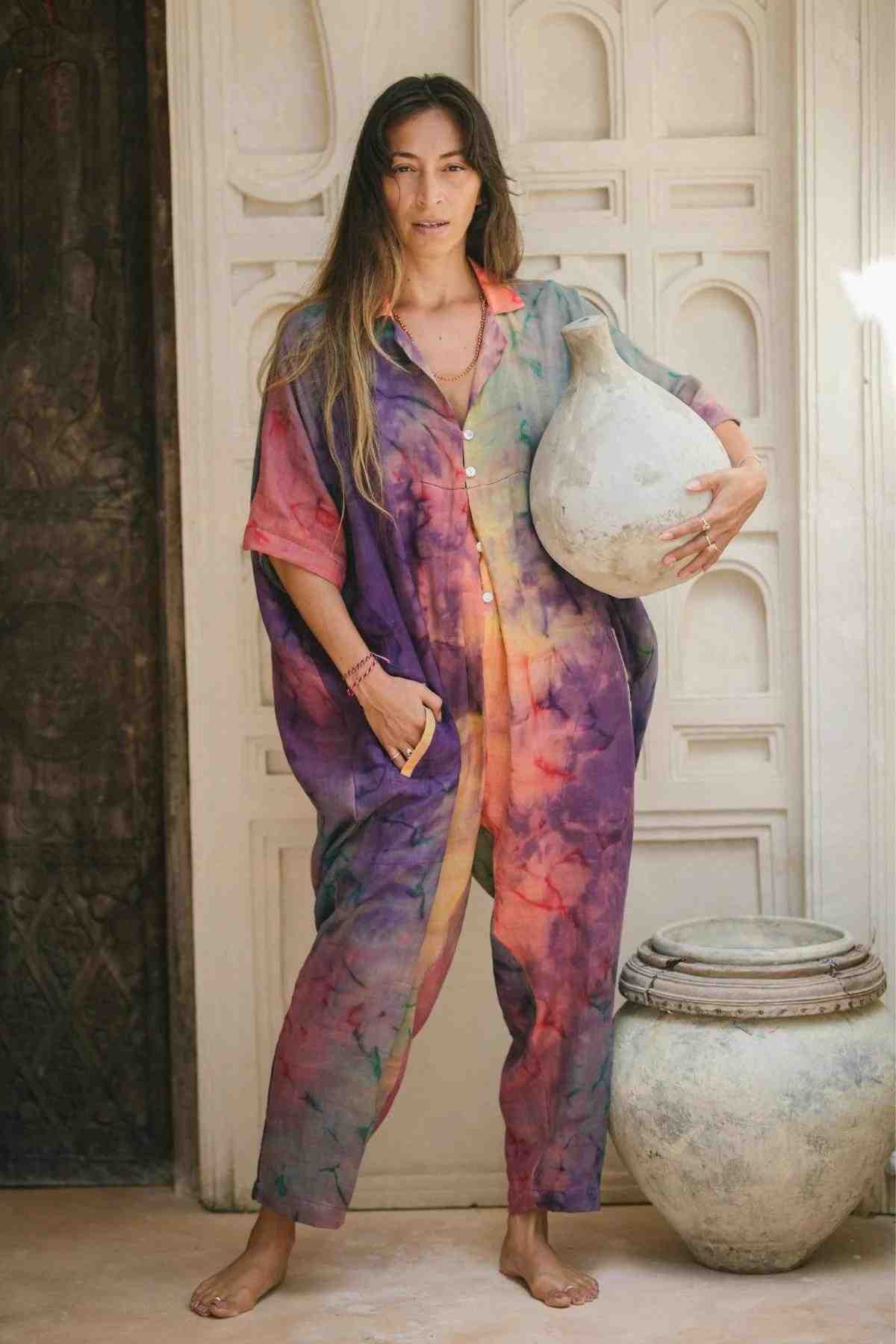
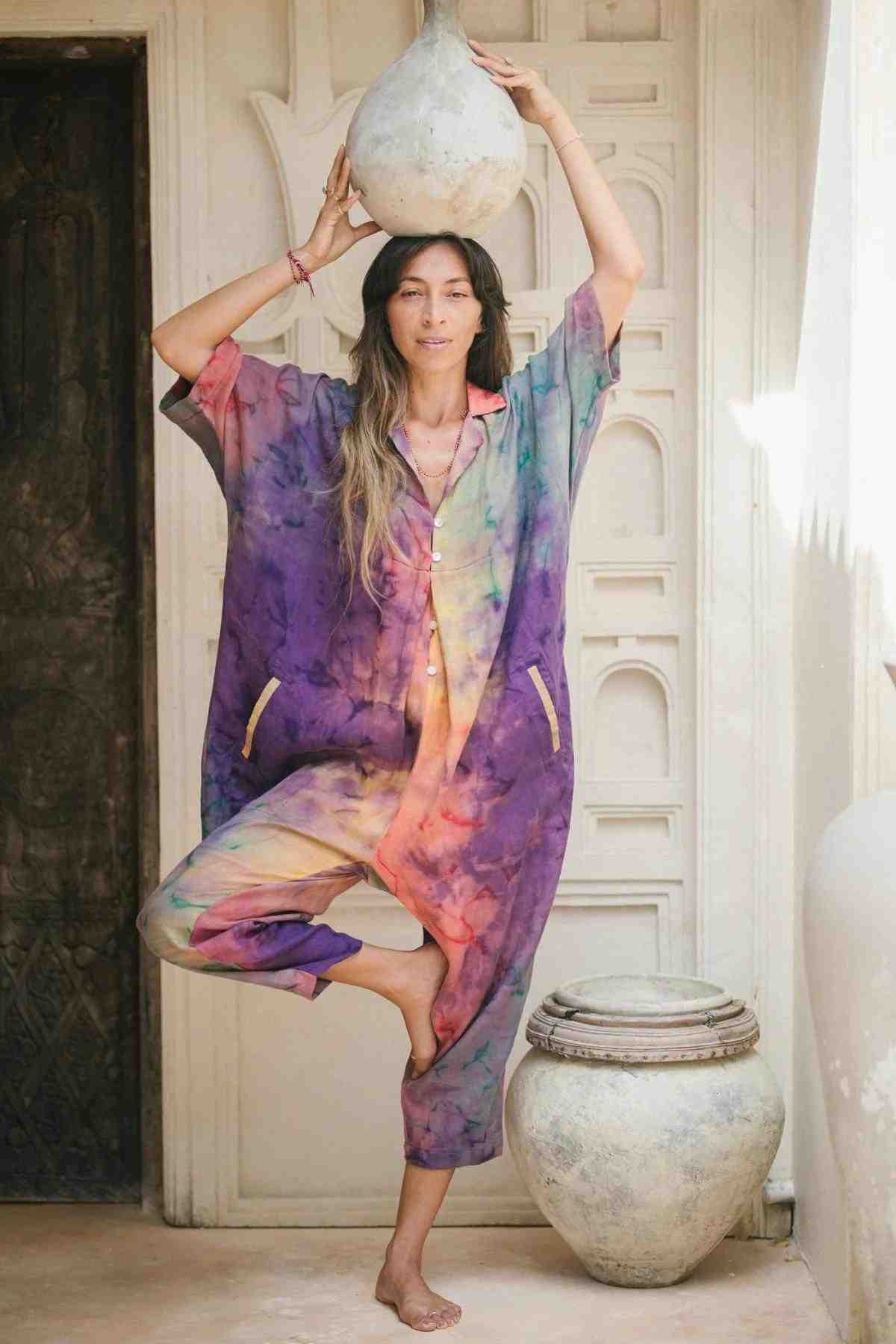
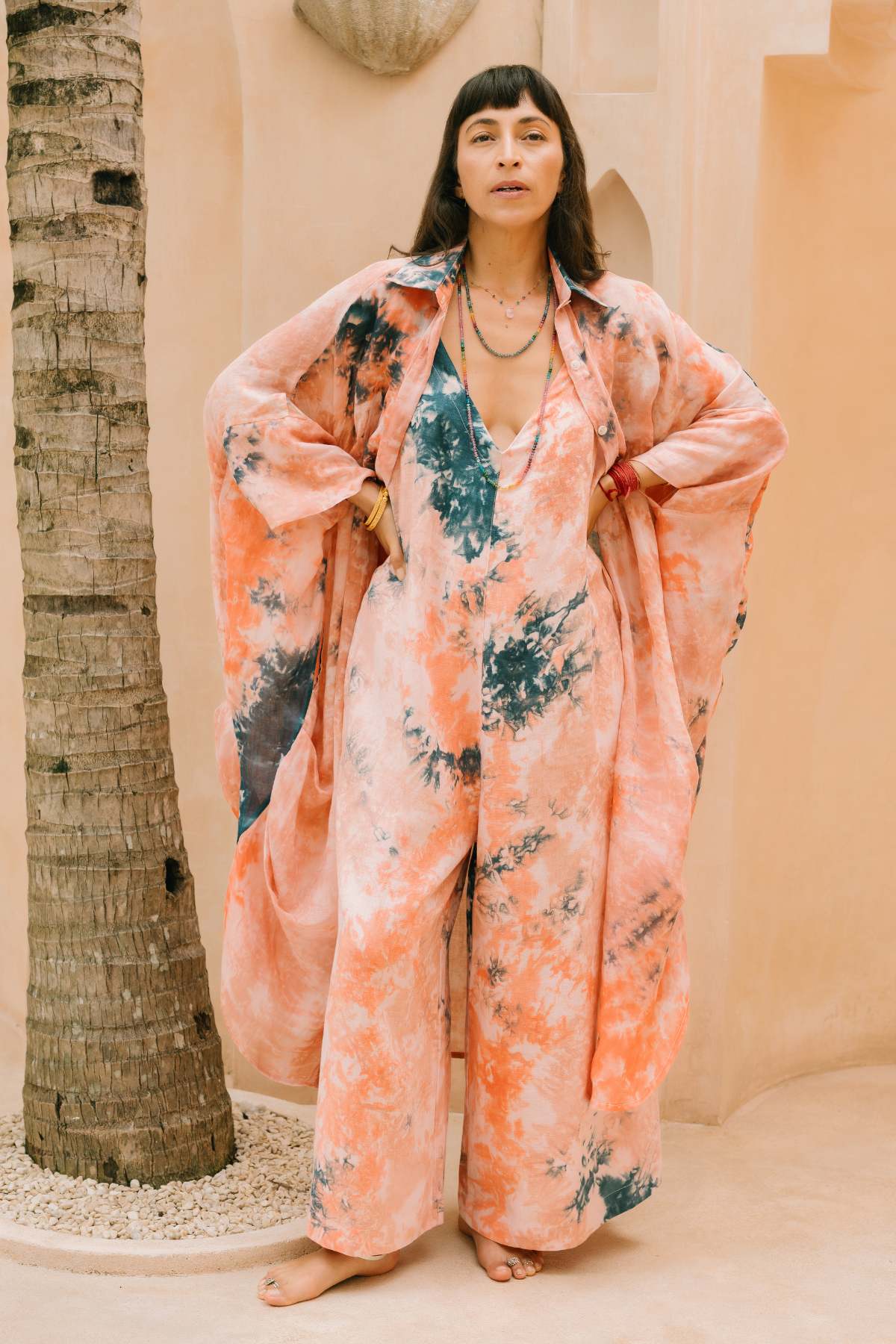
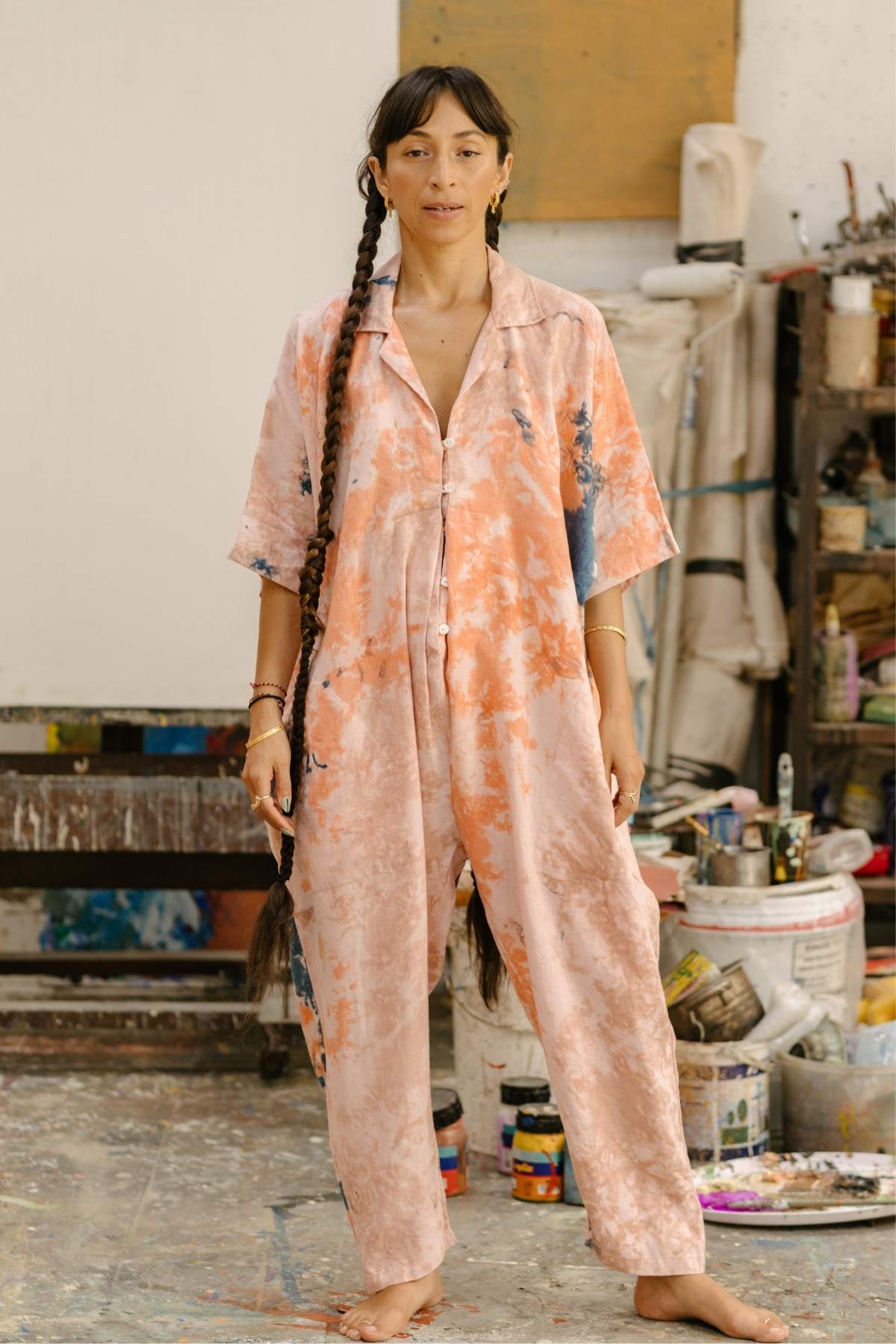
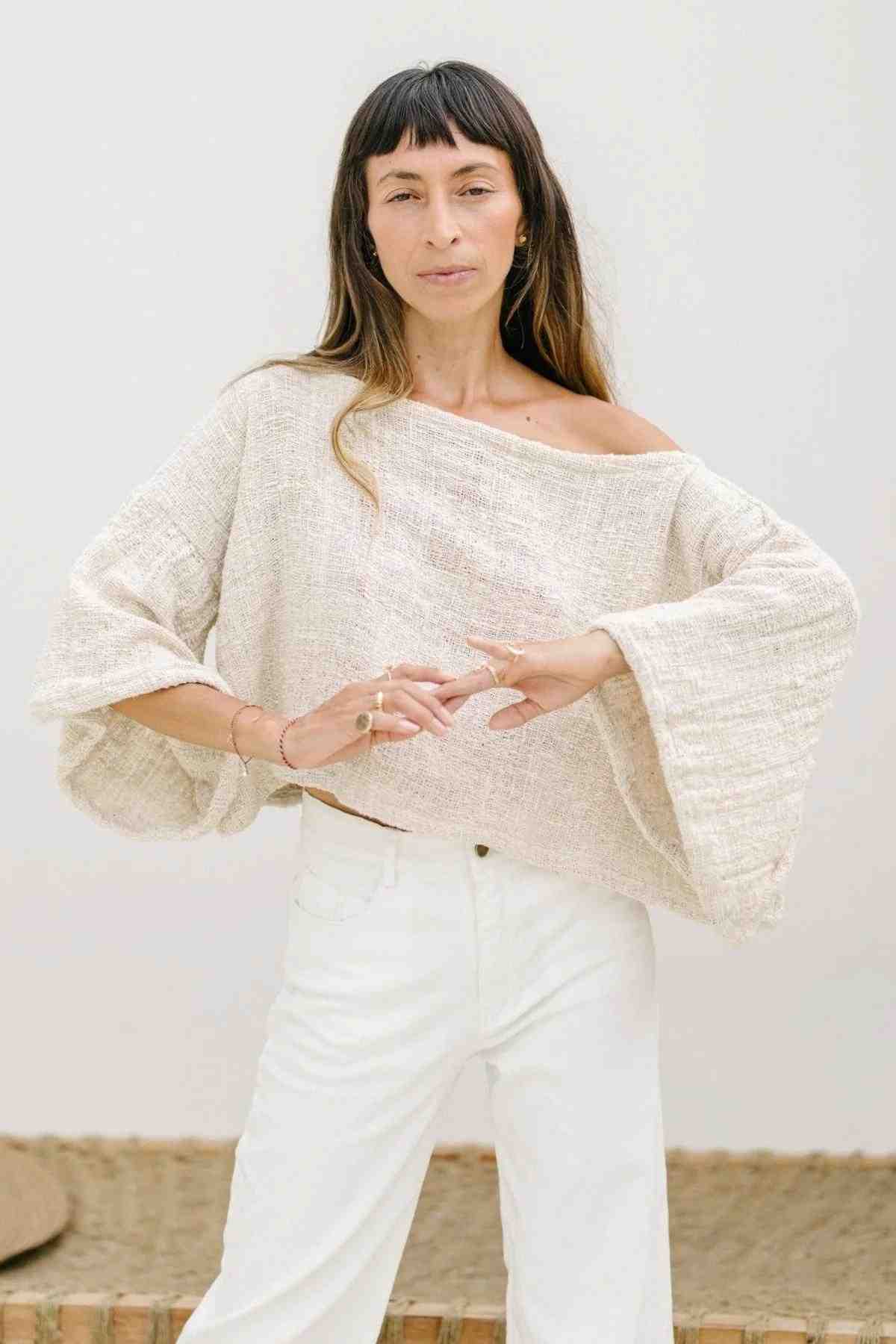
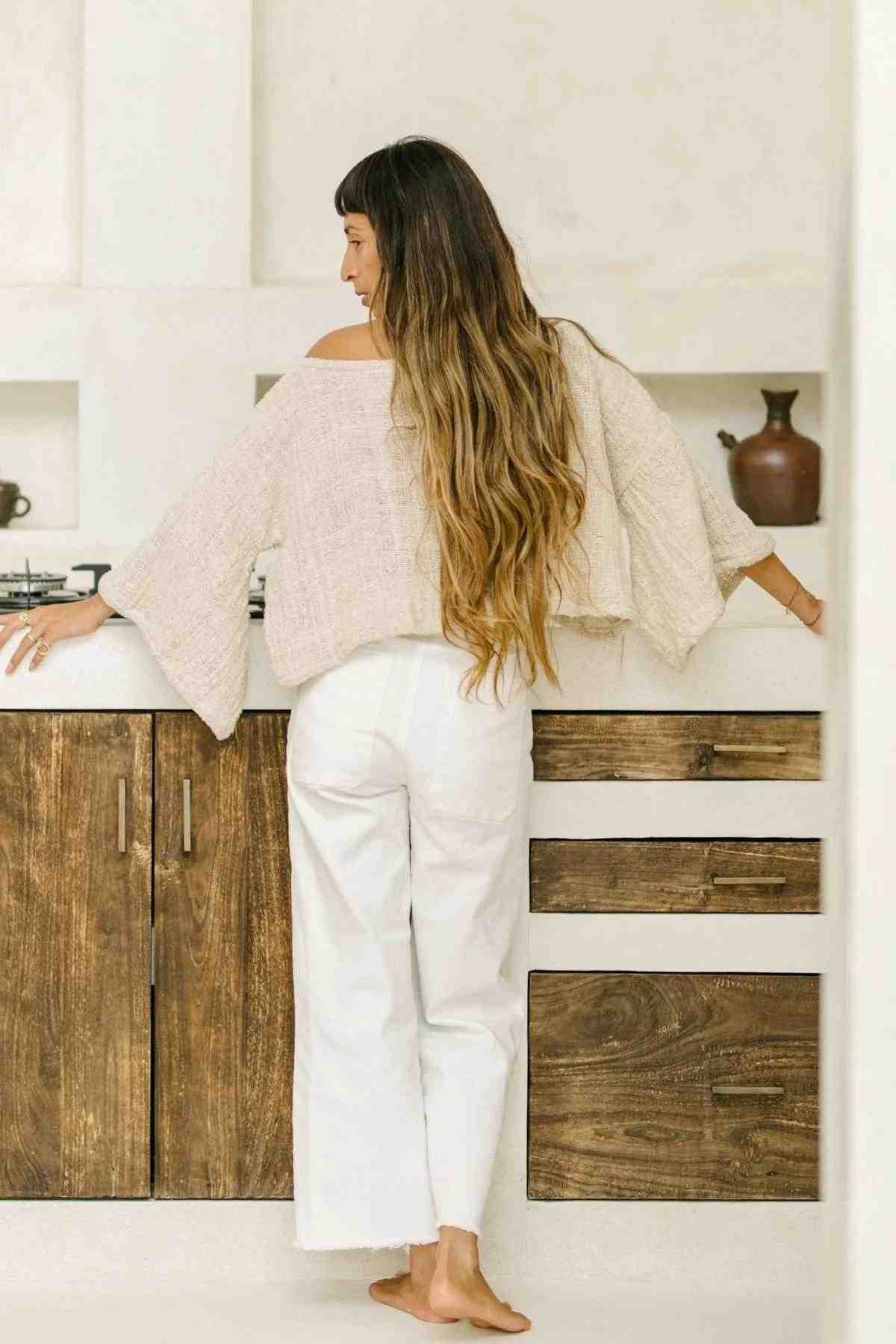
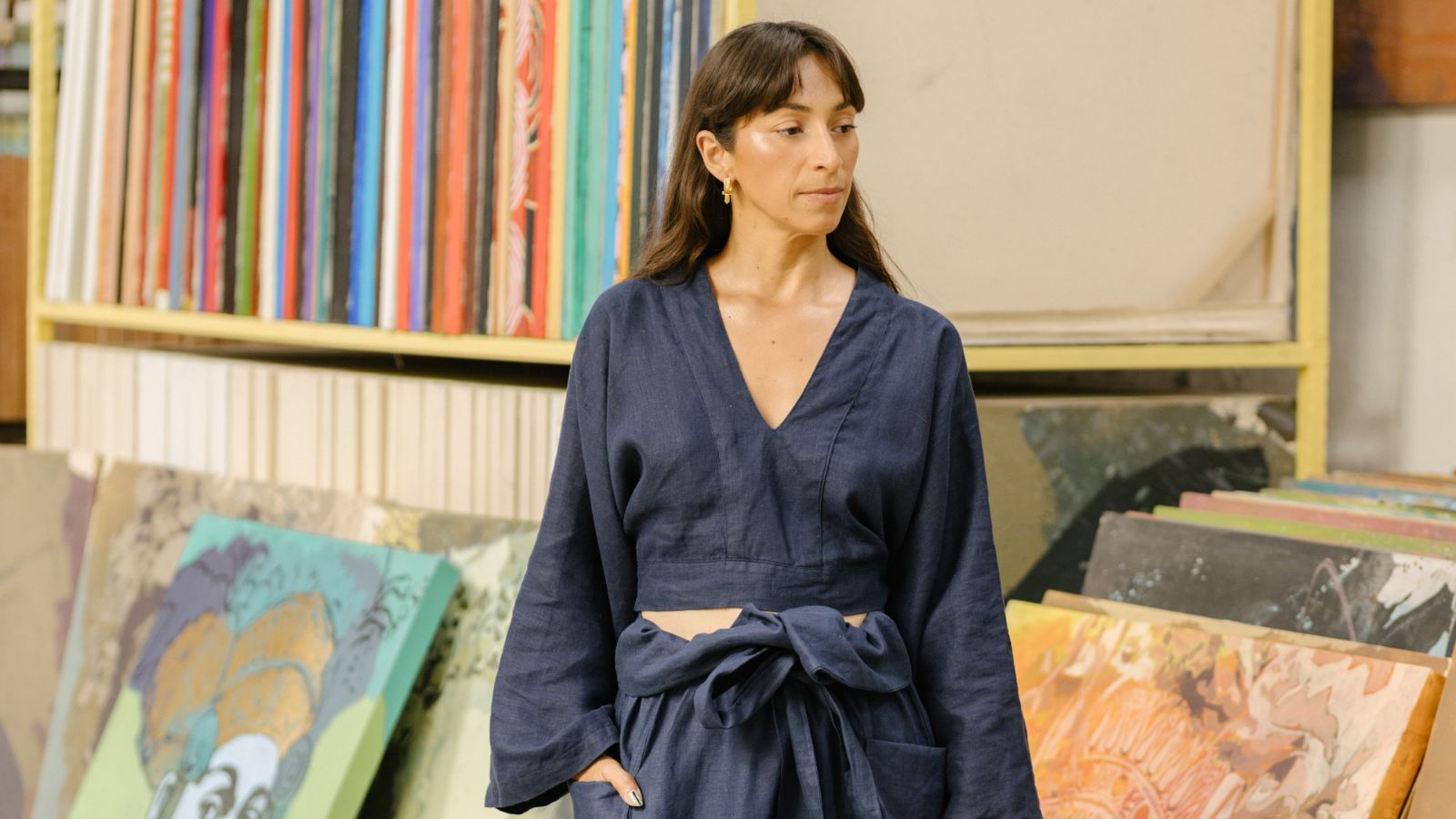
Those three people should know each other, or at least should know each other's stories. The woman who wears our Sat Torri Playsuit should be able to understand the hands that made it. Not as a marketing exercise. As a genuine return of the human dimension to an industry that automated it away.
That is what we are building. One small batch at a time. One relationship at a time. One honest piece at a time.
A supply chain is only as good as its relationships. Ours have been built over years, with people whose names we know, whose children we have watched grow up. That is not a story. That is the structure.
With love from Bali,
Myrah.
|
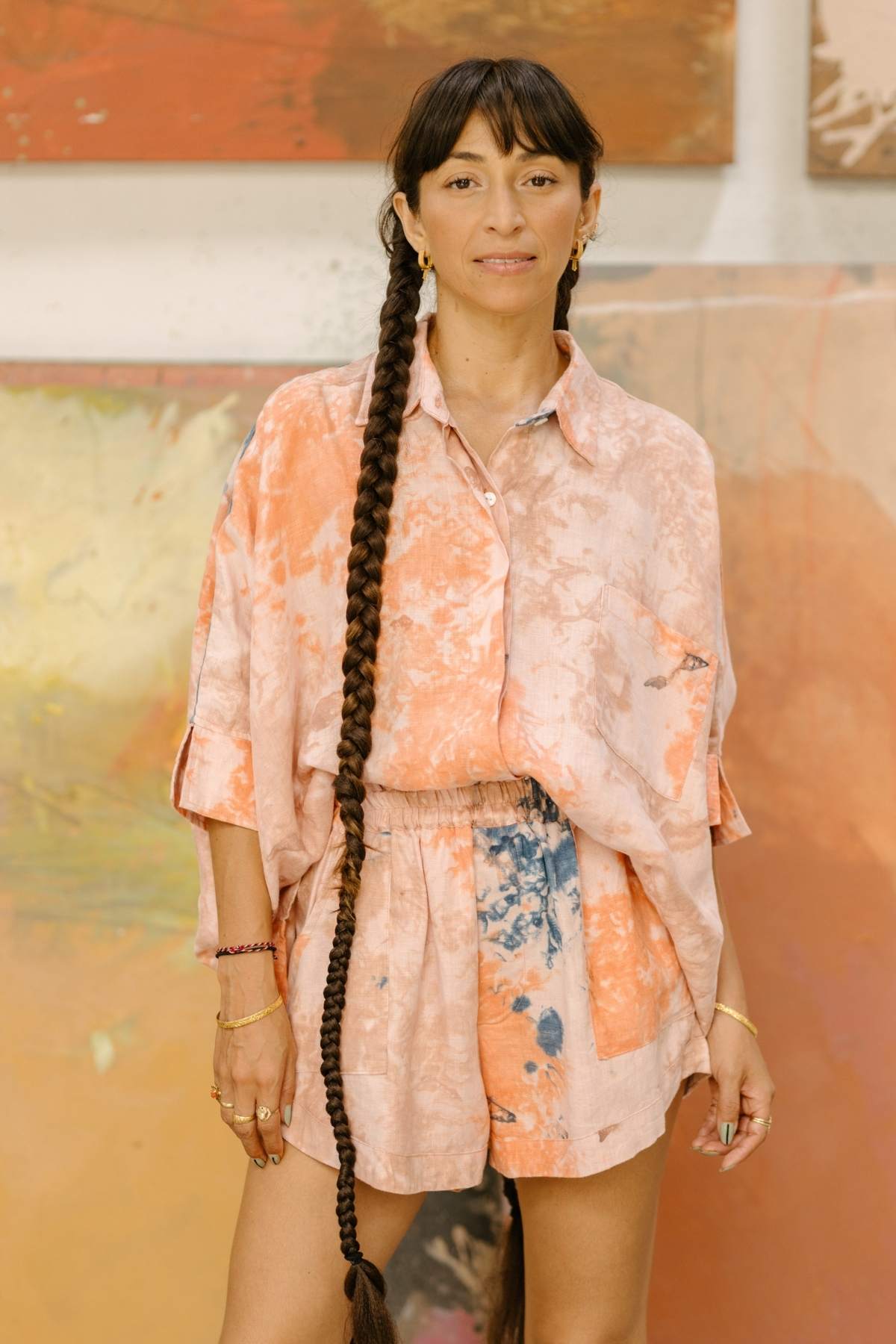
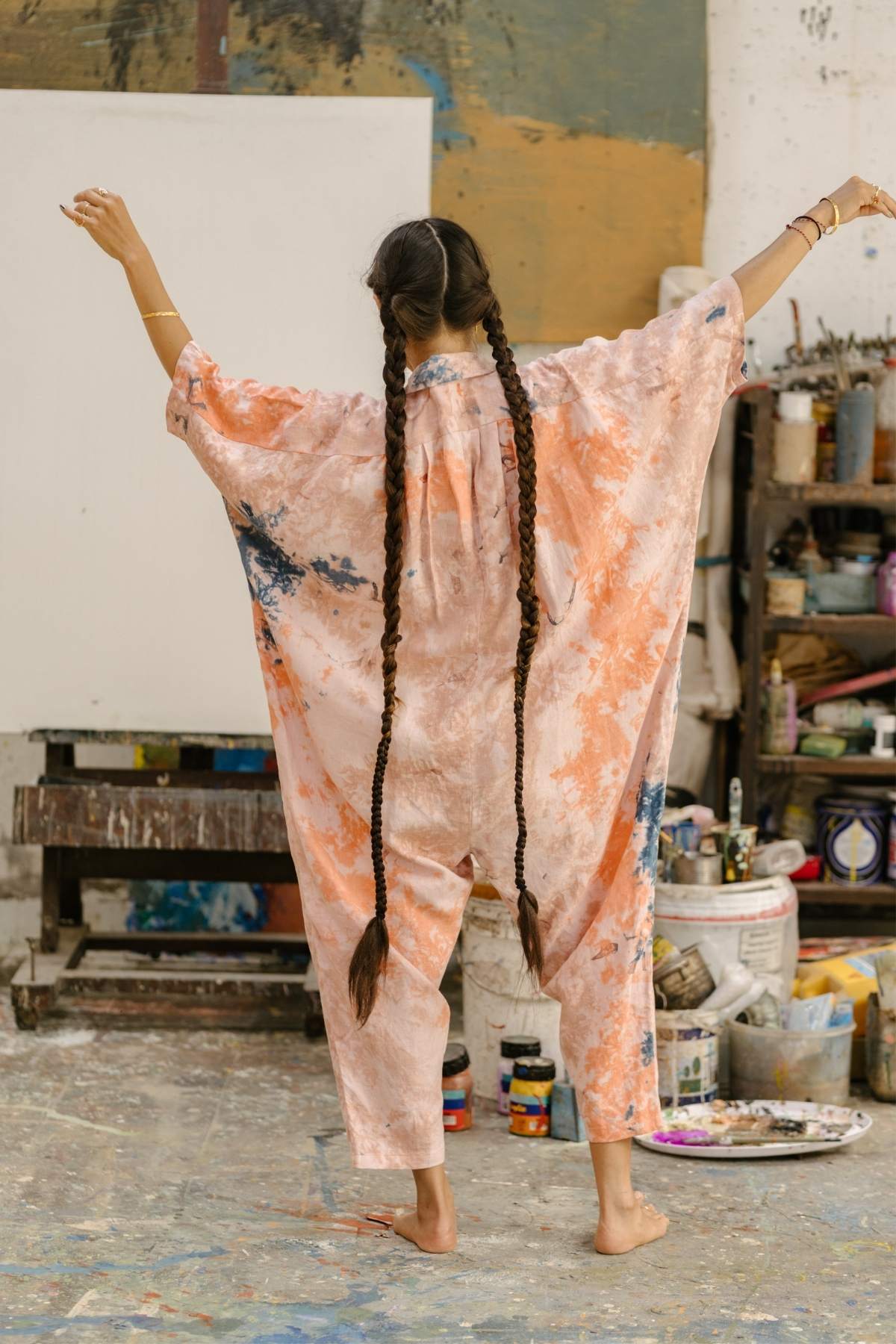
A Piece for This Threshold The Sat Torri Rainbeau Playsuit. No two are exactly alike. That is not a caveat. That is the point. Made by hands we know, in a home we have visited, from a dye process we have watched. |
|
The Muse-Letter Dress for the woman you’re becoming. Every week from Bali. Astrology, slow living, sacred feminine, and the pieces we make by hand. A letter, not a sales pitch. Unsubscribe any time. No spam, ever. |


Leave a comment
This site is protected by hCaptcha and the hCaptcha Privacy Policy and Terms of Service apply.