

European Flax Certified Linen: Why Where It Grows Changes Everything
Most linen is not the same. The fiber that goes into our lighter colorways is grown in Western Europe under a certification that covers the entire journey from field to fiber -- no irrigation, no GMOs, and full traceability. Here is what that means, and why it matters to us.
What is European Flax certification?
European Flax is a certification created by the European Confederation of Flax and Hemp that guarantees flax fiber is grown in Western Europe -- specifically in France, Belgium, or the Netherlands -- under strict environmental and agricultural standards. To carry the certification, the flax must be grown without irrigation, without GMOs, and without agricultural waste: the retting process is done in the field using rainwater, eliminating the water contamination that affects linen produced in other regions.
The certification also includes full traceability -- meaning the fiber can be tracked from the specific farm where it was grown through the spinning and weaving process. This is not standard in the global textile industry. European Flax makes it a requirement.
Why French linen is different from standard linen
Flax grows in many climates, but the most prized growing conditions are in the long coastal belt of northwestern France, Belgium, and the Netherlands. The combination of temperate rainfall, mineral-rich soil, and specific hours of daylight produces a finer, stronger fiber than is possible in more arid climates where irrigation is required.
The difference is felt in the fabric. French linen has a naturally finer hand -- softer at first wearing, and more supple with age and washing. It is also more durable than linen grown in conditions that stress the plant, because a fiber that grows slowly in good conditions develops greater tensile strength than one forced to grow quickly under irrigation.
In lighter colorways, the natural quality of the base fiber becomes especially visible. This is why we use European Flax certified French linen specifically for our lighter colors -- the fiber is fine enough that the natural tone of the flax can serve as part of the palette, rather than being covered over.
What European Flax certification actually guarantees
The certification covers several specific commitments that distinguish it from general claims of natural or European origin:
- No irrigation. Flax certified under European Flax relies entirely on natural rainfall. This eliminates water stress on the plant and dramatically reduces the environmental footprint of the crop.
- No GMOs. All seed varieties used in certified flax are non-genetically modified. The genetic integrity of the plant is part of what the certification protects.
- Field retting. The traditional retting process -- in which harvested flax stalks are spread across fields and exposed to rain and dew to loosen the fiber -- produces no industrial wastewater and leaves no chemical residue in the fiber.
- Full traceability. The fiber can be traced from the specific fields where it was grown, through spinning and weaving, to the finished fabric.
- Social compliance. Farms participating in European Flax certification adhere to European agricultural labor standards -- a meaningful distinction in a global industry where supply chain labor practices are often opaque.
The environmental case for Western European flax
Flax is one of the most environmentally efficient crops when grown in appropriate conditions. In Western Europe, where it has been cultivated for thousands of years, it grows in rotation with other crops without depleting the soil, requires no chemical fertilizers in most years, and uses the natural rainfall of the region rather than irrigation infrastructure. The entire plant is used after harvest: the fiber becomes linen, the seeds become linseed oil, and the remaining stalk material is used in insulation, composites, and paper production.
This low-waste, low-input model is what the European Flax certification was designed to protect and make verifiable. It is the difference between a supply chain that minimizes harm as a byproduct of good practice, and one that claims sustainability without the documentation to support it.
At Myrah Penaloza, this matters because the values we hold about how clothing should be made extend backward through the supply chain -- to the fiber, to the soil, to the farming practices that set everything else in motion.
European Flax and OEKO-TEX: two certifications, one commitment
For our lighter color linen pieces, both certifications are in place. European Flax covers the origin and farming of the fiber -- the beginning of the supply chain. OEKO-TEX Standard 100 covers the finished garment -- the end of the supply chain. Together they close the loop: you can trace the fiber back to a certified European field, and you can know that the finished piece in your hands has been tested for harmful substances at every stage of its journey.
This dual-certification approach reflects what we mean when we use the phrase conscious slow fashion. Not one standard applied selectively, but a commitment that runs the full length of the process.
What this means in practice: our lighter linen pieces
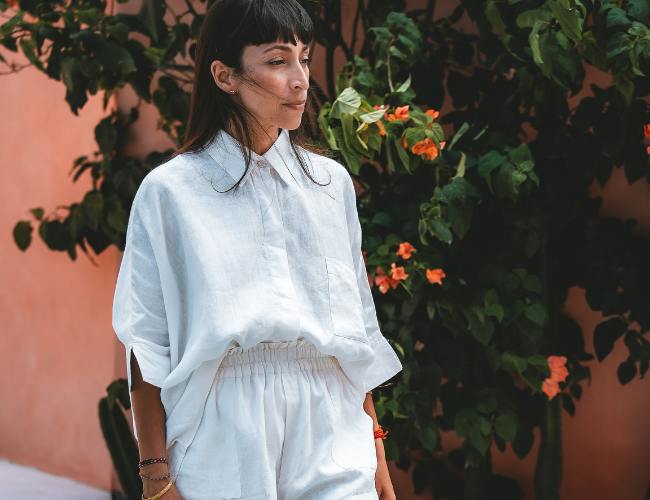
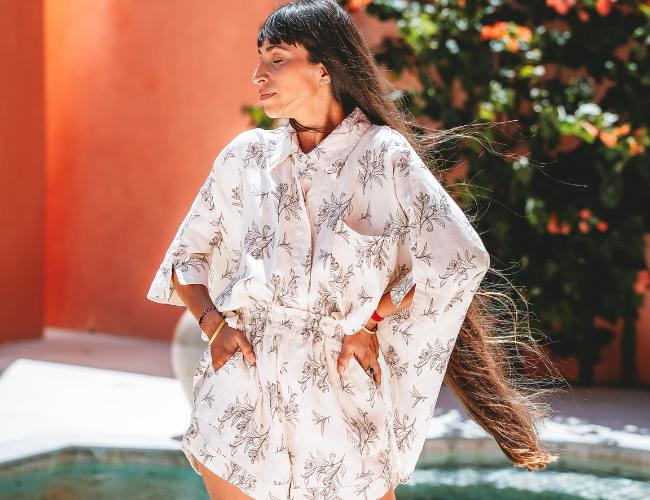
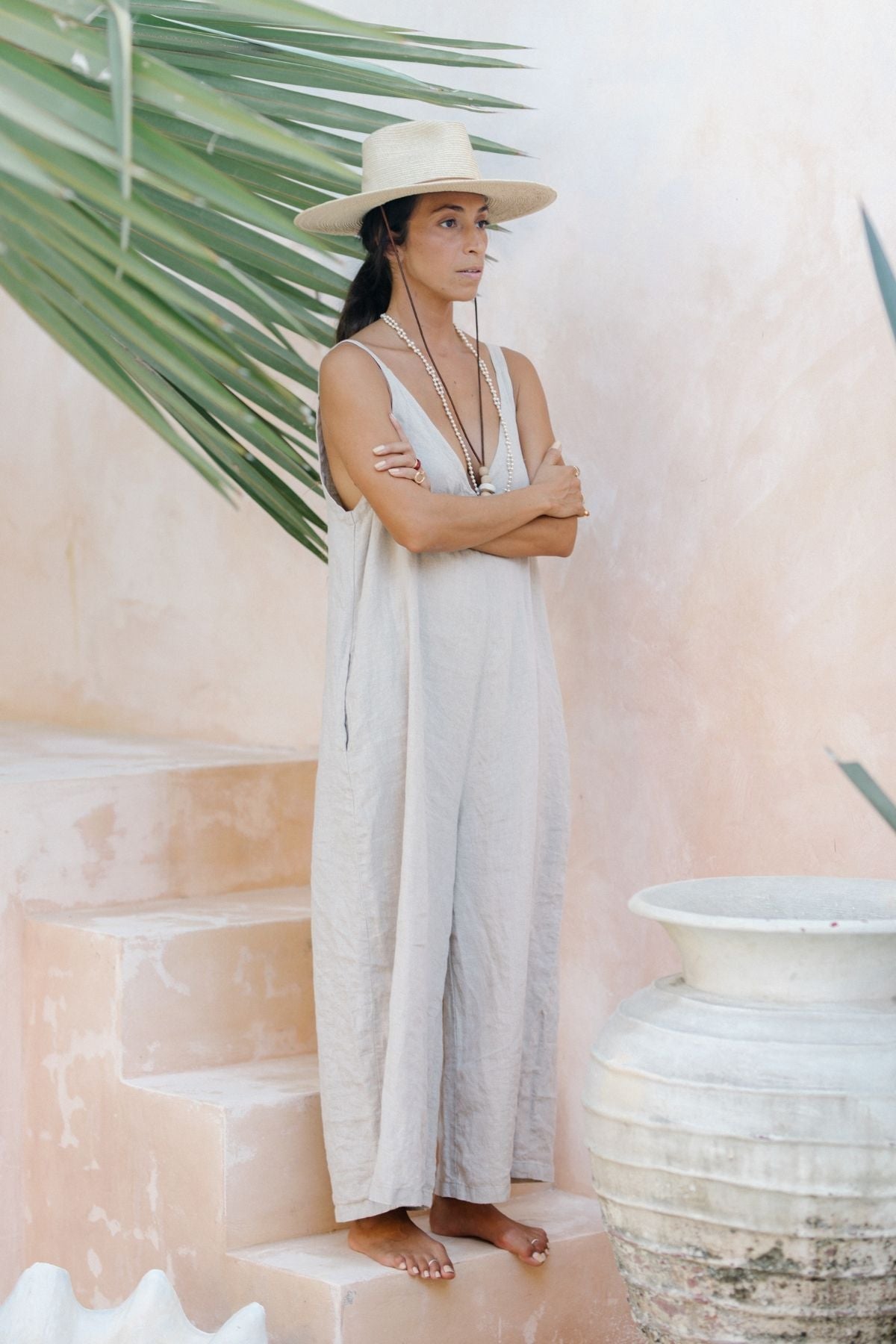
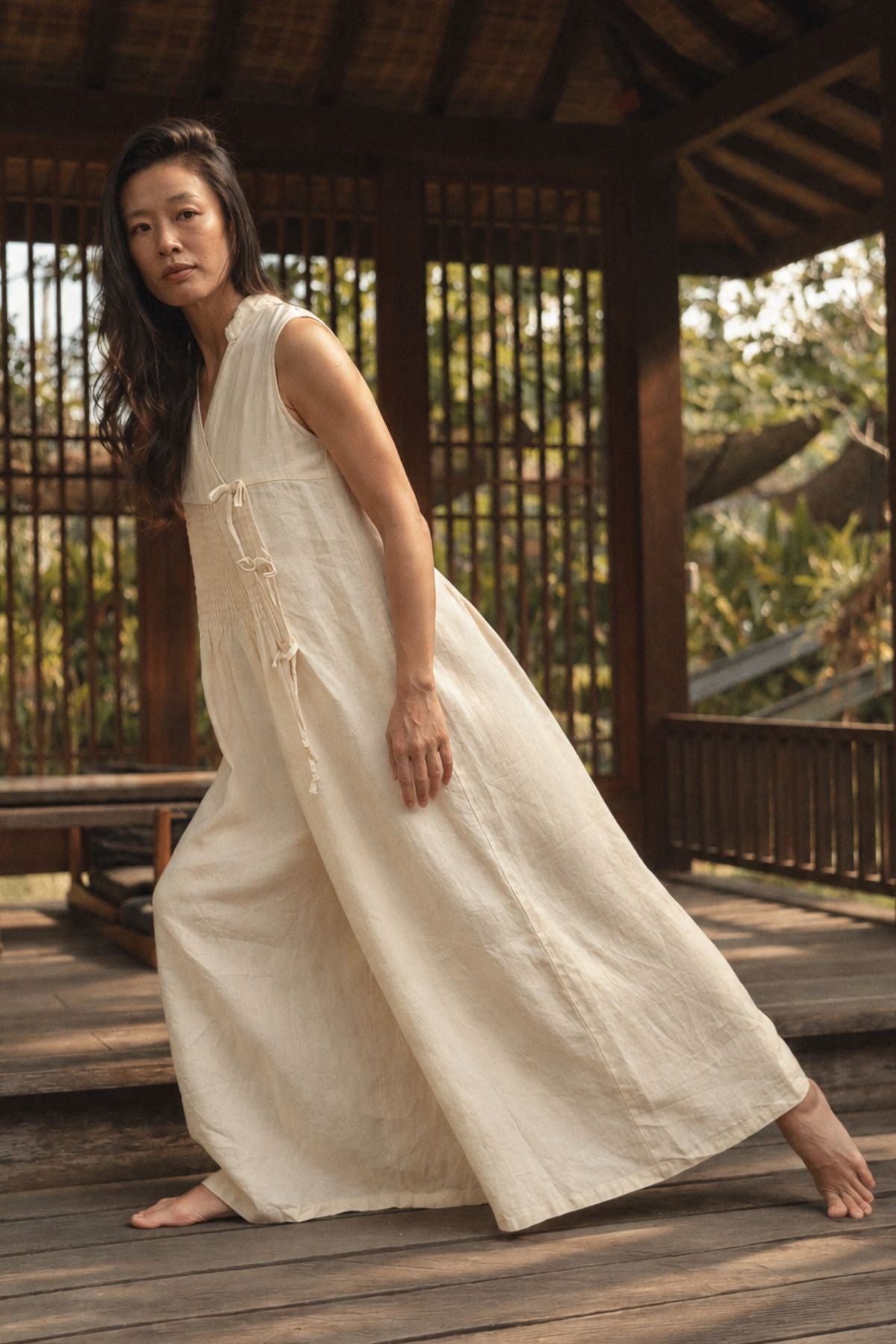
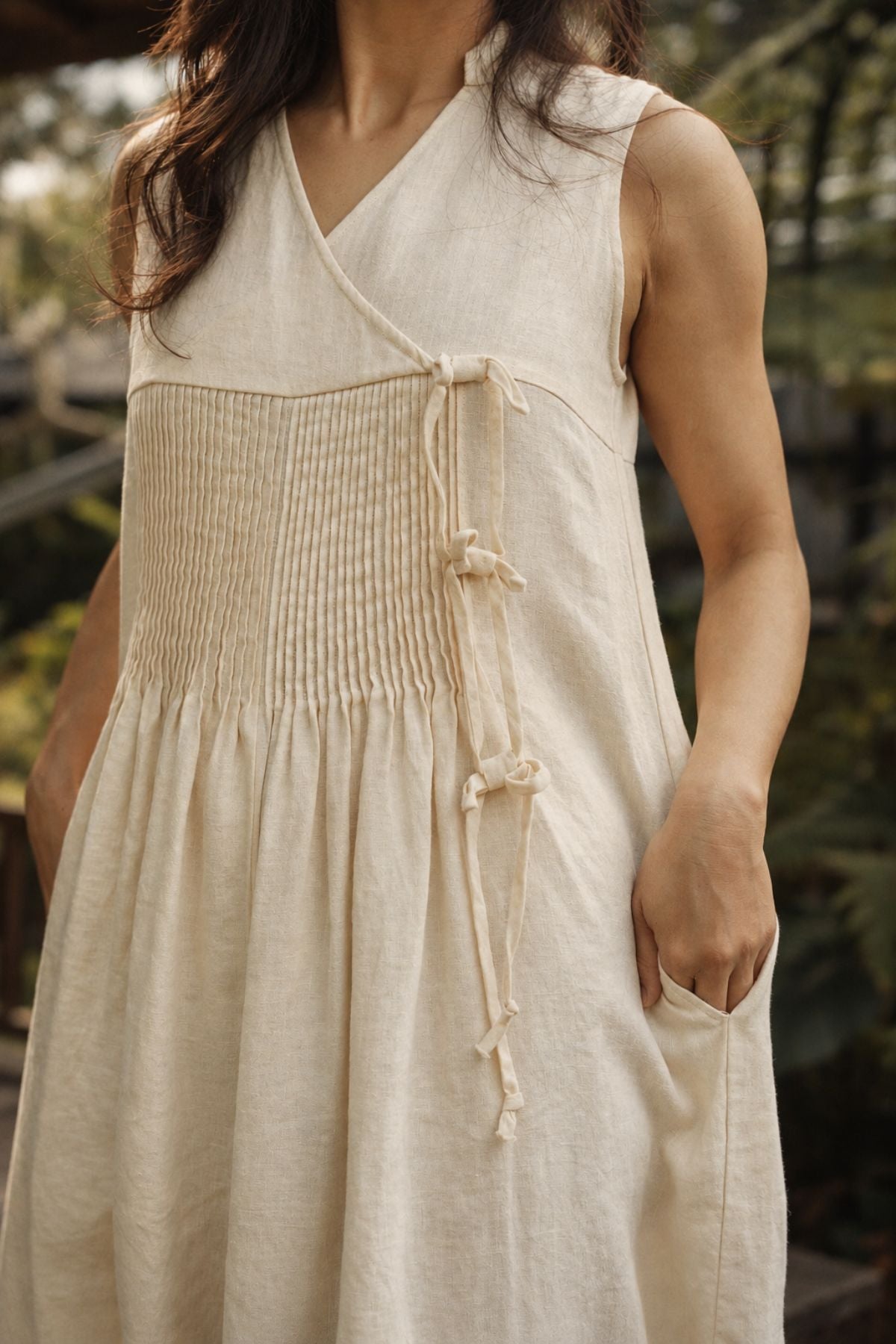
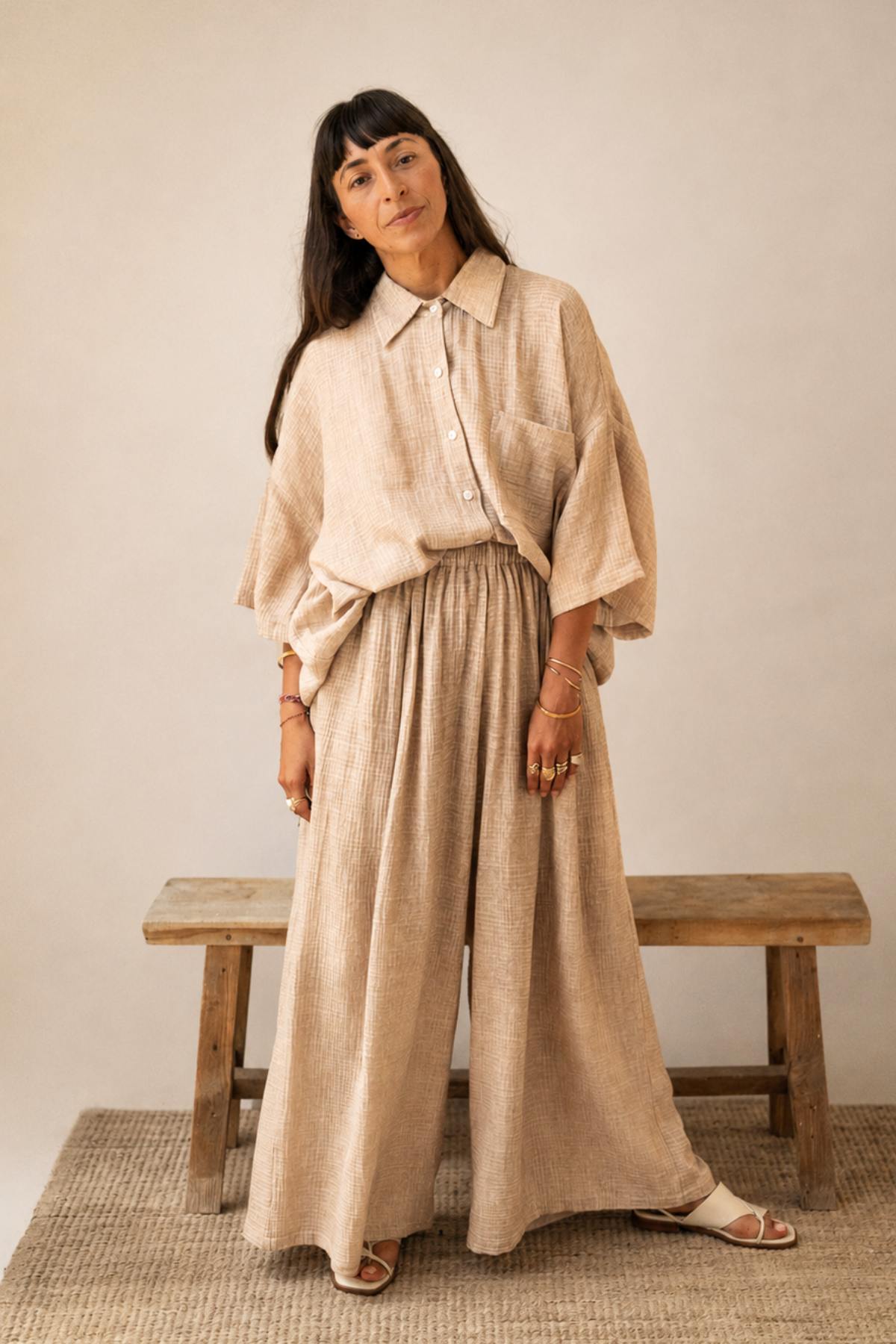
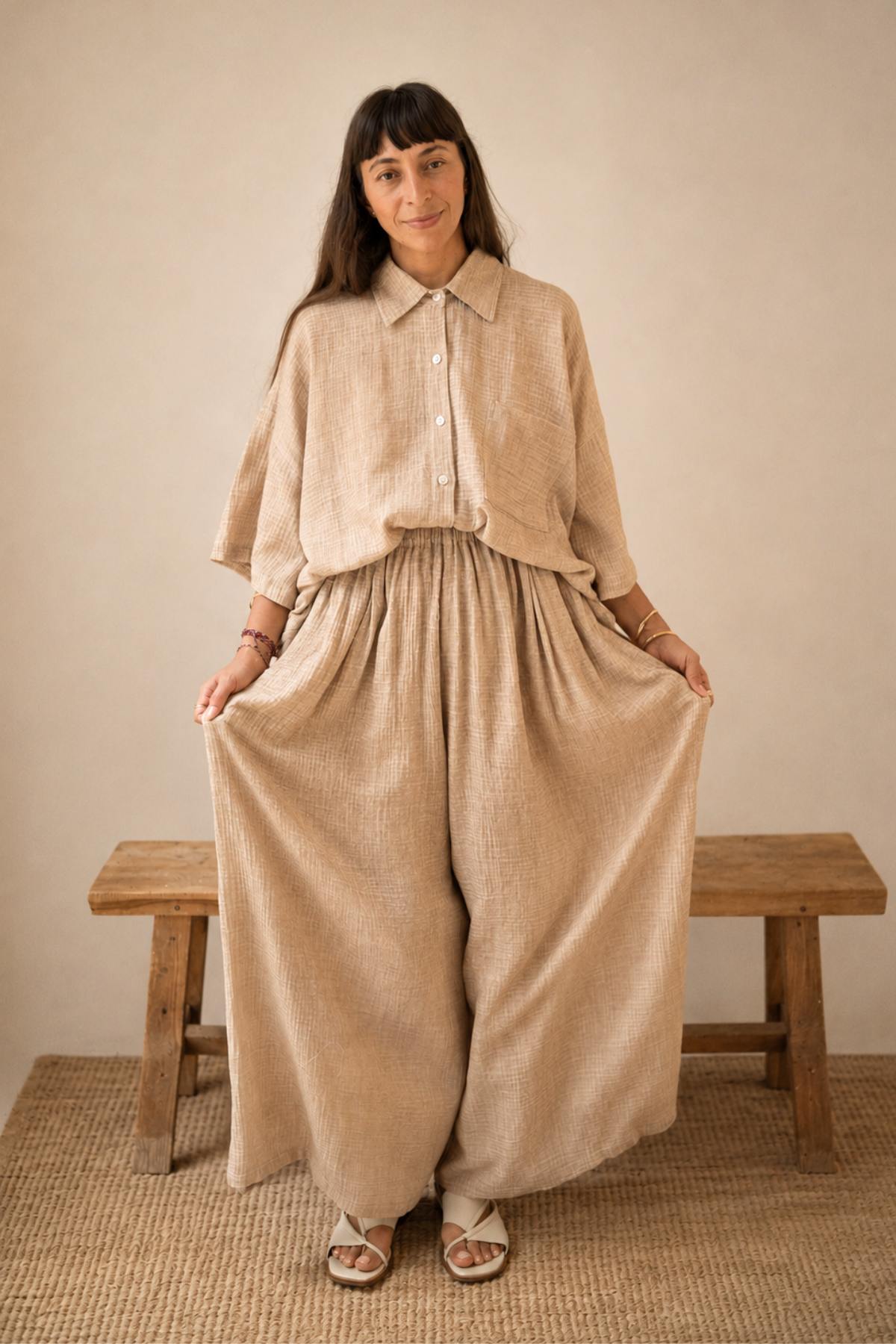
The lighter colorways in our linen collection -- natural flax, off-white, cream, and the softer botanical tones -- are made from European Flax certified French linen. This includes pieces in the linen collection where the natural quality of the base fiber is part of the aesthetic.
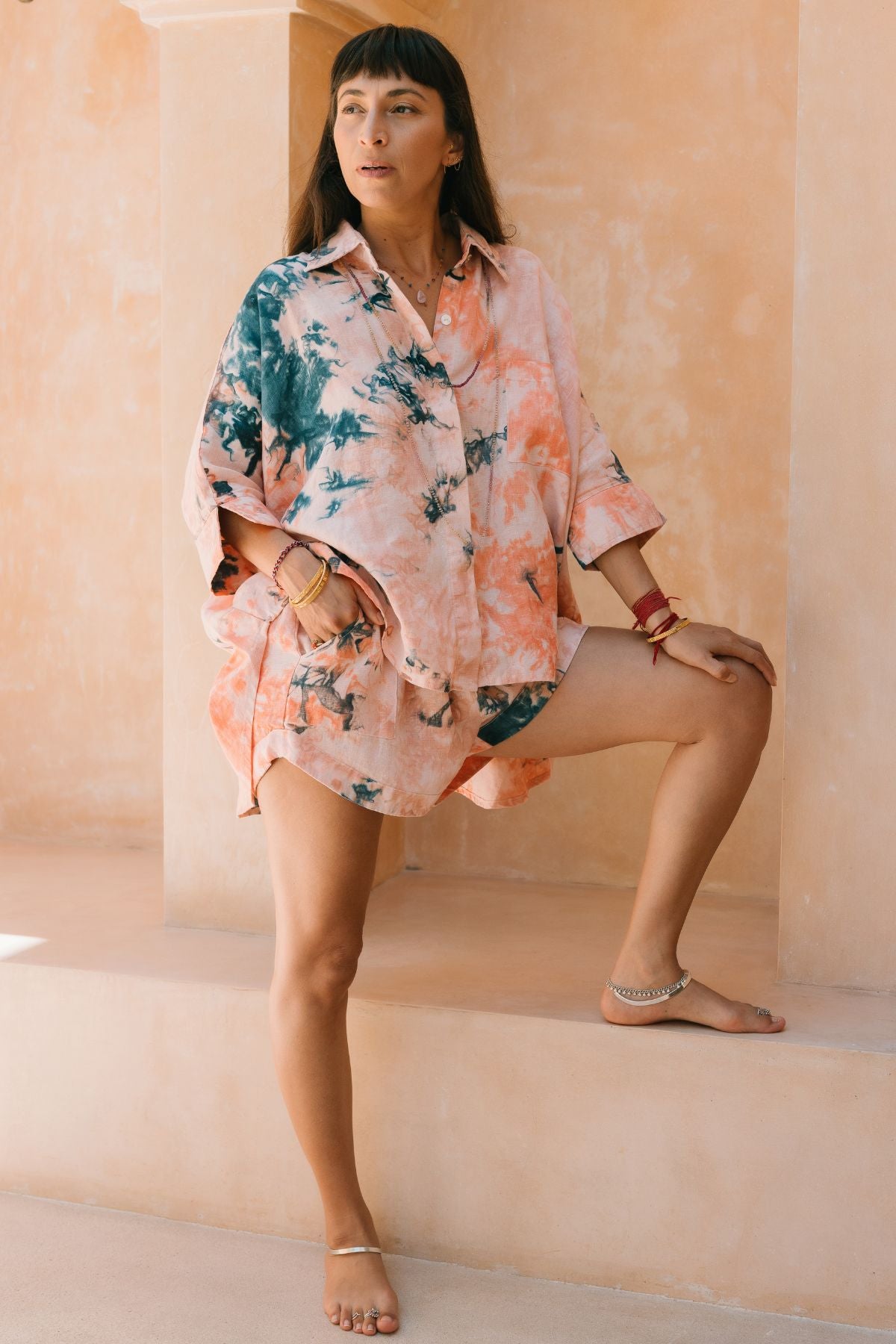
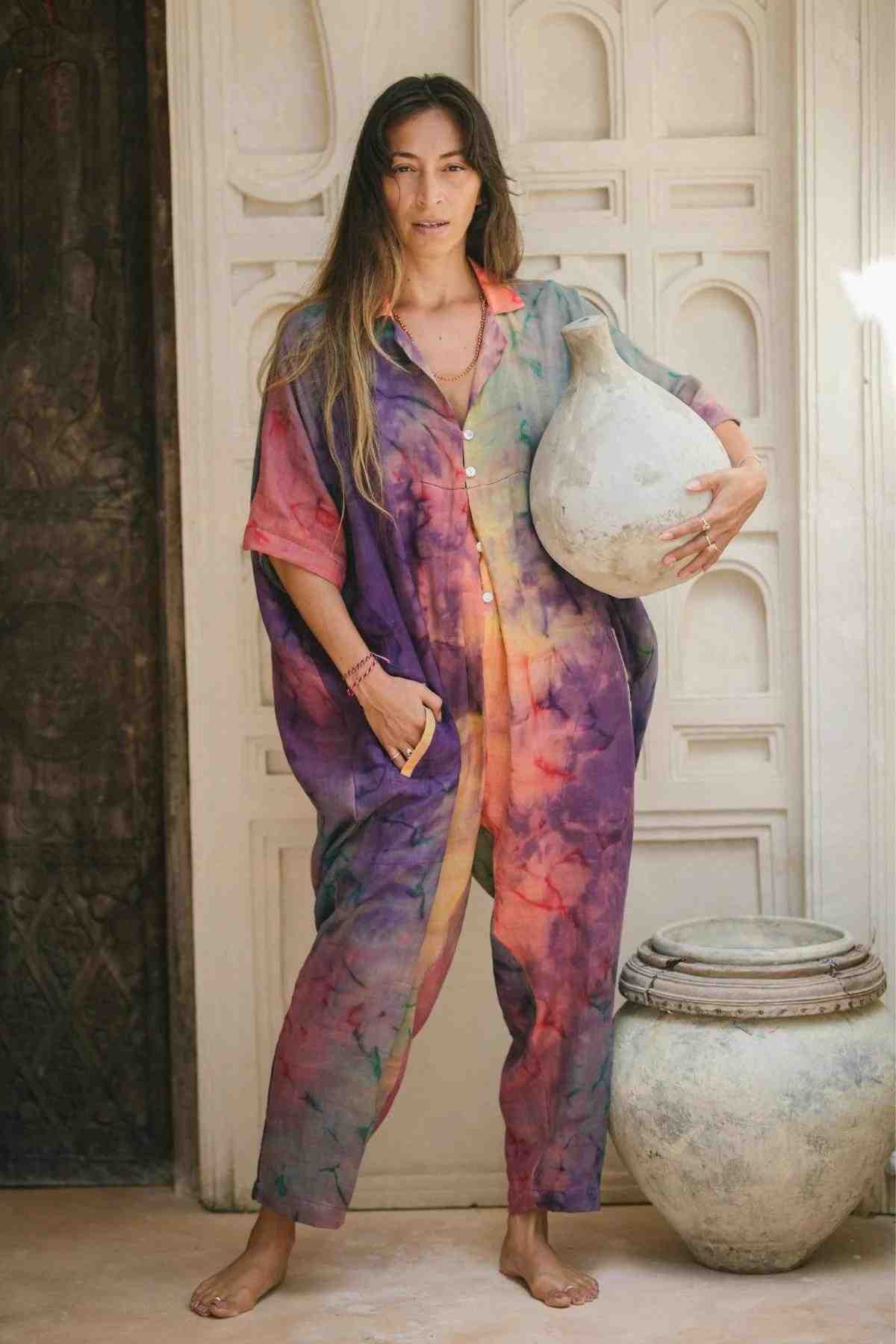
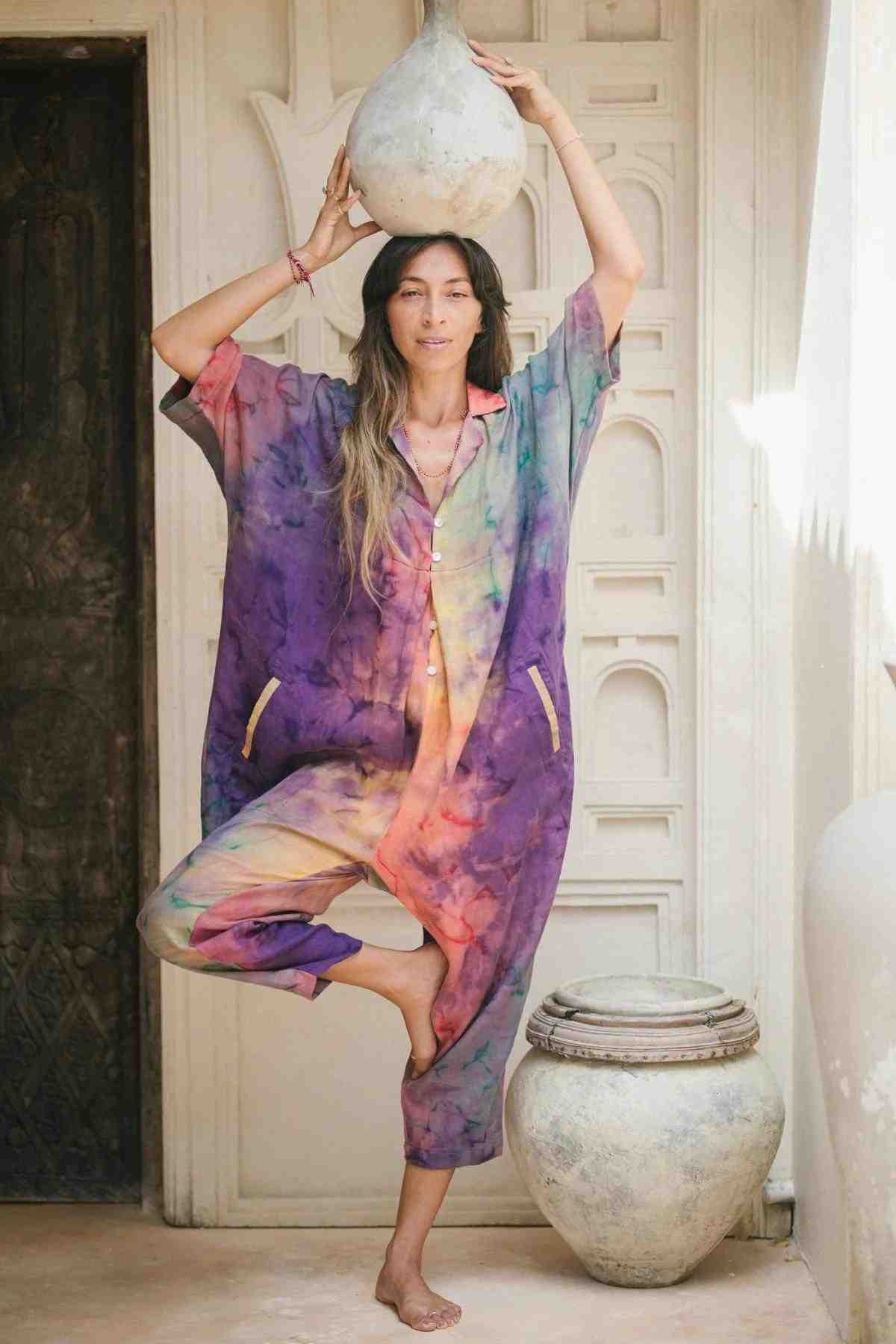
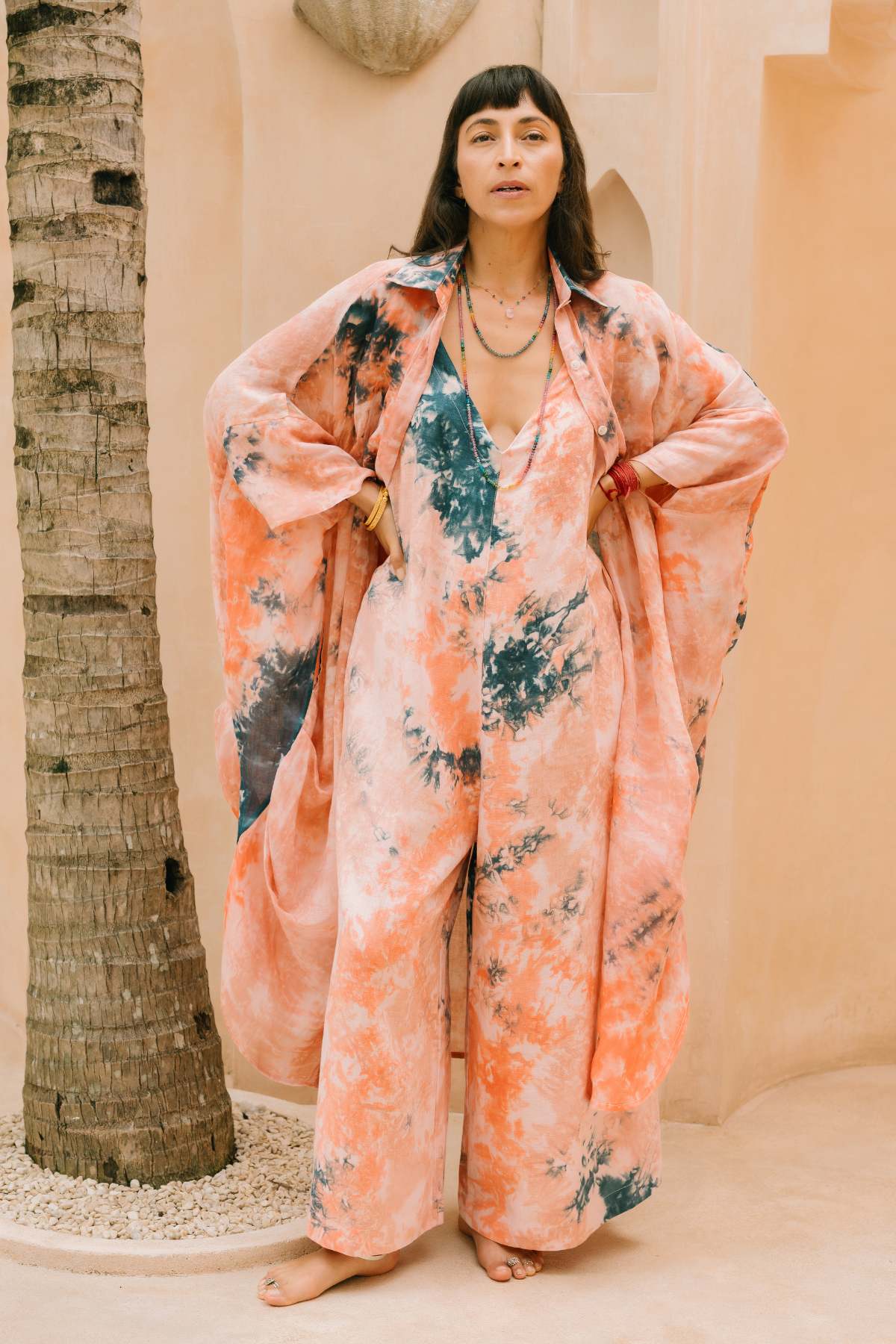
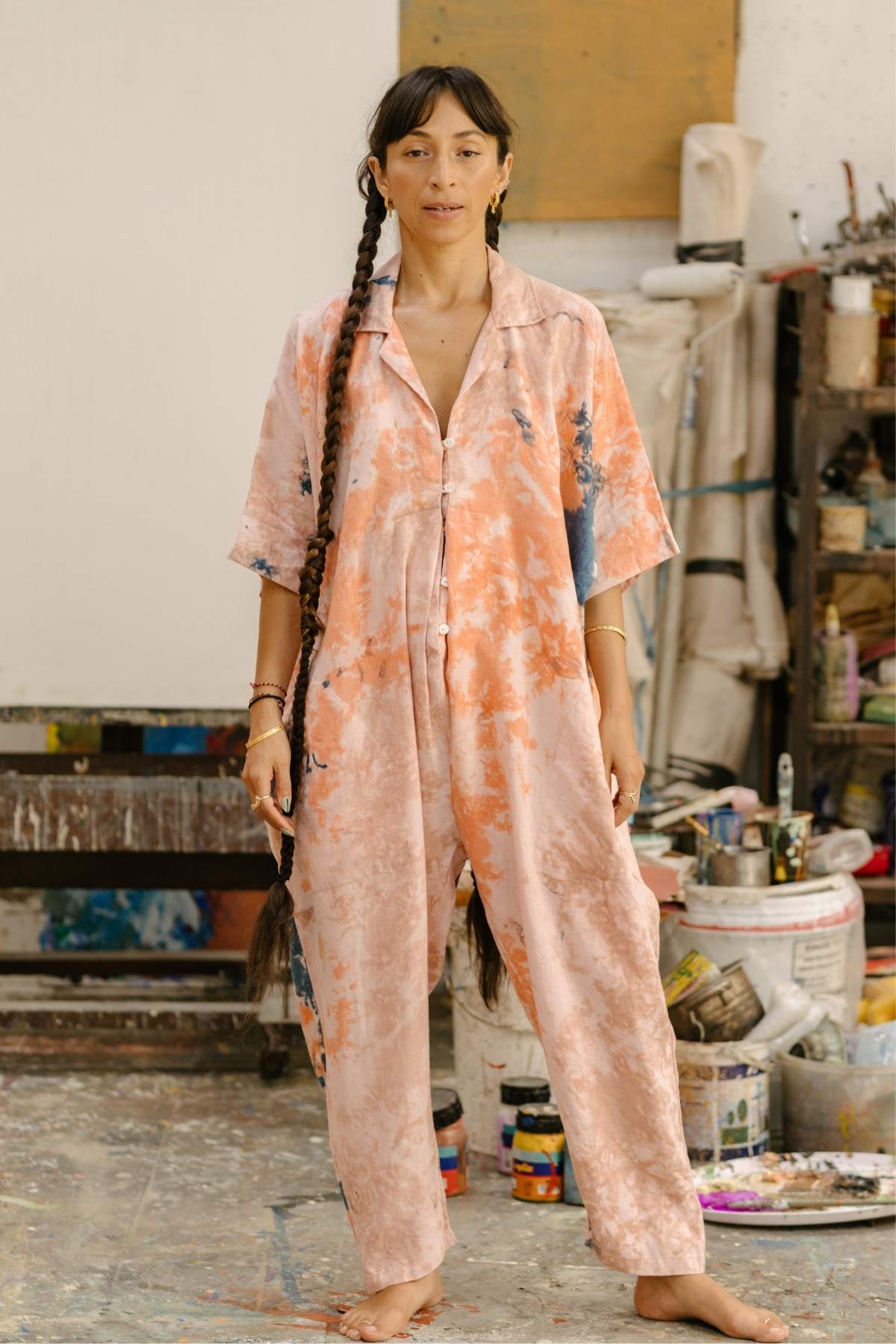
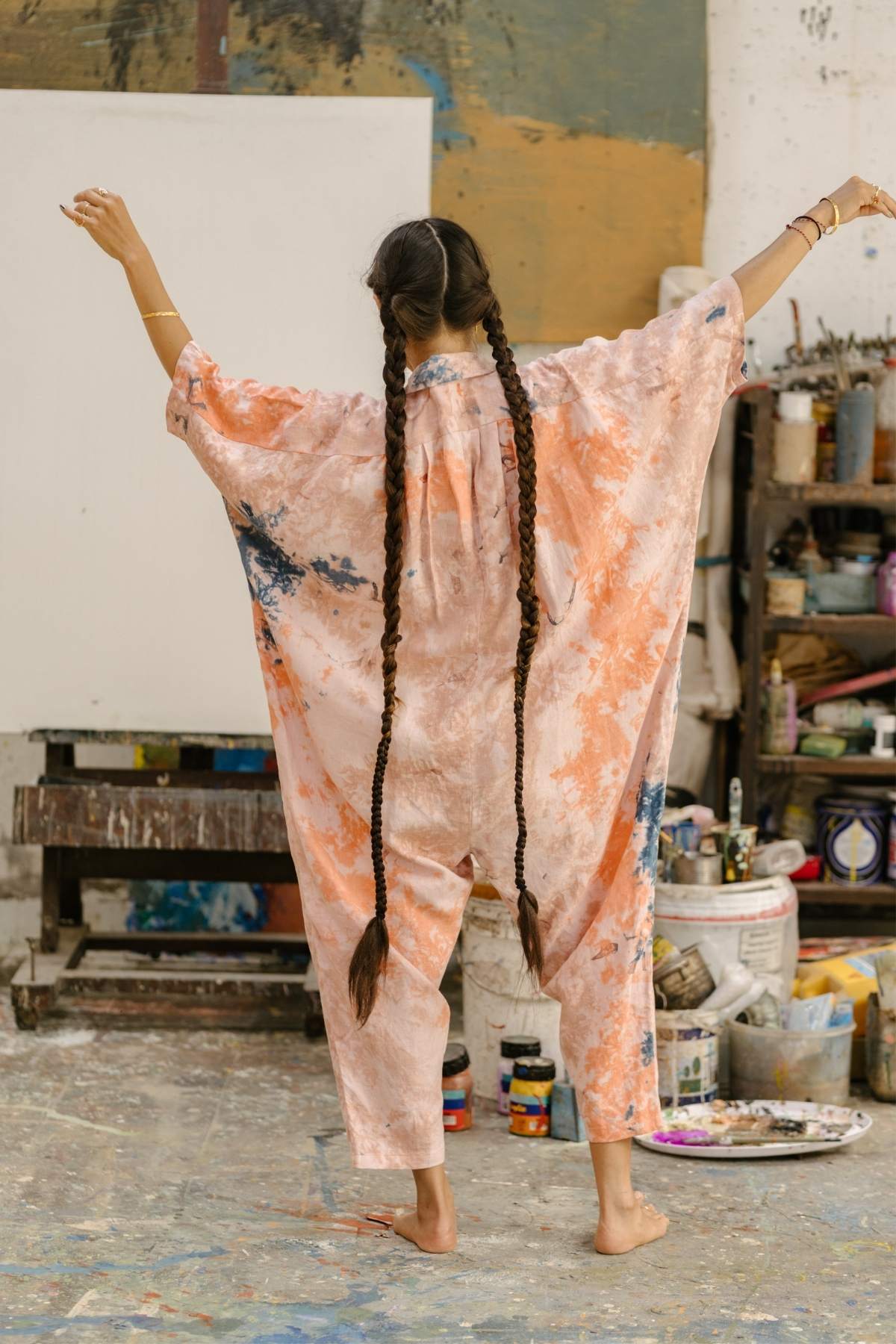
The Suka Button Down Linen Set in Off-White and Natural Flax colorways uses this fiber. The Kundalini Linen Playsuit in its lighter variants draws on the same source. The Uluwatu Sunset Linen Suka Set, built around the pale-to-warm tones of coastal dusk light, is a piece where the quality of the linen base is directly visible in the way the fabric holds color.
In each case, the certification is not an add-on. It is why the fabric looks and feels the way it does.
Frequently asked questions
What is European Flax certification?
European Flax is a certification issued by the European Confederation of Flax and Hemp that guarantees flax fiber is grown in Western Europe without irrigation, GMOs, or agricultural waste. It includes full supply chain traceability from farm to finished fiber, and compliance with European agricultural labor standards.
Is French linen better than other linen?
Flax grown in Western Europe benefits from ideal soil composition, temperate rainfall, and centuries of cultivation knowledge. This produces a finer, stronger fiber than linen grown in conditions that require irrigation. The difference is most visible in lighter colorways and in how the fabric softens with wear and washing over time.
What does field retting mean and why does it matter?
Retting is the process that separates the linen fiber from the flax plant stalk. Field retting spreads harvested stalks across fields and allows natural rain and dew to do the work over several weeks. It produces no industrial wastewater and leaves no chemical residue in the fiber, unlike water tank retting which is faster but generates contaminated wastewater.
How is European Flax different from OEKO-TEX Standard 100?
European Flax certifies the origin and farming of the raw flax fiber -- covering where and how the plant was grown. OEKO-TEX Standard 100 certifies the finished garment -- testing for harmful substances in the completed product. The two certifications cover different stages of the supply chain and together provide end-to-end assurance.
Does European Flax certification cover social practices?
Yes. European Flax certified production takes place under European Union agricultural regulations, which include labor standards covering working conditions, wages, and worker protections.
Which Myrah Penaloza pieces use European Flax certified linen?
Our lighter colorway linen pieces use European Flax certified French linen -- including the Suka Button Down Linen Set, the Kundalini Linen Playsuit, and the Uluwatu Sunset Linen Suka Set in their lighter variants. For all linen pieces across the collection, OEKO-TEX Standard 100 certification applies to the finished garment.
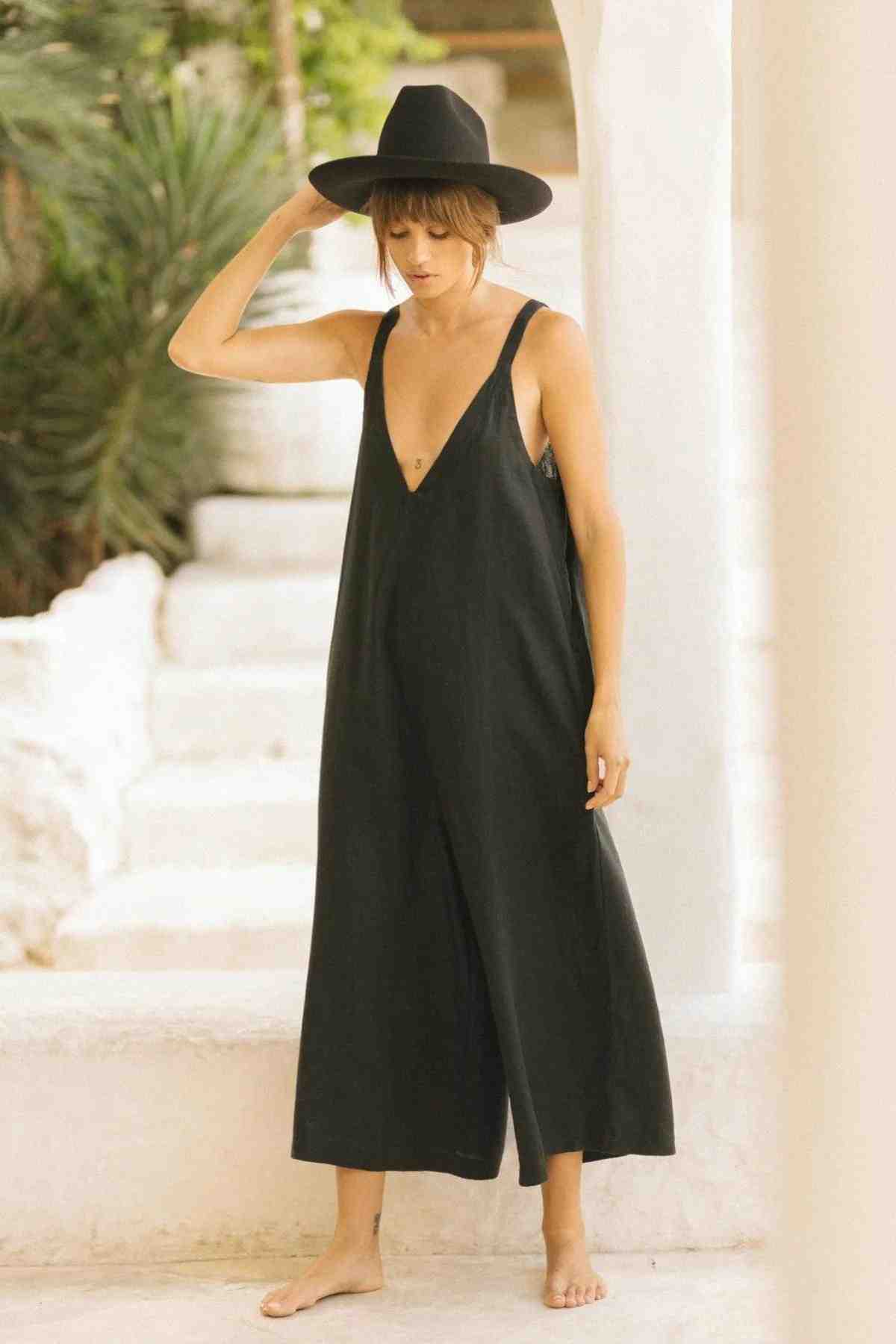
You will find this same European Flax certified linen in several of our linen dresses and gowns, cut from fiber traceable back to the field it grew in.
With love from Bali,
Myrah
|
European Flax - French Linen - Made in Bali Linen that begins well and only gets better. Shop the Linen Collection |
|
The Muse-Letter Dress for the woman you are becoming. Join the Muse-LetterUnsubscribe any time. No spam, ever. |








Leave a comment
This site is protected by hCaptcha and the hCaptcha Privacy Policy and Terms of Service apply.