
Dressing the Sacred Feminine — What It Means to Wear Your Practice
Sacred feminine fashion isn't a trend cycle. It's the return of an idea that never should have left: that what you wear can be an extension of your inner practice, not a costume layered on top of it.

Search interest in "sacred feminine" style is climbing quietly — not because it's suddenly aesthetic, but because more women are asking a sharper question about their closets: does this garment help me feel like myself, or does it just perform for a room? Dressing the sacred feminine is one answer. It's a framework, not a formula, and it's worth understanding properly before you buy into it as a look.
What "Dressing the Sacred Feminine" Actually Means
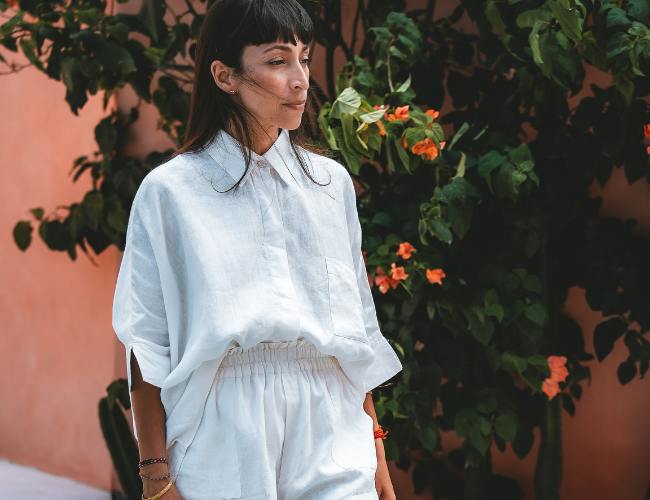
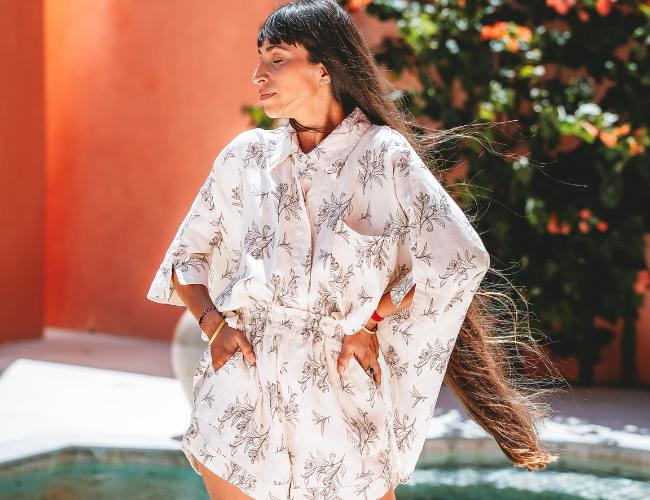
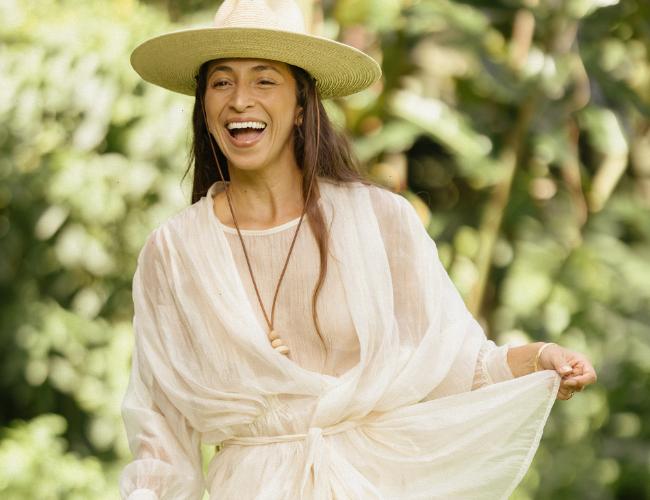
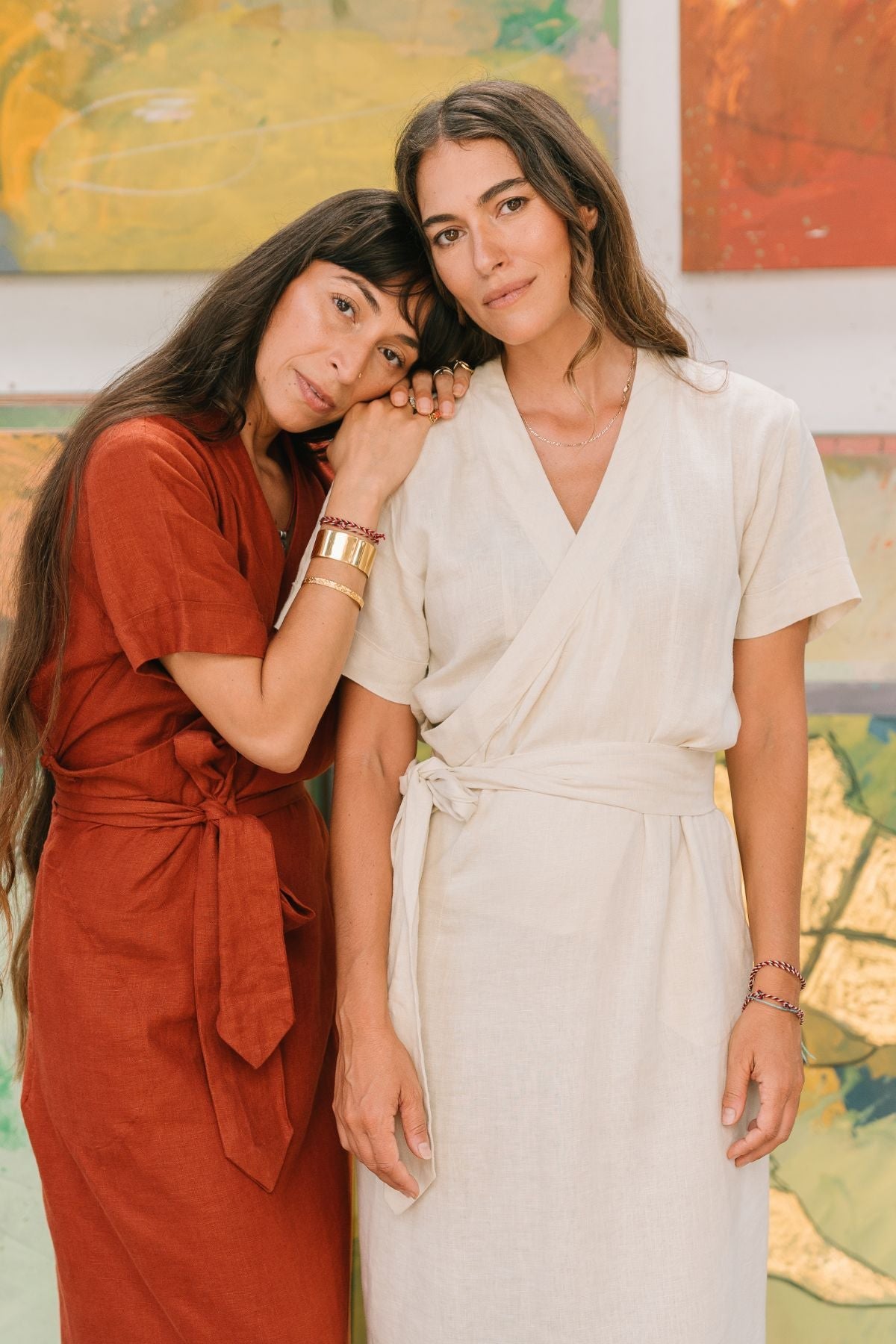
The phrase gets used loosely — for anything flowy, anything cream-colored, anything photographed near a temple. But at its root, dressing the sacred feminine describes clothing chosen to support a woman's inner state rather than to disguise or distract from it. It's less about a specific silhouette and more about intention: garments that move with the body instead of controlling it, fabrics that breathe, cuts that don't require you to hold your stomach in to feel presentable.
Historically, this isn't new. Priestesses, temple dancers, and ceremonial healers across cultures — from Balinese odalan dress to Indian temple silks to the loose linen robes of Mediterranean ritual — wore clothing designed around function and reverence, not spectacle. Sacred feminine fashion, at its best, is a modern return to that same logic.
Why This Matters More in 2026
We're in a moment where a lot of women are quietly exhausted by clothing that asks something of them — that needs to be adjusted, sucked in, performed in. Dressing the sacred feminine is, in part, a rejection of that fatigue. It's why linen, botanical dye, and unstructured silhouettes keep resurfacing in searches alongside terms like "slow fashion" and "conscious dressing." The through-line is the same: clothing that lets the nervous system exhale.
There's also a spiritual current underneath the search trend. As more women return to practices like yoga, moon rituals, breathwork, and cyclical living, their wardrobes are following. You can't fully drop into a meditation, a full moon circle, or a slow Sunday scalp ritual while wearing something that's cutting into your waist. The garment either supports the practice or it competes with it.
How to Actually Dress the Sacred Feminine — Without Costume
The easiest way to get this wrong is to treat it like a costume: throw on anything cream, add a mala, call it done. The easiest way to get it right is to build from a few honest principles.
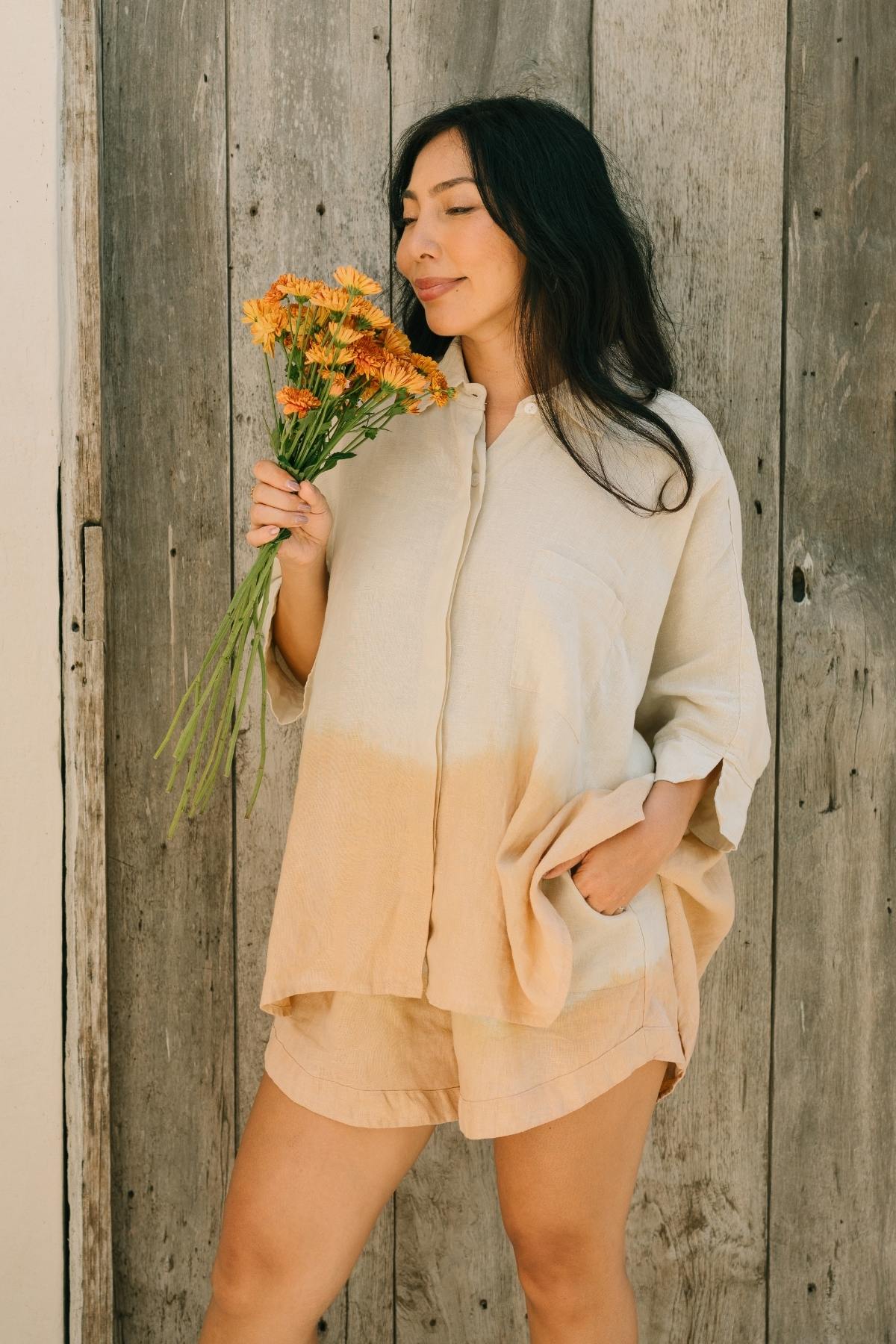
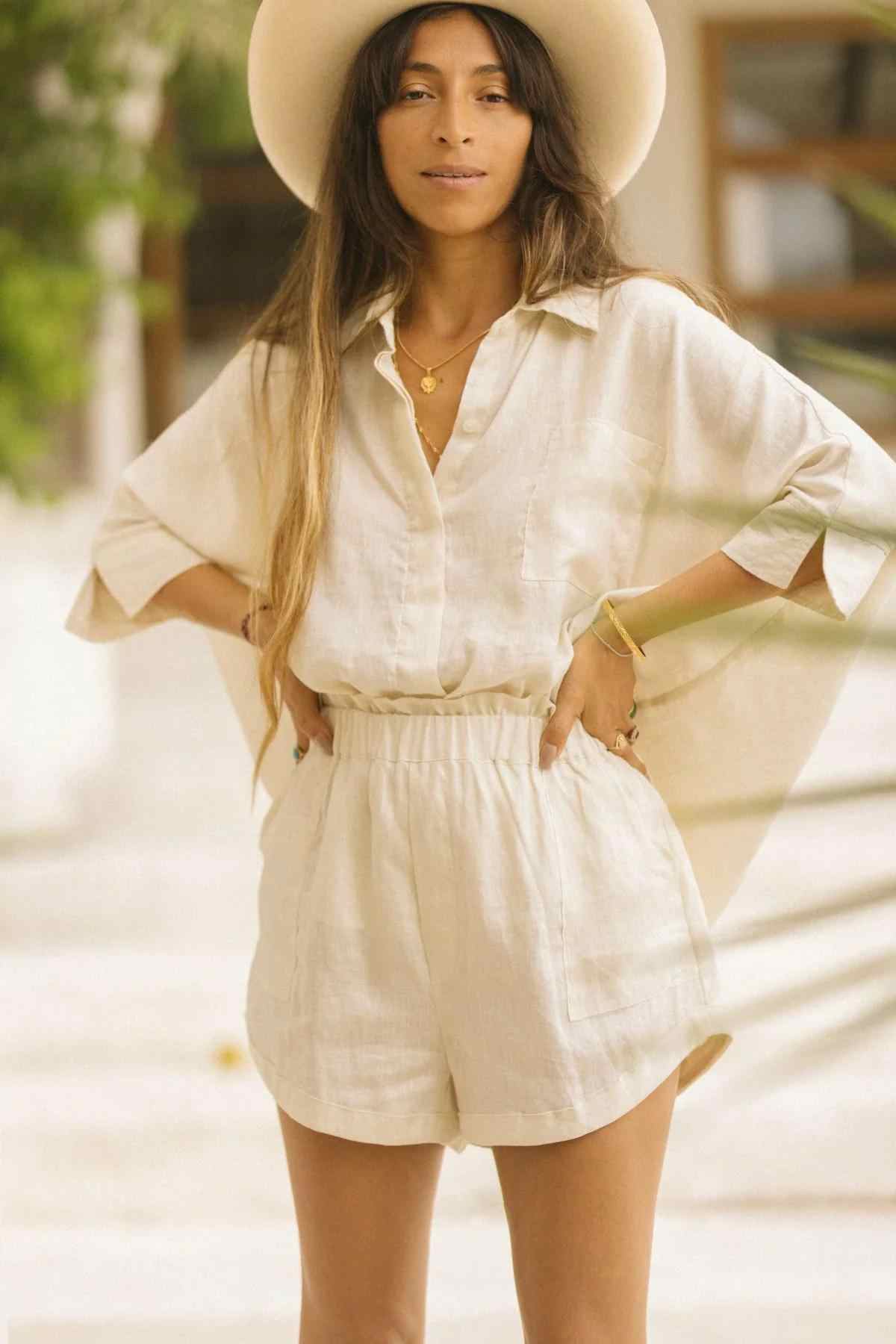
Choose natural fiber first. Linen, cotton, ramie — fabrics that move with your body's temperature and don't trap tension the way synthetics do. This isn't just aesthetic; natural fiber against skin genuinely changes how a garment feels through hours of wear.
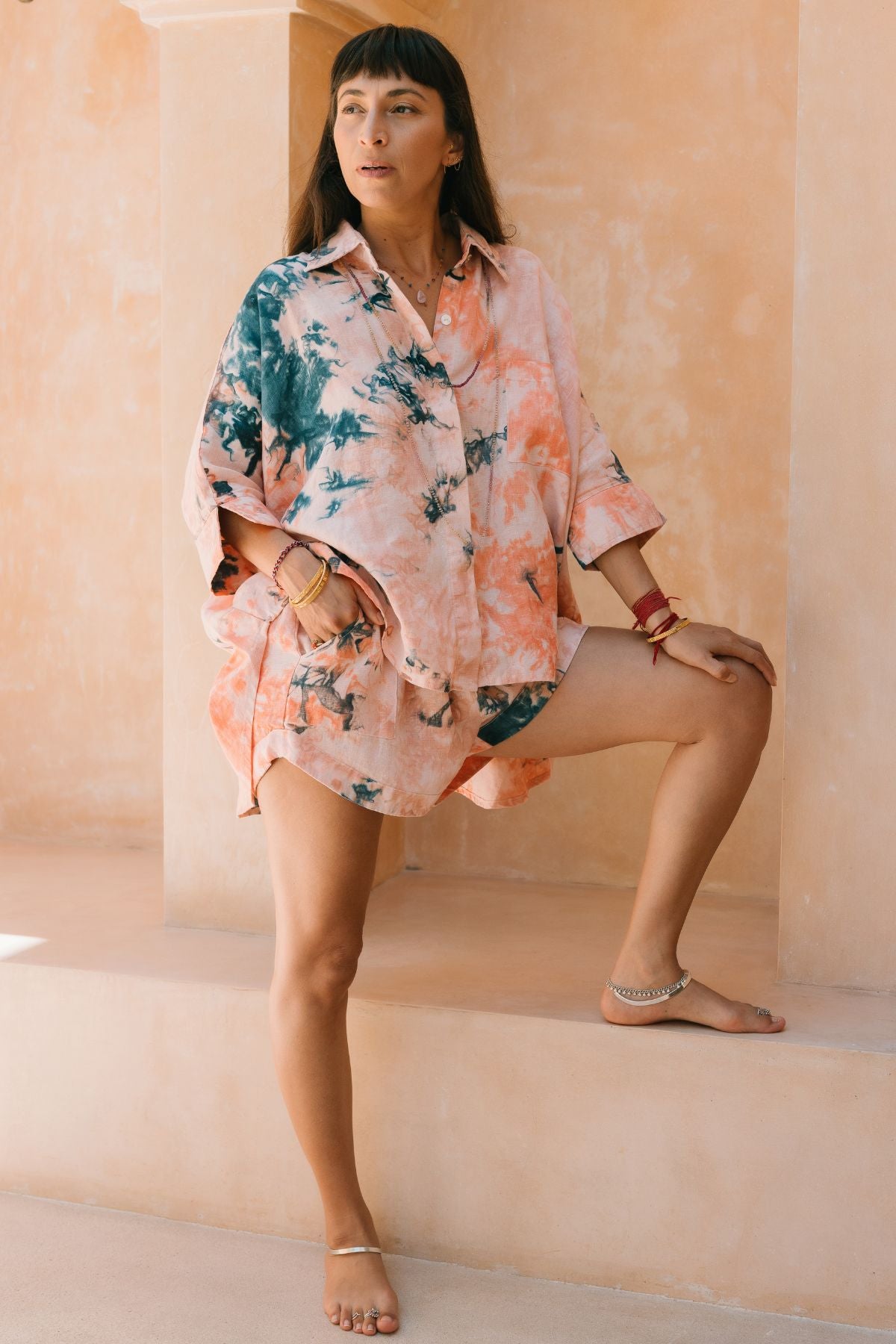
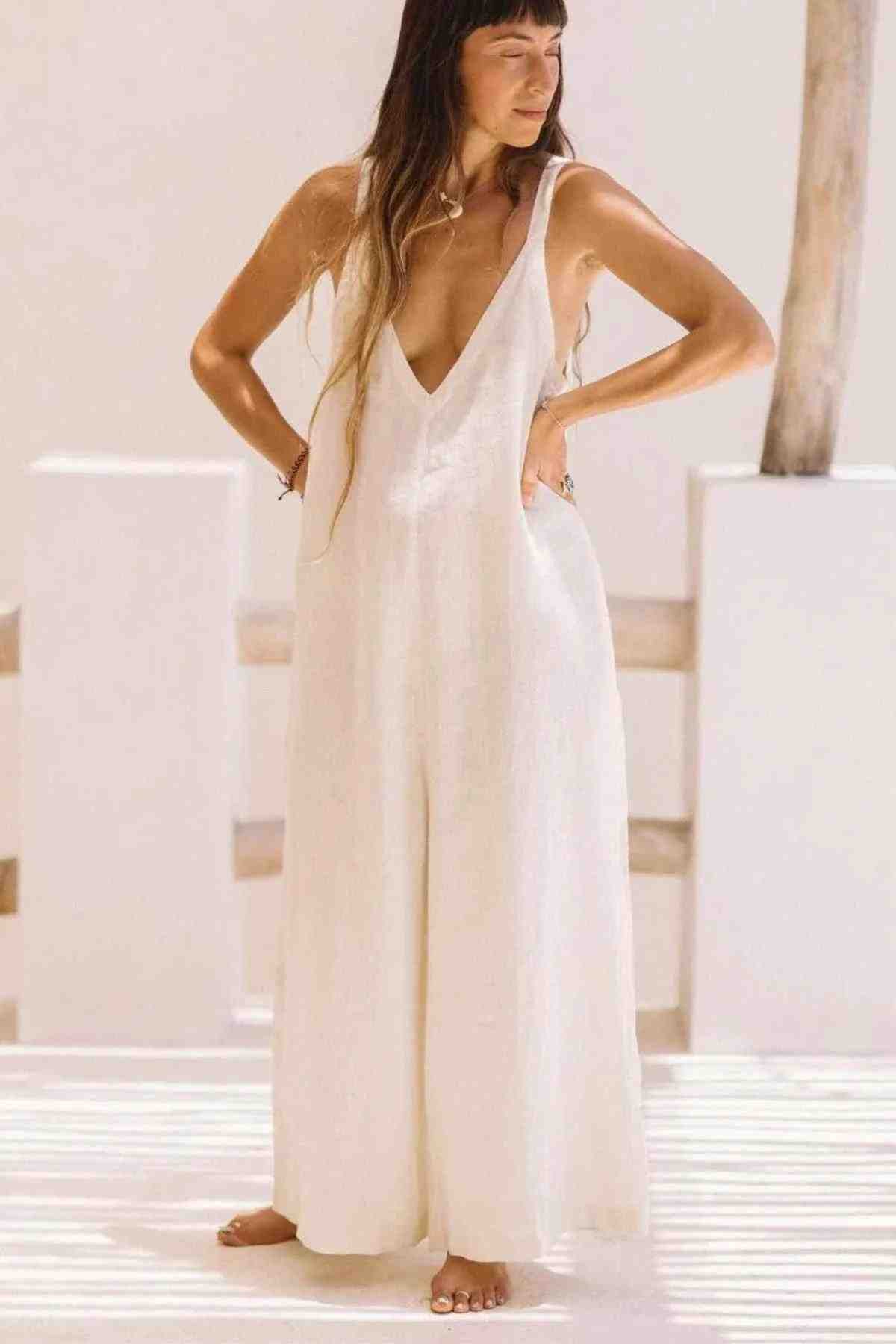
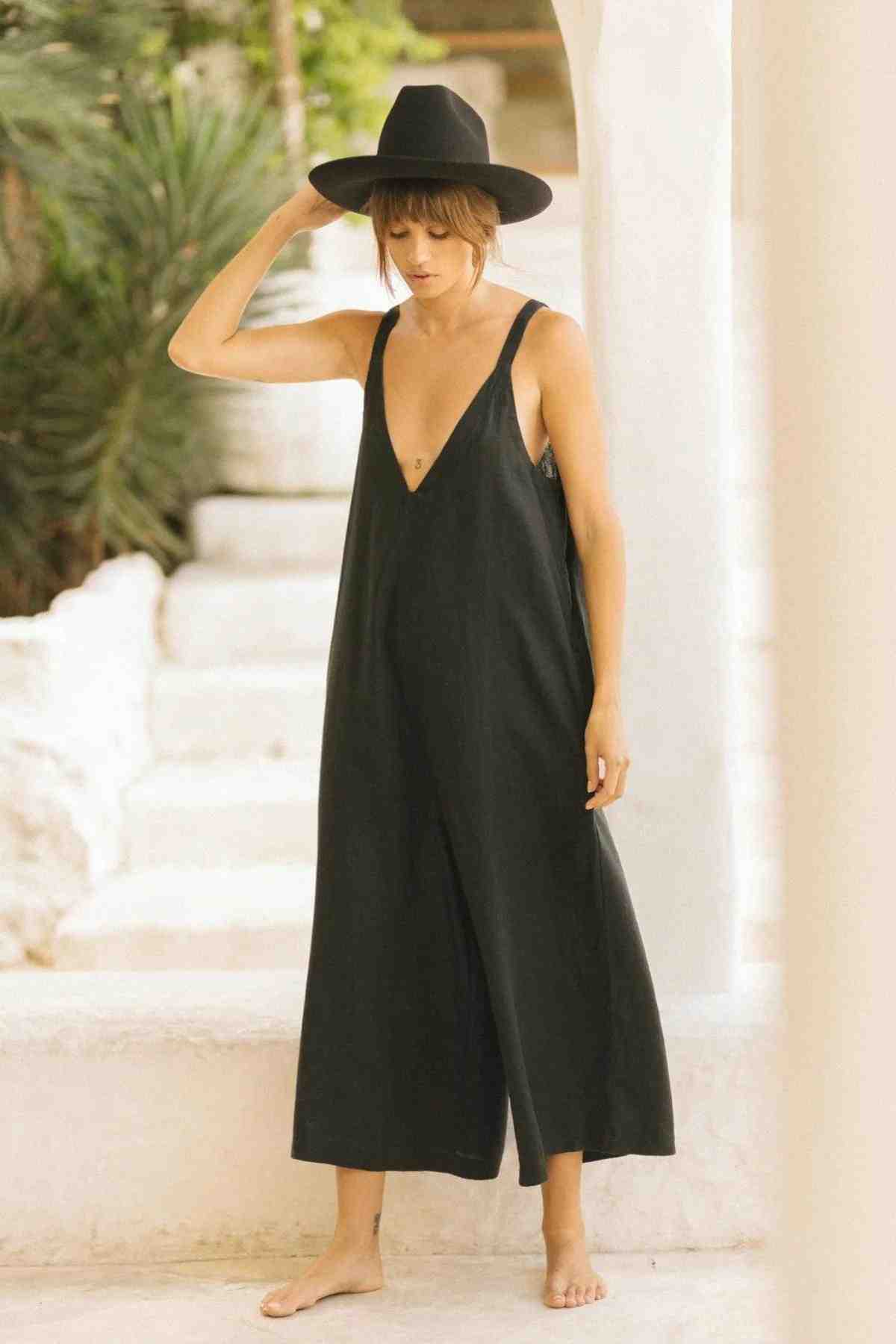
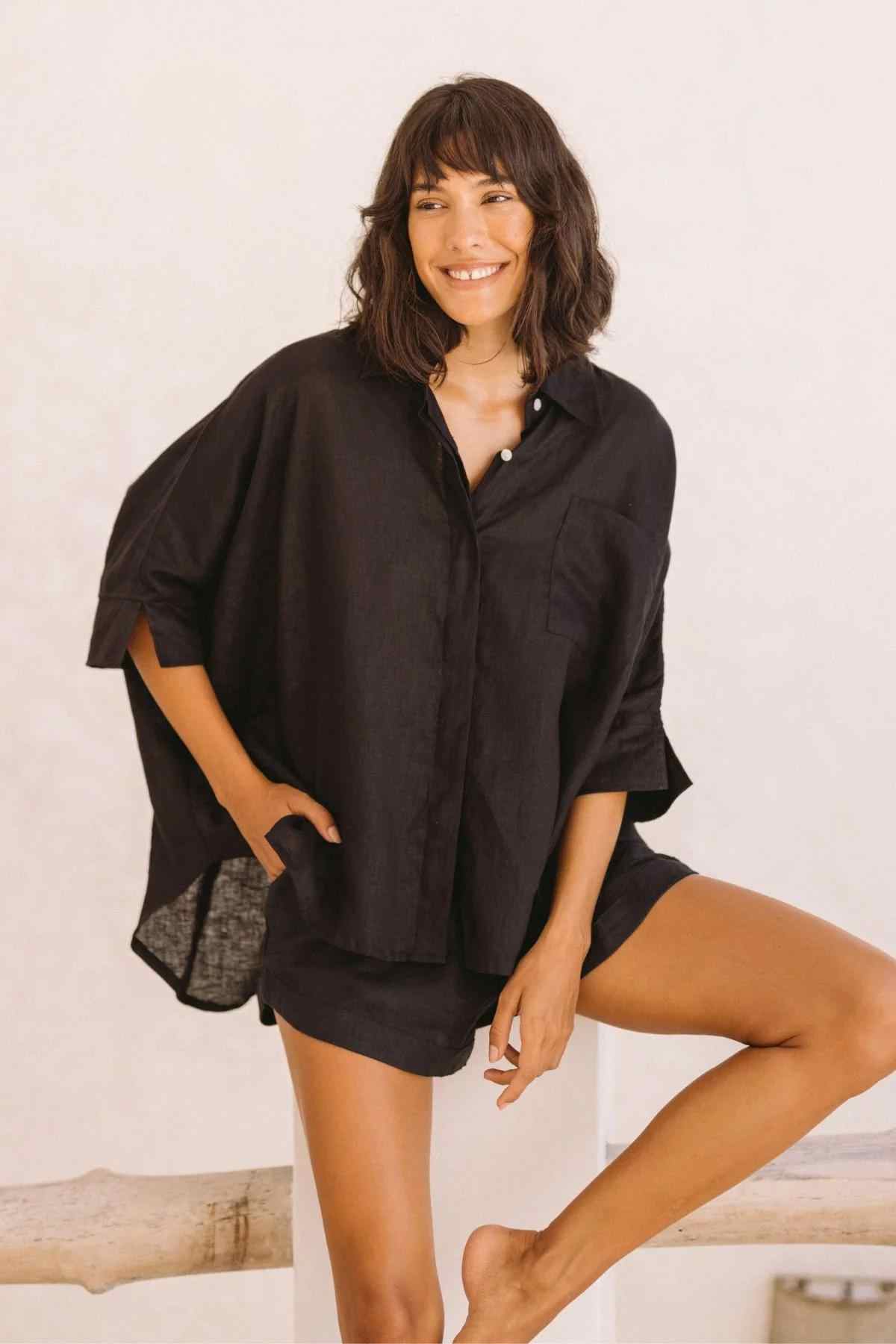
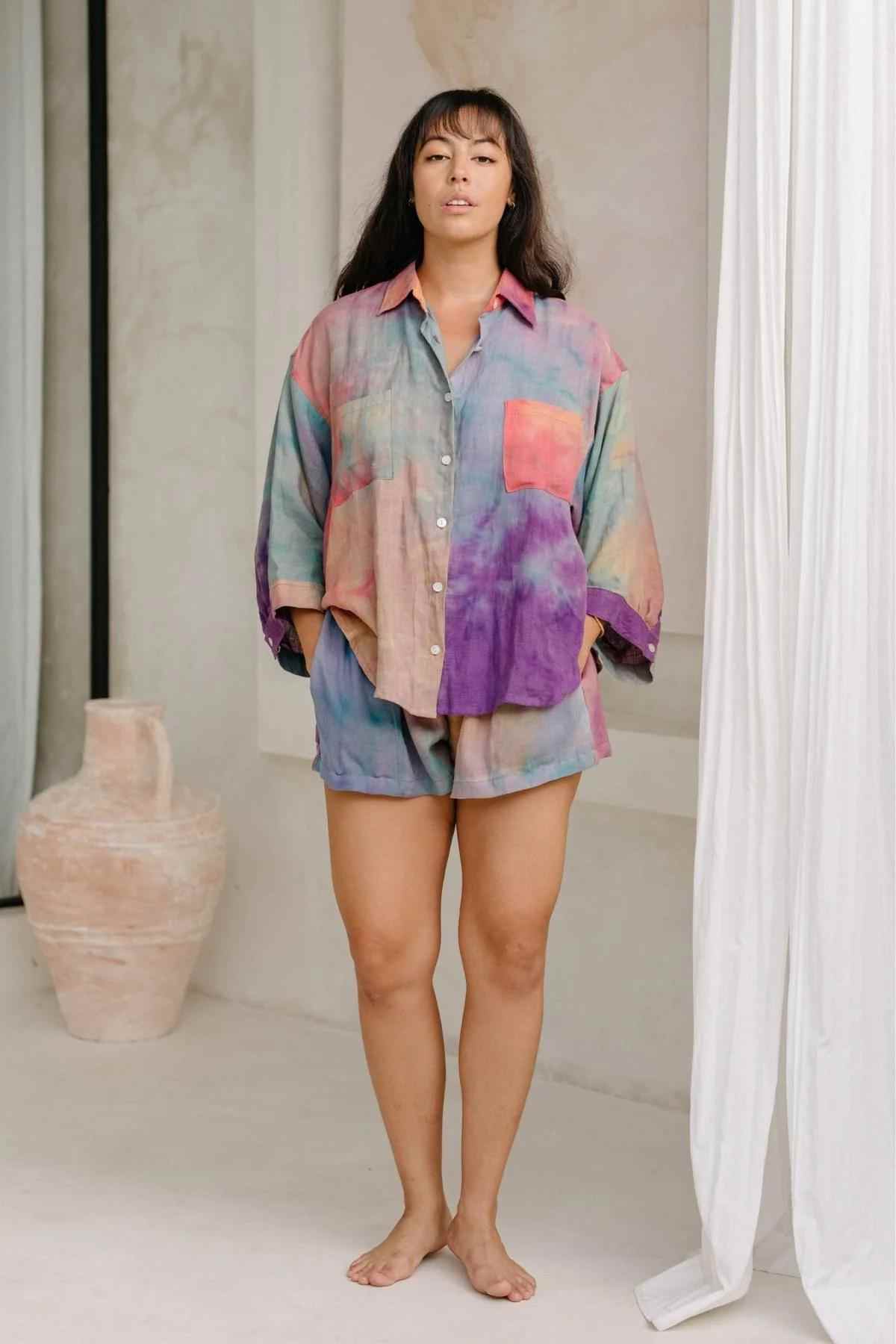
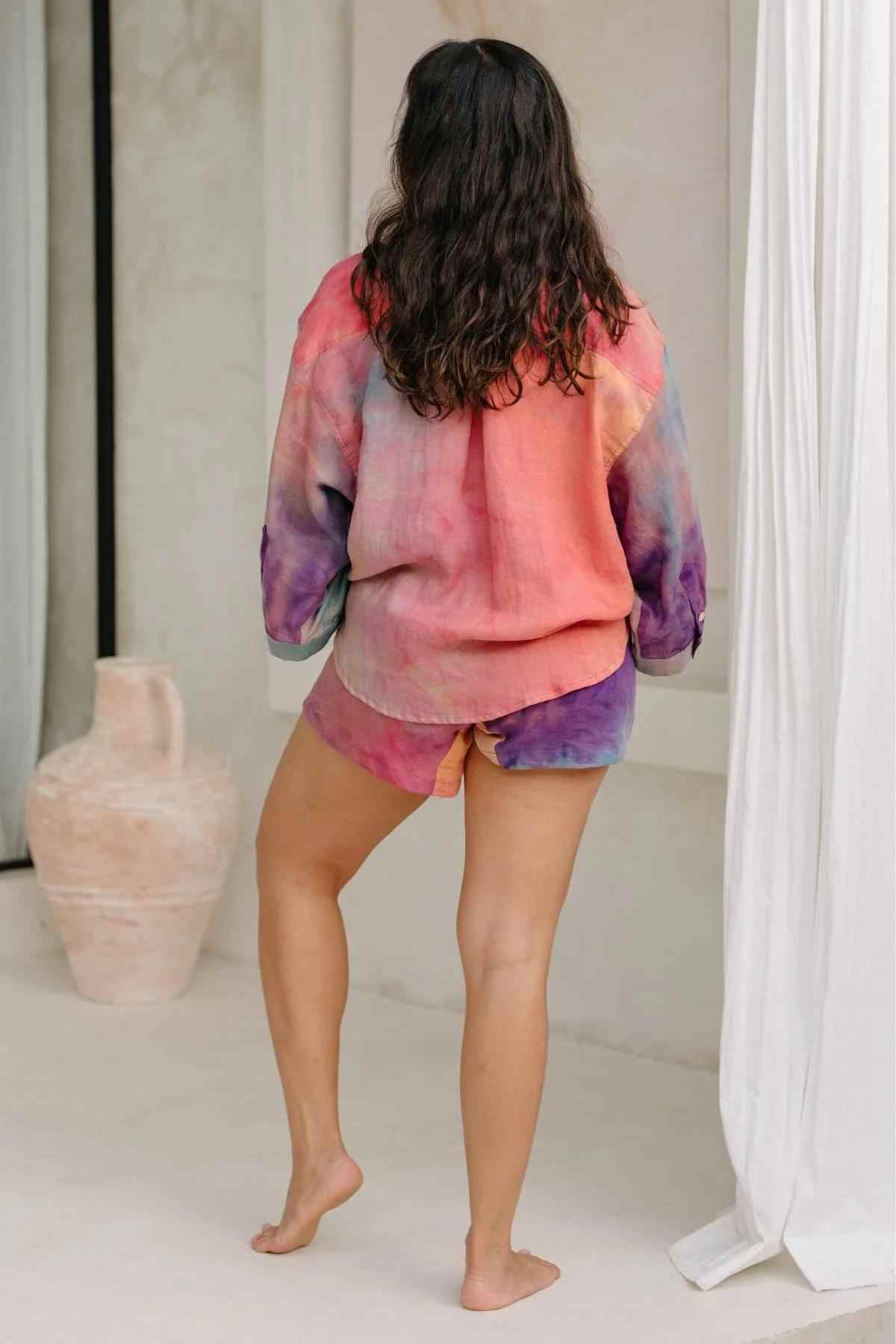
Let the cut breathe. Sacred feminine dressing favors gowns, wide-leg pants, and open silhouettes over anything structured or fitted. The goal isn't shapelessness — it's freedom of movement, especially through the hips and shoulders, where women tend to carry the most held tension.
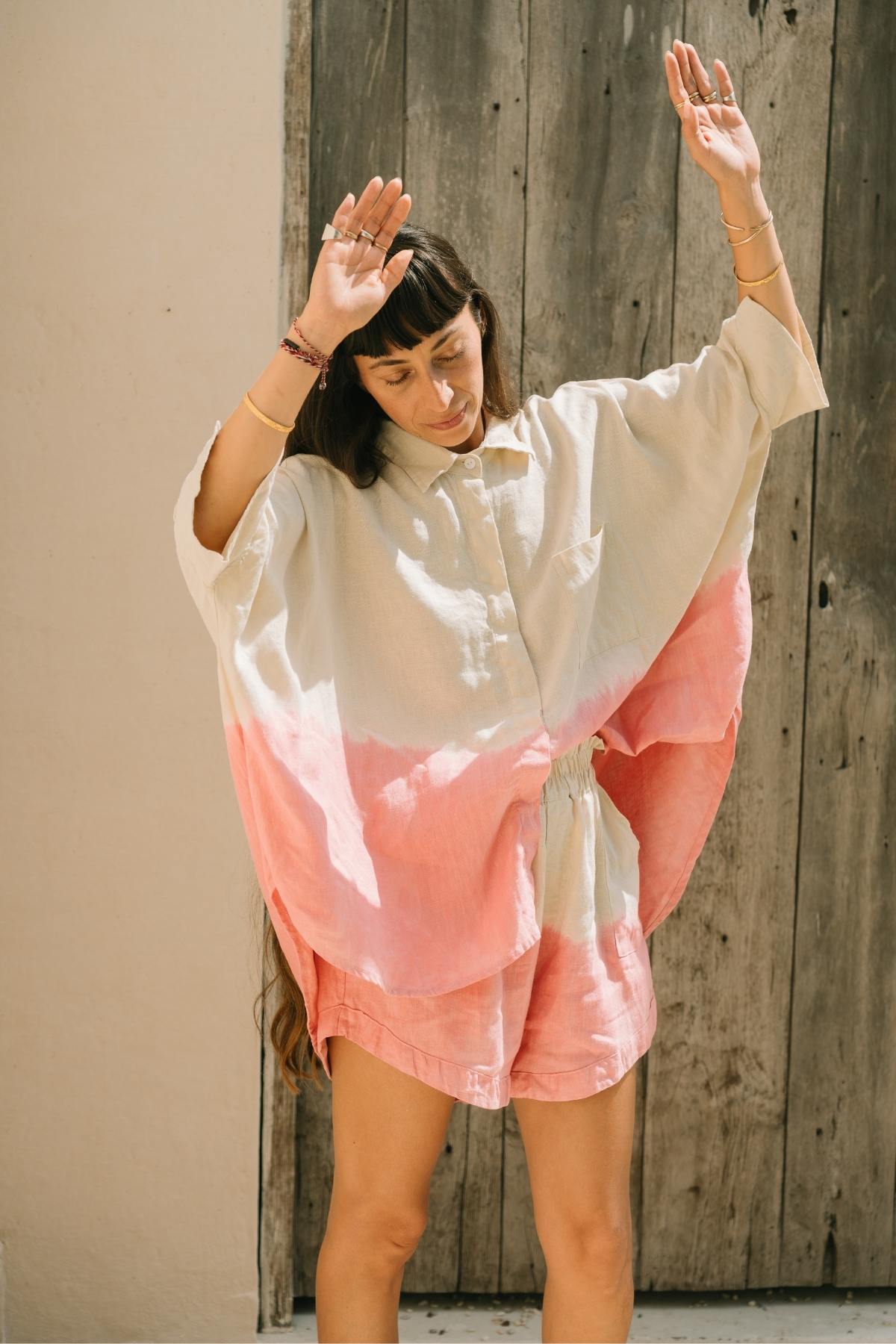
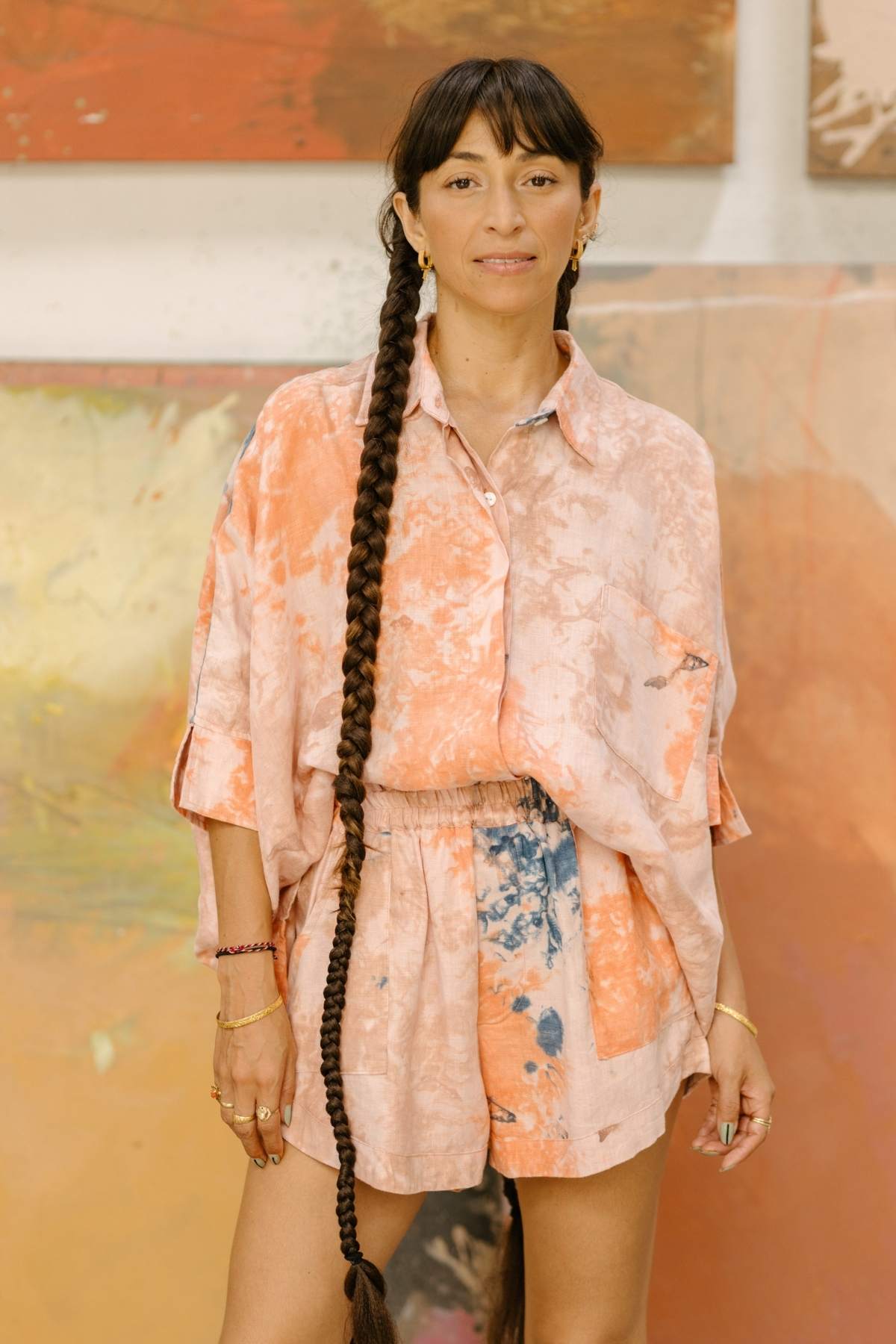
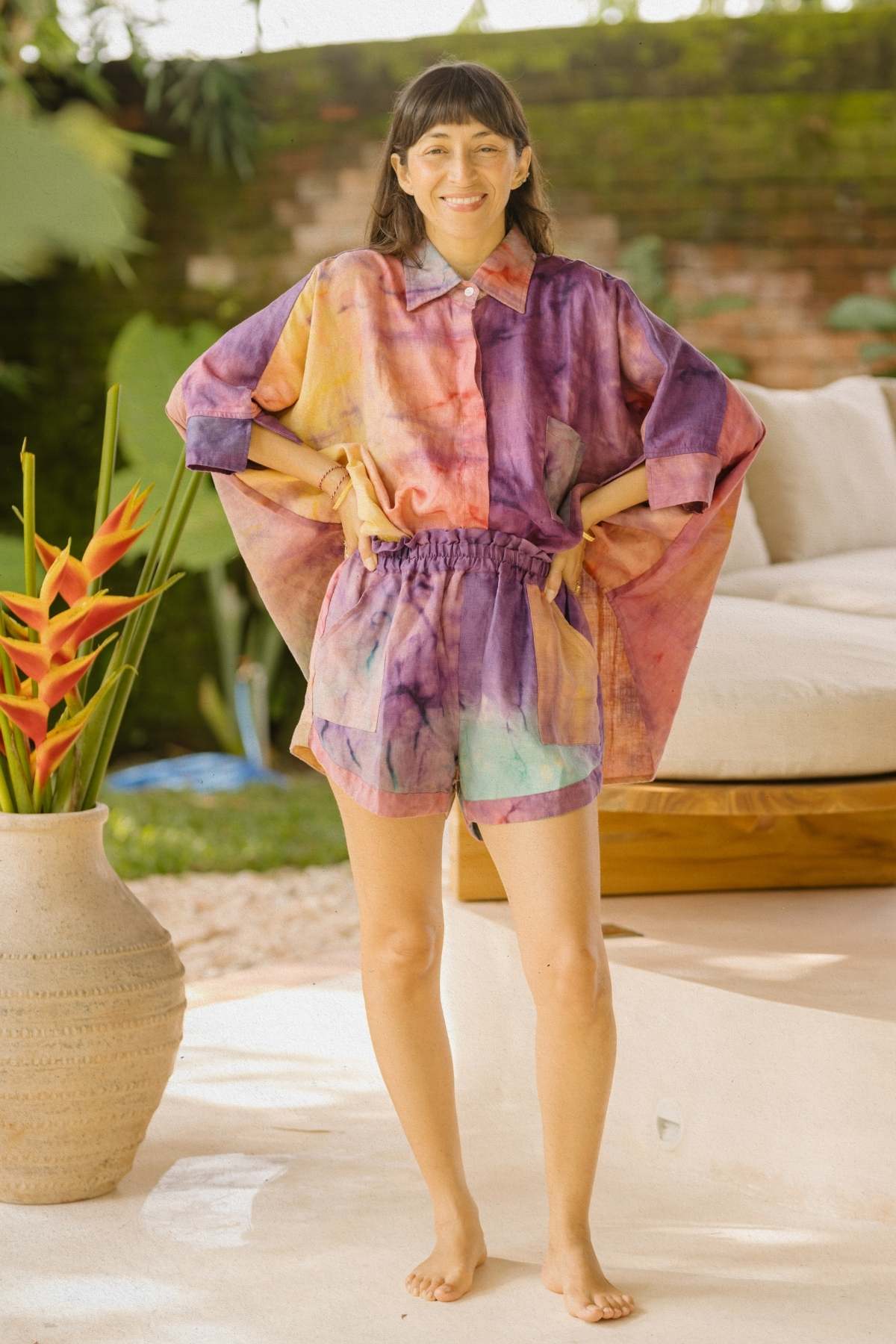
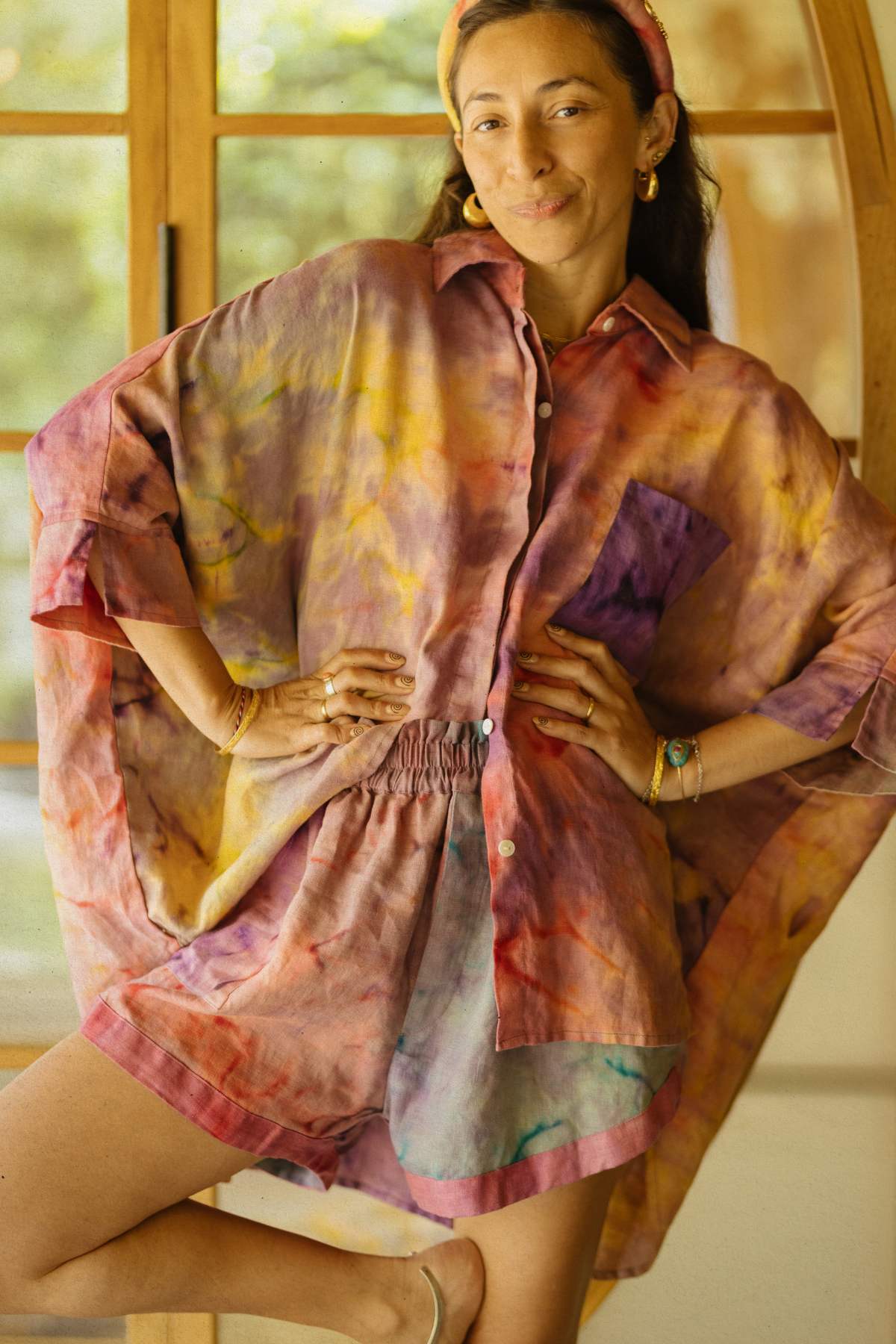
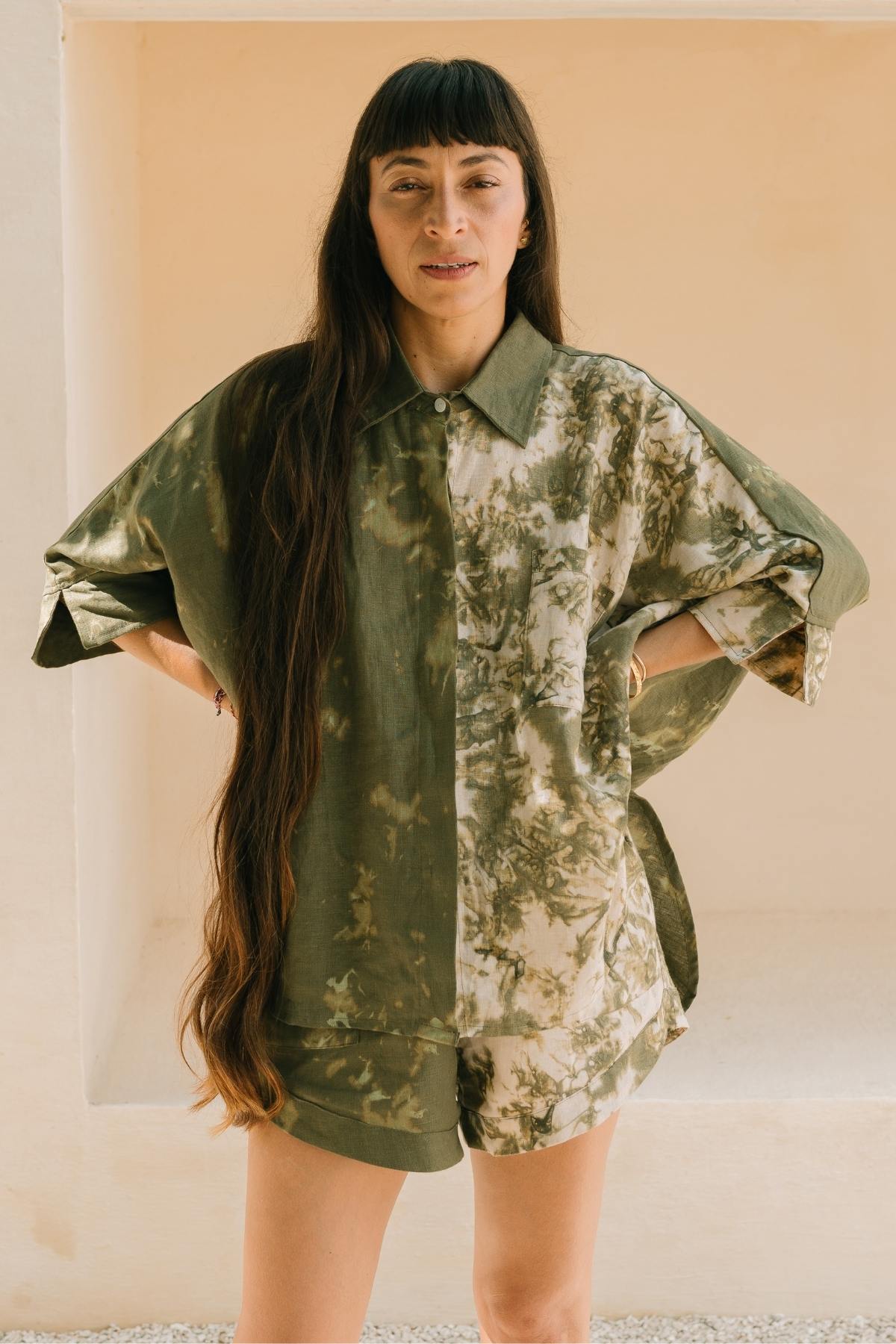
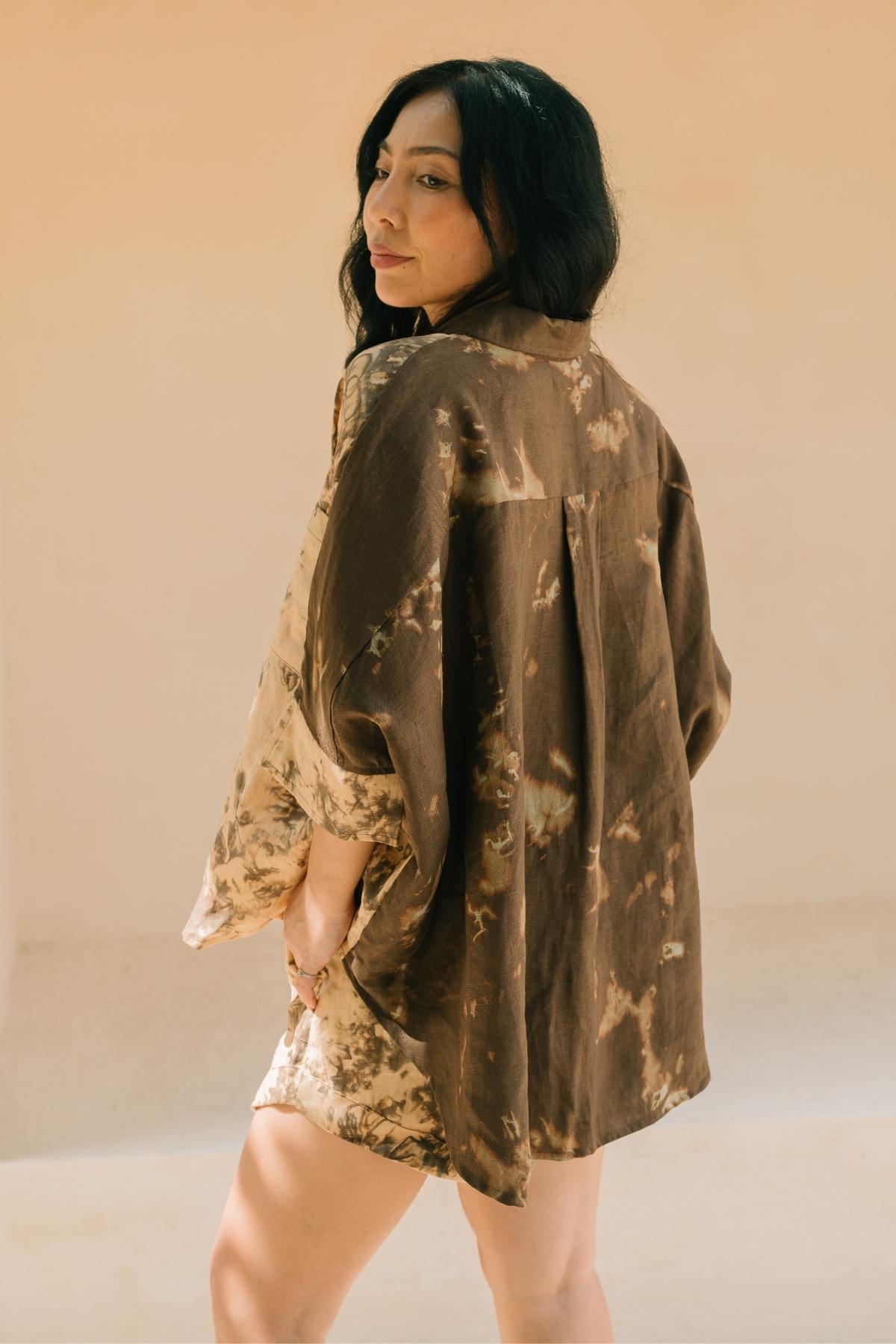
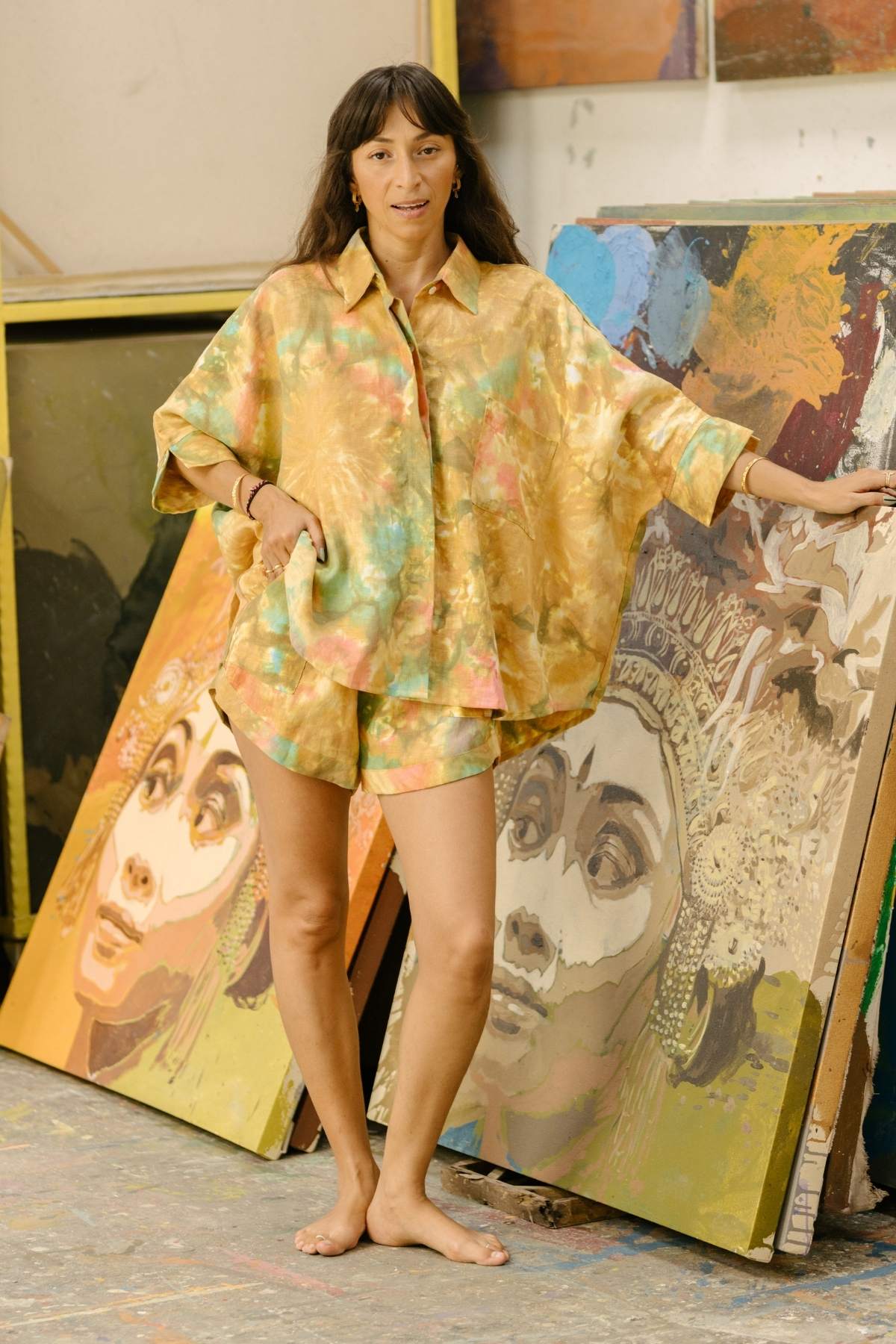
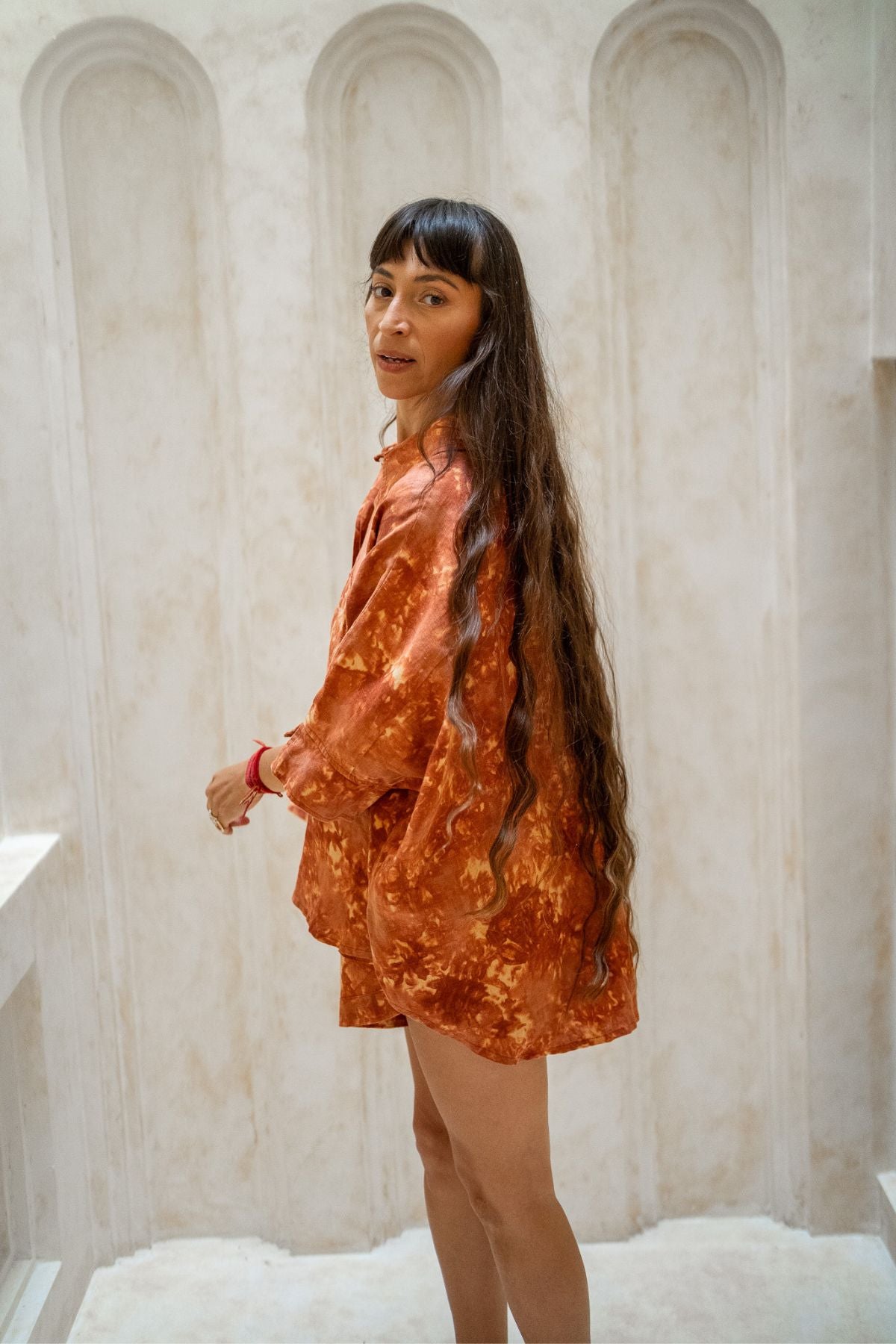
Choose color with intention, not trend. Botanical dye — saffron, sacred ash tones, deep earth — carries a different weight than synthetic color. Many women report that hand-dyed, plant-based color simply reads differently on the body: warmer, less flat, more alive.
Let one piece do the work of a practice, not a performance. A single well-made gown you reach for during meditation, ceremony, or quiet mornings will do more for you than five "boho-coded" pieces bought for how they photograph.
What Sacred Feminine Fashion Is Not
It's worth naming what this isn't, because the term gets diluted fast online. It isn't a specific religion's dress code borrowed for aesthetics. It isn't "coastal grandmother" with a mala thrown on top. And it isn't reserved for women who meditate daily or keep an altar — the phrase describes an orientation toward clothing, not a lifestyle checklist you need to complete first.
It also isn't about covering up or dressing modestly by default. Sacred feminine dressing has just as much room for a bare shoulder, an open back, or a sheer sleeve as it does for a full-length gown. The common thread isn't how much skin shows — it's whether the garment was chosen from a place of reverence for the body wearing it, rather than a place of trying to correct or hide it.
Sacred Feminine Fashion Is a Practice, Not a Purchase
The risk with any trend term — and sacred feminine fashion is currently trending as a search term — is that it gets reduced to an aesthetic you can buy your way into. It can't be. The clothing supports the practice; it doesn't replace it. A gown won't make you feel more devoted, more grounded, or more yourself. But the right gown, worn during the moments you're already trying to slow down and arrive in your body, can remove one small piece of friction between you and that feeling.
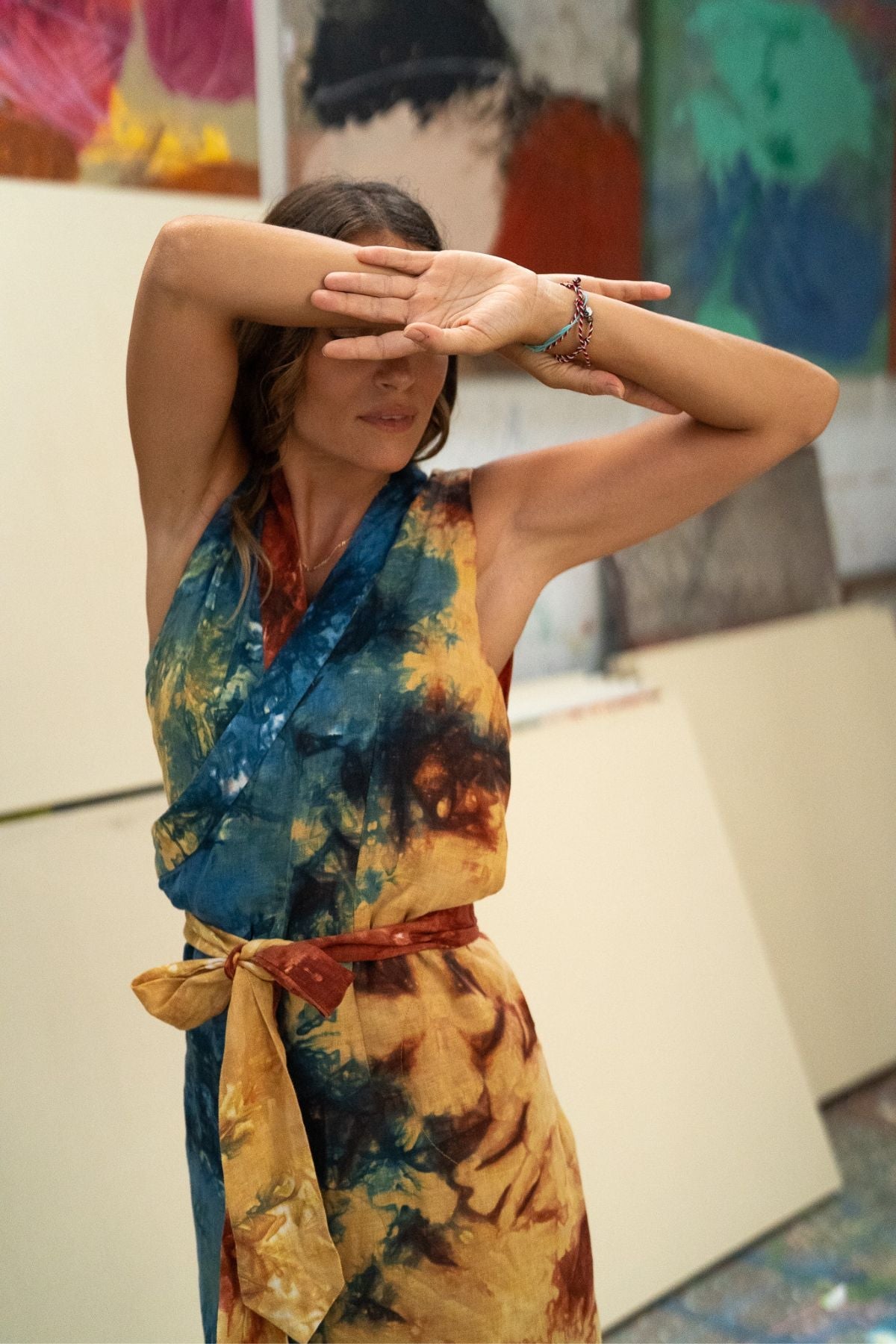
That's the whole design philosophy behind pieces like the Dharma Gown Sleeveless below — not a costume for spirituality, but a garment built to disappear on the body so the practice underneath it can be the whole point.
Wear your practice. Not the idea of it — the actual, unglamorous, daily practice of arriving in your own body.
With love from Bali,
Myrah.
|
A Piece for This Threshold Dharma Gown Sleeveless. Wear your practice — without sleeves, without weight, without anything between you and the moment. Botanically hand-dyed in Mahashivrati tones of saffron and sacred ash, made to move with the body through meditation, ceremony, and the quiet in between. |

|
The Muse-Letter Dress for the woman you're becoming. Every week from Bali. Astrology, slow living, sacred feminine, and the pieces we make by hand. A letter, not a sales pitch. Unsubscribe any time. No spam, ever. |


Leave a comment
This site is protected by hCaptcha and the hCaptcha Privacy Policy and Terms of Service apply.