True Abundance: Supporting Thirty Families
Most fashion brands measure success in units sold, return on ad spend, revenue per visitor. We have those numbers too. We look at them. They matter.
But they are not the measure we use to understand whether the business is working. That measure is different.
Thirty families.
That is the number of Balinese artisan families whose income depends, in significant part, on what we make and sell here. Tailors. Natural dyers. Hand-weavers. The people who support all of them. Thirty families, in this island, in their homes and in small workshops they own themselves, because of this brand.
That is Robindra's phrase. He says it quietly, without ceremony, which is how you know it is something he actually believes rather than something crafted to sound meaningful. It is how he measures whether a year was good.
Not the revenue. The families.
What This Means in Practice
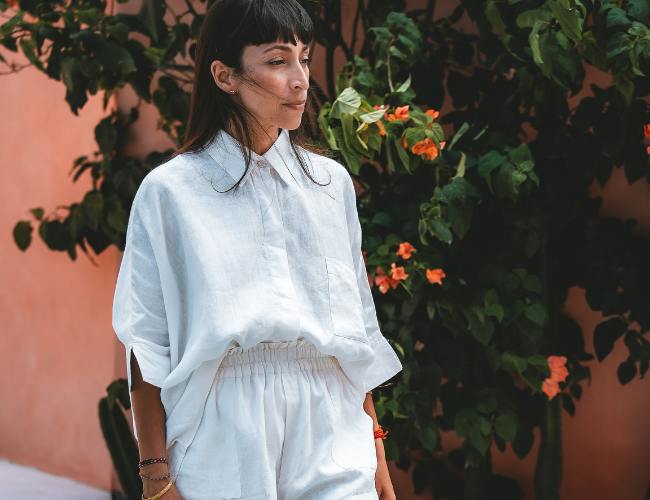
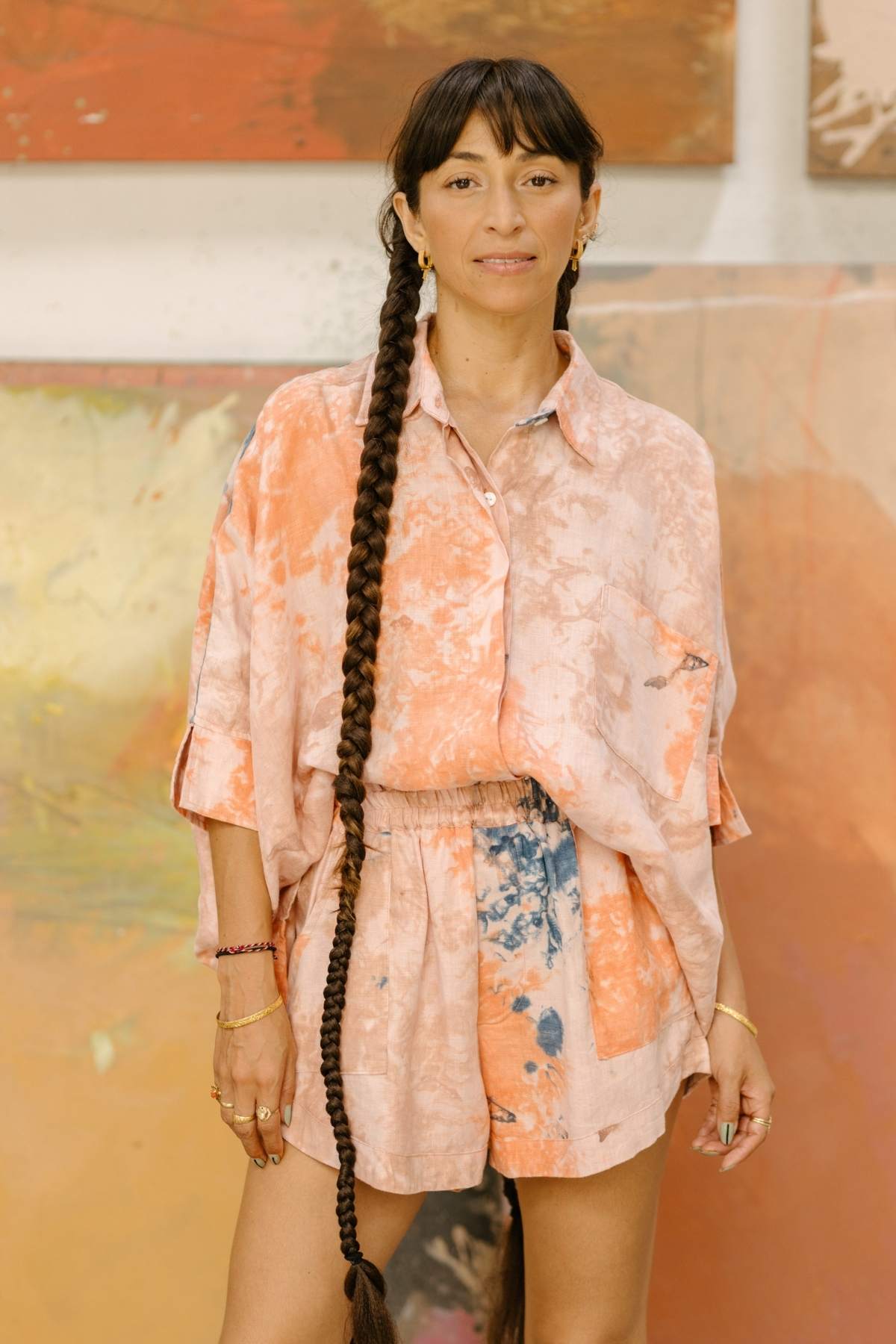
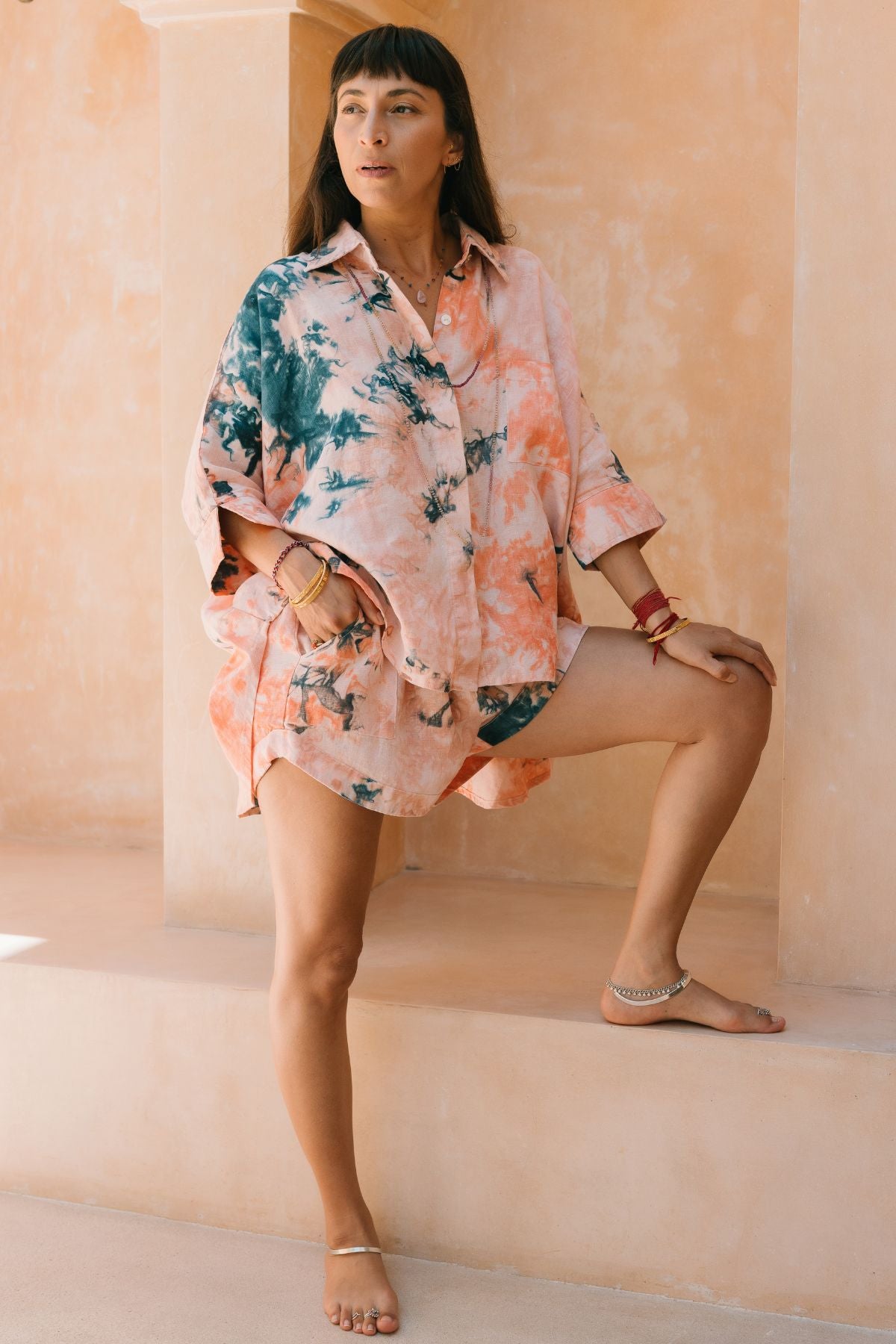
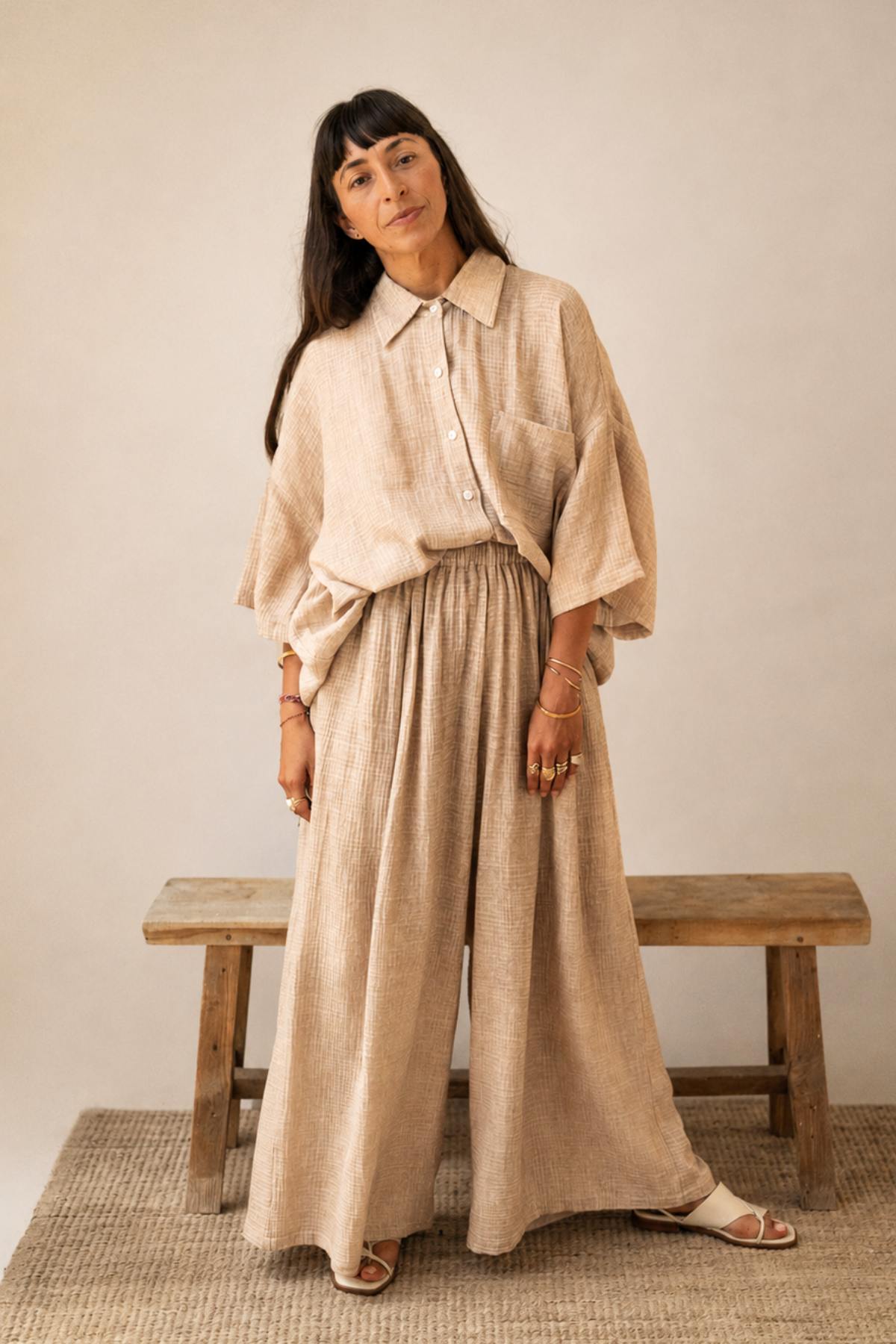
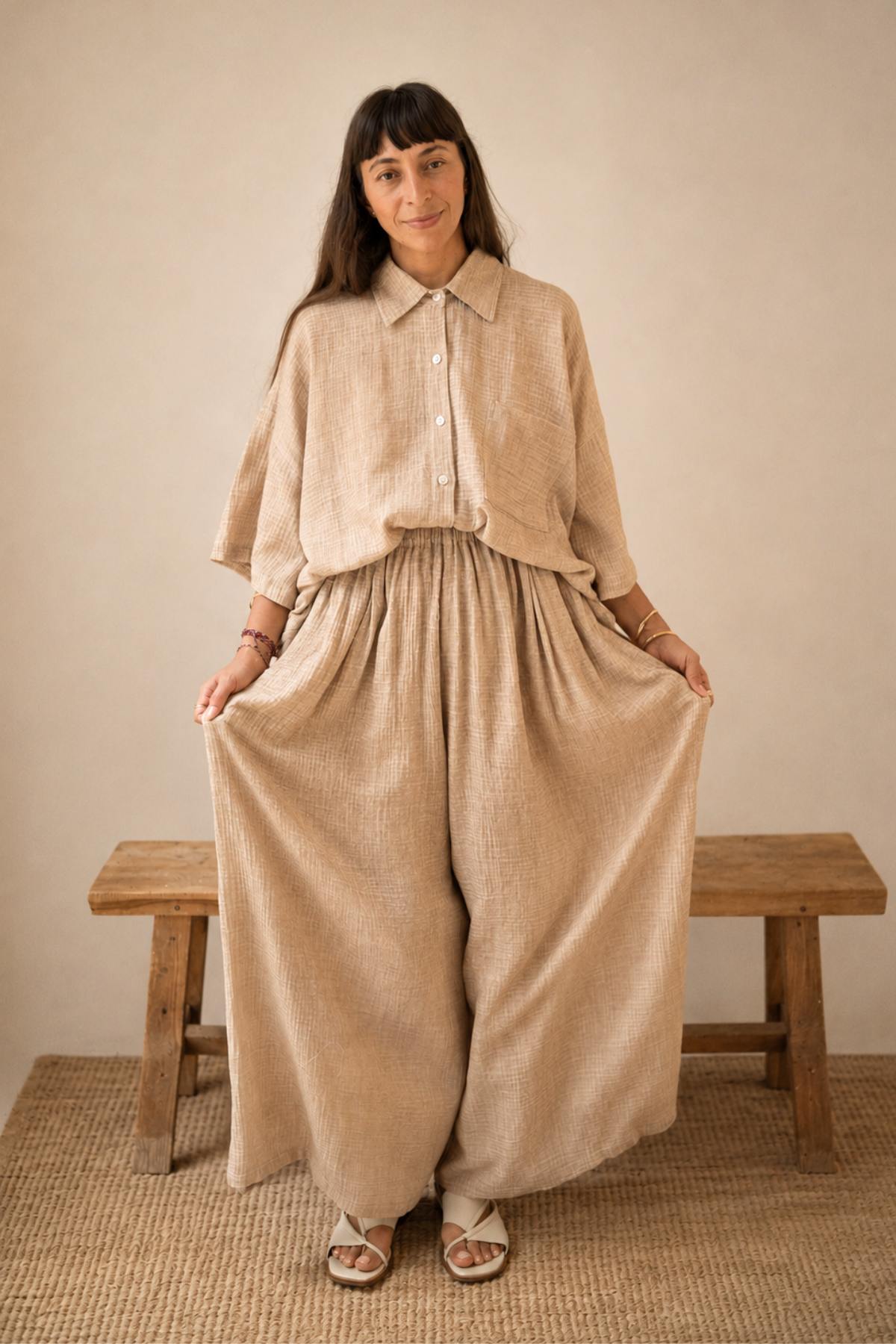
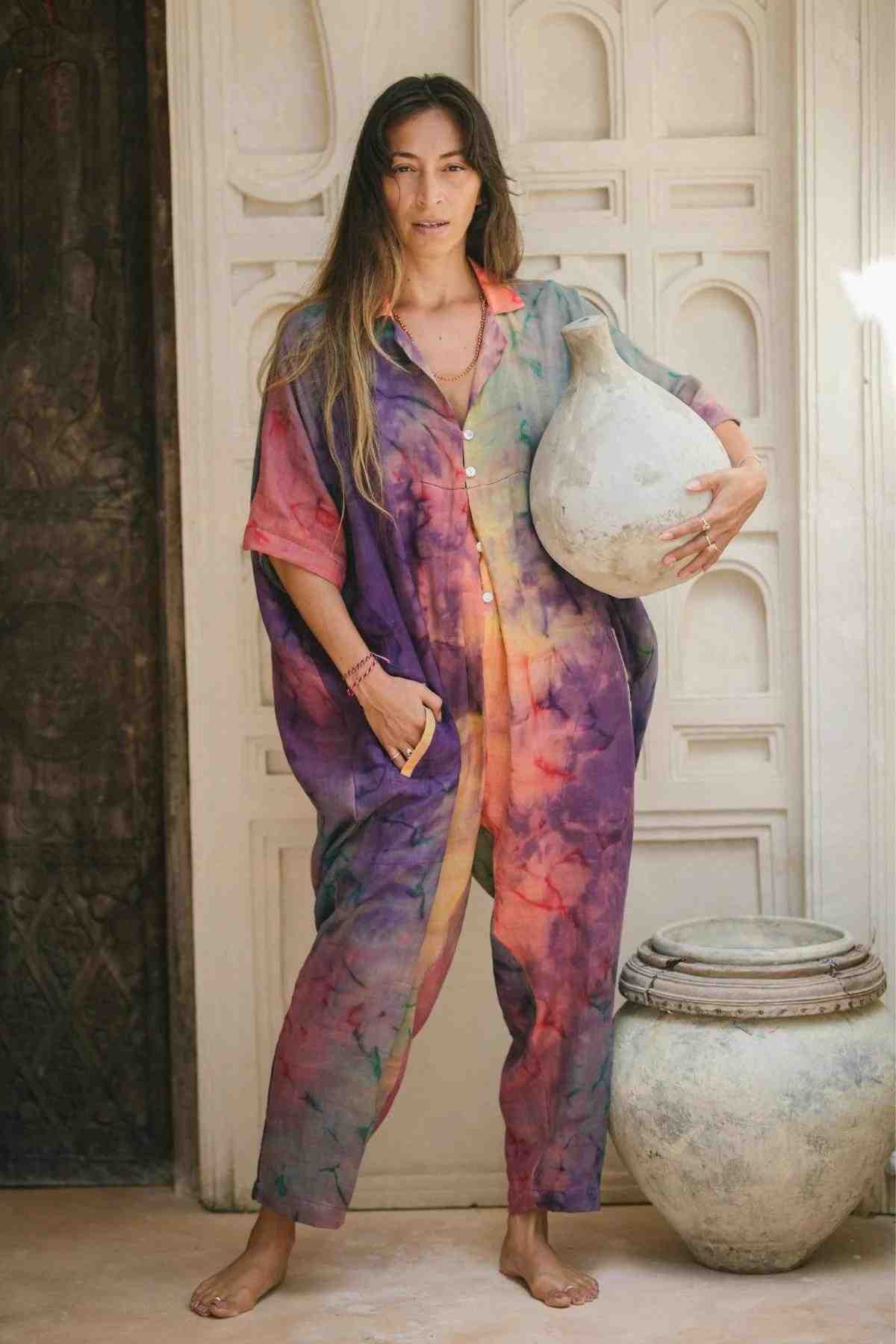
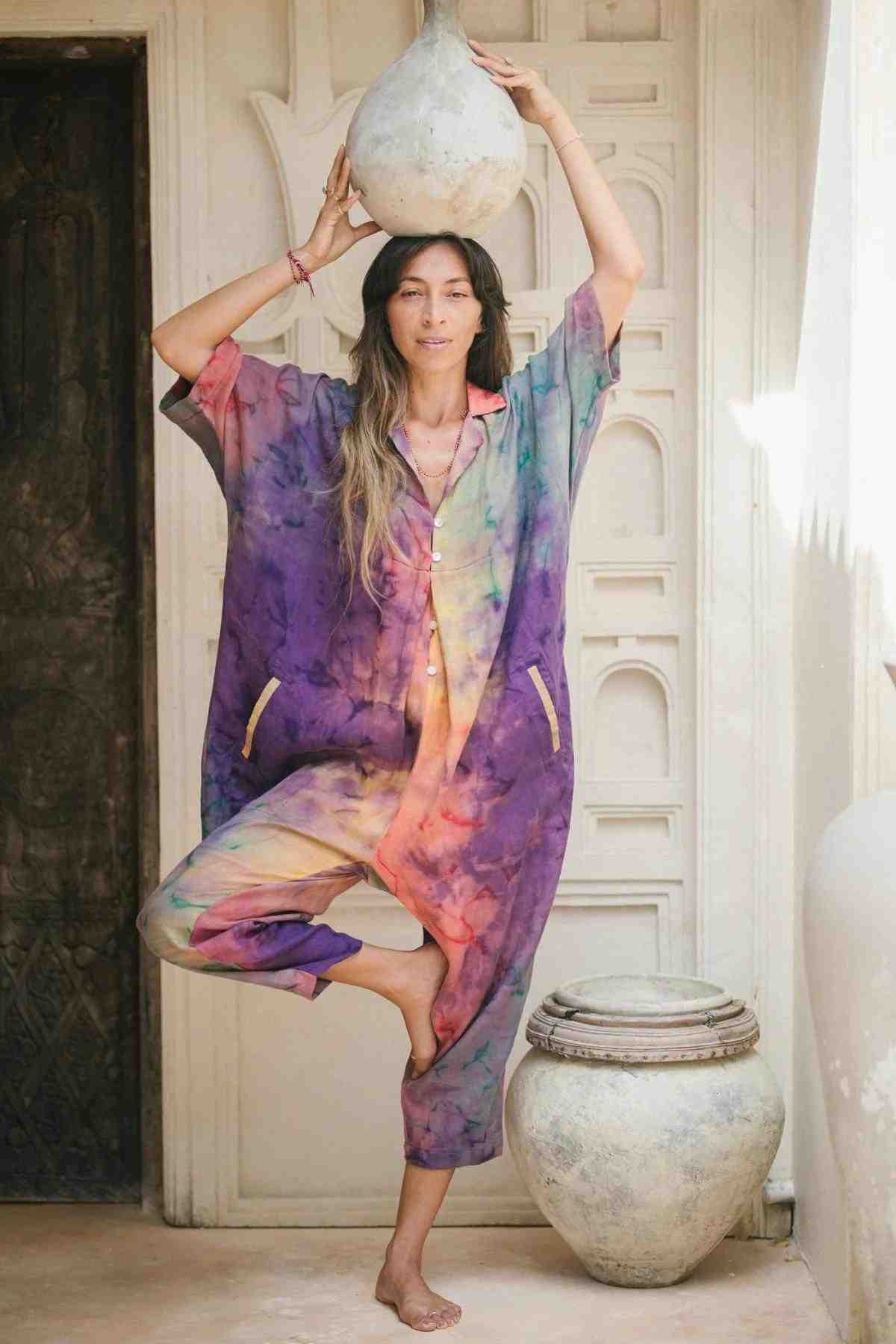
When an order comes in for a linen set, it reaches all the way through the circle. The tailor who cuts and sews. The natural dyer, if it is a Rainbeau colorway. The person who presses and packages. The family behind each of those people, who depend on that income for school fees, for medicine, for the ordinary expenses of a life.
A single order from a customer in California or London or Singapore does that. It travels across the world and lands in someone's home in Bali, and what it does there is real.
We think about this often. We think about it when we price a garment, because pricing a garment correctly is how you make sure the people making it earn what they should. The price of a piece is not just the material and the labor and the margin. It is the guarantee that the circle holds. That when you pay it, everyone along that chain of hands earns with dignity.
Why We Work From Homes and Workshops, Not Factories
The home-based model is not the most efficient way to make clothing. Efficiency, in the way the fashion industry uses that word, requires concentration. Workers in one place, on a standardized schedule, producing at scale.
We do not do that. We never wanted to.
The artisans who make our clothing work from their own homes and from small workshops they own themselves. They set their own hours. They practice a craft they have chosen, in a space that belongs to them, beside people they love. This is not a logistical accident. It was a deliberate decision, made years before COVID forced the rest of the industry to consider whether it was possible.
It is possible. We have been doing it for years. And the work is better for it. You can feel the difference in a garment made by someone who was not being timed.
The Garment as Carrier
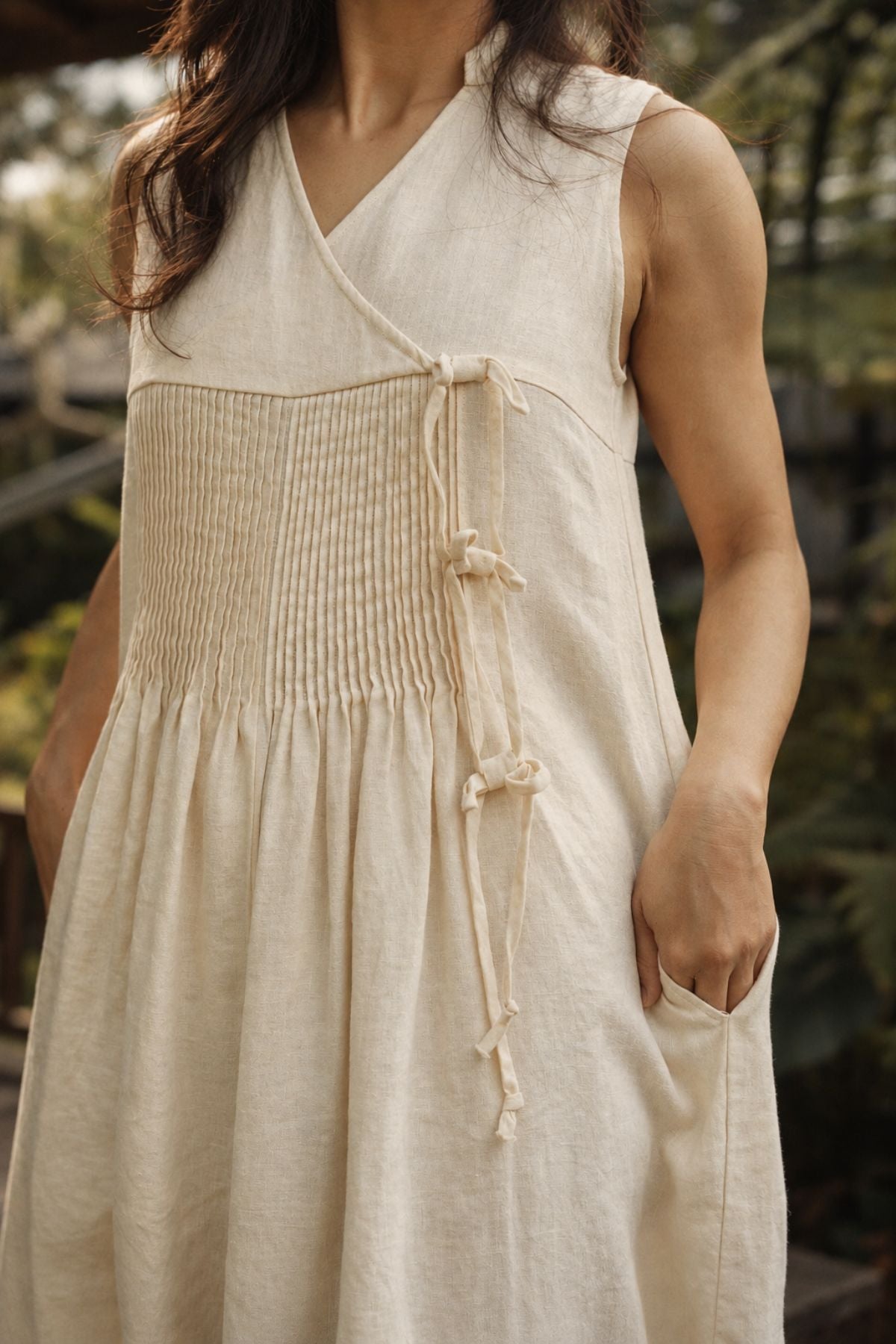
We believe that what happens during the making of a thing stays in the thing. This is not a mystical claim. It is an observation about craft. A garment made quickly, under pressure, by someone who would rather be somewhere else, carries that in its fabric. You can feel it when you put it on. Something slightly wrong in the way it sits, the way it holds its shape.
A garment made carefully, by someone who chose this work, in their own home or their own small workshop, with their own hands, in their own time... carries that too.
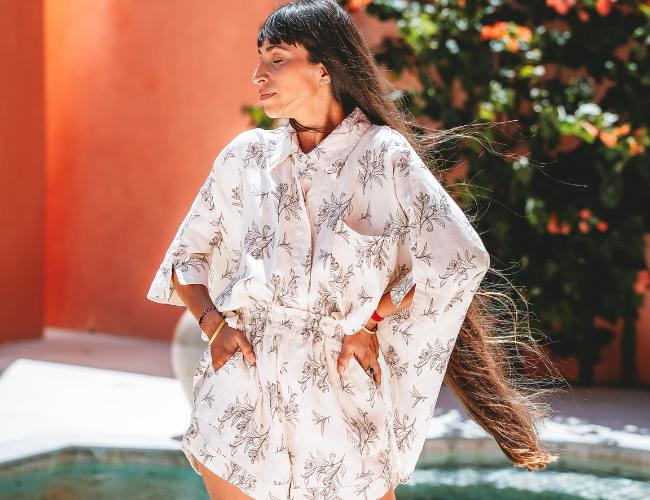
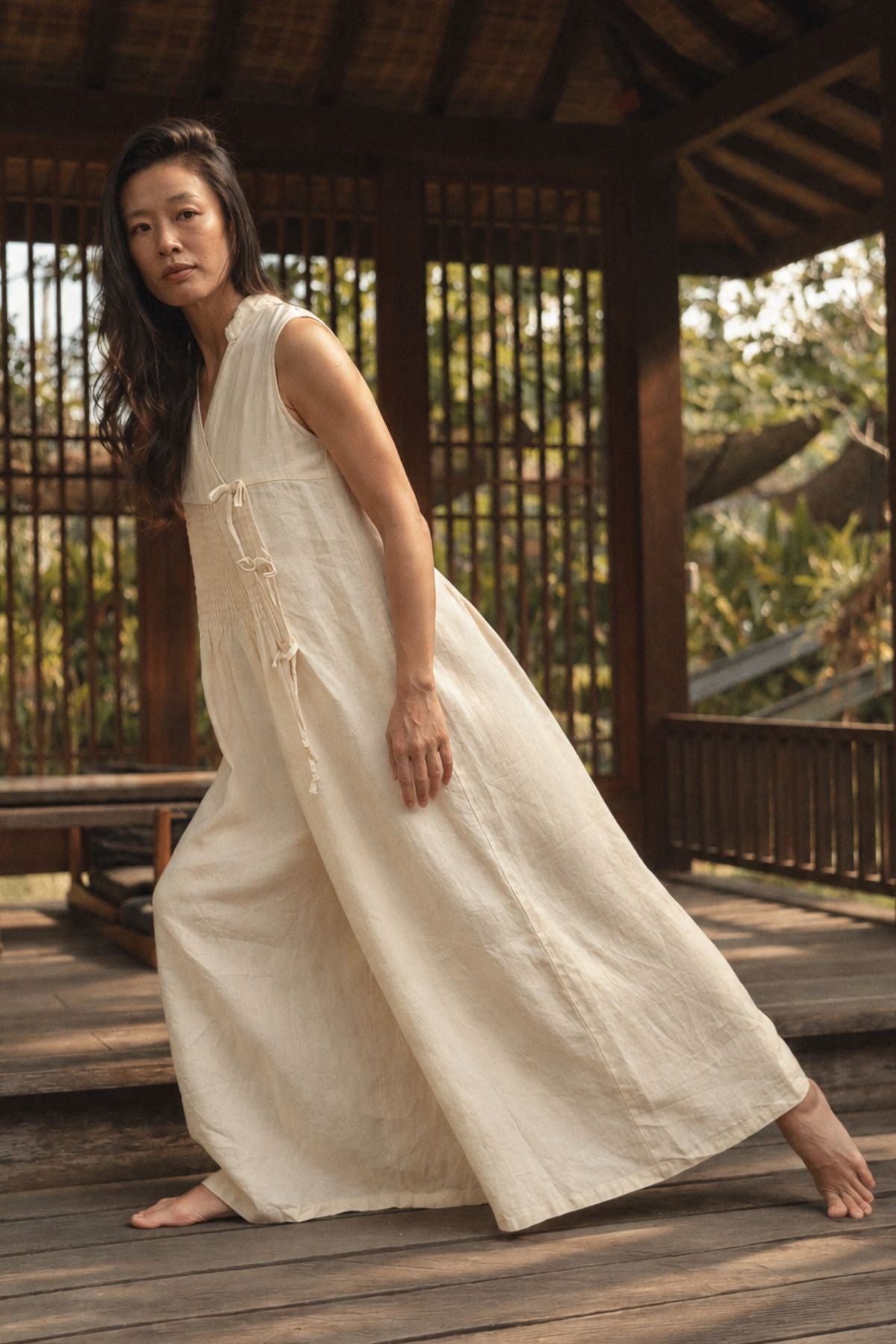
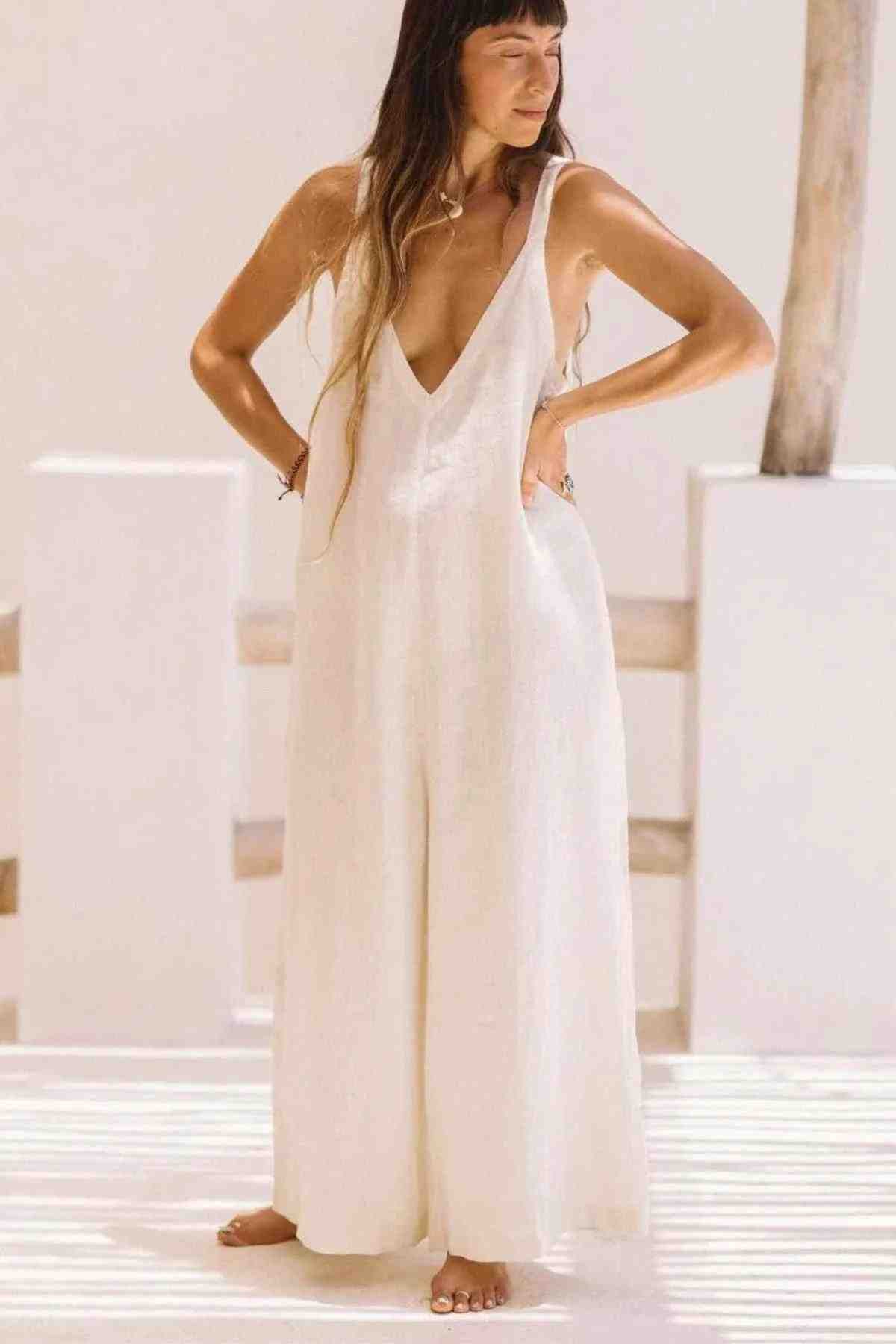
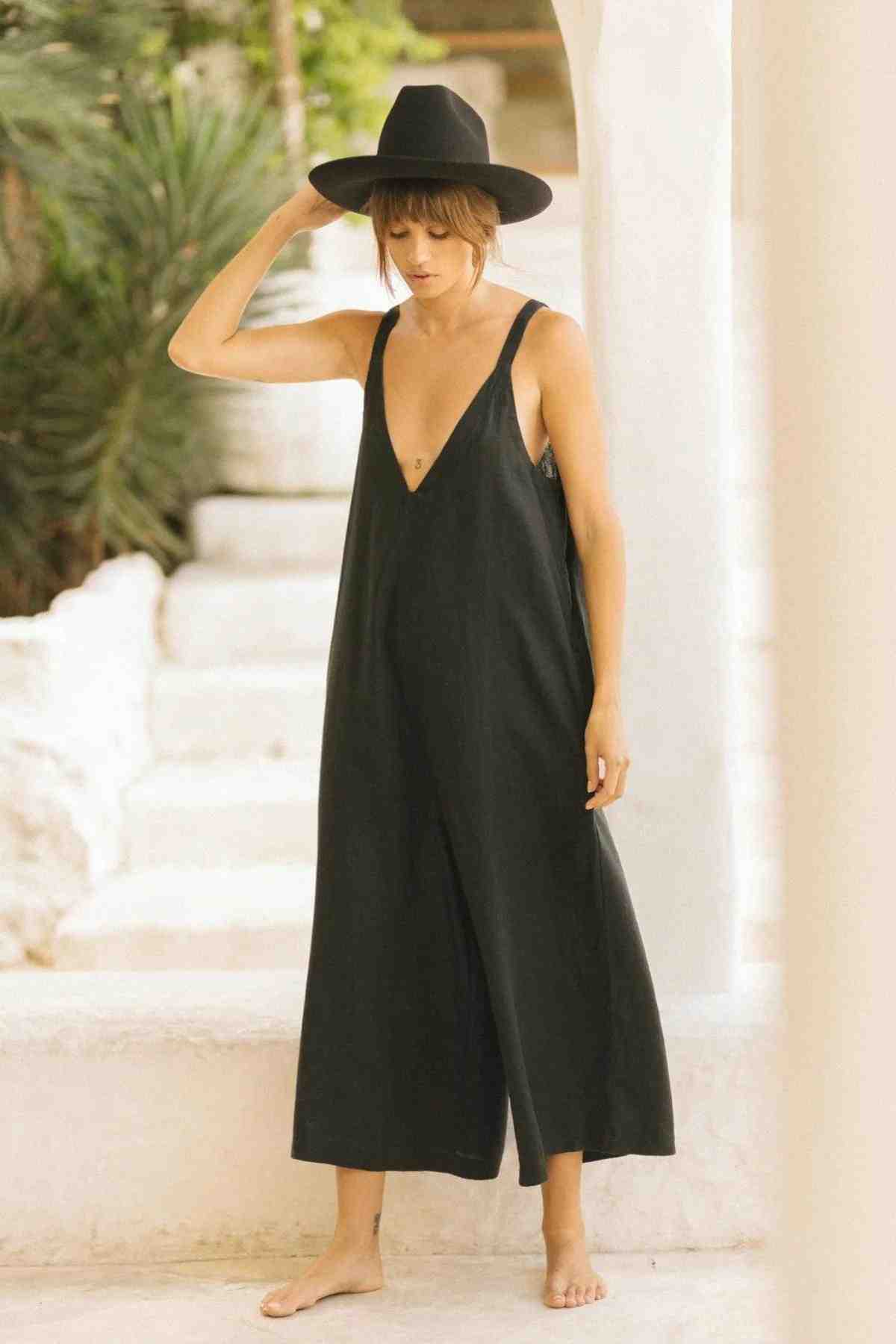
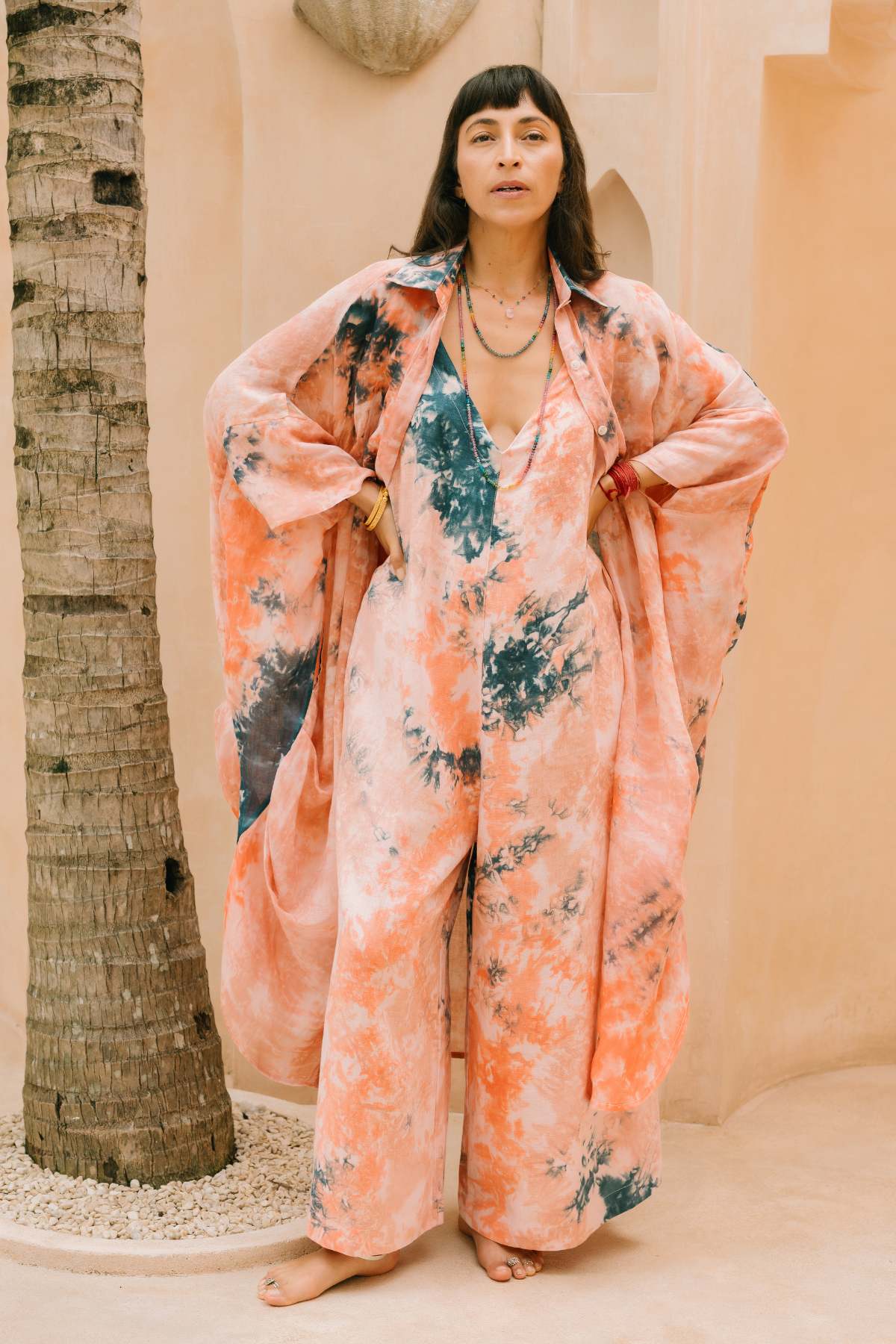
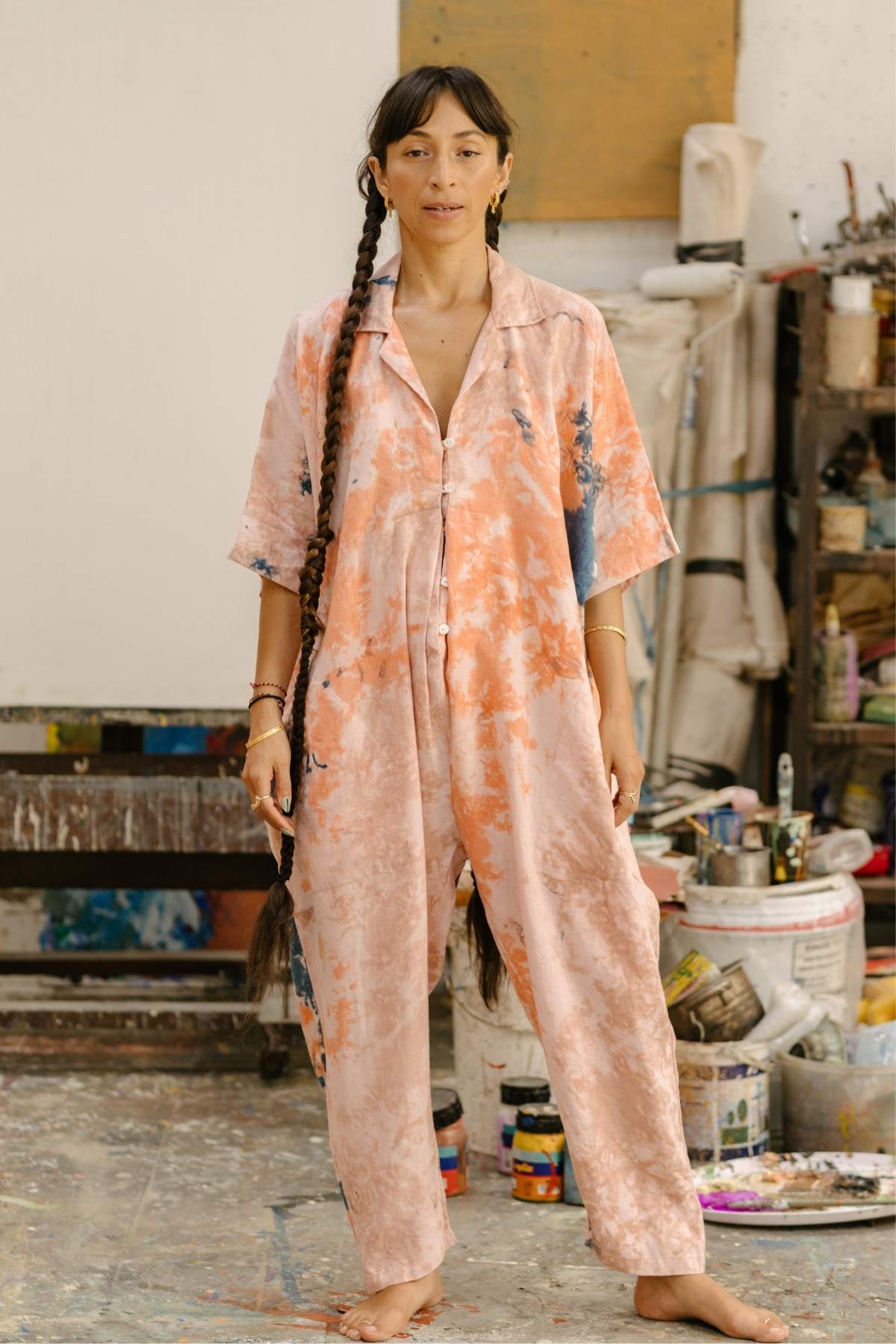
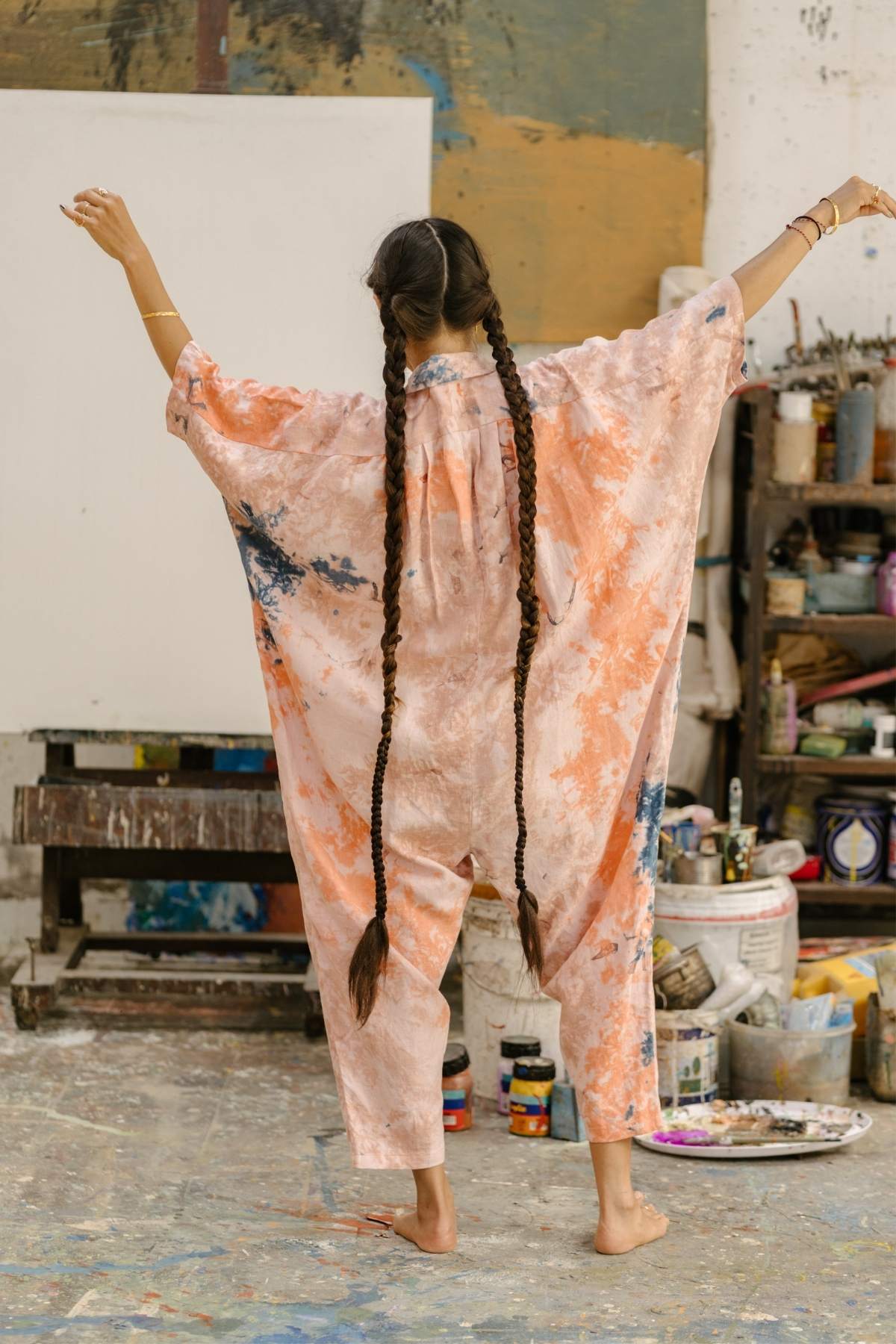
We make garments that pass the 30x wear test. That can be worn thirty times, a hundred times, a hundred and eight. That soften and deepen and become more themselves with every wash. That can, without exaggeration, be passed down to a daughter.
That is not just a quality standard. It is the natural result of the model. When you make slowly, you make well. When you make well, you make things that last. When you make things that last, you do not need to make as many of them. That is the slowness that makes sense, economically, ethically, materially.
To the Thirty Families
This is written for our customers, but it is also for the people who read these words and find themselves thinking of the hands that made what arrived at their door.
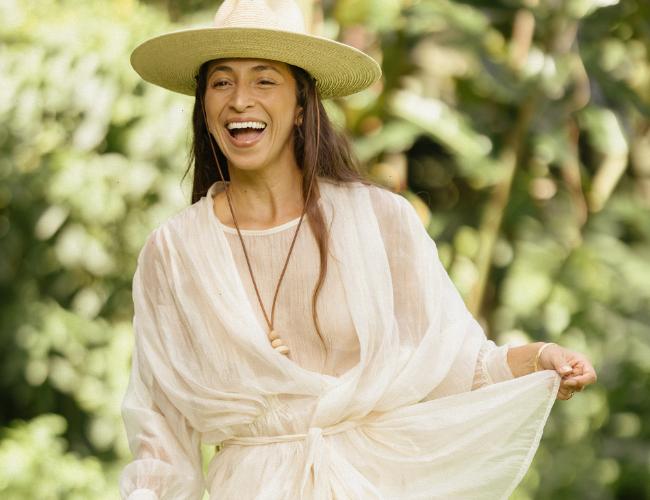
The woman who made your kaftan did not work in a factory. She worked at home, or in a small workshop she owns, probably with music playing, probably with a meal being prepared somewhere nearby. She took her time on the seams. She noticed the drape. She was not counting units that day. She was making one thing, and she made it with the kind of care that comes from choosing your work and being paid to do it properly.
That is in what you wear. That is the thirty families. That is the abundance.
With love from Bali,
Robindra & Myrah
|
A Piece for This Threshold The Slow Fashion & Makers Story Read the Slow Fashion Story → |
|
The Muse-Letter Dress for the woman you’re becoming. Join the Muse-LetterUnsubscribe any time. No spam, ever. |


Leave a comment
This site is protected by hCaptcha and the hCaptcha Privacy Policy and Terms of Service apply.