

We Don’t Make Clothes. We Make Heirlooms.
Before any garment enters production, it has to answer a question.
Not whether it photographs well. Not whether it matches the season, or fits the trend, or arrives at the right moment in the market cycle. Myrah asks one thing of every piece she designs.
Can it be worn one hundred and eight times?
If yes, it goes into production. If no, it does not. That is the threshold. Everything else is downstream of it.
Why One Hundred and Eight
One hundred and eight is a number with weight in the traditions we live beside. In yoga, it is the count of one full mala, one complete cycle of devotion. In Buddhist and Hindu practice, it appears again and again as a threshold of completeness, a loop that has closed.
We use it as our quality standard because it is both numerically specific and philosophically correct. A garment that can be worn, washed, traveled in, slept in, danced in, and still held its shape after a hundred and eight wears is not a fashion item. It is something else. It is a companion object. An heirloom in the making.
What Heirloom Actually Means
We use the word heirloom deliberately, and we mean it literally.
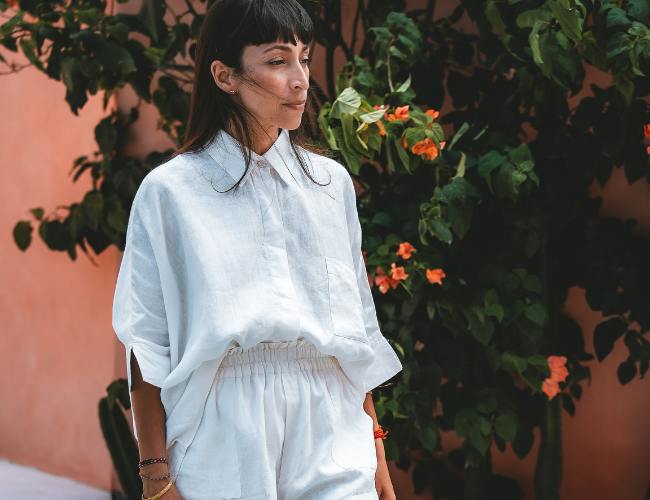
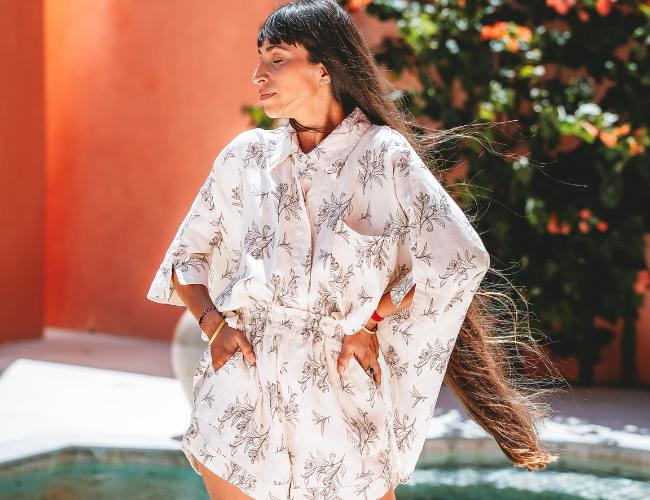
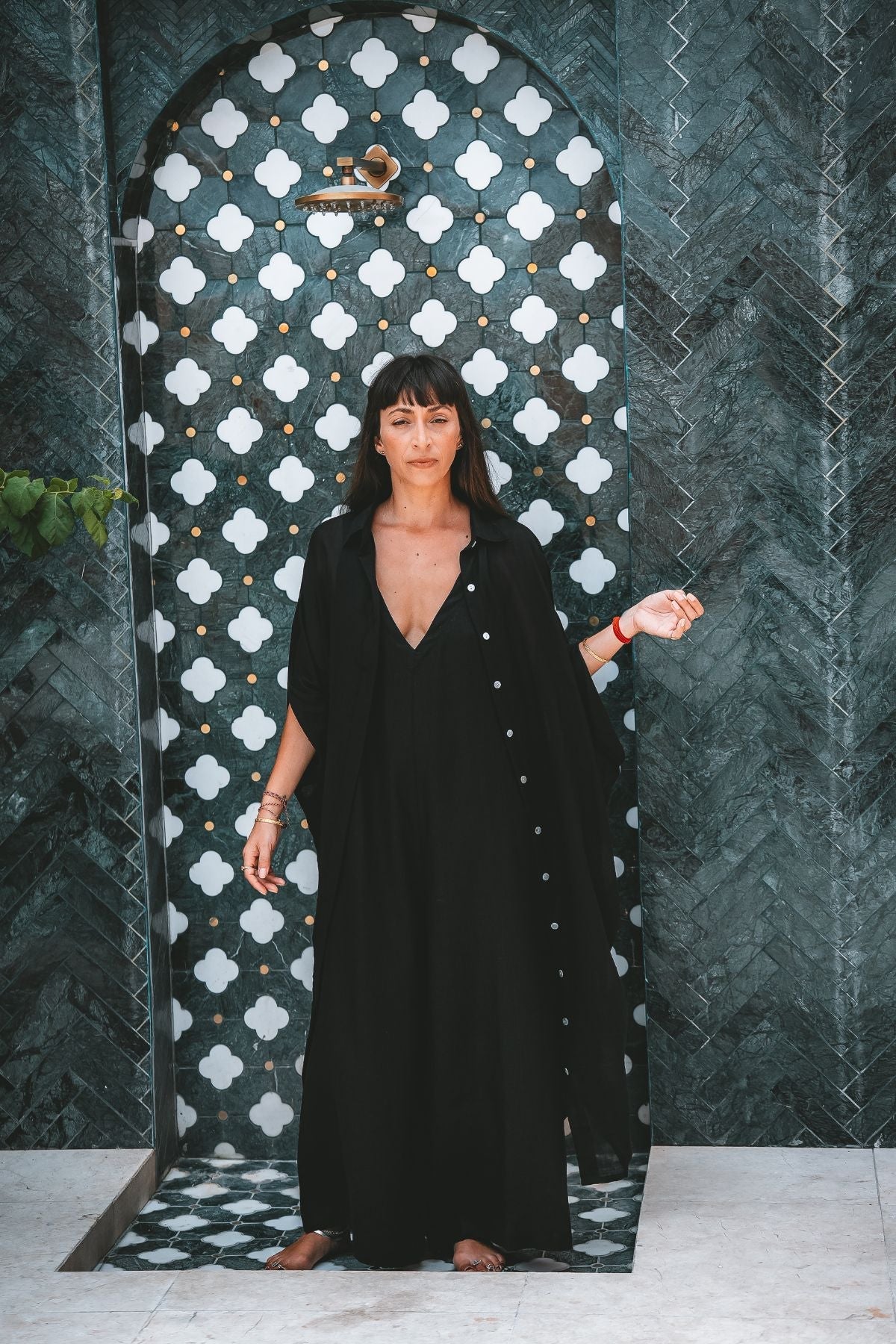
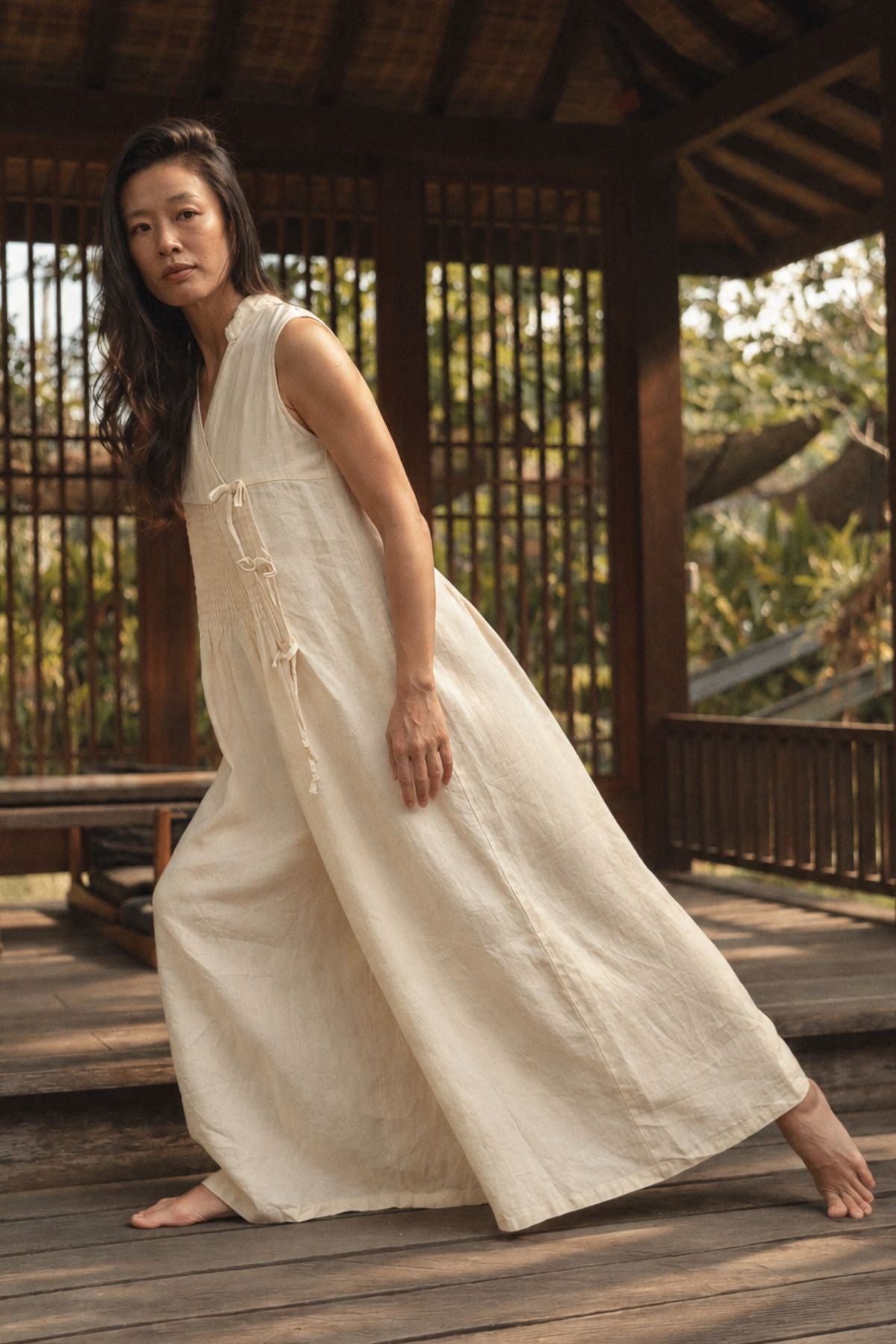
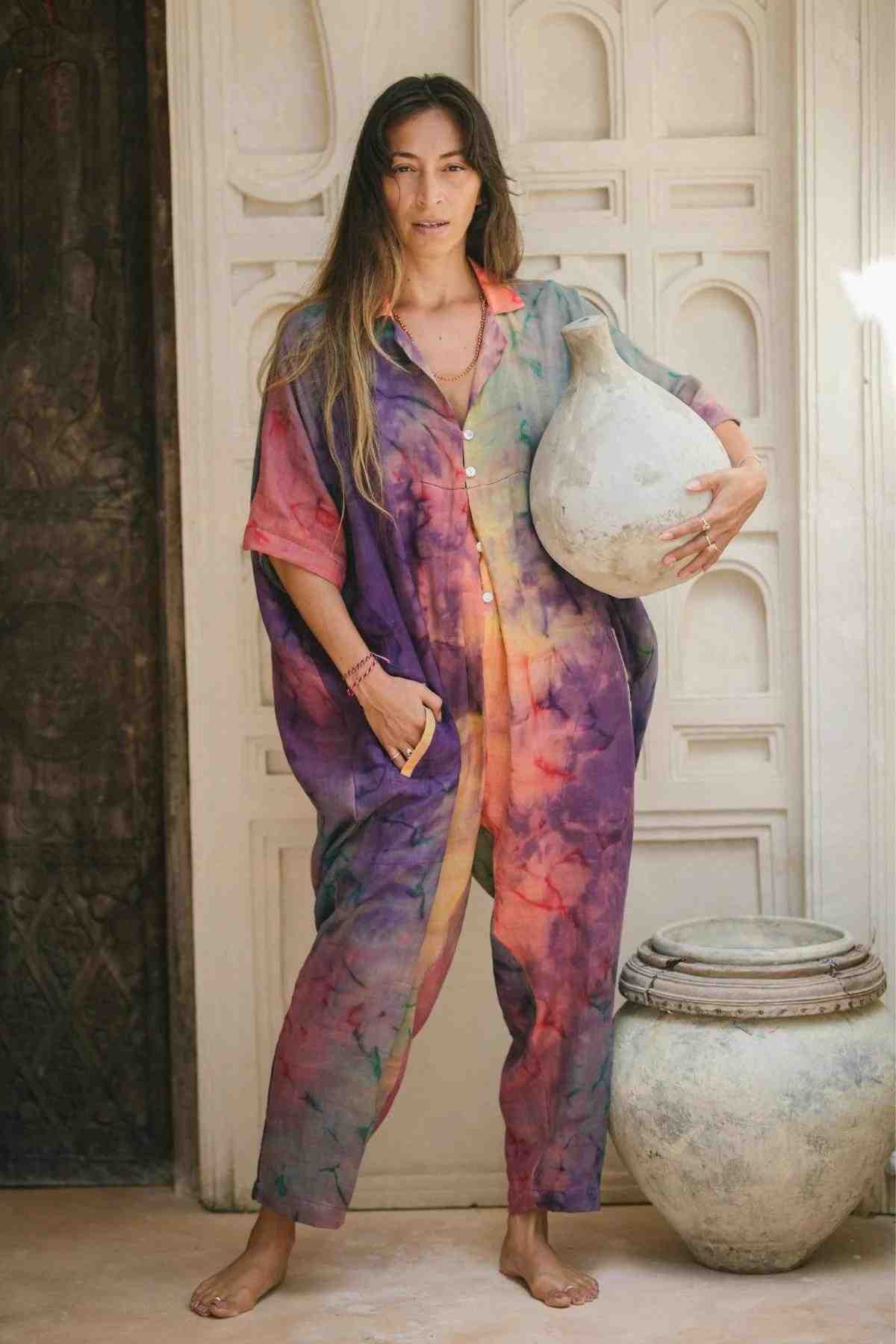
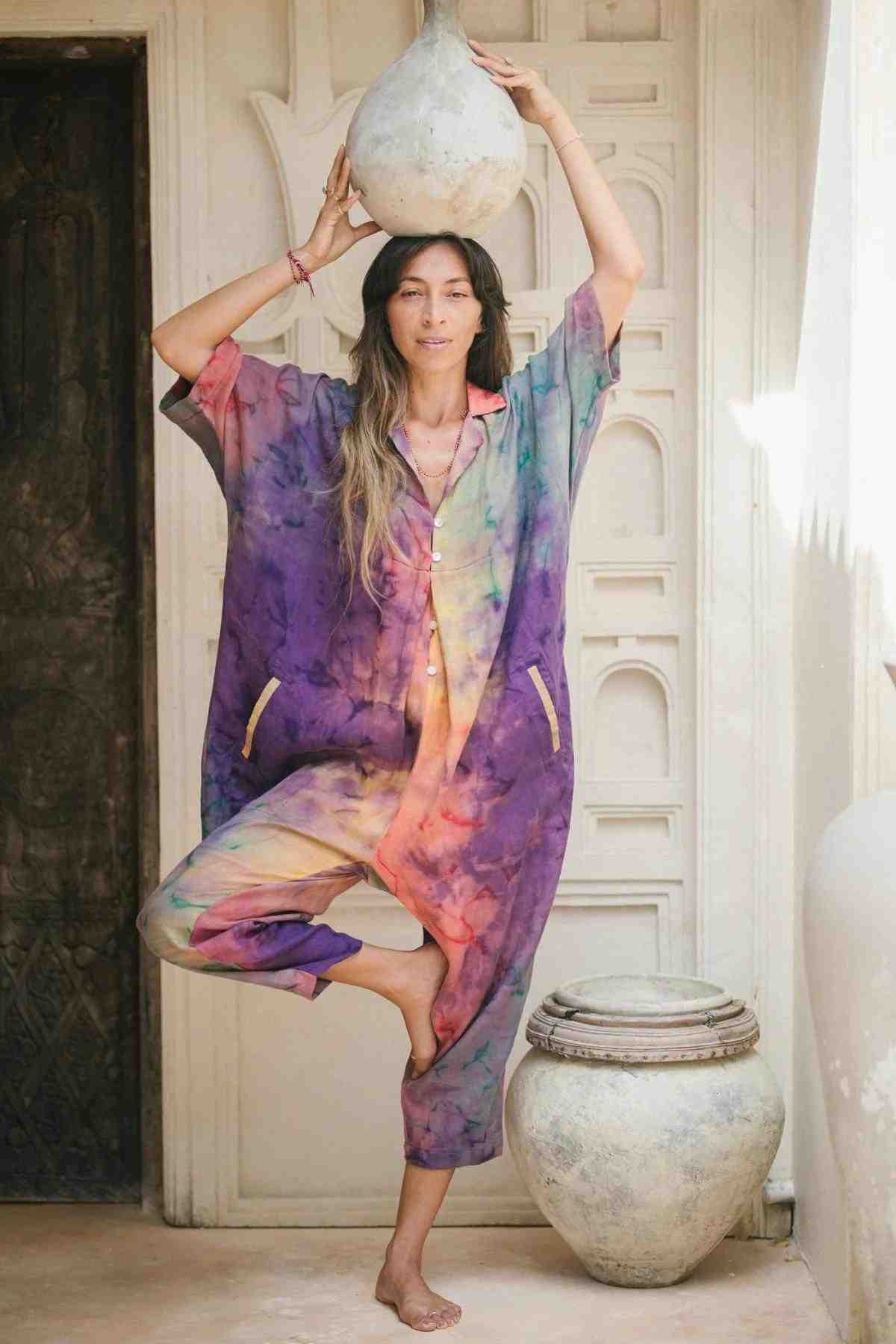
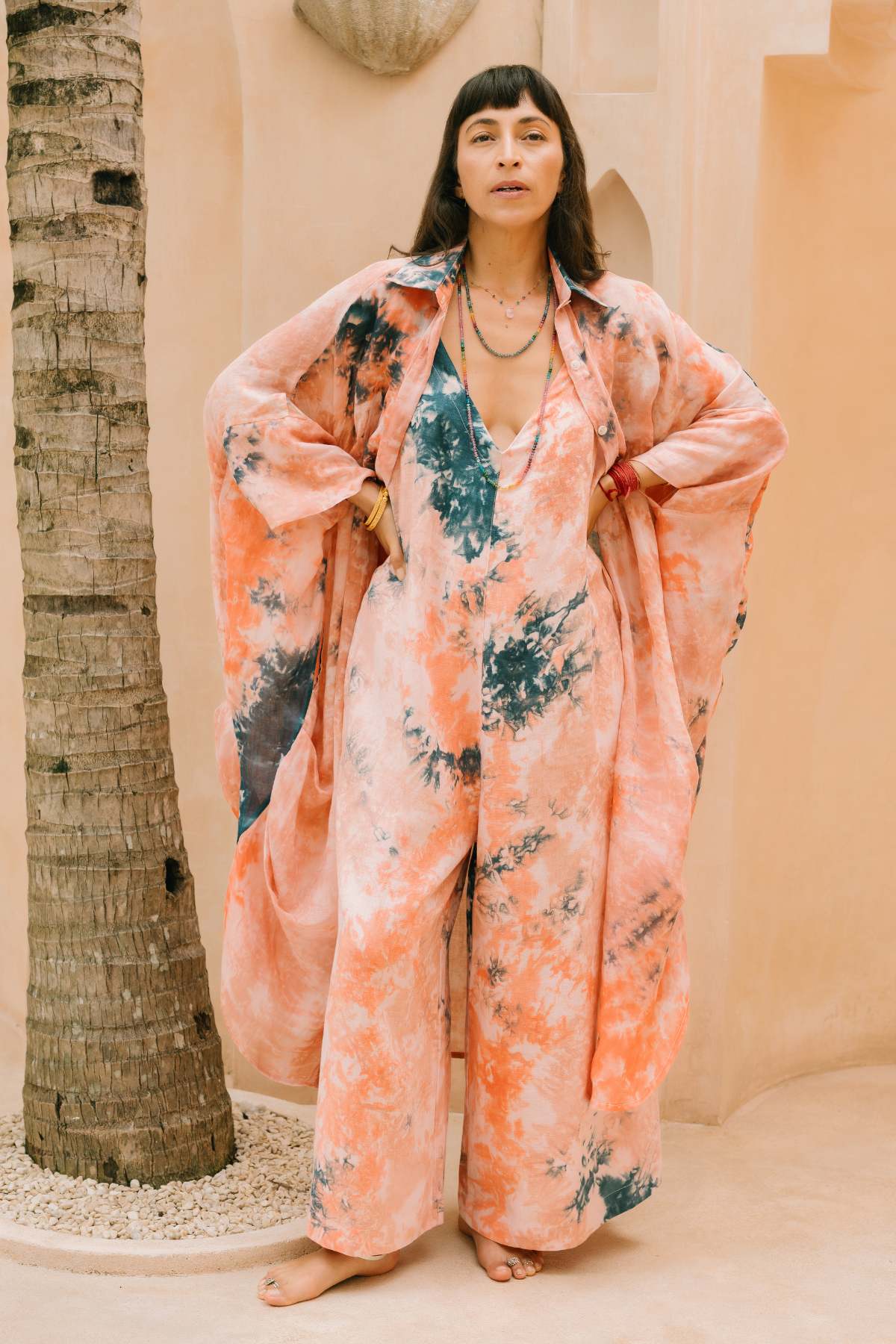
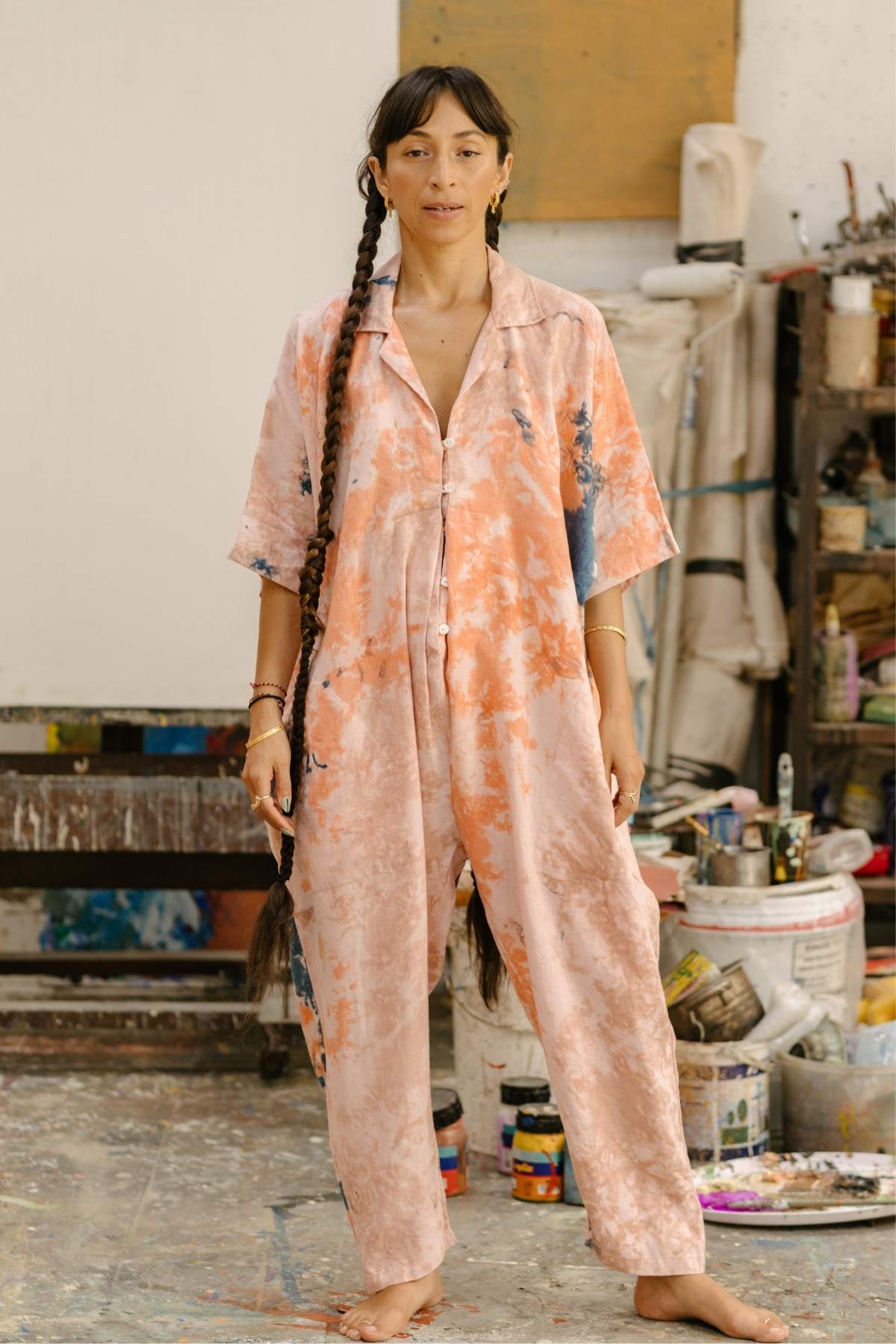
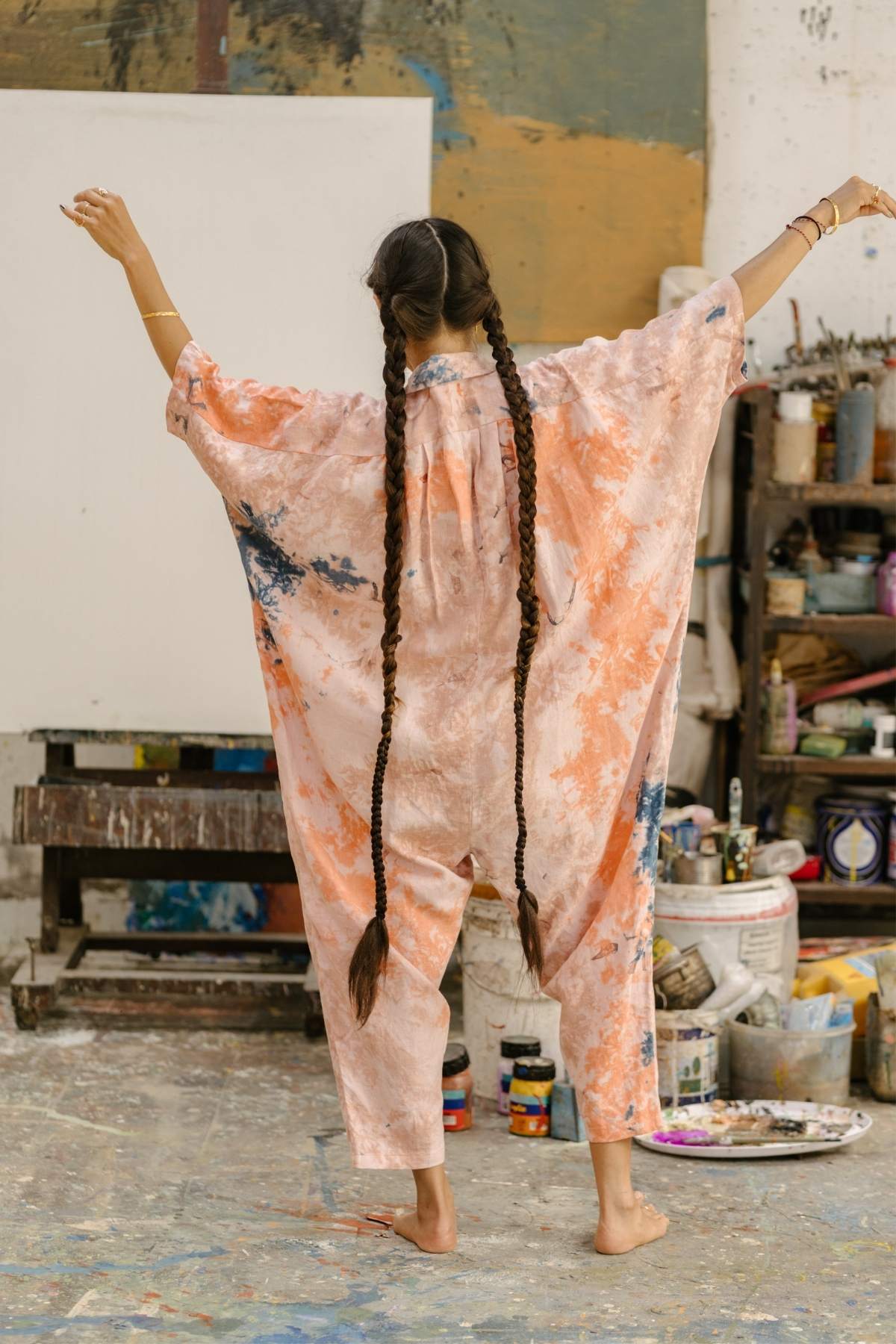
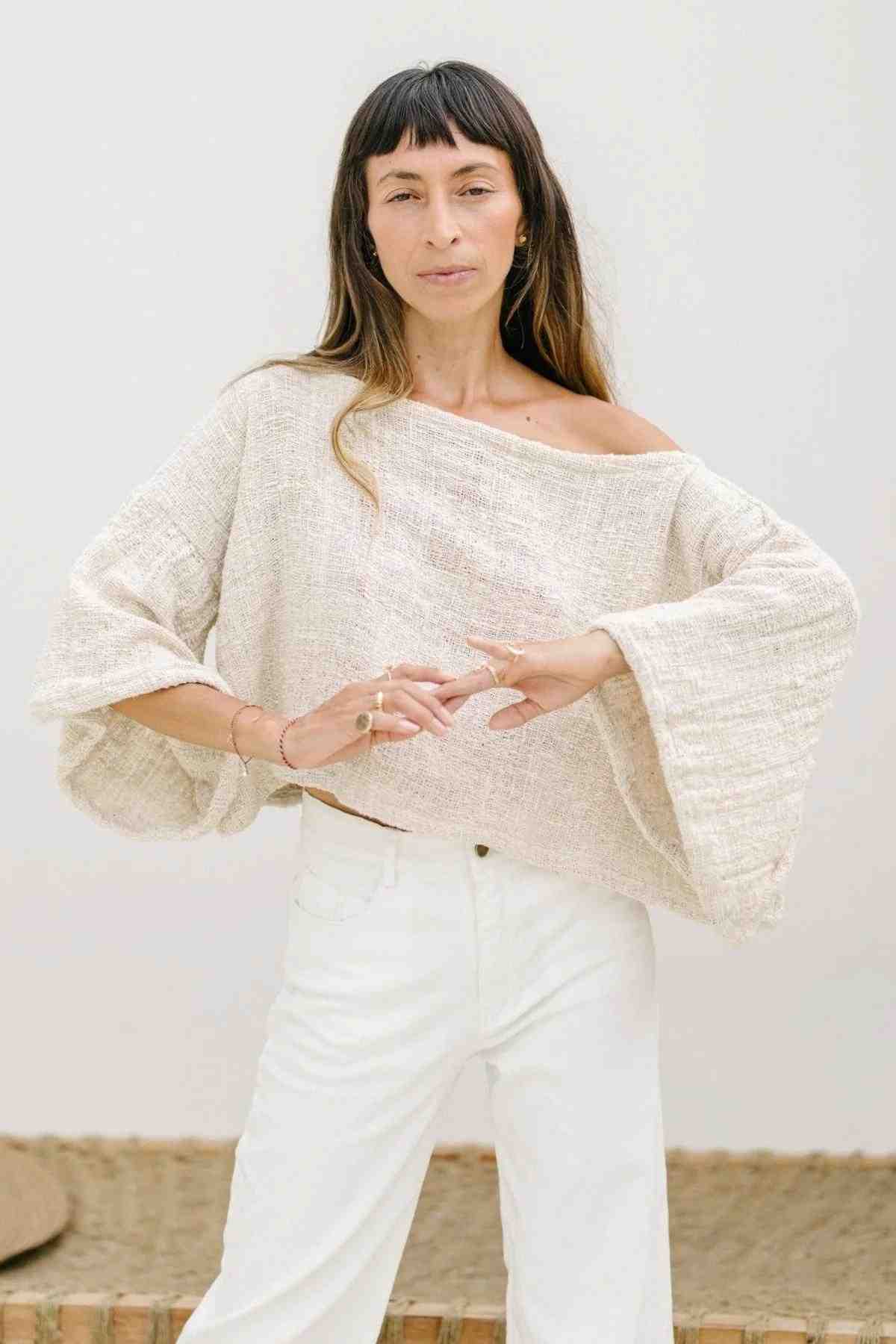
A high-quality linen piece bought from us today can reasonably be expected to be worn by your daughter twenty years from now. Not as a curiosity or a vintage find. As a garment that has simply continued to become more itself. Linen softens with every wash. It does not wear out. It deepens. The body of the fabric grows more supple, more alive, the more it is used.
This is the opposite of how most clothing is designed. Fast fashion is engineered to degrade. The color fades. The seams separate. The shape collapses. Within ten wears, many garments have already communicated their planned obsolescence.
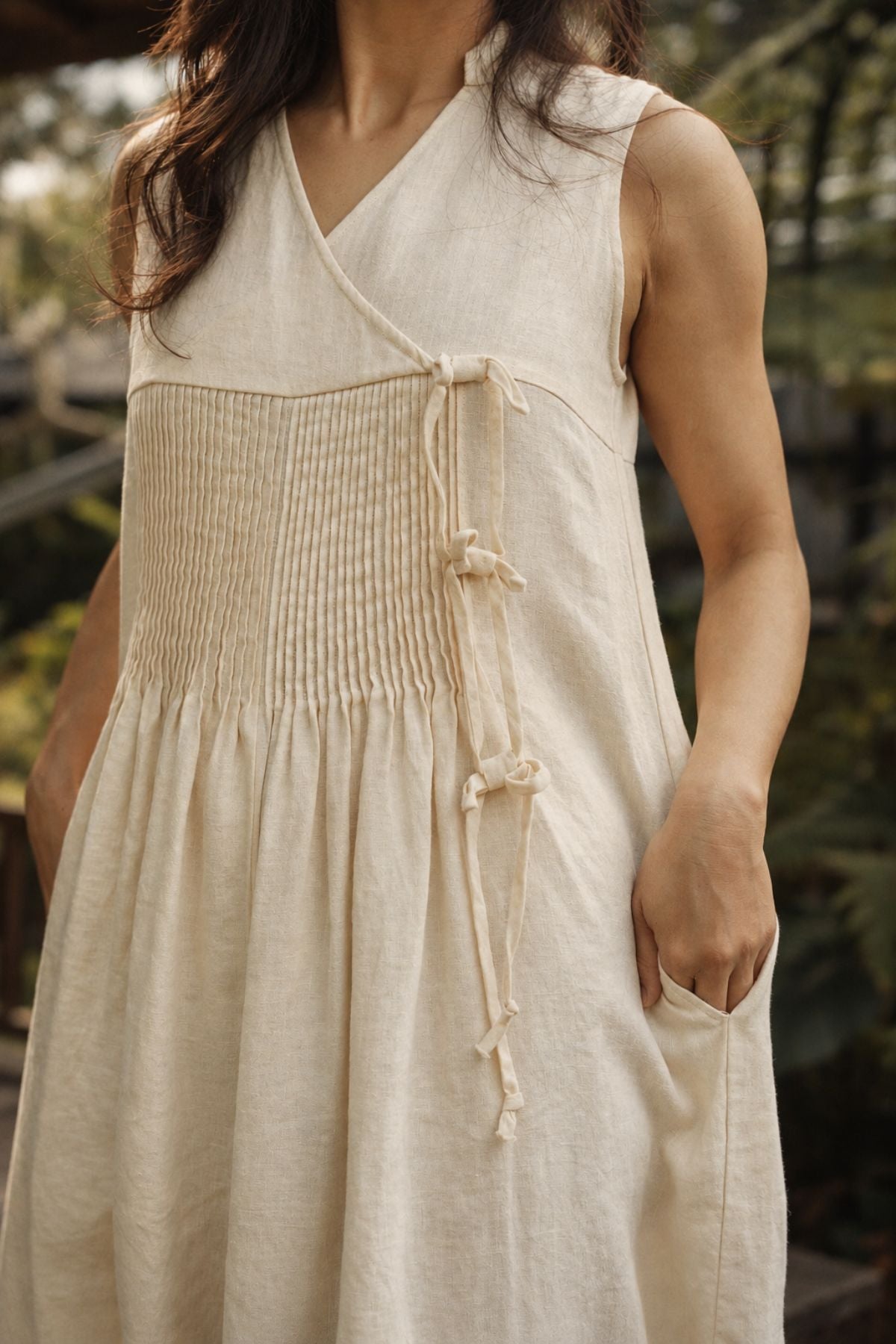
We design in the other direction. Every piece is considered for durability before it is considered for anything else. The seam allowances. The fabric weight. The construction method. Myrah will sit with a piece through multiple revisions if the drape is beautiful but the wear-life is not there. Beauty that cannot last is not something we make.
The 30x Test
Before we apply the 108x standard, every new piece passes a simpler first test.
Can it be worn thirty times? Not in controlled conditions. In real life. Traveling, working, moving through ordinary days and extraordinary ones. If it cannot hold thirty wears, the question of a hundred and eight does not arise.
Thirty is the baseline. One hundred and eight is the aspiration. The garments that reach us and pass both are the ones that earn a place in the collection.
Why This Matters Beyond the Garment
There is an environmental argument here that writes itself. A garment worn a hundred times consumes a hundred times less resource than a hundred garments each worn once. The slow fashion case for longevity is simple enough that we rarely need to make it explicitly.
But the deeper reason is not environmental. It is relational.
A garment you have worn a hundred times knows you. It has shaped itself to your body, absorbed something of how you move and how you rest. It carries the particular quality of time you have spent inside it. That is not sentimentality. That is the truth of what good material, worn with attention over years, becomes.
We want to make things that earn that relationship. That ask for more than one season. That grow more valuable as they age. That become, eventually, the kind of object you consider giving to someone you love rather than donating or discarding.
That is the 108x standard. That is what we are making.
With love from Bali,
Myrah

|
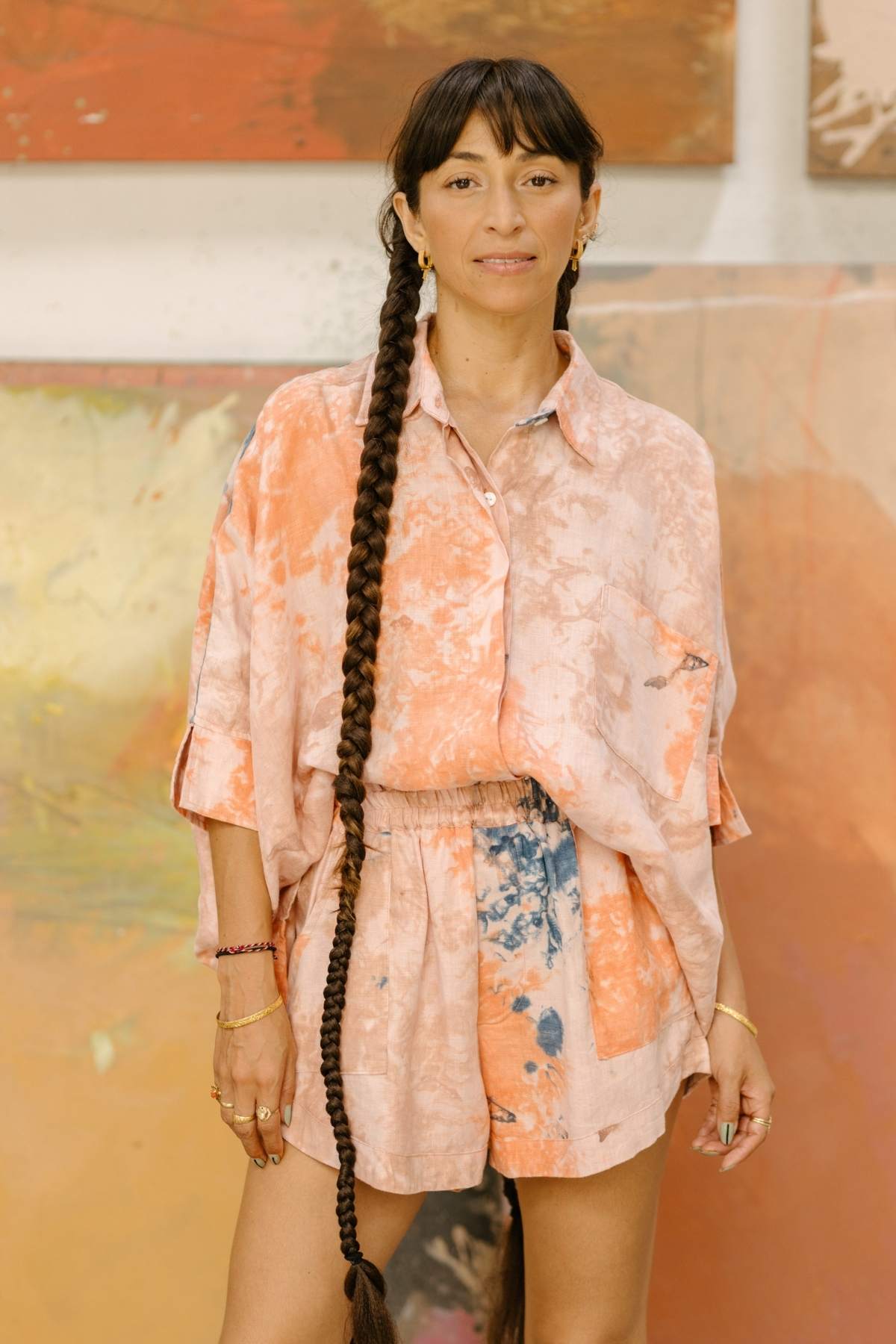
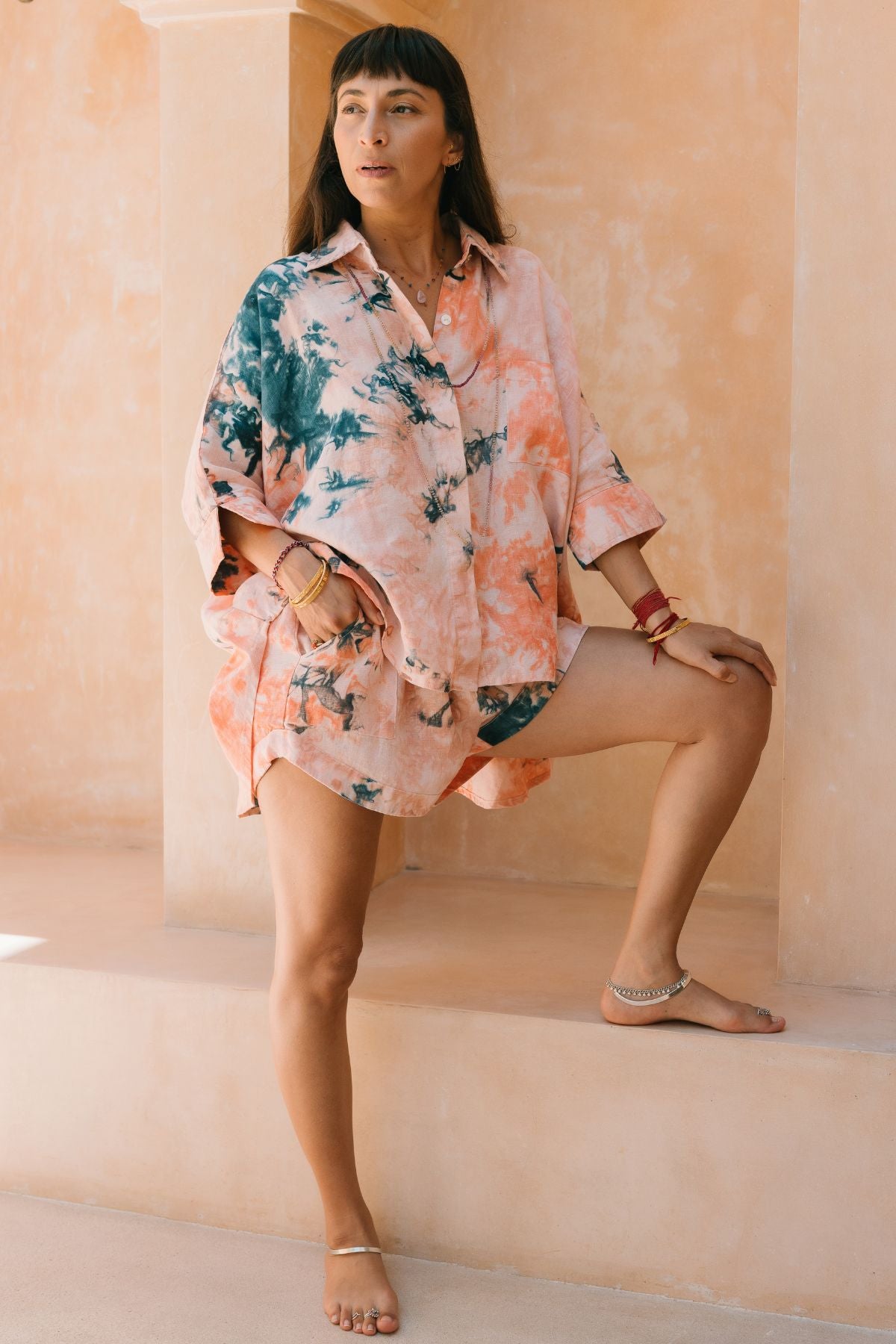
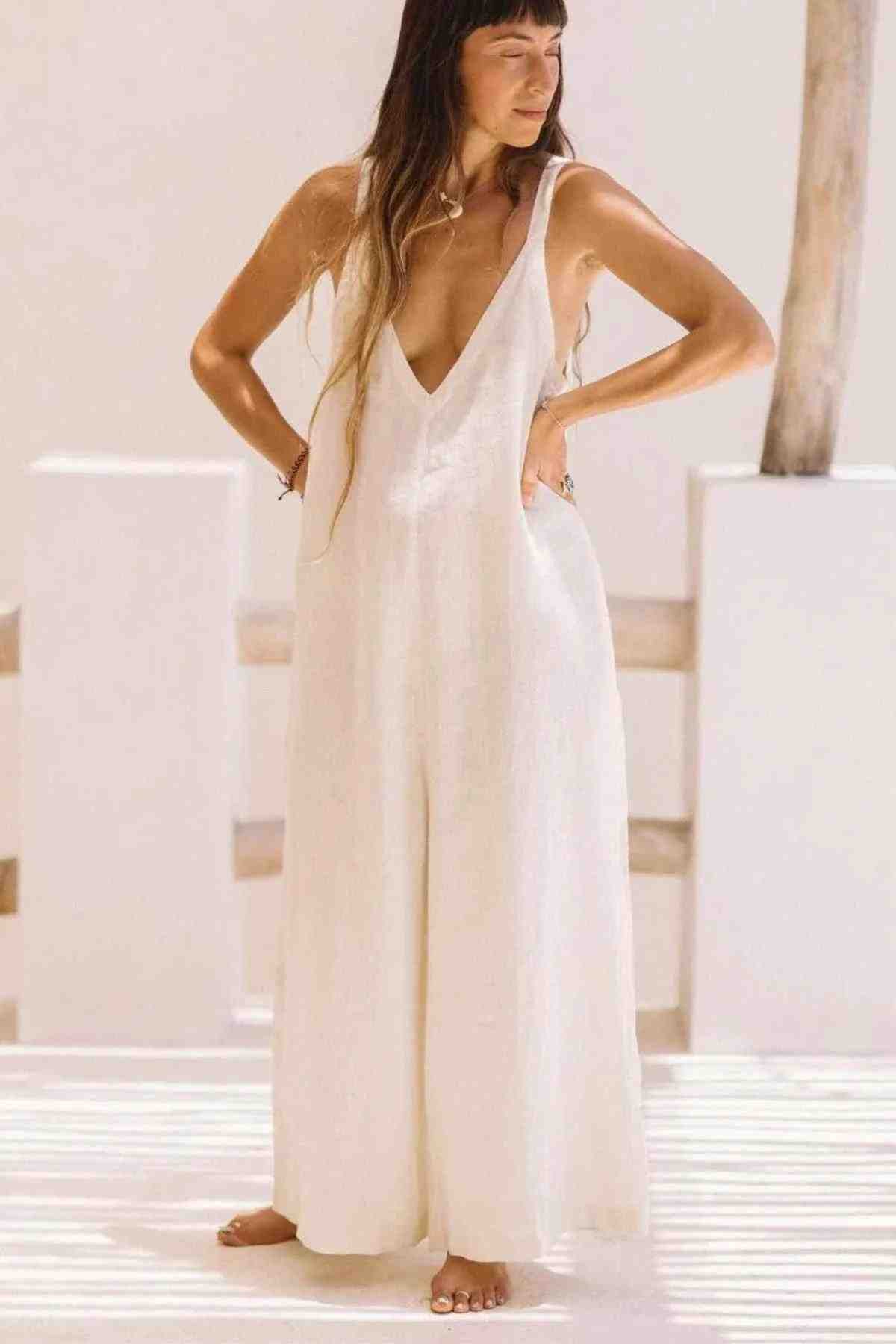
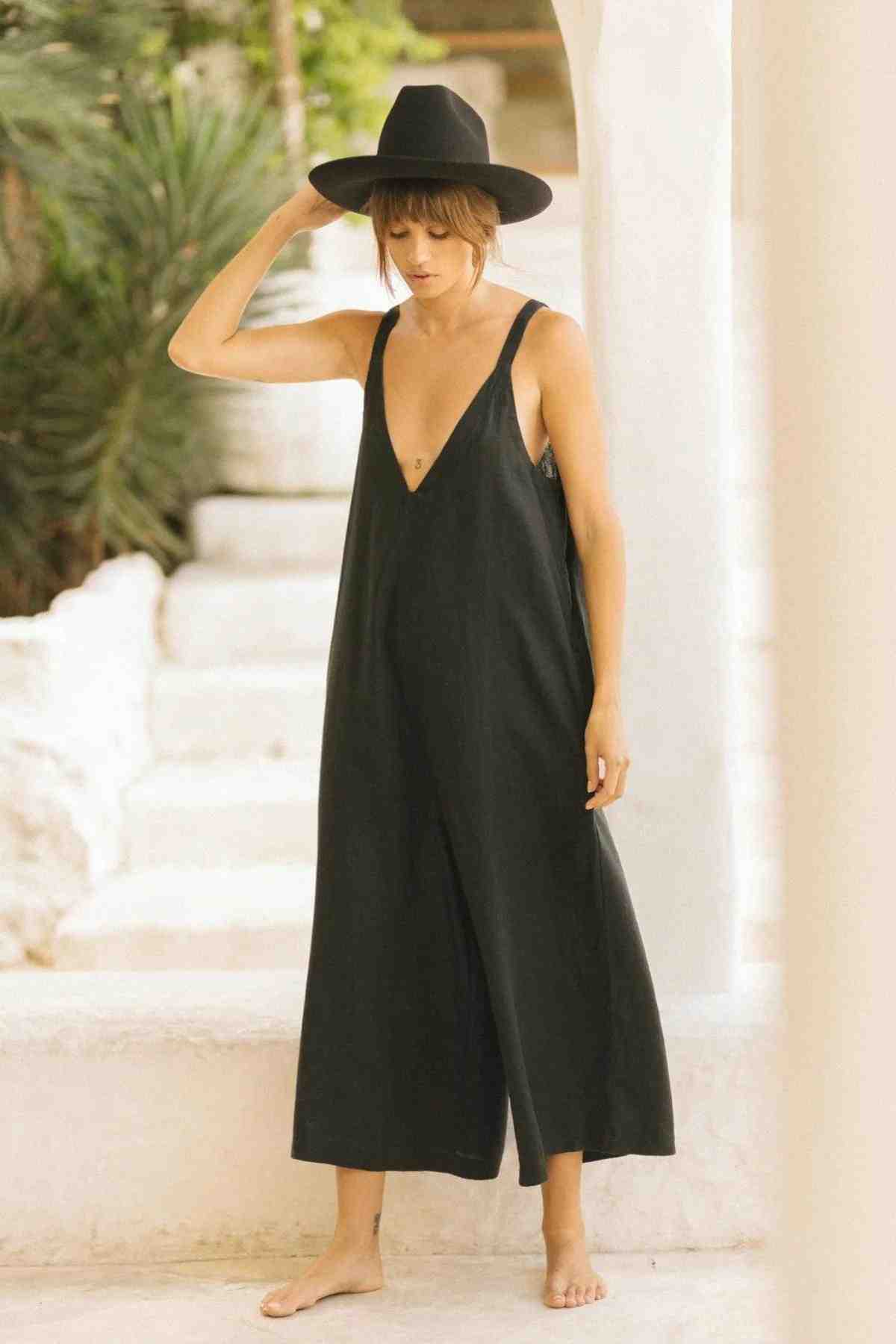
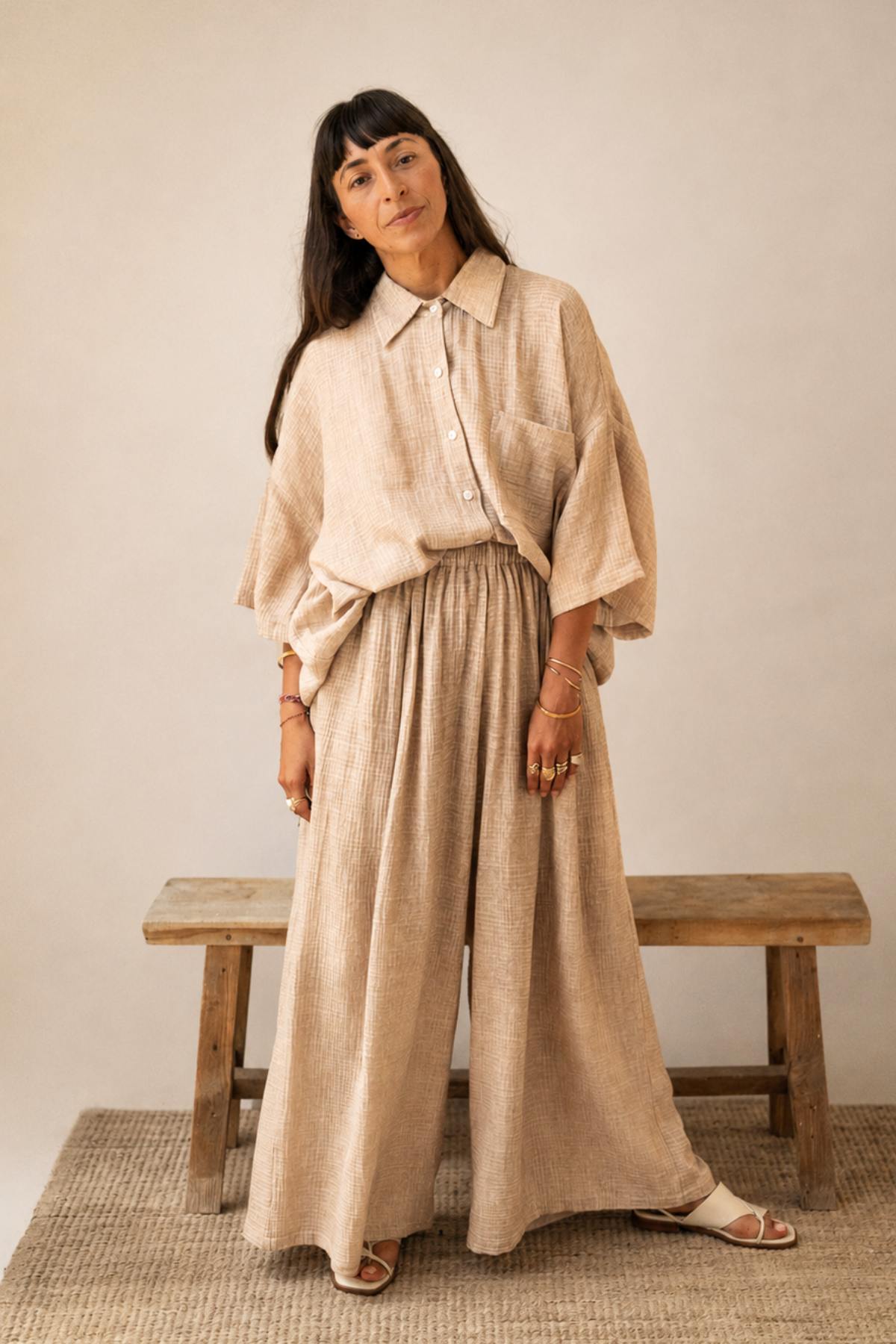
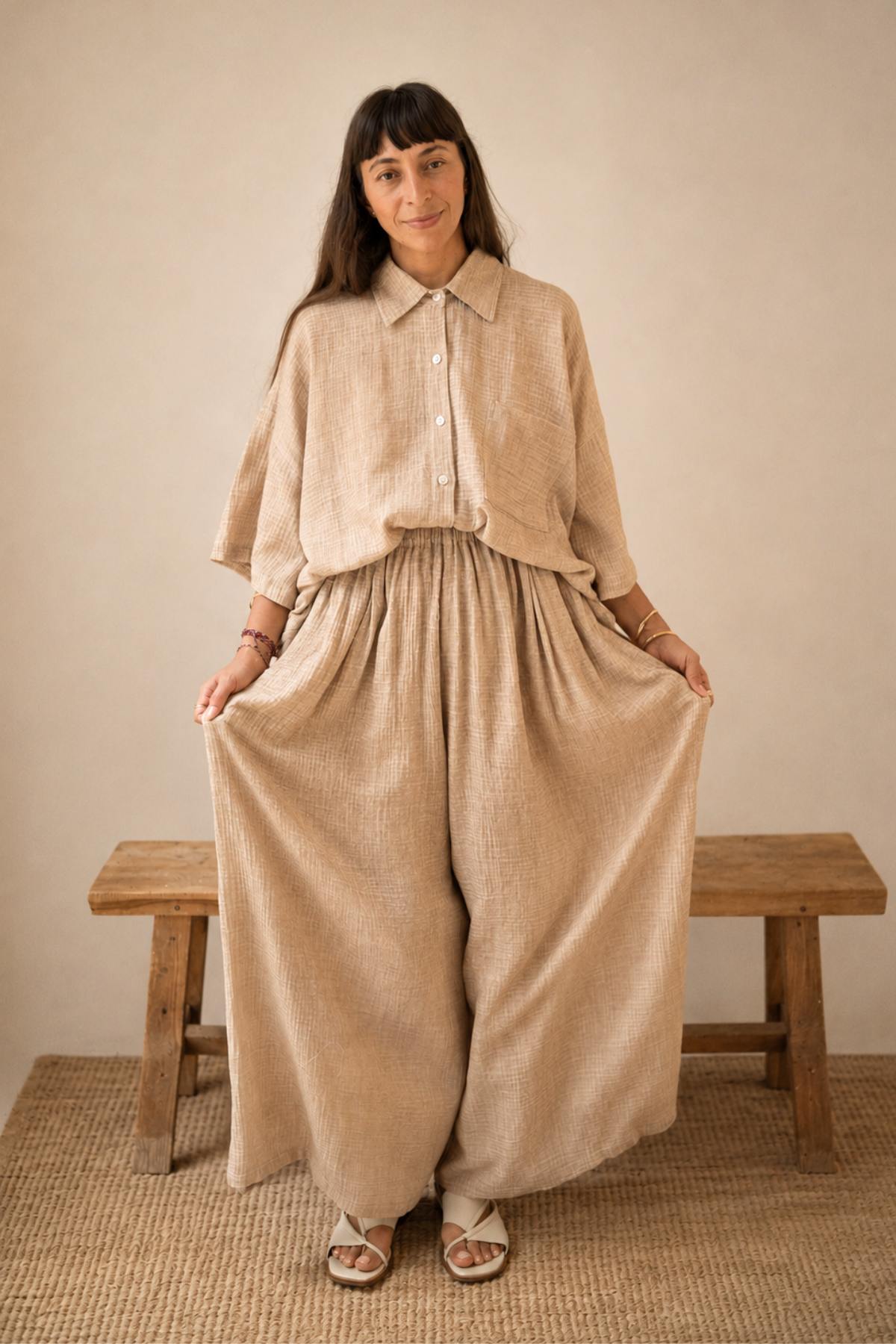
A Piece for This Threshold The Set Collection — Heirloom Linen Shop the Linen Set Collection → |
|
The Muse-Letter Dress for the woman you’re becoming. Join the Muse-LetterUnsubscribe any time. No spam, ever. |



Leave a comment
This site is protected by hCaptcha and the hCaptcha Privacy Policy and Terms of Service apply.