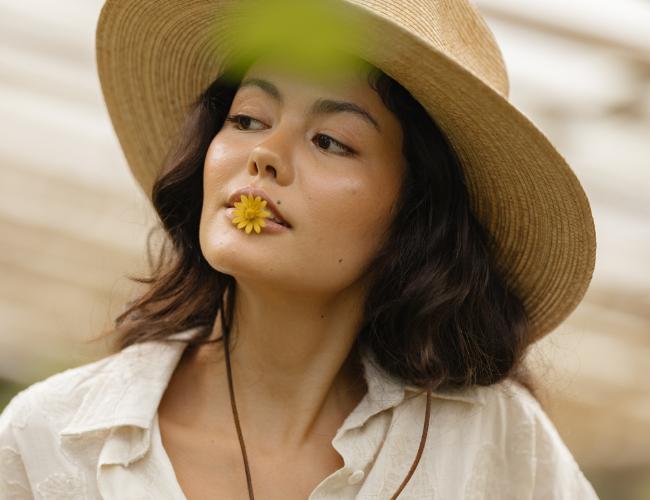
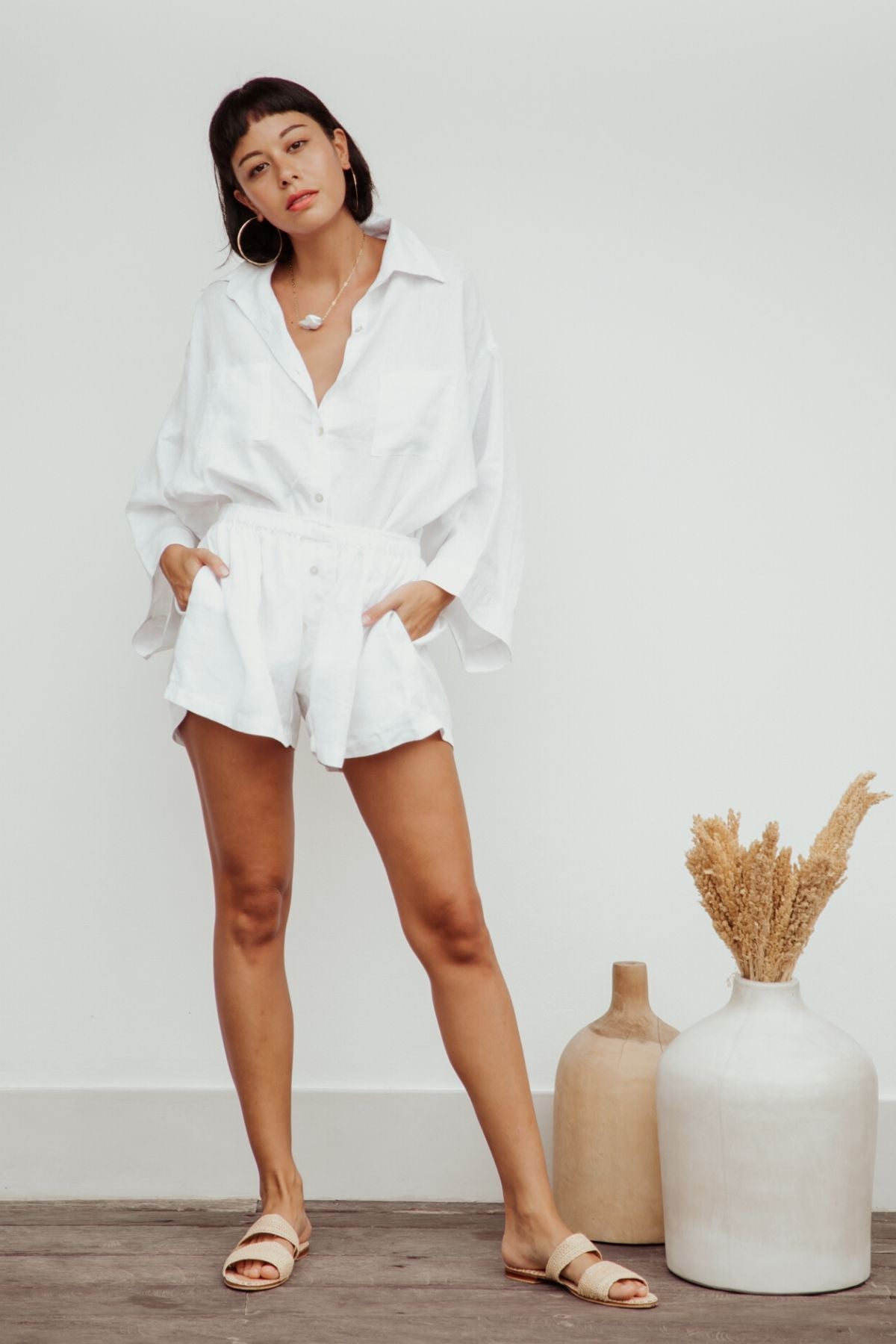
Linen Clothing for Women in Bali: Why Handmade Makes All the Difference
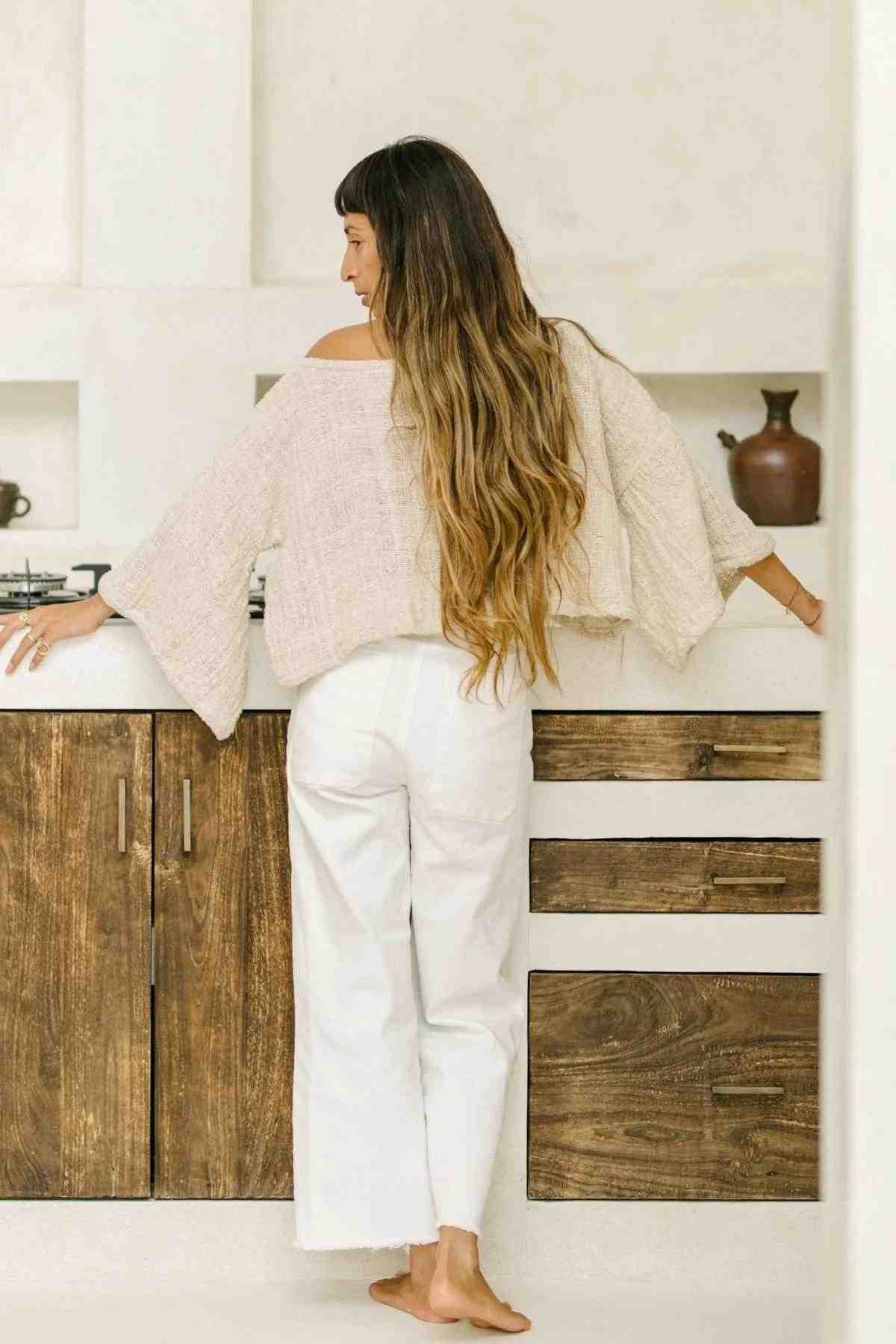
There is a particular kind of garment you find in Bali. Not in the tourist markets, not in the resort boutiques. In the homes and the small workshops.

It arrives folded, unhurried, carrying the weight of the hands that made it. The linen has a quality that is difficult to describe to someone who has not touched it. It breathes differently. It holds differently. It is the difference between a garment produced at volume and one made by someone who understands that the cloth will eventually settle against another person's skin, and that this matters.
Linen clothing from Bali is not a trend. It is a tradition that has existed long before the world turned its attention to this island, and it will continue long after.
Why Bali Produces the World's Most Exceptional Linen Clothing
The answer is not one thing. It is a confluence.
Bali has a craft culture that runs deeper than most people understand. The island's relationship to making, to devotion through skilled hands, is not a philosophy that was adopted. It is a way of life that has been practiced across generations. When Balinese artisans make clothing, they bring to it the same attention and intention they bring to ceremony, to offering, to everything done in the knowledge that how you do something is inseparable from what you are doing.
The climate is a factor too. Linen is the ideal fabric for tropical heat. It wicks moisture, it breathes, it cools. Women in Bali understand instinctively what women discovering linen for the first time are only beginning to feel: this fabric changes with your body. It is alive in a way synthetics simply are not.
And the artisan network in Bali is unlike anywhere else. Skilled makers working from their own homes and their own small workshops, passing technique between family members, producing small runs of exceptional garments rather than manufacturing at volume. This is the infrastructure that makes genuinely handmade linen clothing possible at a scale large enough to reach the world.
What Makes Handmade Linen Different From Mass-Produced Linen
Most women who buy linen clothing have bought mass-produced linen. It is fine. It does what linen does. But it does not do what handmade linen does.
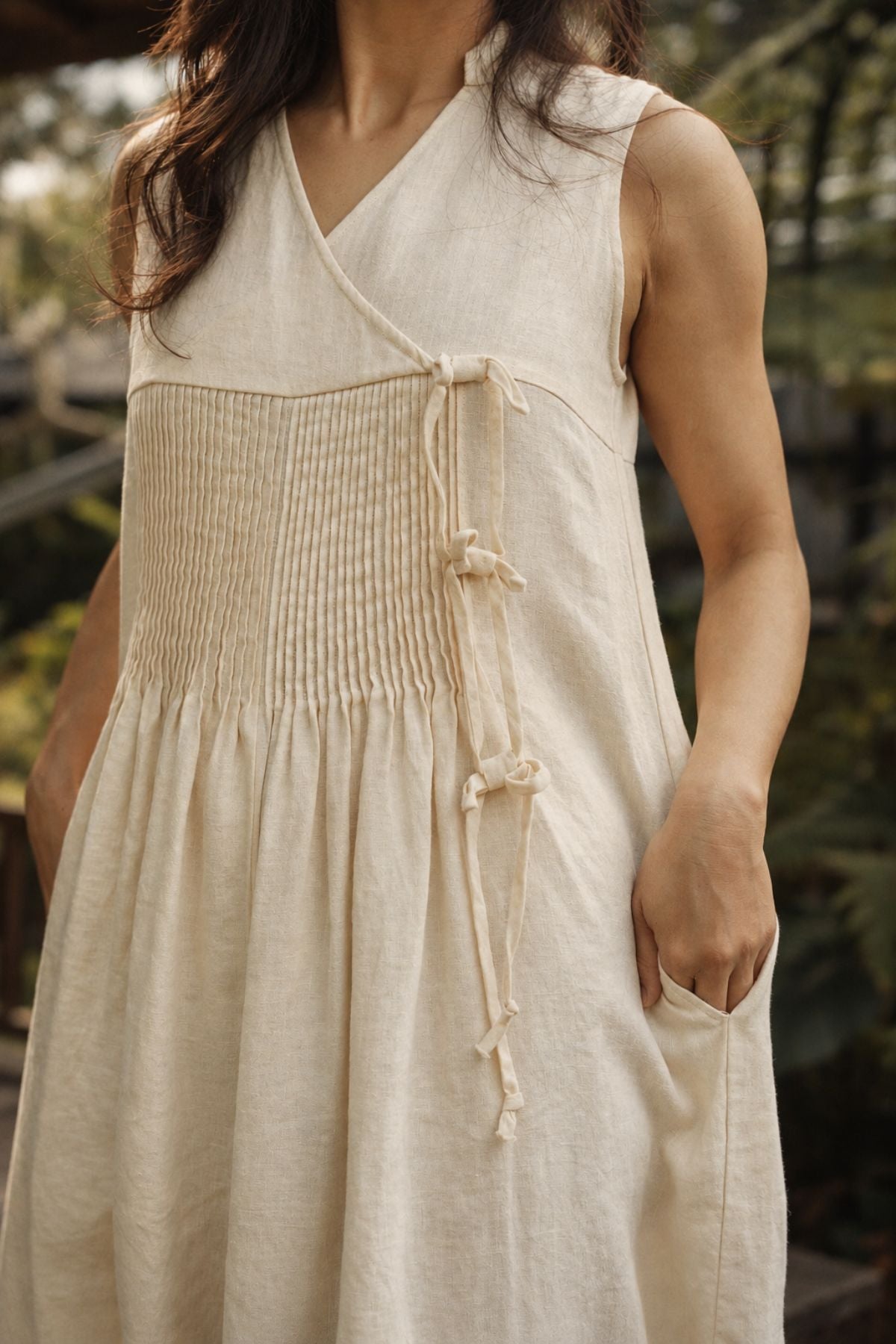
The difference begins in the cut. A garment cut by hand, by someone who has been cutting for years, has a quality that machine cutting simply cannot replicate. There is an attention to how the fabric grain will hang, to where the seam will fall against the body, to the specific way this piece of linen will behave once someone is wearing it. This knowledge lives in the body of the maker. It cannot be programmed into a machine.
The difference continues in the construction. Handmade garments are sewn with a level of care that shows in how they age. They hold their shape. The seams sit flat. The linen softens with washing rather than pilling or breaking down. A handmade linen garment from Bali, properly cared for, does not degrade over time. It evolves. It becomes more itself.
And then there is the question of what you are wearing when you put it on. A mass-produced garment is an object. A handmade garment is a relationship. Between the maker and the fabric, the fabric and the wearer, the wearer and every person who will notice and ask, quietly or aloud: where did you get that?
The Fabrics We Use: Linen, Natural Cotton, Silk, and Botanical Textiles
At Myrah Penaloza, around 95% of what we make is certified sustainably sourced linen and organic cotton, and we do not use polyester. Not as a marketing position. As a commitment we made at the beginning and have held every day since.
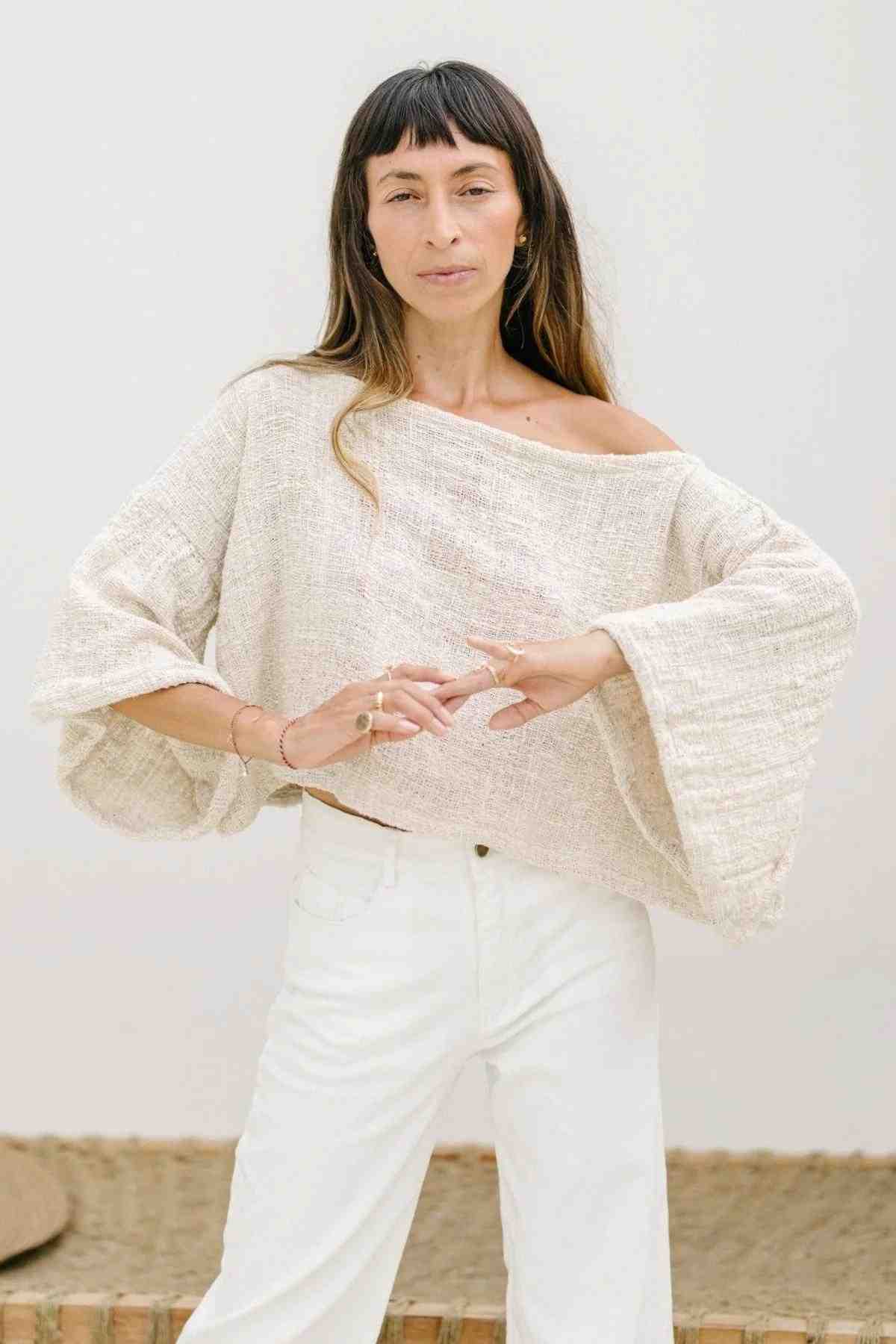
Our primary fabric is linen. Pure, undyed, or botanically dyed linen in the weights and weaves best suited to each specific garment. We choose our linen for its drape, its breathability, its longevity. Every piece of linen we use is selected for how it will feel against the skin of the woman who wears it, not for how it will photograph in a campaign.
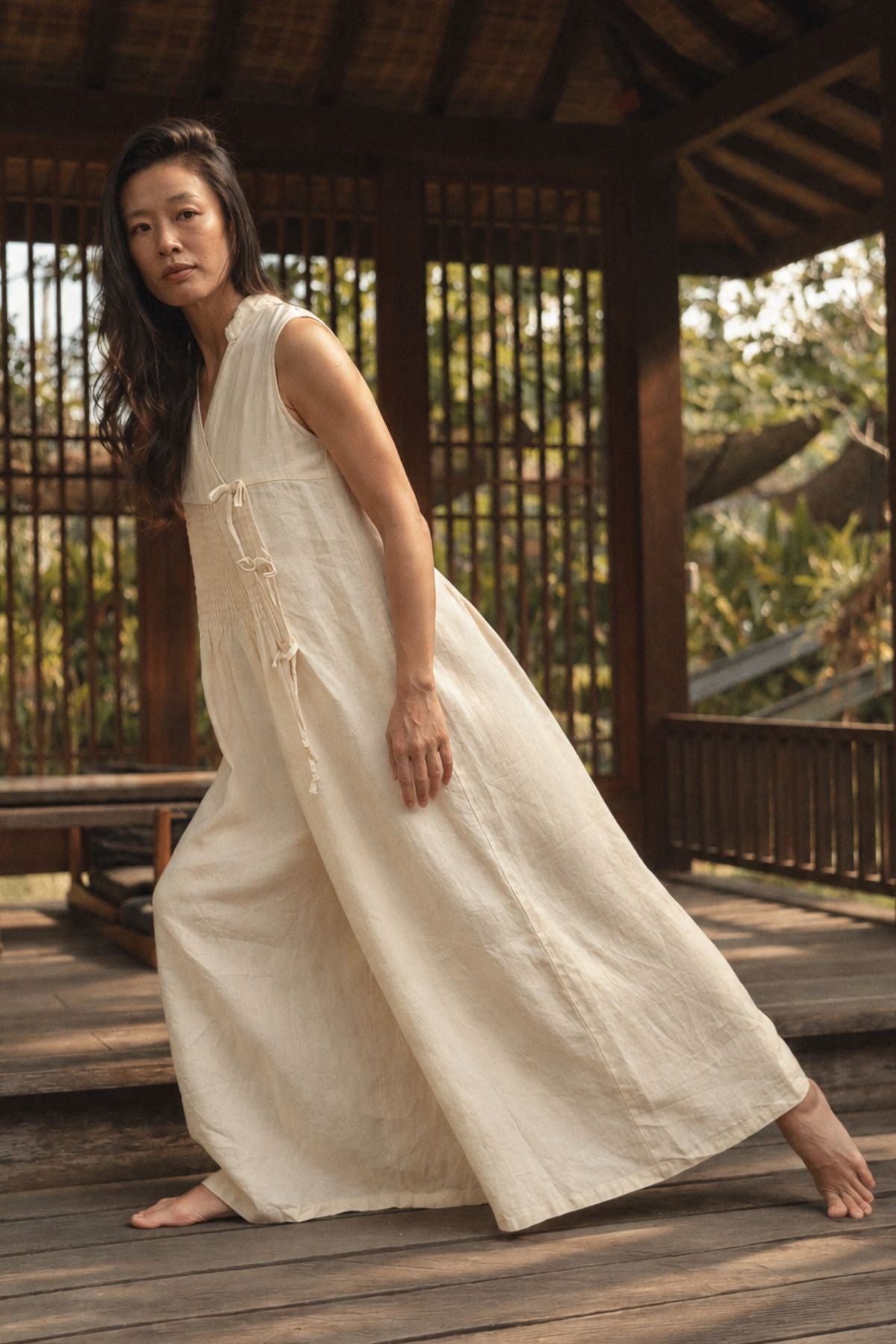
We also work with natural cotton, including Tumanggal, the ancient hand-woven cotton of the Balinese highlands. This textile has been produced by Balinese weavers for generations. When you wear it, you are wearing something that carries that history. It is not a detail. It is the whole story.
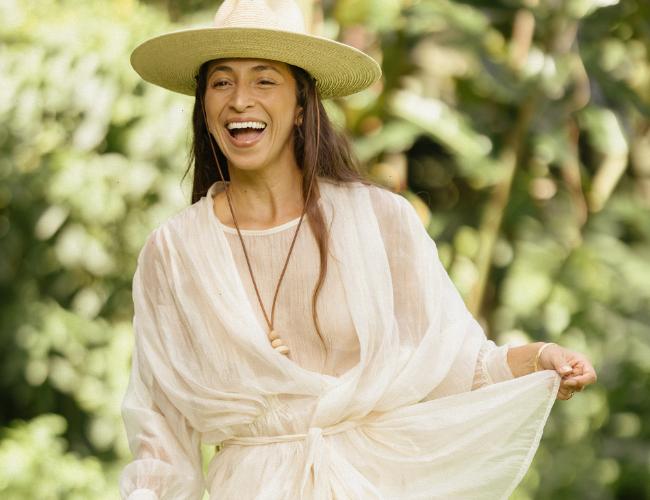
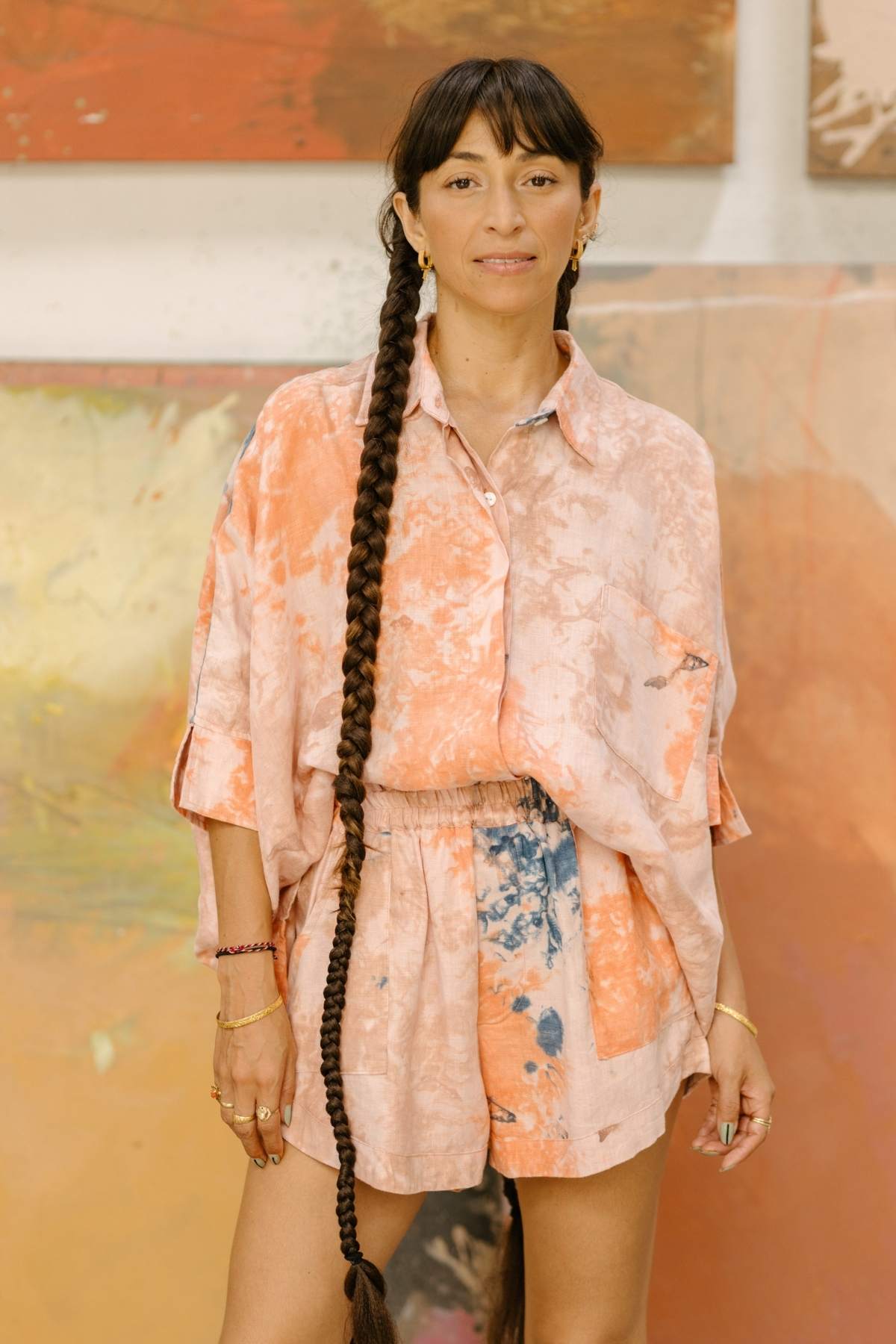
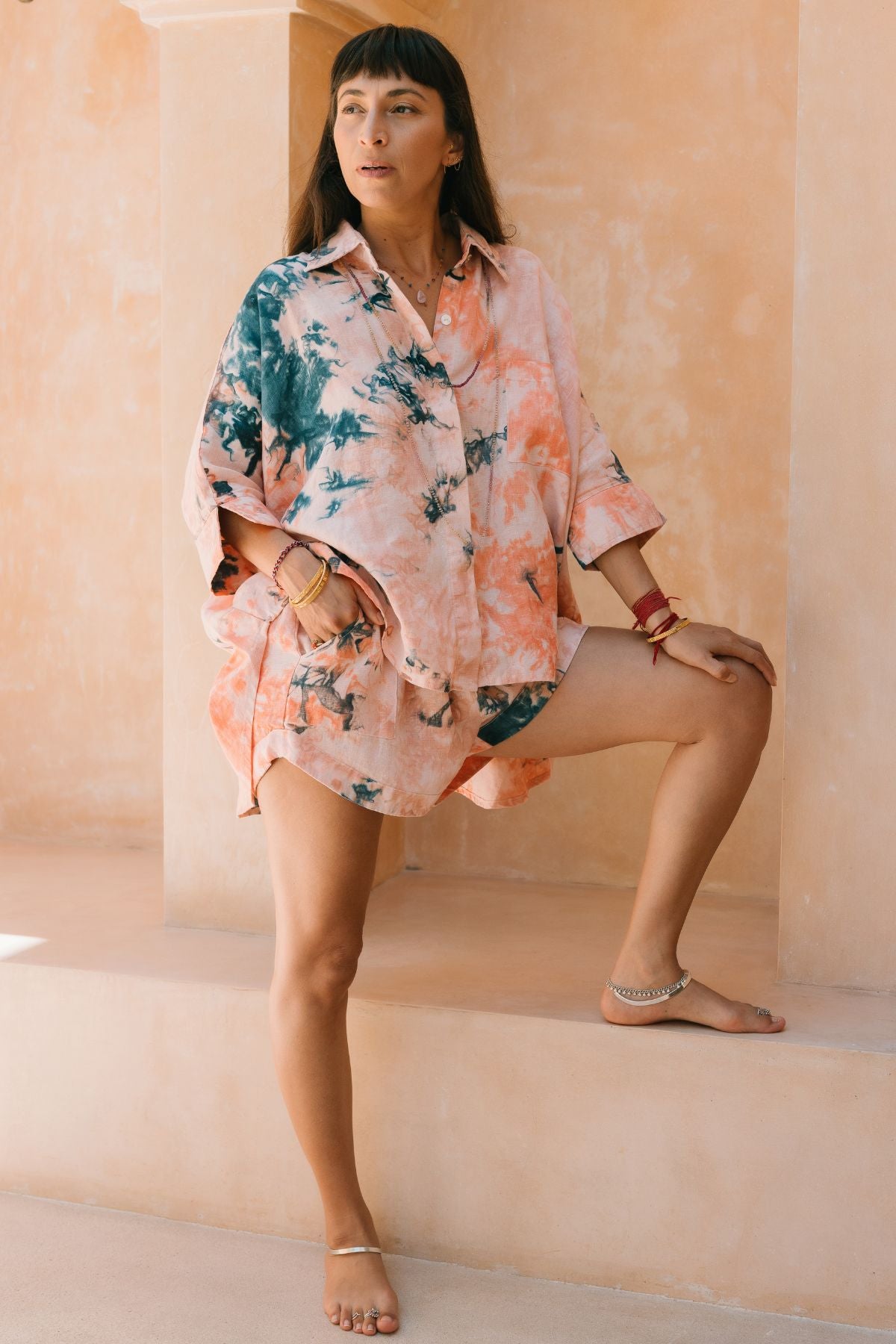
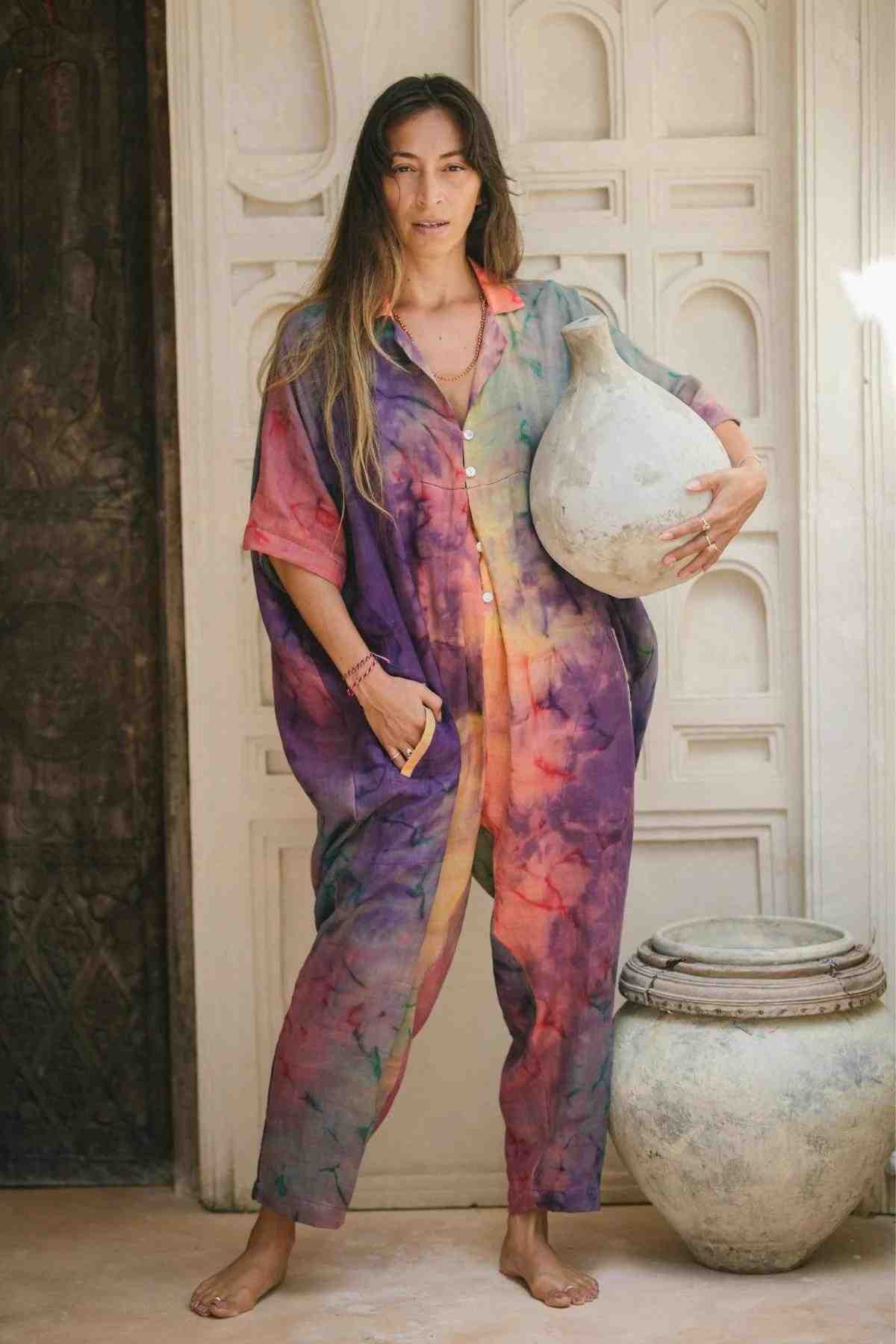
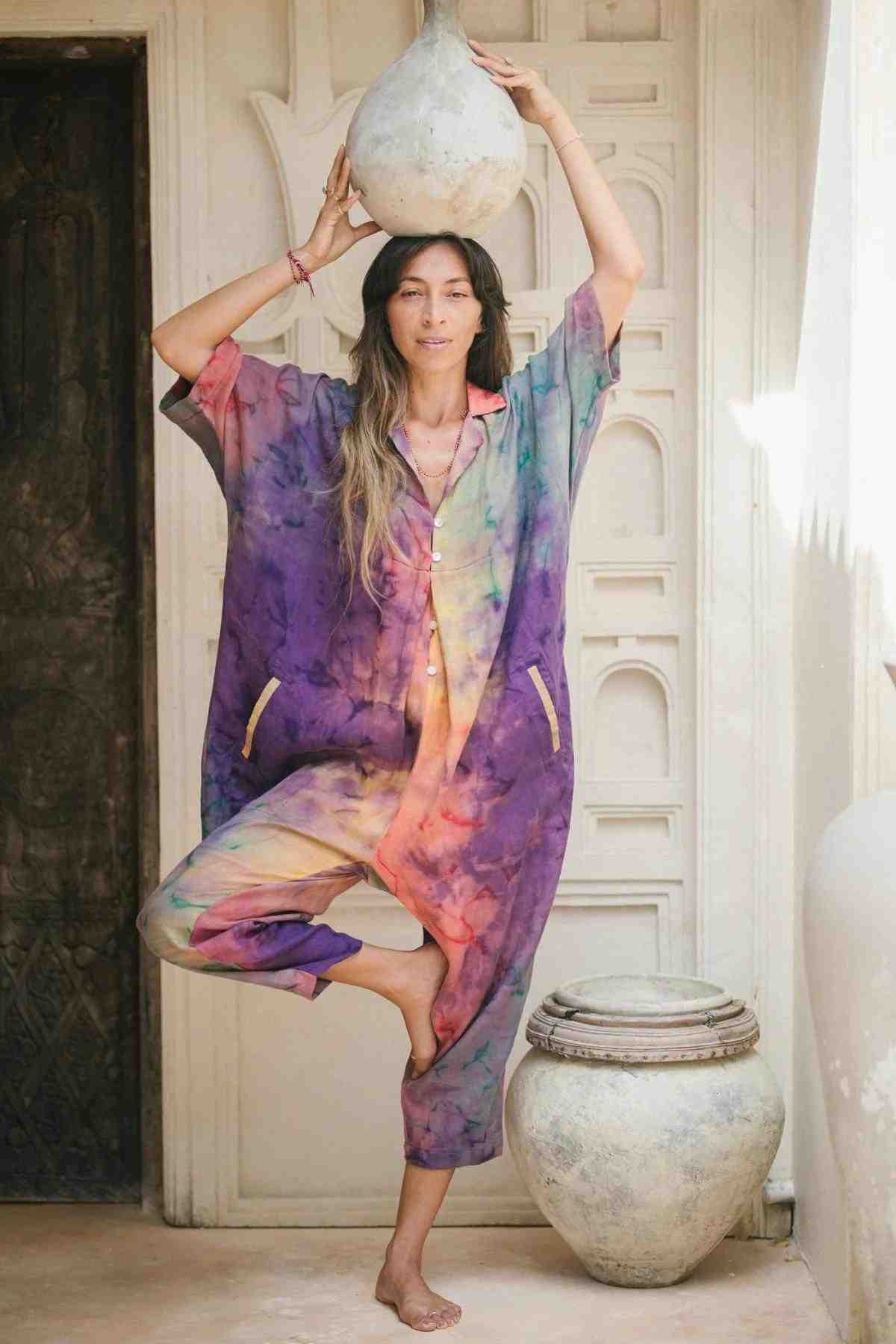
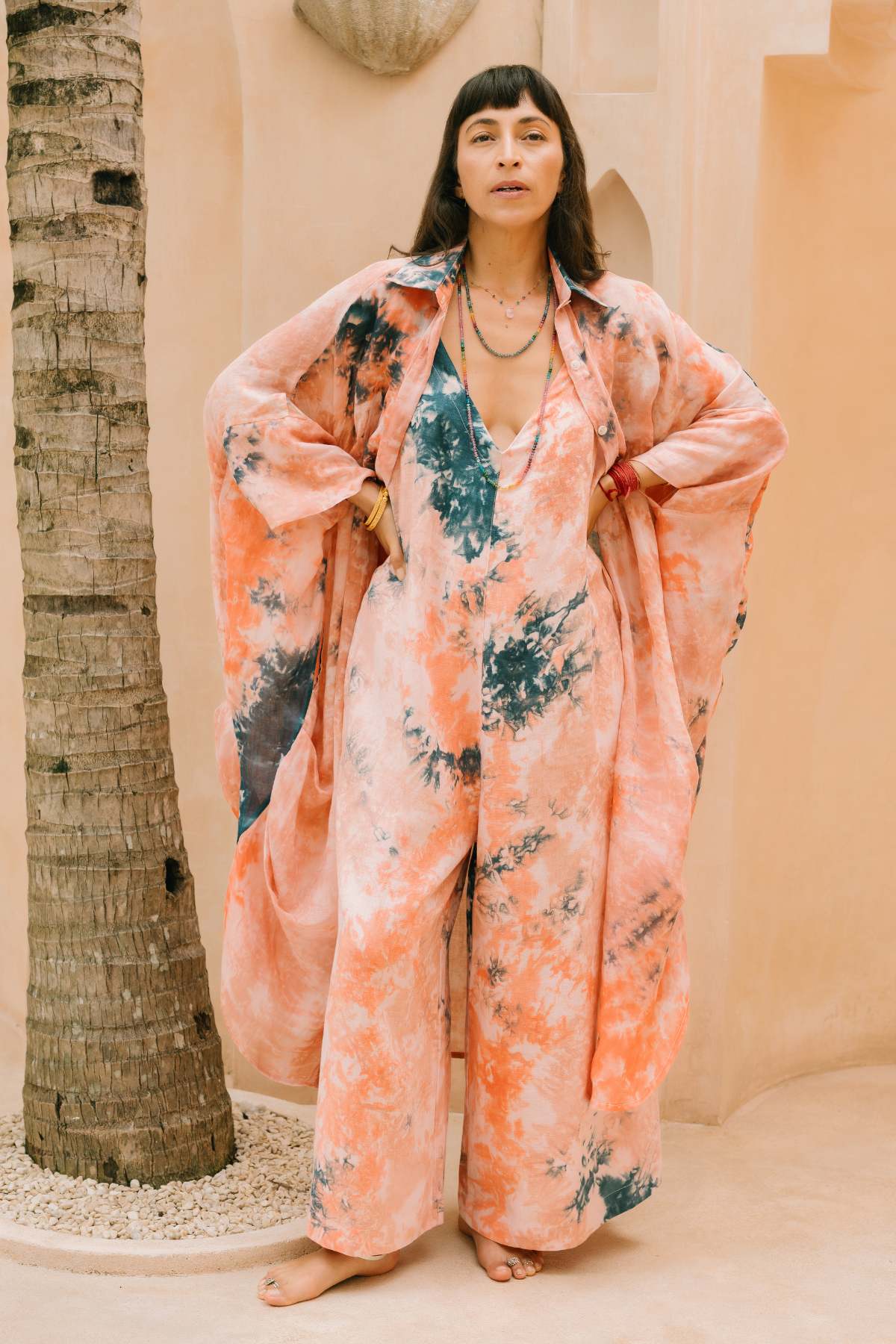
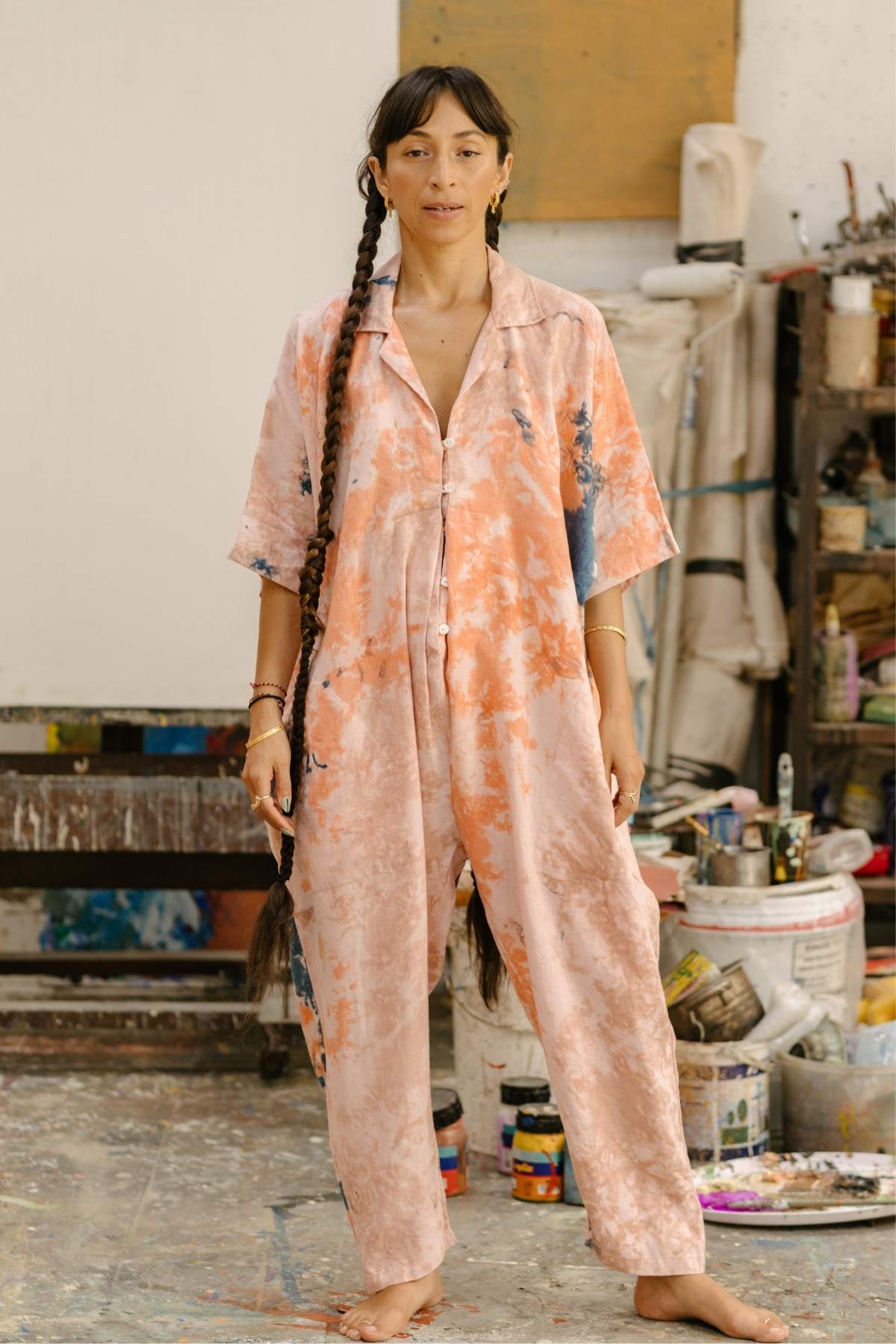
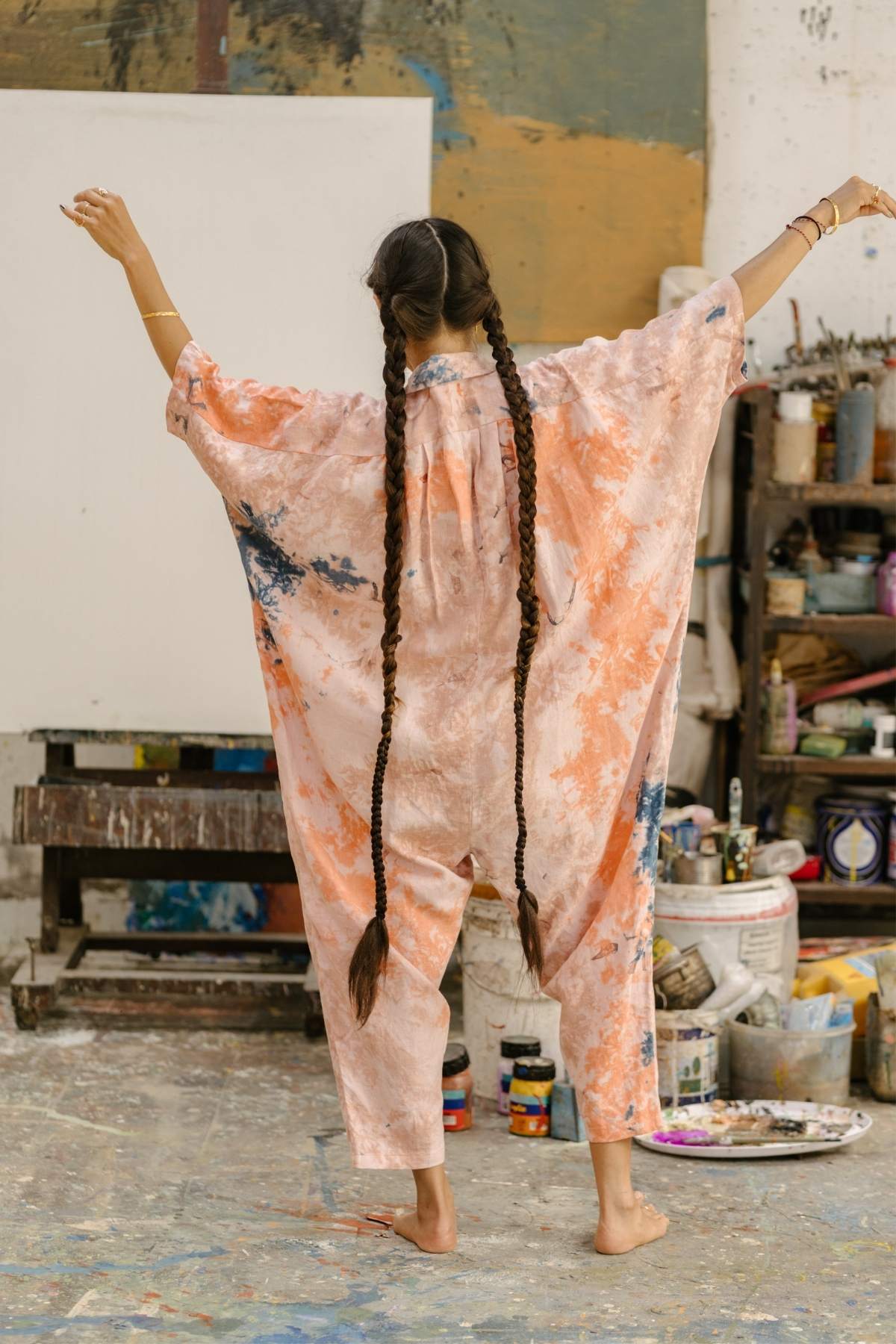
Silk appears in our more ceremonial pieces. And across many of our colorways, botanical dyeing is used to create colors that are genuinely unique. No two batches of botanically dyed cloth are exactly alike. The variation is not a flaw. It is proof of natural process. It is, in its way, the most honest thing a garment can tell you about itself.
How We Make: 30 Balinese Artisan Families, Homes and Workshops, Not Factories
Every piece of Myrah Penaloza clothing is made by one of approximately 30 Balinese artisan families. They work from their homes and from small workshops they own themselves, not from a factory. They are paid a living wage, always, without exception.
This is not a story we tell for marketing purposes. It is the structure of how we work. The reason we produce in small batches is not a strategy for manufactured scarcity. It is because small-batch production is the only way to work at this level of craft. Each family makes what they can make well. We do not push them to produce beyond that. When a style sells out, it may not return. This is not a limitation. It is the natural rhythm of making things by hand.
The women and men who make our garments are not invisible workers. They are the centre of what this brand is. Without their skill, their decades of practice, their hands that know what fabric wants to do before it is told, there is no Myrah Penaloza. There is just another brand with a nice story on its website.
How to Choose Linen Clothing from Bali: What to Look For
If you are buying linen clothing from Bali, whether from us or from anyone else, here is what genuinely matters.
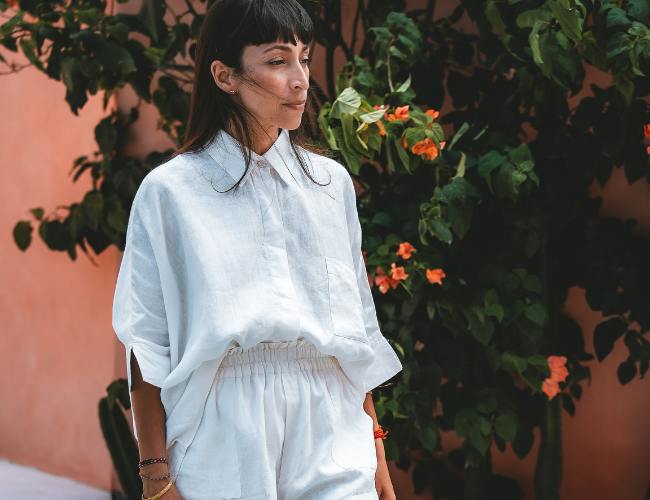
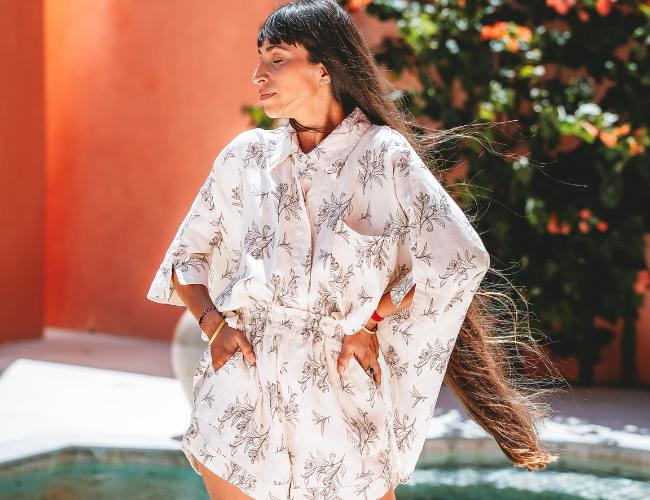
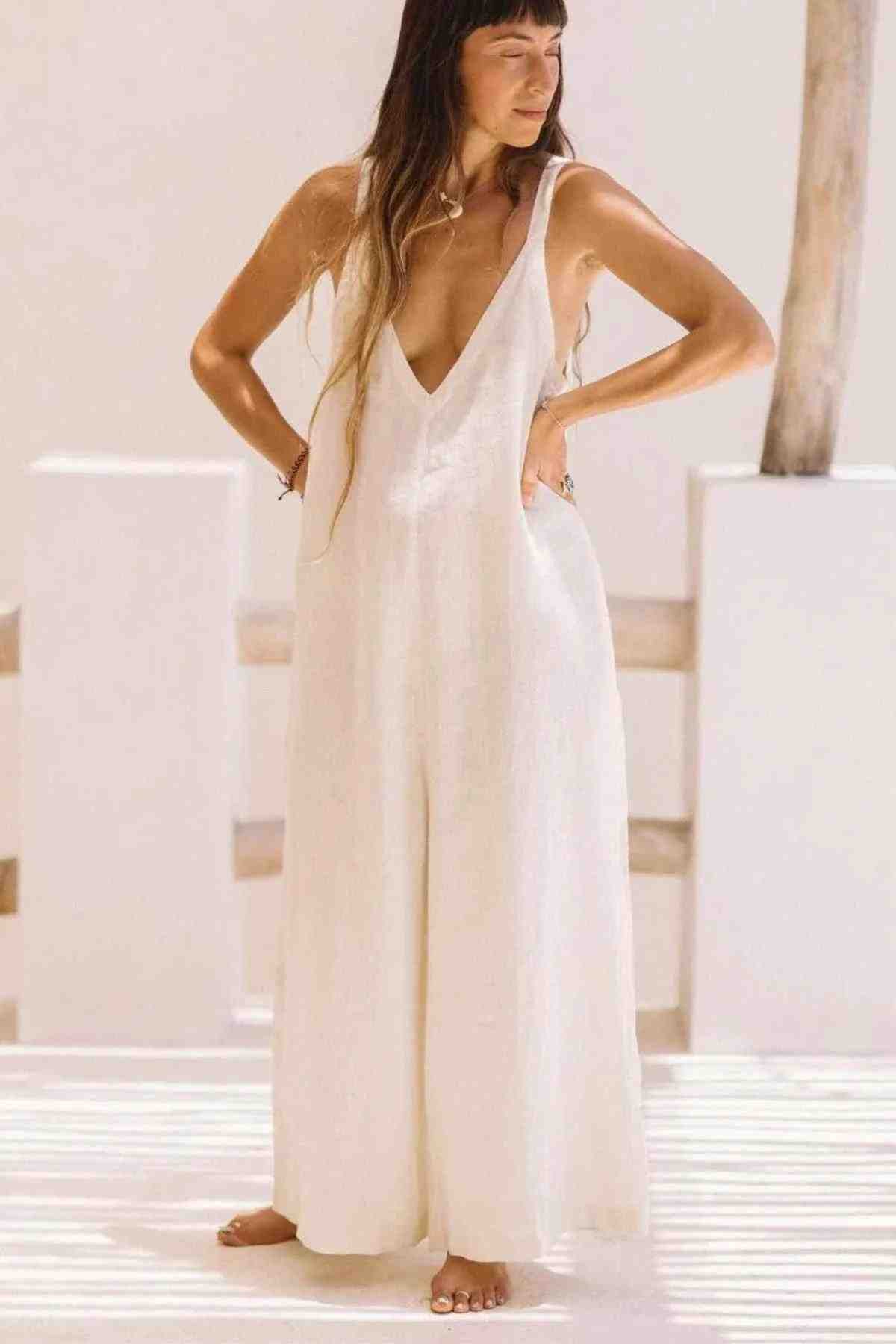
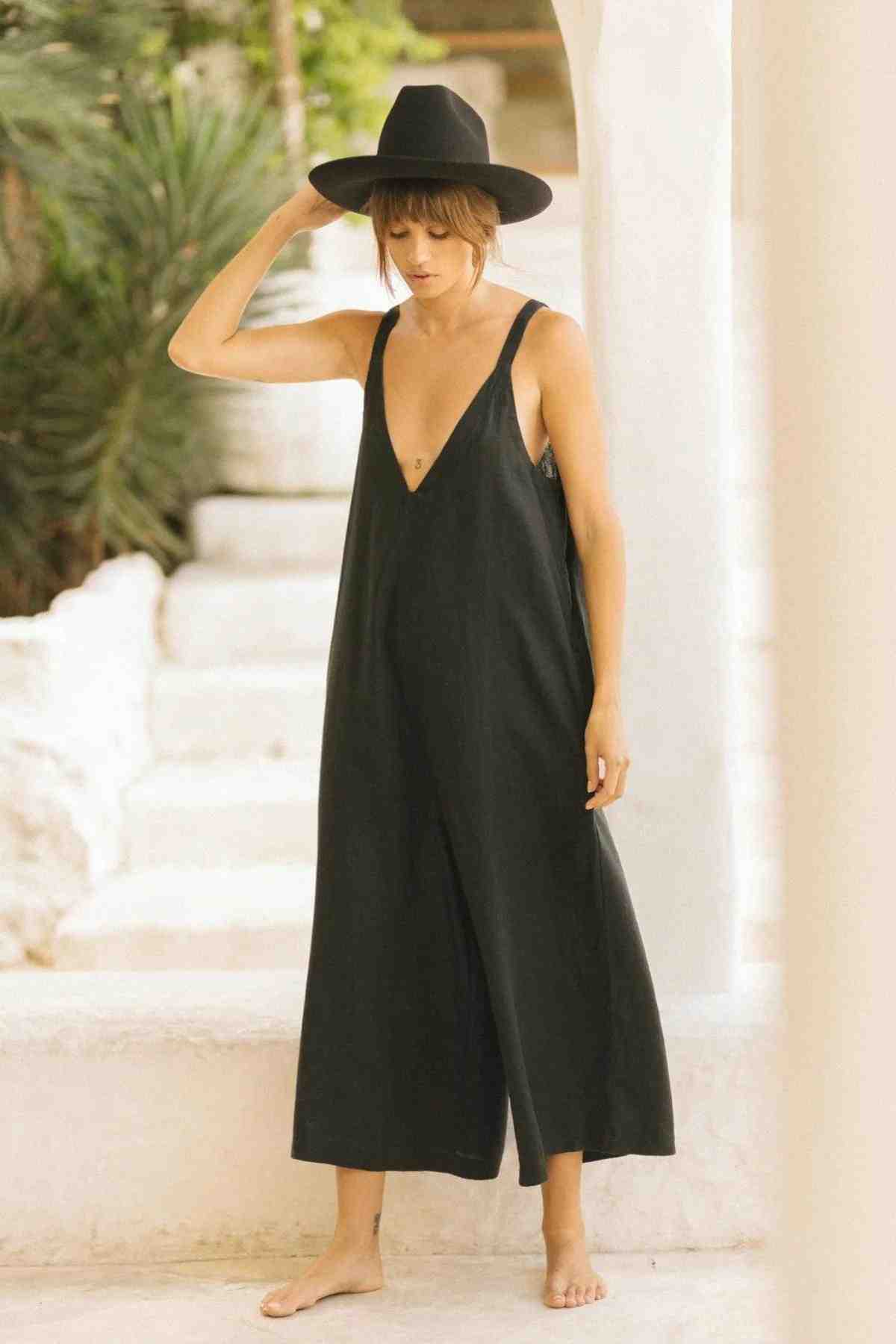
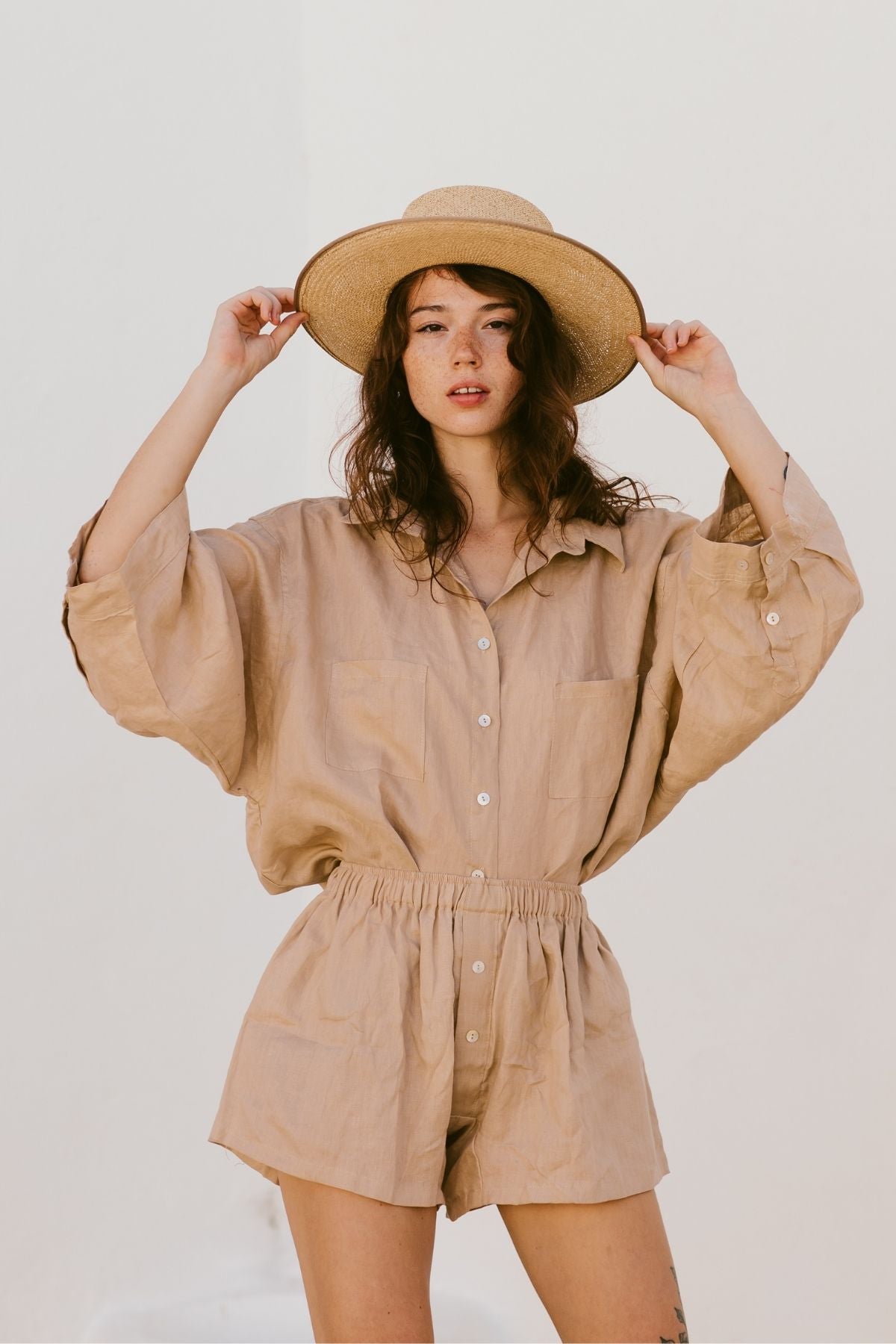
Fabric weight and weave. Linen comes in a range of weights from very light and sheer to a heavier, more structured cloth. Neither is better. They are suited to different garments and different climates. A linen playsuit should be in a lighter, more fluid weave. A structured linen set benefits from a slightly denser cloth. Ask, or feel it, before you commit.
Where it was made. Not just the country. The specific context. Handmade in a Balinese home or small workshop by a skilled artisan family is not the same as manufactured in a Bali-registered factory at volume. The origin story matters because it tells you what the garment is made of beyond its fabric.
How it will age. Linen softens with washing. It does not deteriorate. A quality linen garment should improve over time, not break down. If you are buying something you intend to wear for years, and with handmade Bali linen you should be, it helps to know how it ages.
Who made it, and how. This is not a sentimental consideration. It is a practical one. Garments made with genuine skill and care last longer, fit better, and retain their shape in a way that mass production cannot replicate. Knowing who made your clothing is not just an ethical choice. It is a quality indicator.
Linen clothing from Bali, made by hand, by families who have been doing this for decades, is one of the few things in fashion that genuinely holds its value. Not just in price. In presence. In the way it feels to put it on, year after year, and find that it still feels exactly right.
|
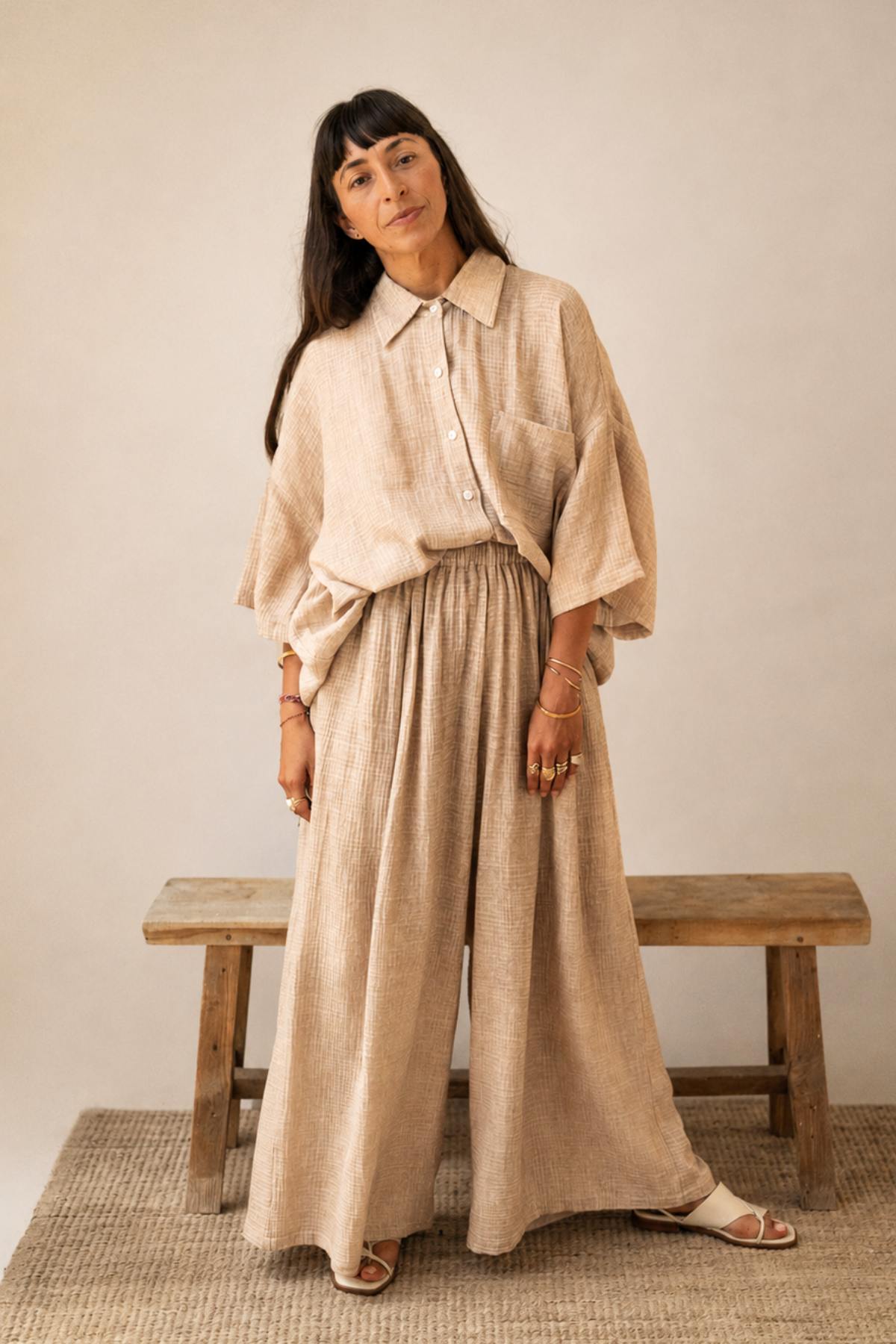
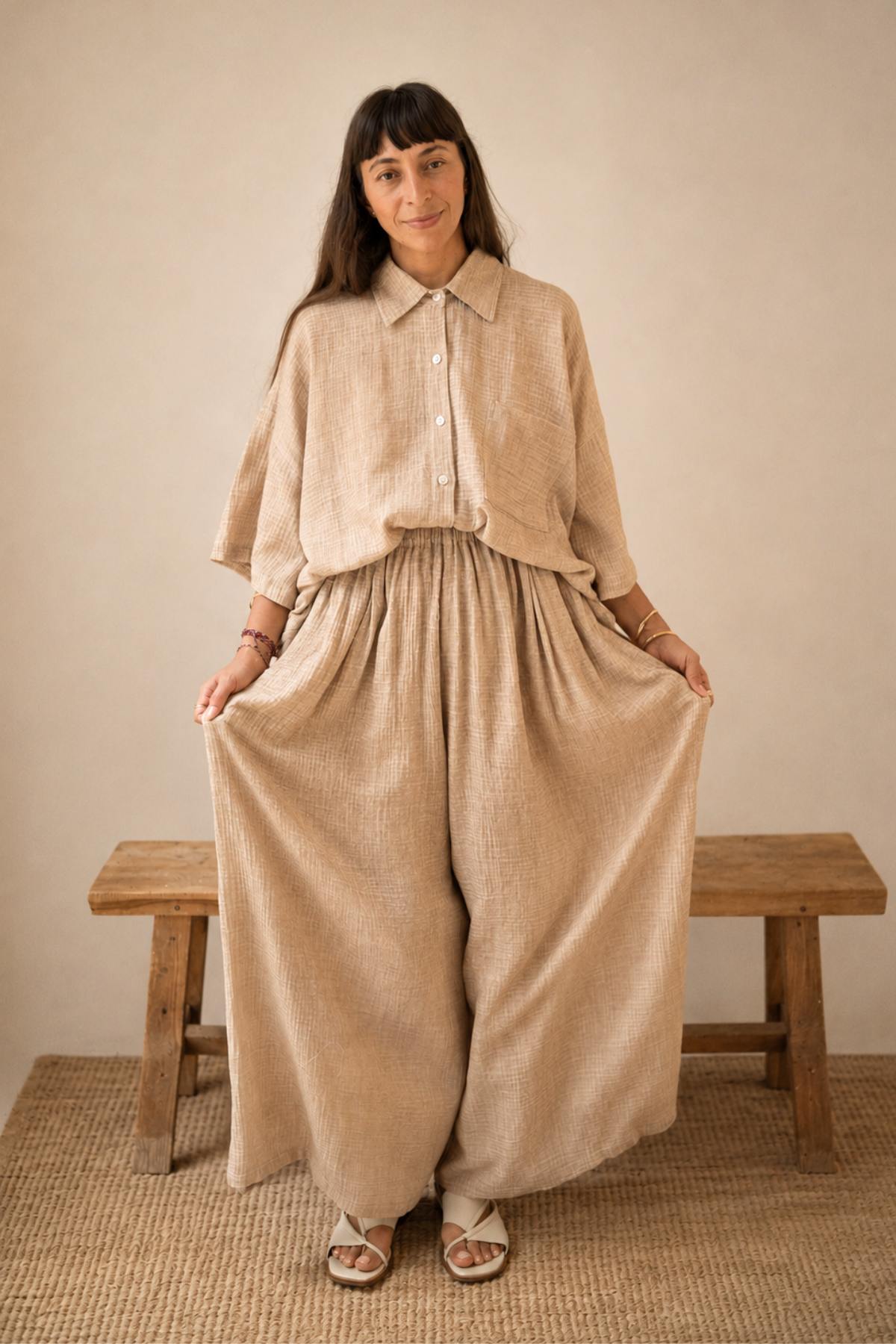
A Piece for This Threshold The Nidra Linen Set Nidra means rest in Sanskrit, the kind of rest that restores you all the way down. Pure linen, made by hand in Bali, in botanical colorways that change the quality of a room when you walk into it. This is what we mean when we say a garment can be ceremony. Shop New Arrivals → |
|
The Muse-Letter Dress for the woman you’re becoming. Every week from Bali. Astrology, ceremony, new arrivals, and the stories behind what we make. Join the Muse-LetterUnsubscribe any time. No spam, ever. |


Leave a comment
This site is protected by hCaptcha and the hCaptcha Privacy Policy and Terms of Service apply.