



If you run hot
Linen first, then loosely woven organic cotton, then bamboo rayon. What decides it is not softness or thread count but four fabric behaviours: how much moisture the fibre absorbs before it feels wet, how fast it releases that moisture back to the air, whether the cloth holds itself off your skin or collapses onto it, and how quickly heat moves through it. Linen is the only common fibre that does all four well at once.
If you are the person who is warm when everyone else is comfortable, you already know that most fabric advice is written for the opposite problem. What follows is about behaviour rather than feel in the shop, because the fabric that seems coolest against your wrist for two seconds is often the one that is worst forty minutes into a warm afternoon.
What actually makes a fabric feel cool?
Cool is not a property of cloth. It is the result of your body losing heat, and cloth either helps that or gets in the way. There are four mechanisms worth knowing, and they explain almost every fabric decision you will ever make.
- Moisture regain. How much water a fibre can hold before it feels damp. Flax holds around a fifth of its own weight and still feels dry to the touch. This is why linen does not announce that you are warm.
- Drying rate. Absorbing is only half the job. The fibre has to release moisture back to the air, because evaporation is what actually cools you. Cotton absorbs well and then holds on, which is why a damp cotton shirt stays damp.
- How the cloth sits. Flax fibre is stiff. Linen stands slightly away from the body and traps a moving layer of air instead of sealing against you. Softer, more fluid fabrics drape onto skin and close that gap.
- Thermal conductivity. How readily heat passes out through the cloth. Linen and silk both move heat quickly, which is the cool-to-the-touch sensation. Only linen keeps doing it once the fabric is damp.
How the natural fibres compare when you run hot
| Fibre | Holds moisture | Dries | Sits on skin | If you run hot |
|---|---|---|---|---|
| Linen | High, around 20% of its weight | Fast | Stands off the body | The best available. Does all four things at once |
| Organic cotton, open weave | High | Slow | Softens onto the body | Good until it is damp, then it clings |
| Bamboo rayon | Moderate | Moderate | Drapes close, very fluid | Cool to touch and lovely to wear, but it follows the body rather than holding away |
| Silk | Low to moderate | Moderate | Close and smooth | Cool on contact, but it shows every mark and does not move much air |
| Polyester | Almost none | Surface only | Seals against the body | The worst case. Moisture has nowhere to go, so it stays on you |
We do not use polyester, and it is on this table because it is what most clothing sold as breathable is actually made of. If a label will not name the fibre or break down the percentage, it is usually because a synthetic is doing the bulk of the work.
Does the weave matter more than the fibre?
Often, yes, and this is the part almost nobody mentions. A tightly woven linen with a dense finish will be warmer than a loosely woven cotton. Fibre sets the ceiling on how well a fabric can perform. Weave decides how much of that ceiling you actually get.
Two practical signals. Hold the cloth up to a window: if you can see light structure through it, air can move through it too. And crush a handful: cloth that springs back has body and will hold itself off you, while cloth that stays collapsed will drape onto skin and stay there.
Does the cut matter as much as the cloth?
It does, and it is the cheapest change you can make. Air moving between cloth and skin is doing most of the cooling. A fitted garment in excellent linen will be warmer than a loose garment in ordinary cotton, because the fitted one has removed the gap the linen needed in order to work.
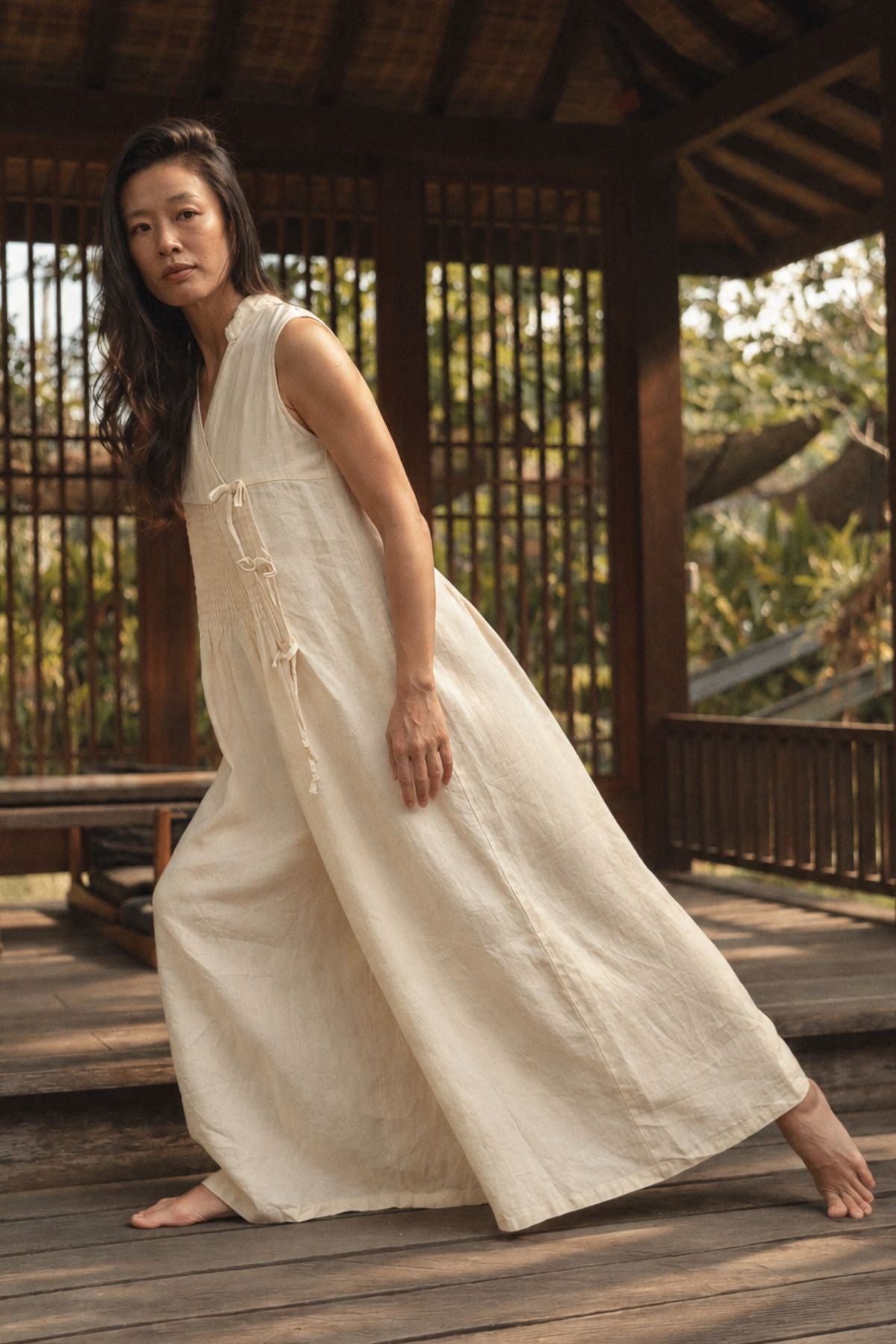
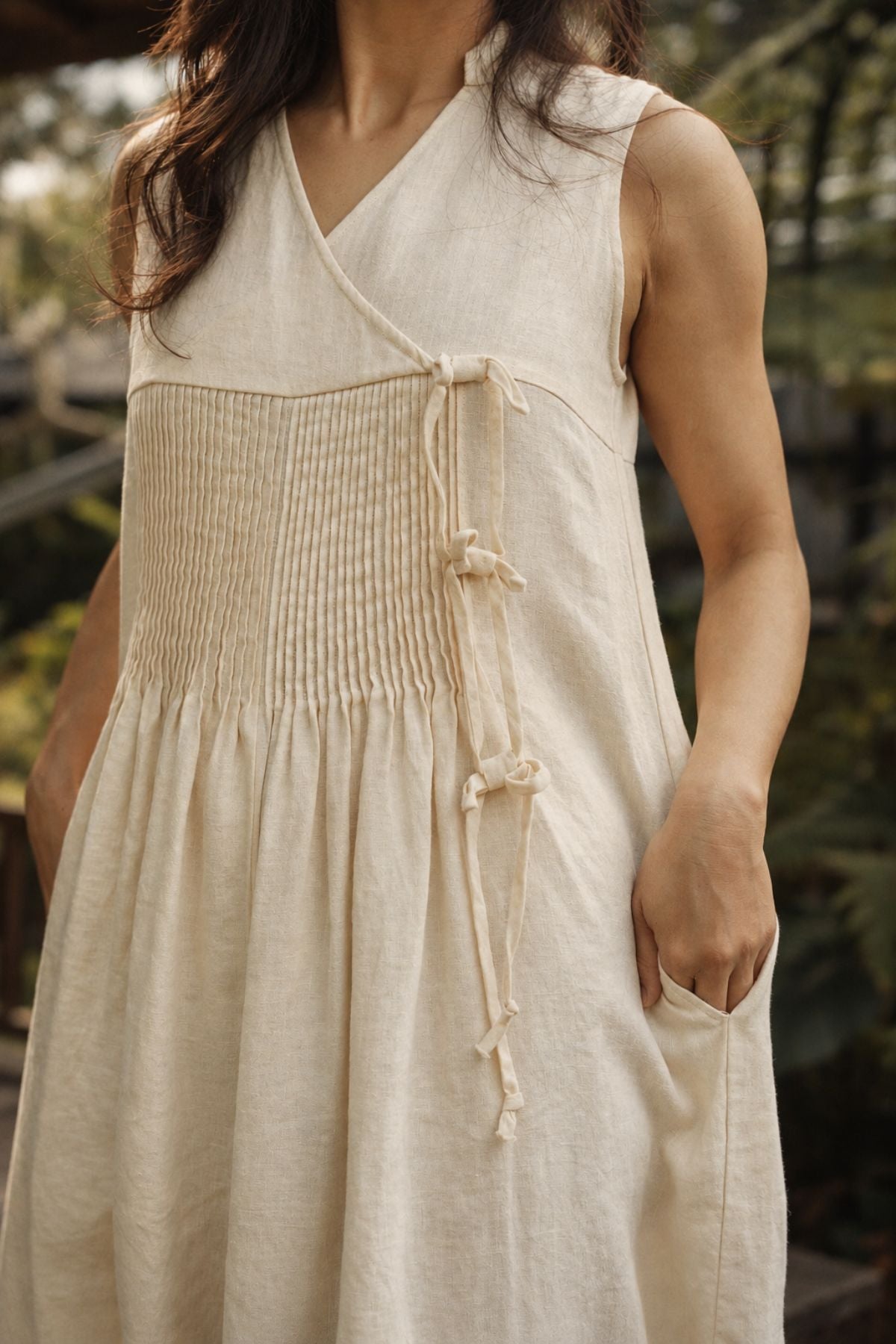
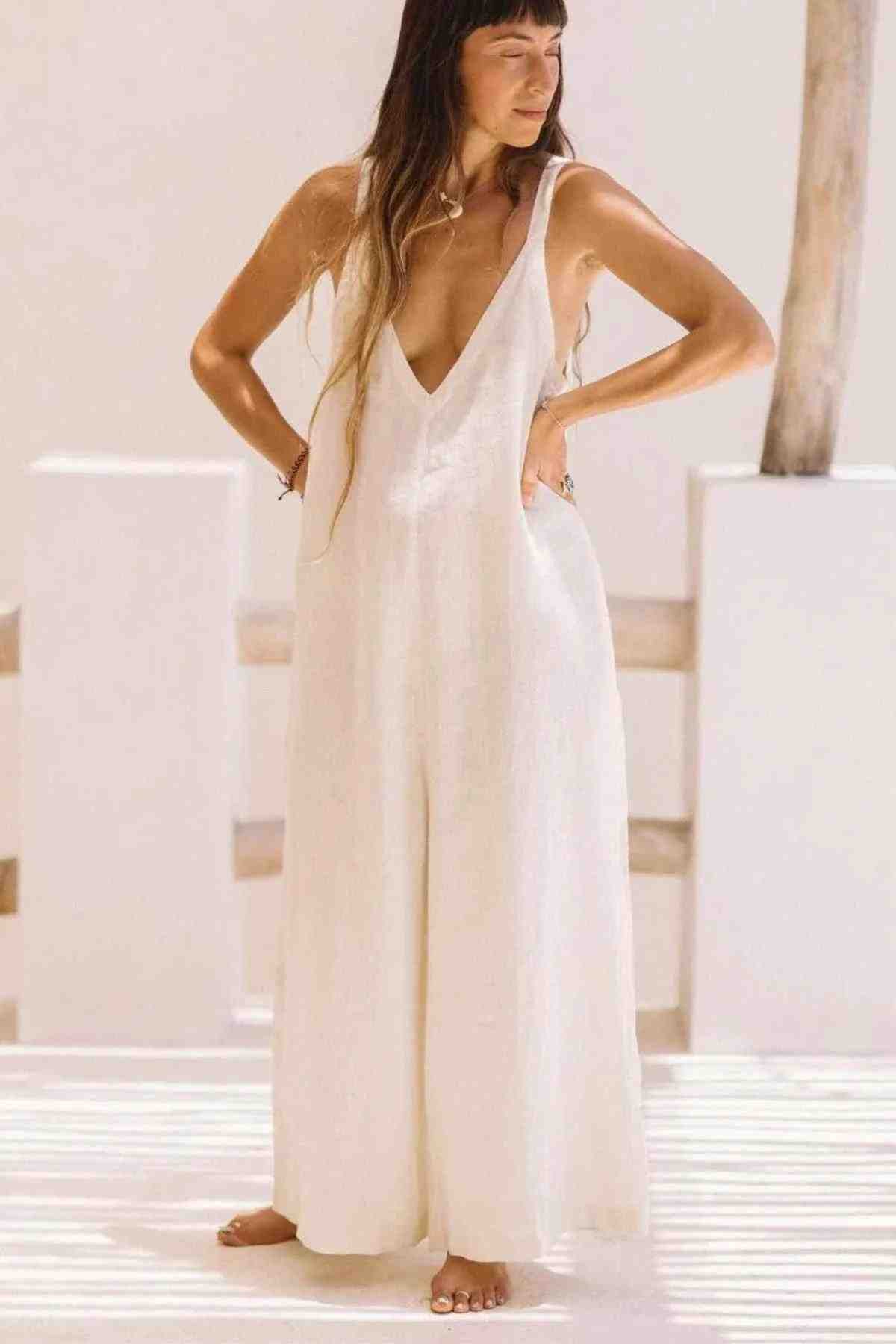
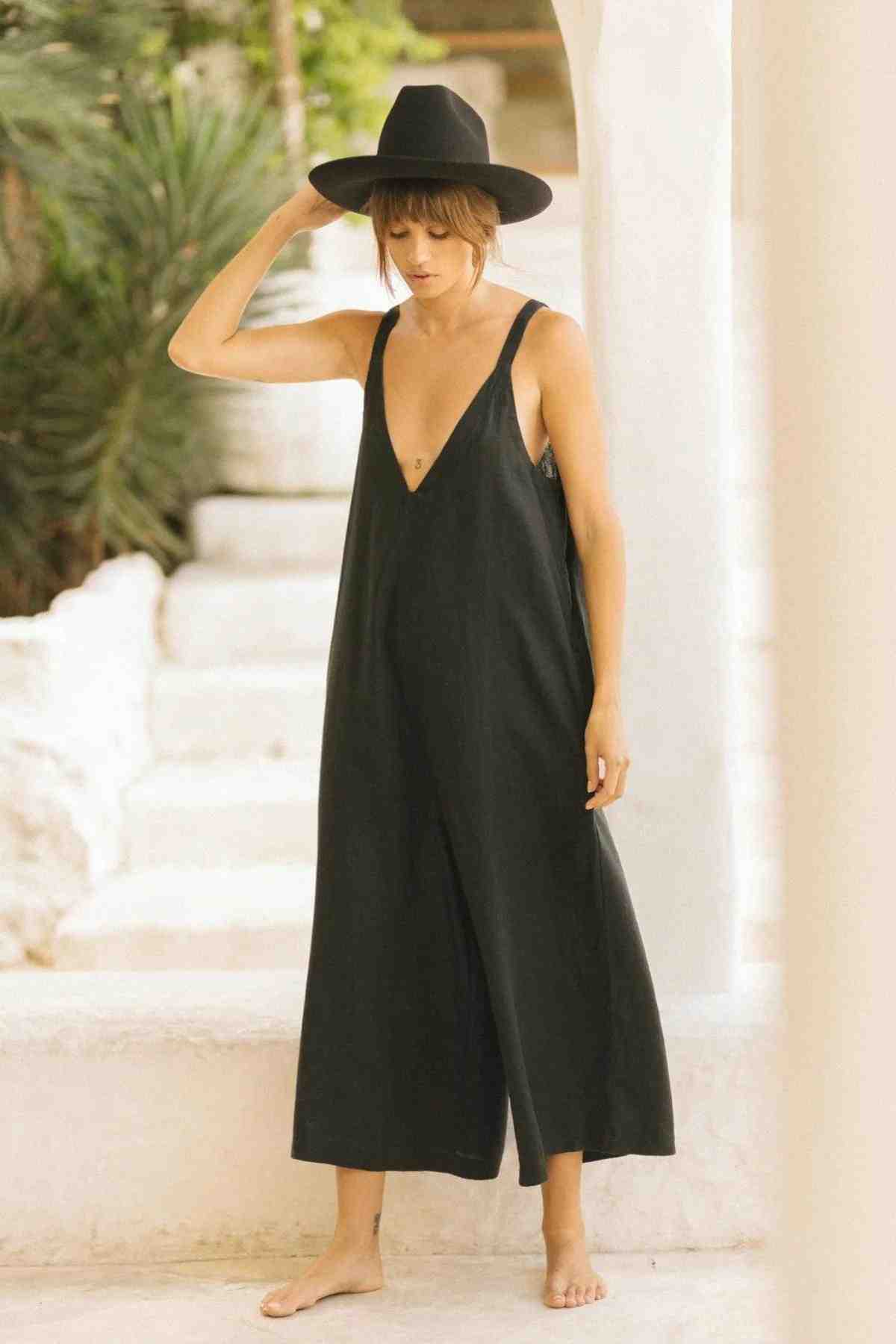
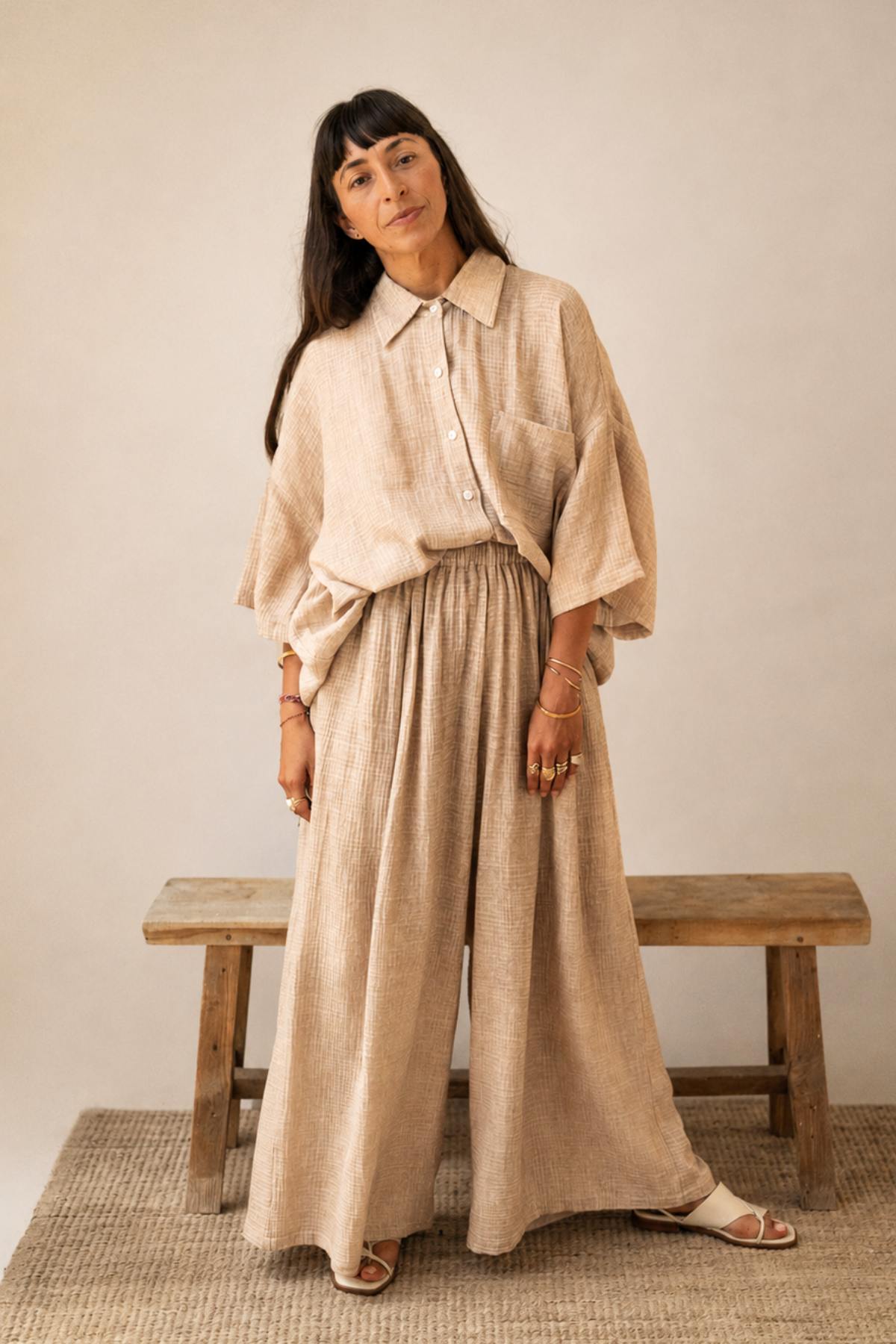
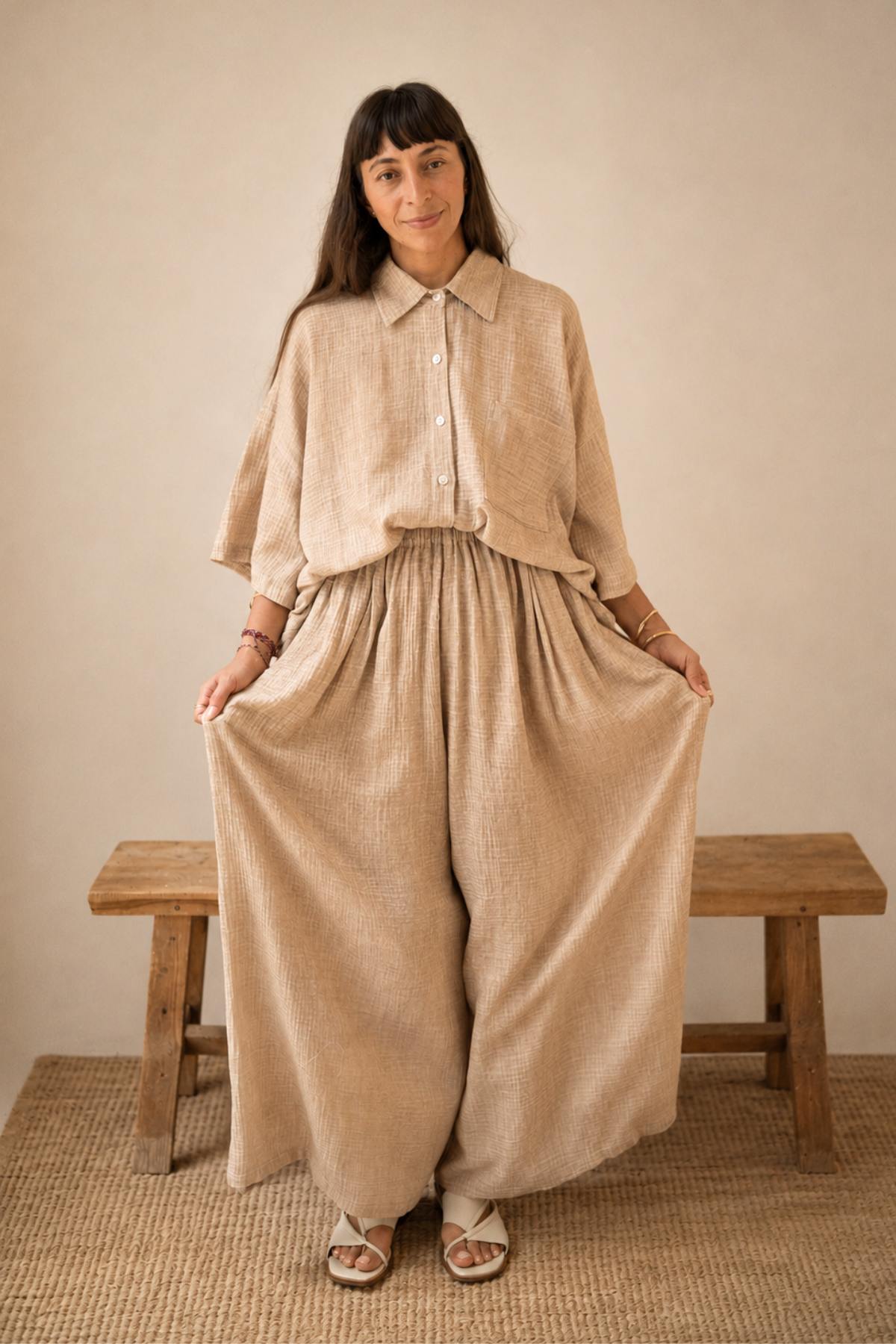
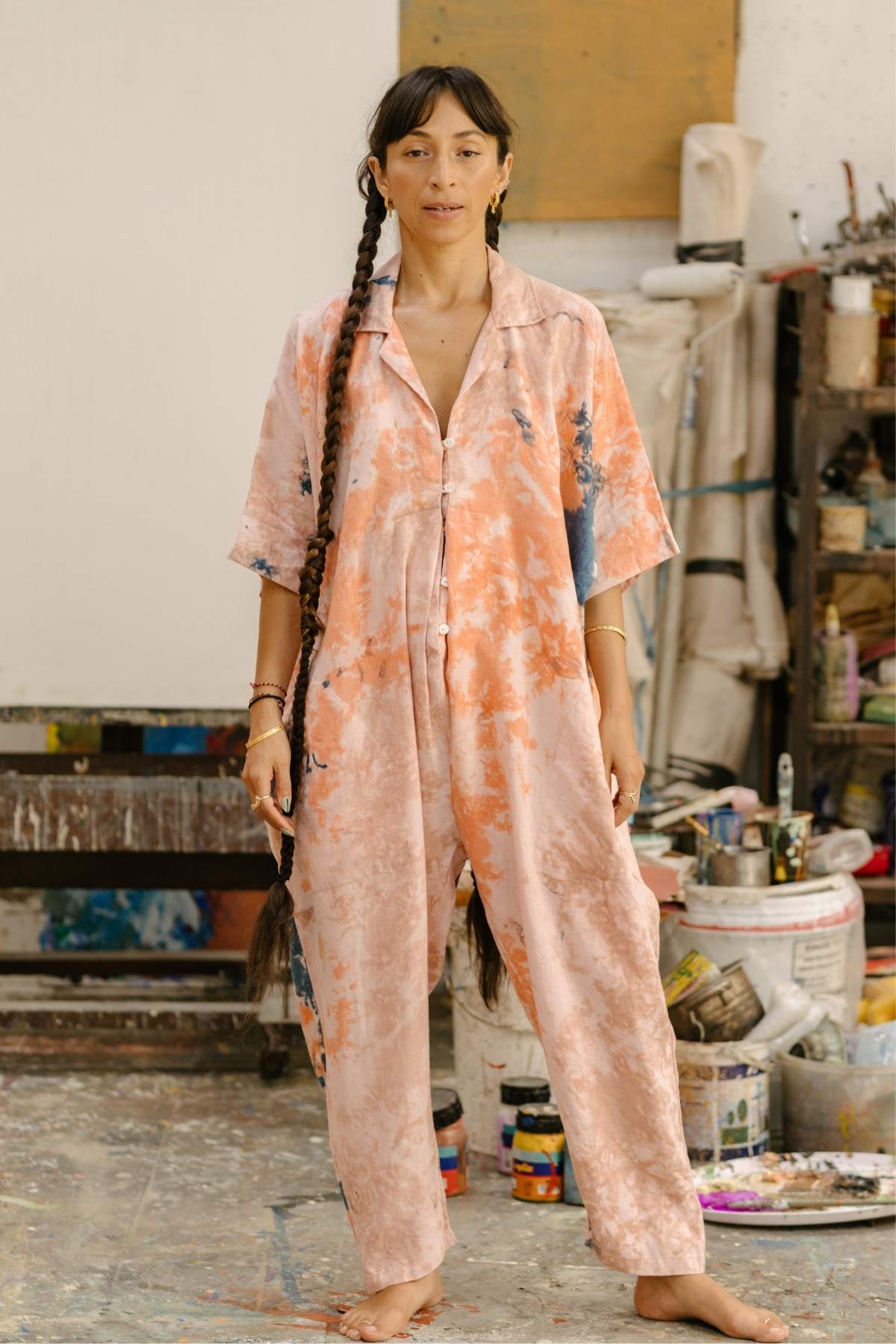
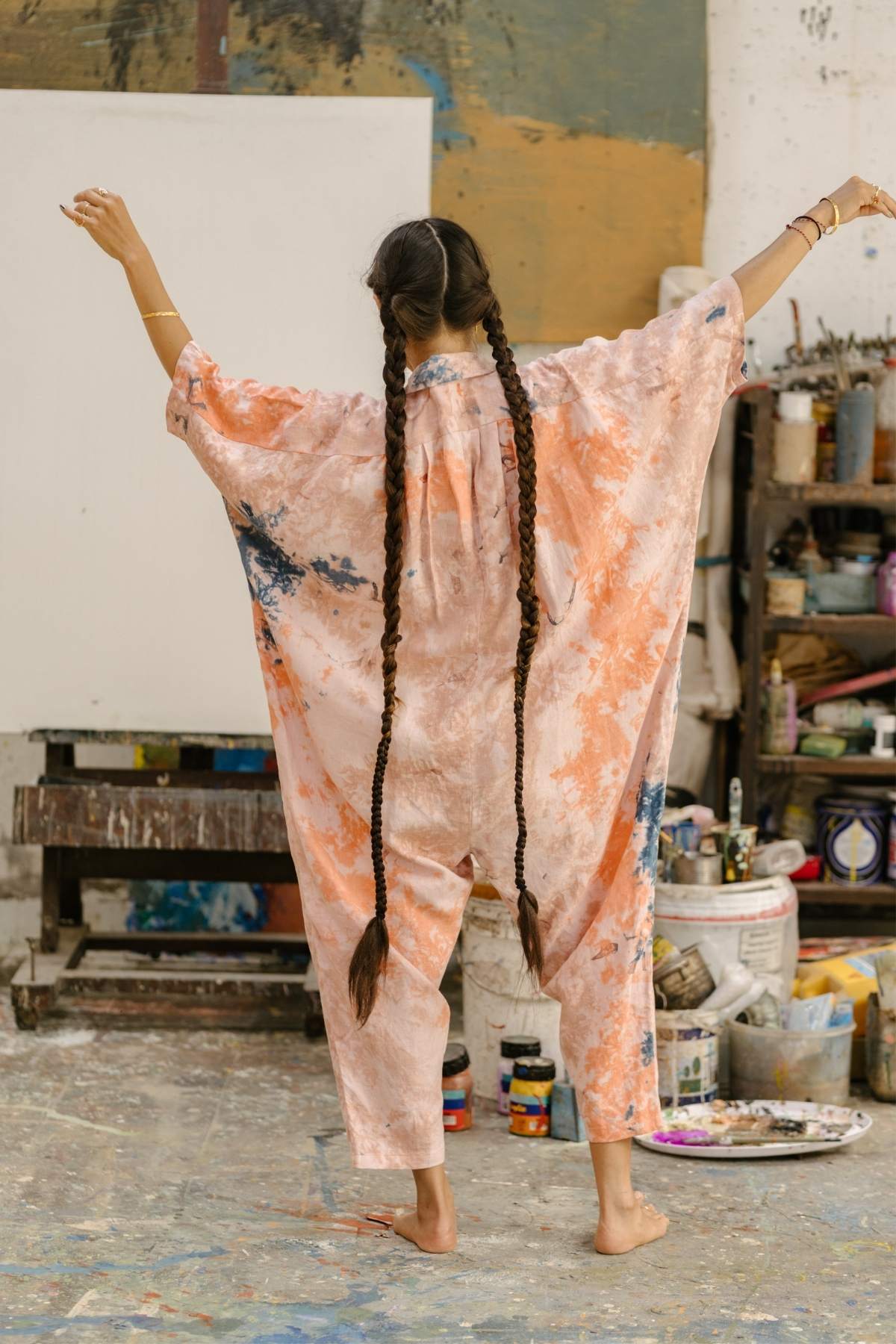
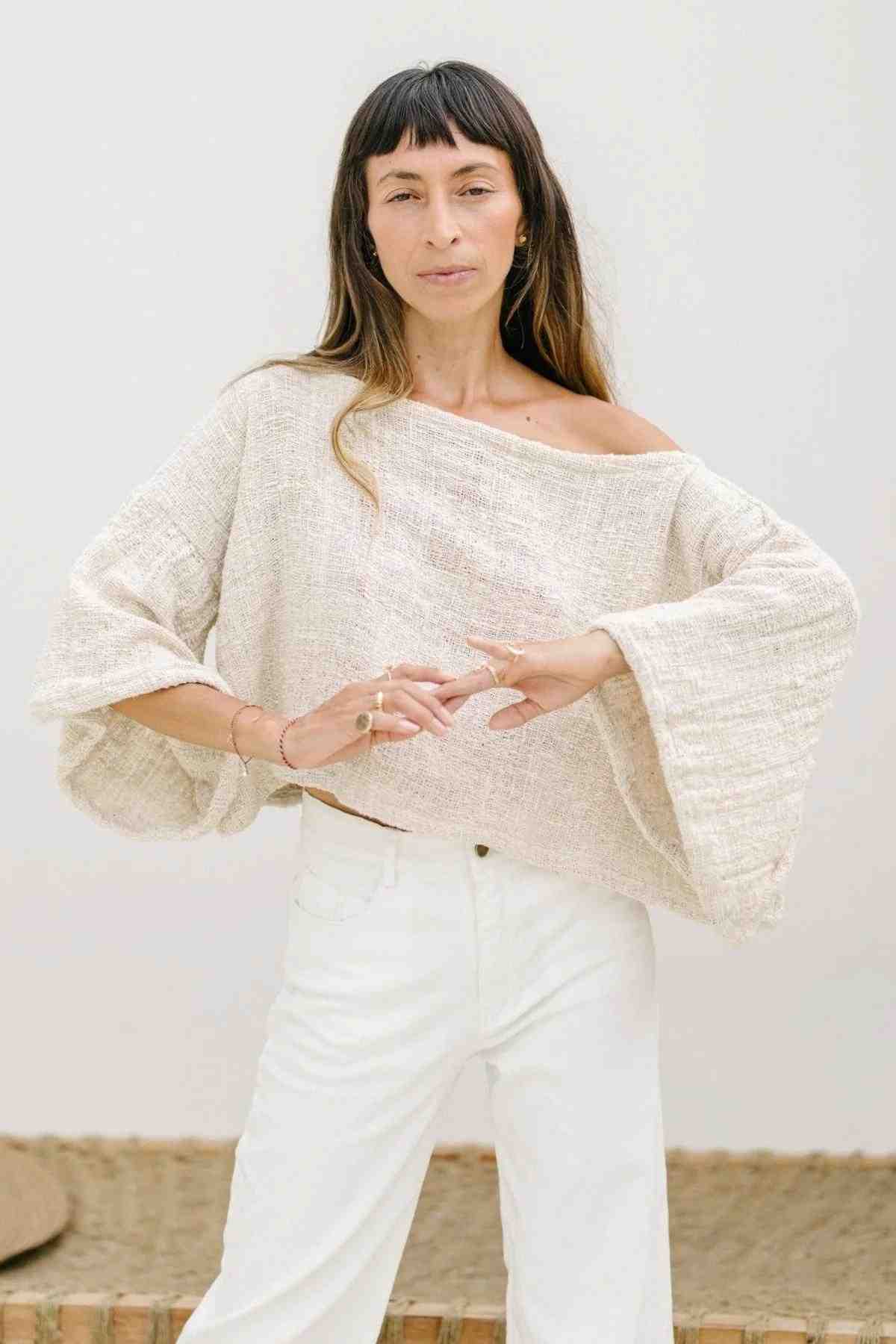
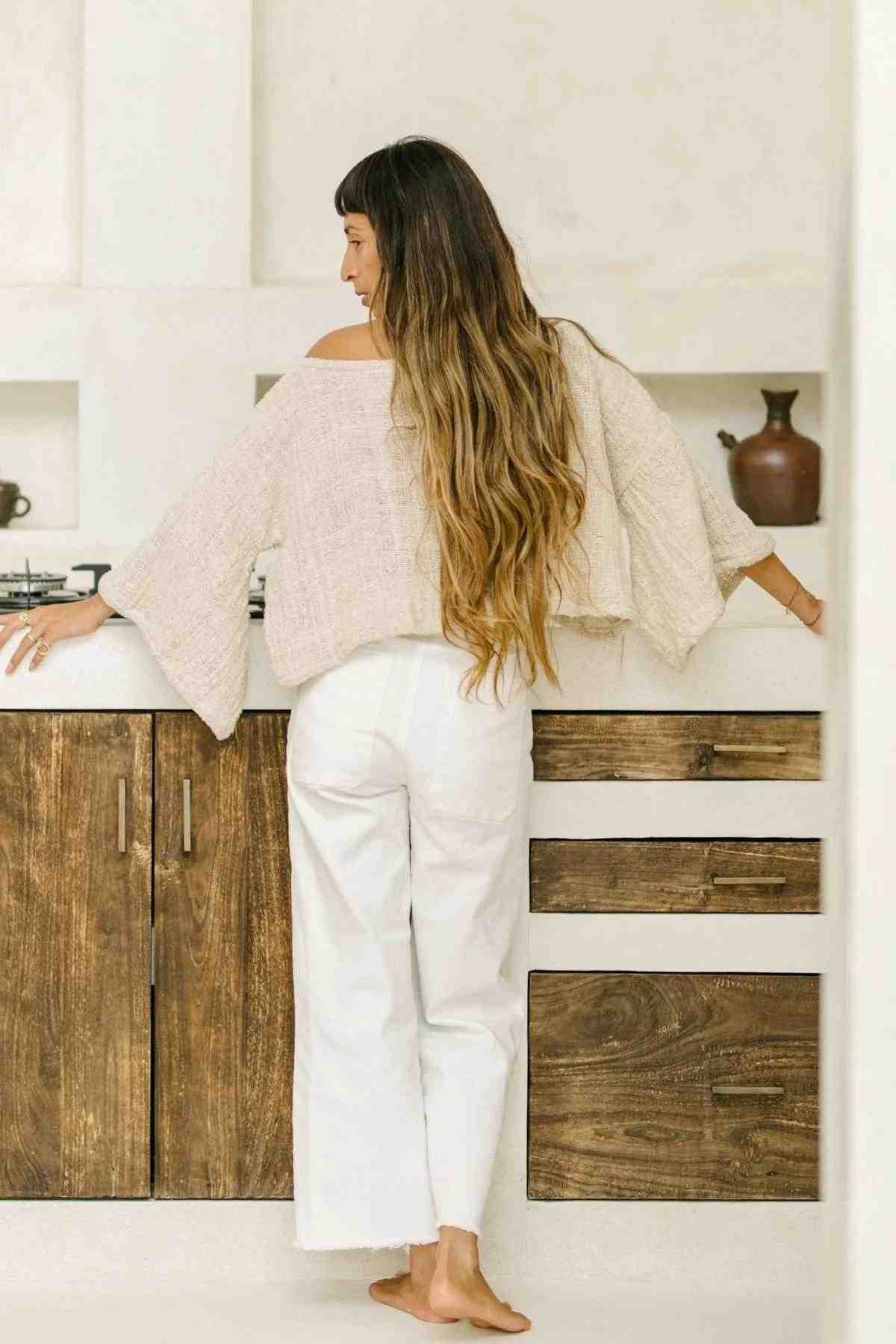
What this looks like in practice: a wide leg rather than a tapered one, an open neckline rather than a closed collar, a dropped shoulder rather than a set-in sleeve, and a waist that ties rather than one that grips. A one-piece cut loosely through the body does more for you in heat than any fibre upgrade to a tighter shape.
One caveat worth being straight about. Linen creases, and it will crease more in humidity. That is the same fibre stiffness that keeps the cloth off your skin, so it is not a defect to be engineered out. A linen that never creases has usually had something synthetic added to it.
How to care for linen when you wear it in heat
Wash cool and often. Linen tolerates frequent washing better than almost any other fibre, and it softens each time rather than degrading. Skip fabric softener entirely, because it coats the fibre and the coating is exactly what blocks moisture from moving through. Line dry if you can, and take it off the line while there is still a little weight in it.
Our linen is stonewashed before it is cut, so it has already relaxed out of the tension it was held under on the loom. The softness on the first day is the softness it keeps.
Frequently asked questions
What is the best fabric to wear if you run hot?
Linen. It absorbs around a fifth of its own weight in moisture before feeling damp, releases that moisture back to the air quickly, holds itself slightly away from the skin instead of clinging, and conducts heat away efficiently. Most fibres manage one or two of those. Linen is the only common one that does all four at the same time.
Is linen or cotton cooler?
Linen, and the gap widens the warmer you get. Both absorb moisture well, but cotton holds onto it and dries slowly, so a damp cotton garment stays damp and softens onto the skin. Linen releases moisture fast and its stiffer fibre keeps a layer of moving air between cloth and body. Cotton is closest to linen when it is loosely woven and you are only mildly warm.
Is bamboo rayon good for hot weather?
It is genuinely cool against the skin and very fluid, which many people prefer to linen's structure. The trade-off is that it drapes close to the body rather than standing away from it, so it does less to keep a layer of air moving. It is a good option in still air and a weaker one when you want the cloth to hold itself off you.
Why does polyester feel so hot?
Because it barely absorbs moisture at all. Water sits on the surface of the fibre and on your skin rather than being drawn into the cloth and released to the air, and evaporation is what actually cools you. The fabric also tends to seal against the body, which closes off the airflow that would otherwise help. We do not use polyester in anything we make.
Does the weave matter more than the fibre?
Frequently. The fibre sets the ceiling on how a fabric can perform, and the weave decides how much of that you get. A tightly woven, densely finished linen can be warmer than a loosely woven cotton. Hold cloth up to a window: if light shows the structure, air will move through it too.
Does a looser cut actually make a difference?
A large one. Most of the cooling comes from air moving between the cloth and your skin, so a fitted garment in excellent linen can be warmer than a loose garment in ordinary cotton. Wide legs, open necklines, dropped shoulders and a waist that ties rather than grips all preserve the gap the fabric needs in order to work.
Why does linen crease so much in humidity?
The same fibre stiffness that keeps linen off your skin is what makes it crease, so the two cannot be separated. A linen that resists creasing has usually had a synthetic fibre or a chemical resin finish added, and both of those reduce how well it breathes. The crease is evidence the fabric is doing its job.
How should I wash linen so it keeps working in heat?
Cool water, washed often, and no fabric softener. Softener leaves a coating on the fibre, and that coating is precisely what stops moisture moving through the cloth. Line dry where you can and bring it in while there is still a little weight in it. Linen softens with every wash rather than degrading, so frequent washing improves it.
With love from Bali,
Myrah
|
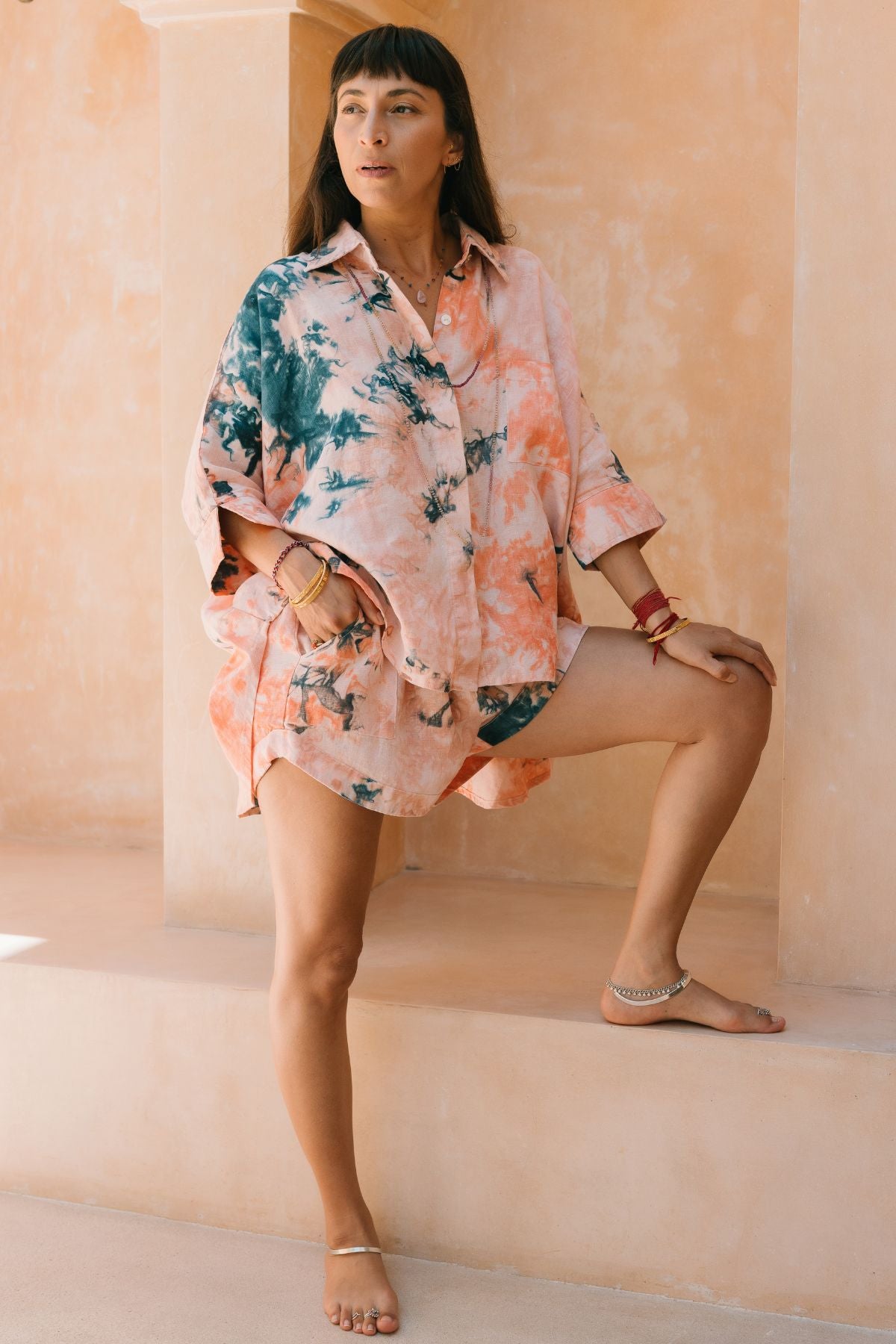
For The Warm Months The Suka Button Down Set. Shop the Suka Button Down Set → |
|
The Muse-Letter Dress for the woman you're becoming. Join the Muse-LetterUnsubscribe any time. No spam, ever. |






Laisser un commentaire
Ce site est protégé par hCaptcha, et la Politique de confidentialité et les Conditions de service de hCaptcha s’appliquent.