

Linen vs Cotton vs Bamboo
Not all natural fabrics are created equal, and if you are choosing slow fashion with intention, the fibre matters as much as the silhouette.
Linen, cotton, and bamboo are the three most common natural fabric choices in conscious fashion right now. Each comes from the earth. Each is infinitely better than polyester against your skin. But they behave differently, feel different, and serve different women, at different moments in their lives. Here is what you actually need to know before you buy.

Why the natural fabric you wear is a wellness decision
Your skin is your largest organ. It breathes, absorbs, and reacts to everything it is in contact with, including your clothing. Synthetic fabrics trap heat, restrict airflow, and can disrupt the skin’s natural microbiome over time. Natural fabrics do the opposite: they regulate temperature, allow moisture to move away from the body, and generally support rather than stress the nervous system.
In warmer climates especially (and in Bali, where I have designed and worn these pieces for over a decade), the difference between wearing linen and wearing a polyester blend is the difference between arriving somewhere at ease and arriving somewhere dysregulated. What you wear affects how you feel. Choosing natural fabric is a form of self-care that requires no ritual, no supplement, and no extra time. You are already getting dressed. You might as well get dressed in something that works with your body rather than against it.
Linen: the gold standard for heat, breathability, and longevity
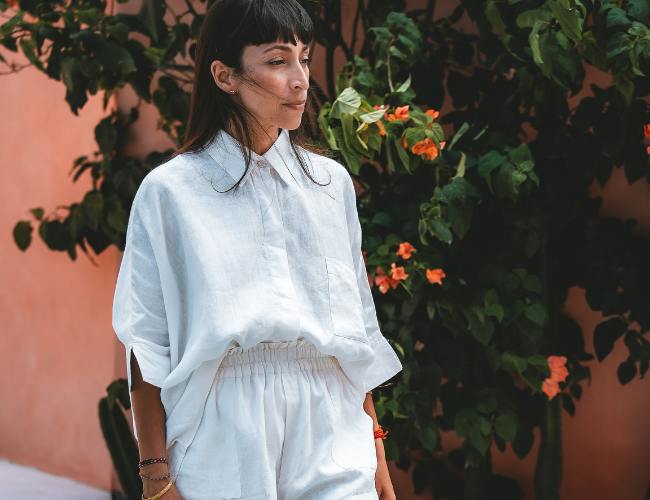
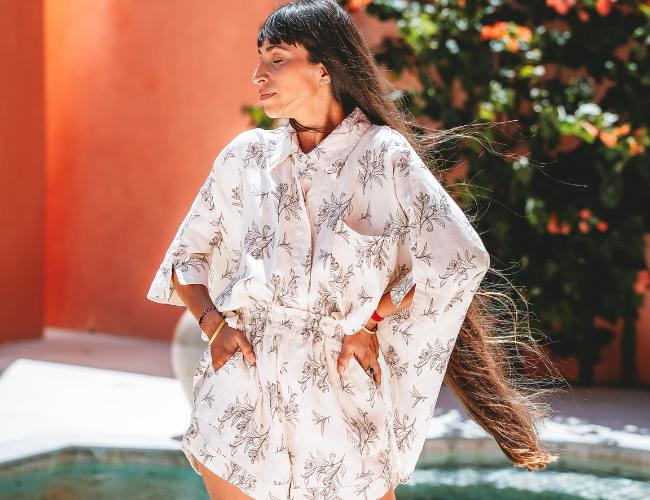
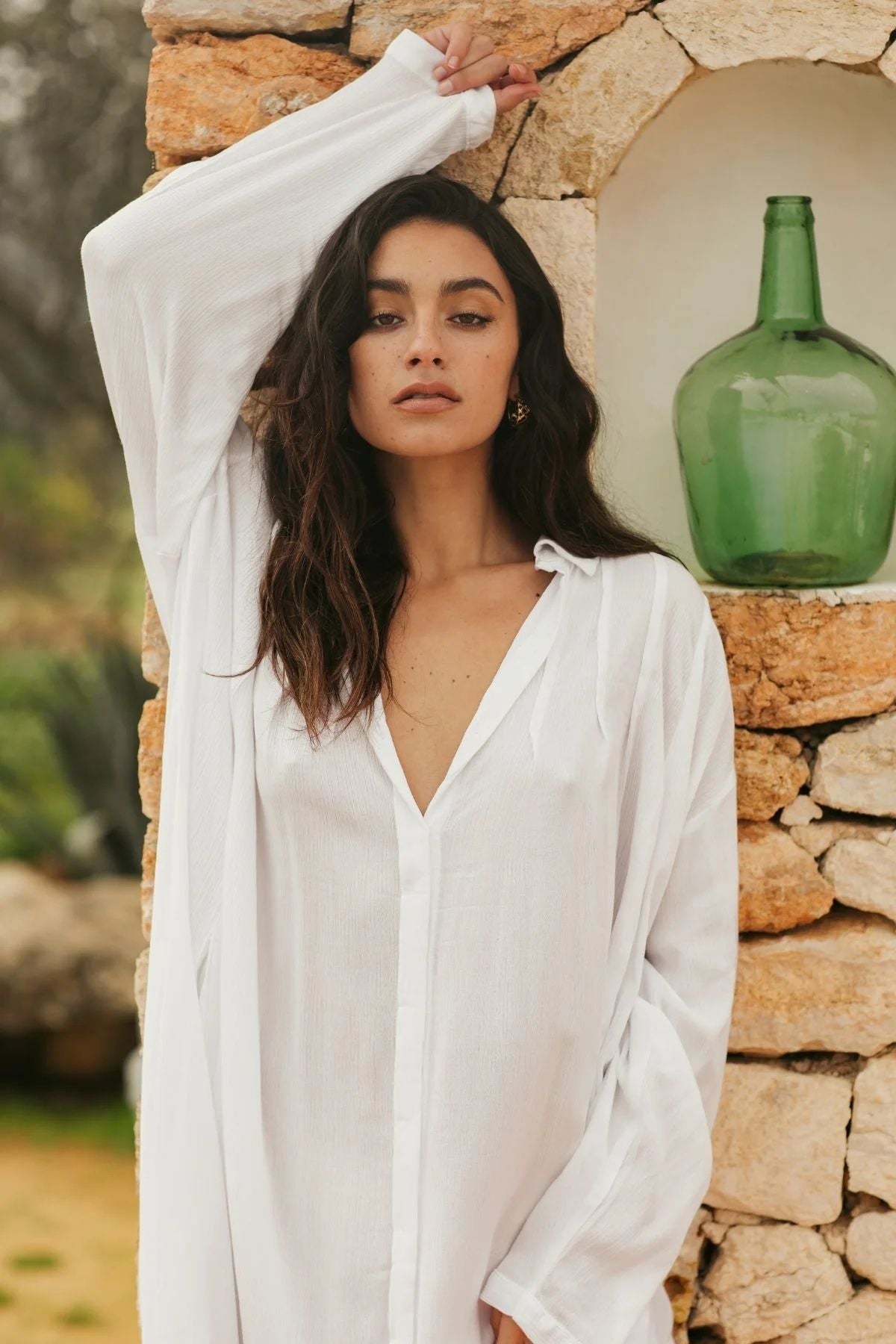
Linen is made from the flax plant, one of the oldest cultivated crops in human history. It is extraordinarily breathable, more so than cotton, because of the hollow structure of its fibres, which allow air to circulate freely. Linen is also hygroscopic, meaning it absorbs moisture from the air and your body without feeling damp. In practice, this means you stay cool even when the temperature is not.
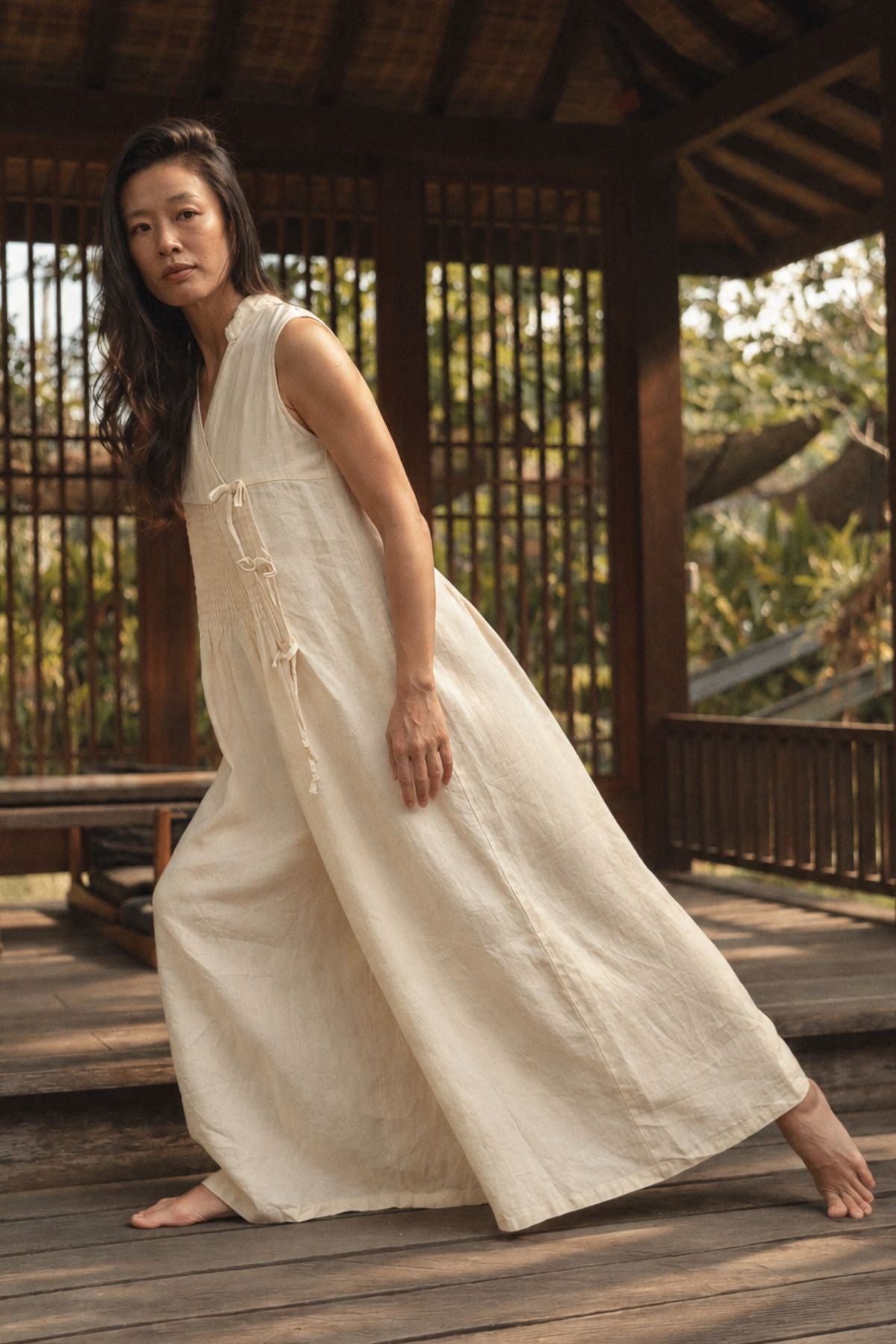
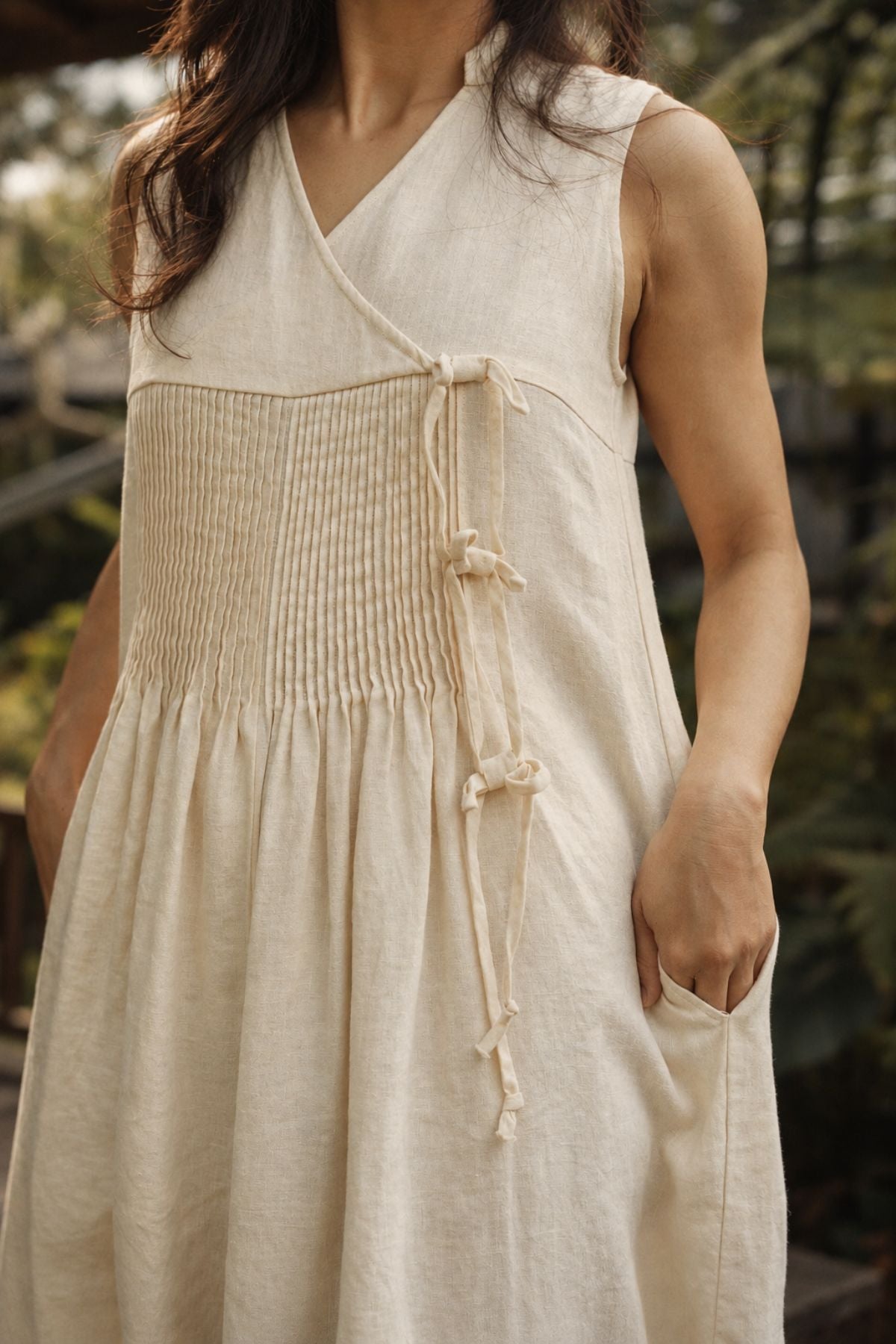
Linen softens with every wash, becoming more beautiful over time rather than degrading. A well-made linen piece worn with care will outlast almost any other garment in your wardrobe. For women living in tropical or warm climates, linen is almost always the right first choice.
Cotton: familiar, soft, and better when organic
Cotton is the most widely grown natural fibre in the world, and for good reason. It is soft, relatively affordable, and widely available in organic form. Organic cotton, grown without synthetic pesticides or herbicides, is significantly gentler on both the environment and your skin than conventionally grown cotton.
Where cotton has its limitations is heat retention. It absorbs moisture well, but holds onto it, which can make it feel heavy and damp in genuinely hot climates. For cooler temperatures, loungewear, or layering pieces, organic cotton is a wonderful choice. For peak summer or tropical living, reach for linen or bamboo first.
Bamboo rayon: the softest natural option, with one nuance to know
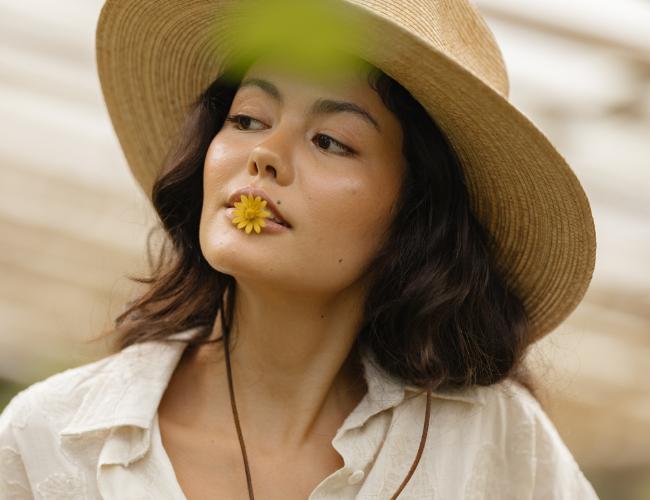
Bamboo fabric is extraordinarily soft, naturally antibacterial, and temperature-regulating in a way that works in both warm and cool environments. Bamboo as a plant is one of the fastest-growing on earth. It requires no pesticides, very little water, and can be harvested without killing the root system.
The nuance is in the processing. Most bamboo fabric is bamboo rayon, meaning the bamboo is processed into a pulp and extruded into fibres using a chemical process. The end result is still softer and more eco-conscious than polyester, and the farming footprint remains far lighter than conventional cotton. For those who prioritise softness and drape (particularly for ceremonial pieces or garments worn close to the body during rest), bamboo rayon is unsurpassed.
How to choose the right natural fabric for you
If you are in a hot climate or travel frequently to warm places, choose linen first. It is the most breathable, the most durable, and the most beautiful as it ages. If you want something incredibly soft for home, rest, or gentle movement: bamboo rayon delivers a level of comfort that is difficult to match. If you are shopping for transitional seasons or cooler climates: organic cotton is reliable, gentle, and widely available.
And if you can afford only one investment piece in natural fibre, make it linen. Make it handmade. Make it something you will still be wearing, and still loving, five years from now.
With love from Bali,
Myrah
|
A Piece for This Threshold The Kundalini Gown Original. Shop the Kundalini Gown → |

|
The Muse-Letter Dress for the woman you're becoming. Join the Muse-LetterUnsubscribe any time. No spam, ever. |



Leave a comment
This site is protected by hCaptcha and the hCaptcha Privacy Policy and Terms of Service apply.