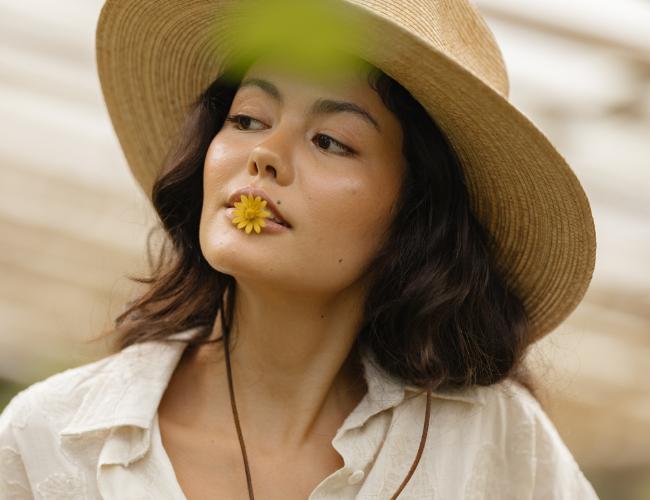
What Makes Bali Linen Different: An Honest Answer
There are a lot of claims made about linen. Natural. Breathable. Sustainable. Ethical. Made with love. Most of them are true in some sense and meaningless in isolation. We have been making linen in Bali for over fifteen years, so we thought we owed you an honest answer to the question: what actually makes Bali linen different?
The short answer is: the fibre, the process, and the people. Here is what each of those means in practice.

The Fibre: Why We Use European Flax Linen
Not all linen is the same. The quality of a linen garment begins long before any needle touches any fabric — it begins in the field where the flax was grown.
We use European Flax linen, sourced from Northern France, Belgium, and the Netherlands. This region produces the longest, strongest flax fibres in the world. The reason is climate: flax grown in cooler, wetter conditions develops longer cell structures than flax grown in heat. Longer fibres mean smoother yarn. Smoother yarn means finer, more durable fabric. This is not marketing — it is fibre science.
European Flax is also rain-fed, which means the crops require no irrigation. The plants are harvested in a way that leaves the root system intact, and the stalks are retted in the field rather than in water tanks, which significantly reduces the water footprint of production. It is not a perfect process, but it is one of the most resource-efficient textile sources that exists at this quality level.
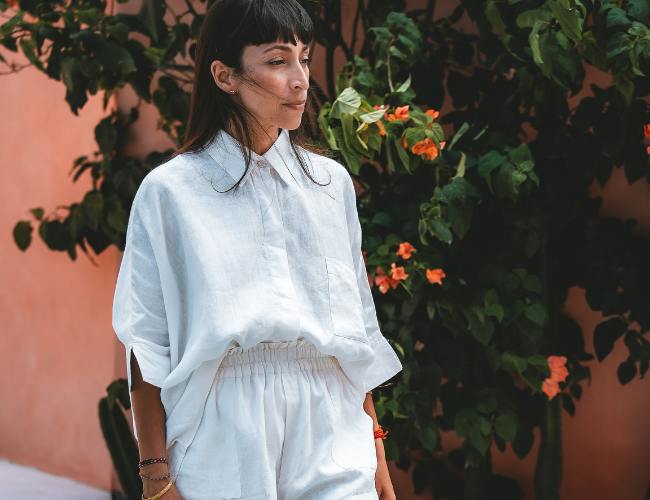
When you feel the difference between European Flax linen and lower-grade linen, you feel it immediately. The drape is cleaner. The surface is smoother without losing texture. The weight feels right — substantial without heaviness. And it does what good linen does: it gets better with every wash, rather than thinning and degrading the way cheaper linen often does.
The Process: Stonewashing and What It Does
We stonewash our linen before we cut it. Most brands do not do this. It adds time and cost to production, and it means we cannot control exactly how a fabric will behave until after the washing is complete. We do it anyway because the result is better than the alternative in every way that matters.
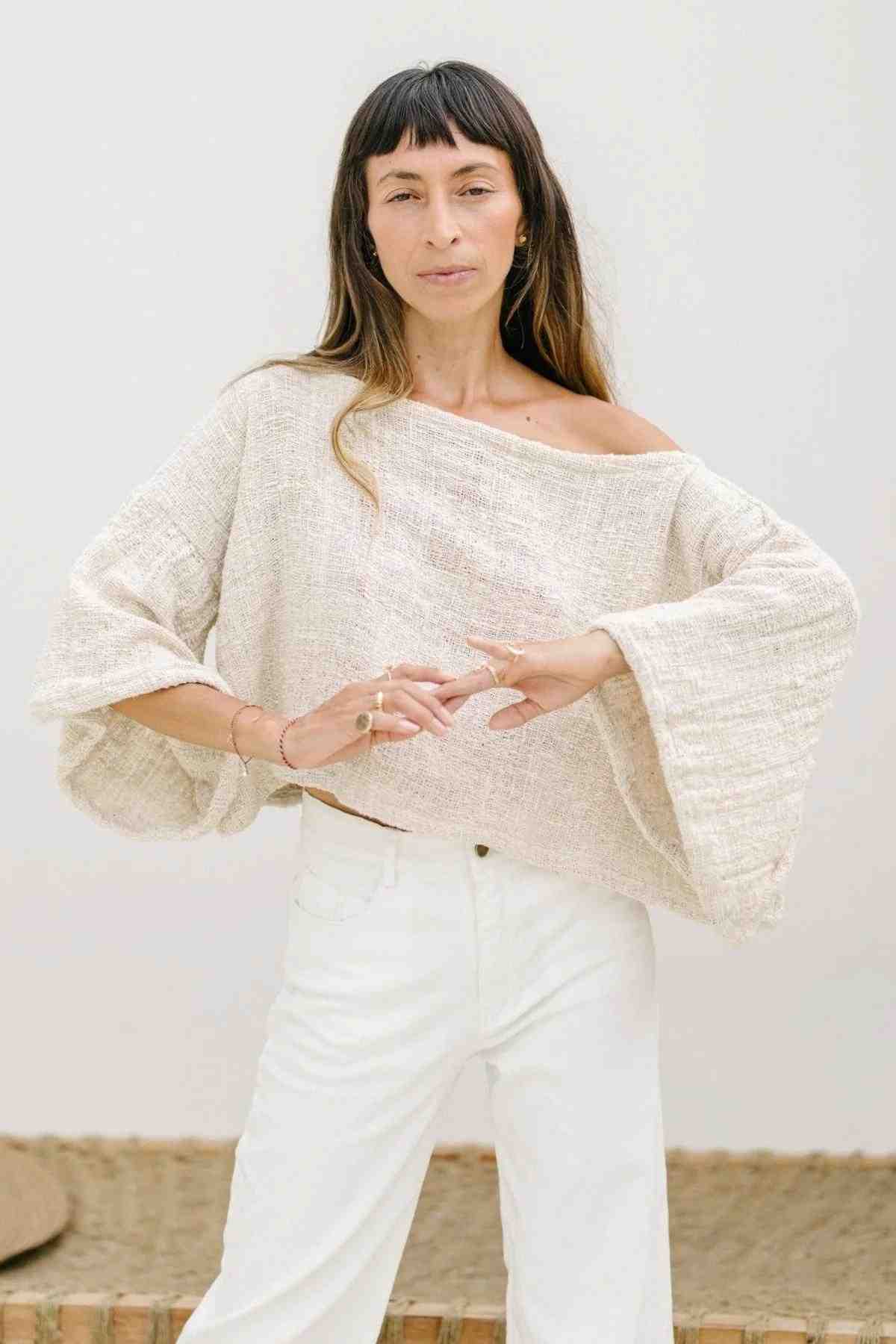
Stonewashing means running the linen fabric through tumbling machines with smooth river stones before a single cut is made. The process softens the fibres, slightly relaxes the weave, and pre-shrinks the fabric. What comes out is linen that is already at its most breathable state. You do not need to wash it ten times to unlock the softness. It arrives soft. It arrives ready.
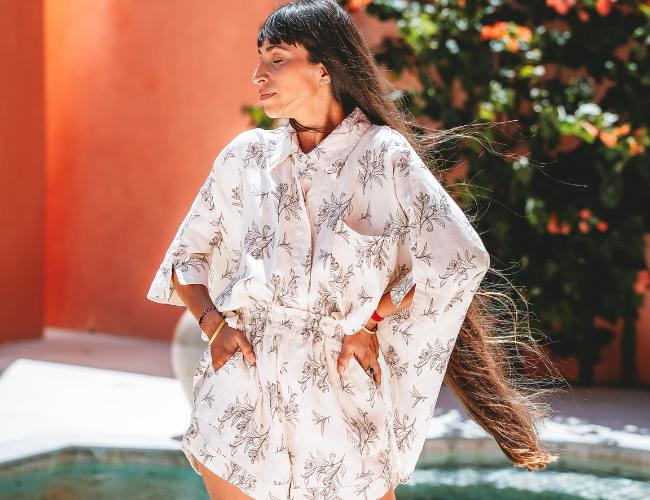
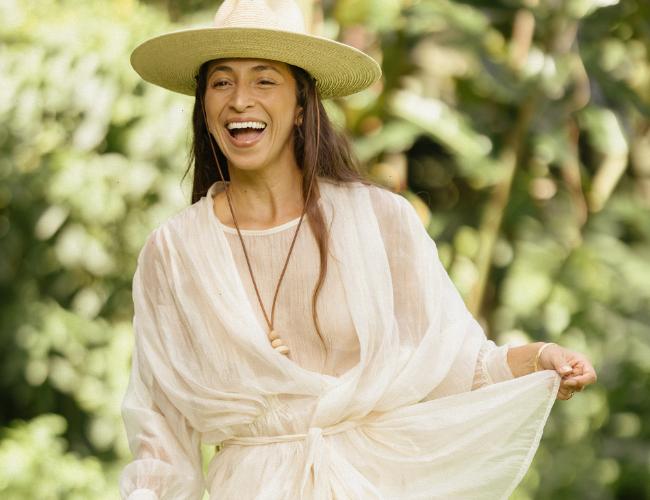
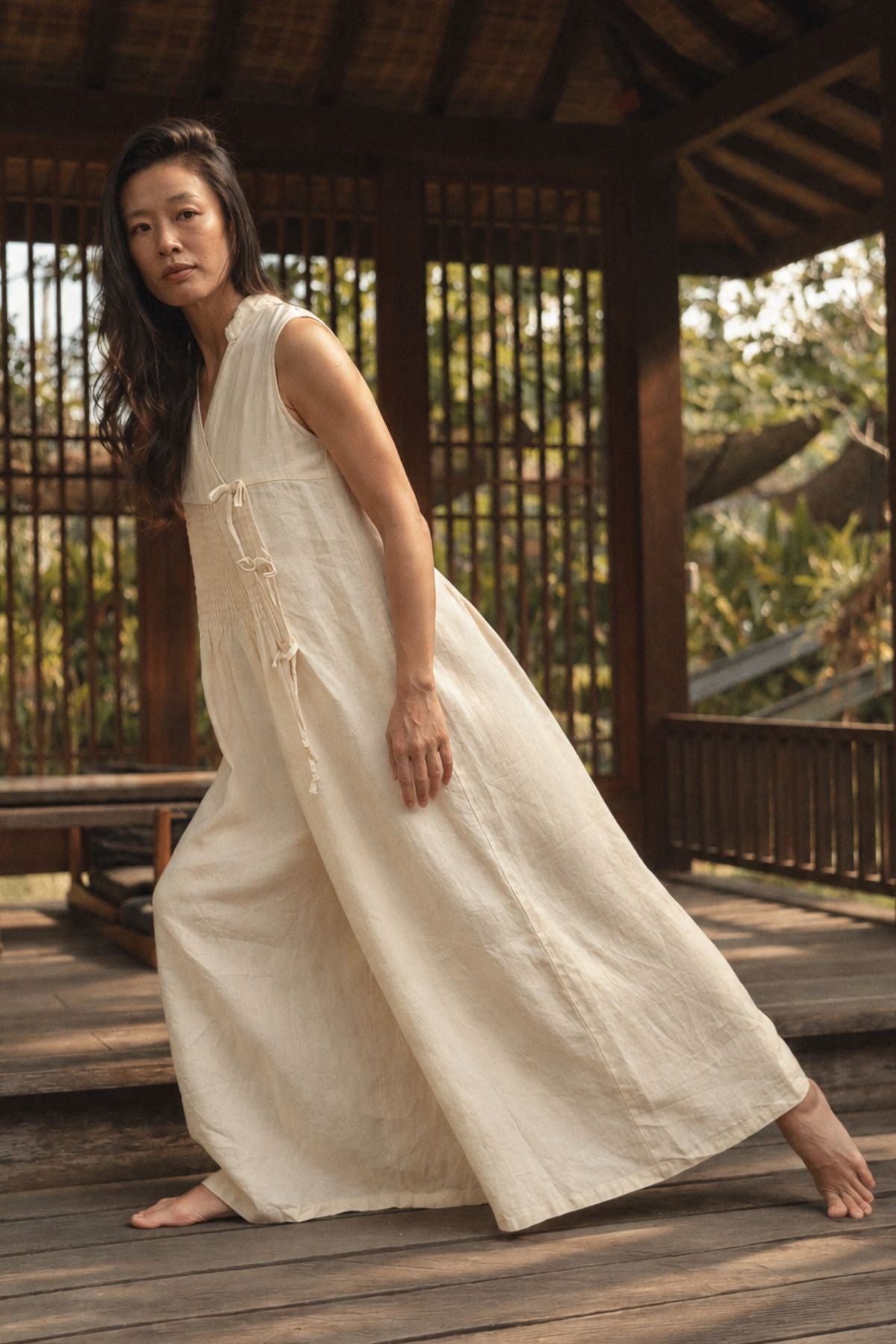
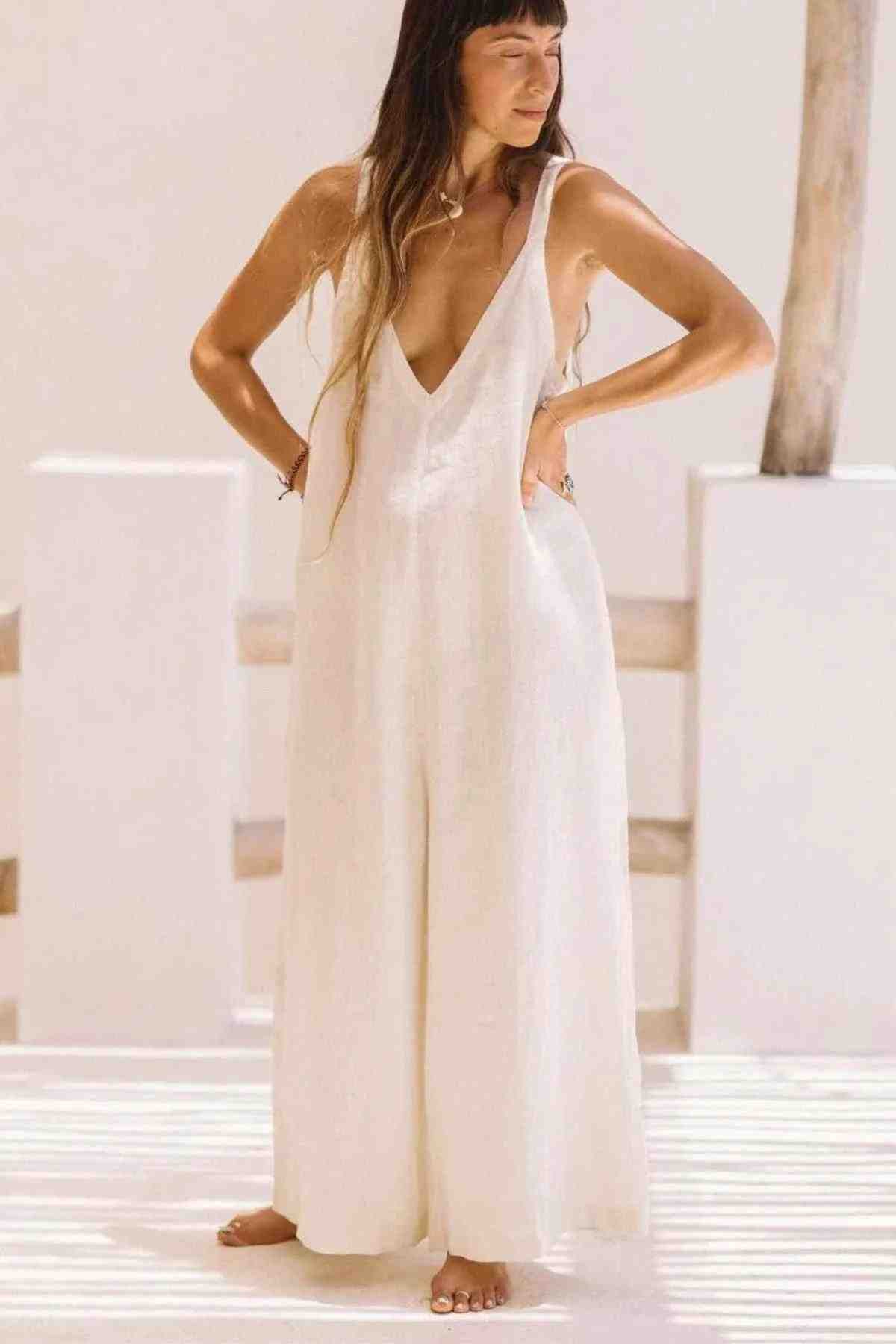
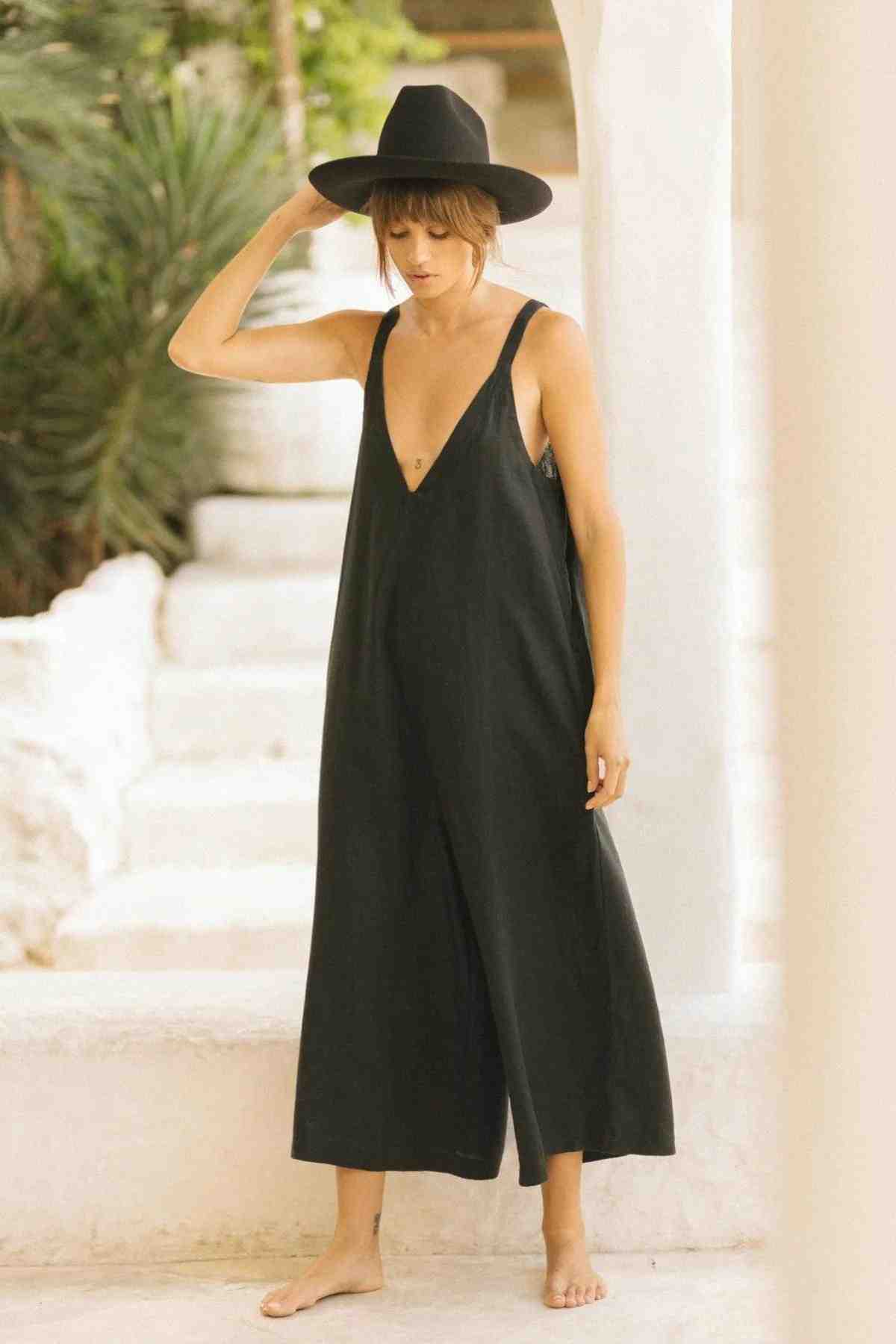
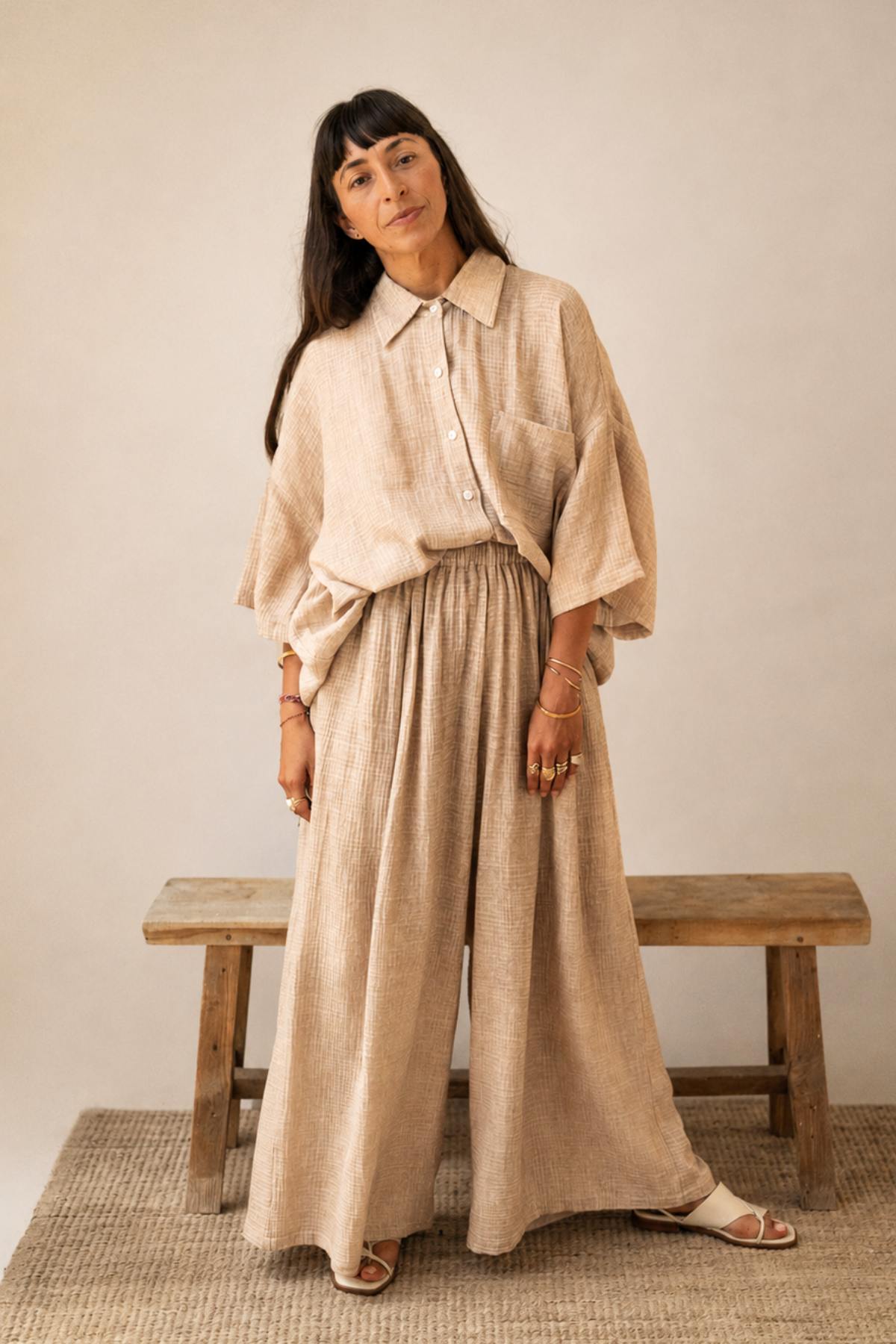
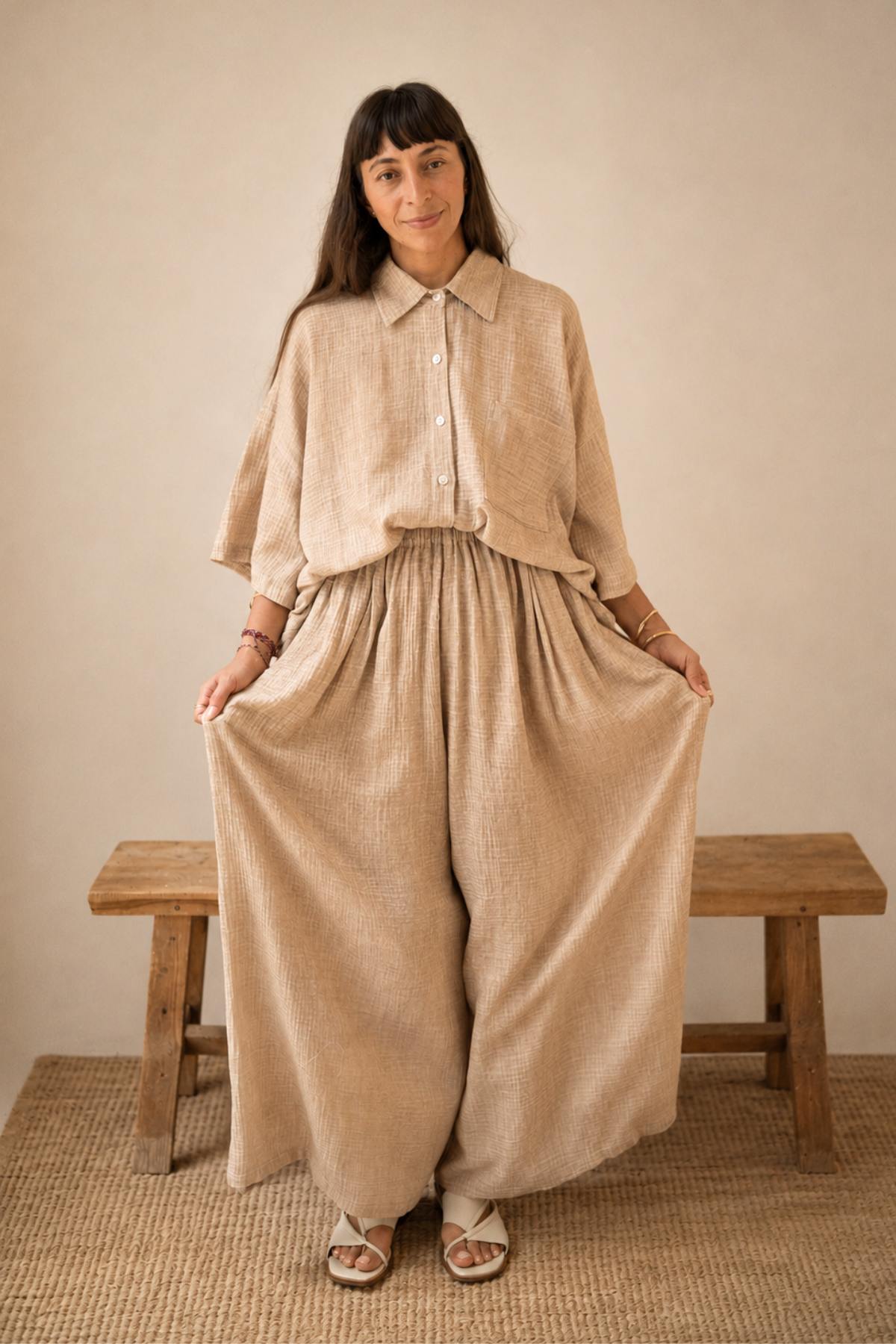
Stonewashed linen also moves differently on the body. The pre-softened fibres create a drape that flows rather than holds a shape, which is why our pieces look relaxed and easy rather than stiff or structured. That quality is built into the fabric before the garment is designed.
The Dyes: Why We Use Botanicals
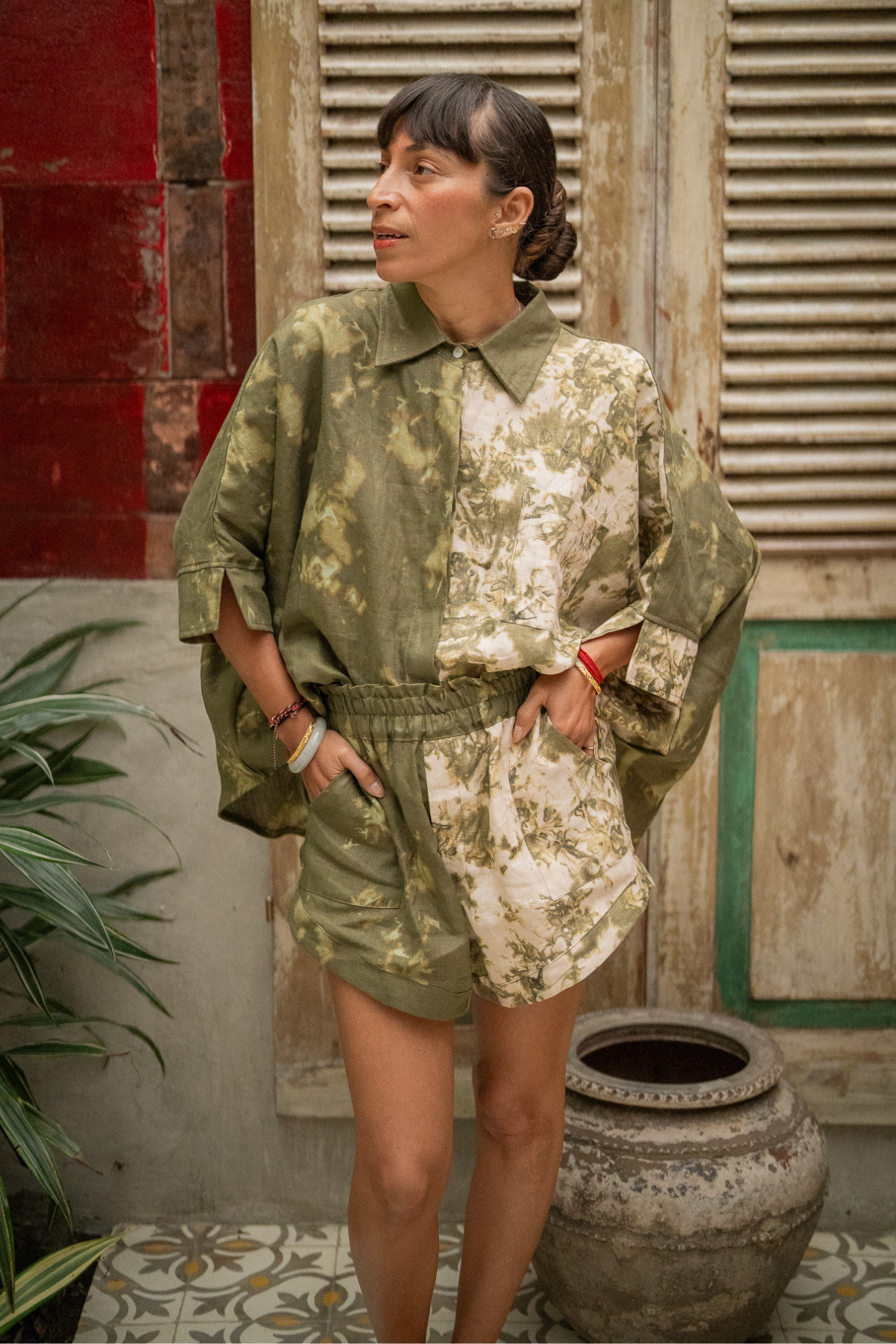
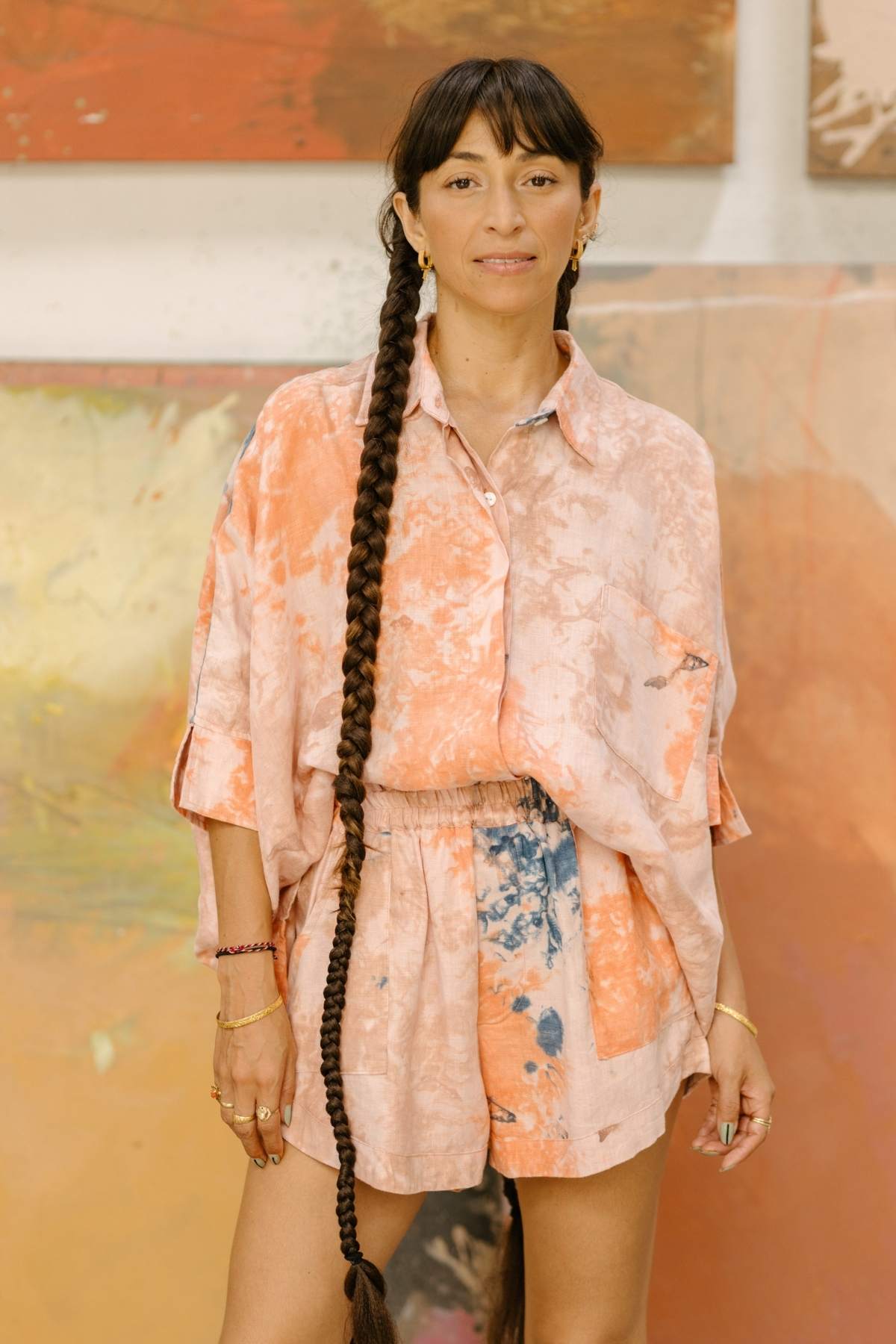
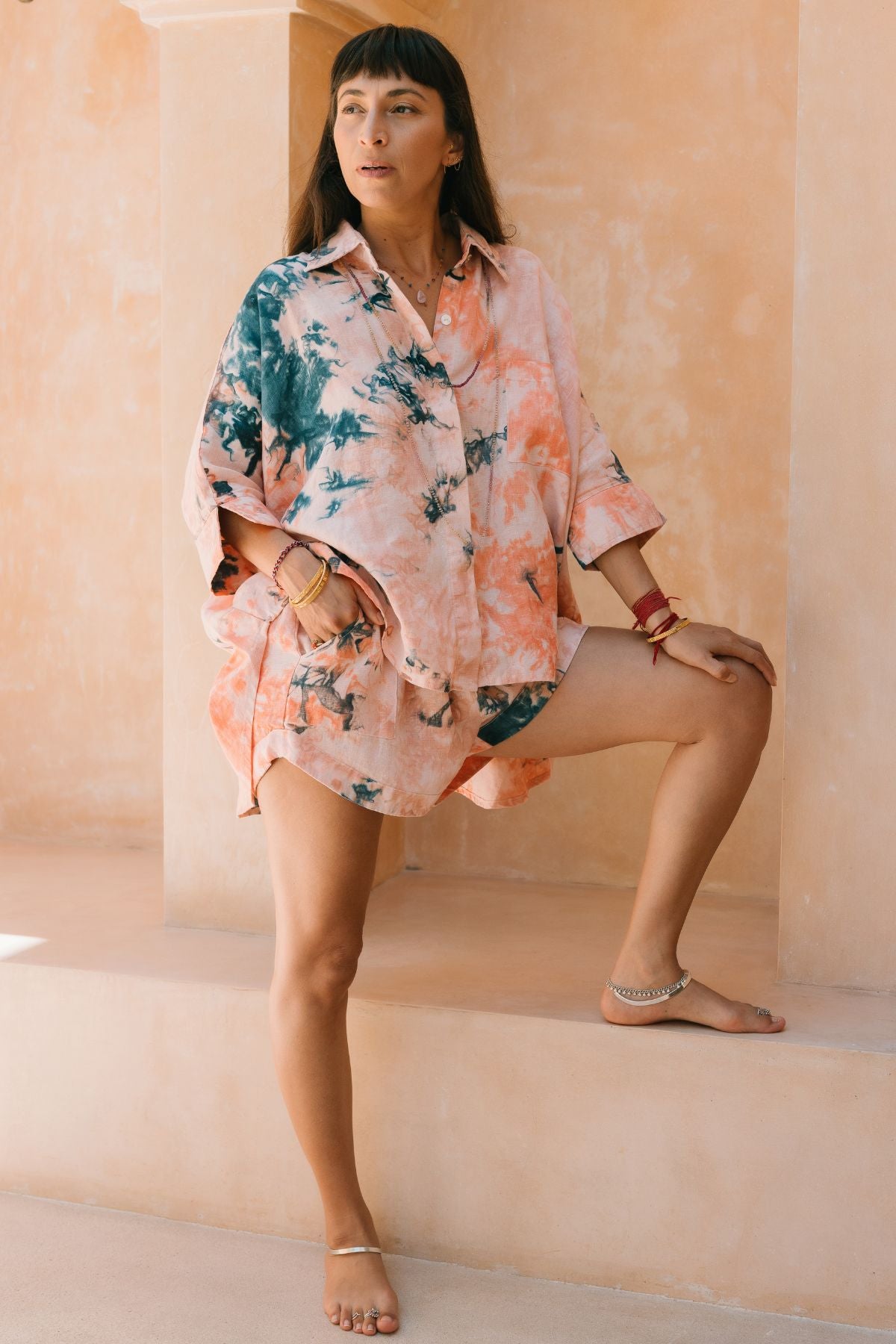
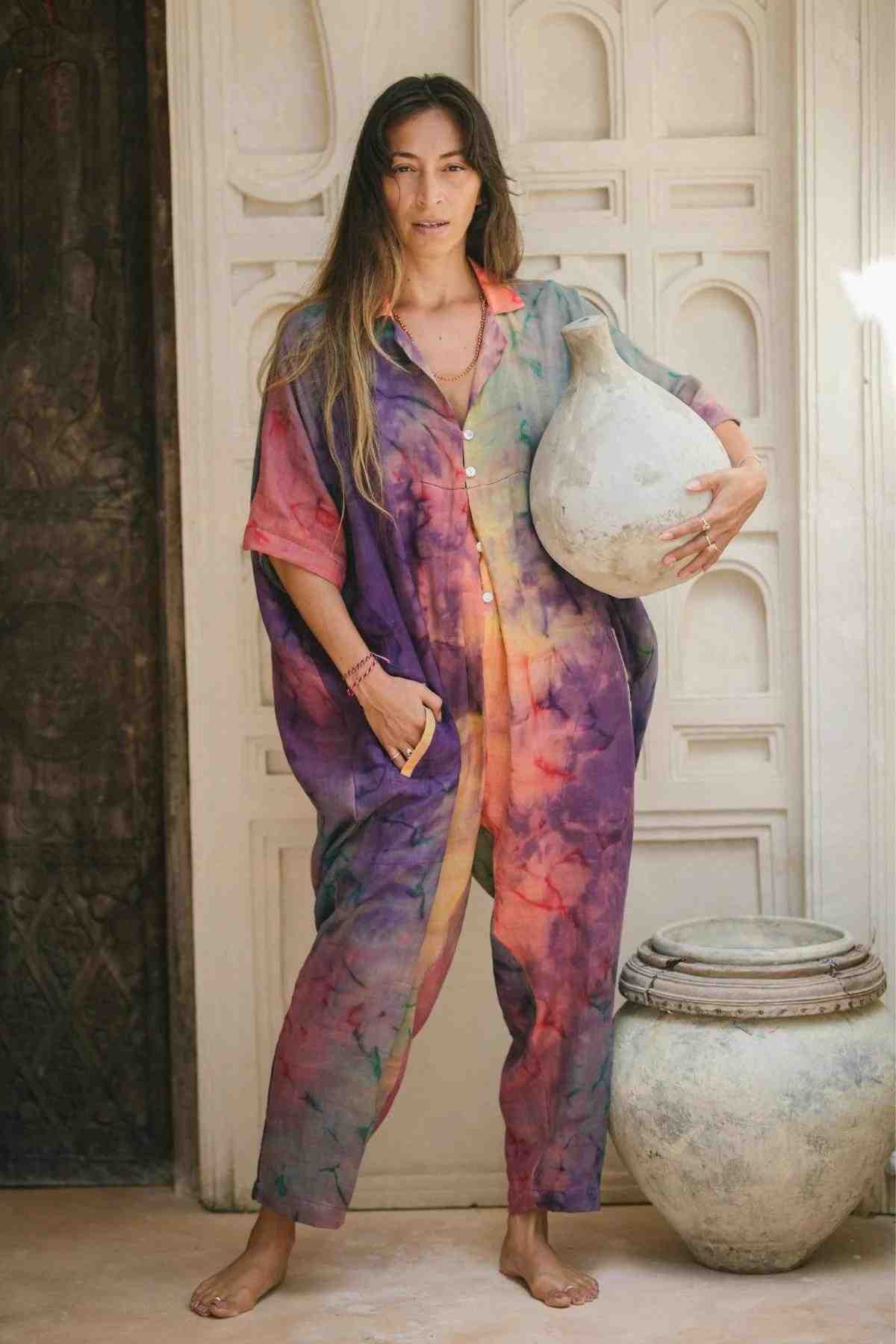
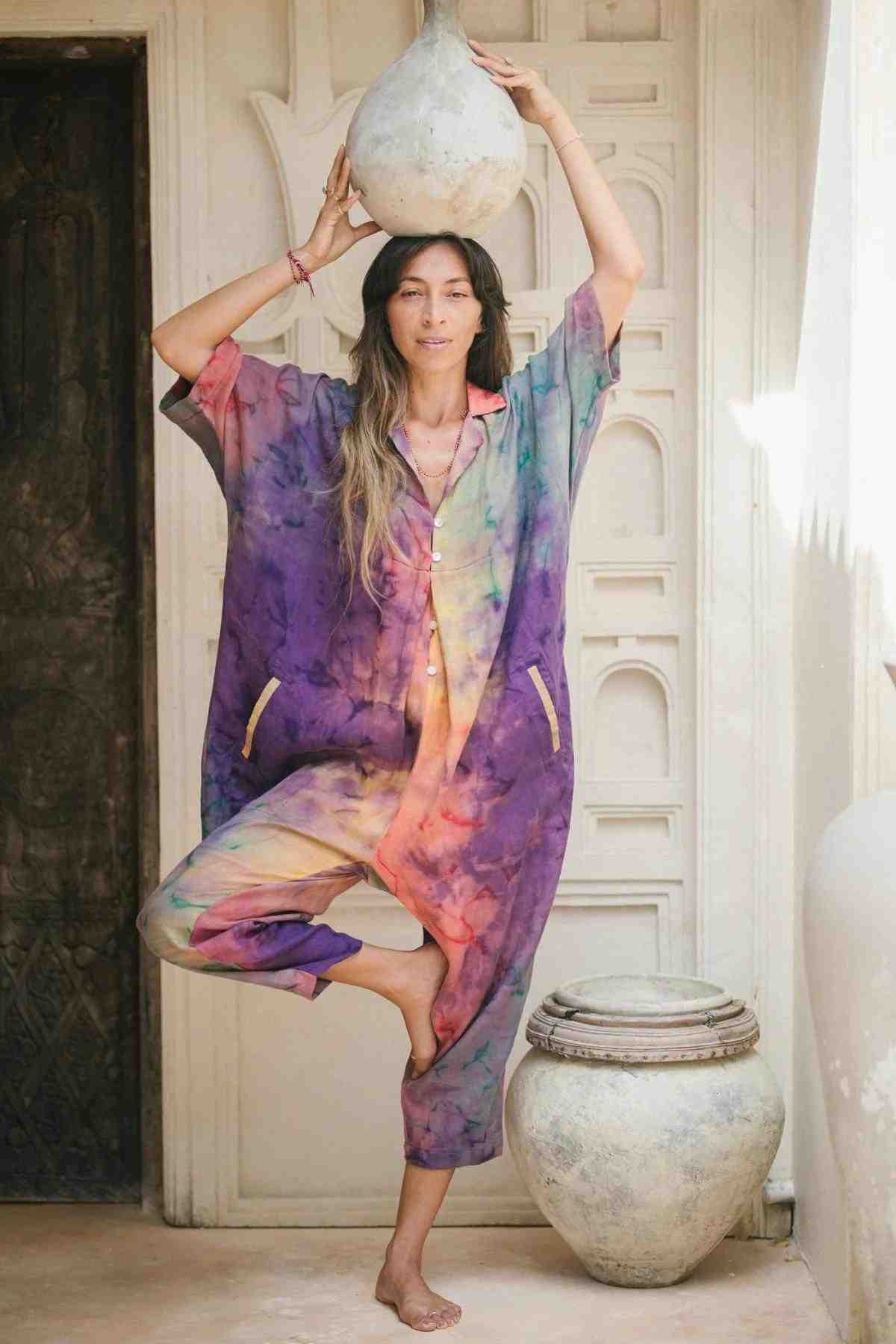
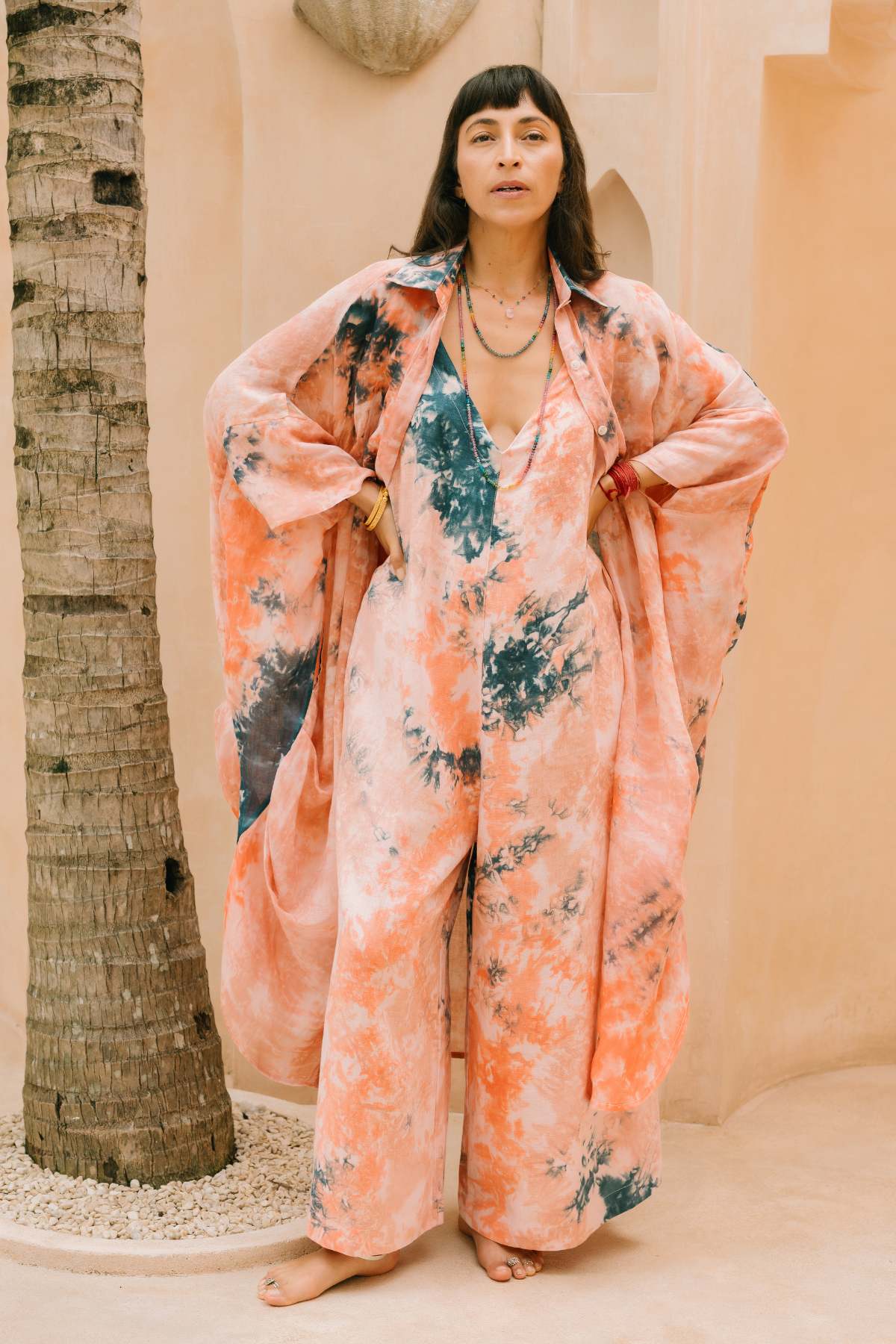
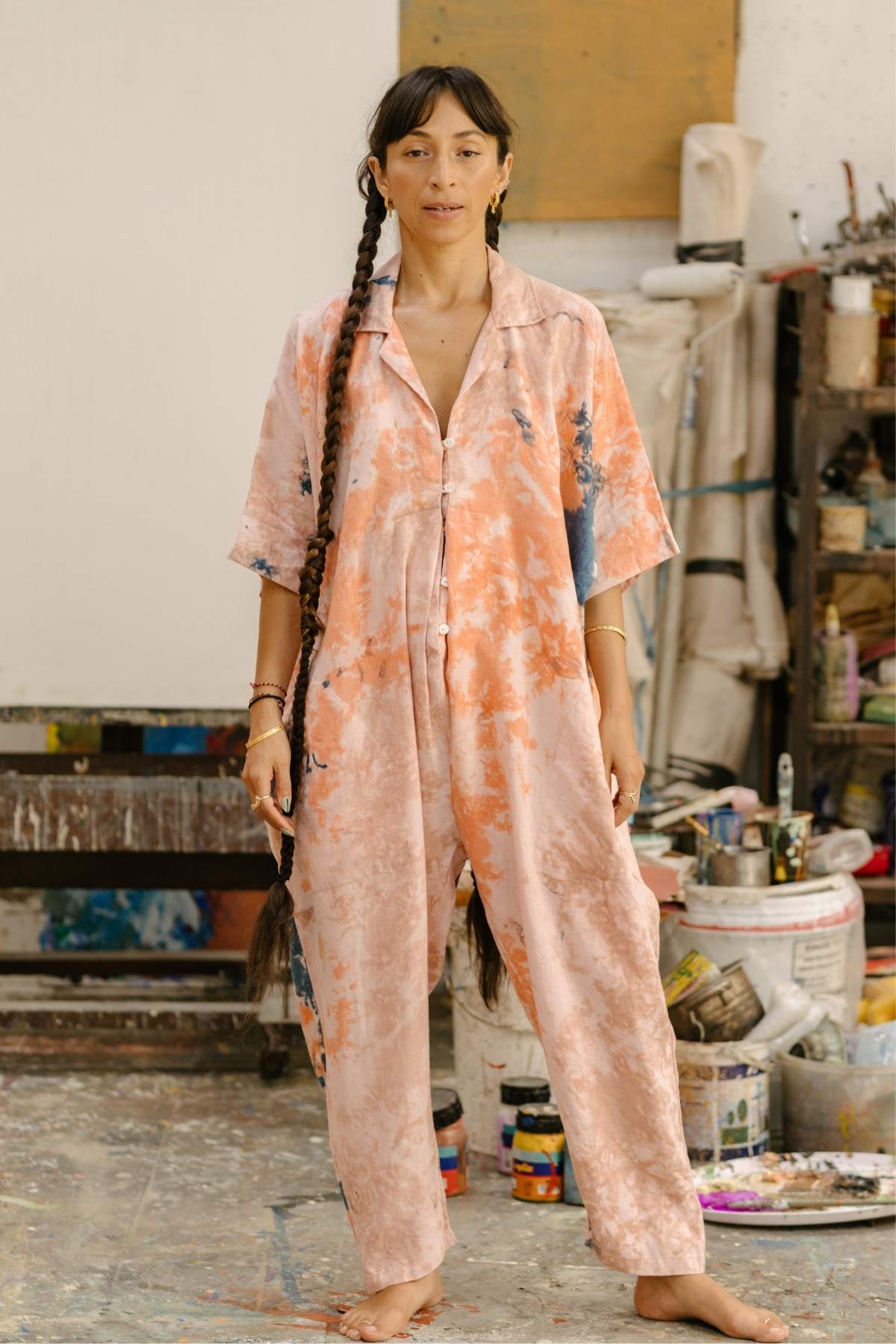
The colours in our most distinctive pieces come from plants. Turmeric — the same root used in cooking — produces the warm gold you see in the Botanical Nidra range, and the process takes five to seven days per batch. Indigo from the Indigofera plant gives us our deeper blues. We use madder for warm terracotta, and various bark extracts for our earthier, darker tones.
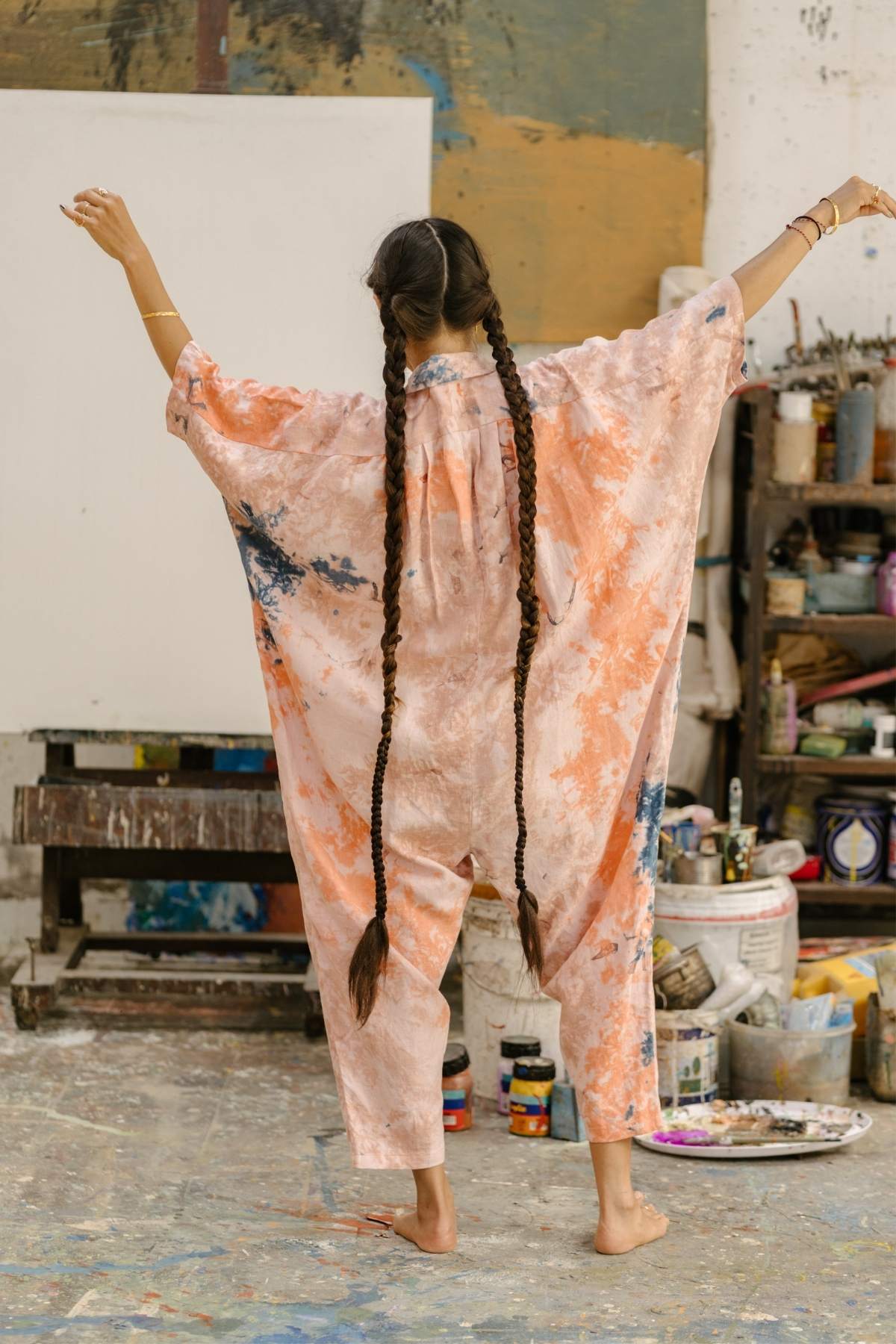
Botanical dyeing is slower and more expensive than synthetic dyeing. The colours cannot be precisely replicated from batch to batch, which means no two botanical-dyed runs are exactly the same. This is not a flaw. It means every botanical-dyed piece is genuinely one of a kind — not as a marketing phrase, but as a fact of how the colour was made.
Botanical dyes also fade differently than synthetic dyes. Synthetic colours tend to hold until they break, then degrade unevenly. Botanical colours soften and evolve over time, fading toward the underlying natural tone of the linen. A botanical-dyed piece after two years of wearing and washing is often more beautiful than when you first received it.
There is also the question of what goes on your skin and into the water. Synthetic dyes introduce petroleum-derived compounds into both. Botanical dyes do not. When you wash a botanical-dyed linen piece, what enters the water is essentially the same plant material that went into the dye bath.
The Making: 30 Families Who Know This Work
We have worked with the same core community of artisan families in Bali for more than fifteen years. This is not a talking point. It is the reason every Myrah Penaloza piece is made the way it is.
Skilled artisan garment makers take years to develop. The ability to cut linen cleanly, to sew seams that hold without constraining the fabric's natural drape, to finish a hem that sits right — these are skills that require time, practice, and the kind of repetition that only comes from making the same category of garment again and again at a high standard. Our artisan community has been doing this for longer than many fast-fashion brands have existed.
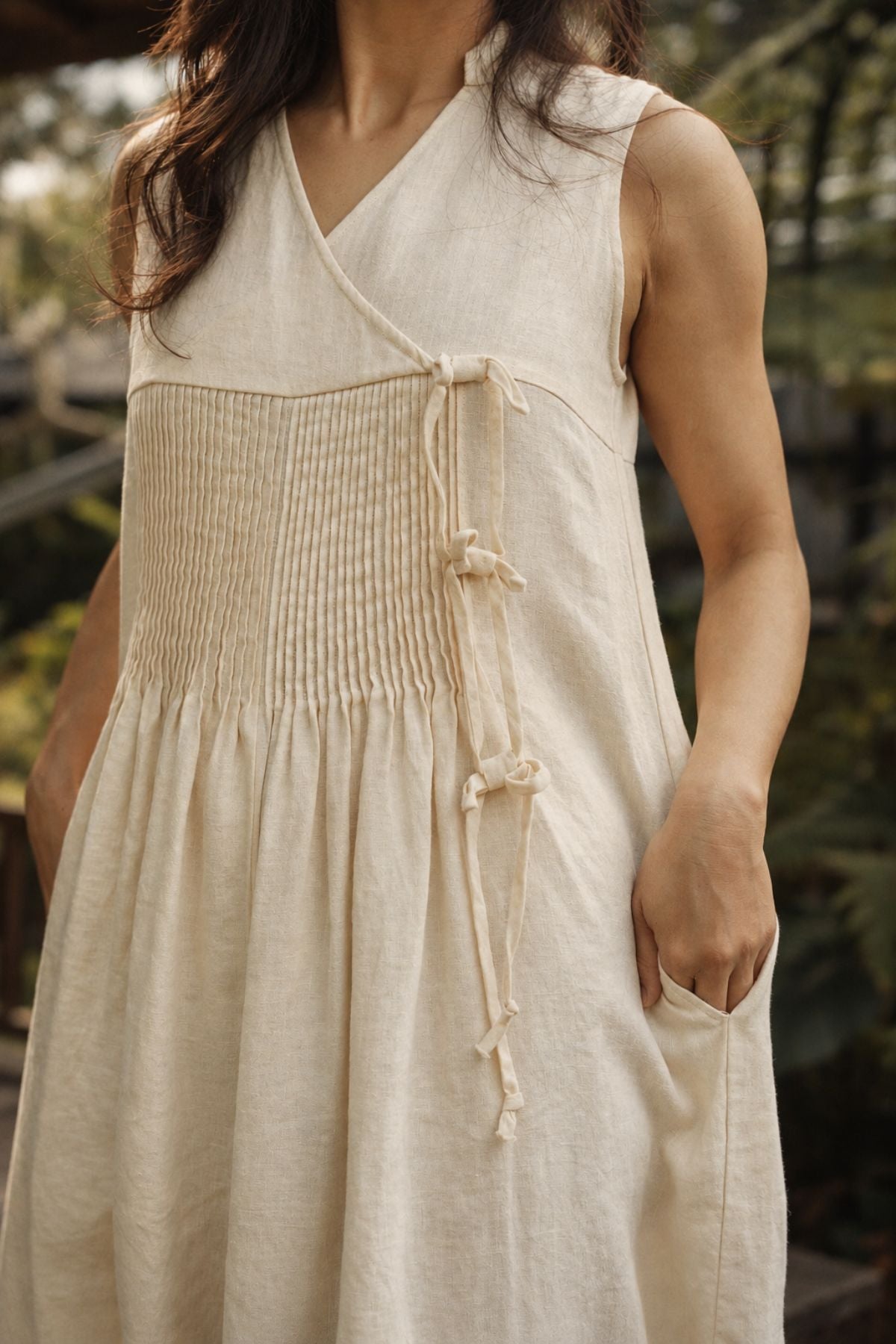
Living wages are not optional in how we work. Every artisan family is paid above the regional minimum, with no piece-rate pressure that would incentivise speed over quality. The pace of making is set by the garment, not by a production target. This is directly visible in the finished pieces: the attention at the seam allowances, the consistency of the stitching, the way a button sits.
Small batch production matters too. We do not produce thousands of units of a single style. We produce enough to offer meaningful availability and nothing more. This means less fabric waste at the design stage, less finished-goods waste when a style does not sell as projected, and less pressure on our artisan community to compromise quality for volume.
What This Means for the Garment You Receive
A Myrah Penaloza linen piece is not a fast-fashion piece priced higher. The fibre is different. The process is different. The making is different. And the result behaves differently: it gets better with use rather than worse, it holds its shape rather than losing it after ten washes, and it carries the subtle irregularities that are the mark of work done by human hands rather than machines.
You will feel the difference the first time you put it on. The drape, the weight, the softness without flimsiness. You will feel it more clearly three years later, when the piece has become yours in the way that only good things do — shaped to how you move, softened to your body, carrying the history of everywhere it has been with you.
That is what makes Bali linen different. Not the label. The making.
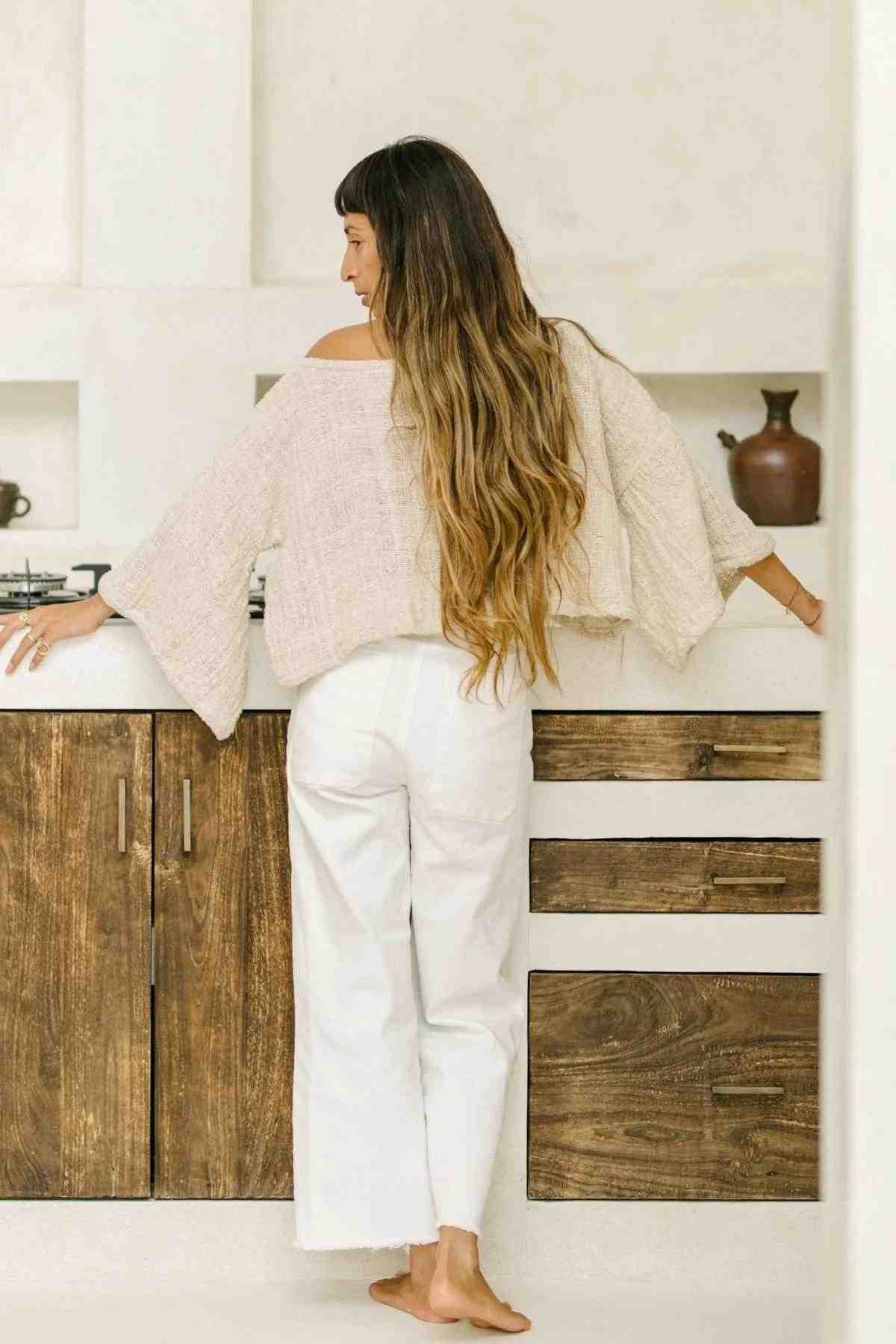
You will feel all of this most directly in our linen two-piece sets, where the fibre, the process, and the making come together in a single piece.
Your Questions on Bali Linen, Answered
What is Bali linen?
Bali linen refers to linen garments designed and handcrafted in Bali, Indonesia. The linen fibre itself is typically sourced from Europe — Northern France, Belgium, and the Netherlands — where the cooler, wetter climate produces the longest, strongest flax fibres. The distinction of Bali linen lies in the making: hand-cut, hand-sewn, small-batch production by artisan families who have refined these techniques across generations, in a context where the pace of making is set by the garment's requirements rather than a production target.
Is Bali linen good quality?
Bali linen made from European Flax by skilled artisan families is among the best linen available anywhere. The quality is a function of three things: the fibre (European Flax produces the finest thread), the process (stonewashing before cutting produces the best drape and softness), and the making (small-batch, hand-sewn production allows for individual attention to each garment). Not all linen sold as Bali linen meets this standard — the sourcing of the fibre and the conditions of production vary significantly between makers.
What is European Flax linen?
European Flax linen is linen made from flax grown in Northern Europe, principally in France, Belgium, and the Netherlands. This region produces flax with longer, stronger fibres than those grown in warmer climates. European Flax linen is rain-fed, requires minimal pesticides, and is considered the benchmark for high-quality natural linen. The CELC (Confederation of European Linen and Hemp) certifies European Flax production, which provides a traceable standard for origin and growing conditions.
What are botanical dyes on linen?
Botanical dyes are natural plant-based dyes — turmeric, indigo, madder, bark extracts — used to colour linen without synthetic chemicals. The process is slower than synthetic dyeing, often requiring multiple days per batch, and produces colours unique to each run. Botanical-dyed linen fades gradually and beautifully over time rather than degrading abruptly, and does not introduce petroleum-derived compounds into the water supply or onto the skin. Each botanically dyed piece is genuinely unique, as the exact colour cannot be precisely replicated across batches.
The Linen Collection
European Flax linen. Stonewashed before cutting. Botanically dyed in Bali. Made in small batches by 30 artisan families. This is what we mean when we say it is made differently.
Explore the Linen CollectionMade to order. Ships in 3 to 6 weeks from Bali.


Leave a comment
This site is protected by hCaptcha and the hCaptcha Privacy Policy and Terms of Service apply.