
Linen's Natural Antibacterial Properties: The Science Behind Why Conscious Women Have Always Chosen This Fabric
The word antibacterial has been co-opted by the synthetic fabric industry to the point where it mostly means something has been sprayed with silver nanoparticles or triclosan during manufacturing. When we say that linen has natural antibacterial properties, we mean something entirely different. We mean the fiber itself, before any treatment, before any finishing process, carries within its molecular structure the compounds that resist microbial growth.

This is not a marketing claim. It is one of the most well-documented properties of flax fiber, confirmed across centuries of traditional medicine and a growing body of modern textile research.
What Makes Linen Naturally Antibacterial
The flax plant, from which linen is derived, contains a family of compounds called phenolic acids and flavonoids. These are the same class of polyphenolic antioxidants found in green tea, blueberries, and red wine. In the context of the flax fiber, they serve as the plant's own defense system against microbial attack in the soil and in the field.
When flax is processed into linen through traditional retting and spinning methods, these compounds are largely preserved in the fiber. The result is a textile that naturally inhibits the growth of bacteria and fungi, not through an external treatment that washes out over time, but through the inherent composition of the material itself.
Research has confirmed that linen fiber demonstrates bacteriostatic effects against common pathogens. This is why linen has been the fabric of wound care across cultures for thousands of years. Egyptian physicians observed the effect. Modern microbiologists have measured it.
Why This Matters for the Women Who Wear Our Pieces
We make clothing in Bali. Bali is hot and humid. The women who wear our pieces are not always in air-conditioned rooms. They are at the market, at the beach, in movement practice, at ceremony, in the daily sacred ordinary that does not pause for comfort.
In this context, the antibacterial properties of linen are not abstract. They are the difference between a fabric that accumulates odor and bacteria through a day of living, and one that does not. Linen stays fresher longer, not because it has been engineered to, but because the fiber itself does not become a breeding ground for the microbes that cause odor and irritation.
This is particularly relevant for women with sensitive skin, with hormonal skin fluctuations, with eczema or rosacea or any condition where the skin's barrier is already working hard. Reducing the microbial load of the fabric in contact with that skin is a straightforward and meaningful act of care.
The Skin Benefits of Wearing Antibacterial Natural Linen
Reduced irritation and inflammation
When bacteria accumulate in a fabric and that fabric is in extended contact with skin, the result is often inflammation. Redness. A low-grade itching or heat that we learn to ignore because we cannot always identify the source. Natural linen reduces this load at the source. The skin can simply be skin, without the added work of responding to microbial irritants.
A cleaner environment for the nervous system
In Kundalini practice, the skin is understood as the outer boundary of the energetic field that extends beyond the physical body and interacts with everything around it. What touches that boundary matters. A fabric that introduces microbial stress, even in small, chronic amounts, is not neutral. It is a background noise that the nervous system has to manage. A fabric that does not introduce that stress is a gift to the nervous system's available attention.
Support for the skin's natural microbiome
The skin maintains its own microbiome, a community of beneficial bacteria that protect against pathogens, regulate inflammation, and support the skin barrier. Antibacterial chemicals, including those found in many treated synthetic fabrics, can disrupt this microbiome indiscriminately. The phenolic compounds in linen work differently. They inhibit pathogenic bacteria without disrupting the broader microbial community the skin depends on.
How We Make Our Linen Pieces at Myrah Penaloza
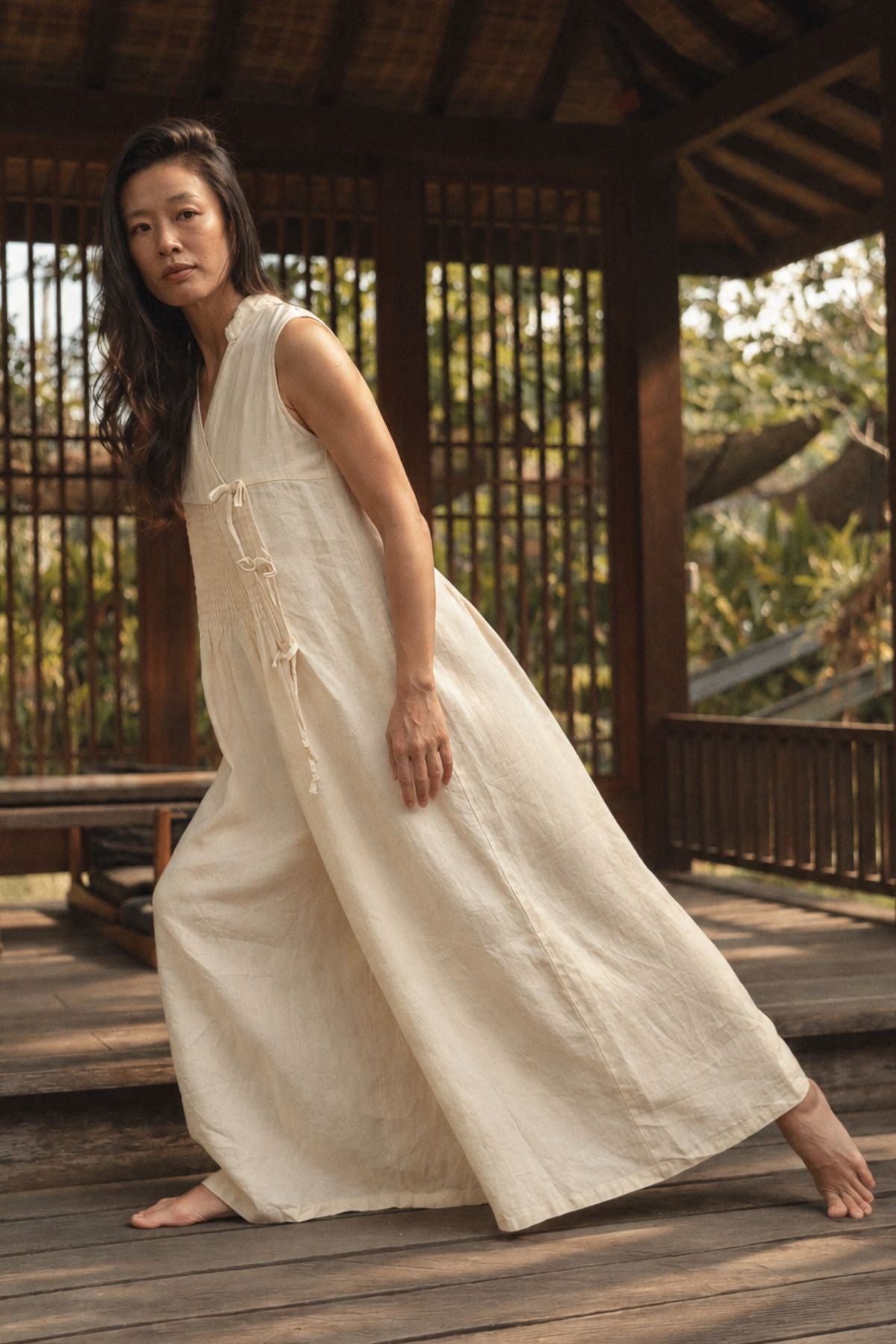
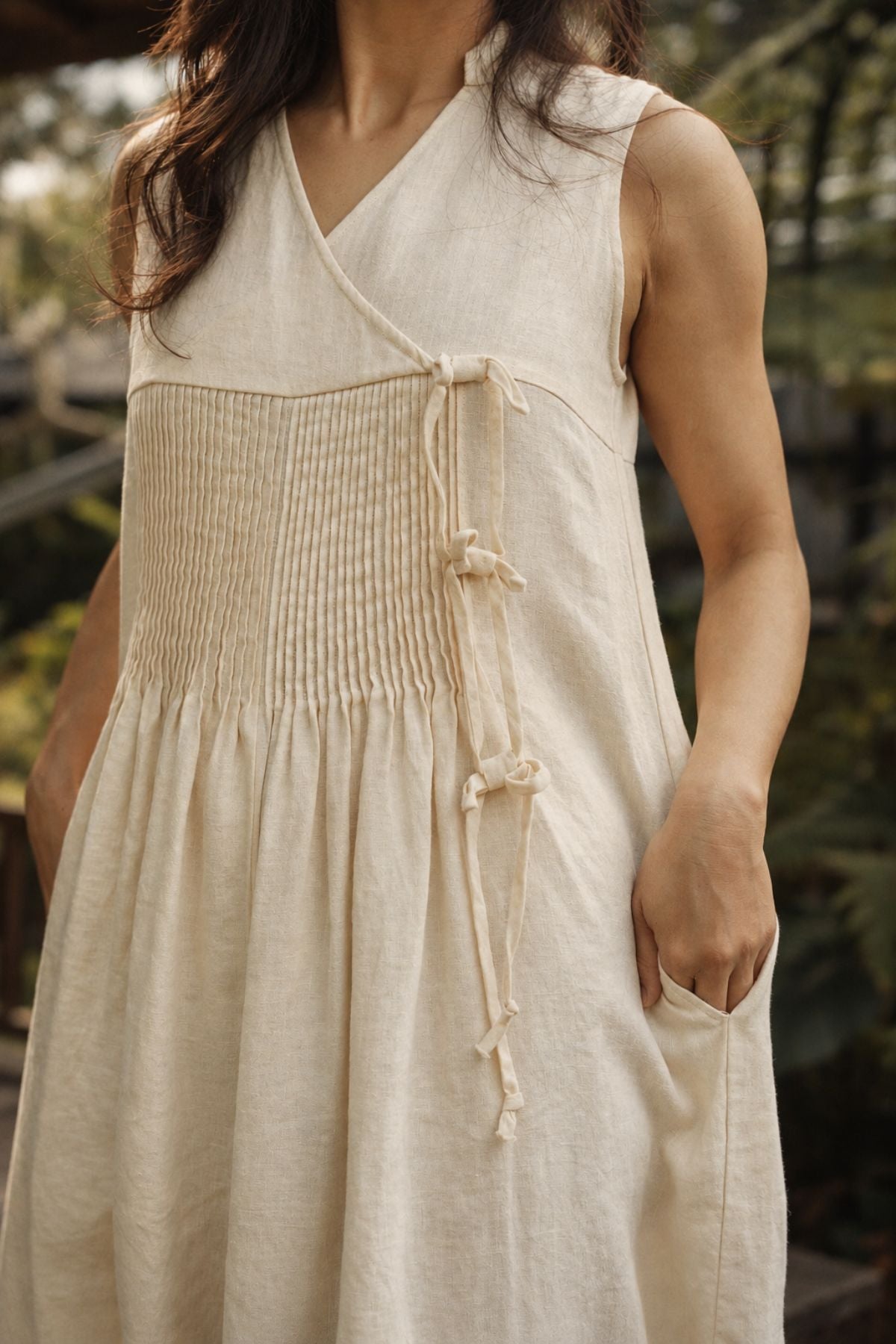
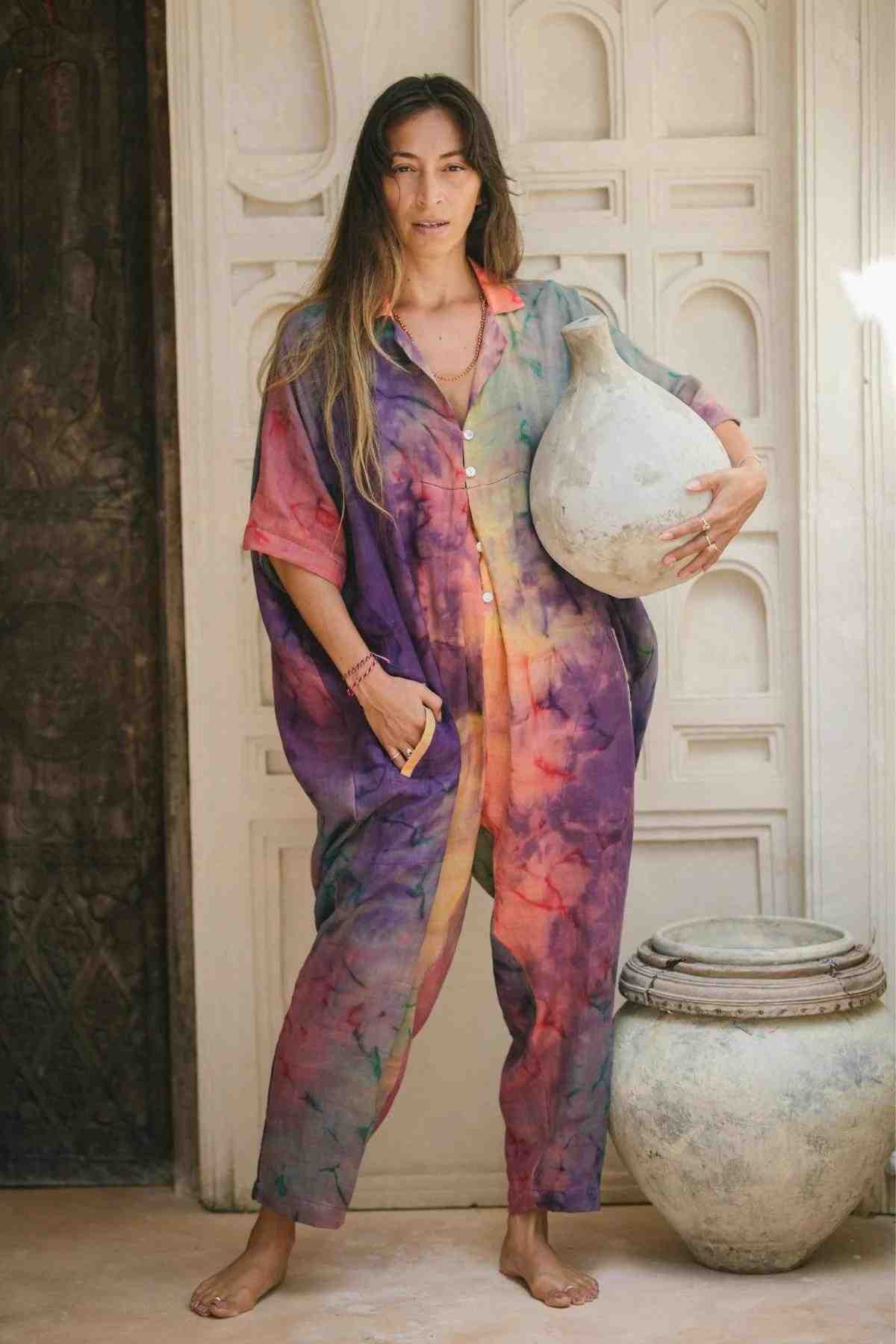
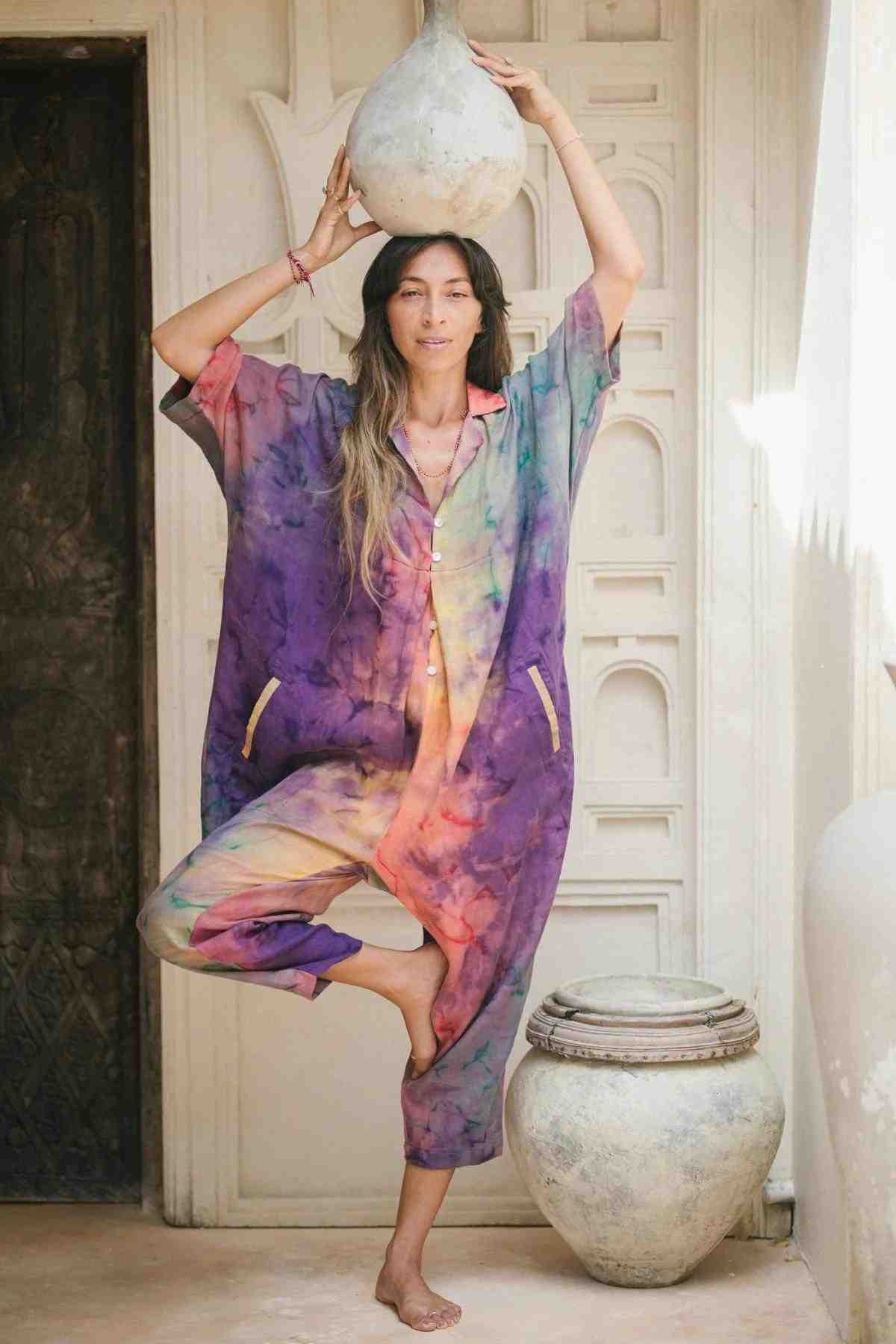
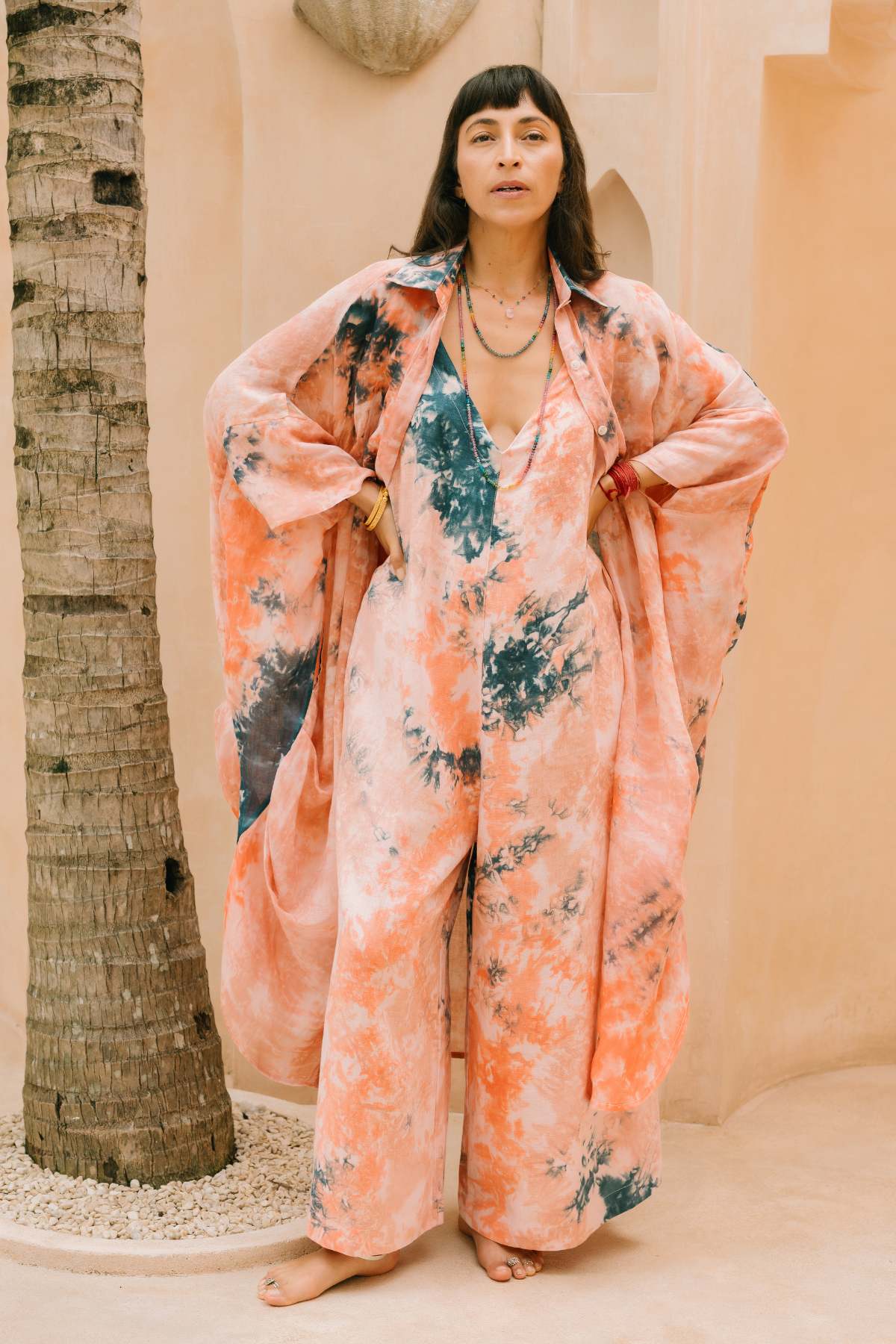
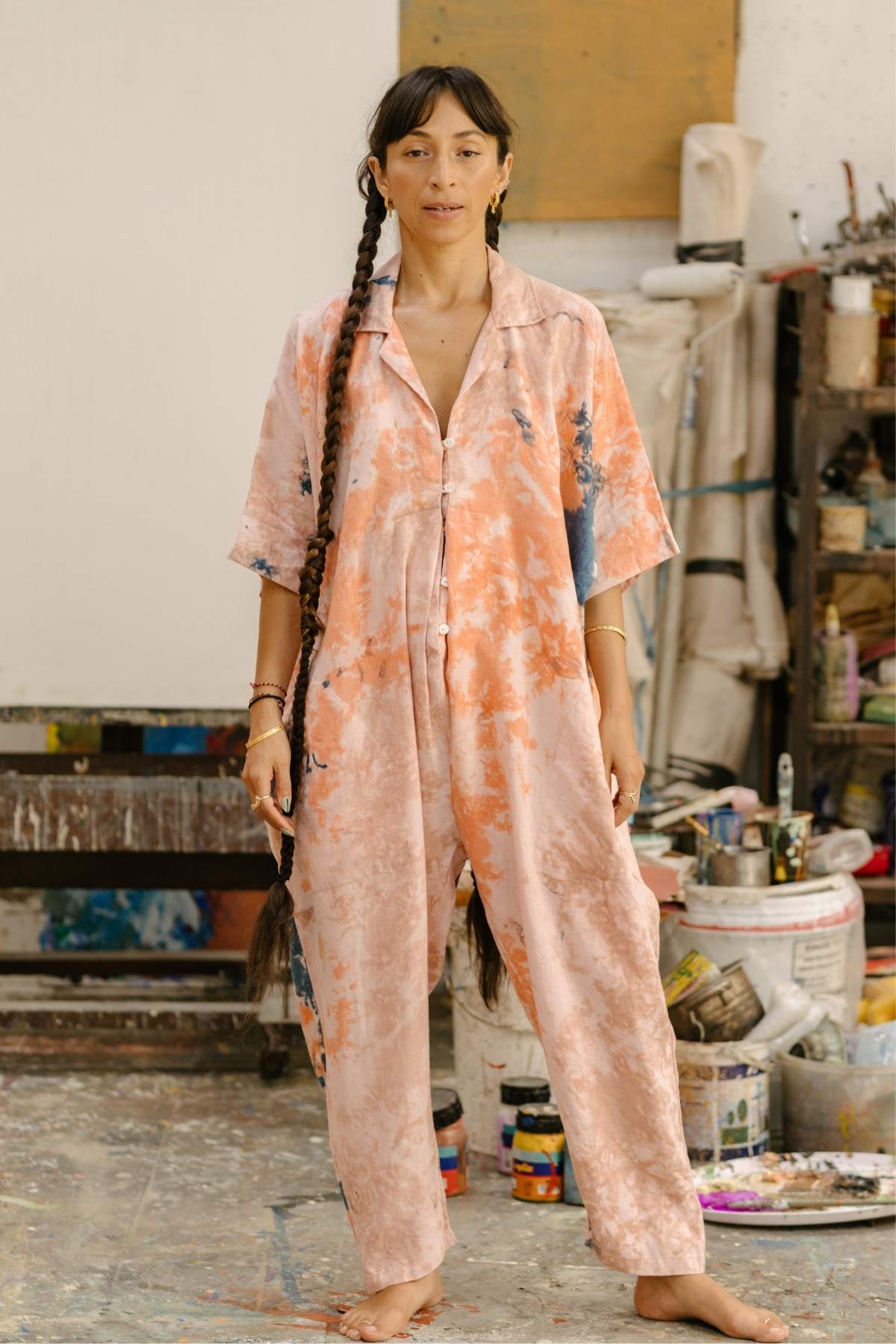
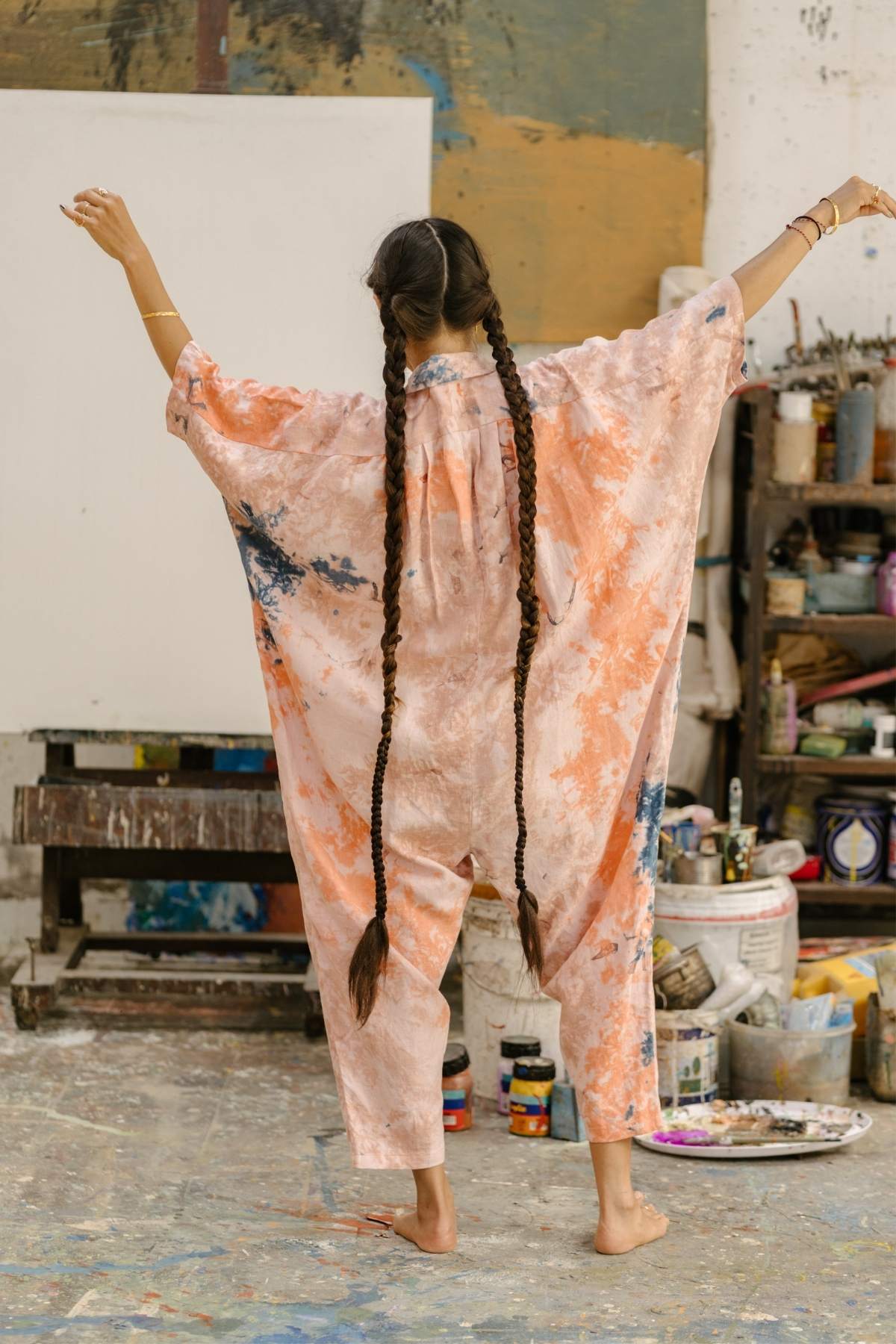
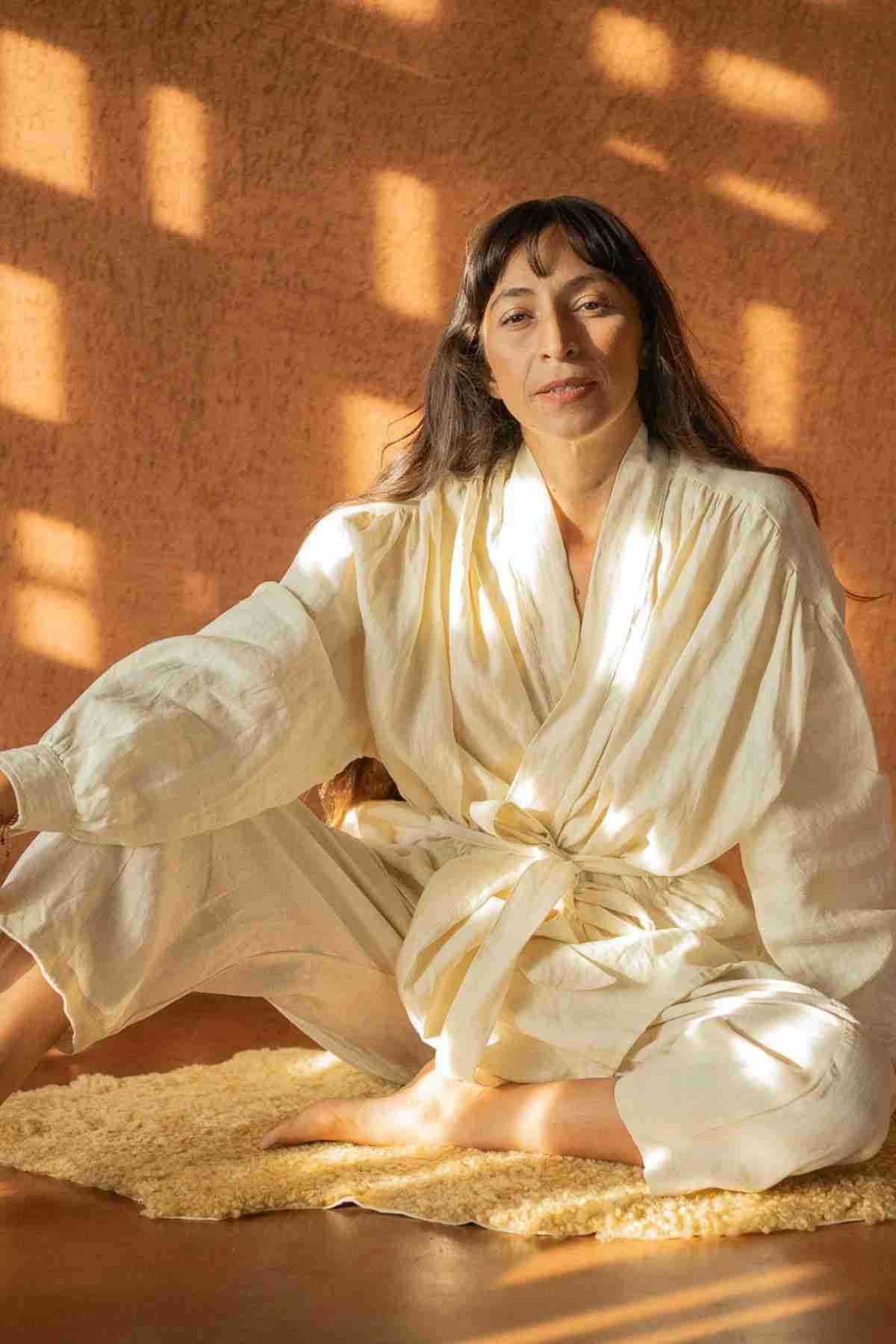
Every piece in our linen collection is made without synthetic finishing, without antibacterial treatments, without anything that would interrupt the natural properties of the fiber. We source linen for quality of processing and integrity of origin. We dye with botanicals: indigo, turmeric, marigold, saffron, plants that carry their own medicinal lineage.
The artisan families who stitch our pieces in Bali work from their homes and from small workshops they own themselves. There is no industrial cleaning cycle in our production. No chemical baths. No shortcuts that would compromise the fiber's natural properties in order to speed up production. You can read more about how we make everything on our slow fashion page.
The result is a piece of clothing that is as close to the original properties of the flax plant as it is possible to get while still being a beautifully made garment. The antibacterial properties are intact. The way the fiber breathes and moves moisture away from your skin is intact. The integrity of the material, from field to your skin, is intact.
The Conscious Woman's Case for Linen
The women who choose our pieces are not simply looking for attractive clothing. They are making a series of small, intentional decisions about what they bring into contact with their bodies, their homes, their lives. They are asking the same question that our founder Mayra asks in every design: what would this be like if it were made with the same care as a ceremony?
Choosing linen for its natural antibacterial properties is part of that intentionality. It is choosing a material that serves the body rather than adding to the load it must carry. It is choosing something that has been doing this work for thirty-six thousand years and does not need to be improved upon, only honored in the making.
A Piece for This Threshold
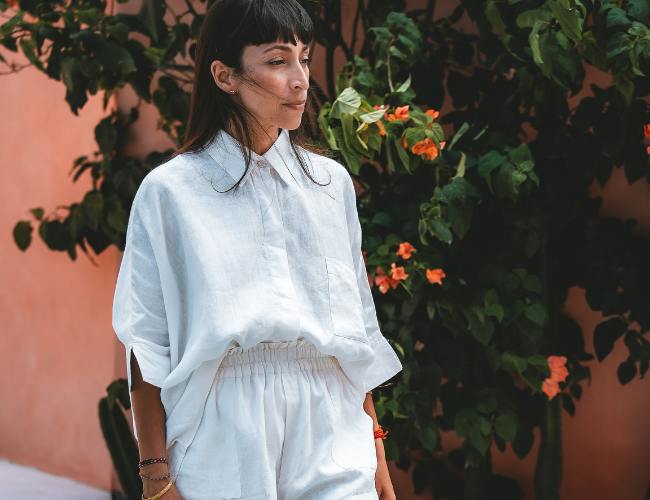
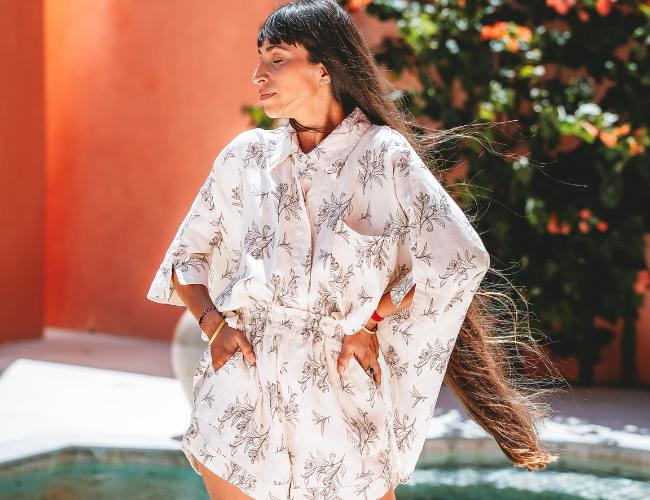
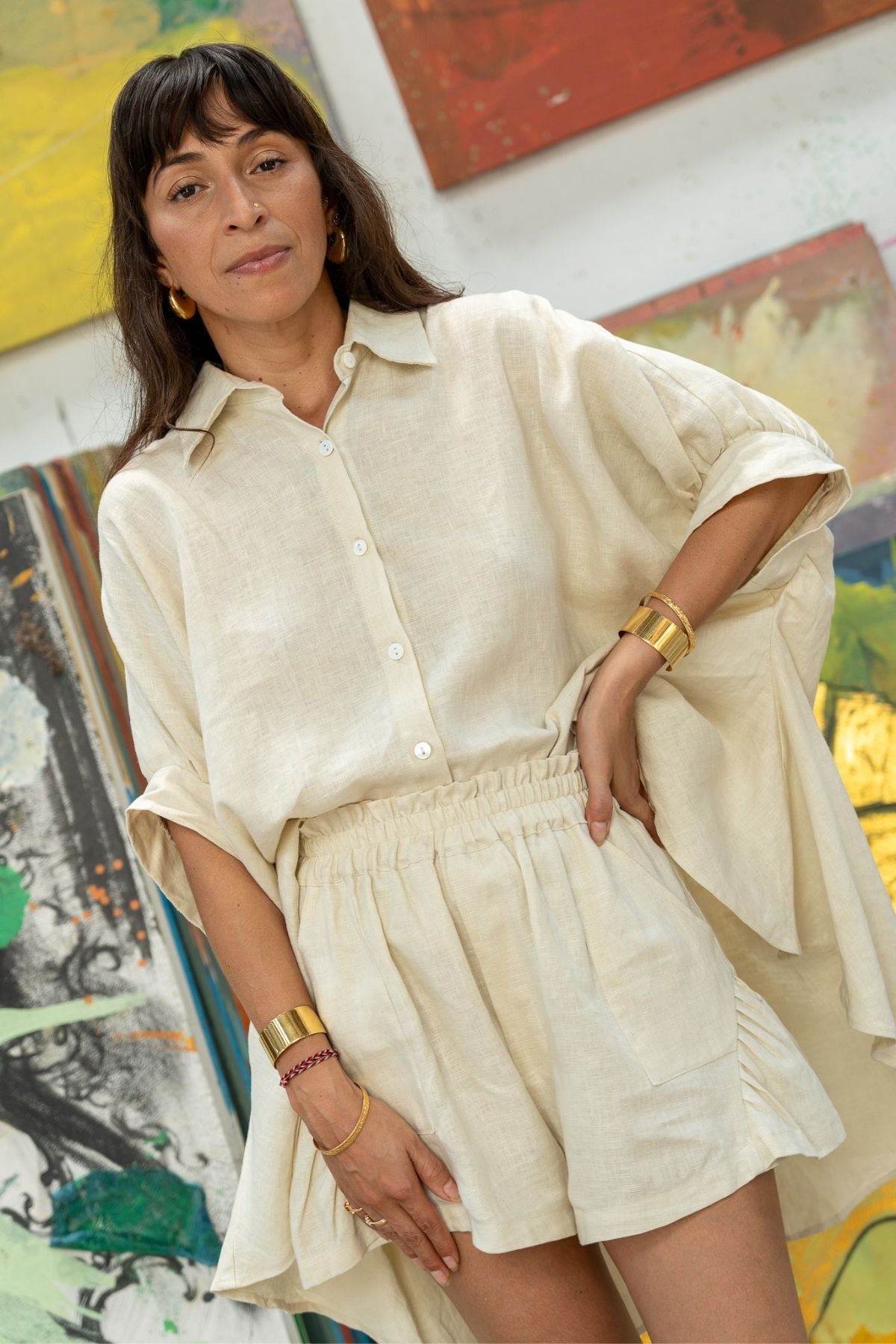
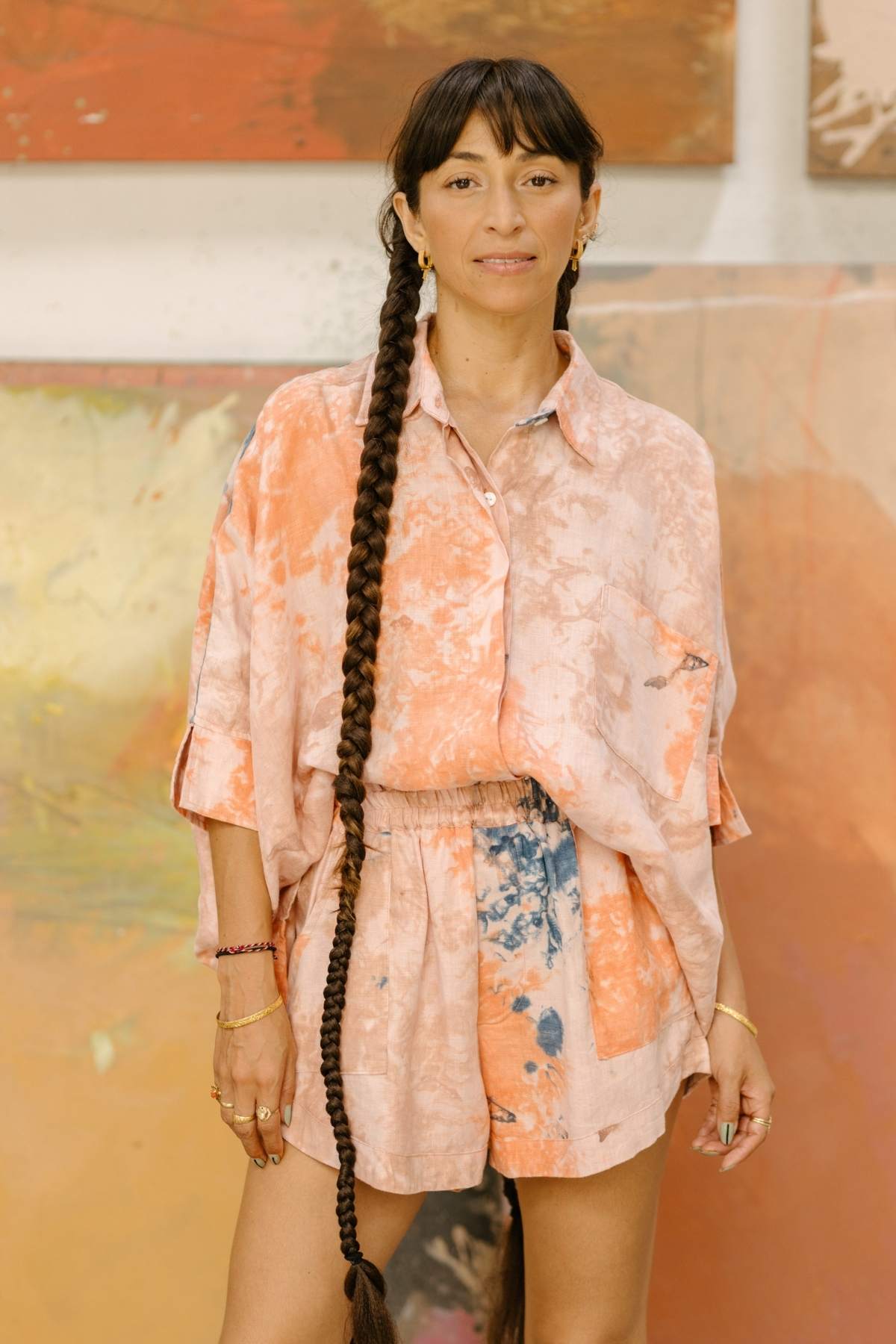
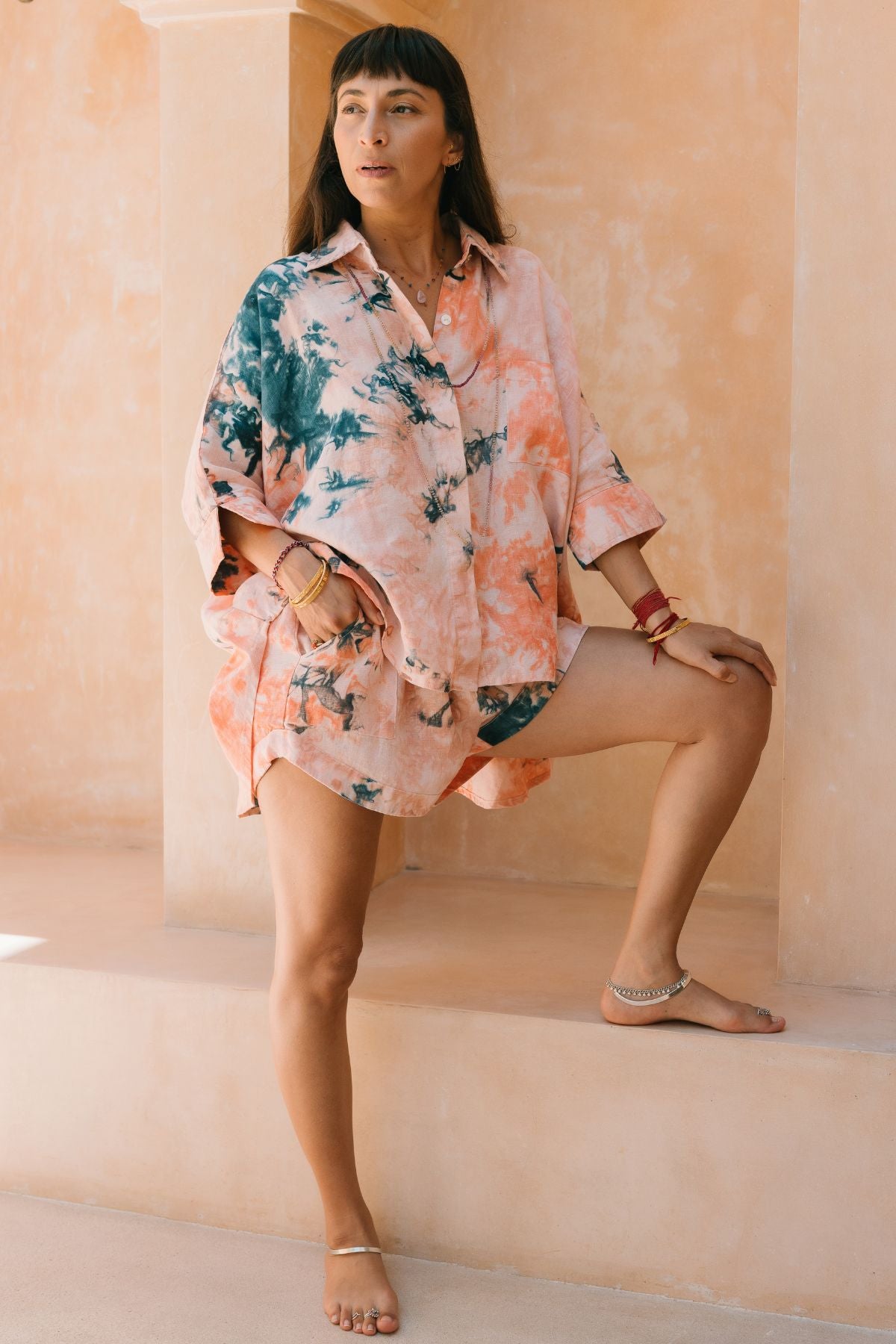
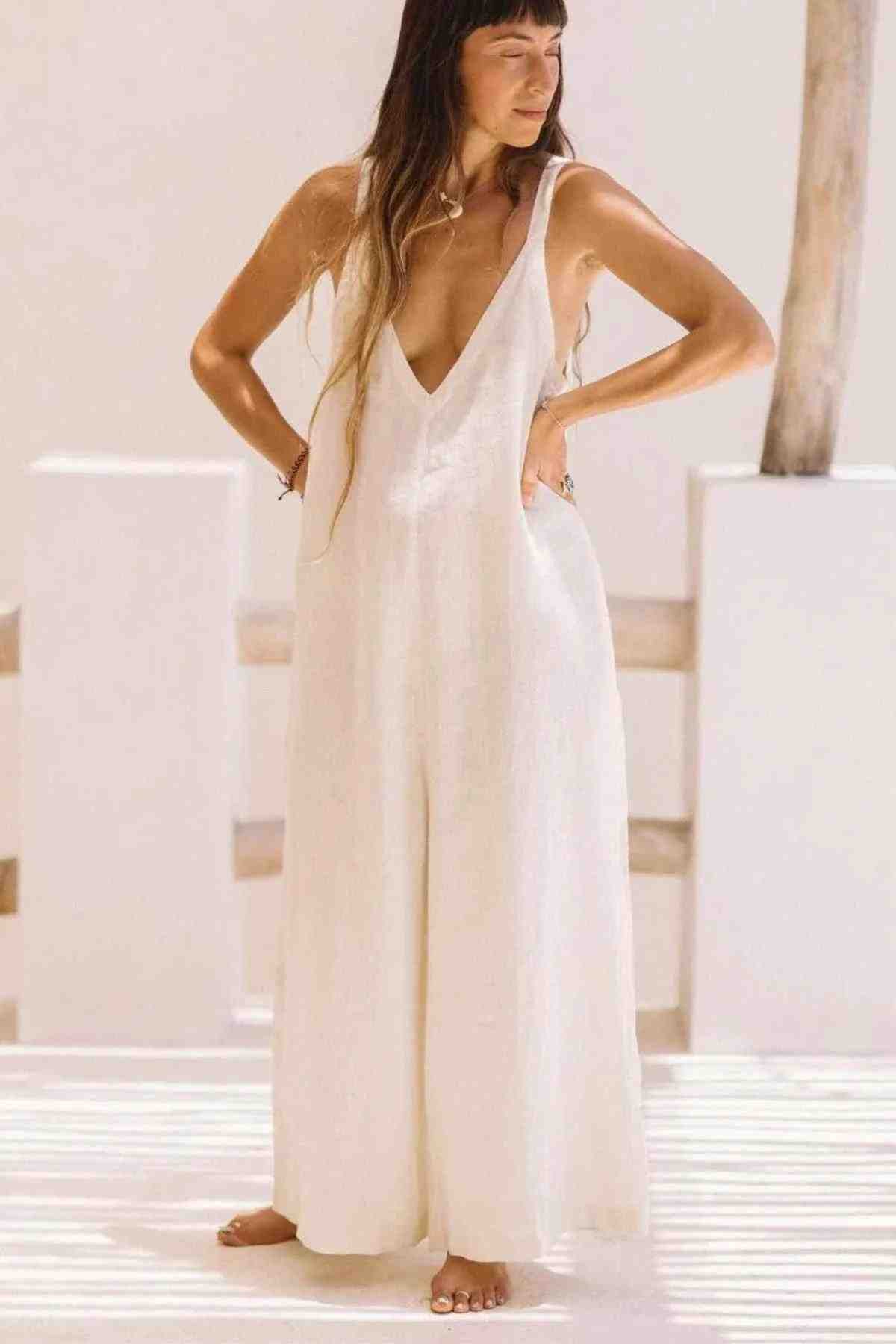
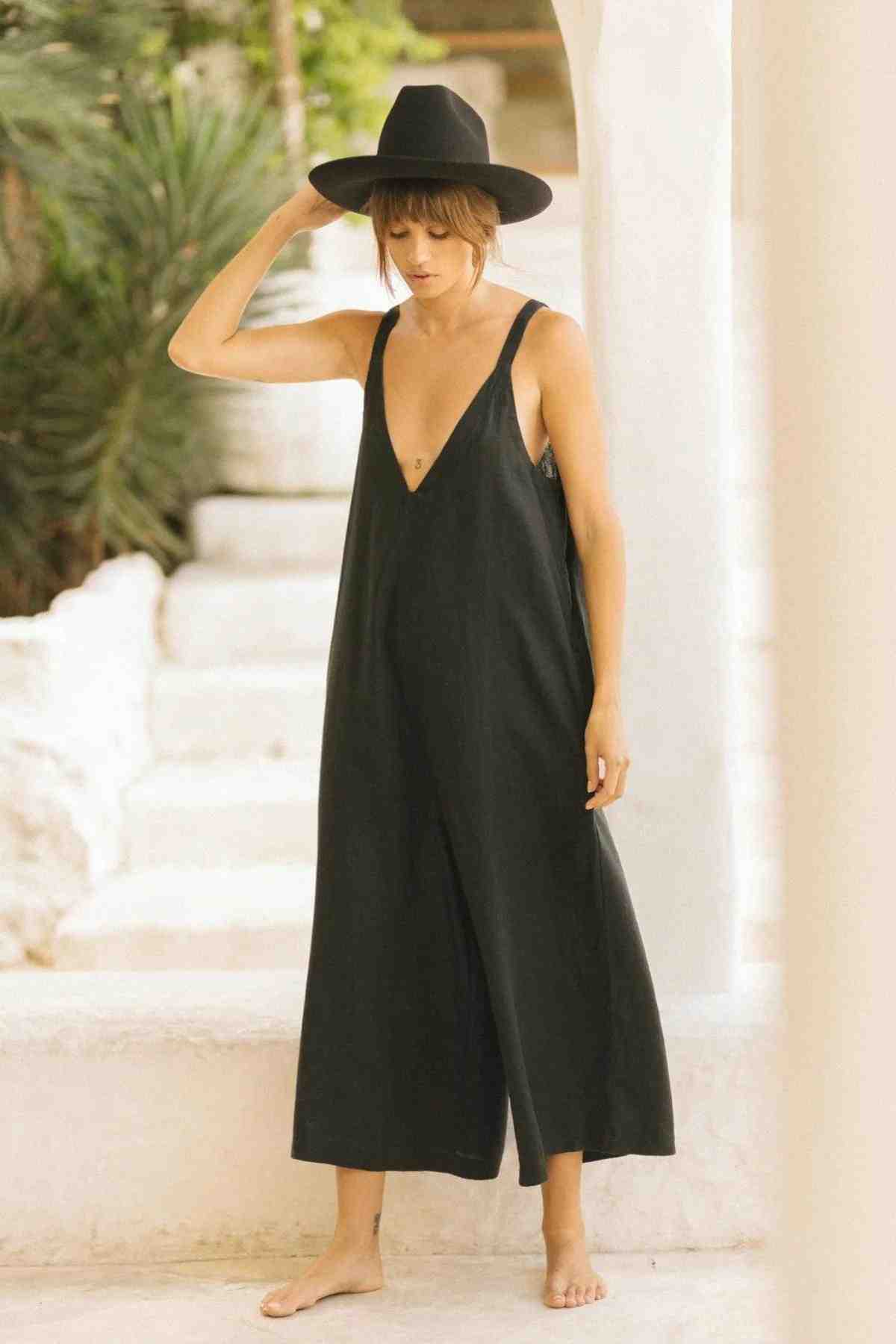
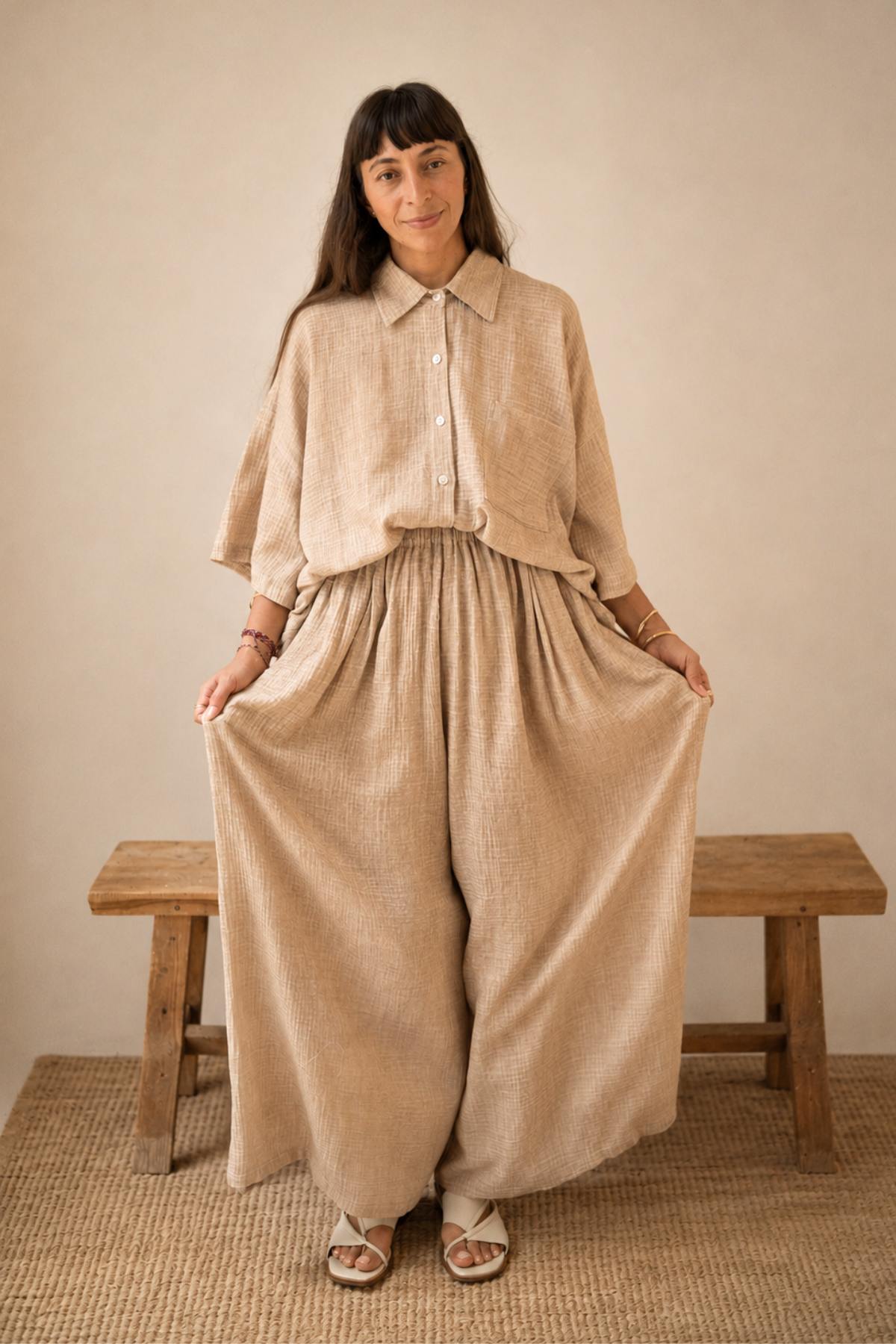
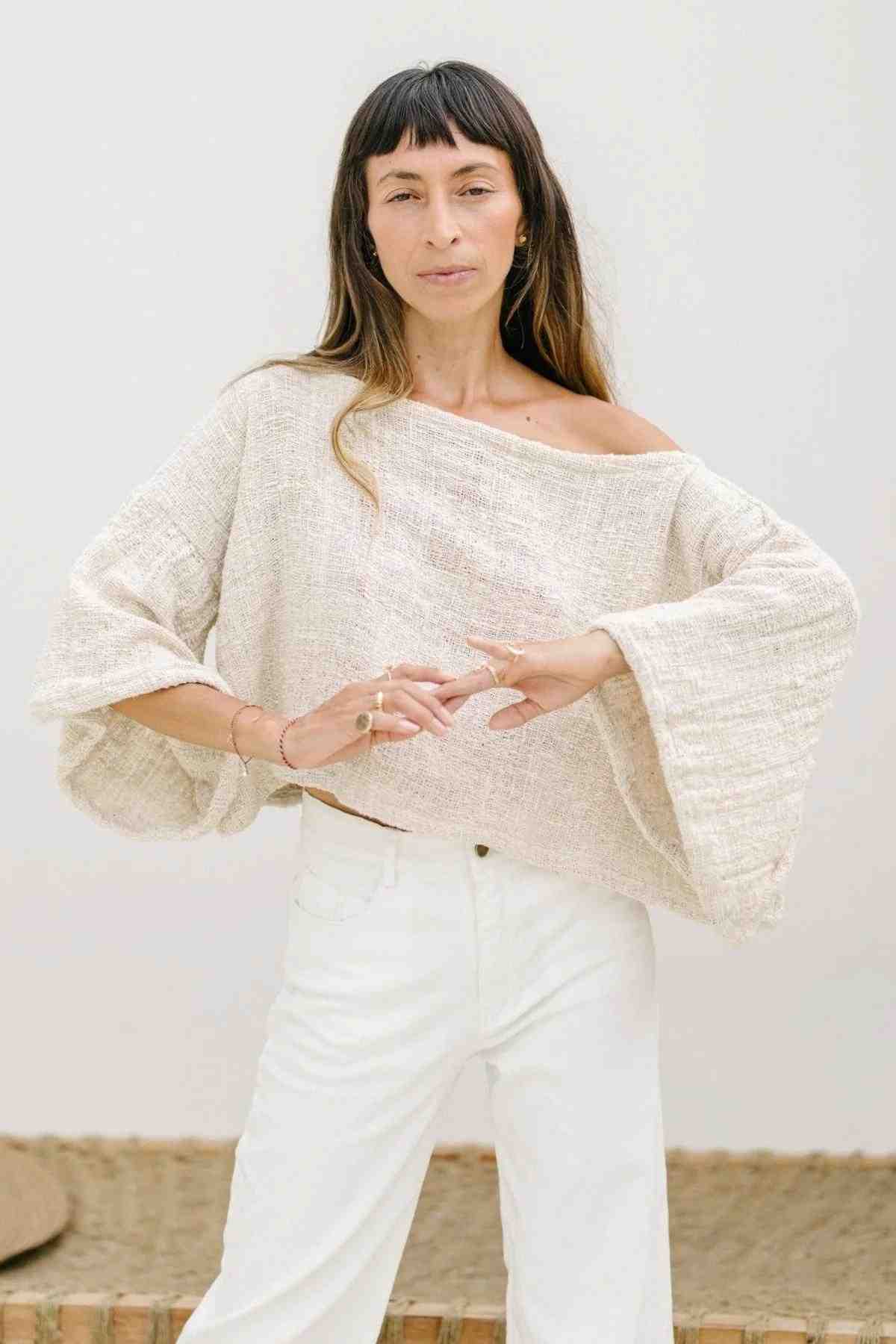
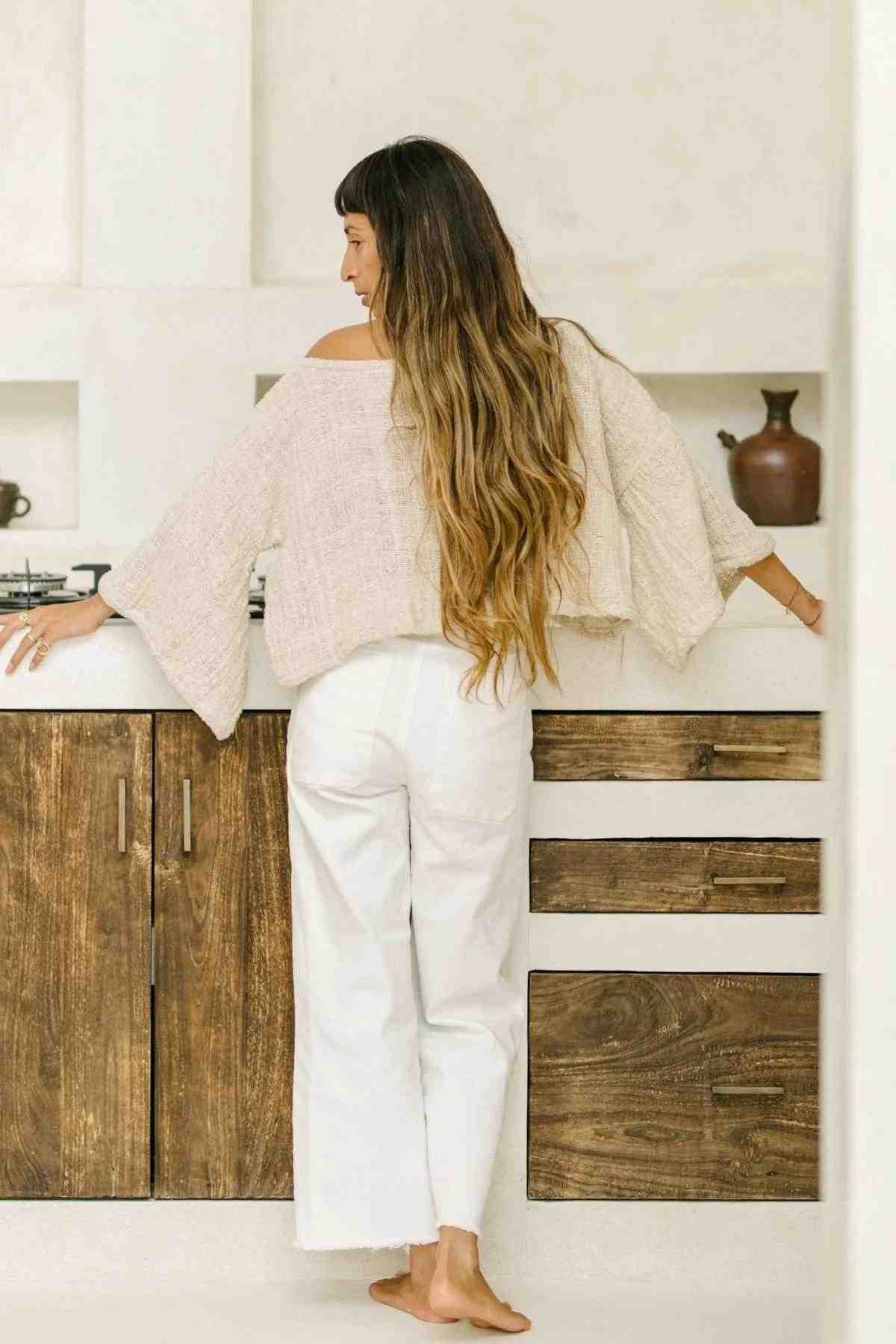
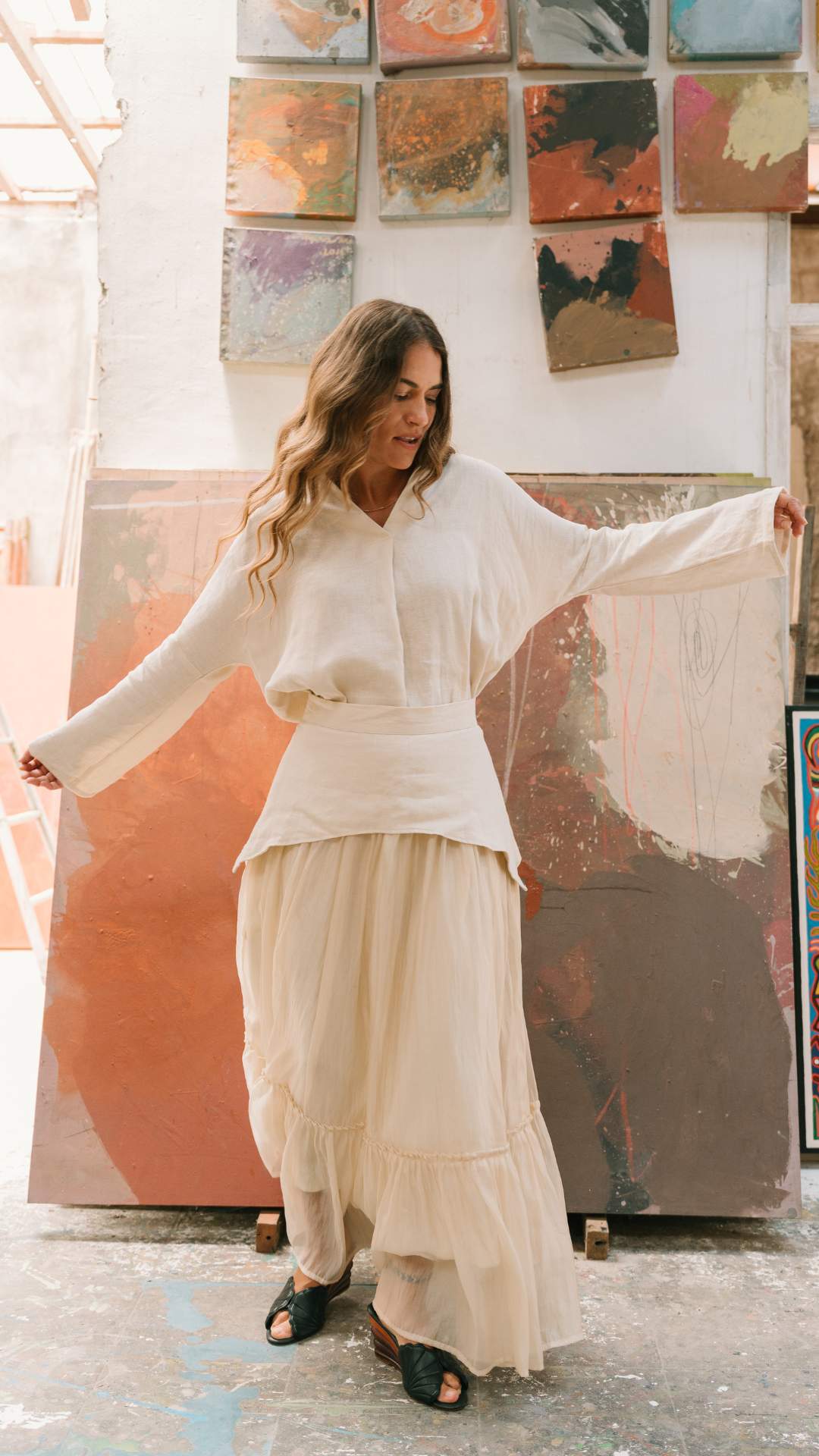
The Swan Set is the piece in our collection that most cleanly expresses what linen's natural properties feel like when they are honored in the making. An asymmetric top. Wide-leg linen shorts. In Moonlight, Rainbeau, Black Dark Moon, and Uluwatu Sunset, each color drawn from the botanical dye tradition of the region.
Rainbeau: the colour of the sky the morning after everything broke open.
The Swan Set is the piece women describe wearing daily. Not because it is their only piece, but because it is the one that asks nothing of them. The one that stays fresh. The one that moves with the day without accumulating the day. This is what natural antibacterial linen does in lived experience. It simply stays clean, in every sense of the word.

Natural linen · Botanical dyes · Handcrafted in Bali
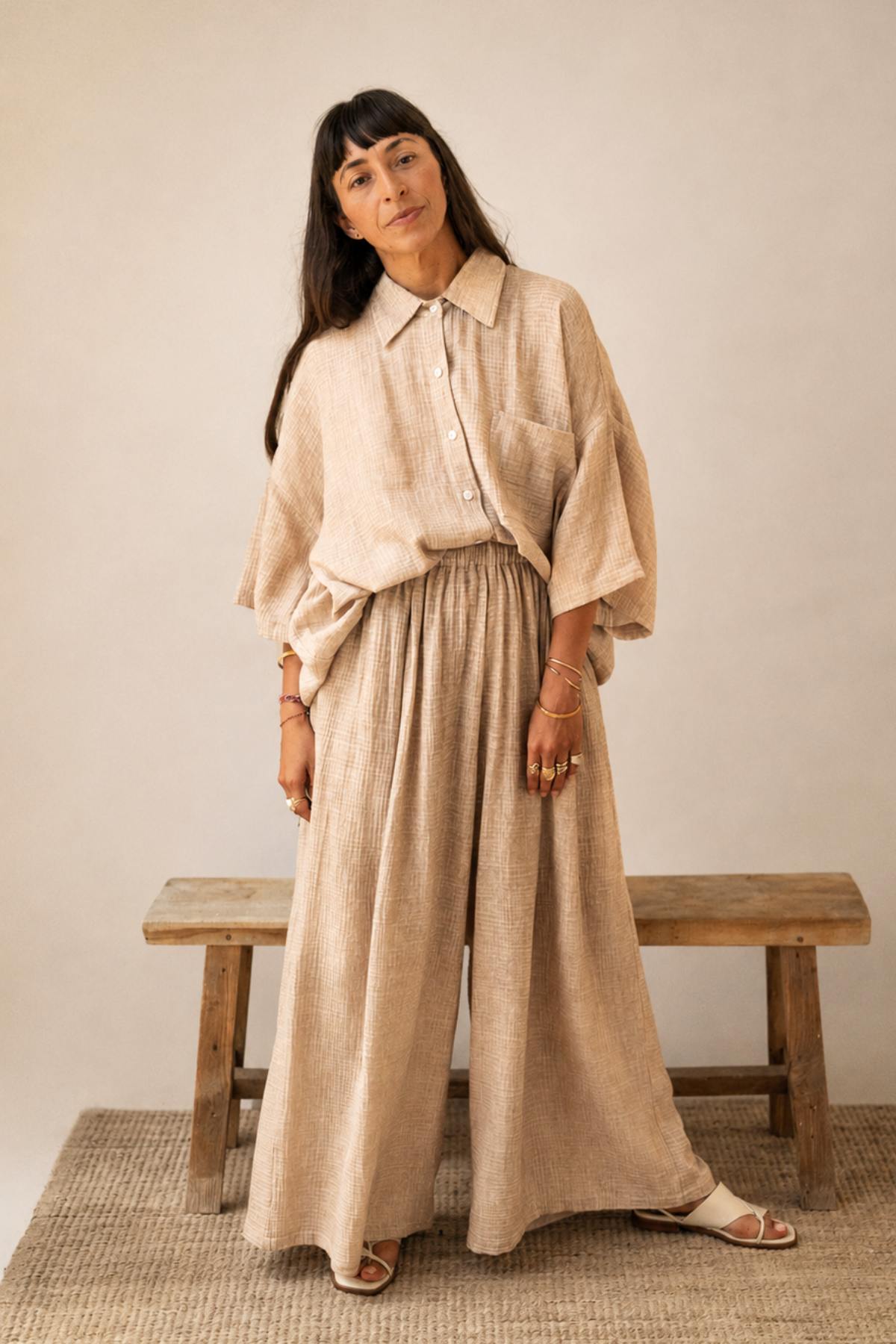
For more on our full linen range, browse our linen sets or explore our bestsellers, the pieces that have earned their place through years of being worn.
The Muse-Letter
Dress for the woman you're becoming.
Every week from Bali. Astrology, slow living, sacred feminine, and the pieces we're making by hand. A letter, not a sales pitch.
Unsubscribe any time. No spam, ever.


Leave a comment
This site is protected by hCaptcha and the hCaptcha Privacy Policy and Terms of Service apply.