
7 Reasons 100% Linen Clothing Is Better for Your Body, Practice, and the Planet
By The Myrah Penaloza Team | June 2026
If you have been wondering why linen clothing keeps appearing in conversations about conscious living, yoga, and intentional style, here is the honest answer: linen is not a trend. It is the oldest textile on earth, woven for thousands of years by cultures that understood what modern science is now confirming. 100% linen clothing keeps your body cooler, supports your yoga and meditation practice, is gentler on sensitive skin than most alternatives, and carries one of the smallest environmental footprints in fashion. Below are the seven reasons women who move with intention are choosing linen, and choosing it for good.
In this article
- 1. Linen breathes better than any other natural fabric
- 2. Linen is antibacterial, hypoallergenic, and kind to sensitive skin
- 3. Linen gets softer and more beautiful with every wear
- 4. Does linen have an energetic frequency? What is true
- 5. Linen enhances your yoga and meditation practice
- 6. Linen is one of the most sustainable fabrics on earth
- 7. Linen moves with you from practice to everyday life
- Frequently asked questions
1. Does linen keep you cooler than cotton and synthetic fabrics?
Yes, and the difference is significant. Linen is woven from flax plant fibres, which are hollow and highly porous. This structure allows air to circulate through the fabric far more freely than cotton, polyester, or viscose, pulling heat away from your skin rather than trapping it. Textile research has shown that linen can keep the body up to 3 to 4 degrees cooler than cotton under equivalent conditions.
Linen also absorbs up to 20% of its own weight in moisture before it begins to feel damp, then releases that moisture back into the air quickly. The result: you stay dry, comfortable, and regulated even during movement or heat. No clinging, no overheating, no compromise.
2. Is linen good for sensitive skin?
It is one of the best choices available. Linen is naturally antibacterial and hypoallergenic, meaning it actively resists the growth of bacteria and fungi that cause irritation, odour, and skin reactions. Unlike synthetic fabrics that can harbour bacteria and cause breakouts or rashes over time, linen stays fresh and clean longer, even with daily wear.
Linen fibres also do not pill or shed microplastics. For women with eczema, rosacea, or reactive skin, switching to 100% linen often brings immediate relief. There are no synthetic coatings or chemical finishes added for softness (linen softens naturally over time), and no plastic microfibers releasing against your skin with every movement.

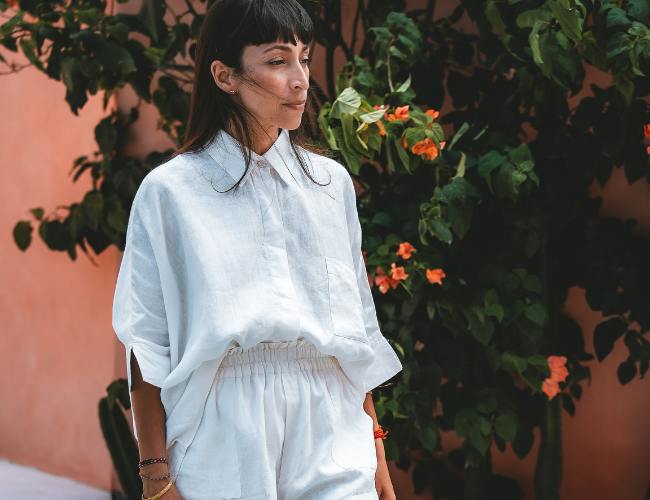
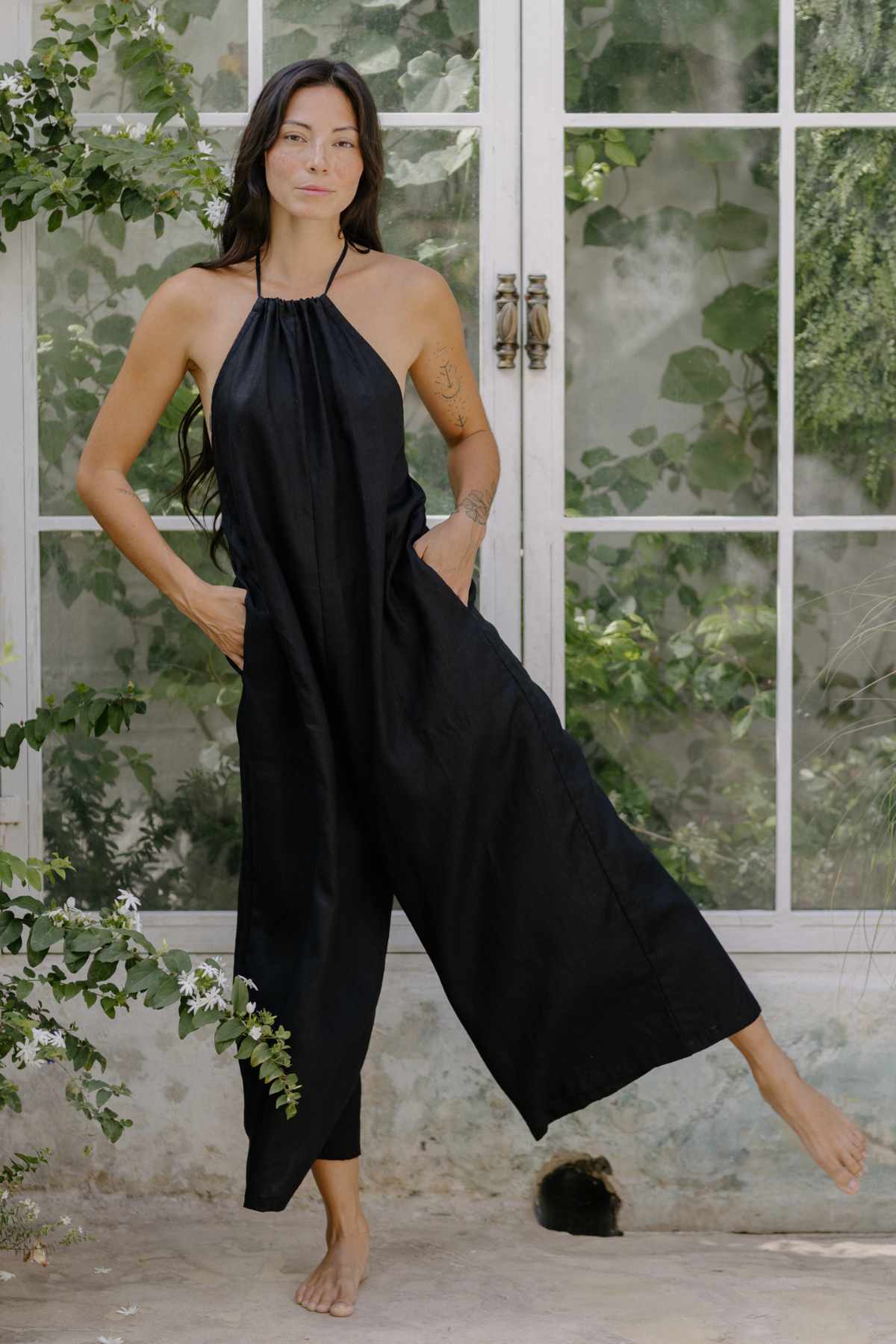
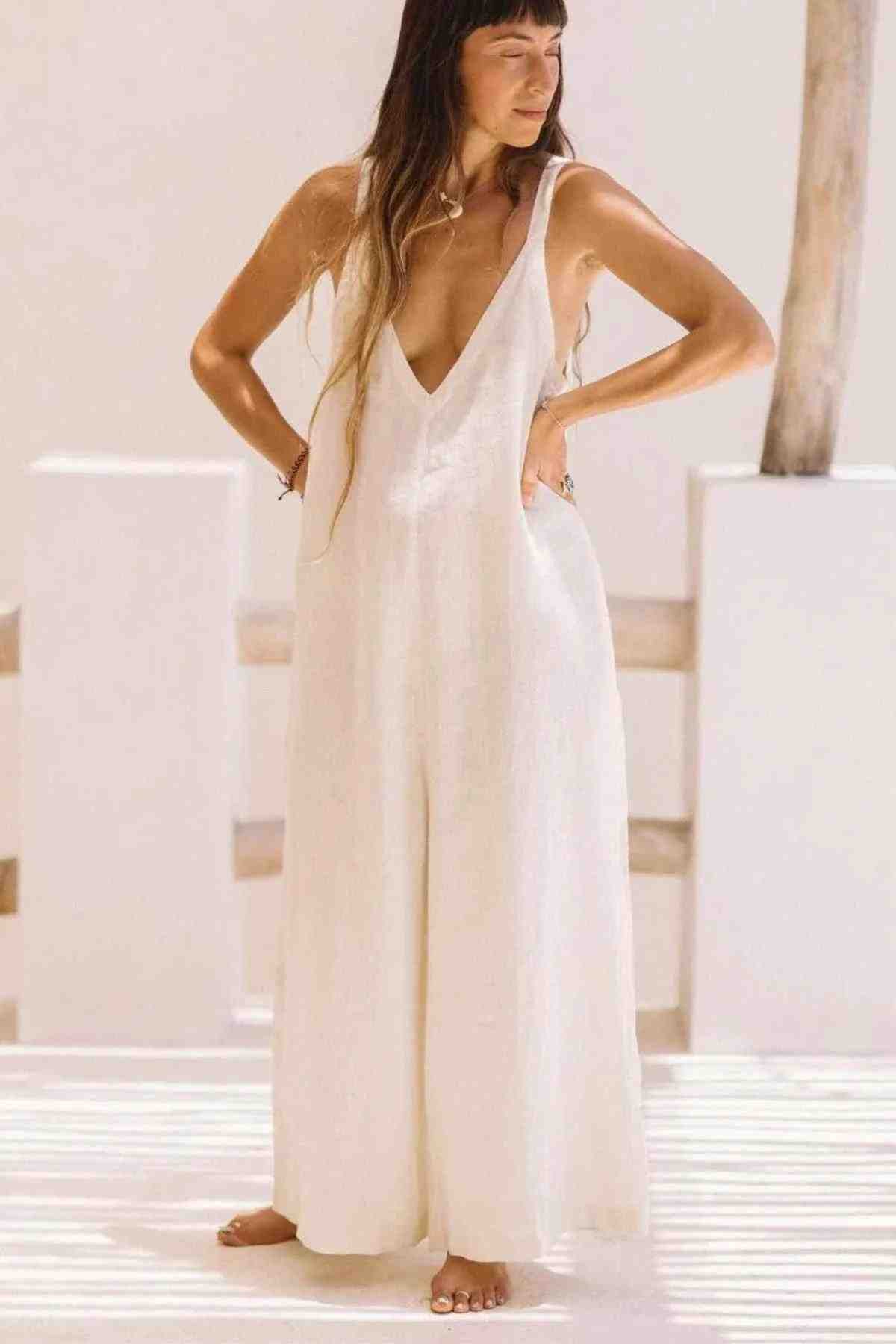
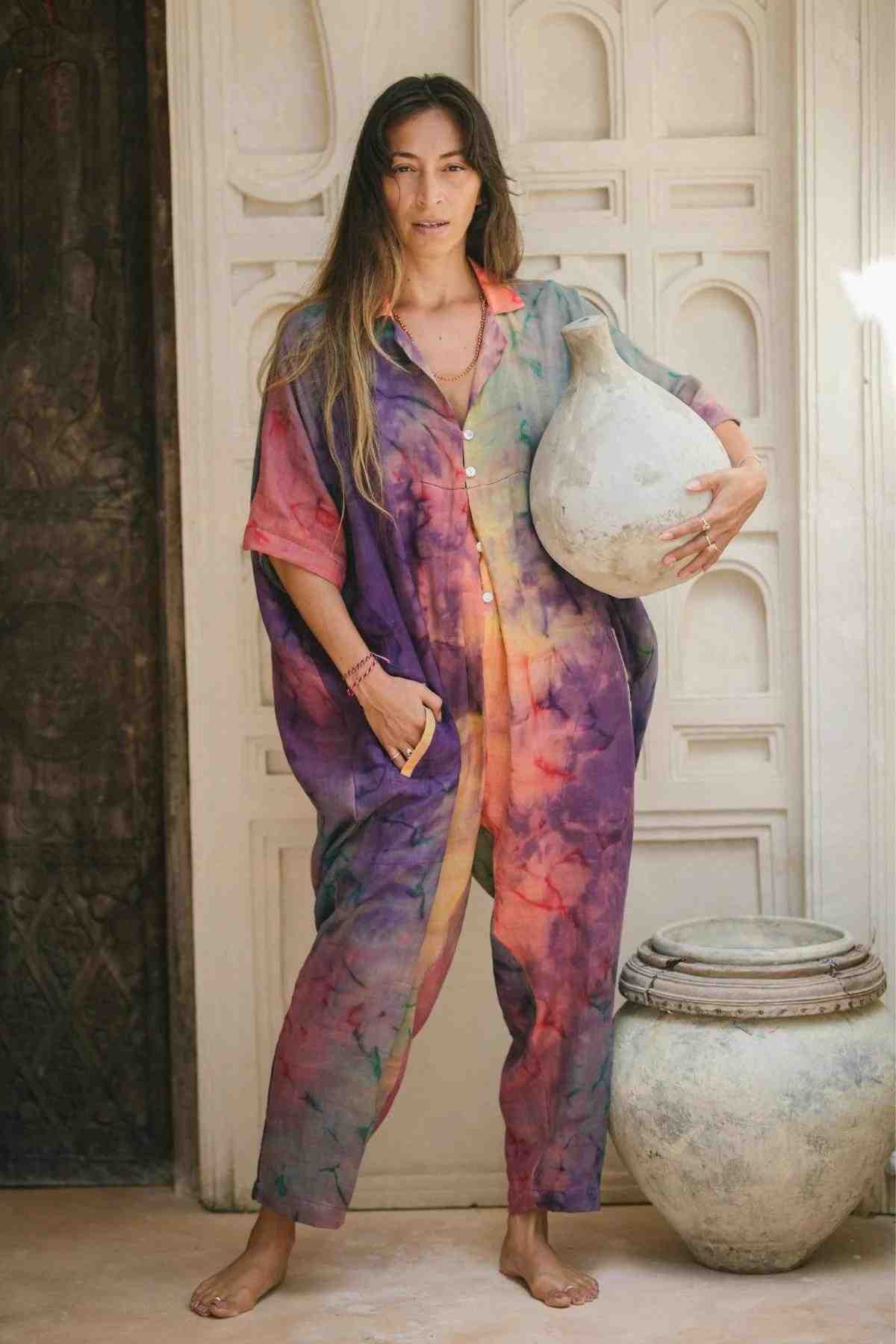
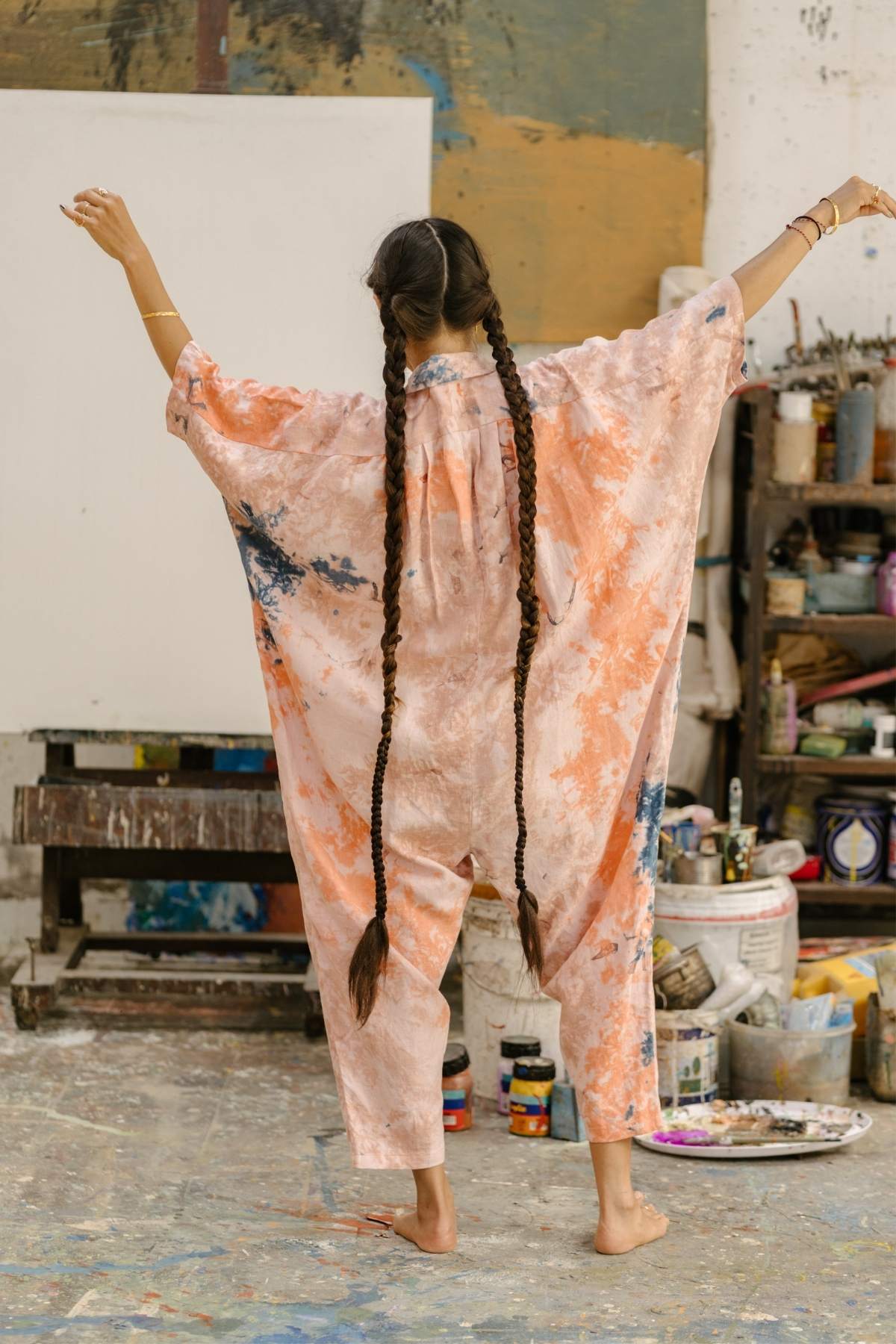
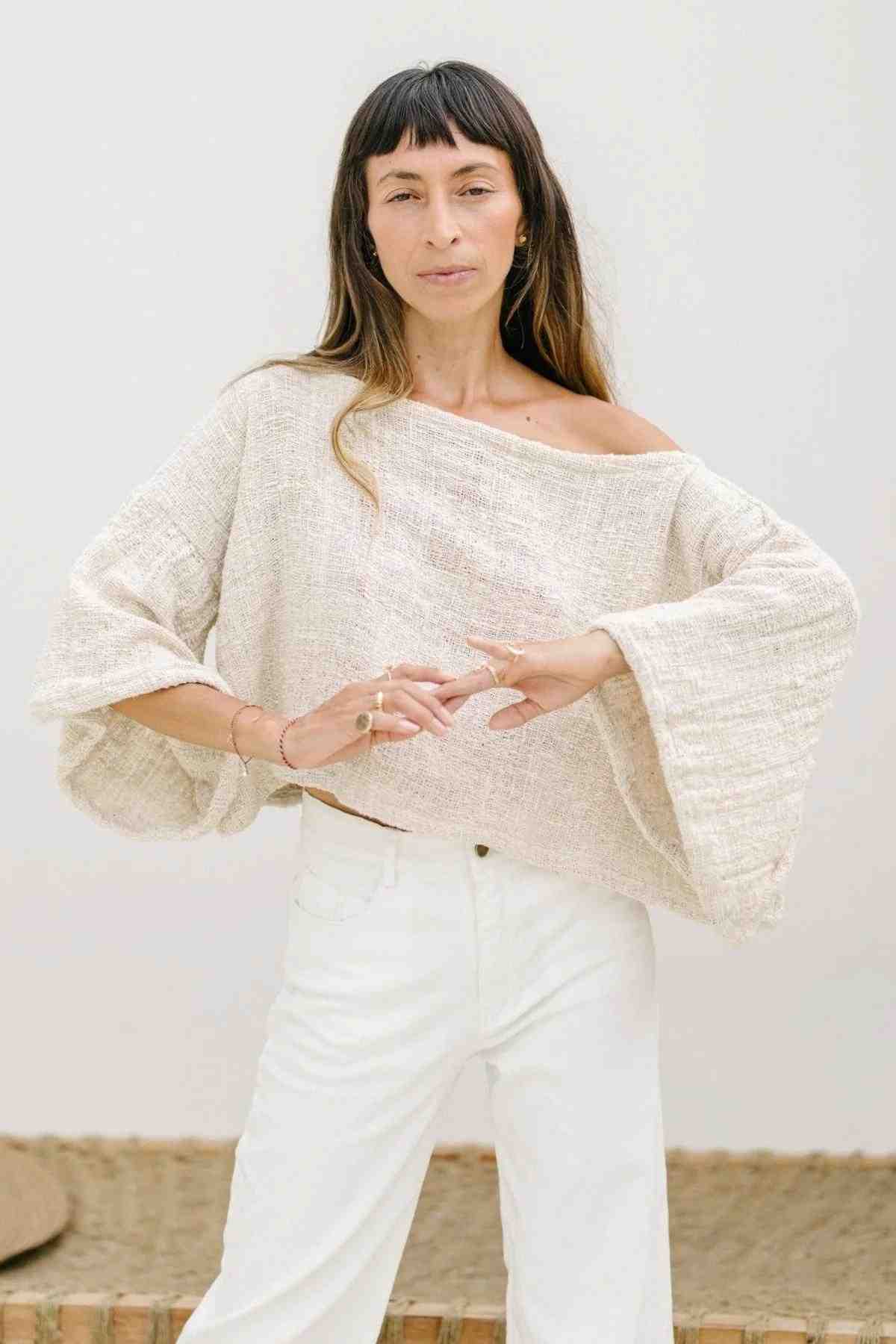
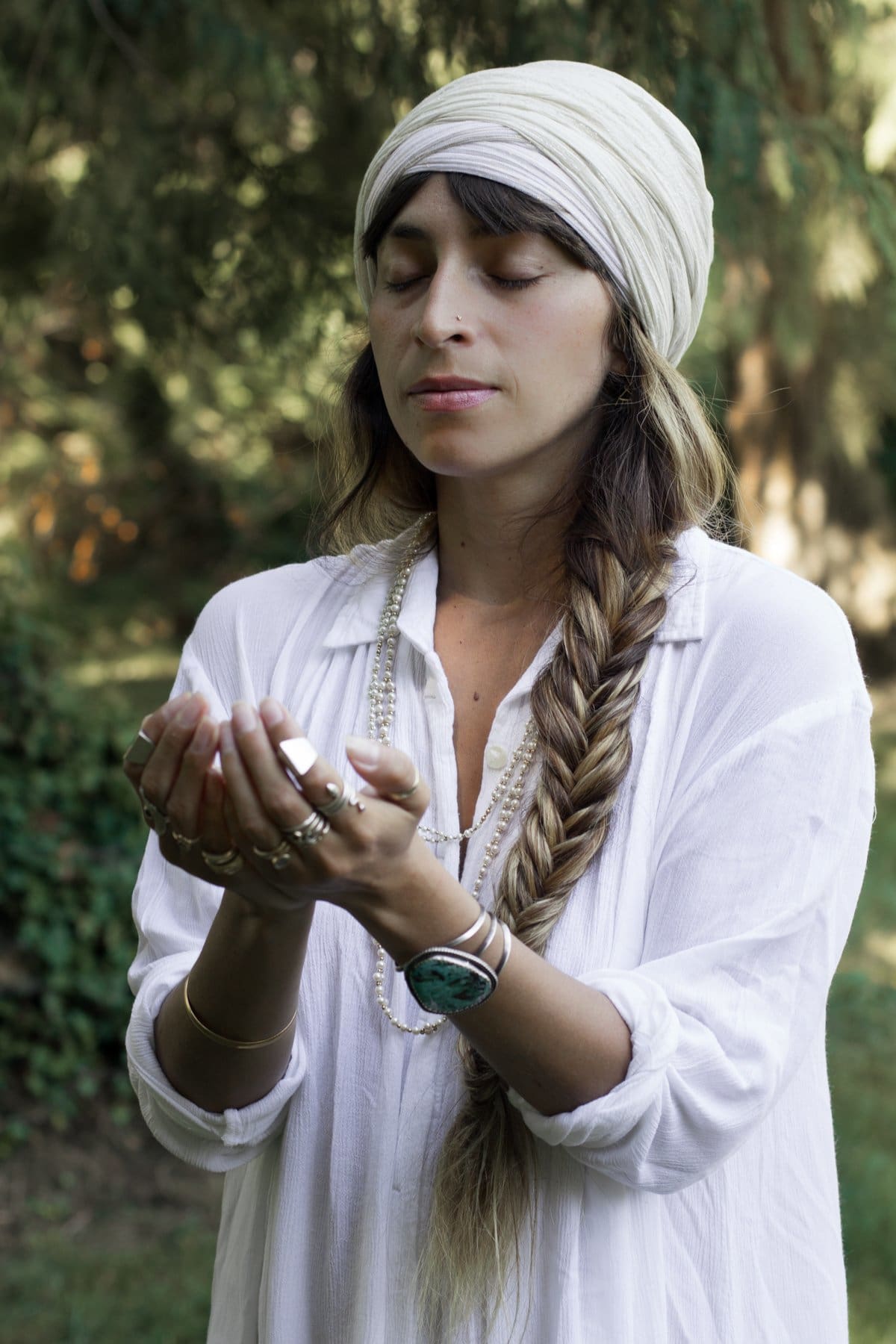
100% linen. Halter-tie neckline, side pockets, elegant drape. Made for women who want to feel effortlessly grounded from morning to evening.
3. Does linen actually get better with age?
It does, and this is one of linen's most underappreciated qualities. Most clothing degrades with washing. Linen does the opposite. The flax fibres in linen become progressively softer and more supple with each wash cycle, while the fabric retains its shape and structural integrity far better than cotton or synthetic blends.
A well-made 100% linen piece, cared for properly, can last 10 to 20 years. Linen is among the strongest natural fibres in existence, roughly twice as strong as cotton when dry. Over time it develops what artisan weavers call a lived-in quality: draping more beautifully, feeling softer against the skin, becoming more yours. This is not fast fashion. This is an investment in something that grows with you.
4. Does linen have an energetic frequency, and what is true?
Many Kundalini yoga practitioners, Reiki healers and energetic workers reach for linen first. You may have seen a number attached to it, 5,000, said to measure its life force. We went looking for where that number came from, and it does not hold up: it traces to readings that were never published or replicated, and frequency is not a property cloth has. The full story is in Does Linen Have a Frequency?
Whether your framework is scientific or spiritual, the lived experience is consistent: women who switch to pure linen often report feeling more grounded, calmer, and more present throughout their day. Linen does not perform well-being. It simply supports it, quietly, the way a good fabric should.
5. How does wearing linen improve your yoga and meditation practice?
Three ways, specifically:
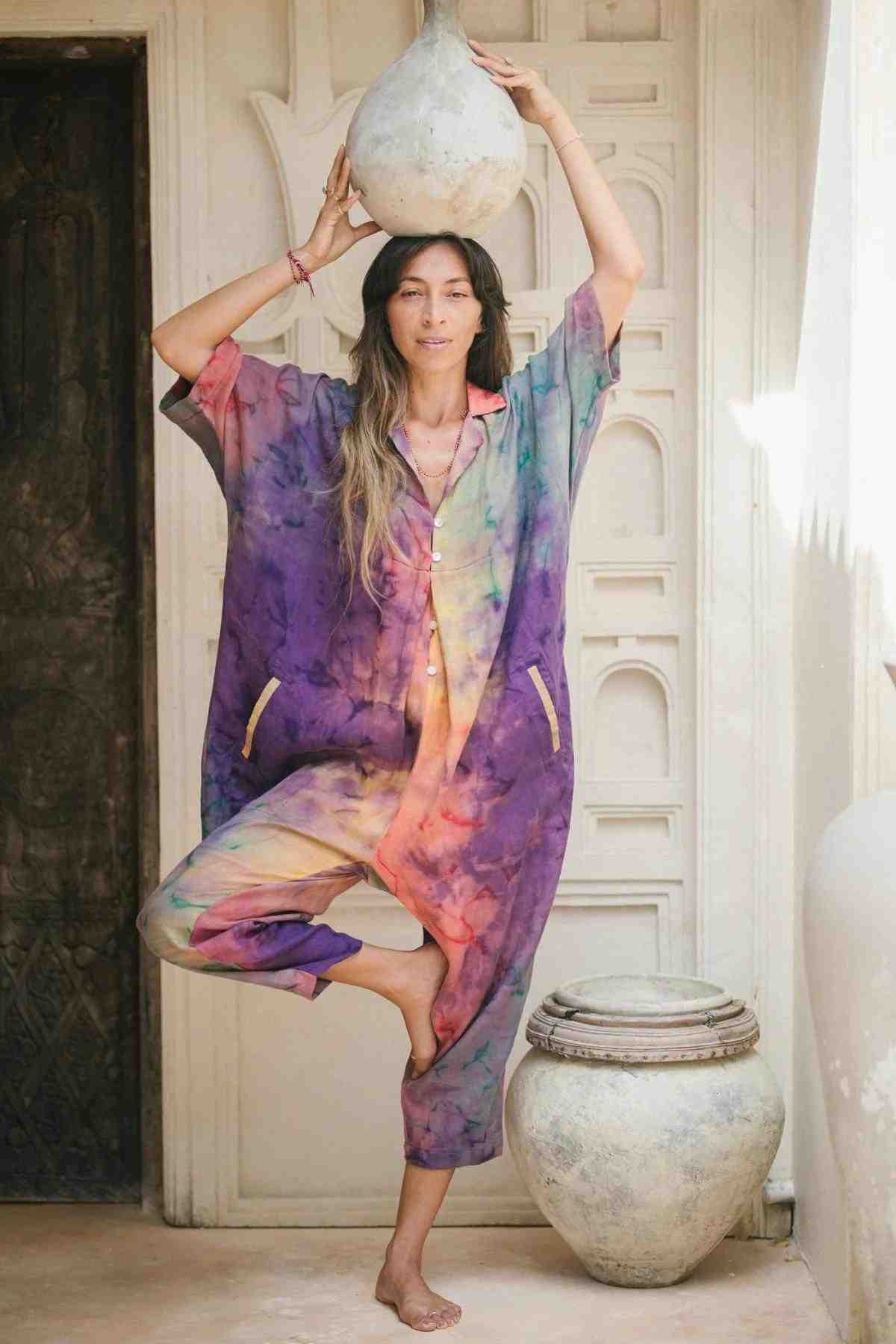
Movement freedom. Linen drapes and moves with the body rather than gripping it. In a yoga practice this means full range of motion without restriction, and no synthetic fabric pulling or compressing during seated or grounded postures.
Thermal regulation during practice. Body heat rises quickly during yoga and pranayama. Linen's thermoregulatory properties keep the body from overheating, which sustains focus and prevents discomfort from becoming a distraction during longer holds.
Sensory grounding. The slightly textured surface of natural linen against the skin offers a subtle, continuous sensory anchor. Many practitioners report that wearing linen helps them stay more embodied and present during practice, particularly in seated meditation where the quality of clothing becomes surprisingly noticeable.

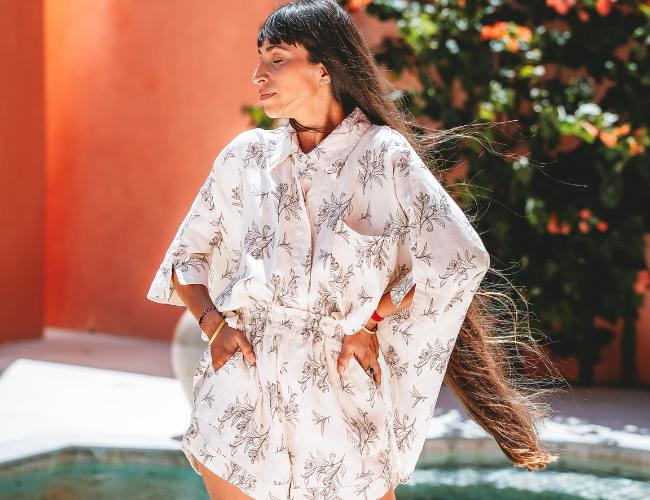
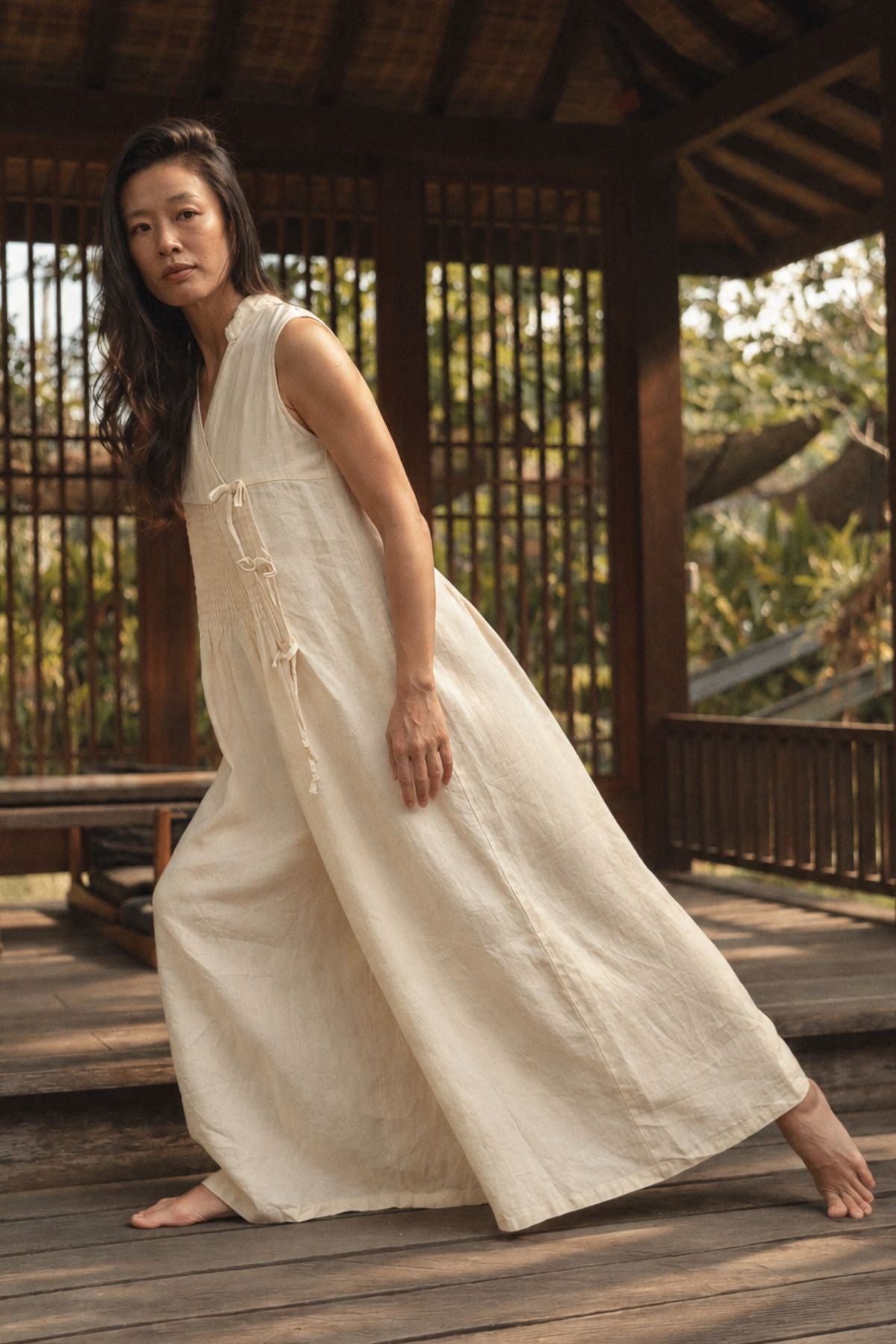
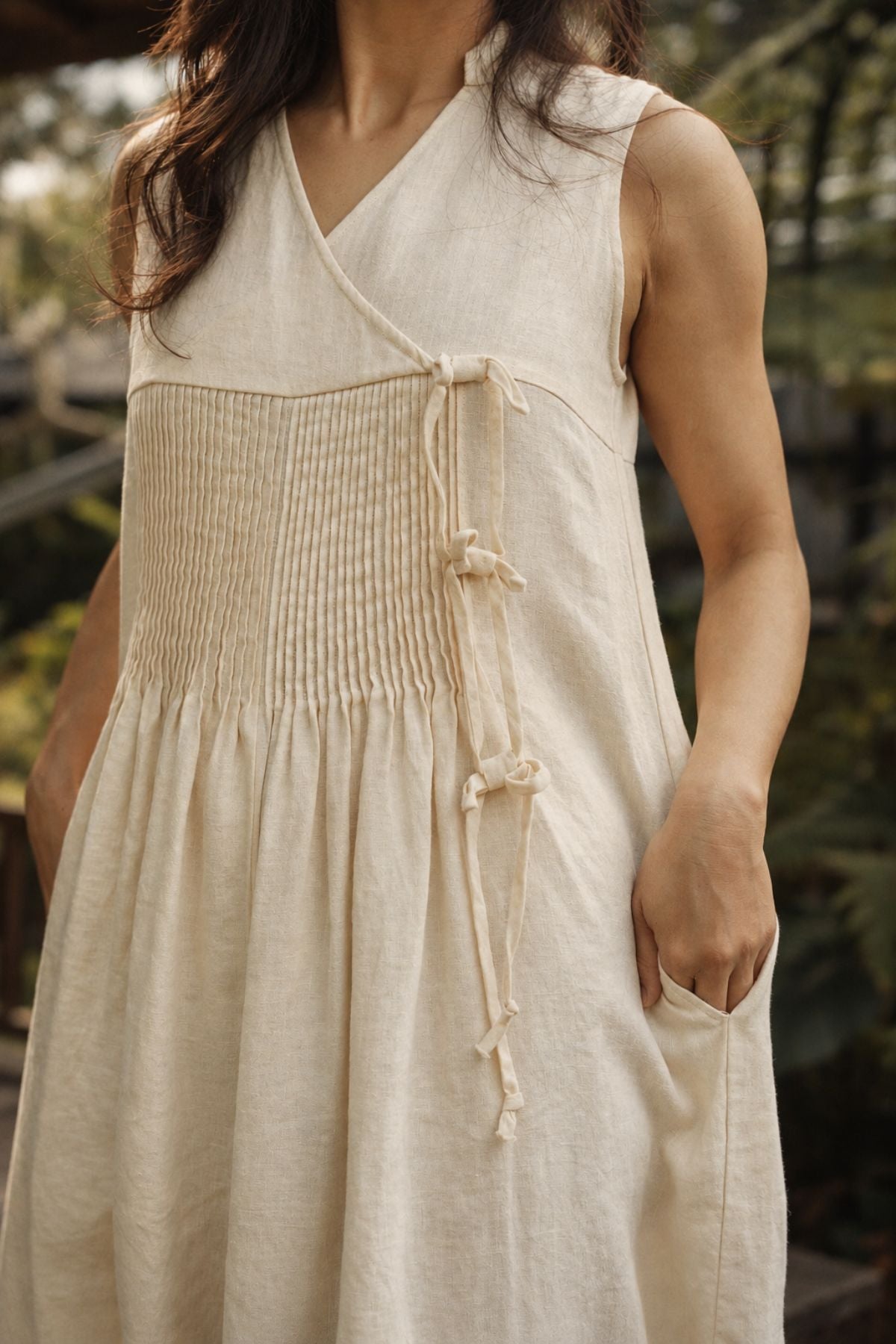
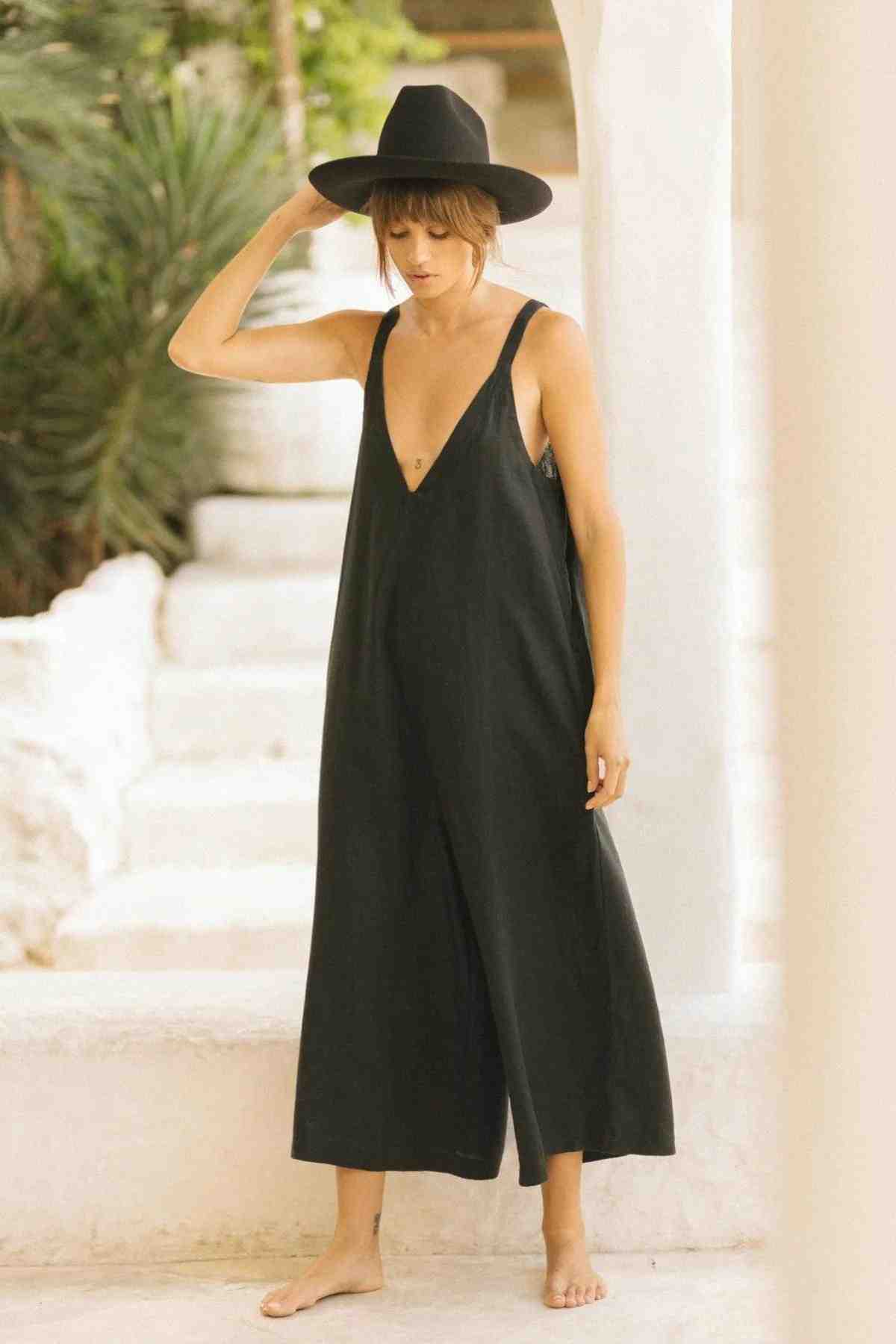
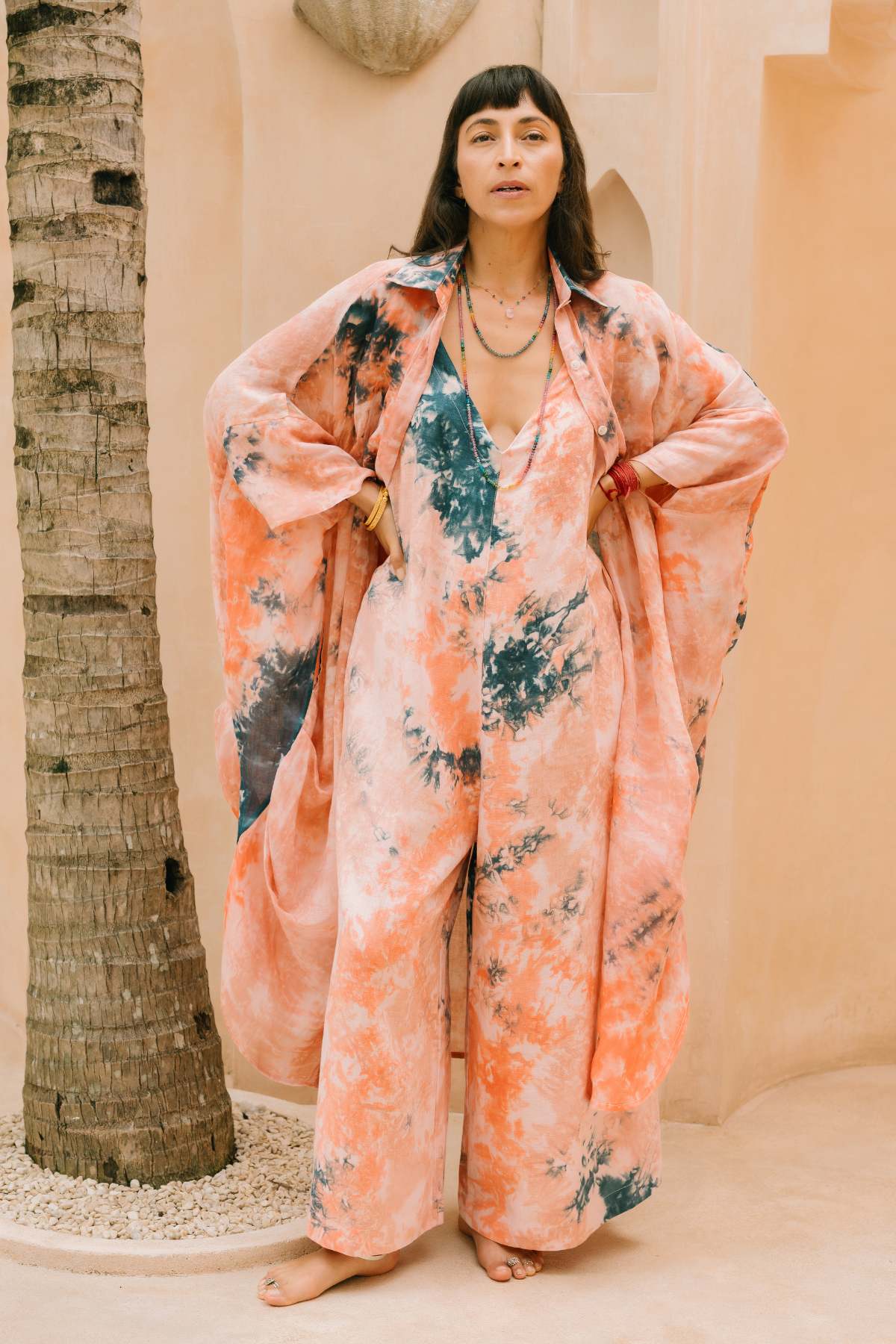
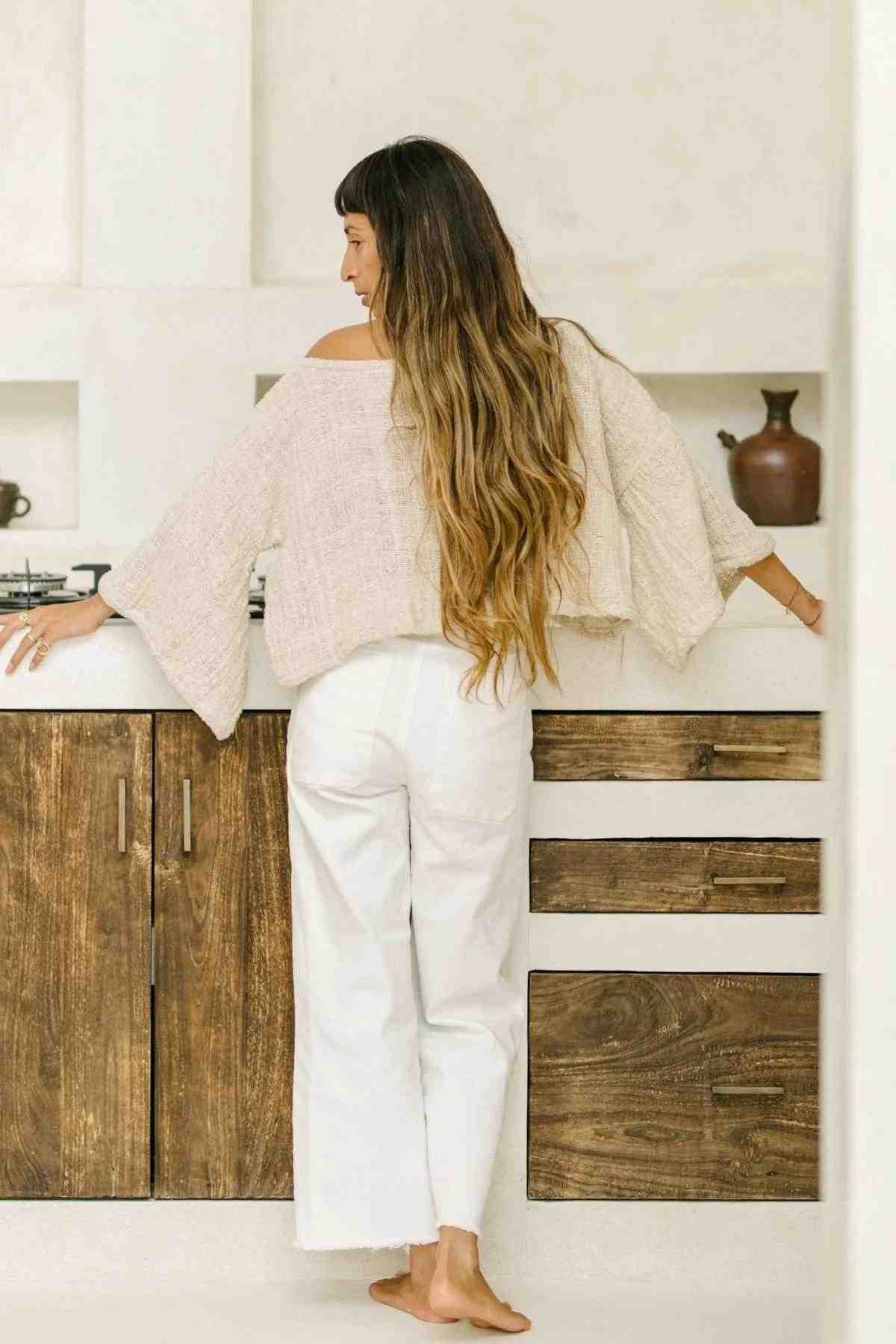
100% linen. Wide-leg silhouette with a low-cut V front and back. Designed to move with your practice and carry you through the rest of your day.
6. Is linen better for the environment than cotton or synthetic fabrics?
Yes, by a significant margin. Here is the comparison that matters:
| Fabric | Water use (per kg) | Pesticides | Biodegradable | Microplastics |
|---|---|---|---|---|
| 100% Linen | Very low (rain-fed) | Minimal to none | Yes | None |
| Conventional cotton | ~10,000 litres per kg | High | Yes | None |
| Polyester / synthetic blends | Low | None | No | Yes (every wash) |
Flax, the plant linen is made from, grows with minimal water and little to no irrigation in most climates, requires few or no pesticides, and every part of the plant is used in production, leaving near-zero waste. When a linen garment has lived its full life (which, given linen's durability, will be a long time from now) it biodegrades completely. No microplastic legacy, no landfill contribution persisting for centuries.
Choosing linen is not a sacrifice of quality for ethics. It is the rare case where the best fabric for your body is also the best fabric for the world.
7. Can linen work for everyday life, not just practice?
This is where linen reveals its full range. The same properties that make it ideal for yoga, its breathability, drape, and natural beauty, make it equally suited to a morning walk, a slow lunch, an afternoon at home, or sleep. Linen is one of the few fabrics that transitions genuinely and effortlessly across all of those moments.
The Nidra, named for yogic sleep, is the version of linen that lives at the boundary between rest and presence. Worn as a sleeper set, a loungewear duo, or simply the thing you reach for when the day softens, it is linen at its most intimate.

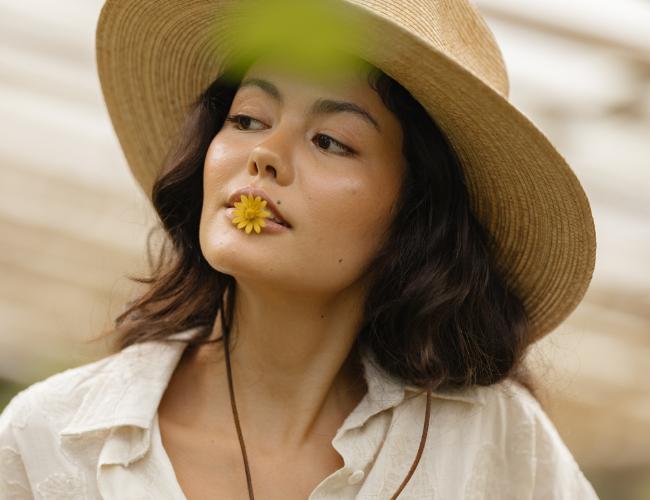
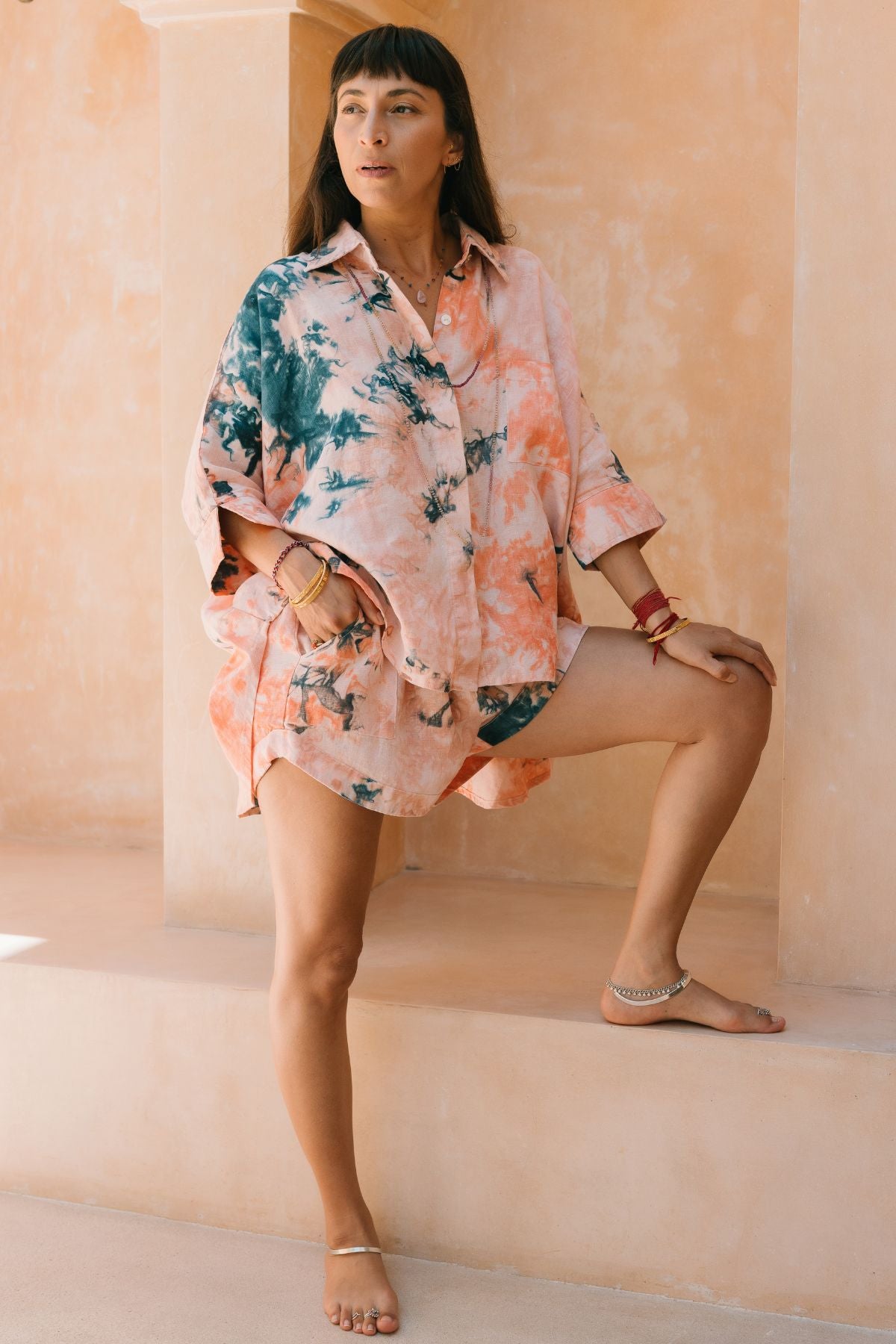
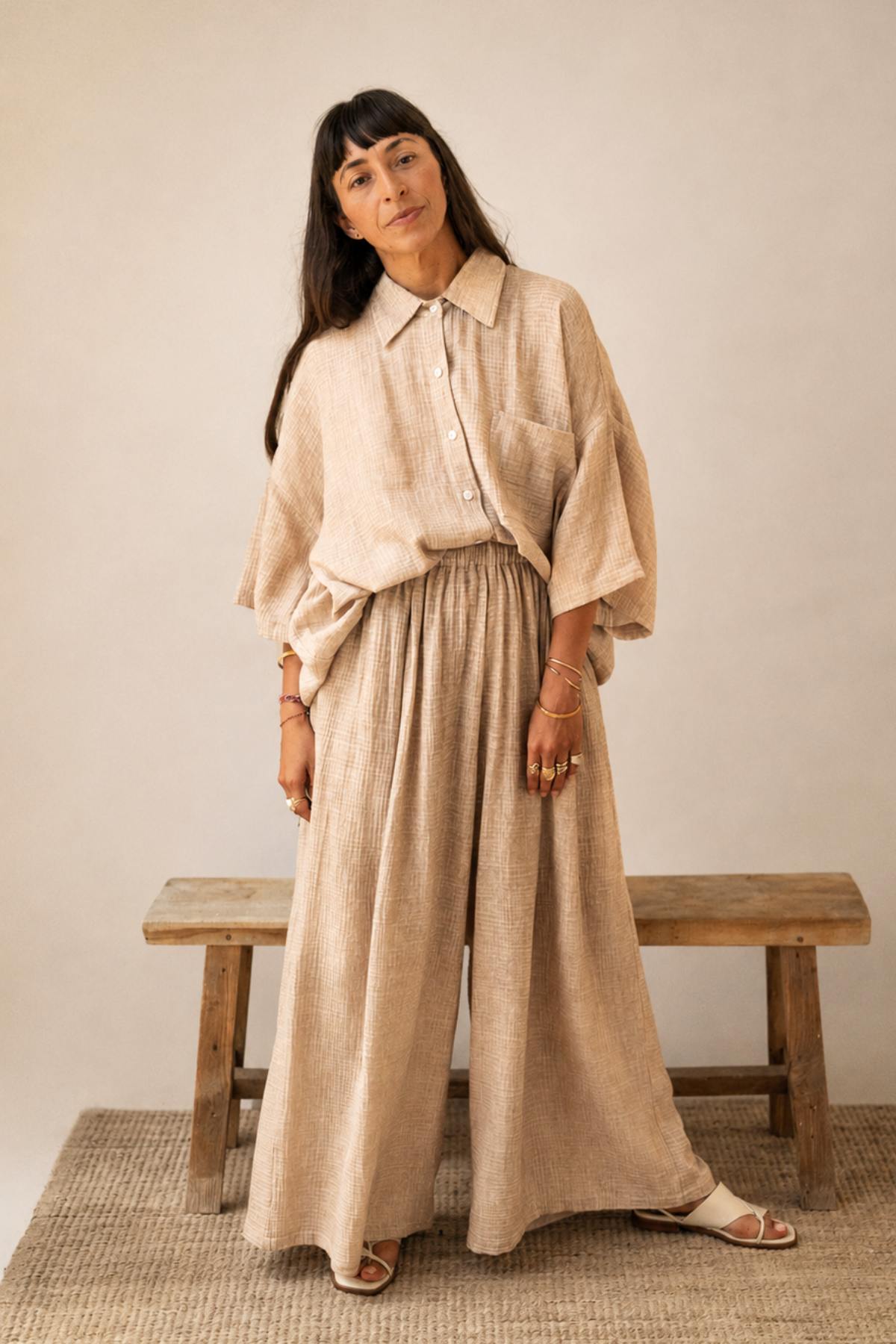
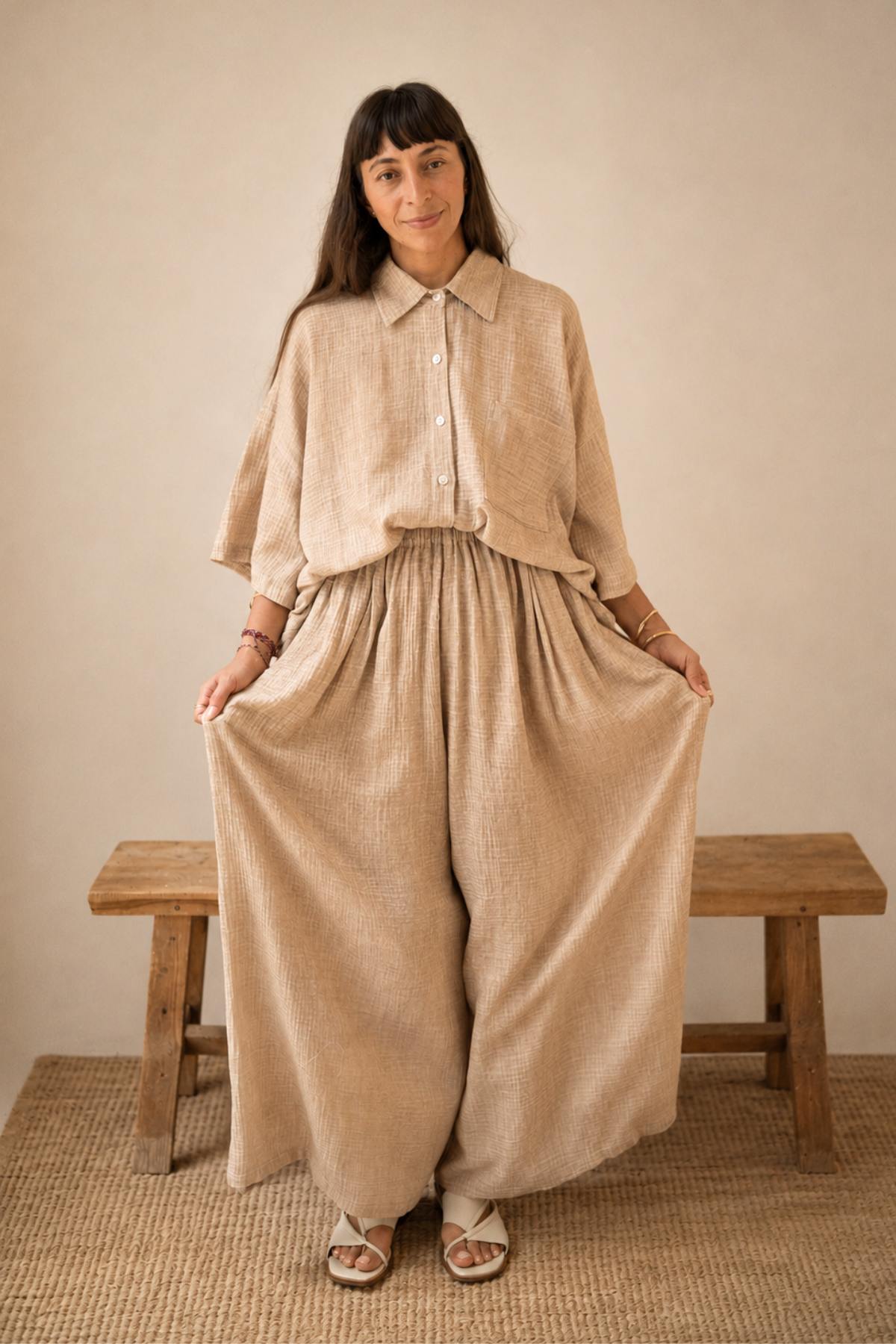
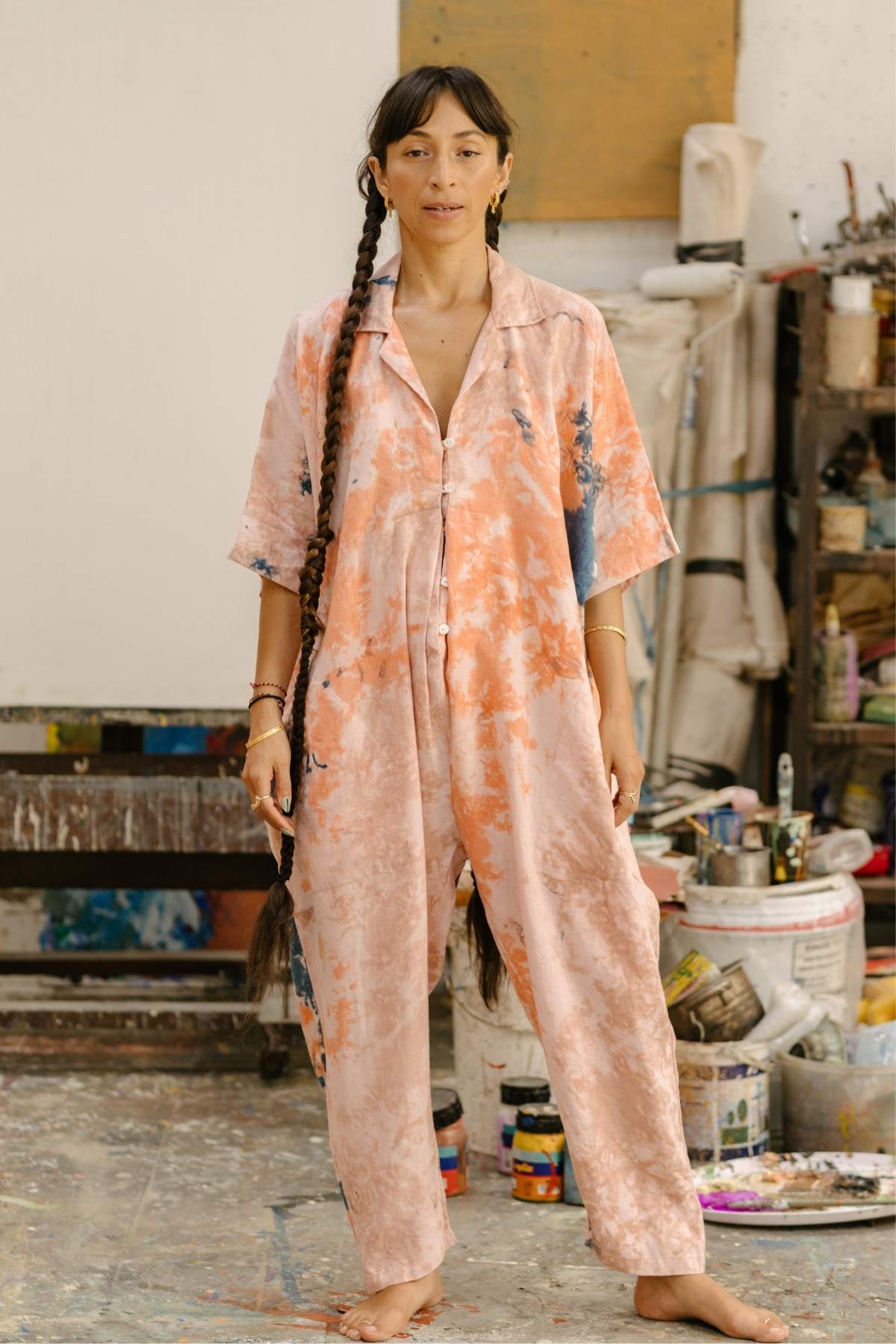
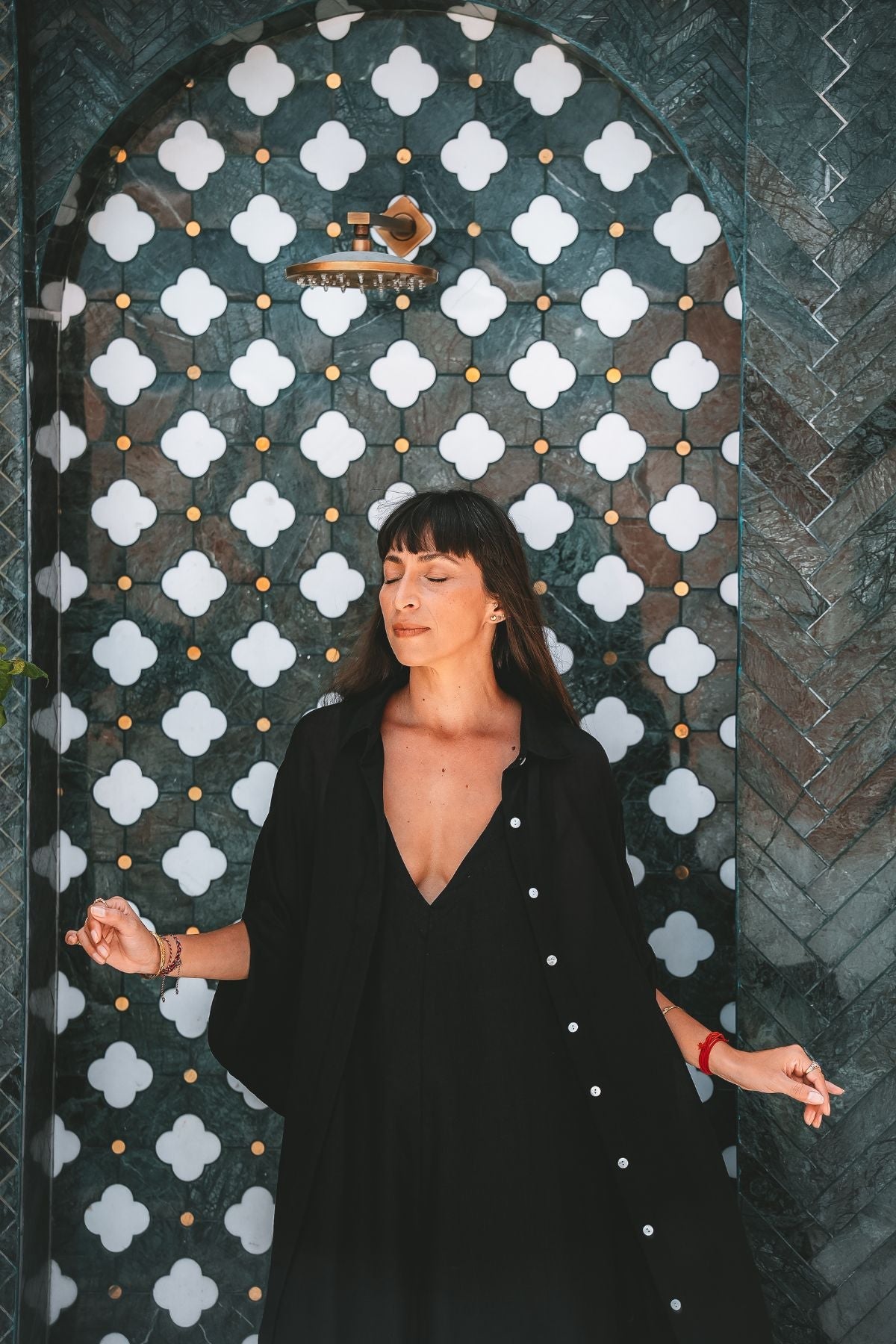
100% natural flax linen. From dreamy bedtime to slow mornings. Worn at the boundary between rest and waking presence.
Frequently asked questions
Is 100% linen worth the higher price compared to linen blends?
Yes. Linen blends, particularly those mixed with polyester or viscose, lose most of the properties that make pure linen valuable. They do not breathe as well, they do not soften with wear in the same way, and synthetic blend components release microplastics. A 100% linen garment that costs more upfront typically outlasts 3 to 5 equivalent blend pieces and performs better throughout its entire life.
Does linen wrinkle, and is that a problem?
Linen wrinkles, and it is not a problem. Wrinkling is a natural property of the flax fibre and part of its character. The lived-in, slightly relaxed texture of linen is widely considered part of its appeal. For a crisper look, a light steam or a damp-cloth press straightens linen quickly. Most women who wear linen regularly come to prefer the way it naturally falls.
Can linen be worn in hot and humid climates?
Linen is ideal for hot and humid climates. Its moisture-wicking and thermoregulatory properties mean it keeps you cooler and drier than almost any alternative. It was the preferred fabric of ancient Egypt for exactly this reason, and it remains the standard choice for tropical and resort wear among those who know their fabrics.
How should I care for 100% linen clothing?
Hand wash or machine wash cold on a gentle cycle, and hang to dry. Avoid the dryer where possible, as repeated high heat will shrink linen over time. Do not wring or twist. Iron or steam while slightly damp if a smooth finish is desired. With this level of care, a well-made linen piece will last a decade or more.
Is linen really antibacterial, or is that a marketing claim?
It is a documented textile property. Linen's antibacterial characteristics come from its natural silica content and the properties of flax fibre, which create an inhospitable environment for bacterial growth. This is why linen stays fresher between washes and why it has been used historically in wound dressings and medical textiles. It is not a claim invented for marketing.
If you are ready to feel these benefits for yourself, our linen dresses and gowns are handmade in Bali from the same 100% natural linen described above.
The Linens Collection
Wear a fabric
that works for you.
Each piece is 100% natural linen, made with intention, designed for a life lived fully.
Shop the CollectionWorn consciously. Made to last.



Leave a comment
This site is protected by hCaptcha and the hCaptcha Privacy Policy and Terms of Service apply.