
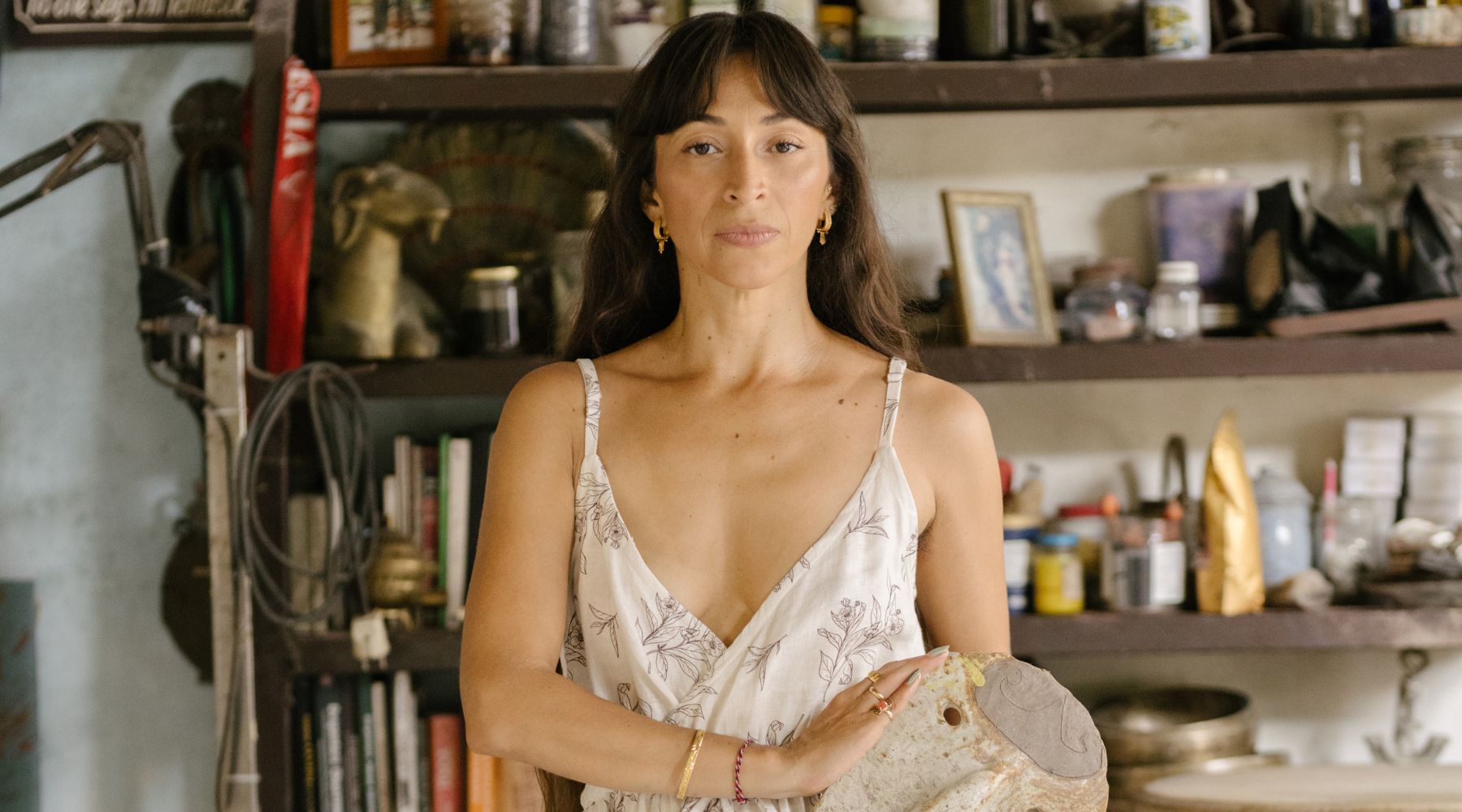
What It Means to Design From Bali
A note from Myrah on the place that has shaped every piece this brand has ever made.
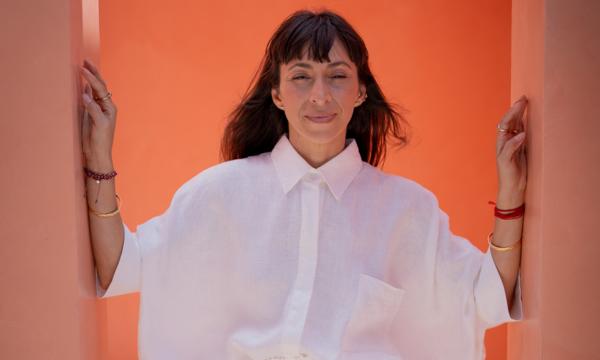
People ask me, often, why Bali.

The honest answer is that I did not choose Bali. Bali chose what I was already trying to become.
I was a Mexican woman, raised in California, married to an Indian man, building a life that did not have a clear template anywhere. I had spent years in the music industry. I had stood on retail floors selling other people's clothing. I had taught yoga on three continents. My husband and I had gathered people around music and breath for seven years through a festival we called Bloom. We had walked through India together. We had sketched four designs on a napkin before a flight home. And then, slowly, the way these things tend to happen, we found ourselves on an island where every doorway has an offering on it. Where every morning begins with smoke. Where the woman selling fruit at the market leaves a small basket of flowers at her stall before she sells anything to anyone.
I had been told, my whole adult life, that work and the sacred lived in two different rooms. In Bali, they live in the same one.
That is what it means to design from here.
The morning offering
Every artisan family who makes a Myrah Penaloza piece begins her day the same way. Before the sewing machine turns on. Before the rice cooks. Before the children leave for school. She makes an offering. A small woven tray of flowers, rice, incense. She places it at the threshold of her home, at the threshold of her workspace, sometimes both. She says a few words. She lights the incense. She continues with her day.
She does not call this ritual. She calls it Tuesday.
I have watched this happen in homes across the island for years now. Not as a tourist. As someone who lives here. And I will tell you what I have understood, slowly: the garment that comes out of that home carries the prayer that started the morning.
This is not metaphor. I mean it literally. When you put on a piece that was made by hands that began the day in reverence, you can feel it. Women tell us this in their reviews, in their emails, on the rare occasions they visit the boutique in Bali. They do not always have words for it. But they know.
That is the difference between fabric and ceremony.
What I learned by playing every role
I did not arrive at design through a fashion school. I arrived through every other door first.
In my twenties, I worked in the music industry. I was on the A&R team at Sony. I was part of the team that found Amy Winehouse. I spent years in rooms where the question was always whether you could feel something the moment it walked in, before there was any evidence at all. That training has never left me. It is the same skill, in a different fabric.
I worked retail floors. I was a buyer. I managed stores. For years I stood on the other side of the counter and watched what women picked up and what they put back down. I learned what it feels like to sell something a woman walks back in to return three days later because it never really fit her, in the body or the life. I learned what it feels like to sell something a woman writes to thank you for, months later, because she wore it on the day everything changed.
That is a different education than fashion school. I am not sure it is a lesser one.
What I studied formally was the body itself. Kinesiology at the University of California, Riverside. The way muscles hold tension. The way the spine carries the day. The way breath moves through the ribs when a woman is finally allowed to exhale. I have logged more than a thousand hours of yoga teacher training in Kundalini, Hatha, and Ashtanga, and I have taught those trainings myself in India, in Canada, in Brazil. I am currently studying with Sadhguru. None of this is on my résumé as a designer. All of it is in every garment I make.
When I cut a sleeve, I am thinking about how the arm actually moves. When I drape a neckline, I am thinking about where a woman holds her grief. When I choose a fabric, I am thinking about what her nervous system needs against her skin on the days she does not have words for what she is carrying.
The industry I was trained for, the one I sold for years before I designed anything, was already moving in the direction of faster, cheaper, more. Collections every two months. Production runs of thousands. Materials that the earth has no idea what to do with after we are done with them. I knew, from the inside of that industry, that I did not have the constitution to make clothing that way. I just did not yet know there was another way.
Bali taught me the other way.
The artisan families we work with do not make a thousand of anything. They make ten. Twelve. Sometimes one. They take the days they need. If there is a ceremony in the village, the work waits. If a grandmother dies, the work waits. If the rains come and the dye cannot set, the work waits.
Slow is not behind. Slow is intentional.
The fashion industry calls this a flaw in the supply chain. I call it the supply chain working correctly.
Botanical dye and the colors that come from the earth
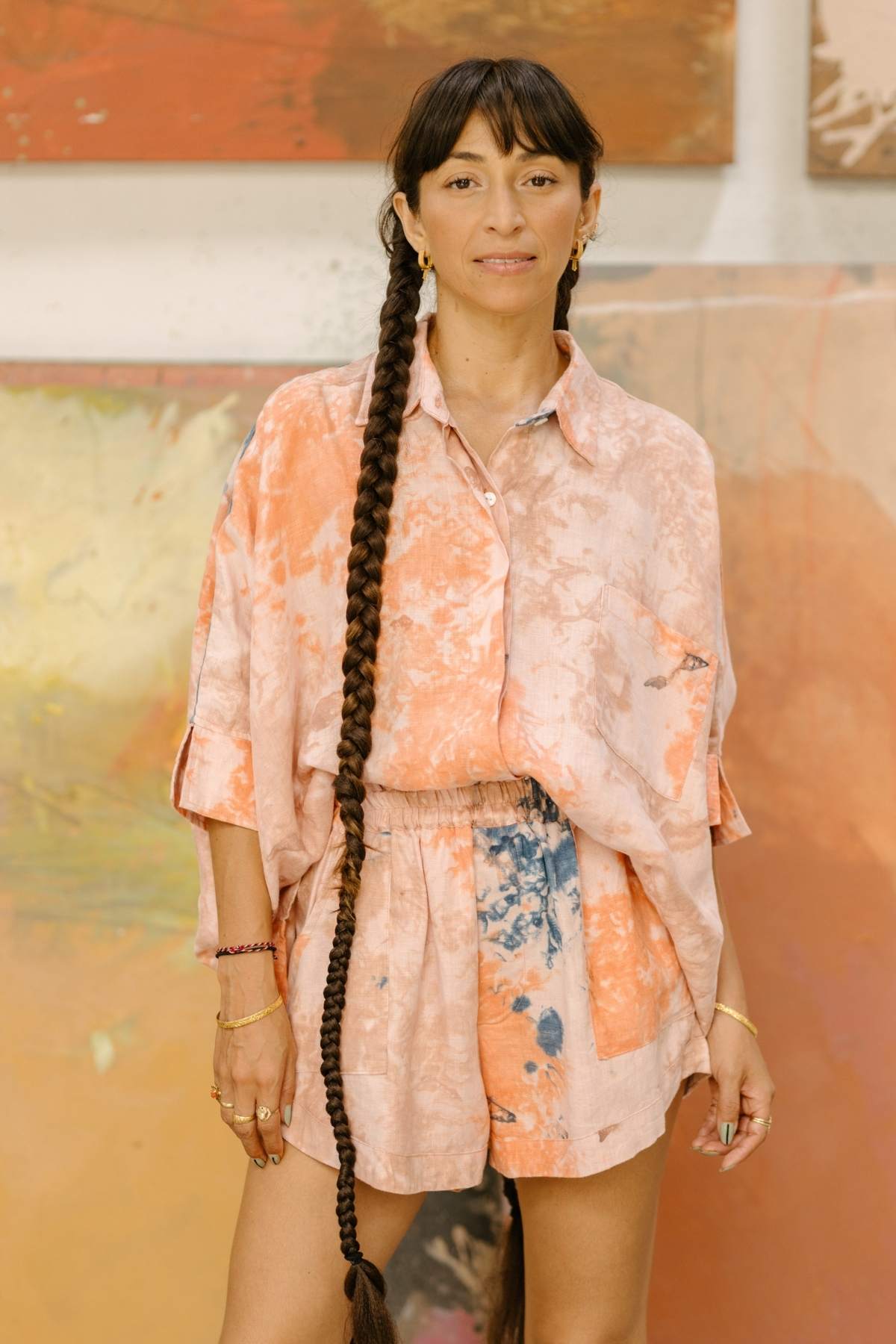
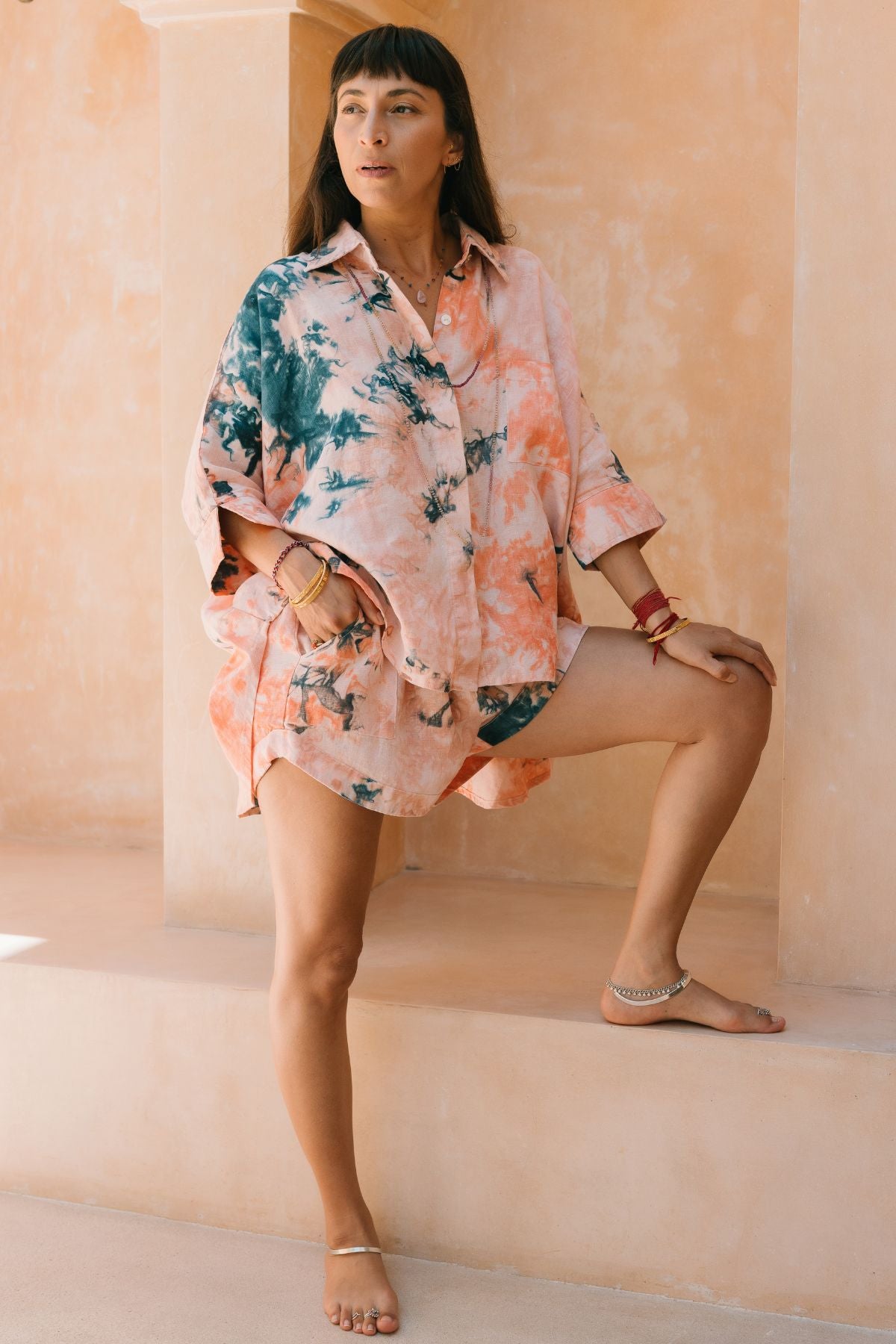
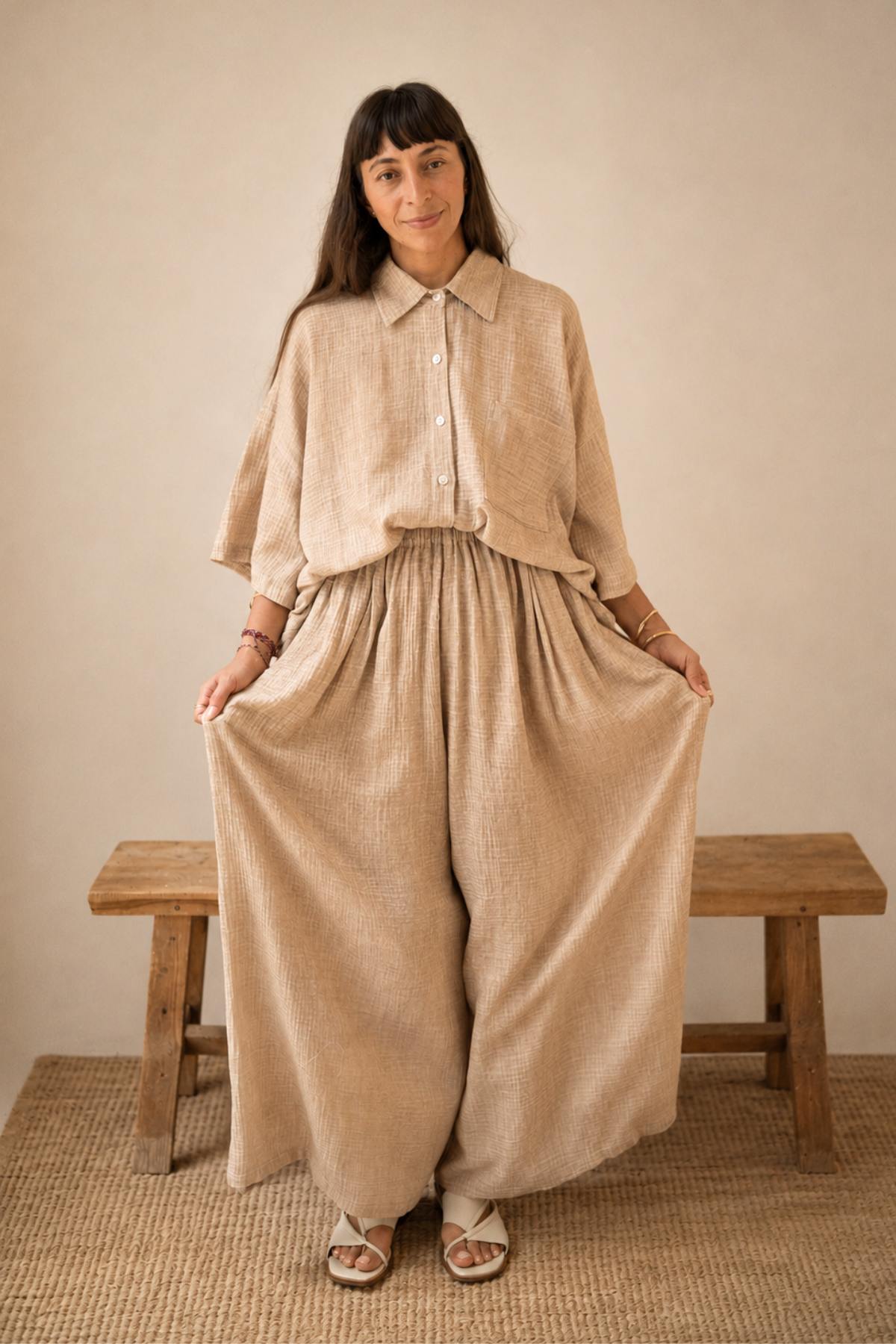
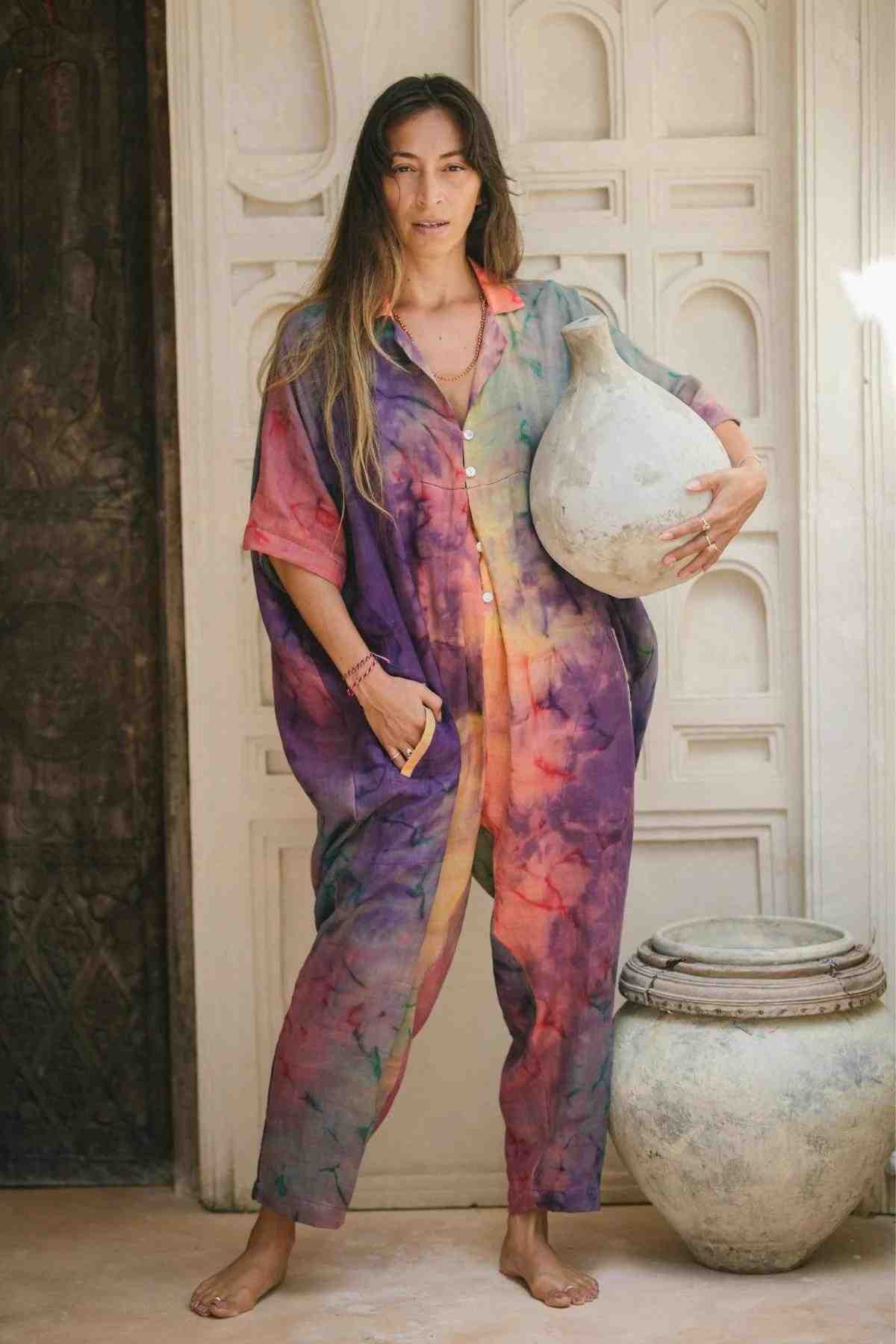
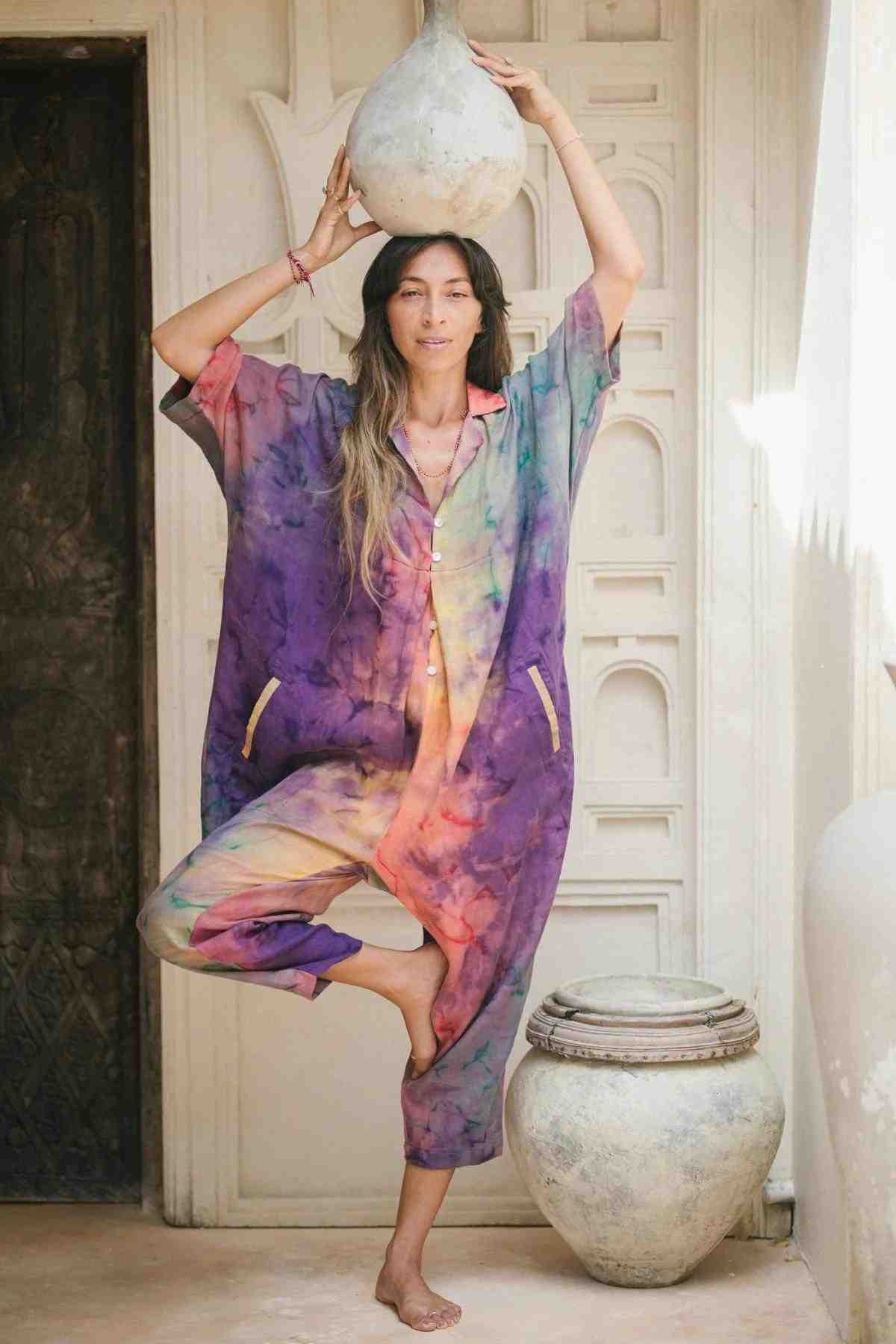
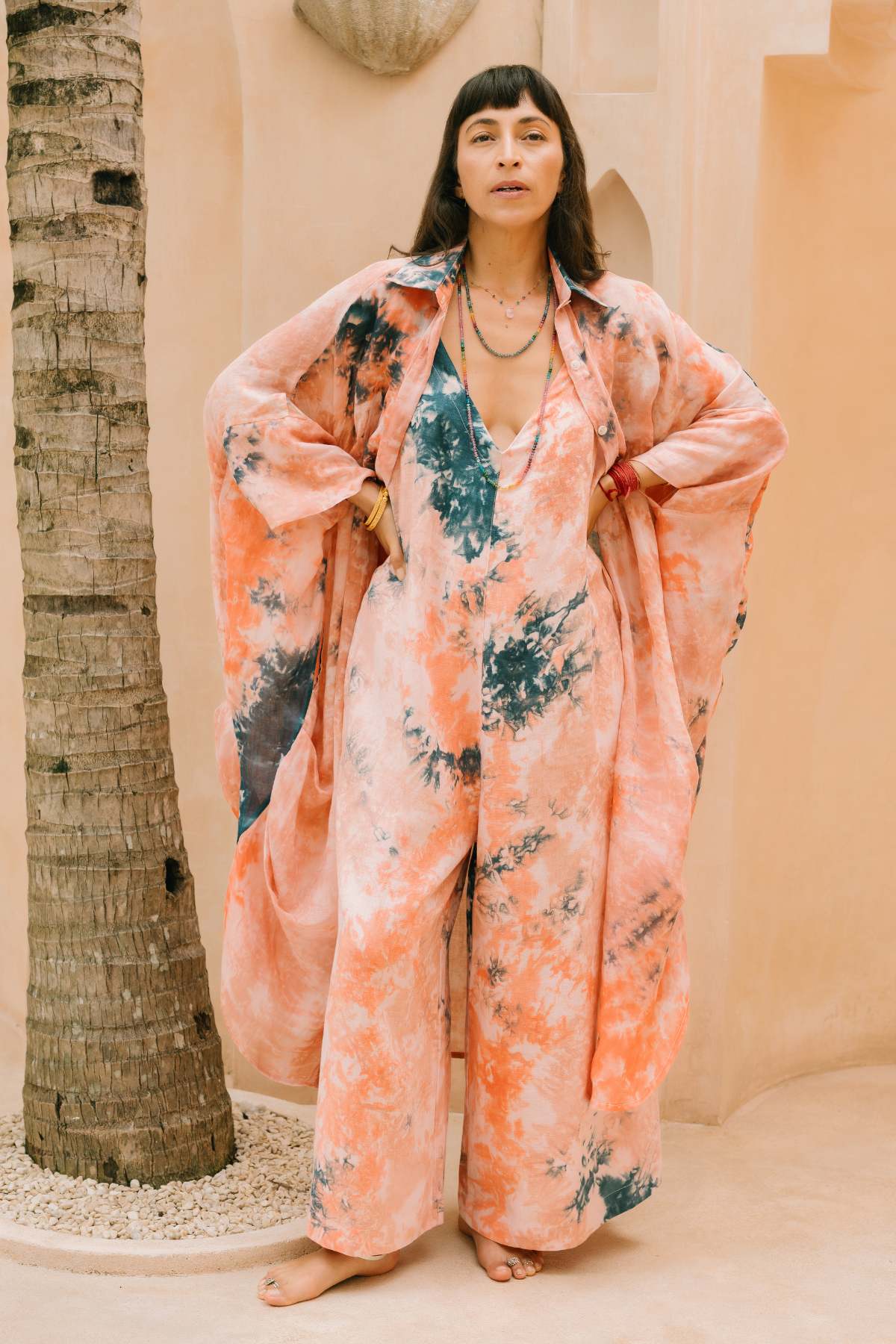
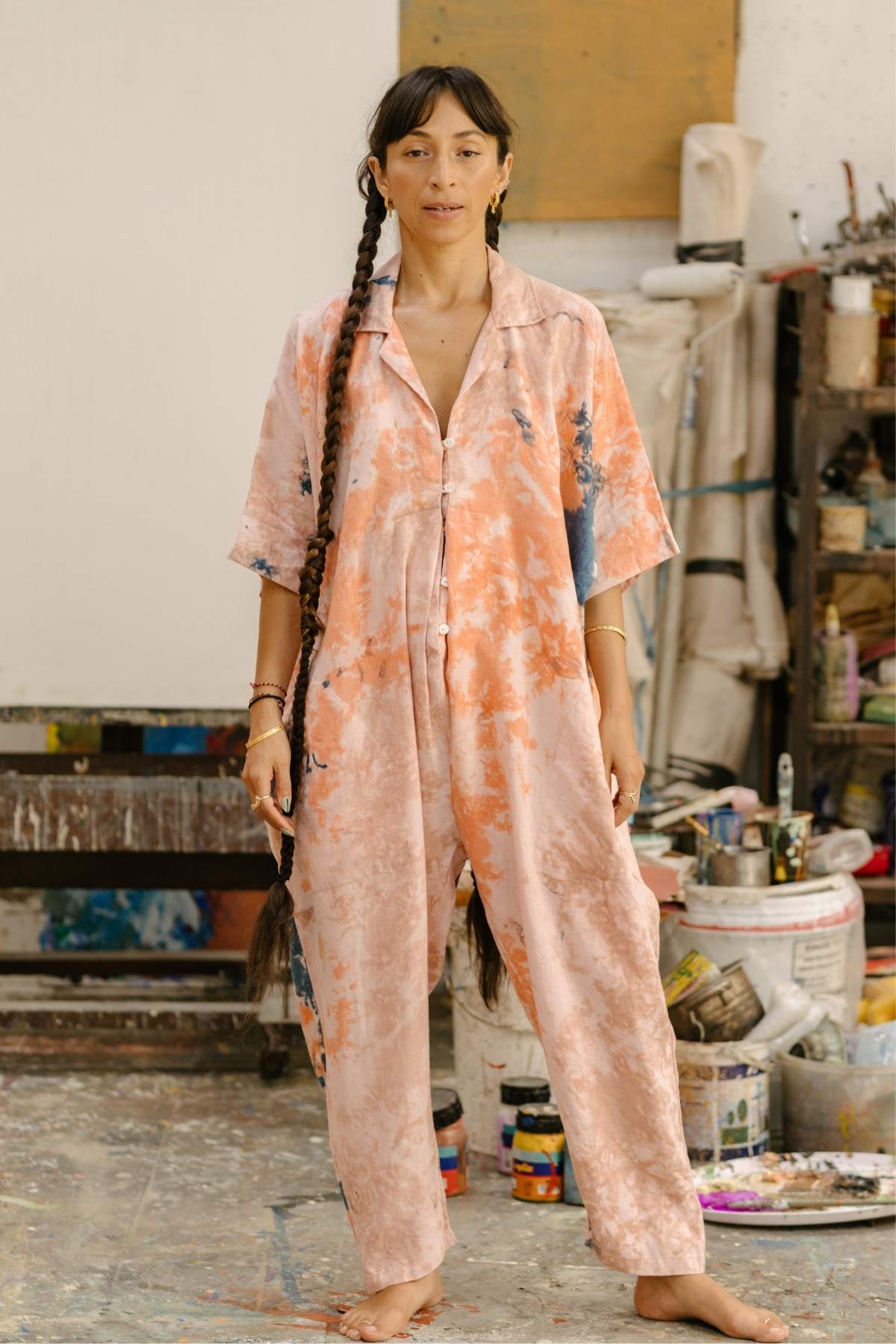
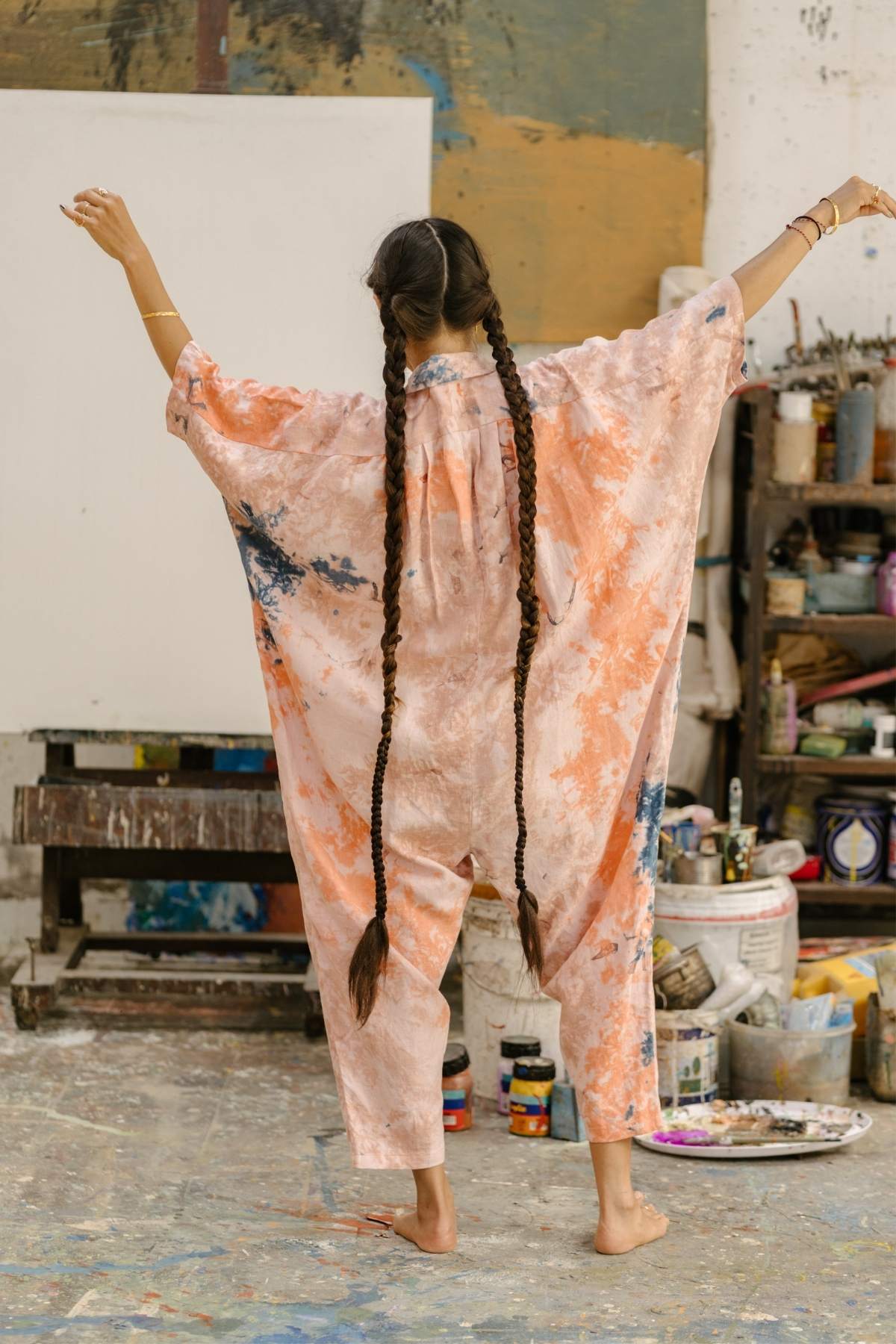
One of the things people notice first when they hold a Myrah Penaloza piece is the color. The Rainbeau pieces. The Turmeric Gold. The Botanical Rose. The Dark Moon. These are not Pantone numbers. They are not synthetic dyes mixed in a lab.
They come from leaves, roots, bark, flowers. Tea. Onion skin. Indigo plant. Madder root. The same plants women in this part of the world have used to color cloth for thousands of years.
The dye master who works on our silks begins his pots the way an artisan begins her morning. Slowly. With patience. With prayer. The temperature has to be right. The water has to be right. The piece has to soak for the right amount of time, in the right phase of the moon for certain colors. There are months we cannot make Rainbeau because the conditions are not right.
A factory could replicate the color in an hour. They cannot replicate what is held inside the color when it has been done this way.
The Mexican daughter and the Indian husband
I carry two ancestries. My mother's side, Mexico. My husband's side, India. Both are cultures that have always understood what the modern world keeps trying to forget. That clothing is ceremony. That what you wear matters. That the hands who made it leave something in it.
In Mexico, my grandmother embroidered. In India, my husband's grandmother wove. In Bali, the women we work with do both, plus the dyeing, plus the cutting, plus the finishing, plus the small prayer at the start of the day.
These three cultures, Mexican, Indian, Balinese, are different. But they agree on the things that matter. They agree that beauty is not decorative. They agree that the maker matters as much as the wearer. They agree that to dress yourself with intention is a kind of devotion.
That agreement is the heart of this brand. It is what makes us unlike anything else in conscious fashion. And it is something I could not have built anywhere else.
What happens to a designer who stays
There is a version of this brand that exists in a different timeline. The version where I stayed in Los Angeles, or moved to New York, and produced at scale, and grew faster, and got picked up by department stores.
That version of the brand would have made more money. It would have made me more visible. It would not have made the clothing I am making now.
Because the clothing I am making now requires a particular kind of attention. The attention you can only give when you are not in a hurry. When you live in a place that does not value speed. When you know the woman whose hands made the piece by her first name, and her children's names, and what village her mother was born in.
Bali holds me to a standard I would not be able to hold myself to anywhere else.
The slower I make things, the better they get. The better they get, the more the right woman finds them. The more the right woman finds them, the less I need to chase anyone at all.
That is the only growth strategy this brand has ever needed.
A piece for this threshold
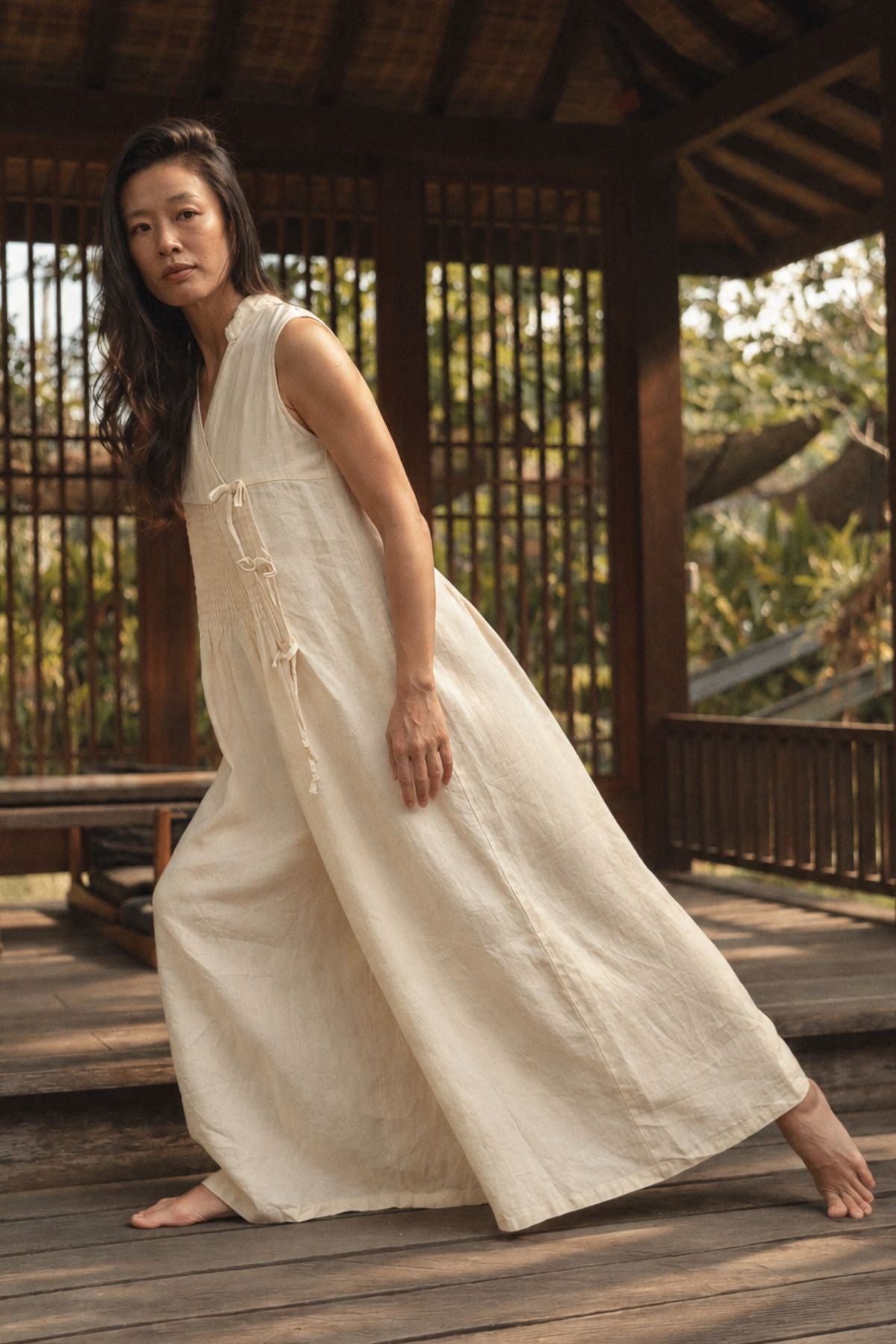
The first garment I ever designed was a gown. Long, soft, ceremonial. We called it the Kundalini Gown, and the very first one was worn on stage by Marianne Williamson at a Bloom festival my husband and I were hosting in Canada. That was the beginning of everything.
The gown has gone through many lives since then. It has been made in bamboo rayon, in linen, in luxe rayon, in cotton. It has been worn at weddings, at births, at funerals, at first nights and last nights and the long ordinary nights in between. Right now, the long gown is resting. We are sourcing new fabrics for it, slowly, because the only way to bring it back is to bring it back right. The next version will be the most exciting one yet.
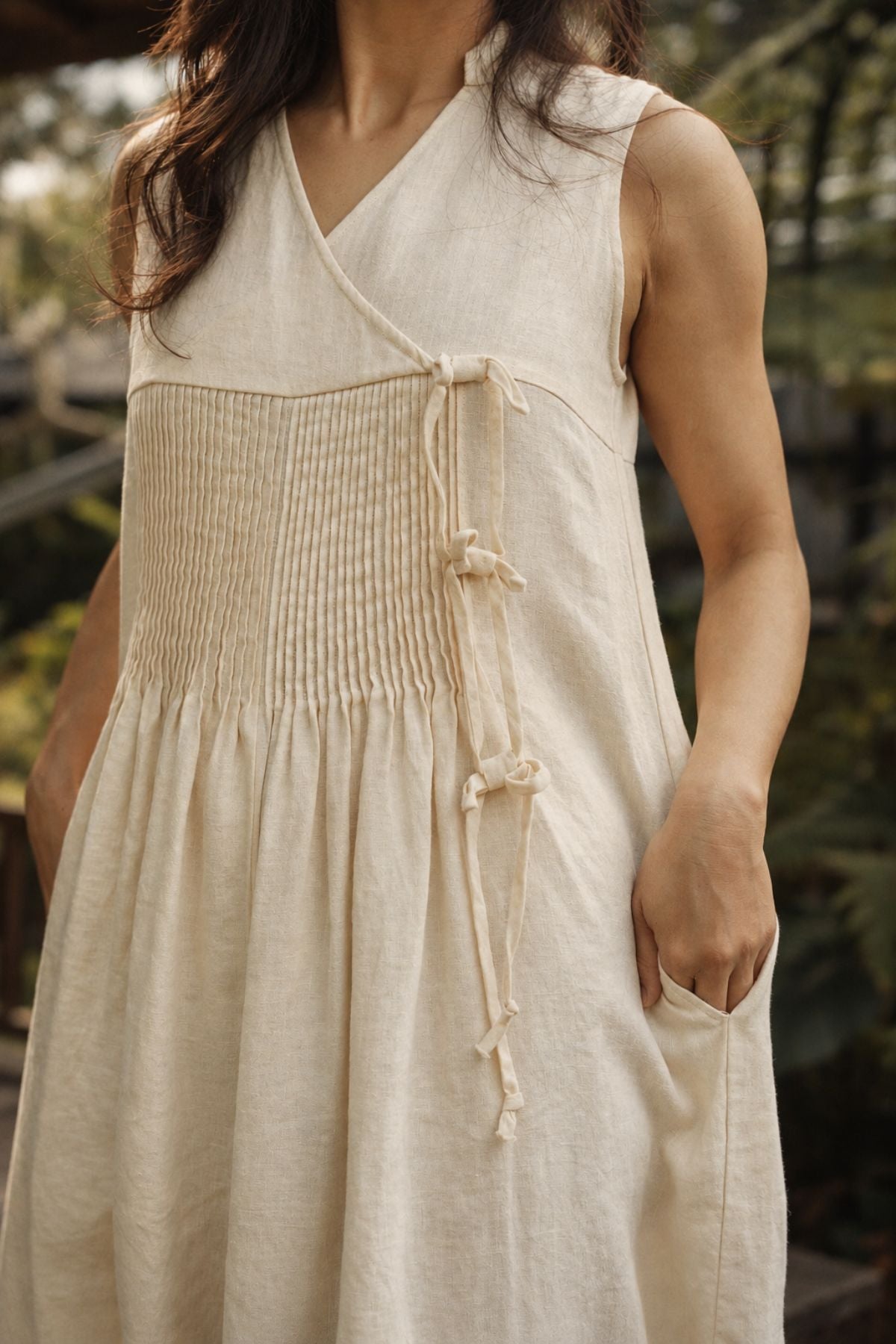
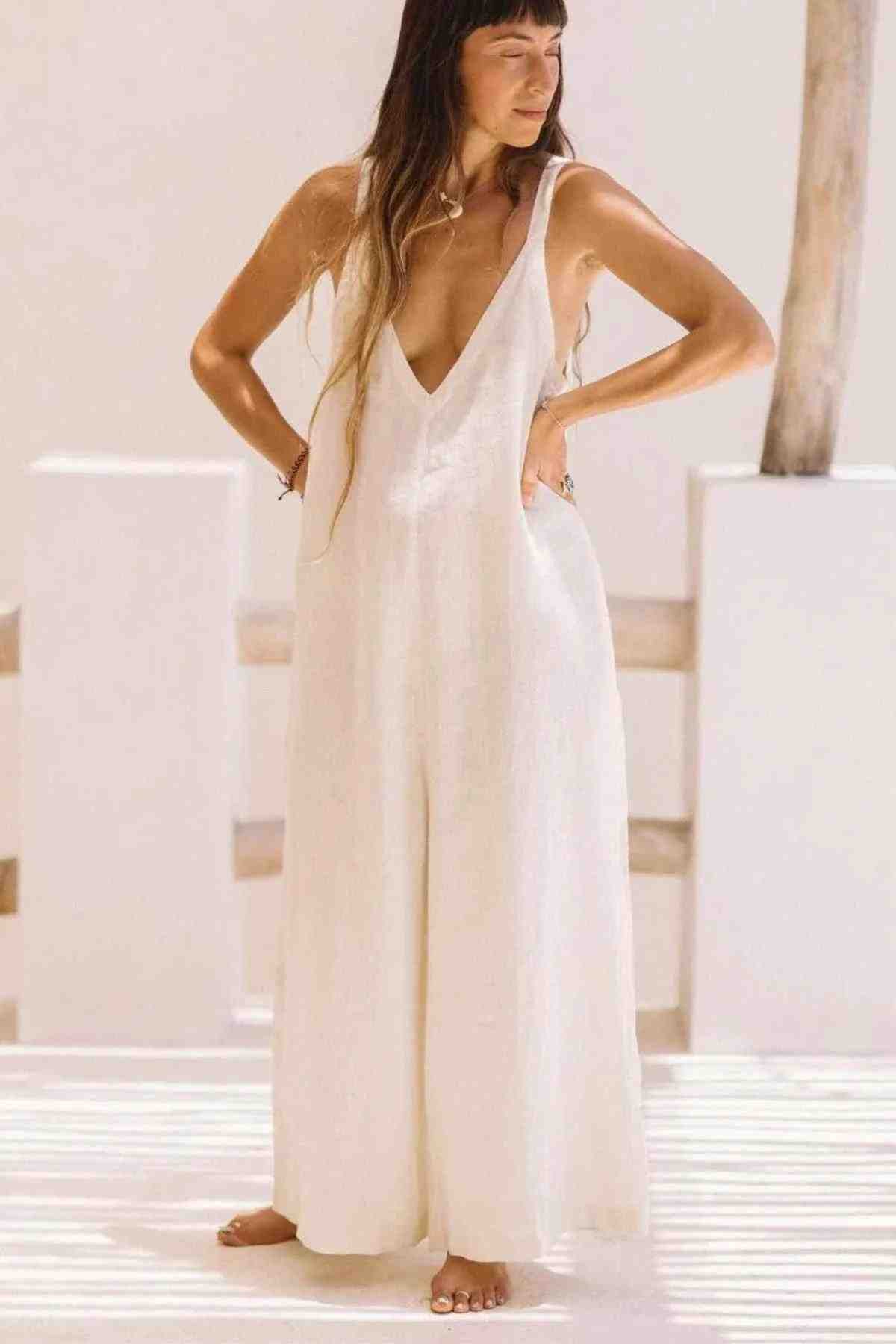
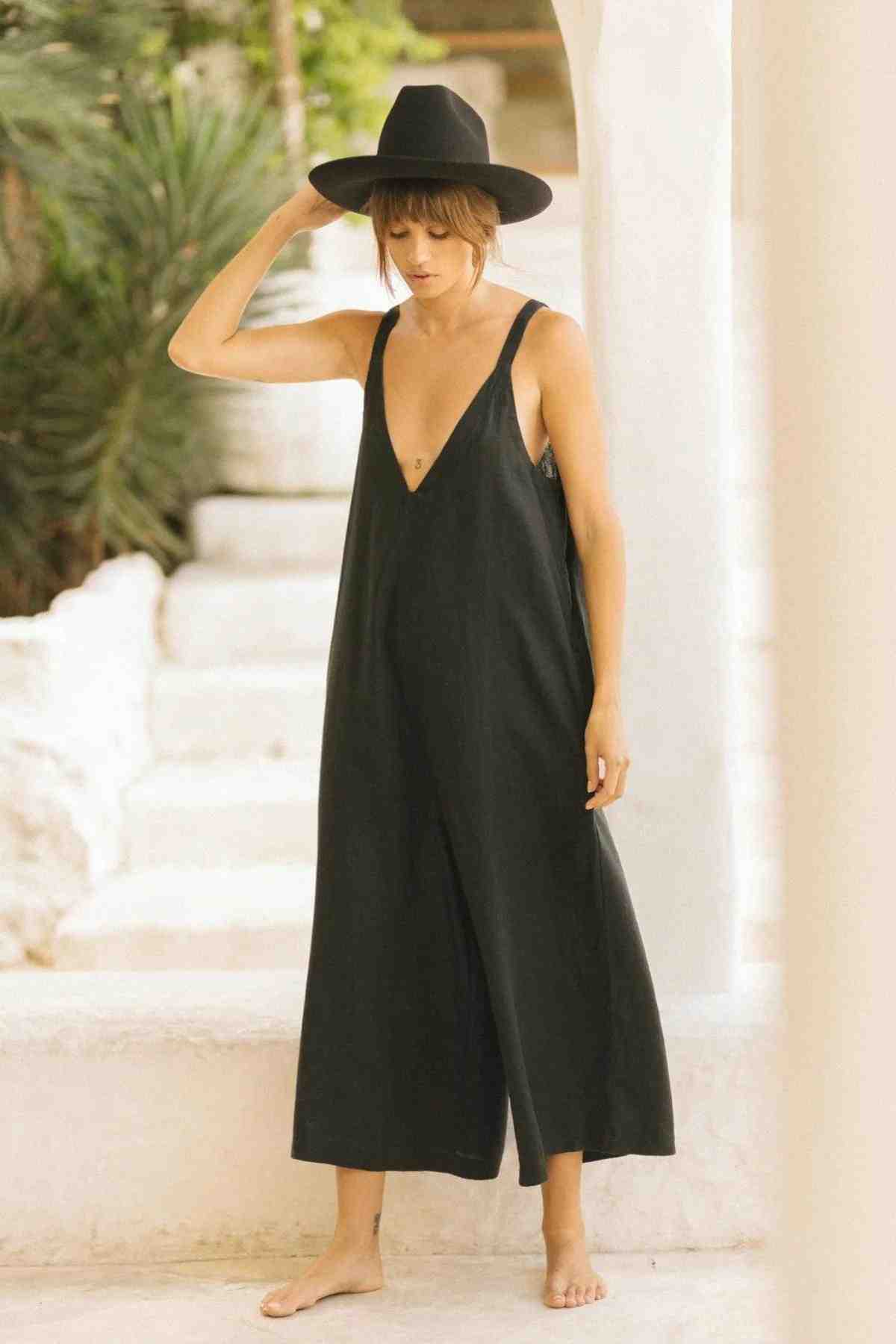
What lives on the site today is the Kundalini Gown Playsuit Edition. The same lineage, the same silhouette where it counts, made shorter so the woman who needs to move through her day can still move through her day. Bamboo rayon. Off White or Plum. Hand-finished in Bali in small editions.
It is the closest thing in our collection to the piece that started everything.
Shop the Kundalini Gown Playsuit Edition →

The Muse-Letter
Dress for the woman you're becoming.
Every week from Bali, a letter on the season, the moon, the practice of returning to yourself. Sometimes a poem. Sometimes a piece I want you to see first.
Unsubscribe any time. No spam, ever.
With love from Bali,
Myrah



Leave a comment
This site is protected by hCaptcha and the hCaptcha Privacy Policy and Terms of Service apply.