


linen only gets better
there is a linen shirt i have been wearing for six years. it is softer now than the day it arrived.

That is the thing about linen that no one tells you when you first buy it. It is not a fabric you love immediately. It is a fabric you grow into. It rewards patience and very specific care, and then, quietly, it becomes the thing you reach for before everything else.
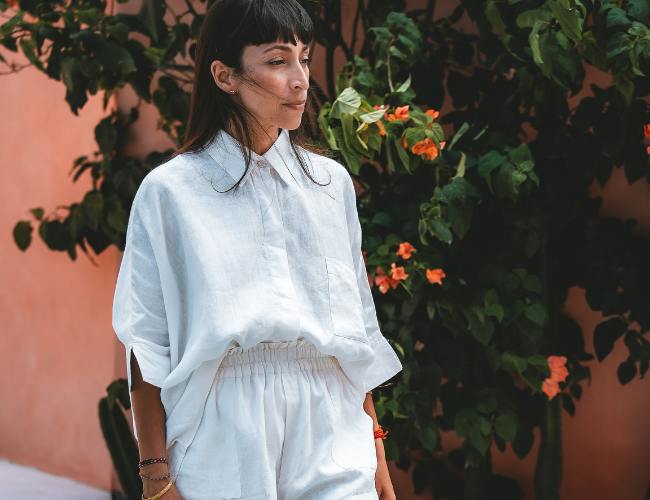
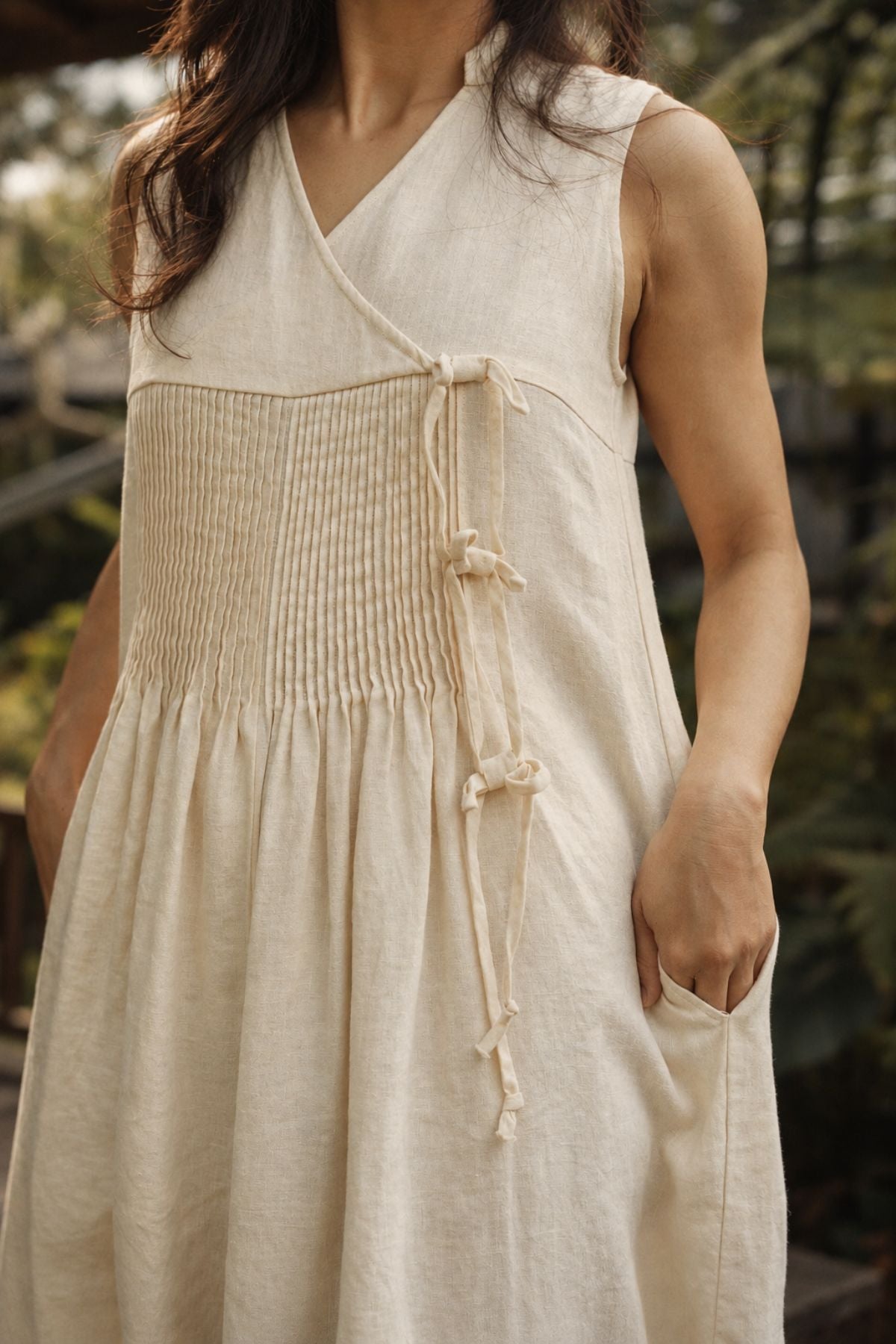
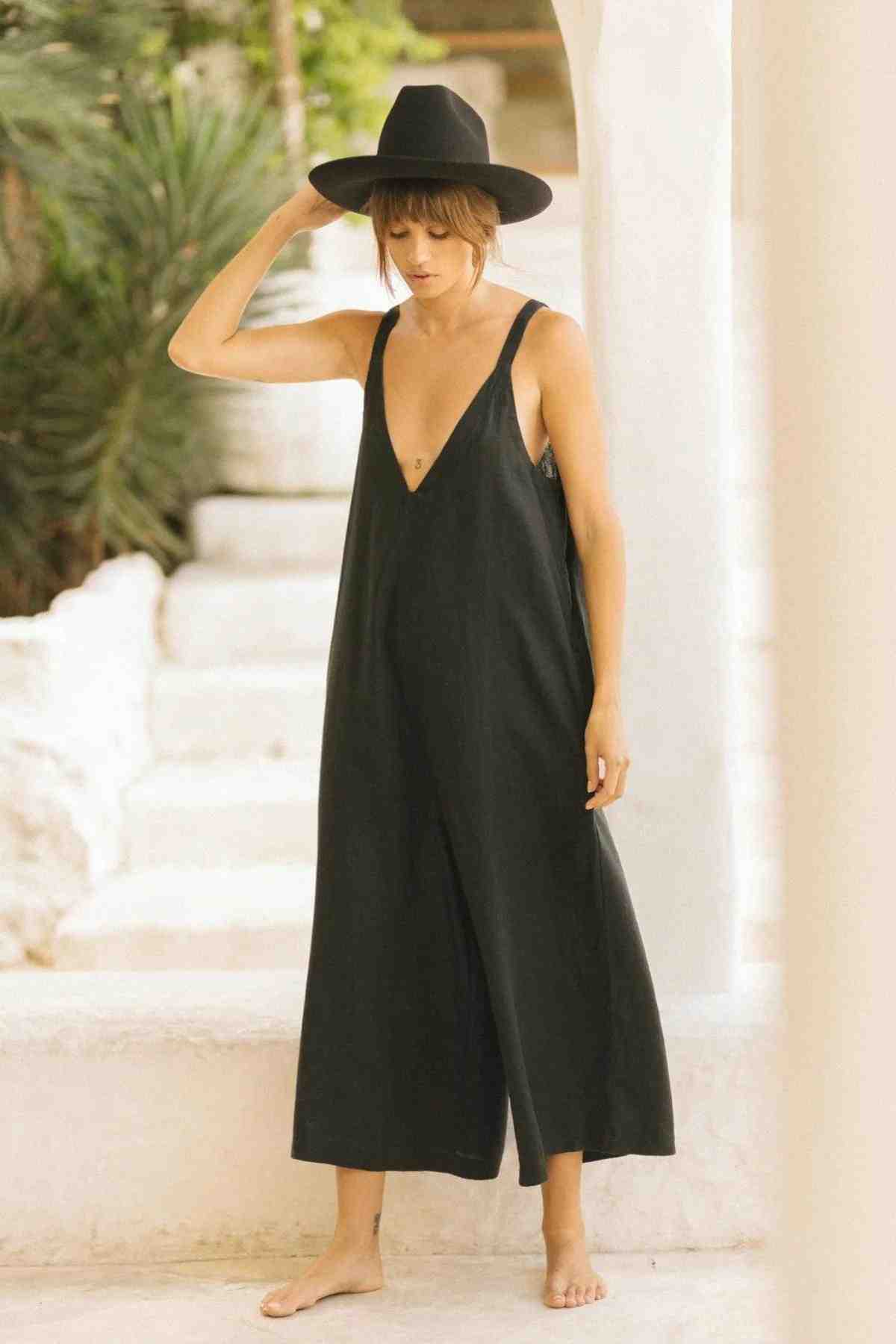
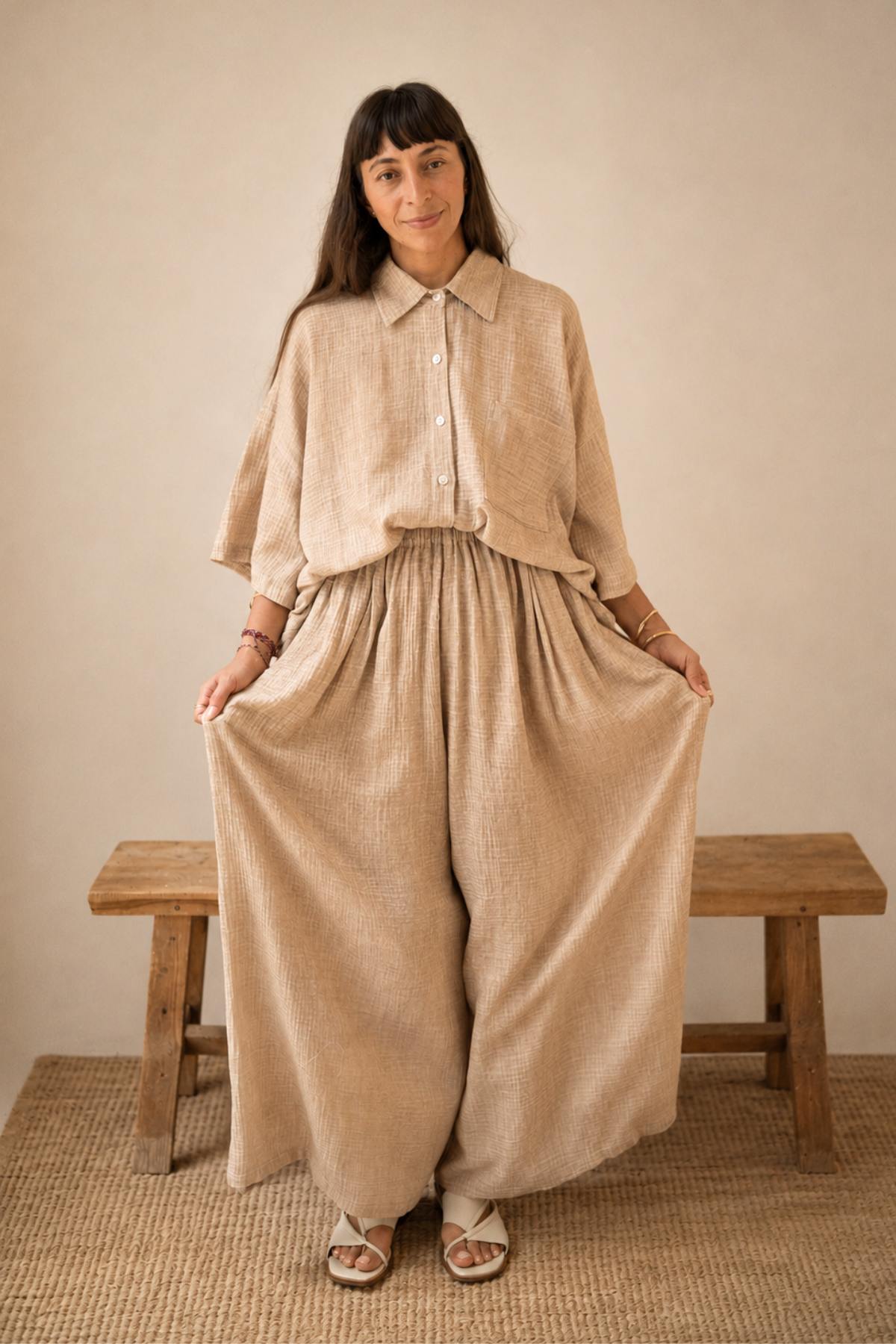
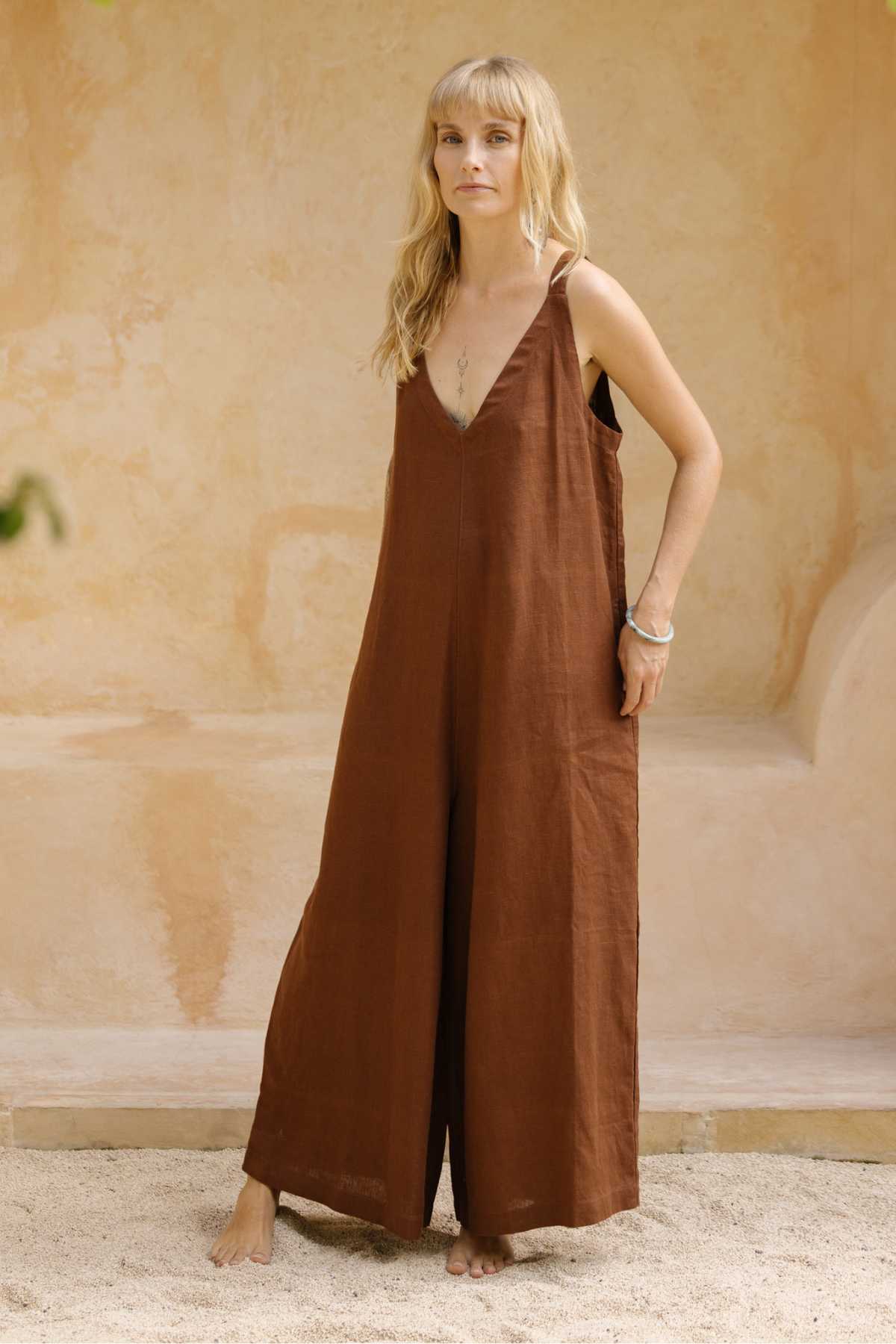
We make almost everything at Myrah Penaloza in linen. It is the fabric we keep returning to not just for how it looks, but for how it lives. And the most common question we hear, after someone receives their first piece, is some version of: how do I keep this as beautiful as it arrived?
The answer is simpler than you think.
What makes linen different from everything else in your wardrobe
Linen is made from the flax plant. The fibers are long, hollow, and naturally moisture-wicking, which is why linen keeps you cool in heat that would make cotton cling to you. It is also one of the strongest natural fibers, which is why a well-cared-for linen piece lasts years. Decades, even.
Unlike cotton, which softens quickly and stays that way, linen has a longer relationship with its wearer. New linen can feel slightly crisp. Worn and washed linen becomes something else entirely. The texture deepens. The hand becomes more supple. The fabric starts to feel like it was made for your body specifically, because in a sense, it has been shaped by it.
The rule that matters most: cold, always cold
If you do nothing else on this list, do this: wash your linen cold. Hot water is the single most damaging thing you can put a linen garment through. It tightens the fibers, causes shrinkage, and weakens the weave over time. Cold water cleans just as effectively without any of the damage.
Use a gentle cycle if you are machine washing, or a brief hand wash in cold water if you prefer. A small amount of mild detergent is all you need. No bleach, no fabric softener. Fabric softeners coat the fibers and actually interfere with linen's natural ability to breathe.
Hang dry, in the shade
Linen and the tumble dryer are not friends. The heat and tumbling action break down the fibers and cause the kind of wear that shortens a garment's life significantly. Hang your linen to dry instead, in the shade if possible.
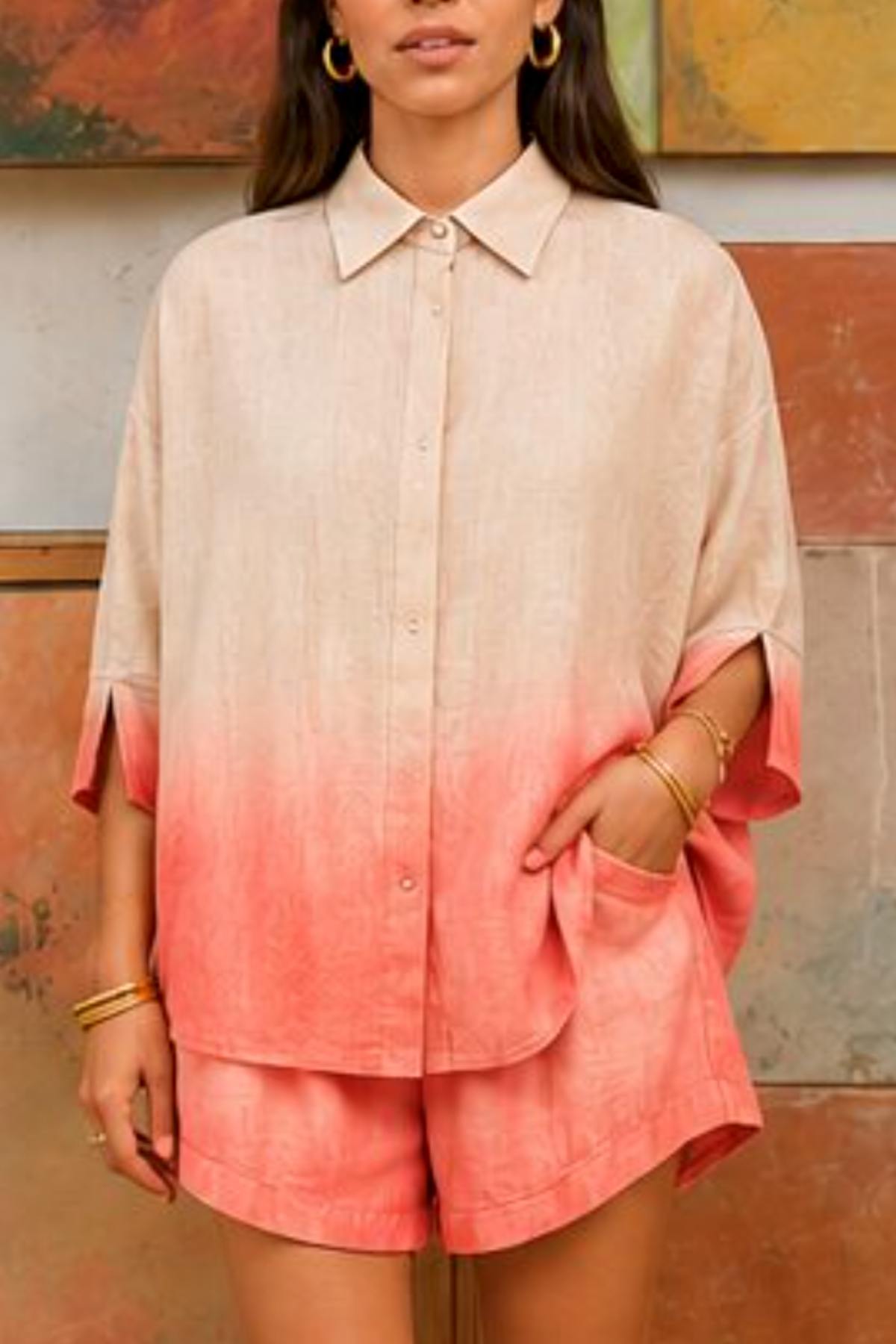
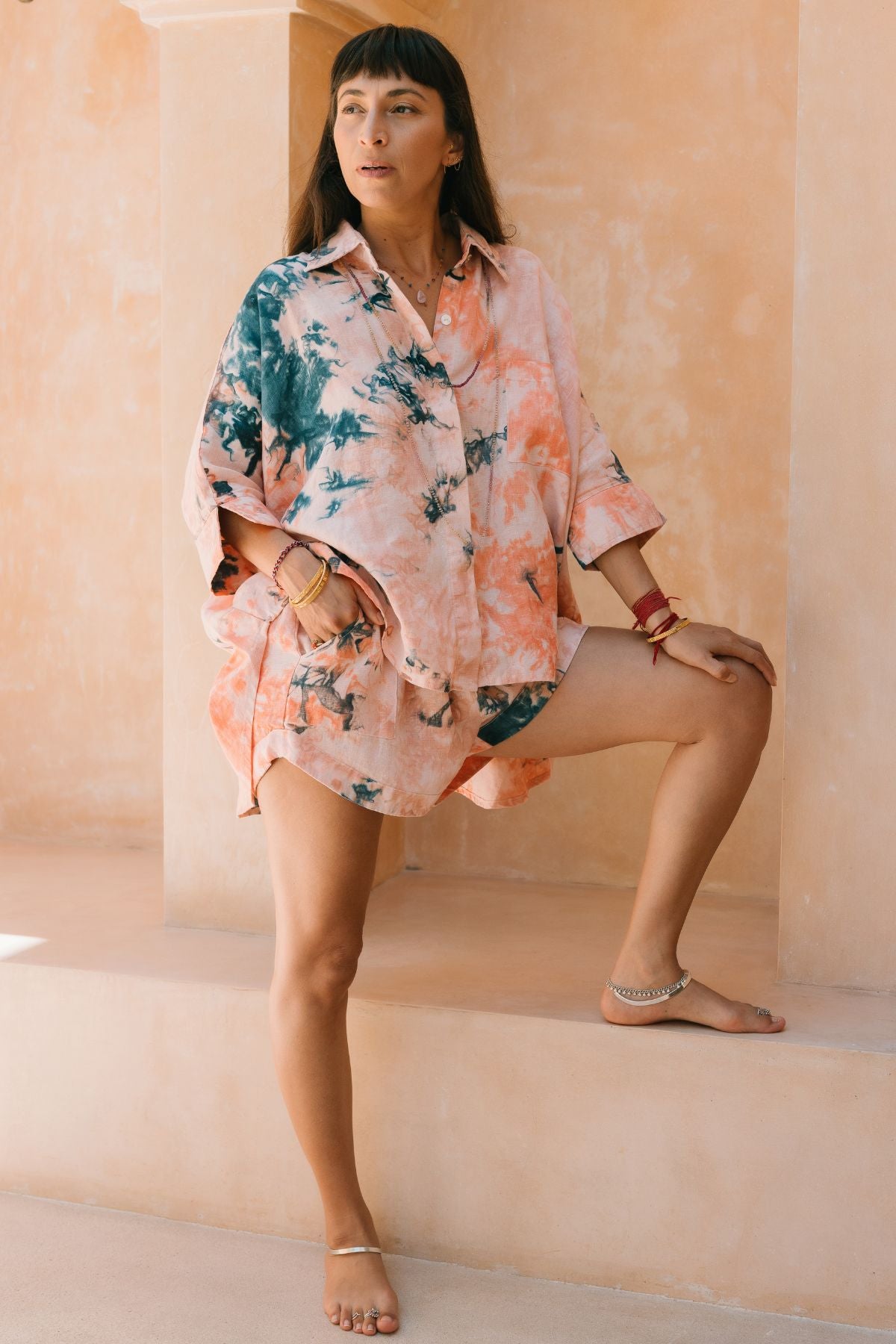
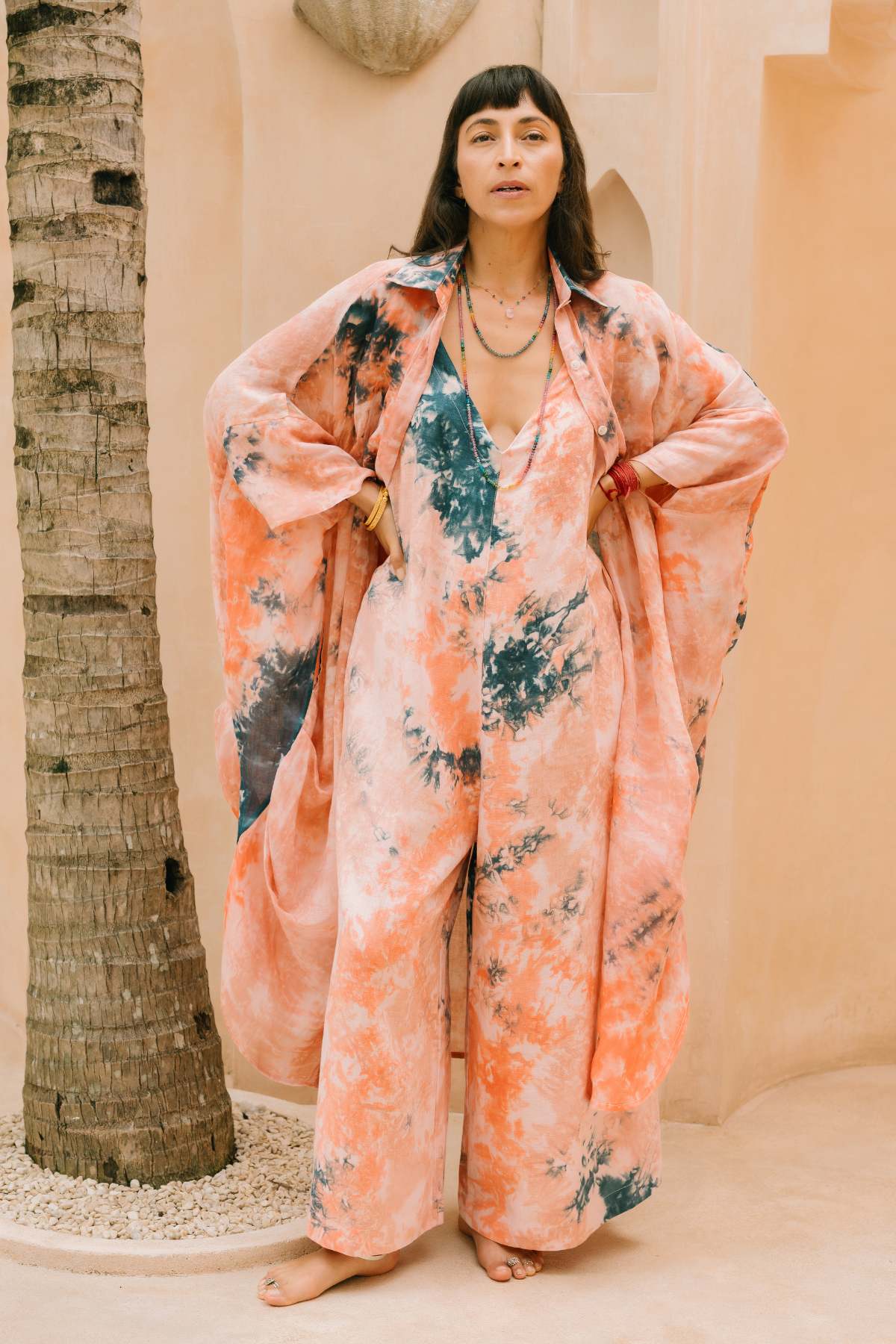
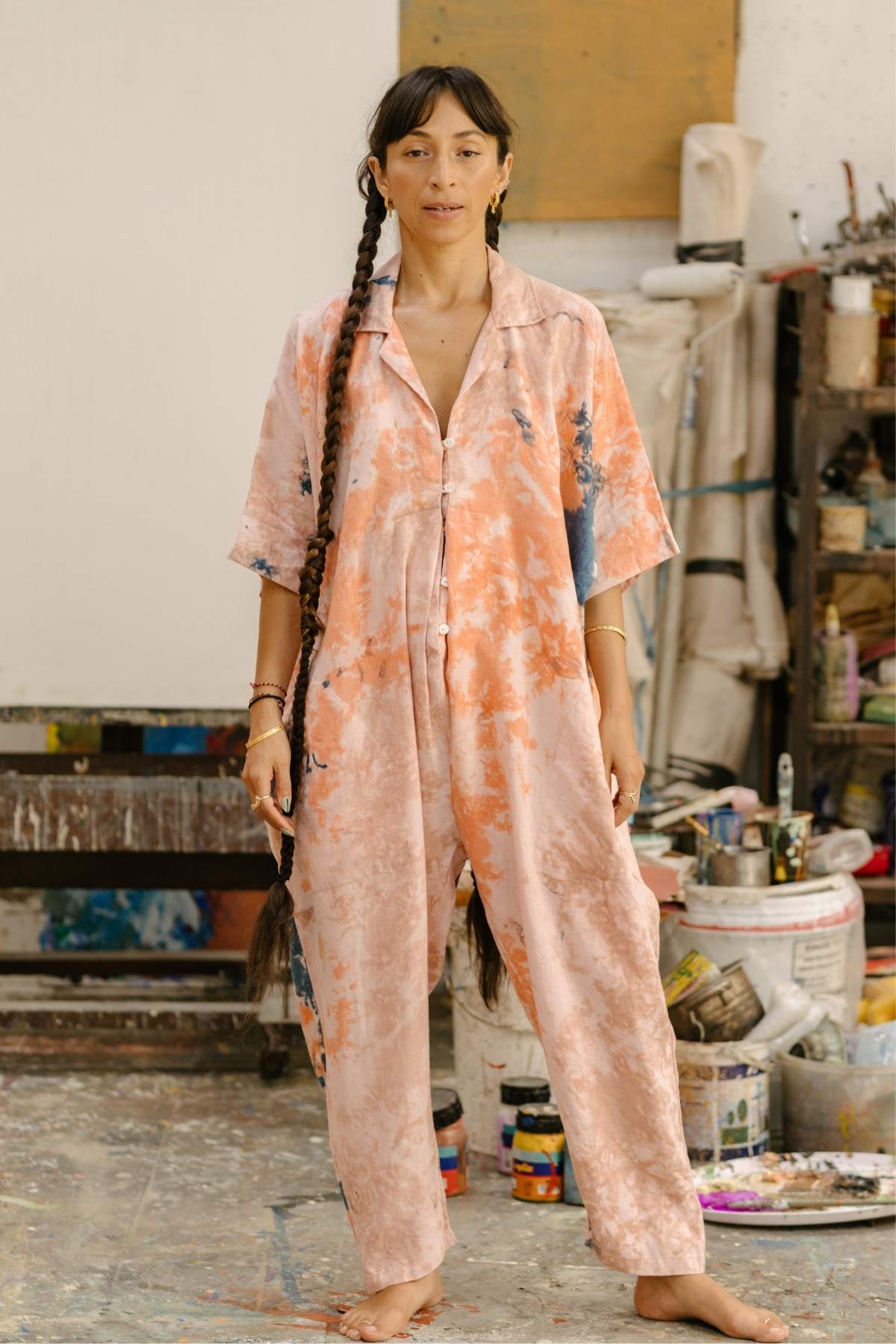
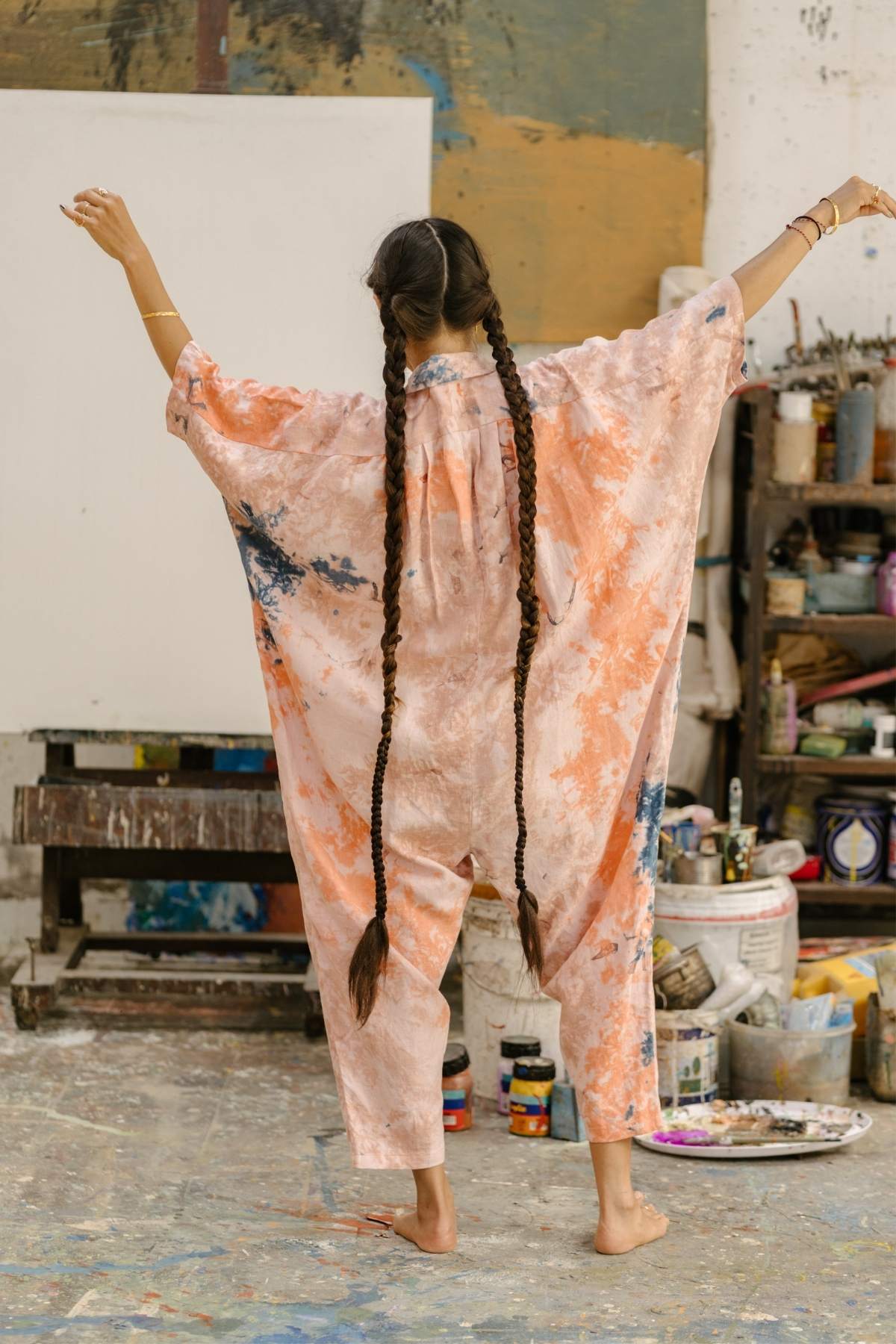
Direct sun will fade color over time, especially on botanically-dyed pieces like our Rainbeau colorway. Shade drying is gentle and still quick. Linen releases water efficiently and dries faster than you expect, even in cooler climates. In Bali, a linen piece is dry in an hour. Wherever you are, it will not take long.
About the crinkle
People ask us about this constantly. Is linen supposed to look wrinkled? Is mine damaged? Should I be ironing it?
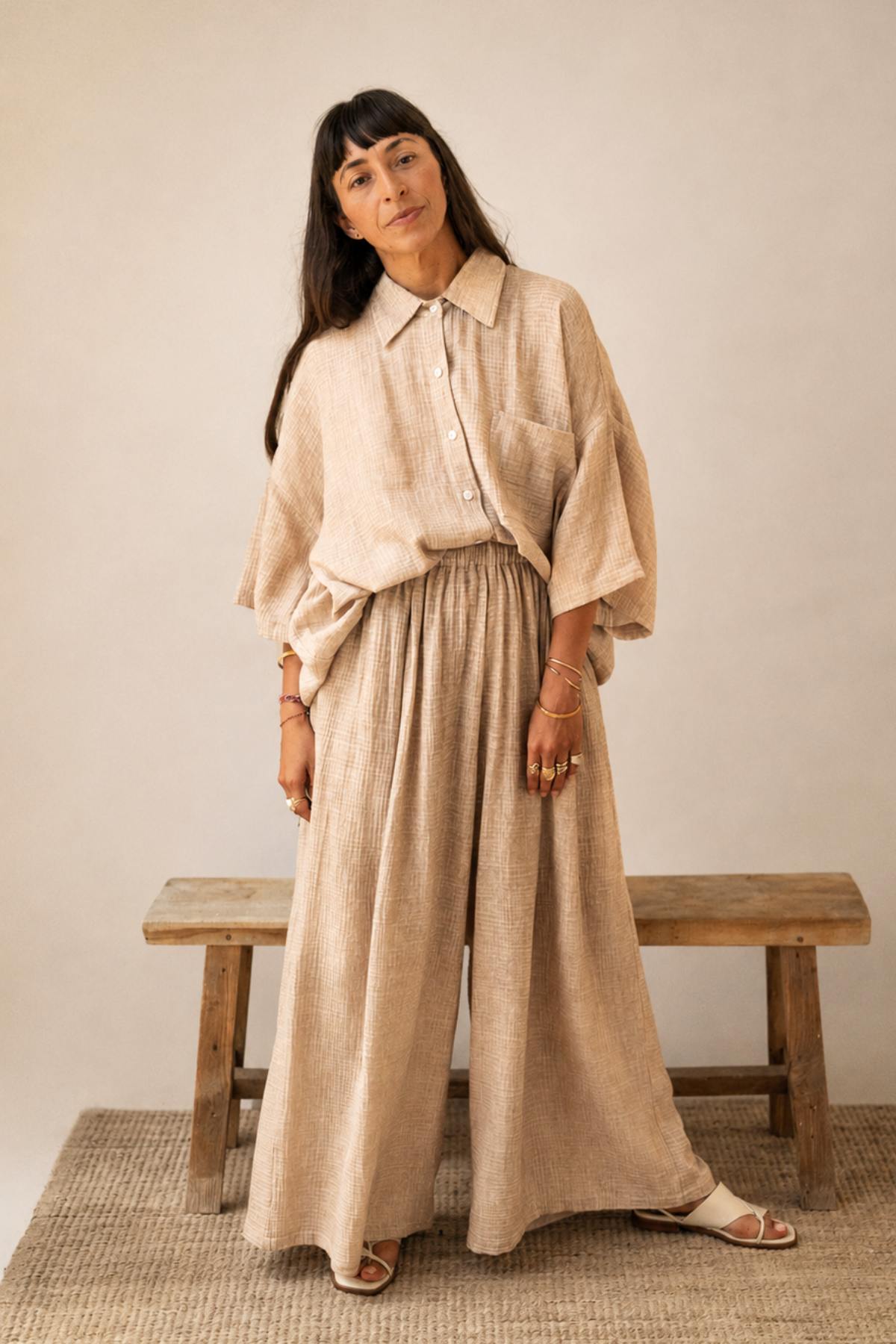
The answer is: linen crinkles. That is the fabric breathing. The natural texture of linen relaxes and settles as you wear it, and this is not a flaw to be corrected. It is the fabric doing exactly what it was designed to do.
If you prefer a smoother look, iron on a medium-heat setting while the fabric is still slightly damp, or use a steam iron on dry fabric. But we rarely do. There is something about the relaxed texture of worn linen that feels right. Like it has been lived in. Because it has.
What to do if your linen feels stiff
Sometimes, especially after the first few washes, linen can feel slightly crisp. This is normal. Just wear it. Body heat and movement relax the fabric within minutes, and each subsequent wash softens it further.
If a piece feels particularly stiff after drying, you can tumble it briefly on a no-heat or air setting to loosen the fibers. No heat, just movement, for a few minutes. That is the one exception to the no-dryer rule.
How linen changes with time
After six months of wearing and washing a linen piece, it is different from when it arrived. Not worse. Better. The color has settled. The texture has softened into something that feels like it was always yours. The garment carries the story of where it has been.
Our botanical-dyed pieces shift particularly beautifully over time. The Rainbeau tones deepen and warm. A shade that started vivid becomes something more intimate. This is not a sign of wear. It is the dye and the fabric finding their final relationship with each other, and with you.
Frequently asked questions
Does linen shrink in the wash?
In hot water, yes, linen can shrink. In cold water, the shrinkage is minimal. This is why cold wash is the most important rule. If your garment has been pre-washed, as ours have, the risk is even lower.
Can I put linen in the dryer?
Not on heat. Heat breaks down linen fibers and shortens the garment's life. If you need to loosen stiffness after hang drying, a brief tumble on an air-only setting with no heat is fine. Otherwise, hang dry in the shade.
How do I remove wrinkles from linen?
A medium-heat iron while the fabric is still slightly damp works well. A steam iron on dry fabric also works. Or simply wear the garment for a few minutes. Body heat and movement relax linen quickly.
How often should I wash linen clothing?
Less than you might think. Linen is naturally breathable and does not trap odor the way synthetic fibers do. Air your linen pieces out between wears and wash them when they actually need it. Over-washing shortens any garment's life.
How do I care for botanical-dyed linen specifically?
The same rules apply: cold wash, gentle cycle, hang dry in shade. The shade drying is especially important for botanical dyes, which can fade in prolonged direct sunlight. Your piece will shift and deepen naturally over time. This is part of what makes it yours.
With love from Bali,
Myrah

|
A Piece for This Threshold The Solana Suka Set. Shop the Solana Suka Set |
|
The Muse-Letter Dress for the woman you're becoming. Join the Muse-LetterUnsubscribe any time. No spam, ever. |









Leave a comment
This site is protected by hCaptcha and the hCaptcha Privacy Policy and Terms of Service apply.