
From East LA to Bali: The Story Behind the Clothing
Before the linen. Before Bali. Before the artisan families and the botanical dyes and the thirty households that this brand now sustains. There was a girl from East Los Angeles who was always building something. She just hadn't found the container yet.

This is a story we haven't told in full before. The chapters that happened before any of the chapters you know. We're telling it now because we think it matters. Not as backstory. As context for what this brand actually is, and why the phrase life is ceremony is not something someone wrote in a meeting. It is something Myrah practiced for years before it became the spine of everything we make.
East LA, where everything begins
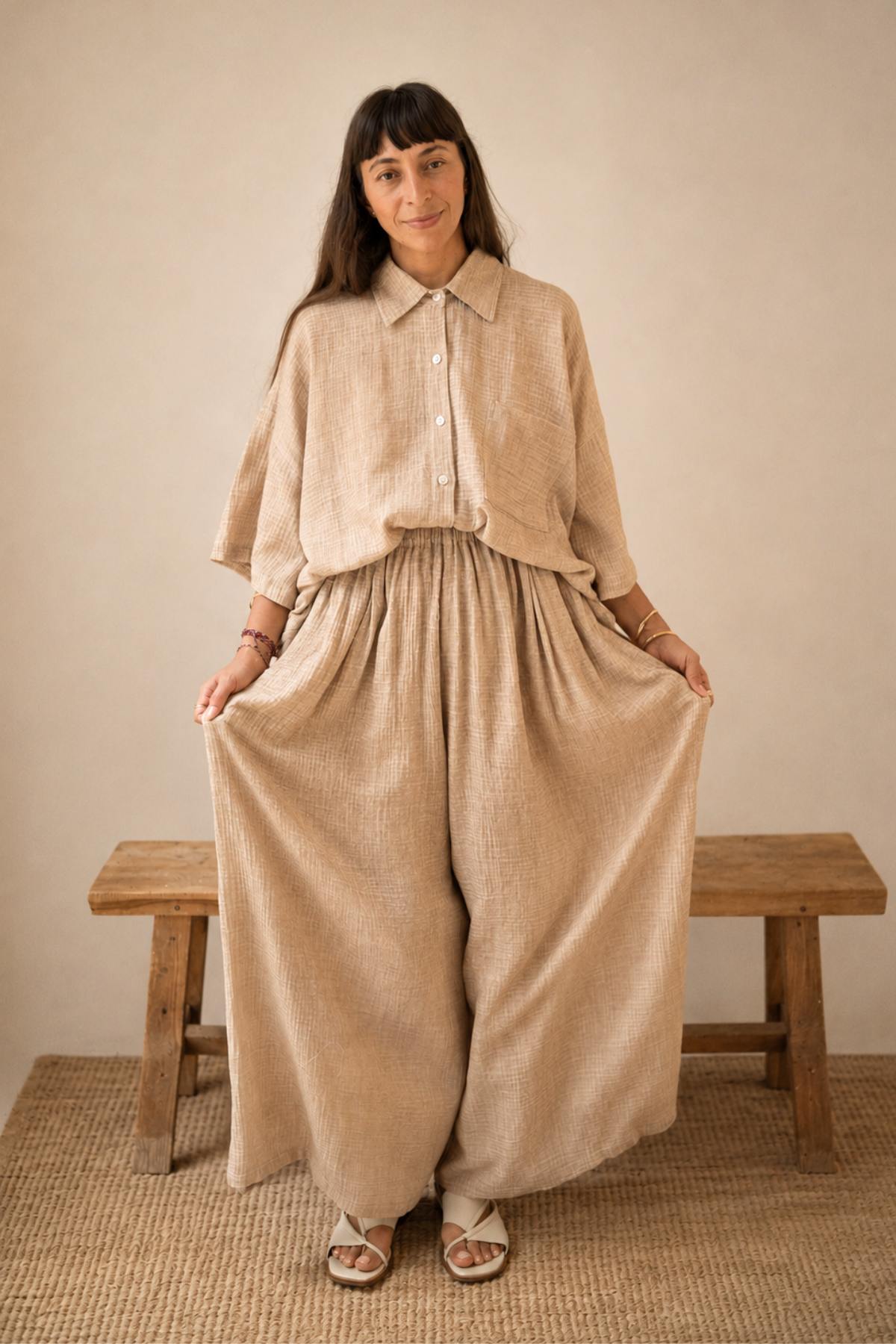
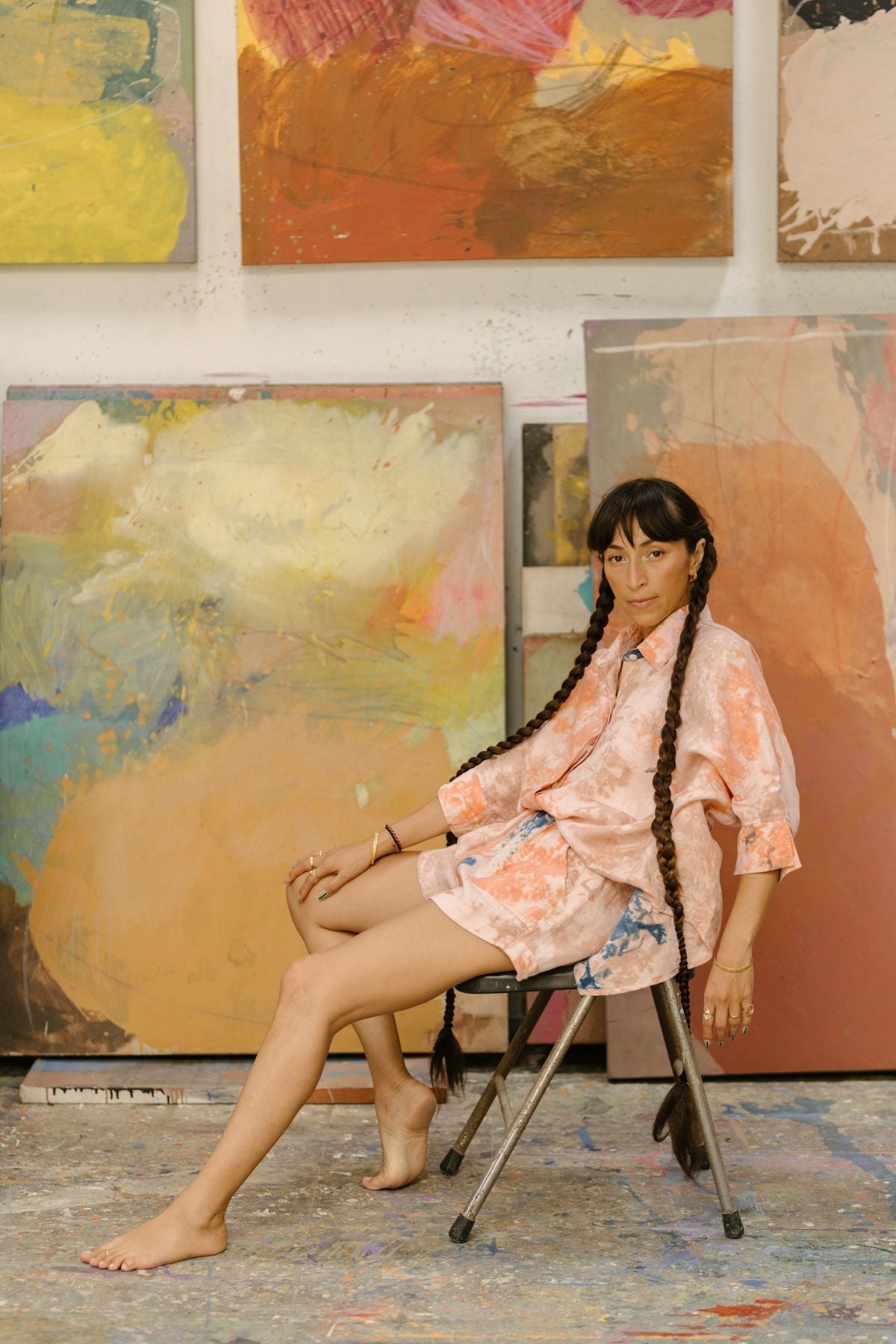
Myrah grew up in East Los Angeles. Mexican-American, rooted in a neighborhood that had its own rhythm, its own code, its own particular kind of beauty. It was a place where identity wasn't abstract. Where color and ceremony and community were just the texture of daily life. Where being a woman of color meant navigating invisible ceilings from an early age, and figuring out, quietly and often alone, whether to accept them or find a way around them.
She chose around. She always chose around.
She doodled in the margins. She bought beautiful things and imagined making them. She moved through the world the way people do when the life they're meant to live hasn't fully arrived yet but they can feel it waiting somewhere ahead, patient, taking shape.
"The woman who finds us is usually returning to something she already knew." That is true of our customers. It was also true of Myrah herself.
Eighteen yoga classes a week, a kinesiology degree, and a music career
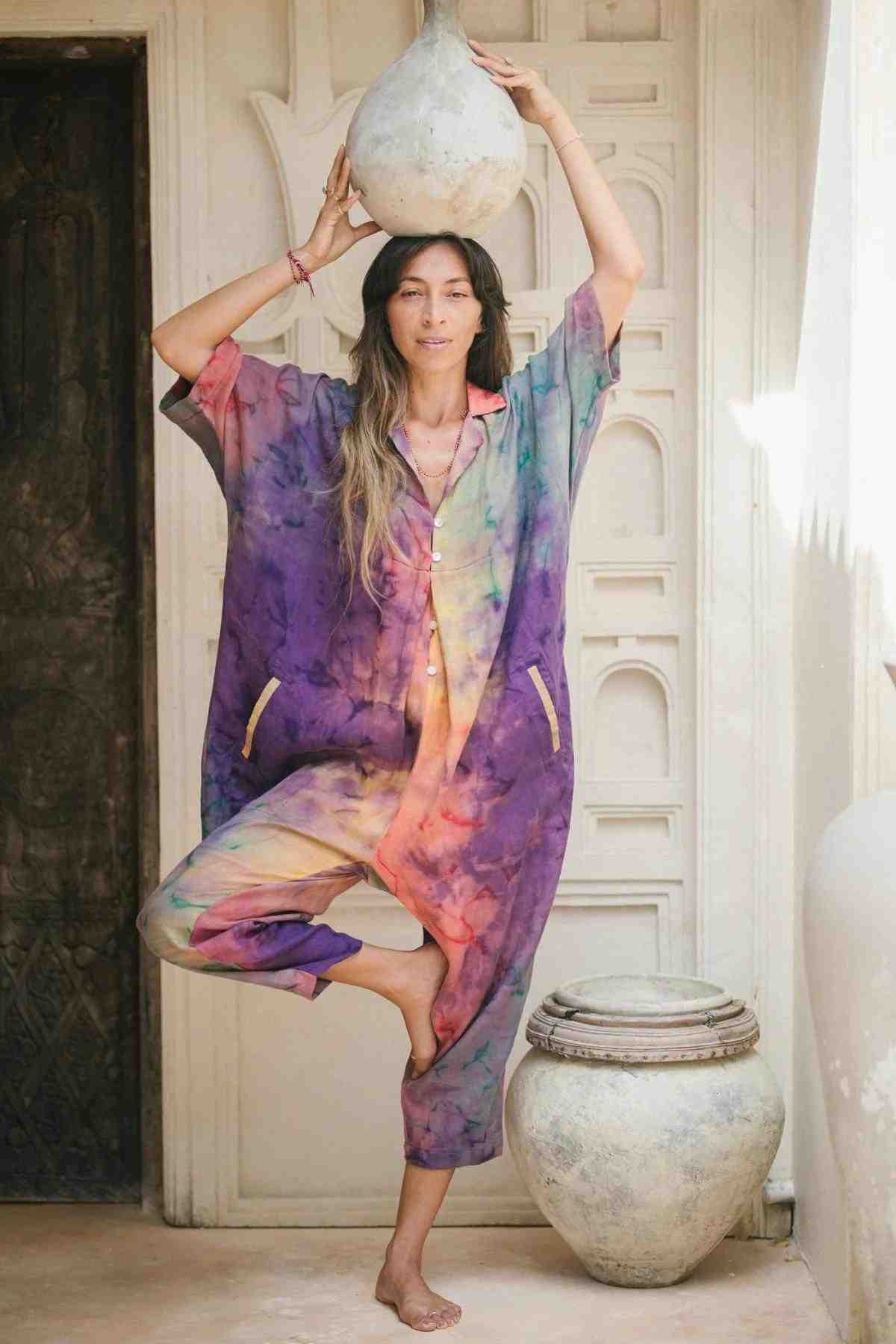
Before she ever cut a pattern or sourced a fabric, Myrah spent years in deep study of the human body. She was teaching eighteen yoga classes a week. Not as a side hustle. As a calling. And simultaneously, she went to university to study kinesiology, the formal science of how the body moves, loads, breathes, and holds.
Alongside the yoga and the kinesiology, Myrah found her way into the music industry. She worked in A&R at Interscope Records, joining a team responsible for finding and developing artists whose work would outlast the moment. She was part of the team that helped bring Amy Winehouse to American audiences. She understood early that the things worth paying attention to always have a realness to them you cannot manufacture.
She went on to work as a buyer for fashion brands and boutiques, learning the business end, the sourcing, the eye for what sells and why. And in true California fashion, she taught herself design on the side, threading it in between everything else. No dramatic pivot. No quitting everything. Just a woman who kept adding threads until one day she looked down and realised she had been weaving the whole time.
Most fashion designers understand aesthetics. Myrah came to clothing from the body first. She designed from the inside out, long before she had a studio or a sewing machine of her own.
Six months of volunteering to earn the right to learn
Kundalini yoga is not something you walk into. The teacher training with Gurmukh at Golden Bridge Yoga in Los Angeles is one of the most respected programs of its kind. Myrah wanted access to it.
Rather than wait or find a shortcut, she showed up every day as a volunteer for over six months until she had earned her place in the room.
That is who she is. Not someone who waits for doors to open. Someone who turns up and makes herself useful until they do.
She completed the training and has never stopped practicing. She still teaches two Kundalini yoga classes a month with Live Kick Studios today, years after Bali, years after the brand became what it is. Not because she has to. Because she is, at her core, a student of life who keeps showing up for the practice. That quality, the willingness to be a beginner, to sit in service, to learn before leading, runs through everything she has ever built.
The first thing the Kundalini tradition teaches you is that you are not the teacher. You are a channel. Myrah carries that with her into everything she makes.
Taylor Eyewalker, Cha Dao, and the moment life became ceremony
From Golden Bridge, a thread led her deeper. Her dear friend Taylor Eyewalker, also part of the Los Angeles Kundalini community, had gone deep into the ancient world of Cha Dao. The Taoist path of tea. Traditional tea ceremony practiced with the same intention and presence you bring to meditation or prayer.
Myrah followed that thread too, not casually, but in the same way she follows everything: all the way in.
Tea ceremony, at its heart, is a practice of presence. Of making the ordinary sacred. Of slowing down enough to be actually here, in this moment, with this cup, with these hands, with this person sitting across from you. It asks you to treat a simple act, boiling water, warming a bowl, pouring tea, as if it deserves your full attention. Because it does. Because everything does, if you choose to see it that way.
That shift in orientation is what changed everything. Not just for Myrah personally, but for what this company would become.
Life is ceremony. This was not a tagline someone wrote in a meeting. It was a way of living that Myrah practiced for years in Los Angeles, in tea rooms, in yoga studios, before it became the philosophical spine of everything we make in Bali.
The idea that how you dress yourself in the morning is not a trivial act. That the fabric against your skin for sixteen hours a day either carries intention or it doesn't. That the hands that made your clothing either worked with dignity or they didn't. That all of it is connected. That none of it is too small to be done well.
That is what Cha Dao gave her. And it is woven into every piece we make.
Why empowering women is not a value. It is the whole structure.
When Myrah built the artisan circle in Bali, she didn't build a production network. She built a community. One where women could work from their own homes, set their own hours, be present for their children, and earn a real living. Where their craft would be honored, not extracted.
And as the brand has grown, so has the investment in the people who make it. We sit with our artisans. We share what we know about design and quality and the standard a garment needs to hold. We help them grow into the fullest version of what they are already capable of. We aim to see the communities we work in bloom, not just survive.
That word, bloom, is not decorative. It was the name of the festival where this brand began. It is the intention woven into every piece that leaves Bali. And it is what Myrah learned to do for herself, in East LA, long before anyone else was watching.
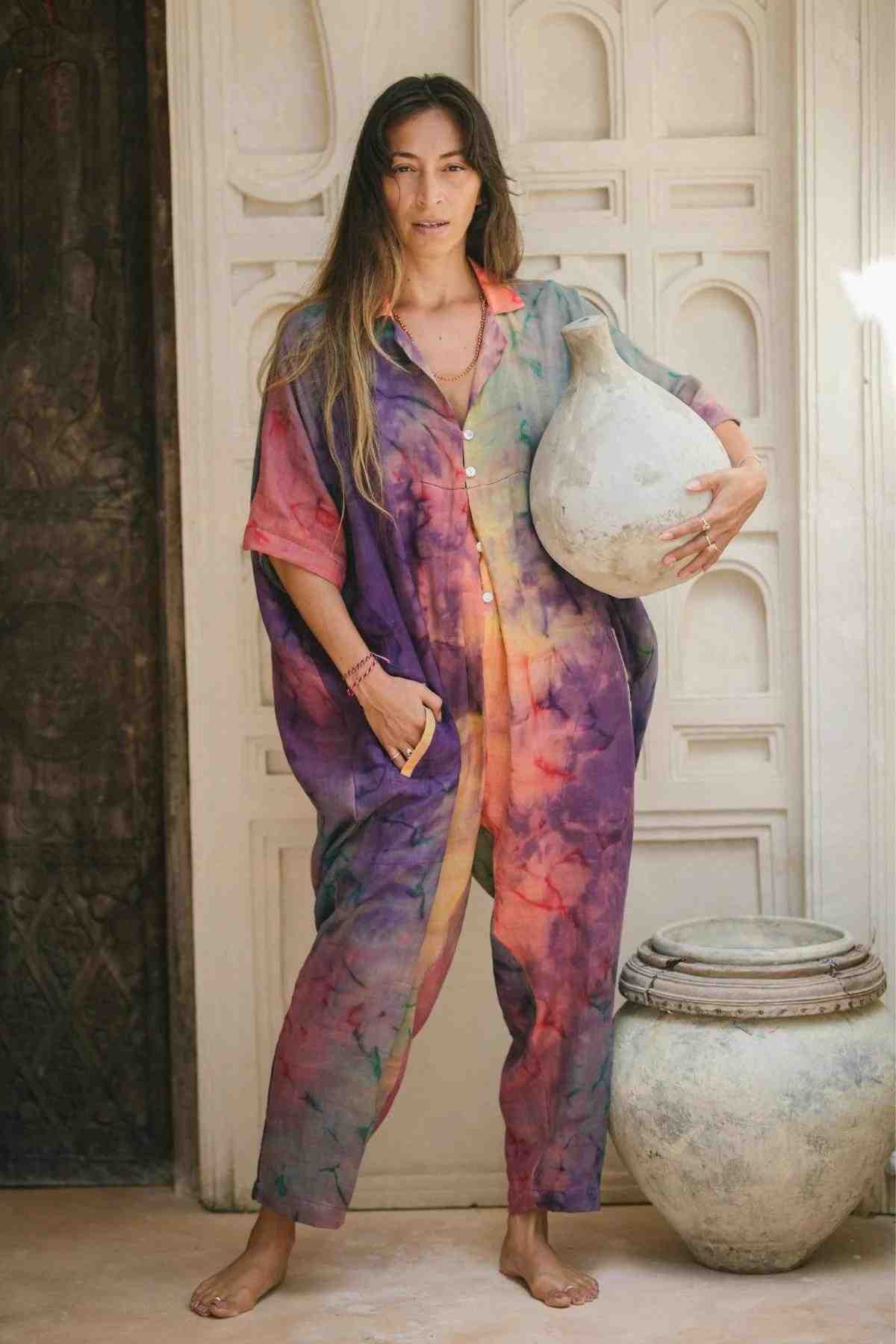
She was never just making clothes. She was making a container for women to come back to themselves in. That has always been the mission. It just took Bali to give it its final form.
What this means when you wear it
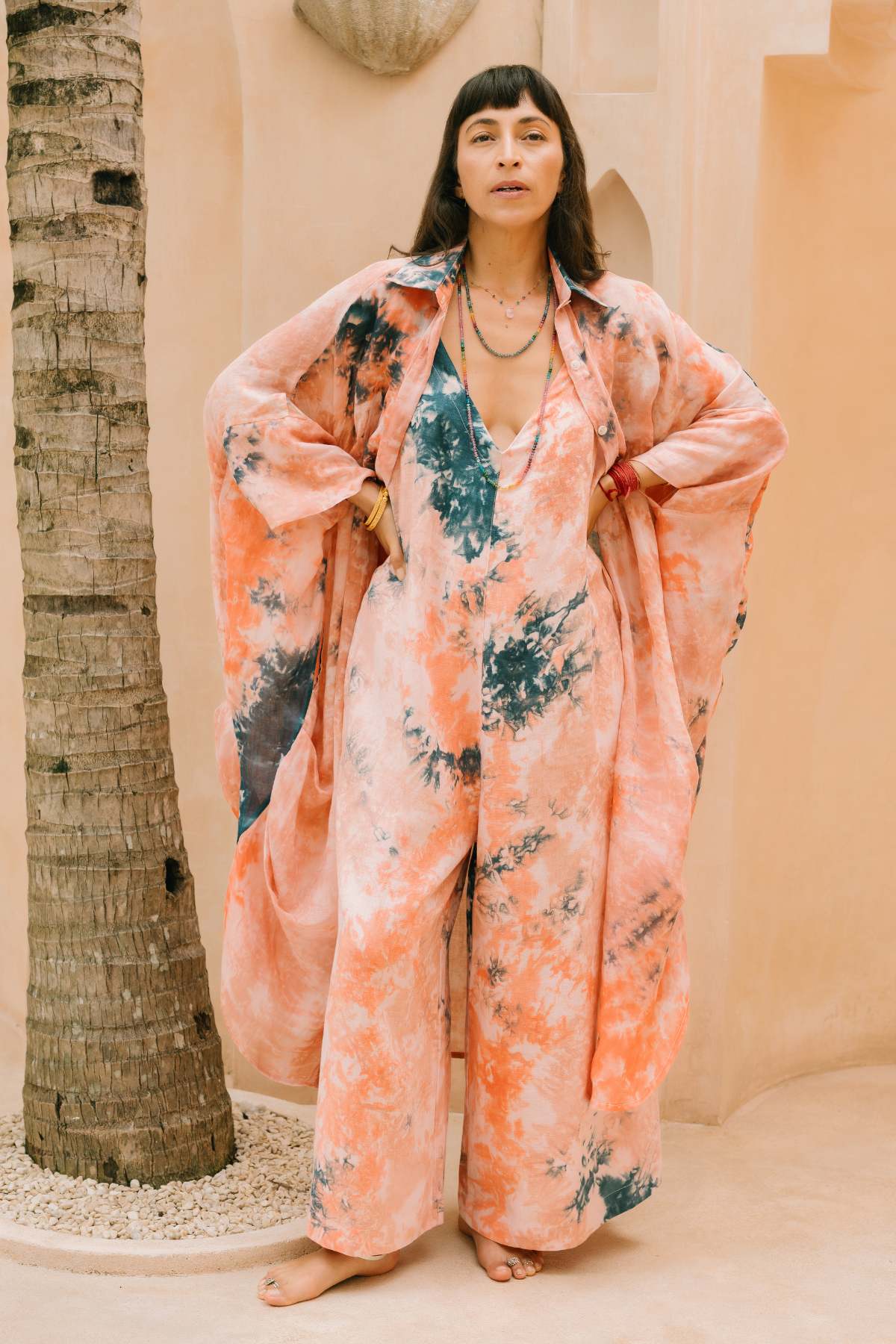
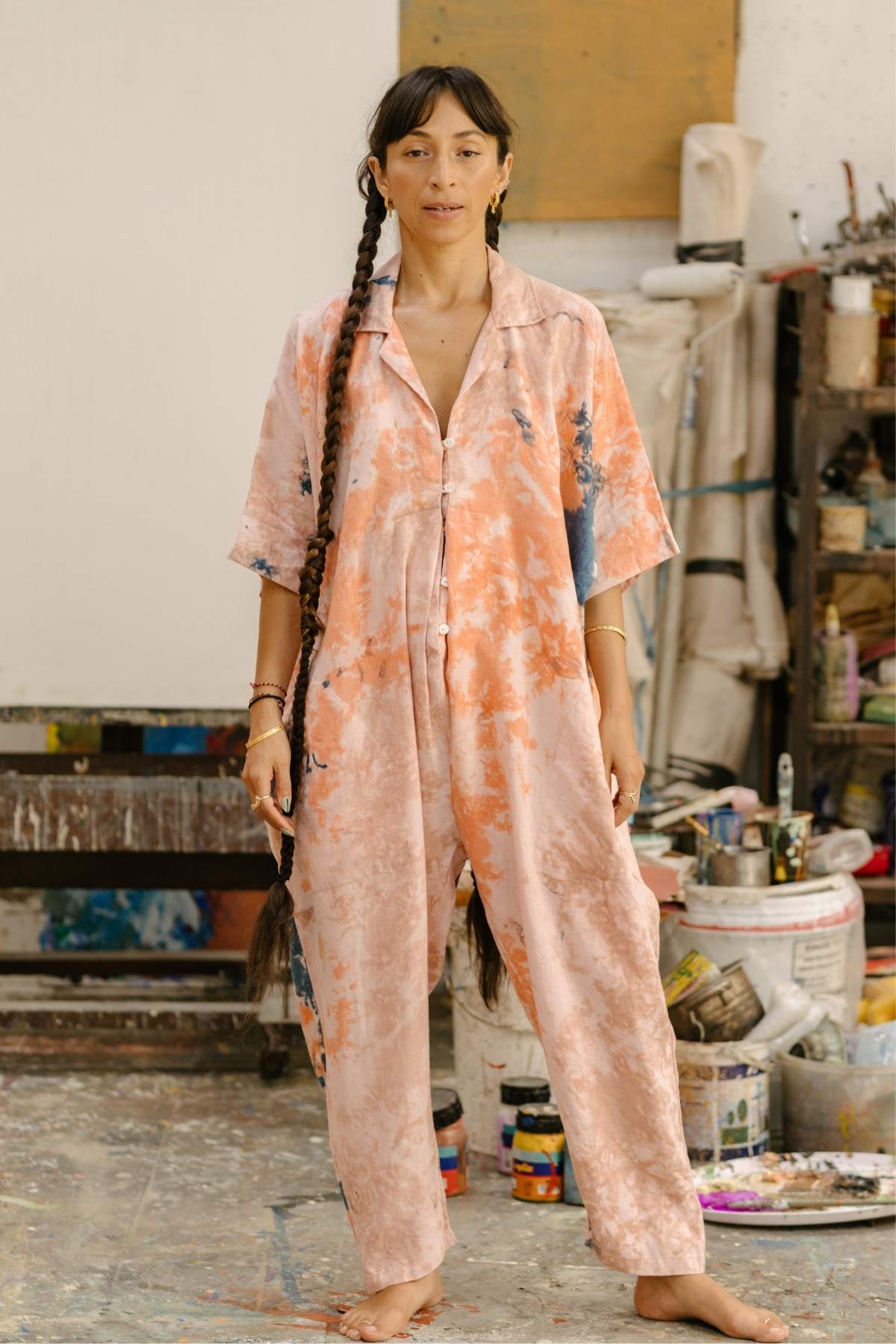
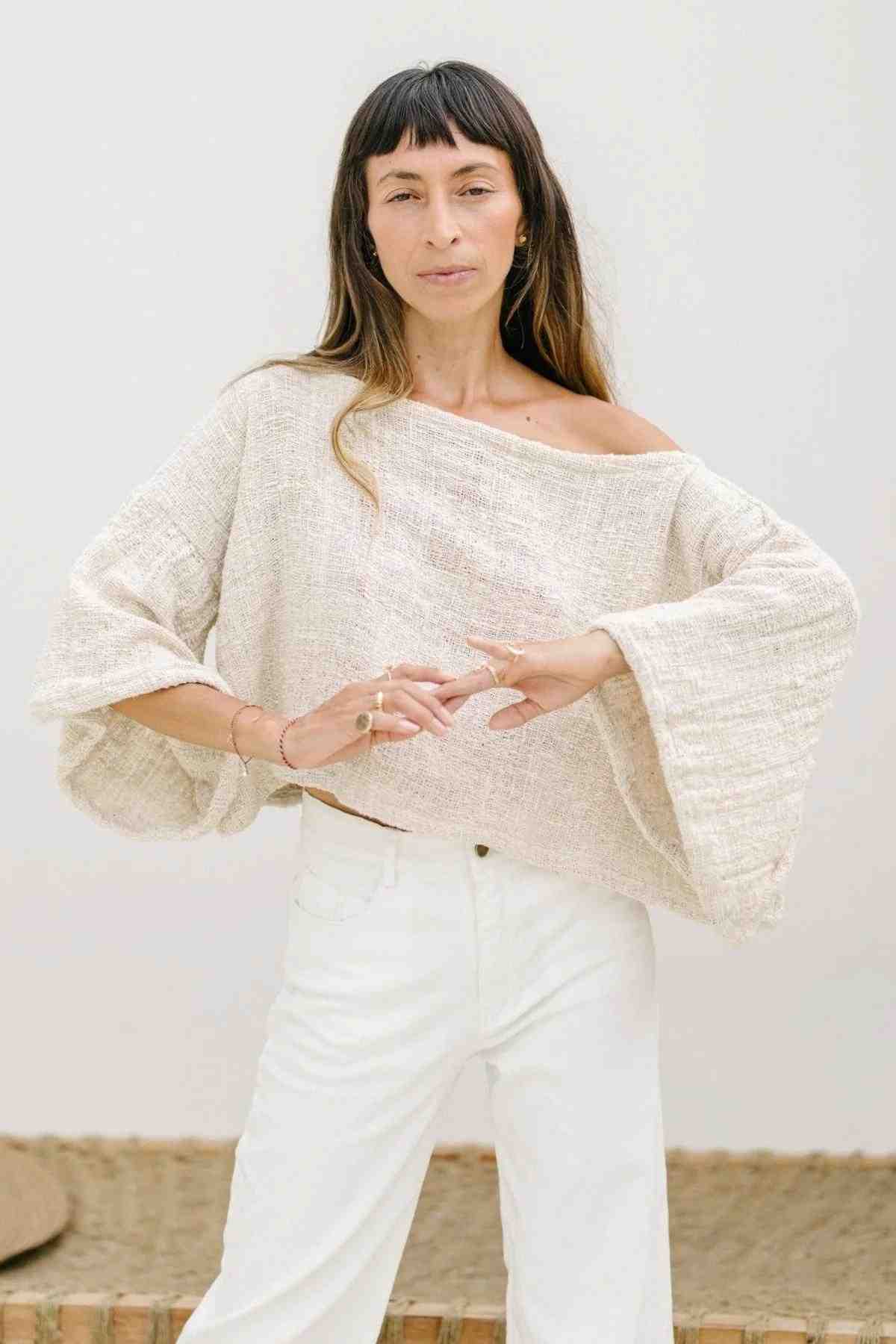
When you wear something from this collection, you are wearing the accumulated knowledge of a woman who spent twenty years studying the body, the business, the craft, the ceremony, and the community. Who volunteered for six months just to learn properly. Who followed a friend into a tea room and came out with a philosophy. Who built slowly and deliberately until the thing she was making could finally hold all of what she knew.
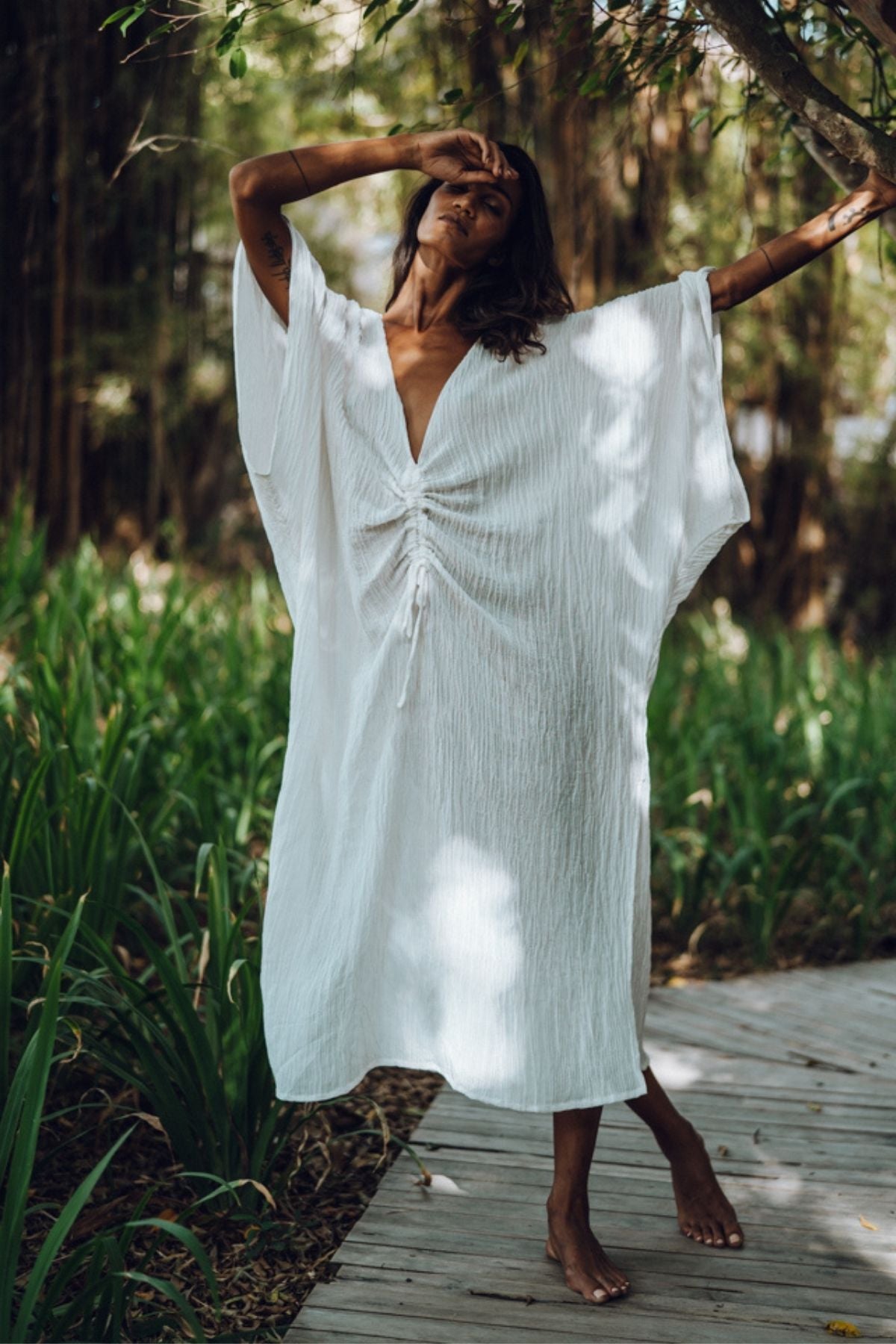
You are also, in some small way, part of the circle. Your purchase reaches thirty families. It reaches artisan women whose skills we invest in and whose potential we refuse to put a ceiling on. It reaches a way of making clothes that treats the act of getting dressed as what Myrah always knew it was: a small ceremony. One worth doing with care.
We are glad you are here. We are glad she made it from East LA to Bali. And we are glad that whatever brought you to this brand, you are, in your own way, returning to something you already knew.
Read Myrah's full story on the About page, or explore how we make our clothing on the Slow Fashion page. And if this resonates, the Muse-Letter is where the conversation continues.


Leave a comment
This site is protected by hCaptcha and the hCaptcha Privacy Policy and Terms of Service apply.