

What to Let Go of After a Lunar Eclipse: The Three Questions That Decide What Stays
Three questions decide what you carry into the next season after a lunar eclipse: what am I still carrying, what did it teach me, and what am I making space for. Asked in that order, they take about five minutes, and they are the whole practice.
Most people wait for the eclipse itself, feel something stir, and let the feeling pass without ever naming it. But the eclipse is not the event. The fortnight afterwards is the event. What follows is the method underneath every eclipse release ritual we publish, and what made the Pisces lunar eclipse of 28 August 2026 an unusually clean closing point.
What does a lunar eclipse actually end?
A lunar eclipse is a Full Moon with the Earth's shadow falling across it, and a Full Moon has always been read as a culmination rather than a beginning. What has been building becomes visible. What has been thinning finally breaks.
The tradition treats a lunar eclipse as an ending you did not entirely choose. Not a punishment, and not a failure. A conclusion that had already happened quietly some time ago, arriving at the surface where you can no longer look away from it.
What ends is rarely dramatic. More often it is a relationship you kept returning to without quite knowing why, a version of yourself you outgrew two years ago, or a story about your life you had told for so long you stopped noticing you were telling it.
Question one: what am I still carrying?
Sit somewhere quiet and name it. Do not solve it, do not justify it, and do not decide what to do about it yet. Naming is the entire task, and it is harder than it sounds.
The thing you are carrying is rarely the thing you would list if someone asked you directly. It is usually smaller and slightly more embarrassing. A conversation you keep rehearsing in the shower. A person whose approval you are still quietly organising your decisions around. A resentment you have grown a little fond of.
If nothing surfaces, ask a different question: what am I tired of? Fatigue is the most reliable pointer there is. We are rarely exhausted by the things we have actually put down.
Question two: what did it teach me?
This is the question almost everyone skips, and skipping it is the reason the same pattern returns wearing different clothes.
In the older reading, the relationships and situations that close at an eclipse are called karmic, meaning they were never meant to be permanent. They were meant to be instructive. You felt compelled toward them, they defied your own logic, and the reward rarely explained the effort you put in.
That framing is useful for one specific reason: it removes blame. There is no winner and no loser in an experience that was always a lesson. There are two people on different paths who walked together for a while.
So ask what it taught you, and be specific. Not "patience". Something concrete enough that you could describe it to a friend over coffee. The gifts tend to come from a short list: self-trust, compassion, creative work that would not have arrived any other way, a clearer sense of what you will no longer accept, or a genuinely different relationship with yourself.
|
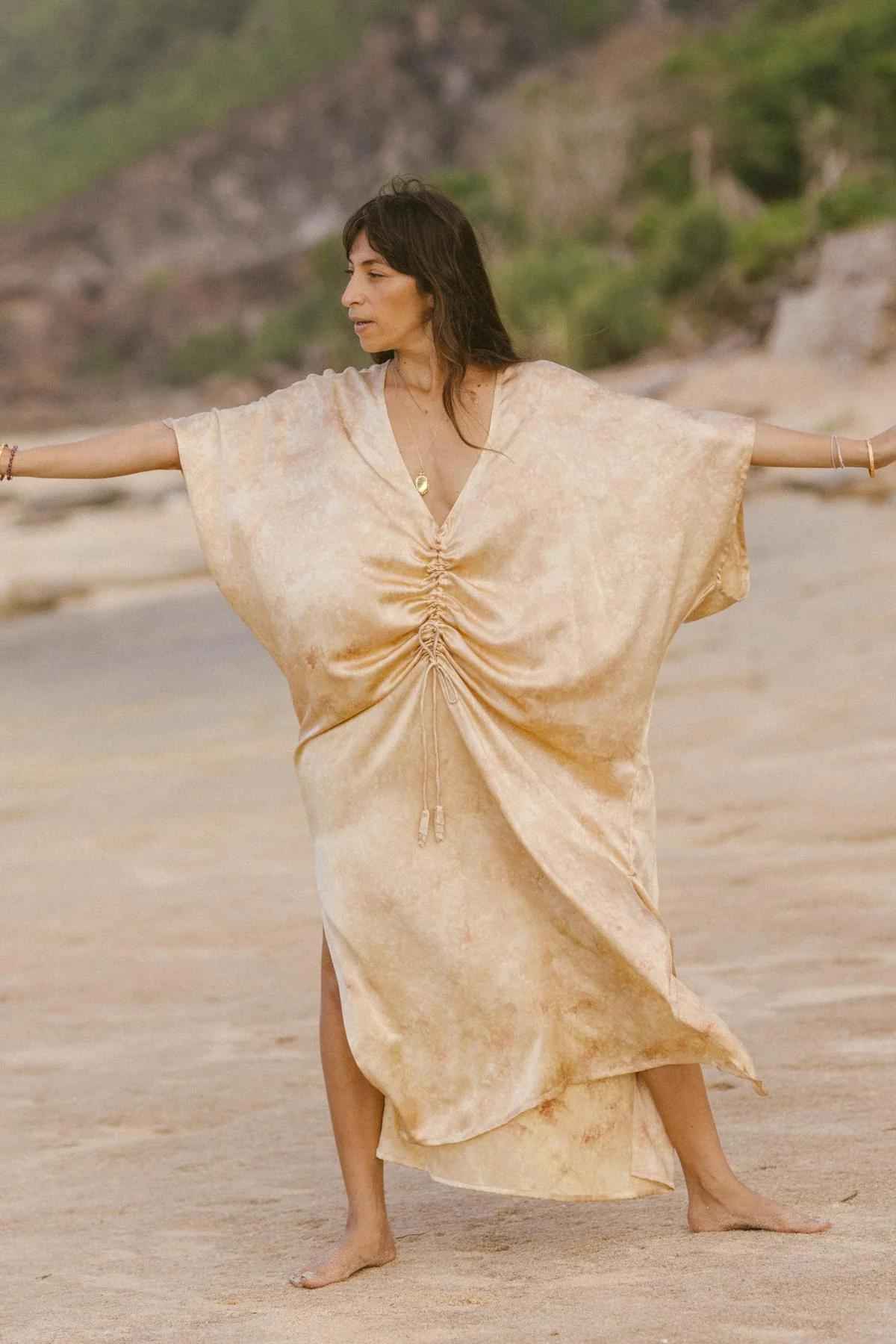
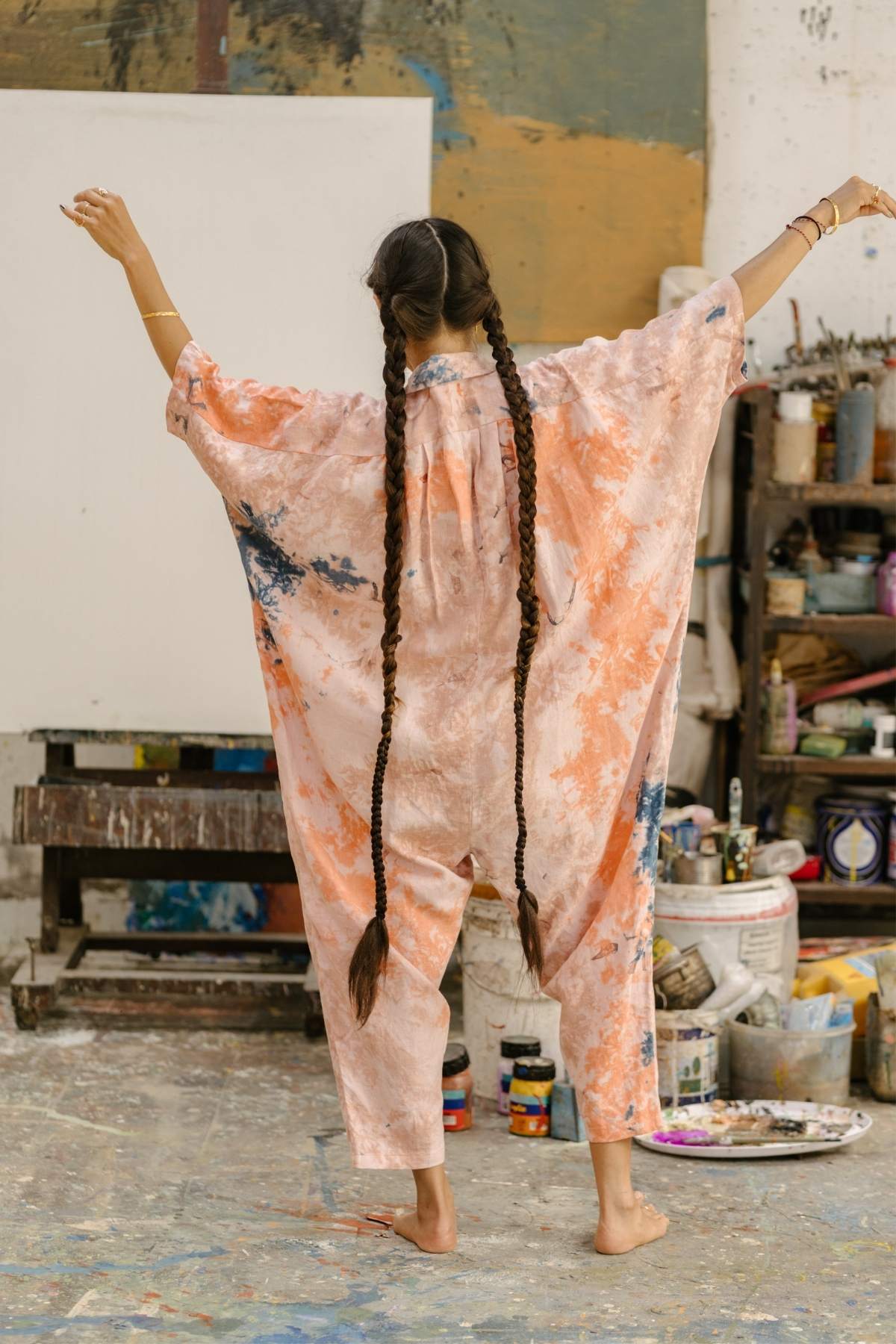
A Piece for This Threshold The Silk Virgo Kaftan. One hundred percent silk, botanically dyed so the colour lives inside the fibre rather than sitting on top of it. No two lengths take the dye the same way. Virgo is the sign of the useful and the exact, and there is nothing decorative about this one. Cut and finished by hand in the homes of our Balinese artisan families. |
Question three: what am I making space for?
Answer this one in the future tense, and write it down somewhere you will actually see it in a week.
The order of the three questions is not decorative. If you skip ahead to the third, you build the new thing directly on top of the old one and then wonder why it feels heavy from the first day. If you stop at the first, you spend an entire season grieving something you have already outgrown. The middle question is the hinge, which is exactly why it is the one people skip.
Why the days after an eclipse matter more than the eclipse itself
The tradition holds that an eclipse carries influence for roughly six months, until the next eclipse season arrives. Whether or not you take that literally, the practical version is straightforwardly true: nothing about a single night changes a pattern. The fortnight afterwards is when a decision is either made or quietly abandoned.
This is why the calendar around an eclipse matters more than the eclipse hour. An eclipse that falls a few days before the turn of a month hands you something to walk into. One that falls mid-month often dissolves into an ordinary week.
What made the Pisces eclipse of 28 August 2026 different
It was a partial lunar eclipse, though only barely: more than 96 percent of the Moon passed through the Earth's darkest shadow, close enough to total that the difference was mostly technical. It fell at 4 degrees of Pisces with the Sun opposite in Virgo, at 5:19 in the morning universal time.
Three things made it a closing point rather than an ordinary Full Moon.
It fell in Pisces, the final sign of the zodiac, which carries the symbolism of endings and of water. Where the Leo eclipse two weeks earlier had been fire and visibility, this one was the opposite gesture: washing rather than burning.
The Moon sat with the North Node, which is what made it a beginning as well as a loss. And it was the sixth of seven eclipses along the Virgo and Pisces axis, a cycle that began in September 2024. Whatever that long cycle had been asking of you, it was close to the end of the asking.
Then, four days later, September opened. In numerology September 2026 reduces to a one, the number of beginnings, and the first of the month compounded it. For anyone working with these frameworks, it was about as clean a hand-off from ending to beginning as the calendar offers.
Is any of this actually true?
Worth being honest about what this is. There is no measured mechanism by which the Moon's position in the zodiac changes the course of a relationship, and no clinical evidence that eclipses end anything at all. This is a scheduling framework with a very long history, which is a different thing from a proven cause.
What it does reliably provide is a date. Most people do not lack insight into what they are carrying. They lack an appointed hour to look at it. A framework that says this week, these questions gets more done than a decade of intending to reflect eventually.
If the astrology is what gets you to sit down for five minutes and answer three honest questions, the astrology has earned its place, whatever it is or is not doing in the sky.
How to do this on any eclipse, not just this one
Find the date of the next lunar eclipse. Give yourself the following seven days rather than the night itself. Sit down once in that week, ideally in the morning, and take the three questions in order.
Write only the third answer down. The first two are for the sitting. The third is the one you need to be able to find again in a month, when the feeling has faded and the decision is all that remains.
If you want a longer form of this, our guide to Virgo season and the rituals that suit an earth season covers the practical repair work that tends to follow a Pisces eclipse, and the moon phase guide to rest and care maps the softer end of the same cycle.
|
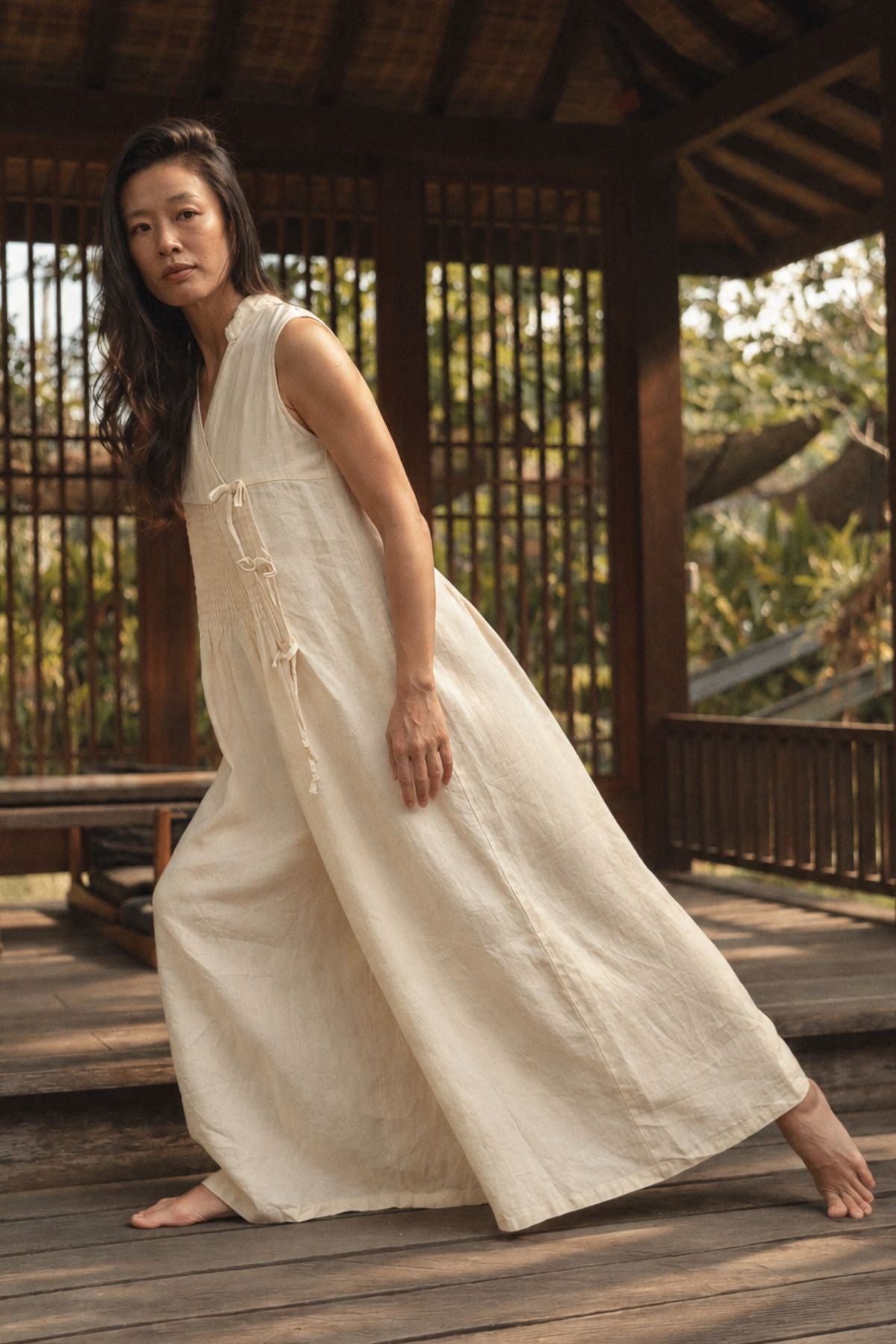
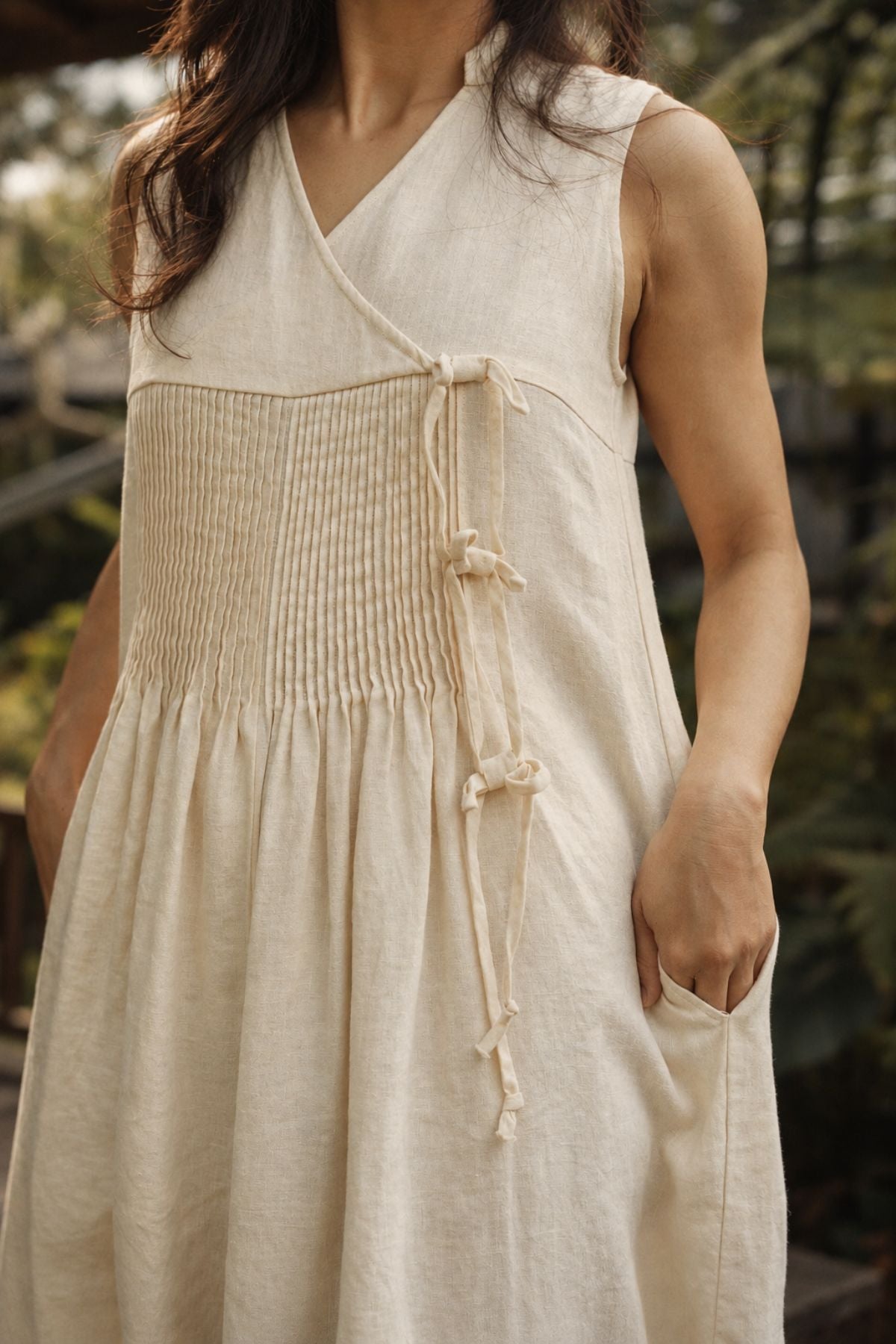
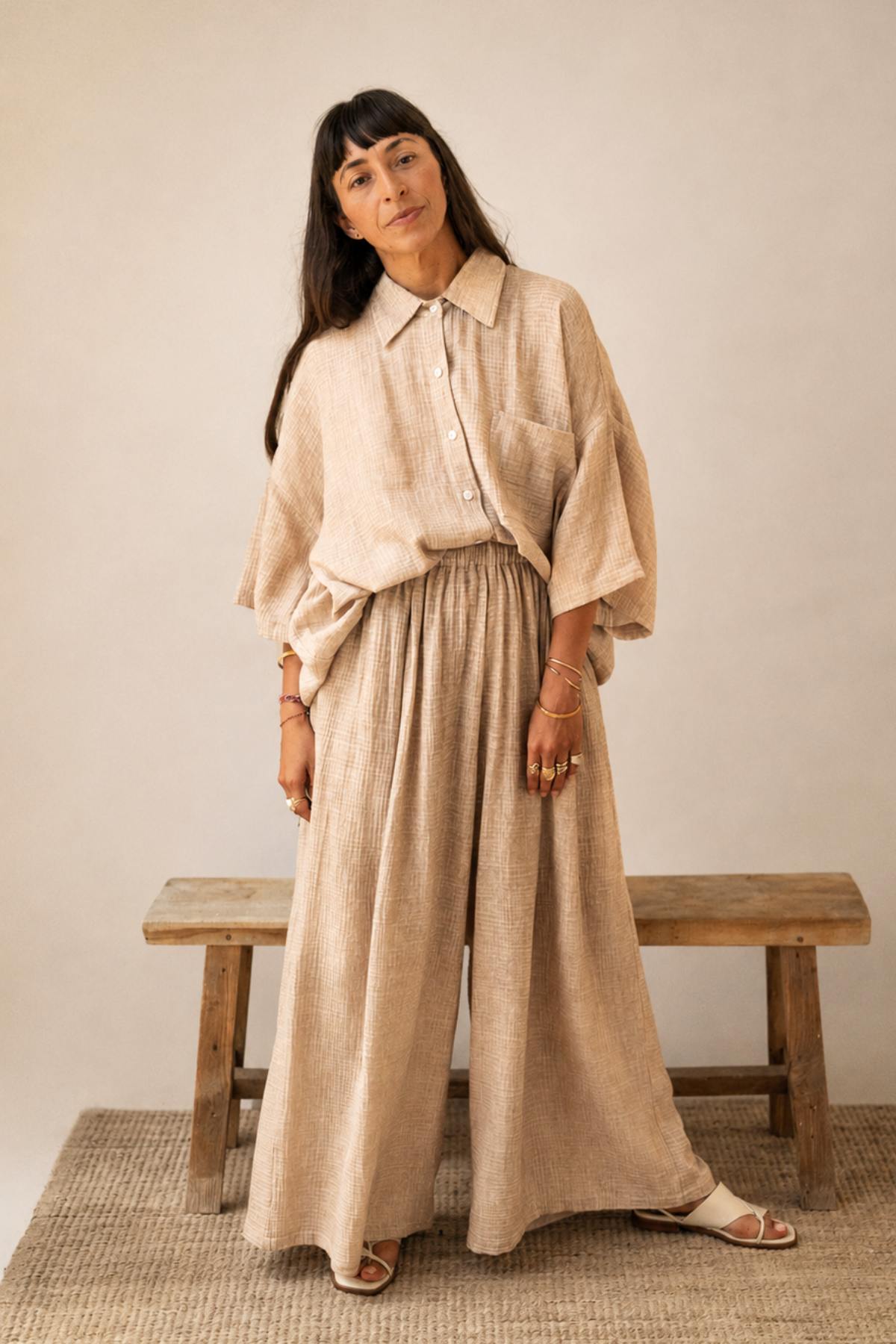
A Piece for This Threshold The Hana Set. One hundred percent natural bubble cotton. This one moves like breath. It does not announce itself, it simply settles, the way stillness does the moment you stop performing it. Made in small batches by our artisan families in Bali. |
Common Questions About Letting Go After a Lunar Eclipse
What does a lunar eclipse mean spiritually? A lunar eclipse is traditionally read as a culmination and an ending rather than a beginning. It is associated with things that have been building becoming visible, and with situations that were already finishing arriving at the surface. It is not considered a punishment or a failure, but a conclusion.
What should you not do during a lunar eclipse? The traditional guidance is not to launch, sign or begin anything you want to last, because eclipse energy is associated with endings rather than starts. Wait until the eclipse has passed, and use the days afterwards for decisions rather than the night itself.
How long does eclipse energy last? The tradition holds roughly six months, until the following eclipse season. Practically, the fortnight after an eclipse is the period that matters most, because that is when a realisation either becomes a decision or quietly fades.
What is a karmic relationship? A karmic relationship is one you feel compelled toward without a logical reason, return to repeatedly, and get comparatively little reward from relative to the effort. In the tradition these relationships are understood as instructive rather than permanent, which is why eclipses are associated with closing them.
Why do I feel emotional during a lunar eclipse? Full Moons are traditionally associated with heightened emotion and culmination, and a lunar eclipse intensifies that reading. Eclipses in water signs such as Pisces and Cancer are particularly associated with tears, release and old feeling moving through the body.
What should I do after an eclipse? Ask three questions in order: what am I still carrying, what did it teach me, and what am I making space for. Write down only the third answer. Do it once in the seven days following the eclipse rather than on the night itself.
Whatever you set down this season, set it down kindly. It got you here.
With love from Bali,
Myrah.
|
The Muse-Letter Dress for the woman you're becoming. Every week from Bali. Astrology, slow living, sacred feminine, and the pieces we make by hand. A letter, not a sales pitch. Unsubscribe any time. No spam, ever. |













Laisser un commentaire
Ce site est protégé par hCaptcha, et la Politique de confidentialité et les Conditions de service de hCaptcha s’appliquent.