La mode lente à Bali : comment et pourquoi nous fabriquons ce que nous fabriquons
« Mode durable » est une expression tellement galvaudée qu'elle a fini par ne presque plus rien signifier. Les marques l'utilisent pour décrire du polyester recyclé. Les détaillants l'emploient pour désigner une collection légèrement moins nocive que leur collection principale. C'est devenu un terme marketing, et les termes marketing ont tendance à vider les mots de ce qui les rendait dignes d'être prononcés en premier lieu.
Nous n'allons donc pas appeler cela de la mode durable. Nous allons vous expliquer comment nous fabriquons les choses et pourquoi, et vous laisser décider comment les appeler.
Dans cette lettre
- Pourquoi Bali
- Le lin : European Flax et pourquoi c'est important
- Teinture végétale : le processus et la philosophie
- Production en petites séries : ce que cela signifie en pratique
- À quoi ressemble réellement la mode lente
- Sur les certifications
- Questions fréquemment posées
Pourquoi Bali
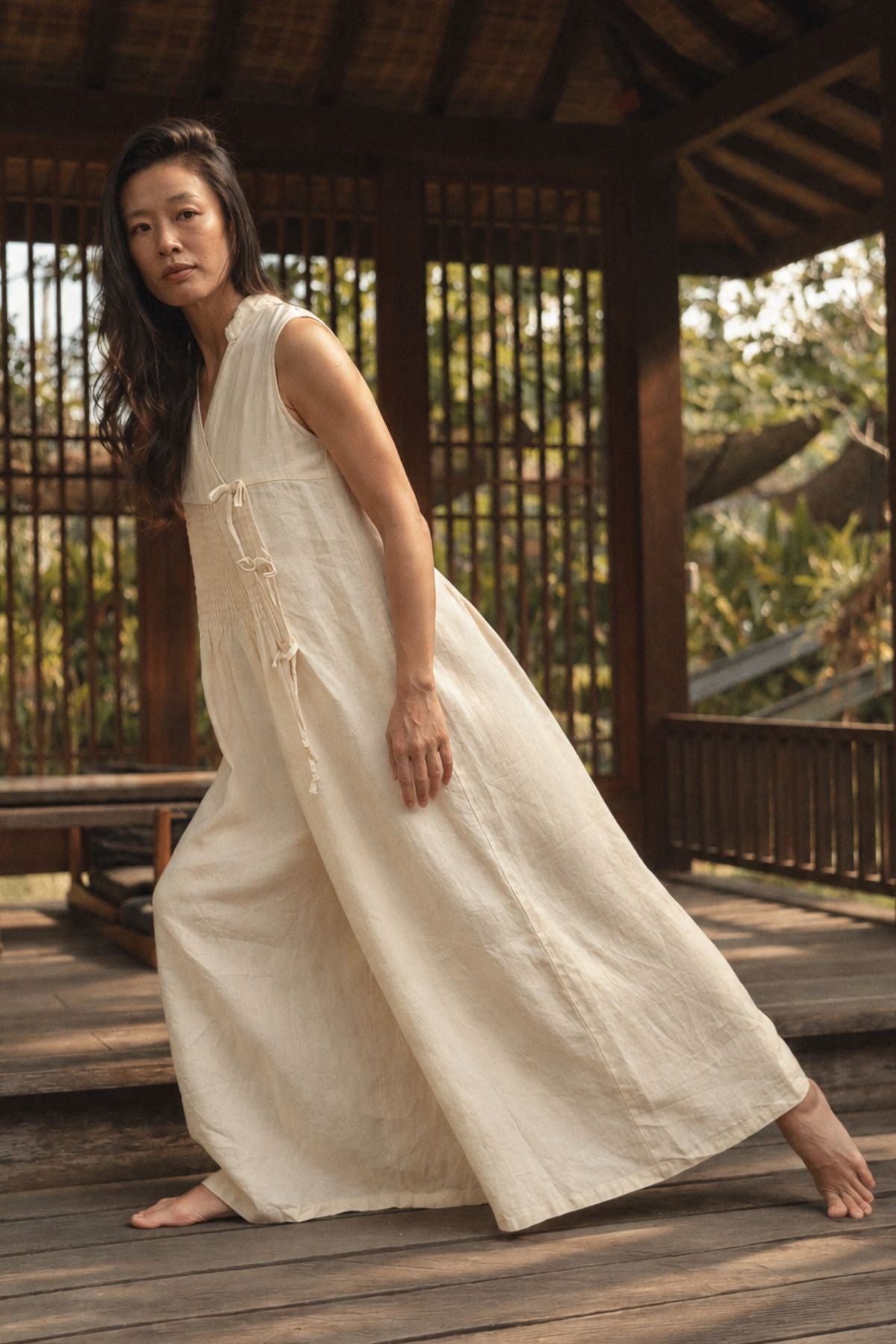
Fabriquer des choses lentement prend tout son sens à Bali d'une manière qui n'est pas évidente ailleurs. L'île a sa propre relation avec le temps. Elle a des cérémonies qui exigent de tout arrêter et d'être présent. Elle a une tradition artisanale qui se transmet de main en main, pas de machine en machine. Les femmes qui cousent les vêtements ici cousent depuis leur enfance. Les mains qui coupent le lin ont appris à lire le tissu avant de toucher les ciseaux.
Myrah est arrivée à Bali et a compris que l'île était le seul endroit où la collection qu'elle imaginait pouvait réellement être fabriquée. Non pas parce que Bali est moins chère, bien que ce soit souvent une idée fausse. Mais parce que la relation entre l'artisan et le matériau y est encore empreinte de soin. Les vêtements sont manipulés par des personnes qui comprennent ce qu'elles tiennent.
L'atelier est petit. L'équipe est petite. Les séries de production sont petites. Ce n'est pas une limitation. C'est le point essentiel.

Le lin : European Flax et pourquoi c'est important
Tout le lin de la collection Myrah Penaloza provient d'European Flax. C'est une chose spécifique, pas une affirmation générale. Le lin European Flax est cultivé dans le nord de la France, en Belgique et aux Pays-Bas, dans un climat qui produit les fibres de lin les plus longues et les plus résistantes au monde. Il est alimenté par la pluie plutôt qu'irrigué. Il n'utilise aucun pesticide qui ne soit pas déjà présent dans la norme agricole régionale. La plante entière est utilisée à la récolte, ce qui signifie qu'il n'y a pas de déchets significatifs.
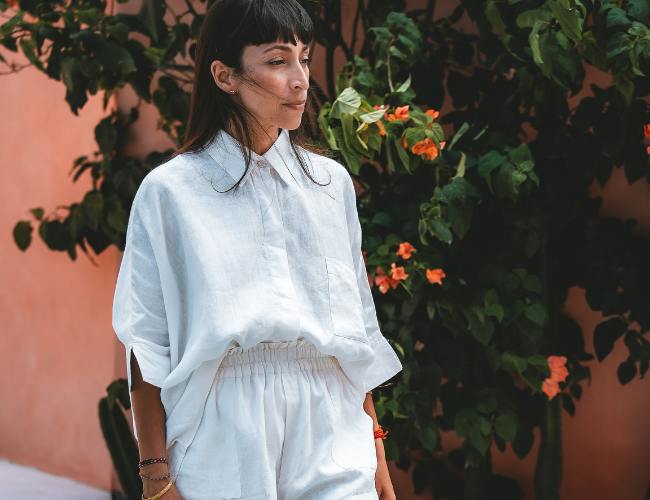
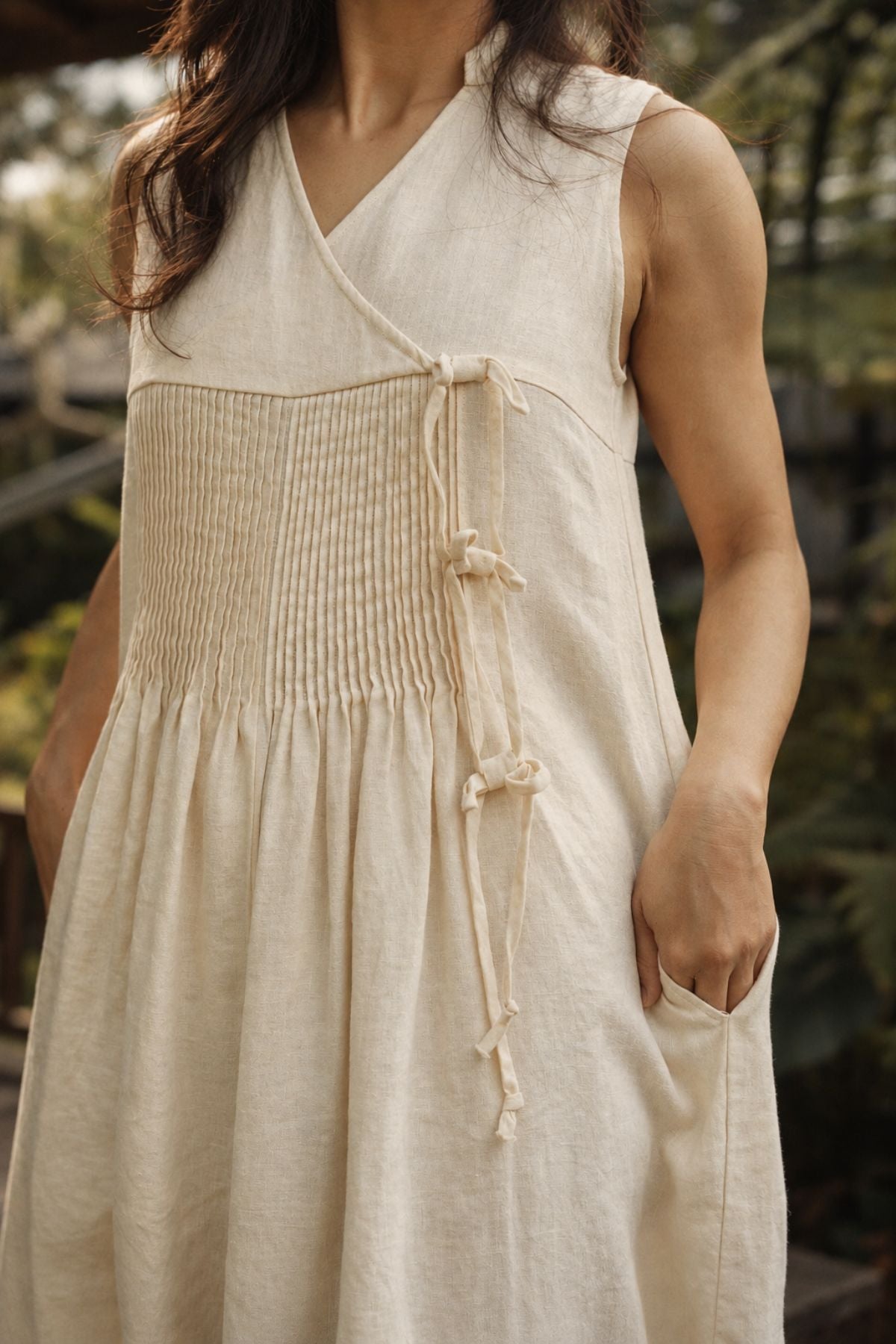
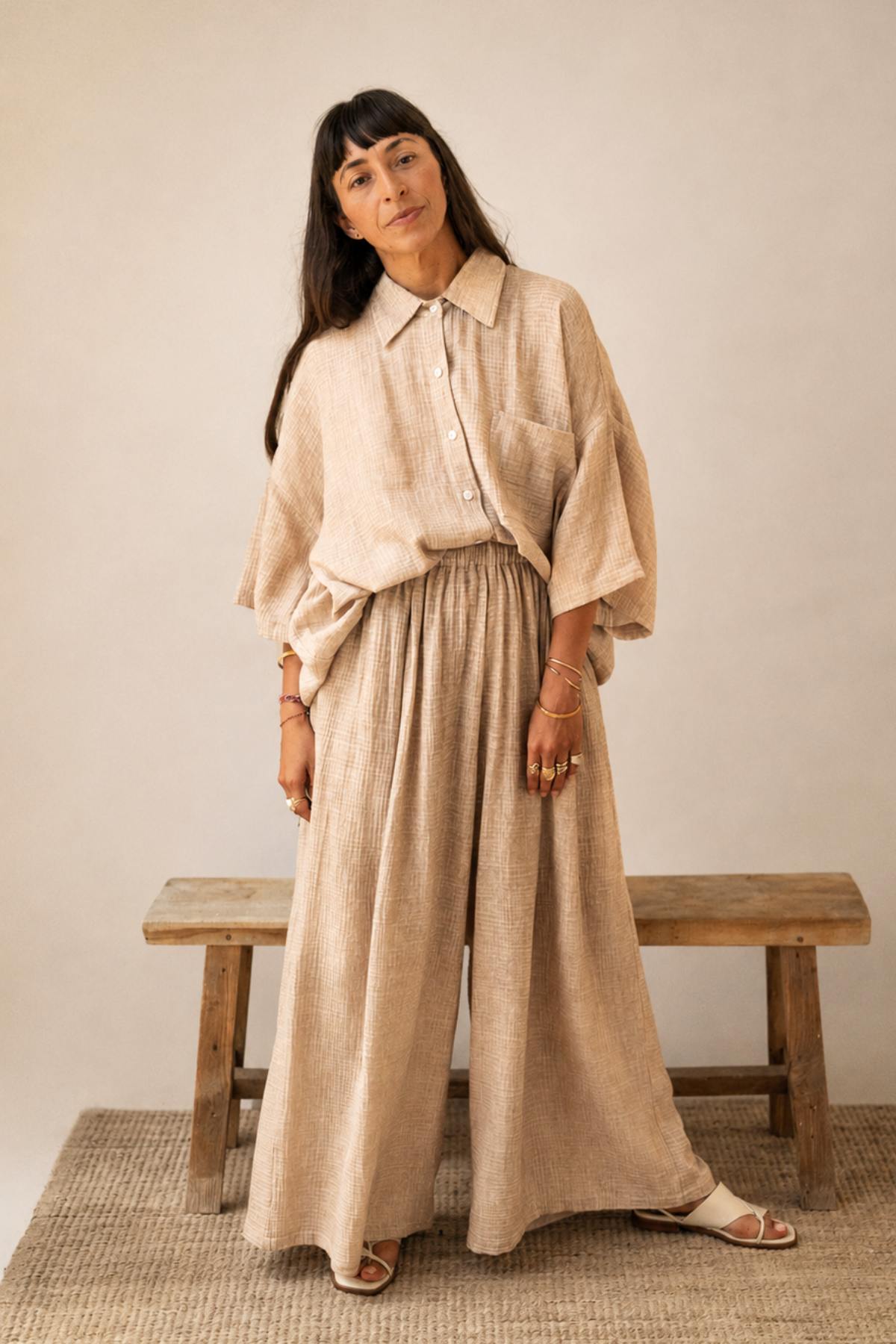
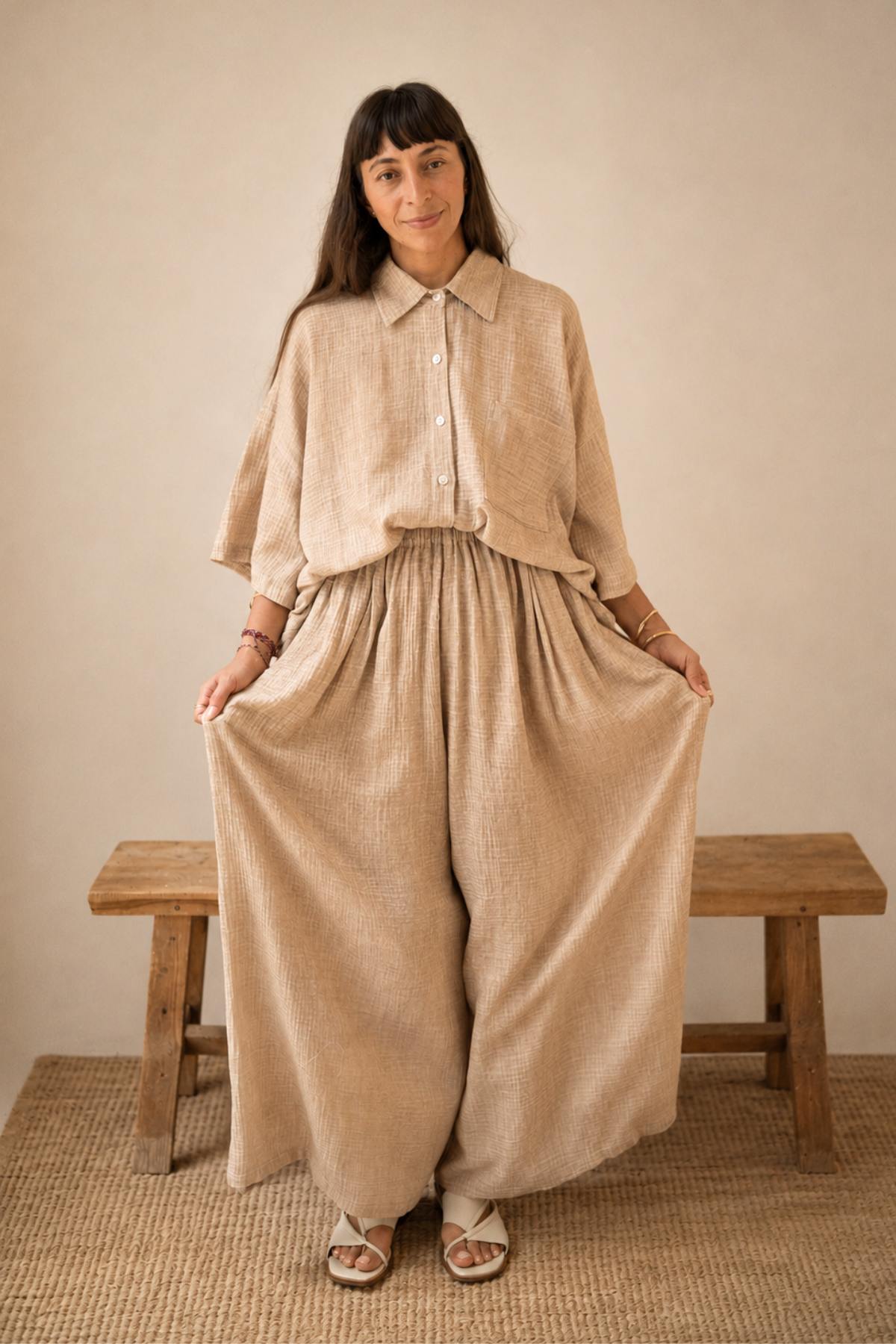
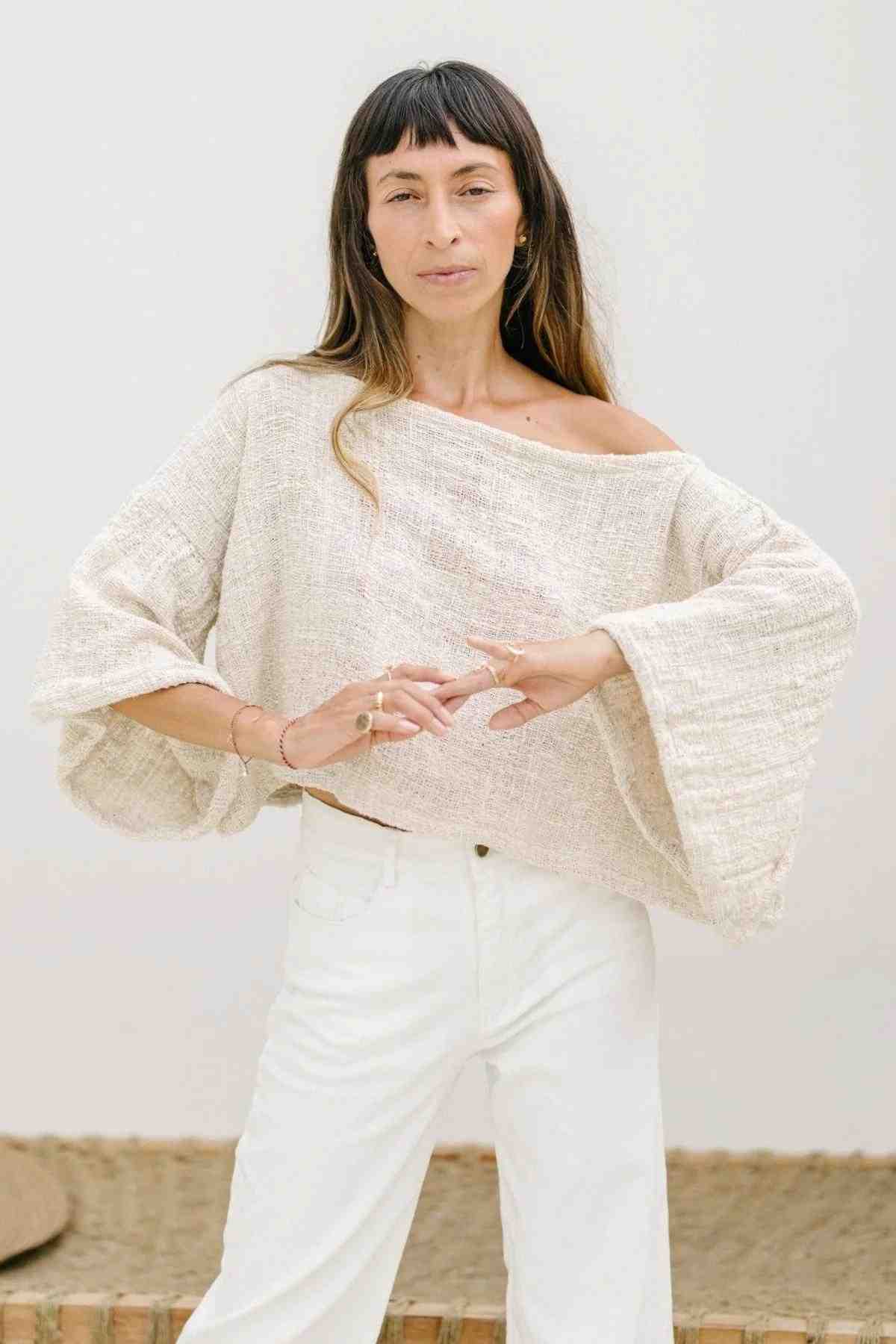
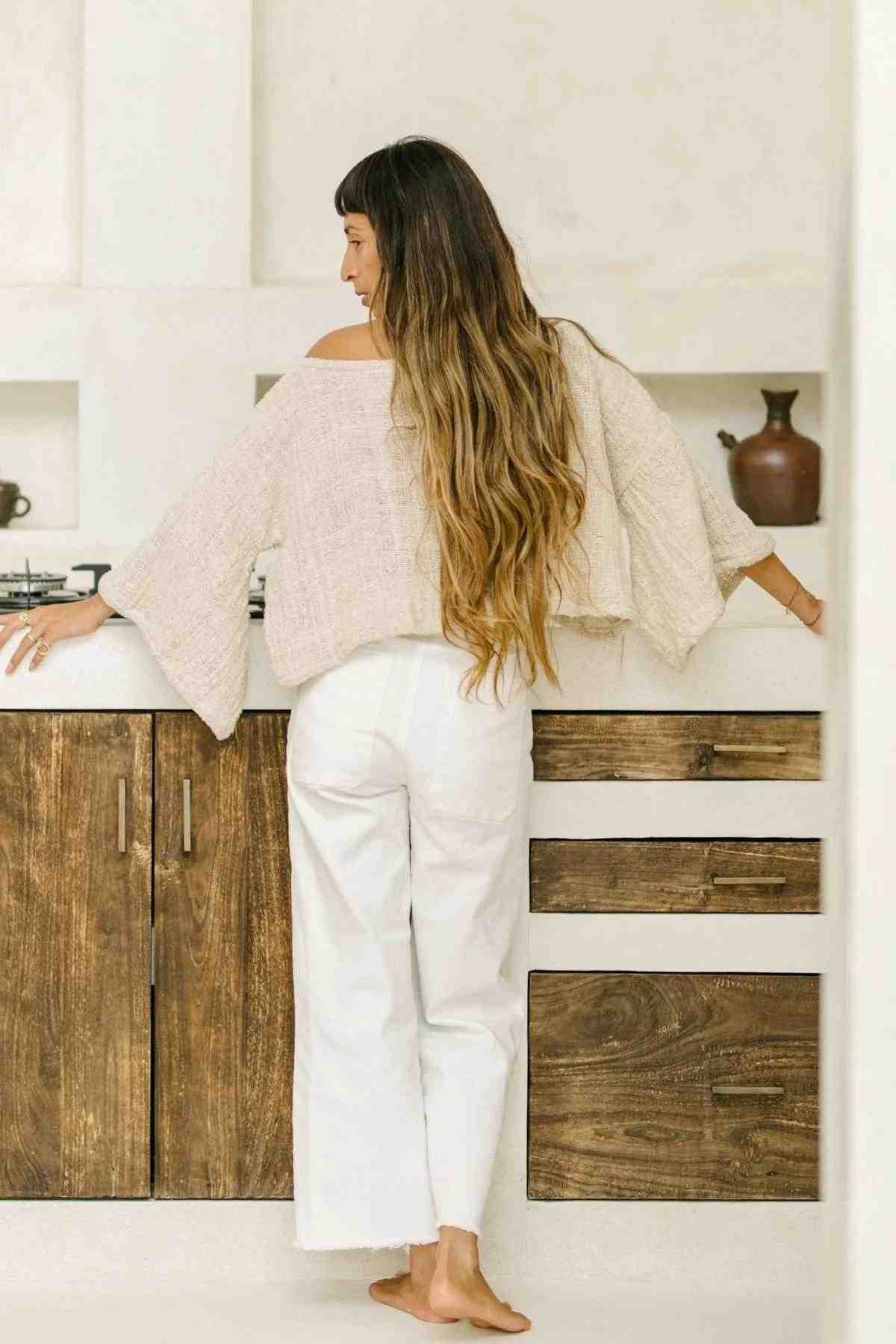
Le lin français en particulier est la référence en matière de qualité pour les tissus en fibres naturelles. Il a un poids et une texture qui le distinguent du lin cultivé ailleurs. Il s'adoucit au lavage sans perdre sa structure. Il respire d'une manière que les mélanges de lin moins chers ne font pas. Après dix lavages, il est meilleur qu'à son arrivée. Après cinquante, il est extraordinaire.
Nous délavons notre lin à la pierre avant la coupe. Cela signifie que le tissu a déjà subi le processus d'adoucissement avant de devenir un vêtement. La pièce que vous recevez a déjà fait son rodage. Elle est déjà à son plus respirant et à son plus confortable. Ce qui se passe ensuite n'est qu'une amélioration.

Teinture végétale : le processus et la philosophie
Les teintures synthétiques sont rapides. Elles produisent une couleur constante et fiable. Elles ne changent pas d'un lot à l'autre et ne varient pas à la lumière. Pour une industrie fondée sur le volume et la vitesse, elles sont le choix évident.
La teinture végétale n'est aucune de ces choses, et c'est précisément pourquoi nous la faisons.
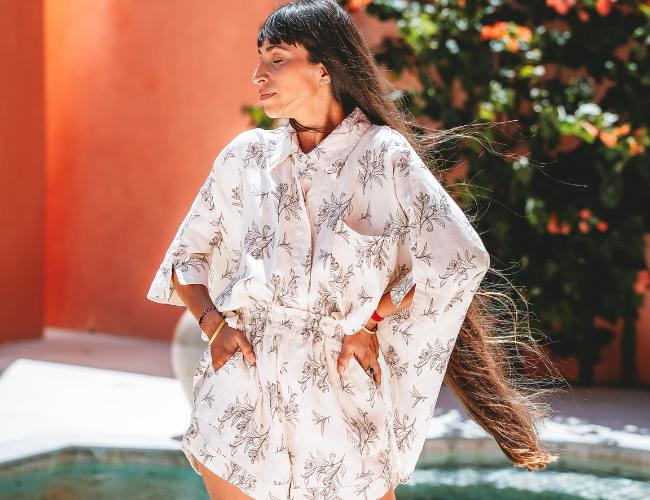
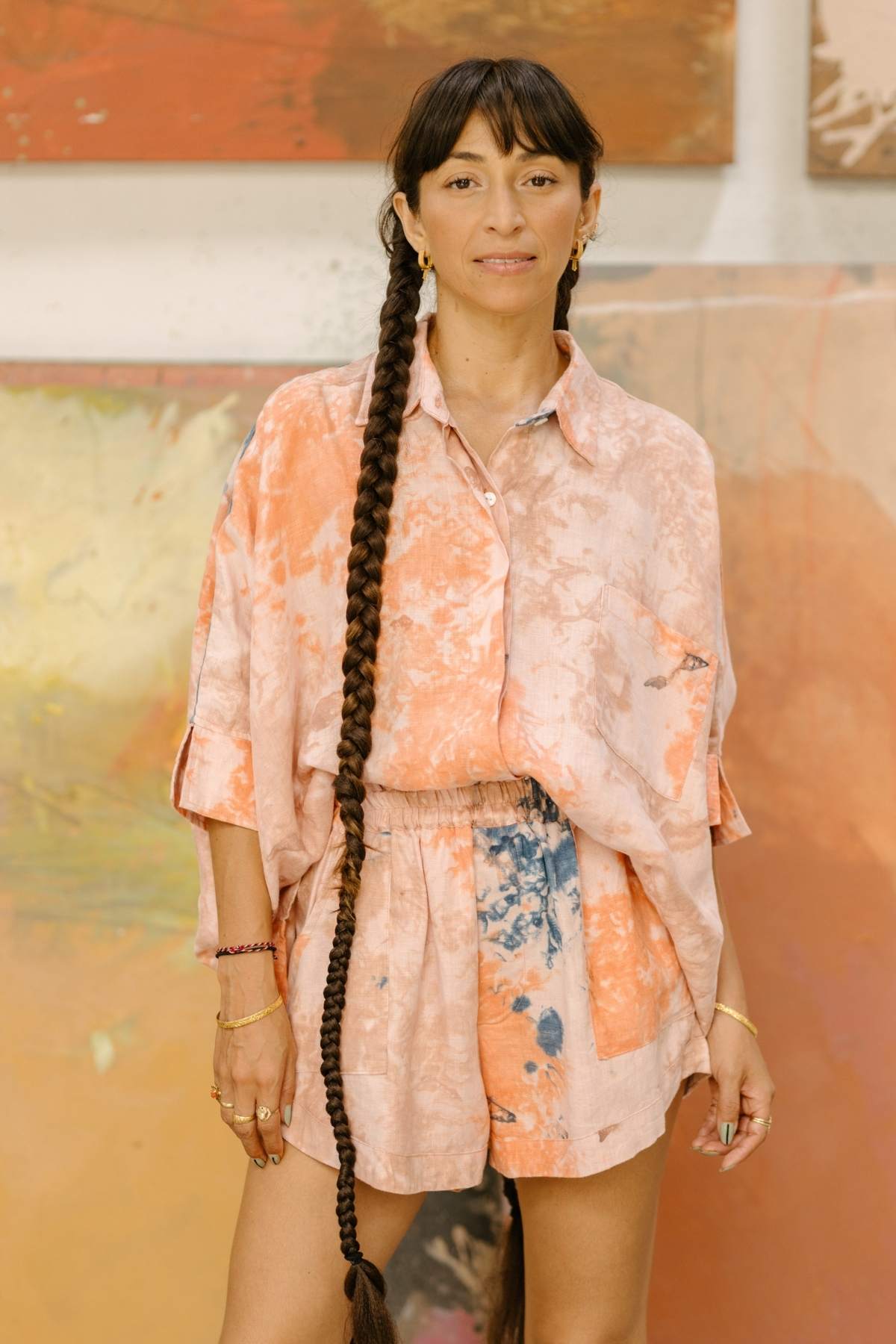
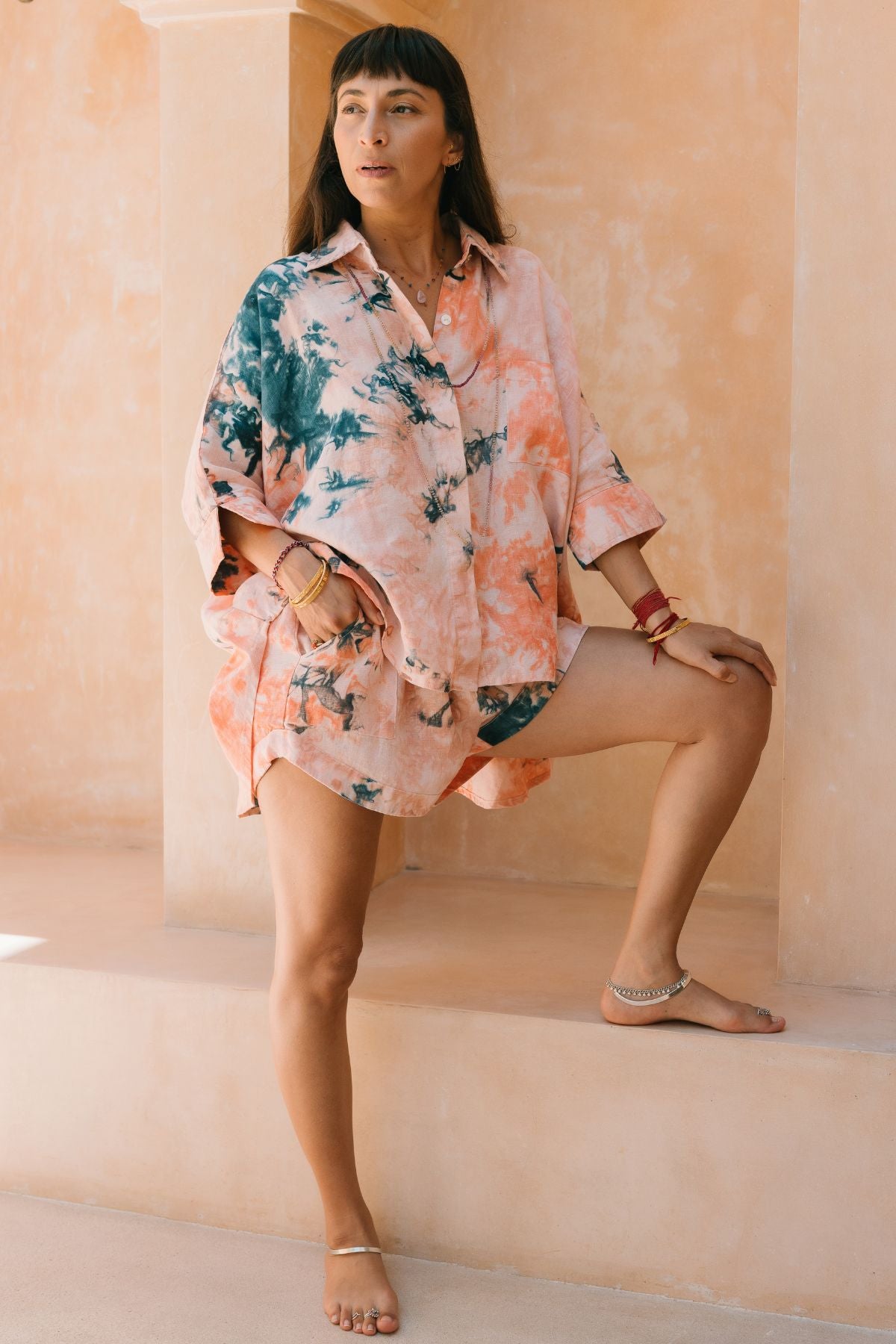
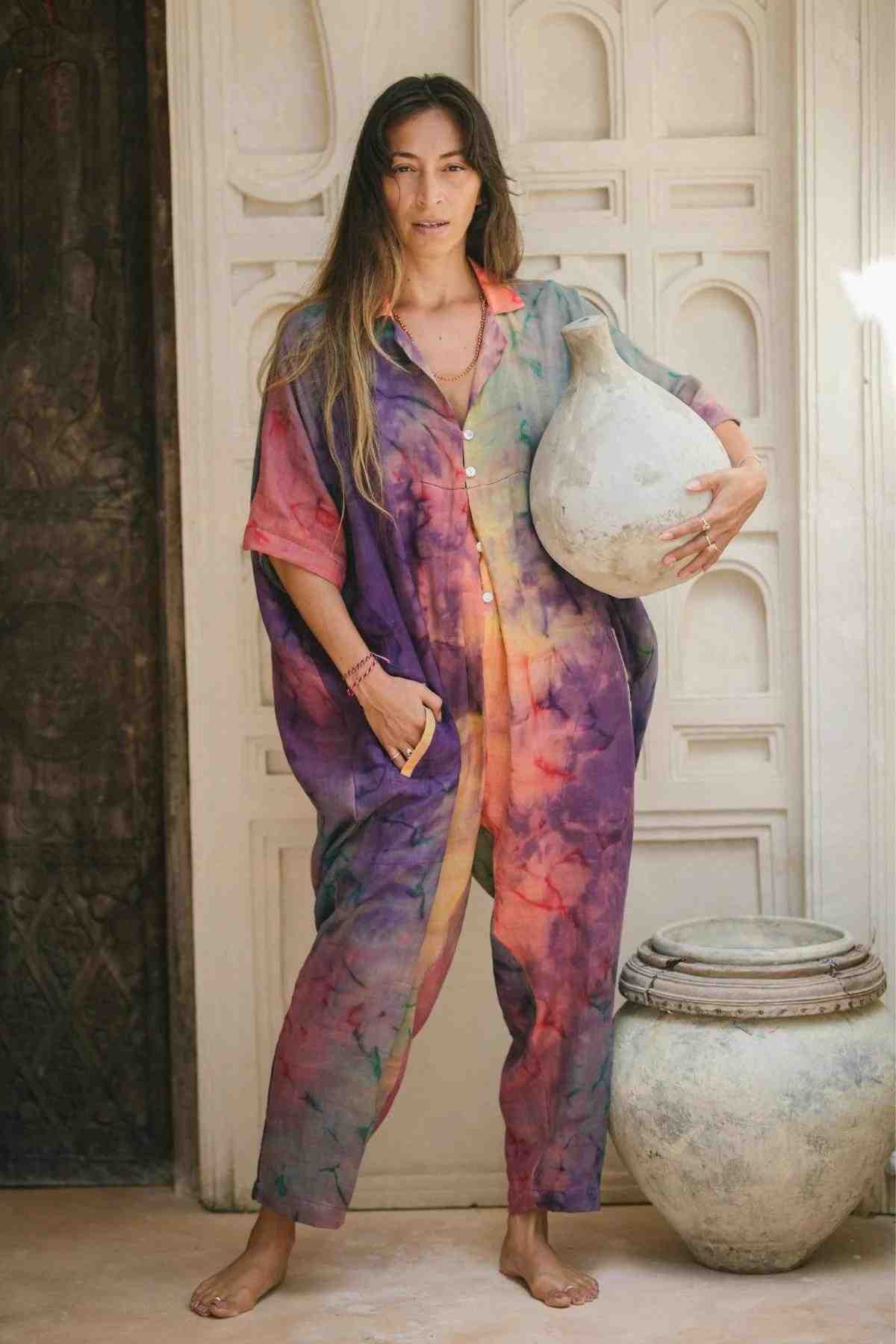
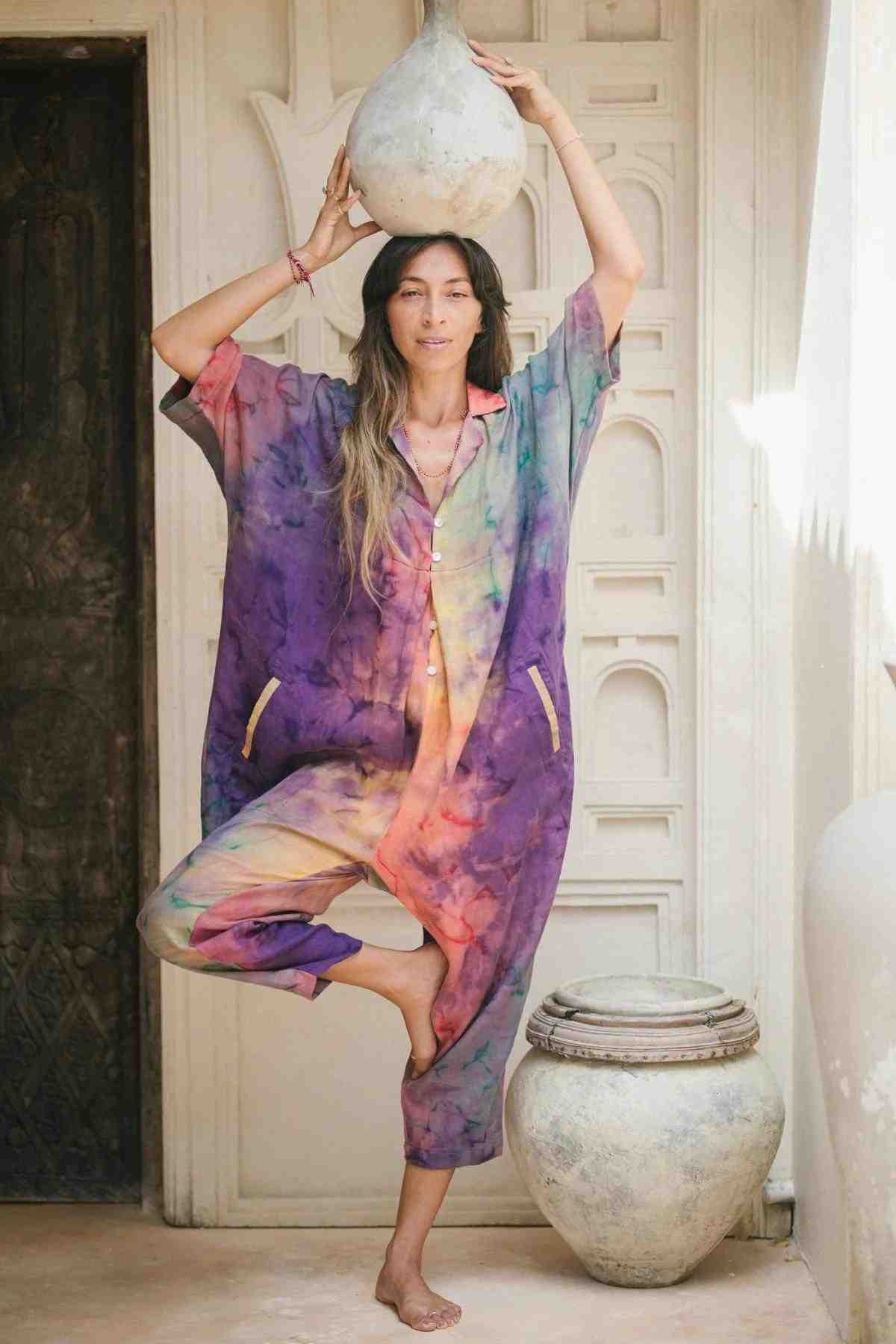
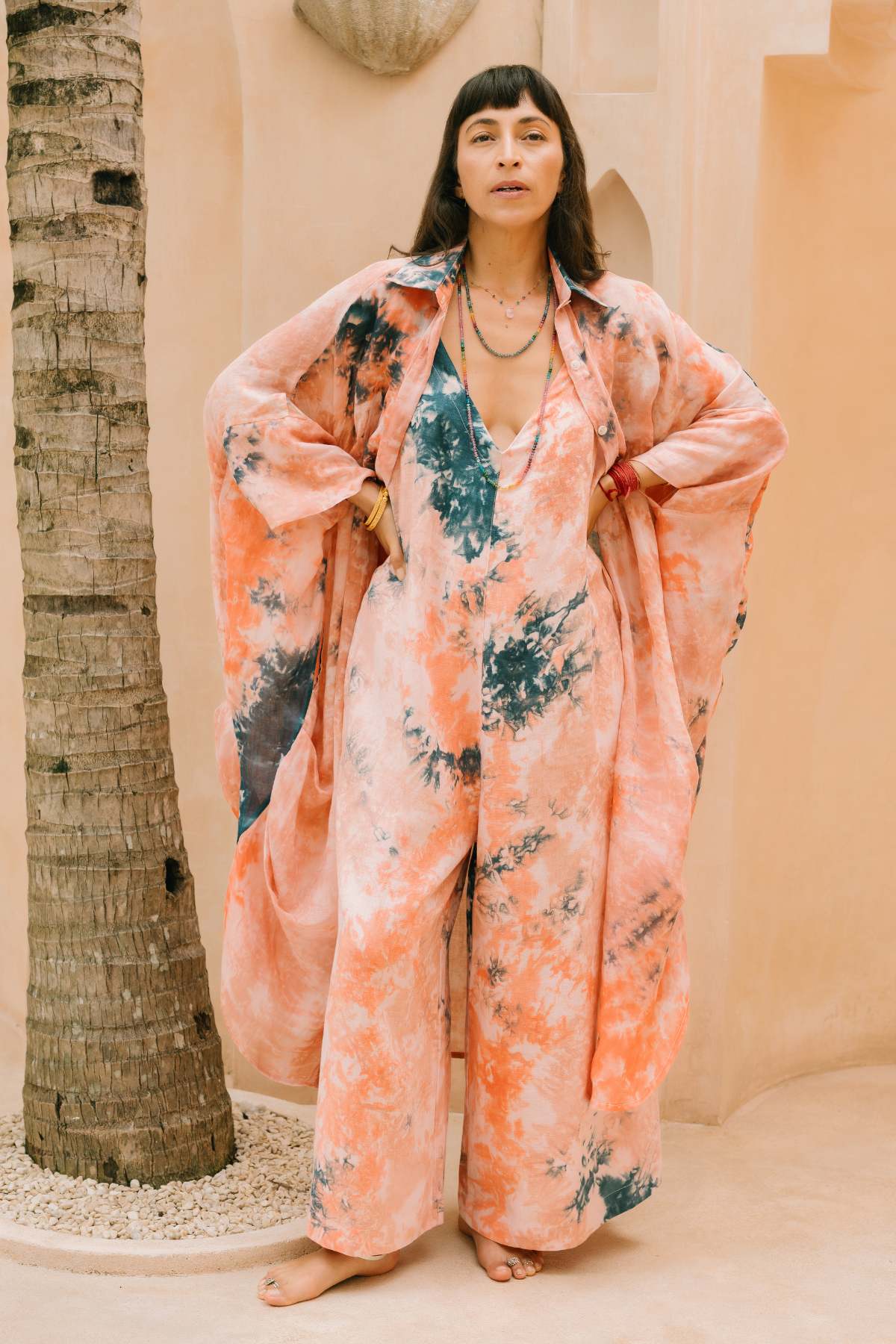
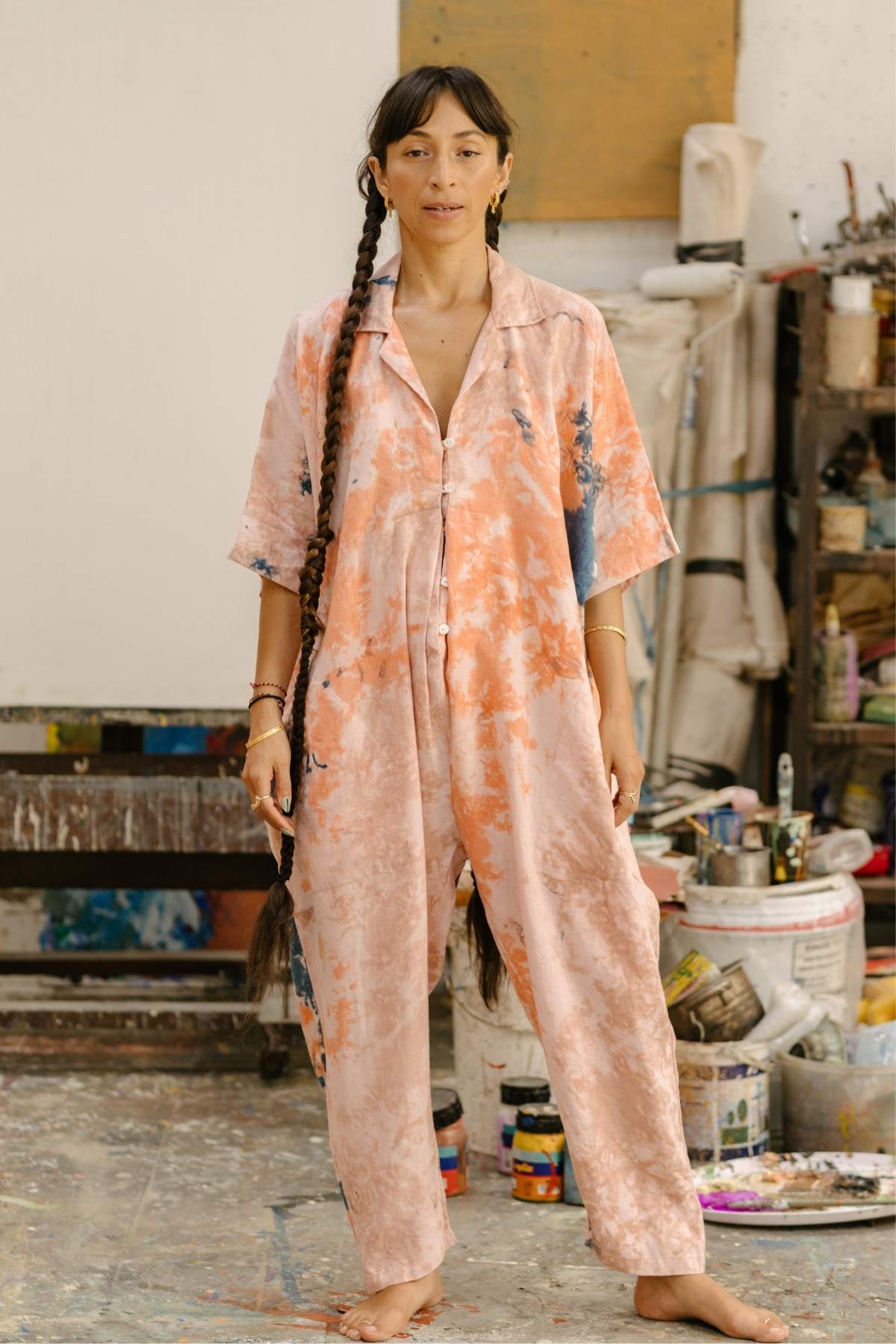
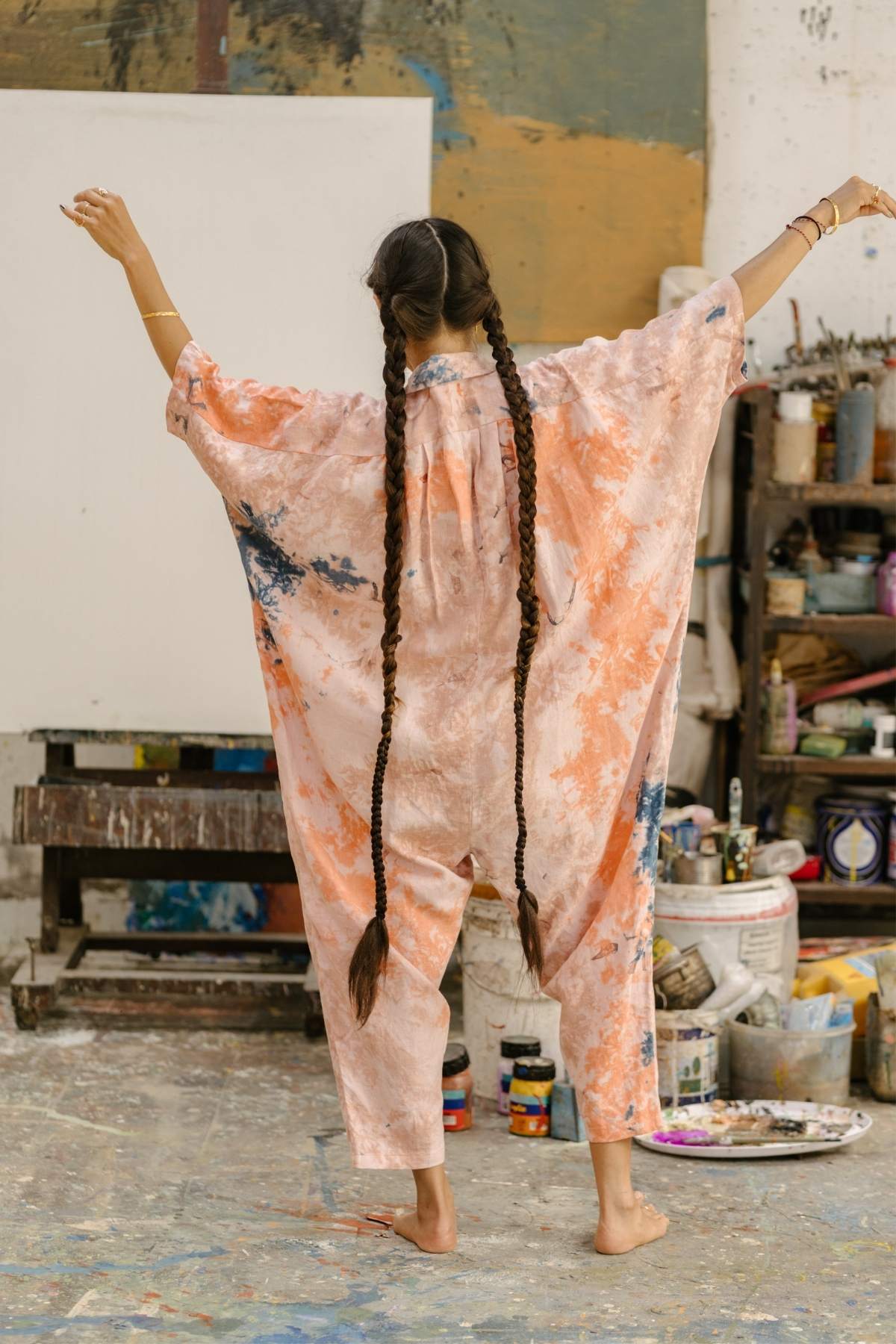
La teinture végétale au curcuma utilise la racine de la plante Curcuma longa comme source de teinture. Le processus prend des jours. La couleur s'accumule lentement dans le tissu, c'est pourquoi elle est si différente de toute teinture synthétique. Aucune pièce ne se teint exactement de la même manière. La prise varie selon le tissage, l'eau, la température ambiante et la main qui effectue le travail. Ce que vous recevez lorsque vous commandez une pièce teinte botaniquement est une pièce qui ne sera jamais exactement reproduite.
Sur le lin, le curcuma produit un or chaud qui change selon les conditions de lumière. Doré en plein soleil. Ambré à l'ombre. Quelque chose proche du bronze à la lumière des bougies. C'est l'une des plus anciennes teintures naturelles de Bali et d'Asie du Sud. Les racines de cette pratique sont plus profondes que la mode en tant que catégorie.
Les teintures Uluwatu Sunset et Golden Sunset de la collection Botanical Nidra prennent cinq à sept jours pour se former par pièce. Nous ne nous précipitons pas. La couleur qui résulte de ce temps n'est pas obtenue d'une autre manière.

Production en petites séries : ce que cela signifie en pratique
Quand nous parlons de petites séries, nous le pensons au sens le plus littéral du terme. Nous ne pré-produisons pas de stock pour le stocker dans un entrepôt. La plupart des pièces sont fabriquées sur commande. Lorsque vous passez commande, le lin est coupé. La pièce est cousue. Elle est vérifiée. Elle est emballée. Cela prend de deux à cinq semaines parce que c'est le temps qu'il faut pour fabriquer quelque chose de bien quand c'est fait à la main, en petites quantités, par une équipe qui connaît son travail.
C'est inconfortable pour les clients habitués à la livraison en deux jours. Nous comprenons. Nous pensons aussi que l'expérience d'attendre quelque chose fait spécifiquement pour vous est différente de celle de recevoir quelque chose qui était stocké dans un entrepôt avec mille pièces identiques. La pièce qui arrive après cinq semaines entretient une relation différente avec la personne qui la reçoit. Elle a été fabriquée parce que vous l'avez demandée. C'est un objet d'une nature différente.
Les petites séries signifient également que lorsqu'une pièce est épuisée, elle est souvent définitivement partie. Nous ne réapprovisionnons pas à l'infini. Certaines pièces reviennent dans de nouvelles couleurs. Certaines ne reviennent pas du tout. La collection est vivante dans le sens où elle change, grandit et lâche prise. C'est délibéré.
À quoi ressemble réellement la mode lente
La mode lente, en tant que pratique, ne concerne pas principalement les matériaux. Elle commence là, mais ne s'arrête pas là. Elle concerne la relation entre le créateur et l'objet créé. Entre la personne qui porte quelque chose et l'objet qu'elle porte. Entre la décision d'acheter et la compréhension de ce que cette décision signifie.
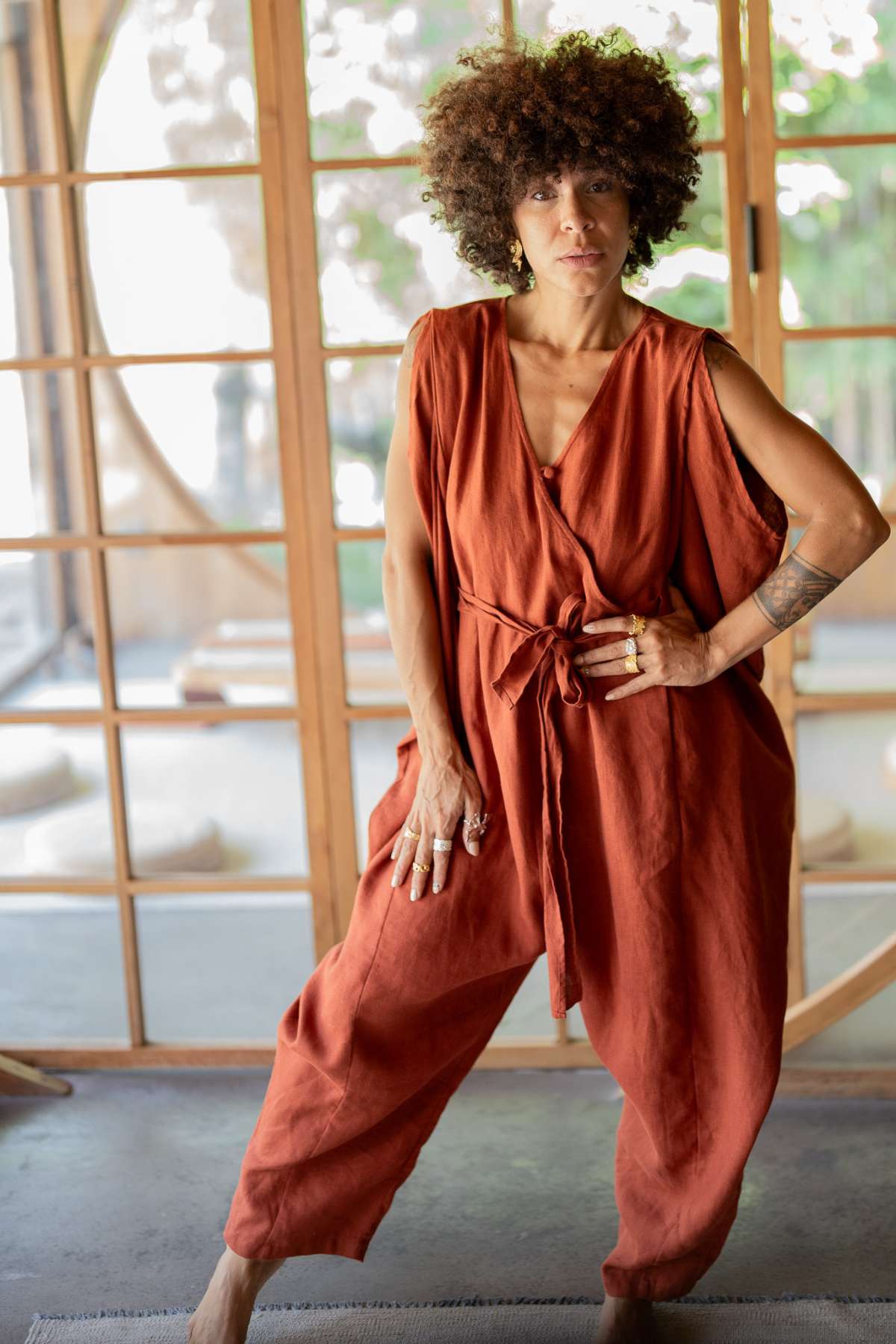
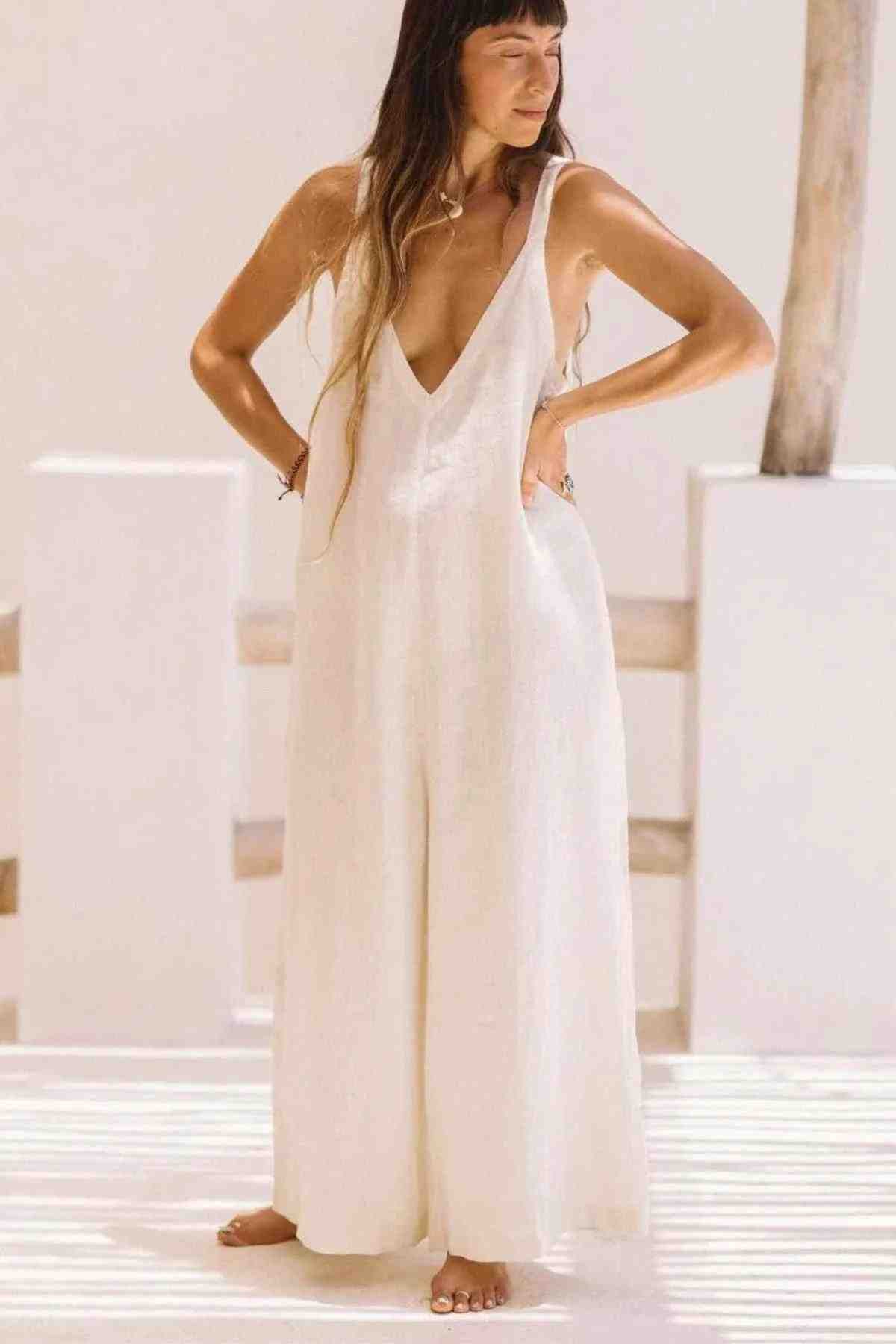
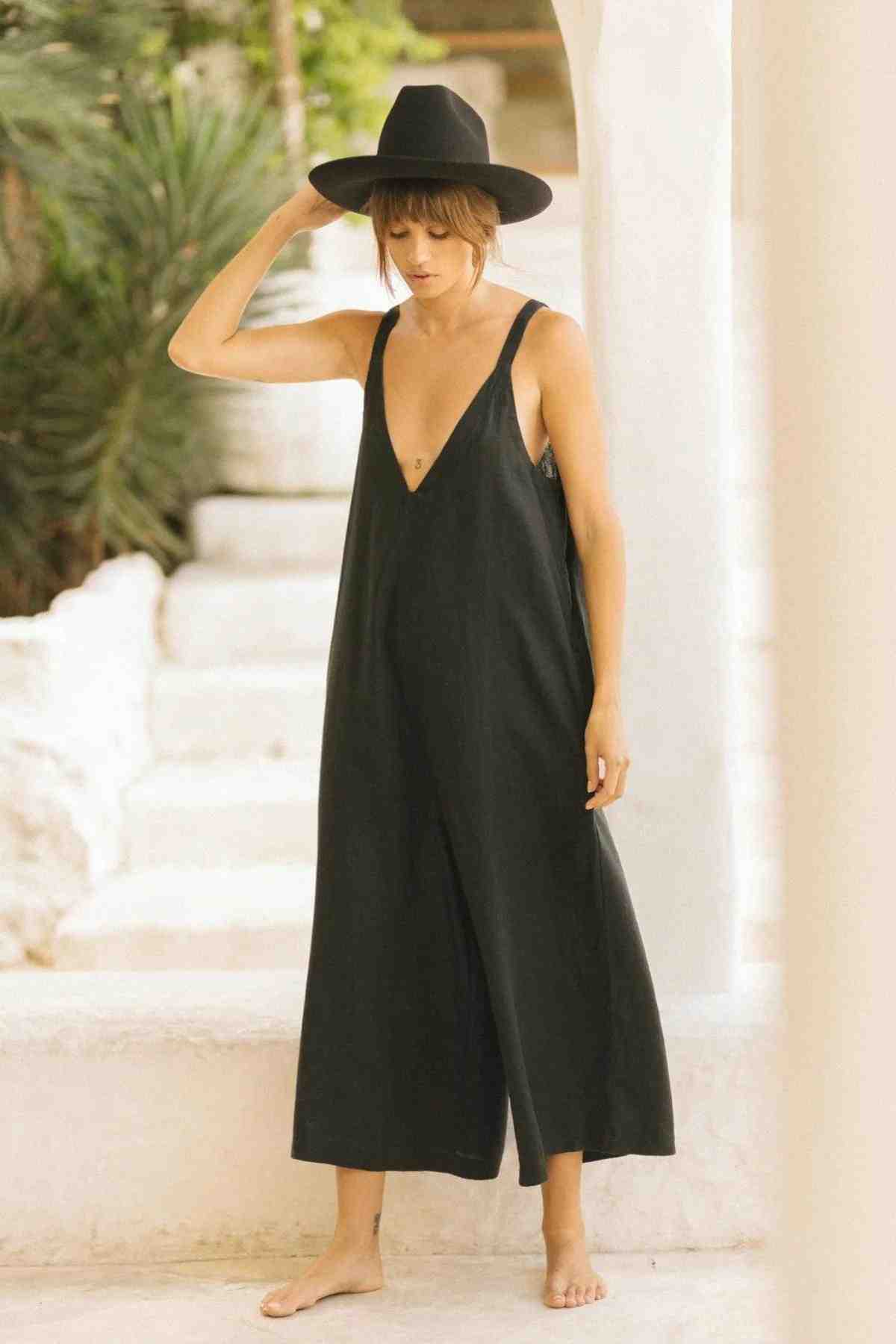
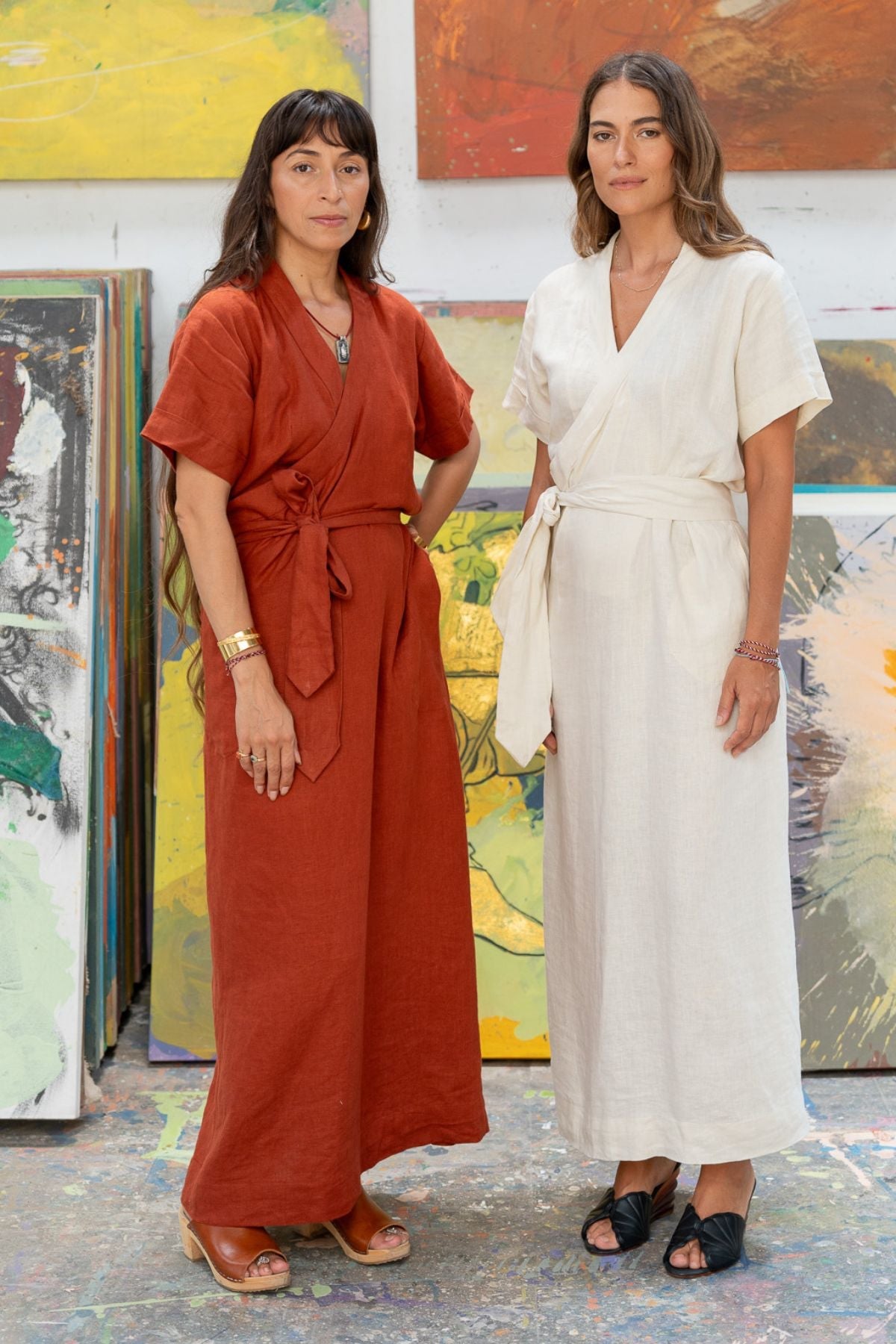
Nous fabriquons des vêtements conçus pour durer. Non pas dans le sens où ils sont construits pour résister à l'usure. Dans le sens où ils sont conçus pour rester désirables au-delà de la saison. La robe Dharma sera aussi appropriée dans dix ans qu'elle l'est aujourd'hui. La combinaison-pantalon Kuan Yin ne fait pas référence à une tendance. Elle fait référence à quelque chose de plus ancien et moins éphémère que la mode.
La mode lente signifie acheter moins et choisir plus délibérément. Cela signifie posséder quatre pièces en lin que vous portez tous les jours plutôt que quarante pièces qui tournent dans votre garde-robe et votre culpabilité en parts égales. Cela signifie comprendre la provenance de ce que vous portez, non pas comme un exercice moral, mais parce que cette connaissance change votre relation à l'objet.
Nous ne sommes pas parfaits. Aucune marque ne l'est. Mais ce sont les questions que nous nous posons sans cesse, et nous continuerons à les poser.

Sur les certifications
Notre lin est certifié OEKO-TEX. OEKO-TEX Standard 100 est une certification indépendante qui teste chaque composant d'un textile, y compris les fils, les boutons et les imprimés, pour détecter les substances nocives. C'est l'une des certifications les plus rigoureuses disponibles pour les tissus, et elle s'applique au vêtement fini plutôt qu'à la seule matière première.
Nos coloris de lin plus clairs sont certifiés European Flax, ce qui vérifie la traçabilité de la fibre du champ au tissu. Cela signifie que le lin de ces pièces peut être tracé jusqu'à son origine en Europe du Nord, et que les pratiques agricoles à l'origine répondent aux normes européennes.
Nous les mentionnons non pas comme des arguments marketing, mais comme des faits vérifiables. Les certifications existent. Elles peuvent être vérifiées. Nous pensons que c'est important.
Questions fréquemment posées
En quoi Myrah Penaloza est-elle différente des autres marques de lin ?
Plusieurs choses nous distinguent. Nous utilisons spécifiquement le lin European Flax, qui est une fibre de meilleure qualité que le lin provenant d'autres régions. Nous délavons à la pierre avant la coupe, de sorte que le vêtement arrive déjà à son toucher le plus doux. Nous fabriquons en petites séries à Bali, ce qui signifie que les pièces sont manipulées par des personnes qui connaissent le travail plutôt que traitées dans une usine à grand volume. Et plusieurs pièces de la collection utilisent la teinture botanique, qui produit une couleur ne pouvant être reproduite par des procédés synthétiques. Ce ne sont pas des affirmations. Ce sont les spécificités de notre façon de travailler.
Qu'implique la fabrication sur commande pour les délais de livraison ?
La fabrication sur commande signifie que votre pièce est coupée et cousue après que vous ayez passé votre commande. La plupart des pièces en lin sont expédiées en deux à quatre semaines. Les pièces en soie prennent trois à cinq semaines. Les pièces teintes botaniquement peuvent prendre un peu plus de temps car le processus de teinture lui-même prend cinq à sept jours avant que le vêtement puisse être confectionné. Si vous avez une date en tête, indiquez-la dans votre commande ou contactez-nous et nous vous dirons honnêtement si le délai est réalisable.
Bali est-il un endroit responsable pour la confection de vêtements ?
C'est une question juste et nous la prenons au sérieux. Bali a une véritable tradition d'artisanat textile, et les femmes qui travaillent dans notre atelier sont des artisanes qualifiées, et non des ouvrières à bas salaire. La décision de fabriquer à Bali n'était pas principalement une décision de coût. C'était une décision concernant l'artisanat, la relation entre le fabricant et le matériau, et le type d'objets que nous voulions produire. Nous payons équitablement selon les normes locales et internationales. Nous travaillons avec une petite équipe qui est avec l'atelier depuis des années. Nous ne sommes pas une marque de mode rapide qui sous-traite à Bali pour réduire les coûts ; nous sommes une marque qui fabrique à Bali parce que c'est là que le travail est bien fait.
Comment prendre soin des pièces teintes botaniquement ?
Les teintures végétales sont naturelles, ce qui signifie qu'elles réagissent à la lumière et au lavage différemment des teintures synthétiques. Lavez à l'eau froide, à la main ou en machine sur un cycle délicat. Évitez la lumière directe du soleil pendant de longues périodes lors du séchage. La couleur se développera et s'intensifiera légèrement au cours des premiers lavages, ce qui est le comportement naturel de la teinture végétale sur le lin. N'utilisez pas d'eau de Javel ou de détergents agressifs. La pièce changera avec le temps ; c'est approprié et attendu. Une pièce teinte botaniquement qui a été portée et lavée cent fois porte une histoire qu'une nouvelle pièce n'a pas.
Quel est l'impact environnemental du lin par rapport au coton ?
Le lin European Flax utilise beaucoup moins d'eau que le coton cultivé de manière conventionnelle. Le lin est naturellement résistant à la plupart des ravageurs, ce qui réduit l'utilisation de pesticides. La plante entière de lin est utilisée après la récolte, minimisant les déchets agricoles. L'European Flax en particulier est cultivé par la pluie plutôt qu'irrigué, ce qui en fait l'une des fibres naturelles ayant le moins d'impact. Le coton, en particulier le coton cultivé de manière conventionnelle, nécessite de grandes quantités d'eau et de pesticides. La comparaison n'est pas équitable. Le lin, et plus spécifiquement le lin European Flax, fait partie des options de fibres naturelles les plus respectueuses de l'environnement dans la mode.
La Collection Myrah Penaloza
Lin européen. Teintures végétales. Fabriqué à Bali, à la main, en petites séries. La collection est disponible en ligne, sur commande, et expédiée dans le monde entier.
Découvrir la Collection →Fabriqué sur commande. Expédié en 2 à 5 semaines selon la pièce.


Laisser un commentaire
Ce site est protégé par hCaptcha, et la Politique de confidentialité et les Conditions de service de hCaptcha s’appliquent.