


Postpartum essentials nobody puts on the list
Every postpartum list you will be handed covers the baby and the first week of bleeding. Almost none of them cover the other eleven weeks, or the woman living them. The things that turn out to matter most are clothes that open at the front, a way to eat with one hand, somebody who will hold the baby while you shower, and permission to be horizontal. Here is the list I wish someone had written for me.

I have had this experience myself and I am not a doctor. Nothing here is medical advice. What follows is practical, and about the woman rather than the baby, because she is the one the lists forget.
The clothes, which nobody mentions and everybody needs
You will be in the same three things for six weeks. Choose them on purpose.
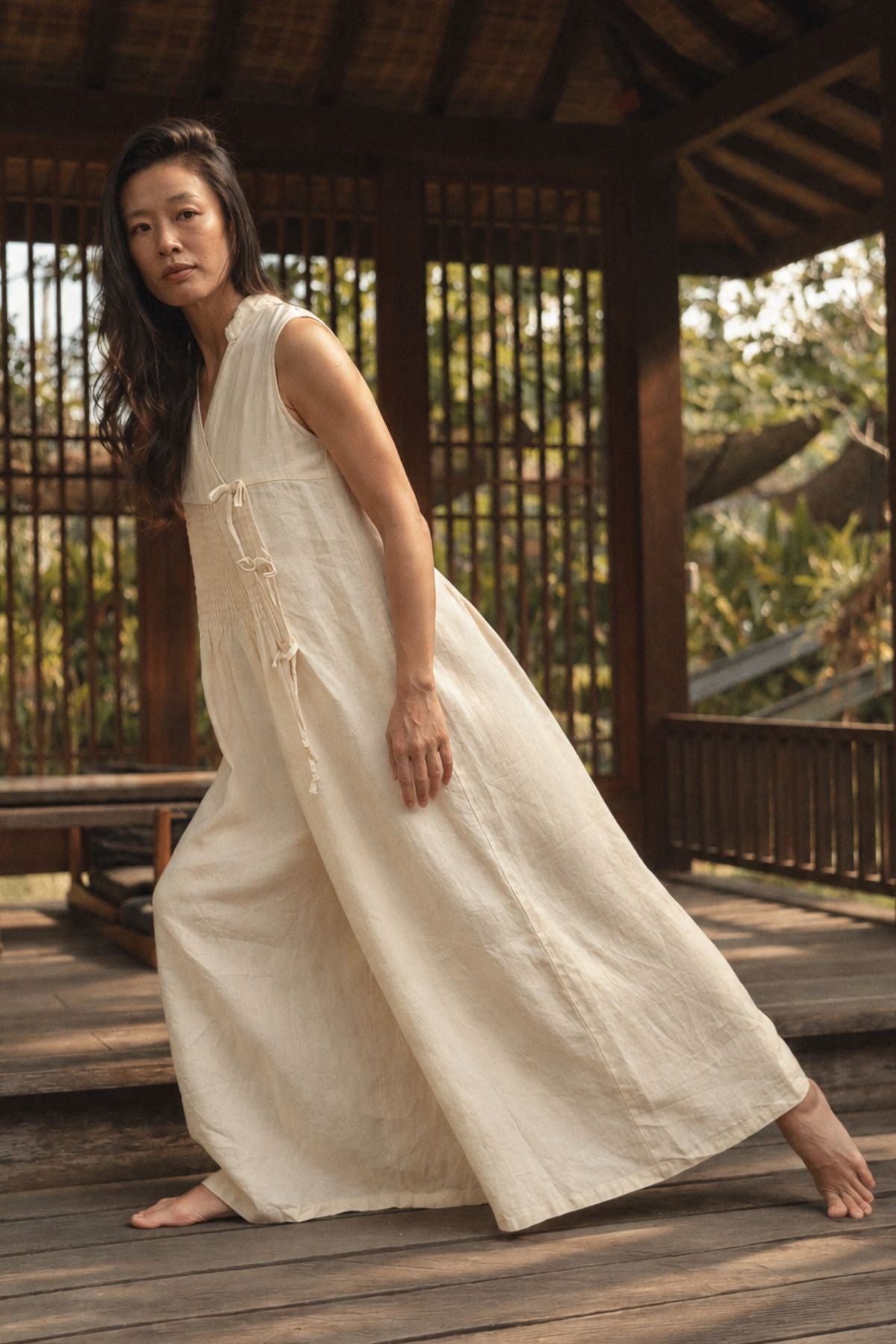
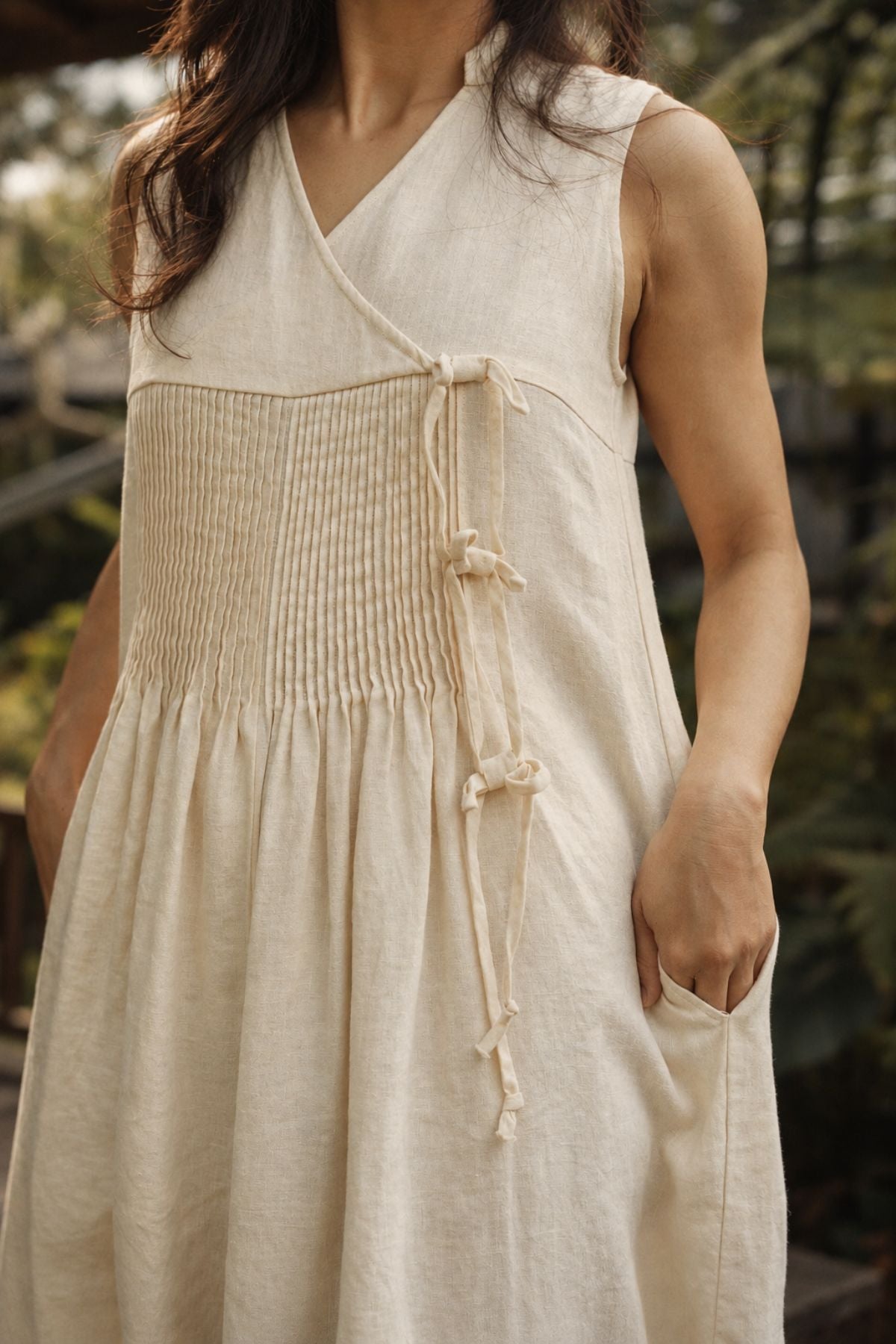
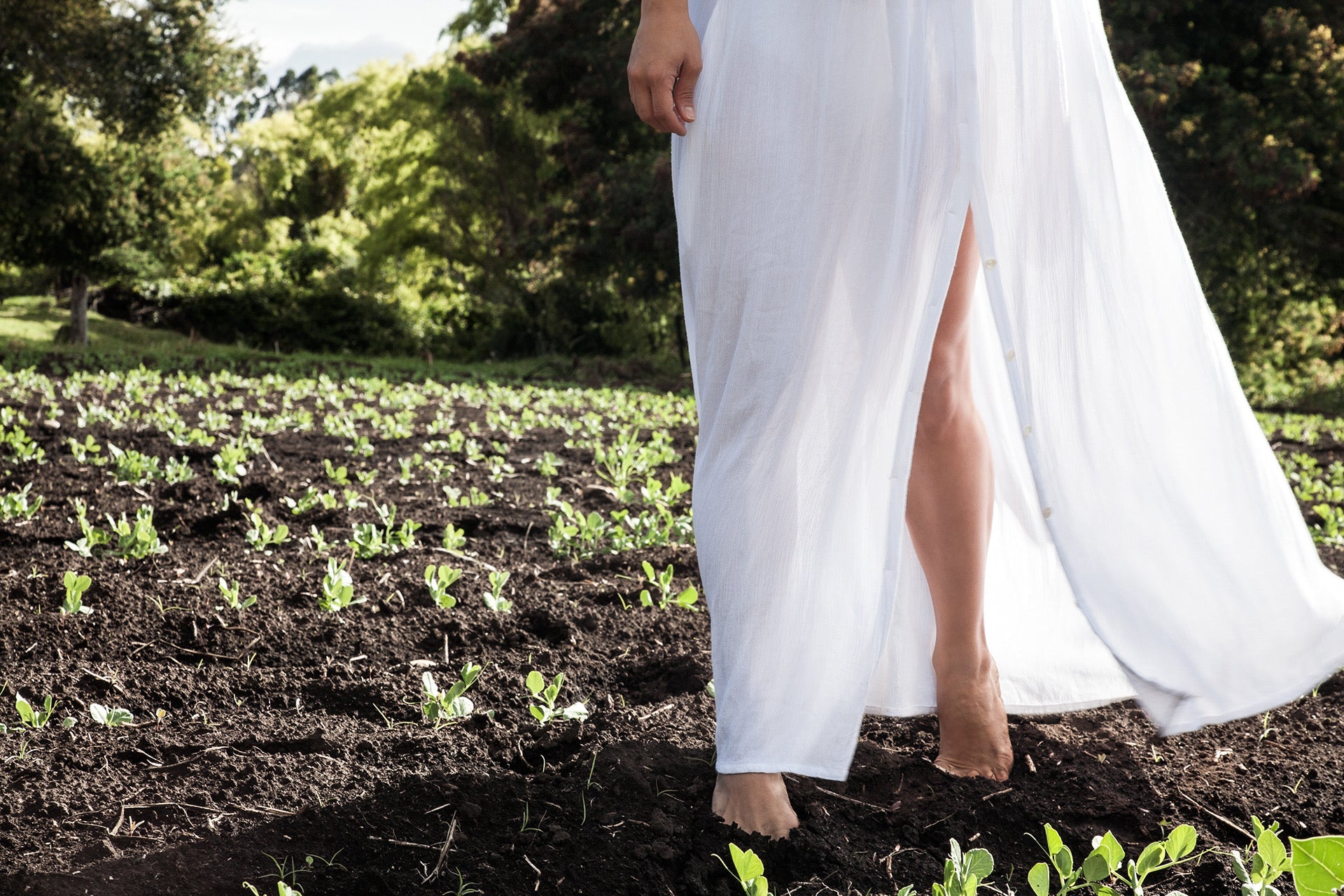
Something that opens at the front. Not a nursing top with a discreet panel. A garment that actually opens, buttons or wrap, from top to bottom. You will be feeding at three in the morning in the dark, and a button you can find by feel is worth more than any clever design. This is the single reason the Kundalini Gown gets worn through pregnancy and long after: it buttons collarbone to ankle, and the same gown fits a body at thirty-eight weeks and at four months out.
Nothing with a fixed waist. Your middle will be tender, changing, and none of your usual sizes. A wrap or a tie removes the whole problem. A woman wrote to tell us she wore the Shanti through her entire pregnancy and out the other side, and that letter is the reason we have never changed the pattern.
Natural fibre against your skin. You will be warm, then suddenly cold, then sweating at night in a way nobody warned you about. Linen and cotton move moisture. Synthetic fabric holds it, and holds odour, which matters when laundry has stopped being a thing that happens on schedule.
Two of everything you actually wear. Not seven of five different things. Two, so one can be in the wash.
Something that is not a pyjama. There comes a day, usually somewhere in week three, when you need to put on one thing that makes you feel like a person, and still be able to feed a baby in it. Everyone underestimates what that day does for you.

On belly binding
Here in Bali and across Indonesia and Malaysia, wrapping the belly after birth is ordinary. It is called bengkung binding, a long piece of cloth wound from hip to ribs, and traditionally it is done by someone else, daily, for weeks. Similar practices exist across Latin America, in Japan, and in most places that never stopped treating the weeks after birth as a period requiring care rather than a return to normal.
Women describe it as feeling held, and as a relief to the lower back when everything is loose and nothing is where it used to be. That is what I can honestly report. Whether it does anything structural is a question for your midwife or doctor, not for me, and it matters that you ask them before you start, particularly after a caesarean. Bound too tightly or too early it can cause harm, and the tradition has always relied on somebody experienced doing the wrapping.
If you want to try it, ask your care provider first, find someone who knows how, and stop if it hurts.
The things that are not objects
These are the actual essentials, and none of them can be bought.
- One person who comes without being asked. Not to see the baby. To hold the baby while you shower, and to leave.
- Food you can eat with one hand. Cook it before, or let someone else cook it. Warm food matters more than you would think in a body that has just done that.
- A closed door. Visitors are lovely and they are also a job. It is allowed to say next week.
- Somewhere to put the baby down. Safely, within arm's reach of wherever you sit. So that putting her down is not a decision.
- Permission to be horizontal. Most traditions that have thought carefully about this ask for around forty days of rest. Almost nothing in modern life supports that. Take whatever fraction of it you can.
One thing worth saying plainly
The weeks after birth move a great deal through a person, and some of it is heavy. Feeling tearful, raw or unlike yourself is common and usually passes. But if something feels wrong rather than hard, if it is not lifting, or if you are frightened by the way you feel, please tell your midwife, your doctor or someone who loves you. That is not a failure of the fourth trimester. It is the part where you are allowed to be looked after too.
What we make for this
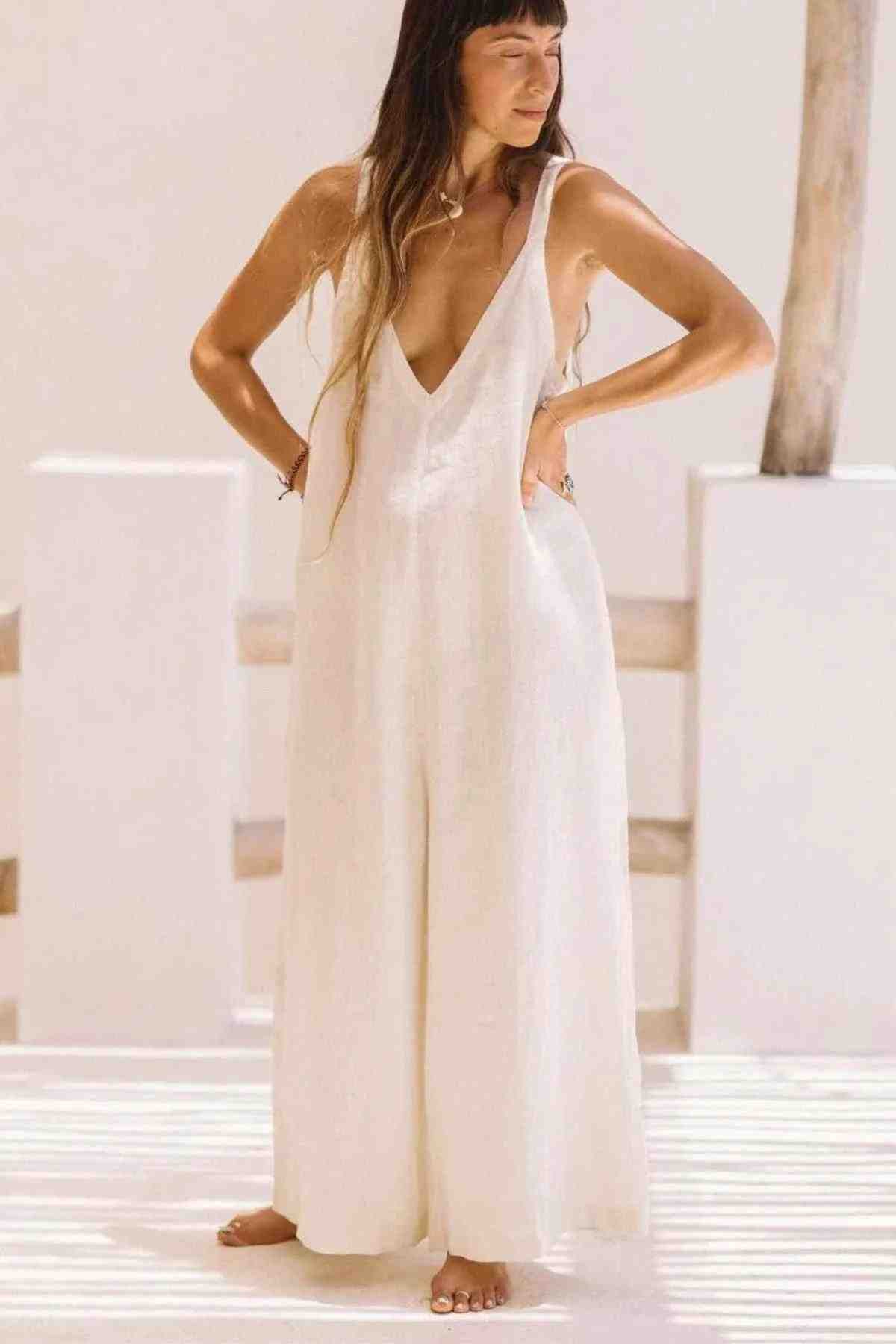
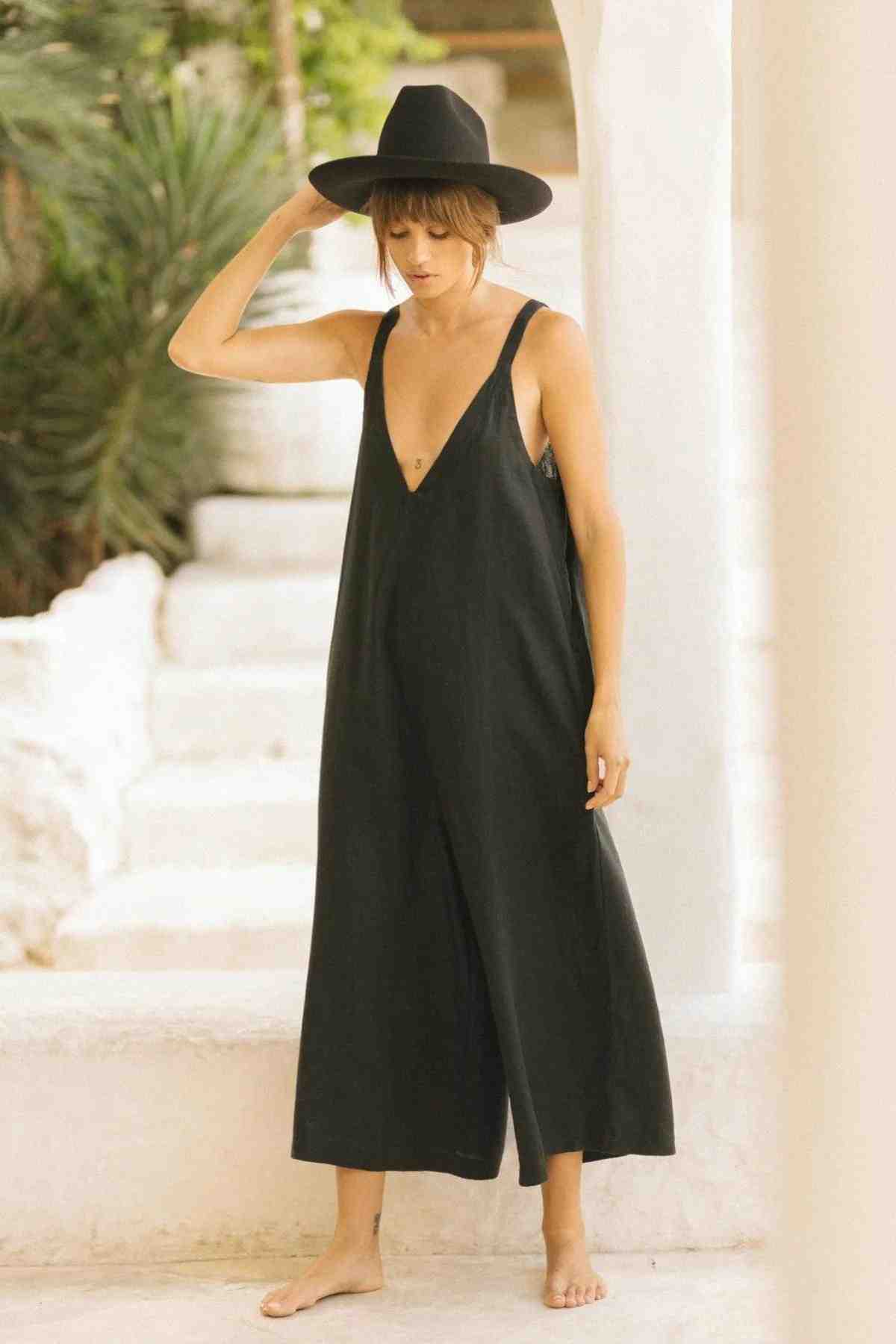
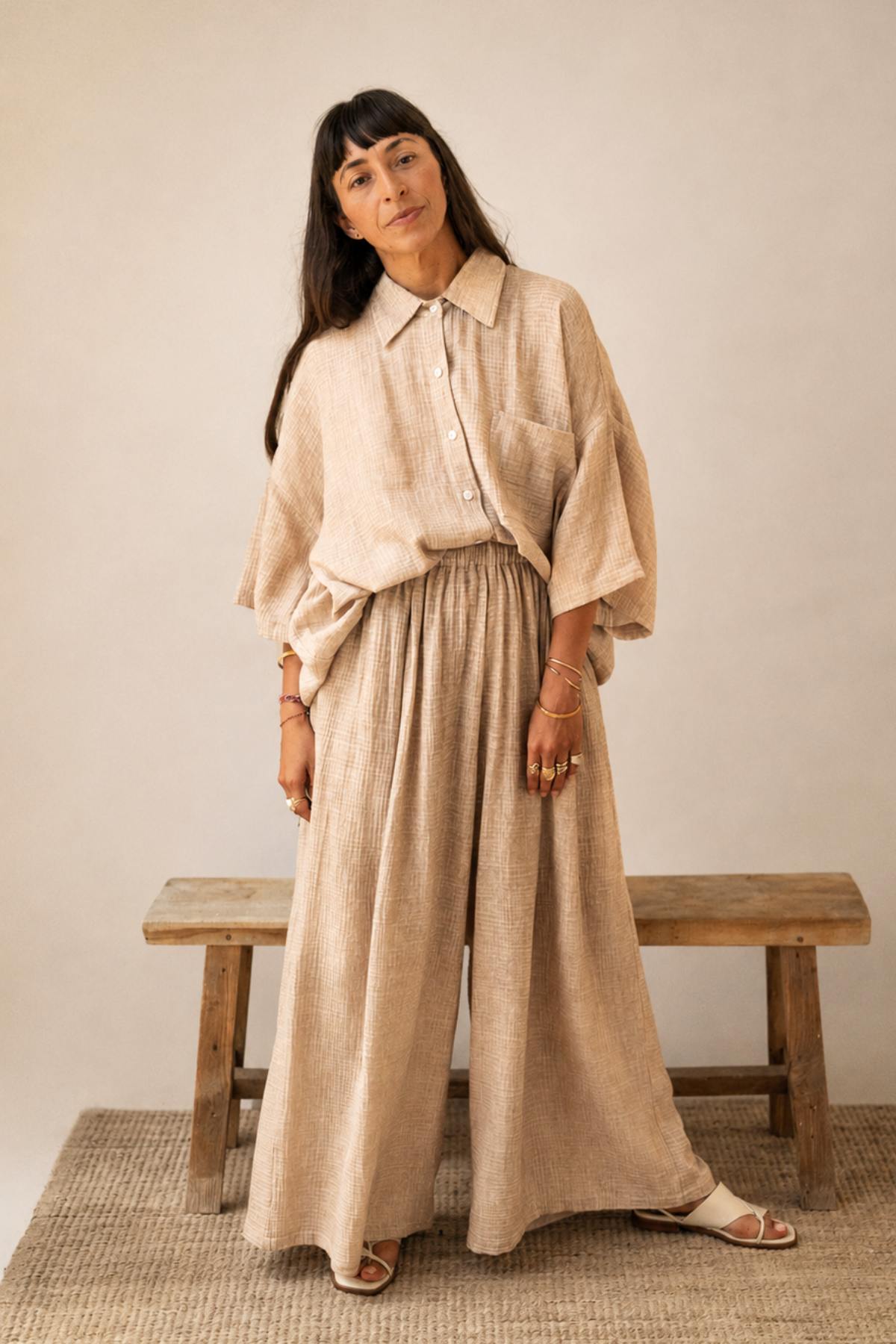
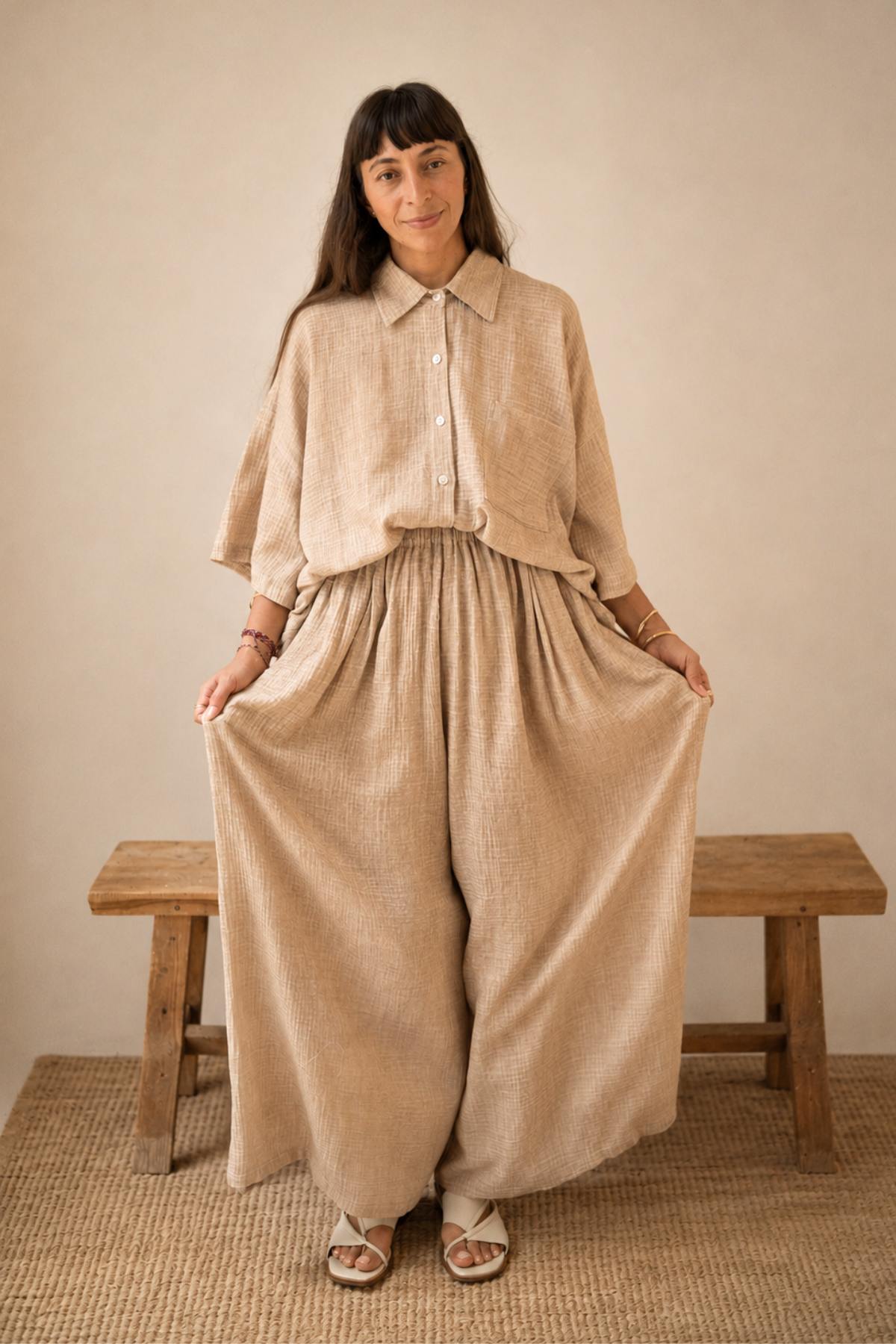
We do not sell baby gear and we are not going to pretend to. What we make is the clothing, and we made it this way before we understood it would be used like this: one size, adjustable, buttons and ties instead of zips, natural fibre, cut with enough ease that a body can change inside it.
The Maternity and Nursing collection gathers the pieces that work through pregnancy and after. Every one of them is a piece you will still be wearing when none of this is recent.
Frequently asked questions
What are the postpartum essentials for the mother, not the baby?
Clothing that opens at the front for feeding, nothing with a fixed waist, natural fibre against the skin, and two of whatever you actually wear so one can be washed. Beyond clothing: food you can eat one-handed, one person who comes to help rather than to visit, a safe place to put the baby down within arm's reach, and as much horizontal time as you can arrange.
What should I wear in the first six weeks after birth?
Loose natural fibre, front-opening, no fixed waistband. A button-front gown or a wrap works for feeding at night without needing light. Avoid synthetics, which hold heat and moisture at a time when night sweats are common.
What is bengkung belly binding?
A traditional practice across Indonesia, Malaysia and elsewhere in which a long cloth is wound from hip to ribs after birth, usually by someone experienced, daily for several weeks. Women commonly describe it as feeling supported and easing lower back strain. Ask your midwife or doctor before beginning, particularly after a caesarean, and stop if it hurts.
How long does the fourth trimester last?
The term usually describes the first twelve weeks after birth. Many traditional practices centre on a rest period of around forty days. In practice recovery is not on a schedule, and most women find the second six weeks as significant as the first.
What clothes work for both pregnancy and after?
Anything that adjusts rather than fits: wraps, ties, button fronts and one-size cuts with real ease in them. A gown that buttons the full length works at thirty-eight weeks and while nursing months later, which is more than most maternity-specific clothing can say.
With love from Bali,
Myrah
|
A Piece for This Threshold The Kundalini Gown. Shop the Kundalini Gown → |
|
The Muse-Letter Dress for the woman you’re becoming. Join the Muse-LetterUnsubscribe any time. No spam, ever. |









Laisser un commentaire
Ce site est protégé par hCaptcha, et la Politique de confidentialité et les Conditions de service de hCaptcha s’appliquent.