The Sun Is the Metronome

There are about twelve minutes above Uluwatu when the light stops being light and becomes something closer to a temperature. The cliffs hold it. The sea takes it back. You feel it on your arms before you notice it in the sky.
I have watched that hour more times than I can count and it still does the same thing to me. It slows me down. Not because I decide to, but because something older than the decision arrives first and makes the decision for me.
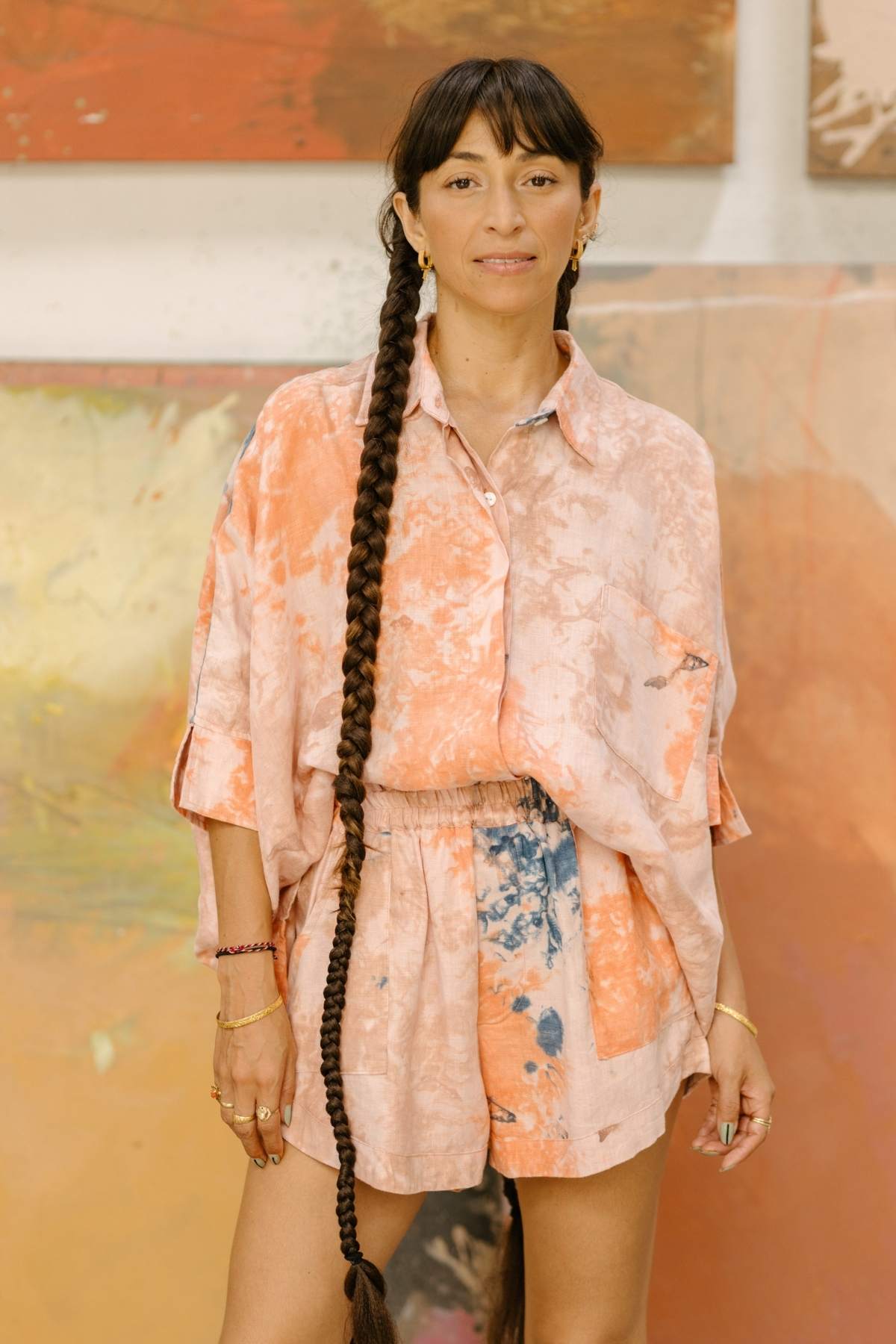
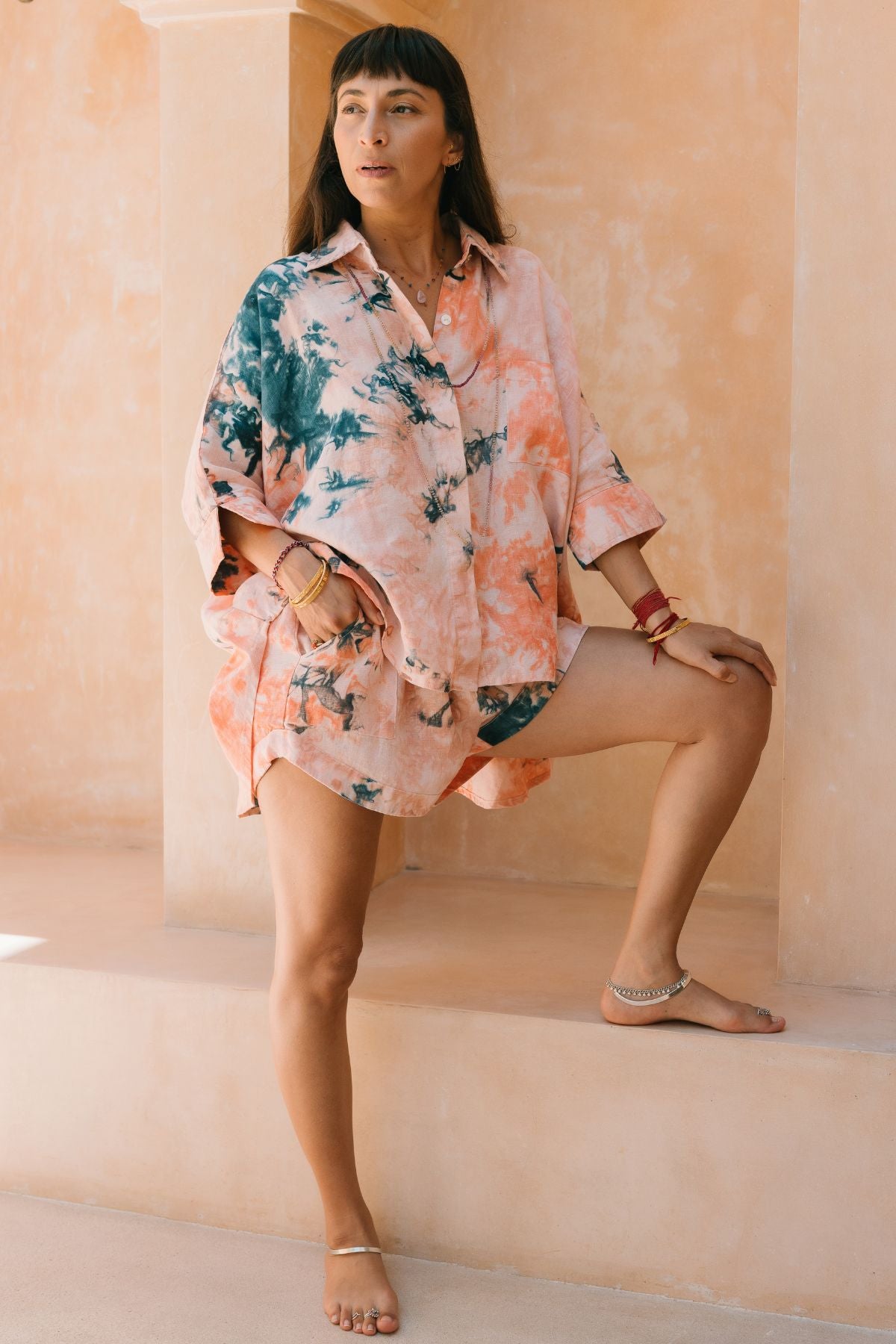
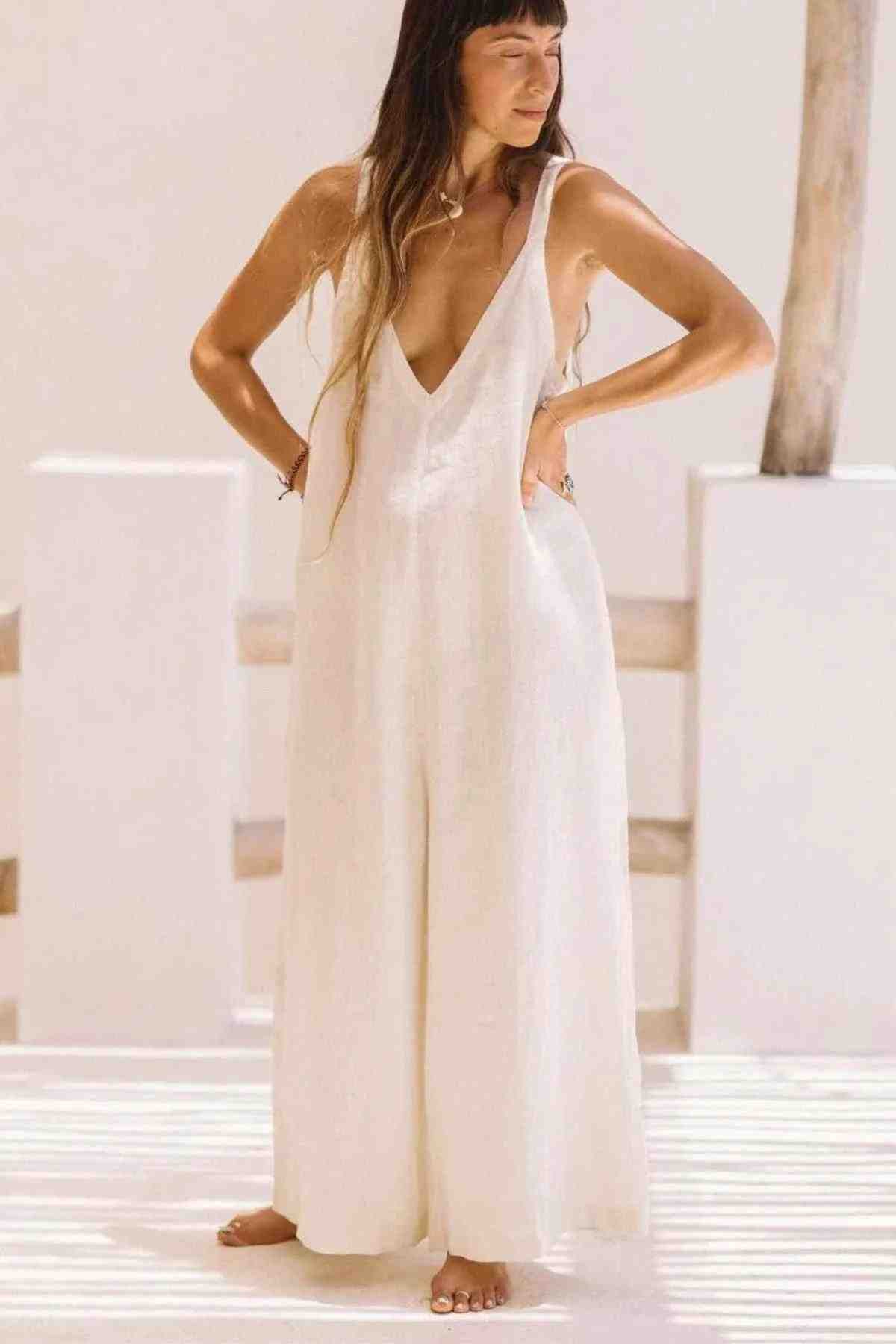
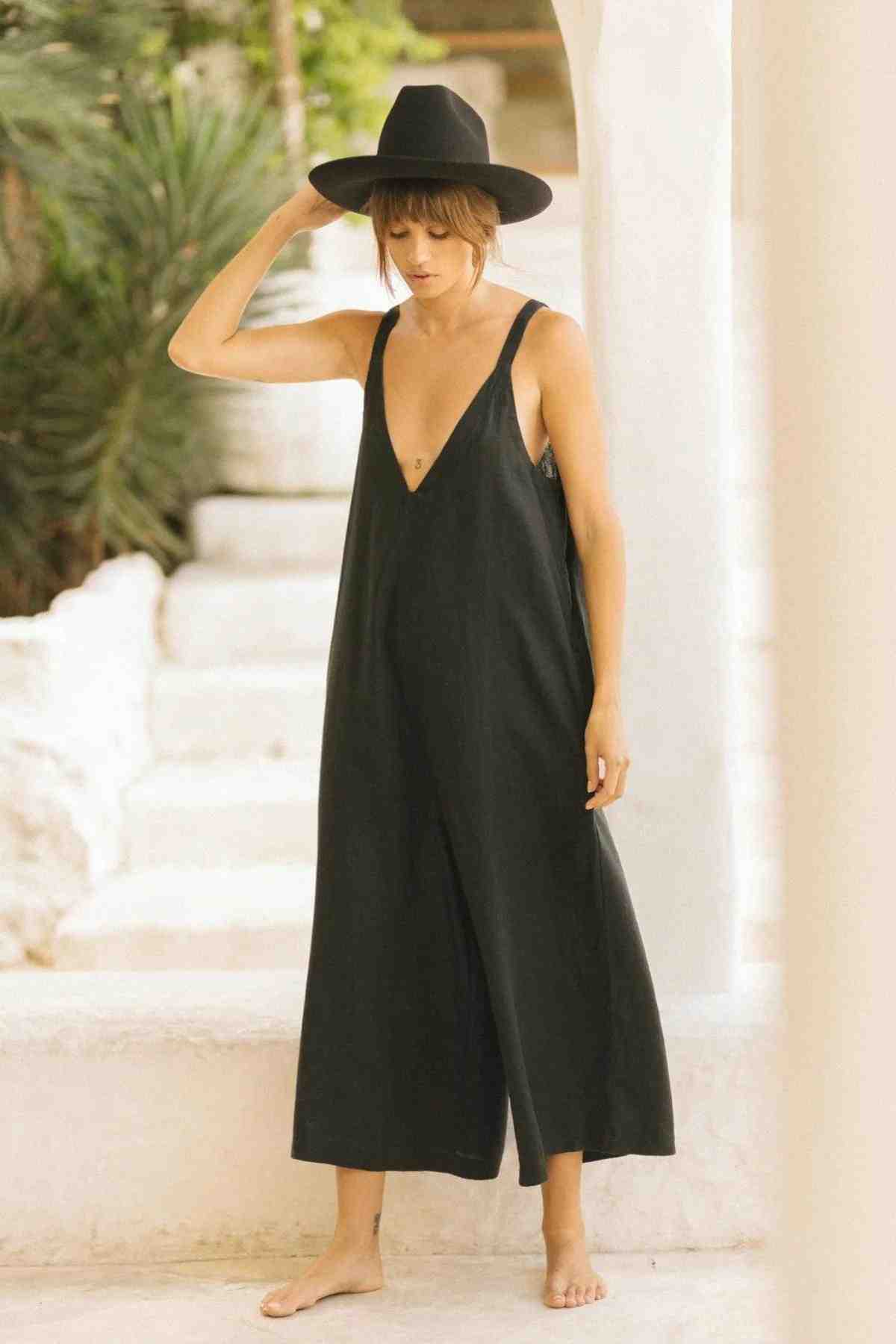
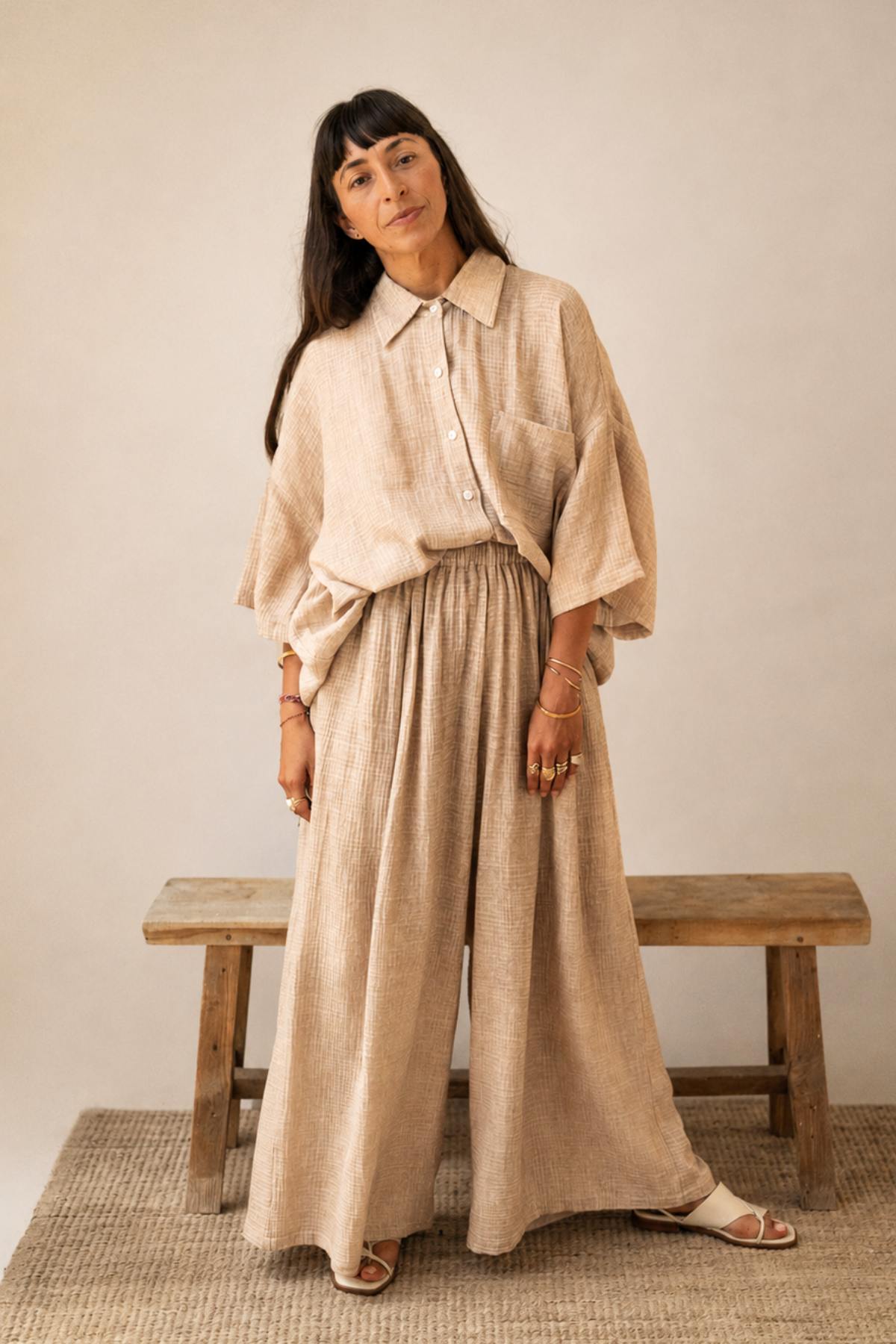
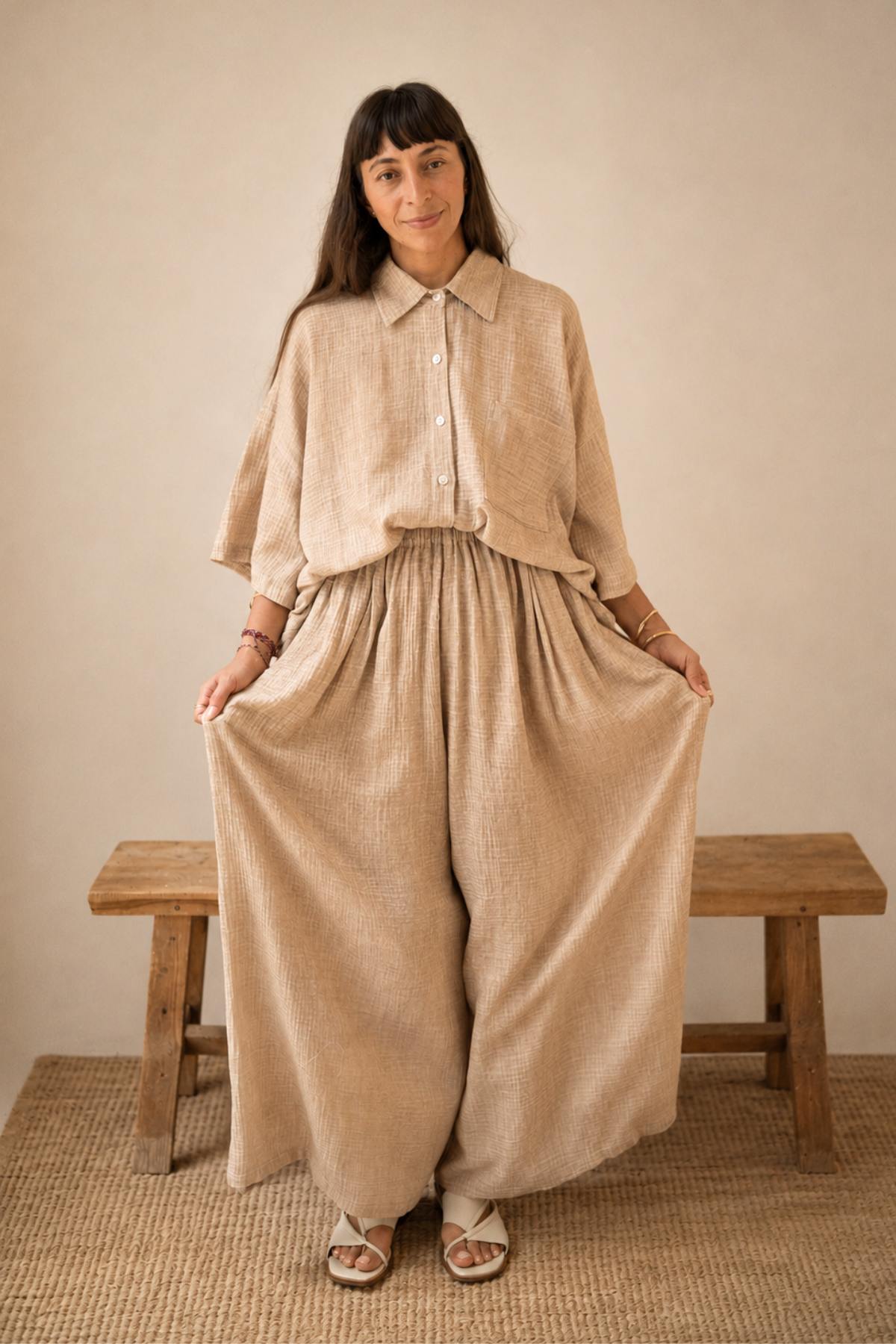
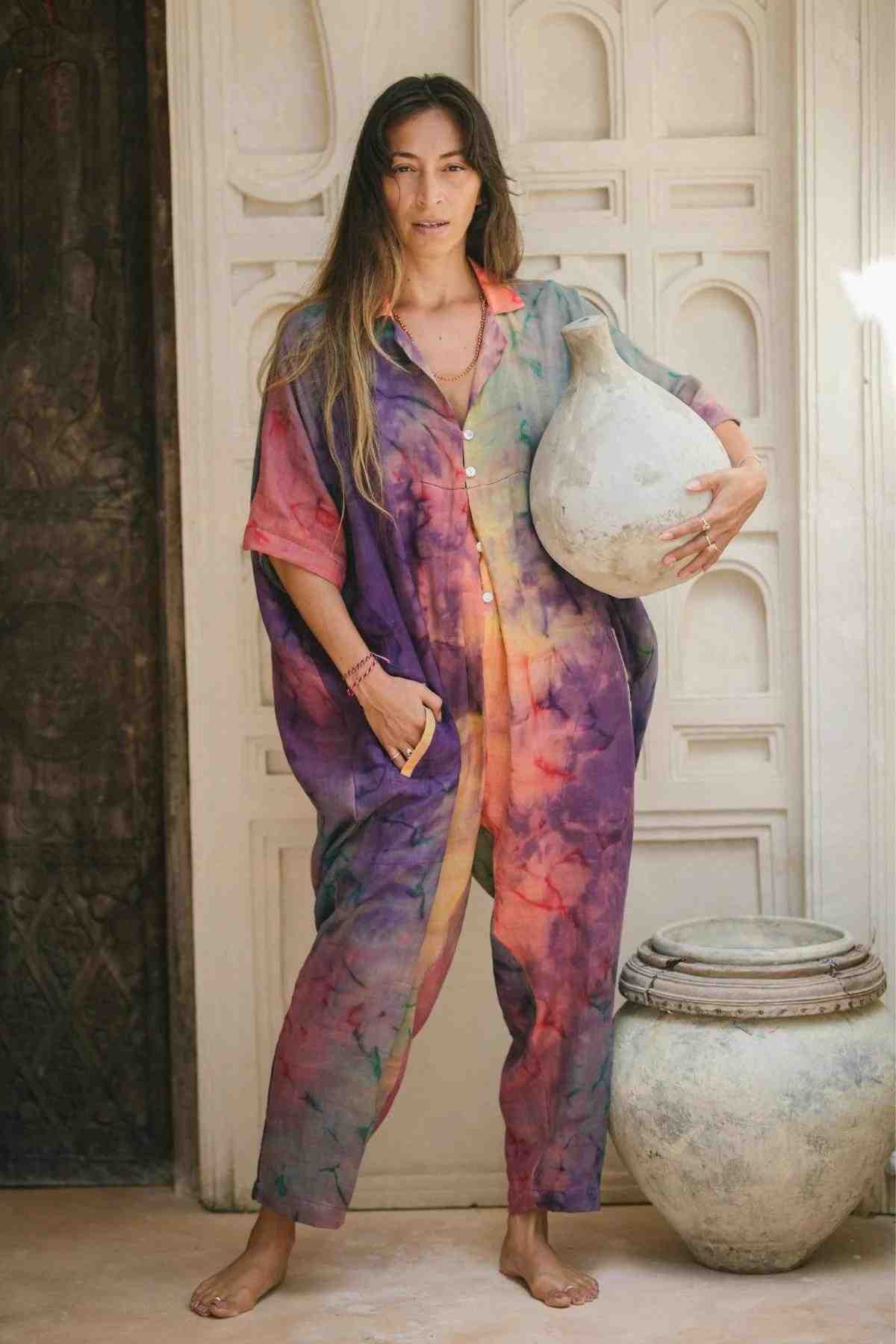
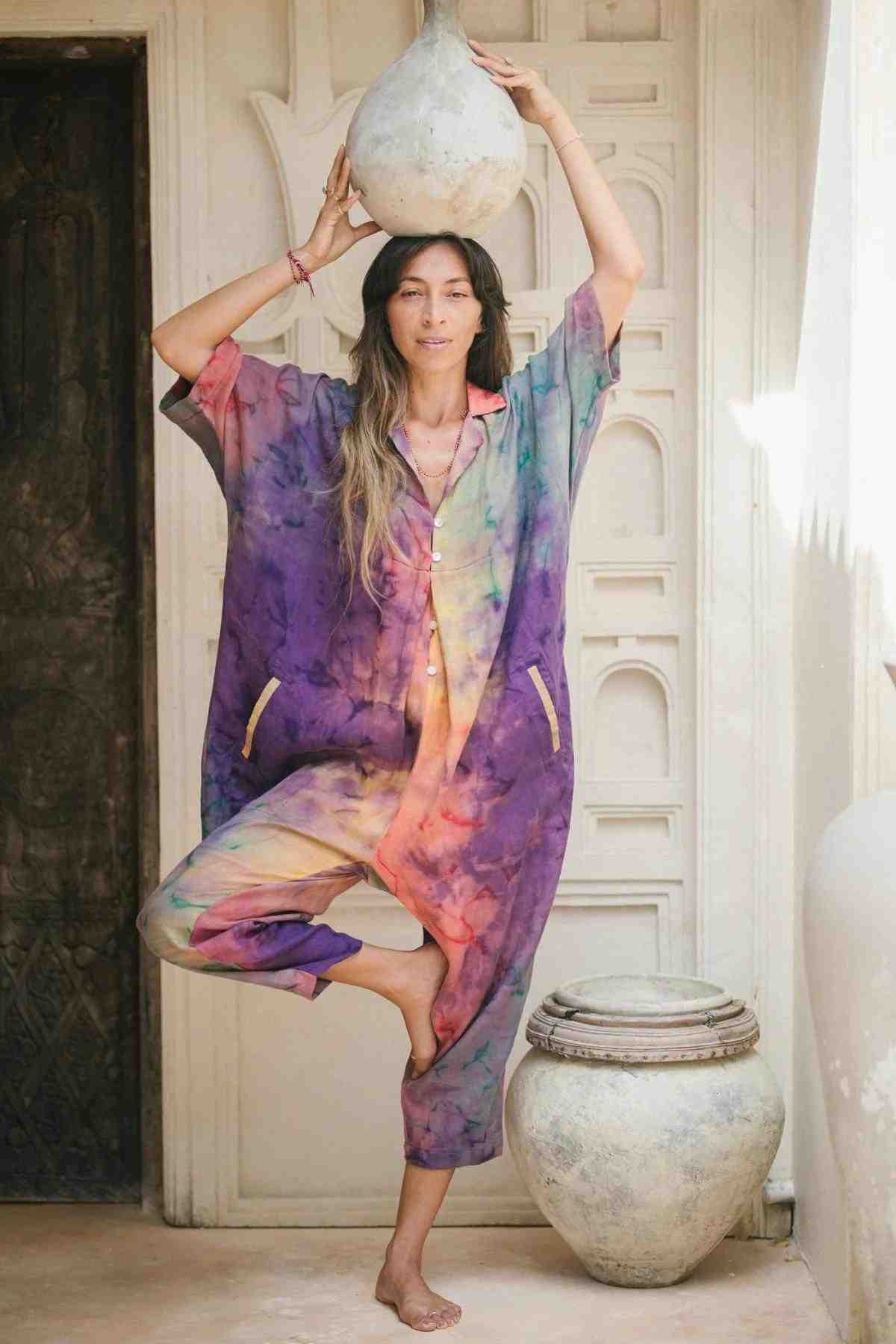
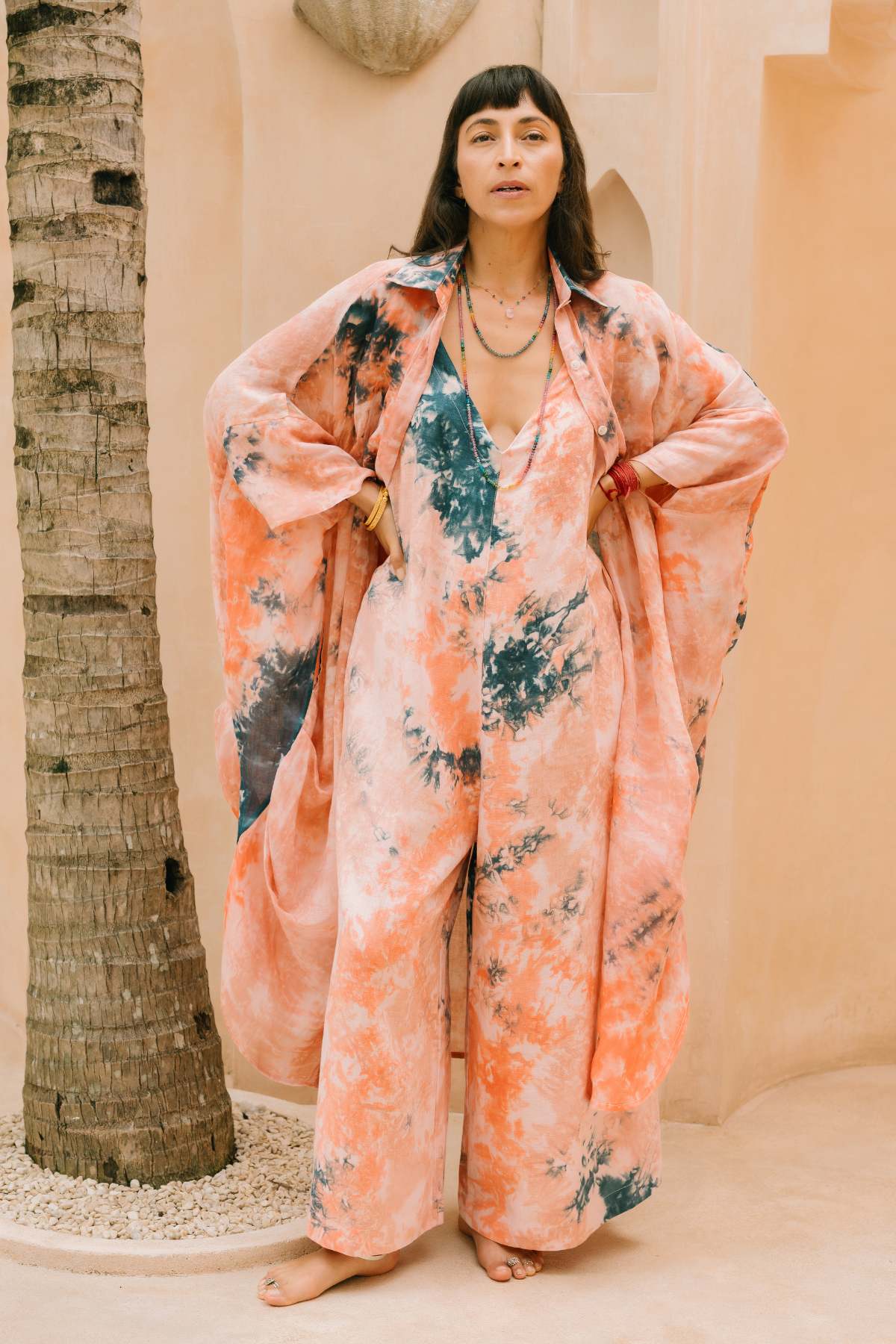
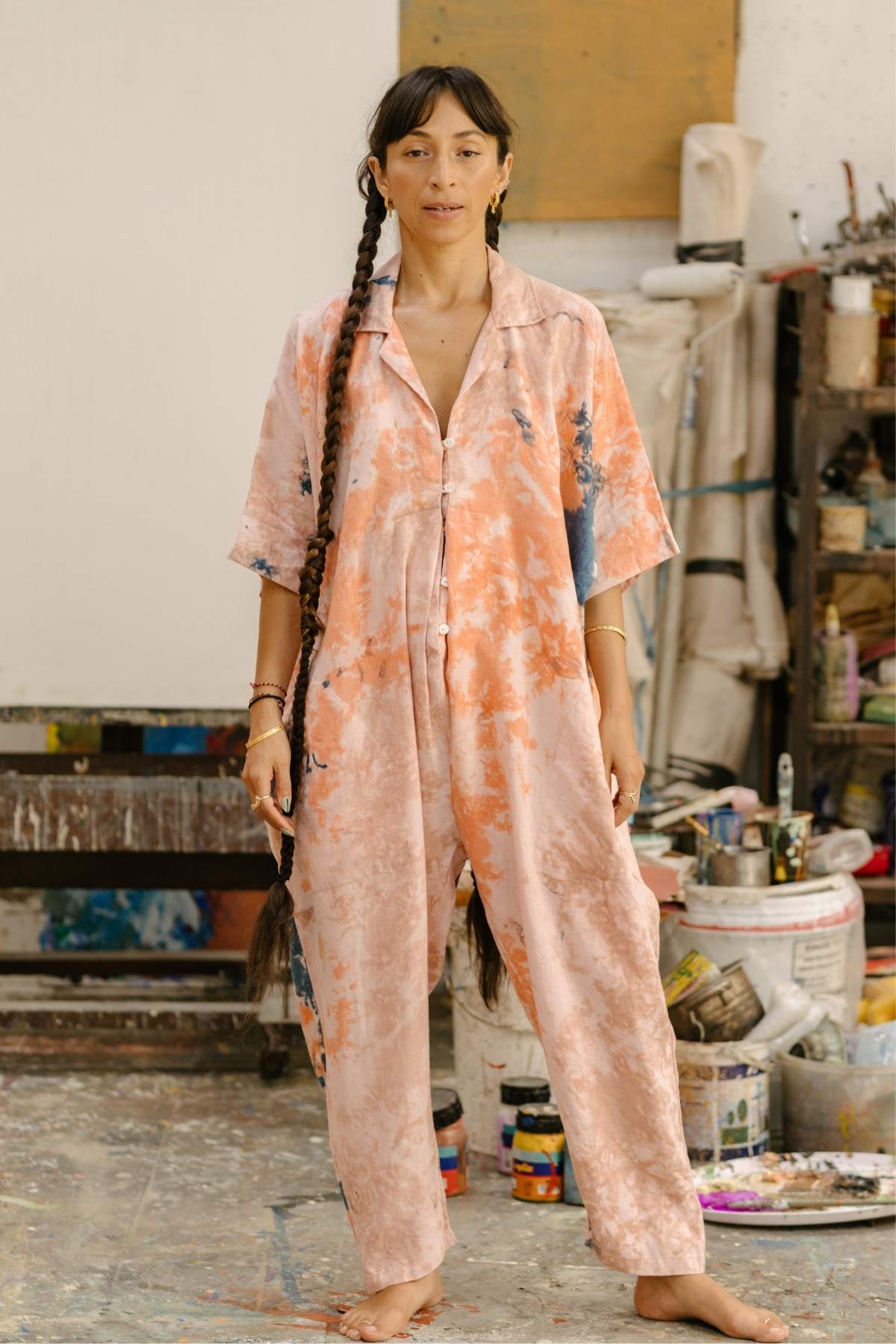
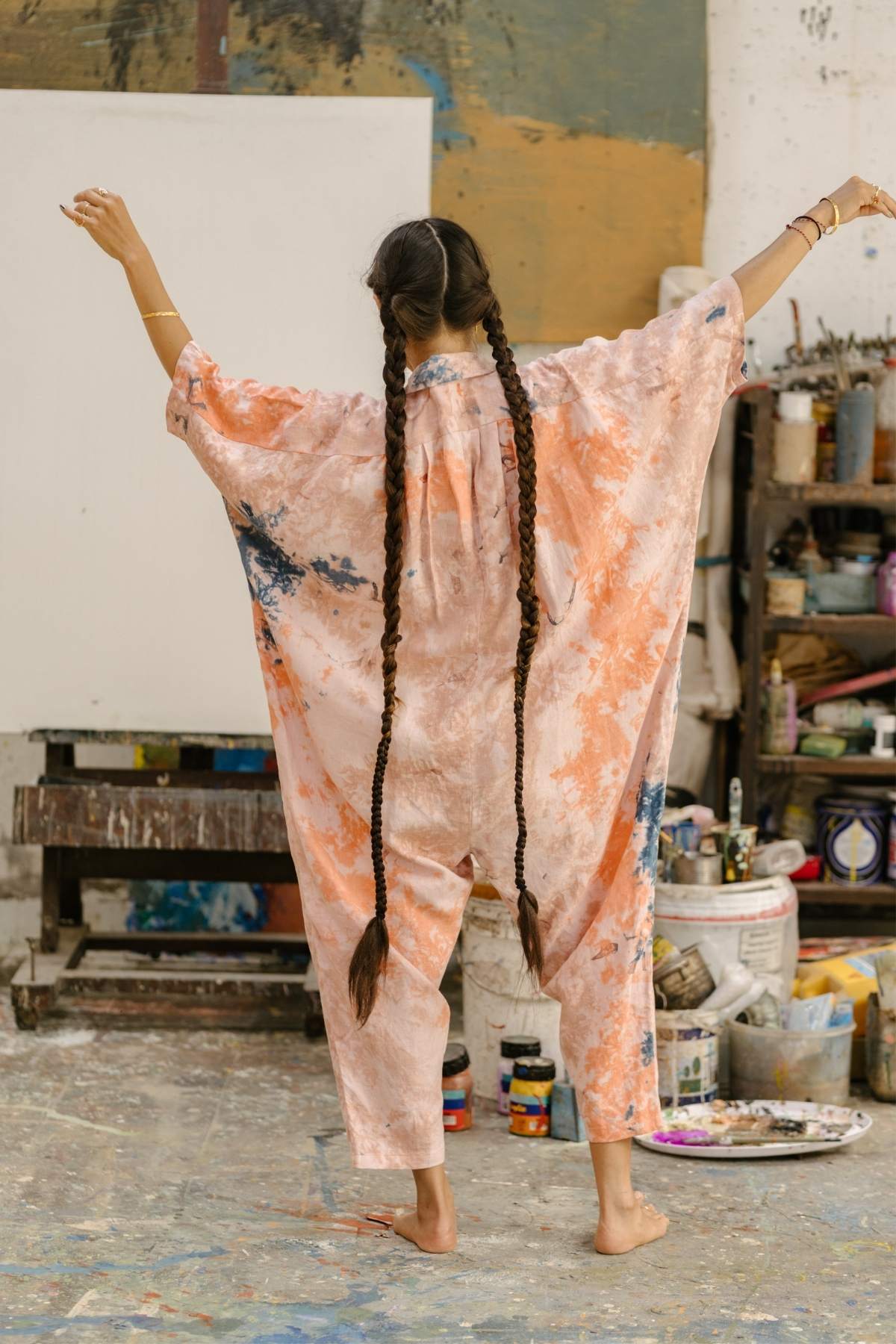
The Uluwatu Sunset colourway came out of standing in that light often enough to want to keep some of it.
The colour that has no name
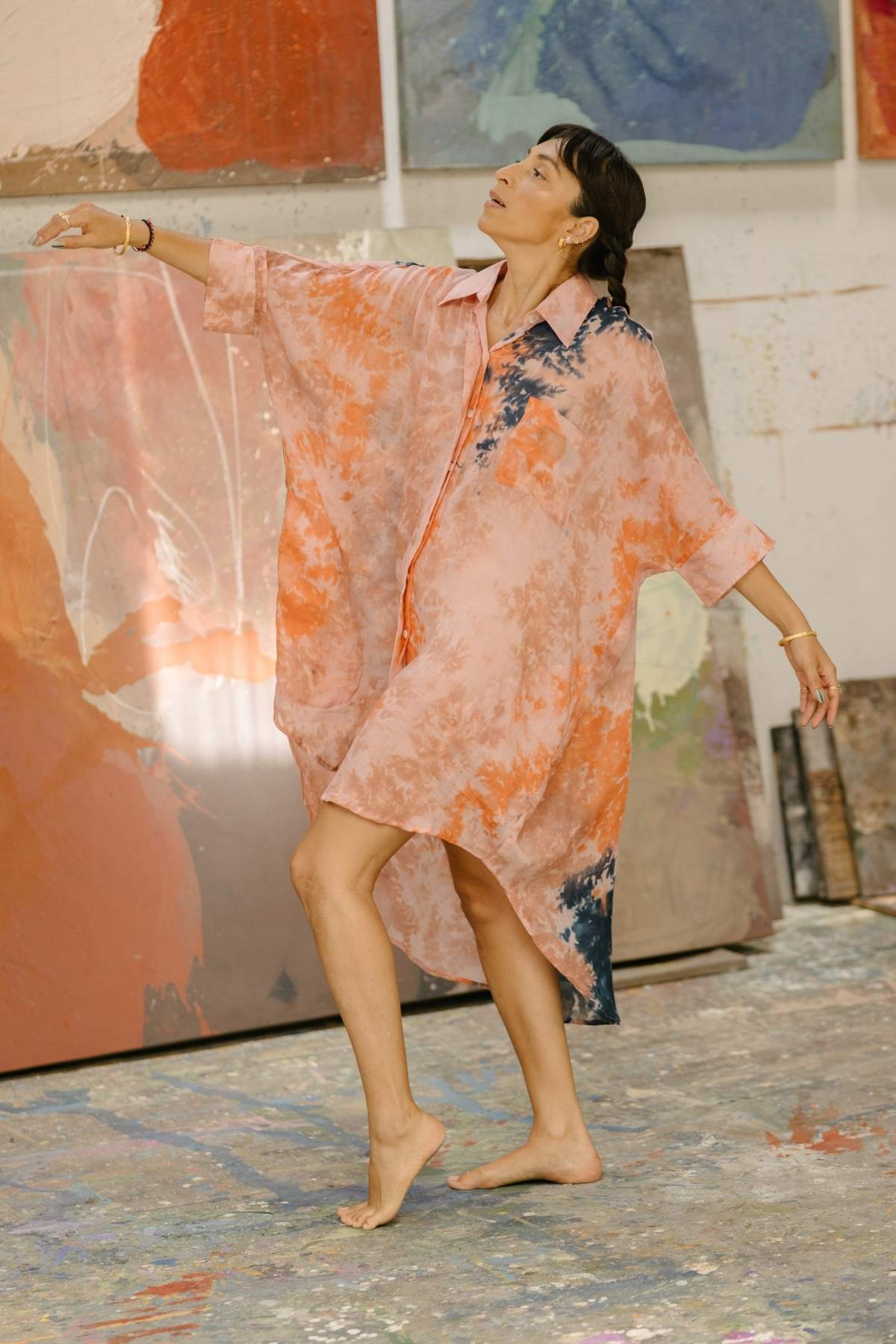
We tried to name it for a long time. Gold is not right. Copper is not right. Orange is a word for something much louder than this. What actually happens at that hour is a movement rather than a colour, terracotta going to burnt amber going to the deep rust the cliffs hold for a few seconds after the sun has already gone.
So we stopped trying to name it and started trying to make it. That took the artisan families we work with four to seven days per run, working with plants rather than pigment, building the colour up in layers the way the sky builds it up, slowly, and never twice the same way.
This is why no two pieces match. The dye is alive when it goes into the cloth and it stays alive after it arrives with you. It deepens with each wash. It shifts. That is not the colour fading. That is the colour continuing.
What a botanical dye actually is
A synthetic dye is a decision made once, in a factory, at high heat, and then repeated exactly forever. That is its whole purpose. Consistency is the product.
A botanical dye is a conversation. The plants are picked here in Bali. The water matters. The weather matters. How long the cloth sits, how many times it goes back in, what the light was doing the week it was made. All of it ends up in the cloth. The dyer is not operating a machine. She is paying attention, for days, to something that is changing while she watches it.
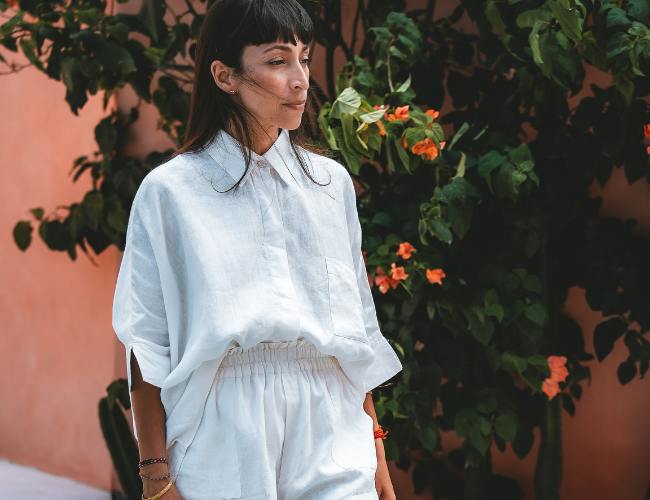
Every linen piece we make is certified to the OEKO-TEX Standard 100, which means the finished fabric carries no harmful substances, and our lighter linens carry European Flax certification, grown in Western Europe without irrigation and traceable back to the field. We say this plainly because “natural” is a word anyone can print on a label. Here is how the rest of it is made.
The sun is the metronome
Musicians do not argue with the metronome. They tune themselves to it. The whole point of the click is that it is not negotiating with your mood, your morning, or how far behind you feel. It holds the tempo, and you come to it.
The sun has been keeping time longer than anything else we have. Every living thing on this island still sets itself by it. The rice knows. The dogs know. The women who dye this cloth start when the light is right and stop when it goes, and nobody has to tell them.
Somewhere along the way most of us stopped taking our tempo from it. Not deliberately. It happened the way these things happen, one lit screen at a time. And what we lost was not light. We have more light than we have ever had. What we lost was tempo.
Standing in the sun at the hour it goes down gives it back. Not as an idea, as an experience. Your breath lengthens before you have thought about your breath. The urgency you carried all afternoon turns out to have been borrowed. There is nothing mystical in this. It is a body remembering the rhythm it was built inside.
That is what this colourway was made to hold. Not a sunset as decoration. A tempo, worn.
You blend into nature, not into the year
There is a difference between dressing to be noticed and dressing to belong somewhere.
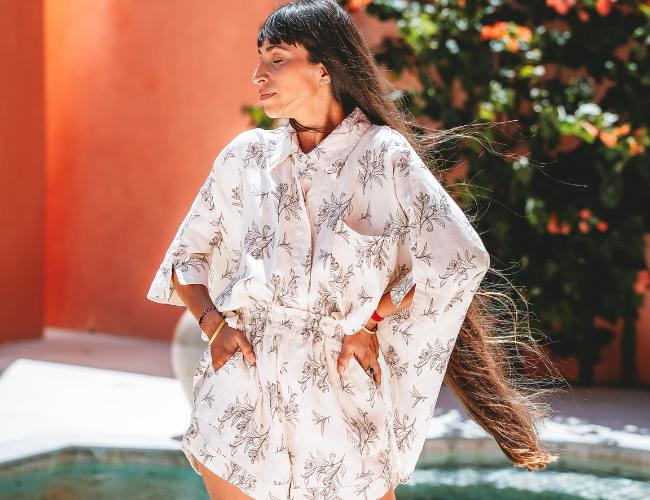
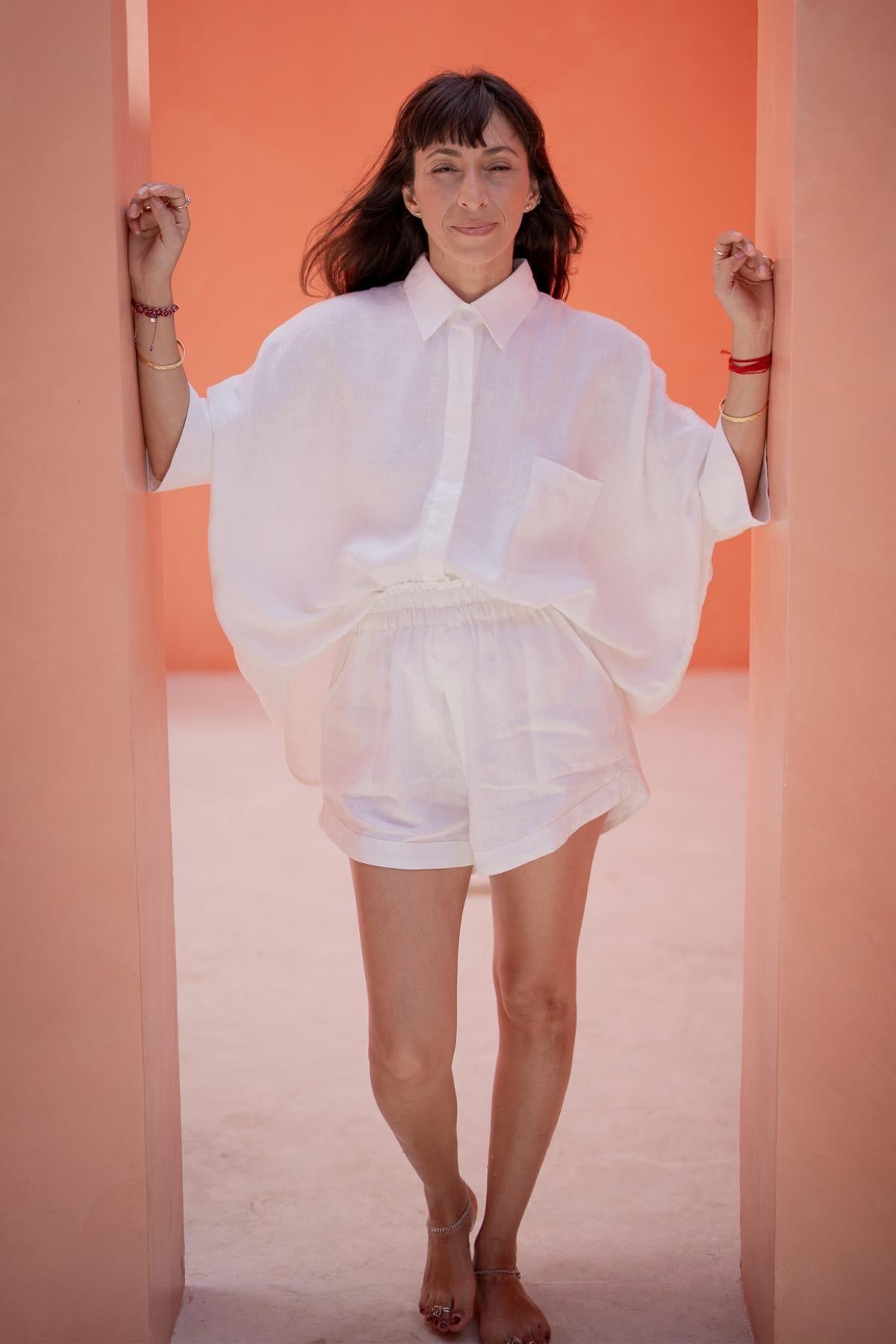
Cloth dyed with plants sits differently against the landscape than cloth dyed to match a colour forecast, because it came from the same place the landscape came from. Stand in it under real light and nothing clashes. You are not standing out against the garden. You are in it.
And something honest happens on the way back from that. When you are not being read as this year’s version of a woman, you get to be the actual one. Warmer. More expressive. More willing to make something. Less concerned with being current, more available to the day in front of you.
What it asks of you
Only this. Put it on in the morning as though the morning were worth marking. Let the colour do what colour does. Go and give this particular day the best of what you have, which is the only thing any of us are actually being asked for.
The light will come back tomorrow either way. The question is whether you are keeping time with it.
With love from Bali,
Myrah

|
A Piece for This Threshold The Uluwatu Sunset Collection Shop Uluwatu Sunset → |
|
The Muse-Letter Dress for the woman you’re becoming. Join the Muse-LetterUnsubscribe any time. No spam, ever. |



Laisser un commentaire
Ce site est protégé par hCaptcha, et la Politique de confidentialité et les Conditions de service de hCaptcha s’appliquent.