

What to Wear in Bali: Beautiful, Natural, and Feminine Without the Bohemian Cliché
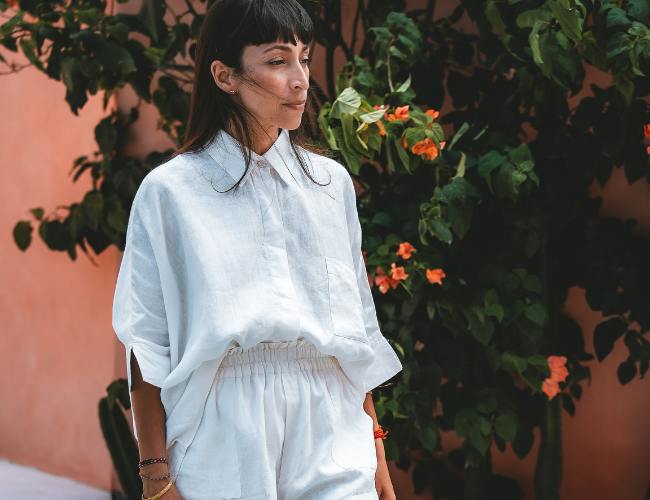
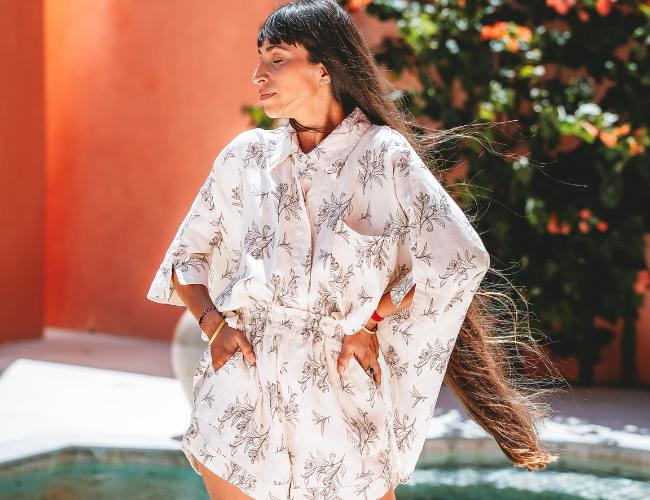
The best thing to wear in Bali is natural fibre in a relaxed but refined cut: linen, silk, and cotton that breathe in the heat, in botanical or natural tones, cut to drape rather than to cling. That is what keeps you cool, respectful at a temple, and elegant at dinner, all from a few pieces. You do not need fringe, loud print, or a boho costume to look like you belong here. Feminine in Bali comes from fabric, drape, and colour, not from decoration.

What should I wear in Bali?
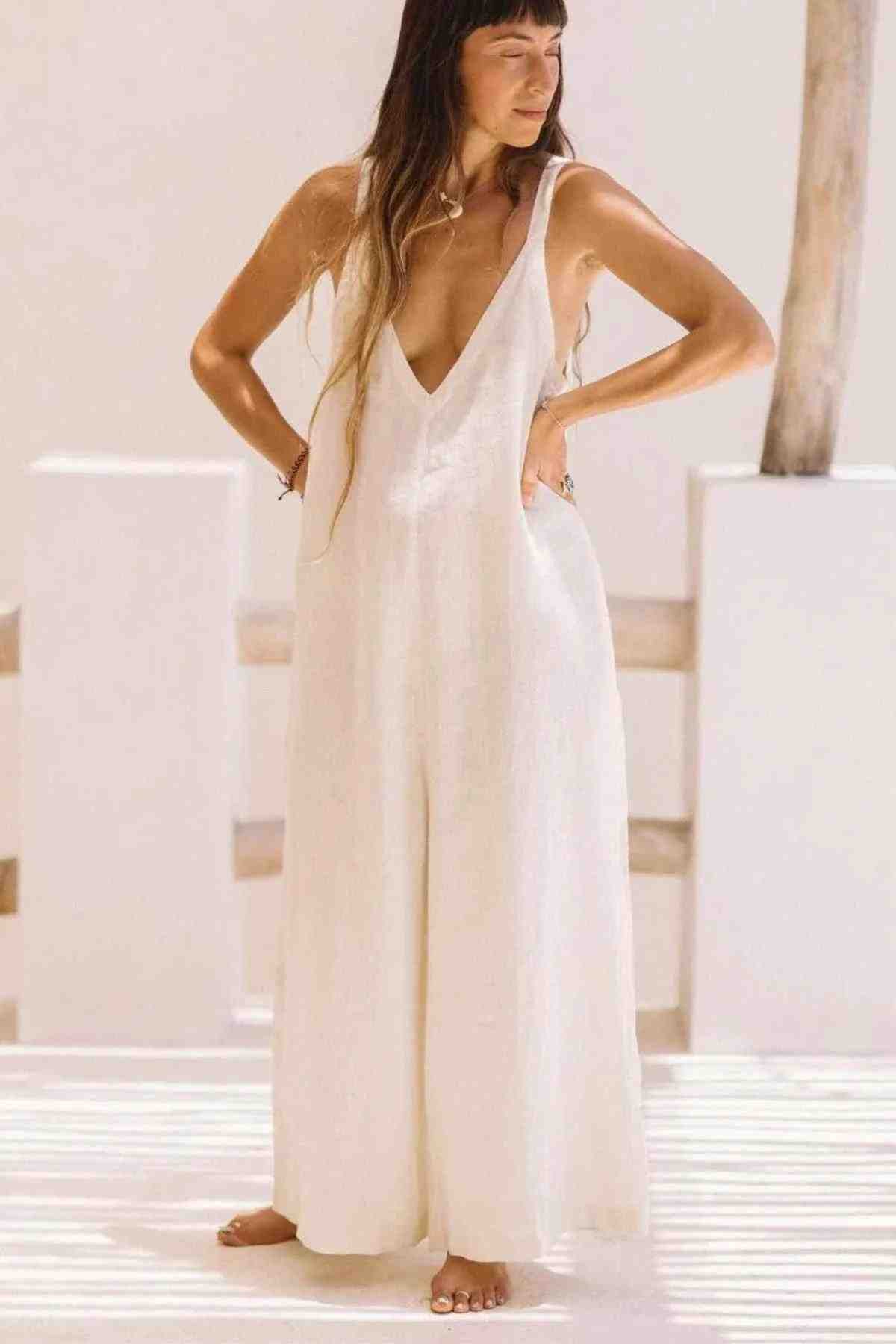
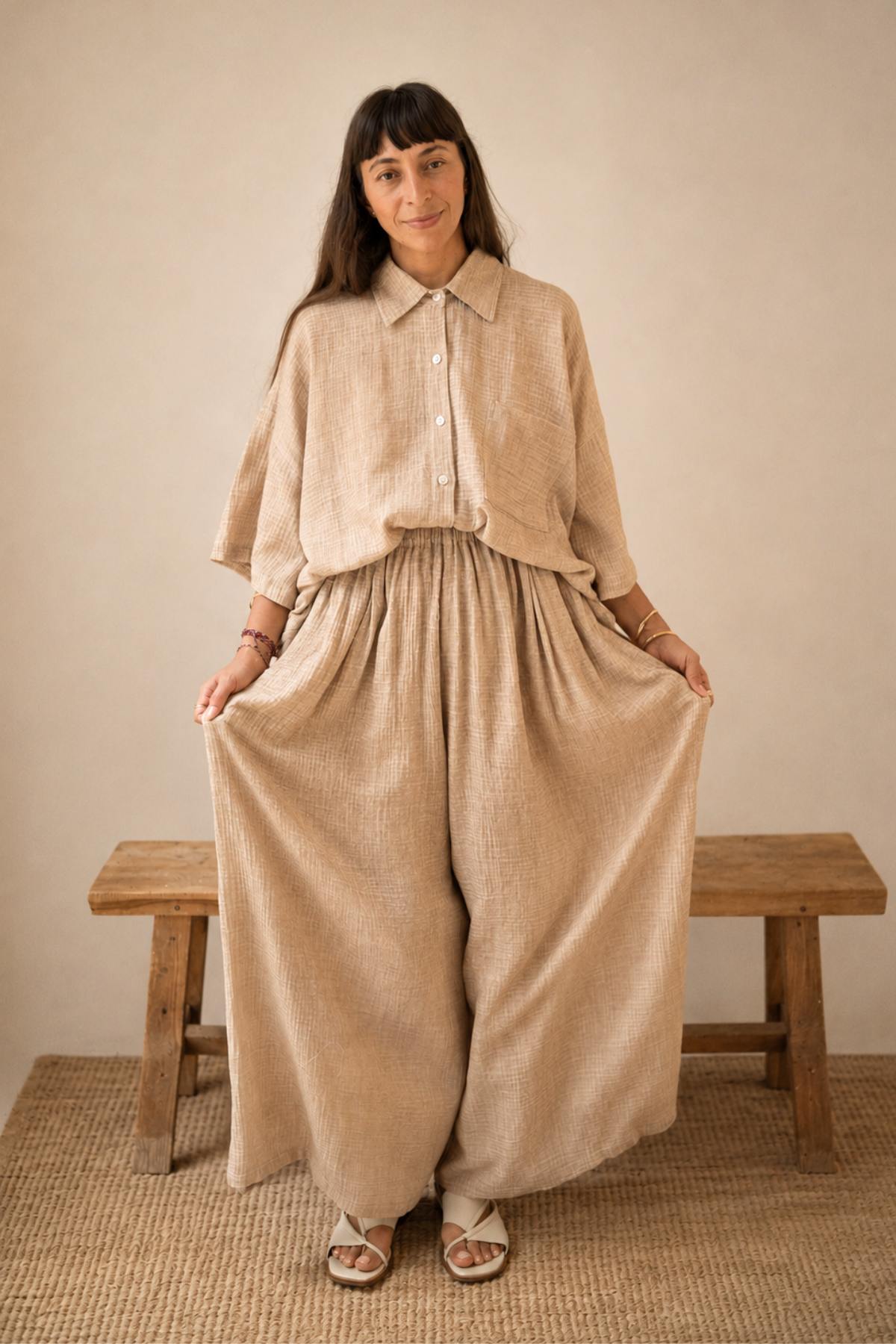
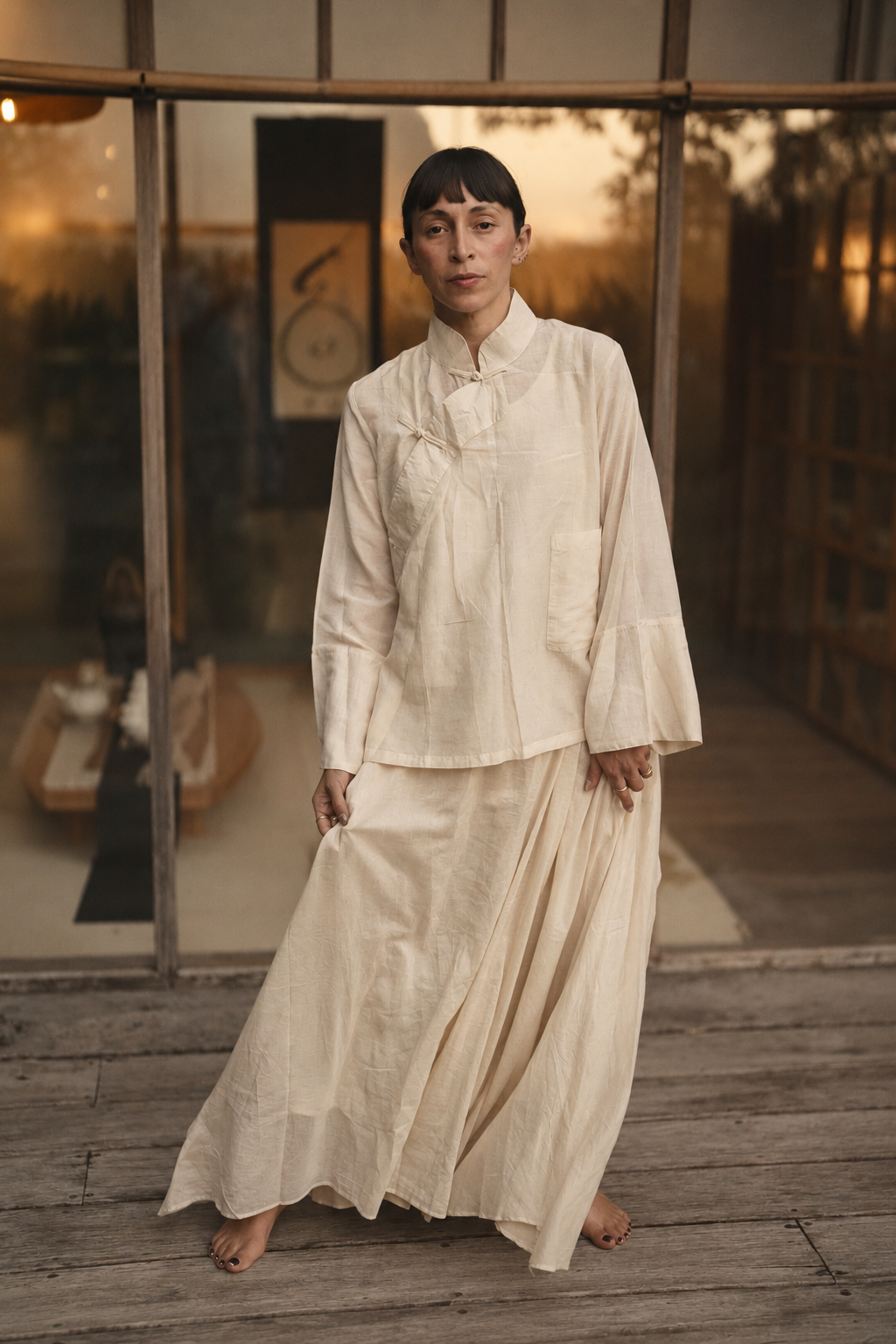
Think in natural fibre and easy silhouettes. Linen is the fabric the climate was made for: it moves air, wicks moisture, and looks better by evening than it did in the morning. Silk carries the dressier moments. Cotton is the easy everyday. Keep the cuts loose and unstructured so air can move, and keep the palette in botanical and natural tones that read beautifully against sand, stone, and green.
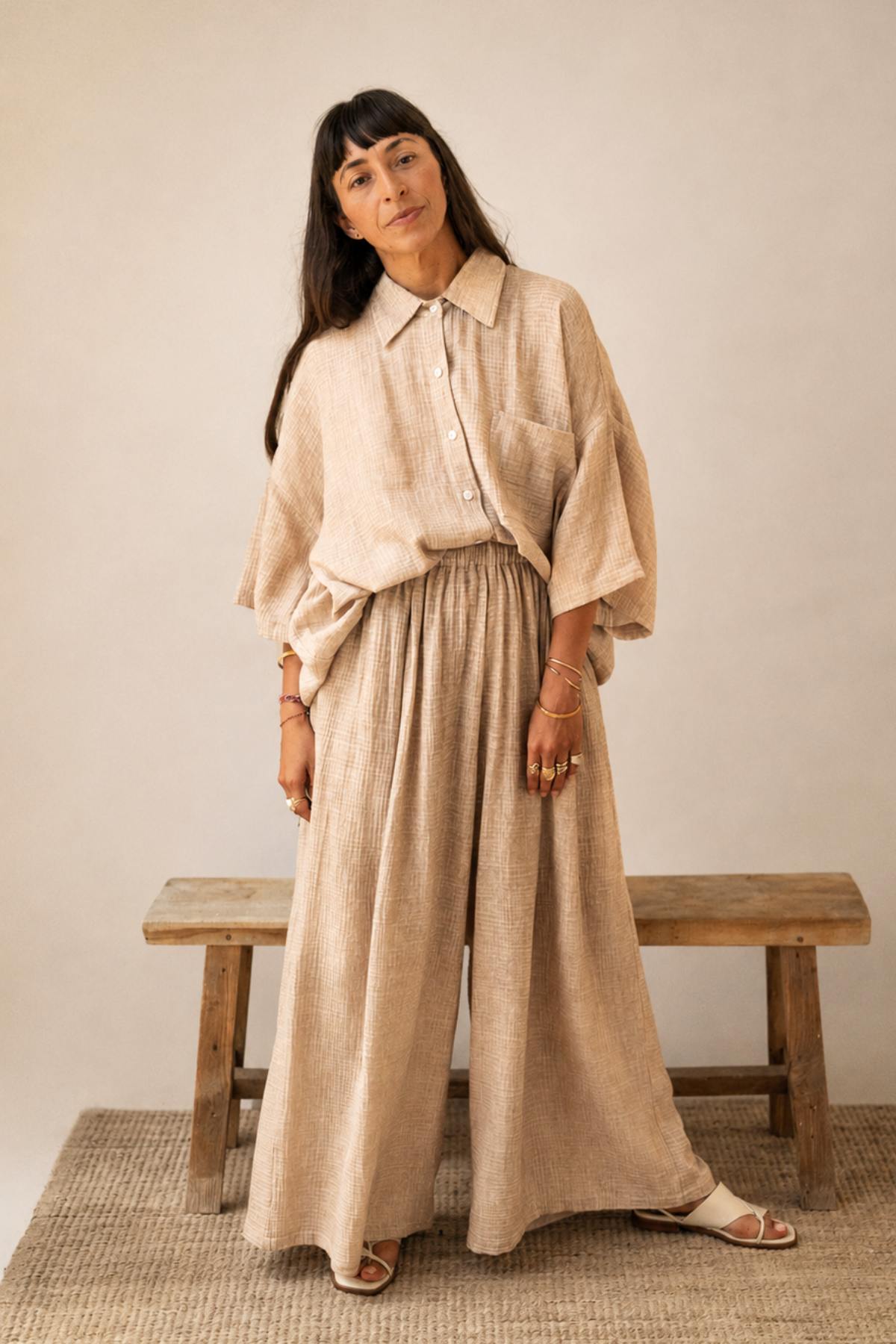
A few well-chosen pieces cover the whole trip. A matched linen set for the day, a longer dress or a silk kaftan for dinner, a light layer for temples and cool evenings, and something you can move and practise in. That is a Bali wardrobe. The rest is jewellery and how you wear your hair.
How do I dress feminine in Bali without looking too bohemian?
This is the question behind most of the others, and the answer is restraint. The bohemian cliché is built from addition: fringe, tie-dye, layered beads, a loud print on a loud print. The more refined version is built from subtraction. One clean silhouette in a solid botanical tone. Natural fibre with a beautiful drape. A single considered piece of jewellery instead of a stack.
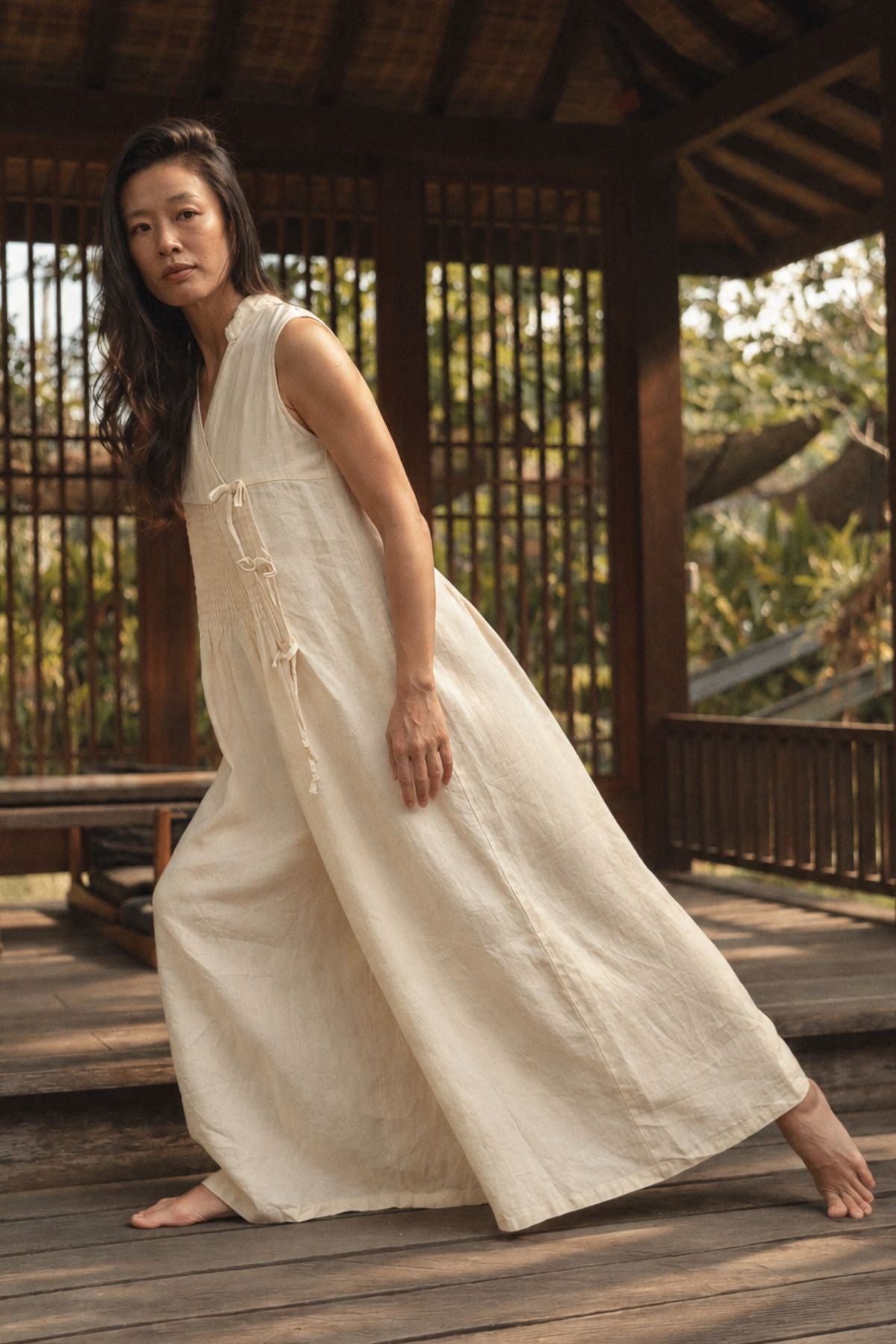
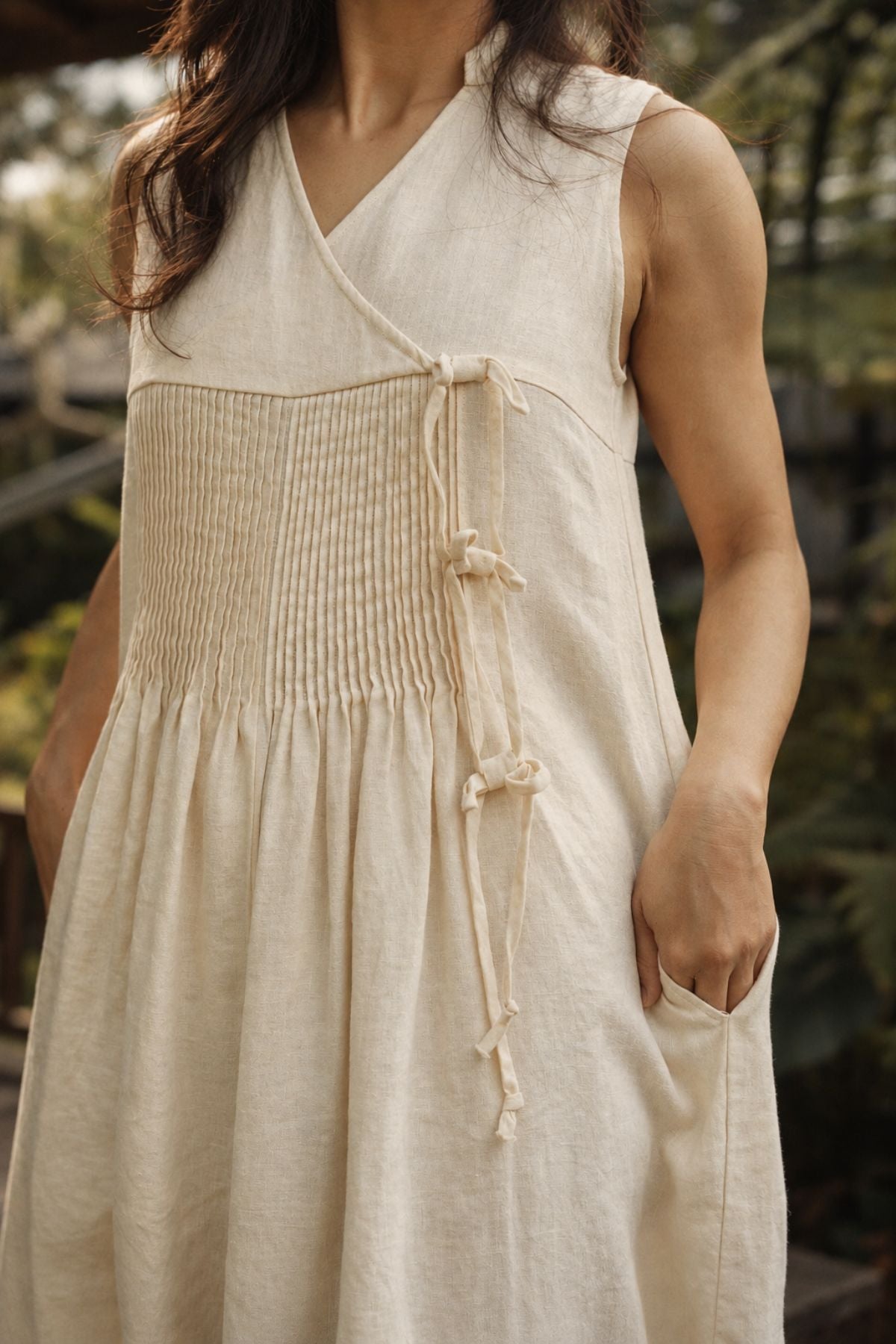
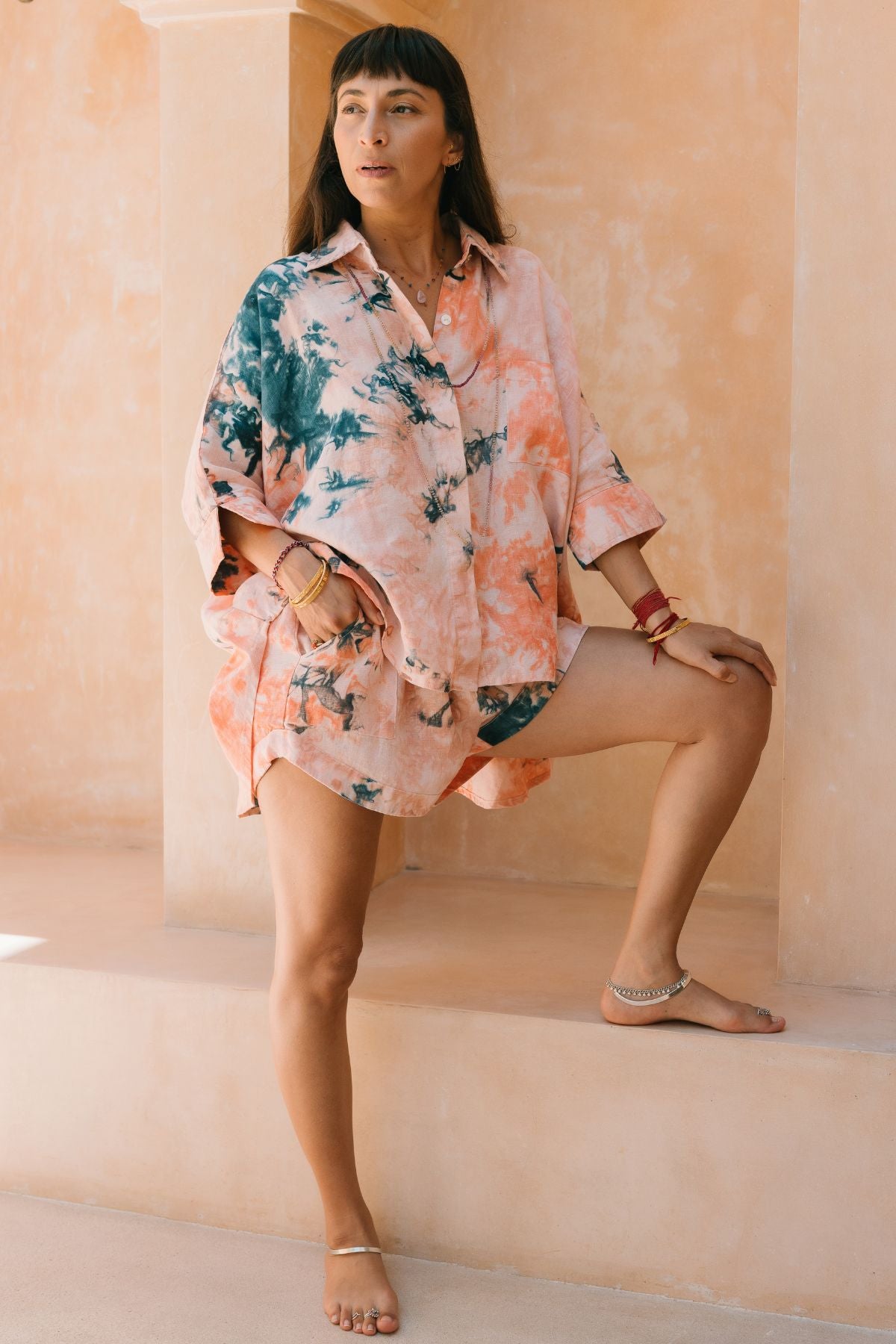
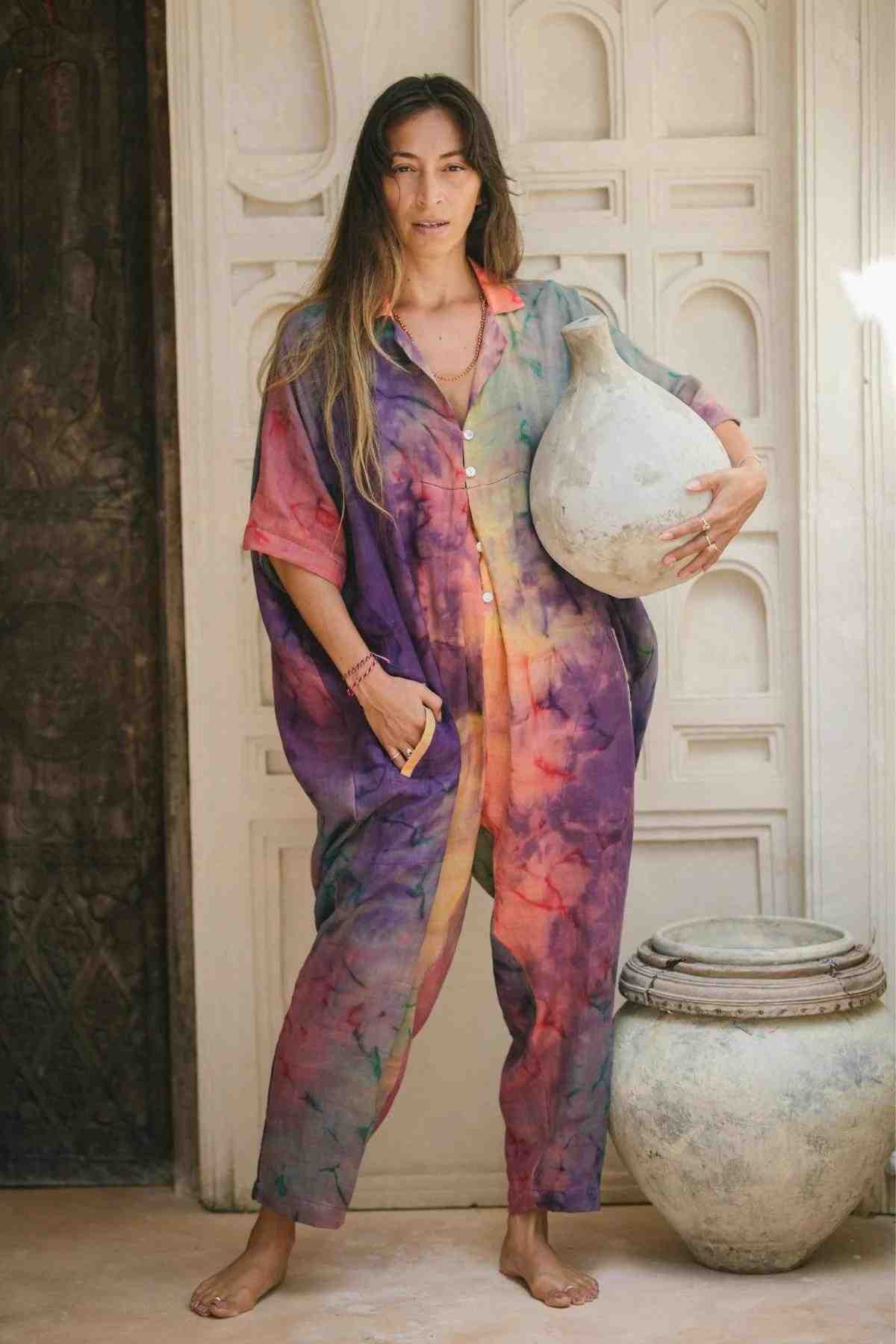
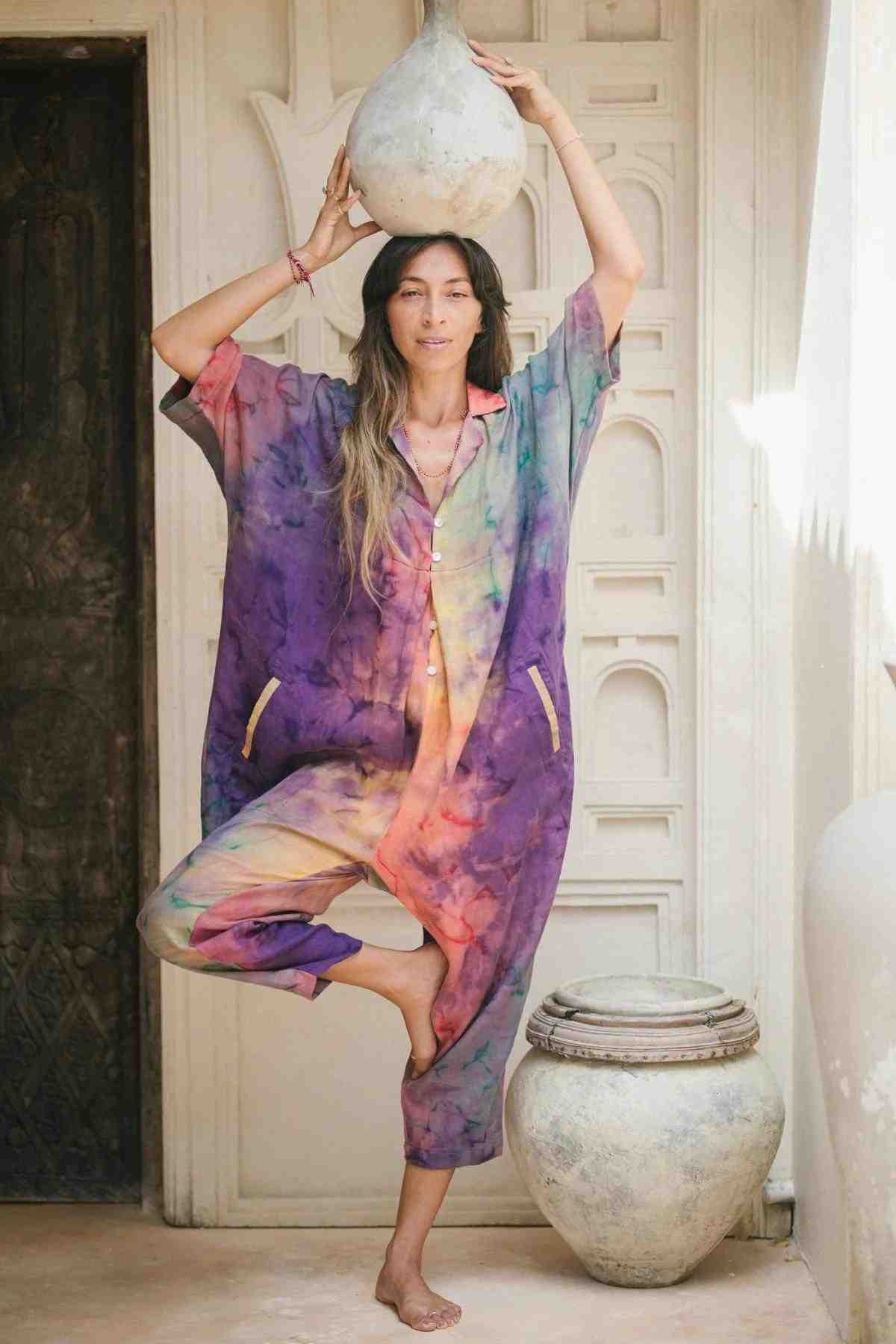
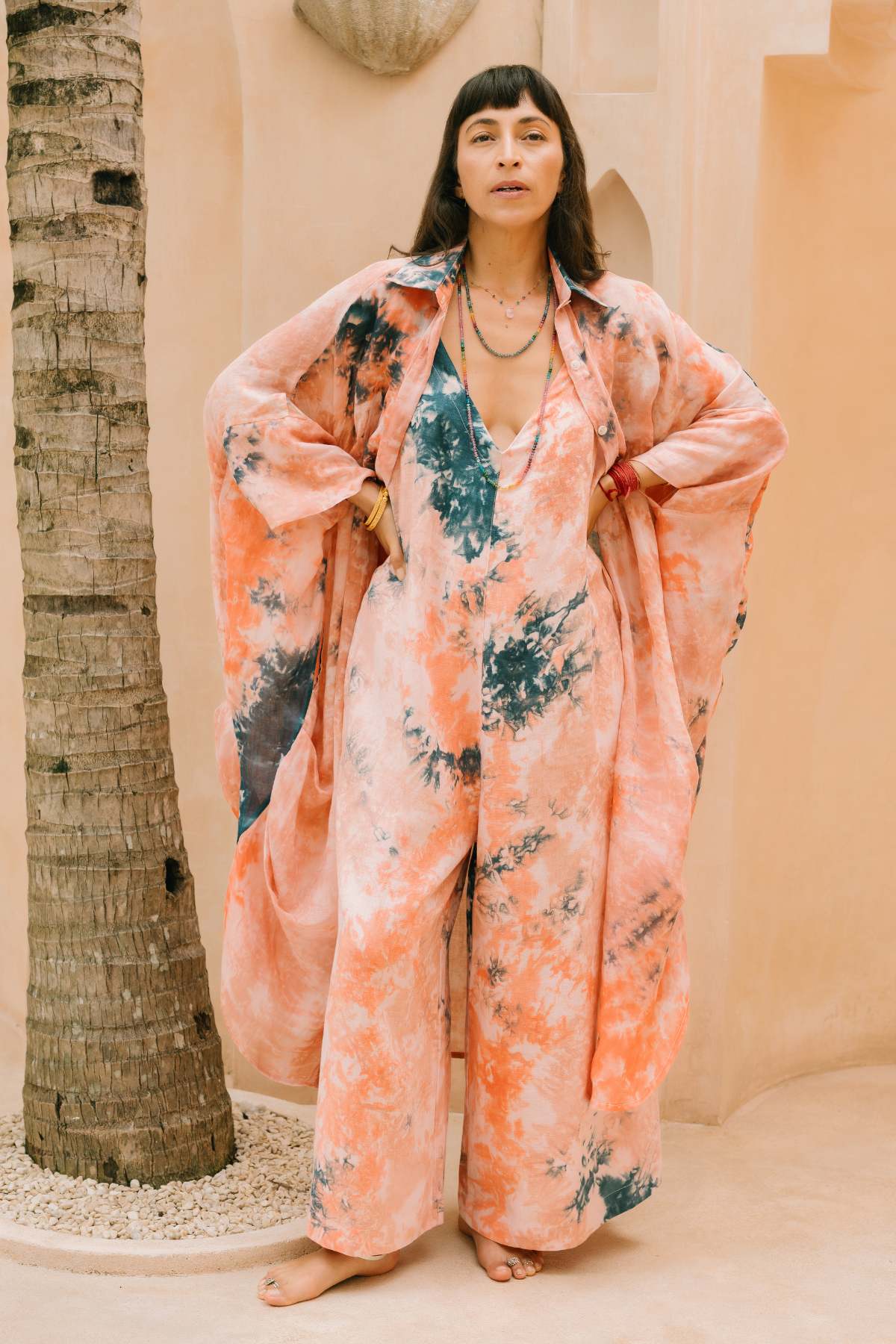
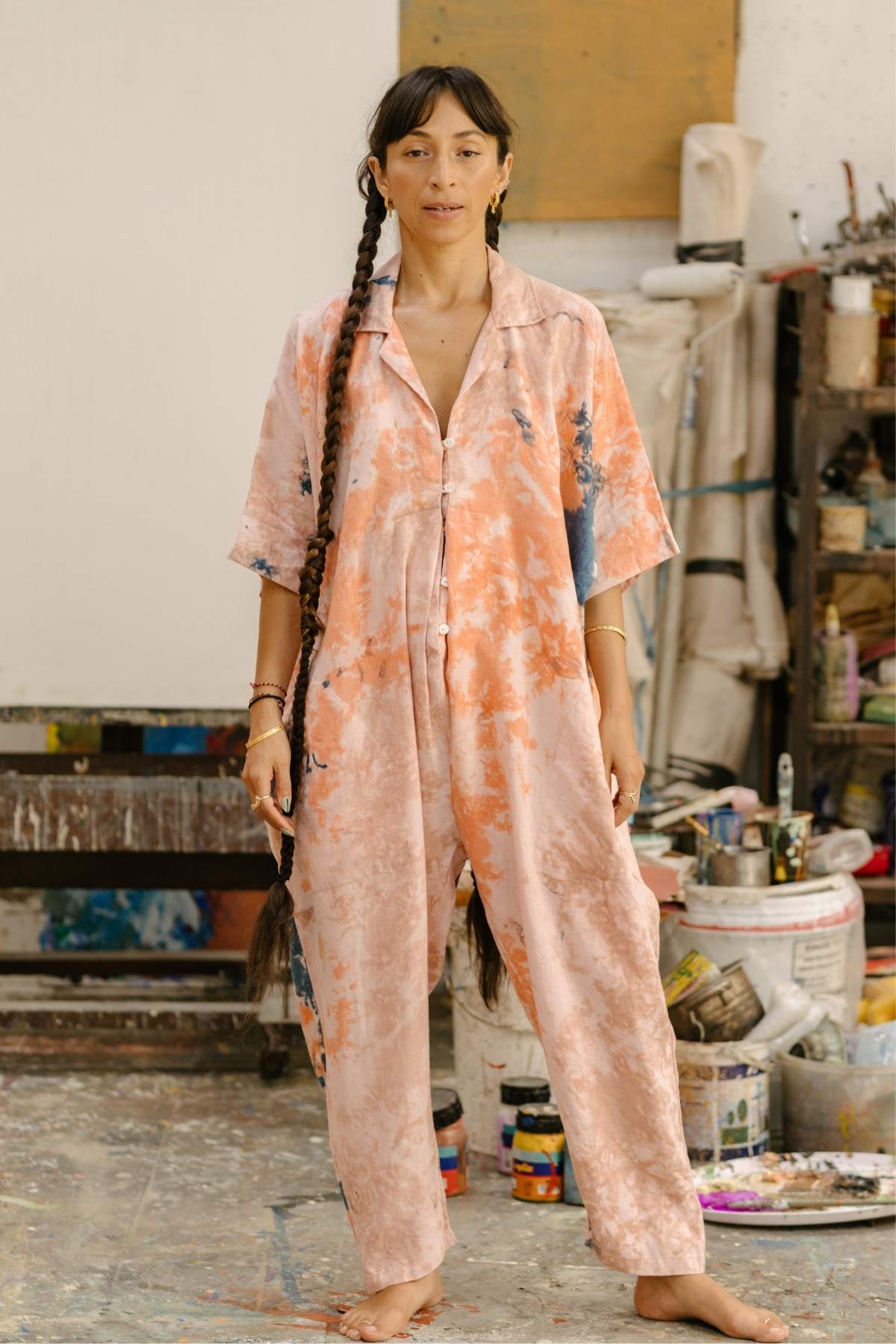
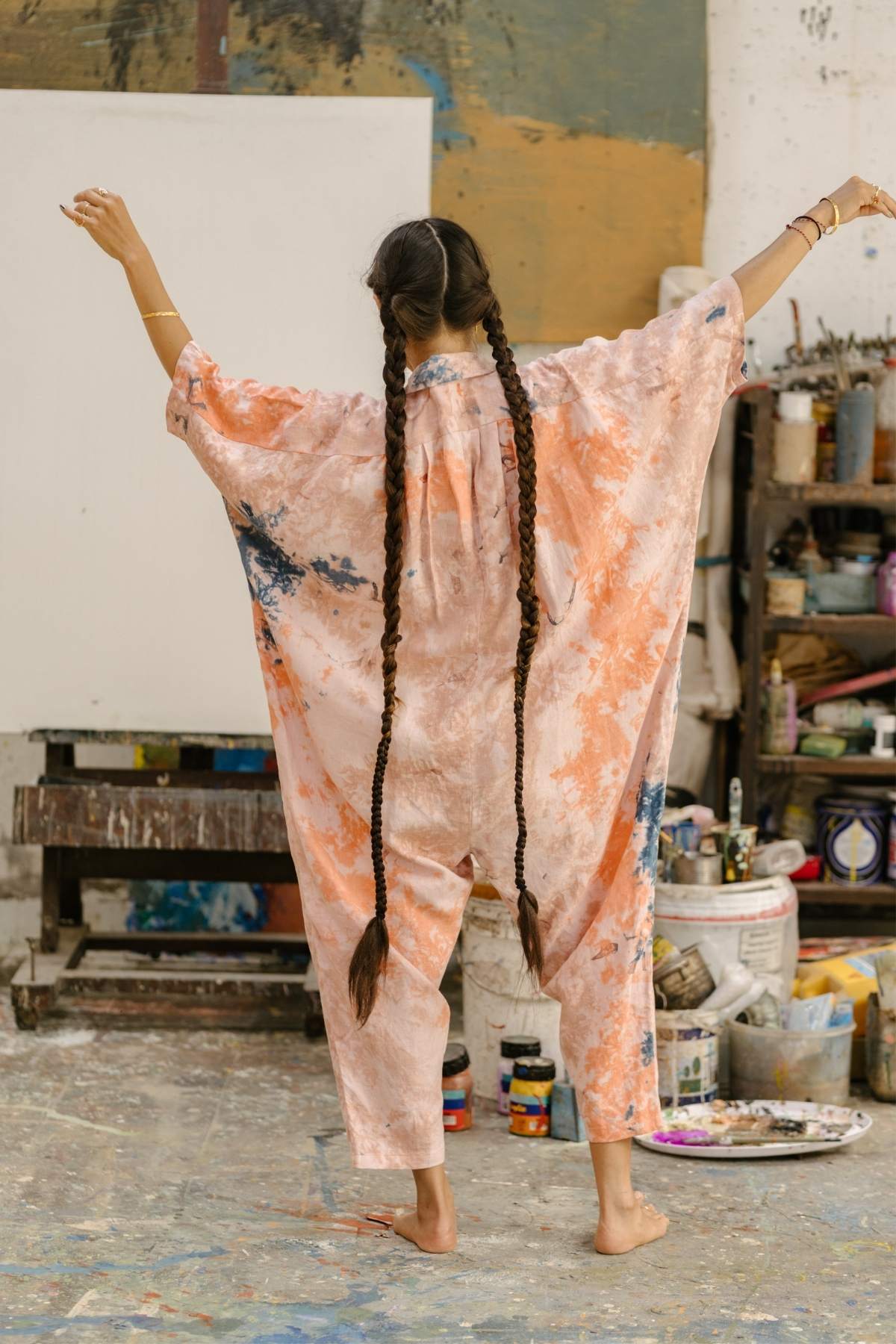
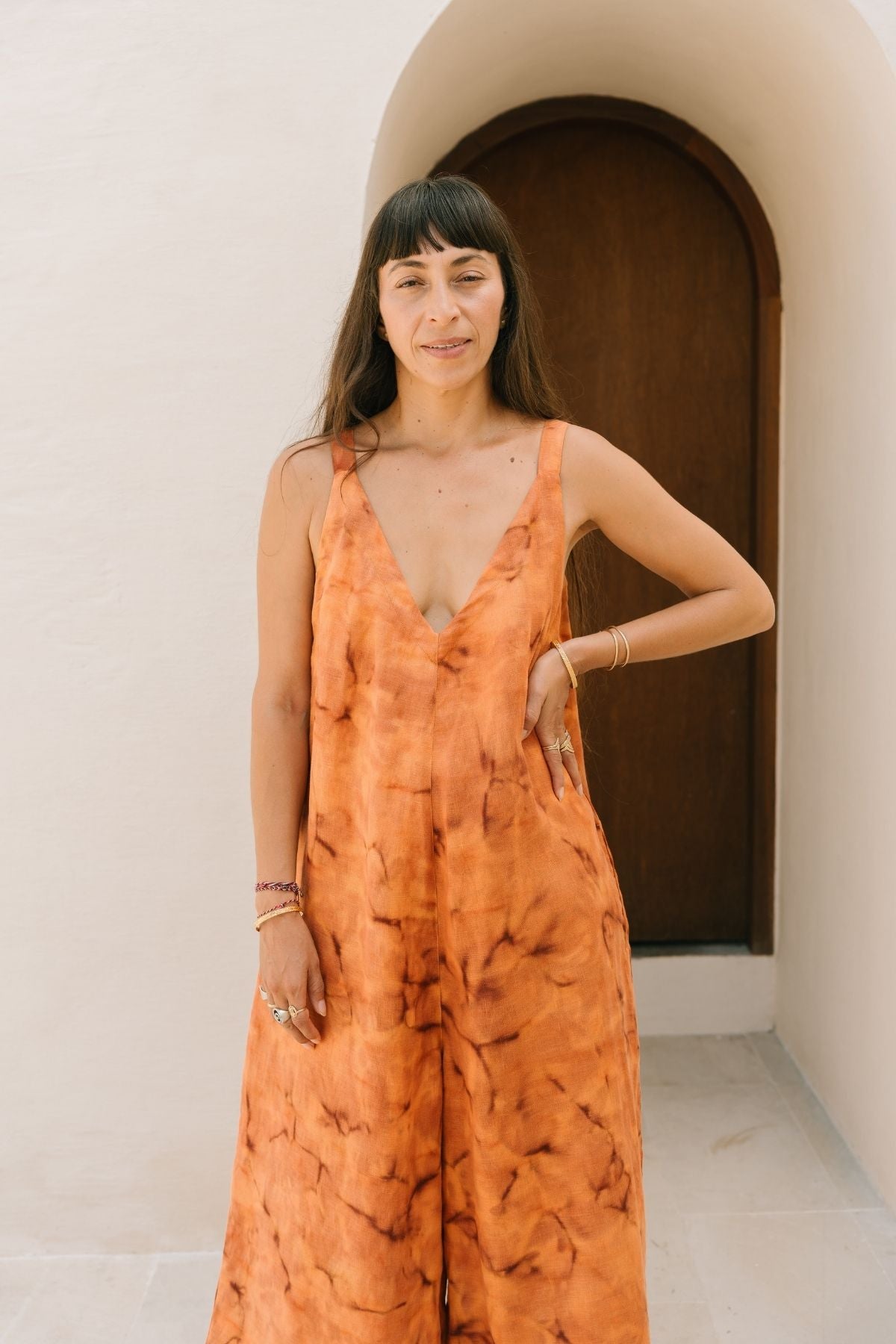
Feminine, here, lives in the cut and the colour. A wrap that falls softly. A gown that moves. A dip-dyed linen that shifts in the light because the colour came from a plant rather than a print. It reads as intentional rather than costumed, and it photographs like the island rather than against it.
What to wear in Bali, by the moment
The island asks for slightly different things across a day. Here is how it tends to run.
| The moment | What to wear | The finish |
|---|---|---|
| Temple or ceremony | Shoulders and knees covered, a linen set or midi with a sarong or light layer | A sarong at the waist, flat sandals, hair simple |
| Beach or daytime | A light linen slip or matched set in a natural tone, easy over a swimsuit | Flat sandals, minimal gold, a woven bag |
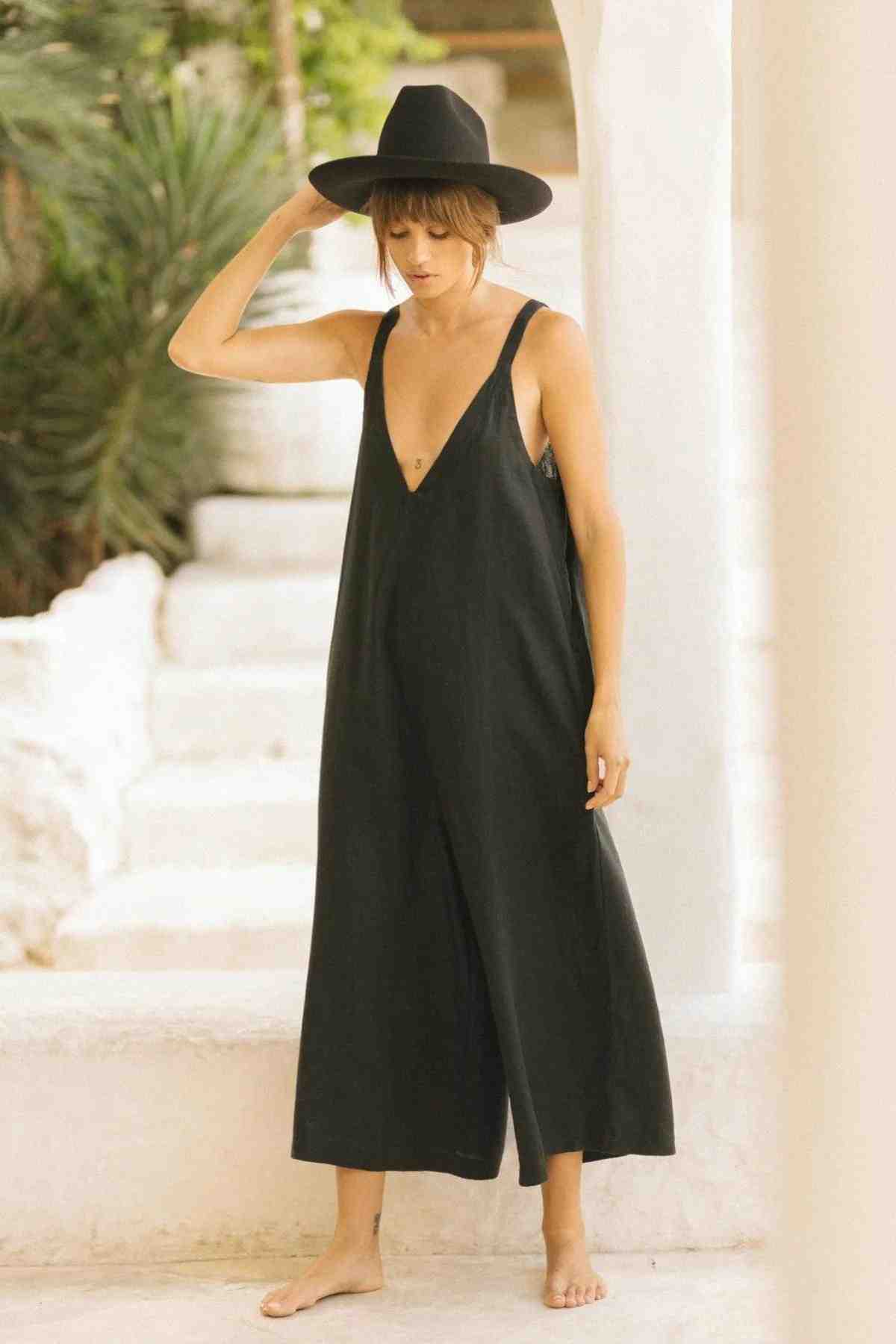
| Dinner or evening | A longer dress or a silk kaftan in a deeper botanical colour | A heeled sandal, one considered piece of jewellery |
| Around town, on a scooter | A relaxed set or trouser, nothing too long or loose to catch | Closed flat, a crossbody, layers you can shed |
| Yoga or movement | A natural-fibre playsuit or set with room to move | Bare feet, a light layer for after |
What should I not wear in Bali?
Two things, mostly. Synthetics, because they trap heat and moisture against the body in a humid climate and you will feel it by noon. And anything too revealing for a temple, where covered shoulders and knees are a matter of respect rather than style. A sarong solves the second in a second, and natural fibre solves the first before you leave home. Beyond that, wear what makes you feel like yourself.
Which fabrics actually work in Bali's climate?
Linen first, always. Its hollow fibre absorbs moisture without feeling damp and lets air pass through rather than trapping it, which is why it has clothed equatorial cultures for thousands of years. Silk is second and lovely against skin in the heat. Cotton is a solid everyday third. Polyester and nylon are the ones to leave at home. We keep the full, lived-in version of this in how to wear linen in Bali, from someone who lives in it. Everything we make is natural fibre, made on the island by around thirty artisan families, and the resort wear collection is built for exactly this kind of travel.
Frequently asked questions
What should I wear in Bali? Natural fibre in relaxed cuts. Linen for the heat, silk for the evening, cotton for the everyday, in botanical or natural tones. A matched set for the day, a longer dress or silk kaftan for dinner, a light layer for temples, and something to move in covers the whole trip. Keep silhouettes loose so air can move, and keep synthetics at home.
How do I dress feminine in Bali without looking too bohemian? Build the look from subtraction rather than addition. One clean silhouette in a solid botanical tone, natural fibre with a beautiful drape, and a single piece of jewellery reads as feminine and intentional, where fringe, loud print, and stacked beads read as costume. The femininity lives in the cut and the colour, not the decoration.
What should I not wear in Bali? Synthetic fabrics, which trap heat and moisture in the humidity, and anything too revealing for a temple, where covered shoulders and knees are a sign of respect. A sarong handles temple dress instantly, and choosing natural fibre handles the heat before you arrive.
What fabrics are best for Bali's heat and humidity? Linen is the best answer: it wicks moisture, breathes in both directions, and gets more comfortable with wear. Silk is second and kind against skin. Cotton is a good everyday choice. Avoid polyester and nylon, which hold heat and moisture against the body rather than releasing it.
What do you wear to a temple in Bali? Cover your shoulders and knees, and wear or carry a sarong to tie at the waist, which many temples ask for and some provide. A linen midi or a set with a light layer works well. Choose a modest, respectful silhouette over anything sheer or very short.
With love from Bali,
Myrah
|
A Piece for This Threshold The Uluwatu Sunset Linen Suka Set Shop the Uluwatu Set → |
|
The Muse-Letter Dress for the woman you’re becoming. Join the Muse-LetterUnsubscribe any time. No spam, ever. |





Laisser un commentaire
Ce site est protégé par hCaptcha, et la Politique de confidentialité et les Conditions de service de hCaptcha s’appliquent.