A Linen Outfit That Feels Spiritual and Still Elevated
A linen outfit reads as spiritual and elevated when it is natural fibre in a ceremonial cut and a botanical or undyed tone, worn simply, with one considered piece of jewellery and nothing else. The spiritual comes from the material and the intention: real fibre, plant-based colour, a garment made by hand. The elevated comes from restraint and drape, a beautiful silhouette in a quiet colour, rather than from embellishment. Get those two right and you do not have to choose between them.

What makes clothing feel spiritual?
Three things, and none of them is a symbol printed on the front. The first is the fibre. Natural materials, linen, silk, organic cotton, sit differently against the body than petrochemical ones, and traditions from Kundalini to Ayurveda have always held that what touches the skin affects the state of the person wearing it. The second is the colour, when it comes from a plant rather than a formula: botanical dye carries the quality of the thing it was made from, and no two pieces are alike. The third is the intention in the making. A garment sewn by hand, with attention, by a person you could name, carries that attention into the wearing.
Spiritual clothing, in other words, is not a costume. It is ordinary clothing made of the right things, in the right way, and worn with awareness. That is why it can also be elevated. The two are not in tension. They are the same set of choices seen from two sides.
How do I dress spiritually without looking costumey?
By subtracting. The costume version of spiritual dress piles on signifiers: symbols, fringe, a stack of malas, a loud print meant to announce itself. The elevated version does the opposite. One clean silhouette. A single natural or botanical tone. Real fibre with a beautiful drape. One piece of jewellery that means something to you, worn alone.
What is left, once you remove the signals, is the thing itself: the fall of the fabric, the depth of a plant-dyed colour, the quiet of a well-cut garment. That reads as devotion rather than decoration, and it is far more elevated than anything covered in symbols.
The formula for a spiritual and elevated linen outfit
If you want a simple way to build it, this is the whole of it.
| Element | The spiritual choice | The elevated choice |
|---|---|---|
| Fabric | Natural fibre: linen, silk, organic cotton | A fine weave with real drape, not a stiff blend |
| Colour | Undyed white or botanical, plant-based | One tone, deep and considered, no print |
| Silhouette | A ceremonial cut: a matched set or a gown | Floor-length or full, cut to move |
| Finishing | One piece of jewellery that holds meaning | Worn alone, nothing stacked or added |
| The making | Handmade, by a maker you can name | Made to last and to be handed on |
Which pieces do this best?
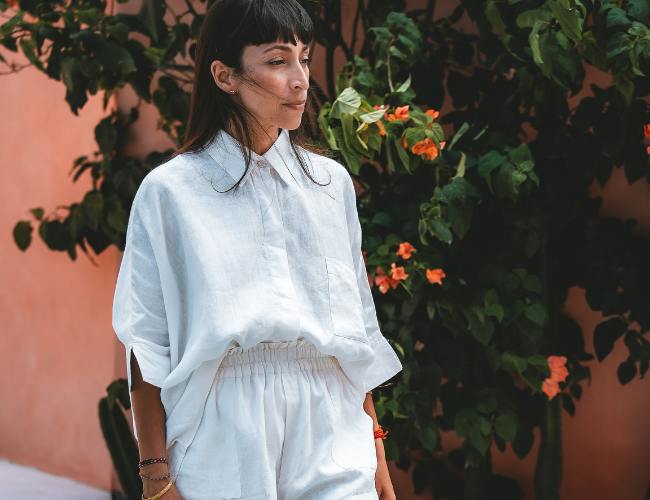
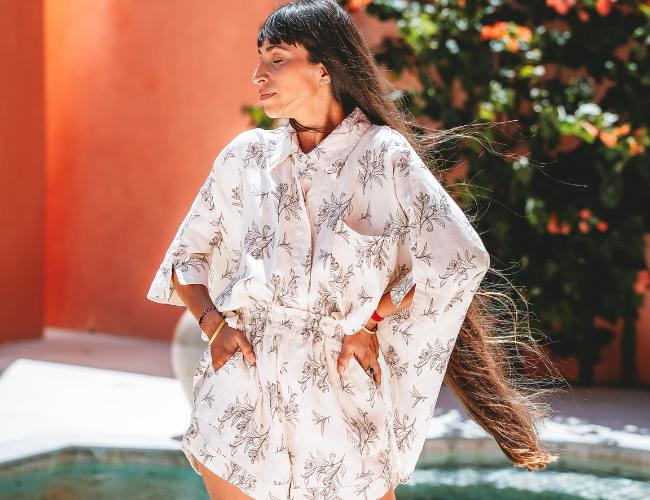
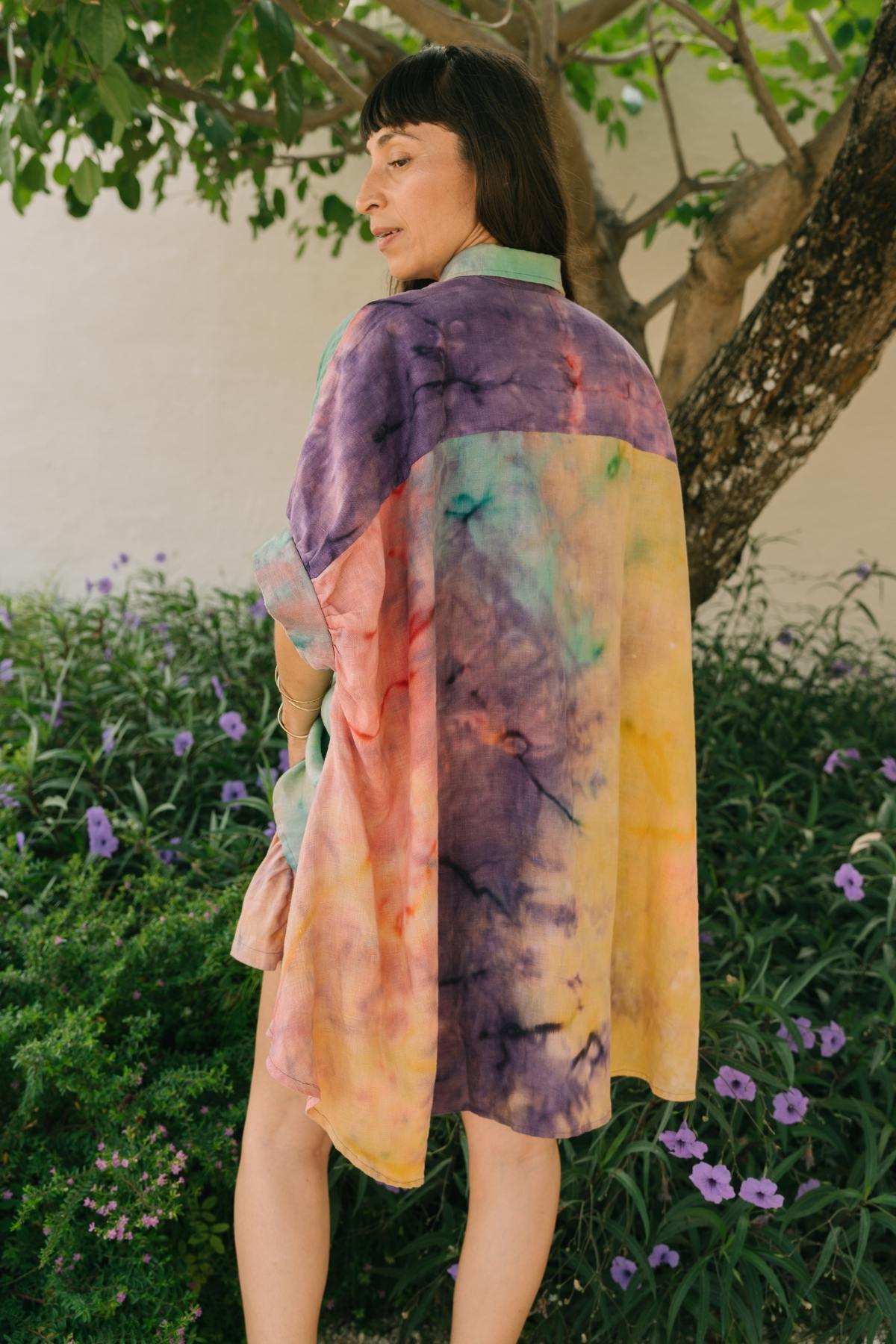
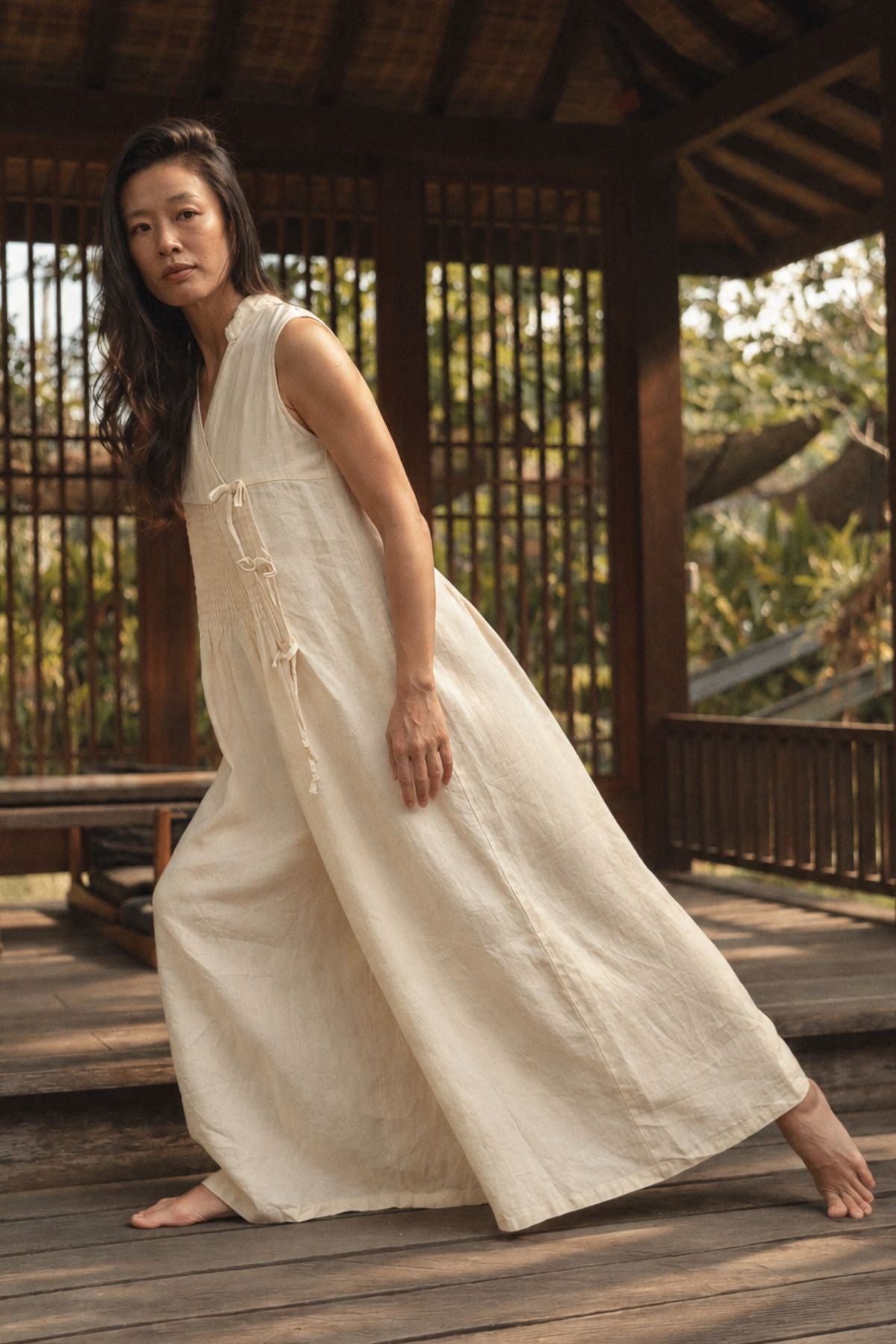
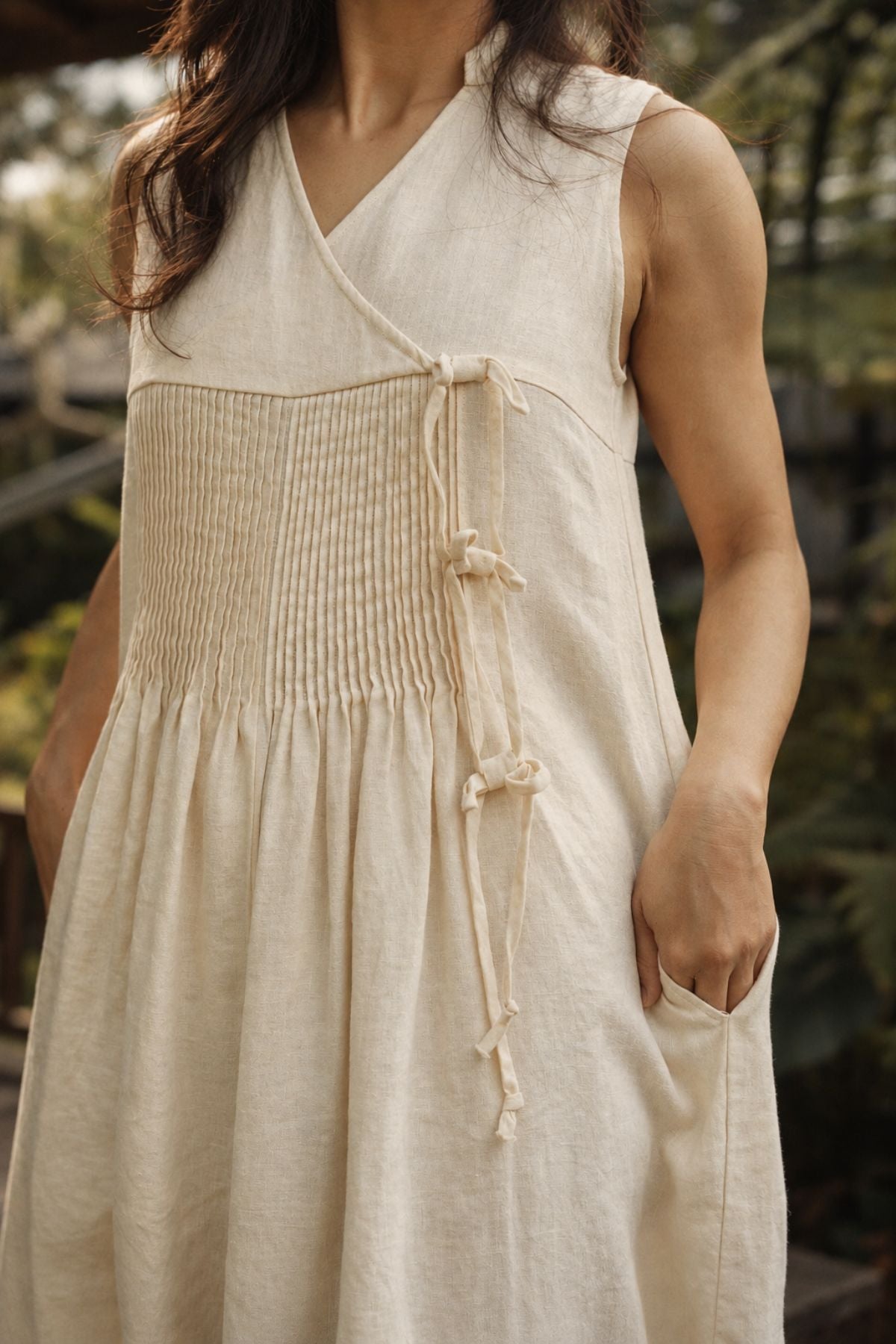
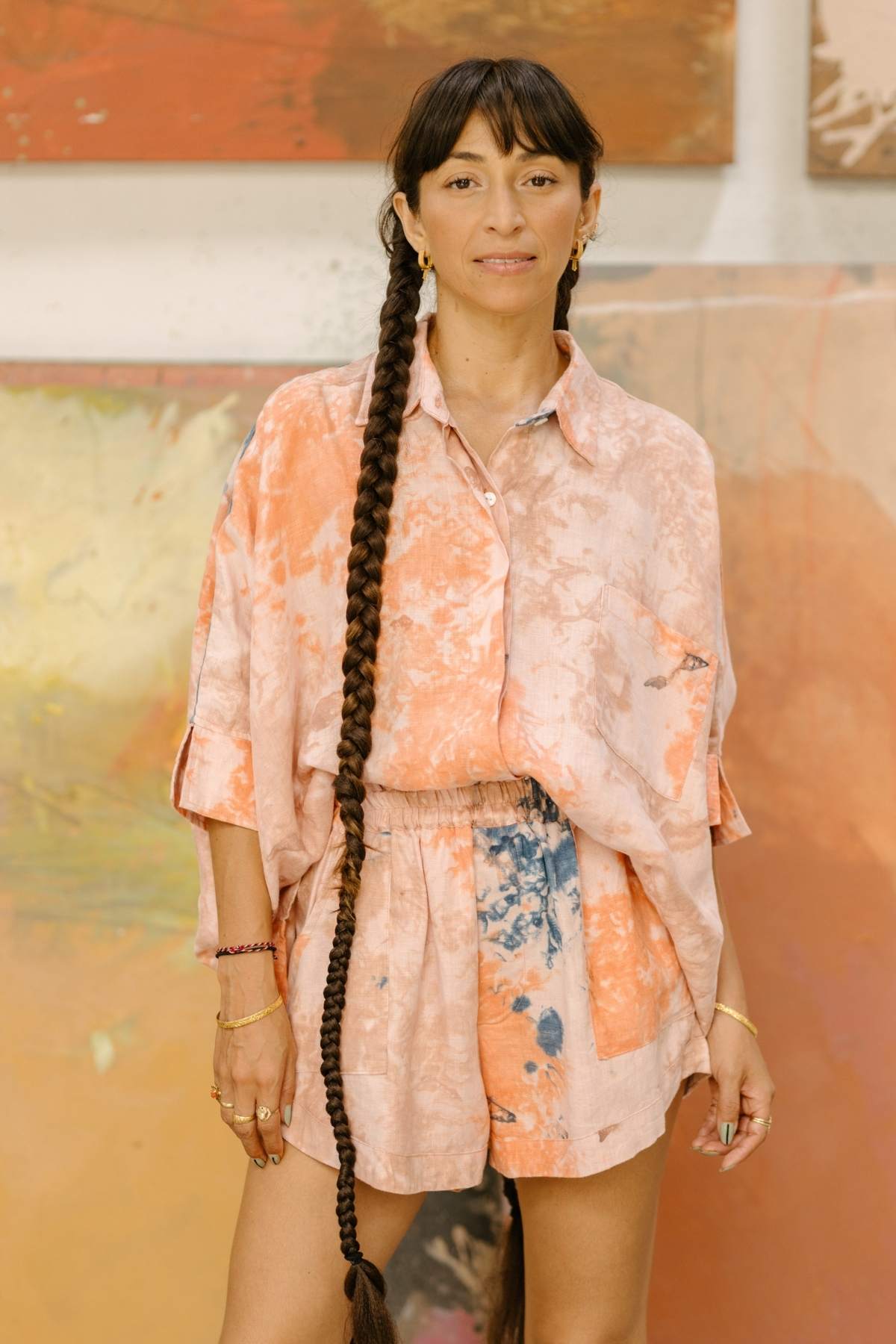
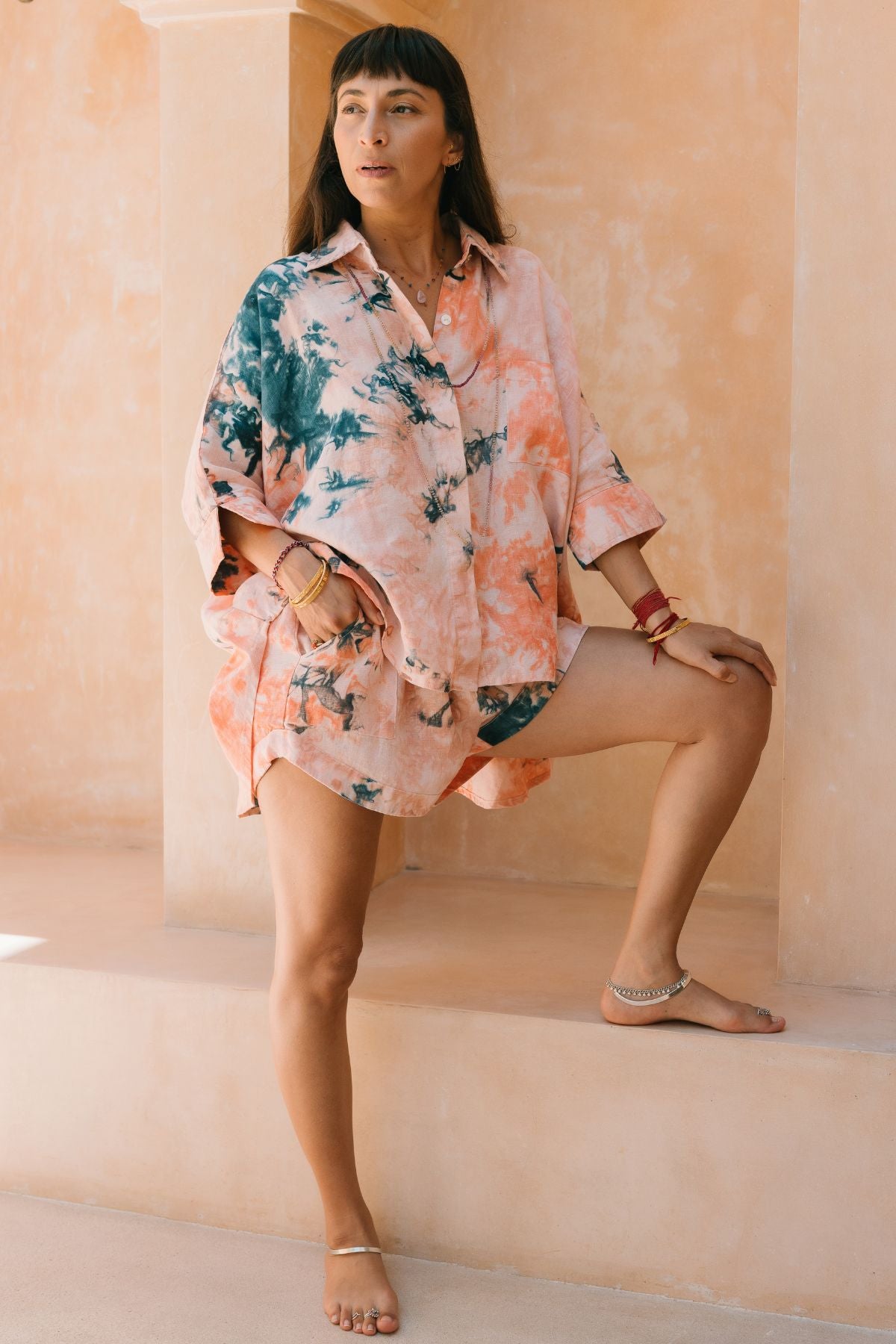
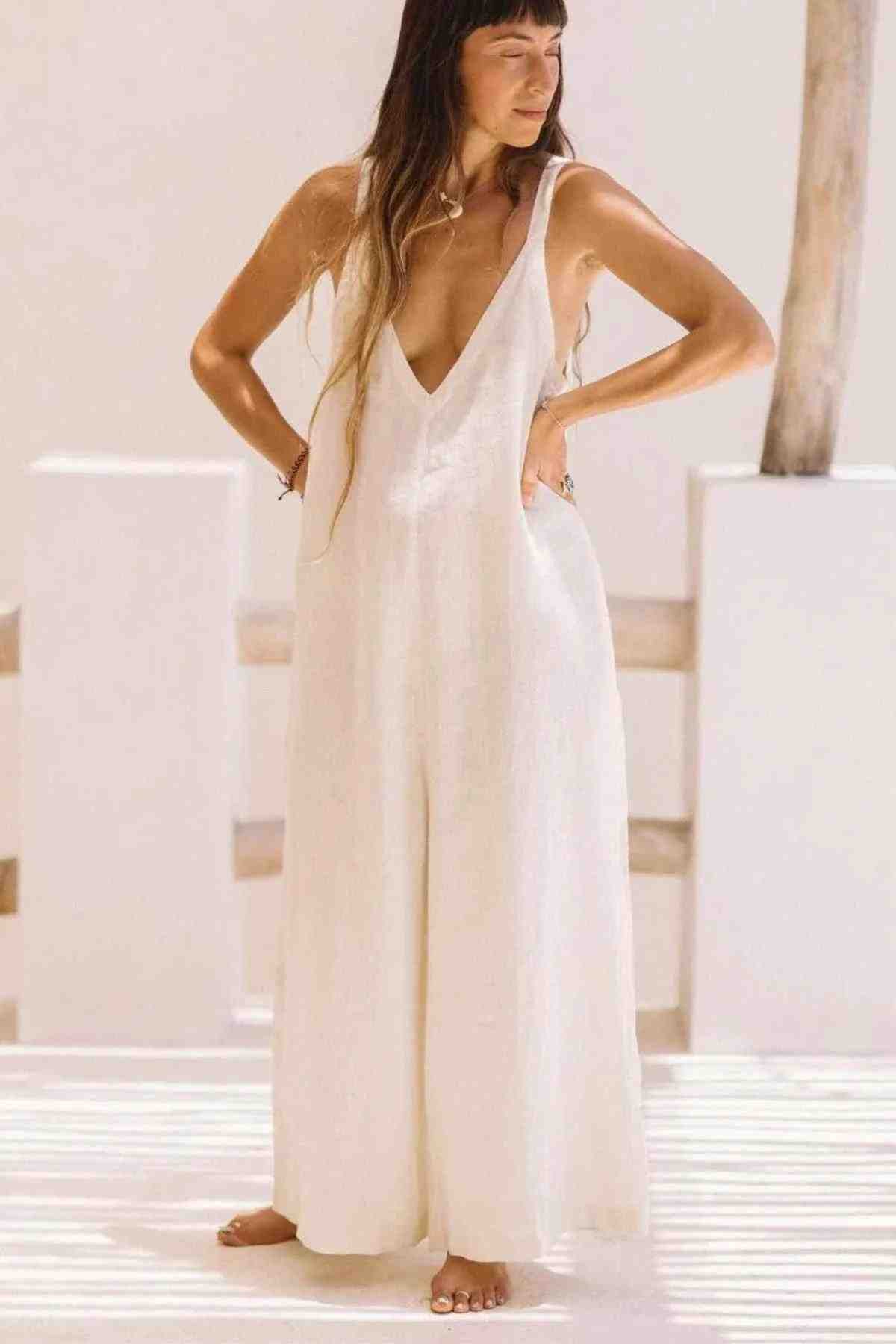
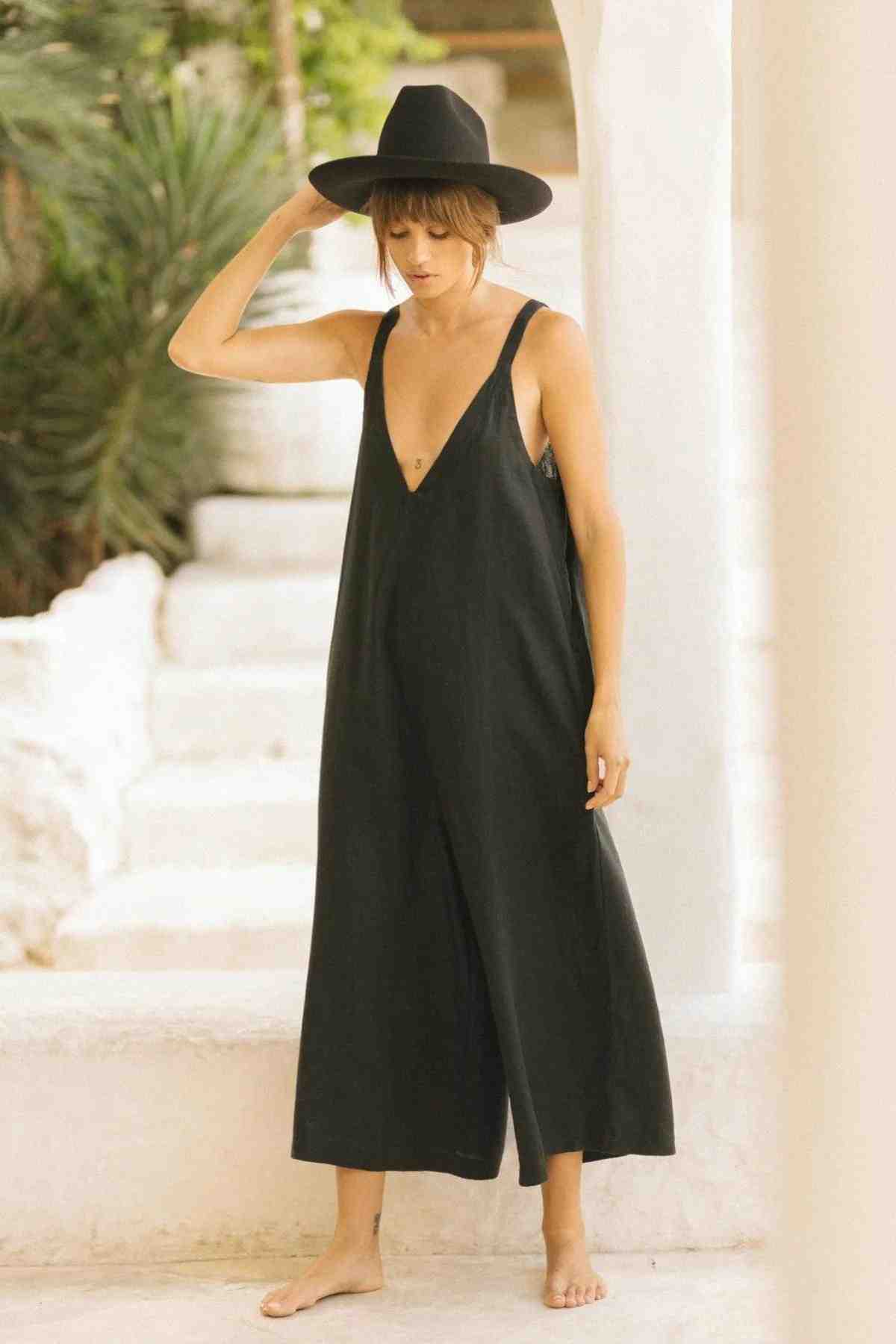
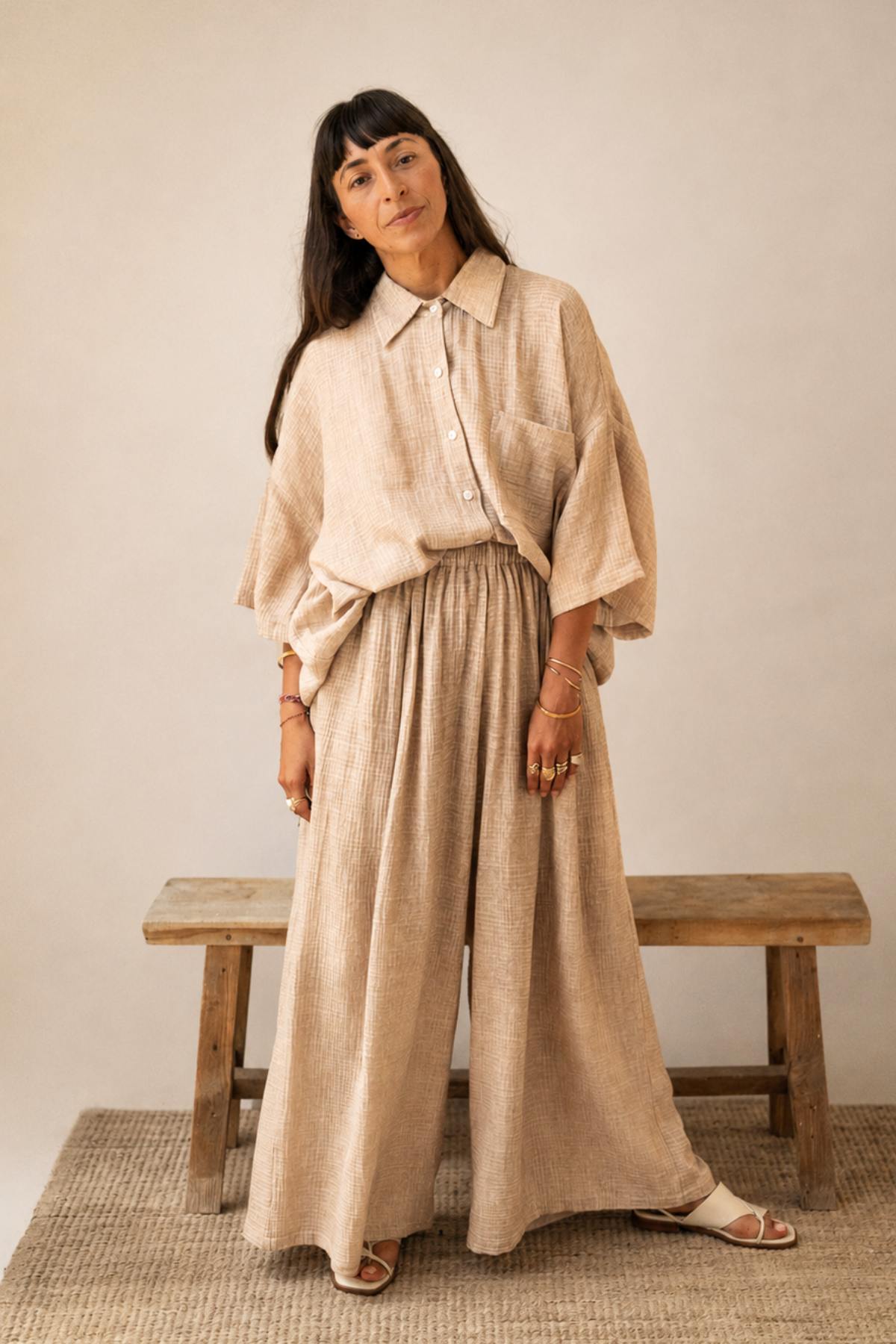
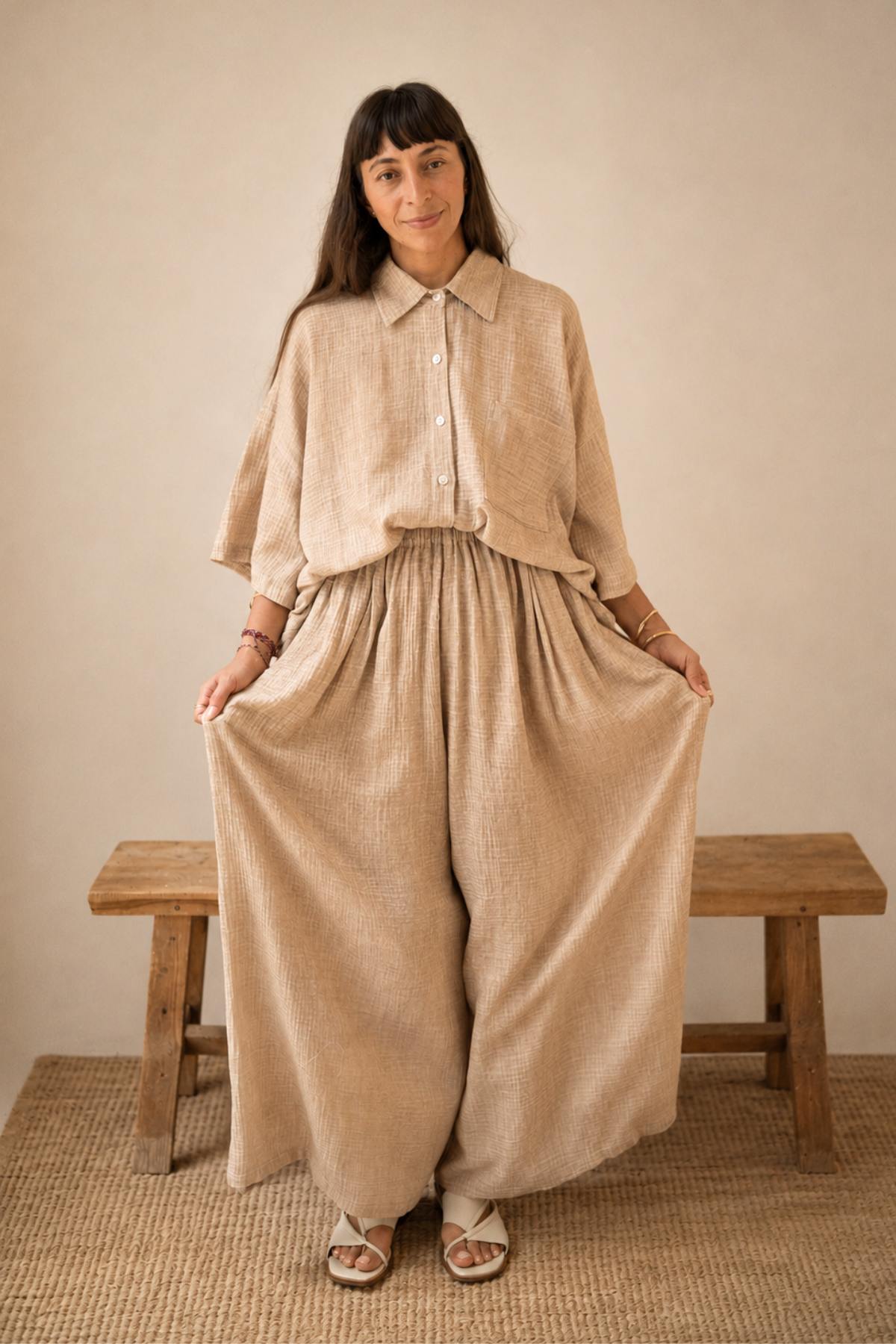
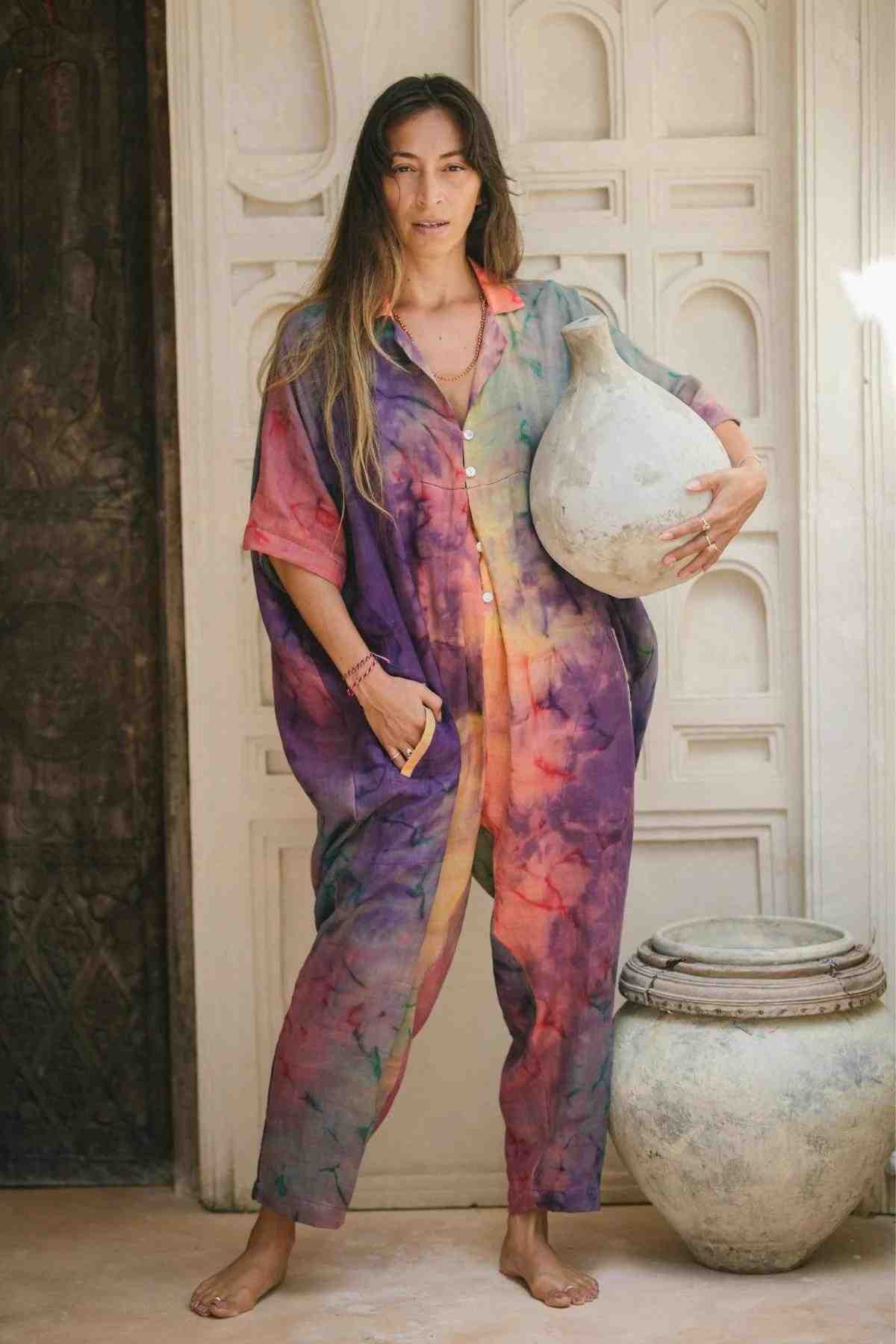
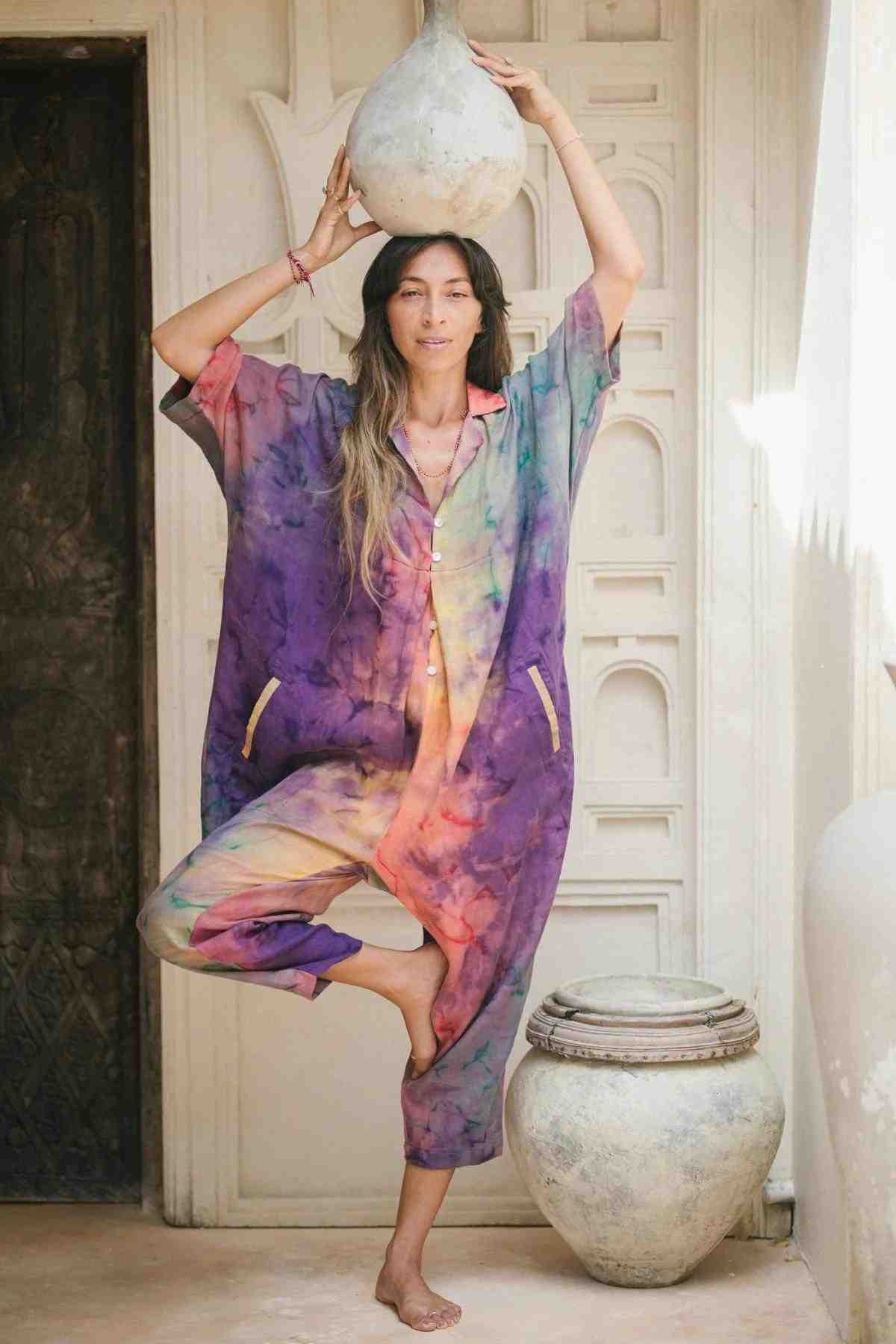
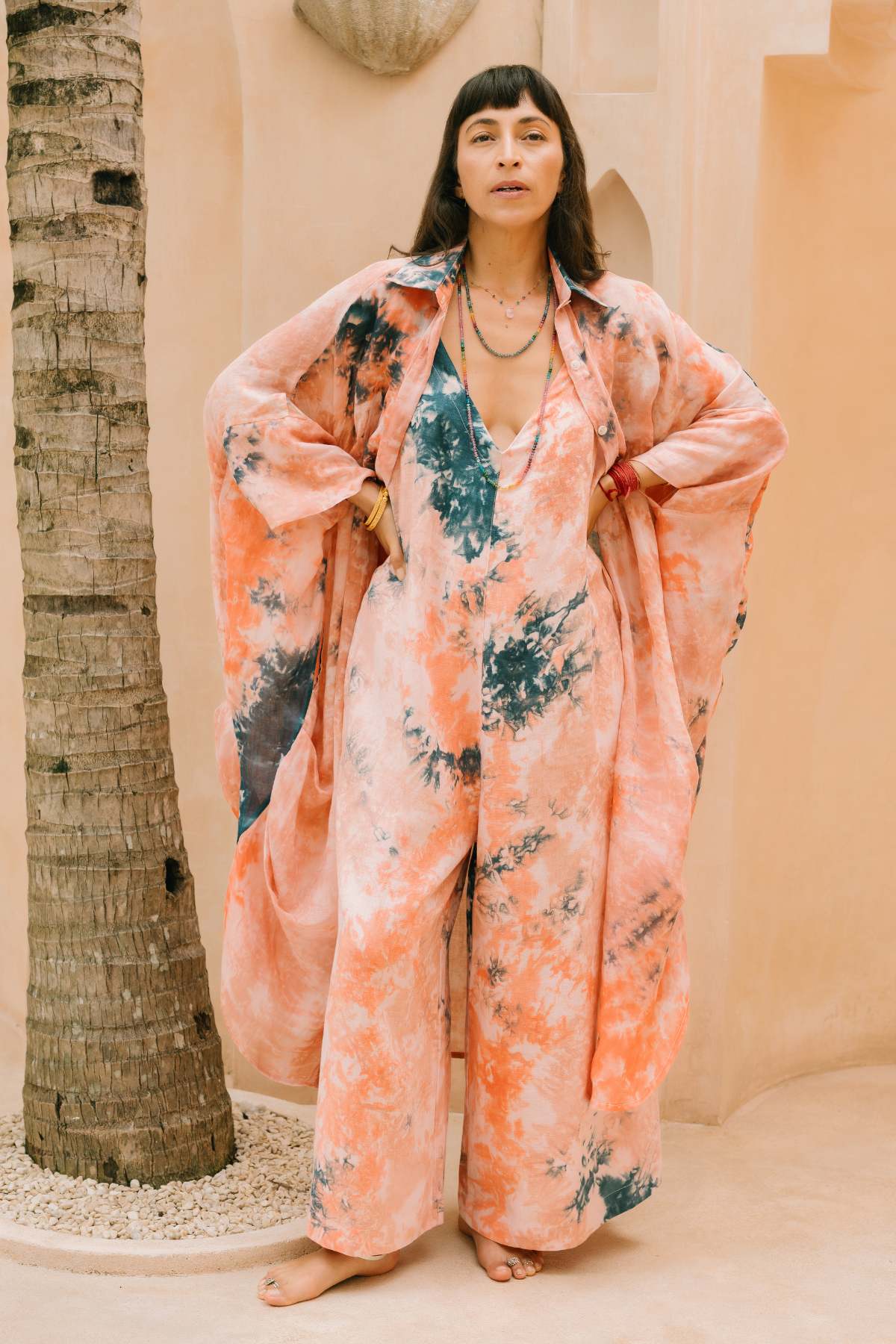
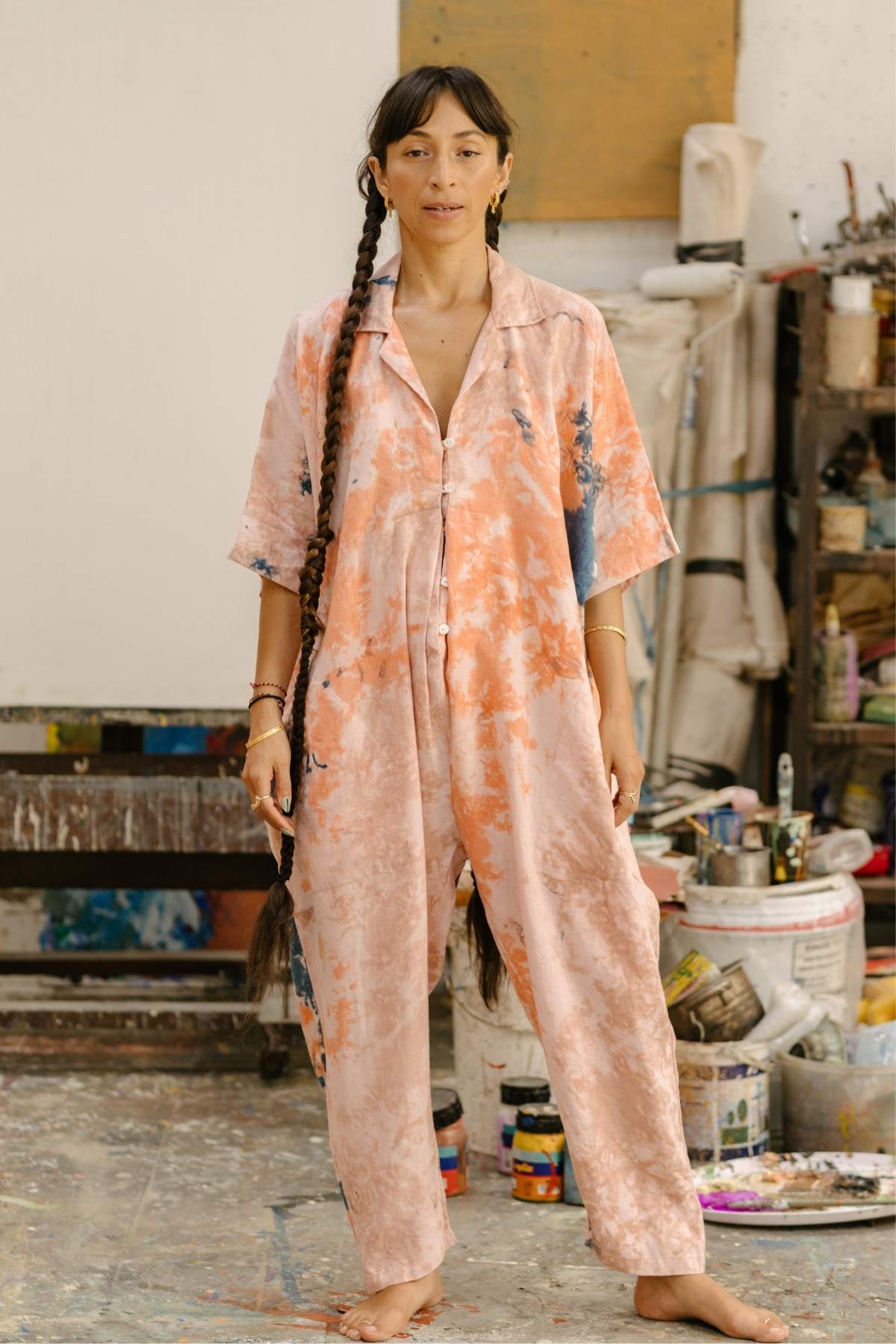
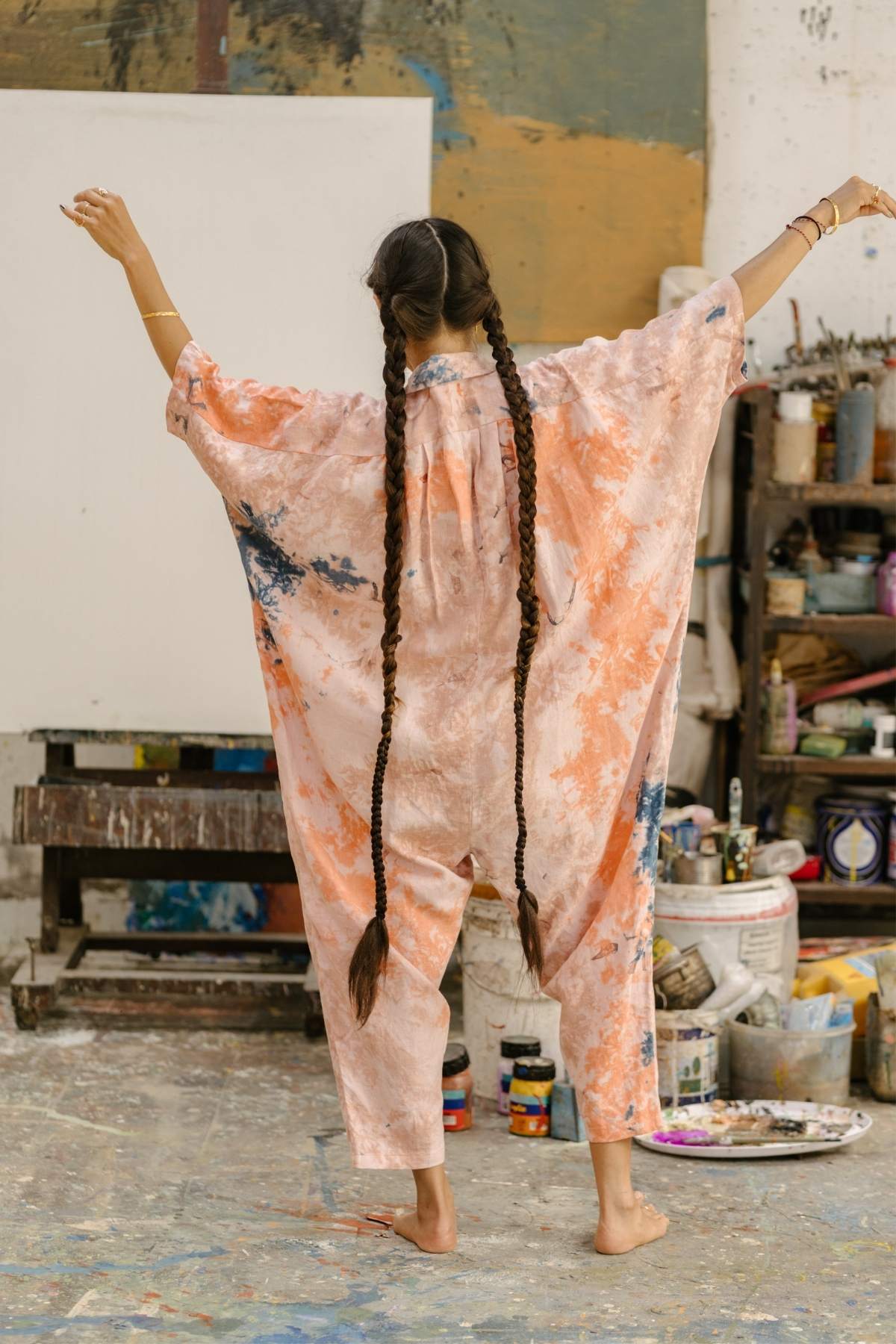
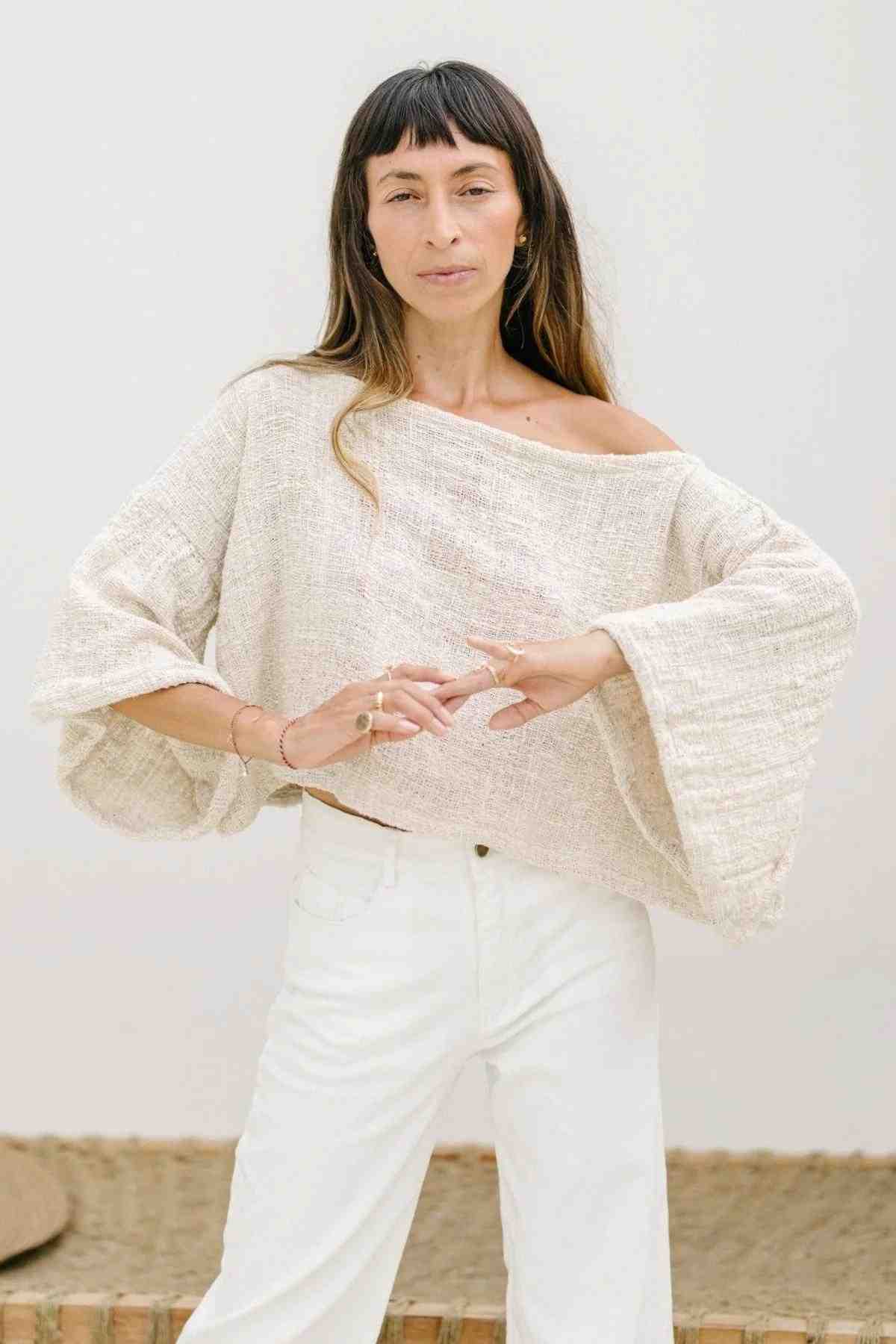
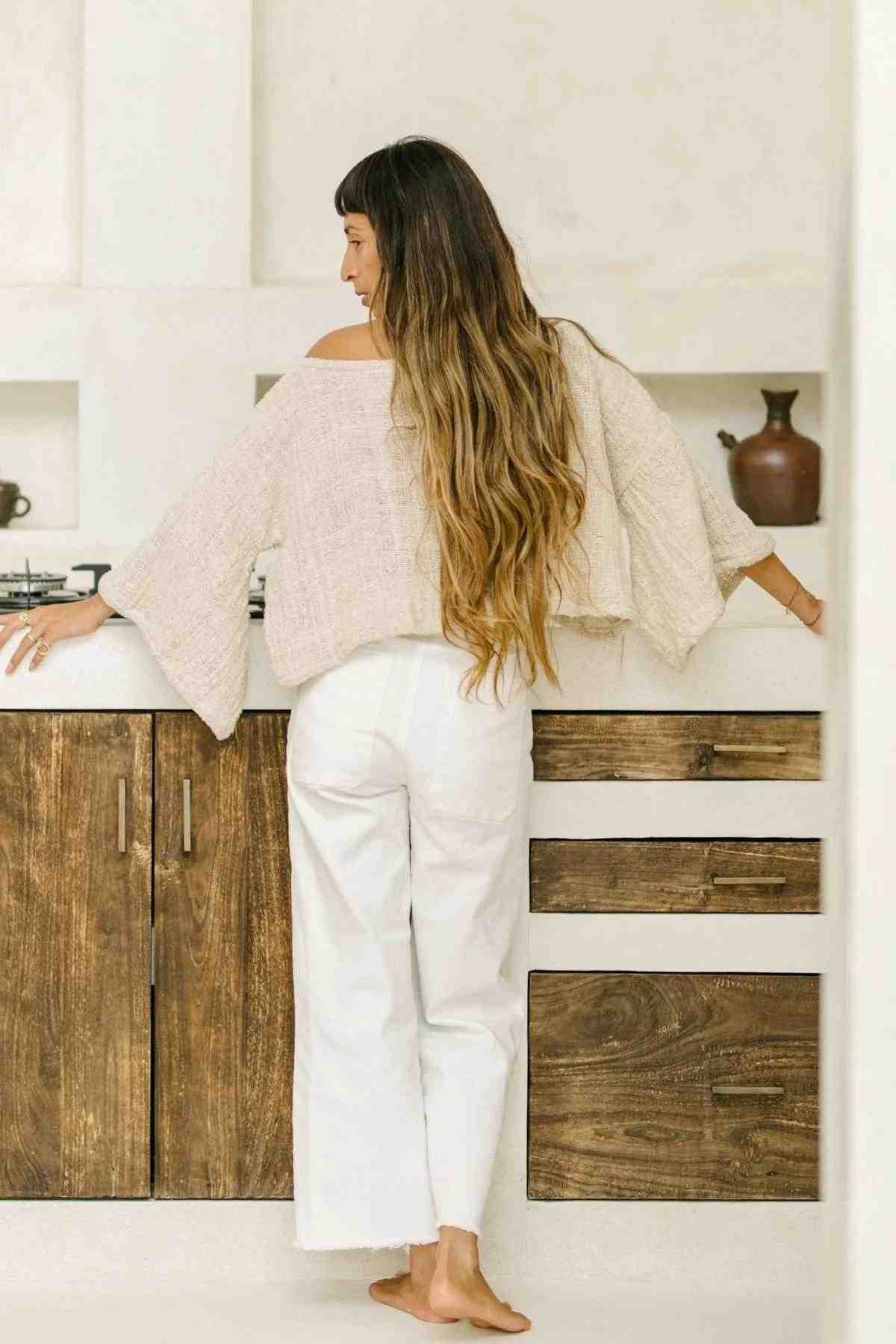
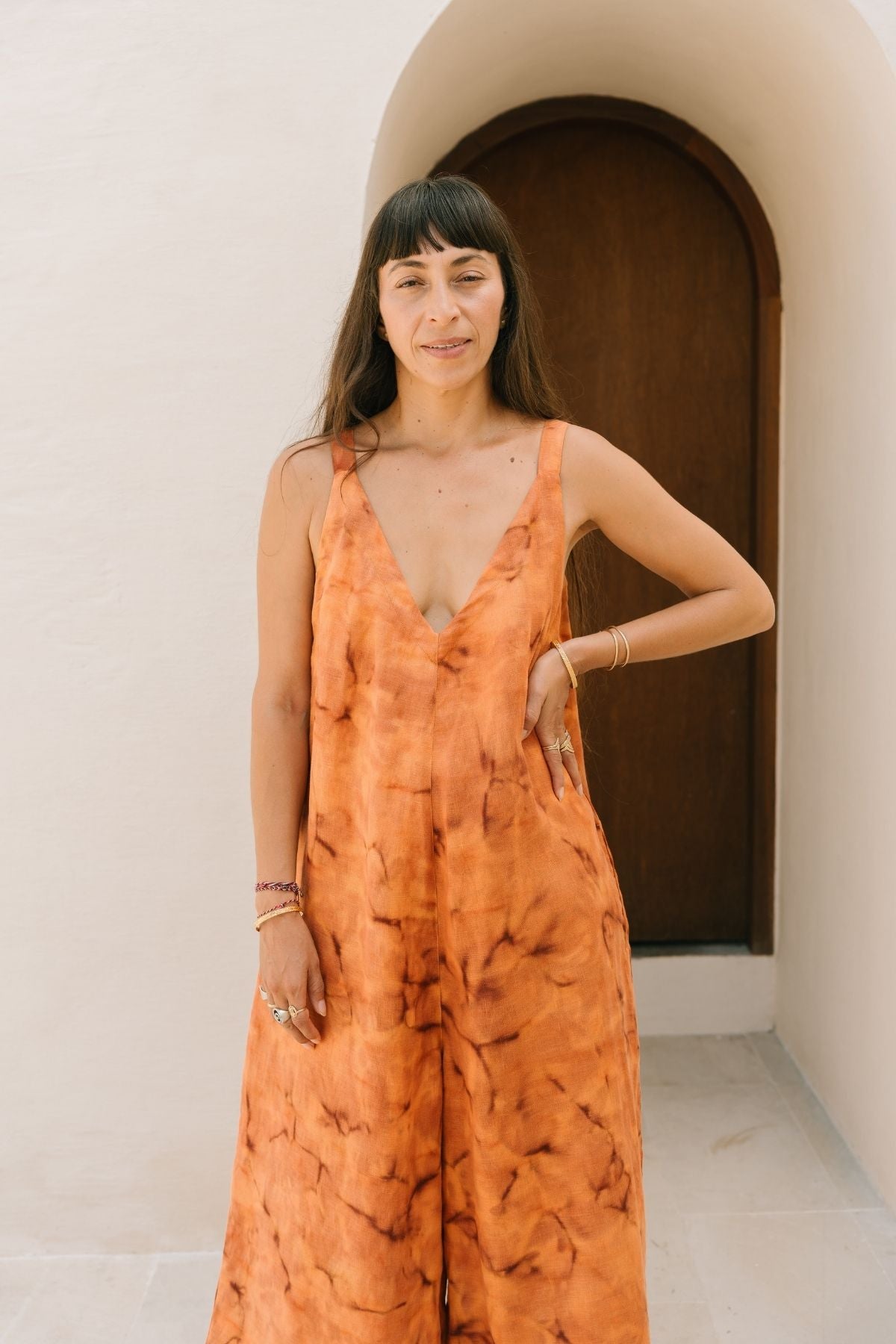
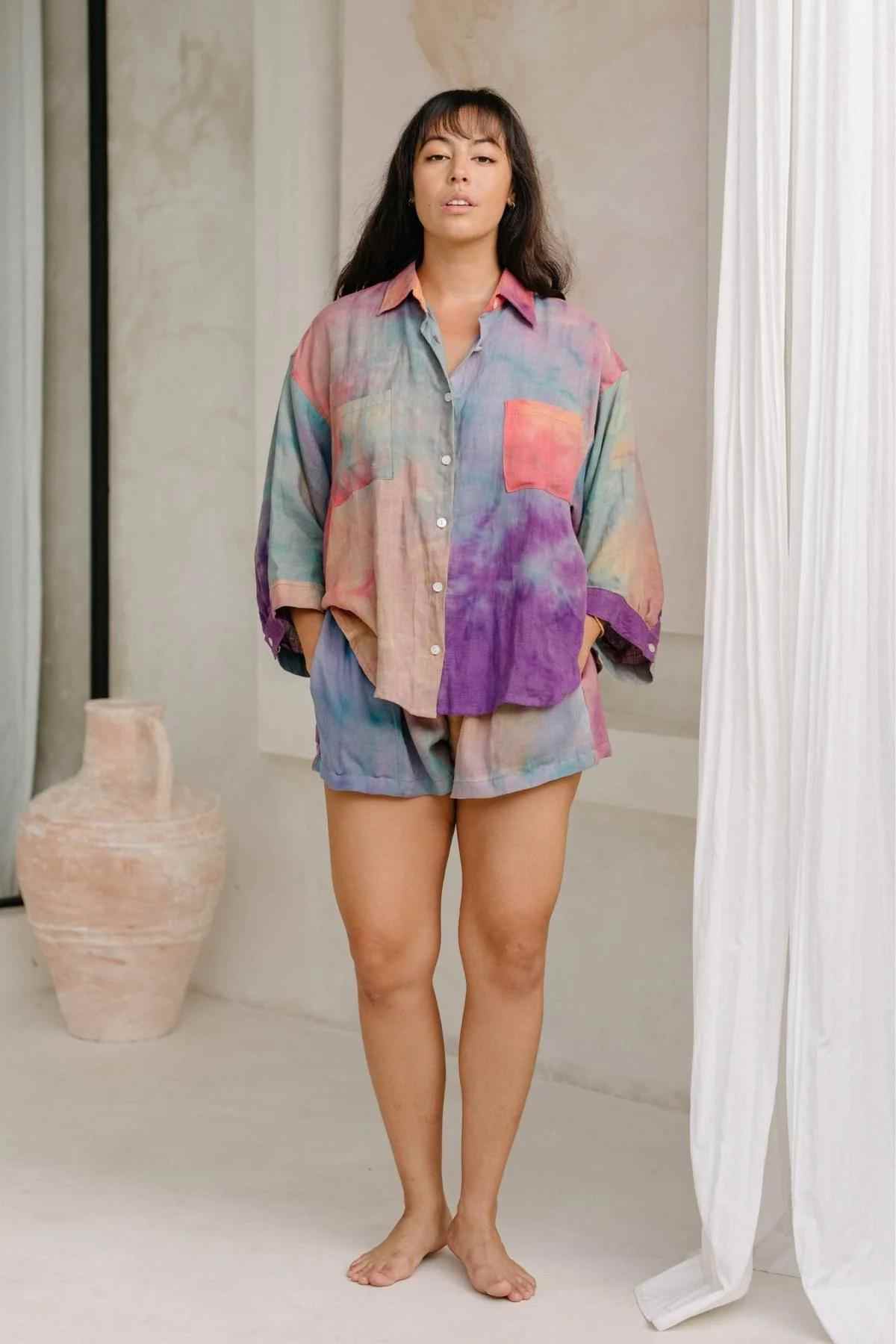
A matched linen set is the everyday version: ceremonial in its simplicity, easy to live in, elevated by cut rather than ornament. The Swan Set was made for the days you want to remember. For a fuller, more ceremonial register, a botanical-dyed gown like the Dharma Gown carries a colour that was made once and will never be repeated, and a silk kaftan such as the Silk Virgo Kaftan holds the dressier evenings. The colour in each comes from plants, hand-dyed in Bali. If you want the deeper story of why that matters, we wrote it in how botanical dyed clothing is made.
What colour is best for spiritual clothing?
White or undyed natural tones first, because they are the traditional choice across many practices and because they let the material speak without a colour drawing attention. After that, botanical tones, clay, indigo, forest, rose, because a plant-dyed colour carries depth that a synthetic one cannot, and shifts gently in the light. The one thing to avoid is a loud synthetic print, which pulls the eye to the pattern and away from the quiet that makes the piece feel sacred in the first place.
Frequently asked questions
What makes clothing feel spiritual? Natural fibre against the skin, colour that comes from plants rather than a formula, and the intention carried in a piece made by hand. Traditions from Kundalini to Ayurveda hold that what touches the body affects the state of the person wearing it. Spiritual clothing is not a costume covered in symbols. It is ordinary clothing made of the right materials, in the right way, and worn with awareness.
How do I dress spiritually without looking costumey? Subtract rather than add. One clean silhouette, a single natural or botanical tone, real fibre with a beautiful drape, and one piece of meaningful jewellery worn alone reads as devotion. Symbols, fringe, stacked malas, and loud prints read as costume. Removing the signals leaves the thing itself: the fall of the fabric and the depth of the colour, which is what feels sacred.
What is the best fabric for spiritual or ceremonial clothing? Linen and silk. Linen breathes, regulates temperature, and is traditionally associated with purity and elevated states. Silk is closest in structure to human skin and kind against the body. Both are natural fibres that carry botanical dye beautifully. Synthetic fabrics sit differently against the skin and are the ones to avoid for clothing meant to support an inner state.
What colour is best for spiritual clothing? White and undyed natural tones are the traditional first choice, because they let the material speak and are associated with elevated practice across many lineages. Botanical tones like clay, indigo, and rose are the next, because plant-based colour carries a depth and life that synthetic dye does not. Avoid loud synthetic prints, which draw the eye away from the quiet that makes a piece feel sacred.
With love from Bali,
Myrah
|
A Piece for This Threshold The Swan Set Shop the Swan Set → |
|
The Muse-Letter Dress for the woman you’re becoming. Join the Muse-LetterUnsubscribe any time. No spam, ever. |


Laisser un commentaire
Ce site est protégé par hCaptcha, et la Politique de confidentialité et les Conditions de service de hCaptcha s’appliquent.