


The Hundred Strokes: What Brushing Your Hair Slowly Taught Me
Written from the studio in Pererenan, on a quiet Sunday evening, hair down, incense lit.
My grandmother brushed her hair every night before bed. Not quickly, not while doing three other things — she sat at the edge of her bed, unpinned it, and worked through it slowly, from the ends up, like she had nowhere else to be. As a child I thought it was vanity. Now I understand it was the opposite. It was one of the only moments in her day that belonged entirely to her.

"The way you touch your own hair is the way you speak to yourself when no one is listening."
Somewhere along the way, most of us stopped brushing our hair. We detangle it in the shower, rake through it while answering a message, tie it up wet and forget about it. The brush became a tool for fixing, not a ritual for tending. And our hair — and our nervous systems — know the difference.
Why the slow brush works
There is real wisdom hiding inside the old "hundred strokes" advice, even if the number itself is folklore. Brushing from scalp to ends carries your natural sebum — the oil your body makes precisely for your hair — down the length of each strand, where it softens and protects. It sweeps away dust and loose strands. And the repeated, gentle pressure on the scalp increases circulation exactly where new growth begins. The magic was never the hundred. It was the slowness.
How I do it now
In the evening, after the day has emptied out, I sit somewhere soft. I start at the ends with a wide-tooth comb if there are tangles, then switch to a brush and work from the roots down in long, unhurried strokes. Ten minutes, maybe less. I let my shoulders drop somewhere around the twentieth stroke. By the fortieth, my breath has slowed without my asking it to. It is the cheapest nervous system medicine I know.
The details that matter
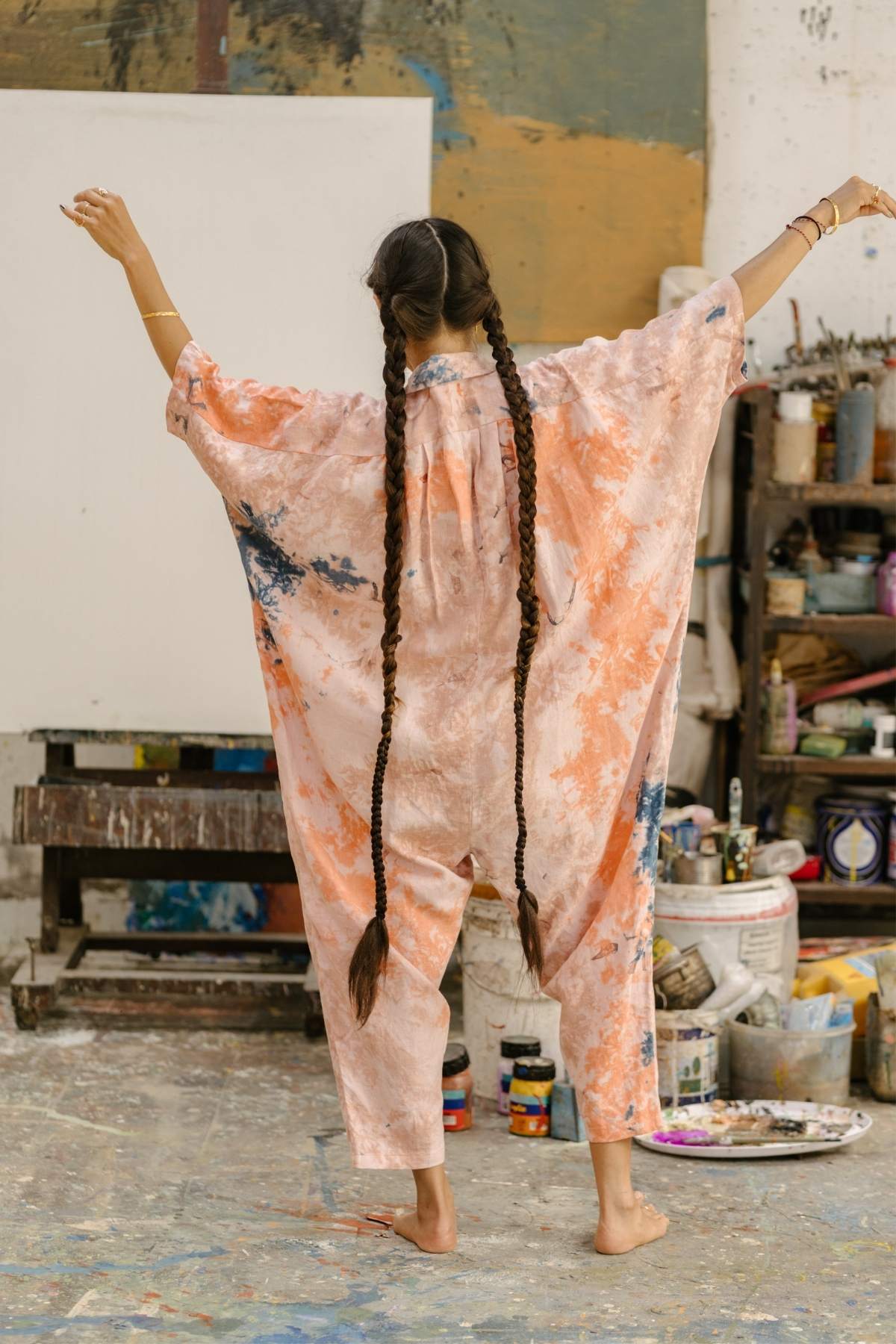
Brush dry hair, not wet — wet hair stretches and snaps. Choose a brush with rounded, flexible bristles that feel good against your scalp; if it hurts, it is wrong. Tip your head forward for the last few strokes and brush from the nape upward — it reaches the places that never get touched, and it feels like a small act of devotion. Then, if you love your hair, braid it loosely before sleep so the night doesn't undo your work.
What it is really about
Here is what I have learned in the years since I started brushing my hair the way my grandmother did: the ritual is not about the hair. The hair is the doorway. Ten minutes of doing one gentle thing, slowly, with your own hands, tells your body something it rarely hears — you are worth unhurried attention. The shine is just the evidence.
Tonight, when the house goes quiet, try it. Sit down. Unpin whatever the day has knotted. Begin at the ends.
With love from Bali,
Myrah.
A Piece for the Evening Ritual
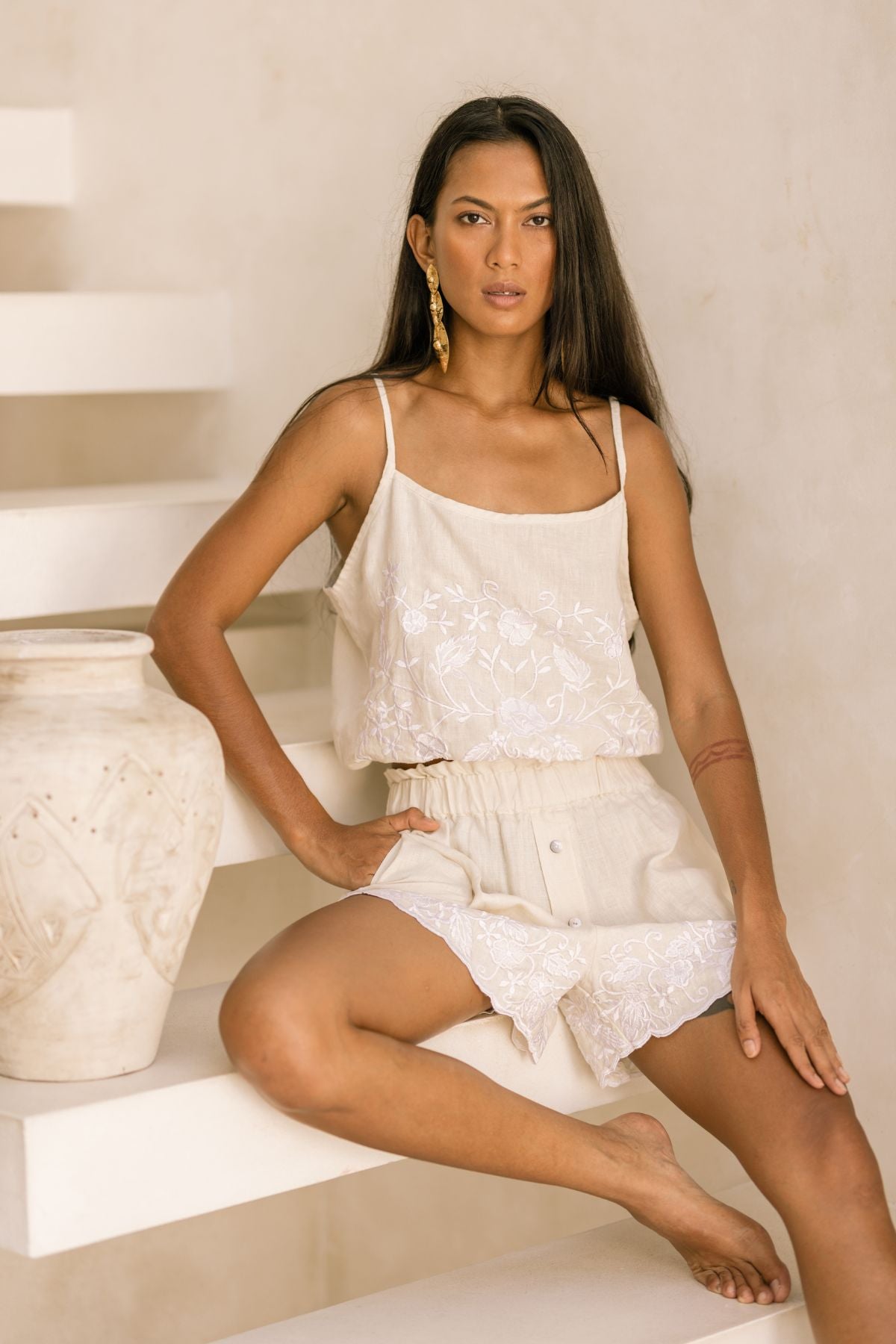
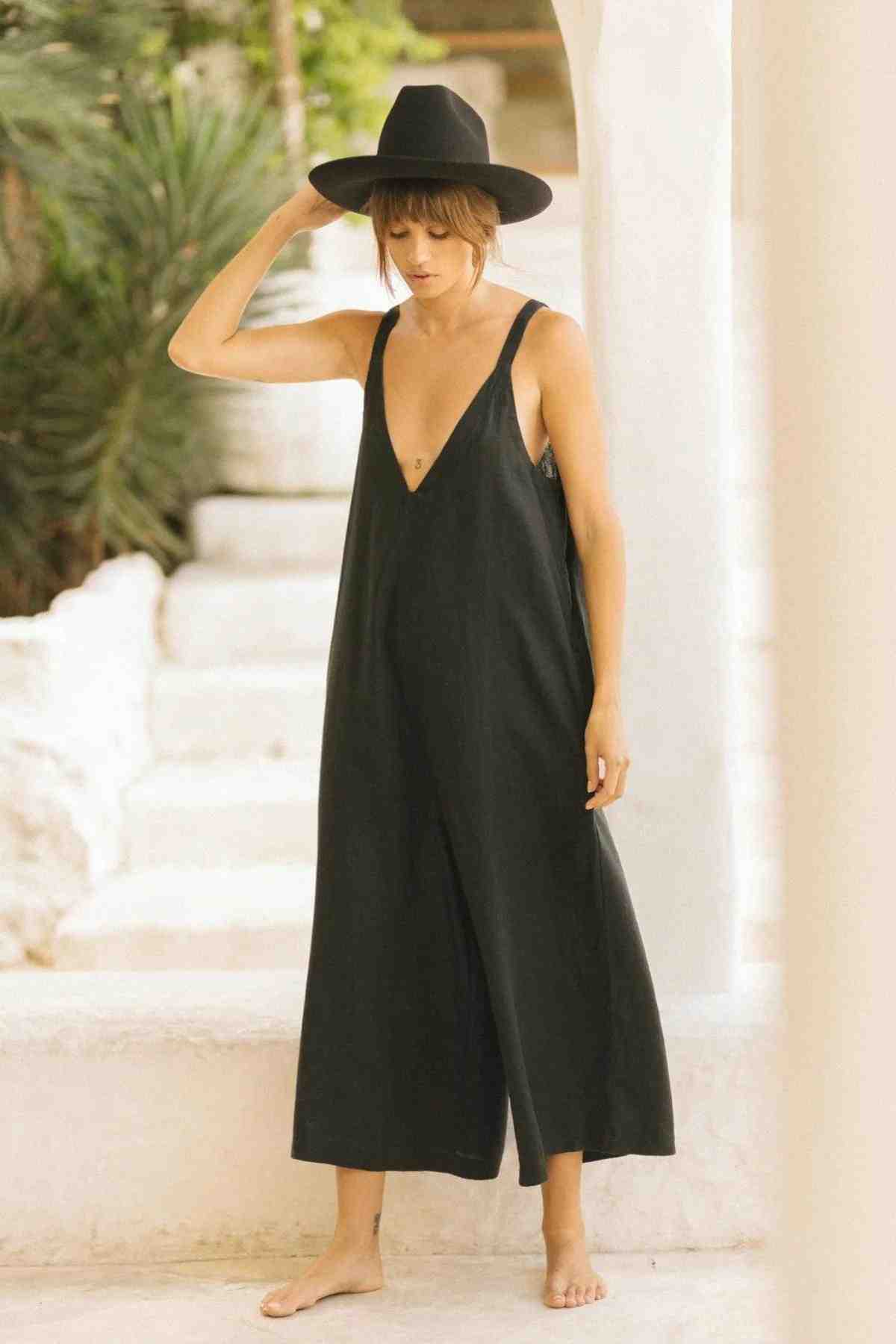
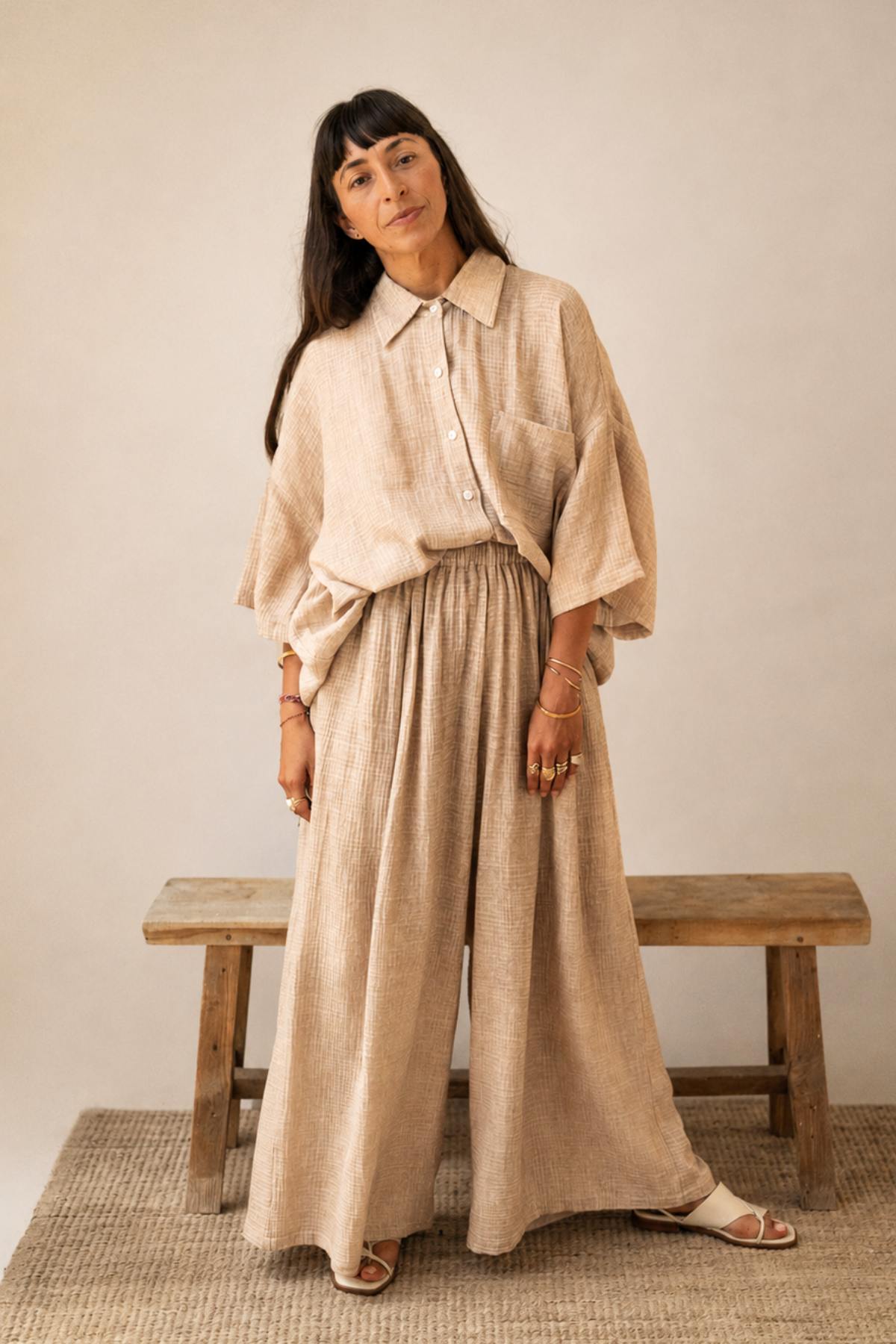
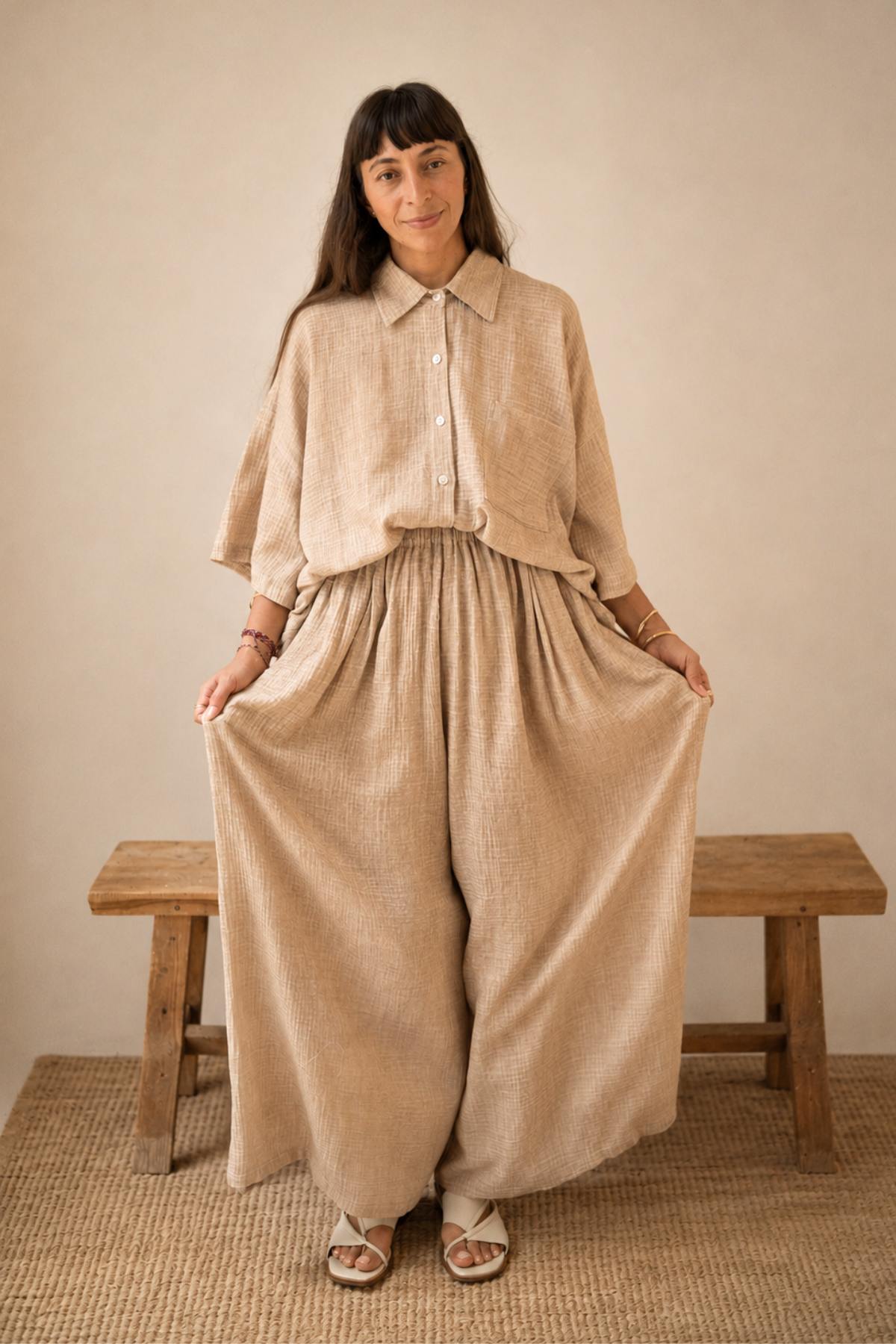
Wonder Sleeper Set
Stonewashed, embroidered linen made for the hours that belong only to you — the brush, the braid, the slow descent into sleep. Soft enough to forget you're wearing it, beautiful enough to make the evening feel like an occasion.

The Muse-Letter
Dress for the woman
you're becoming.
Every week, from Bali — the cosmic weather, the threshold you're standing on, and one piece made by hand for the woman who is ready.
Join the Muse-LetterUnsubscribe any time. No spam, ever.












Laisser un commentaire
Ce site est protégé par hCaptcha, et la Politique de confidentialité et les Conditions de service de hCaptcha s’appliquent.