
What to Wear to a Beach Wedding
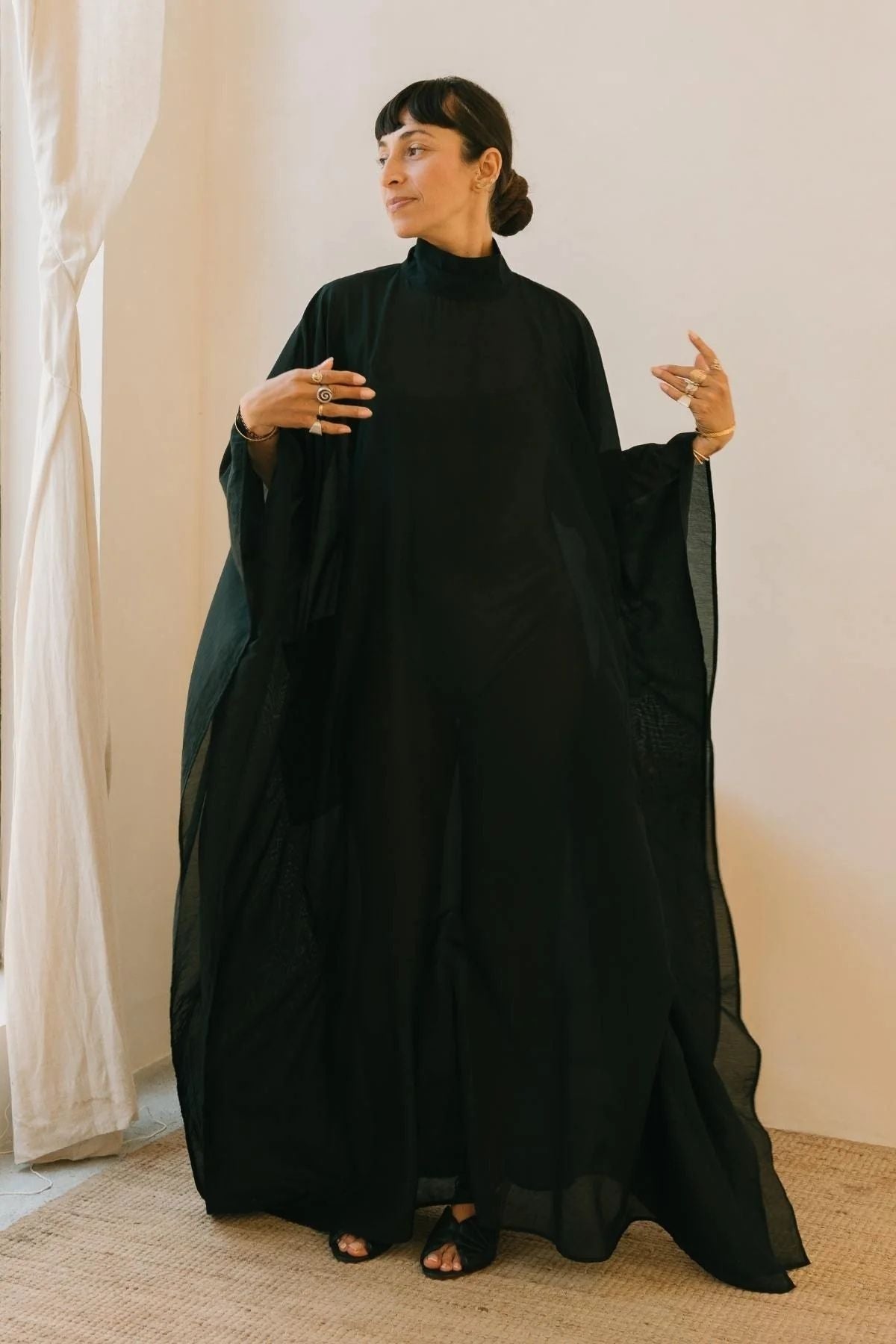
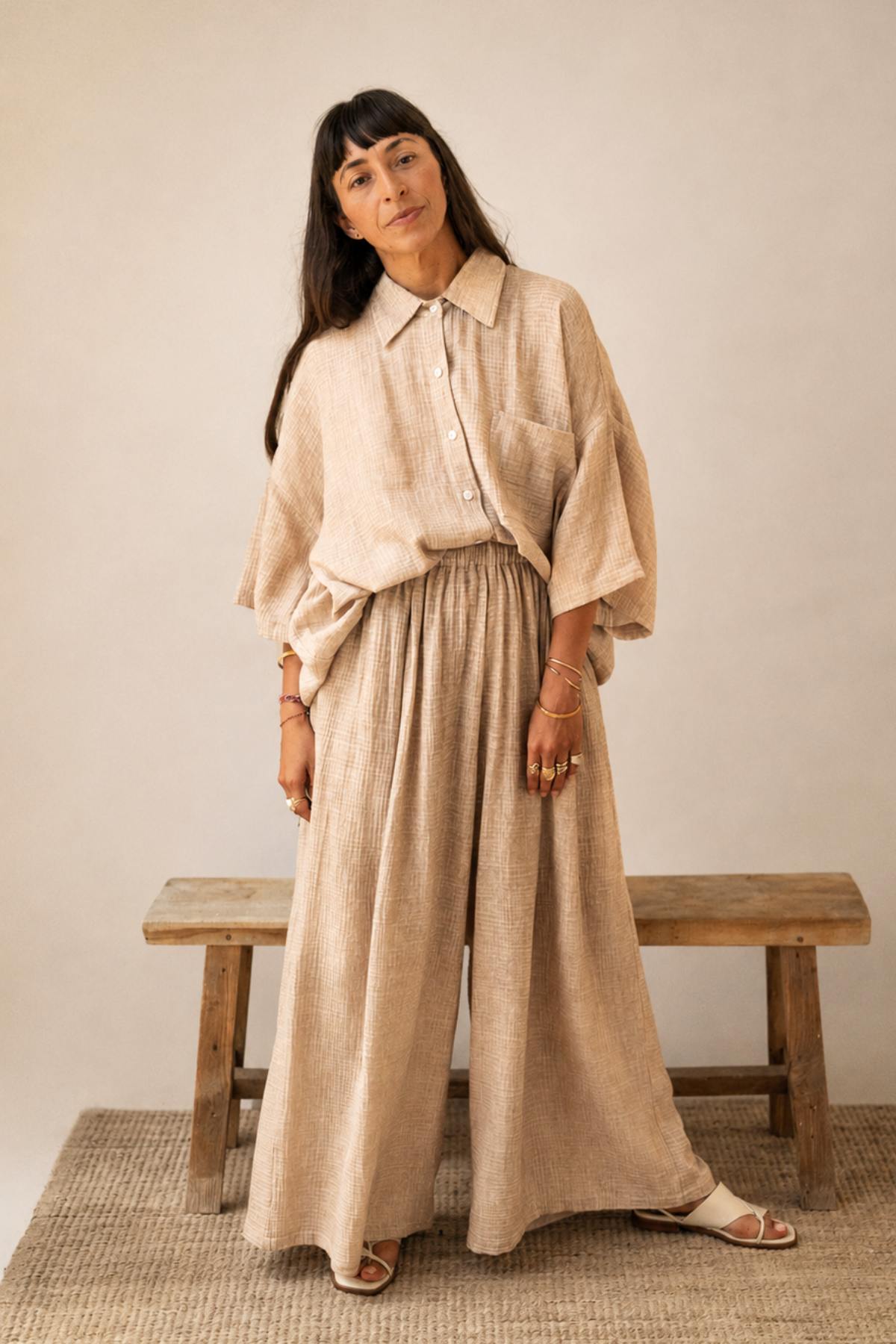
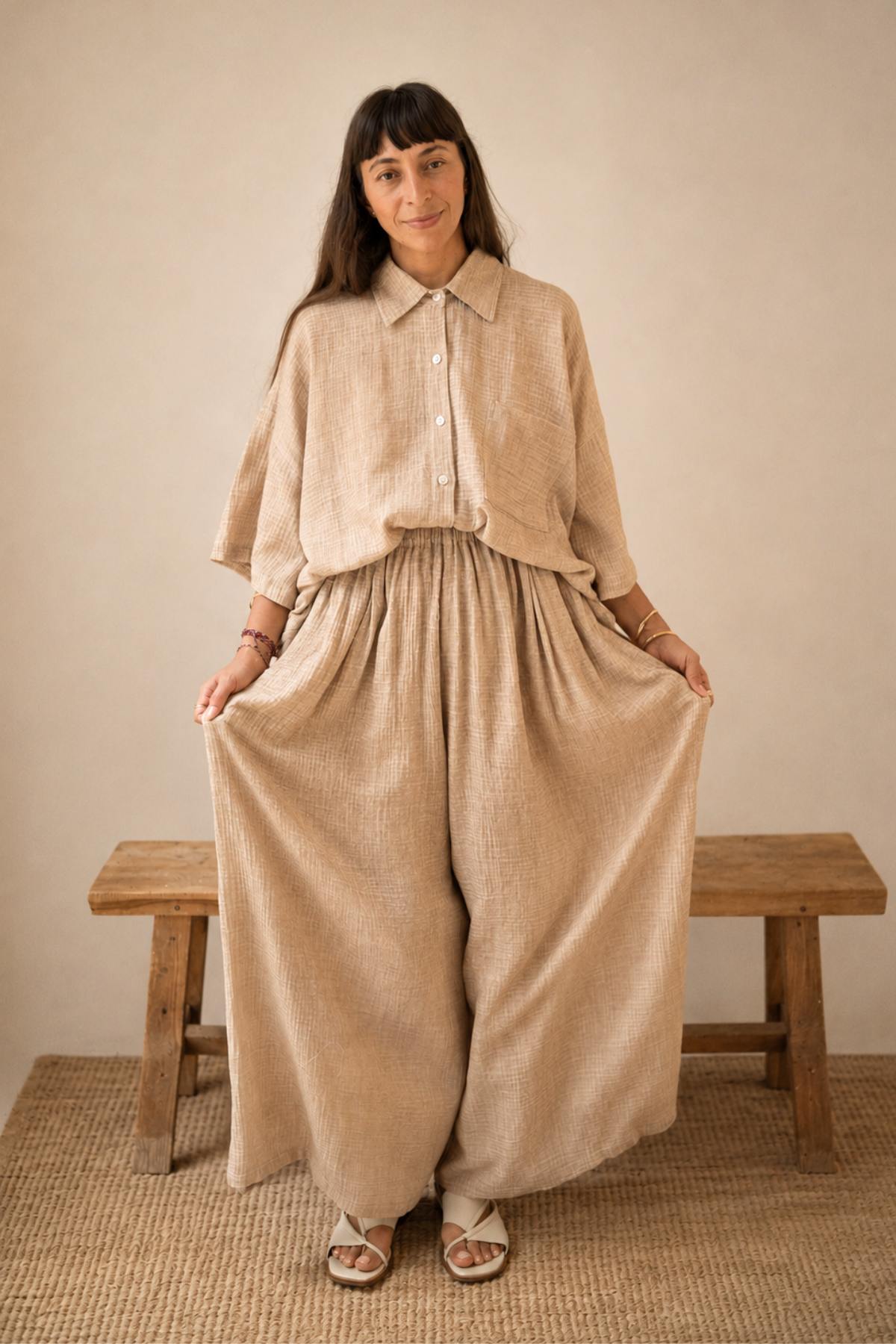
Long, loose, natural fibre, and not white. A full length kaftan or gown in linen or silk, in a colour that is not cream, ivory, champagne or anything a photograph could mistake for the bride. Flat sandals or bare feet, because sand defeats a heel completely. Something over your shoulders for the ceremony, and something warmer for when the sun drops.
That covers ninety percent of it. The rest is knowing what the invitation actually means and what the specific place will do to your clothes over six hours.

The one rule, and why a beach makes it harder
Do not wear white.
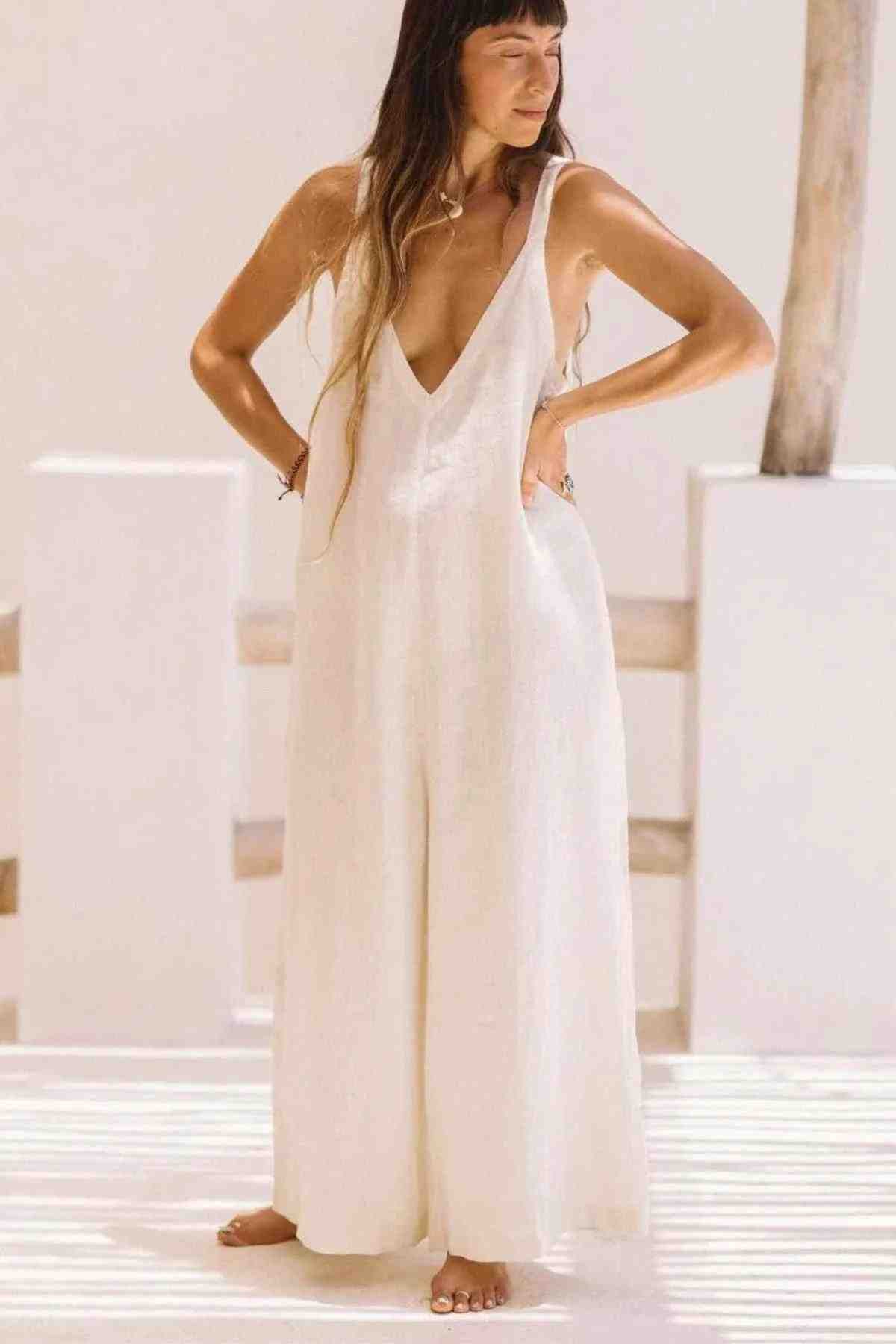
You know this. The difficulty is that beach weddings pull everyone toward exactly the palette that breaks it. Cream linen, oyster silk, sand, bone, champagne, that particular off white that looks nothing like a wedding dress on a hanger and reads as white in every photograph taken in bright sun near water.
Light bounces off sand and sea and lifts pale colours another shade. A dress that is clearly beige in your bedroom is clearly white on the beach at four in the afternoon.
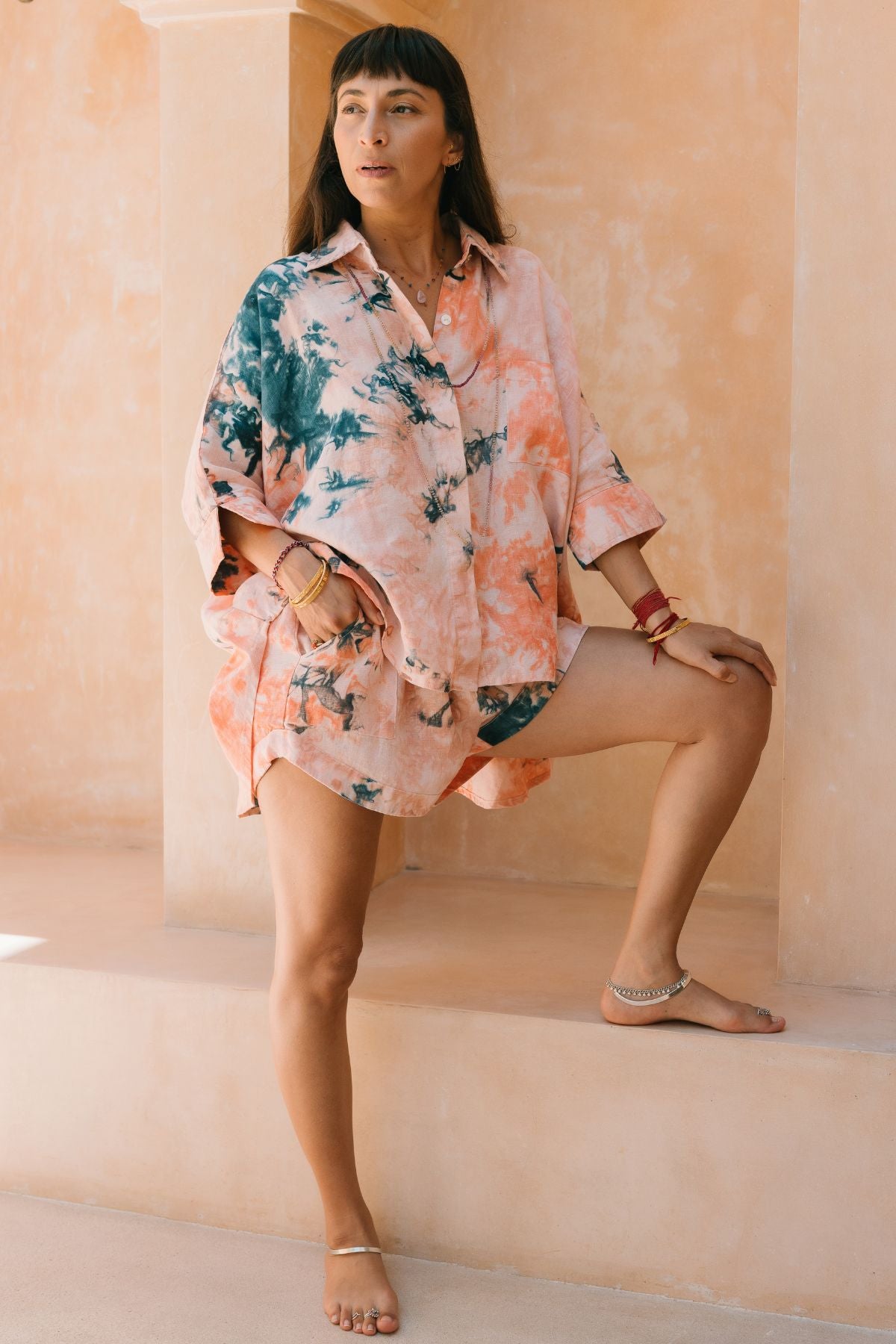
So go warmer or deeper than you think. Clay, rust, turmeric gold, indigo, olive, deep rose, moss. Botanical colours sit particularly well against sand and water because they came from the same kind of place, and they photograph as themselves rather than as a glare.
The exception is if the couple asked for white, which happens more often at destination weddings than people expect. If the invitation says it, wear it. If it does not, do not decide on their behalf.
What the invitation actually means
Dress codes at destination weddings are written by people who have never had to interpret one.
| What it says | What it means |
|---|---|
| Beach formal | Full length, good fabric, no jacket, no heels. A gown or long kaftan is exactly right. |
| Beach casual | Still a dress, still full or midi length. It means no black tie, not no effort. |
| Garden party | Colour and pattern welcome, midi or long, flat shoes because of grass. |
| White party | They mean it. Wear white. This is the one time. |
| Nothing specified | Full length natural fibre in a colour. You will never be wrong. |
| Traditional or ceremonial dress | Ask the couple directly what they would like. Guessing at someone else's culture is the one mistake worth avoiding entirely. |
If you take one thing from this table: a long kaftan in real fabric reads correctly against almost every code on it. That is why it is the piece we get asked about most for weddings.
What the place does to your clothes
The location matters more than the dress code, and almost nobody plans for it.
| Where | What you are actually dealing with | What to bring |
|---|---|---|
| Bali | Humid rather than dry heat. Frequent short rain. Often a temple or family compound element. Uneven stone and grass. | Linen or silk at full length, a sarong or long scarf for shoulders, flat sandals you can slip off. |
| Tulum | Dry heat, sand everywhere, often limited power and no air conditioning, sometimes a cenote. | The loosest thing you own. Nothing that needs pressing. Nothing lined. |
| Mexican Pacific coast | Hot afternoons, cool evenings, dancing that goes very late. | Something you can move in for six hours, plus a layer for midnight. |
| Mediterranean coast | Dry heat, hard light, more formal crowd, more stone underfoot. | Silk photographs beautifully in that light. Flat sandals still. |
Across every one of them the same fabric advice holds, and it is physics rather than taste. Linen is the most breathable fibre in common use, moving moisture off skin and letting air through the weave. Silk regulates rather than insulates, so it stays cool in heat and warm when the sun goes. Polyester holds heat and moisture against your body and releases neither, which is precisely the wrong behaviour for standing in the sun watching two people take a long time to say something.
Bali has an extra layer worth knowing about
If any part of the day happens at a temple or in a family compound, there is a genuine dress expectation and it is not decorative.
Shoulders covered. Knees covered. A sarong tied at the waist and often a sash, which the hosts will usually provide, though bringing your own is a small courtesy that gets noticed. Nothing sheer for that portion of the day, whatever is fine later.
This is easy to plan for rather than awkward. A full length kaftan already meets it. A long linen scarf handles shoulders and doubles as your layer at night. If you are unsure whether a temple visit is part of the day, ask the couple, and ask early enough that the answer can change what you pack.
Shoes, honestly
Sand and heels are not a compromise you can win. A stiletto sinks. A block heel sinks more slowly.
Flat leather sandals, or bare feet if the couple has said so. Bring the shoes you can actually stand in from four in the afternoon until well after dinner, because you will be doing exactly that, and the woman who is comfortable at eleven at night is having a considerably better time than the one who is not.
What we would actually wear
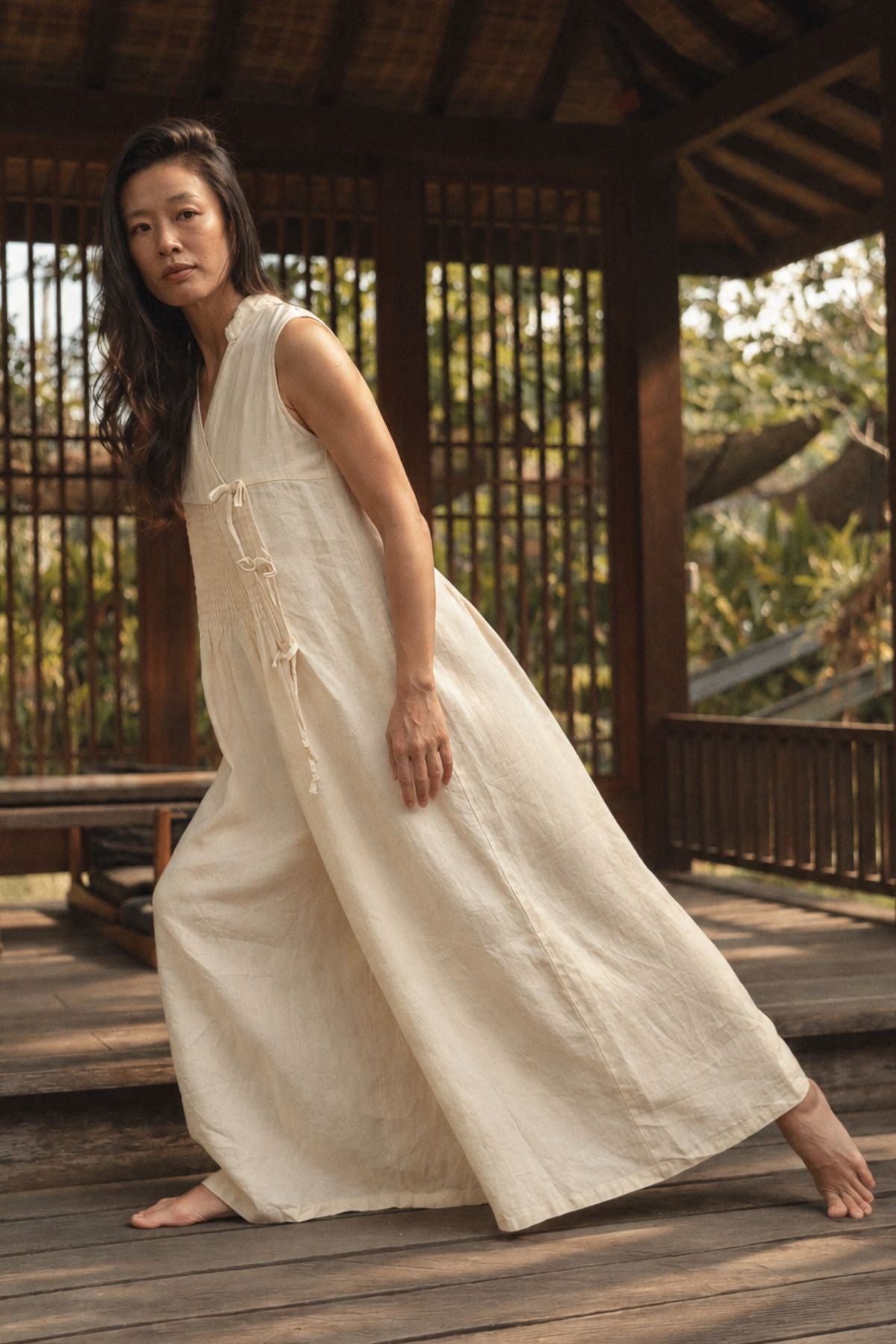
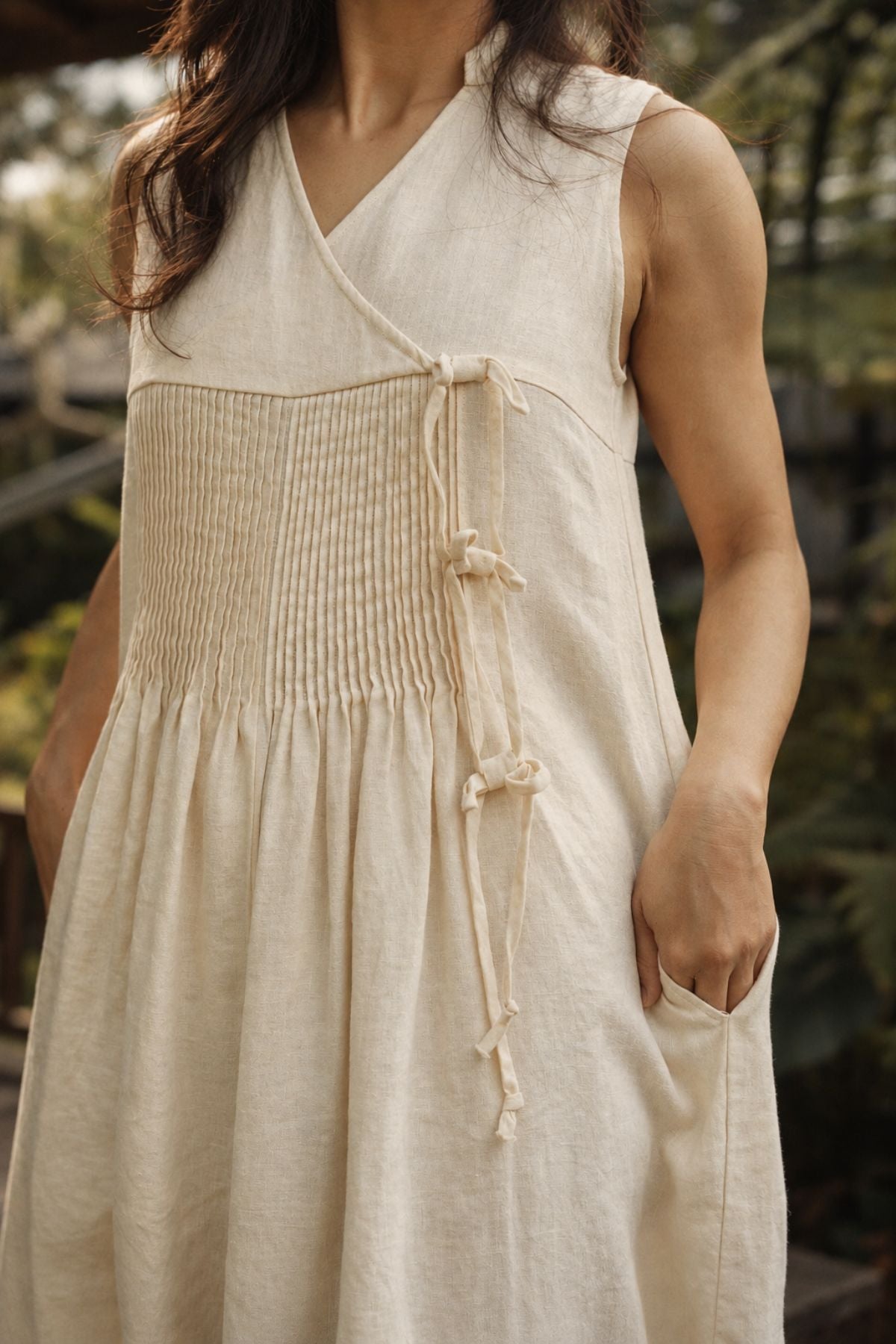
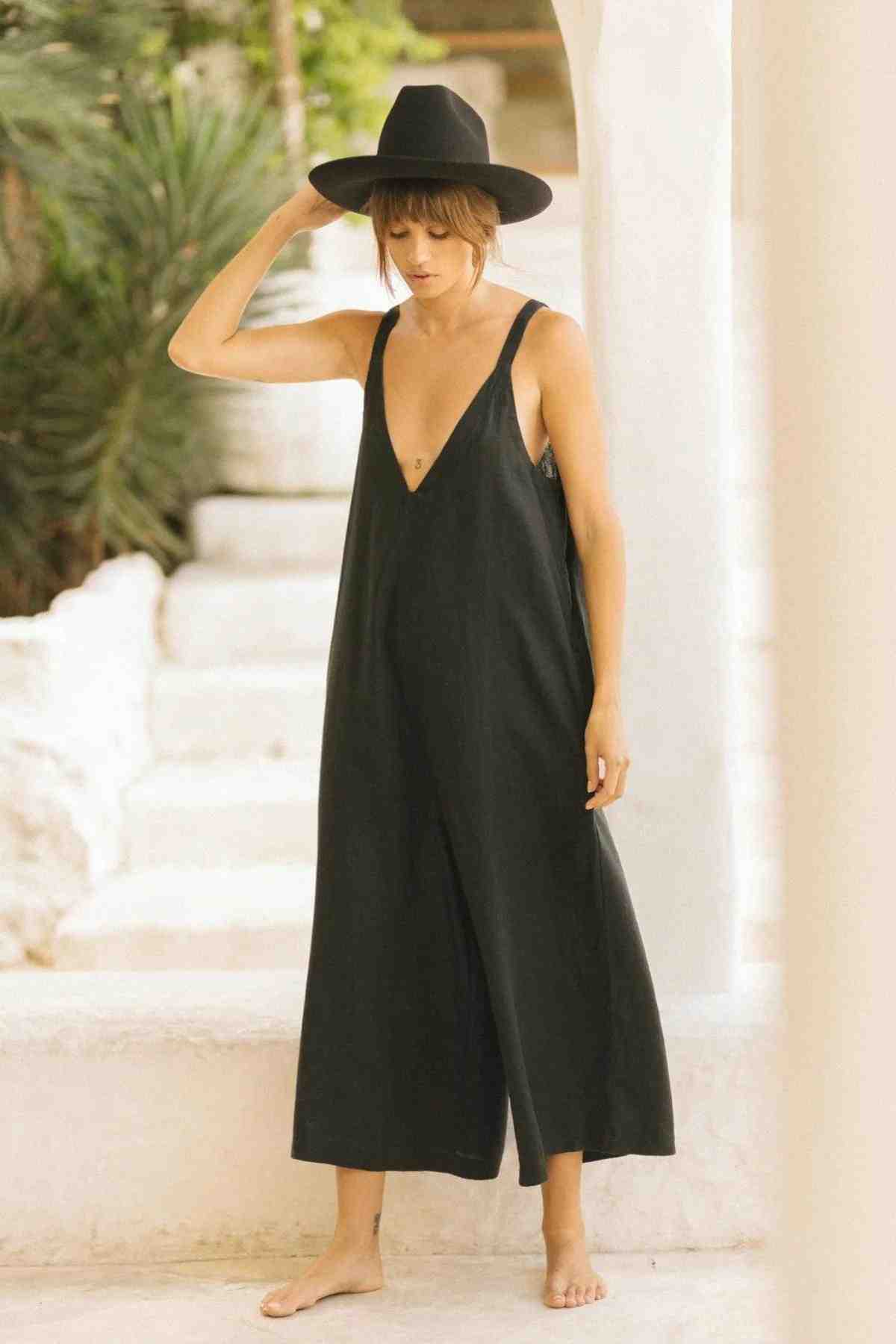
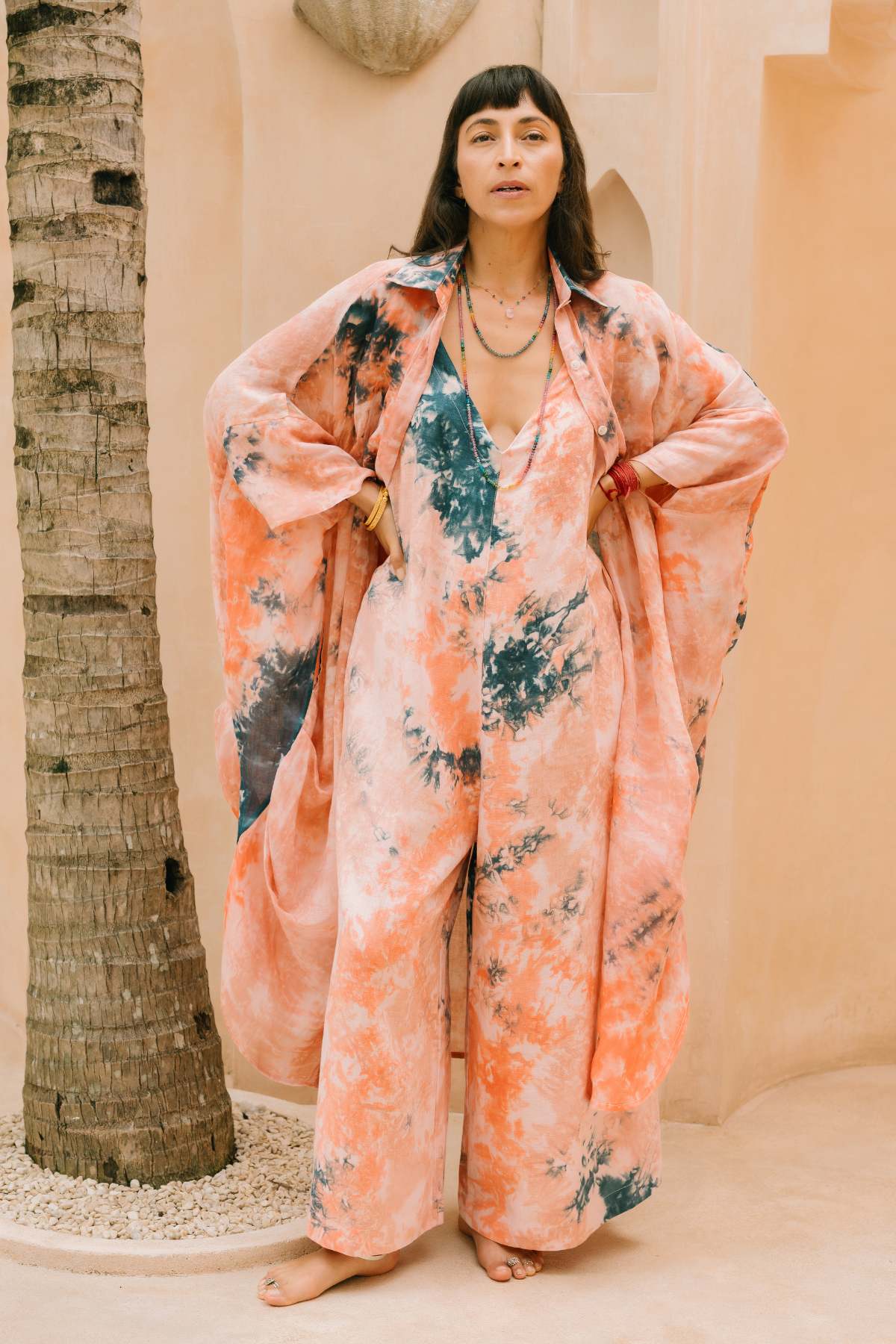
For the ceremony itself, a full length kaftan or gown in silk or fine linen. The Silk Virgo Kaftan and the Meera Tabriz Kaftan both do the whole day without a change, which at a beach wedding is worth more than a second outfit. The Brida Linen Gown Long holds its shape through humidity. The Magdalena Wrap Dress is the one to reach for if you want something that adjusts as the day gets hotter.
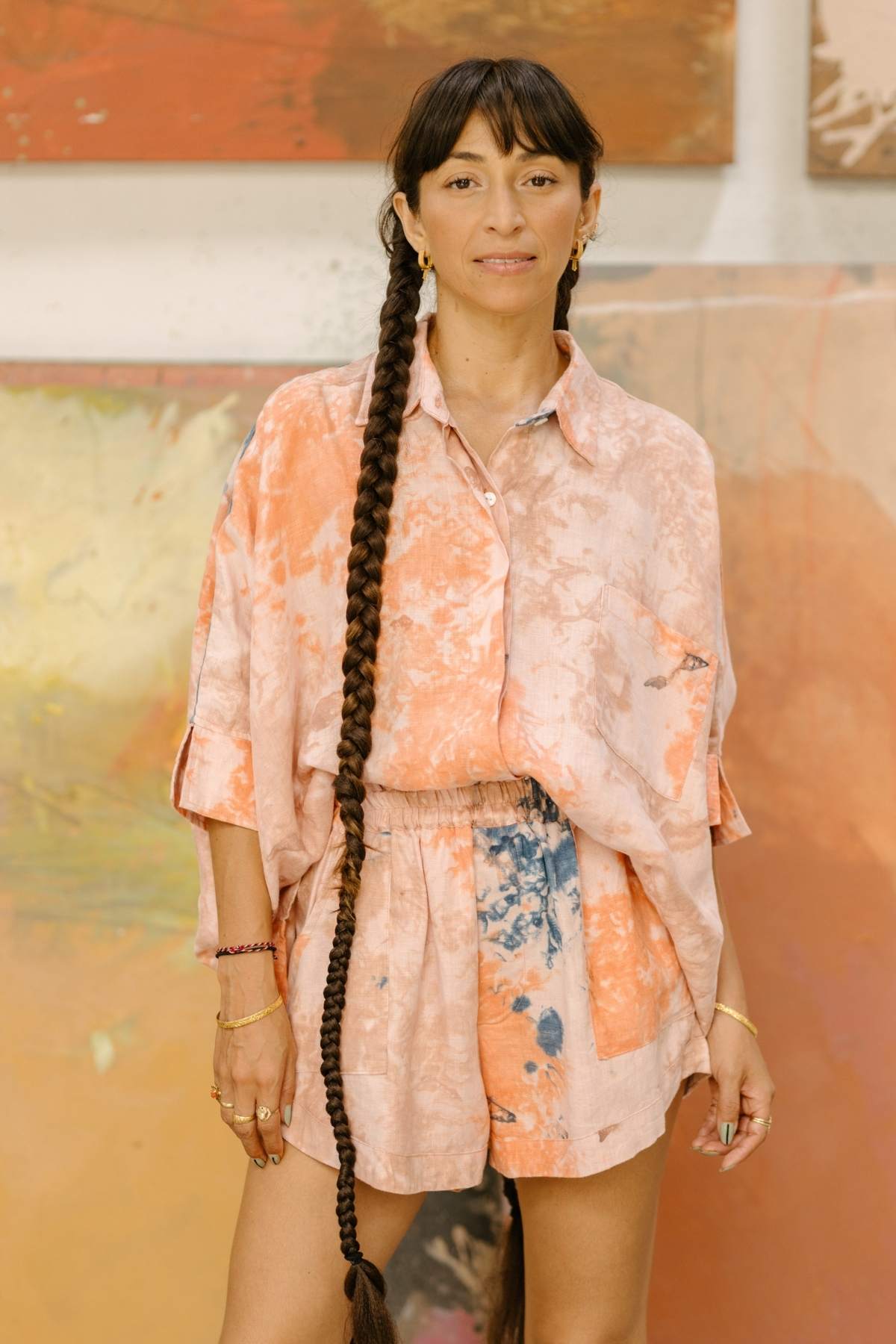
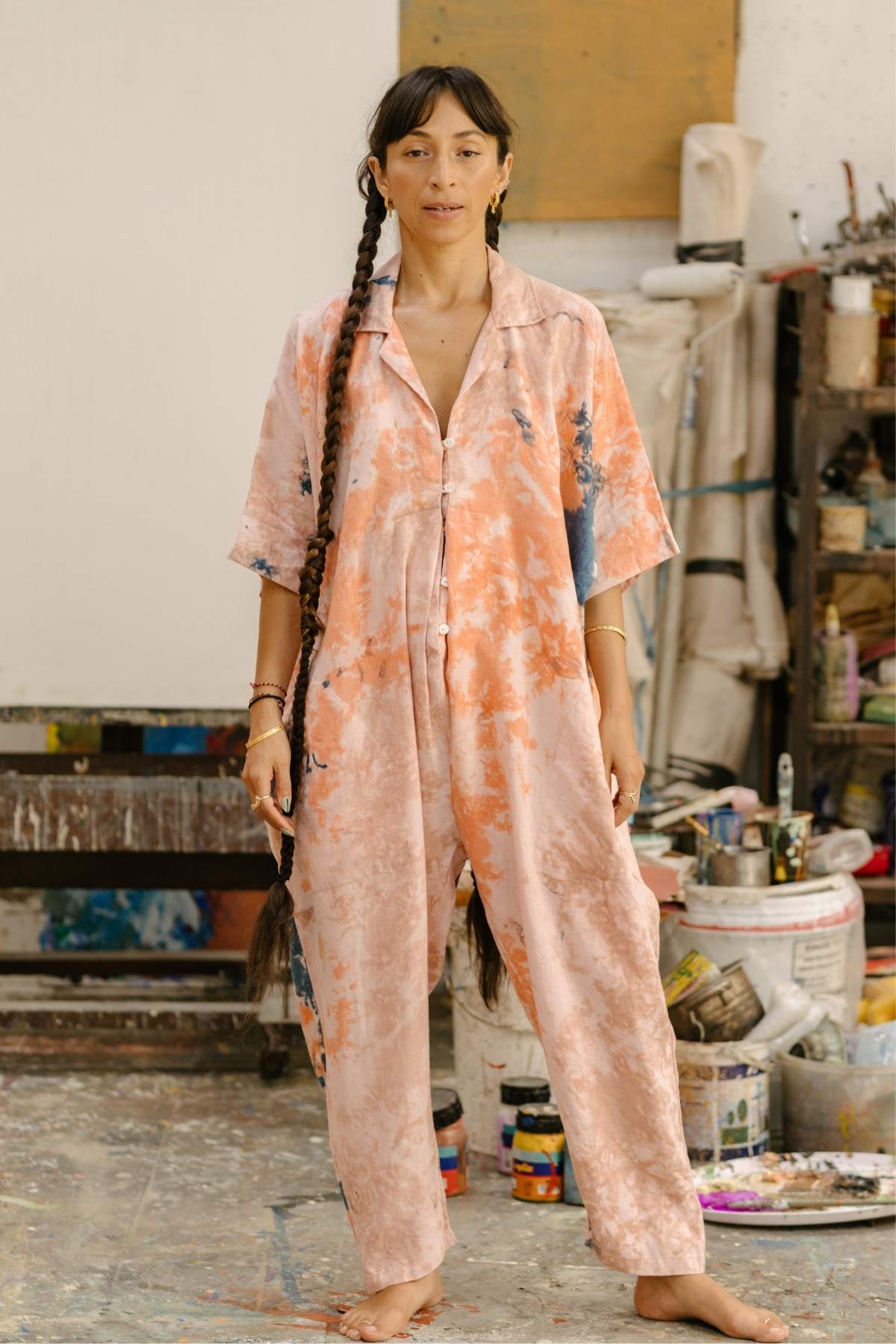
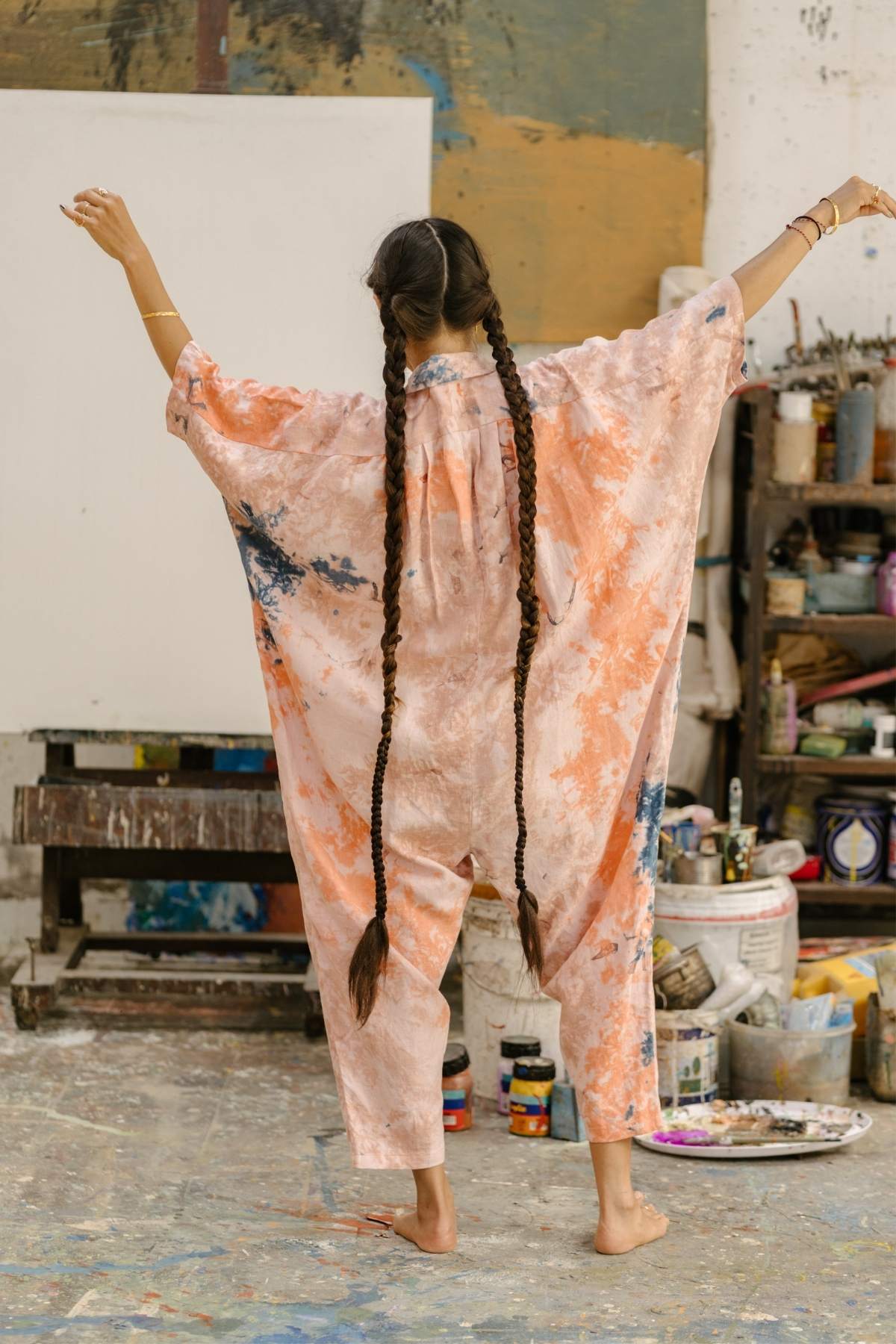
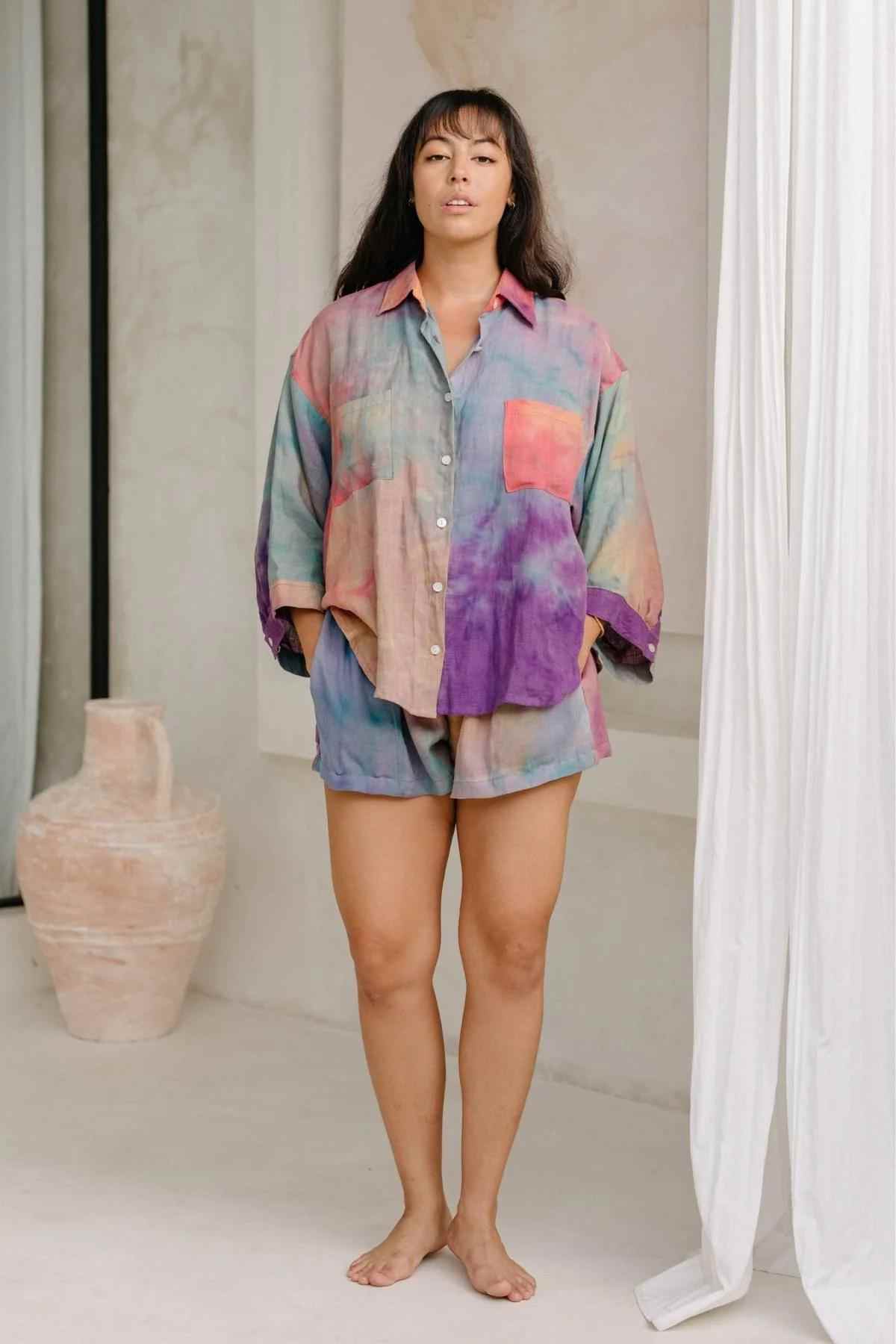
If the wedding is at the more formal end, the Venus Rose Gown and the Virgo Rising Royal Once In A Blue Moon are both botanically dyed silk, which means the colour is genuinely yours. Botanical dye never repeats exactly, so the odds of meeting your own dress at the reception are effectively zero.
For the welcome dinner or the morning after, the Linen River Kaftan and the Dora Slip Dress carry the rest of the trip.
If you are the mother, or in the wedding party
Different problem, and we wrote about it separately in the non-traditional mother of the bride. The short version is that the brief is not to disappear and it is not to compete. It is to look like yourself on a day that is about somebody you made.
Order early. Genuinely early.
Everything we make is sewn after you order it, so it leaves Bali three to six weeks after you order, botanically dyed pieces toward the longer end, then takes 5 to 15 business days to reach you.
Order ten weeks before the wedding, whatever the colourway. If the date is closer than that, write to us before you order rather than after and we will tell you honestly whether it can be done. The full timing is in how long shipping from Bali takes.
Frequently asked questions
What should I wear to a beach wedding as a guest?
A full length kaftan or gown in linen or silk, in a colour that is not white, cream or ivory. Flat sandals rather than heels, because sand defeats a heel. Something to cover your shoulders for the ceremony and a layer for the evening. Loose beats fitted in heat, and natural fibre beats synthetic every time.
Can I wear cream or beige to a beach wedding?
Better not to. Sand and water reflect light and lift pale colours a shade or two, so cream, oyster, champagne and bone all read as white in photographs taken in bright sun. Choose a warmer or deeper colour instead. The only exception is if the couple explicitly asked for white.
What does beach formal actually mean?
Full length, good fabric, no jacket and no heels. A gown or a long kaftan is exactly right. It is more formal than a sundress and less formal than black tie, and nobody expects structured tailoring on sand.
What should I wear to a wedding in Bali?
Full length linen or silk, plus a sarong or long scarf. If any part of the day happens at a temple or in a family compound, shoulders and knees must be covered and a sarong and sash are expected, usually provided by the hosts. Humidity and short rain are both likely, so avoid anything that needs pressing or that clings when damp.
What shoes do you wear to a beach wedding?
Flat sandals, or bare feet if the couple has invited it. Heels sink into sand regardless of width, and you will be standing and dancing for many hours. Comfort at eleven at night matters more than the shoe at four in the afternoon.
What is the best fabric for a hot destination wedding?
Linen first, silk second. Linen is the most breathable fibre in common use and moves moisture away from skin. Silk regulates temperature rather than trapping it, staying cool in heat and warm after sunset. Avoid polyester and anything lined, both of which hold heat against the body.
How far ahead should I order a dress for a destination wedding?
Ten weeks, whatever the colourway, because every garment is made after the order is placed. Custom sizing or a custom colour needs twelve to sixteen weeks. If your date is sooner, email before ordering and we will tell you honestly whether it is possible.
The thing to remember
The couple chose a beach. They chose sand and heat and the sound of water over a ballroom and a seating chart, and they did it so that everybody could exhale.
Dress like you accepted that invitation. Long, loose, real fabric, flat shoes, a colour that is yours. Then stop thinking about it and be there.
With love from Bali,
Myrah
|
A Piece for This Threshold The Meera Tabriz Kaftan Shop the Meera Kaftan → |

|
The Muse-Letter Dress for the woman you’re becoming. Join the Muse-LetterUnsubscribe any time. No spam, ever. |







Dejar un comentario
Este sitio está protegido por hCaptcha y se aplican la Política de privacidad de hCaptcha y los Términos del servicio.